Cloud Computing
15302D0005
15302D0019
15302D0026
15302D0062
Rahim Sheikh
Satyam Jaiswal
Dinesh Nadar
Saud Parvez
FY B.Sc IT
Div- D
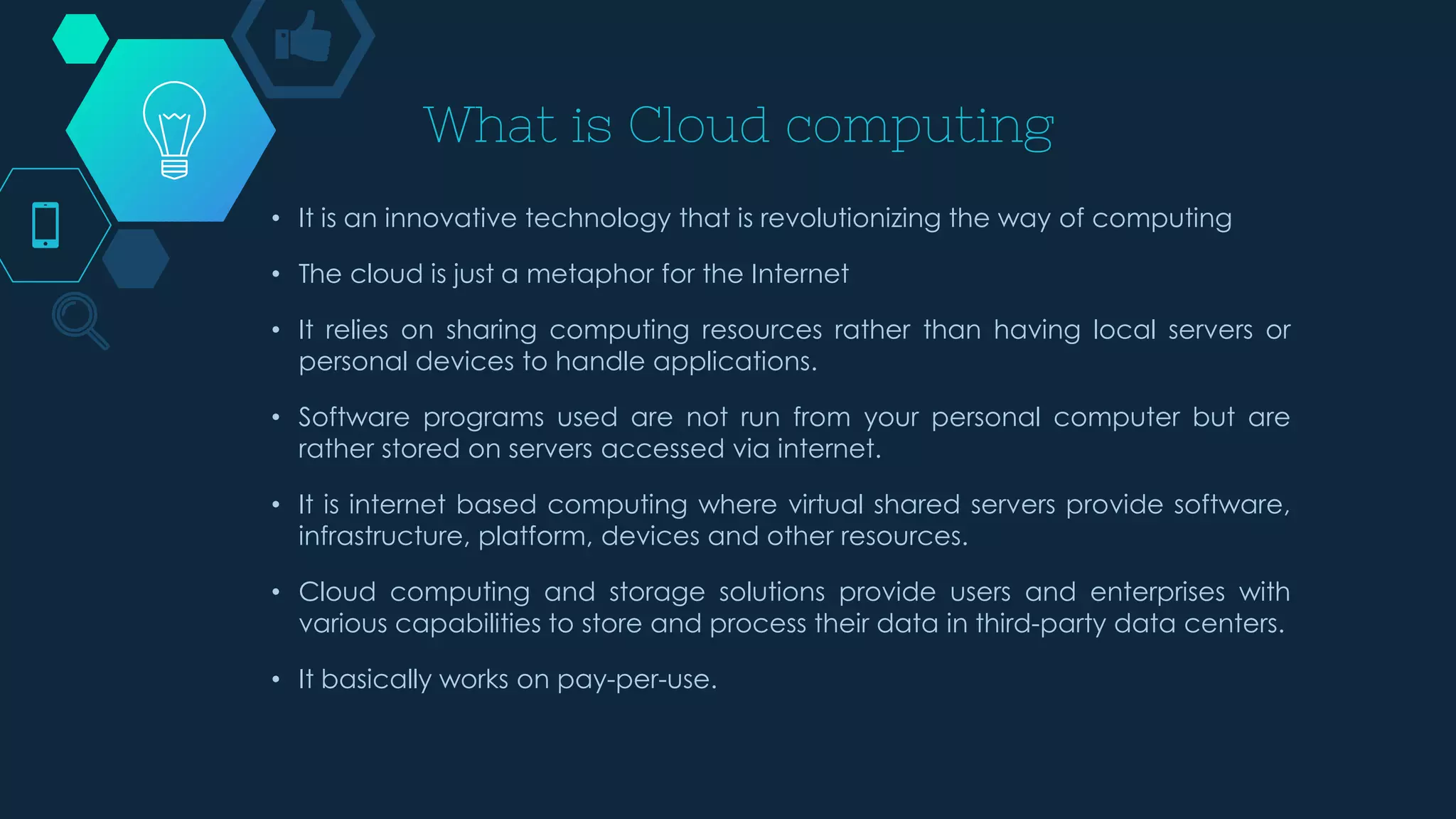
What is Cloud computing
• It is an innovative technology that is revolutionizing the way of computing
• The cloud is just a metaphor for the Internet
• It relies on sharing computing resources rather than having local servers or
personal devices to handle applications.
• Software programs used are not run from your personal computer but are
rather stored on servers accessed via internet.
• It is internet based computing where virtual shared servers provide software,
infrastructure, platform, devices and other resources.
• Cloud computing and storage solutions provide users and enterprises with
various capabilities to store and process their data in third-party data centers.
• It basically works on pay-per-use.
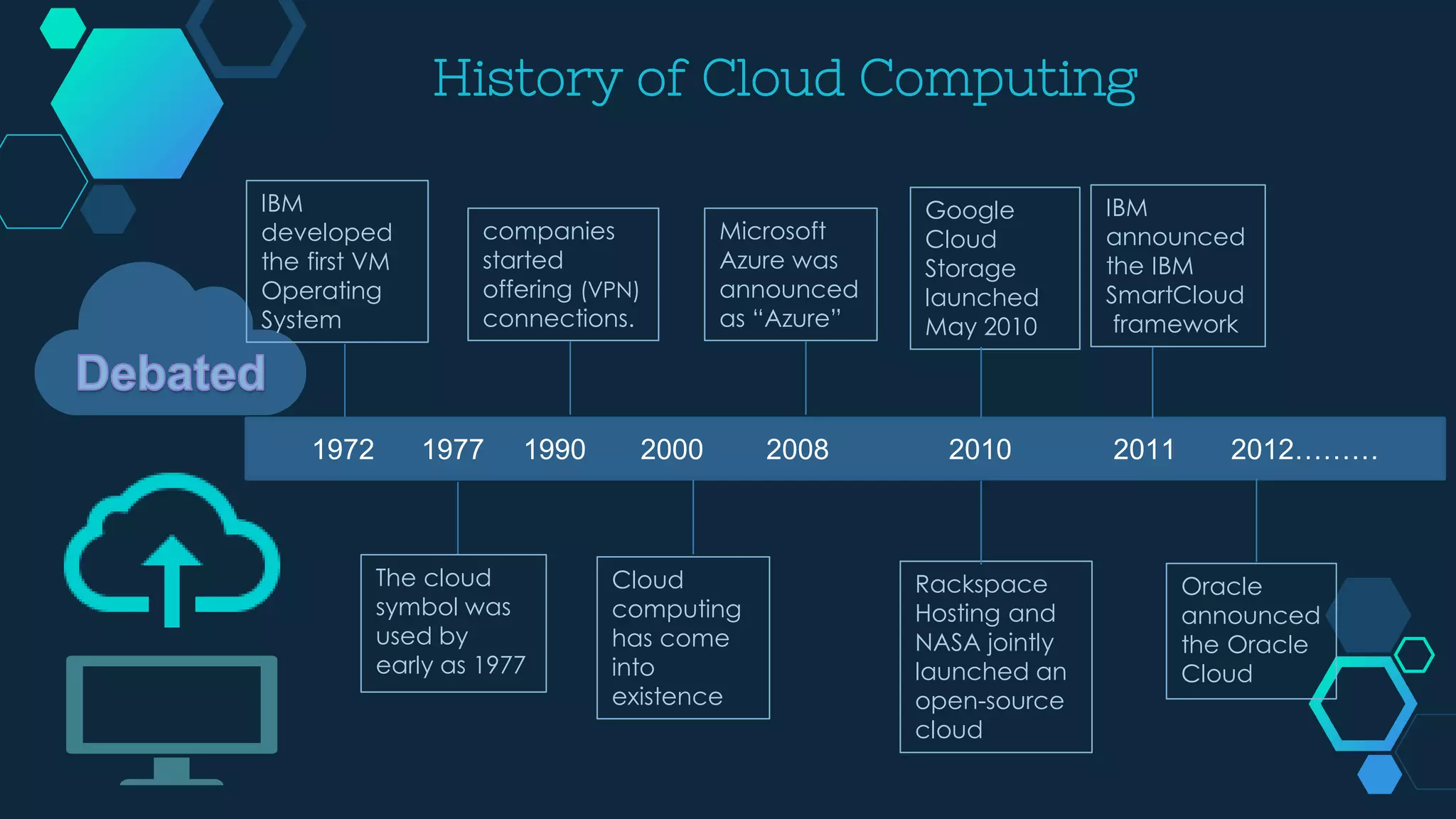
History of Cloud Computing
1972 1977 1990 2000 2008 2010 2011 2012………
IBM
developed
the first VM
Operating
System
The cloud
symbol was
used by
early as 1977
companies
started
offering (VPN)
connections.
Cloud
computing
has come
into
existence
Microsoft
Azure was
announced
as “Azure”
Rackspace
Hosting and
NASA jointly
launched an
open-source
cloud
Google
Cloud
Storage
launched
May 2010
IBM
announced
the IBM
SmartCloud
framework
Oracle
announced
the Oracle
Cloud
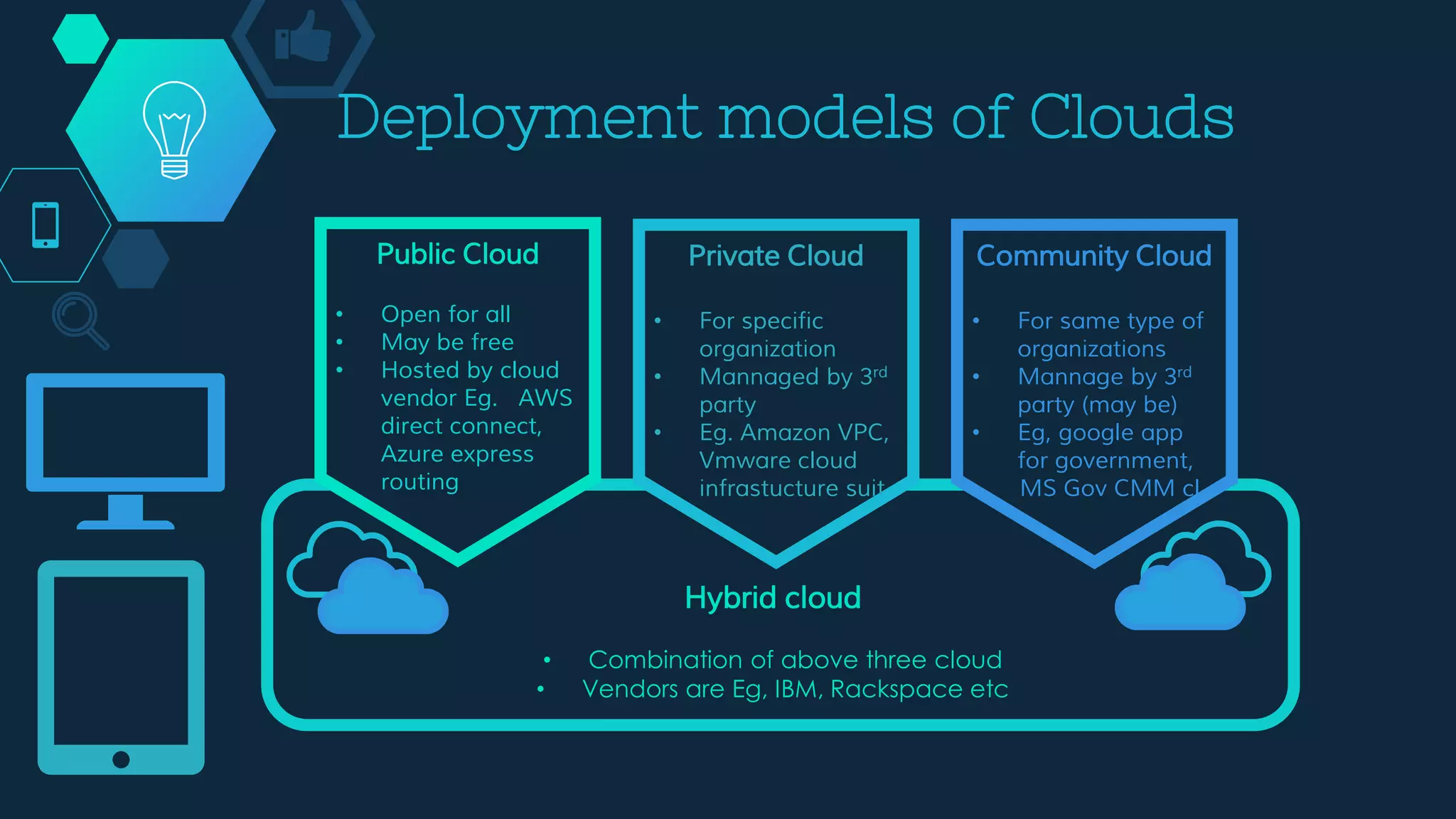
Deployment models of Clouds
Public Cloud
• Open for all
• May be free
• Hosted by cloud
vendor Eg. AWS
direct connect,
Azure express
routing
Community Cloud
• For same type of
organizations
• Mannage by 3rd
party (may be)
• Eg, google app
for government,
MS Gov CMM cl.
Private Cloud
• For specific
organization
• Mannaged by 3rd
party
• Eg. Amazon VPC,
Vmware cloud
infrastucture suit
Hybrid cloud
• Combination of above three cloud
• Vendors are Eg, IBM, Rackspace etc
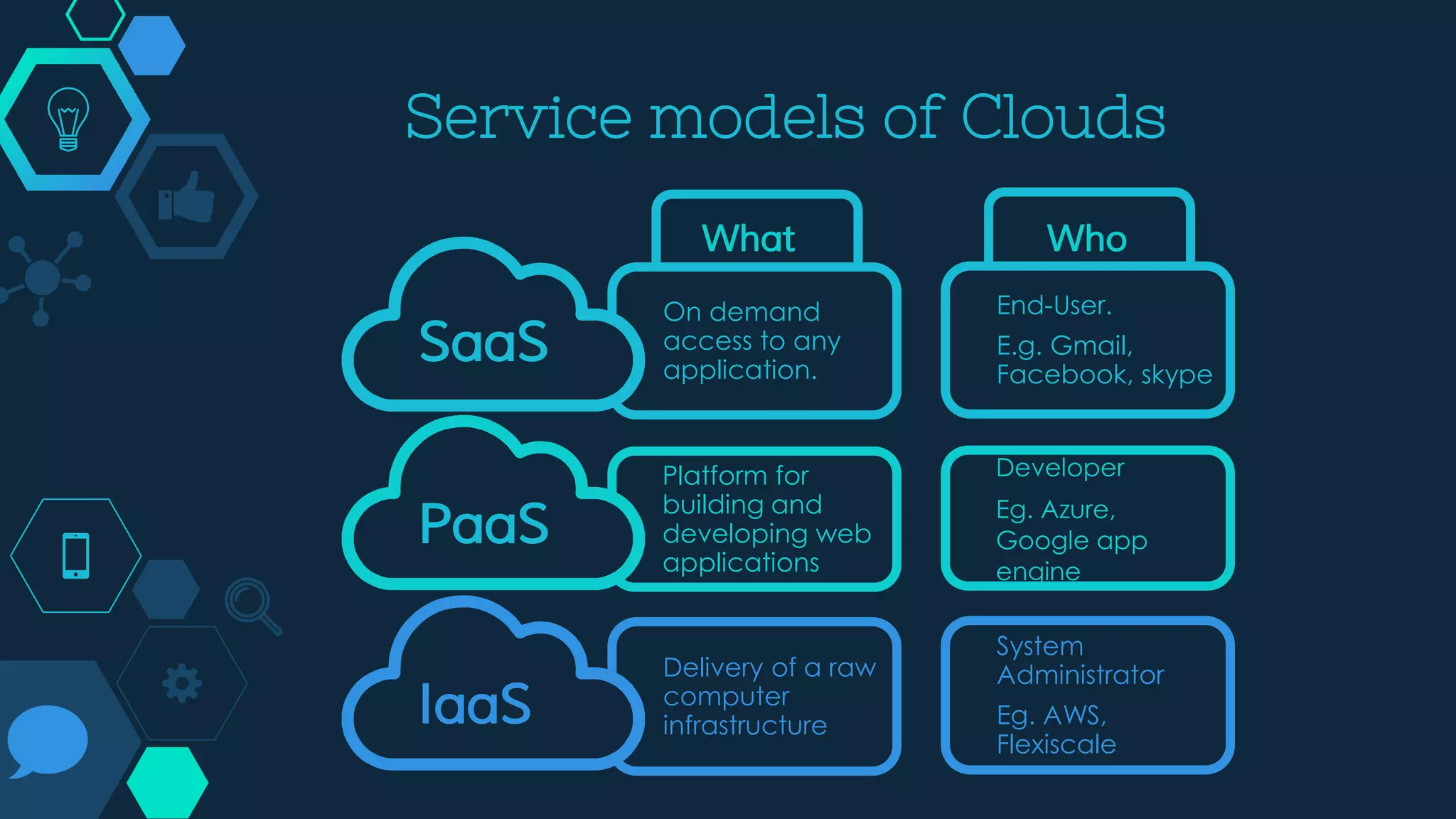
On demand
access to any
application.
Platform for
building and
developing web
applications
Delivery of a raw
computer
infrastructure
SaaS
PaaS
IaaS
End-User.
E.g. Gmail,
Facebook, skype
Developer
Eg. Azure,
Google app
engine
System
Administrator
Eg. AWS,
Flexiscale
What Who
Service models of Clouds
“
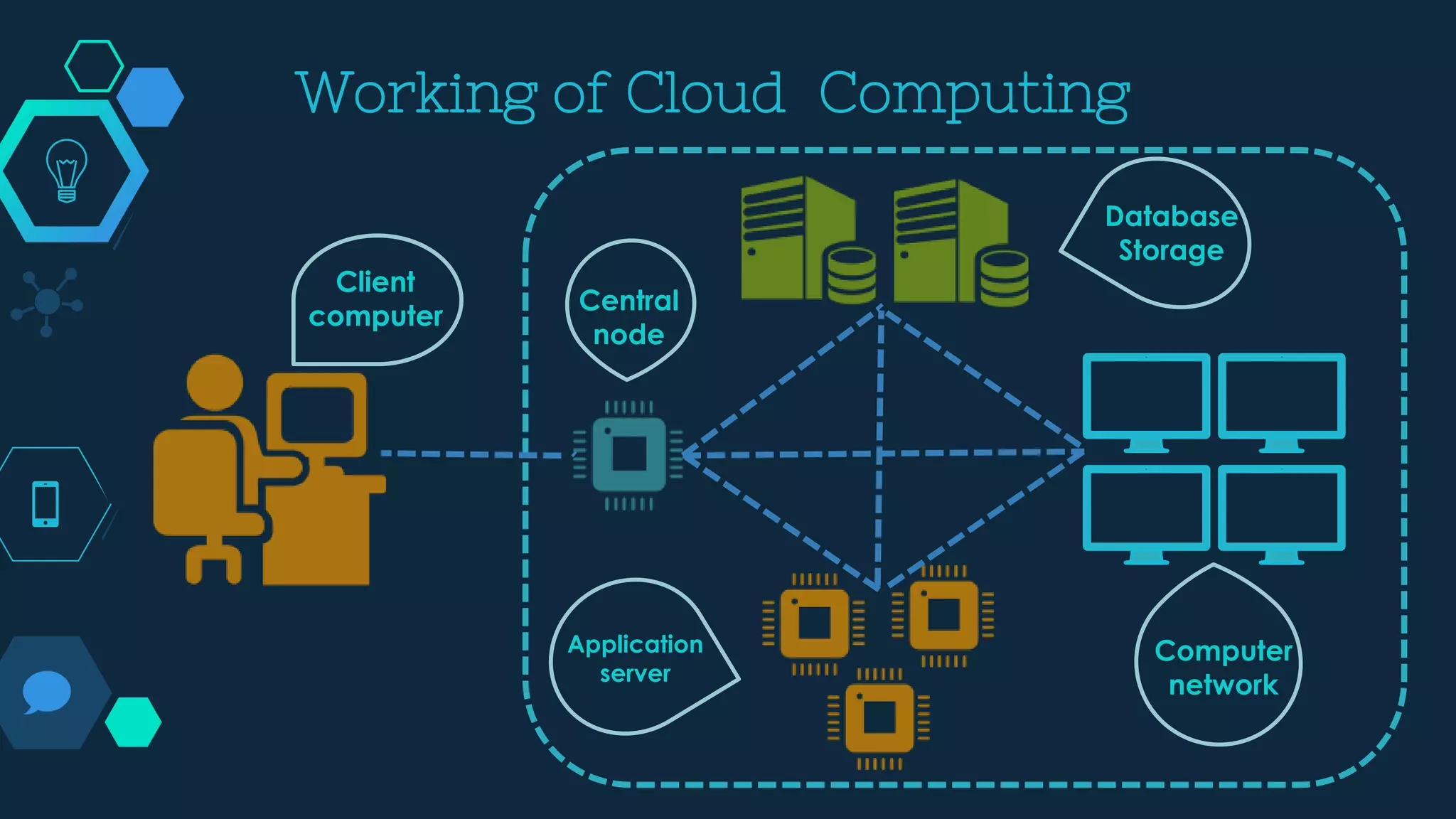
Client
computer
Client
computer
Database
Storage
Computer
network
Application
server
Central
node
Working of Cloud Computing
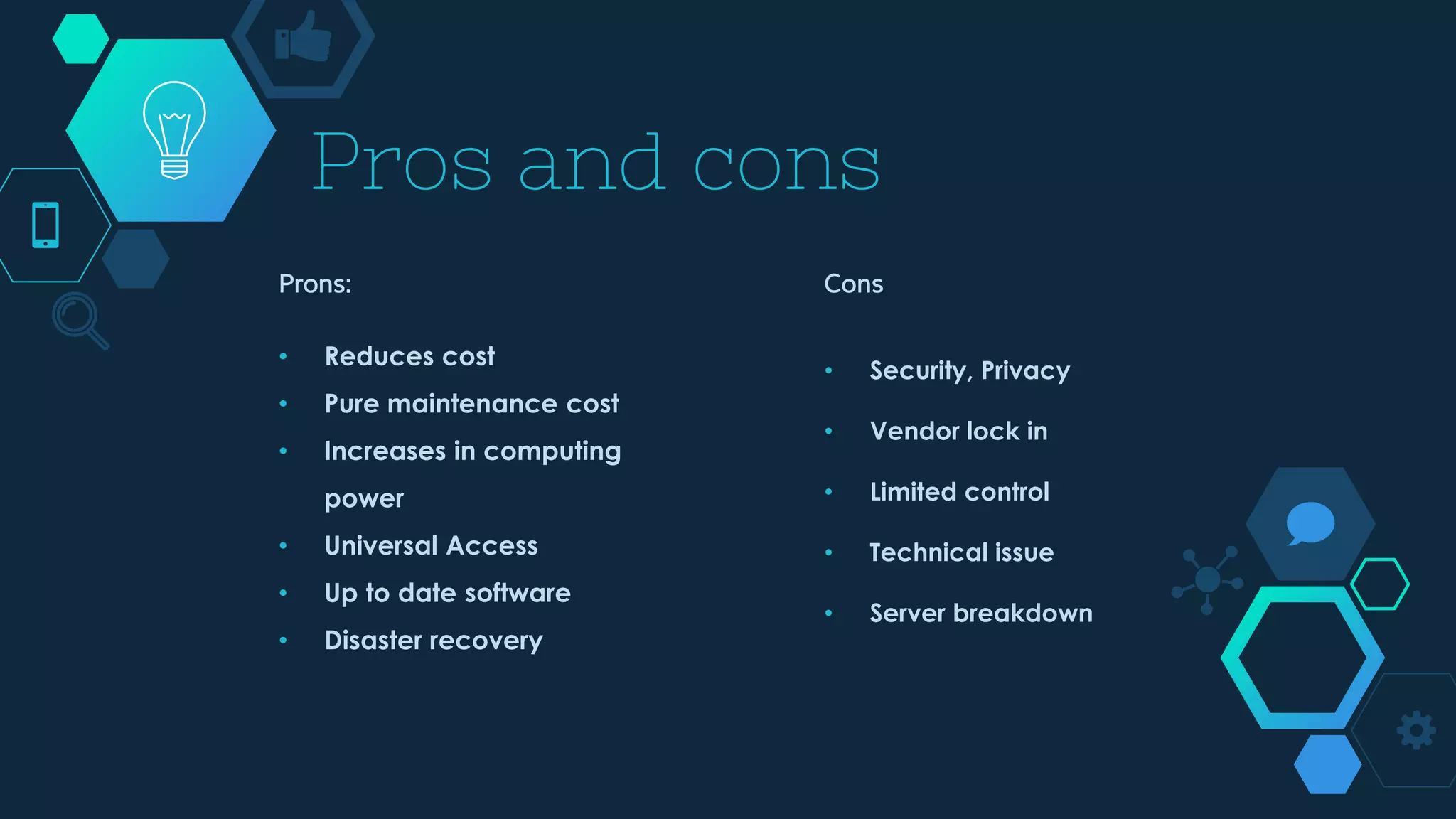
Prons:
• Reduces cost
• Pure maintenance cost
• Increases in computing
power
• Universal Access
• Up to date software
• Disaster recovery
Pros and cons
Cons
• Security, Privacy
• Vendor lock in
• Limited control
• Technical issue
• Server breakdown
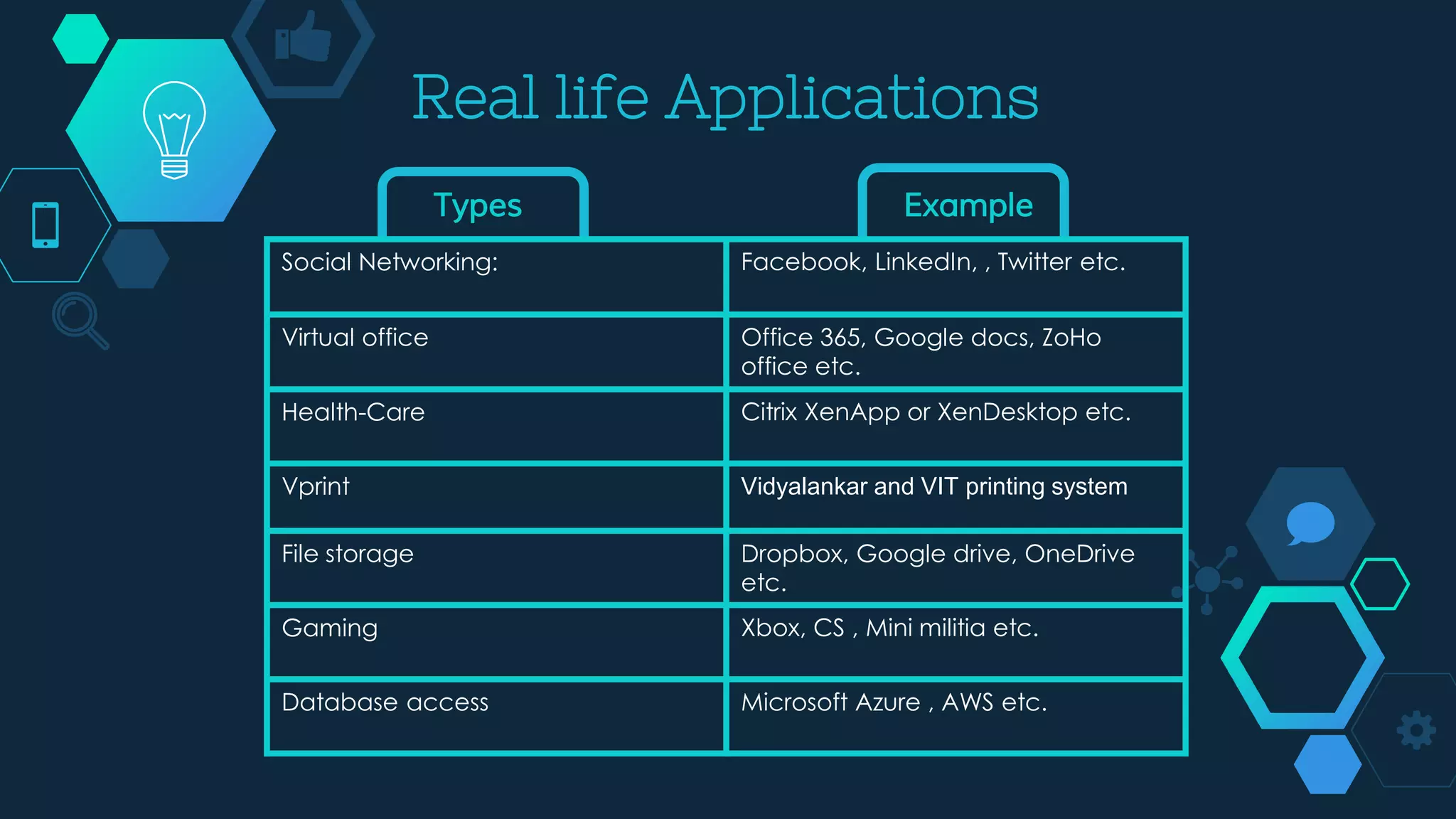
Social Networking: Facebook, LinkedIn, , Twitter etc.
Virtual office Office 365, Google docs, ZoHo
office etc.
Health-Care Citrix XenApp or XenDesktop etc.
Vprint Vidyalankar and VIT printing system
File storage Dropbox, Google drive, OneDrive
etc.
Gaming Xbox, CS , Mini militia etc.
Database access Microsoft Azure , AWS etc.
Types Example
Real life Applications
Thanks!
Any questions?

Basic Introduction to Cloud Computing

  • 1.
  • 2.
    What is Cloudcomputing • It is an innovative technology that is revolutionizing the way of computing • The cloud is just a metaphor for the Internet • It relies on sharing computing resources rather than having local servers or personal devices to handle applications. • Software programs used are not run from your personal computer but are rather stored on servers accessed via internet. • It is internet based computing where virtual shared servers provide software, infrastructure, platform, devices and other resources. • Cloud computing and storage solutions provide users and enterprises with various capabilities to store and process their data in third-party data centers. • It basically works on pay-per-use.
  • 3.
    History of CloudComputing 1972 1977 1990 2000 2008 2010 2011 2012……… IBM developed the first VM Operating System The cloud symbol was used by early as 1977 companies started offering (VPN) connections. Cloud computing has come into existence Microsoft Azure was announced as “Azure” Rackspace Hosting and NASA jointly launched an open-source cloud Google Cloud Storage launched May 2010 IBM announced the IBM SmartCloud framework Oracle announced the Oracle Cloud
  • 4.
    Deployment models ofClouds Public Cloud • Open for all • May be free • Hosted by cloud vendor Eg. AWS direct connect, Azure express routing Community Cloud • For same type of organizations • Mannage by 3rd party (may be) • Eg, google app for government, MS Gov CMM cl. Private Cloud • For specific organization • Mannaged by 3rd party • Eg. Amazon VPC, Vmware cloud infrastucture suit Hybrid cloud • Combination of above three cloud • Vendors are Eg, IBM, Rackspace etc
  • 5.
    On demand access toany application. Platform for building and developing web applications Delivery of a raw computer infrastructure SaaS PaaS IaaS End-User. E.g. Gmail, Facebook, skype Developer Eg. Azure, Google app engine System Administrator Eg. AWS, Flexiscale What Who Service models of Clouds
  • 6.
  • 7.
    Prons: • Reduces cost •Pure maintenance cost • Increases in computing power • Universal Access • Up to date software • Disaster recovery Pros and cons Cons • Security, Privacy • Vendor lock in • Limited control • Technical issue • Server breakdown
  • 8.
    Social Networking: Facebook,LinkedIn, , Twitter etc. Virtual office Office 365, Google docs, ZoHo office etc. Health-Care Citrix XenApp or XenDesktop etc. Vprint Vidyalankar and VIT printing system File storage Dropbox, Google drive, OneDrive etc. Gaming Xbox, CS , Mini militia etc. Database access Microsoft Azure , AWS etc. Types Example Real life Applications
  • 9.