Table of Contents 
PULSE JET ENGINE.....................................................................................................................................................................2 
INTRODUCTION .....................................................................................................................................................................2 
TYPE OF PULSE JET ENGINE........................................................................................................................................2 
DESIGN RESEARCH ...............................................................................................................................................................4 
IMPORTANT FORMULAE ...................................................................................................................................................6 
MATERIAL OF VARIOUS COMPONENTS .....................................................................................................................7 
PULSE JET BODY PART .......................................................................................................................................................7 
PROJECT FUTURE ..................................................................................................................................................................9 
REFERENCES ...........................................................................................................................................................................9 
Table of figures 
Figure 1: VALVED PULSE JET ................................................................................................................................................3 
Figure 2: VALVELESS PULSE JET .........................................................................................................................................4 
Figure 3: LENIOR CYCLE..........................................................................................................................................................5 
Figure 4: THRUST GENERATION .........................................................................................................................................6 
Figure 5: BODY PART - COMBUSTION CHAMBER, TAPER & EXHAUST PIPE ..................................................7 
Figure 6: VALVED JET TUBE ..................................................................................................................................................8 
Figure 7: VALVED GRID ASSEMBLY ...................................................................................................................................8 
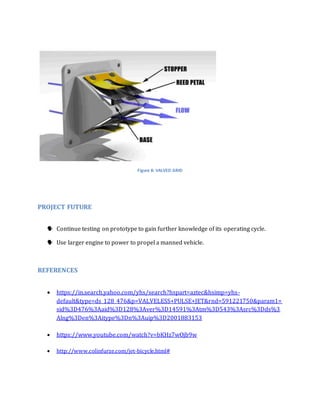
Figure 8: VALVED GRID ...........................................................................................................................................................9
PULSE JET ENGINE 
INTRODUCTION 
A pulsejet engine is a very simple jet engine consisting of no moving parts. The combustion 
cycle comprises five or six phases: Induction, Fuel Injection, Ignition, Combustion, and 
Exhaust. 
The rapidly expanding gasses exit out of the engine and as this happens a vacuum is 
created in the combustion chamber which pulls in a fresh new air charge from the 
atmosphere, and then the whole cycle repeats itself. 
TYPE OF PULSE JET ENGINE 
There are two main types of pulsejet engines, both of which use resonant combustion and 
harness the expanding combustion products to form a pulsating exhaust jet which 
produces thrust intermittently. 
VALVED PULSE JET 
Valved pulsejet engines use a mechanical valve to control the flow of expanding 
exhaust, forcing the hot gas to go out of the back of the engine through the 
tailpipe only, and allow fresh air and more fuel to enter through the intake. 
The valved pulsejet comprises an intake with a one-way valve arrangement. The 
valves prevent the explosive gas of the ignited fuel mixture in the combustion 
chamber from exiting and disrupting the intake airflow, although with all 
practical valved pulsejets there is some 'blowback' while running statically and 
at low speed, as the valves cannot close fast enough to stop all the gas from 
exiting the intake. The superheated exhaust gases exit through an acoustically 
resonant exhaust pipe. 
The intake valve is typically a reed valve. The two most common configurations 
are the daisy valve, and the rectangular valve grid. A daisy valve consists of a 
thin sheet of material to act as the reed, cut into the shape of a stylized daisy 
with "petals" that widen towards their ends. Each "petal" covers a circular intake 
hole at its tip. The daisy valve is bolted to the manifold through its center. 
Although easier to construct on a small scale, it is less effective than a valve grid.
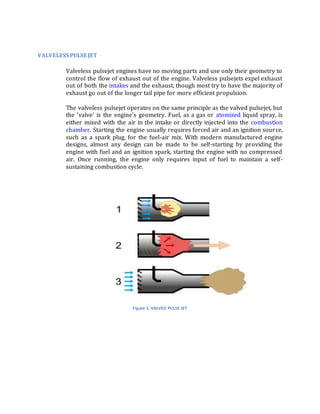
VALVELESS PULSE JET 
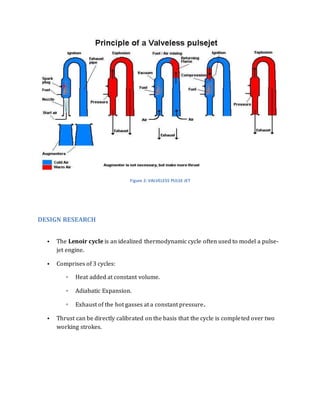
Valveless pulsejet engines have no moving parts and use only their geometry to 
control the flow of exhaust out of the engine. Valveless pulsejets expel exhaust 
out of both the intakes and the exhaust, though most try to have the majority of 
exhaust go out of the longer tail pipe for more efficient propulsion. 
The valveless pulsejet operates on the same principle as the valved pulsejet, but 
the 'valve' is the engine's geometry. Fuel, as a gas or atomized liquid spray, is 
either mixed with the air in the intake or directly injected into the combustion 
chamber. Starting the engine usually requires forced air and an ignition sour ce, 
such as a spark plug, for the fuel-air mix. With modern manufactured engine 
designs, almost any design can be made to be self-starting by providing the 
engine with fuel and an ignition spark, starting the engine with no compressed 
air. Once running, the engine only requires input of fuel to maintain a self-sustaining 
combustion cycle. 
Figure 1: VALVED PULSE JET
Figure 2: VALVELESS PULSE JET 
DESIGN RESEARCH 
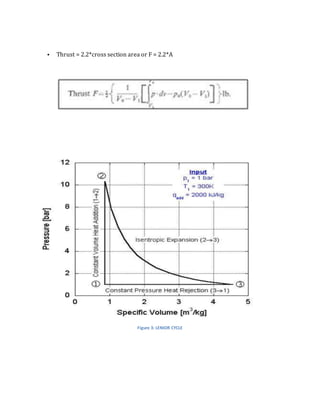
• The Lenoir cycle is an idealized thermodynamic cycle often used to model a pulse-jet 
engine. 
• Comprises of 3 cycles: 
▫ Heat added at constant volume. 
▫ Adiabatic Expansion. 
▫ Exhaust of the hot gasses at a constant pressure. 
• Thrust can be directly calibrated on the basis that the cycle is completed over two 
working strokes.
• Thrust = 2.2*cross section area or F = 2.2*A 
Figure 3: LENIOR CYCLE
IMPORTANT FORMULAE 
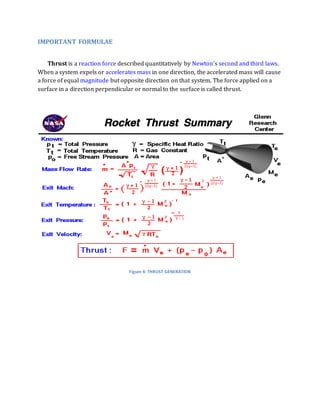
Thrust is a reaction force described quantitatively by Newton's second and third laws. 
When a system expels or accelerates mass in one direction, the accelerated mass will cause 
a force of equal magnitude but opposite direction on that system. The force applied on a 
surface in a direction perpendicular or normal to the surface is called thrust. 
Figure 4: THRUST GENERATION
MATERIAL OF VARIOUS COMPONENTS 
Pulse-Jets Main body: 
 Rolled and seem welded using Stainless Steel Sheet Metal. 
 Stainless Selected because of its higher resistance to heat then mild steel. 
Reed Valve: 
 Spring Steel: - low alloy, medium carbon steel or high carbon steel with a very 
high yield strength. This allows objects made of spring steel to return to their 
original shape despite significant bending or twisting. 
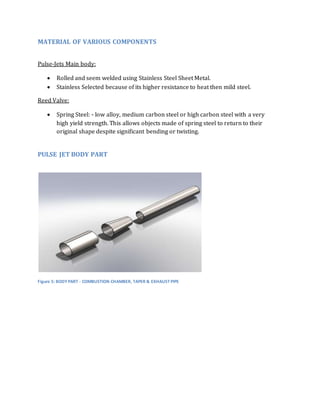
PULSE JET BODY PART 
Figure 5: BODY PART - COMBUSTION CHAMBER, TAPER & EXHAUST PIPE
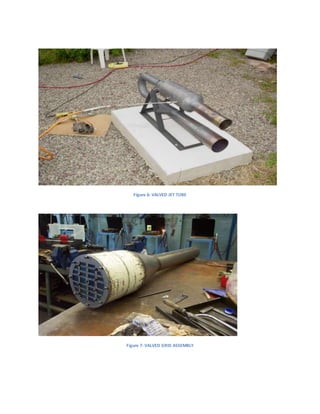
Figure 6: VALVED JET TUBE 
Figure 7: VALVED GRID ASSEMBLY
Figure 8: VALVED GRID 
PROJECT FUTURE 
 Continue testing on prototype to gain further knowledge of its operating cycle. 
 Use larger engine to power to propel a manned vehicle. 
REFERENCES 
 https://in.search.yahoo.com/yhs/search?hspart=aztec&hsimp=yhs-default& 
type=ds_128_476&p=VALVELESS+PULSE+JET&rnd=591221750&param1= 
sid%3D476%3Aaid%3D128%3Aver%3D14591%3Atm%3D543%3Asrc%3Dds%3 
Alng%3Den%3Aitype%3Dn%3Auip%3D2001883153 
 https://www.youtube.com/watch?v=bKHz7wOjb9w 
 http://www.colinfurze.com/jet-bicycle.html#

PULSE JET ENGINE

  • 1.
    Table of Contents PULSE JET ENGINE.....................................................................................................................................................................2 INTRODUCTION .....................................................................................................................................................................2 TYPE OF PULSE JET ENGINE........................................................................................................................................2 DESIGN RESEARCH ...............................................................................................................................................................4 IMPORTANT FORMULAE ...................................................................................................................................................6 MATERIAL OF VARIOUS COMPONENTS .....................................................................................................................7 PULSE JET BODY PART .......................................................................................................................................................7 PROJECT FUTURE ..................................................................................................................................................................9 REFERENCES ...........................................................................................................................................................................9 Table of figures Figure 1: VALVED PULSE JET ................................................................................................................................................3 Figure 2: VALVELESS PULSE JET .........................................................................................................................................4 Figure 3: LENIOR CYCLE..........................................................................................................................................................5 Figure 4: THRUST GENERATION .........................................................................................................................................6 Figure 5: BODY PART - COMBUSTION CHAMBER, TAPER & EXHAUST PIPE ..................................................7 Figure 6: VALVED JET TUBE ..................................................................................................................................................8 Figure 7: VALVED GRID ASSEMBLY ...................................................................................................................................8 Figure 8: VALVED GRID ...........................................................................................................................................................9
  • 2.
    PULSE JET ENGINE INTRODUCTION A pulsejet engine is a very simple jet engine consisting of no moving parts. The combustion cycle comprises five or six phases: Induction, Fuel Injection, Ignition, Combustion, and Exhaust. The rapidly expanding gasses exit out of the engine and as this happens a vacuum is created in the combustion chamber which pulls in a fresh new air charge from the atmosphere, and then the whole cycle repeats itself. TYPE OF PULSE JET ENGINE There are two main types of pulsejet engines, both of which use resonant combustion and harness the expanding combustion products to form a pulsating exhaust jet which produces thrust intermittently. VALVED PULSE JET Valved pulsejet engines use a mechanical valve to control the flow of expanding exhaust, forcing the hot gas to go out of the back of the engine through the tailpipe only, and allow fresh air and more fuel to enter through the intake. The valved pulsejet comprises an intake with a one-way valve arrangement. The valves prevent the explosive gas of the ignited fuel mixture in the combustion chamber from exiting and disrupting the intake airflow, although with all practical valved pulsejets there is some 'blowback' while running statically and at low speed, as the valves cannot close fast enough to stop all the gas from exiting the intake. The superheated exhaust gases exit through an acoustically resonant exhaust pipe. The intake valve is typically a reed valve. The two most common configurations are the daisy valve, and the rectangular valve grid. A daisy valve consists of a thin sheet of material to act as the reed, cut into the shape of a stylized daisy with "petals" that widen towards their ends. Each "petal" covers a circular intake hole at its tip. The daisy valve is bolted to the manifold through its center. Although easier to construct on a small scale, it is less effective than a valve grid.
  • 3.
    VALVELESS PULSE JET Valveless pulsejet engines have no moving parts and use only their geometry to control the flow of exhaust out of the engine. Valveless pulsejets expel exhaust out of both the intakes and the exhaust, though most try to have the majority of exhaust go out of the longer tail pipe for more efficient propulsion. The valveless pulsejet operates on the same principle as the valved pulsejet, but the 'valve' is the engine's geometry. Fuel, as a gas or atomized liquid spray, is either mixed with the air in the intake or directly injected into the combustion chamber. Starting the engine usually requires forced air and an ignition sour ce, such as a spark plug, for the fuel-air mix. With modern manufactured engine designs, almost any design can be made to be self-starting by providing the engine with fuel and an ignition spark, starting the engine with no compressed air. Once running, the engine only requires input of fuel to maintain a self-sustaining combustion cycle. Figure 1: VALVED PULSE JET
  • 4.
    Figure 2: VALVELESSPULSE JET DESIGN RESEARCH • The Lenoir cycle is an idealized thermodynamic cycle often used to model a pulse-jet engine. • Comprises of 3 cycles: ▫ Heat added at constant volume. ▫ Adiabatic Expansion. ▫ Exhaust of the hot gasses at a constant pressure. • Thrust can be directly calibrated on the basis that the cycle is completed over two working strokes.
  • 5.
    • Thrust =2.2*cross section area or F = 2.2*A Figure 3: LENIOR CYCLE
  • 6.
    IMPORTANT FORMULAE Thrustis a reaction force described quantitatively by Newton's second and third laws. When a system expels or accelerates mass in one direction, the accelerated mass will cause a force of equal magnitude but opposite direction on that system. The force applied on a surface in a direction perpendicular or normal to the surface is called thrust. Figure 4: THRUST GENERATION
  • 7.
    MATERIAL OF VARIOUSCOMPONENTS Pulse-Jets Main body:  Rolled and seem welded using Stainless Steel Sheet Metal.  Stainless Selected because of its higher resistance to heat then mild steel. Reed Valve:  Spring Steel: - low alloy, medium carbon steel or high carbon steel with a very high yield strength. This allows objects made of spring steel to return to their original shape despite significant bending or twisting. PULSE JET BODY PART Figure 5: BODY PART - COMBUSTION CHAMBER, TAPER & EXHAUST PIPE
  • 8.
    Figure 6: VALVEDJET TUBE Figure 7: VALVED GRID ASSEMBLY
  • 9.
    Figure 8: VALVEDGRID PROJECT FUTURE  Continue testing on prototype to gain further knowledge of its operating cycle.  Use larger engine to power to propel a manned vehicle. REFERENCES  https://in.search.yahoo.com/yhs/search?hspart=aztec&hsimp=yhs-default& type=ds_128_476&p=VALVELESS+PULSE+JET&rnd=591221750&param1= sid%3D476%3Aaid%3D128%3Aver%3D14591%3Atm%3D543%3Asrc%3Dds%3 Alng%3Den%3Aitype%3Dn%3Auip%3D2001883153  https://www.youtube.com/watch?v=bKHz7wOjb9w  http://www.colinfurze.com/jet-bicycle.html#