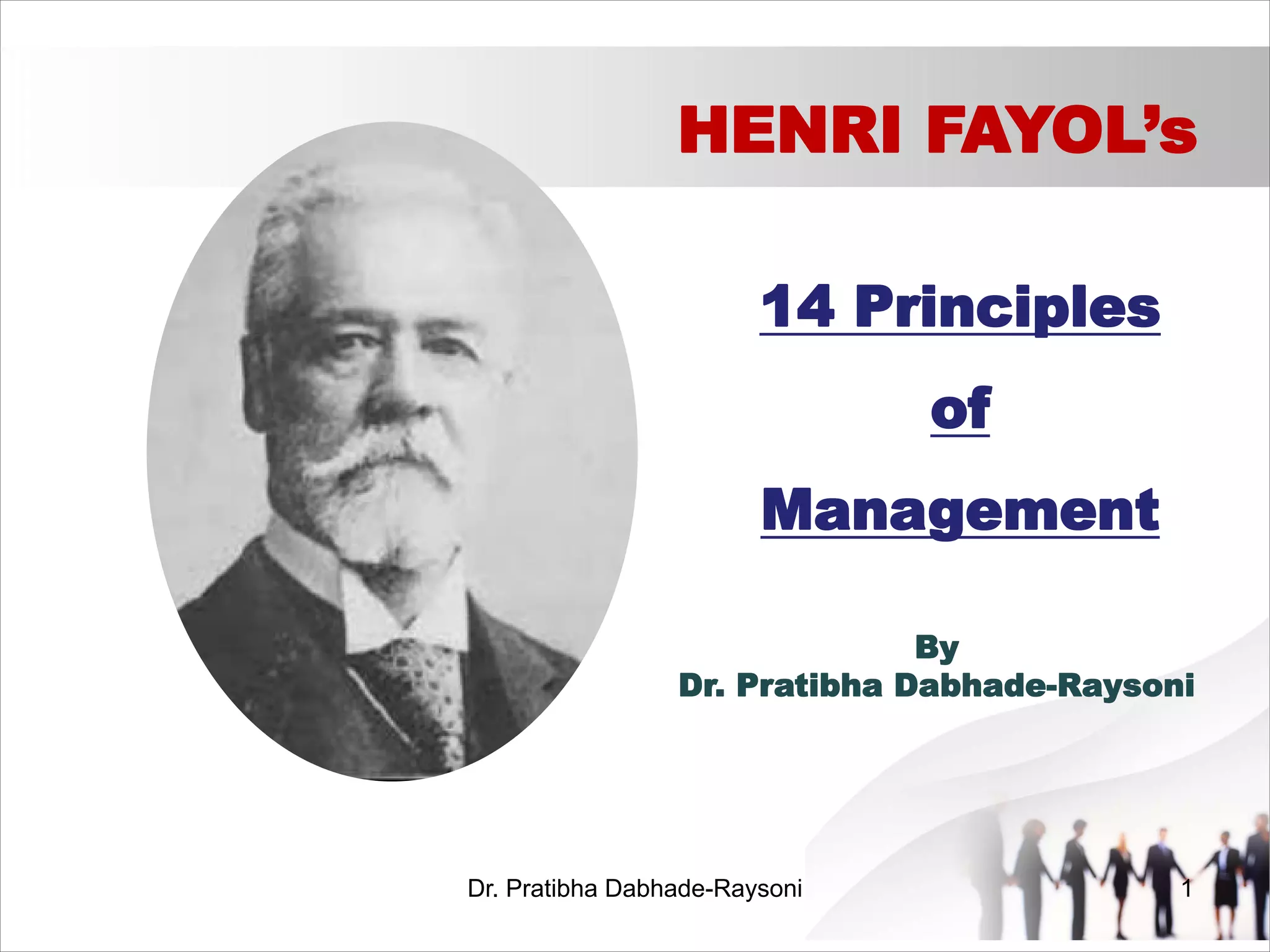
HENRI FAYOL’s
14 Principles
of
Management
By
Dr. Pratibha Dabhade-Raysoni
Dr. Pratibha Dabhade-Raysoni 1
Ø It is also knows as task specialization, that is
breaking down of a big task into smaller parts and
then assigning it to individuals.
Ø Work should be divided among individuals and
groups to ensure that effort and attention are
focused on special portions of the task.
Ø Fayol presented work specialization as the best
way to use the human resources of the
organization.
Dr. Pratibha Dabhade-Raysoni 2
2. AUTHORITY
Dr. Pratibha Dabhade-Raysoni 3
3.DISCIPLINE
Ø To obey rules and regulations is termed as
discipline. All level managers need to follow
discipline for efficient functioning of the institution.
Ø A successful organization requires the common
effort of workers.
Ø Penalties should be applied judiciously to
encourage this common effort.
Dr. Pratibha Dabhade-Raysoni 4
4. UNITY OF COMMAND
Ø Workers should receive orders from only one
manager.
Ø There should be proper command over all level
of managers.
Ø An employees should receive instructions from
his superior and should be accountable to only
one superior.
5. UNITY OF DIRECTION
Ø The entire organization should be moving towards a
common objective in a common direction.
Ø There should be proper guideline for all level
managers to follow an order in order to achieve the
predetermined goal and objectives of an institution.
Ø An action plan needs to be prepared which acts as a
guideline and provides direction to one and all.
6. SUBORDINATION OF
INDIVIDUAL INTERESTS TO THE
GENERAL INTERESTS
Ø The interests of one person should not take
priority over the interests of the organization as a
whole.
Ø It means that the employees working in an
institution should forget their own gains and
benefits for the growth and development of an
institution.
7. REMUNERATION
Ø Many variables, such as cost of living, supply of
qualified personnel, general business conditions,
and success of the business, should be considered
in determining a worker’s rate of pay.
Ø Salary should be given according to the work done
by every individual. Remuneration should be
provided according to the output and the quality of
the work done.
Dr. Pratibha Dabhade-Raysoni 8
8. CENTRALIZATION
AND DECENTRALIZATION
Ø Fayol defined centralization as lowering the
i m p o r t a n c e o f t h e s u b o r d i n a t e r o l e .
Decentralization is increasing the importance.
Ø Decision making to be carries out in a centralized
manner. Decisions are always taken by the higher
level managers whereas decisions should be
executed by lower level managers.
Ø The degree to which centralization or
decentralization should be adopted depends on the
specific organization in which the manager is
working.
Dr. Pratibha Dabhade-Raysoni 9
9. SCALAR CHAIN
Ø Managers in hierarchies are part of a chain like
authority scale.
Ø Each manager, from the first line supervisor to the
president, possess certain amounts of authority. The
President possesses the most authority; the first line
supervisor the least. Lower level managers should
always keep upper level managers informed of
their work activities.
Ø It refers to a flow of communication in any
institution. And it should be one way process from
higher level managers to lower level managers.
Dr. Pratibha Dabhade-Raysoni 10
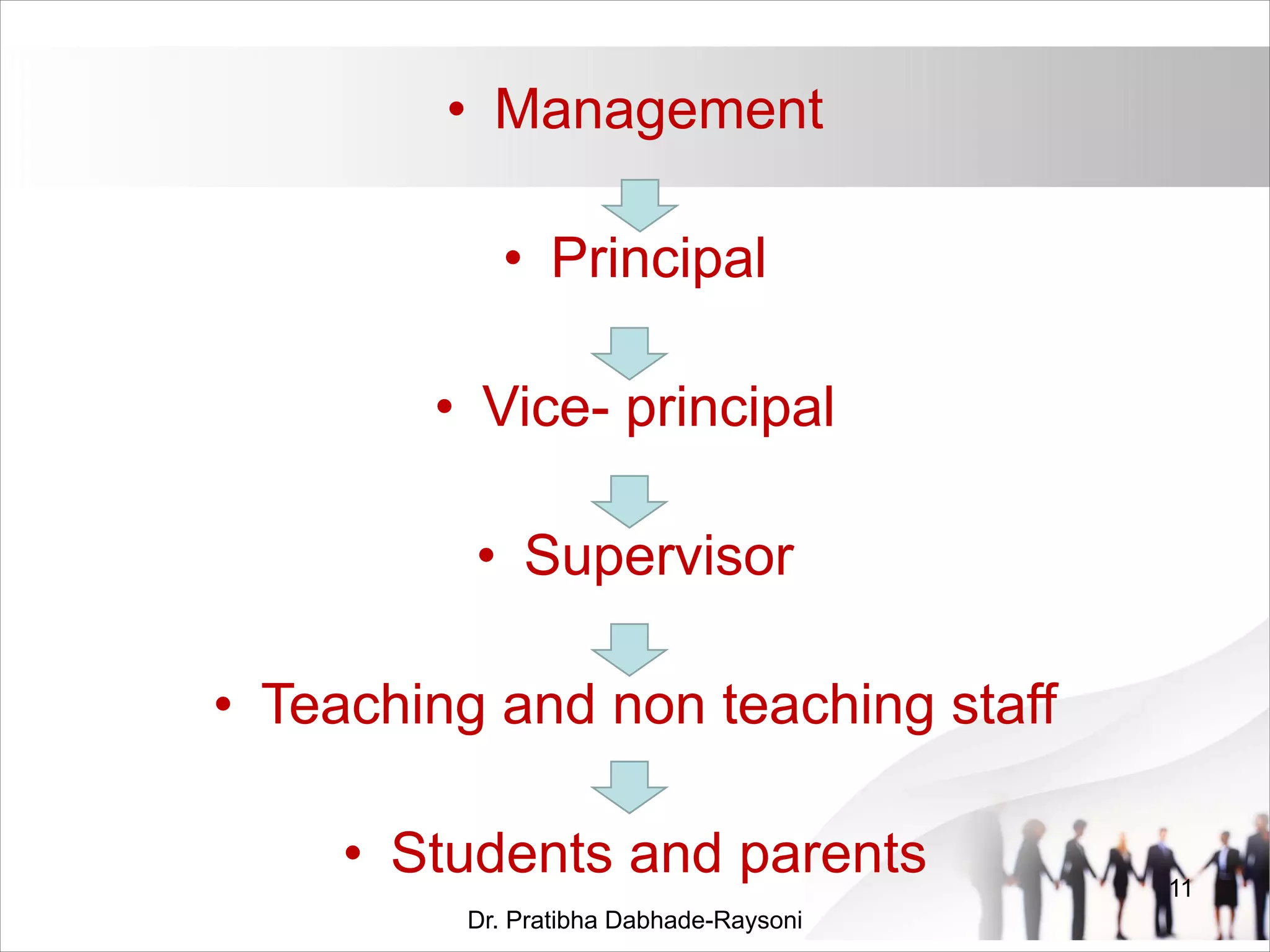
• Management
• Principal
• Vice- principal
• Supervisor
• Teaching and non teaching staff
• Students and parents
Dr. Pratibha Dabhade-Raysoni
11
10. ORDER
Ø Order means right man in the right place for the
right job.
Ø Fayol laid emphasis on optimum utilization of
available human resources to achieve efficiency at
work.
Dr. Pratibha Dabhade-Raysoni 12
11. EQUITY
Ø All employees should be treated as equally
and fairly.
12. STABILITY OF TENURE OF
PERSONNEL
Ø Fayol stresses on job security so that all lower
level managers can concentrate on their work.
Ø Retaining productive employees should always
be a high priority of management. Recruitment
and Selection Costs, are usually associated with
hiring new workers.
Dr. Pratibha Dabhade-Raysoni 14
13.INITIATIVE
Ø Management should take steps to encourage
worker initiative, which is defined as new or
additional work activity undertaken through self
direction.
Dr. Pratibha Dabhade-Raysoni 15
14. ESPIRIT DE CORPS
Ø Management should encourage harmony and
general good feelings among employees.
Dr. Pratibha Dabhade-Raysoni 17
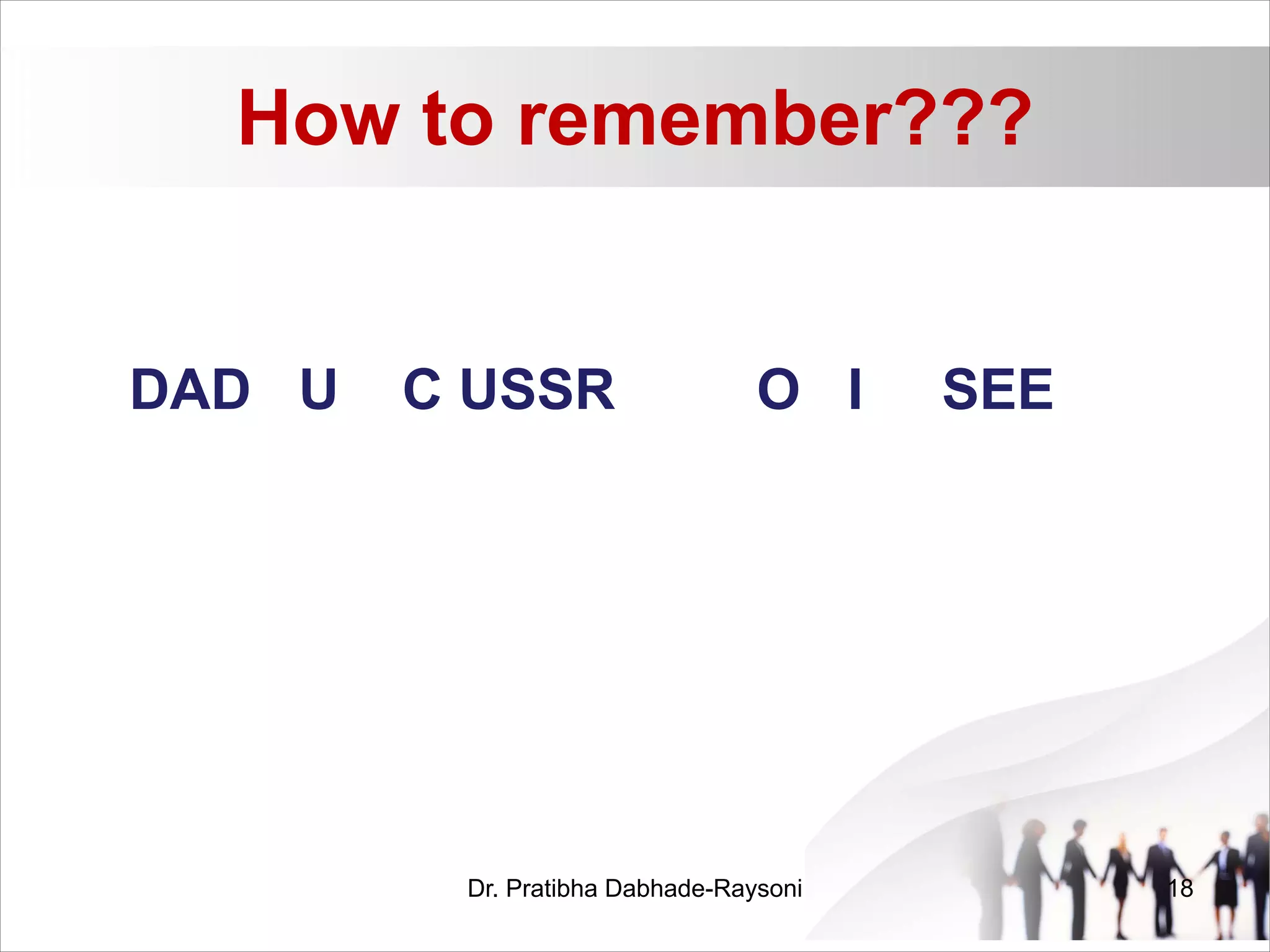
How to remember???
DAD U C USSR O I SEE
Dr. Pratibha Dabhade-Raysoni 18
THANK YOU
Dr. Pratibha Dabhade-Raysoni 19

Henri Fayols Principles of Management .pdf

  • 1.
    HENRI FAYOL’s 14 Principles of Management By Dr.Pratibha Dabhade-Raysoni Dr. Pratibha Dabhade-Raysoni 1
  • 2.
    Ø It isalso knows as task specialization, that is breaking down of a big task into smaller parts and then assigning it to individuals. Ø Work should be divided among individuals and groups to ensure that effort and attention are focused on special portions of the task. Ø Fayol presented work specialization as the best way to use the human resources of the organization. Dr. Pratibha Dabhade-Raysoni 2
  • 3.
    2. AUTHORITY Dr. PratibhaDabhade-Raysoni 3
  • 4.
    3.DISCIPLINE Ø To obeyrules and regulations is termed as discipline. All level managers need to follow discipline for efficient functioning of the institution. Ø A successful organization requires the common effort of workers. Ø Penalties should be applied judiciously to encourage this common effort. Dr. Pratibha Dabhade-Raysoni 4
  • 5.
    4. UNITY OFCOMMAND Ø Workers should receive orders from only one manager. Ø There should be proper command over all level of managers. Ø An employees should receive instructions from his superior and should be accountable to only one superior.
  • 6.
    5. UNITY OFDIRECTION Ø The entire organization should be moving towards a common objective in a common direction. Ø There should be proper guideline for all level managers to follow an order in order to achieve the predetermined goal and objectives of an institution. Ø An action plan needs to be prepared which acts as a guideline and provides direction to one and all.
  • 7.
    6. SUBORDINATION OF INDIVIDUALINTERESTS TO THE GENERAL INTERESTS Ø The interests of one person should not take priority over the interests of the organization as a whole. Ø It means that the employees working in an institution should forget their own gains and benefits for the growth and development of an institution.
  • 8.
    7. REMUNERATION Ø Manyvariables, such as cost of living, supply of qualified personnel, general business conditions, and success of the business, should be considered in determining a worker’s rate of pay. Ø Salary should be given according to the work done by every individual. Remuneration should be provided according to the output and the quality of the work done. Dr. Pratibha Dabhade-Raysoni 8
  • 9.
    8. CENTRALIZATION AND DECENTRALIZATION ØFayol defined centralization as lowering the i m p o r t a n c e o f t h e s u b o r d i n a t e r o l e . Decentralization is increasing the importance. Ø Decision making to be carries out in a centralized manner. Decisions are always taken by the higher level managers whereas decisions should be executed by lower level managers. Ø The degree to which centralization or decentralization should be adopted depends on the specific organization in which the manager is working. Dr. Pratibha Dabhade-Raysoni 9
  • 10.
    9. SCALAR CHAIN ØManagers in hierarchies are part of a chain like authority scale. Ø Each manager, from the first line supervisor to the president, possess certain amounts of authority. The President possesses the most authority; the first line supervisor the least. Lower level managers should always keep upper level managers informed of their work activities. Ø It refers to a flow of communication in any institution. And it should be one way process from higher level managers to lower level managers. Dr. Pratibha Dabhade-Raysoni 10
  • 11.
    • Management • Principal •Vice- principal • Supervisor • Teaching and non teaching staff • Students and parents Dr. Pratibha Dabhade-Raysoni 11
  • 12.
    10. ORDER Ø Ordermeans right man in the right place for the right job. Ø Fayol laid emphasis on optimum utilization of available human resources to achieve efficiency at work. Dr. Pratibha Dabhade-Raysoni 12
  • 13.
    11. EQUITY Ø Allemployees should be treated as equally and fairly.
  • 14.
    12. STABILITY OFTENURE OF PERSONNEL Ø Fayol stresses on job security so that all lower level managers can concentrate on their work. Ø Retaining productive employees should always be a high priority of management. Recruitment and Selection Costs, are usually associated with hiring new workers. Dr. Pratibha Dabhade-Raysoni 14
  • 15.
    13.INITIATIVE Ø Management shouldtake steps to encourage worker initiative, which is defined as new or additional work activity undertaken through self direction. Dr. Pratibha Dabhade-Raysoni 15
  • 16.
    14. ESPIRIT DECORPS Ø Management should encourage harmony and general good feelings among employees.
  • 17.
  • 18.
    How to remember??? DADU C USSR O I SEE Dr. Pratibha Dabhade-Raysoni 18
  • 19.
    THANK YOU Dr. PratibhaDabhade-Raysoni 19