Welcome
To
Presentation
Present by binay kumar
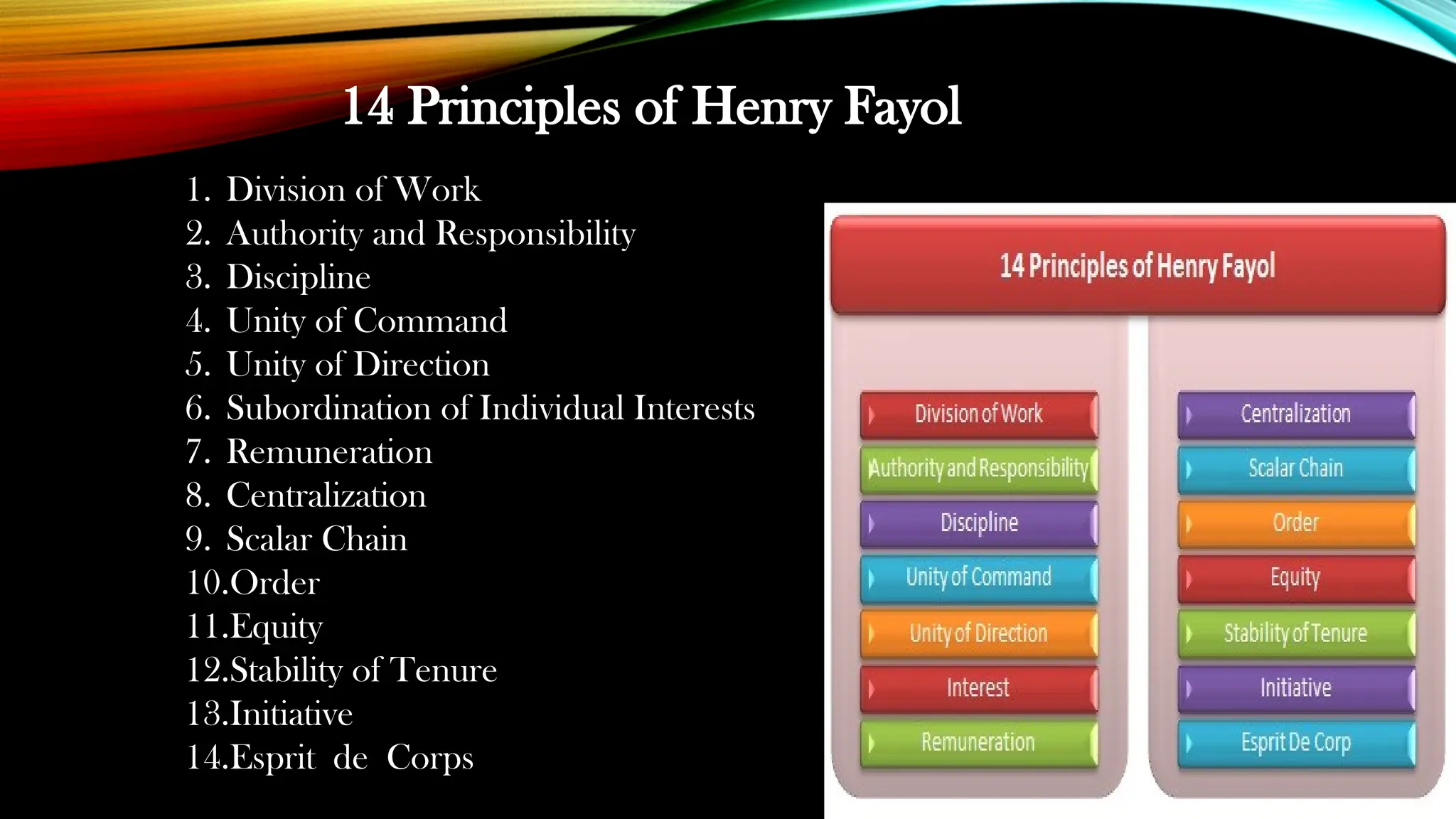
14 Principles of Henry Fayol
1. Division of Work
2. Authority and Responsibility
3. Discipline
4. Unity of Command
5. Unity of Direction
6. Subordination of Individual Interests
7. Remuneration
8. Centralization
9. Scalar Chain
10.Order
11.Equity
12.Stability of Tenure
13.Initiative
14.Esprit de Corps
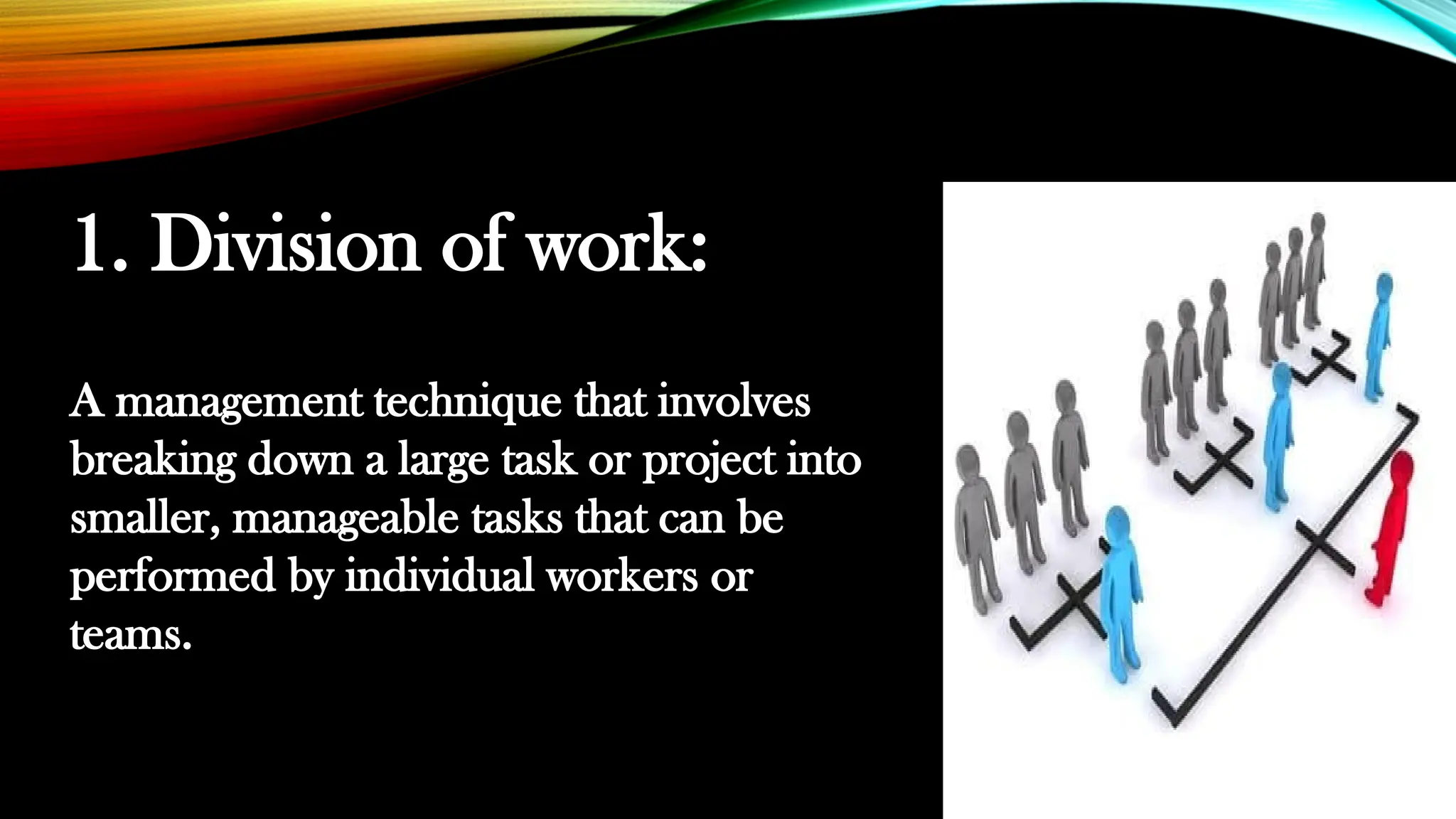
1. Division of work:
A management technique that involves
breaking down a large task or project into
smaller, manageable tasks that can be
performed by individual workers or
teams.
2. Authority and Responsibility:
Authority and responsibility are interconnected
concepts in management. Authority is the power to
make decisions, give orders, and enforce rules, while
responsibility is the obligation to complete tasks and be
accountable for the outcomes. Effective management
requires a balance between both—authority enables
action, and responsibility ensures accountability.
3. Discipline:
Discipline refers to the practice of training oneself or
others to follow rules, regulations, and a code of behavior.
It involves self-control, dedication, and adherence to a set
of principles to achieve goals. Discipline can be personal
(self-discipline) or enforced by an authority
(organizational or societal discipline). It plays a crucial
role in success, productivity, and maintaining order in
various aspects of life.
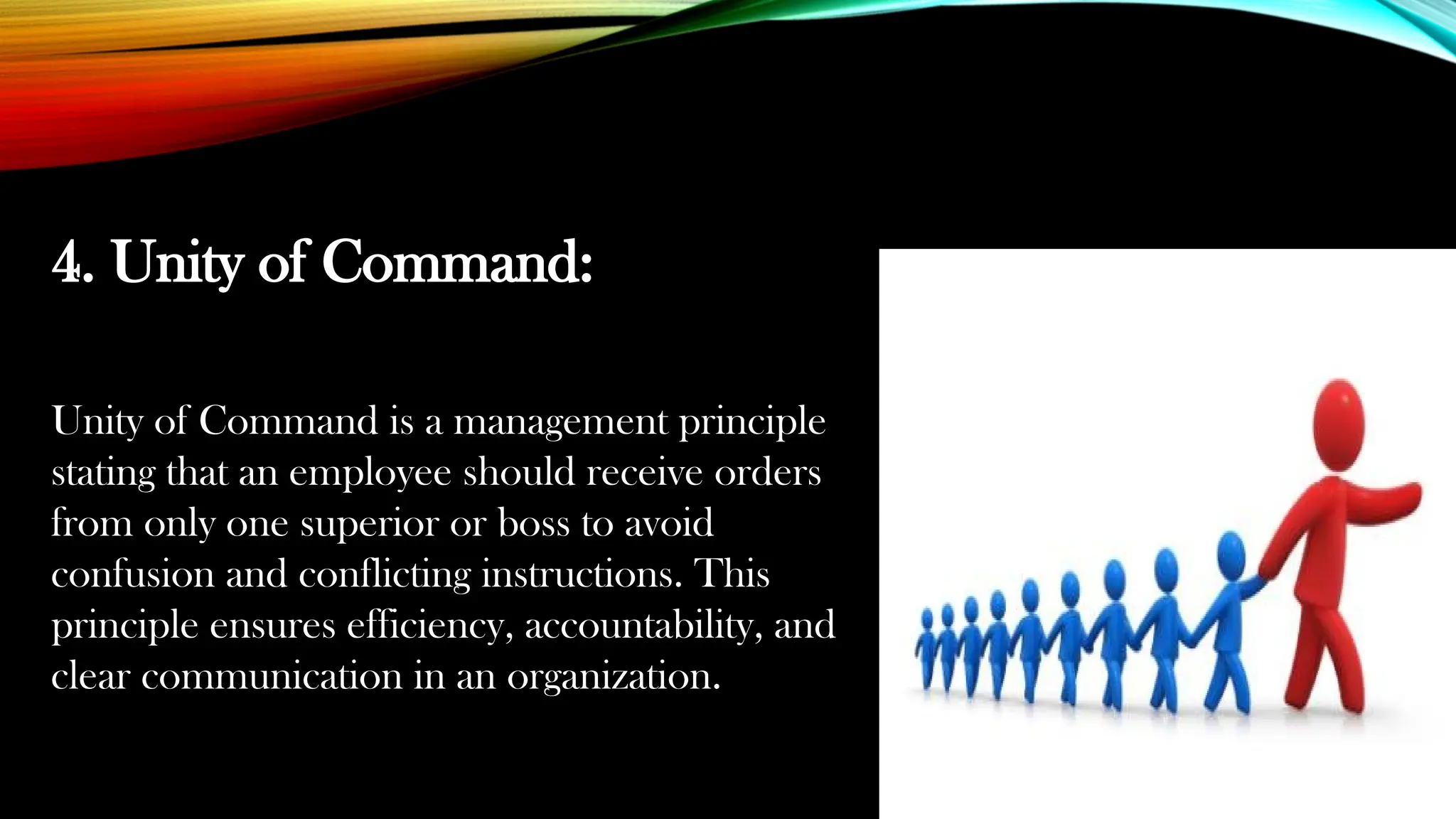
4. Unity of Command:
Unity of Command is a management principle
stating that an employee should receive orders
from only one superior or boss to avoid
confusion and conflicting instructions. This
principle ensures efficiency, accountability, and
clear communication in an organization.
5. Unity of Direction
Unity of Direction is a management principle
stating that all activities with the same objective
should be directed by a single manager and
follow a unified plan. This ensures better
coordination, efficiency, and goal achievement
within an organization.
6. Subordination of Individual Interests:
Subordination of Individual Interest is a principle of management given by
Henri Fayol. It states that the interests of an individual employee should not
take precedence over the interests of the organization as a whole.
This means that employees should prioritize the company's objectives over
their personal goals. For example, if a worker wants to take a leave during a
crucial project deadline, they should consider the company's needs first and
adjust accordingly. This principle ensures teamwork, discipline, and
organizational success.
7. Remuneration:
Remuneration refers to the compensation or payment
given to an employee for their work or services. It
includes salaries, wages, bonuses, incentives, and other
financial or non-financial benefits.
In management, fair remuneration is essential to keep
employees motivated and satisfied, ensuring
productivity and loyalty to the organization.
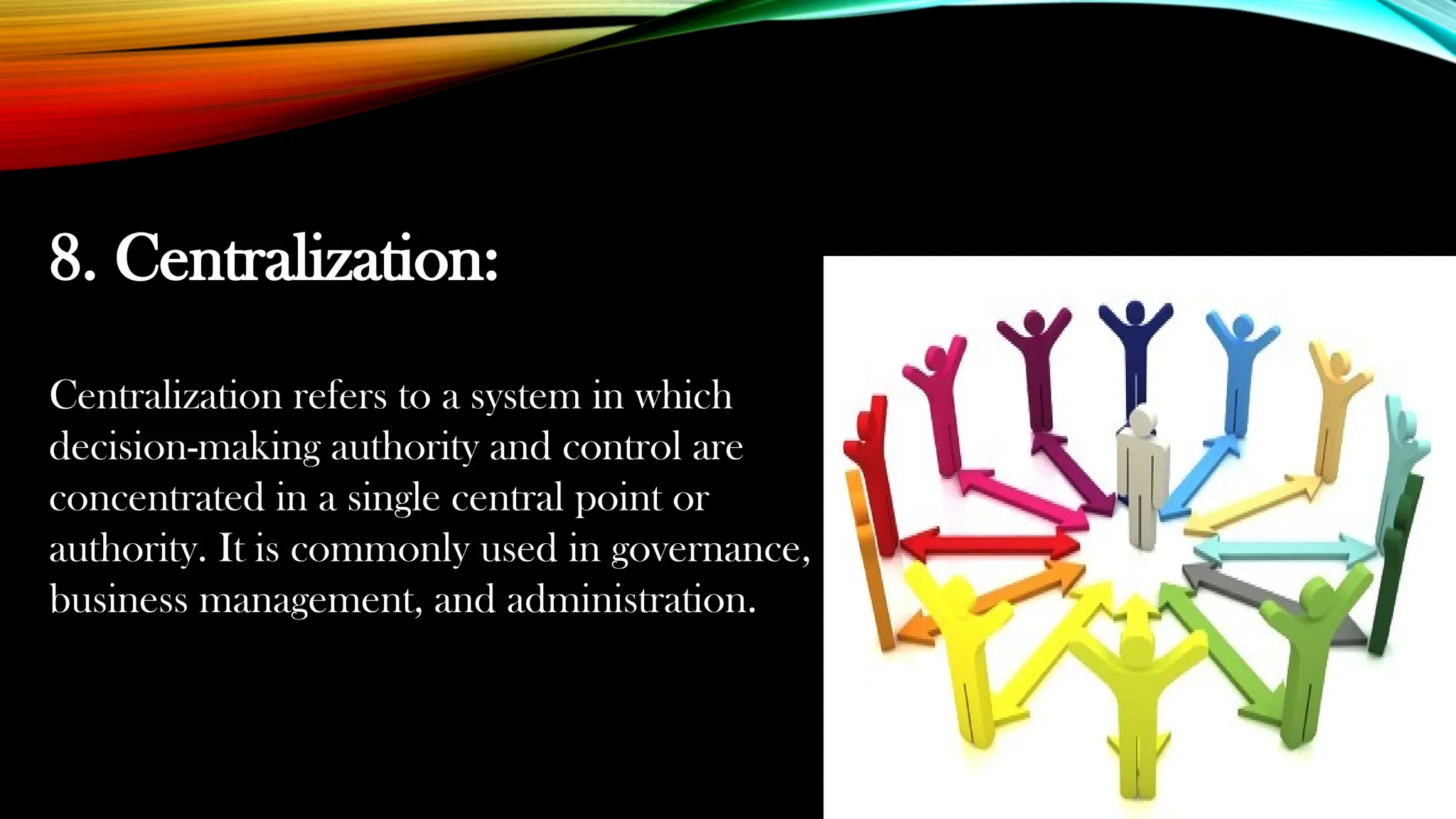
8. Centralization:
Centralization refers to a system in which
decision-making authority and control are
concentrated in a single central point or
authority. It is commonly used in governance,
business management, and administration.
9. Scalar Chain:
Scalar chain means the line of authority or
the chain of superiors from the highest to
the lowest rank. Fayol always said that this
chain must be followed strictly in
the organization.
10. Order:
Fayol said that everything and everyone
in an organization should have a fixed
place, and everything and everyone
should be in their designated place.
11. Equity
Equity refers to kind, fair, and just
treatment of employees regardless
of their gender, caste, religion, etc.
12. Stability of Tenure
According to this principle,
management must provide job
security to employees and avoid
frequent transfers and
turnover of employees.
13. Initiative
Initiative refers to taking the first step with
self-motivation. Fayol suggested that
employees in the organization must have an
opportunity to take some initiative in making
and executing a plan.
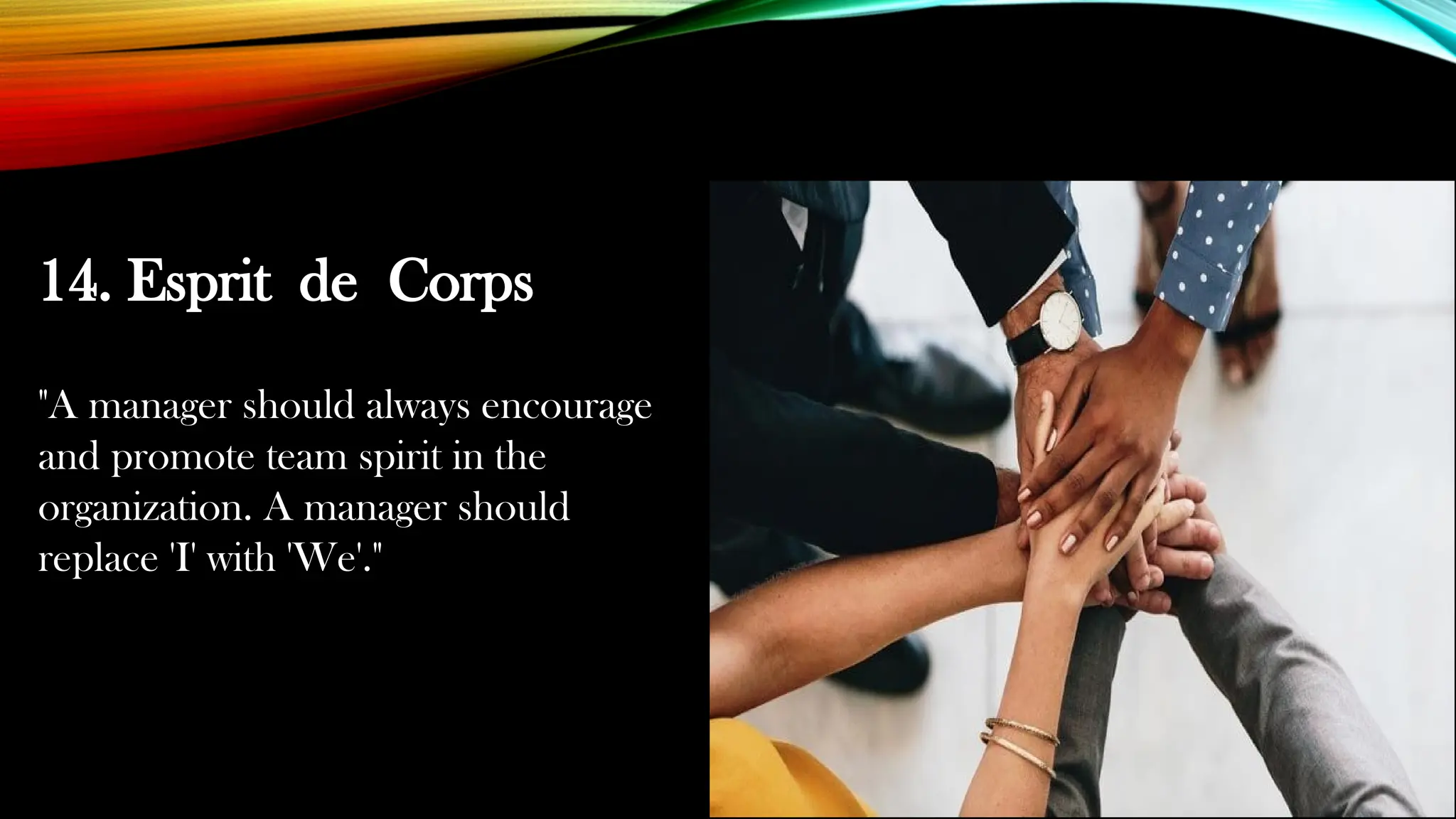
14. Esprit de Corps
"A manager should always encourage
and promote team spirit in the
organization. A manager should
replace 'I' with 'We'."
Thank
you

Principal management. 14 principal management

  • 1.
  • 2.
    14 Principles ofHenry Fayol 1. Division of Work 2. Authority and Responsibility 3. Discipline 4. Unity of Command 5. Unity of Direction 6. Subordination of Individual Interests 7. Remuneration 8. Centralization 9. Scalar Chain 10.Order 11.Equity 12.Stability of Tenure 13.Initiative 14.Esprit de Corps
  • 3.
    1. Division ofwork: A management technique that involves breaking down a large task or project into smaller, manageable tasks that can be performed by individual workers or teams.
  • 4.
    2. Authority andResponsibility: Authority and responsibility are interconnected concepts in management. Authority is the power to make decisions, give orders, and enforce rules, while responsibility is the obligation to complete tasks and be accountable for the outcomes. Effective management requires a balance between both—authority enables action, and responsibility ensures accountability.
  • 5.
    3. Discipline: Discipline refersto the practice of training oneself or others to follow rules, regulations, and a code of behavior. It involves self-control, dedication, and adherence to a set of principles to achieve goals. Discipline can be personal (self-discipline) or enforced by an authority (organizational or societal discipline). It plays a crucial role in success, productivity, and maintaining order in various aspects of life.
  • 6.
    4. Unity ofCommand: Unity of Command is a management principle stating that an employee should receive orders from only one superior or boss to avoid confusion and conflicting instructions. This principle ensures efficiency, accountability, and clear communication in an organization.
  • 7.
    5. Unity ofDirection Unity of Direction is a management principle stating that all activities with the same objective should be directed by a single manager and follow a unified plan. This ensures better coordination, efficiency, and goal achievement within an organization.
  • 8.
    6. Subordination ofIndividual Interests: Subordination of Individual Interest is a principle of management given by Henri Fayol. It states that the interests of an individual employee should not take precedence over the interests of the organization as a whole. This means that employees should prioritize the company's objectives over their personal goals. For example, if a worker wants to take a leave during a crucial project deadline, they should consider the company's needs first and adjust accordingly. This principle ensures teamwork, discipline, and organizational success.
  • 9.
    7. Remuneration: Remuneration refersto the compensation or payment given to an employee for their work or services. It includes salaries, wages, bonuses, incentives, and other financial or non-financial benefits. In management, fair remuneration is essential to keep employees motivated and satisfied, ensuring productivity and loyalty to the organization.
  • 10.
    8. Centralization: Centralization refersto a system in which decision-making authority and control are concentrated in a single central point or authority. It is commonly used in governance, business management, and administration.
  • 11.
    9. Scalar Chain: Scalarchain means the line of authority or the chain of superiors from the highest to the lowest rank. Fayol always said that this chain must be followed strictly in the organization.
  • 12.
    10. Order: Fayol saidthat everything and everyone in an organization should have a fixed place, and everything and everyone should be in their designated place.
  • 13.
    11. Equity Equity refersto kind, fair, and just treatment of employees regardless of their gender, caste, religion, etc.
  • 14.
    12. Stability ofTenure According to this principle, management must provide job security to employees and avoid frequent transfers and turnover of employees.
  • 15.
    13. Initiative Initiative refersto taking the first step with self-motivation. Fayol suggested that employees in the organization must have an opportunity to take some initiative in making and executing a plan.
  • 16.
    14. Esprit deCorps "A manager should always encourage and promote team spirit in the organization. A manager should replace 'I' with 'We'."
  • 17.