The document discusses the distinction between brand and campaign platforms in higher education marketing, highlighting their characteristics and how they serve different purposes. A brand platform is long-term and focuses on identity, while a campaign platform is short-term and promotes specific actions. Successful brand campaigns convey authenticity, aspiration, clarity, and timelessness, and can help achieve key metrics over time.
Discusses the need to balance brand and campaign strategies in higher education marketing.
Explains the historical precedence of brand campaigns over traditional campaigns and their evolving roles.
Describes brand platforms as long-term and identity-focused versus campaign platforms as short-term and results-driven.
Illustrates the differences in focus between brand strategy and campaign strategy.
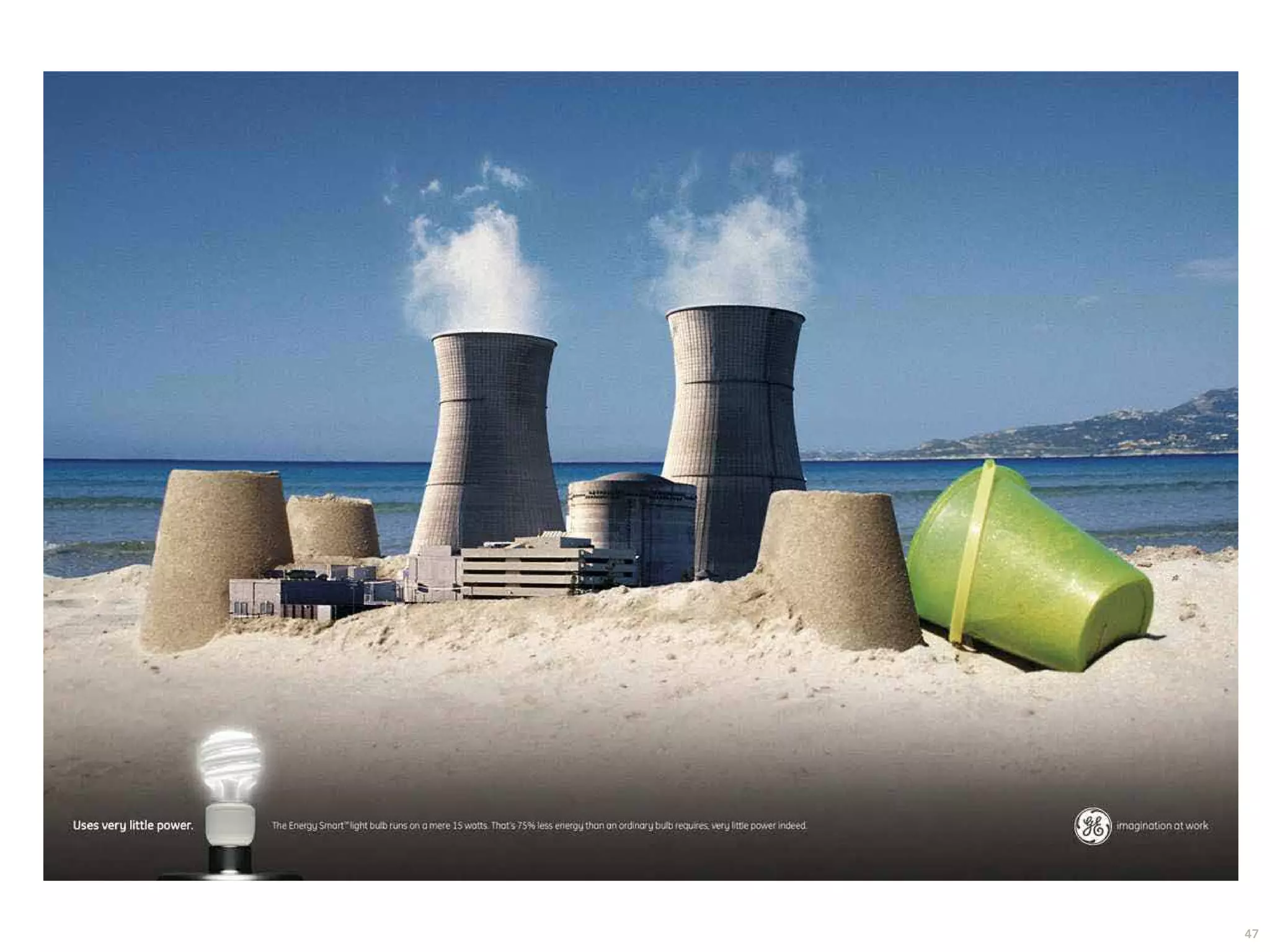
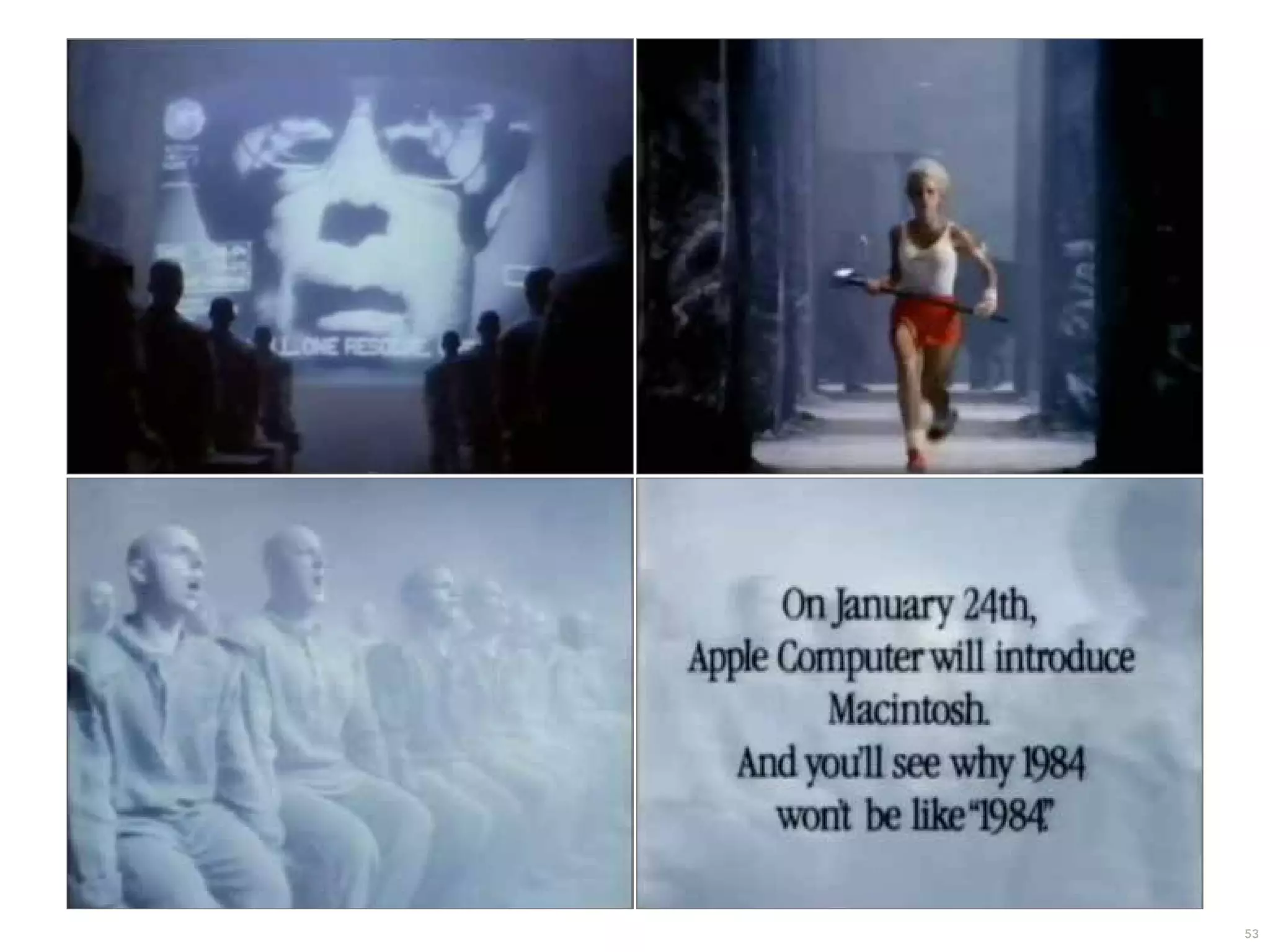
Explains how strong brands utilize campaigns to convey ideas beyond mere products with examples.
Presents various successful brand campaigns to exemplify effective branding.
Highlights noteworthy brand campaigns, focusing on themes like outstanding performance and customer experience.
Defines successful brand campaigns as authentic, aspirational, and clear, with a specific focus on higher education contexts.
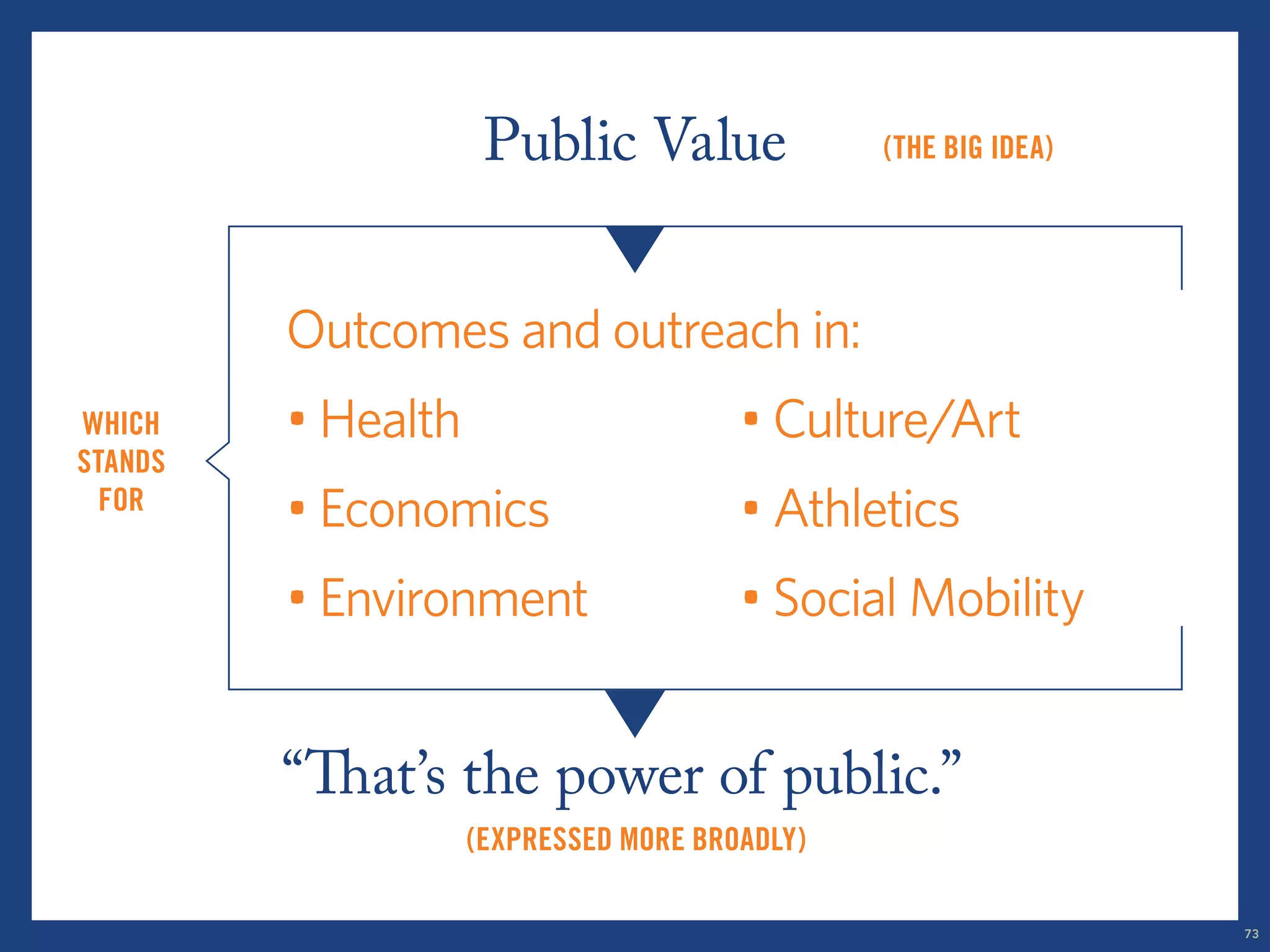
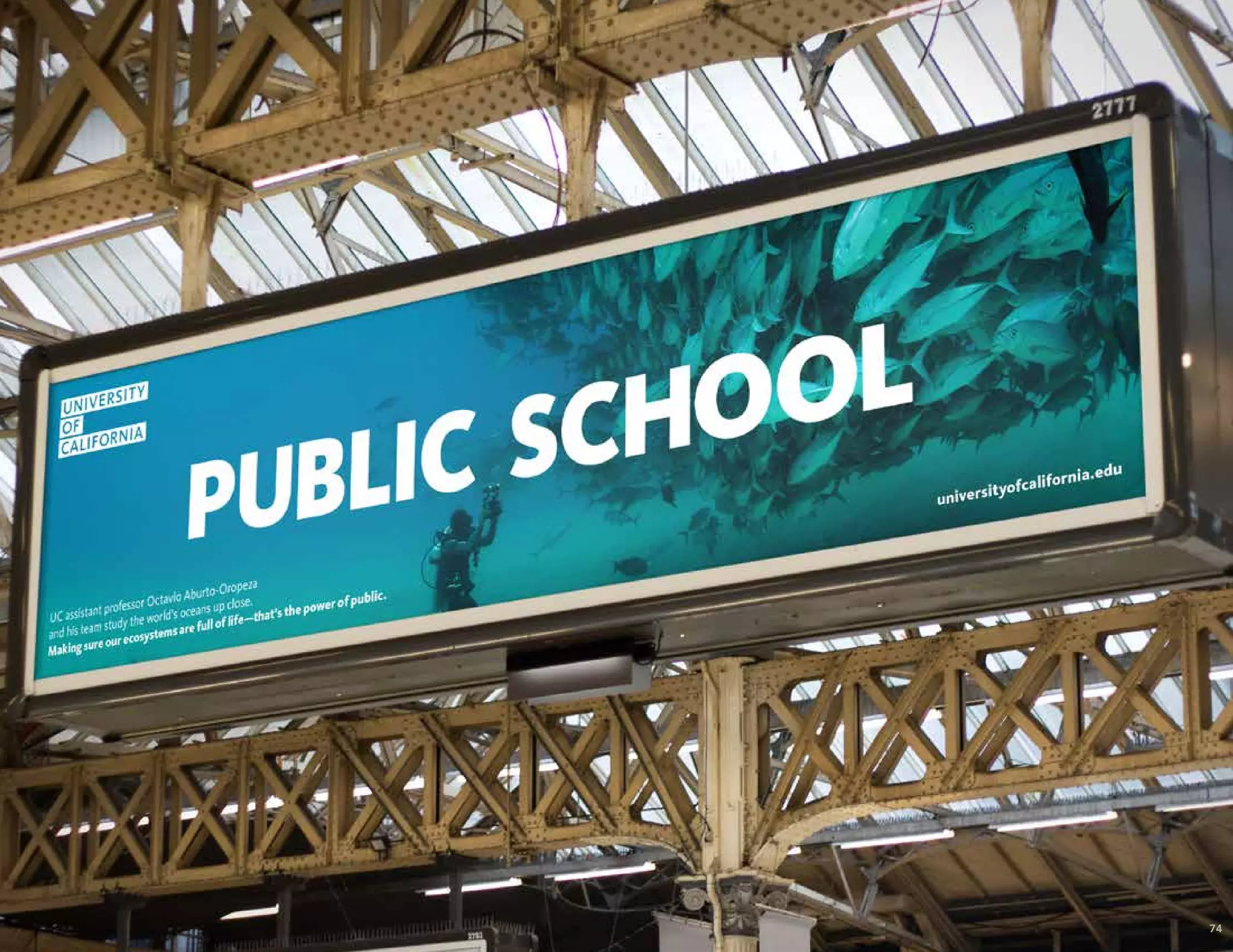
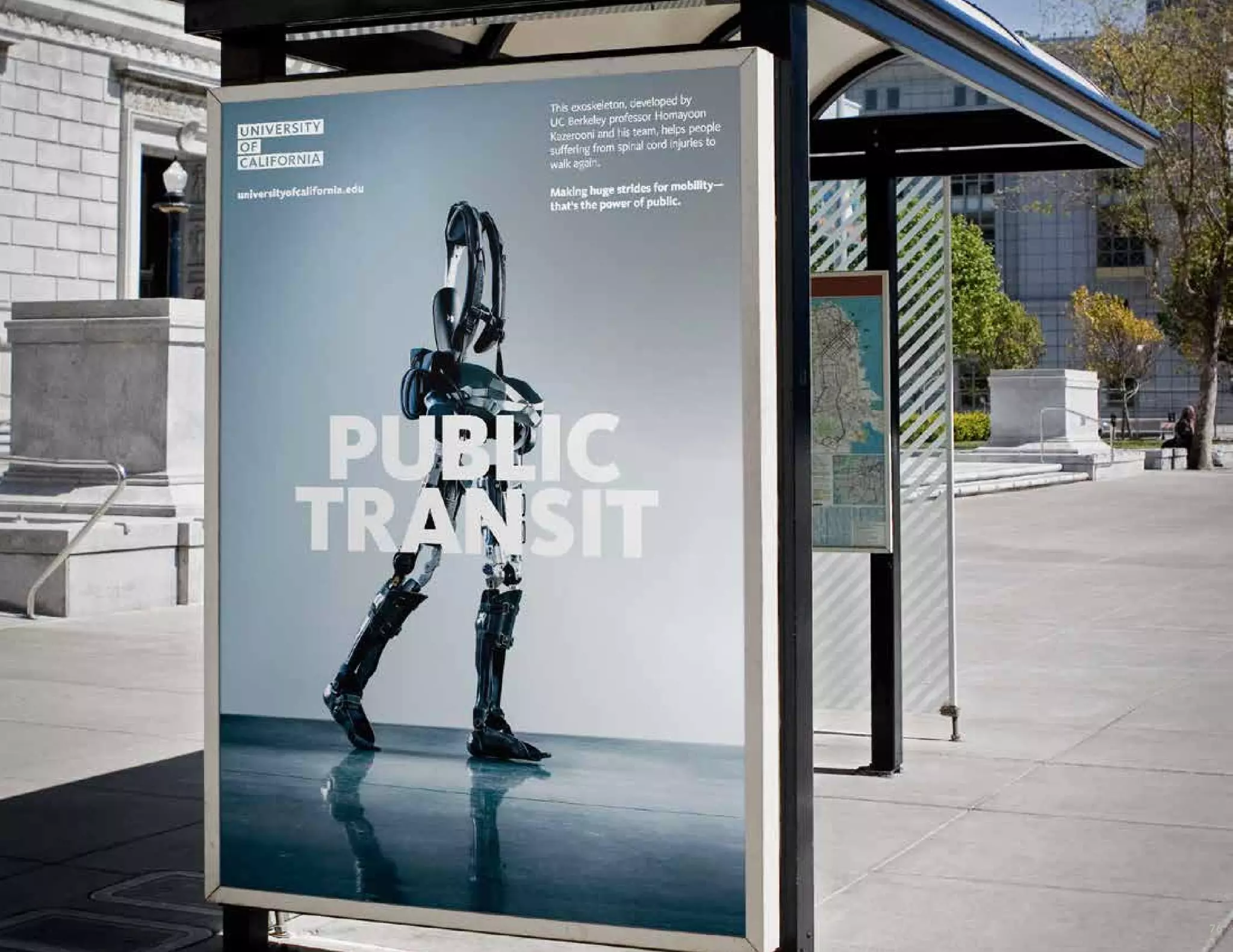
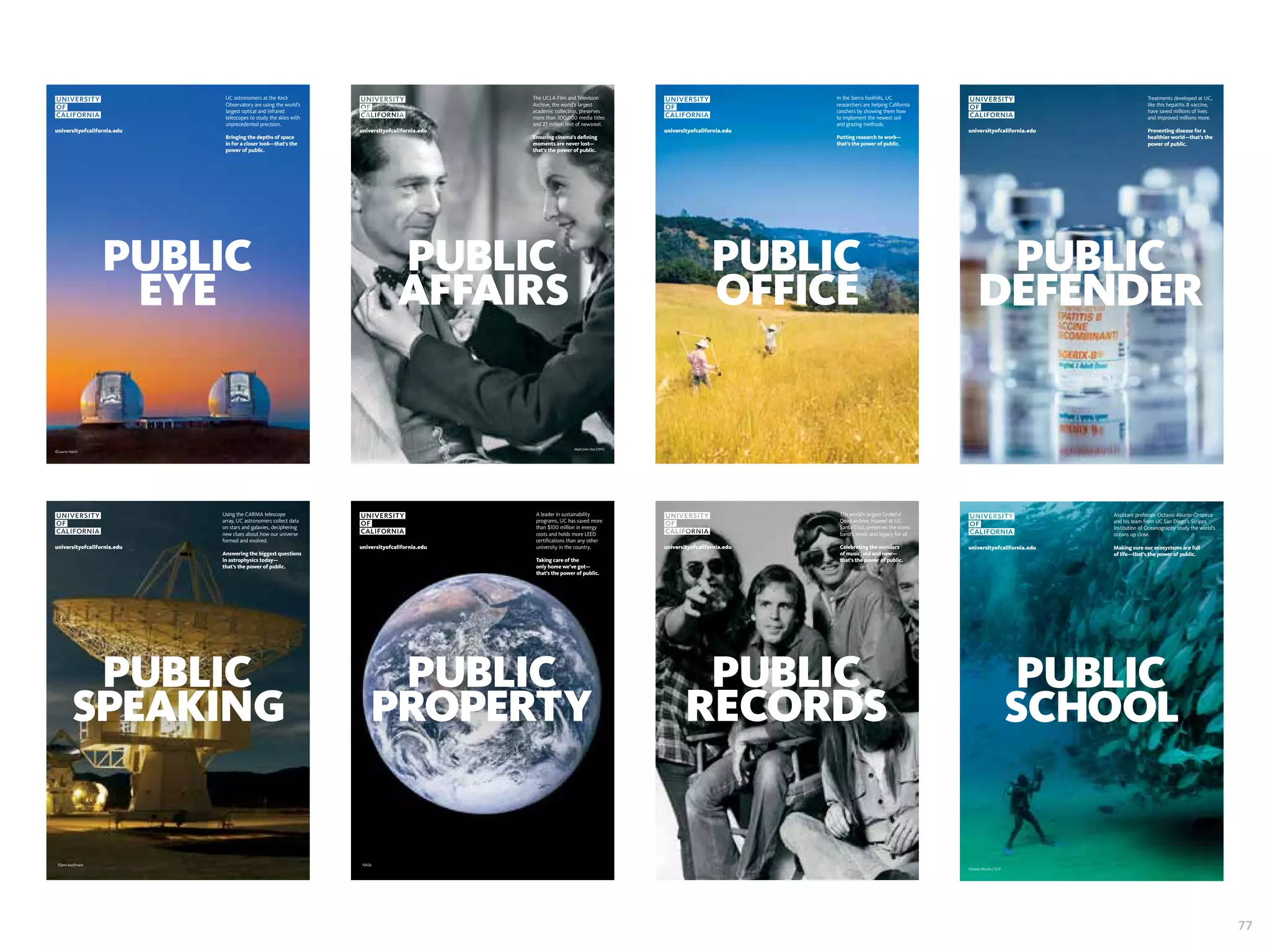
Showcases specific university campaigns that exemplify significant public value and commitment to societal impact.
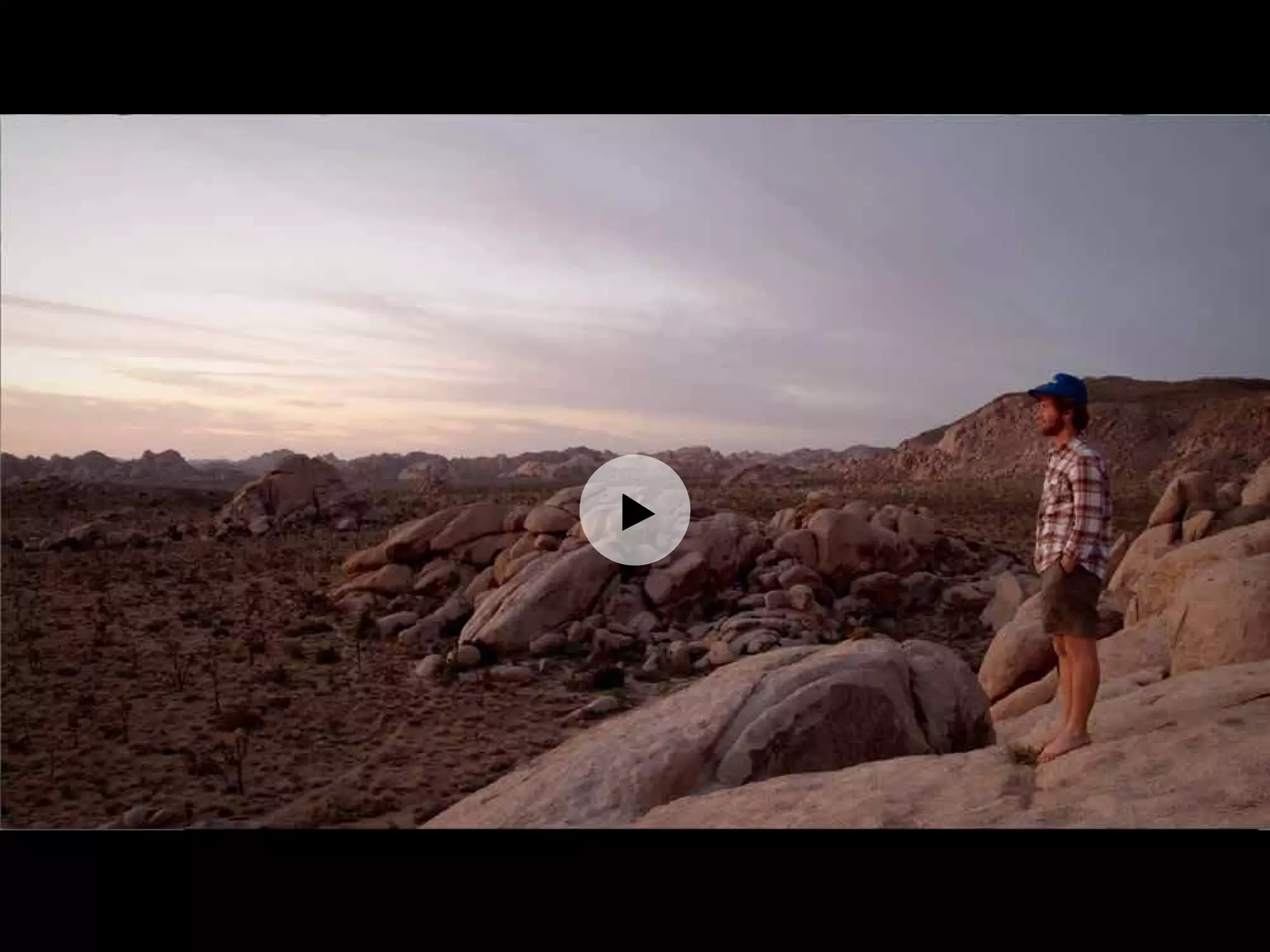
Discusses the concept of 'boundless' opportunities in branding, emphasizing shared community spirit and potential.
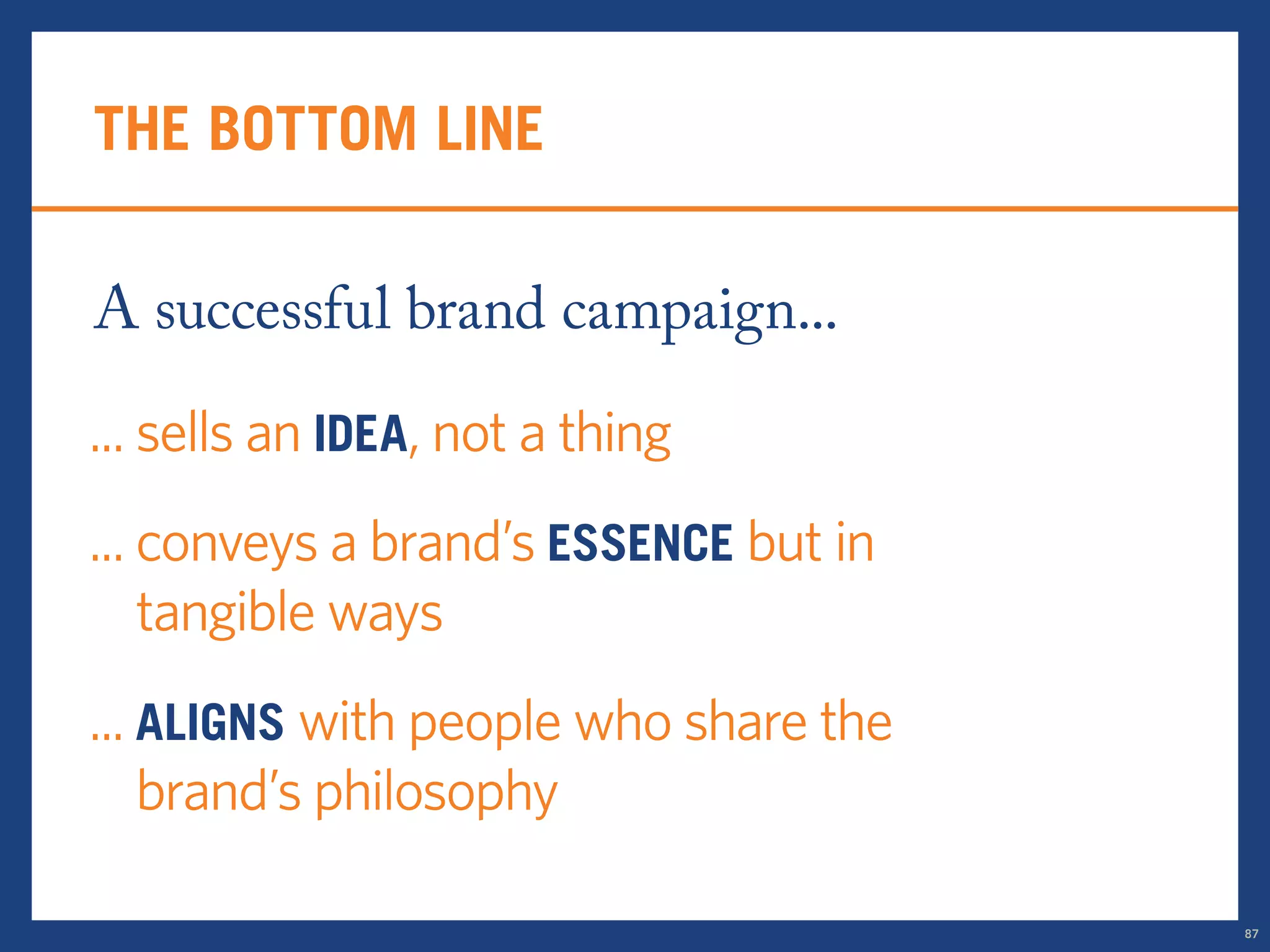
Summarizes the metrics brands should focus on for successful campaigns, emphasizing idea selling over product promotion. Concludes the presentation, inviting questions from the audience about branding and campaigning.
Brand
VS.Campaign?
Brand
+Campaign?
OR
Balancing short-term and long-term goals in Higher Ed Marketing
1
2.
Teri Lucie Thompson
University of Arizona
@terilucie
Bill Faust
Ologie
@williamfaust
2
3.
our agenda fortoday
Brands vs. Campaigns
• Defining a brand platform
• Defining a campaign platform
What is a “brand campaign”?
• Some examples outside and inside higher ed
Insights and conclusions
3
4.
Historically...
brand campaign
• came first
• more about identity
and experience
But these lines are blurring.
• came second
• more about promoting
something specific
4
5.
A brand platformis typically...
• A longer-term proposition (5–10 years or more)
• A filter for many decisions (beyond communications)
• A tool to drive PERCEPTION
• Derived from organizational purpose
• Lived and reinforced over time
• Created for all stakeholders
5
6.
A traditional campaign
platform is typically...
• A shorter-term proposition (1–3 years or less)
• More about promoting something specific
• A tool to drive behavior (call to action)
• Derived from a focused message strategy
• Focused on near-term results
• Tailored to selected stakeholders
6
7.
A brand platformincludes
brand strategy
+
experience
More about the WHO and WHY
(we are) (we exist)
7
8.
A traditional campaignplatform includes
message strategy
+
story
More about the WHAT and HOW
(we offer) (you benefit)
8
9.
Strong brands oftenuse campaigns
to sell ideas... not just “things.”
campaign
platform
brand
platform
“brand campaign”
9
Expressed in manyways...
the sign off
(Ding!) You are now free to move about
the country.
The employee promise
Freedom begins with you and me.
the company store
The Freedom Shop
29
But what makesthese successful
brand campaigns?
• They are AUTHENTIC
• They are ASPIRATIONAL but grounded in
reality (see above)
• They are SIMPLE, clear, and engaging
• They convey a strong POINT OF VIEW
• They are timeless (some have run for decades)
60
52.
But in highered...
• Branding is still relatively new (10–15 years)
• Campaigns are typically very focused
– on recruiting students
– on raising money
• Resources are scarce
Can a brand campaign be succesful?
61
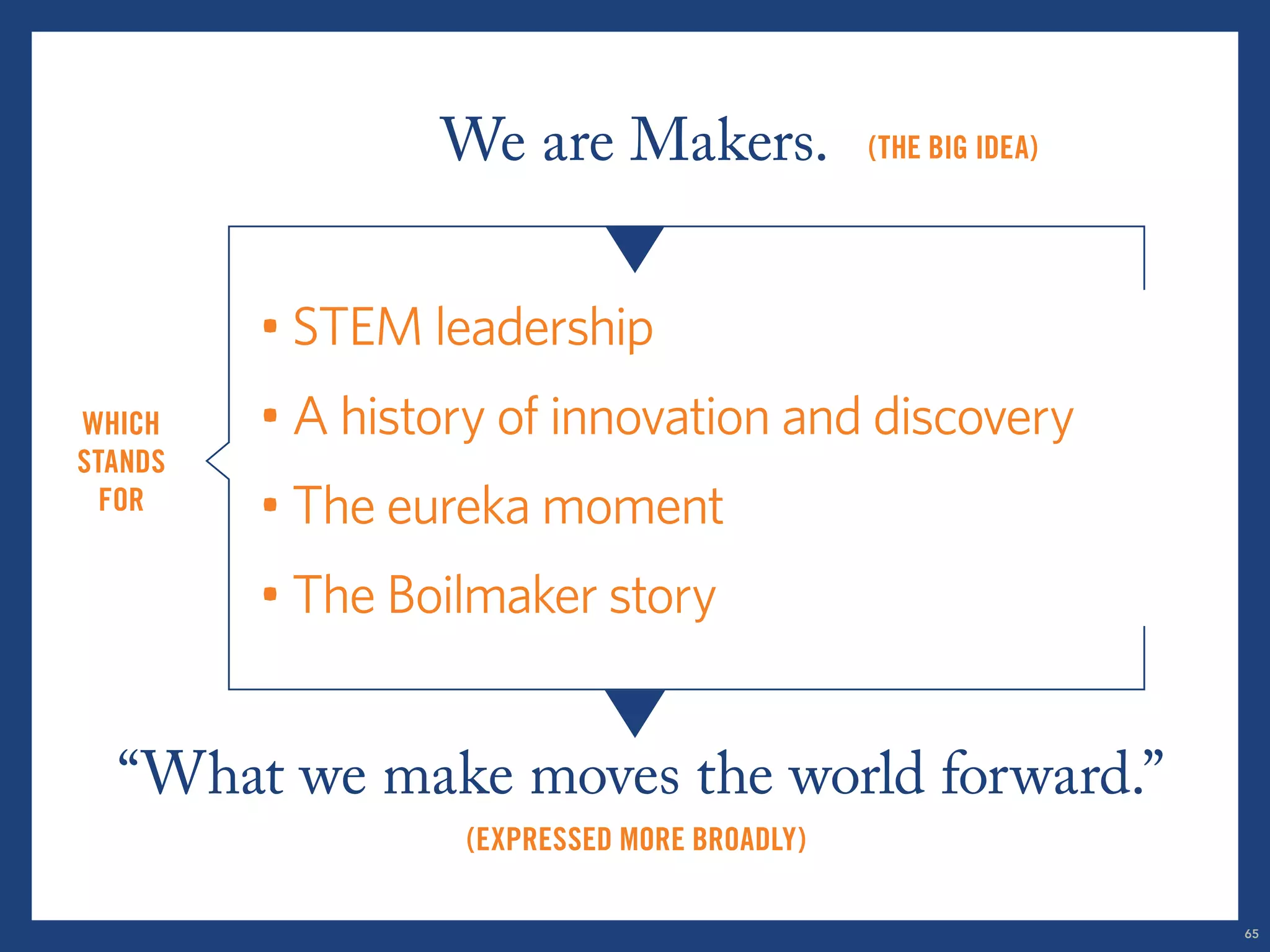
We are Makers.
(the big idea)
• STEM leadership
• A history of innovation and discovery
• The eureka moment
• The Boilmaker story
which
stands
for
“What we make moves the world forward.”
(expressed more broadly)
65
Public Value
Outcomesand outreach in:
• Health
• Economics
• Environment
(the big idea)
• Culture/Art
• Athletics
• Social Mobility
“That’s the power of public.”
(expressed more broadly)
which
stands
for
73
Boundless
(the bigidea)
• A shared mind set – unlimited potential
• A shared spirit – Bear Down
• Both literal and figurative
• Never Settle – the strategic platform
“Bigger questions. Better answers. Bear down.”
(expressed more broadly)
which
stands
for
80
HERE FOR
BUSINESS?
SO ARE WE.
NO. 2
PUBLIC
ENTREPRENEURSHIP
PROGRAM
130+
INVENTIONS
DISCLOSED AND PATENTS
FILED (2013)
NO. 1
FEDERAL RESEARCH
FUNDING
(BUSINESS FACULTY)
#BUSINESS #BEARDOWN ARIZONA.EDU/BEARDOWN
84
74.
the bottom line
A successful brand campaign...
... sells an idea, not a thing
... conveys a brand’s essence but in
tangible ways
... aligns with people who share the
brand’s philosophy
87
75.
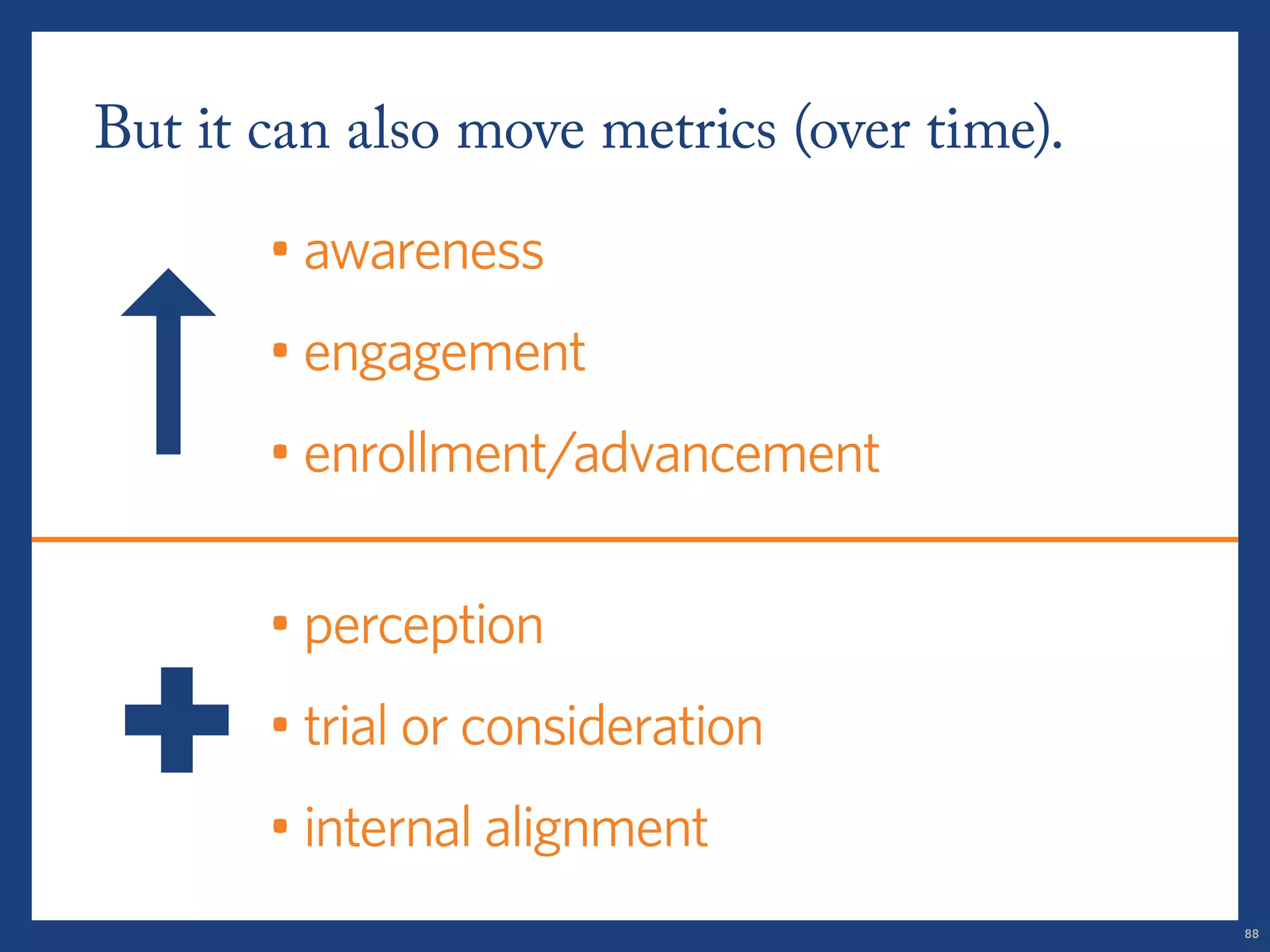
But it canalso move metrics (over time).
• awareness
• engagement
• enrollment/advancement
• perception
• trial or consideration
• internal alignment
+
88