WHAT IS YOUR
                STRATEGY?
And how well do you leverage the six drivers of strategic value?


 BRETT PINEGAR
 achieve extraordinary results
                                                 www.brettpinegar.com
A strategy or business model* is a
critical part of your organization’s
       roadmap for success.


         *I consider strategies and business models to be the same thing.
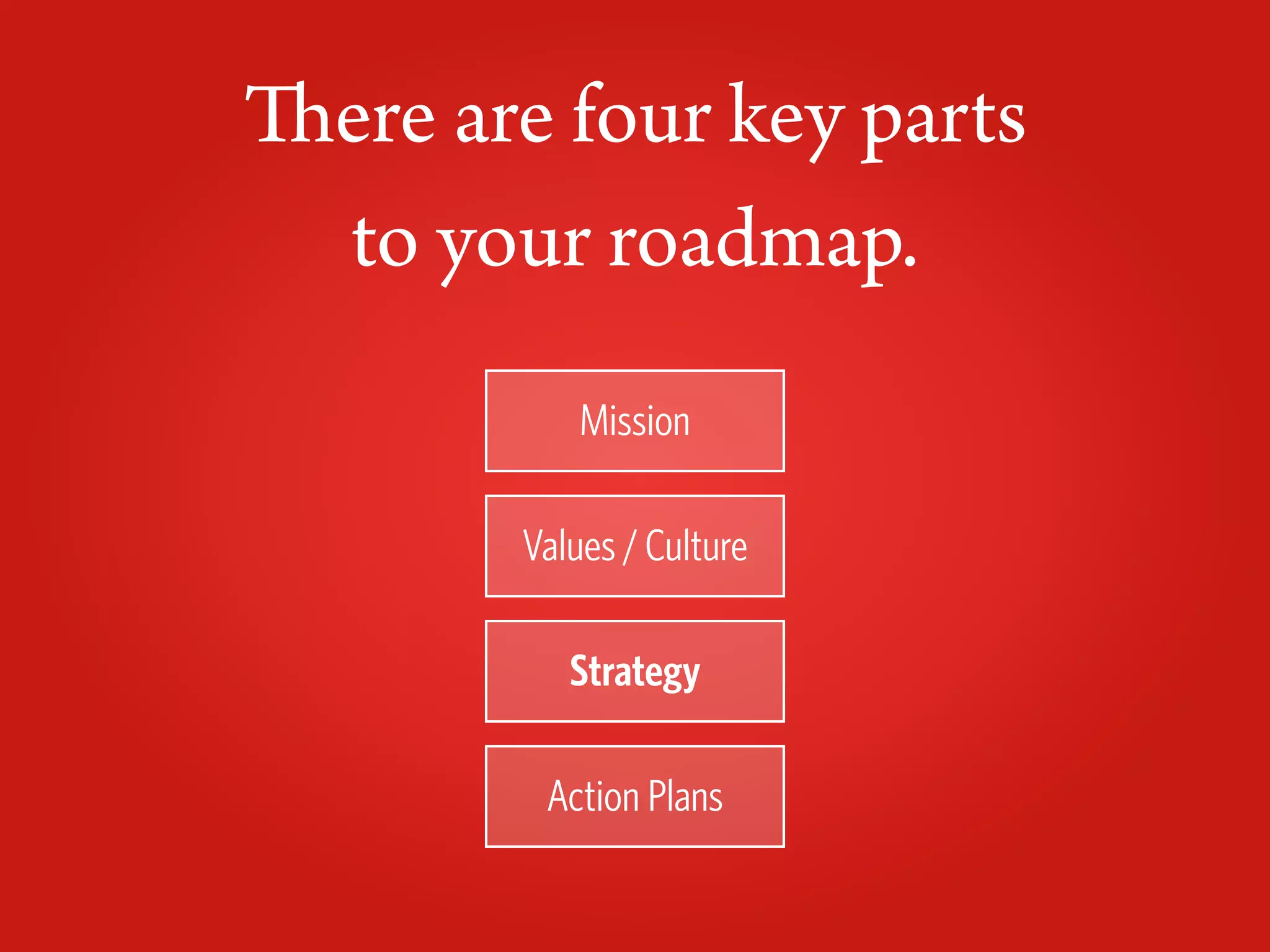
There are four key parts
  to your roadmap.
            Mission

        Values / Culture

           Strategy

         Action Plans
Your strategy describes how your
organization achieves its mission
Your strategy describes how your
organization achieves its mission
  by creating, delivering, and
       monetizing value.
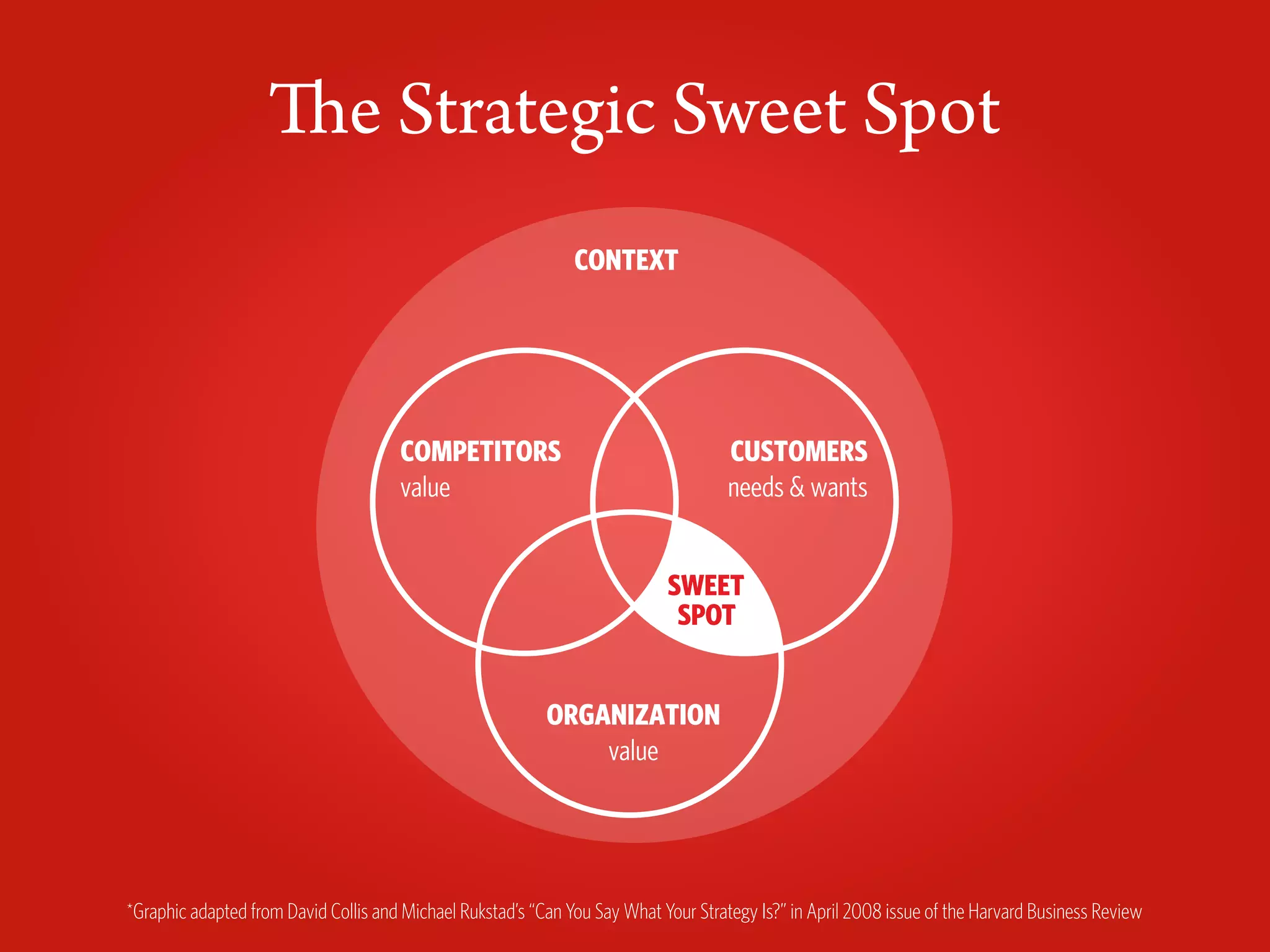
A great strategy focuses on the
sweet spot where your organization
      can maximize its value.
The Strategic Sweet Spot
                                                               CONTEXT


                                      COMPETITORS                                    CUSTOMERS
                                      value                                          needs & wants


                                                                            SWEET
                                                                             SPOT


                                                           ORGANIZATION
                                                               value


*Graphic adapted from David Collis and Michael Rukstad’s “Can You Say What Your Strategy Is?” in April 2008 issue of the Harvard Business Review
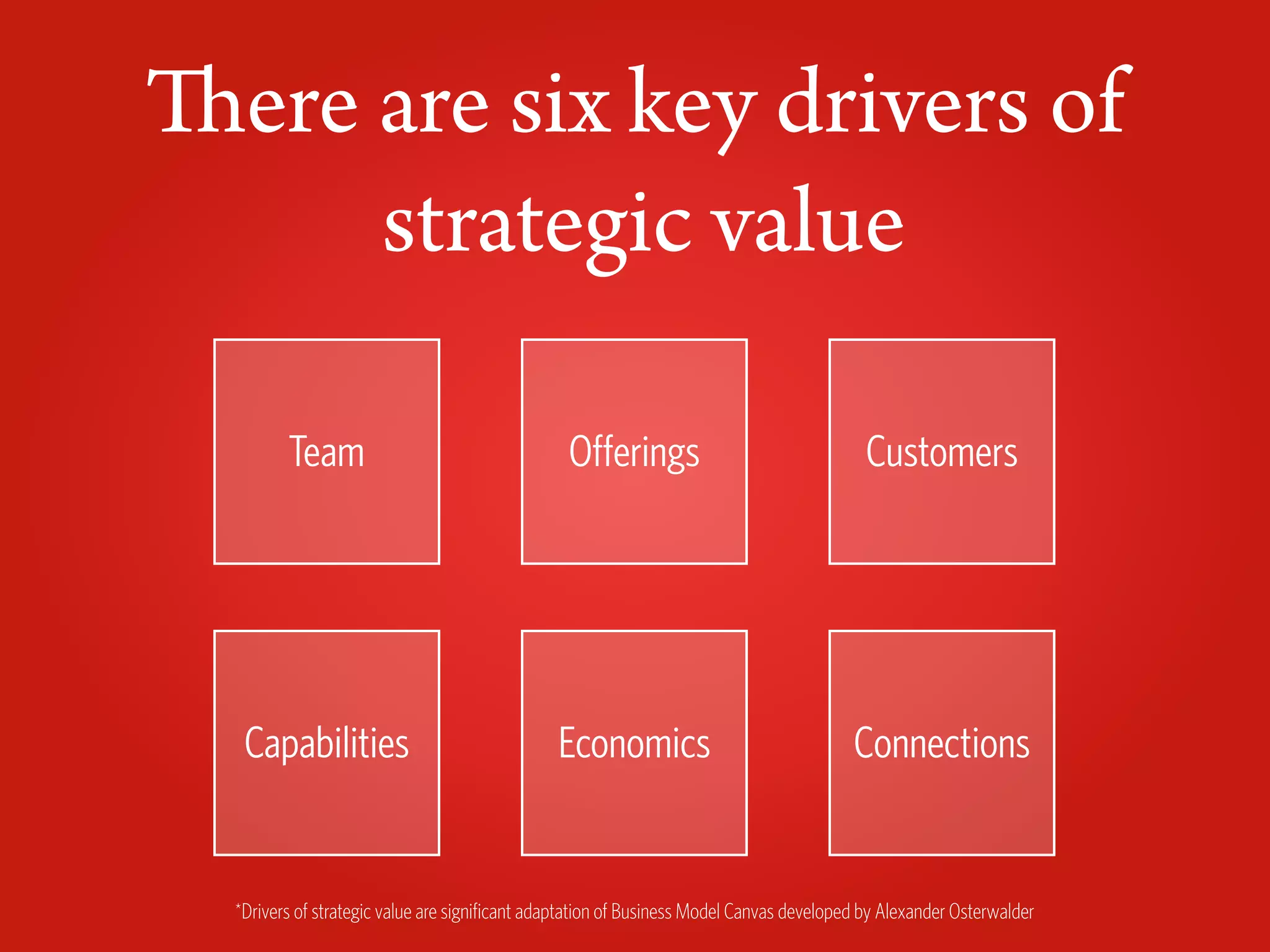
There are six key drivers of
      strategic value

         Team                                    Offerings                                  Customers


   Capabilities                                Economics                                 Connections


  *Drivers of strategic value are significant adaptation of Business Model Canvas developed by Alexander Osterwalder
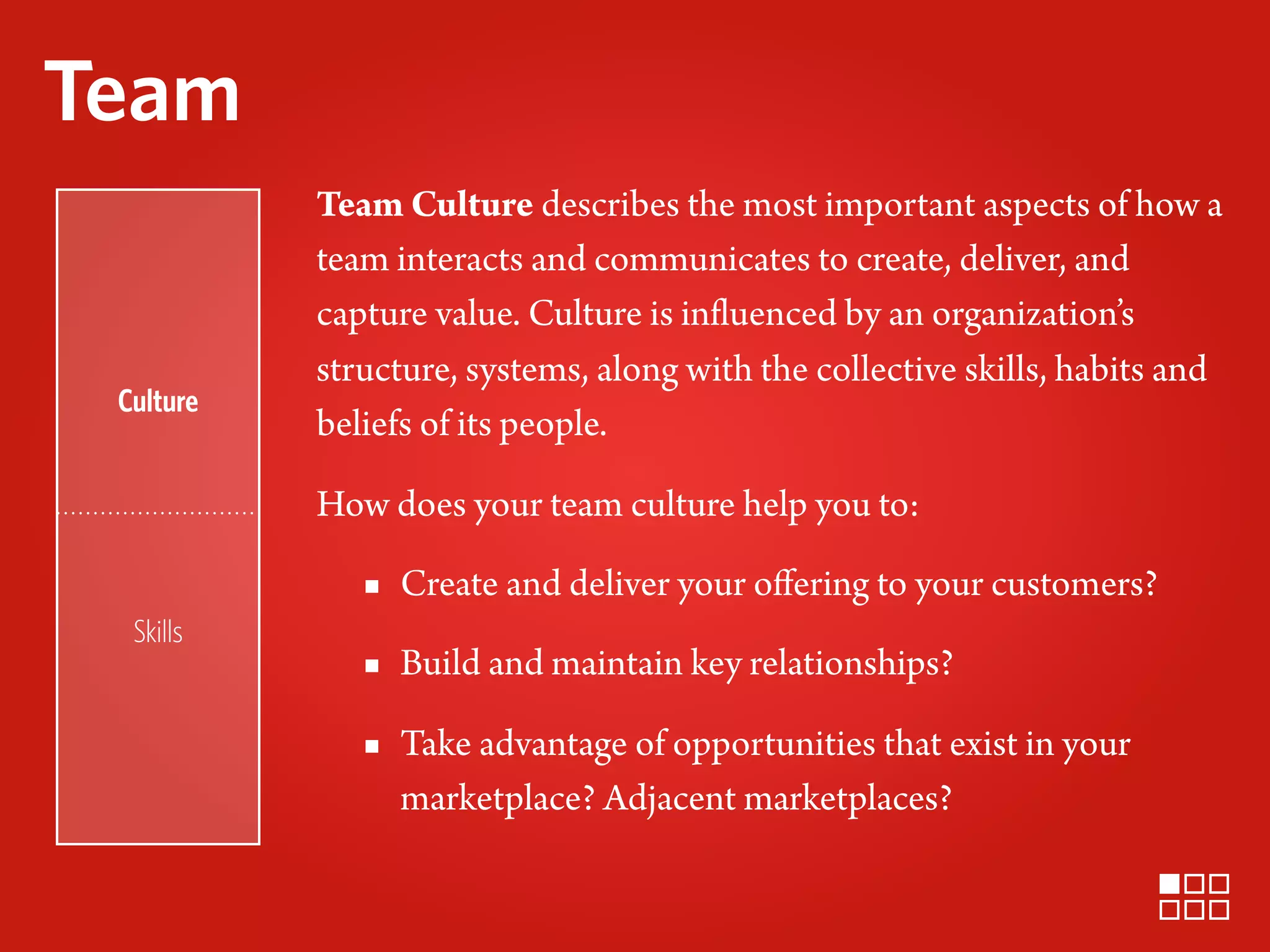
Team
           Team Culture describes the most important aspects of how a
           team interacts and communicates to create, deliver, and
           capture value. Culture is influenced by an organization’s
           structure, systems, along with the collective skills, habits and
 Culture
           beliefs of its people.

           How does your team culture help you to:

              ▪ Create and deliver your offering to your customers?
  Skills
              ▪ Build and maintain key relationships?
              ▪ Take advantage of opportunities that exist in your
                marketplace? Adjacent marketplaces?
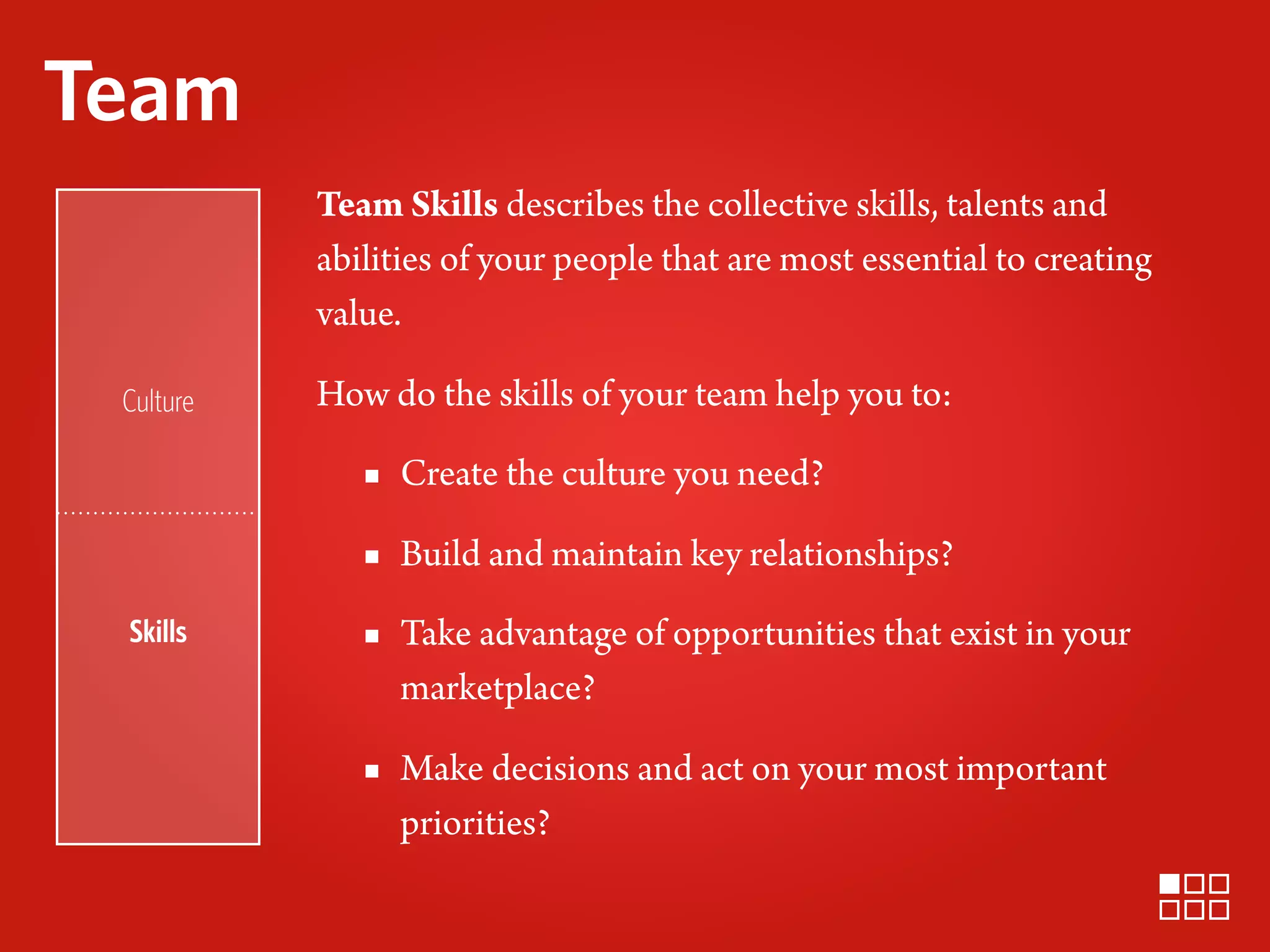
Team
           Team Skills describes the collective skills, talents and
           abilities of your people that are most essential to creating
           value.

 Culture   How do the skills of your team help you to:

              ▪ Create the culture you need?
              ▪ Build and maintain key relationships?
 Skills       ▪ Take advantage of opportunities that exist in your
                 marketplace?

              ▪ Make decisions and act on your most important
                 priorities?
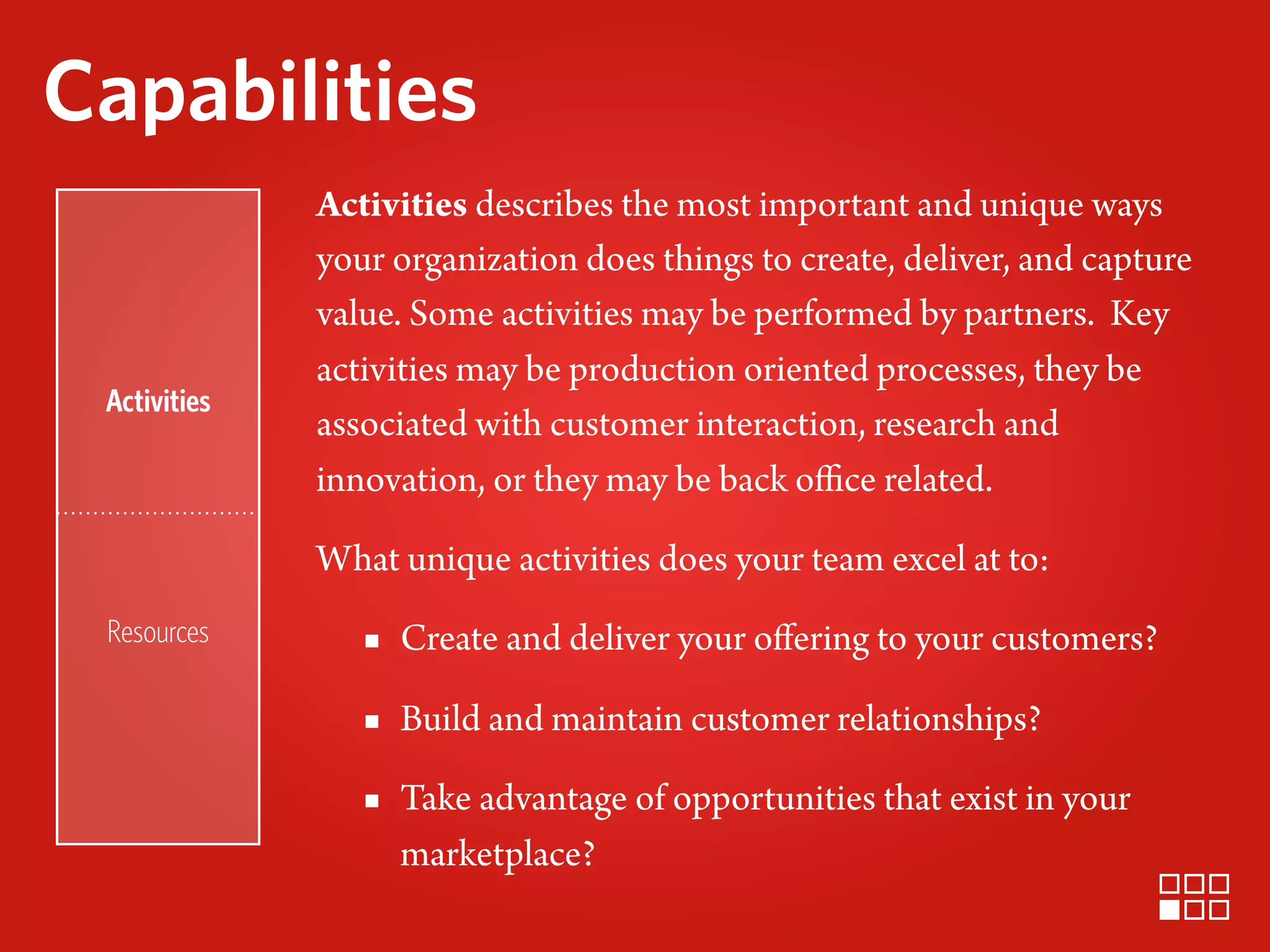
Capabilities
              Activities describes the most important and unique ways
              your organization does things to create, deliver, and capture
              value. Some activities may be performed by partners. Key
              activities may be production oriented processes, they be
 Activities
              associated with customer interaction, research and
              innovation, or they may be back office related.

              What unique activities does your team excel at to:
 Resources       ▪ Create and deliver your offering to your customers?
                 ▪ Build and maintain customer relationships?
                 ▪ Take advantage of opportunities that exist in your
                   marketplace?
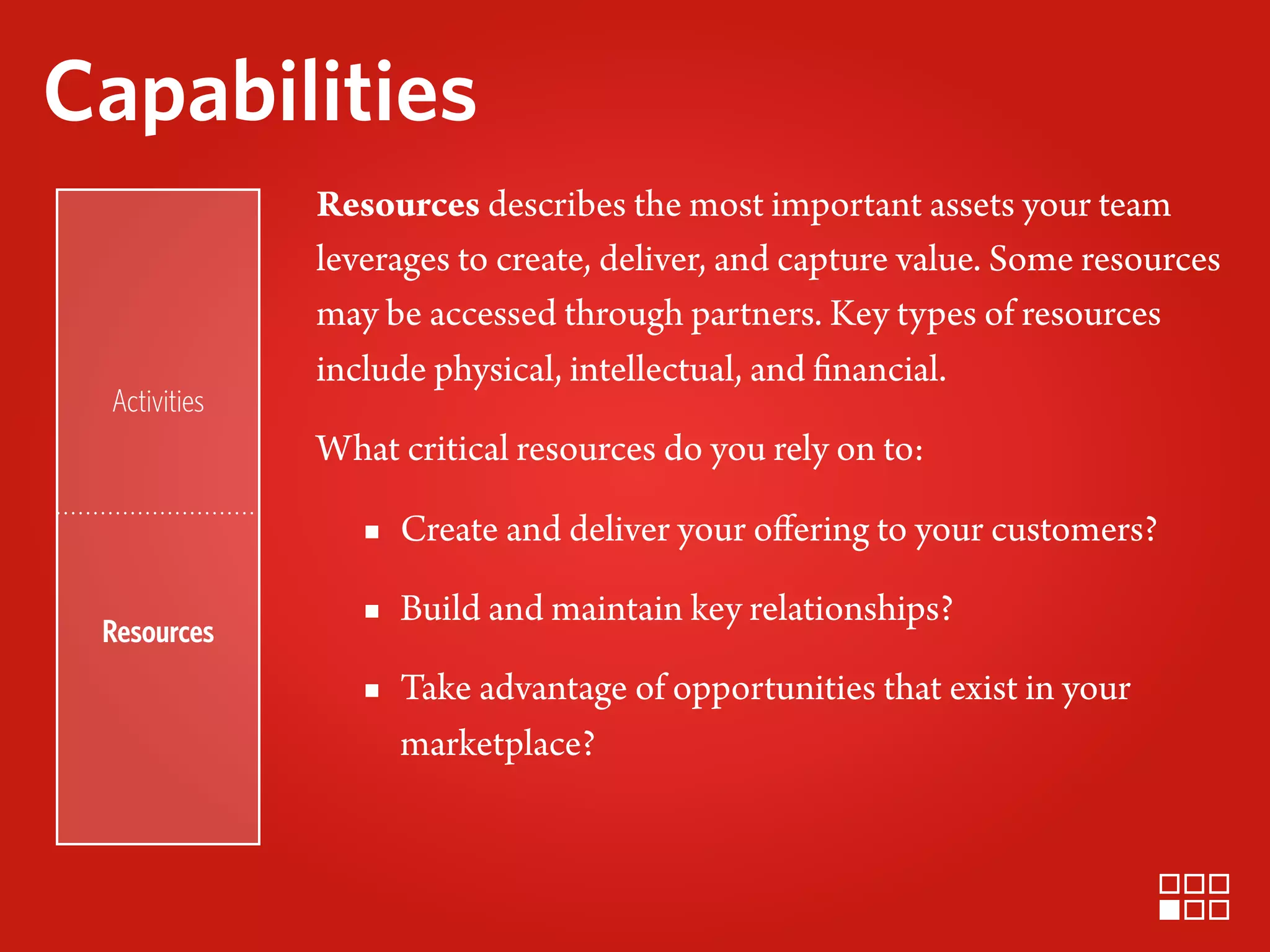
Capabilities
              Resources describes the most important assets your team
              leverages to create, deliver, and capture value. Some resources
              may be accessed through partners. Key types of resources
              include physical, intellectual, and financial.
 Activities
              What critical resources do you rely on to:

                 ▪ Create and deliver your offering to your customers?

 Resources
                 ▪ Build and maintain key relationships?
                 ▪ Take advantage of opportunities that exist in your
                   marketplace?
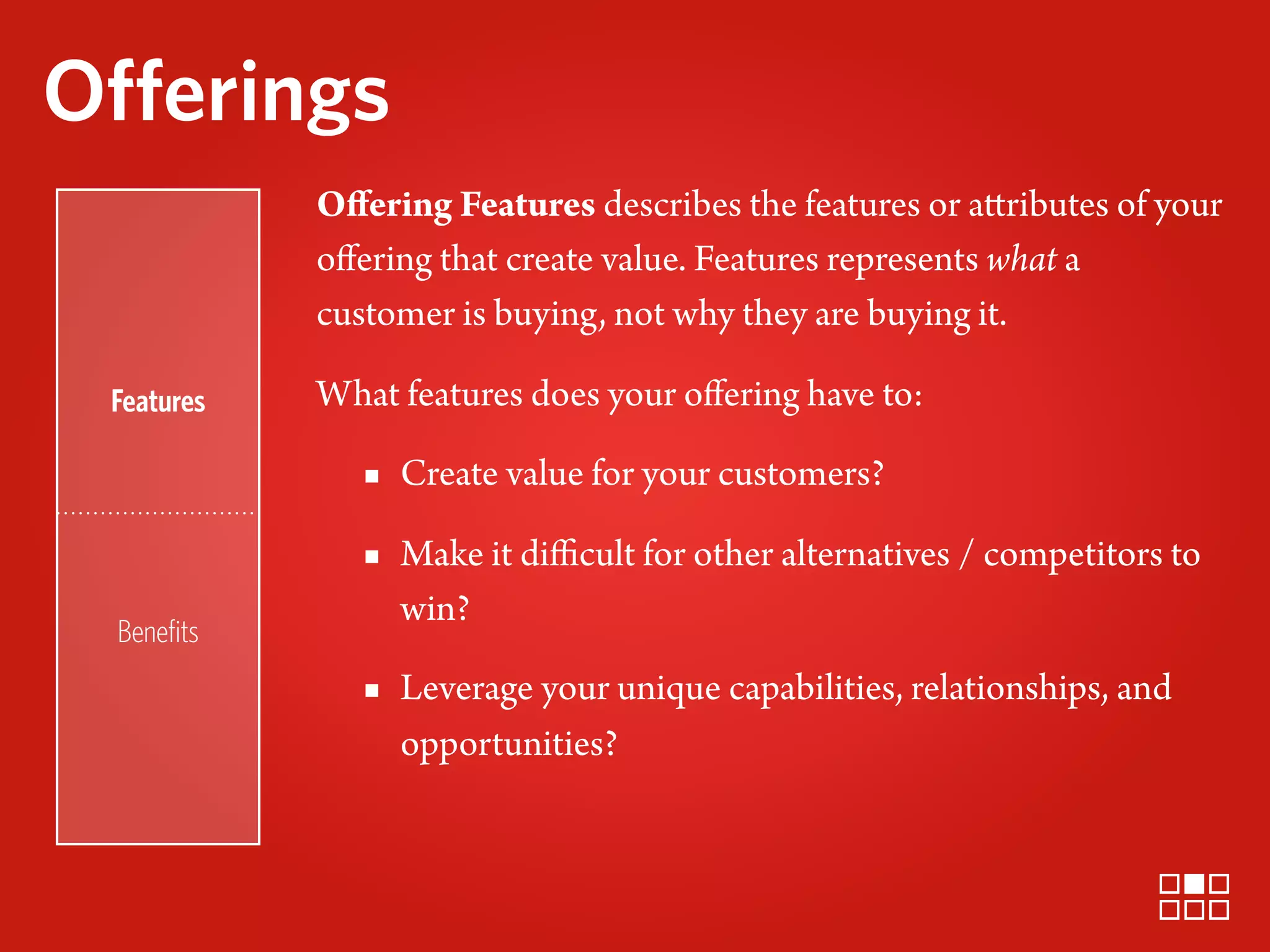
Offerings
            Offering Features describes the features or attributes of your
            offering that create value. Features represents what a
            customer is buying, not why they are buying it.

 Features   What features does your offering have to:

               ▪ Create value for your customers?
               ▪ Make it difficult for other alternatives / competitors to
                 win?
 Benefits
               ▪ Leverage your unique capabilities, relationships, and
                 opportunities?
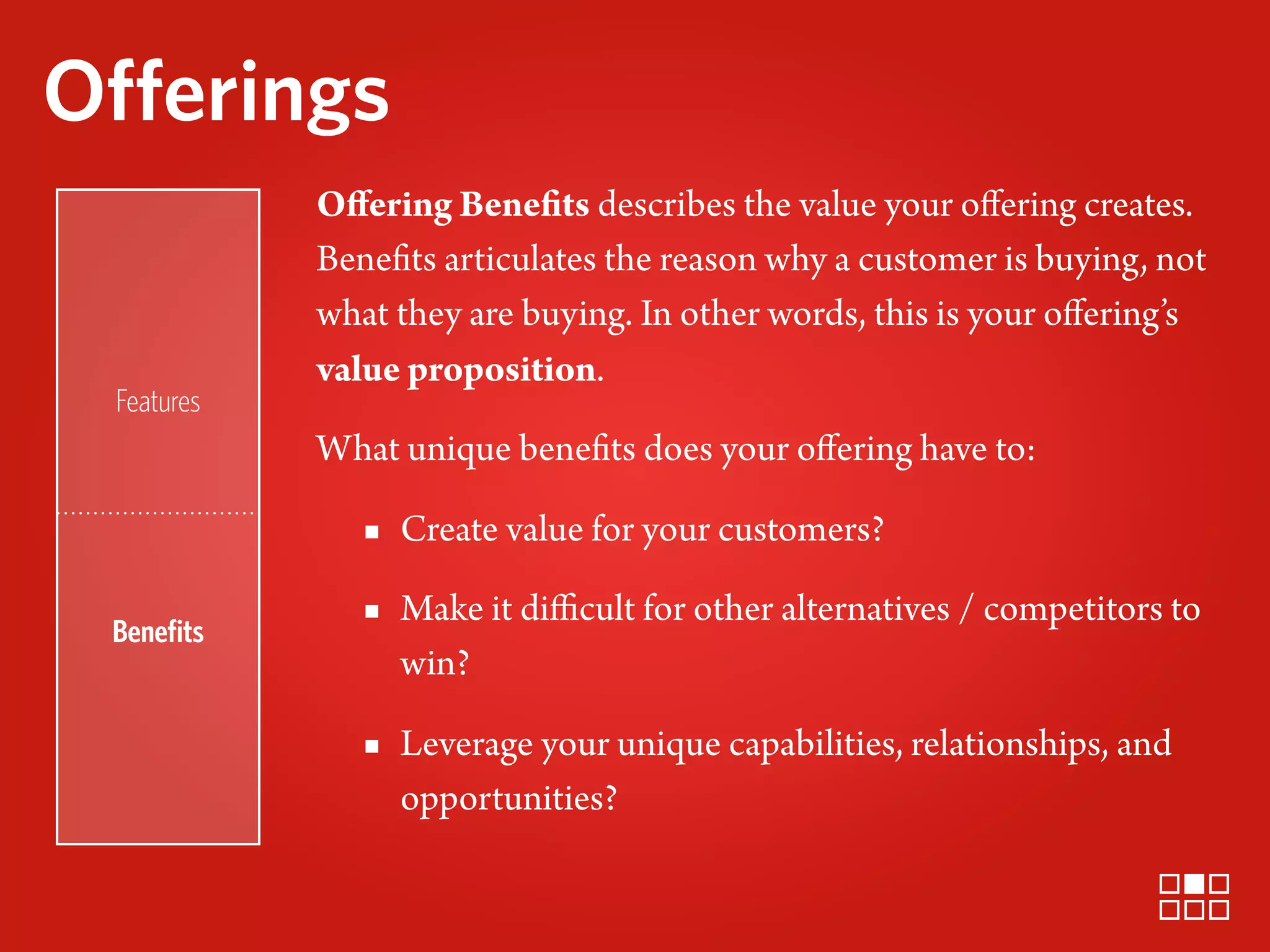
Offerings
            Offering Benefits describes the value your offering creates.
            Benefits articulates the reason why a customer is buying, not
            what they are buying. In other words, this is your offering’s
            value proposition.
 Features
            What unique benefits does your offering have to:

               ▪ Create value for your customers?

 Benefits
               ▪ Make it difficult for other alternatives / competitors to
                 win?

               ▪ Leverage your unique capabilities, relationships, and
                 opportunities?
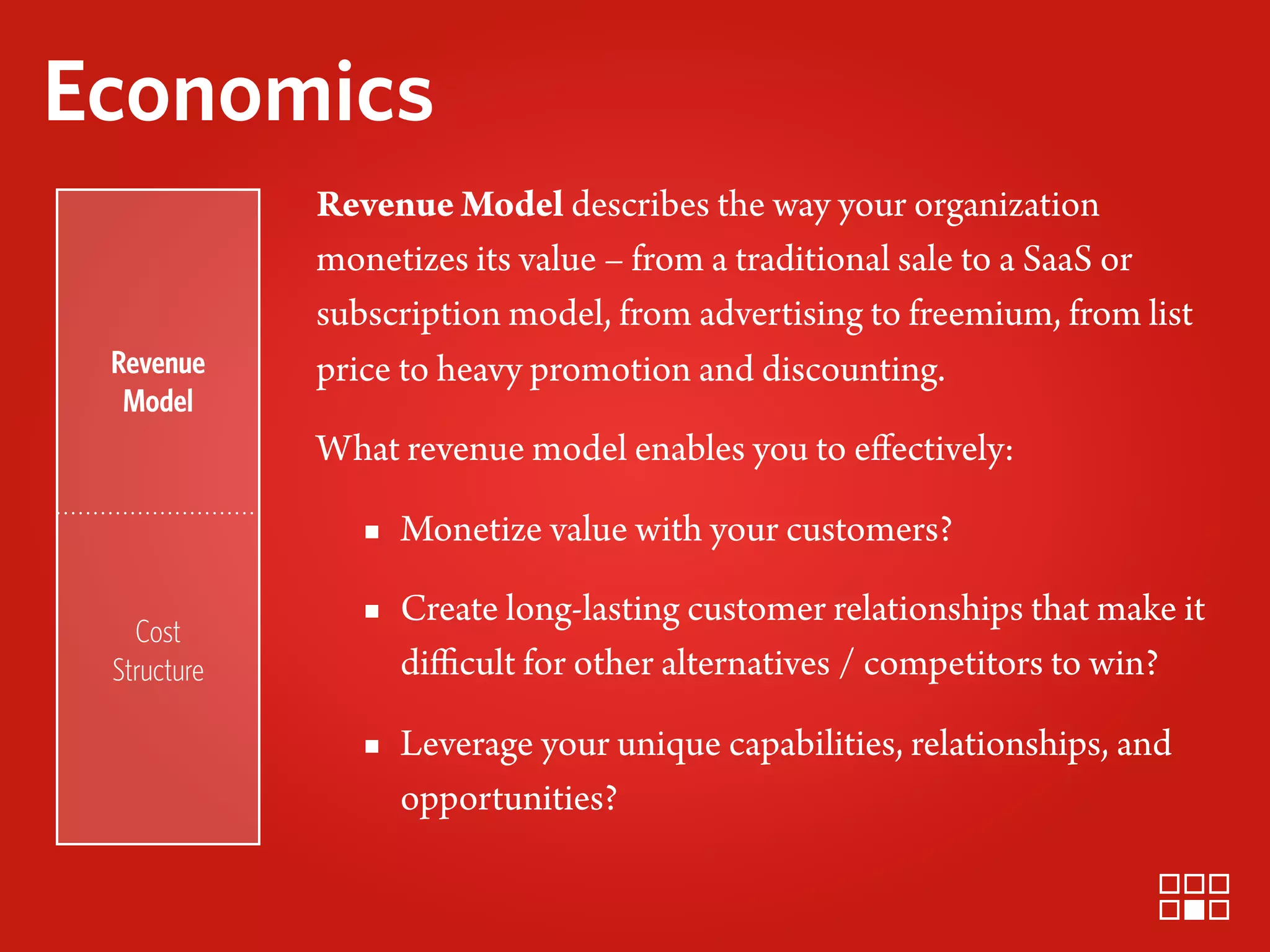
Economics
             Revenue Model describes the way your organization
             monetizes its value – from a traditional sale to a SaaS or
             subscription model, from advertising to freemium, from list
 Revenue     price to heavy promotion and discounting.
  Model
             What revenue model enables you to effectively:

                ▪ Monetize value with your customers?

   Cost
                ▪ Create long-lasting customer relationships that make it
 Structure        difficult for other alternatives / competitors to win?

                ▪ Leverage your unique capabilities, relationships, and
                  opportunities?
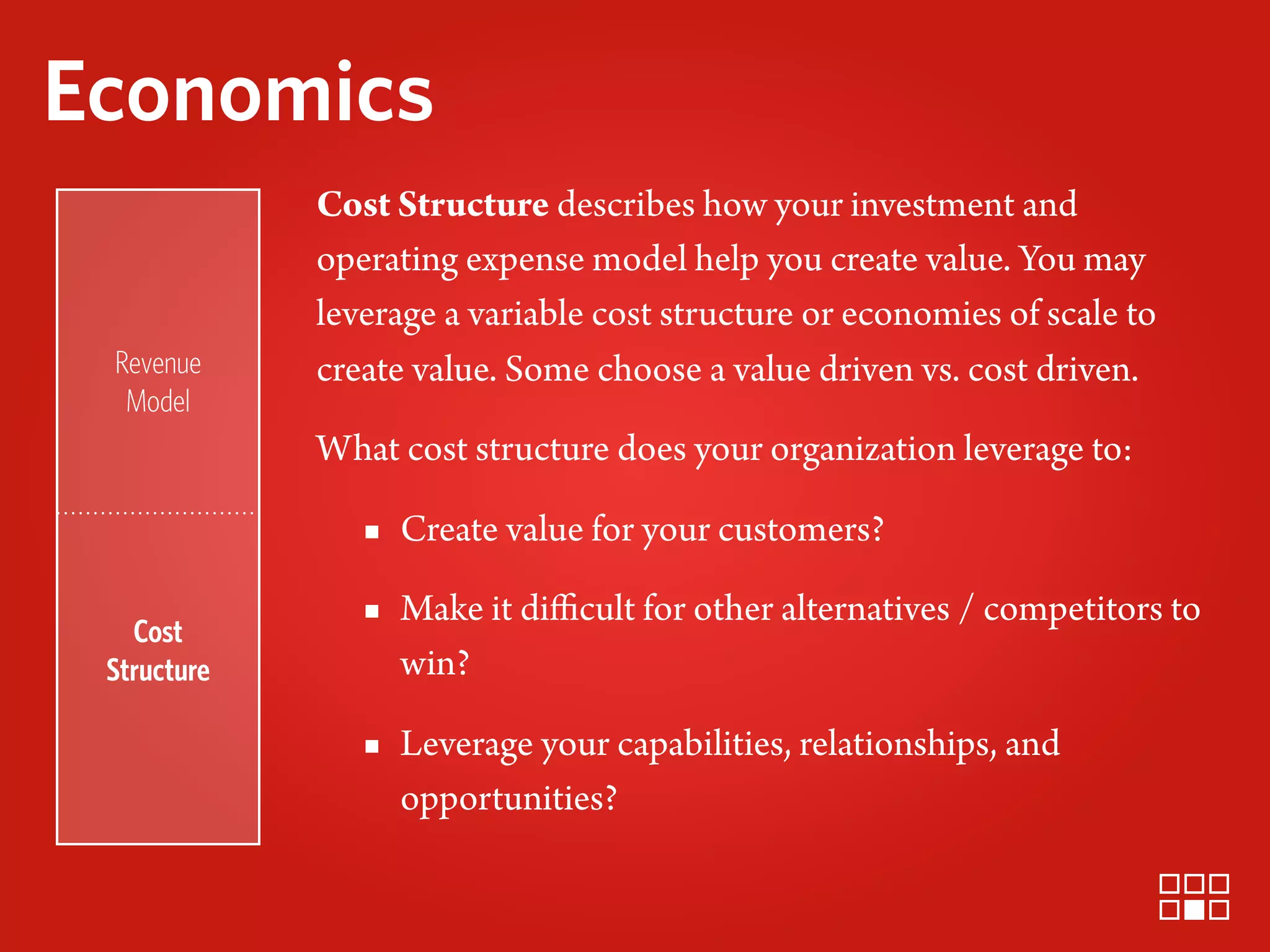
Economics
             Cost Structure describes how your investment and
             operating expense model help you create value. You may
             leverage a variable cost structure or economies of scale to
 Revenue     create value. Some choose a value driven vs. cost driven.
  Model
             What cost structure does your organization leverage to:

                ▪ Create value for your customers?

   Cost
                ▪ Make it difficult for other alternatives / competitors to
 Structure        win?

                ▪ Leverage your capabilities, relationships, and
                  opportunities?
Customers
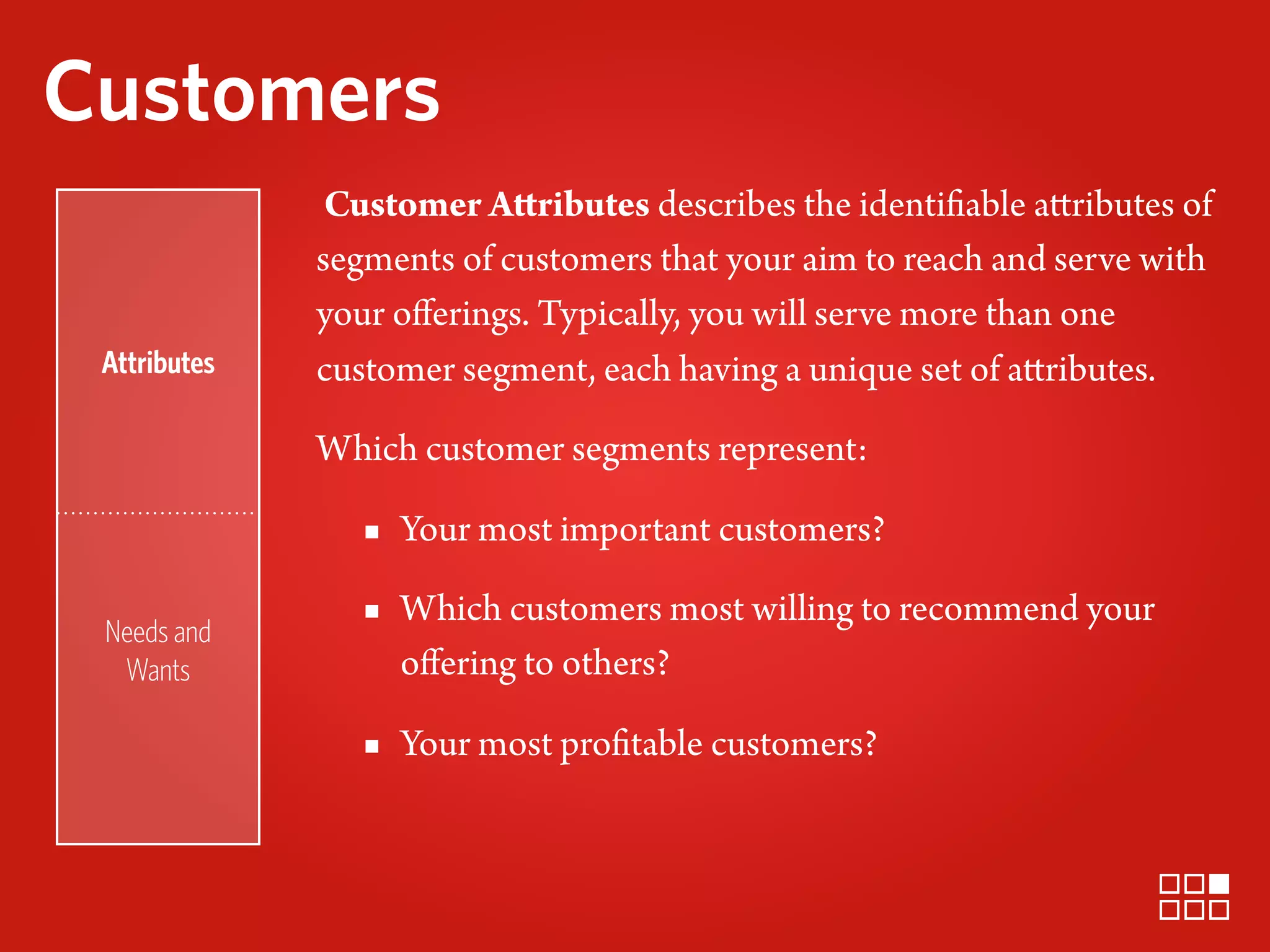
               Customer Attributes describes the identifiable attributes of
              segments of customers that your aim to reach and serve with
              your offerings. Typically, you will serve more than one
 Attributes   customer segment, each having a unique set of attributes.

              Which customer segments represent:

                 ▪ Your most important customers?

 Needs and
                 ▪ Which customers most willing to recommend your
  Wants            offering to others?

                 ▪ Your most profitable customers?
Customers
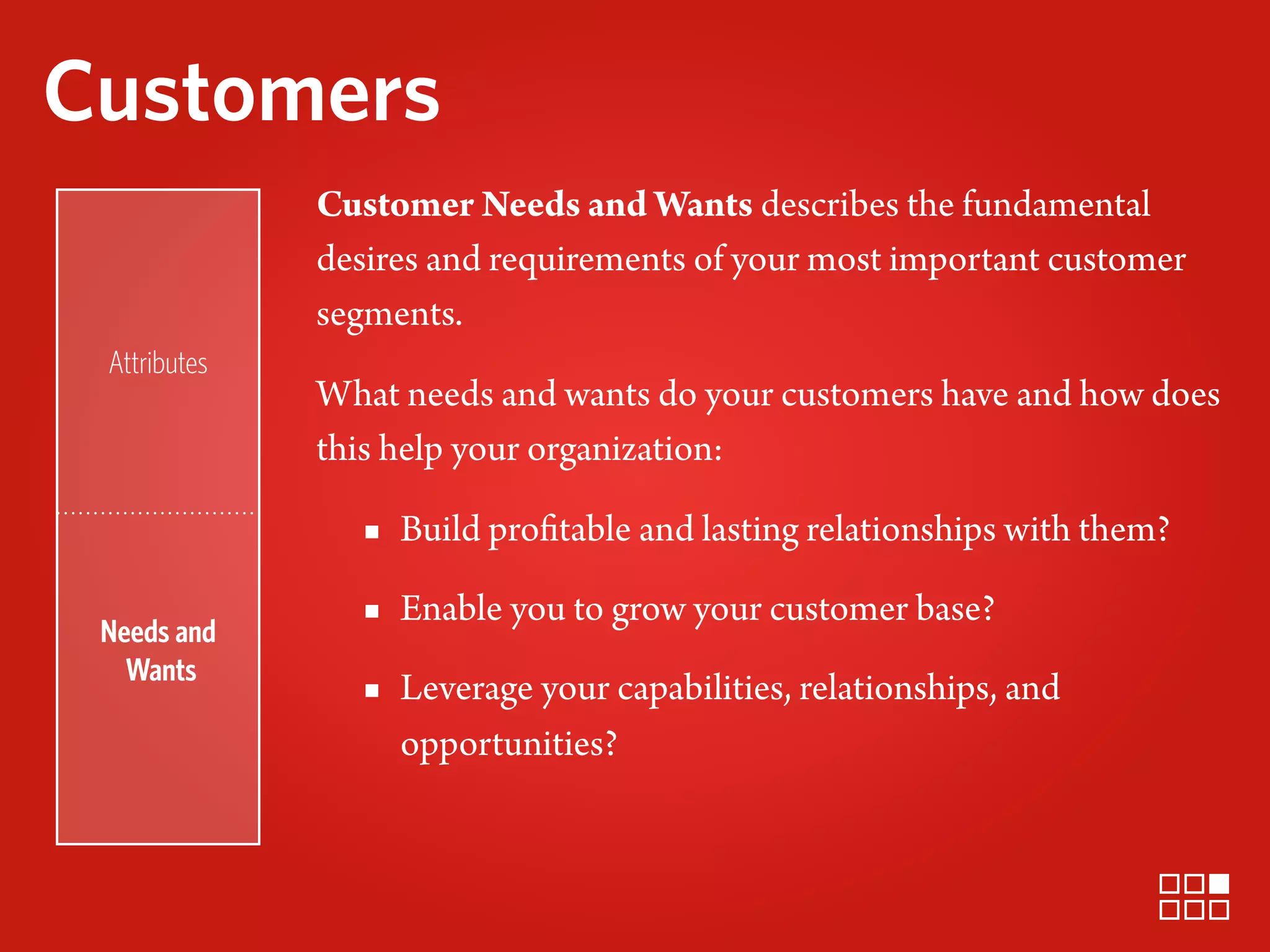
              Customer Needs and Wants describes the fundamental
              desires and requirements of your most important customer
              segments.
 Attributes
              What needs and wants do your customers have and how does
              this help your organization:

                ▪ Build profitable and lasting relationships with them?

 Needs and
                ▪ Enable you to grow your customer base?
   Wants
                ▪ Leverage your capabilities, relationships, and
                   opportunities?
Connections
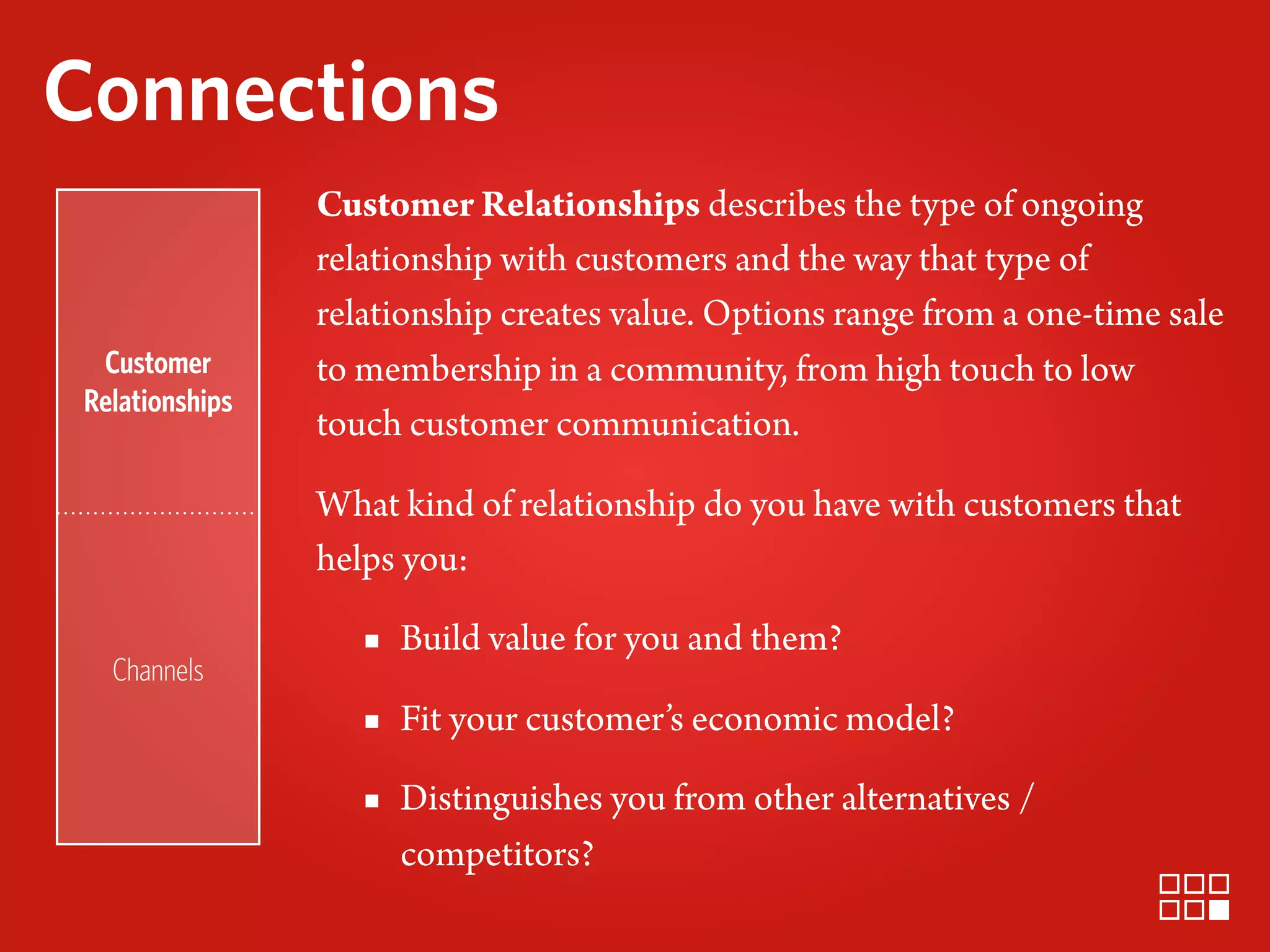
                Customer Relationships describes the type of ongoing
                relationship with customers and the way that type of
                relationship creates value. Options range from a one-time sale
 Customer       to membership in a community, from high touch to low
Relationships
                touch customer communication.

                What kind of relationship do you have with customers that
                helps you:

                   ▪ Build value for you and them?
  Channels
                   ▪ Fit your customer’s economic model?
                   ▪ Distinguishes you from other alternatives /
                     competitors?
Connections
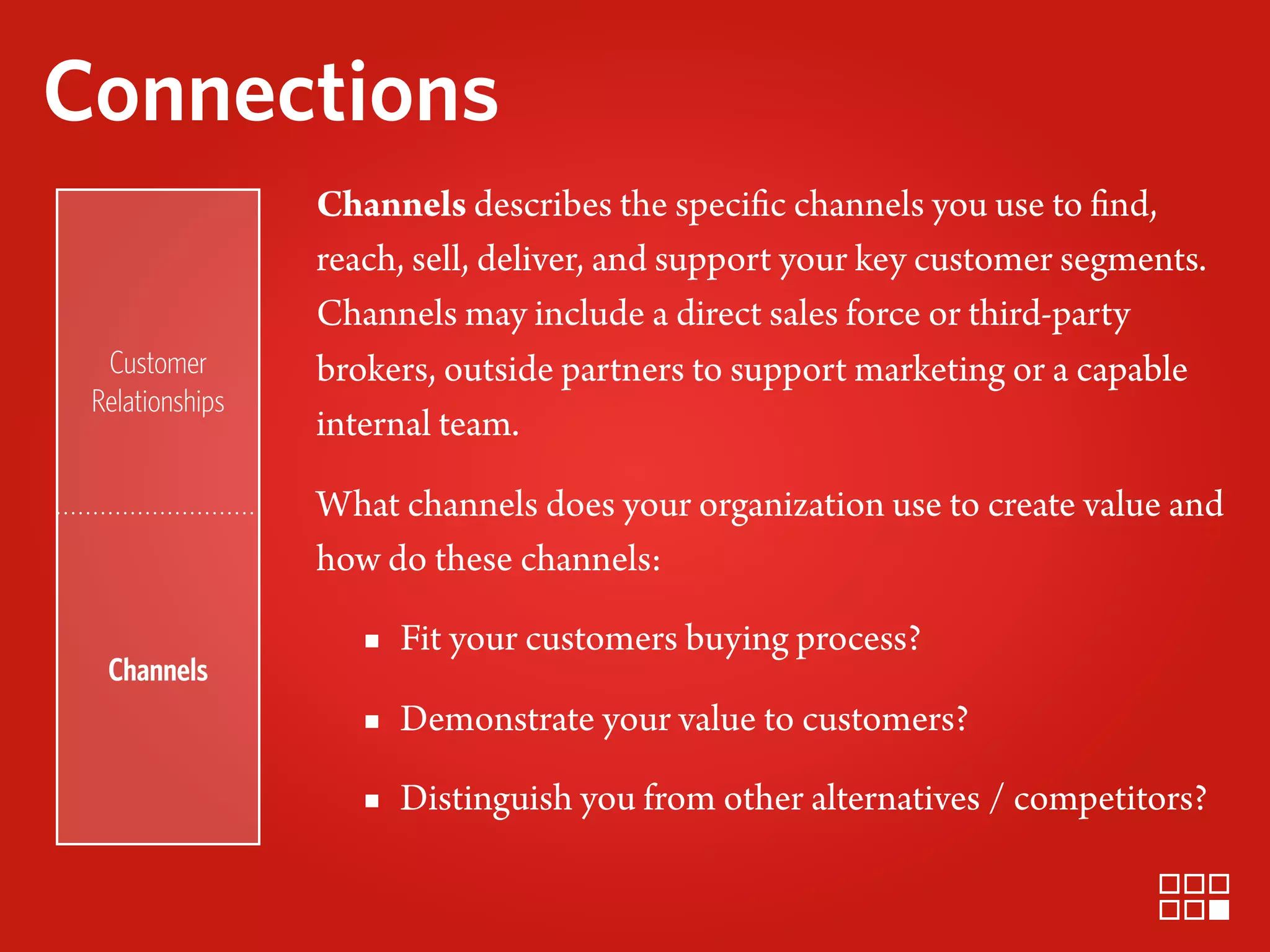
                 Channels describes the specific channels you use to find,
                 reach, sell, deliver, and support your key customer segments.
                 Channels may include a direct sales force or third-party
  Customer       brokers, outside partners to support marketing or a capable
 Relationships
                 internal team.

                 What channels does your organization use to create value and
                 how do these channels:

                    ▪ Fit your customers buying process?
  Channels
                    ▪ Demonstrate your value to customers?
                    ▪ Distinguish you from other alternatives / competitors?
WHAT GRADE WOULD YOU GIVE
     YOUR STRATEGY?
         And how well does your strategy leverage the
                six drivers of strategic value?


 BRETT PINEGAR
 achieve extraordinary results
                                             www.brettpinegar.com

What is your strategy?

  • 1.
    WHAT IS YOUR STRATEGY? And how well do you leverage the six drivers of strategic value? BRETT PINEGAR achieve extraordinary results www.brettpinegar.com
  • 2.
    A strategy orbusiness model* is a critical part of your organization’s roadmap for success. *I consider strategies and business models to be the same thing.
  • 3.
    There are fourkey parts to your roadmap. Mission Values / Culture Strategy Action Plans
  • 4.
    Your strategy describeshow your organization achieves its mission
  • 5.
    Your strategy describeshow your organization achieves its mission by creating, delivering, and monetizing value.
  • 6.
    A great strategyfocuses on the sweet spot where your organization can maximize its value.
  • 7.
    The Strategic SweetSpot CONTEXT COMPETITORS CUSTOMERS value needs & wants SWEET SPOT ORGANIZATION value *Graphic adapted from David Collis and Michael Rukstad’s “Can You Say What Your Strategy Is?” in April 2008 issue of the Harvard Business Review
  • 8.
    There are sixkey drivers of strategic value Team Offerings Customers Capabilities Economics Connections *Drivers of strategic value are significant adaptation of Business Model Canvas developed by Alexander Osterwalder
  • 9.
    Team Team Culture describes the most important aspects of how a team interacts and communicates to create, deliver, and capture value. Culture is influenced by an organization’s structure, systems, along with the collective skills, habits and Culture beliefs of its people. How does your team culture help you to: ▪ Create and deliver your offering to your customers? Skills ▪ Build and maintain key relationships? ▪ Take advantage of opportunities that exist in your marketplace? Adjacent marketplaces?
  • 10.
    Team Team Skills describes the collective skills, talents and abilities of your people that are most essential to creating value. Culture How do the skills of your team help you to: ▪ Create the culture you need? ▪ Build and maintain key relationships? Skills ▪ Take advantage of opportunities that exist in your marketplace? ▪ Make decisions and act on your most important priorities?
  • 11.
    Capabilities Activities describes the most important and unique ways your organization does things to create, deliver, and capture value. Some activities may be performed by partners. Key activities may be production oriented processes, they be Activities associated with customer interaction, research and innovation, or they may be back office related. What unique activities does your team excel at to: Resources ▪ Create and deliver your offering to your customers? ▪ Build and maintain customer relationships? ▪ Take advantage of opportunities that exist in your marketplace?
  • 12.
    Capabilities Resources describes the most important assets your team leverages to create, deliver, and capture value. Some resources may be accessed through partners. Key types of resources include physical, intellectual, and financial. Activities What critical resources do you rely on to: ▪ Create and deliver your offering to your customers? Resources ▪ Build and maintain key relationships? ▪ Take advantage of opportunities that exist in your marketplace?
  • 13.
    Offerings Offering Features describes the features or attributes of your offering that create value. Features represents what a customer is buying, not why they are buying it. Features What features does your offering have to: ▪ Create value for your customers? ▪ Make it difficult for other alternatives / competitors to win? Benefits ▪ Leverage your unique capabilities, relationships, and opportunities?
  • 14.
    Offerings Offering Benefits describes the value your offering creates. Benefits articulates the reason why a customer is buying, not what they are buying. In other words, this is your offering’s value proposition. Features What unique benefits does your offering have to: ▪ Create value for your customers? Benefits ▪ Make it difficult for other alternatives / competitors to win? ▪ Leverage your unique capabilities, relationships, and opportunities?
  • 15.
    Economics Revenue Model describes the way your organization monetizes its value – from a traditional sale to a SaaS or subscription model, from advertising to freemium, from list Revenue price to heavy promotion and discounting. Model What revenue model enables you to effectively: ▪ Monetize value with your customers? Cost ▪ Create long-lasting customer relationships that make it Structure difficult for other alternatives / competitors to win? ▪ Leverage your unique capabilities, relationships, and opportunities?
  • 16.
    Economics Cost Structure describes how your investment and operating expense model help you create value. You may leverage a variable cost structure or economies of scale to Revenue create value. Some choose a value driven vs. cost driven. Model What cost structure does your organization leverage to: ▪ Create value for your customers? Cost ▪ Make it difficult for other alternatives / competitors to Structure win? ▪ Leverage your capabilities, relationships, and opportunities?
  • 17.
    Customers Customer Attributes describes the identifiable attributes of segments of customers that your aim to reach and serve with your offerings. Typically, you will serve more than one Attributes customer segment, each having a unique set of attributes. Which customer segments represent: ▪ Your most important customers? Needs and ▪ Which customers most willing to recommend your Wants offering to others? ▪ Your most profitable customers?
  • 18.
    Customers Customer Needs and Wants describes the fundamental desires and requirements of your most important customer segments. Attributes What needs and wants do your customers have and how does this help your organization: ▪ Build profitable and lasting relationships with them? Needs and ▪ Enable you to grow your customer base? Wants ▪ Leverage your capabilities, relationships, and opportunities?
  • 19.
    Connections Customer Relationships describes the type of ongoing relationship with customers and the way that type of relationship creates value. Options range from a one-time sale Customer to membership in a community, from high touch to low Relationships touch customer communication. What kind of relationship do you have with customers that helps you: ▪ Build value for you and them? Channels ▪ Fit your customer’s economic model? ▪ Distinguishes you from other alternatives / competitors?
  • 20.
    Connections Channels describes the specific channels you use to find, reach, sell, deliver, and support your key customer segments. Channels may include a direct sales force or third-party Customer brokers, outside partners to support marketing or a capable Relationships internal team. What channels does your organization use to create value and how do these channels: ▪ Fit your customers buying process? Channels ▪ Demonstrate your value to customers? ▪ Distinguish you from other alternatives / competitors?
  • 21.
    WHAT GRADE WOULDYOU GIVE YOUR STRATEGY? And how well does your strategy leverage the six drivers of strategic value? BRETT PINEGAR achieve extraordinary results www.brettpinegar.com