OD Network of WNY
Buffalo, NY
M a r c h 1 3 , 2 0 1 4
Executive Coaching and Change
Executive Coaching Defined
 P2. …”dynamic and flexible, iterative process for
change that moves leaders from their current state to
a desired state.”
 Iterative Process
 Gap Analysis
 Closing the Gap
What Executive Coaching is Not
 Consulting
 Therapy
 Mentoring
 Training
Ask Probing Questions
Masterful CoachingMasterful Coaching ©© 20072007
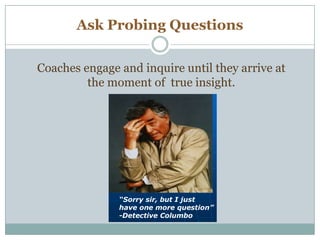
“Sorry sir, but I just
have one more question”
-Detective Columbo
Get Rid of the Taxi M
feeling that you have
to add value in the fi
five minutes
A coach Has a Certain Way of Being ….
Engaging and inquiring until you arrive at the momen
true insight
Coaches engage and inquire until they arrive at
the moment of true insight.
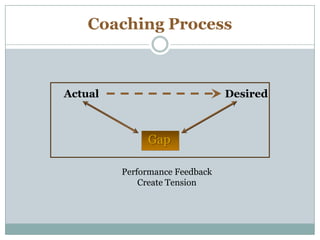
Coaching Process
Actual Desired
Performance Feedback
Create Tension
Gap
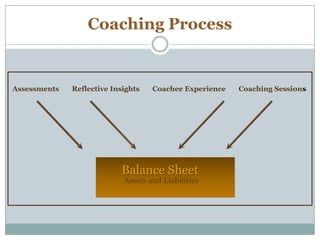
Coaching Process
Assessments Reflective Insights Coachee Experience Coaching Sessions
Balance Sheet
Assets and Liabilities
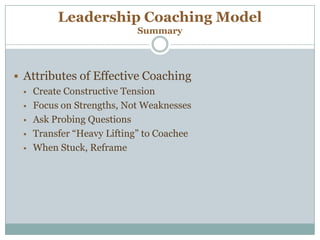
Leadership Coaching Model
Summary
 Attributes of Effective Coaching
 Create Constructive Tension
 Focus on Strengths, Not Weaknesses
 Ask Probing Questions
 Transfer “Heavy Lifting” to Coachee
 When Stuck, Reframe
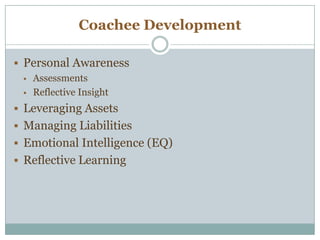
Coachee Development
 Personal Awareness
 Assessments
 Reflective Insight
 Leveraging Assets
 Managing Liabilities
 Emotional Intelligence (EQ)
 Reflective Learning
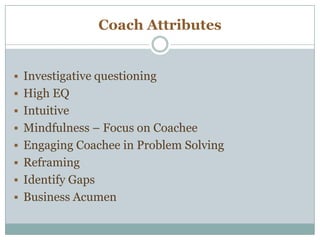
Coach Attributes
 Investigative questioning
 High EQ
 Intuitive
 Mindfulness – Focus on Coachee
 Engaging Coachee in Problem Solving
 Reframing
 Identify Gaps
 Business Acumen
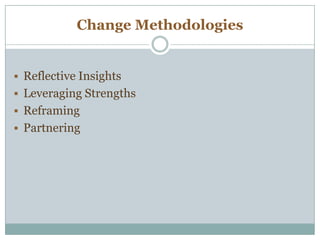
Change Methodologies
 Reflective Insights
 Leveraging Strengths
 Reframing
 Partnering
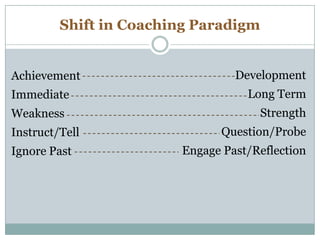
Shift in Coaching Paradigm
Achievement
Immediate
Weakness
Instruct/Tell
Ignore Past
Development
Long Term
Strength
Question/Probe
Engage Past/Reflection
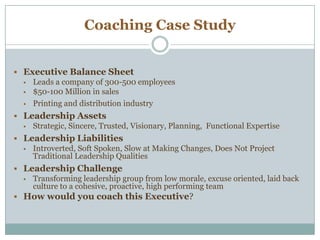
Coaching Case Study
 Executive Balance Sheet
 Leads a company of 300-500 employees
 $50-100 Million in sales
 Printing and distribution industry
 Leadership Assets
 Strategic, Sincere, Trusted, Visionary, Planning, Functional Expertise
 Leadership Liabilities
 Introverted, Soft Spoken, Slow at Making Changes, Does Not Project
Traditional Leadership Qualities
 Leadership Challenge
 Transforming leadership group from low morale, excuse oriented, laid back
culture to a cohesive, proactive, high performing team
 How would you coach this Executive?
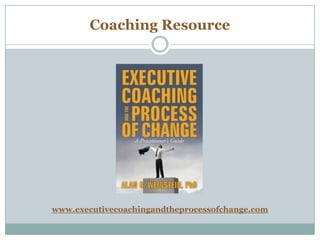
Coaching Resource
www.executivecoachingandtheprocessofchange.com

Executive Coaching

  • 1.
    OD Network ofWNY Buffalo, NY M a r c h 1 3 , 2 0 1 4 Executive Coaching and Change
  • 2.
    Executive Coaching Defined P2. …”dynamic and flexible, iterative process for change that moves leaders from their current state to a desired state.”  Iterative Process  Gap Analysis  Closing the Gap
  • 3.
    What Executive Coachingis Not  Consulting  Therapy  Mentoring  Training
  • 4.
    Ask Probing Questions MasterfulCoachingMasterful Coaching ©© 20072007 “Sorry sir, but I just have one more question” -Detective Columbo Get Rid of the Taxi M feeling that you have to add value in the fi five minutes A coach Has a Certain Way of Being …. Engaging and inquiring until you arrive at the momen true insight Coaches engage and inquire until they arrive at the moment of true insight.
  • 5.
  • 6.
    Coaching Process Assessments ReflectiveInsights Coachee Experience Coaching Sessions Balance Sheet Assets and Liabilities
  • 7.
    Leadership Coaching Model Summary Attributes of Effective Coaching  Create Constructive Tension  Focus on Strengths, Not Weaknesses  Ask Probing Questions  Transfer “Heavy Lifting” to Coachee  When Stuck, Reframe
  • 8.
    Coachee Development  PersonalAwareness  Assessments  Reflective Insight  Leveraging Assets  Managing Liabilities  Emotional Intelligence (EQ)  Reflective Learning
  • 9.
    Coach Attributes  Investigativequestioning  High EQ  Intuitive  Mindfulness – Focus on Coachee  Engaging Coachee in Problem Solving  Reframing  Identify Gaps  Business Acumen
  • 10.
    Change Methodologies  ReflectiveInsights  Leveraging Strengths  Reframing  Partnering
  • 11.
    Shift in CoachingParadigm Achievement Immediate Weakness Instruct/Tell Ignore Past Development Long Term Strength Question/Probe Engage Past/Reflection
  • 12.
    Coaching Case Study Executive Balance Sheet  Leads a company of 300-500 employees  $50-100 Million in sales  Printing and distribution industry  Leadership Assets  Strategic, Sincere, Trusted, Visionary, Planning, Functional Expertise  Leadership Liabilities  Introverted, Soft Spoken, Slow at Making Changes, Does Not Project Traditional Leadership Qualities  Leadership Challenge  Transforming leadership group from low morale, excuse oriented, laid back culture to a cohesive, proactive, high performing team  How would you coach this Executive?
  • 13.