.
Adheena shiji
A measure of the relative abundance of species
or higher taxonomic units found in a certain area
at a particular time. In ancient communities, this
is often simply referred to as the number of
species or taxa found at a site, usually referred to
as ‘‘species richness’’ in the ecological literature.
 species are the fundamental descriptive units of
the living world and this is why biodiversity is very commonly,
and incorrectly, used as a synonym of species diversity, in
particular of ‘‘species richness,’’ which is the number of species
in a site or habitat.
Discussion of global biodiversity is typically presented in terms of global
numbers of species in different taxonomic groups. An estimated 1.7 million
species have been described to date; estimates for the total number of
species existing on earth at present vary from 5 million to nearly 100 million.
A conservative working estimate suggests there might be around 12.5 million.
Ecosystem diversity deals with the study of different ecosystem in a
certain location and their overall effects on humans and the
environment as a whole. It is one of the types of biodiversity along
with species diversity, genetic diversity, and functional diversity.
Ecosystem diversity focuses on both terrestrial and aquatic
ecosystems. Also, it includes the variation of a biological community such
as the number of levels of ecosystem diversity and different niches or
habitat diversity, and other ecological processes.
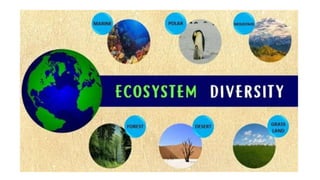
Ecosystem diversity has a great deal on both genetic and species diversity,
thus it is coined as the “largest scale of biodiversity”. Grasslands, tundras,
deserts, rainforests, terrestrial and marine ecosystems, are some
examples of ecosystems that are diverse and contribute a lot to creating a
well-balanced environment.
•
• The populations of naturally occurring species and occur in a
particular environment ( geographical areas) are communities.
• For example, species that are found only in deserts and
species found under the warm stone are communities. Some
communities are large and more complex, so they cannot be
clearly defined.
• We can also say that a community includes biotic things alone
since it deals with living things only. Biologists often use the
word community as a subset of organisms present in a large
community.
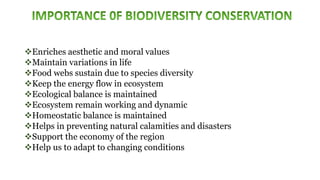
Enriches aesthetic and moral values
Maintain variations in life
Food webs sustain due to species diversity
Keep the energy flow in ecosystem
Ecological balance is maintained
Ecosystem remain working and dynamic
Homeostatic balance is maintained
Helps in preventing natural calamities and disasters
Support the economy of the region
Help us to adapt to changing conditions
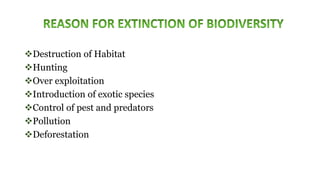
Destruction of Habitat
Hunting
Over exploitation
Introduction of exotic species
Control of pest and predators
Pollution
Deforestation
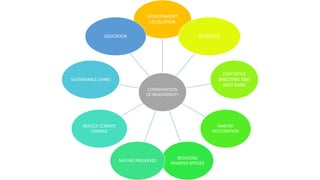
CONSERVATION
OF BIODIVERSITY
GOVERNMENT
LEGISLATION
RESAERCH
CAPITATIVE
BREEDING AND
SEED BANK
HABITAT
RESTORATION
REDUCING
INVASIVE SPECIES
NATURE PRESERVES
REDUCE CLIMATE
CHANGE
SUSTAINABLE LIVING
EDUCATION
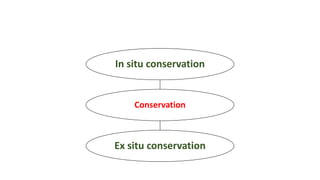
Conservation
In situ conservation
Ex situ conservation
• The conservation of species in their natural habitat or natural ecosystem is
known as in-situ conservation. In the process, the natural surrounding or
ecosystem is protected and maintained so that all the constituent species (known or
unknown) are conserved and benefited.
• These help in the restoration of degraded ecosystem
• The main role of these reserves is to preserve genetic resources, species,
ecosystems, and habitats without disturbing the habitants.
• These maintain cultural, social and ecologically sustainable economic
developments.
• These support education and research in various ecological aspects
• Ex situ conservation is the technique of conservation of all levels of
biological diversity outside their natural habitats through different
techniques like zoo, captive breeding, aquarium, botanical garden, and
and gene bank.
• It plays key roles in communicating the issues, raising awareness, and
and gaining widespread public and political support for conservation
actions and for breeding endangered species in captivity for
reintroduction.
• Limitations of ex situ conservation include maintenance of organisms in
organisms in artificial habitats, deterioration of genetic diversity,
inbreeding depression, adaptations to captivity, and accumulation of
deleterious alleles
Biodiversity
Biodiversity

Biodiversity

  • 1.
  • 2.
    A measure ofthe relative abundance of species or higher taxonomic units found in a certain area at a particular time. In ancient communities, this is often simply referred to as the number of species or taxa found at a site, usually referred to as ‘‘species richness’’ in the ecological literature.
  • 4.
     species arethe fundamental descriptive units of the living world and this is why biodiversity is very commonly, and incorrectly, used as a synonym of species diversity, in particular of ‘‘species richness,’’ which is the number of species in a site or habitat. Discussion of global biodiversity is typically presented in terms of global numbers of species in different taxonomic groups. An estimated 1.7 million species have been described to date; estimates for the total number of species existing on earth at present vary from 5 million to nearly 100 million. A conservative working estimate suggests there might be around 12.5 million.
  • 5.
    Ecosystem diversity dealswith the study of different ecosystem in a certain location and their overall effects on humans and the environment as a whole. It is one of the types of biodiversity along with species diversity, genetic diversity, and functional diversity. Ecosystem diversity focuses on both terrestrial and aquatic ecosystems. Also, it includes the variation of a biological community such as the number of levels of ecosystem diversity and different niches or habitat diversity, and other ecological processes. Ecosystem diversity has a great deal on both genetic and species diversity, thus it is coined as the “largest scale of biodiversity”. Grasslands, tundras, deserts, rainforests, terrestrial and marine ecosystems, are some examples of ecosystems that are diverse and contribute a lot to creating a well-balanced environment. •
  • 7.
    • The populationsof naturally occurring species and occur in a particular environment ( geographical areas) are communities. • For example, species that are found only in deserts and species found under the warm stone are communities. Some communities are large and more complex, so they cannot be clearly defined. • We can also say that a community includes biotic things alone since it deals with living things only. Biologists often use the word community as a subset of organisms present in a large community.
  • 9.
    Enriches aesthetic andmoral values Maintain variations in life Food webs sustain due to species diversity Keep the energy flow in ecosystem Ecological balance is maintained Ecosystem remain working and dynamic Homeostatic balance is maintained Helps in preventing natural calamities and disasters Support the economy of the region Help us to adapt to changing conditions
  • 10.
    Destruction of Habitat Hunting Overexploitation Introduction of exotic species Control of pest and predators Pollution Deforestation
  • 12.
    CONSERVATION OF BIODIVERSITY GOVERNMENT LEGISLATION RESAERCH CAPITATIVE BREEDING AND SEEDBANK HABITAT RESTORATION REDUCING INVASIVE SPECIES NATURE PRESERVES REDUCE CLIMATE CHANGE SUSTAINABLE LIVING EDUCATION
  • 13.
  • 14.
    • The conservationof species in their natural habitat or natural ecosystem is known as in-situ conservation. In the process, the natural surrounding or ecosystem is protected and maintained so that all the constituent species (known or unknown) are conserved and benefited. • These help in the restoration of degraded ecosystem • The main role of these reserves is to preserve genetic resources, species, ecosystems, and habitats without disturbing the habitants. • These maintain cultural, social and ecologically sustainable economic developments. • These support education and research in various ecological aspects
  • 15.
    • Ex situconservation is the technique of conservation of all levels of biological diversity outside their natural habitats through different techniques like zoo, captive breeding, aquarium, botanical garden, and and gene bank. • It plays key roles in communicating the issues, raising awareness, and and gaining widespread public and political support for conservation actions and for breeding endangered species in captivity for reintroduction. • Limitations of ex situ conservation include maintenance of organisms in organisms in artificial habitats, deterioration of genetic diversity, inbreeding depression, adaptations to captivity, and accumulation of deleterious alleles