AGILE
METHODOLOGY
SCRUM
Software Development Methodology
A software development methodology or system development methodology in
software engineering is a framework that is used to structure, plan, and control the
process of developing an product.
Traditional Waterfall Methodology
● Waterfall methodology is another name for the more traditional approach to software development
● You complete one phase(e.g. development) before moving on to the other phase(e.g. testing).
● You rarely aim to re-visit a phase once it is completed.
● This approach is highly risky, often more costly and generally less efficient than Agile approaches.
Agile Methodology and Scrum
● Agile software development is a group of software development methods based on iterative and
incremental development, where requirements and solutions evolve through collaboration between self-
organizing, cross-functional teams.
● It promotes adaptive planning, evolutionary development and delivery, a time-boxed iterative approach,
and encourages rapid and flexible response to change.
● Scrum is an agile way to manage a project, usually software development.
● Agile software development with Scrum is often perceived as a methodology; but rather than viewing Scrum
as methodology, think of it as a framework for managing a process.
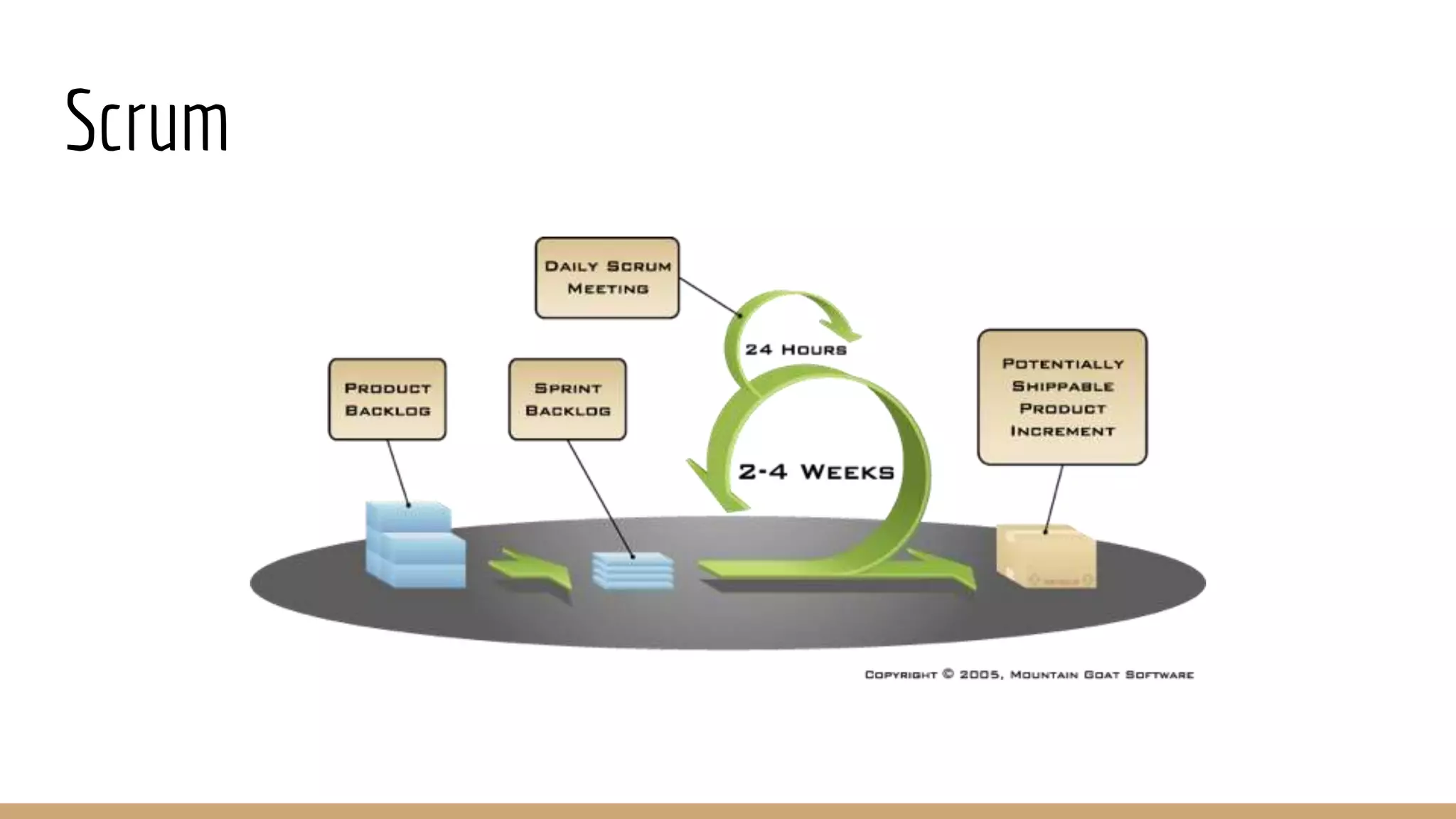
Scrum
Sprint - Characteristics
● Self-organizing teams
● Product progresses in a series of “sprints”
● The sprints can be of any duration(every two weeks to one month), we use two week sprint
● Every two weeks to a month anyone can see real working software and decide to release it as is or continue
to enhance for another iteration.
● Requirements are captured as items in a list of “product backlog”
● The business sets the priorities. Our teams self-manage to determine the best way to deliver the highest
priority features.
● Product is designed, coded, and tested during the sprint
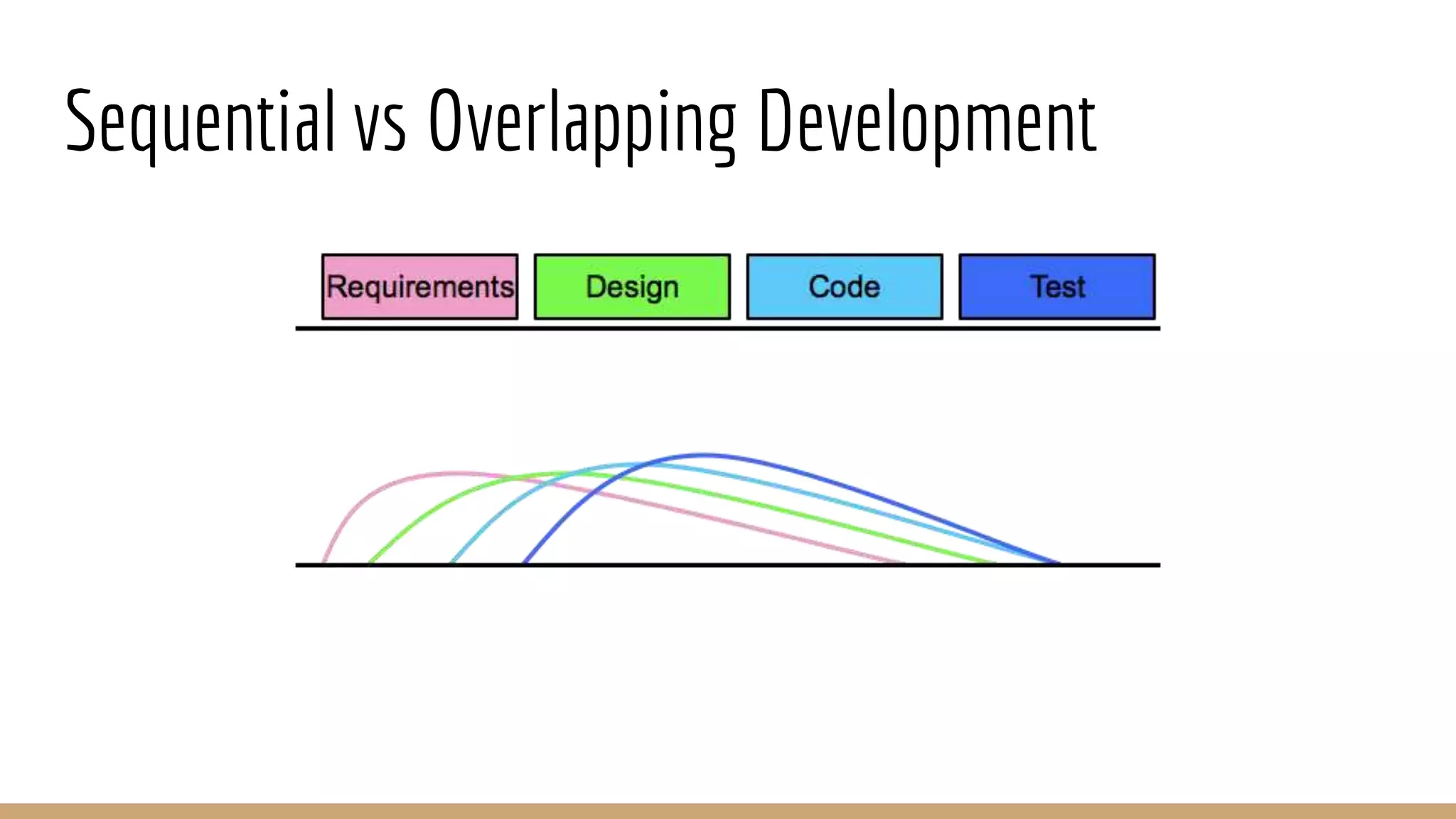
Sequential vs Overlapping Development
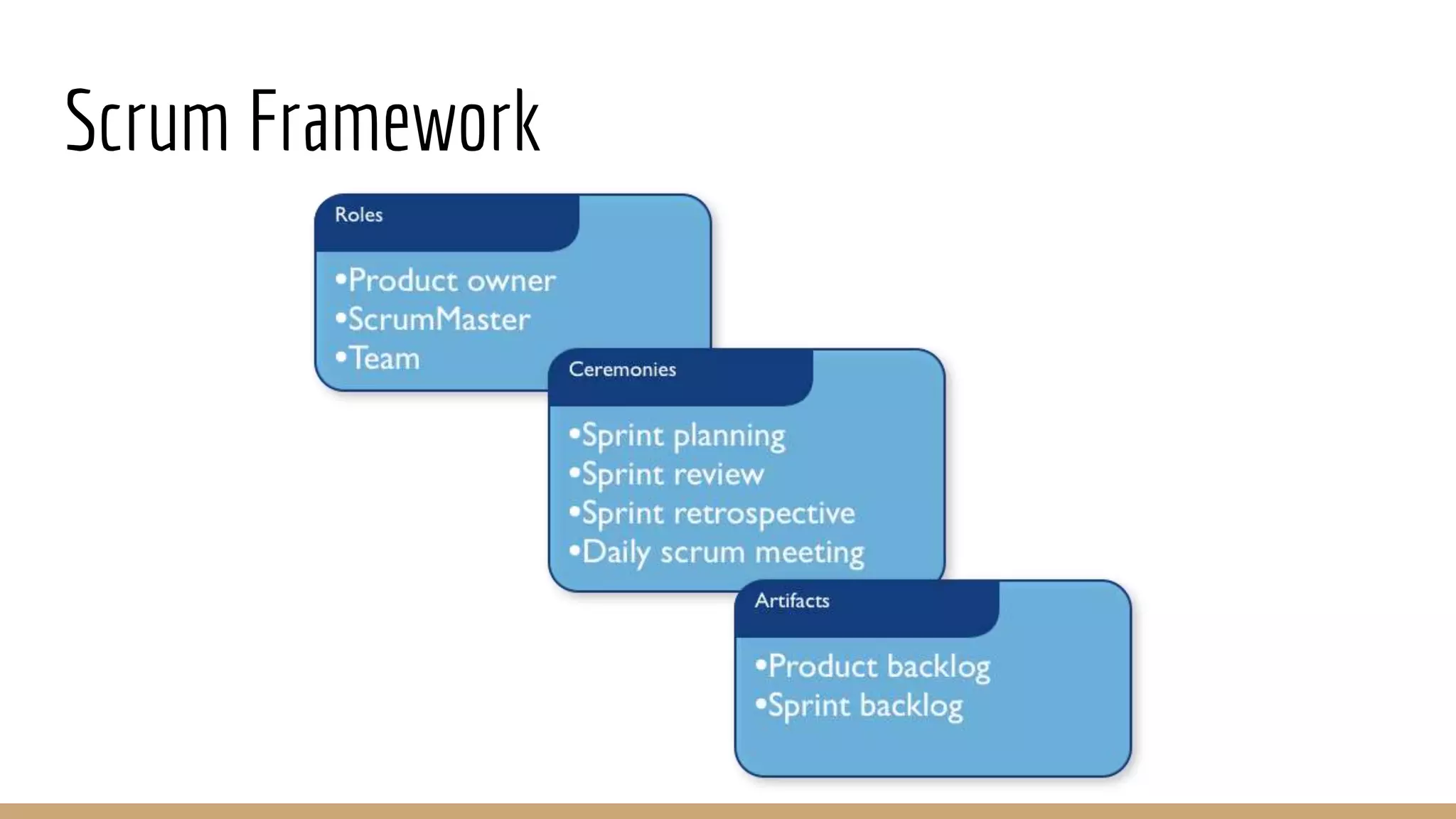
Scrum Framework
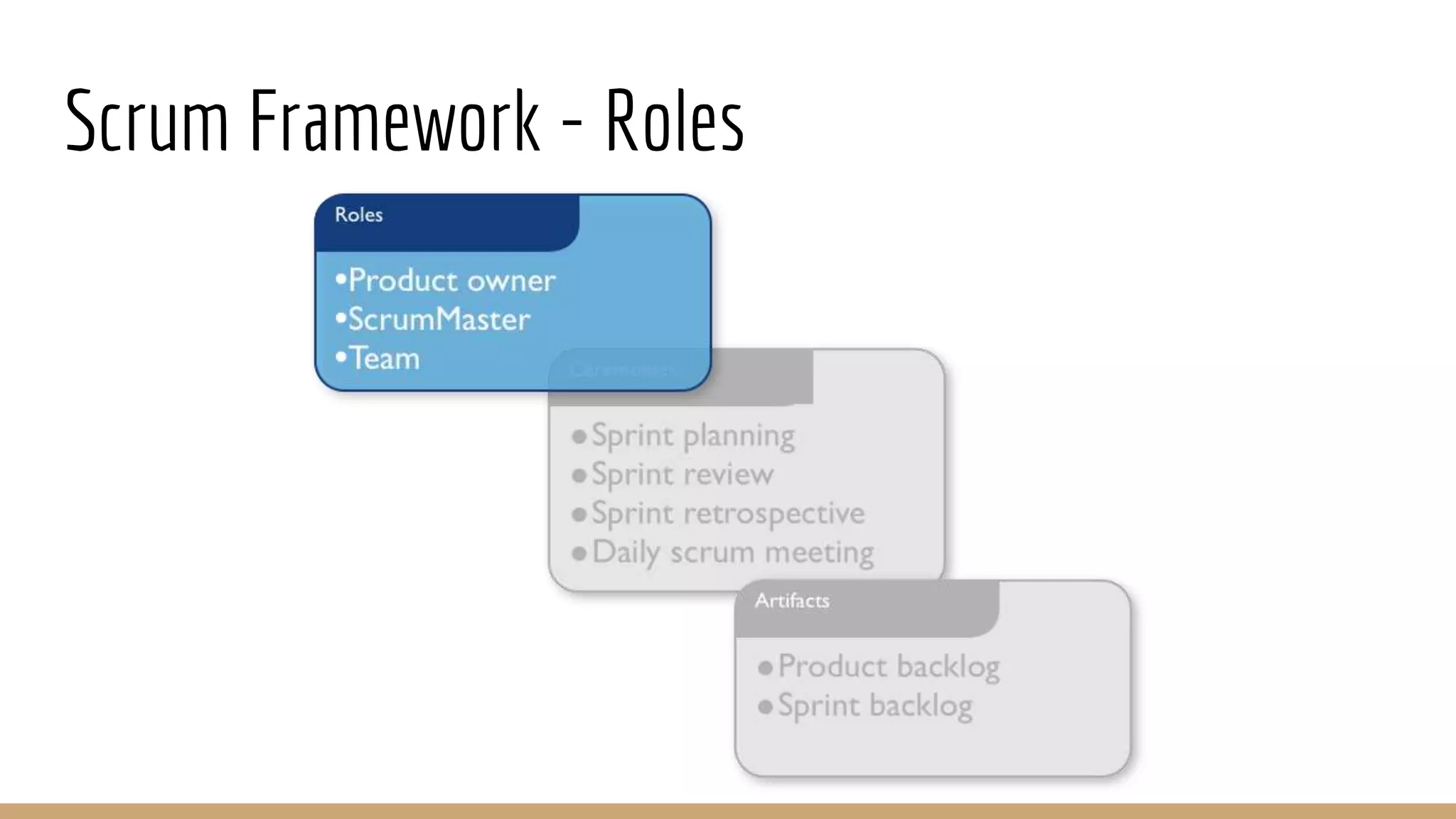
Scrum Framework - Roles
Product Owner
● Define the features of the product
● Decide on release date and content
● Be responsible for the profitability of the product
● Prioritize features according to market value
● Adjust features and priority every iteration, as needed
● Accept or reject work results.
The Scrum Master
● Represents management to the project
● Responsible for enacting Scrum values and practices
● Removes impediments
● Ensure that the team is fully functional and productive
● Enable close cooperation across all roles and functions
● Shield the team from external interferences
The Scrum Team
● Typically 5-10 people
● Cross-functional
○ QA
○ Programmers
○ UI Designers, etc.
● Membership can change only between sprints
● Each team member speaks about his last day’s progress and his task to be worked on the current day.
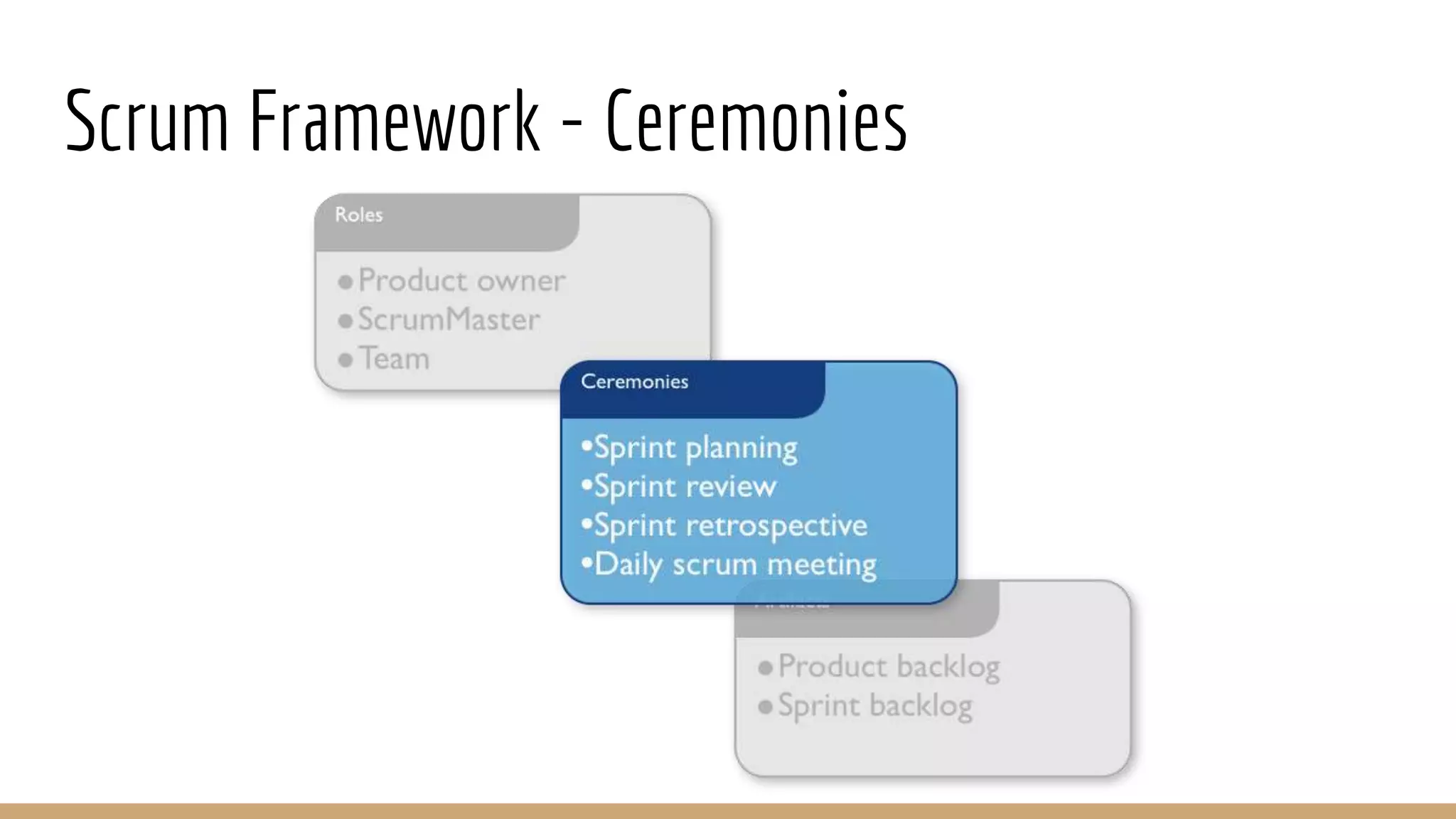
Scrum Framework - Ceremonies
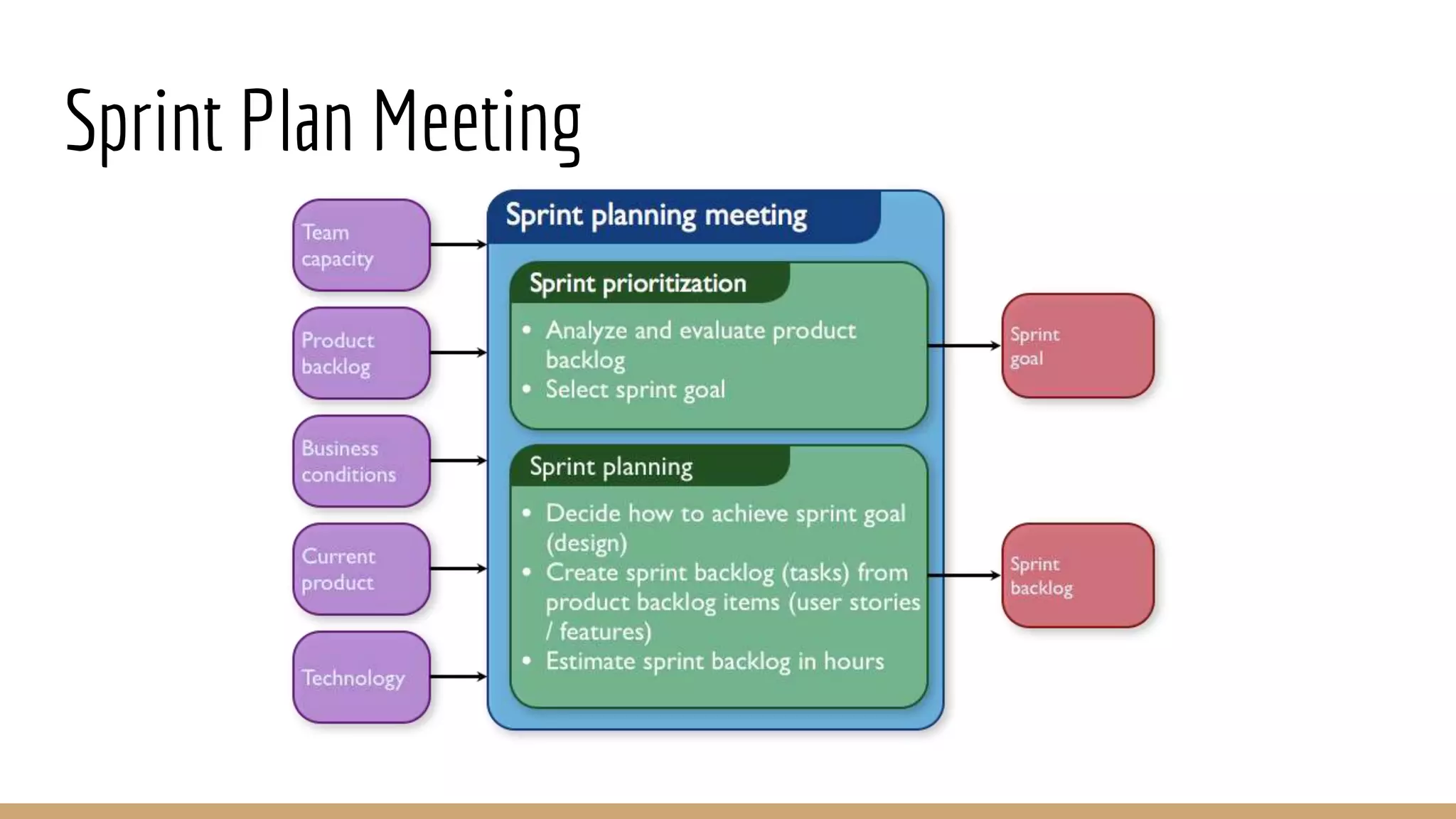
Sprint Plan Meeting
Sprint Planning
● Before the start of a sprint
● Team selects items from the product backlog they can commit to completing
● Sprint backlog is created
○ Tasks are identified and each is estimated (1-16 hours)
○ Collaboratively, not done alone by the ScrumMaster
● High-level design is considered
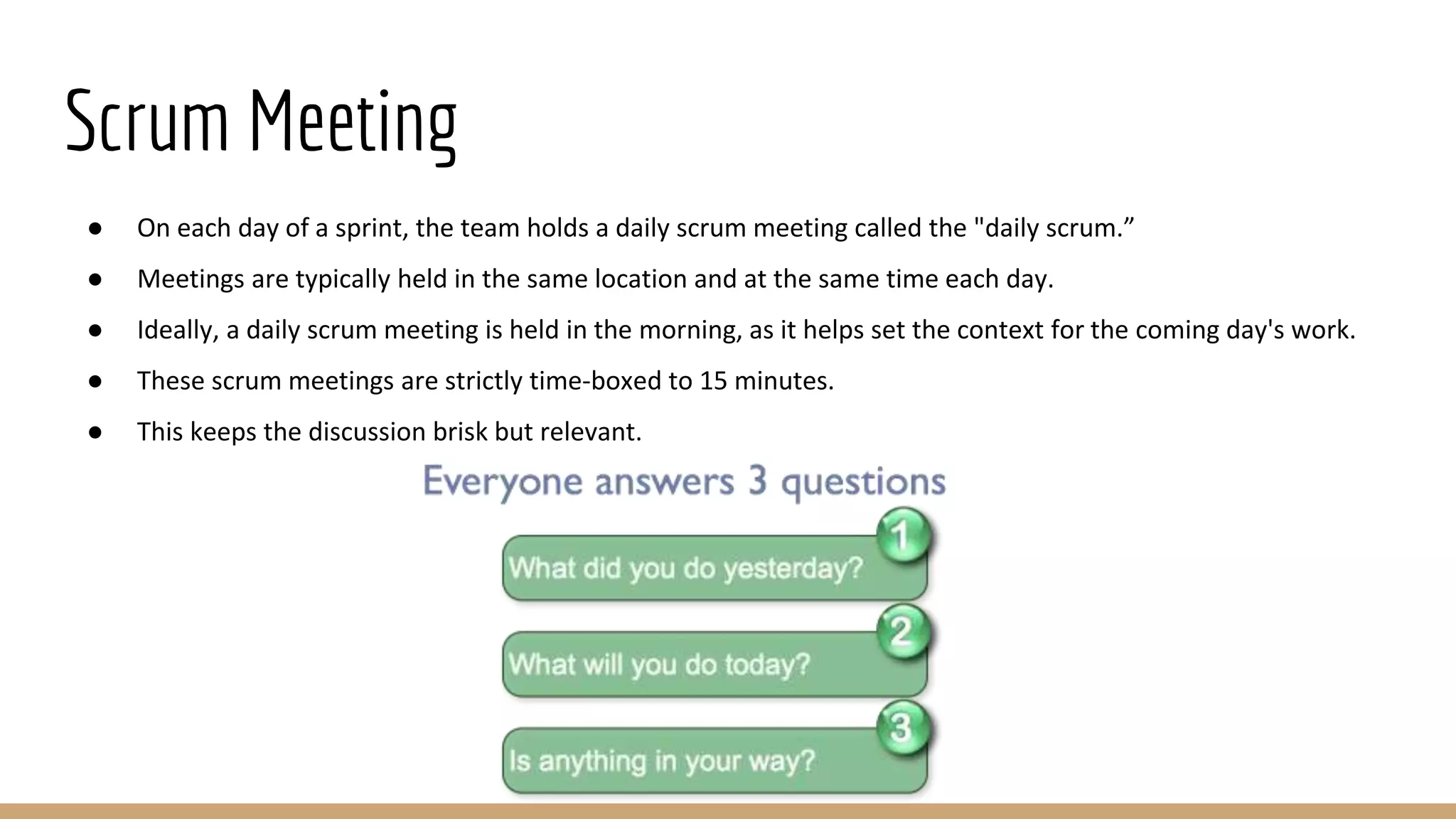
Scrum Meeting
● On each day of a sprint, the team holds a daily scrum meeting called the "daily scrum.”
● Meetings are typically held in the same location and at the same time each day.
● Ideally, a daily scrum meeting is held in the morning, as it helps set the context for the coming day's work.
● These scrum meetings are strictly time-boxed to 15 minutes.
● This keeps the discussion brisk but relevant.
Sprint Review or Triage
● Towards the end of the sprint
● Team presents what it accomplished during the sprint
● Typically takes the form of a demo of new features or underlying architecture
● Informal
○ 2-hour prep time rule
○ No slides
● Whole team participates
Sprint Retrospective Meeting
● Periodically take a look at what is and is not working
● Typically 15–30 minutes
● Done after every sprint
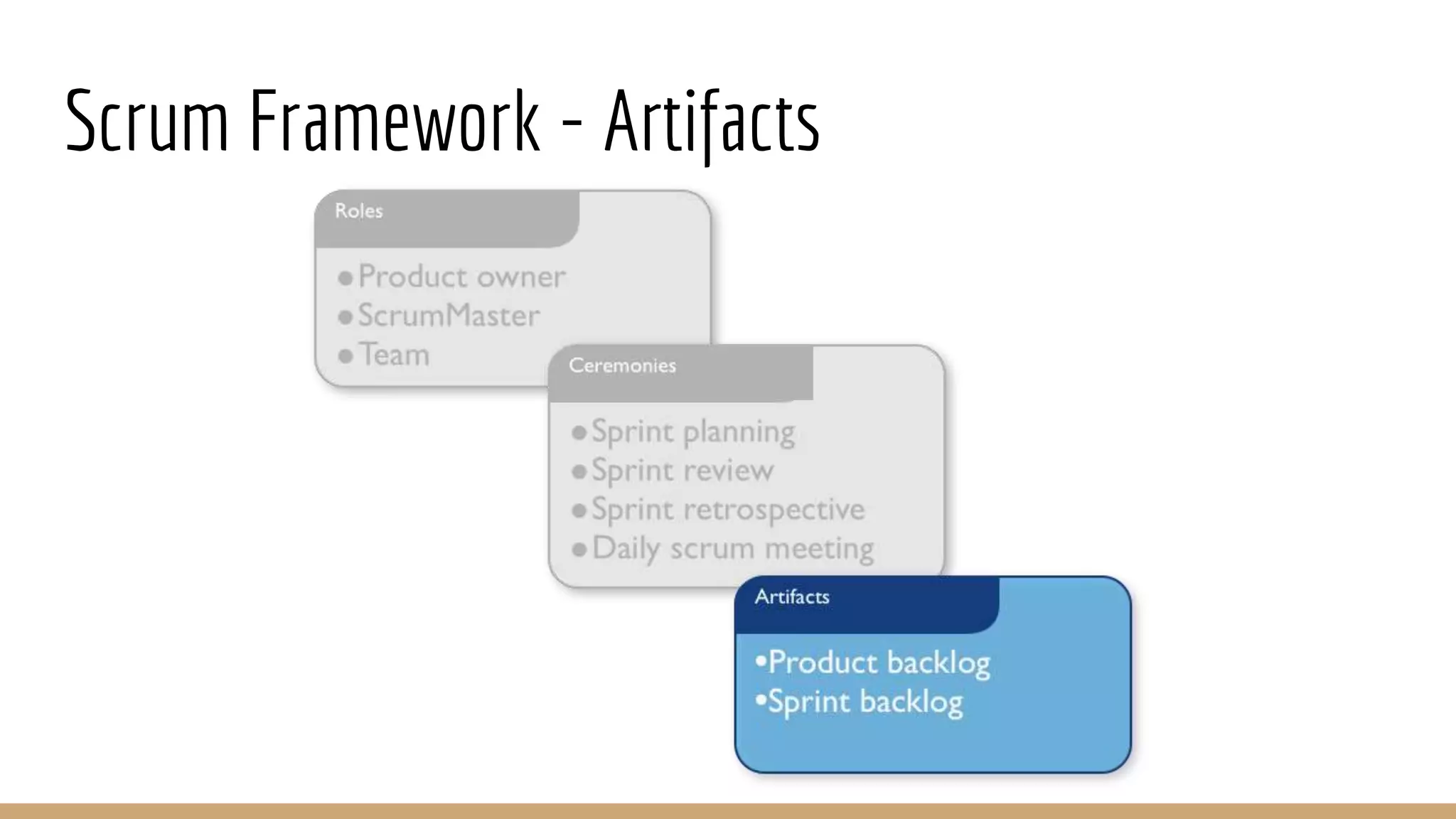
Scrum Framework - Artifacts
Product backlog
● Requirements for a system, expressed as a prioritized list of Backlog Items or all desired work on the project
● Ideally expressed such that each item has value to the users or customers of the product
● Is managed and owned by a Product Owner
● Spreadsheet (typically)
● Prioritized by the product owner
● Reprioritized at the start of each sprint
Sprint Goal - Sprint Backlog
● A subset of Product Backlog Items, which define the work for a Sprint
● Is created ONLY by Team members
● Each Item has it’s own status
● Should be updated every day
● If a task requires more than 8 hours, it should be broken down
● Team can add or subtract items from the list. Product Owner is not allowed to do it
Where to go next?
● www.mountaingoatsoftware.com/scrum
● www.scrumalliance.org
● www.controlchaos.com
● scrumdevelopment@yahoogroups.com
Thank You

Agile Methodology (scrum)

  • 1.
  • 2.
    Software Development Methodology Asoftware development methodology or system development methodology in software engineering is a framework that is used to structure, plan, and control the process of developing an product.
  • 3.
    Traditional Waterfall Methodology ●Waterfall methodology is another name for the more traditional approach to software development ● You complete one phase(e.g. development) before moving on to the other phase(e.g. testing). ● You rarely aim to re-visit a phase once it is completed. ● This approach is highly risky, often more costly and generally less efficient than Agile approaches.
  • 4.
    Agile Methodology andScrum ● Agile software development is a group of software development methods based on iterative and incremental development, where requirements and solutions evolve through collaboration between self- organizing, cross-functional teams. ● It promotes adaptive planning, evolutionary development and delivery, a time-boxed iterative approach, and encourages rapid and flexible response to change. ● Scrum is an agile way to manage a project, usually software development. ● Agile software development with Scrum is often perceived as a methodology; but rather than viewing Scrum as methodology, think of it as a framework for managing a process.
  • 5.
  • 6.
    Sprint - Characteristics ●Self-organizing teams ● Product progresses in a series of “sprints” ● The sprints can be of any duration(every two weeks to one month), we use two week sprint ● Every two weeks to a month anyone can see real working software and decide to release it as is or continue to enhance for another iteration. ● Requirements are captured as items in a list of “product backlog” ● The business sets the priorities. Our teams self-manage to determine the best way to deliver the highest priority features. ● Product is designed, coded, and tested during the sprint
  • 7.
  • 8.
  • 9.
  • 10.
    Product Owner ● Definethe features of the product ● Decide on release date and content ● Be responsible for the profitability of the product ● Prioritize features according to market value ● Adjust features and priority every iteration, as needed ● Accept or reject work results.
  • 11.
    The Scrum Master ●Represents management to the project ● Responsible for enacting Scrum values and practices ● Removes impediments ● Ensure that the team is fully functional and productive ● Enable close cooperation across all roles and functions ● Shield the team from external interferences
  • 12.
    The Scrum Team ●Typically 5-10 people ● Cross-functional ○ QA ○ Programmers ○ UI Designers, etc. ● Membership can change only between sprints ● Each team member speaks about his last day’s progress and his task to be worked on the current day.
  • 13.
  • 14.
  • 15.
    Sprint Planning ● Beforethe start of a sprint ● Team selects items from the product backlog they can commit to completing ● Sprint backlog is created ○ Tasks are identified and each is estimated (1-16 hours) ○ Collaboratively, not done alone by the ScrumMaster ● High-level design is considered
  • 16.
    Scrum Meeting ● Oneach day of a sprint, the team holds a daily scrum meeting called the "daily scrum.” ● Meetings are typically held in the same location and at the same time each day. ● Ideally, a daily scrum meeting is held in the morning, as it helps set the context for the coming day's work. ● These scrum meetings are strictly time-boxed to 15 minutes. ● This keeps the discussion brisk but relevant.
  • 17.
    Sprint Review orTriage ● Towards the end of the sprint ● Team presents what it accomplished during the sprint ● Typically takes the form of a demo of new features or underlying architecture ● Informal ○ 2-hour prep time rule ○ No slides ● Whole team participates
  • 18.
    Sprint Retrospective Meeting ●Periodically take a look at what is and is not working ● Typically 15–30 minutes ● Done after every sprint
  • 19.
  • 20.
    Product backlog ● Requirementsfor a system, expressed as a prioritized list of Backlog Items or all desired work on the project ● Ideally expressed such that each item has value to the users or customers of the product ● Is managed and owned by a Product Owner ● Spreadsheet (typically) ● Prioritized by the product owner ● Reprioritized at the start of each sprint
  • 21.
    Sprint Goal -Sprint Backlog ● A subset of Product Backlog Items, which define the work for a Sprint ● Is created ONLY by Team members ● Each Item has it’s own status ● Should be updated every day ● If a task requires more than 8 hours, it should be broken down ● Team can add or subtract items from the list. Product Owner is not allowed to do it
  • 22.
    Where to gonext? ● www.mountaingoatsoftware.com/scrum ● www.scrumalliance.org ● www.controlchaos.com ● scrumdevelopment@yahoogroups.com
  • 23.