Agile/Scrum Introduction
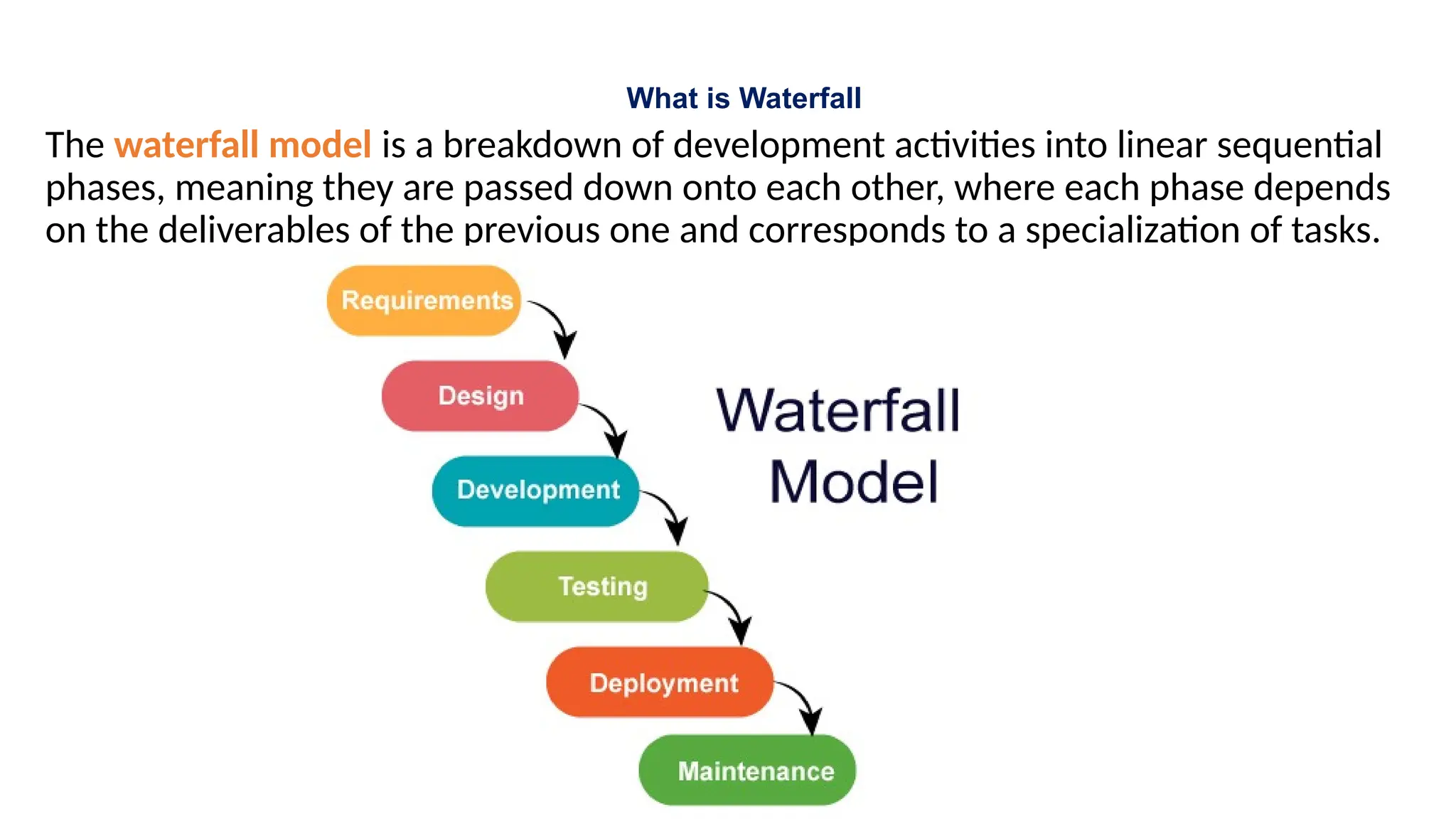
What is Waterfall
The waterfall model is a breakdown of development activities into linear sequential
phases, meaning they are passed down onto each other, where each phase depends
on the deliverables of the previous one and corresponds to a specialization of tasks.
What is Agile & Agile Principles
Agile is a project management approach focused on continuous improvement,
flexibility, and customer collaboration. It emphasizes iterative delivery and
adapting to change throughout the development process.
The key values and principles outlined in the Agile Manifesto are:
• Individuals and interactions over processes and tools
• Working software over comprehensive documentation
• Customer collaboration over contract negotiation
• Responding to change over following a plan
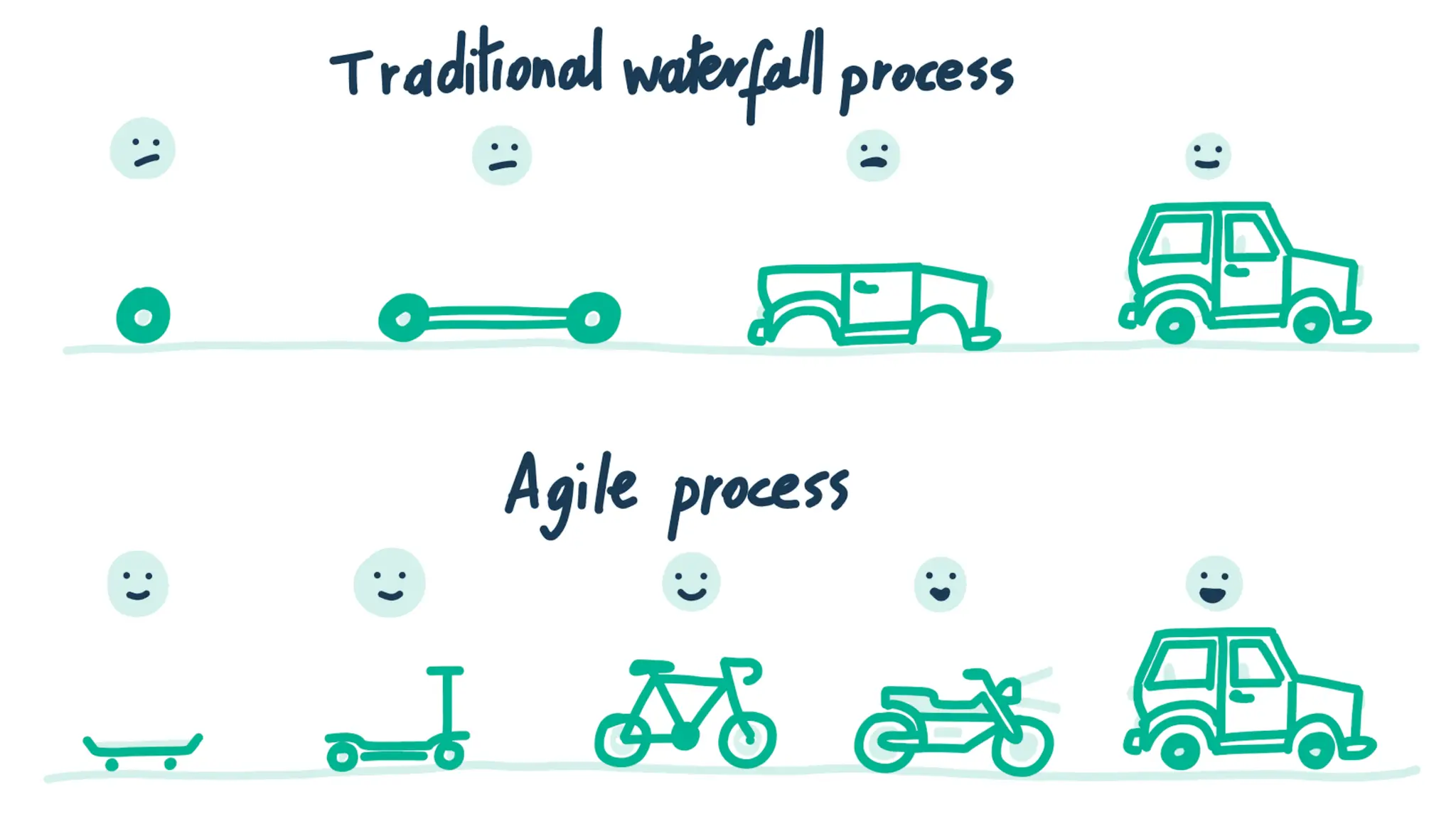
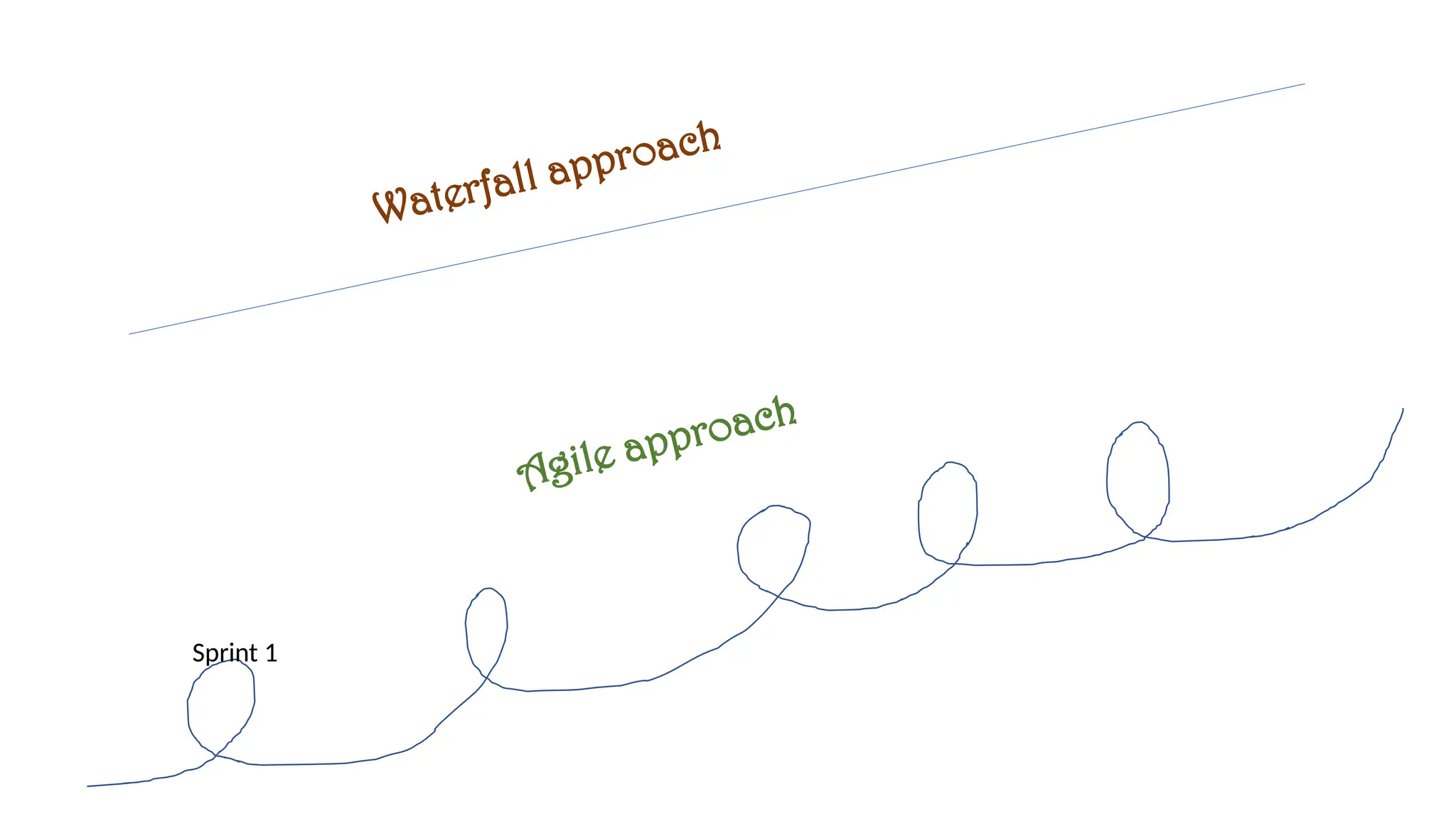
Waterfall approach
Agile approach
Sprint 1
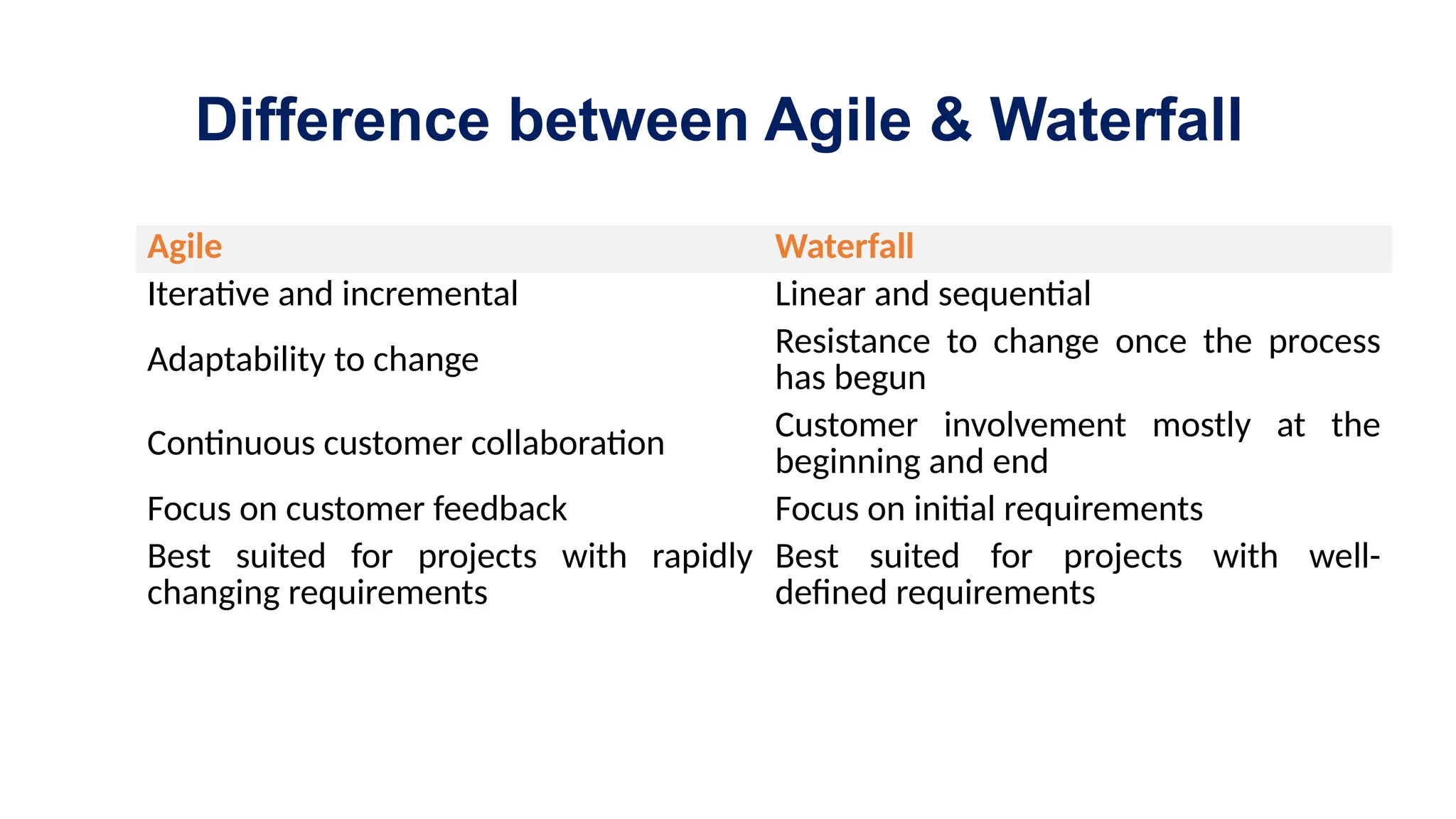
Difference between Agile & Waterfall
Agile Waterfall
Iterative and incremental Linear and sequential
Adaptability to change Resistance to change once the process
has begun
Continuous customer collaboration
Customer involvement mostly at the
beginning and end
Focus on customer feedback Focus on initial requirements
Best suited for projects with rapidly
changing requirements
Best suited for projects with well-
defined requirements
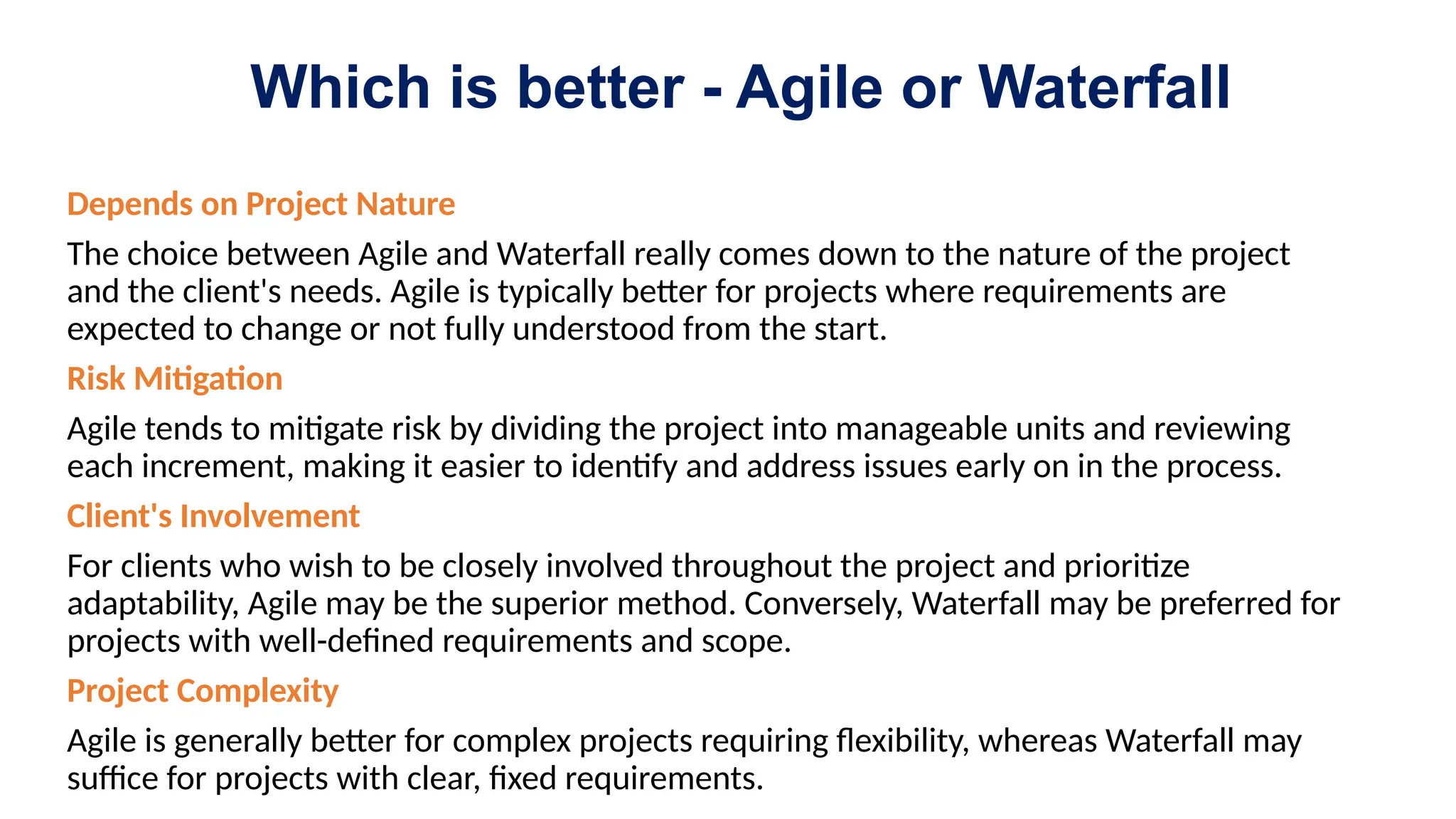
Which is better - Agile or Waterfall
Depends on Project Nature
The choice between Agile and Waterfall really comes down to the nature of the project
and the client's needs. Agile is typically better for projects where requirements are
expected to change or not fully understood from the start.
Risk Mitigation
Agile tends to mitigate risk by dividing the project into manageable units and reviewing
each increment, making it easier to identify and address issues early on in the process.
Client's Involvement
For clients who wish to be closely involved throughout the project and prioritize
adaptability, Agile may be the superior method. Conversely, Waterfall may be preferred for
projects with well-defined requirements and scope.
Project Complexity
Agile is generally better for complex projects requiring flexibility, whereas Waterfall may
suffice for projects with clear, fixed requirements.
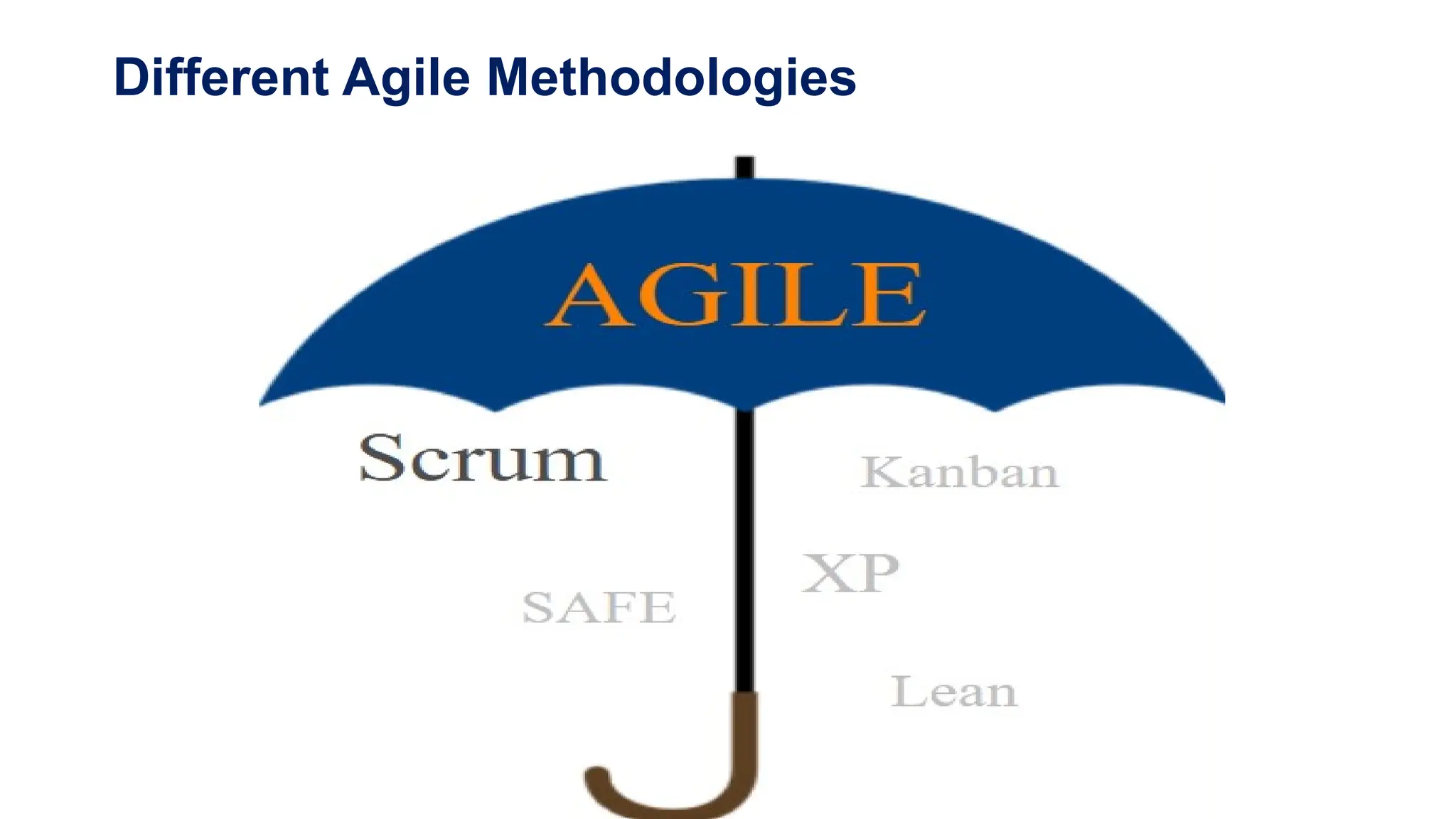
Different Agile Methodologies
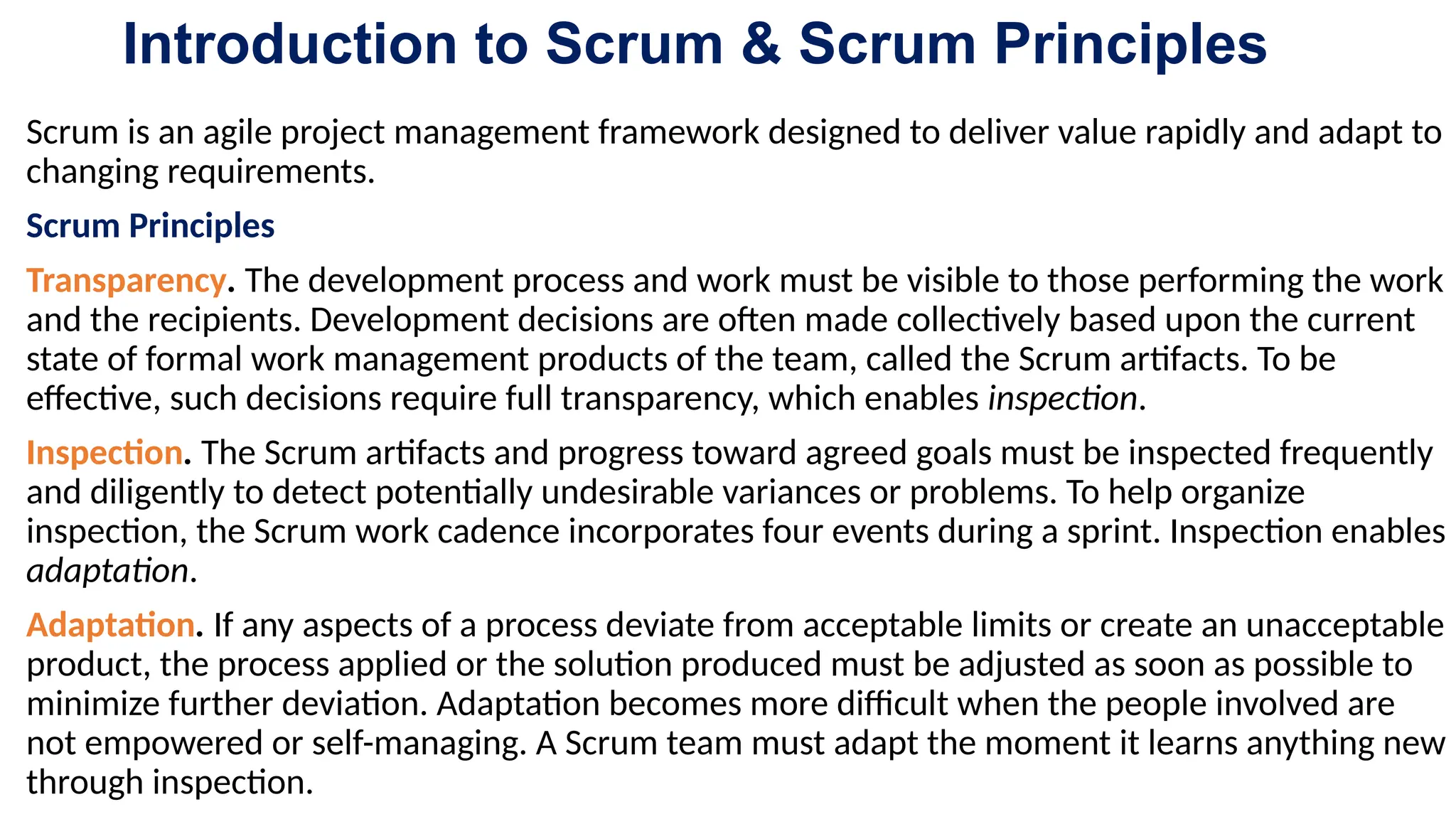
Introduction to Scrum & Scrum Principles
Scrum is an agile project management framework designed to deliver value rapidly and adapt to
changing requirements.
Scrum Principles
Transparency. The development process and work must be visible to those performing the work
and the recipients. Development decisions are often made collectively based upon the current
state of formal work management products of the team, called the Scrum artifacts. To be
effective, such decisions require full transparency, which enables inspection.
Inspection. The Scrum artifacts and progress toward agreed goals must be inspected frequently
and diligently to detect potentially undesirable variances or problems. To help organize
inspection, the Scrum work cadence incorporates four events during a sprint. Inspection enables
adaptation.
Adaptation. If any aspects of a process deviate from acceptable limits or create an unacceptable
product, the process applied or the solution produced must be adjusted as soon as possible to
minimize further deviation. Adaptation becomes more difficult when the people involved are
not empowered or self-managing. A Scrum team must adapt the moment it learns anything new
through inspection.
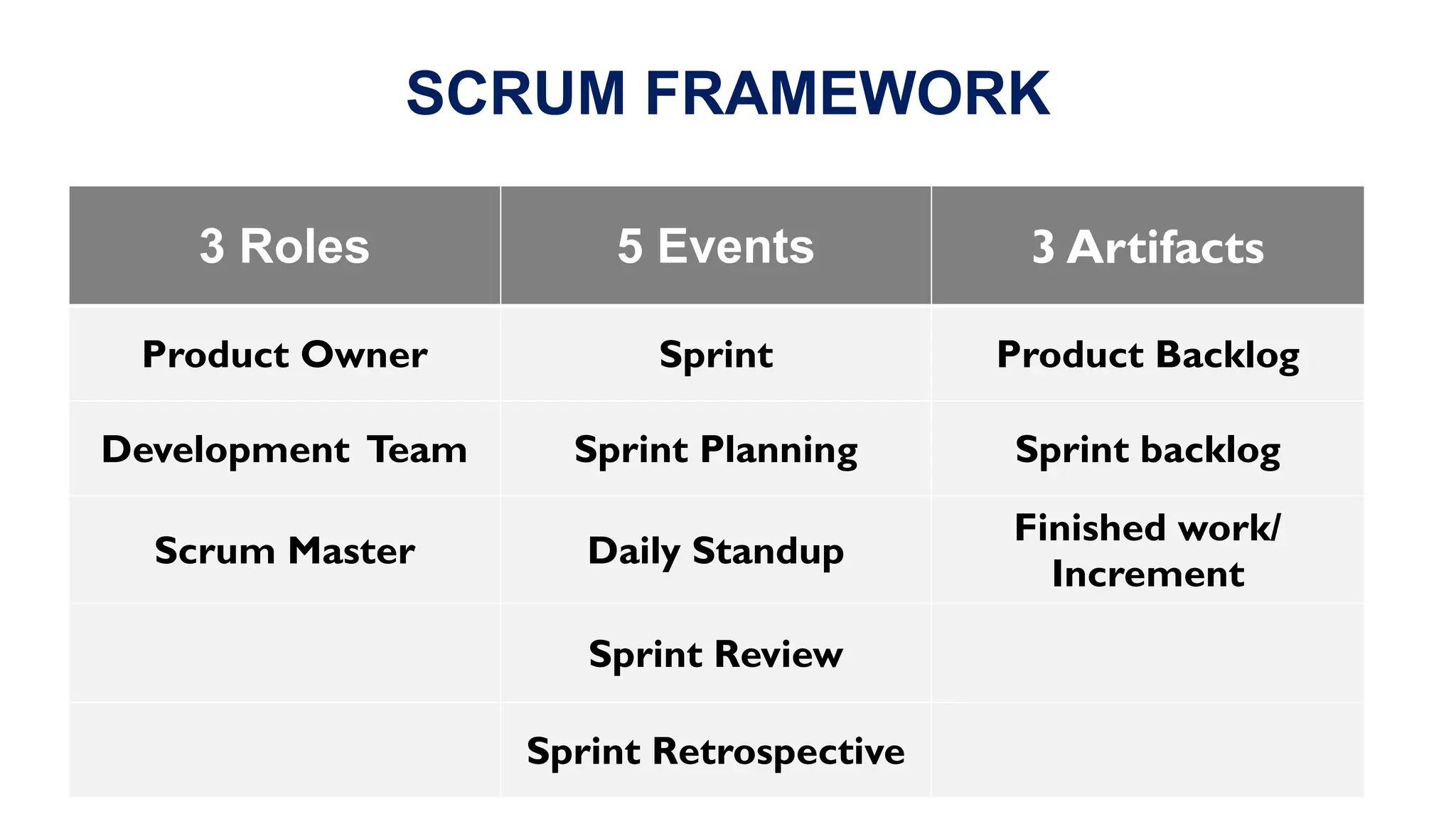
SCRUM FRAMEWORK
3 Roles 5 Events 3 Artifacts
Product Owner Sprint Product Backlog
Development Team Sprint Planning Sprint backlog
Scrum Master Daily Standup
Finished work/
Increment
Sprint Review
Sprint Retrospective
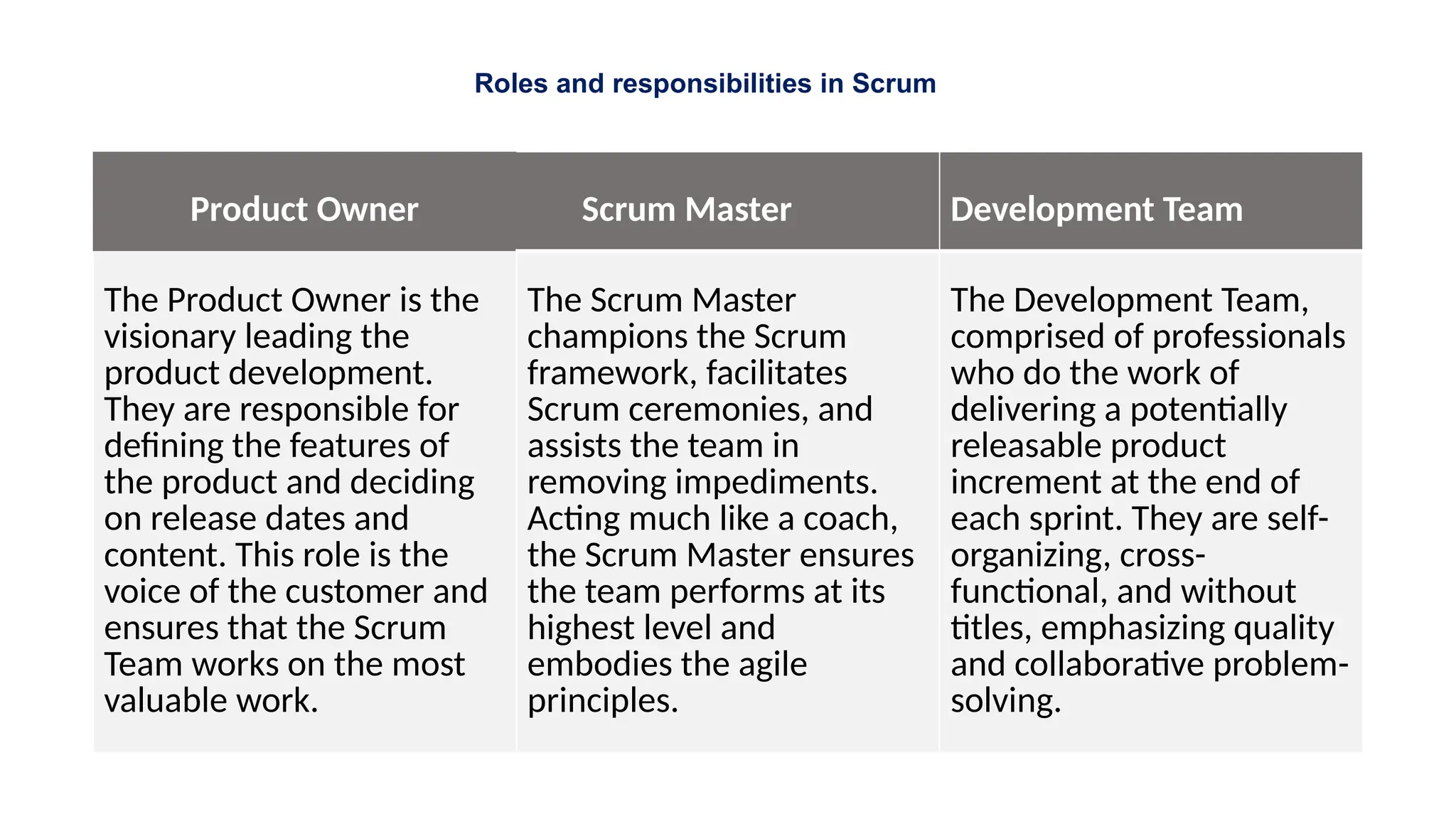
Roles and responsibilities in Scrum
Product Owner Scrum Master Development Team
The Product Owner is the
visionary leading the
product development.
They are responsible for
defining the features of
the product and deciding
on release dates and
content. This role is the
voice of the customer and
ensures that the Scrum
Team works on the most
valuable work.
The Scrum Master
champions the Scrum
framework, facilitates
Scrum ceremonies, and
assists the team in
removing impediments.
Acting much like a coach,
the Scrum Master ensures
the team performs at its
highest level and
embodies the agile
principles.
The Development Team,
comprised of professionals
who do the work of
delivering a potentially
releasable product
increment at the end of
each sprint. They are self-
organizing, cross-
functional, and without
titles, emphasizing quality
and collaborative problem-
solving.
Events
Sprint
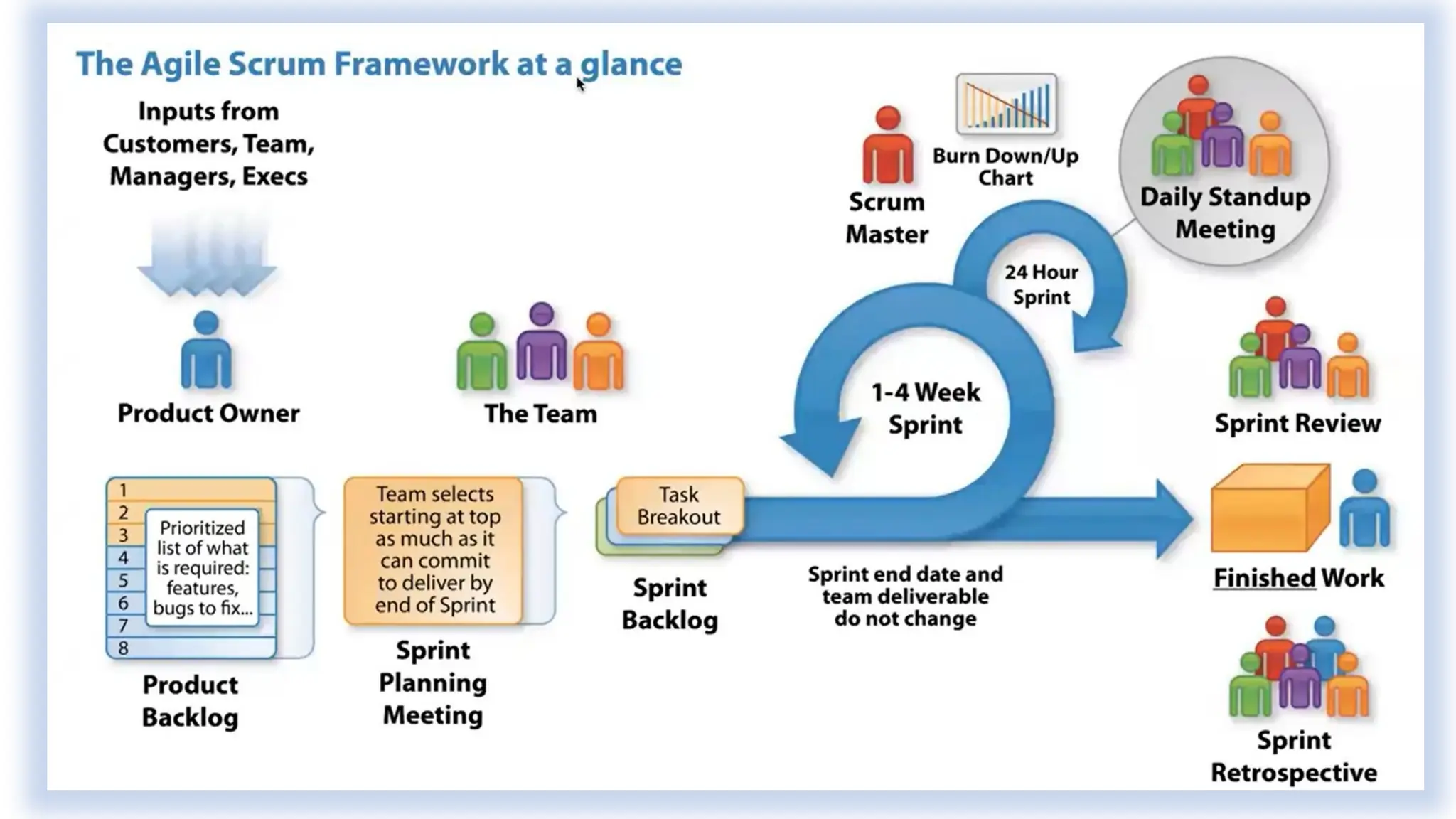
A sprint is a time-boxed event of one to four weeks in which the Scrum team focuses only on a sprint goal.
Sprint Planning
This is the event that kicks off the sprint, where team members determine what can be delivered in the
upcoming sprint and how the work will be achieved. It's a collaborative effort involving the whole Scrum
Team.
Daily Scrum
The Daily Scrum is a 15-minute time-boxed event for the Development Team. During this meeting, team
members synchronize their work and plan for the next 24 hours, discussing progress and roadblocks.
Sprint Review
In the Sprint Review, the Scrum Team and stakeholders inspect the outcome of the sprint and figure out what
to do next. The team presents the work that’s completed and discusses what went well and what could
change for the better.
Sprint Retrospective
After the sprint concludes, the team holds the Sprint Retrospective to inspect itself and create a plan for
improvements to be enacted during the next sprint. It's a crucial step for continuous improvement.
Scrum Artifacts
Product Backlog
Consisting of an ordered list of everything that might be needed in the product, it is the single source
of requirements for any changes to be made to the product. The Product Owner manages it, ensuring
it is visible, transparent, and clear.
Sprint Backlog
This is the set of Product Backlog items selected for the Sprint, plus a plan for delivering them. It gives
enough detail that changes in progress can be understood at the Daily Scrum.
Increment
An increment is the sum of all the Product Backlog items completed during a sprint and all
previous sprints. At the end of a Sprint, the new increment must be done, which means it
must be in usable condition and meet the Scrum Team's definition of "done".
THANK YOU !

Agile and Scrum presentation - definition and more

  • 1.
  • 2.
    What is Waterfall Thewaterfall model is a breakdown of development activities into linear sequential phases, meaning they are passed down onto each other, where each phase depends on the deliverables of the previous one and corresponds to a specialization of tasks.
  • 3.
    What is Agile& Agile Principles Agile is a project management approach focused on continuous improvement, flexibility, and customer collaboration. It emphasizes iterative delivery and adapting to change throughout the development process. The key values and principles outlined in the Agile Manifesto are: • Individuals and interactions over processes and tools • Working software over comprehensive documentation • Customer collaboration over contract negotiation • Responding to change over following a plan
  • 5.
  • 6.
    Difference between Agile& Waterfall Agile Waterfall Iterative and incremental Linear and sequential Adaptability to change Resistance to change once the process has begun Continuous customer collaboration Customer involvement mostly at the beginning and end Focus on customer feedback Focus on initial requirements Best suited for projects with rapidly changing requirements Best suited for projects with well- defined requirements
  • 7.
    Which is better- Agile or Waterfall Depends on Project Nature The choice between Agile and Waterfall really comes down to the nature of the project and the client's needs. Agile is typically better for projects where requirements are expected to change or not fully understood from the start. Risk Mitigation Agile tends to mitigate risk by dividing the project into manageable units and reviewing each increment, making it easier to identify and address issues early on in the process. Client's Involvement For clients who wish to be closely involved throughout the project and prioritize adaptability, Agile may be the superior method. Conversely, Waterfall may be preferred for projects with well-defined requirements and scope. Project Complexity Agile is generally better for complex projects requiring flexibility, whereas Waterfall may suffice for projects with clear, fixed requirements.
  • 8.
  • 9.
    Introduction to Scrum& Scrum Principles Scrum is an agile project management framework designed to deliver value rapidly and adapt to changing requirements. Scrum Principles Transparency. The development process and work must be visible to those performing the work and the recipients. Development decisions are often made collectively based upon the current state of formal work management products of the team, called the Scrum artifacts. To be effective, such decisions require full transparency, which enables inspection. Inspection. The Scrum artifacts and progress toward agreed goals must be inspected frequently and diligently to detect potentially undesirable variances or problems. To help organize inspection, the Scrum work cadence incorporates four events during a sprint. Inspection enables adaptation. Adaptation. If any aspects of a process deviate from acceptable limits or create an unacceptable product, the process applied or the solution produced must be adjusted as soon as possible to minimize further deviation. Adaptation becomes more difficult when the people involved are not empowered or self-managing. A Scrum team must adapt the moment it learns anything new through inspection.
  • 10.
    SCRUM FRAMEWORK 3 Roles5 Events 3 Artifacts Product Owner Sprint Product Backlog Development Team Sprint Planning Sprint backlog Scrum Master Daily Standup Finished work/ Increment Sprint Review Sprint Retrospective
  • 12.
    Roles and responsibilitiesin Scrum Product Owner Scrum Master Development Team The Product Owner is the visionary leading the product development. They are responsible for defining the features of the product and deciding on release dates and content. This role is the voice of the customer and ensures that the Scrum Team works on the most valuable work. The Scrum Master champions the Scrum framework, facilitates Scrum ceremonies, and assists the team in removing impediments. Acting much like a coach, the Scrum Master ensures the team performs at its highest level and embodies the agile principles. The Development Team, comprised of professionals who do the work of delivering a potentially releasable product increment at the end of each sprint. They are self- organizing, cross- functional, and without titles, emphasizing quality and collaborative problem- solving.
  • 13.
    Events Sprint A sprint isa time-boxed event of one to four weeks in which the Scrum team focuses only on a sprint goal. Sprint Planning This is the event that kicks off the sprint, where team members determine what can be delivered in the upcoming sprint and how the work will be achieved. It's a collaborative effort involving the whole Scrum Team. Daily Scrum The Daily Scrum is a 15-minute time-boxed event for the Development Team. During this meeting, team members synchronize their work and plan for the next 24 hours, discussing progress and roadblocks. Sprint Review In the Sprint Review, the Scrum Team and stakeholders inspect the outcome of the sprint and figure out what to do next. The team presents the work that’s completed and discusses what went well and what could change for the better. Sprint Retrospective After the sprint concludes, the team holds the Sprint Retrospective to inspect itself and create a plan for improvements to be enacted during the next sprint. It's a crucial step for continuous improvement.
  • 14.
    Scrum Artifacts Product Backlog Consistingof an ordered list of everything that might be needed in the product, it is the single source of requirements for any changes to be made to the product. The Product Owner manages it, ensuring it is visible, transparent, and clear. Sprint Backlog This is the set of Product Backlog items selected for the Sprint, plus a plan for delivering them. It gives enough detail that changes in progress can be understood at the Daily Scrum. Increment An increment is the sum of all the Product Backlog items completed during a sprint and all previous sprints. At the end of a Sprint, the new increment must be done, which means it must be in usable condition and meet the Scrum Team's definition of "done".
  • 15.