HLA antigens (Human Leukocyte Antigens) = human MHC  (Main Histocompatibility Complex) antigens
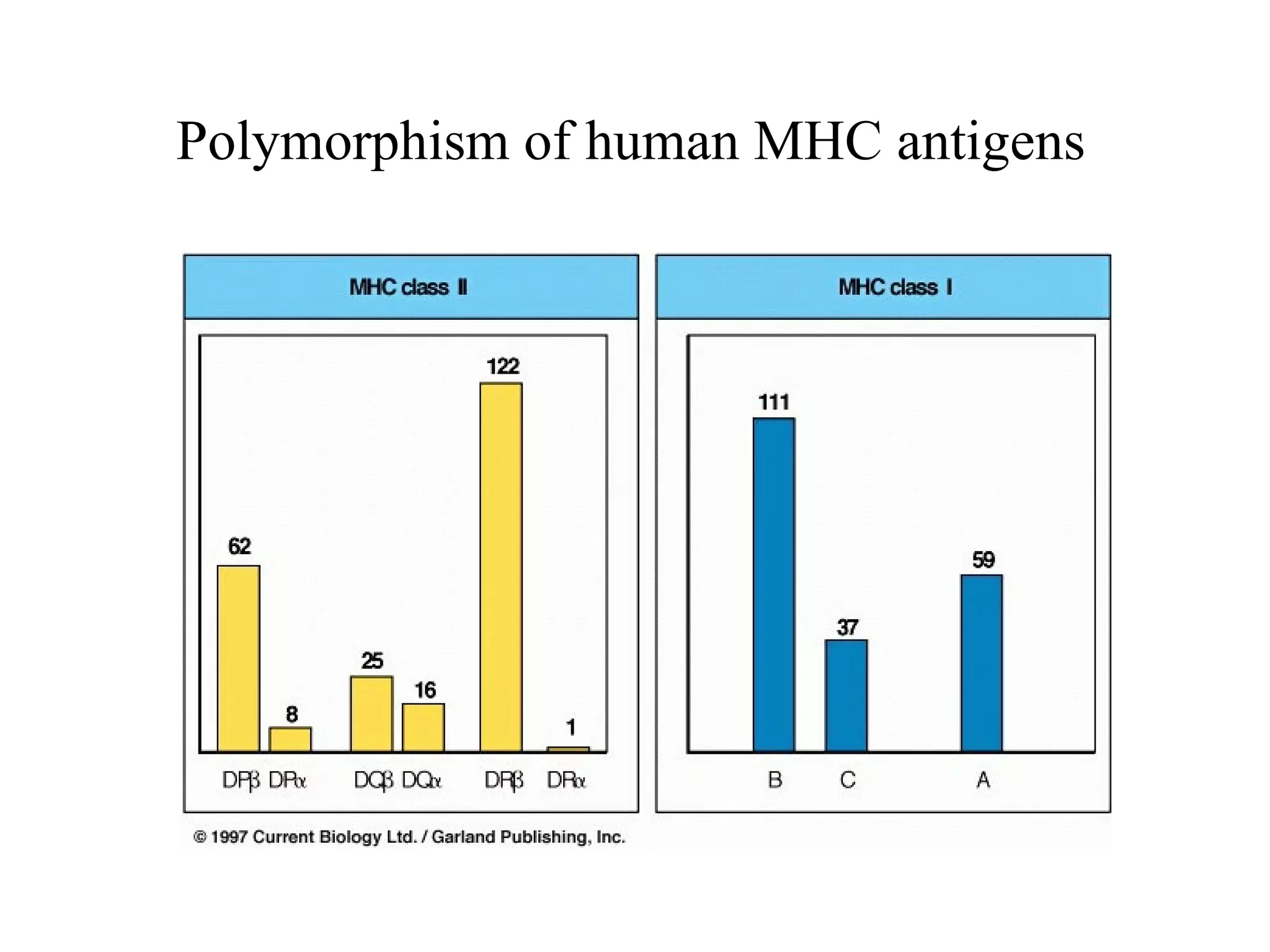
Polymorphism of human MHC antigens
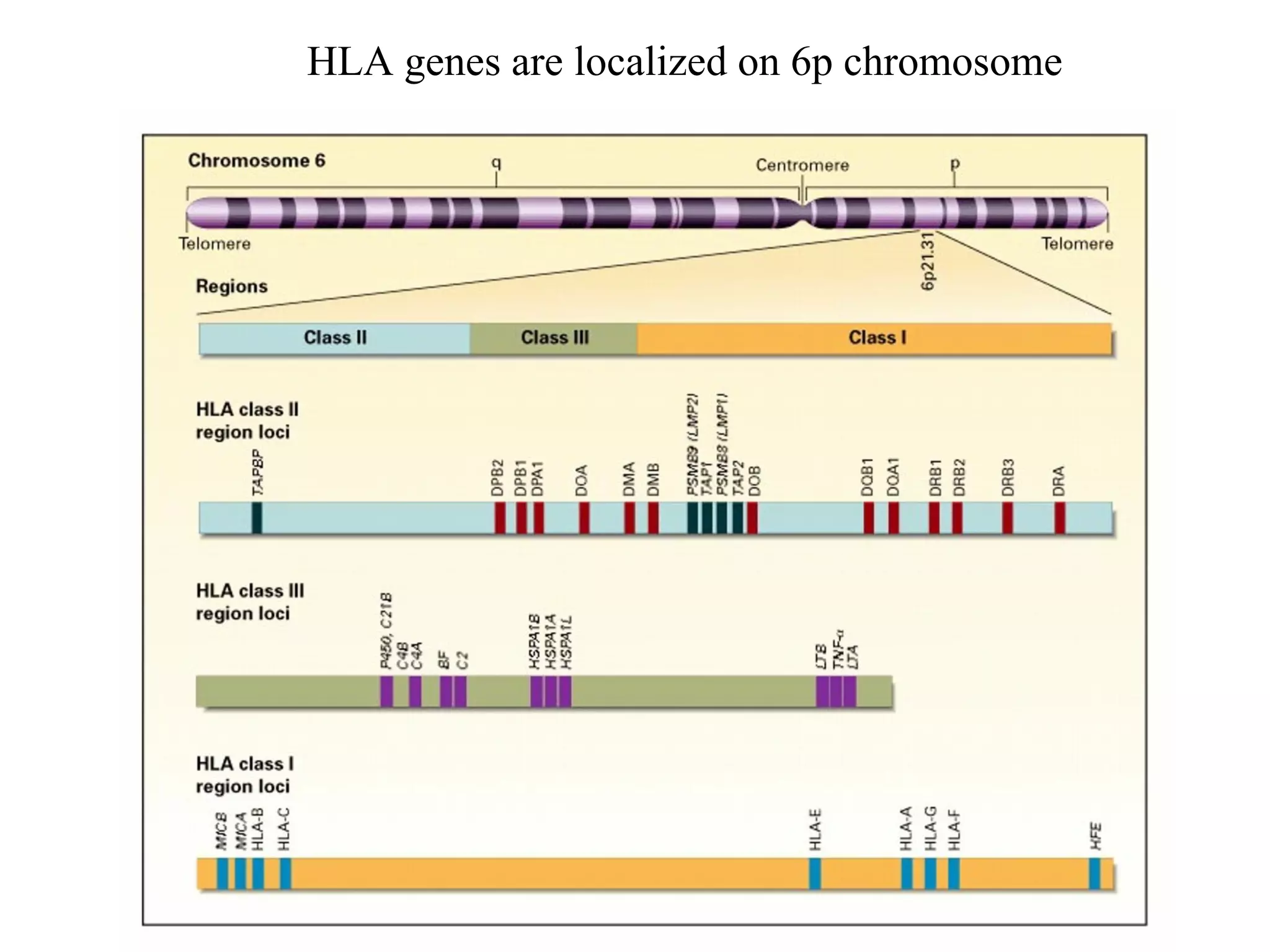
HLA genes are localized on 6p chromosome
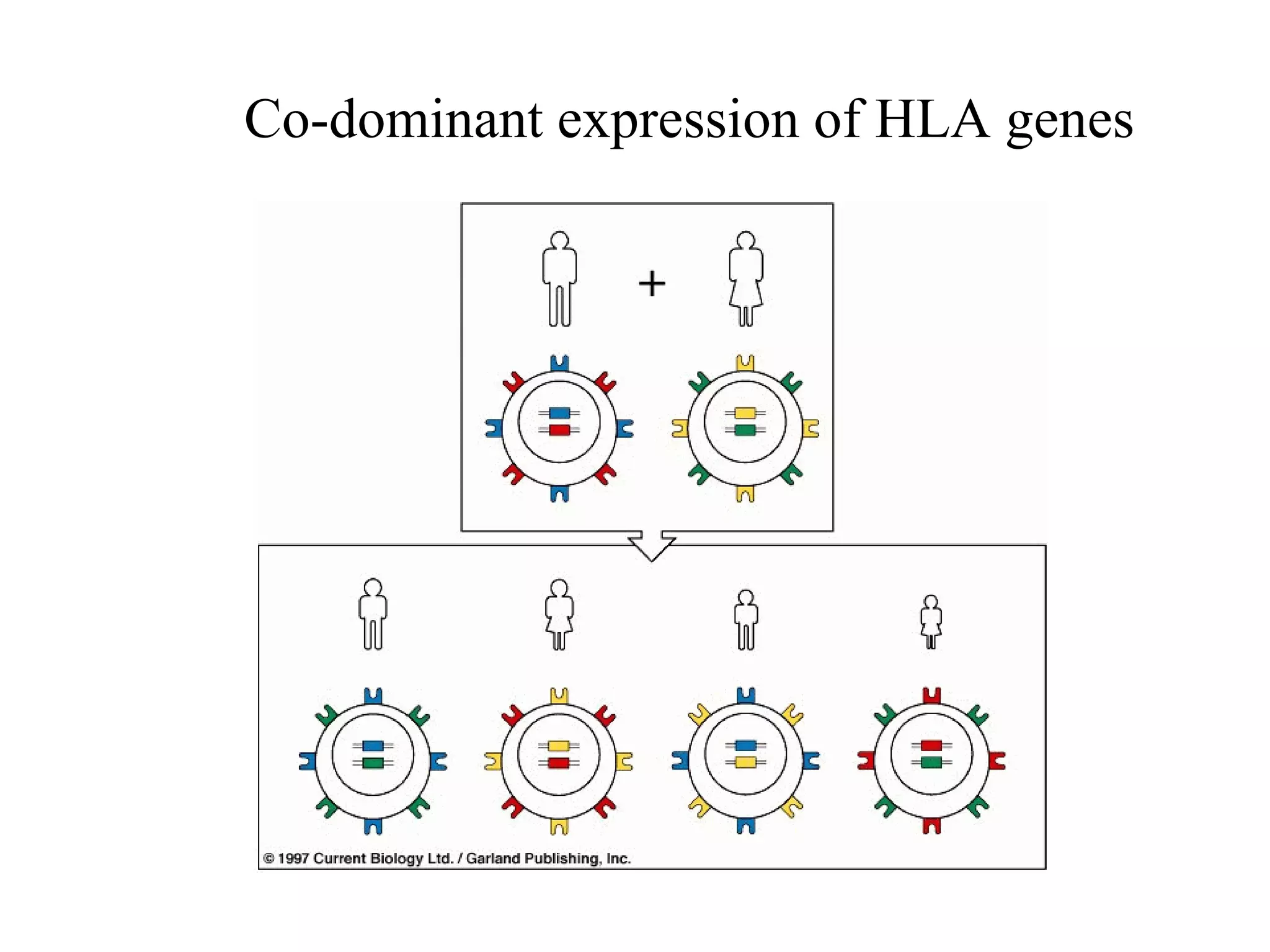
Co-dominant expression of HLA genes
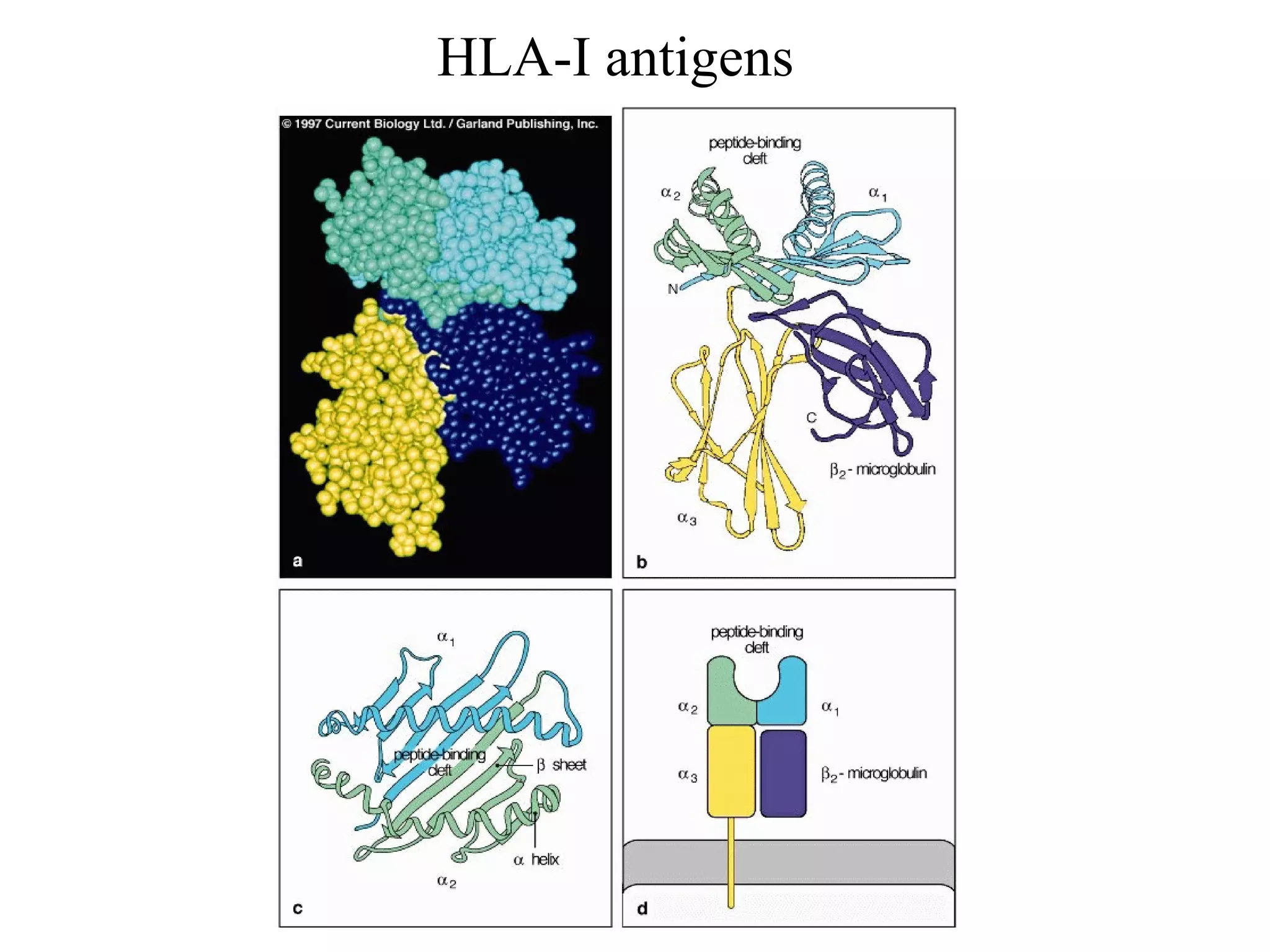
HLA-I antigens
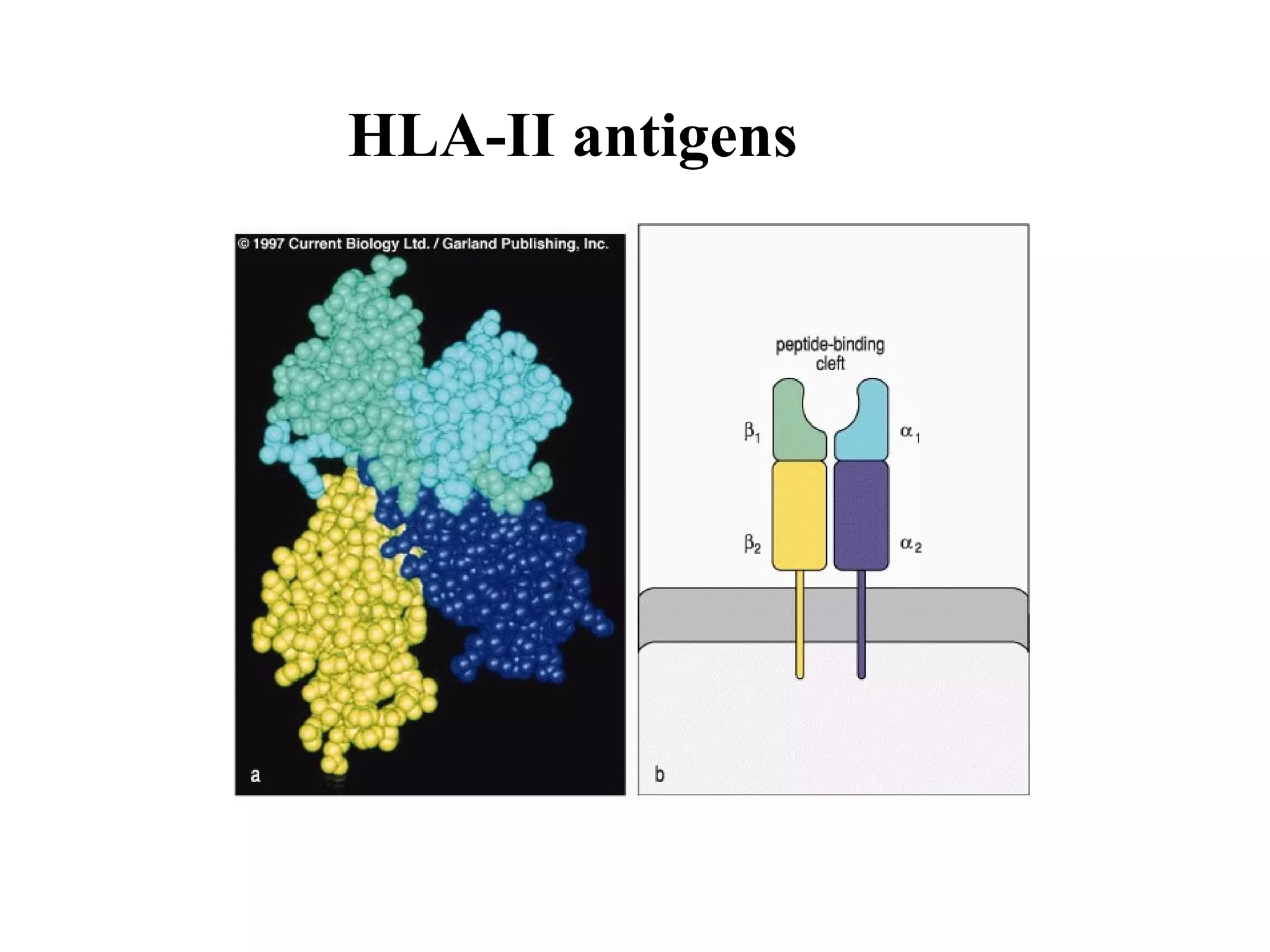
HLA-II antigens
 
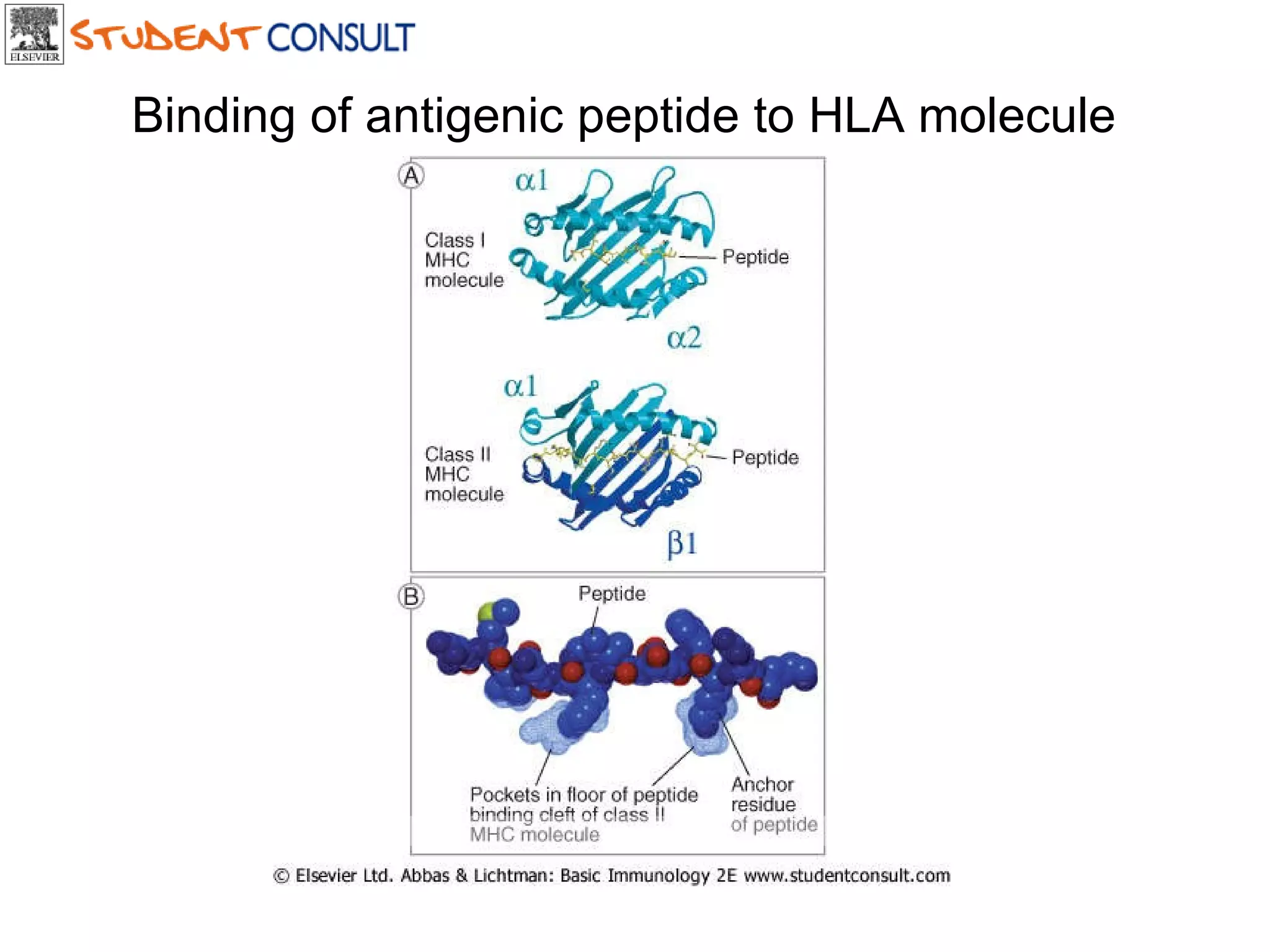
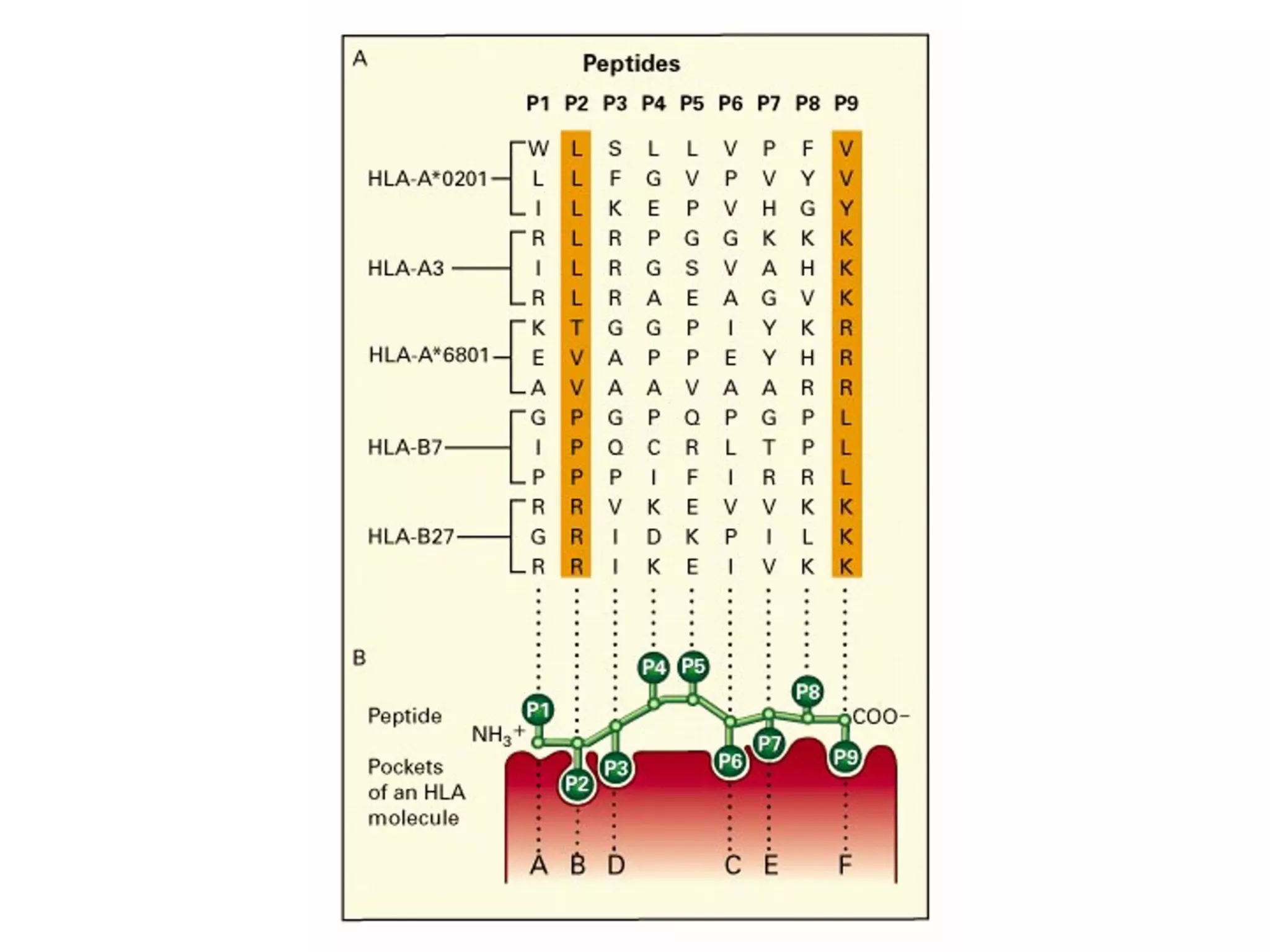
Downloaded from: StudentConsult (on 18 July 2006 08:13 AM) © 2005 Elsevier  Binding of antigenic peptide to HLA molecule
 
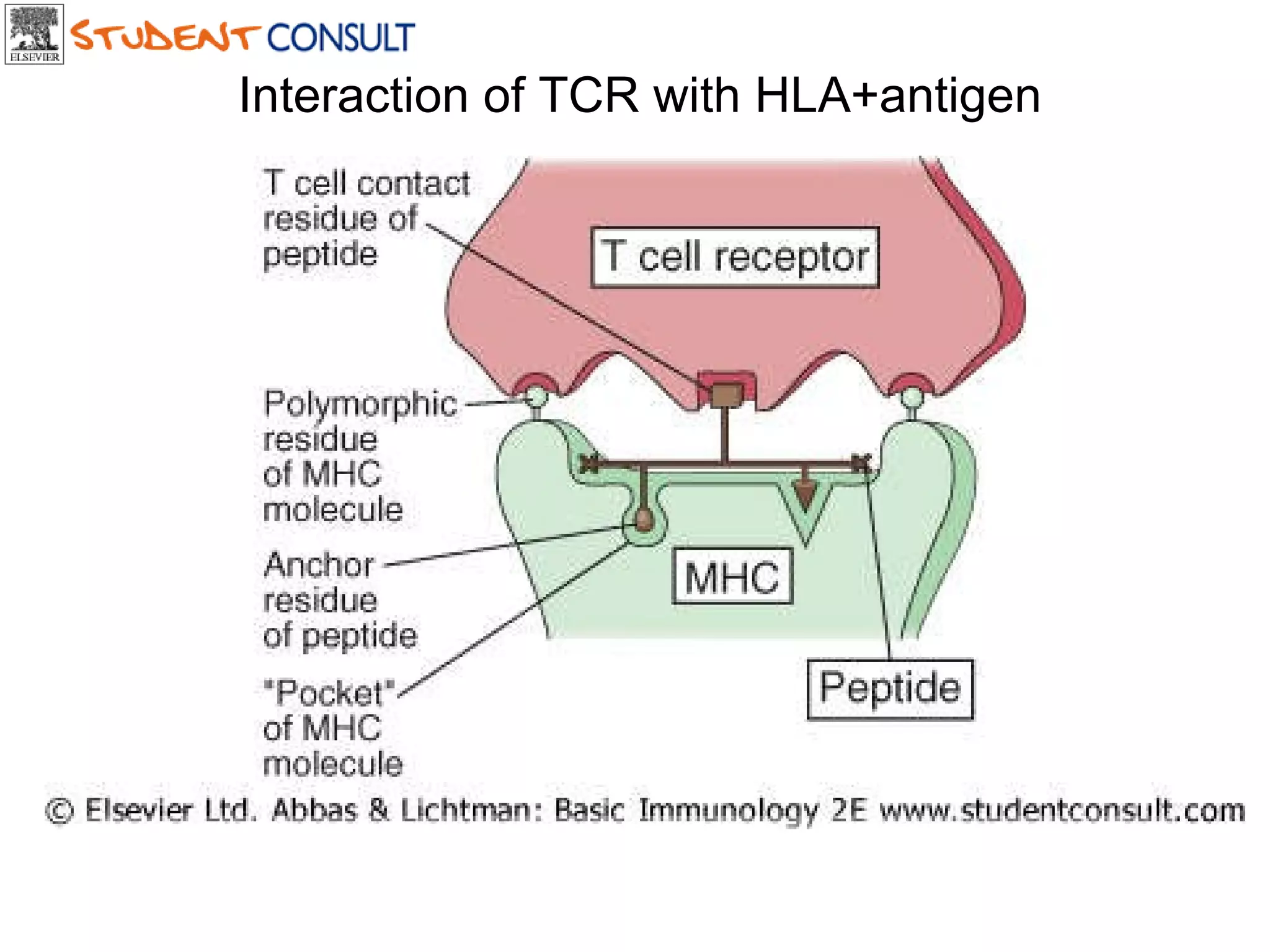
Downloaded from: StudentConsult (on 18 July 2006 08:13 AM) © 2005 Elsevier  Interaction of TCR with HLA+antigen
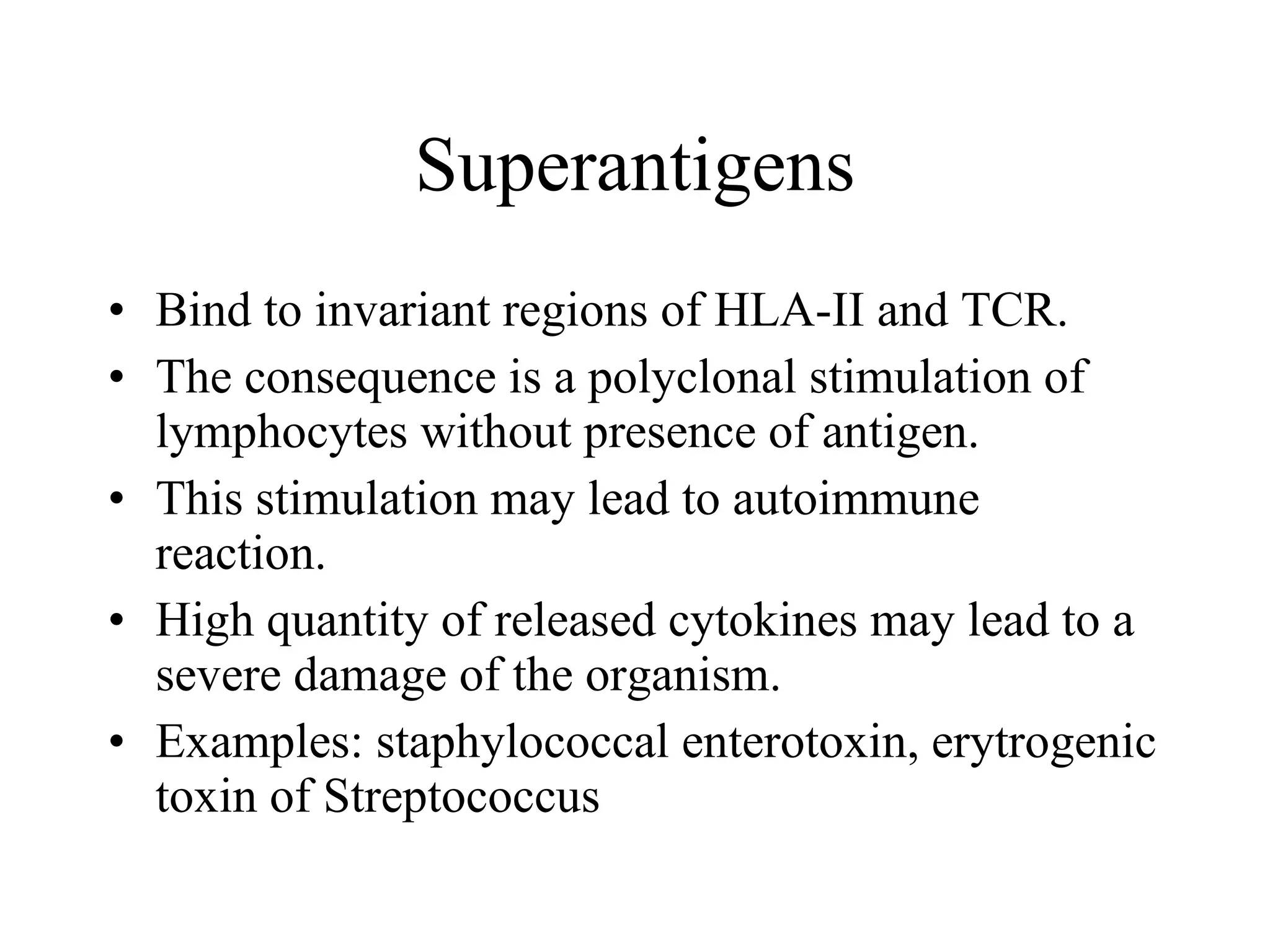
Superantigens Bind to invariant regions of HLA-II and TCR. The consequence is a polyclonal stimulation of lymphocytes without pr e sence of antigen. This stimulation may lead to autoimmune reaction. High quantity of released cytokines may lead to a severe damage of the organism. Examples: staphylococcal enterotoxin, erytrogenic toxin of Streptococcus  toxin  streptokoků
Activation of TCR by antigen and  by superantigen www.bio.davidson.edu/.../restricted/TSS.html
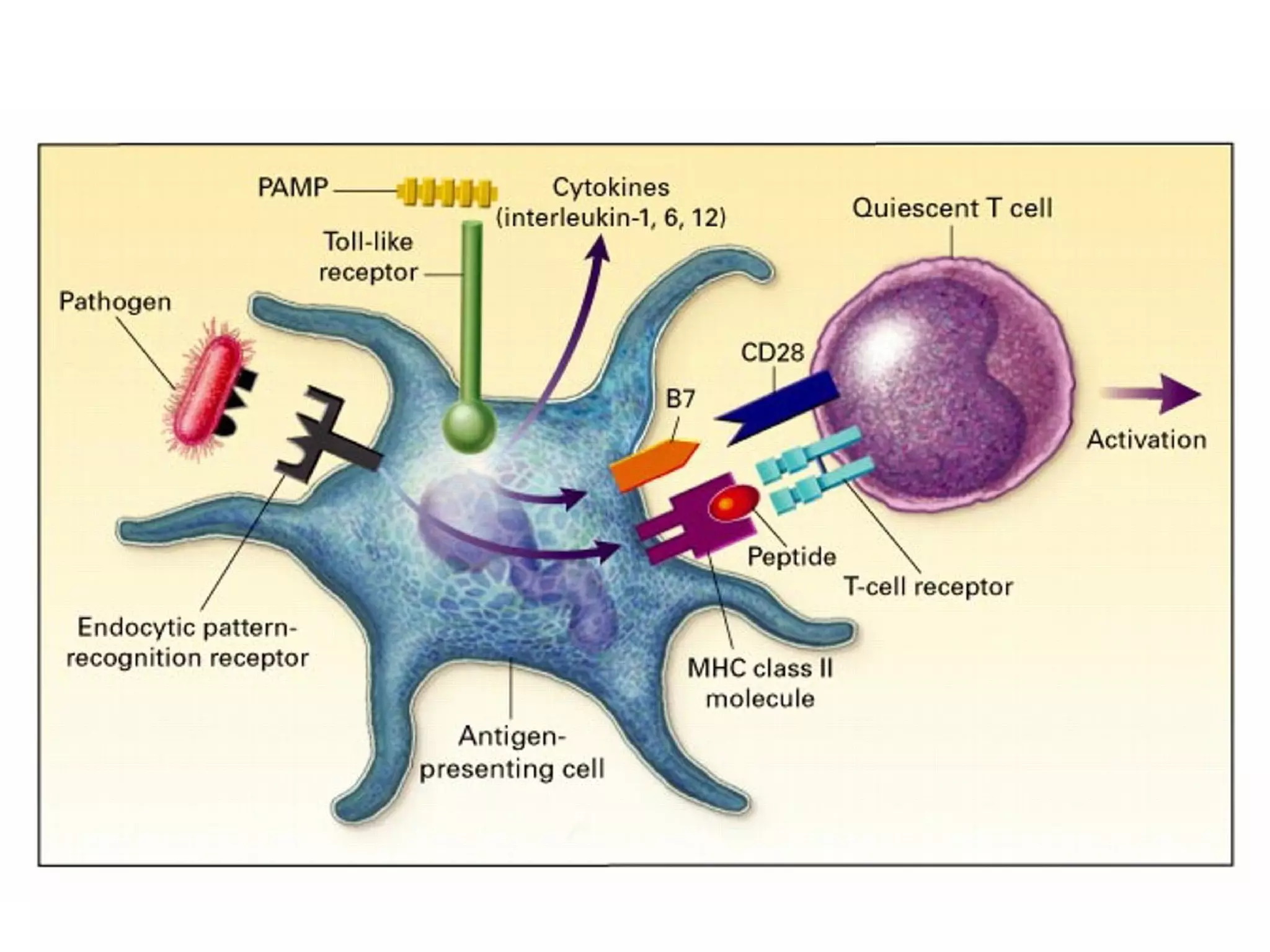
Initiation of immune response,  Role of HLA antigens
Two types of antige n s as regards antibody production stimulation T- dependent. Initiation of immune response requires antigen presenting cells, T-lymphocytes. Includes majority of antigens. T-independent. For the stimulation ob B-cells T-lymphocytes (and APC) are not necessary. Polysacharides are typical  e xamples. Only IgM is produced (not other isotypes). No immune memory is induced. T
Degradation and presentation of antigens on HLA-II molecules
 
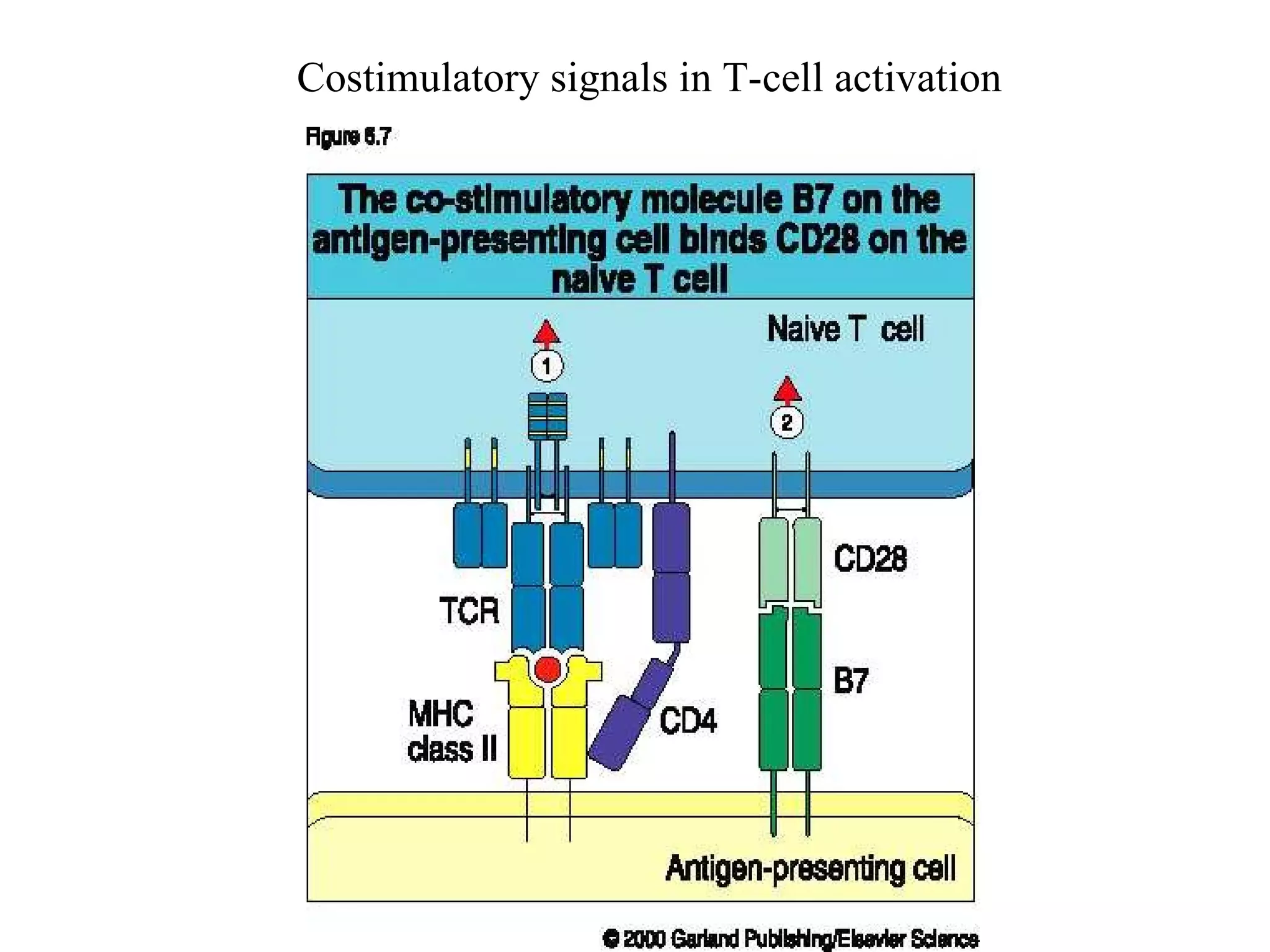
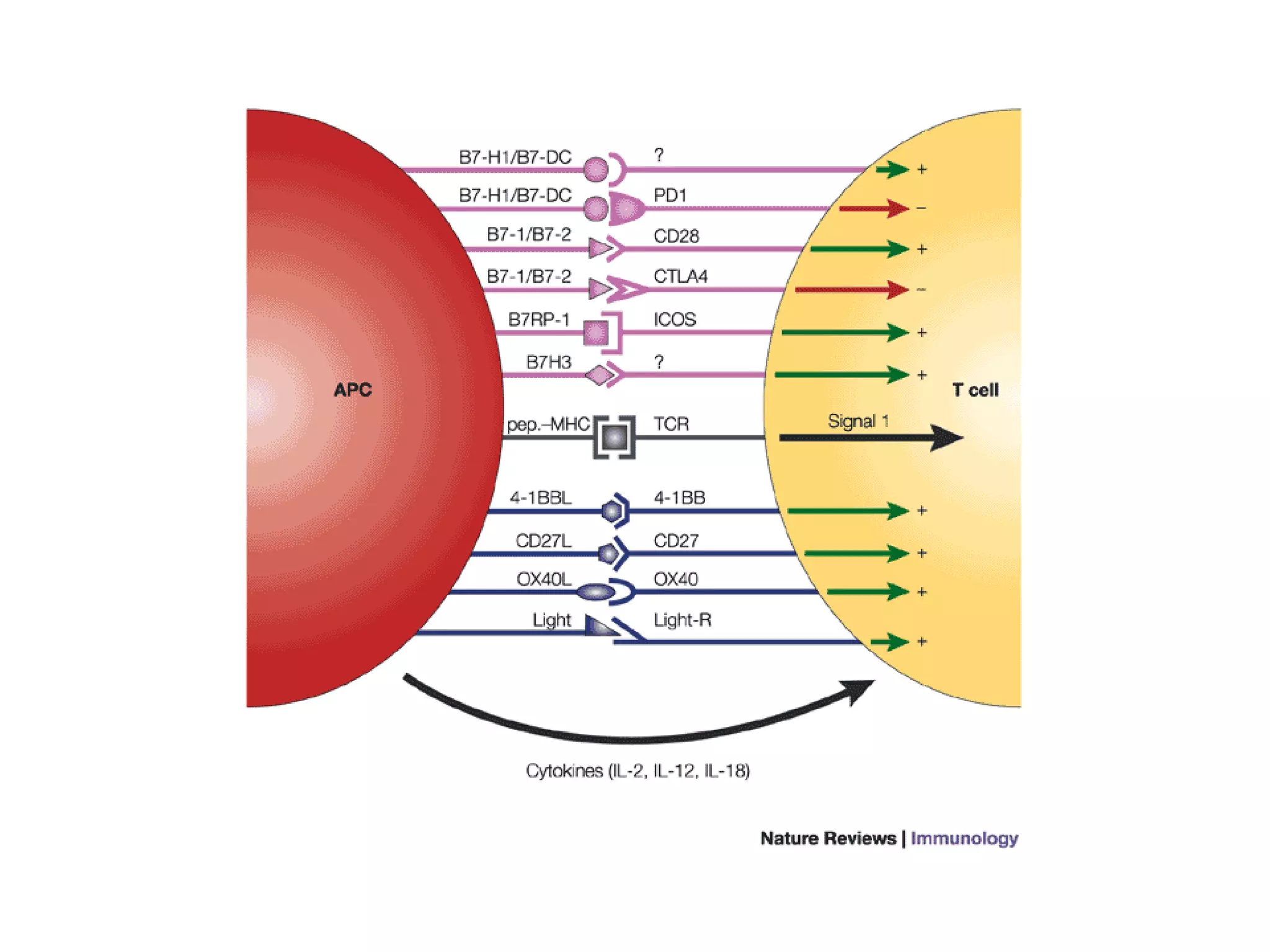
Costimulatory signals in T-cell activation
 
Initiation of antibody response in T-cell dependent antigens
 
 
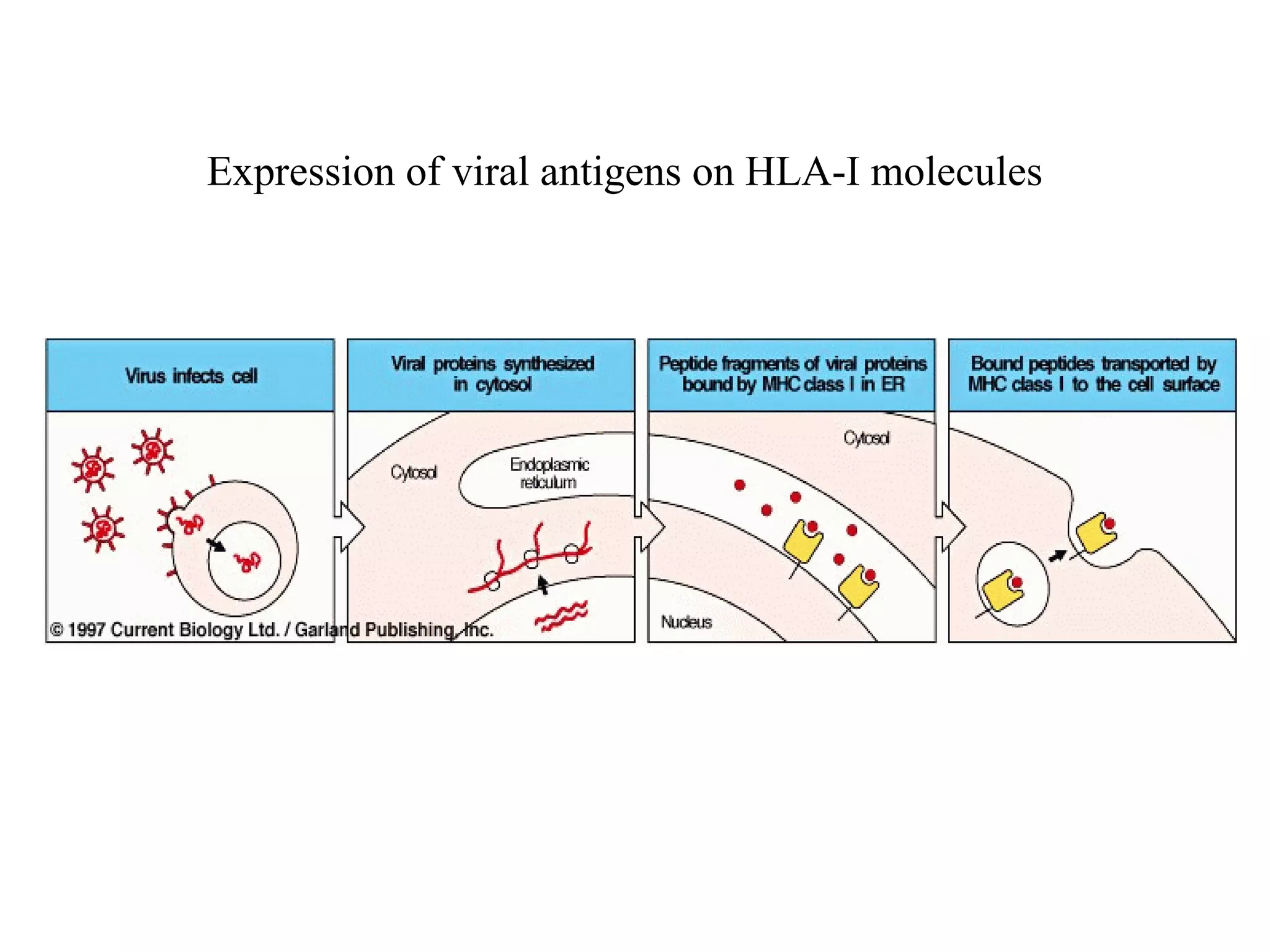
Expression of viral antigens on HLA-I molecules
HLA antigens and diseases Various, predominantly immunopathologic, diseases are more frequent in persons with some  HLA antigens. Presence of the HLA antigen  makes a   predi s position  to development of the disease (in c reased relative risk), but not cause a disease. Majority of the carriers of the  „disease associated antigen“ are healthy!
Association of diseases with particular HLA antigens
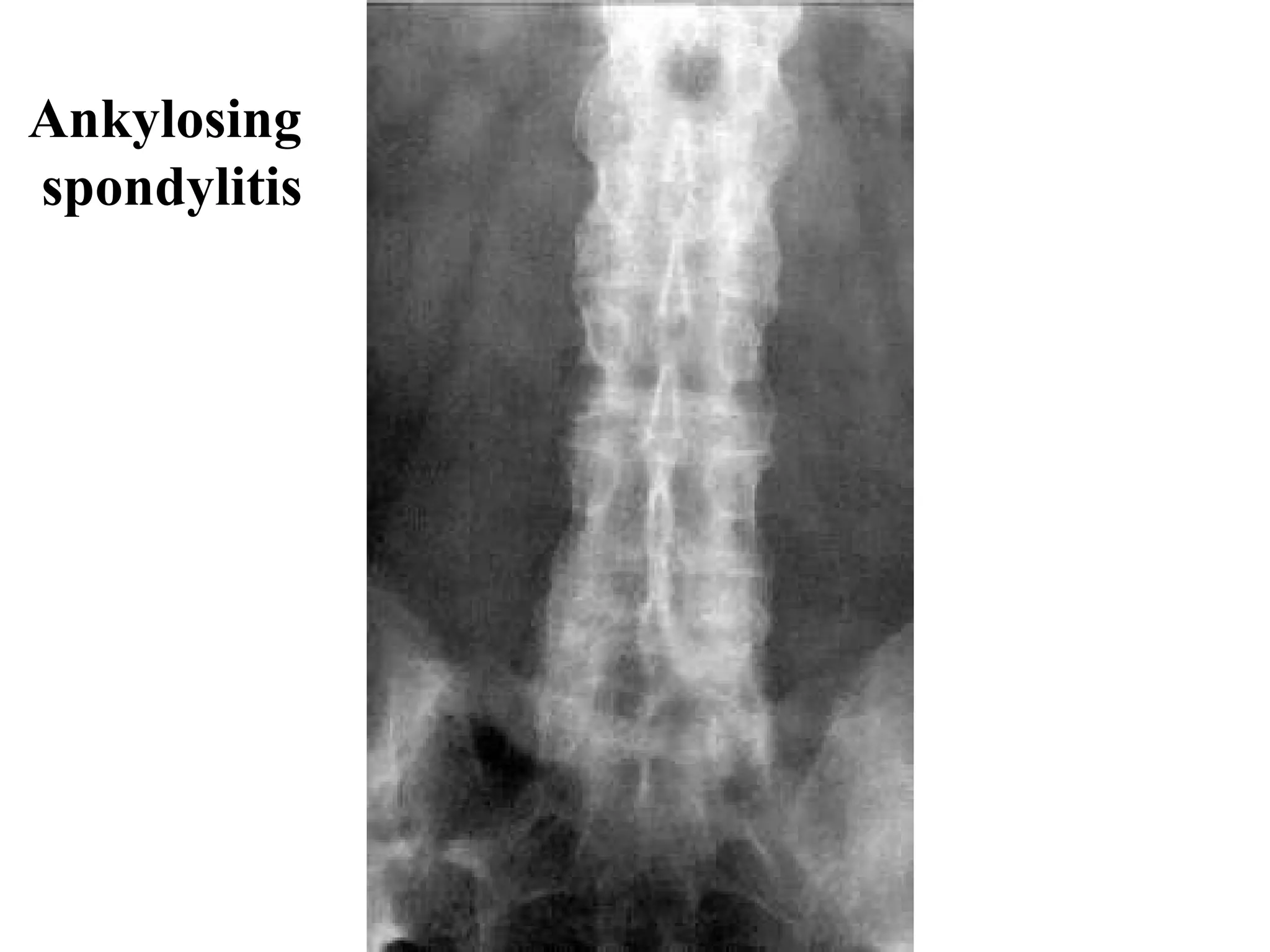
Ankylosing spondylitis   Males predominantly affected, frequency 1:1000. Usually starts with sacroileitis, consequently  vertebral column affected. Fibrotisation and osification of inte r vertebral joins and filaments. The process leads to decreased mobility and ankylosis in terminal state. Ninety-five percent of patients  are HLA-27 positive.
Ankylos ing   spondylitis
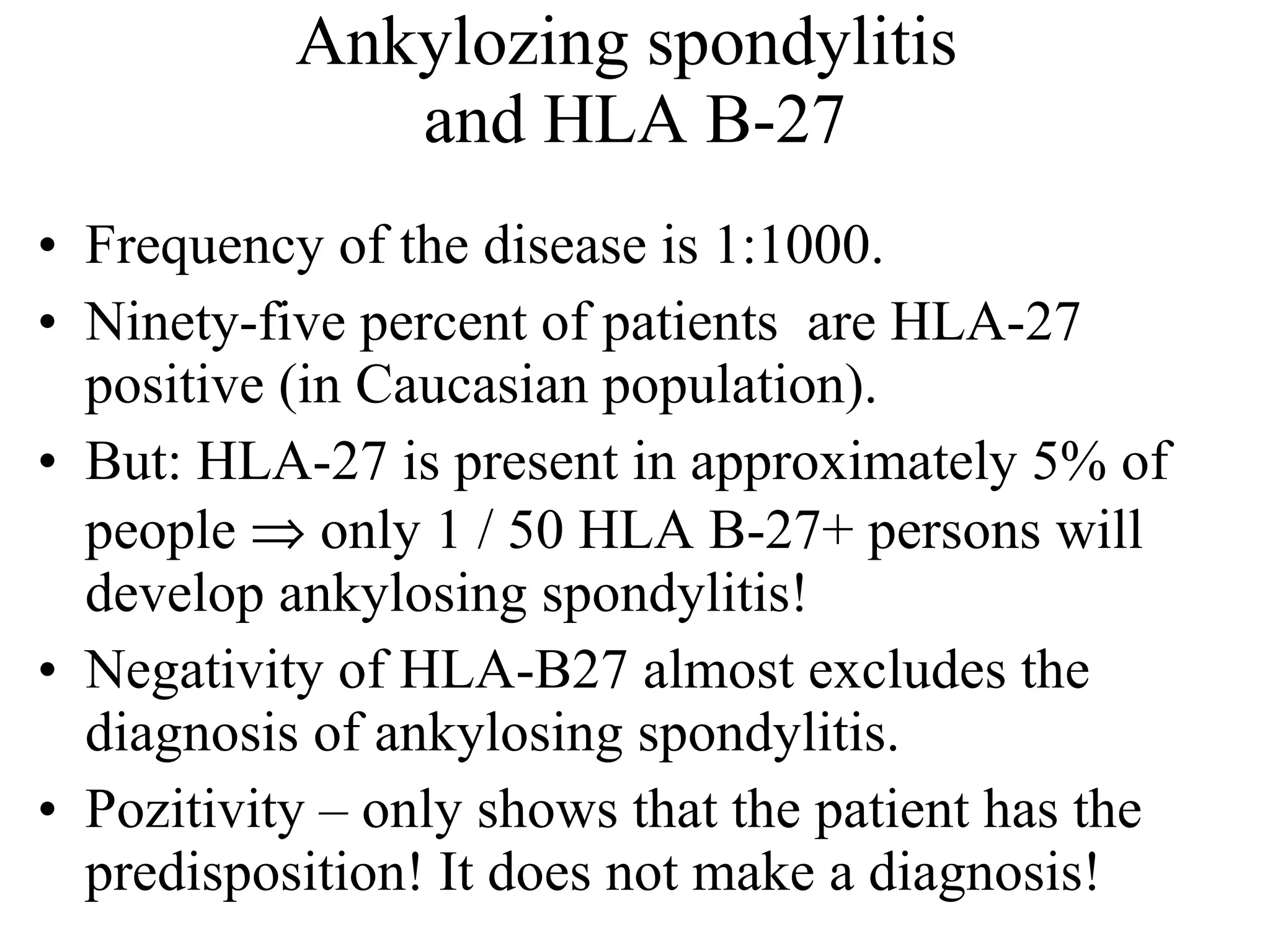
Ankylozing spondylitis  and HLA B-27 Frequency of the disease is 1:1000. Ninety-five percent of patients  are HLA-27 positive (in C a ucasian population). But: HLA-27 is present in approximately 5% of people    only 1  /  50 HLA B-27+ persons will develop ankylosing spondylitis! Negativity of HLA-B27 almost exc l udes the diagnosis of ankylosing spondylitis. Po z itivity – only shows that the patient has the predisposition! It does not make a diagnosis!
Regulation of immune response Role of cytokines Regulatory cells (Treg, Tr-1) Mutual inhibition of Th1 and Th2 cells Idiotype-antiidiotype interaction
Cytokines Usually many cell lineages involved Pleotropic effects Cytokine network is frequently formed Frequently both stimulatory and inhibitory effects on different cell lineages
Effects of cytokines Pro-inflammatory cytokines: IL-1, IL-6, TNF-  Stimulation of macrophages: IFN-  Stimulation of granulocytes: IL-8 T-lymphocytes stimulation: IL-2 B-lymphocytes stimulation, production of antibodies: IL-4, IL-5, IL-6 Progenitor cells proliferation: IL-3, GM-CSF, M-CFS Negative regulators: IL-10, IL-13
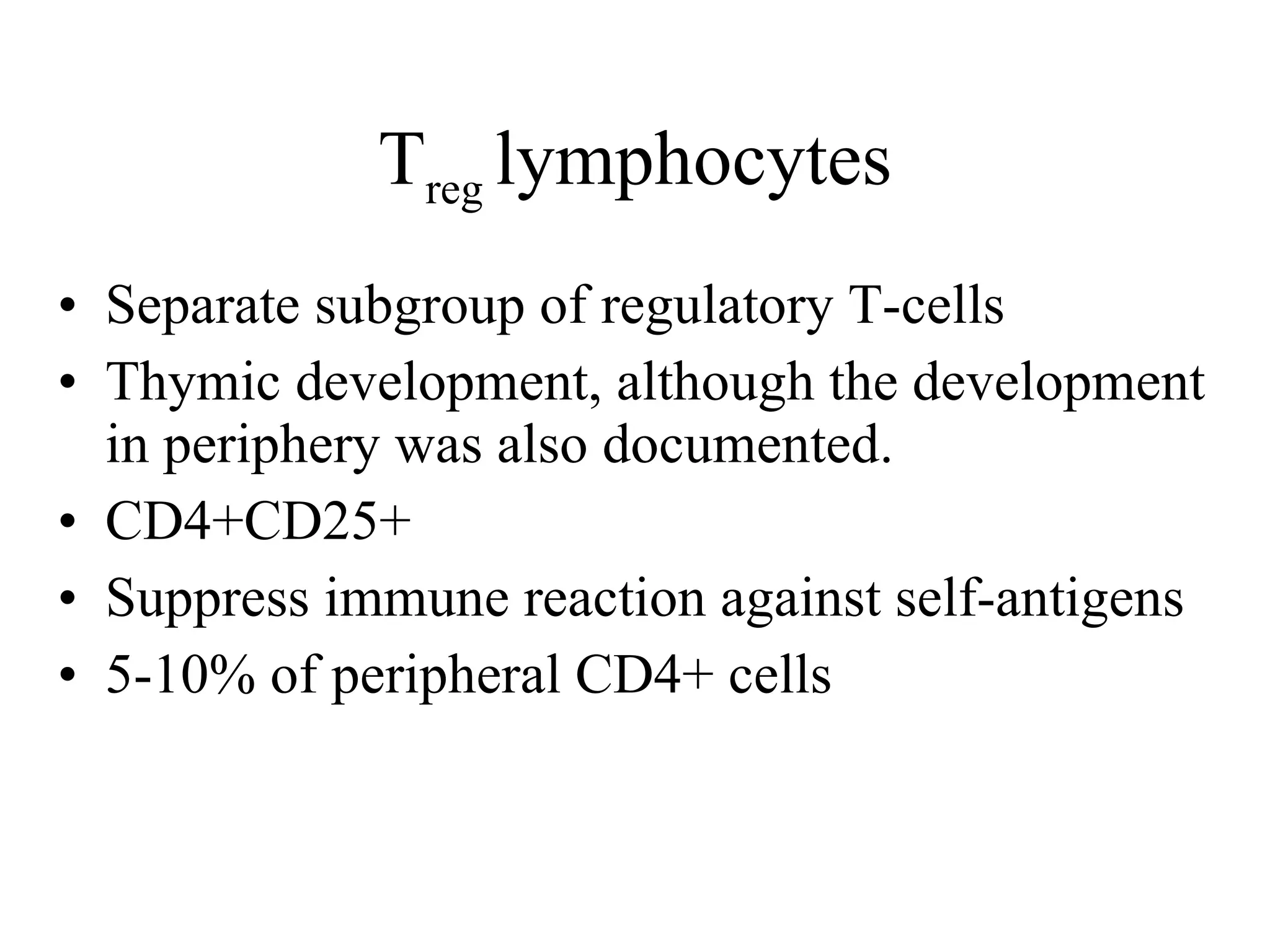
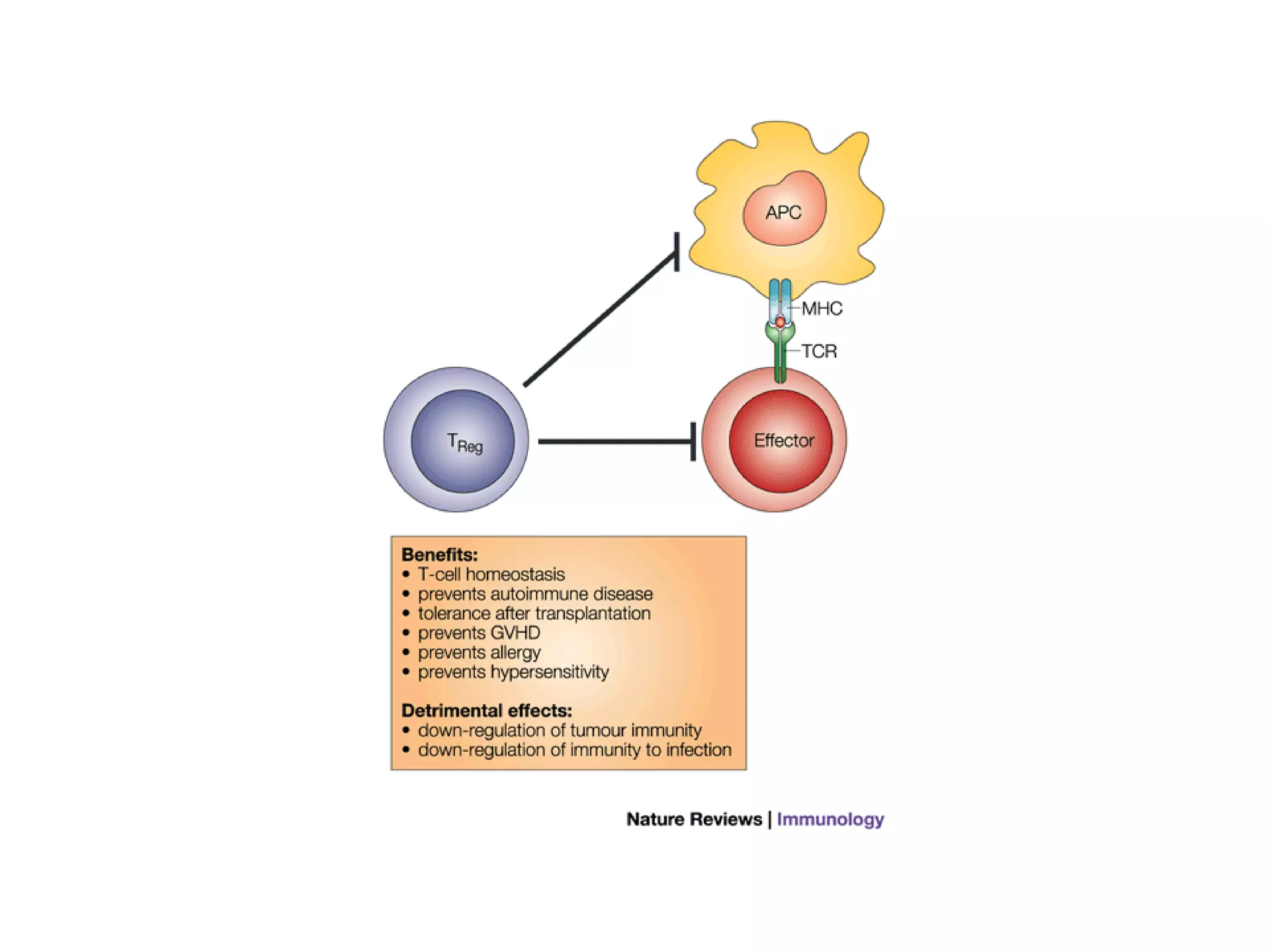
T reg  lymphocytes Separate subgroup of regulatory T-cells Thymic development, although the development in periphery was also documented. CD4+CD25+ Suppress immune reaction against self-a n tigens 5-10% of peripheral CD4+ cells
 
TR-1 lymphocytes Induced i periphery by antigen. CD4+ Production of high levels of IL-10, IFN-  , TGF-  , but not IL-2.  Similar function have  Th3 cells

Immunology vii hla_regulation

  • 1.
    HLA antigens (HumanLeukocyte Antigens) = human MHC (Main Histocompatibility Complex) antigens
  • 2.
  • 3.
    HLA genes arelocalized on 6p chromosome
  • 4.
  • 5.
  • 6.
  • 7.
  • 8.
    Downloaded from: StudentConsult(on 18 July 2006 08:13 AM) © 2005 Elsevier Binding of antigenic peptide to HLA molecule
  • 9.
  • 10.
    Downloaded from: StudentConsult(on 18 July 2006 08:13 AM) © 2005 Elsevier Interaction of TCR with HLA+antigen
  • 11.
    Superantigens Bind toinvariant regions of HLA-II and TCR. The consequence is a polyclonal stimulation of lymphocytes without pr e sence of antigen. This stimulation may lead to autoimmune reaction. High quantity of released cytokines may lead to a severe damage of the organism. Examples: staphylococcal enterotoxin, erytrogenic toxin of Streptococcus toxin streptokoků
  • 12.
    Activation of TCRby antigen and by superantigen www.bio.davidson.edu/.../restricted/TSS.html
  • 13.
    Initiation of immuneresponse, Role of HLA antigens
  • 14.
    Two types ofantige n s as regards antibody production stimulation T- dependent. Initiation of immune response requires antigen presenting cells, T-lymphocytes. Includes majority of antigens. T-independent. For the stimulation ob B-cells T-lymphocytes (and APC) are not necessary. Polysacharides are typical e xamples. Only IgM is produced (not other isotypes). No immune memory is induced. T
  • 15.
    Degradation and presentationof antigens on HLA-II molecules
  • 16.
  • 17.
    Costimulatory signals inT-cell activation
  • 18.
  • 19.
    Initiation of antibodyresponse in T-cell dependent antigens
  • 20.
  • 21.
  • 22.
    Expression of viralantigens on HLA-I molecules
  • 23.
    HLA antigens anddiseases Various, predominantly immunopathologic, diseases are more frequent in persons with some HLA antigens. Presence of the HLA antigen makes a predi s position to development of the disease (in c reased relative risk), but not cause a disease. Majority of the carriers of the „disease associated antigen“ are healthy!
  • 24.
    Association of diseaseswith particular HLA antigens
  • 25.
    Ankylosing spondylitis Males predominantly affected, frequency 1:1000. Usually starts with sacroileitis, consequently vertebral column affected. Fibrotisation and osification of inte r vertebral joins and filaments. The process leads to decreased mobility and ankylosis in terminal state. Ninety-five percent of patients are HLA-27 positive.
  • 26.
    Ankylos ing spondylitis
  • 27.
    Ankylozing spondylitis and HLA B-27 Frequency of the disease is 1:1000. Ninety-five percent of patients are HLA-27 positive (in C a ucasian population). But: HLA-27 is present in approximately 5% of people  only 1 / 50 HLA B-27+ persons will develop ankylosing spondylitis! Negativity of HLA-B27 almost exc l udes the diagnosis of ankylosing spondylitis. Po z itivity – only shows that the patient has the predisposition! It does not make a diagnosis!
  • 28.
    Regulation of immuneresponse Role of cytokines Regulatory cells (Treg, Tr-1) Mutual inhibition of Th1 and Th2 cells Idiotype-antiidiotype interaction
  • 29.
    Cytokines Usually manycell lineages involved Pleotropic effects Cytokine network is frequently formed Frequently both stimulatory and inhibitory effects on different cell lineages
  • 30.
    Effects of cytokinesPro-inflammatory cytokines: IL-1, IL-6, TNF-  Stimulation of macrophages: IFN-  Stimulation of granulocytes: IL-8 T-lymphocytes stimulation: IL-2 B-lymphocytes stimulation, production of antibodies: IL-4, IL-5, IL-6 Progenitor cells proliferation: IL-3, GM-CSF, M-CFS Negative regulators: IL-10, IL-13
  • 31.
    T reg lymphocytes Separate subgroup of regulatory T-cells Thymic development, although the development in periphery was also documented. CD4+CD25+ Suppress immune reaction against self-a n tigens 5-10% of peripheral CD4+ cells
  • 32.
  • 33.
    TR-1 lymphocytes Inducedi periphery by antigen. CD4+ Production of high levels of IL-10, IFN-  , TGF-  , but not IL-2. Similar function have Th3 cells