Presentation by
M.HARISH BABU
BASIC DEFINATIONS
 HARBOUR:
The sheltered area of the sea in which vessels
could be launched, built, repaired, or could seek
refuge during storm time and provide loading and
unloading facilities of cargo and passengers is called
HARBOUR.
 DOCK:
The enclosed area provided for berthing ships to
keep them afloat at a uniform level to facilitate loading
and unloading of cargo is DOCK.
HARBOUR
 It is a sheltered area.
 Used for loading and unloading of cargo.
 Here vessels are built, refueled, repair, and launched.
 It protects ships naturally and artificially from the fury
of the sea.
 It is situated along the sea shore or river estuary or lake
or canal connected to sea.
Classification of harbour:
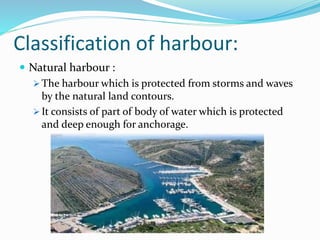
 Natural harbour :
 The harbour which is protected from storms and waves
by the natural land contours.
 It consists of part of body of water which is protected
and deep enough for anchorage.
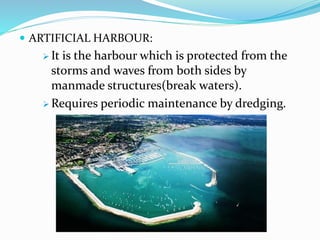
 ARTIFICIAL HARBOUR:
 It is the harbour which is protected from the
storms and waves from both sides by
manmade structures(break waters).
 Requires periodic maintenance by dredging.
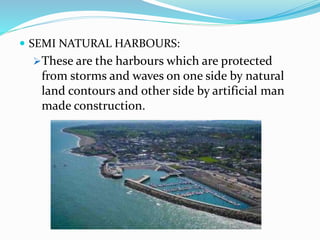
 SEMI NATURAL HARBOURS:
These are the harbours which are protected
from storms and waves on one side by natural
land contours and other side by artificial man
made construction.
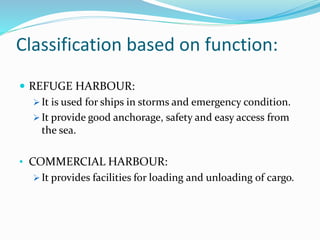
Classification based on function:
 REFUGE HARBOUR:
 It is used for ships in storms and emergency condition.
 It provide good anchorage, safety and easy access from
the sea.
• COMMERCIAL HARBOUR:
 It provides facilities for loading and unloading of cargo.
Refuge harbour
commercial
harbour
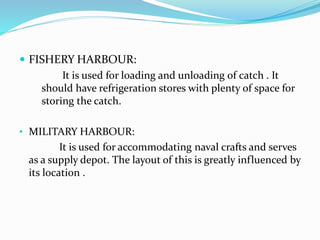
 FISHERY HARBOUR:
It is used for loading and unloading of catch . It
should have refrigeration stores with plenty of space for
storing the catch.
• MILITARY HARBOUR:
It is used for accommodating naval crafts and serves
as a supply depot. The layout of this is greatly influenced by
its location .
 Fishery harbour
military harbour
DOCKS
 Docks are enclosed areas for berthing the ships to keep
them afloat at a uniform level to facilitate loading and
unloading of cargo.
 Necessary for discharging of cargo.
 As ships requires a number of days for discharging
cargo, during which period they need a uniform water
level.
 If ship is subjected to a vertical movement by the tides,
great inconvenience will be felt in lifting the cargo
from the ship and special arrangements will be needed
for lifting the cargo.
 DOCKS ARE CLASSIFIED AS ,
> Wet docks
> Dry docks
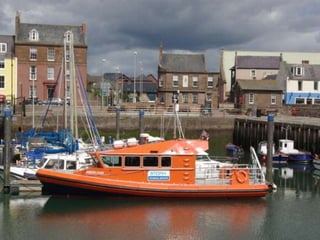
• WET DOCKS:
 Docks required for berthing of ships or vessels to
facilitate loading and unloading of passengers and cargo
are called as WET DOCKS
 They are also known as HARBOUR DOCKS
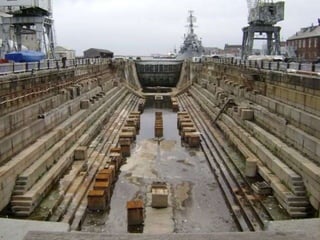
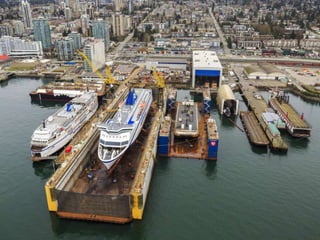
 DRY DOCKS :
 Dry docks are used for repairs of ships.
 It is a long excavated chamber having side walls,a semi
circular end wall and a floor.
 The open end of the chamber is provided with a gate and
acts as the entrance to the dock.
Harbours and docks
Harbours and docks
Harbours and docks

Harbours and docks

  • 1.
  • 2.
    BASIC DEFINATIONS  HARBOUR: Thesheltered area of the sea in which vessels could be launched, built, repaired, or could seek refuge during storm time and provide loading and unloading facilities of cargo and passengers is called HARBOUR.  DOCK: The enclosed area provided for berthing ships to keep them afloat at a uniform level to facilitate loading and unloading of cargo is DOCK.
  • 3.
    HARBOUR  It isa sheltered area.  Used for loading and unloading of cargo.  Here vessels are built, refueled, repair, and launched.  It protects ships naturally and artificially from the fury of the sea.  It is situated along the sea shore or river estuary or lake or canal connected to sea.
  • 4.
    Classification of harbour: Natural harbour :  The harbour which is protected from storms and waves by the natural land contours.  It consists of part of body of water which is protected and deep enough for anchorage.
  • 5.
     ARTIFICIAL HARBOUR: It is the harbour which is protected from the storms and waves from both sides by manmade structures(break waters).  Requires periodic maintenance by dredging.
  • 6.
     SEMI NATURALHARBOURS: These are the harbours which are protected from storms and waves on one side by natural land contours and other side by artificial man made construction.
  • 7.
    Classification based onfunction:  REFUGE HARBOUR:  It is used for ships in storms and emergency condition.  It provide good anchorage, safety and easy access from the sea. • COMMERCIAL HARBOUR:  It provides facilities for loading and unloading of cargo.
  • 8.
  • 9.
     FISHERY HARBOUR: Itis used for loading and unloading of catch . It should have refrigeration stores with plenty of space for storing the catch. • MILITARY HARBOUR: It is used for accommodating naval crafts and serves as a supply depot. The layout of this is greatly influenced by its location .
  • 10.
  • 11.
    DOCKS  Docks areenclosed areas for berthing the ships to keep them afloat at a uniform level to facilitate loading and unloading of cargo.  Necessary for discharging of cargo.  As ships requires a number of days for discharging cargo, during which period they need a uniform water level.  If ship is subjected to a vertical movement by the tides, great inconvenience will be felt in lifting the cargo from the ship and special arrangements will be needed for lifting the cargo.
  • 12.
     DOCKS ARECLASSIFIED AS , > Wet docks > Dry docks • WET DOCKS:  Docks required for berthing of ships or vessels to facilitate loading and unloading of passengers and cargo are called as WET DOCKS  They are also known as HARBOUR DOCKS
  • 14.
     DRY DOCKS:  Dry docks are used for repairs of ships.  It is a long excavated chamber having side walls,a semi circular end wall and a floor.  The open end of the chamber is provided with a gate and acts as the entrance to the dock.