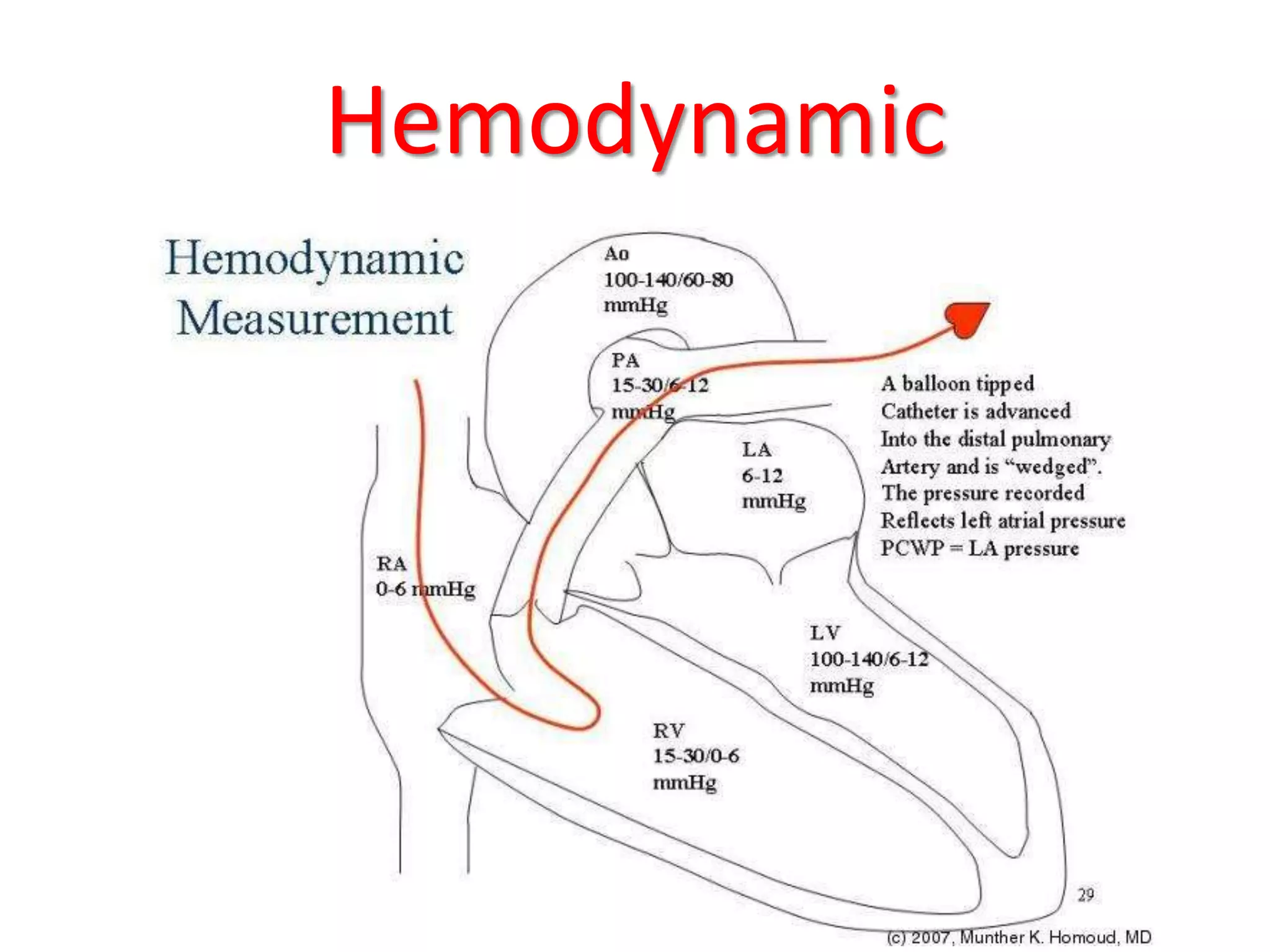


Hemodynamic
•My love has hemodynamic
stability or instability?
What is hemodynamic stability?
• Hemodynamic stability can be simply
explained as the stable blood flow.
• Ex
– Stable heart pump
– Good circulation of blood
So Hemodynamic instability?
• Hemodynamic instability is defined as any
instability in blood pressure which can lead to
inadequate arterial blood flow to organs.
• Ex
– Adequate cardiac input
– Adequate cardiac output
– Or blood pressure
Abnormal Hemodynamic parameter
• Heart rate
• Blood pressure
• Cardiac output
• Central venous pressure
• Pulmonary artery pressure
Signs and symptoms
1. Hypotension
2. Abnormal of heart rate
3. Shortness of breath
4. Pulmonary congestion
5. Cold extremities
Signs and symptoms
6. Peripheral cyanosis
7. Decrease urine output
8. Alternative conscious ness (restlessness loss
of consciousness confusion)
9. Chest pain
Diagnosis
Can be diagnosis by checking vital signs :
–Respiratory rate
–Pulse
–Blood pressure
–Urine output
–Organ perfusion
–Toe temperature
gradient
–Capillary refill time
Complications
• Hemorrhage
• Thrombosis
• Thrombophlebitis
• Pulmonary embolism
• Arterial spasm may occur at time
• Pulse is the first sign to indicate hemodynamic
instability. But it is neither sensitive no specific
for confirming it.
• Respiratory rate is another sign to find
hemodynamic instability. The change in
respiratory rat may be used to find
response to the treatments offered.
• Blood pressure and mean arterial
pressure are the appropriate indicators
for instability.
• Extreme temperatures can also indicate
severe instability.
• Oliguria clear represents low cardiac
output. Hence critically ill patients need
to be carefully monitored to avoid
complication due to hemodynamic
instability.
THANK YOU

Hemodynamic

  • 1.
  • 2.
    •My love hashemodynamic stability or instability?
  • 3.
    What is hemodynamicstability? • Hemodynamic stability can be simply explained as the stable blood flow. • Ex – Stable heart pump – Good circulation of blood
  • 4.
    So Hemodynamic instability? •Hemodynamic instability is defined as any instability in blood pressure which can lead to inadequate arterial blood flow to organs. • Ex – Adequate cardiac input – Adequate cardiac output – Or blood pressure
  • 5.
    Abnormal Hemodynamic parameter •Heart rate • Blood pressure • Cardiac output • Central venous pressure • Pulmonary artery pressure
  • 6.
    Signs and symptoms 1.Hypotension 2. Abnormal of heart rate 3. Shortness of breath 4. Pulmonary congestion 5. Cold extremities
  • 7.
    Signs and symptoms 6.Peripheral cyanosis 7. Decrease urine output 8. Alternative conscious ness (restlessness loss of consciousness confusion) 9. Chest pain
  • 8.
    Diagnosis Can be diagnosisby checking vital signs : –Respiratory rate –Pulse –Blood pressure –Urine output –Organ perfusion –Toe temperature gradient –Capillary refill time
  • 9.
    Complications • Hemorrhage • Thrombosis •Thrombophlebitis • Pulmonary embolism • Arterial spasm may occur at time
  • 10.
    • Pulse isthe first sign to indicate hemodynamic instability. But it is neither sensitive no specific for confirming it.
  • 11.
    • Respiratory rateis another sign to find hemodynamic instability. The change in respiratory rat may be used to find response to the treatments offered.
  • 12.
    • Blood pressureand mean arterial pressure are the appropriate indicators for instability. • Extreme temperatures can also indicate severe instability.
  • 13.
    • Oliguria clearrepresents low cardiac output. Hence critically ill patients need to be carefully monitored to avoid complication due to hemodynamic instability.
  • 14.