Writing a post-graduate
research project
Common questions
arising from post-
graduate students,
particularly from China
Photo by ibrar bhatt https://www.flickr.com/photos/87248369@N03/20406599061/
@ibrar_bhatt i.bhatt@qub.ac.uk
Dr Ibrar Bhatt (巴 亿博)
Lecturer in Education
Director MSc TESOL
This talk:
1. Outlines some common questions that post-graduate students,
particularly from China, have asked me regarding their academic
writing practices
2. Explores ways to develop academic writing practice at post-
graduate level, and beyond.
Common Questions:
1. How and and when do I start writing
my post-graduate research project?
2. What is ‘critical thinking’ and how do I
apply it in my writing?
3. What about referencing?
4. How do I know if my writing needs
improving? And how do I do this?
Opening Activity
Ask the person next to you.
1) When did you write your first piece of academic writing? Was it completed
differently to how you now write (in academia)? What has changed over time?
2) What do you enjoy most about academic writing?
3) What do you dislike most about academic writing?
4) How do you usually collaborate with others in your academic writing? How
have these practices evolved in your life?
How and and when do I start writing my
post-graduate research project?
Start immediately
Begin with the part that
most interests you
Maintain a disciplined habit
of note-taking
What is ‘critical thinking’ & how do I apply it in
my writing?
No one definition of ‘critical thinking’. It can
include:
examining claims, beliefs, assumptions in
arguments.
how arguments and theses are constructed.
how positions and conclusions are arrived at.
examining vested interests.
detecting and examining fallacies, vested
interests and ‘blind spots’.
- thinking open-mindedly within alternative
systems of thought.
- presenting a point of view, position, thesis
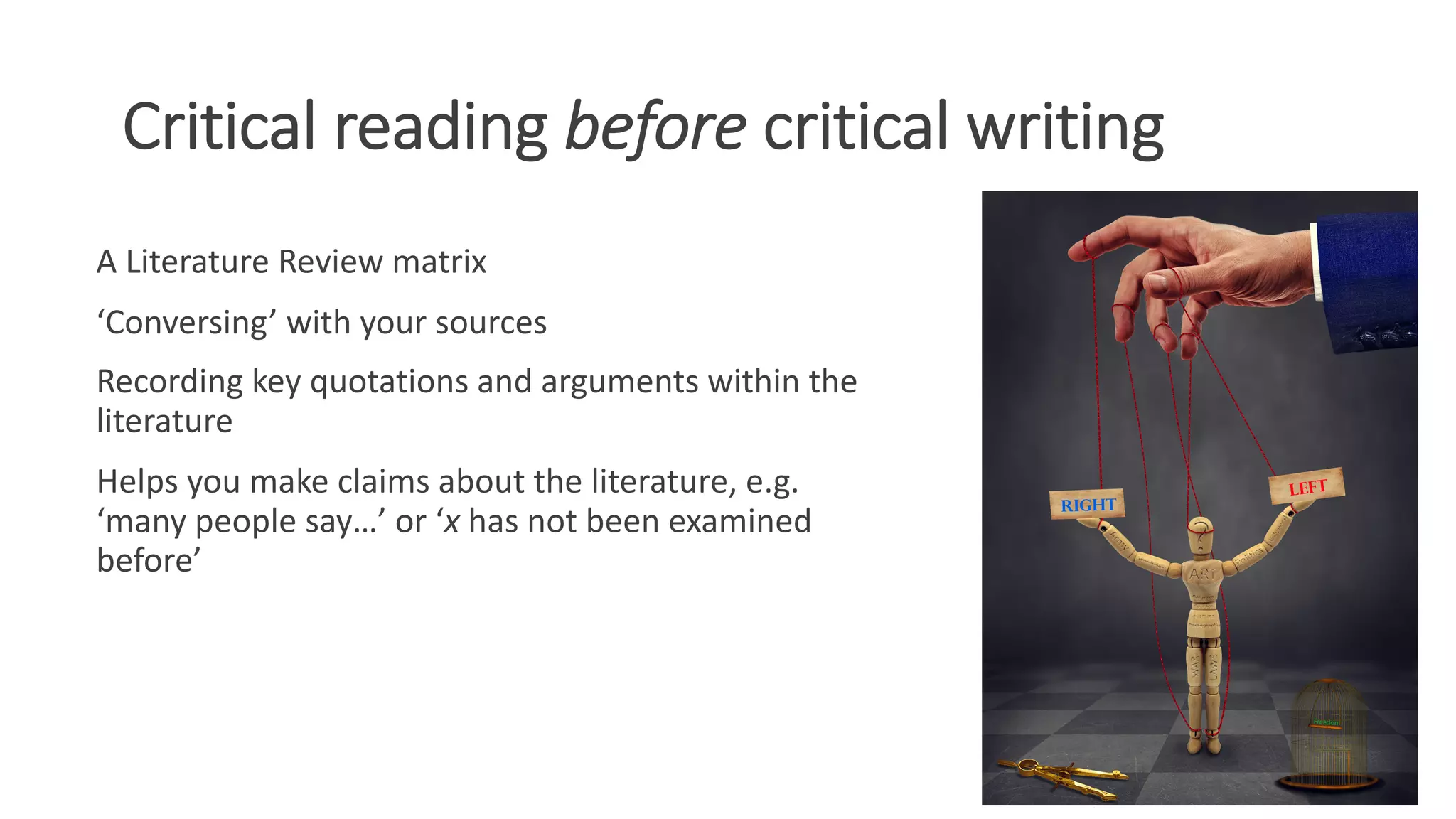
Critical reading before critical writing
A Literature Review matrix
‘Conversing’ with your sources
Recording key quotations and arguments within the
literature
Helps you make claims about the literature, e.g.
‘many people say…’ or ‘x has not been examined
before’
What about referencing?
Follow the conventions set by your School or Department
Follow them completely and consistently
Check policies about footnotes and non-English sources
Understand the difference between a Reference list and Bibliography
Avoid citation dumping.
If in doubt, ask!
How do I know if my writing needs
improving? And how do I do this?
Peer review – both formal and informal
Read your work aloud slowly to your self - sentence by sentence
Rather than asking for ‘feedback’, ask for ‘advice’
Be specific about what you want from advice and feedback
Use the assessment criteria to help you
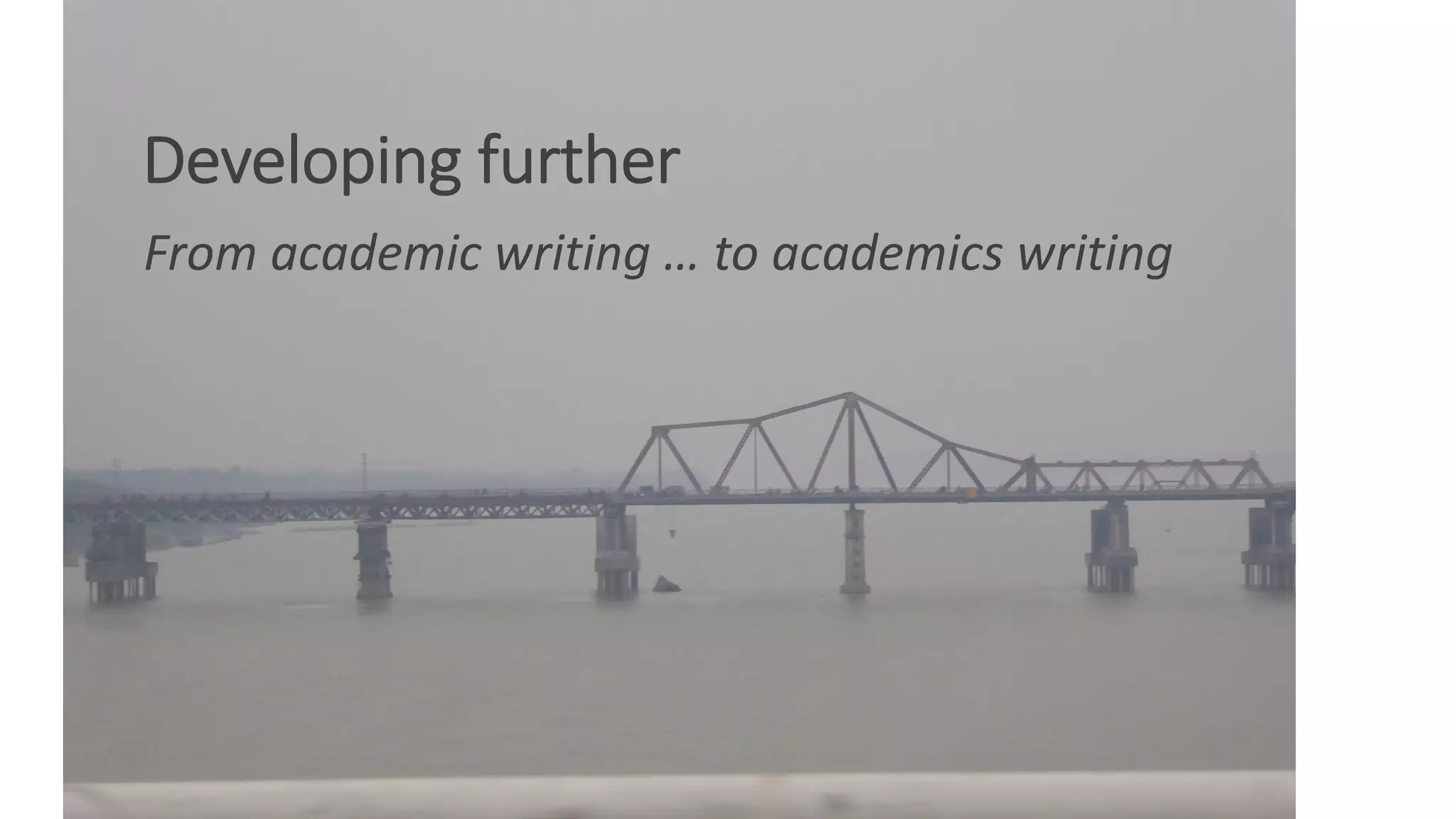
Developing further
From academic writing … to academics writing
Common questions arising from Chinese postgraduates in writing a reasearch project

Common questions arising from Chinese postgraduates in writing a reasearch project

  • 1.
    Writing a post-graduate researchproject Common questions arising from post- graduate students, particularly from China Photo by ibrar bhatt https://www.flickr.com/photos/87248369@N03/20406599061/ @ibrar_bhatt i.bhatt@qub.ac.uk Dr Ibrar Bhatt (巴 亿博) Lecturer in Education Director MSc TESOL
  • 2.
    This talk: 1. Outlinessome common questions that post-graduate students, particularly from China, have asked me regarding their academic writing practices 2. Explores ways to develop academic writing practice at post- graduate level, and beyond.
  • 3.
    Common Questions: 1. Howand and when do I start writing my post-graduate research project? 2. What is ‘critical thinking’ and how do I apply it in my writing? 3. What about referencing? 4. How do I know if my writing needs improving? And how do I do this?
  • 4.
    Opening Activity Ask theperson next to you. 1) When did you write your first piece of academic writing? Was it completed differently to how you now write (in academia)? What has changed over time? 2) What do you enjoy most about academic writing? 3) What do you dislike most about academic writing? 4) How do you usually collaborate with others in your academic writing? How have these practices evolved in your life?
  • 5.
    How and andwhen do I start writing my post-graduate research project? Start immediately Begin with the part that most interests you Maintain a disciplined habit of note-taking
  • 6.
    What is ‘criticalthinking’ & how do I apply it in my writing? No one definition of ‘critical thinking’. It can include: examining claims, beliefs, assumptions in arguments. how arguments and theses are constructed. how positions and conclusions are arrived at. examining vested interests. detecting and examining fallacies, vested interests and ‘blind spots’. - thinking open-mindedly within alternative systems of thought. - presenting a point of view, position, thesis
  • 7.
    Critical reading beforecritical writing A Literature Review matrix ‘Conversing’ with your sources Recording key quotations and arguments within the literature Helps you make claims about the literature, e.g. ‘many people say…’ or ‘x has not been examined before’
  • 8.
    What about referencing? Followthe conventions set by your School or Department Follow them completely and consistently Check policies about footnotes and non-English sources Understand the difference between a Reference list and Bibliography Avoid citation dumping. If in doubt, ask!
  • 9.
    How do Iknow if my writing needs improving? And how do I do this? Peer review – both formal and informal Read your work aloud slowly to your self - sentence by sentence Rather than asking for ‘feedback’, ask for ‘advice’ Be specific about what you want from advice and feedback Use the assessment criteria to help you
  • 10.
    Developing further From academicwriting … to academics writing