SUBCUTANEOUS INJECTION
Subcutaneous Injection
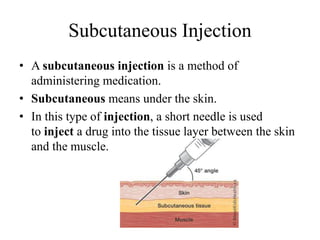
• A subcutaneous injection is a method of
administering medication.
• Subcutaneous means under the skin.
• In this type of injection, a short needle is used
to inject a drug into the tissue layer between the skin
and the muscle.
Subcutaneous Injection
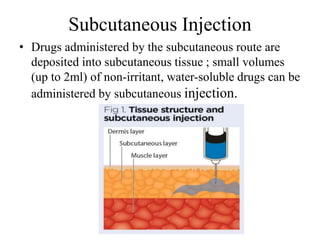
• Drugs administered by the subcutaneous route are
deposited into subcutaneous tissue ; small volumes
(up to 2ml) of non-irritant, water-soluble drugs can be
administered by subcutaneous injection.
Subcutaneous Injection
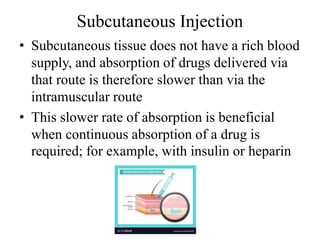
• Subcutaneous tissue does not have a rich blood
supply, and absorption of drugs delivered via
that route is therefore slower than via the
intramuscular route
• This slower rate of absorption is beneficial
when continuous absorption of a drug is
required; for example, with insulin or heparin
Factors affecting Drug Absorption
• Factors affecting blood flow to the skin,
including exercise
• Changes in environmental temperature.
Site of Subcutaneous Injection
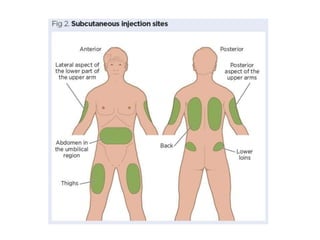
Recommended sites for subcutaneous injection
include
• Lateral aspects of the upper arm and thigh
• Umbilical region of the abdomen
• The back and lower loins can also be used
Subcutaneous Injection
Injection sites should be:
• Clean;
• Free of infection, skin lesions, scars,
birthmarks, bony prominences, and
large underlying muscles, blood vessels or
nerves.
• As the amount of subcutaneous fat varies
between patients, individual patient assessment
is vital before carrying out the procedure.
Subcutaneous Injection
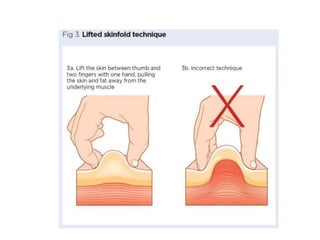
• A lifted skinfold technique (pinching or
bunching the skin) can be used to lift the
subcutaneous layer away from the underlying
muscle.
• This method reduces the risk of inadvertent
intramuscular injection when undertaken
correctly; however, releasing the skin too
quickly before the injection is completed or
lifting it incorrectly can increase that risk
Subcutaneous Injection
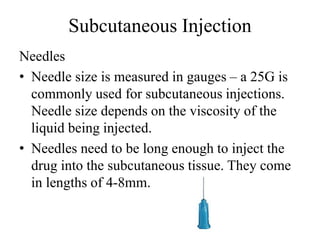
Needles
• Needle size is measured in gauges – a 25G is
commonly used for subcutaneous injections.
Needle size depends on the viscosity of the
liquid being injected.
• Needles need to be long enough to inject the
drug into the subcutaneous tissue. They come
in lengths of 4-8mm.
Subcutaneous Injection
Angle of injection
• It is recommended that subcutaneous injections,
particularly of insulin, are administered at a 90-degree
angle to ensure that the medication is delivered into the
subcutaneous tissue
• However, patient assessment is vital – patients who are
cachectic and therefore have minimal amounts of
subcutaneous tissue may require injections to be
delivered at a 45-degree angle.
• Subcutaneous vaccinations are given with the needle at
a 45-degree angle to the skin and the skin should be
pinched together
Subcutaneous Injection
Equipment
• Needles and syringe or prefilled syringe.
• Drug for administration.
• Medicines administration chart/prescription.
• Receiver or tray to carry the drug.
• Sharps container.
Procedure
• Explain the procedure to the patient and gain consent.
• Screen the patient to ensure privacy during the procedure.
• Check whether the patient has any allergies.
• Check the prescription is correct and follow the ā€˜five rights’ of
medicines administration and local medicines administration
policy to reduce the risk of error.
• Wash and dry hands to reduce the risk of infection.
• Assemble the syringe and needle and then draw the required
amount of drug from the ampoule. Some drugs are available in
pre-filled syringes and manufacturer’s instructions should be
followed.
Subcutaneous Injection
• Disperse any air bubbles from the syringe.
• Change the needle to ensure that the one you are about
to use for injecting the drug is sharp, thereby reducing
pain. To reduce the risk of sharps injury, a safety-
engineered needle should be used for injection.
• Dispose of the needle used to draw the drug in a sharps
container according to local policy.
• Place the injection in a tray and take it to the patient,
along with a sharps bin so the used needle can be
disposed of immediately after the procedure.
Subcutaneous Injection
• Check the patient’s identity according to local
medicines management policy.
• Position the patient comfortably with the selected
injection site exposed .
• Check the site for signs of oedema, infection or skin
lesions. If any of these are present, select a different
site.
• Wash and dry hands.
• If gloves are considered necessary following risk
assessment, put gloves on.
• Ensure the skin is clean or follow local policy on skin
cleansing.
Procedure
• If skin cleansing is considered necessary, swab for 30 seconds
with isopropyl alcohol and then allow to dry for 30 .
• Inform the patient that you are going to carry out the injection.
Use distraction and relaxation techniques to reduce anxiety if
needed.
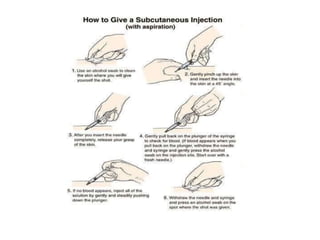
• Hold the syringe and needle in your dominant hand and pinch
the skin together using the non-dominant hand to lift the tissue
away from underlying muscle.
• Insert the needle at the required angle (usually 90 degree)
using a dart-like action. Aspiration to check whether the needle
is in a blood vessel is not necessary.
• Depress the plunger and inject the drug slowly over 10-30
seconds
Subcutaneous Injection
• Wait 10 seconds before withdrawing the needle – this will prevent
backtracking of the drug) – and then withdraw the needle. Do not massage
the area, as this can lead to bruising following administration of heparin
and speed up absorption times with insulin.
• Release the lifted skinfold .
• Dispose of sharps directly into the sharps bin and dispose of the syringe
according to local policy.
• Ensure the patient is comfortable and wash hands.
• Record administration on the prescription chart. Also record administration
site so that the same site is not repeatedly used. This is to avoid
lipohypertrophy.
• Monitor the patient for any effects of the prescribed medicine and any
problems with the injection site.
• Patients receiving injection in a health centre or outpatient department may
need to wait for a period of time to monitor for any reaction to the drug.
Local policies should be followed.
Complications
• Abscesses
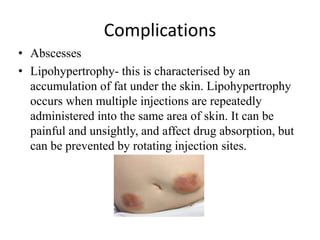
• Lipohypertrophy- this is characterised by an
accumulation of fat under the skin. Lipohypertrophy
occurs when multiple injections are repeatedly
administered into the same area of skin. It can be
painful and unsightly, and affect drug absorption, but
can be prevented by rotating injection sites.
Subcutaneous injection.pptx

Subcutaneous injection.pptx

  • 1.
  • 2.
    Subcutaneous Injection • Asubcutaneous injection is a method of administering medication. • Subcutaneous means under the skin. • In this type of injection, a short needle is used to inject a drug into the tissue layer between the skin and the muscle.
  • 3.
    Subcutaneous Injection • Drugsadministered by the subcutaneous route are deposited into subcutaneous tissue ; small volumes (up to 2ml) of non-irritant, water-soluble drugs can be administered by subcutaneous injection.
  • 4.
    Subcutaneous Injection • Subcutaneoustissue does not have a rich blood supply, and absorption of drugs delivered via that route is therefore slower than via the intramuscular route • This slower rate of absorption is beneficial when continuous absorption of a drug is required; for example, with insulin or heparin
  • 5.
    Factors affecting DrugAbsorption • Factors affecting blood flow to the skin, including exercise • Changes in environmental temperature.
  • 6.
    Site of SubcutaneousInjection Recommended sites for subcutaneous injection include • Lateral aspects of the upper arm and thigh • Umbilical region of the abdomen • The back and lower loins can also be used
  • 8.
    Subcutaneous Injection Injection sitesshould be: • Clean; • Free of infection, skin lesions, scars, birthmarks, bony prominences, and large underlying muscles, blood vessels or nerves. • As the amount of subcutaneous fat varies between patients, individual patient assessment is vital before carrying out the procedure.
  • 9.
    Subcutaneous Injection • Alifted skinfold technique (pinching or bunching the skin) can be used to lift the subcutaneous layer away from the underlying muscle. • This method reduces the risk of inadvertent intramuscular injection when undertaken correctly; however, releasing the skin too quickly before the injection is completed or lifting it incorrectly can increase that risk
  • 11.
    Subcutaneous Injection Needles • Needlesize is measured in gauges – a 25G is commonly used for subcutaneous injections. Needle size depends on the viscosity of the liquid being injected. • Needles need to be long enough to inject the drug into the subcutaneous tissue. They come in lengths of 4-8mm.
  • 12.
    Subcutaneous Injection Angle ofinjection • It is recommended that subcutaneous injections, particularly of insulin, are administered at a 90-degree angle to ensure that the medication is delivered into the subcutaneous tissue • However, patient assessment is vital – patients who are cachectic and therefore have minimal amounts of subcutaneous tissue may require injections to be delivered at a 45-degree angle. • Subcutaneous vaccinations are given with the needle at a 45-degree angle to the skin and the skin should be pinched together
  • 13.
    Subcutaneous Injection Equipment • Needlesand syringe or prefilled syringe. • Drug for administration. • Medicines administration chart/prescription. • Receiver or tray to carry the drug. • Sharps container.
  • 14.
    Procedure • Explain theprocedure to the patient and gain consent. • Screen the patient to ensure privacy during the procedure. • Check whether the patient has any allergies. • Check the prescription is correct and follow the ā€˜five rights’ of medicines administration and local medicines administration policy to reduce the risk of error. • Wash and dry hands to reduce the risk of infection. • Assemble the syringe and needle and then draw the required amount of drug from the ampoule. Some drugs are available in pre-filled syringes and manufacturer’s instructions should be followed.
  • 15.
    Subcutaneous Injection • Disperseany air bubbles from the syringe. • Change the needle to ensure that the one you are about to use for injecting the drug is sharp, thereby reducing pain. To reduce the risk of sharps injury, a safety- engineered needle should be used for injection. • Dispose of the needle used to draw the drug in a sharps container according to local policy. • Place the injection in a tray and take it to the patient, along with a sharps bin so the used needle can be disposed of immediately after the procedure.
  • 16.
    Subcutaneous Injection • Checkthe patient’s identity according to local medicines management policy. • Position the patient comfortably with the selected injection site exposed . • Check the site for signs of oedema, infection or skin lesions. If any of these are present, select a different site. • Wash and dry hands. • If gloves are considered necessary following risk assessment, put gloves on. • Ensure the skin is clean or follow local policy on skin cleansing.
  • 17.
    Procedure • If skincleansing is considered necessary, swab for 30 seconds with isopropyl alcohol and then allow to dry for 30 . • Inform the patient that you are going to carry out the injection. Use distraction and relaxation techniques to reduce anxiety if needed. • Hold the syringe and needle in your dominant hand and pinch the skin together using the non-dominant hand to lift the tissue away from underlying muscle. • Insert the needle at the required angle (usually 90 degree) using a dart-like action. Aspiration to check whether the needle is in a blood vessel is not necessary. • Depress the plunger and inject the drug slowly over 10-30 seconds
  • 18.
    Subcutaneous Injection • Wait10 seconds before withdrawing the needle – this will prevent backtracking of the drug) – and then withdraw the needle. Do not massage the area, as this can lead to bruising following administration of heparin and speed up absorption times with insulin. • Release the lifted skinfold . • Dispose of sharps directly into the sharps bin and dispose of the syringe according to local policy. • Ensure the patient is comfortable and wash hands. • Record administration on the prescription chart. Also record administration site so that the same site is not repeatedly used. This is to avoid lipohypertrophy. • Monitor the patient for any effects of the prescribed medicine and any problems with the injection site. • Patients receiving injection in a health centre or outpatient department may need to wait for a period of time to monitor for any reaction to the drug. Local policies should be followed.
  • 20.
    Complications • Abscesses • Lipohypertrophy-this is characterised by an accumulation of fat under the skin. Lipohypertrophy occurs when multiple injections are repeatedly administered into the same area of skin. It can be painful and unsightly, and affect drug absorption, but can be prevented by rotating injection sites.