STANDARDS FOR BUS TERMINALS
Inderjeet koner
b.Arch
INTRODUCTION
• A bus station is a structure where city or intercity buses stop to pick up and drop off
passengers.
• Bus geometrics, or the physical dimensions and maneuverability of the bus, determine the
width of roadways, shapes of platforms, column spacing, ceiling heights, and other aspects of
bus- level design.
• The apparently insignificant detail of the right-side loading of buses often restricts terminal
design possibilities.
ENTRANCES
• When a bus turns normally, it always turns about a point which is
somewhere on the center line of the rear axle.This is true whether motion
is forward or backward.
• The turns required to accomplish the movement and positioning of buses
are variable and differ considerably with the equipment encountered.
• The turning template provides a convenient graphic method to determine
minimum clearances required.
SWEPT STREET
• A Standard of 40 Persons Per Minute Would Be Representative of a Busy Situation
With Occasional Traffic Disruptions. Where Free-Flowing Traffic Is Desired, A
Standard Of 20 Persons Per Minute Should Be Adopted.
PLATFORM TYPES
1. PARALLEL LOADING- Requires Excessive Amount Of Space.
2. Buses Must Usually Wait Until First Bus Exits
3. Large Terminal Requires Pedestrian Under/Overpass Facilities To Protect Passengers
While Crossing Lanes.
• RIGHT-ANGLE LOADING
1. Out swinging Bus Door Which Forms a Barrier around Which Passenger Must Pass.
2. Bus Maneuvering Difficult.
• STRAIGHT SAW TOOTH LOADING
1. Efficient-Employed Where Lot Is Comparatively Narrow and Deep.
2. Passenger Has Direct Approach To Loading Door.
3. Baggage Truck Can Operate Between Buses For Side Loading.
• RADIAL SAW TOOTH LOADING
Most efficient buses swing into position along natural driving are.Space required at
front is minimum-wide space at rear making maneuvering easy.
QUEUING SITUATIONS
• Linear queues will occur where passengers line up to purchase
tickets or board buses.
• The length of a linear queue may be estimated on the basis of an
average per person spacing of 20 in.
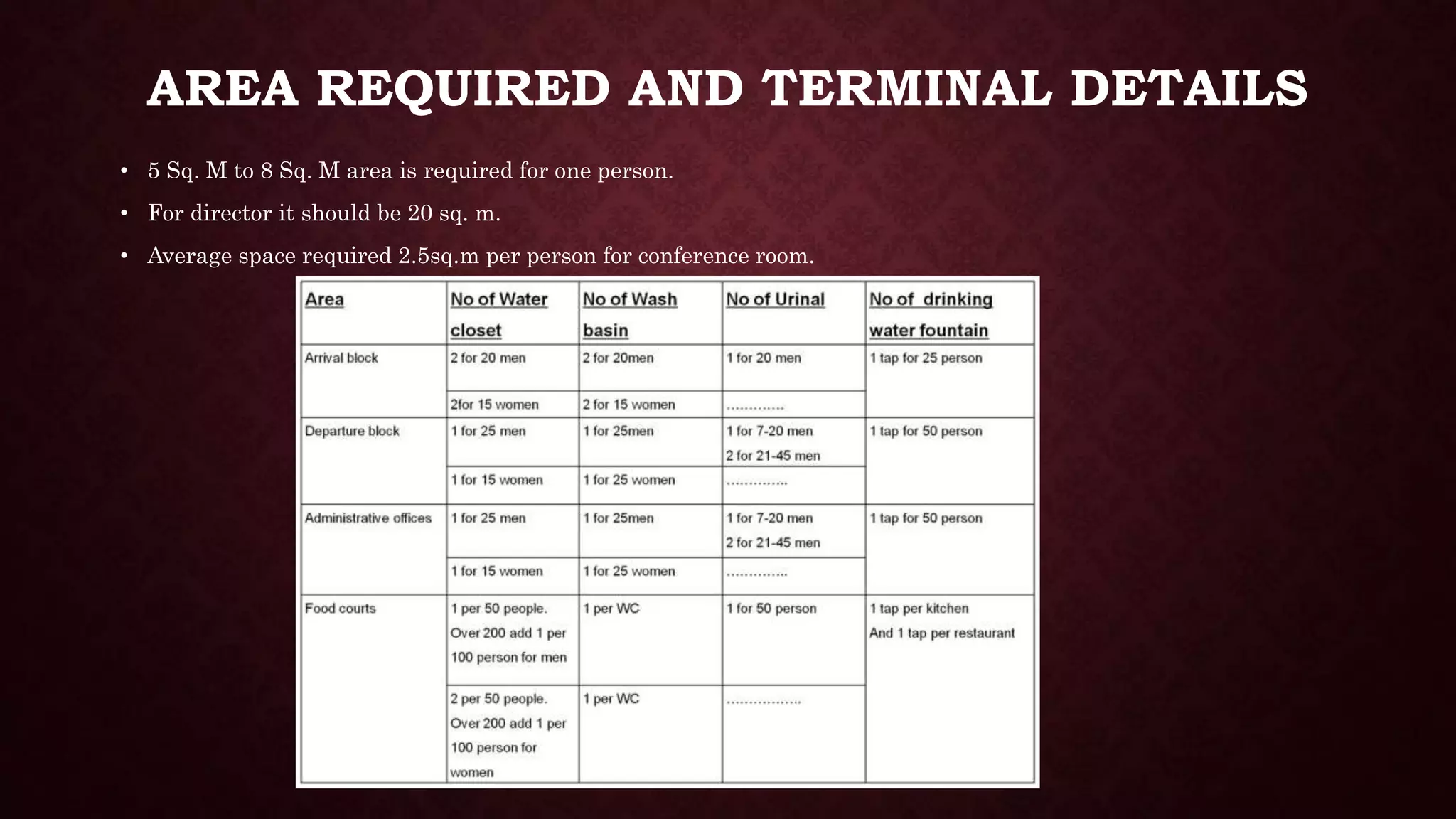
AREA REQUIRED AND TERMINAL DETAILS
• 5 Sq. M to 8 Sq. M area is required for one person.
• For director it should be 20 sq. m.
• Average space required 2.5sq.m per person for conference room.
REQUIREMENTS FOR A BUS TERMINAL
• Waiting area for visitors
• Toilet
• Conference room
• Personal Assistant to the Terminal Manager
• Assistant Terminal Manager with Attached toilet
• Administrative officer with Attached toilet
• Assistant Administrative officers with toilet
• Space for facilities like photo copying
• Lockers for the staff
• Public addressing section
• Store room
BUS DIMENSIONS AND BAYS
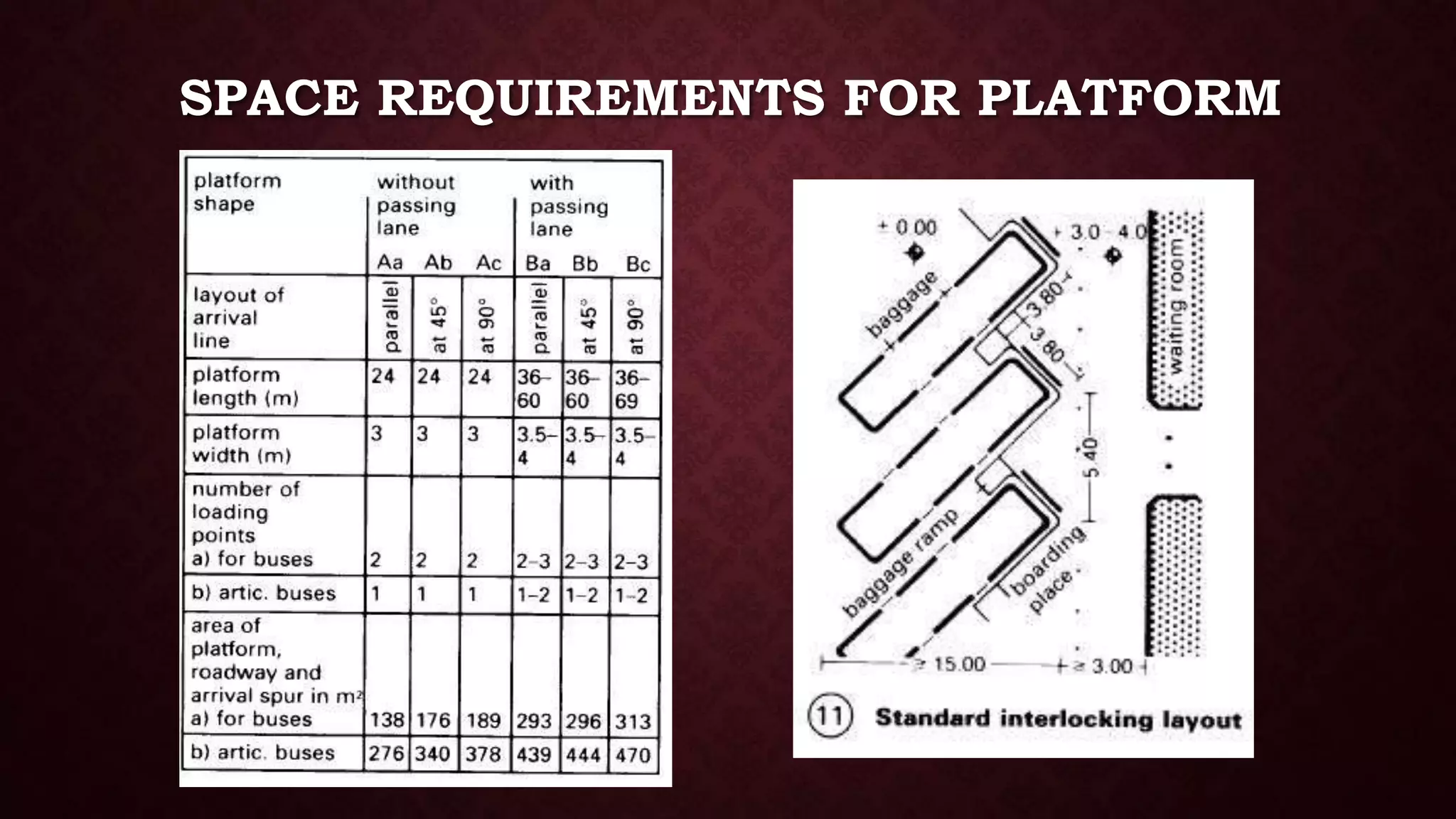
SPACE REQUIREMENTS FOR PLATFORM
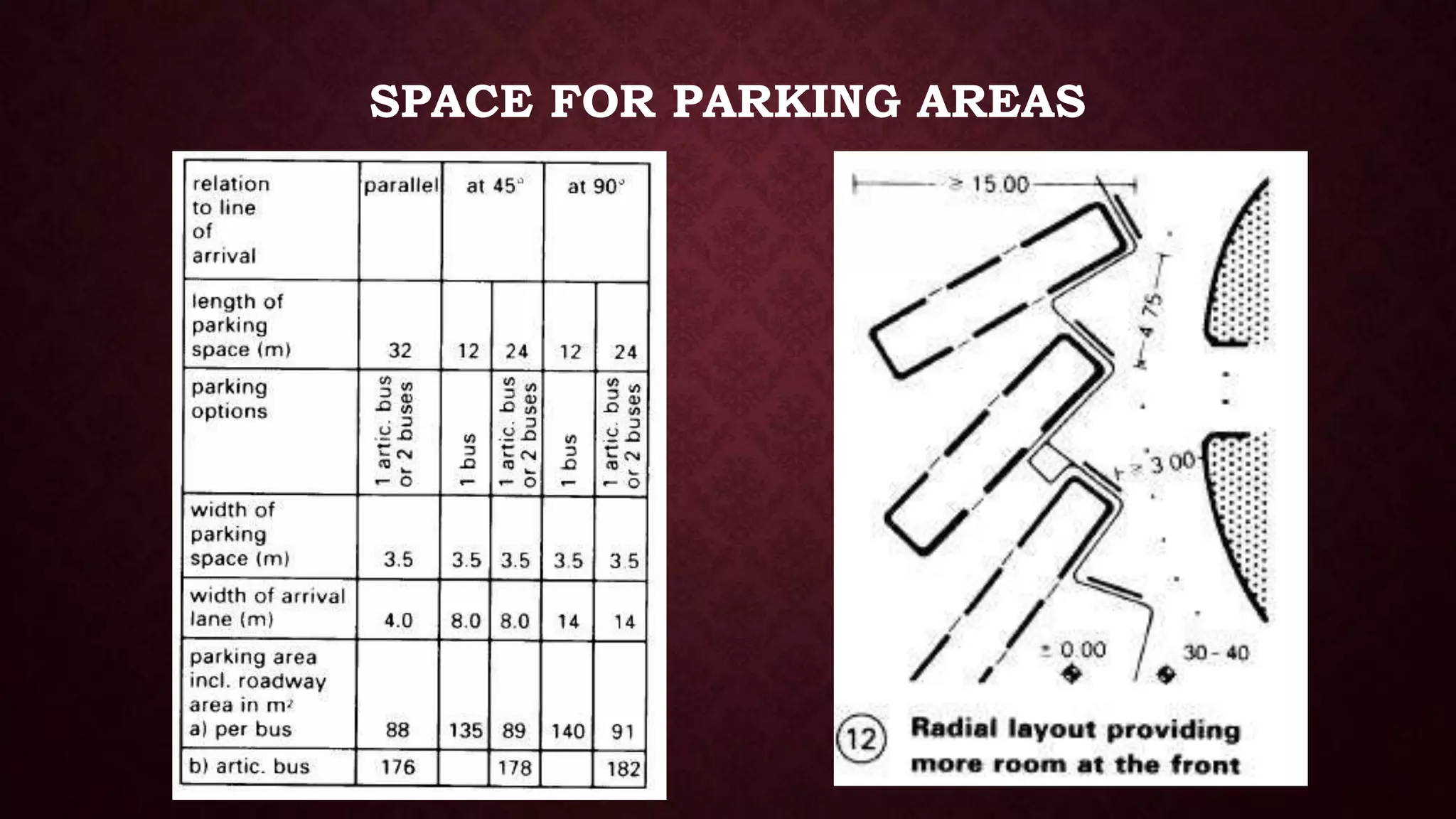
SPACE FOR PARKING AREAS
LOADING BAYS
• THE LARGEST TURNING RADIUS FOR AN ARTICULATED TRUCK IS ABOUT IN 12 M.
• 1.50 M WITH THE USE OF A LOADING DOCK.
• 3 M WITH THE USE OF LOADING DOORS
STRAIGHT SAWTOOTH LOADING
• Efficient-Employed Where Lot Is Comparatively Narrow and Deep.
• Passenger Has Direct Approach To Loading Door.
• Baggage Truck Can Operate Between Buses For Side Loading.
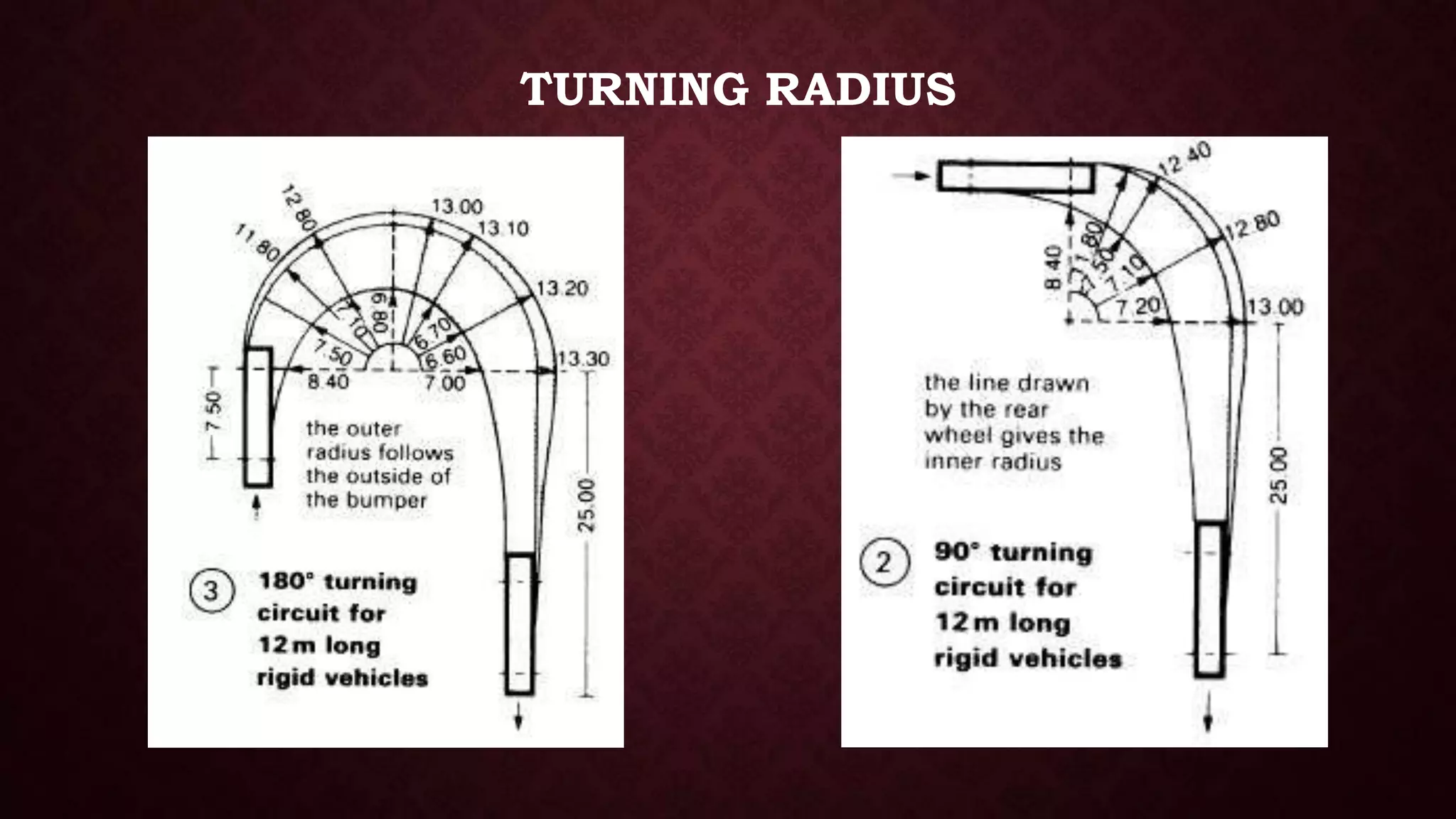
TURNING RADIUS
TURNING RADIUS
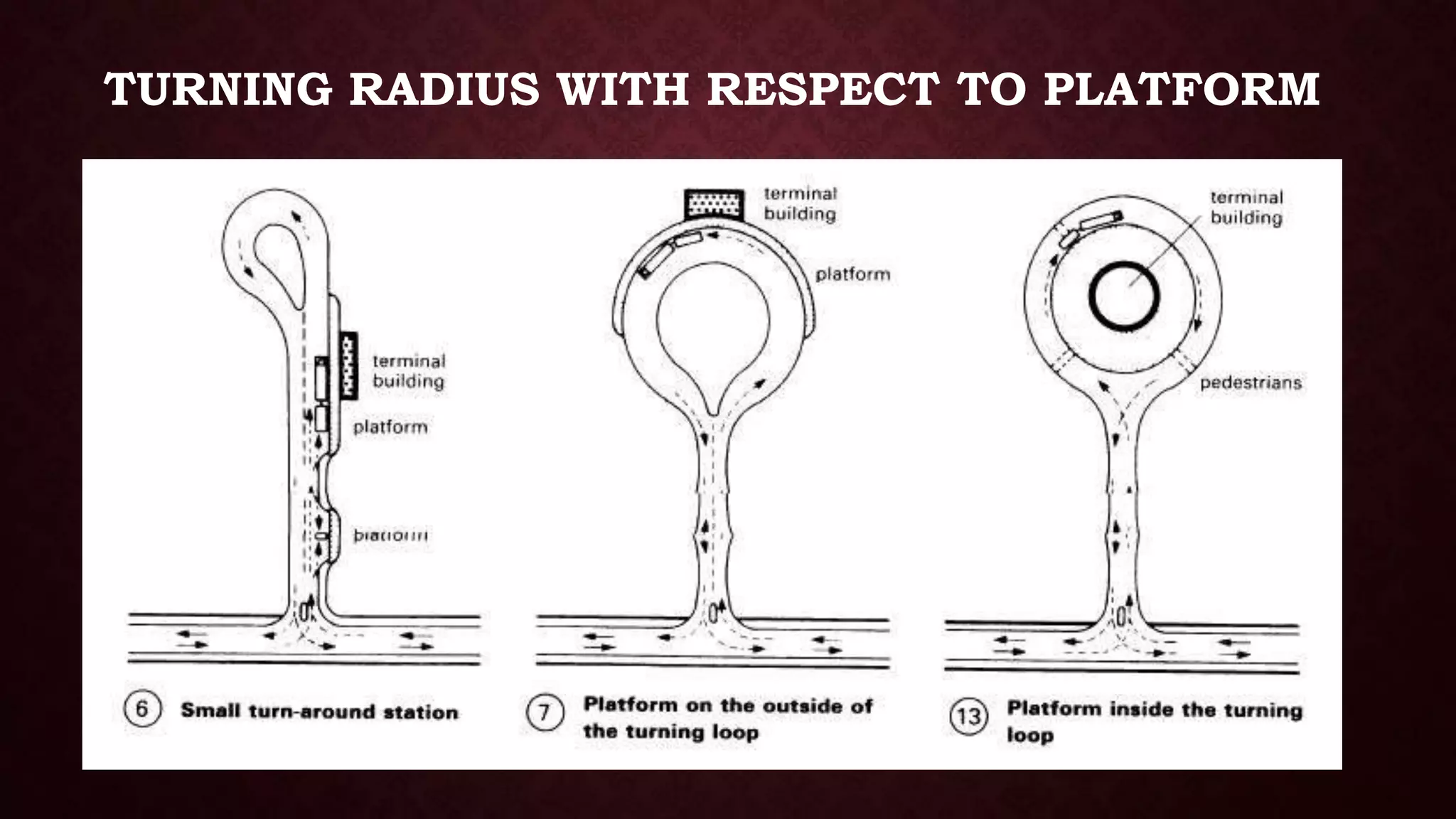
TURNING RADIUS WITH RESPECT TO PLATFORM
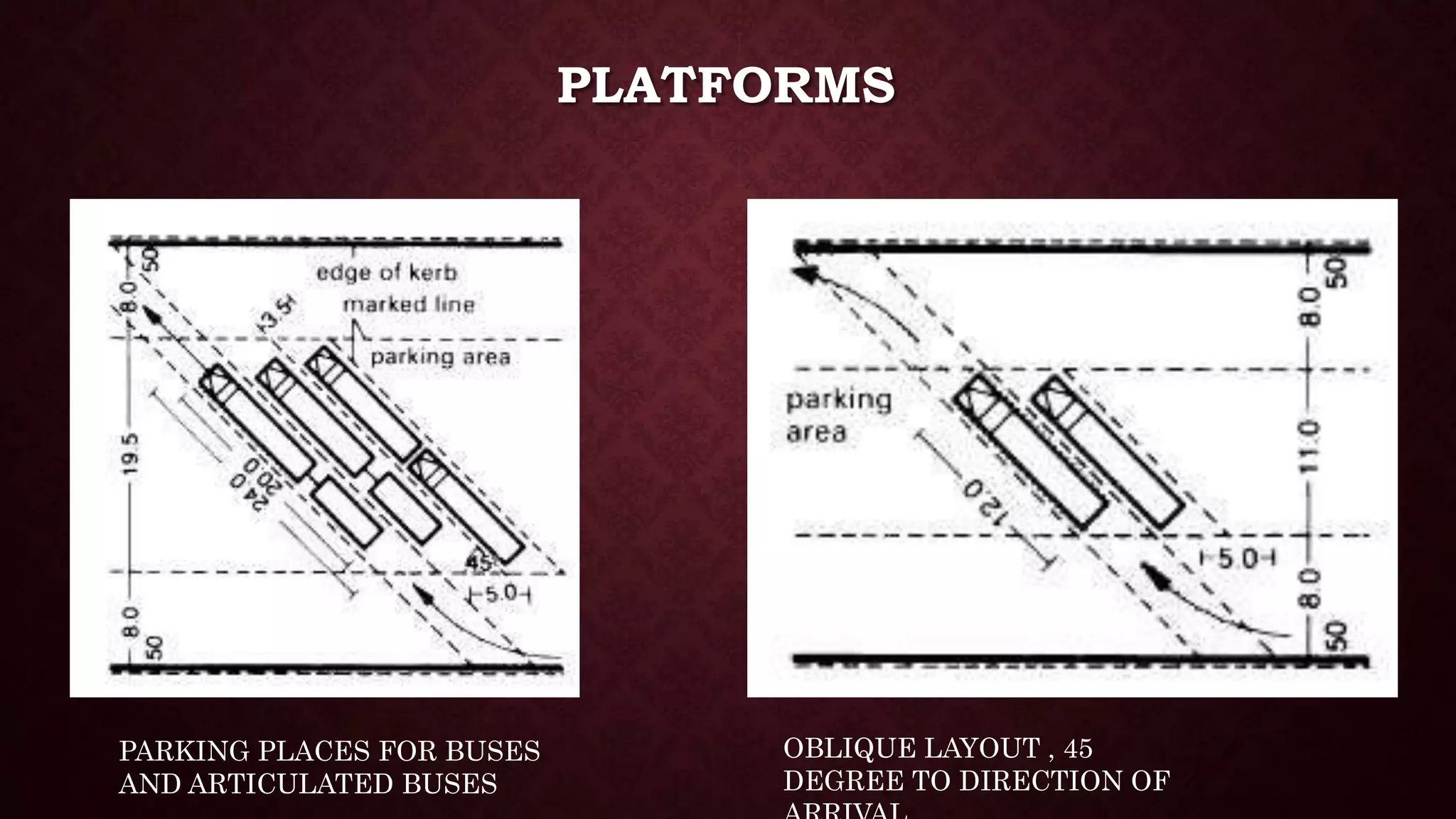
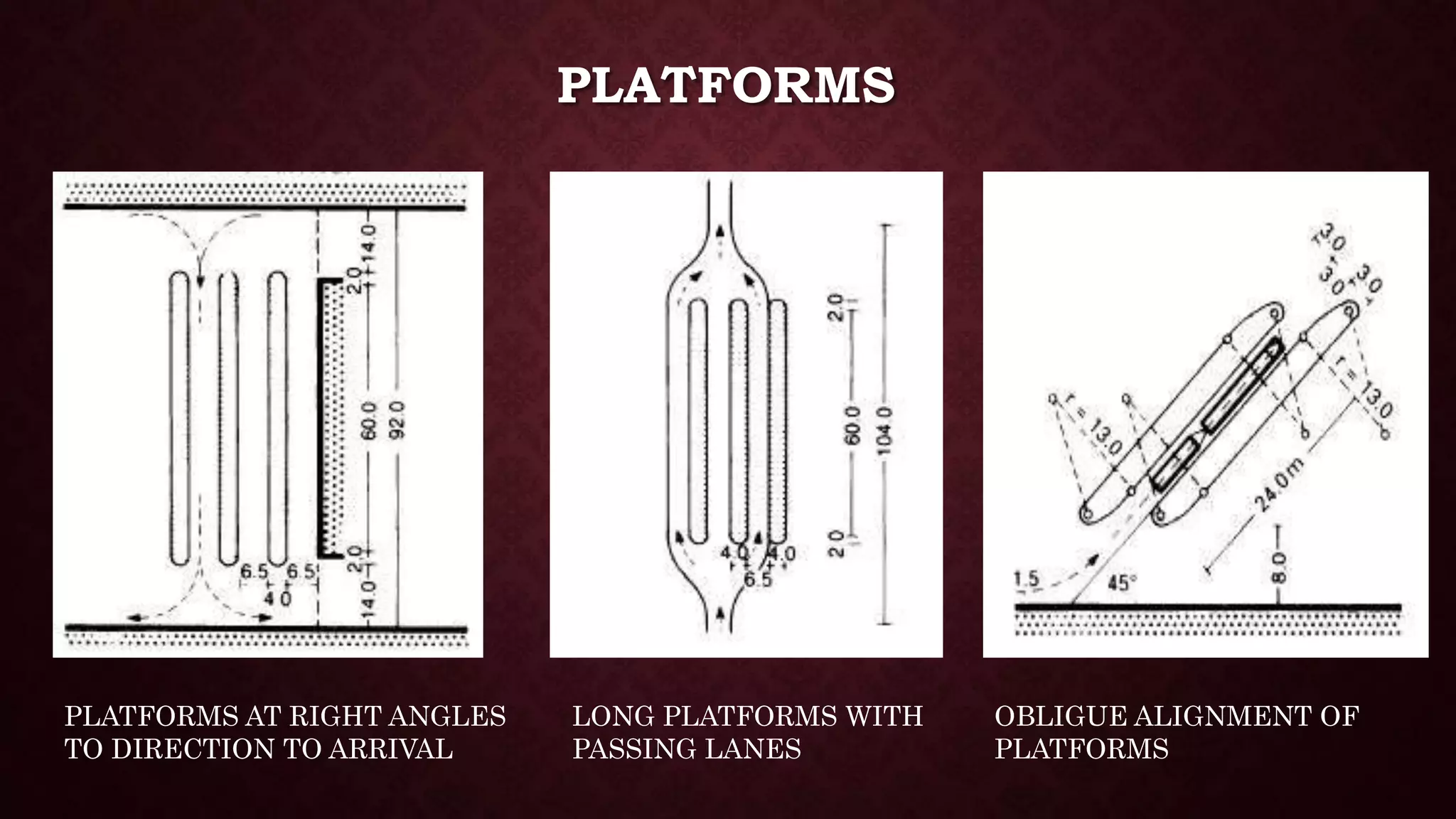
PLATFORMS
OBLIQUE LAYOUT , 45
DEGREE TO DIRECTION OF
PARKING PLACES FOR BUSES
AND ARTICULATED BUSES
PLATFORMS
PLATFORMS AT RIGHT ANGLES
TO DIRECTION TO ARRIVAL
LONG PLATFORMS WITH
PASSING LANES
OBLIGUE ALIGNMENT OF
PLATFORMS
PLATFORMS
DEPARTURE AT 90 DEGREE
ARRIVAL AND DEPARTURE AT
OBLIGUE ANGLES
LAYOUT OF PARKING PLACES , PARALLEL TO
DIRECTION OF ARRIVAL

Standards for bus terminals

  • 1.
    STANDARDS FOR BUSTERMINALS Inderjeet koner b.Arch
  • 2.
    INTRODUCTION • A busstation is a structure where city or intercity buses stop to pick up and drop off passengers. • Bus geometrics, or the physical dimensions and maneuverability of the bus, determine the width of roadways, shapes of platforms, column spacing, ceiling heights, and other aspects of bus- level design. • The apparently insignificant detail of the right-side loading of buses often restricts terminal design possibilities.
  • 4.
    ENTRANCES • When abus turns normally, it always turns about a point which is somewhere on the center line of the rear axle.This is true whether motion is forward or backward. • The turns required to accomplish the movement and positioning of buses are variable and differ considerably with the equipment encountered. • The turning template provides a convenient graphic method to determine minimum clearances required. SWEPT STREET • A Standard of 40 Persons Per Minute Would Be Representative of a Busy Situation With Occasional Traffic Disruptions. Where Free-Flowing Traffic Is Desired, A Standard Of 20 Persons Per Minute Should Be Adopted.
  • 5.
    PLATFORM TYPES 1. PARALLELLOADING- Requires Excessive Amount Of Space. 2. Buses Must Usually Wait Until First Bus Exits 3. Large Terminal Requires Pedestrian Under/Overpass Facilities To Protect Passengers While Crossing Lanes. • RIGHT-ANGLE LOADING 1. Out swinging Bus Door Which Forms a Barrier around Which Passenger Must Pass. 2. Bus Maneuvering Difficult. • STRAIGHT SAW TOOTH LOADING 1. Efficient-Employed Where Lot Is Comparatively Narrow and Deep. 2. Passenger Has Direct Approach To Loading Door. 3. Baggage Truck Can Operate Between Buses For Side Loading.
  • 6.
    • RADIAL SAWTOOTH LOADING Most efficient buses swing into position along natural driving are.Space required at front is minimum-wide space at rear making maneuvering easy. QUEUING SITUATIONS • Linear queues will occur where passengers line up to purchase tickets or board buses. • The length of a linear queue may be estimated on the basis of an average per person spacing of 20 in.
  • 7.
    AREA REQUIRED ANDTERMINAL DETAILS • 5 Sq. M to 8 Sq. M area is required for one person. • For director it should be 20 sq. m. • Average space required 2.5sq.m per person for conference room.
  • 8.
    REQUIREMENTS FOR ABUS TERMINAL • Waiting area for visitors • Toilet • Conference room • Personal Assistant to the Terminal Manager • Assistant Terminal Manager with Attached toilet • Administrative officer with Attached toilet • Assistant Administrative officers with toilet • Space for facilities like photo copying • Lockers for the staff • Public addressing section • Store room
  • 9.
  • 10.
  • 11.
  • 12.
    LOADING BAYS • THELARGEST TURNING RADIUS FOR AN ARTICULATED TRUCK IS ABOUT IN 12 M. • 1.50 M WITH THE USE OF A LOADING DOCK. • 3 M WITH THE USE OF LOADING DOORS
  • 13.
    STRAIGHT SAWTOOTH LOADING •Efficient-Employed Where Lot Is Comparatively Narrow and Deep. • Passenger Has Direct Approach To Loading Door. • Baggage Truck Can Operate Between Buses For Side Loading.
  • 14.
  • 15.
  • 16.
    TURNING RADIUS WITHRESPECT TO PLATFORM
  • 17.
    TURNING RADIUS WITHRESPECT TO PLATFORM
  • 18.
    PLATFORMS OBLIQUE LAYOUT ,45 DEGREE TO DIRECTION OF PARKING PLACES FOR BUSES AND ARTICULATED BUSES
  • 19.
    PLATFORMS PLATFORMS AT RIGHTANGLES TO DIRECTION TO ARRIVAL LONG PLATFORMS WITH PASSING LANES OBLIGUE ALIGNMENT OF PLATFORMS
  • 20.
    PLATFORMS DEPARTURE AT 90DEGREE ARRIVAL AND DEPARTURE AT OBLIGUE ANGLES LAYOUT OF PARKING PLACES , PARALLEL TO DIRECTION OF ARRIVAL