Internet-based speaking
teaching and learning
Dzul rachman, soviyah, ida megawati, anis firdatul
The presentation will be delivered
focusing on :
1. Overview on some basic theories and articles on the
use of ICT in Speaking class
2. Overview on the Educational points of using ICT in
Speaking class
3. Classroom discussion
4. Workshop
2
Overview on some basic theories and articles on
the use of ICT in Speaking class
1. The Nature of Speaking
2. Types of Spoken Language
3. Stages of Teaching Speaking
4. Internet-Based Resources for
Speaking
3
✘ Abuseileek, A. & Abualshar, A. (2012). The effect of computer-mediated
communication cooperative learning structures and techniques on
improving EFL learners’ speaking skill. International Journal Learning
Technology Vol. 7 (4).
✘ Cepik, S. & Yastibas, A. (2013). The use of e-portfolio to improve English
speaking skill of Turkish EFL learners. The Anthropologist Vol. 16(1-2),
307-317.
✘ Lu, Z., Hou, L., Huang, X. (2010). A research on a student-centered
teaching model in an ICT-based English audio-video speaking class.
International Journal of Education and Development using Information
and Communication Technology Vol. 6 (3).
✘ Dang, X., Nicholas, H., & Lewis, R. (2012). ICTEV 2012: Creative
Connections State Conference
4
references
The nature of speaking
Speaking is the action of conveying
information or expressing one's thoughts and
feelings in spoken language.
Speaking is expression in sending messages
from a speaker towards listeners.
5
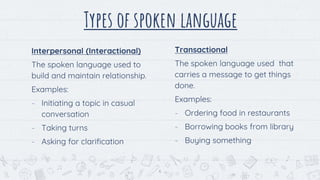
Interpersonal (Interactional)
The spoken language used to
build and maintain relationship.
Examples:
- Initiating a topic in casual
conversation
- Taking turns
- Asking for clarification
Types of spoken language
Transactional
The spoken language used that
carries a message to get things
done.
Examples:
- Ordering food in restaurants
- Borrowing books from library
- Buying something
6
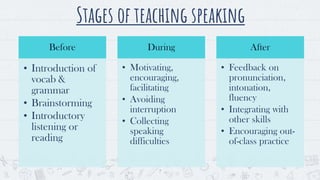
Stages of teaching speaking
7
Before
• Introduction of
vocab &
grammar
• Brainstorming
• Introductory
listening or
reading
During
• Motivating,
encouraging,
facilitating
• Avoiding
interruption
• Collecting
speaking
difficulties
After
• Feedback on
pronunciation,
intonation,
fluency
• Integrating with
other skills
• Encouraging out-
of-class practice
Internet-based
resources for speaking
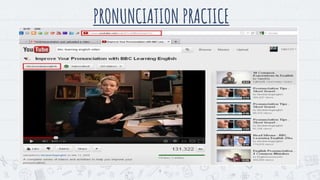
PRONUNCIATION PRACTICE
9
PRONUNCIATION PRACTICE
10
Englishlearning.com
ACCENT TRAINING
11 Accent.gmu.edu
WATCH AND DISCUSS
12
DEBATE TRAINING
13 Idebate.org
DEBATE TRAINING
14 Debating.co.nz
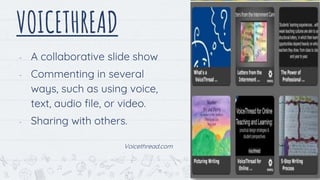
VOICETHREAD
- A collaborative slide show
- Commenting in several
ways, such as using voice,
text, audio file, or video.
- Sharing with others.
Voicethread.com
15
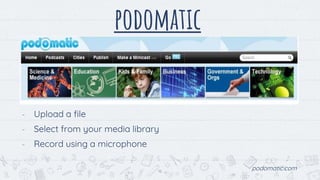
podomatic
- Upload a file
- Select from your media library
- Record using a microphone
podomatic.com16
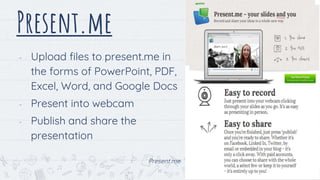
Present.me
- Upload files to present.me in
the forms of PowerPoint, PDF,
Excel, Word, and Google Docs
- Present into webcam
- Publish and share the
presentation
Present.me
17
18
Overview on the Educational points of
using ICT in Speaking class
1. Strengths
2. Weaknesses
3. Must do (protocols of using ICT in Speaking Class)
4. Assessing Speaking in a Class using ICT
19
Strengths of ict in teaching and learning speaking
✘ It rapidly promotes interpersonal communication and
institutional communication.
✘ It initiates communication whether with native speakers or
EFL learners in or out classroom.
✘ It allows students to play an active role in communication and
problem solving rather than be information receiver and
memorizer.
✘ It provides opportunities for collaborative learning as well as
immediate feedback and direct assistance.
✘ It provides more time for speaking practice.
20
Weaknesses of ict in teaching and learning speaking
✘ Some of the technologies have many
technical issues.
✘ Some e-learning systems for speaking do not
have facilities to support talking turn.
21
Protocols
of using ict
in speaking
class
S elect authentic tasks
P ersonalize the tasks
E nsure learning & production
A dd value with technology
K now your limitations
I nvolve your students
N egotiate with students
G ive feedback
22
I nclude the learning
objectives
C ooperate with other
teachers and share
ideas
T ry the tools
beforehand
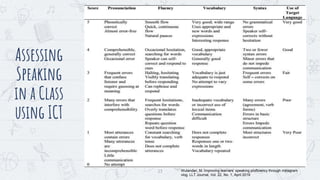
Assessing
Speaking
in a Class
using ICT
23 Wulandari, M. Improving learners’ speaking proficiency through instagram
vlog. LLT Journal, Vol. 22, No. 1, April 2019
Classroom
discussion
25
1. According to your experiences, what kind of speaking
activities based on ICT that you have ever had? How
do you feel about it?
2. In your opinion, what are some issues and challenges
that may appear due to the use of ICT in a speaking
class?
3. If you want to conduct several activities in a speaking
class using ICT, what kind of things that you need to
prepare?
Workshop time
Conclusion
What’s the conclusion of this presentation?
27
“speak in such a way that others love
to listen to you.
Listen in such a way that other love to
speak to you”
-Anonymous-
28
29
THANKS!

Internet-Based speaking teaching & learning IPB UNY

  • 1.
    Internet-based speaking teaching andlearning Dzul rachman, soviyah, ida megawati, anis firdatul
  • 2.
    The presentation willbe delivered focusing on : 1. Overview on some basic theories and articles on the use of ICT in Speaking class 2. Overview on the Educational points of using ICT in Speaking class 3. Classroom discussion 4. Workshop 2
  • 3.
    Overview on somebasic theories and articles on the use of ICT in Speaking class 1. The Nature of Speaking 2. Types of Spoken Language 3. Stages of Teaching Speaking 4. Internet-Based Resources for Speaking 3
  • 4.
    ✘ Abuseileek, A.& Abualshar, A. (2012). The effect of computer-mediated communication cooperative learning structures and techniques on improving EFL learners’ speaking skill. International Journal Learning Technology Vol. 7 (4). ✘ Cepik, S. & Yastibas, A. (2013). The use of e-portfolio to improve English speaking skill of Turkish EFL learners. The Anthropologist Vol. 16(1-2), 307-317. ✘ Lu, Z., Hou, L., Huang, X. (2010). A research on a student-centered teaching model in an ICT-based English audio-video speaking class. International Journal of Education and Development using Information and Communication Technology Vol. 6 (3). ✘ Dang, X., Nicholas, H., & Lewis, R. (2012). ICTEV 2012: Creative Connections State Conference 4 references
  • 5.
    The nature ofspeaking Speaking is the action of conveying information or expressing one's thoughts and feelings in spoken language. Speaking is expression in sending messages from a speaker towards listeners. 5
  • 6.
    Interpersonal (Interactional) The spokenlanguage used to build and maintain relationship. Examples: - Initiating a topic in casual conversation - Taking turns - Asking for clarification Types of spoken language Transactional The spoken language used that carries a message to get things done. Examples: - Ordering food in restaurants - Borrowing books from library - Buying something 6
  • 7.
    Stages of teachingspeaking 7 Before • Introduction of vocab & grammar • Brainstorming • Introductory listening or reading During • Motivating, encouraging, facilitating • Avoiding interruption • Collecting speaking difficulties After • Feedback on pronunciation, intonation, fluency • Integrating with other skills • Encouraging out- of-class practice
  • 8.
  • 9.
  • 10.
  • 11.
  • 12.
  • 13.
  • 14.
  • 15.
    VOICETHREAD - A collaborativeslide show - Commenting in several ways, such as using voice, text, audio file, or video. - Sharing with others. Voicethread.com 15
  • 16.
    podomatic - Upload afile - Select from your media library - Record using a microphone podomatic.com16
  • 17.
    Present.me - Upload filesto present.me in the forms of PowerPoint, PDF, Excel, Word, and Google Docs - Present into webcam - Publish and share the presentation Present.me 17
  • 18.
  • 19.
    Overview on theEducational points of using ICT in Speaking class 1. Strengths 2. Weaknesses 3. Must do (protocols of using ICT in Speaking Class) 4. Assessing Speaking in a Class using ICT 19
  • 20.
    Strengths of ictin teaching and learning speaking ✘ It rapidly promotes interpersonal communication and institutional communication. ✘ It initiates communication whether with native speakers or EFL learners in or out classroom. ✘ It allows students to play an active role in communication and problem solving rather than be information receiver and memorizer. ✘ It provides opportunities for collaborative learning as well as immediate feedback and direct assistance. ✘ It provides more time for speaking practice. 20
  • 21.
    Weaknesses of ictin teaching and learning speaking ✘ Some of the technologies have many technical issues. ✘ Some e-learning systems for speaking do not have facilities to support talking turn. 21
  • 22.
    Protocols of using ict inspeaking class S elect authentic tasks P ersonalize the tasks E nsure learning & production A dd value with technology K now your limitations I nvolve your students N egotiate with students G ive feedback 22 I nclude the learning objectives C ooperate with other teachers and share ideas T ry the tools beforehand
  • 23.
    Assessing Speaking in a Class usingICT 23 Wulandari, M. Improving learners’ speaking proficiency through instagram vlog. LLT Journal, Vol. 22, No. 1, April 2019
  • 24.
  • 25.
    25 1. According toyour experiences, what kind of speaking activities based on ICT that you have ever had? How do you feel about it? 2. In your opinion, what are some issues and challenges that may appear due to the use of ICT in a speaking class? 3. If you want to conduct several activities in a speaking class using ICT, what kind of things that you need to prepare?
  • 26.
  • 27.
    Conclusion What’s the conclusionof this presentation? 27
  • 28.
    “speak in sucha way that others love to listen to you. Listen in such a way that other love to speak to you” -Anonymous- 28
  • 29.