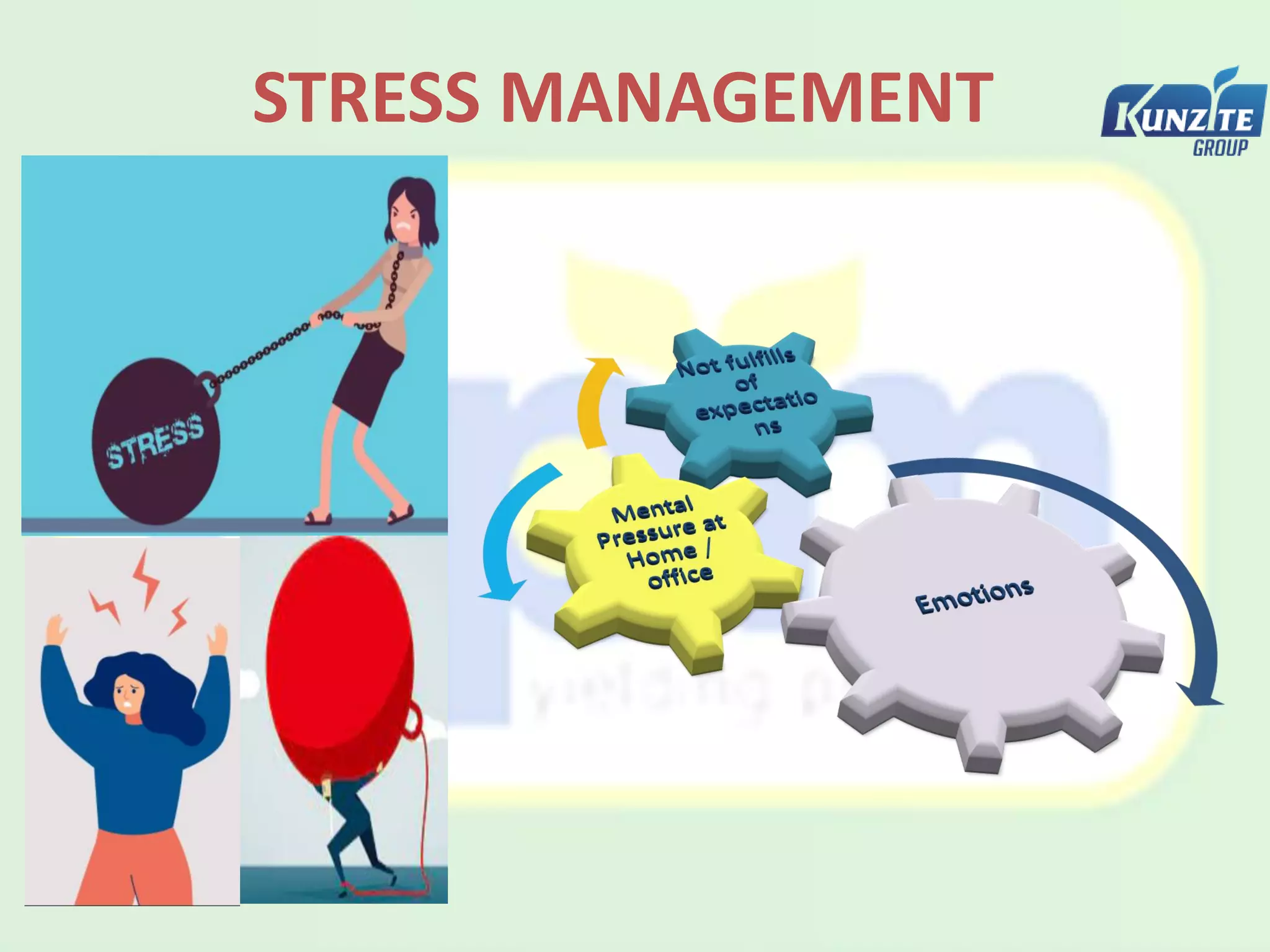
STRESS MANAGEMENT
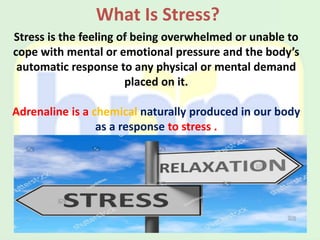
What Is Stress?
Stress is the feeling of being overwhelmed or unable to
cope with mental or emotional pressure and the body’s
automatic response to any physical or mental demand
placed on it.
Adrenaline is a chemical naturally produced in our body
as a response to stress .
Is All Stress Bad?
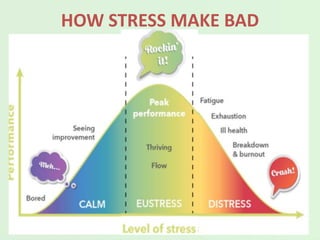
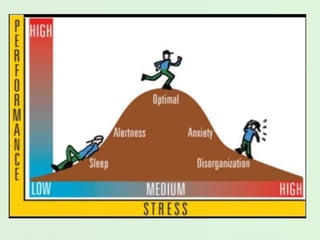
Moderate levels of stress may actually
improve performance and efficiency
Too little stress may result in boredom
Too much stress may cause an
unproductive anxiety level
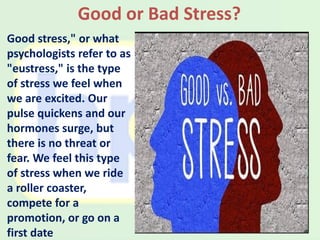
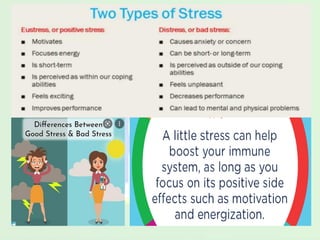
Good stress," or what
psychologists refer to as
"eustress," is the type
of stress we feel when
we are excited. Our
pulse quickens and our
hormones surge, but
there is no threat or
fear. We feel this type
of stress when we ride
a roller coaster,
compete for a
promotion, or go on a
first date
Good or Bad Stress?
HOW STRESS MAKE BAD
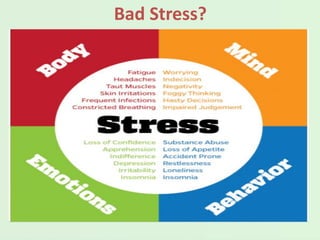
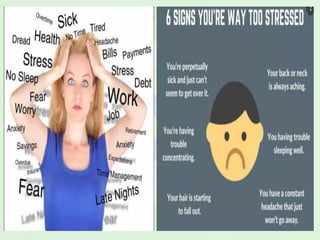
Bad Stress?
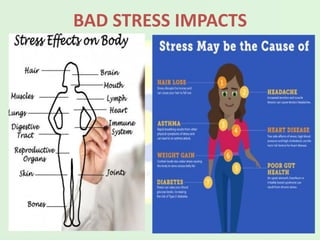
BAD STRESS IMPACTS
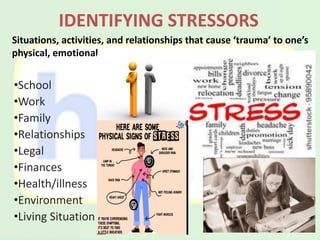
IDENTIFYING STRESSORS
Situations, activities, and relationships that cause ‘trauma’ to one’s
physical, emotional.
•School
•Work
•Family
•Relationships
•Legal
•Finances
•Health/illness
•Environment
•Living Situation
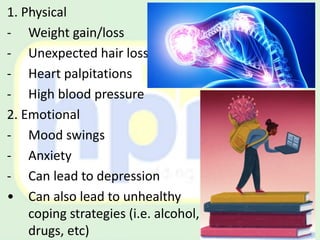
1. Physical
- Weight gain/loss
- Unexpected hair loss
- Heart palpitations
- High blood pressure
2. Emotional
- Mood swings
- Anxiety
- Can lead to depression
• Can also lead to unhealthy
coping strategies (i.e. alcohol,
drugs, etc)
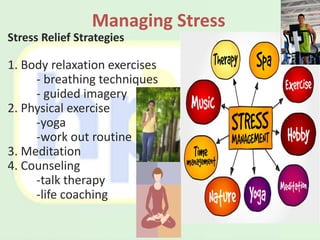
Stress Relief Strategies
1. Body relaxation exercises
- breathing techniques
- guided imagery
2. Physical exercise
-yoga
-work out routine
3. Meditation
4. Counseling
-talk therapy
-life coaching
Managing Stress
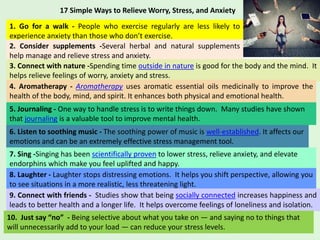
17 Simple Ways to Relieve Worry, Stress, and Anxiety
1. Go for a walk - People who exercise regularly are less likely to
experience anxiety than those who don’t exercise.
2. Consider supplements -Several herbal and natural supplements
help manage and relieve stress and anxiety.
3. Connect with nature -Spending time outside in nature is good for the body and the mind. It
helps relieve feelings of worry, anxiety and stress.
4. Aromatherapy - Aromatherapy uses aromatic essential oils medicinally to improve the
health of the body, mind, and spirit. It enhances both physical and emotional health.
5. Journaling - One way to handle stress is to write things down. Many studies have shown
that journaling is a valuable tool to improve mental health.
6. Listen to soothing music - The soothing power of music is well-established. It affects our
emotions and can be an extremely effective stress management tool.
7. Sing -Singing has been scientifically proven to lower stress, relieve anxiety, and elevate
endorphins which make you feel uplifted and happy.
8. Laughter - Laughter stops distressing emotions. It helps you shift perspective, allowing you
to see situations in a more realistic, less threatening light.
9. Connect with friends - Studies show that being socially connected increases happiness and
leads to better health and a longer life. It helps overcome feelings of loneliness and isolation.
10. Just say “no” - Being selective about what you take on — and saying no to things that
will unnecessarily add to your load — can reduce your stress levels.
16. Serve others - Helping other people can help
bring us outside ourselves. It can also help distract
us from our own problems and think about
something else
11. Avoid procrastination - Procrastination can lead you to act reactively, leaving you
scrambling to catch up. This can cause stress, which negatively affects your health and sleep
quality.
12. Pet the dog - Science shows that playing with or petting an animal can reduce stress
and can also help us reduce feelings of isolation and help us feel more connected.
13. Mindfulness and meditation -
Mindfulness is about paying attention to
daily life and the things we typically rush
through. It’s about turning down the
volume in your mind by coming back to
the body.
14. Practice abdominal breathing - generally,
there are two types of breathing patterns: Thoracic
(chest) breathing, Diaphragmatic (abdominal)
breathing
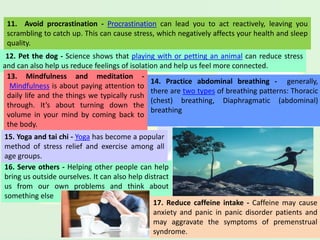
15. Yoga and tai chi - Yoga has become a popular
method of stress relief and exercise among all
age groups.
17. Reduce caffeine intake - Caffeine may cause
anxiety and panic in panic disorder patients and
may aggravate the symptoms of premenstrual
syndrome.
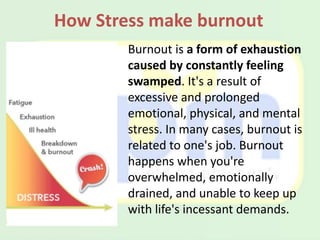
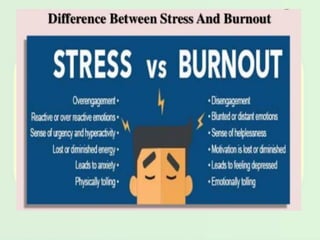
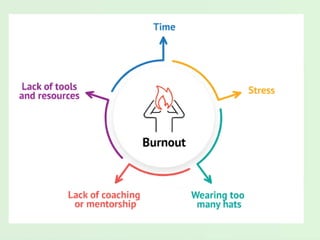
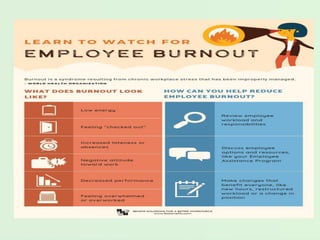
How Stress make burnout
Burnout is a form of exhaustion
caused by constantly feeling
swamped. It's a result of
excessive and prolonged
emotional, physical, and mental
stress. In many cases, burnout is
related to one's job. Burnout
happens when you're
overwhelmed, emotionally
drained, and unable to keep up
with life's incessant demands.
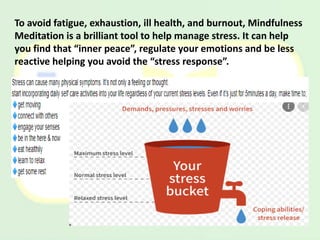
To avoid fatigue, exhaustion, ill health, and burnout, Mindfulness
Meditation is a brilliant tool to help manage stress. It can help
you find that “inner peace”, regulate your emotions and be less
reactive helping you avoid the “stress response”.
The Key Word Is….
BALANCE
Stress management
Stress management
Stress management
Stress management
Stress management
Stress management
Stress management
Stress management
Stress management

Stress management

  • 1.
  • 2.
    What Is Stress? Stressis the feeling of being overwhelmed or unable to cope with mental or emotional pressure and the body’s automatic response to any physical or mental demand placed on it. Adrenaline is a chemical naturally produced in our body as a response to stress .
  • 3.
    Is All StressBad? Moderate levels of stress may actually improve performance and efficiency Too little stress may result in boredom Too much stress may cause an unproductive anxiety level
  • 4.
    Good stress," orwhat psychologists refer to as "eustress," is the type of stress we feel when we are excited. Our pulse quickens and our hormones surge, but there is no threat or fear. We feel this type of stress when we ride a roller coaster, compete for a promotion, or go on a first date Good or Bad Stress?
  • 6.
  • 8.
  • 9.
  • 11.
    IDENTIFYING STRESSORS Situations, activities,and relationships that cause ‘trauma’ to one’s physical, emotional. •School •Work •Family •Relationships •Legal •Finances •Health/illness •Environment •Living Situation
  • 12.
    1. Physical - Weightgain/loss - Unexpected hair loss - Heart palpitations - High blood pressure 2. Emotional - Mood swings - Anxiety - Can lead to depression • Can also lead to unhealthy coping strategies (i.e. alcohol, drugs, etc)
  • 13.
    Stress Relief Strategies 1.Body relaxation exercises - breathing techniques - guided imagery 2. Physical exercise -yoga -work out routine 3. Meditation 4. Counseling -talk therapy -life coaching Managing Stress
  • 14.
    17 Simple Waysto Relieve Worry, Stress, and Anxiety 1. Go for a walk - People who exercise regularly are less likely to experience anxiety than those who don’t exercise. 2. Consider supplements -Several herbal and natural supplements help manage and relieve stress and anxiety. 3. Connect with nature -Spending time outside in nature is good for the body and the mind. It helps relieve feelings of worry, anxiety and stress. 4. Aromatherapy - Aromatherapy uses aromatic essential oils medicinally to improve the health of the body, mind, and spirit. It enhances both physical and emotional health. 5. Journaling - One way to handle stress is to write things down. Many studies have shown that journaling is a valuable tool to improve mental health. 6. Listen to soothing music - The soothing power of music is well-established. It affects our emotions and can be an extremely effective stress management tool. 7. Sing -Singing has been scientifically proven to lower stress, relieve anxiety, and elevate endorphins which make you feel uplifted and happy. 8. Laughter - Laughter stops distressing emotions. It helps you shift perspective, allowing you to see situations in a more realistic, less threatening light. 9. Connect with friends - Studies show that being socially connected increases happiness and leads to better health and a longer life. It helps overcome feelings of loneliness and isolation. 10. Just say “no” - Being selective about what you take on — and saying no to things that will unnecessarily add to your load — can reduce your stress levels.
  • 15.
    16. Serve others- Helping other people can help bring us outside ourselves. It can also help distract us from our own problems and think about something else 11. Avoid procrastination - Procrastination can lead you to act reactively, leaving you scrambling to catch up. This can cause stress, which negatively affects your health and sleep quality. 12. Pet the dog - Science shows that playing with or petting an animal can reduce stress and can also help us reduce feelings of isolation and help us feel more connected. 13. Mindfulness and meditation - Mindfulness is about paying attention to daily life and the things we typically rush through. It’s about turning down the volume in your mind by coming back to the body. 14. Practice abdominal breathing - generally, there are two types of breathing patterns: Thoracic (chest) breathing, Diaphragmatic (abdominal) breathing 15. Yoga and tai chi - Yoga has become a popular method of stress relief and exercise among all age groups. 17. Reduce caffeine intake - Caffeine may cause anxiety and panic in panic disorder patients and may aggravate the symptoms of premenstrual syndrome.
  • 16.
    How Stress makeburnout Burnout is a form of exhaustion caused by constantly feeling swamped. It's a result of excessive and prolonged emotional, physical, and mental stress. In many cases, burnout is related to one's job. Burnout happens when you're overwhelmed, emotionally drained, and unable to keep up with life's incessant demands.
  • 20.
    To avoid fatigue,exhaustion, ill health, and burnout, Mindfulness Meditation is a brilliant tool to help manage stress. It can help you find that “inner peace”, regulate your emotions and be less reactive helping you avoid the “stress response”.
  • 21.
    The Key WordIs…. BALANCE