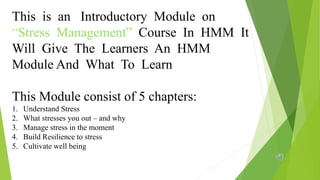
This is an Introductory Module on
“Stress Management” Course In HMM It
Will Give The Learners An HMM
Module And What To Learn
This Module consist of 5 chapters:
1. Understand Stress
2. What stresses you out – and why
3. Manage stress in the moment
4. Build Resilience to stress
5. Cultivate well being
What is Stress?
Stress is the body's response to any demand or challenge, whether
physical, mental, or emotional. It's a natural reaction that helps us adapt
and cope with life's pressures, but prolonged or excessive stress can
have negative impacts on our well-being.
SP
Reference:
https://images.app.goo.gl/sBP4Gzwwt9FYyzcN8
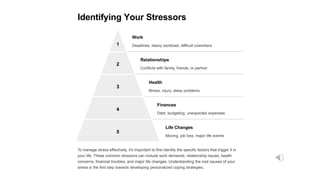
Identifying Your Stressors
1
Work
Deadlines, heavy workload, difficult coworkers
2
Relationships
Conflicts with family, friends, or partner
3
Health
Illness, injury, sleep problems
4
Finances
Debt, budgeting, unexpected expenses
5
Life Changes
Moving, job loss, major life events
To manage stress effectively, it's important to first identify the specific factors that trigger it in
your life. These common stressors can include work demands, relationship issues, health
concerns, financial troubles, and major life changes. Understanding the root causes of your
stress is the first step towards developing personalized coping strategies.
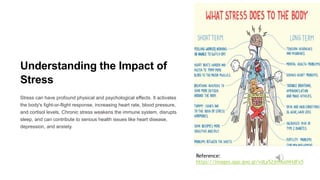
Understanding the Impact of
Stress
Stress can have profound physical and psychological effects. It activates
the body's fight-or-flight response, increasing heart rate, blood pressure,
and cortisol levels. Chronic stress weakens the immune system, disrupts
sleep, and can contribute to serious health issues like heart disease,
depression, and anxiety.
Reference:
https://images.app.goo.gl/vdLy52jHNusNHdFx5
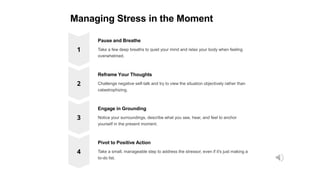
Managing Stress in the Moment
Pause and Breathe
Take a few deep breaths to quiet your mind and relax your body when feeling
overwhelmed.
Reframe Your Thoughts
Challenge negative self-talk and try to view the situation objectively rather than
catastrophizing.
Engage in Grounding
Notice your surroundings, describe what you see, hear, and feel to anchor
yourself in the present moment.
Pivot to Positive Action
Take a small, manageable step to address the stressor, even if it's just making a
to-do list.
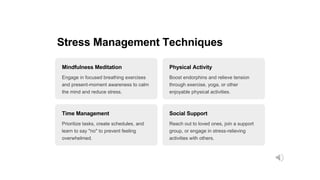
Stress Management Techniques
Mindfulness Meditation
Engage in focused breathing exercises
and present-moment awareness to calm
the mind and reduce stress.
Physical Activity
Boost endorphins and relieve tension
through exercise, yoga, or other
enjoyable physical activities.
Time Management
Prioritize tasks, create schedules, and
learn to say "no" to prevent feeling
overwhelmed.
Social Support
Reach out to loved ones, join a support
group, or engage in stress-relieving
activities with others.
Reference:
https://youtu.be/X3wi1I_2cR4?si=Bm-1v7Nb8JwB8-Aa
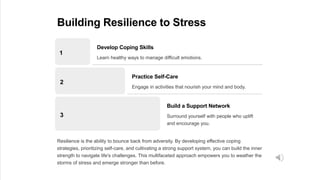
Building Resilience to Stress
1
Develop Coping Skills
Learn healthy ways to manage difficult emotions.
2
Practice Self-Care
Engage in activities that nourish your mind and body.
3
Build a Support Network
Surround yourself with people who uplift
and encourage you.
Resilience is the ability to bounce back from adversity. By developing effective coping
strategies, prioritizing self-care, and cultivating a strong support system, you can build the inner
strength to navigate life's challenges. This multifaceted approach empowers you to weather the
storms of stress and emerge stronger than before.
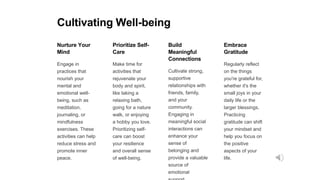
Cultivating Well-being
Nurture Your
Mind
Engage in
practices that
nourish your
mental and
emotional well-
being, such as
meditation,
journaling, or
mindfulness
exercises. These
activities can help
reduce stress and
promote inner
peace.
Prioritize Self-
Care
Make time for
activities that
rejuvenate your
body and spirit,
like taking a
relaxing bath,
going for a nature
walk, or enjoying
a hobby you love.
Prioritizing self-
care can boost
your resilience
and overall sense
of well-being.
Build
Meaningful
Connections
Cultivate strong,
supportive
relationships with
friends, family,
and your
community.
Engaging in
meaningful social
interactions can
enhance your
sense of
belonging and
provide a valuable
source of
emotional
Embrace
Gratitude
Regularly reflect
on the things
you're grateful for,
whether it's the
small joys in your
daily life or the
larger blessings.
Practicing
gratitude can shift
your mindset and
help you focus on
the positive
aspects of your
life.
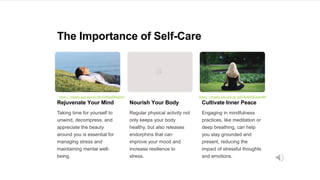
The Importance of Self-Care
Rejuvenate Your Mind
Taking time for yourself to
unwind, decompress, and
appreciate the beauty
around you is essential for
managing stress and
maintaining mental well-
being.
Nourish Your Body
Regular physical activity not
only keeps your body
healthy, but also releases
endorphins that can
improve your mood and
increase resilience to
stress.
Cultivate Inner Peace
Engaging in mindfulness
practices, like meditation or
deep breathing, can help
you stay grounded and
present, reducing the
impact of stressful thoughts
and emotions.
https://images.app.goo.gl/o5rUSMKasB8NqjSe9 https://images.app.goo.gl/no5TKs4ebQCgubwR9
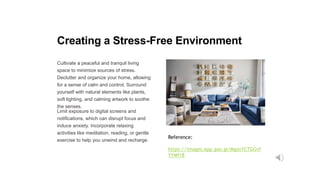
Creating a Stress-Free Environment
Cultivate a peaceful and tranquil living
space to minimize sources of stress.
Declutter and organize your home, allowing
for a sense of calm and control. Surround
yourself with natural elements like plants,
soft lighting, and calming artwork to soothe
the senses.
Limit exposure to digital screens and
notifications, which can disrupt focus and
induce anxiety. Incorporate relaxing
activities like meditation, reading, or gentle
exercise to help you unwind and recharge.
Reference:
https://images.app.goo.gl/MgsnYCTGGvf
YYMf18
Conclusion: A Life
Beyond Stress
With the strategies and techniques you've learned, you can build a life
free from the overwhelming burden of stress. By prioritizing self-care,
cultivating resilience, and creating a nurturing environment, you can
unlock a world of peace, fulfillment, and well-being.
Reference:
https://.app.goo.gl/qWws1zuH265Ns7t56
ppt shruti          stress.                      pptx

ppt shruti stress. pptx

  • 1.
    This is anIntroductory Module on “Stress Management” Course In HMM It Will Give The Learners An HMM Module And What To Learn This Module consist of 5 chapters: 1. Understand Stress 2. What stresses you out – and why 3. Manage stress in the moment 4. Build Resilience to stress 5. Cultivate well being
  • 2.
    What is Stress? Stressis the body's response to any demand or challenge, whether physical, mental, or emotional. It's a natural reaction that helps us adapt and cope with life's pressures, but prolonged or excessive stress can have negative impacts on our well-being. SP Reference: https://images.app.goo.gl/sBP4Gzwwt9FYyzcN8
  • 3.
    Identifying Your Stressors 1 Work Deadlines,heavy workload, difficult coworkers 2 Relationships Conflicts with family, friends, or partner 3 Health Illness, injury, sleep problems 4 Finances Debt, budgeting, unexpected expenses 5 Life Changes Moving, job loss, major life events To manage stress effectively, it's important to first identify the specific factors that trigger it in your life. These common stressors can include work demands, relationship issues, health concerns, financial troubles, and major life changes. Understanding the root causes of your stress is the first step towards developing personalized coping strategies.
  • 4.
    Understanding the Impactof Stress Stress can have profound physical and psychological effects. It activates the body's fight-or-flight response, increasing heart rate, blood pressure, and cortisol levels. Chronic stress weakens the immune system, disrupts sleep, and can contribute to serious health issues like heart disease, depression, and anxiety. Reference: https://images.app.goo.gl/vdLy52jHNusNHdFx5
  • 5.
    Managing Stress inthe Moment Pause and Breathe Take a few deep breaths to quiet your mind and relax your body when feeling overwhelmed. Reframe Your Thoughts Challenge negative self-talk and try to view the situation objectively rather than catastrophizing. Engage in Grounding Notice your surroundings, describe what you see, hear, and feel to anchor yourself in the present moment. Pivot to Positive Action Take a small, manageable step to address the stressor, even if it's just making a to-do list.
  • 6.
    Stress Management Techniques MindfulnessMeditation Engage in focused breathing exercises and present-moment awareness to calm the mind and reduce stress. Physical Activity Boost endorphins and relieve tension through exercise, yoga, or other enjoyable physical activities. Time Management Prioritize tasks, create schedules, and learn to say "no" to prevent feeling overwhelmed. Social Support Reach out to loved ones, join a support group, or engage in stress-relieving activities with others.
  • 7.
  • 8.
    Building Resilience toStress 1 Develop Coping Skills Learn healthy ways to manage difficult emotions. 2 Practice Self-Care Engage in activities that nourish your mind and body. 3 Build a Support Network Surround yourself with people who uplift and encourage you. Resilience is the ability to bounce back from adversity. By developing effective coping strategies, prioritizing self-care, and cultivating a strong support system, you can build the inner strength to navigate life's challenges. This multifaceted approach empowers you to weather the storms of stress and emerge stronger than before.
  • 9.
    Cultivating Well-being Nurture Your Mind Engagein practices that nourish your mental and emotional well- being, such as meditation, journaling, or mindfulness exercises. These activities can help reduce stress and promote inner peace. Prioritize Self- Care Make time for activities that rejuvenate your body and spirit, like taking a relaxing bath, going for a nature walk, or enjoying a hobby you love. Prioritizing self- care can boost your resilience and overall sense of well-being. Build Meaningful Connections Cultivate strong, supportive relationships with friends, family, and your community. Engaging in meaningful social interactions can enhance your sense of belonging and provide a valuable source of emotional Embrace Gratitude Regularly reflect on the things you're grateful for, whether it's the small joys in your daily life or the larger blessings. Practicing gratitude can shift your mindset and help you focus on the positive aspects of your life.
  • 10.
    The Importance ofSelf-Care Rejuvenate Your Mind Taking time for yourself to unwind, decompress, and appreciate the beauty around you is essential for managing stress and maintaining mental well- being. Nourish Your Body Regular physical activity not only keeps your body healthy, but also releases endorphins that can improve your mood and increase resilience to stress. Cultivate Inner Peace Engaging in mindfulness practices, like meditation or deep breathing, can help you stay grounded and present, reducing the impact of stressful thoughts and emotions. https://images.app.goo.gl/o5rUSMKasB8NqjSe9 https://images.app.goo.gl/no5TKs4ebQCgubwR9
  • 11.
    Creating a Stress-FreeEnvironment Cultivate a peaceful and tranquil living space to minimize sources of stress. Declutter and organize your home, allowing for a sense of calm and control. Surround yourself with natural elements like plants, soft lighting, and calming artwork to soothe the senses. Limit exposure to digital screens and notifications, which can disrupt focus and induce anxiety. Incorporate relaxing activities like meditation, reading, or gentle exercise to help you unwind and recharge. Reference: https://images.app.goo.gl/MgsnYCTGGvf YYMf18
  • 12.
    Conclusion: A Life BeyondStress With the strategies and techniques you've learned, you can build a life free from the overwhelming burden of stress. By prioritizing self-care, cultivating resilience, and creating a nurturing environment, you can unlock a world of peace, fulfillment, and well-being. Reference: https://.app.goo.gl/qWws1zuH265Ns7t56