Human male reproductive system consist of
 The primary sex organ i.e., a pair of testes
 The secondary sex organs i.e., the duct
system
 Accessory glands and
 External genetalia
 The testes are located outside the abdominal cavity (extra-
abdominal) within a pouch called scrotum, scrotum provides a
temperature 2-2.5 C lower than the body temperature
necessary for spermatogenesis.
 Each testis is oval in shape and measures about 4 to 5 cm in
length, 2-3 cm in width and about 3 cm in thickness.
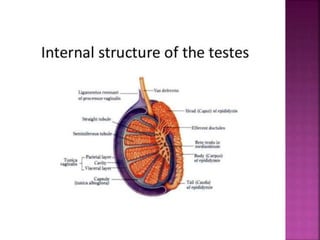
 The testis is covered by a a dense covering, called tunica
albuginea.
 Internally the testis is divided into about 250 compartments,
called testicular lobules.
 Each lobule contains 1-3 highly coiled seminiferous tubules in
which sperms are produced.
 The seminiferous tubule has a tunic of connective tissue and is
internally lined by seminiferous germinal epithelium.
 The seminiferous epithelium consist of two types of cells:
(a) Sertoli cells (b) spermatogonia
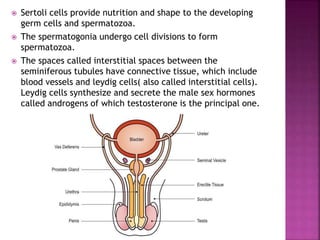
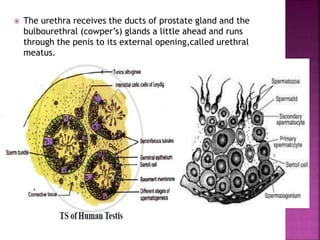
 Sertoli cells provide nutrition and shape to the developing
germ cells and spermatozoa.
 The spermatogonia undergo cell divisions to form
spermatozoa.
 The spaces called interstitial spaces between the
seminiferous tubules have connective tissue, which include
blood vessels and leydig cells( also called interstitial cells).
Leydig cells synthesize and secrete the male sex hormones
called androgens of which testosterone is the principal one.
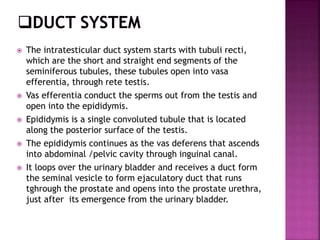
 The intratesticular duct system starts with tubuli recti,
which are the short and straight end segments of the
seminiferous tubules, these tubules open into vasa
efferentia, through rete testis.
 Vas efferentia conduct the sperms out from the testis and
open into the epididymis.
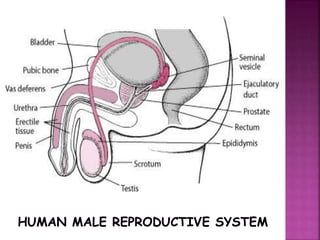
 Epididymis is a single convoluted tubule that is located
along the posterior surface of the testis.
 The epididymis continues as the vas deferens that ascends
into abdominal /pelvic cavity through inguinal canal.
 It loops over the urinary bladder and receives a duct form
the seminal vesicle to form ejaculatory duct that runs
tghrough the prostate and opens into the prostate urethra,
just after its emergence from the urinary bladder.
 The urethra receives the ducts of prostate gland and the
bulbourethral (cowper’s) glands a little ahead and runs
through the penis to its external opening,called urethral
meatus.
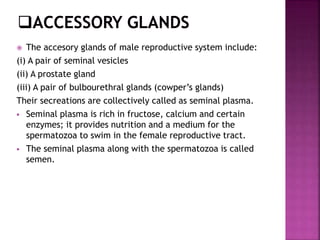
 The accesory glands of male reproductive system include:
(i) A pair of seminal vesicles
(ii) A prostate gland
(iii) A pair of bulbourethral glands (cowper’s glands)
Their secreations are collectively called as seminal plasma.
 Seminal plasma is rich in fructose, calcium and certain
enzymes; it provides nutrition and a medium for the
spermatozoa to swim in the female reproductive tract.
 The seminal plasma along with the spermatozoa is called
semen.
 Penis is the external genitalia in human
males.
 It is made up of special erectile tissue, that
help in erection of the penis to facilitate
insemination.
 The enlarged tip of the penis is called glans
penis, it is covered by a loose fold of skin,
called foreskin or prepuce.
1.Write location and function of Sertoli cells in
humans.
2.Mention the location and the function of
Leydig cells in humans.
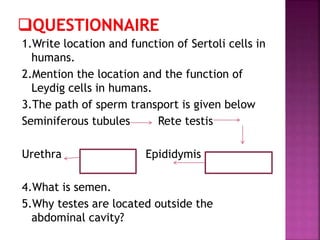
3.The path of sperm transport is given below
Seminiferous tubules Rete testis
Urethra Epididymis
4.What is semen.
5.Why testes are located outside the
abdominal cavity?

Reproduction in human 1

  • 2.
    Human male reproductivesystem consist of  The primary sex organ i.e., a pair of testes  The secondary sex organs i.e., the duct system  Accessory glands and  External genetalia
  • 4.
     The testesare located outside the abdominal cavity (extra- abdominal) within a pouch called scrotum, scrotum provides a temperature 2-2.5 C lower than the body temperature necessary for spermatogenesis.  Each testis is oval in shape and measures about 4 to 5 cm in length, 2-3 cm in width and about 3 cm in thickness.  The testis is covered by a a dense covering, called tunica albuginea.  Internally the testis is divided into about 250 compartments, called testicular lobules.  Each lobule contains 1-3 highly coiled seminiferous tubules in which sperms are produced.  The seminiferous tubule has a tunic of connective tissue and is internally lined by seminiferous germinal epithelium.  The seminiferous epithelium consist of two types of cells: (a) Sertoli cells (b) spermatogonia
  • 6.
     Sertoli cellsprovide nutrition and shape to the developing germ cells and spermatozoa.  The spermatogonia undergo cell divisions to form spermatozoa.  The spaces called interstitial spaces between the seminiferous tubules have connective tissue, which include blood vessels and leydig cells( also called interstitial cells). Leydig cells synthesize and secrete the male sex hormones called androgens of which testosterone is the principal one.
  • 7.
     The intratesticularduct system starts with tubuli recti, which are the short and straight end segments of the seminiferous tubules, these tubules open into vasa efferentia, through rete testis.  Vas efferentia conduct the sperms out from the testis and open into the epididymis.  Epididymis is a single convoluted tubule that is located along the posterior surface of the testis.  The epididymis continues as the vas deferens that ascends into abdominal /pelvic cavity through inguinal canal.  It loops over the urinary bladder and receives a duct form the seminal vesicle to form ejaculatory duct that runs tghrough the prostate and opens into the prostate urethra, just after its emergence from the urinary bladder.
  • 8.
     The urethrareceives the ducts of prostate gland and the bulbourethral (cowper’s) glands a little ahead and runs through the penis to its external opening,called urethral meatus.
  • 9.
     The accesoryglands of male reproductive system include: (i) A pair of seminal vesicles (ii) A prostate gland (iii) A pair of bulbourethral glands (cowper’s glands) Their secreations are collectively called as seminal plasma.  Seminal plasma is rich in fructose, calcium and certain enzymes; it provides nutrition and a medium for the spermatozoa to swim in the female reproductive tract.  The seminal plasma along with the spermatozoa is called semen.
  • 10.
     Penis isthe external genitalia in human males.  It is made up of special erectile tissue, that help in erection of the penis to facilitate insemination.  The enlarged tip of the penis is called glans penis, it is covered by a loose fold of skin, called foreskin or prepuce.
  • 11.
    1.Write location andfunction of Sertoli cells in humans. 2.Mention the location and the function of Leydig cells in humans. 3.The path of sperm transport is given below Seminiferous tubules Rete testis Urethra Epididymis 4.What is semen. 5.Why testes are located outside the abdominal cavity?