ASSERTIVENESS IN
NURSING
Presented By,
Ms. Ekta. S. Patel,
1st Year M.Sc Nursing,
 Assertiveness is defined as, “it is the
quality of being self-assured and confident
without being aggressive.”
 Assertiveness is to find best possible
solution for all people.
 Assertiveness increases the chance of
nurses needs being met.
 Assertiveness is allowing nurses to remain
in control.
 Assertiveness brings greater self
confidence among nurses.
 Assertiveness reduces the stress among
nurses.
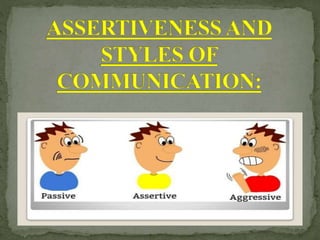
PASSIVE COMMUNICATION:
It is a style in which individuals have
developed a pattern of avoiding
expressing their opinions or feelings,
protecting their rights.
Passive communication is usually born of
low self-esteem.
The impact of a pattern of passive
communication is that these individuals:
 Often feel anxious because life seems out
of their control.
 Often feel depressed because they feel
stuck and hopeless.
 Often feel confused because they ignore
their own feelings.

AGGRESSIVE
COMMUNICATION:
It is a style in which individuals
express their feelings and opinions and
advocate for their needs in a way that
violates the rights of others.
Thus, aggressive communicators
are verbally and/or physically abusive.
The impact of a pattern of aggressive
communication is that these individuals:
 Become alienated from others.
 Generate fear and hatred in others.
 Always blame others instead of owning
their issues, and thus are unable to
mature.
ASSERTIVE
COMMUNICATION:
It is a style in which individuals
clearly state their opinions and feelings, and
firmly advocate for their rights and needs
without violating the rights of others.
Assertive communication is born of
high self-esteem.
The impact of a pattern of assertive
communication is that these individuals:
 Feel connected to others.
 Feel in control of their lives.
 Create a respectful environment for others
to grow and mature.
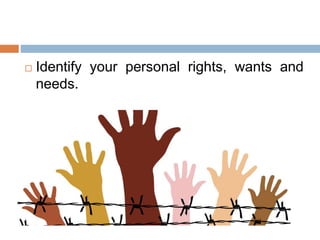
 Identify your personal rights, wants and
needs.
 Identify how you feel about particular
situation.
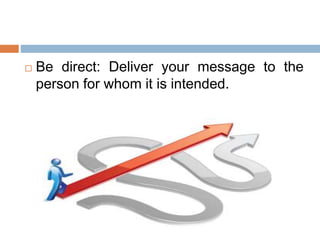
 Be direct: Deliver your message to the
person for whom it is intended.
 Own your message: In describing your
feeling use ‘I’ statement to express your
feeling instead of evaluating or blaming
others.
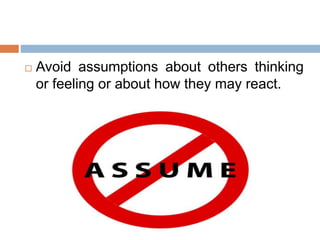
 Avoid assumptions about others thinking
or feeling or about how they may react.
 Avoid statement that begins with ‘why’ and
‘you’.
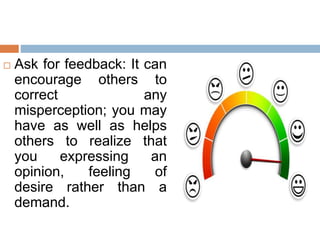
 Ask for feedback: It can
encourage others to
correct any
misperception; you may
have as well as helps
others to realize that
you expressing an
opinion, feeling of
desire rather than a
demand.
 Stop apologizing all the time
 Learn to take compliment
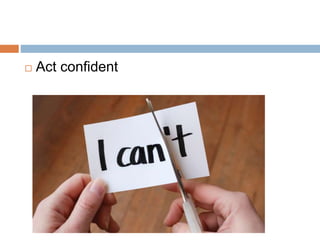
 Act confident
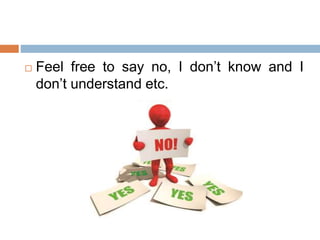
 Feel free to say no, I don’t know and I
don’t understand etc.
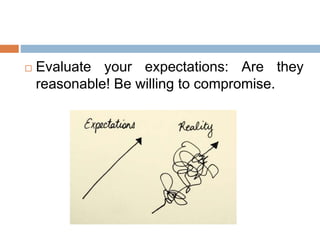
 Evaluate your expectations: Are they
reasonable! Be willing to compromise.
 Assertiveness is an important issue in
nursing practice.
 Education program in assertiveness
knowledge and skills have been vague for
sometime in nursing because nurses have
recognized need for assertiveness in
quality nursing care.
 Nursing hospitals involves negotiating
complex interpersonal relationship and
working in a social and political context
with in economic constraints, while
balancing a multiplicity of tasks and
roles, nurses are busy clinicians who
need to have a broad range of clinical
knowledge and skills and they are
accountable to many people.
 Nurses has more on their minds than just
helping patients every day they are
confronted with challenges such as
communication issues and high stress
levels.
 Nursing students will need assertiveness
and it will be up to the individual to adjust his
behavior in order to obtain a job or
promotion, to develop a carrier to
increase her confidence.
 Maintaining diaries and role playing
helps us to become more assertive. Use
diaries to track situations you have
encountered where you did not behave
assertively. Identify the situation, describe
in detail what happened and your level of
anxiety during the encounter and identify
what you wish had happened.
 Use entries in your diary to role playing in
your situations that cause your problems.
You can role play with your family and
friends and alone. To make exercise
effectively, you should choose a situation
you may have to deal with.
 As nurse works in different situations, they
have to be assertive in order to meet the
challenges and to win the cooperation
from others.
Summary
Introduction
Definition
Aims of assertiveness
Styles of communication
Model of assertiveness
Techniques of being
assertive
Assertiveness and
nursing
 What is meaning of assertiveness?
 What are styles of communication in
assertiveness?
 What are the techniques for being
assertive?
 Topic: Basic human rights.
Submission date: 10/08/2017
Thank You!!!

assertiveness in nursing

  • 1.
    ASSERTIVENESS IN NURSING Presented By, Ms.Ekta. S. Patel, 1st Year M.Sc Nursing,
  • 4.
     Assertiveness isdefined as, “it is the quality of being self-assured and confident without being aggressive.”
  • 6.
     Assertiveness isto find best possible solution for all people.  Assertiveness increases the chance of nurses needs being met.  Assertiveness is allowing nurses to remain in control.  Assertiveness brings greater self confidence among nurses.  Assertiveness reduces the stress among nurses.
  • 8.
    PASSIVE COMMUNICATION: It isa style in which individuals have developed a pattern of avoiding expressing their opinions or feelings, protecting their rights. Passive communication is usually born of low self-esteem.
  • 9.
    The impact ofa pattern of passive communication is that these individuals:  Often feel anxious because life seems out of their control.  Often feel depressed because they feel stuck and hopeless.  Often feel confused because they ignore their own feelings.
  • 10.
    AGGRESSIVE COMMUNICATION: It is astyle in which individuals express their feelings and opinions and advocate for their needs in a way that violates the rights of others. Thus, aggressive communicators are verbally and/or physically abusive.


  • 11.
    The impact ofa pattern of aggressive communication is that these individuals:  Become alienated from others.  Generate fear and hatred in others.  Always blame others instead of owning their issues, and thus are unable to mature.
  • 12.
    ASSERTIVE COMMUNICATION: It is astyle in which individuals clearly state their opinions and feelings, and firmly advocate for their rights and needs without violating the rights of others. Assertive communication is born of high self-esteem.
  • 13.
    The impact ofa pattern of assertive communication is that these individuals:  Feel connected to others.  Feel in control of their lives.  Create a respectful environment for others to grow and mature.
  • 17.
     Identify yourpersonal rights, wants and needs.
  • 18.
     Identify howyou feel about particular situation.
  • 19.
     Be direct:Deliver your message to the person for whom it is intended.
  • 20.
     Own yourmessage: In describing your feeling use ‘I’ statement to express your feeling instead of evaluating or blaming others.
  • 21.
     Avoid assumptionsabout others thinking or feeling or about how they may react.
  • 22.
     Avoid statementthat begins with ‘why’ and ‘you’.
  • 23.
     Ask forfeedback: It can encourage others to correct any misperception; you may have as well as helps others to realize that you expressing an opinion, feeling of desire rather than a demand.
  • 24.
  • 25.
     Learn totake compliment
  • 26.
  • 27.
     Feel freeto say no, I don’t know and I don’t understand etc.
  • 28.
     Evaluate yourexpectations: Are they reasonable! Be willing to compromise.
  • 30.
     Assertiveness isan important issue in nursing practice.  Education program in assertiveness knowledge and skills have been vague for sometime in nursing because nurses have recognized need for assertiveness in quality nursing care.
  • 31.
     Nursing hospitalsinvolves negotiating complex interpersonal relationship and working in a social and political context with in economic constraints, while balancing a multiplicity of tasks and roles, nurses are busy clinicians who need to have a broad range of clinical knowledge and skills and they are accountable to many people.
  • 32.
     Nurses hasmore on their minds than just helping patients every day they are confronted with challenges such as communication issues and high stress levels.  Nursing students will need assertiveness and it will be up to the individual to adjust his behavior in order to obtain a job or promotion, to develop a carrier to increase her confidence.
  • 33.
     Maintaining diariesand role playing helps us to become more assertive. Use diaries to track situations you have encountered where you did not behave assertively. Identify the situation, describe in detail what happened and your level of anxiety during the encounter and identify what you wish had happened.
  • 34.
     Use entriesin your diary to role playing in your situations that cause your problems. You can role play with your family and friends and alone. To make exercise effectively, you should choose a situation you may have to deal with.
  • 36.
     As nurseworks in different situations, they have to be assertive in order to meet the challenges and to win the cooperation from others.
  • 37.
    Summary Introduction Definition Aims of assertiveness Stylesof communication Model of assertiveness Techniques of being assertive Assertiveness and nursing
  • 40.
     What ismeaning of assertiveness?  What are styles of communication in assertiveness?  What are the techniques for being assertive?
  • 42.
     Topic: Basichuman rights. Submission date: 10/08/2017
  • 43.