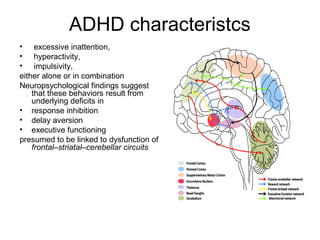
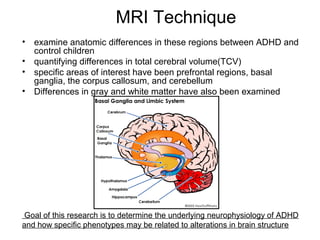
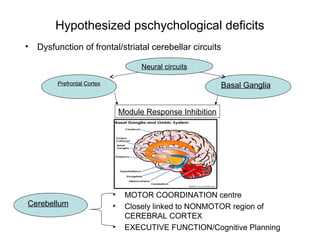
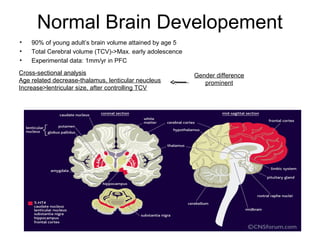
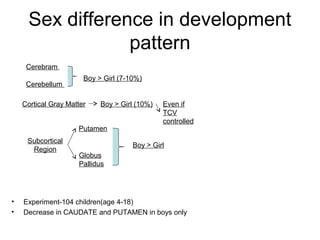
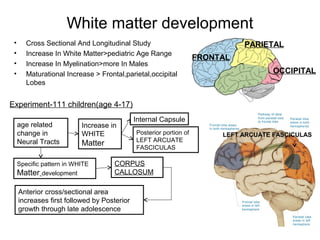
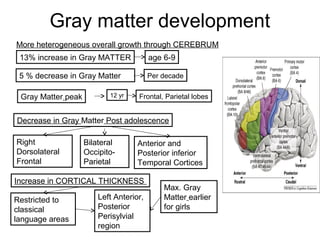
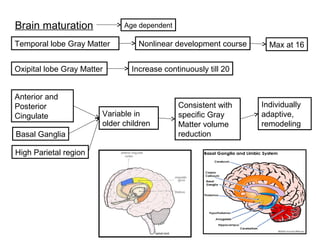
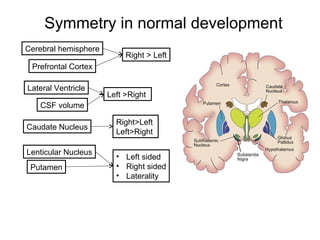
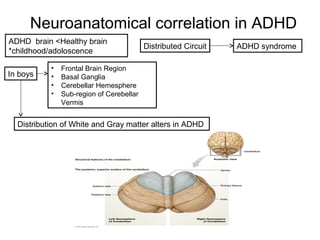
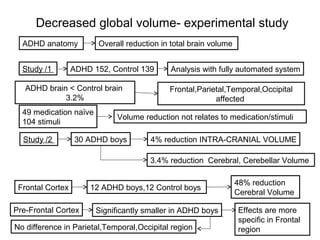
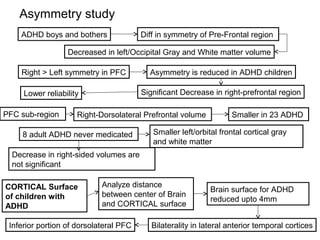
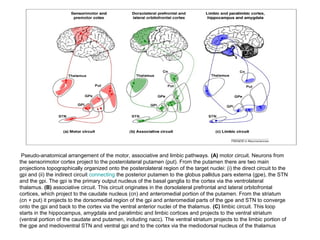
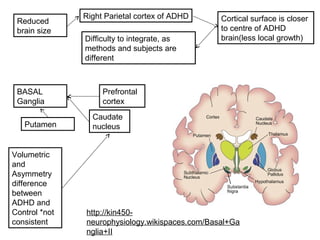
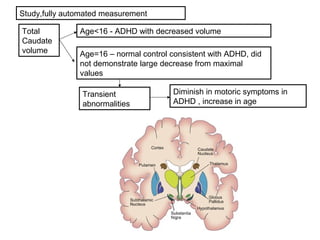
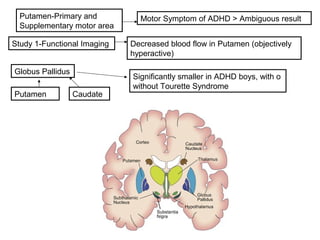
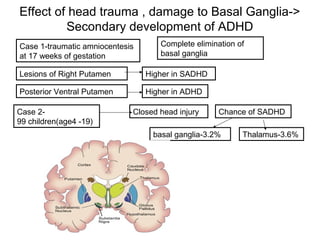
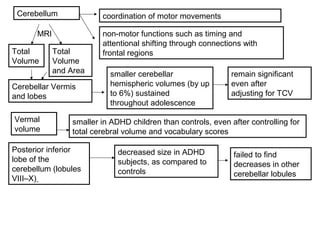
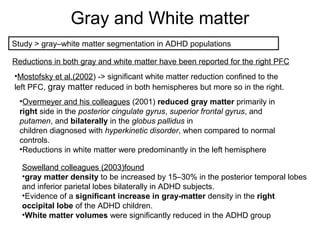
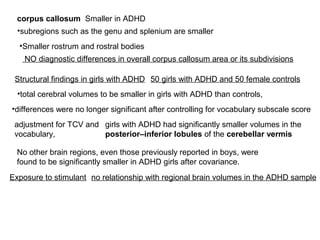
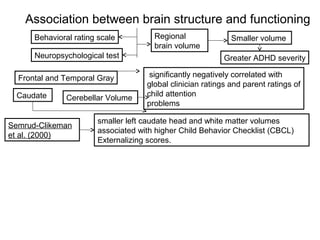
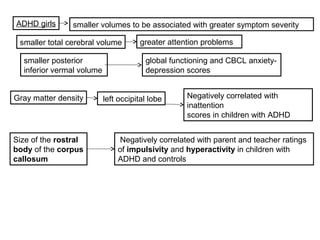
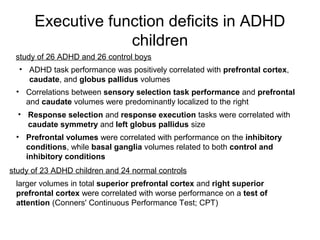
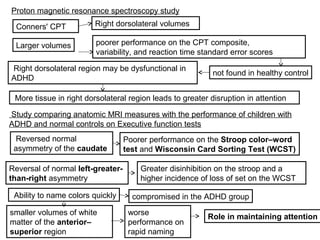
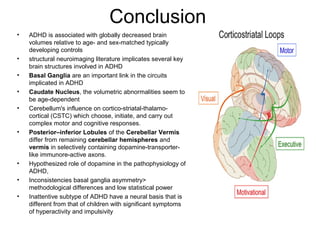
This document explores the neurophysiology of ADHD, detailing its characteristics such as inattention, hyperactivity, and impulsivity linked to deficits in brain functions. It discusses MRI findings highlighting anatomical differences in children with ADHD compared to controls, specifically in the frontal-striatal-cerebellar circuits, and emphasizes age and sex differences in brain development related to ADHD. The research suggests globally decreased brain volumes in ADHD and emphasizes the importance of the basal ganglia and cerebellum in the disorder's pathophysiology.


![ADHD (best)]](https://cdn.slidesharecdn.com/ss_thumbnails/bykhaihojoshuagabriel1-1234763718979961-1-thumbnail.jpg?width=640&height=640&fit=bounds)


![ANIMAL_CELL_,_TISSUE_AND_ORGAN_CULTURE[1].pptx](https://cdn.slidesharecdn.com/ss_thumbnails/animalcelltissueandorganculture1-260204172026-4462b440-thumbnail.jpg?width=640&height=640&fit=bounds)


