Calculating pA2 and pD2'
Values
In pharmacology, pA2 and pD2' values are used to measure
the potency of antagonists.
Here's how to calculate them.
Dr. Shivankan Kakkar, M.D.
Two Types of Antagonists
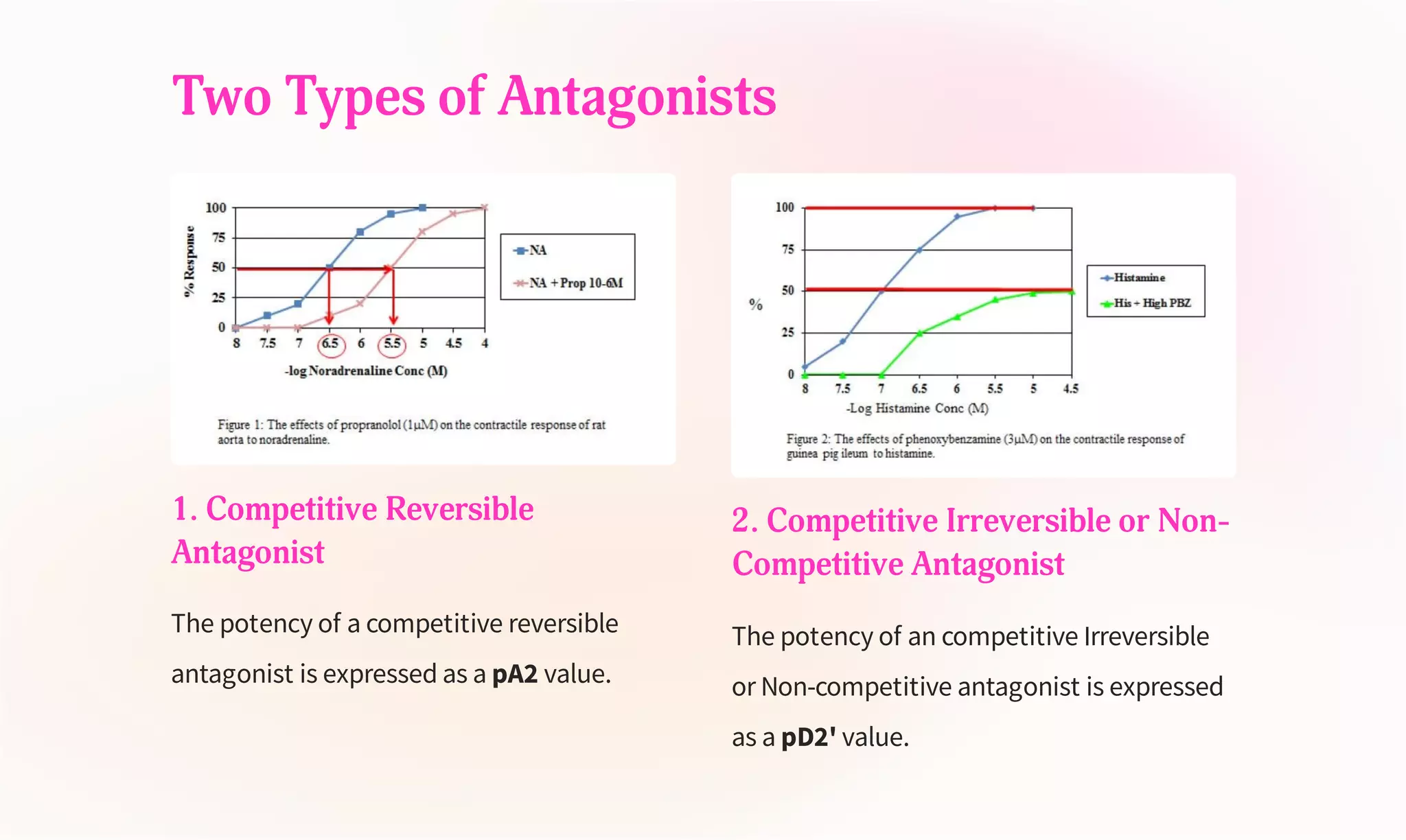
1. Competitive Reversible
Antagonist
The potency of a competitive reversible
antagonist is expressed as a pA2 value.
2. Competitive Irreversible or Non-
Competitive Antagonist
The potency of an competitive Irreversible
or Non-competitive antagonist is expressed
as a pD2' value.
pD2 vs. pD2' Values
pD2
Measures the potency of an agonist.
pD2'
Measures the potency of an antagonist.
Remember, it's important not to confuse *pD2 and pD2' values. They measure different
things!
Note:-
*pD2=the negative logarithm of an **EC50
**EC50= the concentration (or dose) effective in producing 50% of the maximal
response
Exercise 1: pA2 Calculation
Potency of a Competitive Reversible
Antagonist
pA2 Calculation
The potency of a competitive reversible antagonist is expressed as a pA2 value.
The pA2 value is the negative logarithm of the molar concentration of antagonist
which causes a twofold shift of the concentration-response curve for agonist.
The larger the pA2 value, the more potent the antagonist.
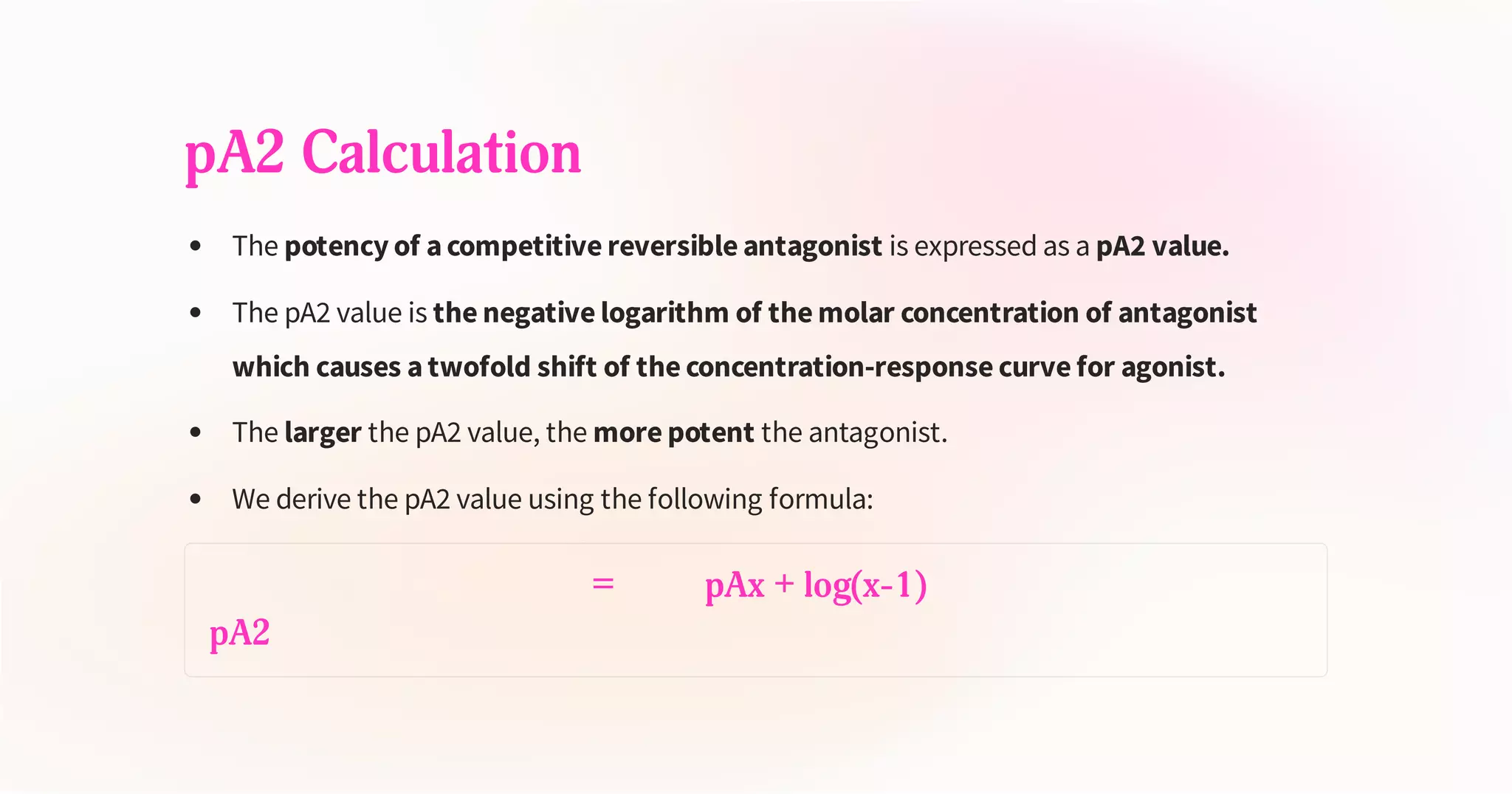
We derive the pA2 value using the following formula:
pA2
= pAx + log(x-1)
pA2 Calculation Formula
pA2 = pAx + log(x-1)
Here,
x = Concentration Ratio
pAx = —log[antagonist conc]
Using the formula and the dose-response curves, we'll calculate the pA2 value of the
antagonist.
Calculating Concentration Ratio
The concentration ratio of the antagonist is derived from the ratio of the concentration of
agonist that gives the same response in the presence and absence of the antagonist.We
can derive the concentration ratio using either *pD2 or **EC50 values:
Concentration-ratio 'x'= Antilog [ pD2 (absence) — pD2 (presence) ]
or
Concentration-ratio 'x'= EC50 (presence) / EC50 (absence)
Note:-
*pD2=the negative logarithm of an **EC50
**EC50= the concentration (or dose) effective in producing 50% of the maximal response
Calculating pA2 Values
1 Step 1
Determine the pD2/EC50 values in the presence and absence of antagonist.
2 Step 2
Calculate the concentration ratio using the concentration values.
3 Step 3
Calculate pAx using the antagonist concentration.
4 Step 4
Calculate the pA2 value using the formula.
Now, let's see how we can calculate pA2 values using these steps.
Steps in pA2 Value Calculation
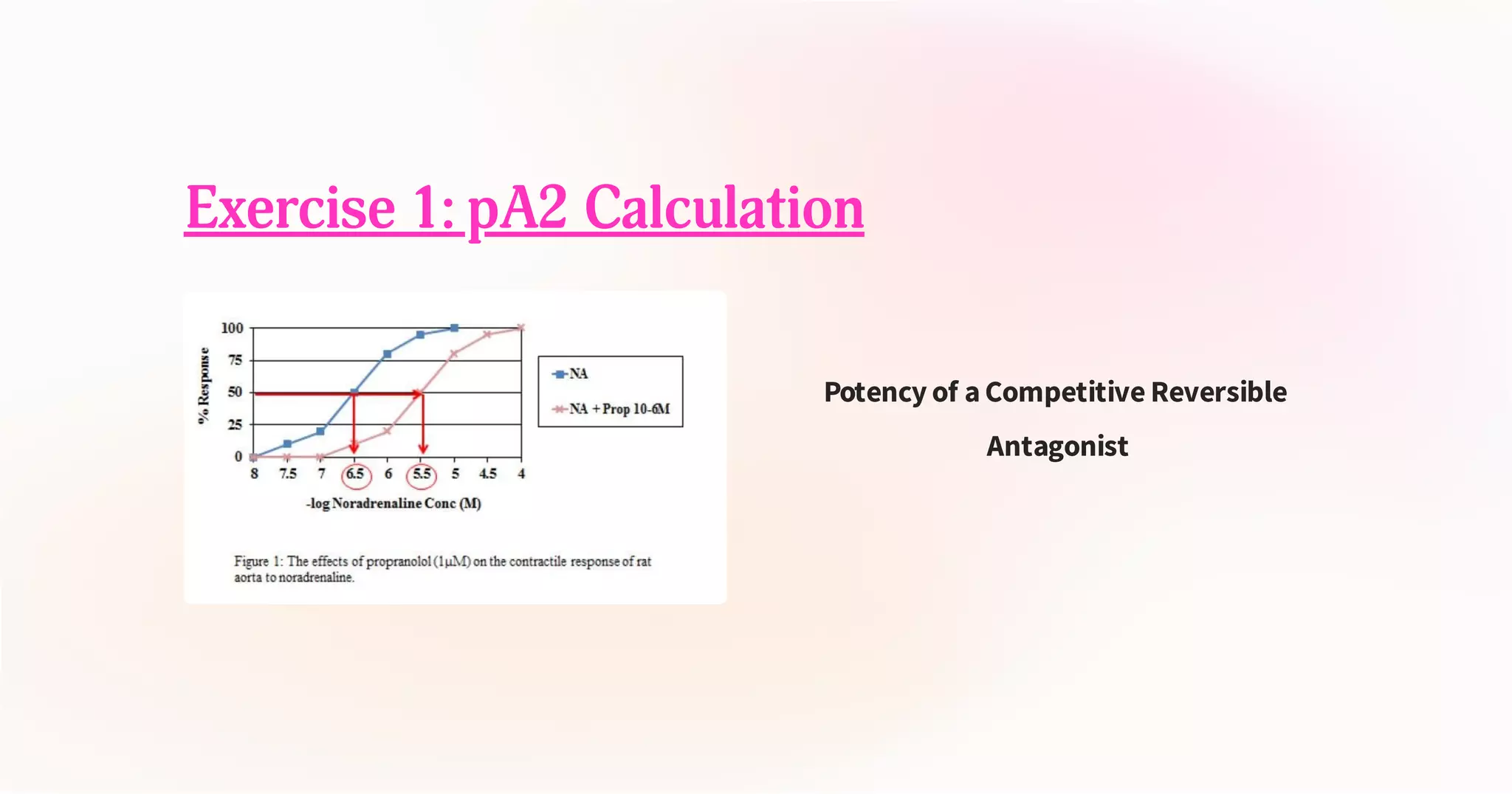
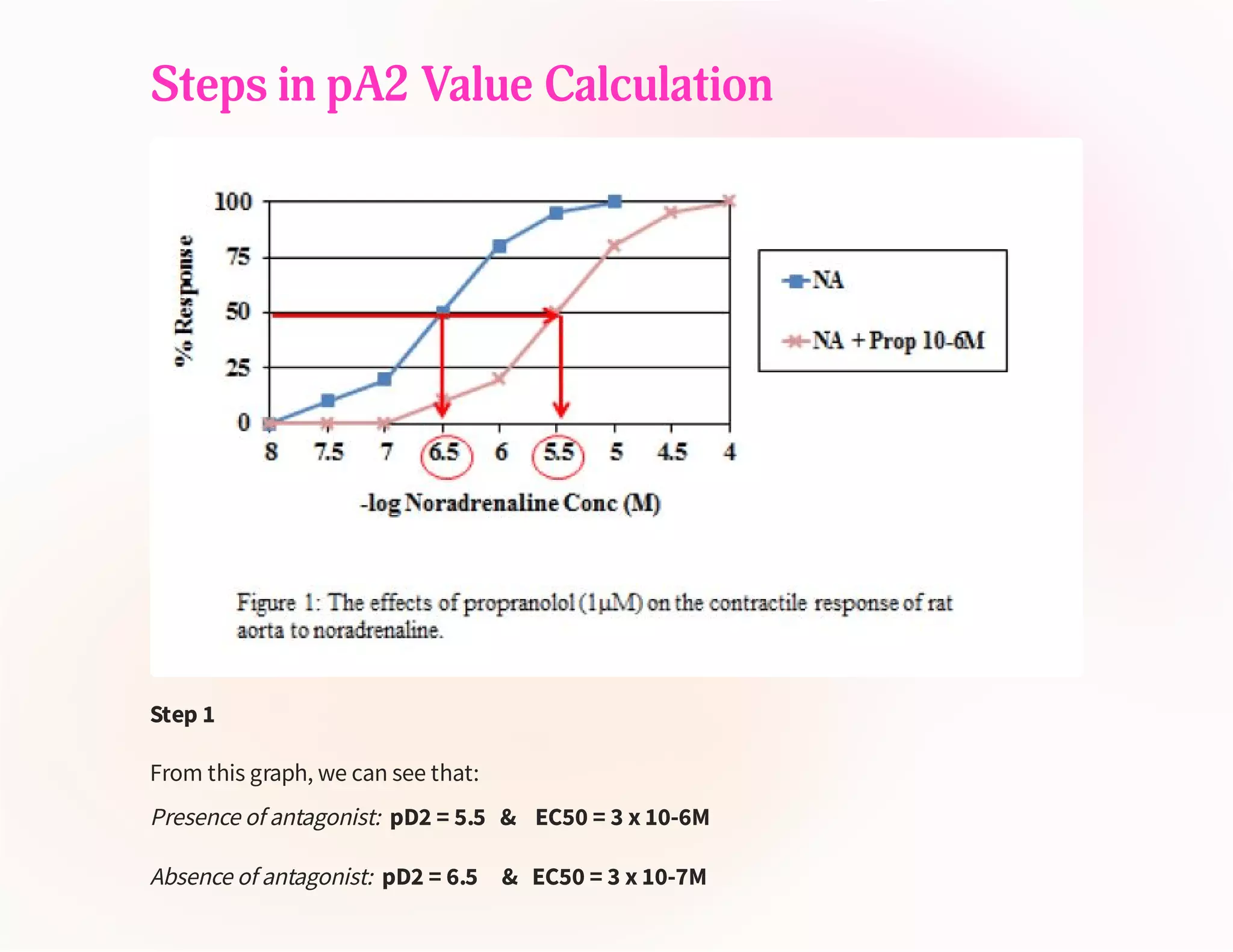
Step 1
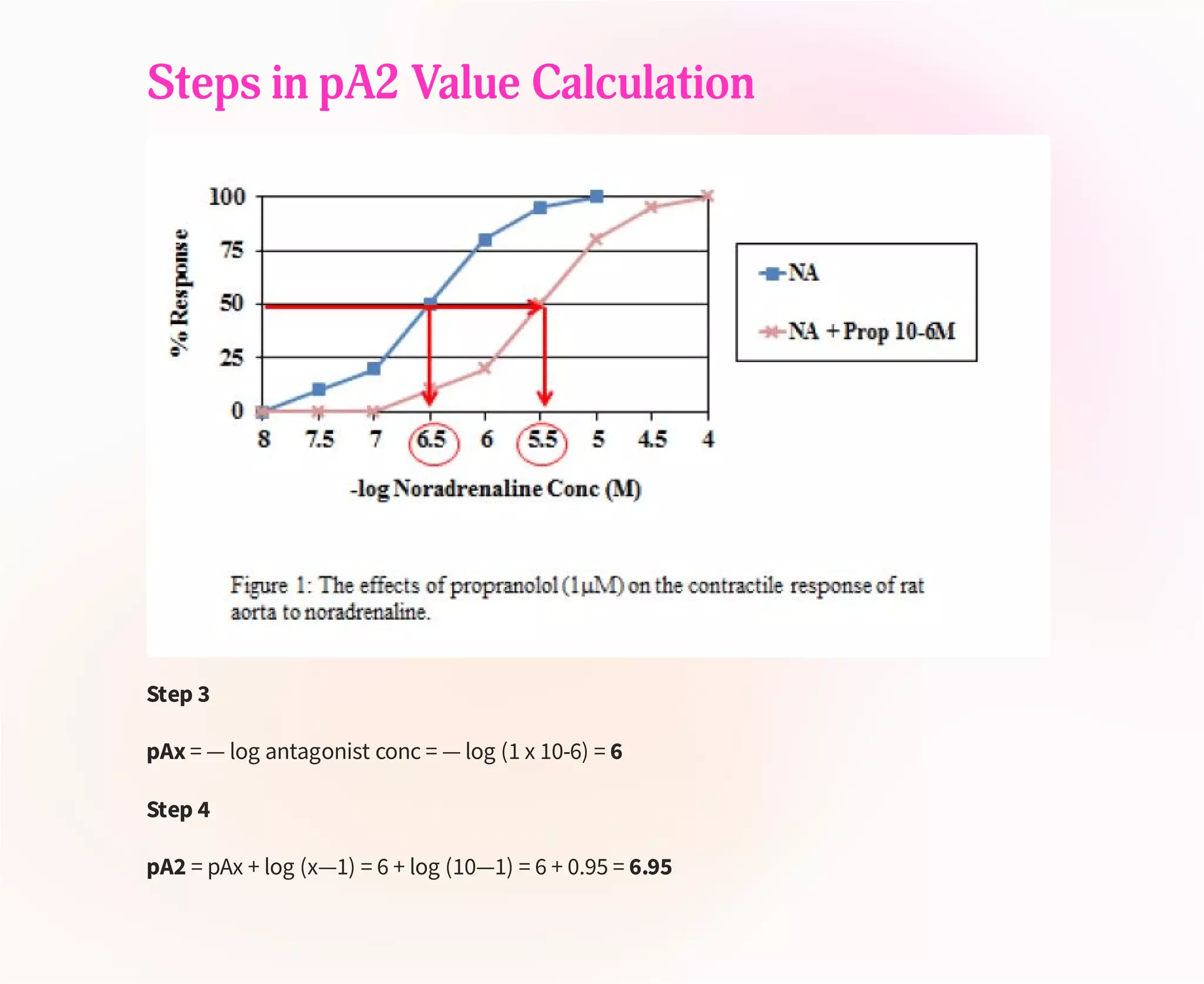
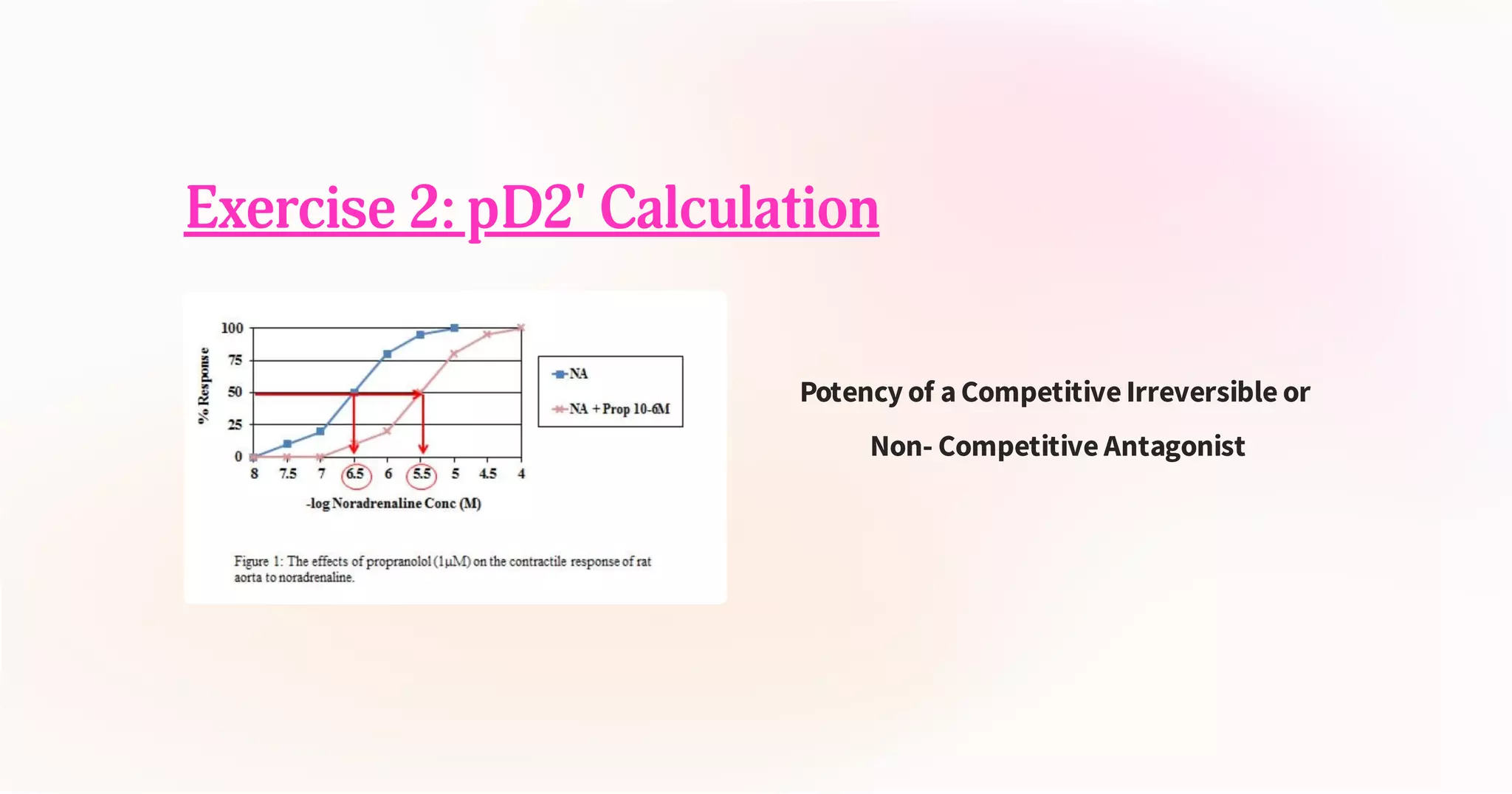
From this graph, we can see that:
Presence of antagonist: pD2 = 5.5 & EC50 = 3 x 10⁻⁶M
Absence of antagonist: pD2 = 6.5 & EC50 = 3 x 10⁻⁷M
Steps in pA2 Value Calculation
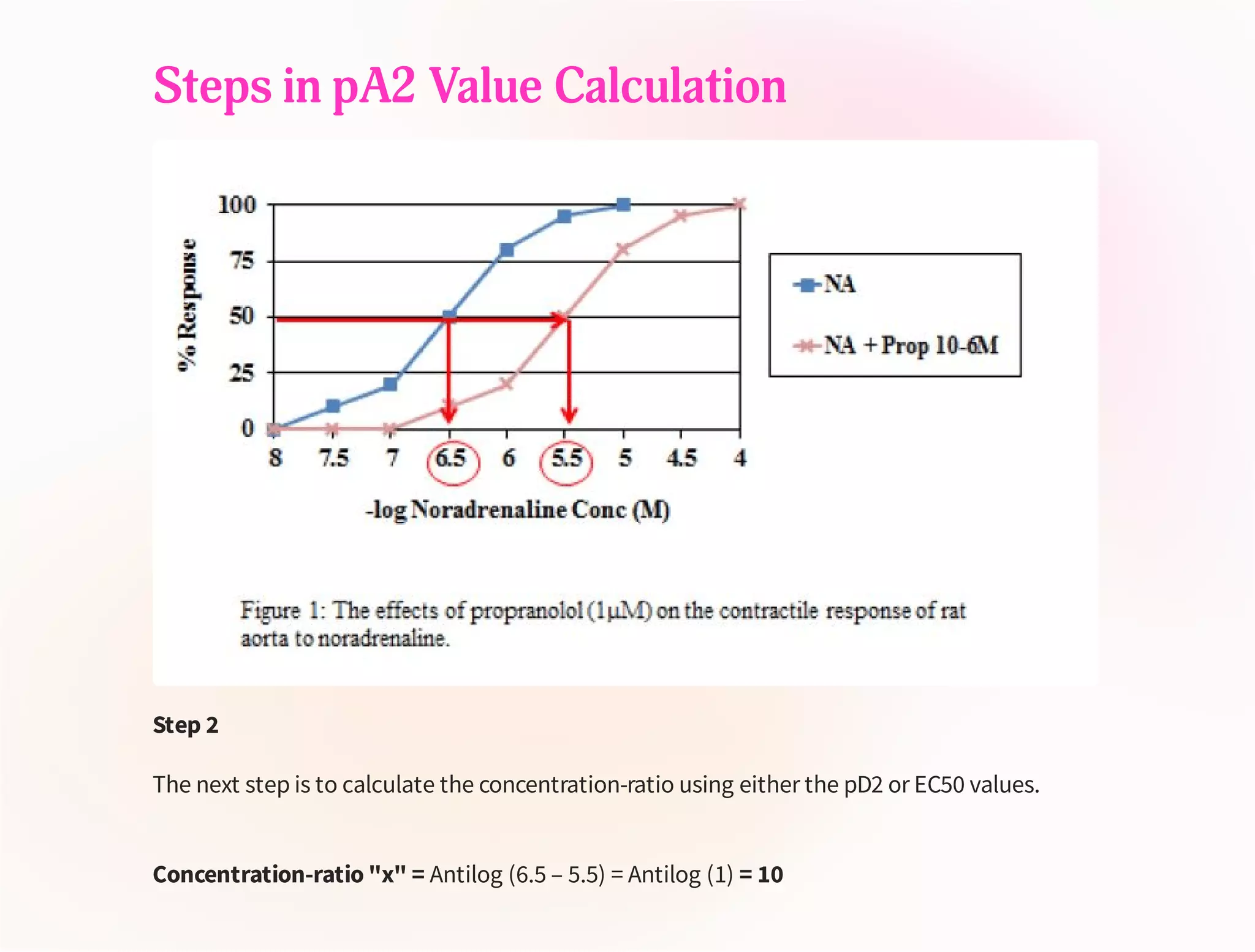
Step 2
The next step is to calculate the concentration-ratio using either the pD2 or EC50 values.
Concentration-ratio "x" = Antilog (6.5 – 5.5) = Antilog (1) = 10
Steps in pA2 Value Calculation
Step 3
pAx = — log antagonist conc = — log (1 x 10⁻⁶) = 6
Step 4
pA2 = pAx + log (x—1) = 6 + log (10—1) = 6 + 0.95 = 6.95
Exercise 2: pD2' Calculation
Potency of a Competitive Irreversible or
Non- Competitive Antagonist
pD2' Calculation
The pD2' value is a measure of the potency of a competitive irreversible or non-
competitive antagonist.
The pD2’ value is the negative logarithm of the molar concentration of antagonist which
causes a halving of the maximal response of the agonist.
The larger the pD2’ value, the more potent the antagonist. The formula we use to derive a
pD2' value is:
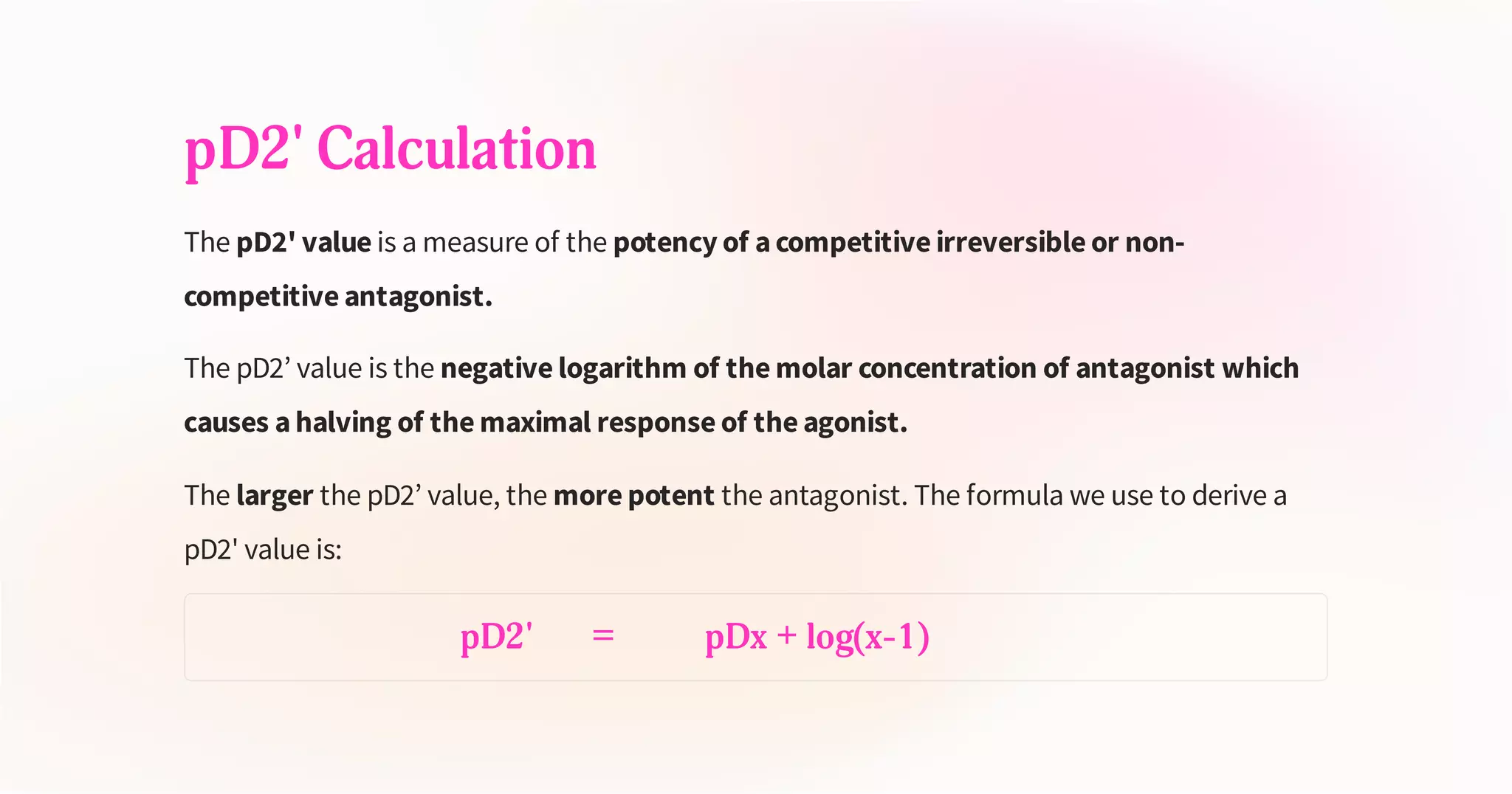
pD2' = pDx + log(x-1)
pD2' Calculation Formula
pD2’ = pDx + log(x-1)
Here,
x = Depression of Maximal Response
pDx = —log[antagonist conc]
To calculate the pD2' value, we'll follow the formula and calculate the depression of the
maximal response in the presence and absence of the antagonist.
Calculating pD2' Value
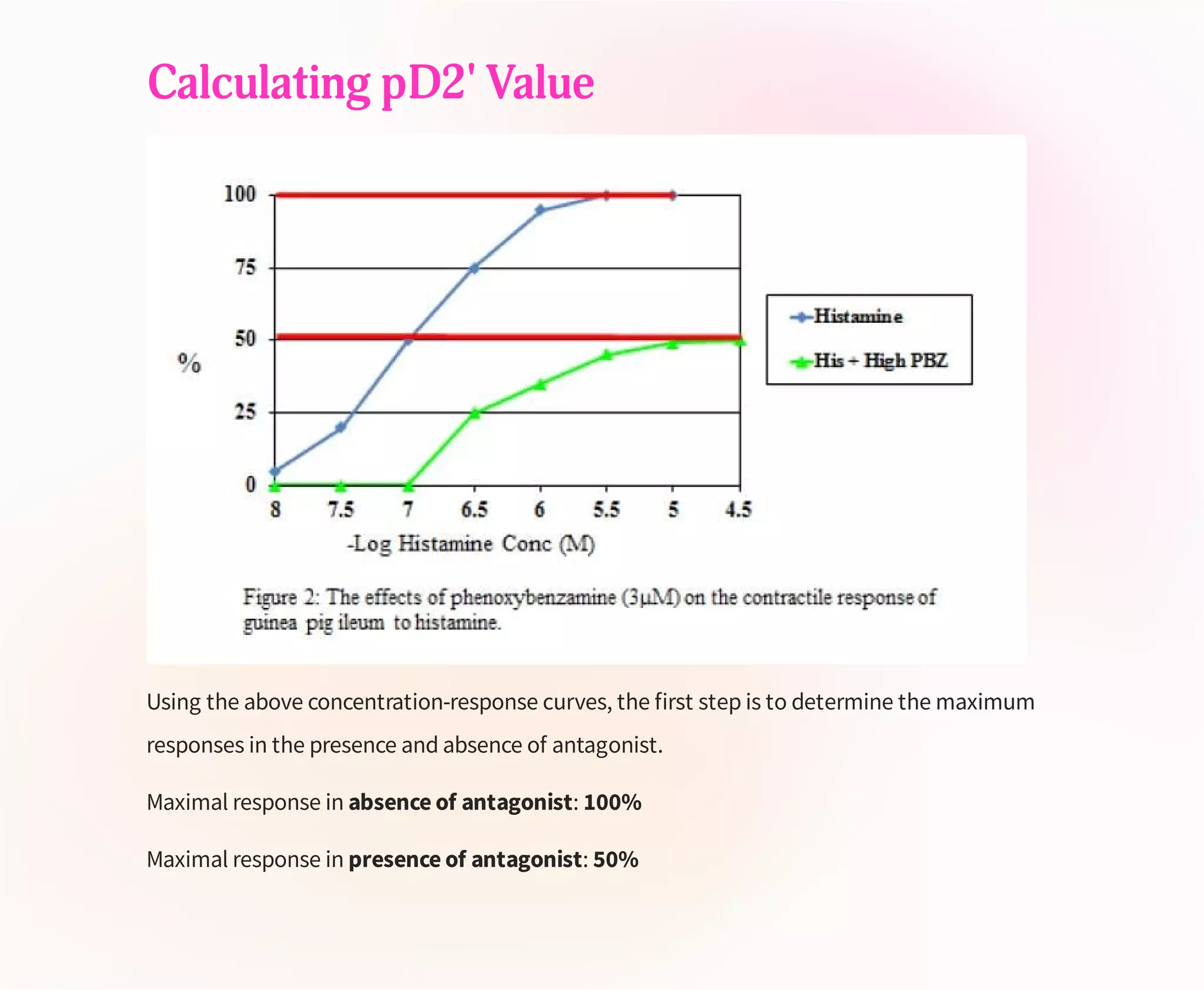
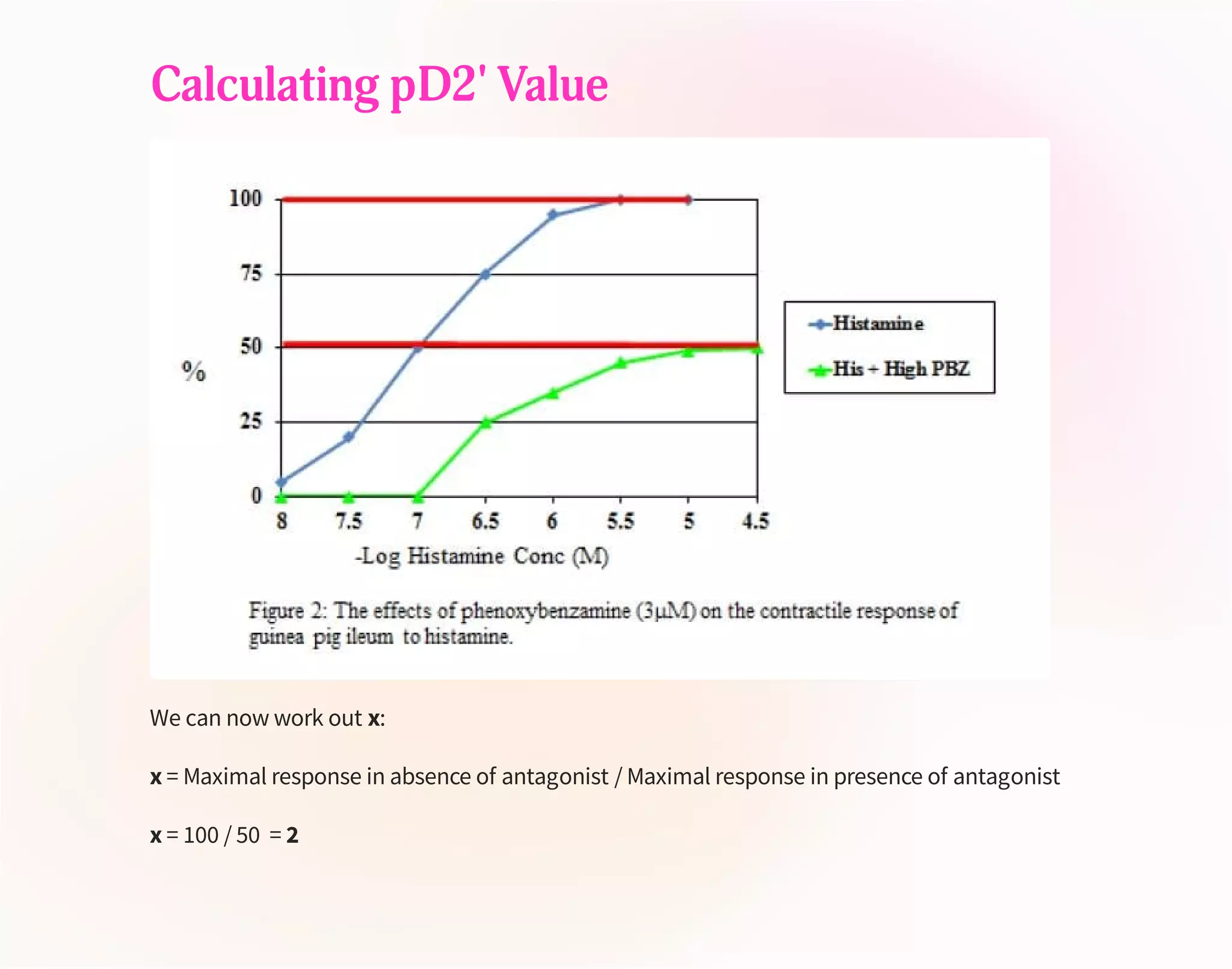
Using the above concentration-response curves, the first step is to determine the maximum
responses in the presence and absence of antagonist.
Maximal response in absence of antagonist: 100%
Maximal response in presence of antagonist: 50%
Calculating pD2' Value
We can now work out x:
x = Maximal response in absence of antagonist / Maximal response in presence of antagonist
x = 100 / 50 = 2
Calculating pD2' Value
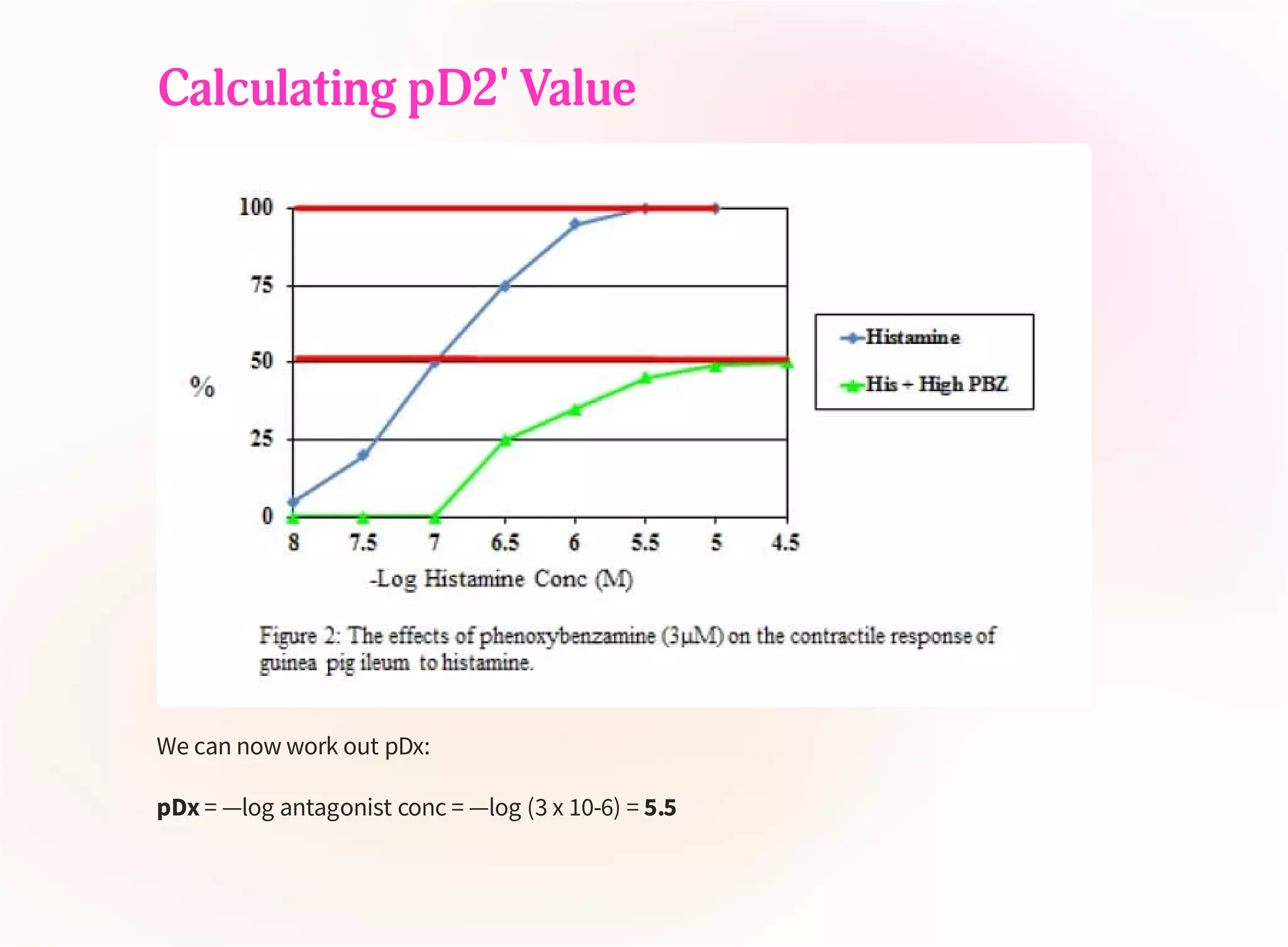
We can now work out pDx:
pDx = —log antagonist conc = —log (3 x 10⁻⁶) = 5.5
Calculating pD2' Value
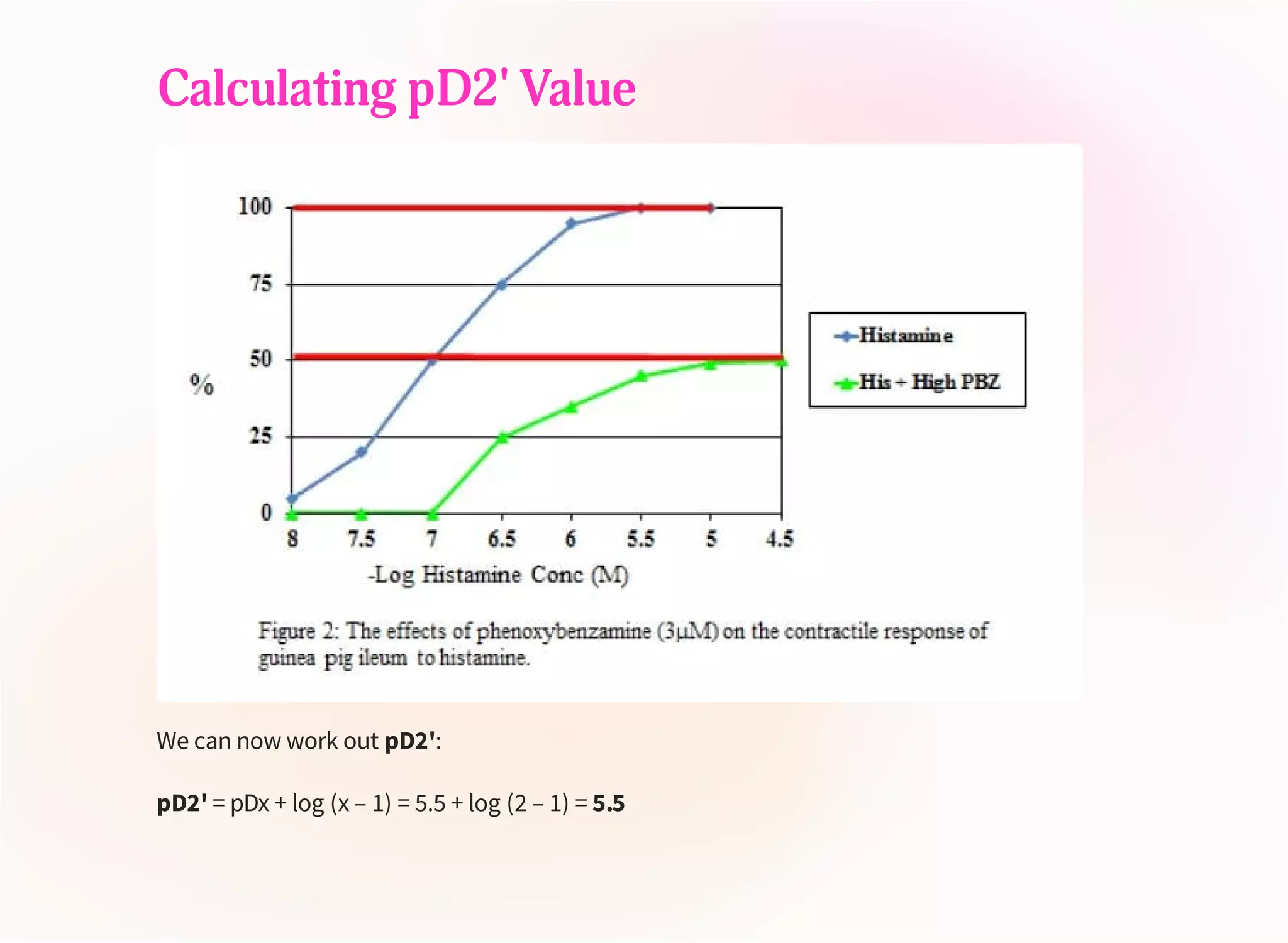
We can now work out pD2':
pD2' = pDx + log (x – 1) = 5.5 + log (2 – 1) = 5.5
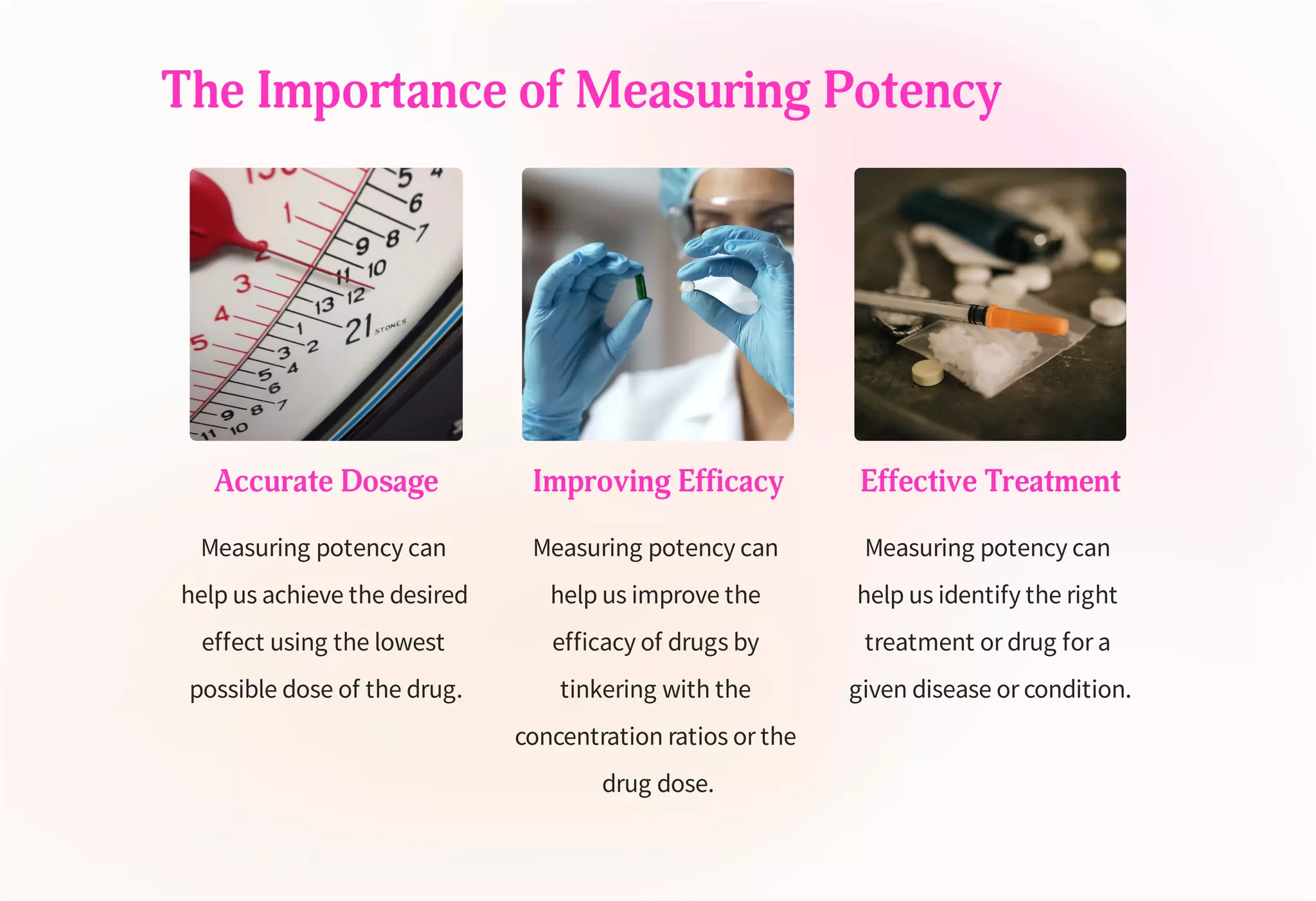
The Importance of Measuring Potency
Accurate Dosage
Measuring potency can
help us achieve the desired
effect using the lowest
possible dose of the drug.
Improving Efficacy
Measuring potency can
help us improve the
efficacy of drugs by
tinkering with the
concentration ratios or the
drug dose.
Effective Treatment
Measuring potency can
help us identify the right
treatment or drug for a
given disease or condition.

Understanding pA2 and pD2' Values: Calculation and Significance in Pharmacology

  • 1.
    Calculating pA2 andpD2' Values In pharmacology, pA2 and pD2' values are used to measure the potency of antagonists. Here's how to calculate them. Dr. Shivankan Kakkar, M.D.
  • 2.
    Two Types ofAntagonists 1. Competitive Reversible Antagonist The potency of a competitive reversible antagonist is expressed as a pA2 value. 2. Competitive Irreversible or Non- Competitive Antagonist The potency of an competitive Irreversible or Non-competitive antagonist is expressed as a pD2' value.
  • 3.
    pD2 vs. pD2'Values pD2 Measures the potency of an agonist. pD2' Measures the potency of an antagonist. Remember, it's important not to confuse *pD2 and pD2' values. They measure different things! Note:- *pD2=the negative logarithm of an **EC50 **EC50= the concentration (or dose) effective in producing 50% of the maximal response
  • 4.
    Exercise 1: pA2Calculation Potency of a Competitive Reversible Antagonist
  • 5.
    pA2 Calculation The potencyof a competitive reversible antagonist is expressed as a pA2 value. The pA2 value is the negative logarithm of the molar concentration of antagonist which causes a twofold shift of the concentration-response curve for agonist. The larger the pA2 value, the more potent the antagonist. We derive the pA2 value using the following formula: pA2 = pAx + log(x-1)
  • 6.
    pA2 Calculation Formula pA2= pAx + log(x-1) Here, x = Concentration Ratio pAx = —log[antagonist conc] Using the formula and the dose-response curves, we'll calculate the pA2 value of the antagonist.
  • 7.
    Calculating Concentration Ratio Theconcentration ratio of the antagonist is derived from the ratio of the concentration of agonist that gives the same response in the presence and absence of the antagonist.We can derive the concentration ratio using either *pD2 or **EC50 values: Concentration-ratio 'x'= Antilog [ pD2 (absence) — pD2 (presence) ] or Concentration-ratio 'x'= EC50 (presence) / EC50 (absence) Note:- *pD2=the negative logarithm of an **EC50 **EC50= the concentration (or dose) effective in producing 50% of the maximal response
  • 8.
    Calculating pA2 Values 1Step 1 Determine the pD2/EC50 values in the presence and absence of antagonist. 2 Step 2 Calculate the concentration ratio using the concentration values. 3 Step 3 Calculate pAx using the antagonist concentration. 4 Step 4 Calculate the pA2 value using the formula. Now, let's see how we can calculate pA2 values using these steps.
  • 9.
    Steps in pA2Value Calculation Step 1 From this graph, we can see that: Presence of antagonist: pD2 = 5.5 & EC50 = 3 x 10⁻⁶M Absence of antagonist: pD2 = 6.5 & EC50 = 3 x 10⁻⁷M
  • 10.
    Steps in pA2Value Calculation Step 2 The next step is to calculate the concentration-ratio using either the pD2 or EC50 values. Concentration-ratio "x" = Antilog (6.5 – 5.5) = Antilog (1) = 10
  • 11.
    Steps in pA2Value Calculation Step 3 pAx = — log antagonist conc = — log (1 x 10⁻⁶) = 6 Step 4 pA2 = pAx + log (x—1) = 6 + log (10—1) = 6 + 0.95 = 6.95
  • 12.
    Exercise 2: pD2'Calculation Potency of a Competitive Irreversible or Non- Competitive Antagonist
  • 13.
    pD2' Calculation The pD2'value is a measure of the potency of a competitive irreversible or non- competitive antagonist. The pD2’ value is the negative logarithm of the molar concentration of antagonist which causes a halving of the maximal response of the agonist. The larger the pD2’ value, the more potent the antagonist. The formula we use to derive a pD2' value is: pD2' = pDx + log(x-1)
  • 14.
    pD2' Calculation Formula pD2’= pDx + log(x-1) Here, x = Depression of Maximal Response pDx = —log[antagonist conc] To calculate the pD2' value, we'll follow the formula and calculate the depression of the maximal response in the presence and absence of the antagonist.
  • 15.
    Calculating pD2' Value Usingthe above concentration-response curves, the first step is to determine the maximum responses in the presence and absence of antagonist. Maximal response in absence of antagonist: 100% Maximal response in presence of antagonist: 50%
  • 16.
    Calculating pD2' Value Wecan now work out x: x = Maximal response in absence of antagonist / Maximal response in presence of antagonist x = 100 / 50 = 2
  • 17.
    Calculating pD2' Value Wecan now work out pDx: pDx = —log antagonist conc = —log (3 x 10⁻⁶) = 5.5
  • 18.
    Calculating pD2' Value Wecan now work out pD2': pD2' = pDx + log (x – 1) = 5.5 + log (2 – 1) = 5.5
  • 19.
    The Importance ofMeasuring Potency Accurate Dosage Measuring potency can help us achieve the desired effect using the lowest possible dose of the drug. Improving Efficacy Measuring potency can help us improve the efficacy of drugs by tinkering with the concentration ratios or the drug dose. Effective Treatment Measuring potency can help us identify the right treatment or drug for a given disease or condition.