Student: Colin Jones Date: 16/10/14
Supervisors: Joelle O’Connell & Cathy Wyer
Using the OT Process to Promote
Functional Performance in School
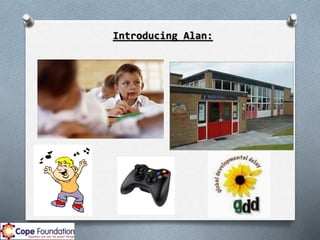
Introducing Alan:
Objectives of Case-Study:
1. Demonstrate how the OT Process is
applied to a client presenting with Global
Developmental Delay.
2. Discuss use of clinical reasoning skills
throughout the process.
3. Describe how the client’s function in
the school environment was promoted from an
OT perspective.
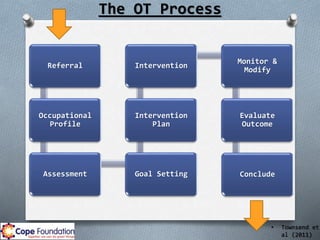
The OT Process
• Townsend et
al (2011)
Referral
Occupational
Profile
Assessment Goal Setting
Intervention
Plan
Intervention
Monitor &
Modify
Evaluate
Outcome
Conclude
Referral
Referral from teacher outlined areas
requiring support:
 Handwriting – Needs support. Writing not on
the line.
 Fine Motor Strength – Difficulty using
Theraputty.
 Balance – Wobbly at times.
 Attention Span – Distracted at times and
not appropriately engaged in class
activities.
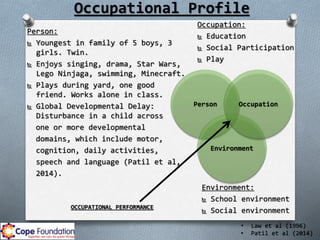
Occupational Profile
Person:
 Youngest in family of 5 boys, 3
girls. Twin.
 Enjoys singing, drama, Star Wars,
Lego Ninjaga, swimming, Minecraft.
 Plays during yard, one good
friend. Works alone in class.
 Global Developmental Delay:
Disturbance in a child across
one or more developmental
domains, which include motor,
cognition, daily activities,
speech and language (Patil et al,
2014).
Person
Environment
Occupation
Environment:
 School environment
 Social environment
Occupation:
 Education
 Social Participation
 Play
OCCUPATIONAL PERFORMANCE
• Law et al (1996)
• Patil et al (2014)
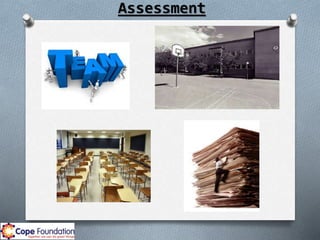
Assessment
Occupational Performance Issues:
1. Demonstrates anxiety at times,
especially in new situations. Usually
requires graded introductions to new
classes.
2. Reported to have difficulty engaging in
social situations and challenges with
transitions between classes.
3. Handwriting - poor letter formation is
affecting progress in class.
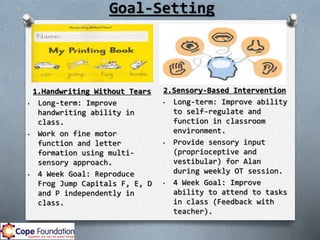
Goal-Setting
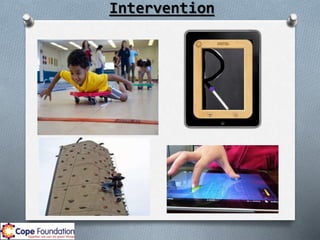
2.Sensory-Based Intervention
• Long-term: Improve ability
to self-regulate and
function in classroom
environment.
• Provide sensory input
(proprioceptive and
vestibular) for Alan
during weekly OT session.
• 4 Week Goal: Improve
ability to attend to tasks
in class (Feedback with
teacher).
1.Handwriting Without Tears
• Long-term: Improve
handwriting ability in
class.
• Work on fine motor
function and letter
formation using multi-
sensory approach.
• 4 Week Goal: Reproduce
Frog Jump Capitals F, E, D
and P independently in
class.
Sensory-Based Interventions
Sensory Integration Framework
• Includes perception, modulation, and integration of
sensory information as a foundation for participation in
activities across social, physical, learning and daily
living tasks (Ayres, 1972).
Sensory-Based Interventions
• Sensory-based interventions applied in the school
environment may not have any benefit (Case-Smith et al,
2014).
• No effects from multi-sensory stimulation (Devlin et al,
2009, 2011, cited in Case-Smith et al, 2014).
• Fazlioglu & Baran (2008), cited in Case-Smith et al
(2014), found strong effects in reducing sensory problems.
No double blind testing or fidelity measures.
Intervention Plan
1.Handwriting Without Tears
• 4 Week Goal: Reproduce
Frog Jump Capitals F, E, D
and P independently in
class.
• Weekly session with
student OT focusing on
Frog Jump Capitals.
• Feedback with teacher to
confirm skills are
transferred.
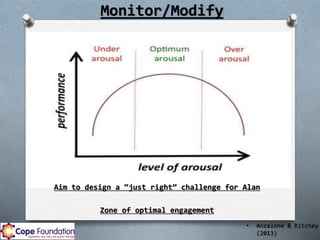
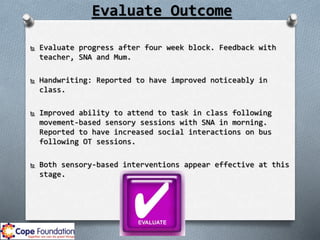
2.Sensory-Based Intervention
• 4 Week Goal: Improve
ability to attend to tasks
in class (Feedback with
teacher).
• Weekly session with OT and
student OT focusing on
activities that provide
proprioceptive and
vestibular feedback.
• Feedback with teacher to
confirm if attention to
class activities and
social interactions
improve.
Intervention
Monitor/Modify
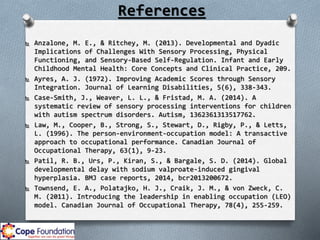
Aim to design a “just right” challenge for Alan
Zone of optimal engagement
• Anzalone & Ritchey
(2013)
Evaluate Outcome
 Evaluate progress after four week block. Feedback with
teacher, SNA and Mum.
 Handwriting: Reported to have improved noticeably in
class.
 Improved ability to attend to task in class following
movement-based sensory sessions with SNA in morning.
Reported to have increased social interactions on bus
following OT sessions.
 Both sensory-based interventions appear effective at this
stage.
Conclude
 Handover of Handwriting programme to SNA. Debrief with
Mum, teacher and provision of intervention summary and
strategies sheet for all parties.
 OT and SNA to continue to progress with sensory-based
sessions.
Questions
References
 Anzalone, M. E., & Ritchey, M. (2013). Developmental and Dyadic
Implications of Challenges With Sensory Processing, Physical
Functioning, and Sensory-Based Self-Regulation. Infant and Early
Childhood Mental Health: Core Concepts and Clinical Practice, 209.
 Ayres, A. J. (1972). Improving Academic Scores through Sensory
Integration. Journal of Learning Disabilities, 5(6), 338-343.
 Case-Smith, J., Weaver, L. L., & Fristad, M. A. (2014). A
systematic review of sensory processing interventions for children
with autism spectrum disorders. Autism, 1362361313517762.
 Law, M., Cooper, B., Strong, S., Stewart, D., Rigby, P., & Letts,
L. (1996). The person-environment-occupation model: A transactive
approach to occupational performance. Canadian Journal of
Occupational Therapy, 63(1), 9-23.
 Patil, R. B., Urs, P., Kiran, S., & Bargale, S. D. (2014). Global
developmental delay with sodium valproate-induced gingival
hyperplasia. BMJ case reports, 2014, bcr2013200672.
 Townsend, E. A., Polatajko, H. J., Craik, J. M., & von Zweck, C.
M. (2011). Introducing the leadership in enabling occupation (LEO)
model. Canadian Journal of Occupational Therapy, 78(4), 255-259.

Case Study

  • 1.
    Student: Colin JonesDate: 16/10/14 Supervisors: Joelle O’Connell & Cathy Wyer Using the OT Process to Promote Functional Performance in School
  • 2.
  • 3.
    Objectives of Case-Study: 1.Demonstrate how the OT Process is applied to a client presenting with Global Developmental Delay. 2. Discuss use of clinical reasoning skills throughout the process. 3. Describe how the client’s function in the school environment was promoted from an OT perspective.
  • 4.
    The OT Process •Townsend et al (2011) Referral Occupational Profile Assessment Goal Setting Intervention Plan Intervention Monitor & Modify Evaluate Outcome Conclude
  • 5.
    Referral Referral from teacheroutlined areas requiring support:  Handwriting – Needs support. Writing not on the line.  Fine Motor Strength – Difficulty using Theraputty.  Balance – Wobbly at times.  Attention Span – Distracted at times and not appropriately engaged in class activities.
  • 6.
    Occupational Profile Person:  Youngestin family of 5 boys, 3 girls. Twin.  Enjoys singing, drama, Star Wars, Lego Ninjaga, swimming, Minecraft.  Plays during yard, one good friend. Works alone in class.  Global Developmental Delay: Disturbance in a child across one or more developmental domains, which include motor, cognition, daily activities, speech and language (Patil et al, 2014). Person Environment Occupation Environment:  School environment  Social environment Occupation:  Education  Social Participation  Play OCCUPATIONAL PERFORMANCE • Law et al (1996) • Patil et al (2014)
  • 7.
  • 8.
    Occupational Performance Issues: 1.Demonstrates anxiety at times, especially in new situations. Usually requires graded introductions to new classes. 2. Reported to have difficulty engaging in social situations and challenges with transitions between classes. 3. Handwriting - poor letter formation is affecting progress in class.
  • 9.
    Goal-Setting 2.Sensory-Based Intervention • Long-term:Improve ability to self-regulate and function in classroom environment. • Provide sensory input (proprioceptive and vestibular) for Alan during weekly OT session. • 4 Week Goal: Improve ability to attend to tasks in class (Feedback with teacher). 1.Handwriting Without Tears • Long-term: Improve handwriting ability in class. • Work on fine motor function and letter formation using multi- sensory approach. • 4 Week Goal: Reproduce Frog Jump Capitals F, E, D and P independently in class.
  • 10.
    Sensory-Based Interventions Sensory IntegrationFramework • Includes perception, modulation, and integration of sensory information as a foundation for participation in activities across social, physical, learning and daily living tasks (Ayres, 1972). Sensory-Based Interventions • Sensory-based interventions applied in the school environment may not have any benefit (Case-Smith et al, 2014). • No effects from multi-sensory stimulation (Devlin et al, 2009, 2011, cited in Case-Smith et al, 2014). • Fazlioglu & Baran (2008), cited in Case-Smith et al (2014), found strong effects in reducing sensory problems. No double blind testing or fidelity measures.
  • 11.
    Intervention Plan 1.Handwriting WithoutTears • 4 Week Goal: Reproduce Frog Jump Capitals F, E, D and P independently in class. • Weekly session with student OT focusing on Frog Jump Capitals. • Feedback with teacher to confirm skills are transferred. 2.Sensory-Based Intervention • 4 Week Goal: Improve ability to attend to tasks in class (Feedback with teacher). • Weekly session with OT and student OT focusing on activities that provide proprioceptive and vestibular feedback. • Feedback with teacher to confirm if attention to class activities and social interactions improve.
  • 12.
  • 13.
    Monitor/Modify Aim to designa “just right” challenge for Alan Zone of optimal engagement • Anzalone & Ritchey (2013)
  • 14.
    Evaluate Outcome  Evaluateprogress after four week block. Feedback with teacher, SNA and Mum.  Handwriting: Reported to have improved noticeably in class.  Improved ability to attend to task in class following movement-based sensory sessions with SNA in morning. Reported to have increased social interactions on bus following OT sessions.  Both sensory-based interventions appear effective at this stage.
  • 15.
    Conclude  Handover ofHandwriting programme to SNA. Debrief with Mum, teacher and provision of intervention summary and strategies sheet for all parties.  OT and SNA to continue to progress with sensory-based sessions.
  • 16.
  • 17.
    References  Anzalone, M.E., & Ritchey, M. (2013). Developmental and Dyadic Implications of Challenges With Sensory Processing, Physical Functioning, and Sensory-Based Self-Regulation. Infant and Early Childhood Mental Health: Core Concepts and Clinical Practice, 209.  Ayres, A. J. (1972). Improving Academic Scores through Sensory Integration. Journal of Learning Disabilities, 5(6), 338-343.  Case-Smith, J., Weaver, L. L., & Fristad, M. A. (2014). A systematic review of sensory processing interventions for children with autism spectrum disorders. Autism, 1362361313517762.  Law, M., Cooper, B., Strong, S., Stewart, D., Rigby, P., & Letts, L. (1996). The person-environment-occupation model: A transactive approach to occupational performance. Canadian Journal of Occupational Therapy, 63(1), 9-23.  Patil, R. B., Urs, P., Kiran, S., & Bargale, S. D. (2014). Global developmental delay with sodium valproate-induced gingival hyperplasia. BMJ case reports, 2014, bcr2013200672.  Townsend, E. A., Polatajko, H. J., Craik, J. M., & von Zweck, C. M. (2011). Introducing the leadership in enabling occupation (LEO) model. Canadian Journal of Occupational Therapy, 78(4), 255-259.

Editor's Notes

  • #3 Today’s case study looks at Alan, a nine year old boy attending St. Killian’s School (for children with mild learning disabilities). Enjoys singing, dancing, computer games. Alan also presents with Global Developmental Delay.
  • #6 State that Theraputty is a registered trademark. Previous OT: Theraputty and fidget toy to improve attention. Writing skills group.
  • #7 At this stage, we started to gather more information on Alan and build his Occupational Profile. Looked at POE - Centre of POE. How each element impacts occupational performance. Environment: Specifically looking at school. However, SNA reported back re: Alan’s behaviour at swimming. Information used when building profile, deciding on intervention plan. Home environment to be considered in future? Strength: Good application in class when he “is in good form”. OT needed to enable him to attend at this level more frequently. Likes set routines, clothes, Buzz Lightyear, soldiers and PSP/xBox Family situation.
  • #8 Methods of Assessment: Classroom observation. MDT feedback. Client records including psychology, medical and teacher’s reports. Observation in yard.
  • #9 1 and 2: Social engagement. 3: Handwriting in class.
  • #10 Based on previous slide, collaboration with teachers and taking into account Alan’s Occupational Profile (e.g., swimming), goals were then set……….. Explain a bit about HWT multi-sensory approach and thinking behind sensory sessions (swimming).
  • #11 Details here.
  • #13 Describe sessions in more detail. What happened in them? Alan summary used? Building rapport here.
  • #14 Feedback with teachers and SNA’s to monitor Alan’s responses to therapy sessions. Adapt sessions to achieve “Just Right” Challenge. This is conditional reasoning also. Talk about modifying sensory sessions with extra student and handwriting (not much modification needed). Modifying physical activity for him, e.g., rocket blast offs, grading wall climbs.