RETAIL TRADE
Trade in which the trader sells the goods to
consumers according to their requirement.
Characteristics of retail trade
 Goods are sold to ultimate consumers
 Goods are purchased and sold in small
quantities
 Varieties of goods are sold.
 Direct contact with consumers
 Area of sale is limited/
 Last link in the distribution channel.
Functions of Retailer
 Forecast the commodities useful to his consumer.
 Collects varieties of goods from different
wholesalers.
 Sells goods according to the requirement of
consumers.
 Sells on credit basis and provide home delivery
service.
 Collects information related to market.
 Takes risk arising due to decrease in sales, price
of goods.
Service of Retailers
Service to
producers
1. Sale of product in small
quantities
2. Collecting Customers
Demand
3. Advertising and promotion of
Product
Service to
Consumers
1. Regular supply of goods
2. Information about products
3. After Sale Service
4. Credit Facility
5. Ease of Buying
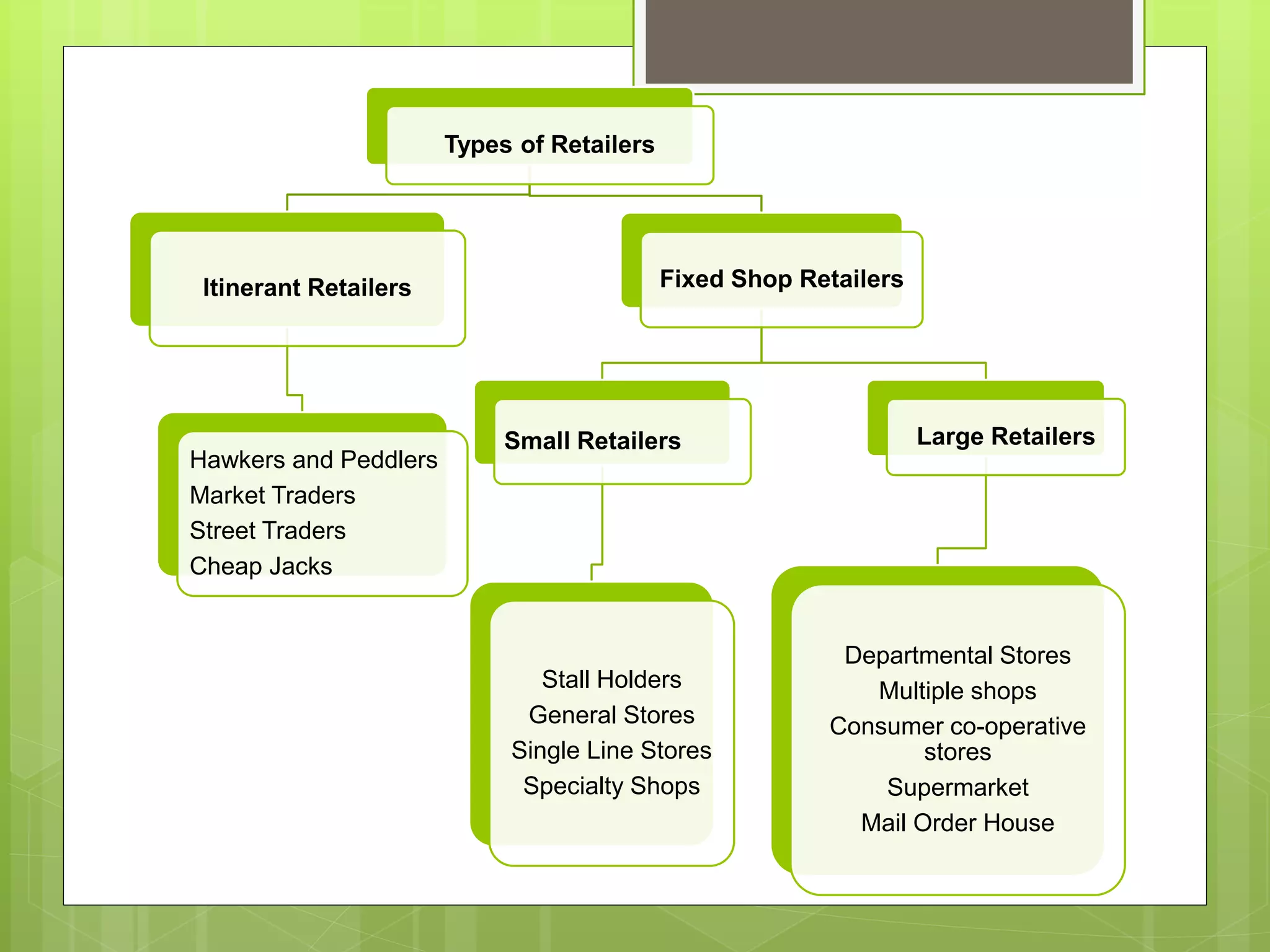
Types of Retailers
Itinerant Retailers
Hawkers and Peddlers
Market Traders
Street Traders
Cheap Jacks
Fixed Shop Retailers
Small Retailers
Stall Holders
General Stores
Single Line Stores
Specialty Shops
Large Retailers
Departmental Stores
Multiple shops
Consumer co-operative
stores
Supermarket
Mail Order House
Itinerant Retailers
 Hawkers and Peddlers : Carry goods on wheeled
vehicles or on their head.
 Market Traders: Sell merchandise on some
selected day of the week.
 Street Traders: Display their goods at the busy
pavements of corners and sell the goods to public.
 Cheap Jacks: Have temporary shop structure and
move from one place to another.
Small Retailers
 Stall Holders: Open wooden stalls. Goods sold are snacks,
tea, cigarettes, stationary goods.
 General Stores: Stores remain open for long hours, provide
credit facility, home delivery
 Single Line Stores: Deal in specific line of product with
varieties.
 Speciality Shops: focus on specific needs of customer.
 Secondhand Shop: Deal in second hand or used goods like
books, furniture etc.
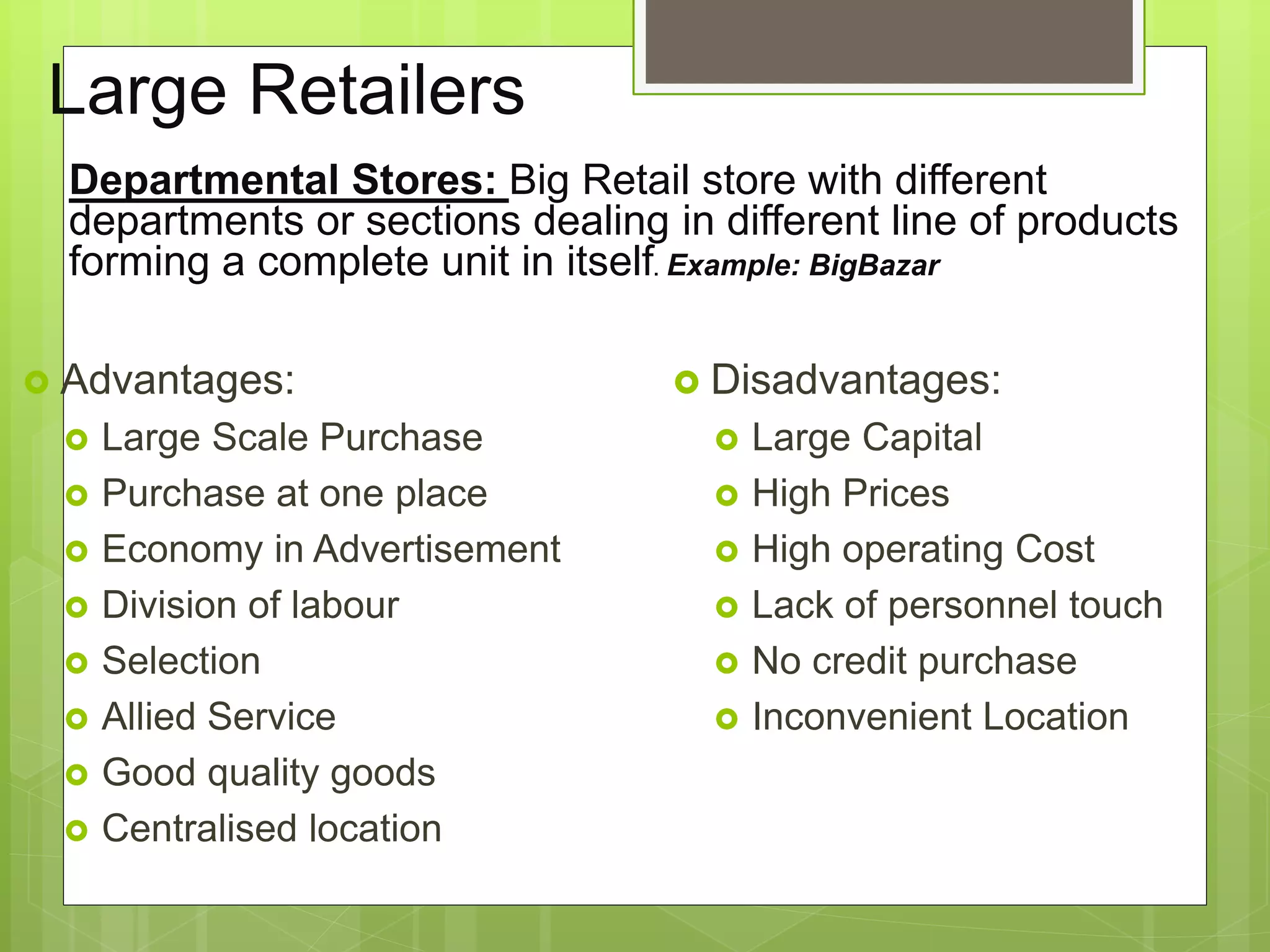
Large Retailers
 Advantages:
 Large Scale Purchase
 Purchase at one place
 Economy in Advertisement
 Division of labour
 Selection
 Allied Service
 Good quality goods
 Centralised location
Departmental Stores: Big Retail store with different
departments or sections dealing in different line of products
forming a complete unit in itself. Example: BigBazar
 Disadvantages:
 Large Capital
 High Prices
 High operating Cost
 Lack of personnel touch
 No credit purchase
 Inconvenient Location
Large Retailers
 Advantages:
 Low prices
 Collective advertisement
 Stock transfer
 Specialisation
 Cash Sales
 Beneficial Location
 Fixed prices
 Compensation of loss
Multiple Shops/Chain Stores: One Organisation
sets up shops in different localities of the city or in
different cities. Example:Bata
 Disadvantages:
 Large Capital
 Lack of Personal touch
 Limited varieties of
commodities
 Rigidity
 Lack of credit facility
Large Retailers
Consumer Co-operative Stores:Stores are
operated and controlled by consumers themselves.
 Advantages:
 Quality goods at cheaper
rates
 Easy control
 Distribution of profit among
members
 Economy in managing
expenses
 Cash Sales
 Elimination of middlemen
 Disadvantages:
 Shortage of funds
 Lack of initiative
 Lack of professional
managers
Large Retailers
Super Markets: An organisation where each
section sells different commodities.
 Advantages:
 Variety of goods
 Easy control
 Fixed price
 Cash Sales
 Quality goods
 Less price
 Disadvantages:
 High capital
 Mishandling of goods
 Lack of personal contact
 No credit sales
Large Retailers
Mail Order House: a retail outlet where
customers send the orders to the sellers by post
and the seller sends the goods by post.
 Advantages:
 Limited Capital requirement
 V.P.P facility
 Wide Area
 Relief from shopping
 Elimination of middlemen
 Disadvantages:
 Cost of Advertisement
 Heavy cost on postage
 Difficulty in Dispatching heavy
things
 no credit facilities
 No personal contact
 Damage in transit
 Delay in receipt of goods
 Damage in transit
Vending Machine
A vending machine is a machine that dispatches
merchandise when a customer deposits
sufficient money into slot or vent to purchase
the desired items.
Documents used in internal trade
 Performa Invoice- price quote a seller gives to a buyer which
includes the precise cost of the goods at the time of
transaction
 Invoice- Statement given by the seller to a buyer includes tax.
It is also called as bill.
 Debit note- Debit note is made by a seller or buyer to debit the
account of the person named therein.
 Credit note-
 It is made by the buyer to credit the account of the person
named therein.
 Lorry Receipt – It is issued by the transporter. It contains the
name of the consignor and consignee, registration number of
goods carriage in which the goods are transported, details of
the goods transported details of the place of origin and
destination.
 Railway Receipt- A railway administration will issue a receipt .

Retail trade

  • 1.
    RETAIL TRADE Trade inwhich the trader sells the goods to consumers according to their requirement.
  • 2.
    Characteristics of retailtrade  Goods are sold to ultimate consumers  Goods are purchased and sold in small quantities  Varieties of goods are sold.  Direct contact with consumers  Area of sale is limited/  Last link in the distribution channel.
  • 3.
    Functions of Retailer Forecast the commodities useful to his consumer.  Collects varieties of goods from different wholesalers.  Sells goods according to the requirement of consumers.  Sells on credit basis and provide home delivery service.  Collects information related to market.  Takes risk arising due to decrease in sales, price of goods.
  • 4.
    Service of Retailers Serviceto producers 1. Sale of product in small quantities 2. Collecting Customers Demand 3. Advertising and promotion of Product Service to Consumers 1. Regular supply of goods 2. Information about products 3. After Sale Service 4. Credit Facility 5. Ease of Buying
  • 5.
    Types of Retailers ItinerantRetailers Hawkers and Peddlers Market Traders Street Traders Cheap Jacks Fixed Shop Retailers Small Retailers Stall Holders General Stores Single Line Stores Specialty Shops Large Retailers Departmental Stores Multiple shops Consumer co-operative stores Supermarket Mail Order House
  • 6.
    Itinerant Retailers  Hawkersand Peddlers : Carry goods on wheeled vehicles or on their head.  Market Traders: Sell merchandise on some selected day of the week.  Street Traders: Display their goods at the busy pavements of corners and sell the goods to public.  Cheap Jacks: Have temporary shop structure and move from one place to another.
  • 7.
    Small Retailers  StallHolders: Open wooden stalls. Goods sold are snacks, tea, cigarettes, stationary goods.  General Stores: Stores remain open for long hours, provide credit facility, home delivery  Single Line Stores: Deal in specific line of product with varieties.  Speciality Shops: focus on specific needs of customer.  Secondhand Shop: Deal in second hand or used goods like books, furniture etc.
  • 8.
    Large Retailers  Advantages: Large Scale Purchase  Purchase at one place  Economy in Advertisement  Division of labour  Selection  Allied Service  Good quality goods  Centralised location Departmental Stores: Big Retail store with different departments or sections dealing in different line of products forming a complete unit in itself. Example: BigBazar  Disadvantages:  Large Capital  High Prices  High operating Cost  Lack of personnel touch  No credit purchase  Inconvenient Location
  • 9.
    Large Retailers  Advantages: Low prices  Collective advertisement  Stock transfer  Specialisation  Cash Sales  Beneficial Location  Fixed prices  Compensation of loss Multiple Shops/Chain Stores: One Organisation sets up shops in different localities of the city or in different cities. Example:Bata  Disadvantages:  Large Capital  Lack of Personal touch  Limited varieties of commodities  Rigidity  Lack of credit facility
  • 10.
    Large Retailers Consumer Co-operativeStores:Stores are operated and controlled by consumers themselves.  Advantages:  Quality goods at cheaper rates  Easy control  Distribution of profit among members  Economy in managing expenses  Cash Sales  Elimination of middlemen  Disadvantages:  Shortage of funds  Lack of initiative  Lack of professional managers
  • 11.
    Large Retailers Super Markets:An organisation where each section sells different commodities.  Advantages:  Variety of goods  Easy control  Fixed price  Cash Sales  Quality goods  Less price  Disadvantages:  High capital  Mishandling of goods  Lack of personal contact  No credit sales
  • 12.
    Large Retailers Mail OrderHouse: a retail outlet where customers send the orders to the sellers by post and the seller sends the goods by post.  Advantages:  Limited Capital requirement  V.P.P facility  Wide Area  Relief from shopping  Elimination of middlemen  Disadvantages:  Cost of Advertisement  Heavy cost on postage  Difficulty in Dispatching heavy things  no credit facilities  No personal contact  Damage in transit  Delay in receipt of goods  Damage in transit
  • 13.
    Vending Machine A vendingmachine is a machine that dispatches merchandise when a customer deposits sufficient money into slot or vent to purchase the desired items.
  • 14.
    Documents used ininternal trade  Performa Invoice- price quote a seller gives to a buyer which includes the precise cost of the goods at the time of transaction  Invoice- Statement given by the seller to a buyer includes tax. It is also called as bill.  Debit note- Debit note is made by a seller or buyer to debit the account of the person named therein.  Credit note-  It is made by the buyer to credit the account of the person named therein.  Lorry Receipt – It is issued by the transporter. It contains the name of the consignor and consignee, registration number of goods carriage in which the goods are transported, details of the goods transported details of the place of origin and destination.  Railway Receipt- A railway administration will issue a receipt .