Name: Divyansh Sharma
Topic: Organized and Unorganized Retailing
Class: 11th A
Roll no.:11107
TABLE OF CONTENTS
Types of Retailing
What is organized retailing?
Advantages and disadvantages of organized retailing
What is unorganized retailing?
 Advantages and disadvantages of unorganized retailing
Challenges and Opportunities.
Market Share of Organized & Unorganized Retailing
Retailing can be broadly
categorized into two types.
 Organized retailing
 Unorganized retailing
TYPES OF
RETAILING
WHAT IS ORGANIZED
RETAILING?
Ex.- department stores, supermarkets, and chain
outlets. Well-known examples include Walmart, Target,
and Macy's.
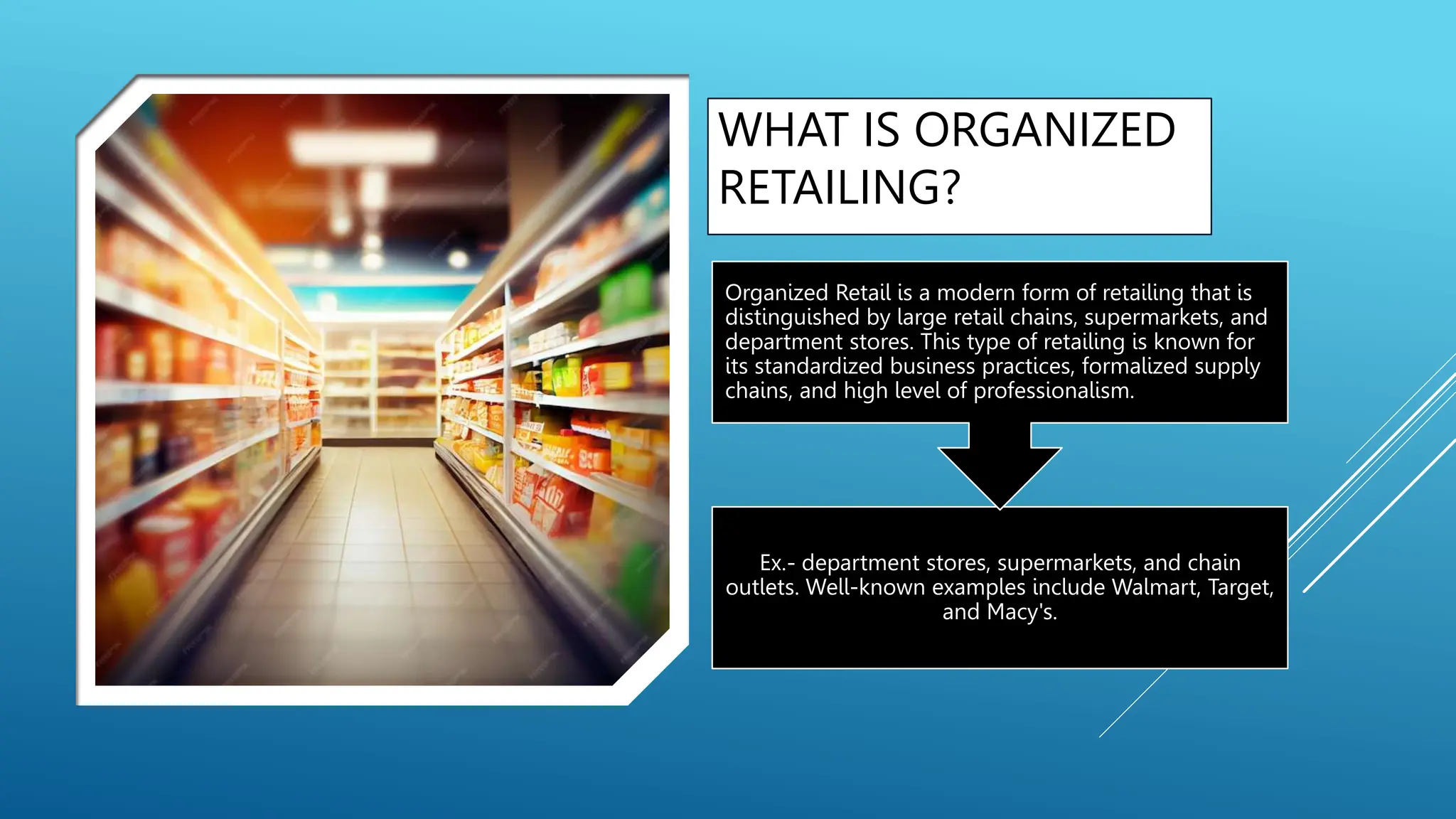
Organized Retail is a modern form of retailing that is
distinguished by large retail chains, supermarkets, and
department stores. This type of retailing is known for
its standardized business practices, formalized supply
chains, and high level of professionalism.
Advantages and Disadvantages of
Organized Retailing
Advantages Disadvantages
Access to a wide range of
products
Higher prices due to
overhead costs
Guaranteed quality and
authenticity
Reduction in personal
interaction with customers
Convenient store locations Less scope for bargaining
WHAT IS UNORGANIZED
RETAILING?
Ex.- comprises small mom-and-pop stores, street vendors, and local
markets. Examples include Neighborhood. grocery shops, street stalls, and
flea markets.
Unorganized Retailing refers to the traditional form of
retailing that is characterized by small, independent retailers,
street markets, and corner shops. This form of retailing is
typically characterized by informal business practices,
fragmented supply chains, and a low degree of
professionalism
Advantages and Disadvantages of
Unorganized Retailing
Advantages Disadvantages
Lower price due to
operational costs.
Limited product variety and
quality.
Provide employment
opportunities.
No job security. Low wages
& long working hours.
Credit facilities to consumer. The ambience is attractive, but
there is a lack of speciality
products.
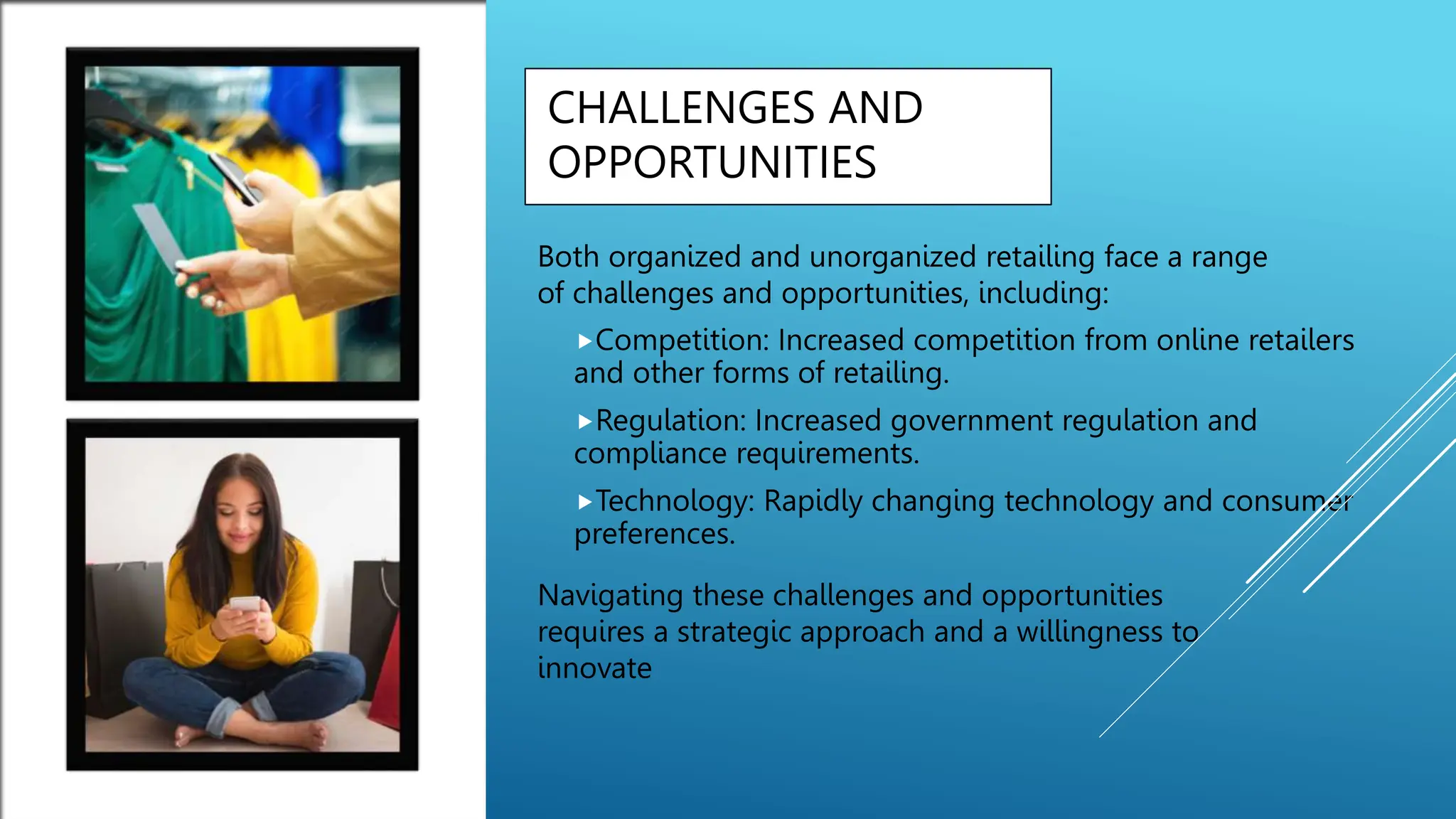
Competition: Increased competition from online retailers
and other forms of retailing.
Regulation: Increased government regulation and
compliance requirements.
Technology: Rapidly changing technology and consumer
preferences.
CHALLENGES AND
OPPORTUNITIES
Both organized and unorganized retailing face a range
of challenges and opportunities, including:
Navigating these challenges and opportunities
requires a strategic approach and a willingness to
innovate
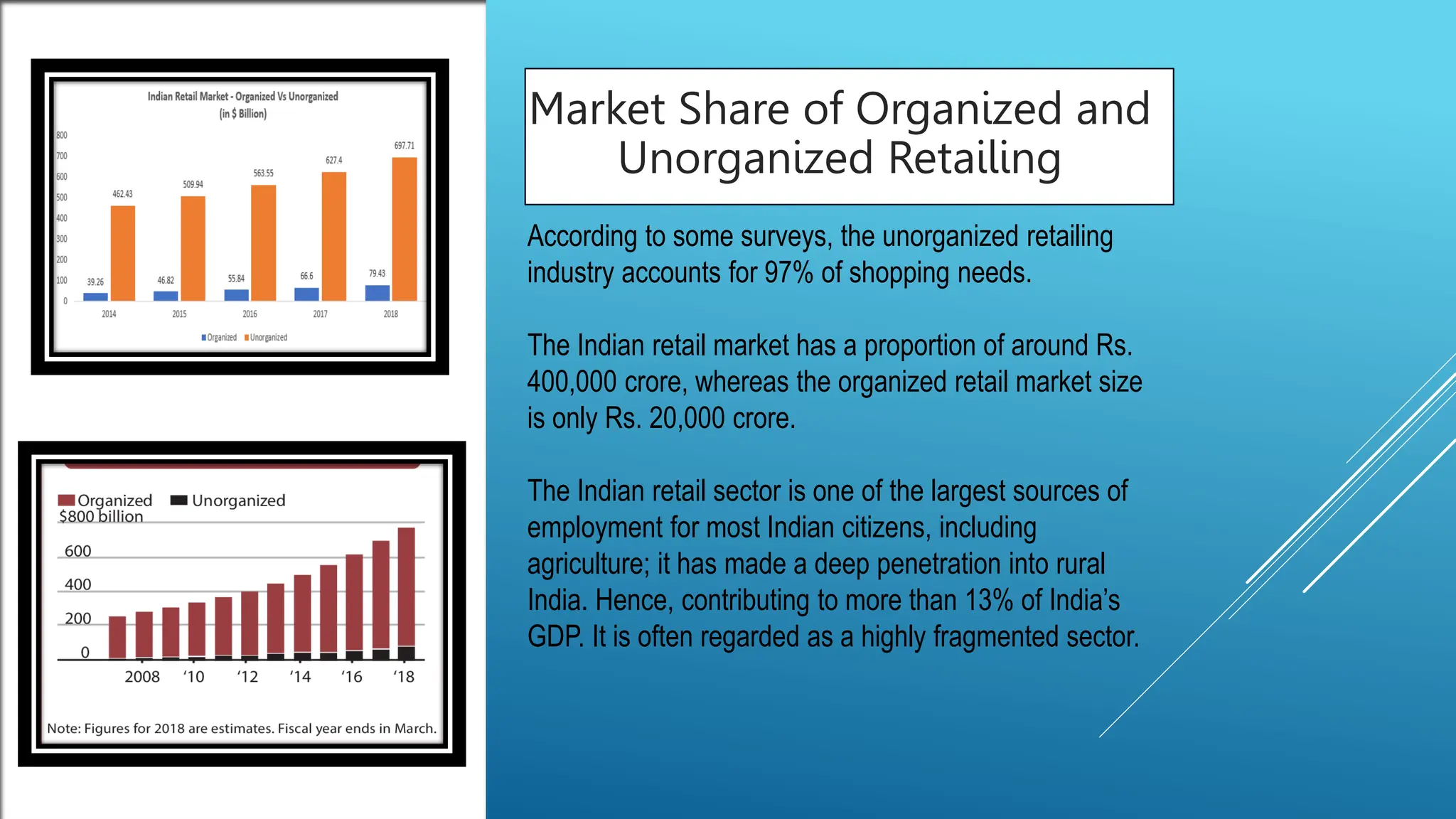
Market Share of Organized and
Unorganized Retailing
According to some surveys, the unorganized retailing
industry accounts for 97% of shopping needs.
The Indian retail market has a proportion of around Rs.
400,000 crore, whereas the organized retail market size
is only Rs. 20,000 crore.
The Indian retail sector is one of the largest sources of
employment for most Indian citizens, including
agriculture; it has made a deep penetration into rural
India. Hence, contributing to more than 13% of India’s
GDP. It is often regarded as a highly fragmented sector.
organized and unorganized retailing.pptx

organized and unorganized retailing.pptx

  • 1.
    Name: Divyansh Sharma Topic:Organized and Unorganized Retailing Class: 11th A Roll no.:11107
  • 2.
    TABLE OF CONTENTS Typesof Retailing What is organized retailing? Advantages and disadvantages of organized retailing What is unorganized retailing?  Advantages and disadvantages of unorganized retailing Challenges and Opportunities. Market Share of Organized & Unorganized Retailing
  • 3.
    Retailing can bebroadly categorized into two types.  Organized retailing  Unorganized retailing TYPES OF RETAILING
  • 4.
    WHAT IS ORGANIZED RETAILING? Ex.-department stores, supermarkets, and chain outlets. Well-known examples include Walmart, Target, and Macy's. Organized Retail is a modern form of retailing that is distinguished by large retail chains, supermarkets, and department stores. This type of retailing is known for its standardized business practices, formalized supply chains, and high level of professionalism.
  • 5.
    Advantages and Disadvantagesof Organized Retailing Advantages Disadvantages Access to a wide range of products Higher prices due to overhead costs Guaranteed quality and authenticity Reduction in personal interaction with customers Convenient store locations Less scope for bargaining
  • 6.
    WHAT IS UNORGANIZED RETAILING? Ex.-comprises small mom-and-pop stores, street vendors, and local markets. Examples include Neighborhood. grocery shops, street stalls, and flea markets. Unorganized Retailing refers to the traditional form of retailing that is characterized by small, independent retailers, street markets, and corner shops. This form of retailing is typically characterized by informal business practices, fragmented supply chains, and a low degree of professionalism
  • 7.
    Advantages and Disadvantagesof Unorganized Retailing Advantages Disadvantages Lower price due to operational costs. Limited product variety and quality. Provide employment opportunities. No job security. Low wages & long working hours. Credit facilities to consumer. The ambience is attractive, but there is a lack of speciality products.
  • 8.
    Competition: Increased competitionfrom online retailers and other forms of retailing. Regulation: Increased government regulation and compliance requirements. Technology: Rapidly changing technology and consumer preferences. CHALLENGES AND OPPORTUNITIES Both organized and unorganized retailing face a range of challenges and opportunities, including: Navigating these challenges and opportunities requires a strategic approach and a willingness to innovate
  • 9.
    Market Share ofOrganized and Unorganized Retailing According to some surveys, the unorganized retailing industry accounts for 97% of shopping needs. The Indian retail market has a proportion of around Rs. 400,000 crore, whereas the organized retail market size is only Rs. 20,000 crore. The Indian retail sector is one of the largest sources of employment for most Indian citizens, including agriculture; it has made a deep penetration into rural India. Hence, contributing to more than 13% of India’s GDP. It is often regarded as a highly fragmented sector.