2x2 table
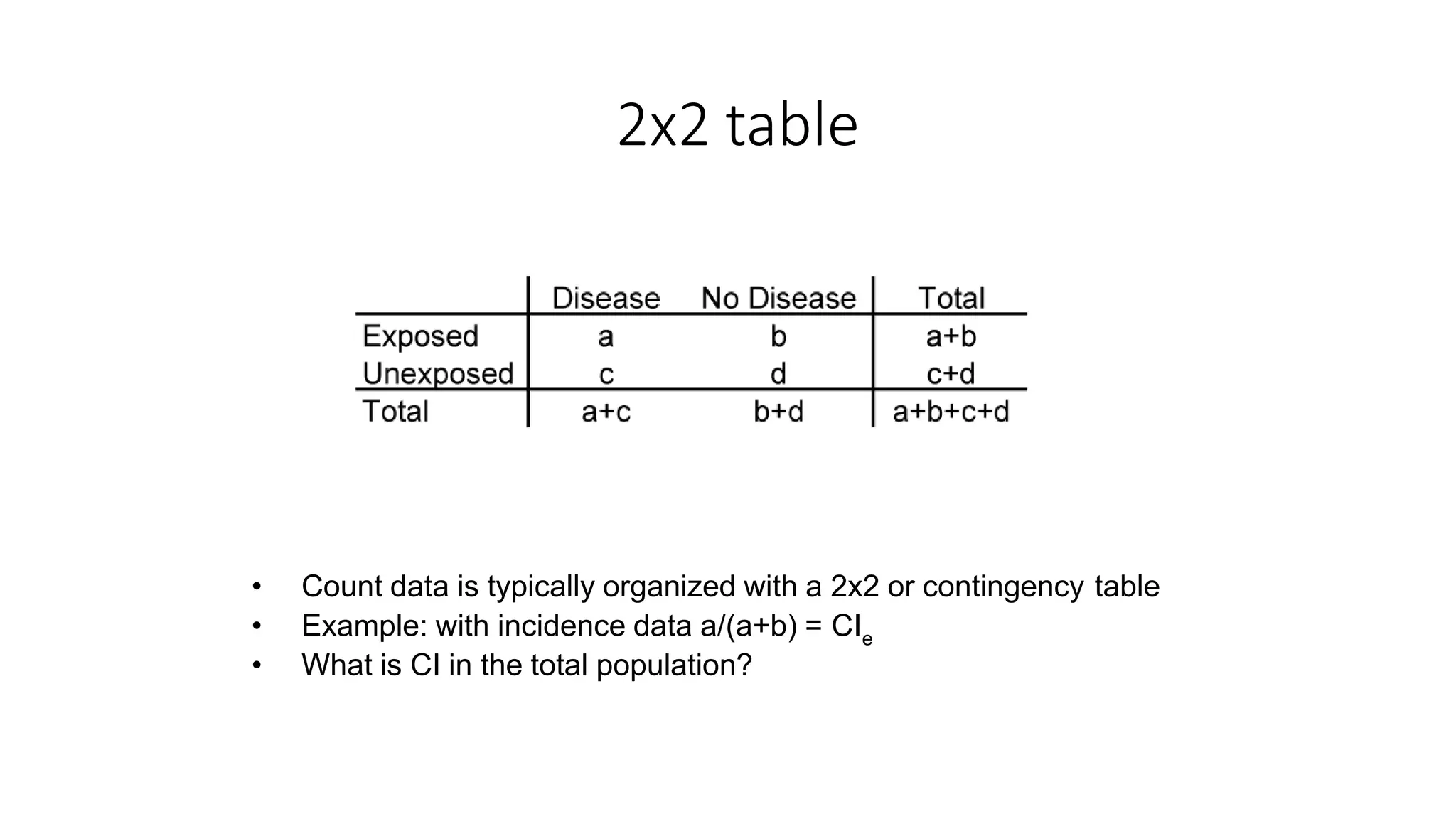
• Count data is typically organized with a 2x2 or contingency table
• Example: with incidence data a/(a+b) = CIe
• What is CI in the total population?
2x2 table
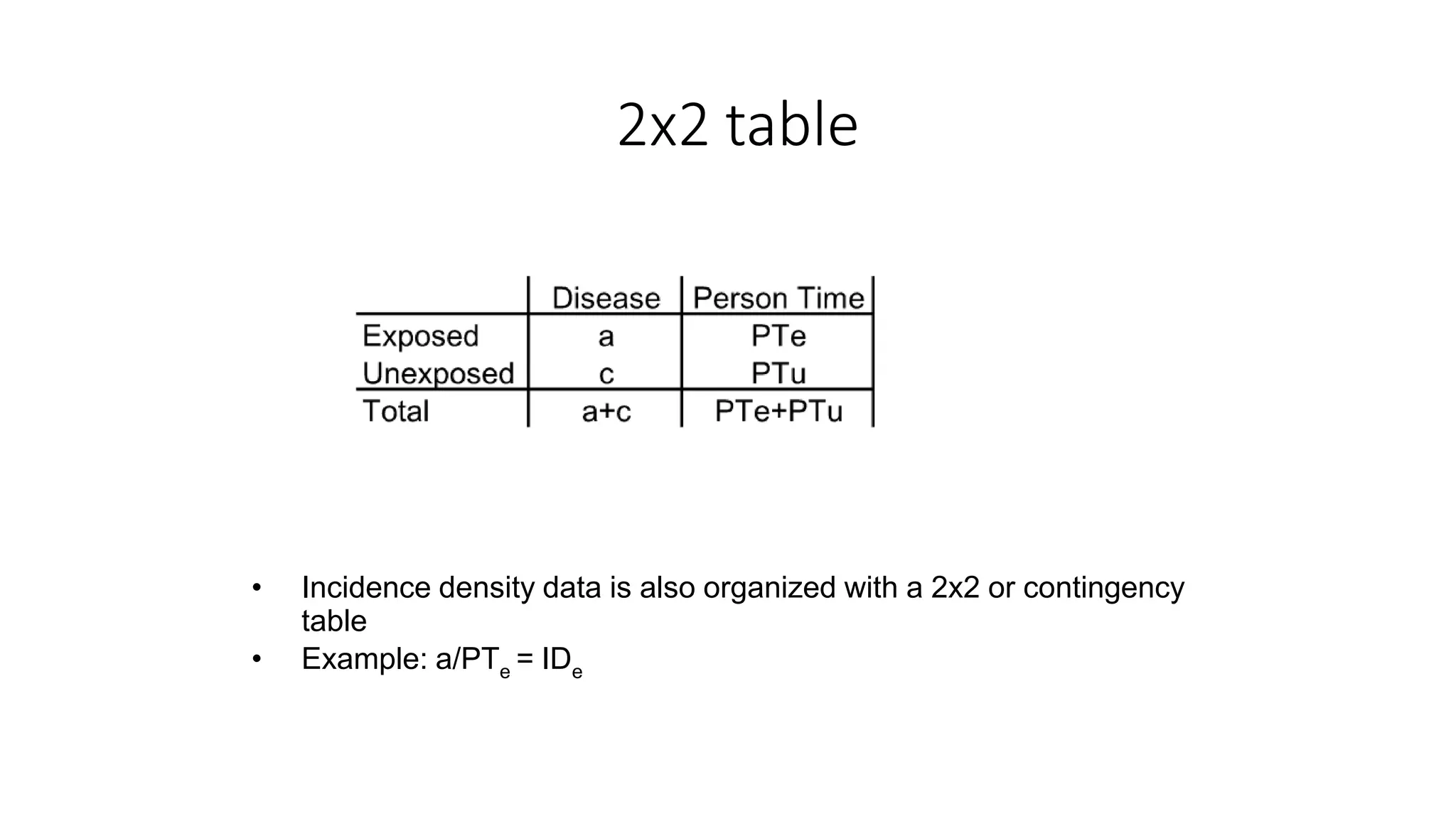
• Incidence density data is also organized with a 2x2 or contingency
table
• Example: a/PTe = IDe
2x2 table
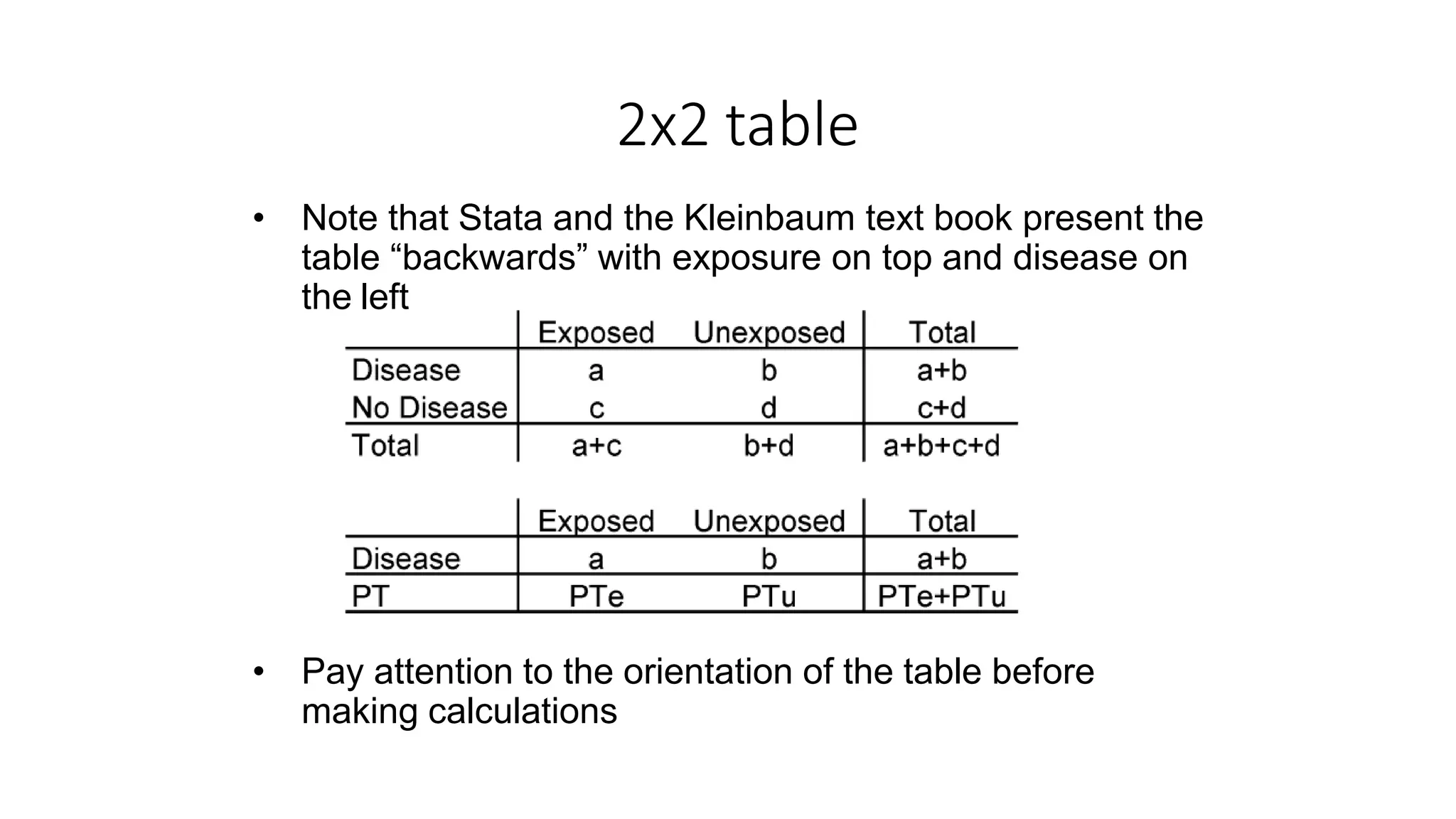
• Note that Stata and the Kleinbaum text book present the
table “backwards” with exposure on top and disease on
the left
• Pay attention to the orientation of the table before
making calculations
2x2 table
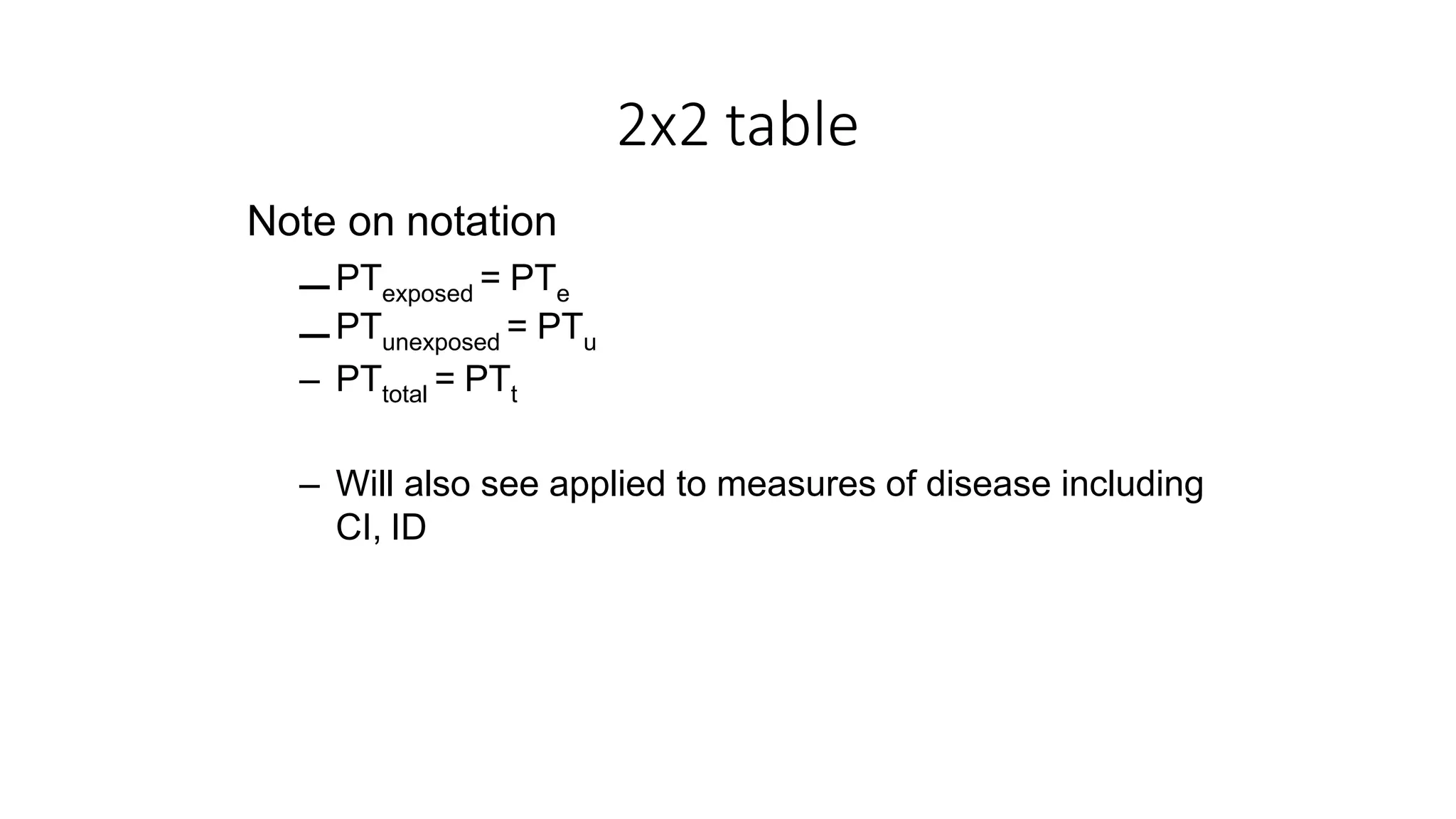
Note on notation
–PTexposed = PTe
–PTunexposed = PTu
– PTtotal = PTt
– Will also see applied to measures of disease including
CI, ID

2.3 2x2 table

  • 1.
    2x2 table • Countdata is typically organized with a 2x2 or contingency table • Example: with incidence data a/(a+b) = CIe • What is CI in the total population?
  • 2.
    2x2 table • Incidencedensity data is also organized with a 2x2 or contingency table • Example: a/PTe = IDe
  • 3.
    2x2 table • Notethat Stata and the Kleinbaum text book present the table “backwards” with exposure on top and disease on the left • Pay attention to the orientation of the table before making calculations
  • 4.
    2x2 table Note onnotation –PTexposed = PTe –PTunexposed = PTu – PTtotal = PTt – Will also see applied to measures of disease including CI, ID