Transfer Function
SUMMER SCHOOL
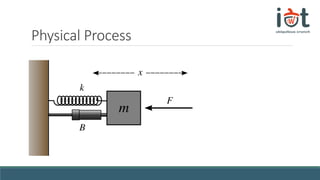
Physical Process
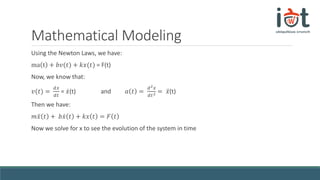
Mathematical Modeling
Using the Newton Laws, we have:
ma t + 𝑏𝑣(𝑡) + 𝑘𝑥(𝑡) = F(t)
Now, we know that:
𝑣(𝑡) =
ⅆ𝑥
ⅆ𝑡
= 𝑥(t) and 𝑎 𝑡 =
ⅆ2 𝑥
ⅆ𝑡2 = 𝑥(t)
Then we have:
𝑚 𝑥 𝑡 + 𝑏 𝑥 𝑡 + 𝑘𝑥 𝑡 = 𝐹 𝑡
Now we solve for x to see the evolution of the system in time
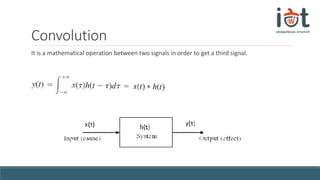
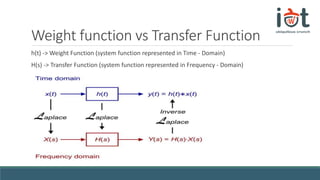
Convolution
It is a mathematical operation between two signals in order to get a third signal.
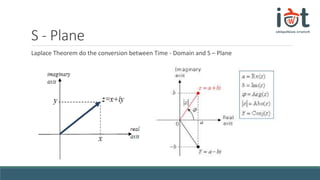
S - Plane
Laplace Theorem do the conversion between Time - Domain and S – Plane
Weight function vs Transfer Function
h(t) -> Weight Function (system function represented in Time - Domain)
H(s) -> Transfer Function (system function represented in Frequency - Domain)
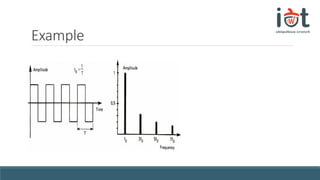
Example
TF for our Physical System
Differential equation from our example:
𝑚 𝑥 𝑡 + 𝑏 𝑥 𝑡 + 𝑘𝑥 𝑡 = 𝐹 𝑡
After we apply Laplace Transform, becomes:
𝑚𝑠2 + 𝑏𝑠 + 𝑘 𝑋 𝑠 = 𝐹 𝑠
Thus we get:
𝐻 𝑠 =
𝑋(𝑠)
𝐹(𝑠)
=
1
𝑚𝑠2 + 𝑏𝑠 + 𝑘
Where
H(s) -> Transfer Function for our Physical System
Questions?

Transfer Function

  • 1.
  • 2.
  • 3.
    Mathematical Modeling Using theNewton Laws, we have: ma t + 𝑏𝑣(𝑡) + 𝑘𝑥(𝑡) = F(t) Now, we know that: 𝑣(𝑡) = ⅆ𝑥 ⅆ𝑡 = 𝑥(t) and 𝑎 𝑡 = ⅆ2 𝑥 ⅆ𝑡2 = 𝑥(t) Then we have: 𝑚 𝑥 𝑡 + 𝑏 𝑥 𝑡 + 𝑘𝑥 𝑡 = 𝐹 𝑡 Now we solve for x to see the evolution of the system in time
  • 4.
    Convolution It is amathematical operation between two signals in order to get a third signal.
  • 5.
    S - Plane LaplaceTheorem do the conversion between Time - Domain and S – Plane
  • 6.
    Weight function vsTransfer Function h(t) -> Weight Function (system function represented in Time - Domain) H(s) -> Transfer Function (system function represented in Frequency - Domain)
  • 7.
  • 8.
    TF for ourPhysical System Differential equation from our example: 𝑚 𝑥 𝑡 + 𝑏 𝑥 𝑡 + 𝑘𝑥 𝑡 = 𝐹 𝑡 After we apply Laplace Transform, becomes: 𝑚𝑠2 + 𝑏𝑠 + 𝑘 𝑋 𝑠 = 𝐹 𝑠 Thus we get: 𝐻 𝑠 = 𝑋(𝑠) 𝐹(𝑠) = 1 𝑚𝑠2 + 𝑏𝑠 + 𝑘 Where H(s) -> Transfer Function for our Physical System
  • 9.