Pelephone IT – Case Study
    Agile Israel 2012
Agenda
 Why am I here?

 What made us go Agile?

 Why was it so difficult?

 What have we done????

 What’s next?

 What do we recommend you to do/not to do?
Why am I here?
 Hopefully help other Enterprise IT organizations
advance to agile methodologies
    Learn from our mistakes
    Hear what worked for us


 Convince the skeptic that Agile/Kanban is possible
and even recommended for Enterprise IT organizations
What made us go Agile?
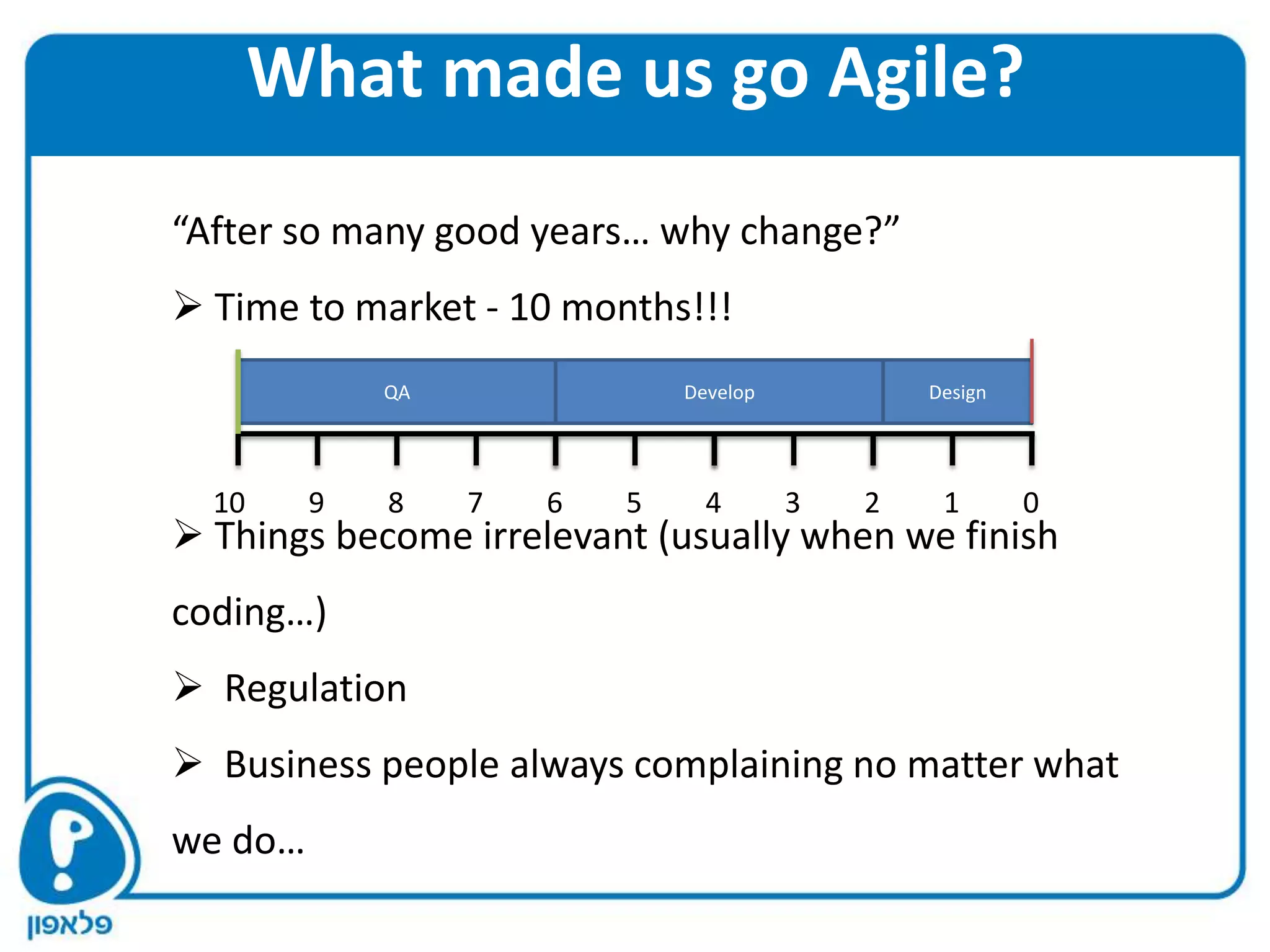
“After so many good years… why change?”
 Time to market - 10 months!!!
             QA               Develop           Design


  10     9   8    7   6   5     4       3   2    1       0
 Things become irrelevant (usually when we finish
coding…)
 Regulation
 Business people always complaining no matter what
we do…
What made us go Agile?

 Changes = Big frustration (also for us )


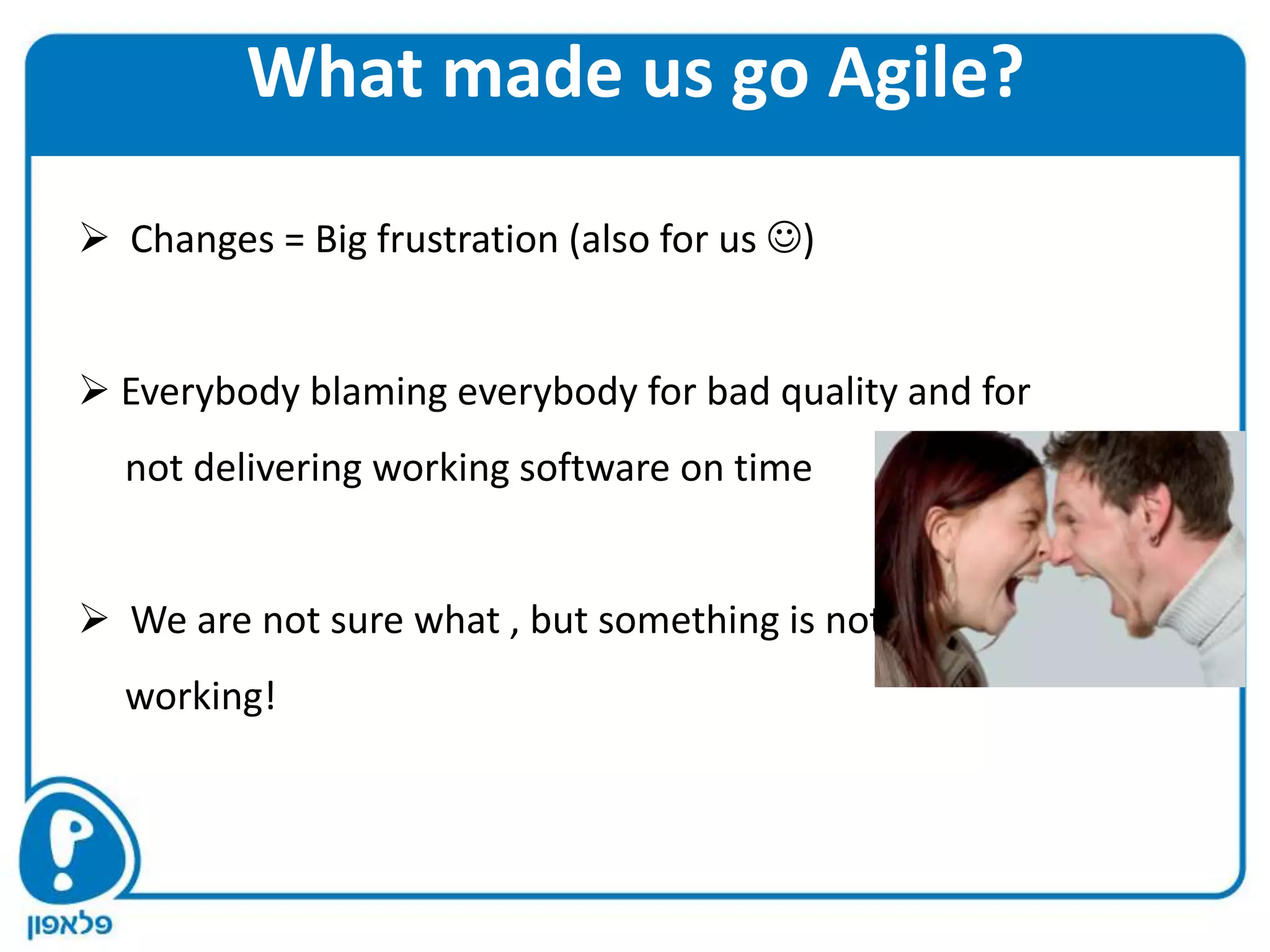
 Everybody blaming everybody for bad quality and for
  not delivering working software on time


 We are not sure what , but something is not
  working!
Why was it so difficult?
 Change is never easy


 Legacy systems


 Legacy people


 Internal political issues
Why was it so difficult?
 Lack of knowledge and experience


 We have a monopoly over IT in Pelephone (no
  competitors)


 Maintenance of production by the dev teams
What have we done????
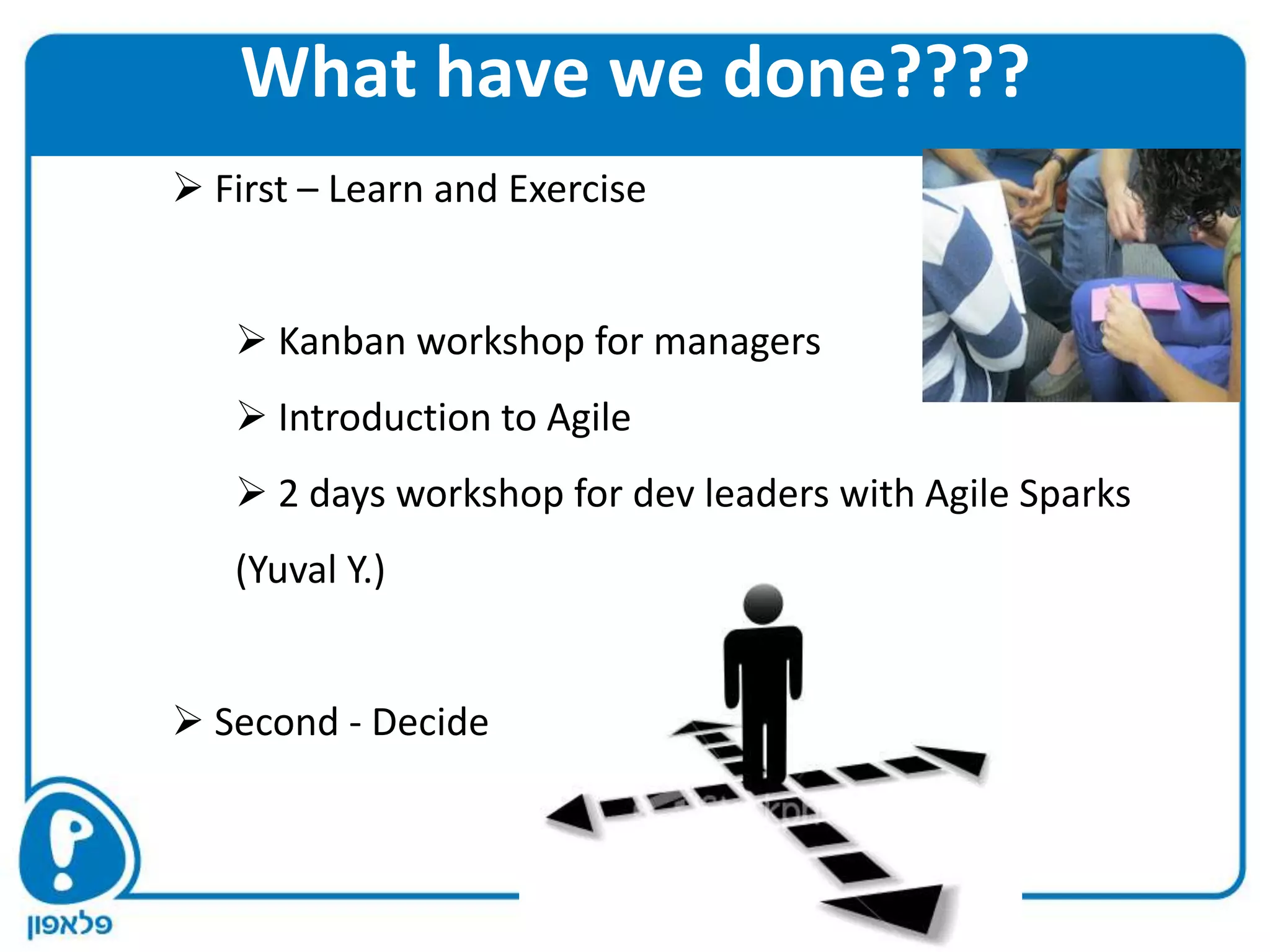
 First – Learn and Exercise


    Kanban workshop for managers
    Introduction to Agile
    2 days workshop for dev leaders with Agile Sparks
   (Yuval Y.)


 Second - Decide
What have we done??
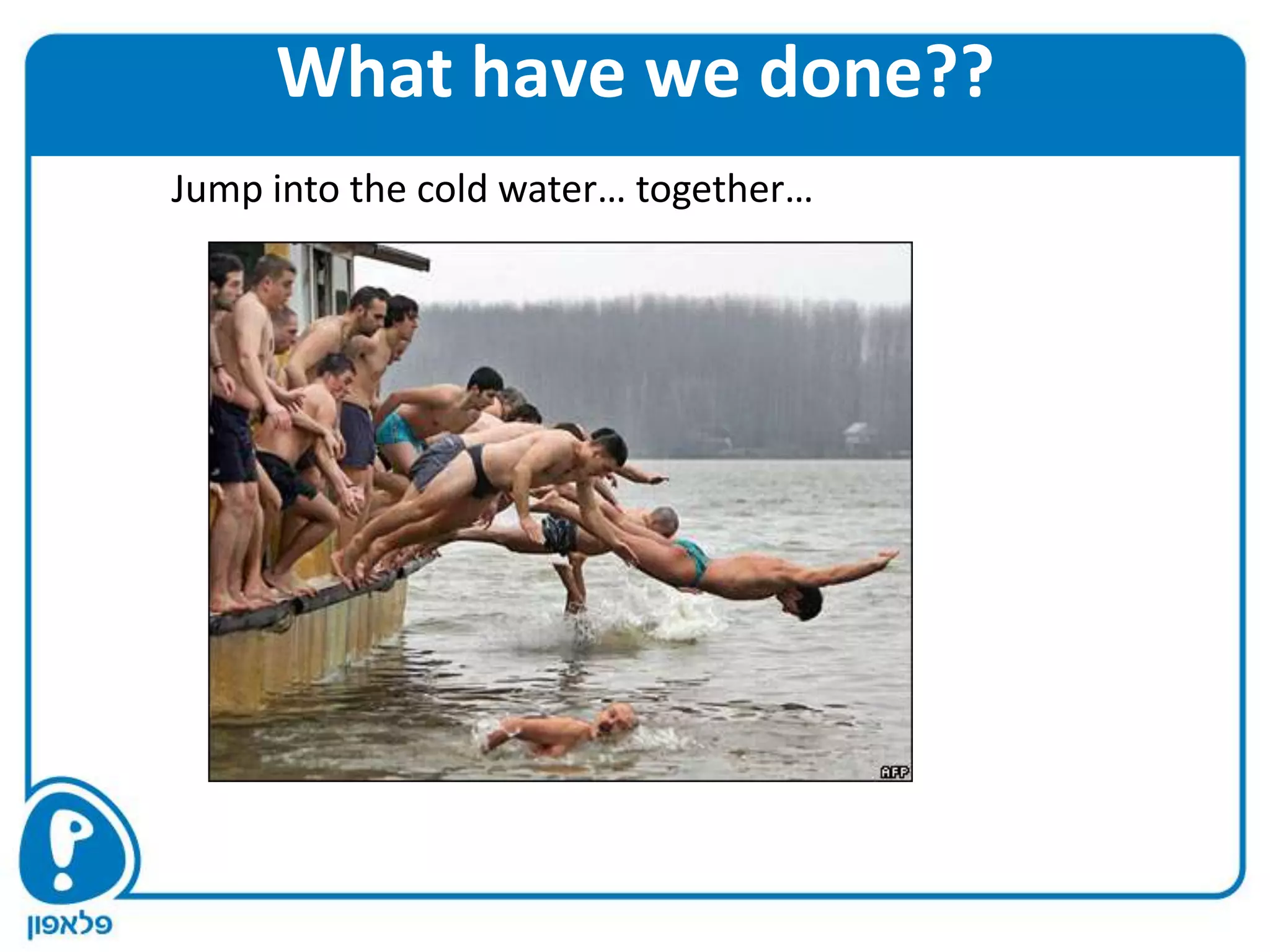
Jump into the cold water… together…
What have we done
 Dev helps QA to clear backlog


 Production every 1 month


 Assemble heterogeneous teams


 Learn as we go…
What have we done

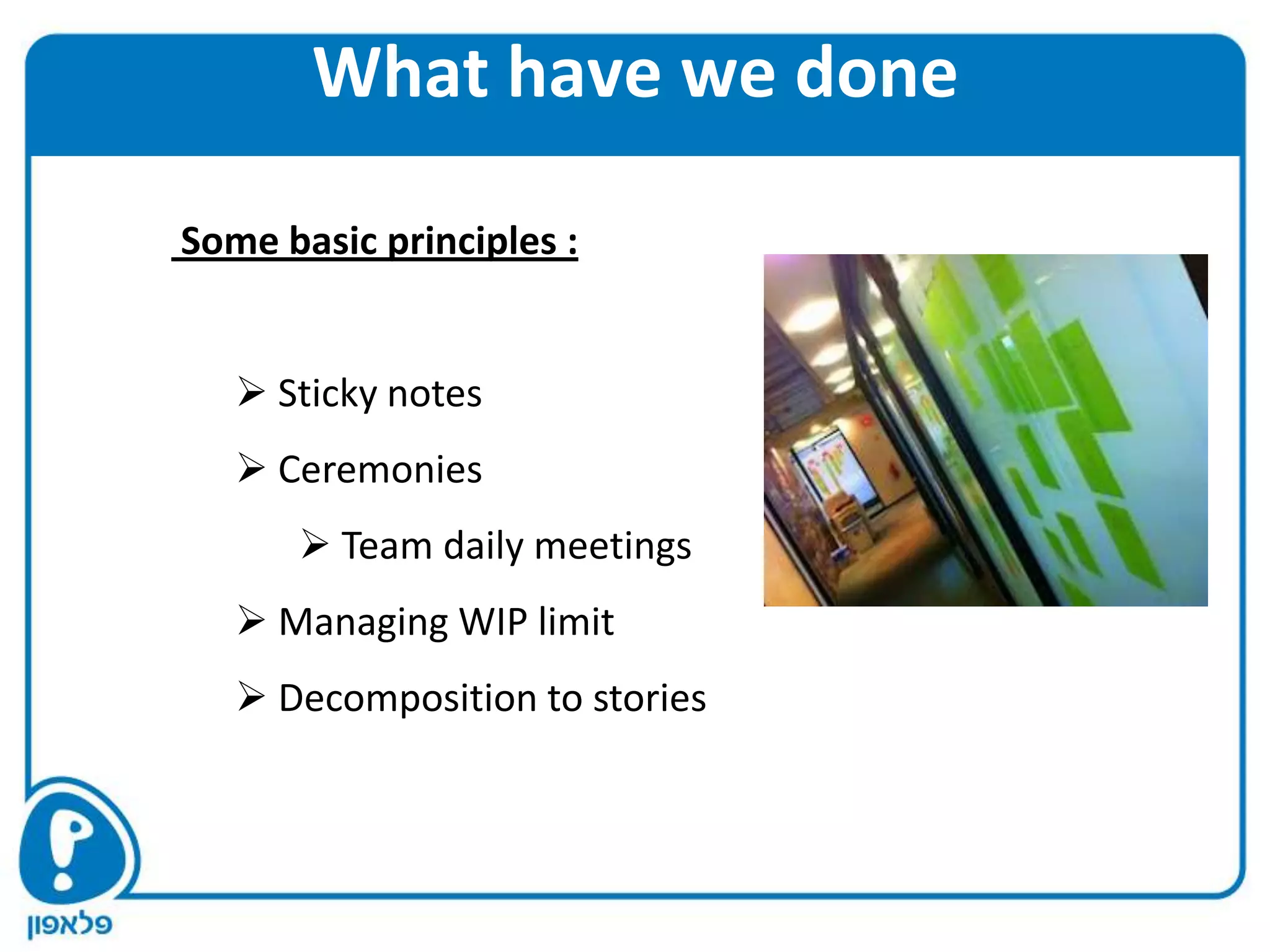
Some basic principles :


    Sticky notes
    Ceremonies
       Team daily meetings
    Managing WIP limit
    Decomposition to stories
What have we done
               Immediate challenges

 Too big/long :
    Daily meetings
    Teams
    Stories
 Not enough retrospectives
 QA are not pleased with getting software
  almost all the time instead of one shot as before
 Hierarchical TL’s job description becomes vague
What have we done
            Immediate improvements

 Teams are eager to succeed


 People work together (No one to blame)


 Everybody is involved right from the
beginning


 Mean TTM shortened to 4 weeks!!
What have we done
           Immediate improvements

 Business gets working software in small chunks and
likes it
 Business start to think more Agile
 We are TOO FAST!!??


“Can you hold this for a week? We didn’t finish training”
“You are saying YES more then before”
“We feel that we are together in this”
What’s next?
 Continue improving our skills
    Build better (shorter, independent) stories
    Conduct more efficient ceremonies
    Make team members take more responsibility over project
   goals
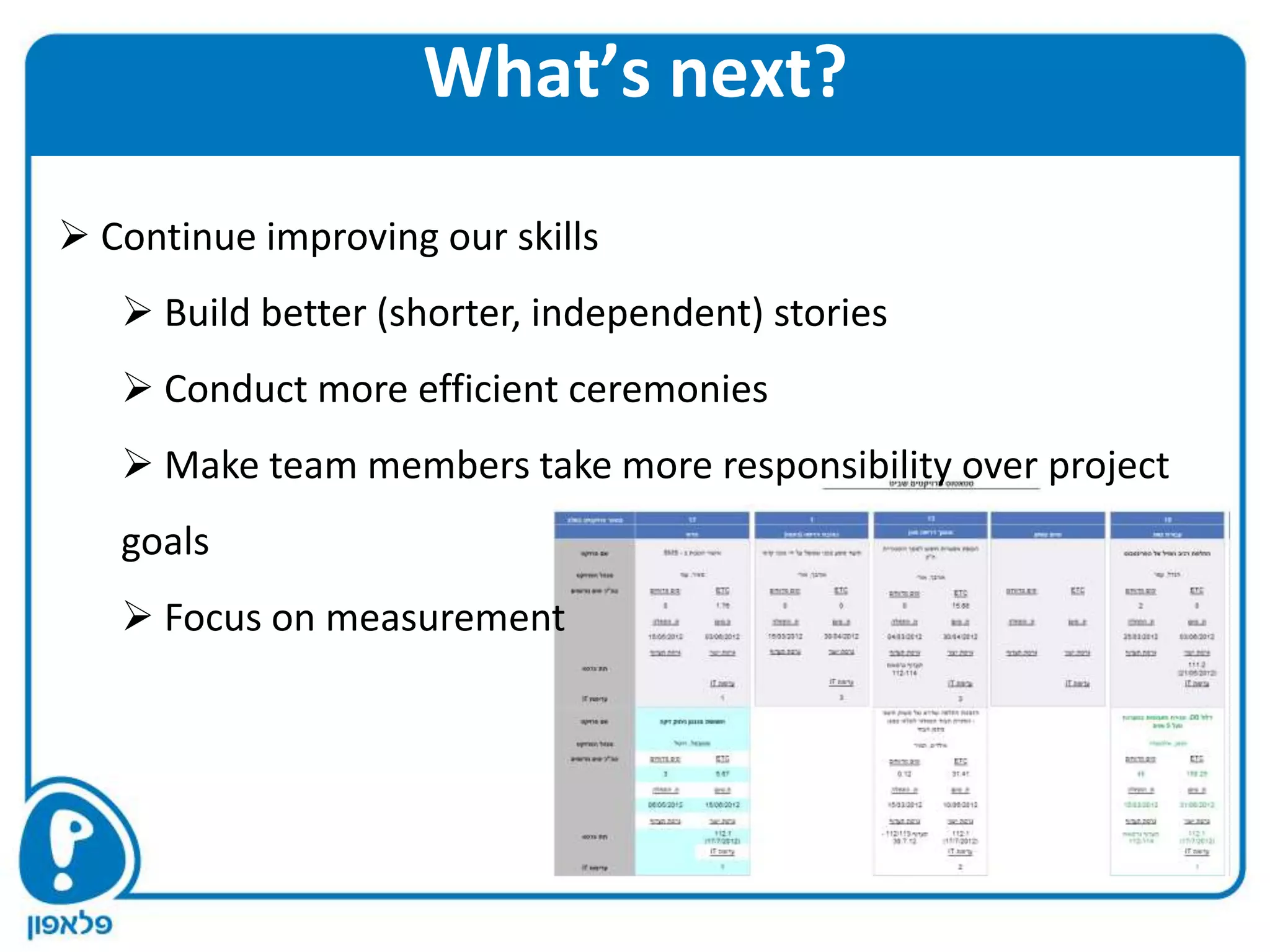
    Focus on measurement
Recommendations

 This is not a “one shot” change. Making mistakes is
part of the learning. Make sure you learn from them
 Business have to prepare for minor (hopefully)
delays in first period and agree to this
 People will complain at first. Embrace them but don’t
let them feel that you are afraid as much as they are .
Things will improve!
 Managers should be part of the process
Questions?

Beginning the Kanban journey at an Enterprise IT - Case study - Pelephone

  • 1.
    Pelephone IT –Case Study Agile Israel 2012
  • 2.
    Agenda  Why amI here?  What made us go Agile?  Why was it so difficult?  What have we done????  What’s next?  What do we recommend you to do/not to do?
  • 3.
    Why am Ihere?  Hopefully help other Enterprise IT organizations advance to agile methodologies  Learn from our mistakes  Hear what worked for us  Convince the skeptic that Agile/Kanban is possible and even recommended for Enterprise IT organizations
  • 4.
    What made usgo Agile? “After so many good years… why change?”  Time to market - 10 months!!! QA Develop Design 10 9 8 7 6 5 4 3 2 1 0  Things become irrelevant (usually when we finish coding…)  Regulation  Business people always complaining no matter what we do…
  • 5.
    What made usgo Agile?  Changes = Big frustration (also for us )  Everybody blaming everybody for bad quality and for not delivering working software on time  We are not sure what , but something is not working!
  • 6.
    Why was itso difficult?  Change is never easy  Legacy systems  Legacy people  Internal political issues
  • 7.
    Why was itso difficult?  Lack of knowledge and experience  We have a monopoly over IT in Pelephone (no competitors)  Maintenance of production by the dev teams
  • 8.
    What have wedone????  First – Learn and Exercise  Kanban workshop for managers  Introduction to Agile  2 days workshop for dev leaders with Agile Sparks (Yuval Y.)  Second - Decide
  • 9.
    What have wedone?? Jump into the cold water… together…
  • 10.
    What have wedone  Dev helps QA to clear backlog  Production every 1 month  Assemble heterogeneous teams  Learn as we go…
  • 11.
    What have wedone Some basic principles :  Sticky notes  Ceremonies  Team daily meetings  Managing WIP limit  Decomposition to stories
  • 12.
    What have wedone Immediate challenges  Too big/long :  Daily meetings  Teams  Stories  Not enough retrospectives  QA are not pleased with getting software almost all the time instead of one shot as before  Hierarchical TL’s job description becomes vague
  • 13.
    What have wedone Immediate improvements  Teams are eager to succeed  People work together (No one to blame)  Everybody is involved right from the beginning  Mean TTM shortened to 4 weeks!!
  • 14.
    What have wedone Immediate improvements  Business gets working software in small chunks and likes it  Business start to think more Agile  We are TOO FAST!!?? “Can you hold this for a week? We didn’t finish training” “You are saying YES more then before” “We feel that we are together in this”
  • 15.
    What’s next?  Continueimproving our skills  Build better (shorter, independent) stories  Conduct more efficient ceremonies  Make team members take more responsibility over project goals  Focus on measurement
  • 16.
    Recommendations  This isnot a “one shot” change. Making mistakes is part of the learning. Make sure you learn from them  Business have to prepare for minor (hopefully) delays in first period and agree to this  People will complain at first. Embrace them but don’t let them feel that you are afraid as much as they are . Things will improve!  Managers should be part of the process
  • 17.