LEAN-agile
© copyright 2010. Net Objectives, Inc.
B E C O M I N G
Lean Software For
Everyone
Ken Pugh
Fellow Consultant
KP Aug 2014
• Introduction and
Background
• Lean as Flow
• Lean Software Development
• Lean-Agile
• Transforming into Lean
Outline
Ken Pugh
ken.pugh
@netobjectives.com
Photo
Size:
Height: 2.25
Position:
from top left corner
Horizontal 0.75
Vertical 1.
Picture Style: Simple Black
Frame
No code goes in till the test goes on.
A journey of two thousand miles begins with a single step.
 Fellow Consultant
 SPC, Lean, Scrum, ATDD, TDD, OOA&D, Design
Patterns,
 Over 2/5 century of software development
experience
 Author of seven books, including:
– Prefactoring: Extreme Abstraction, Extreme
Separation, Extreme Readability (2006 Jolt Award)
– Interface Oriented Design
– Lean Agile Acceptance Test-Driven Development:
Better Software Through Collaboration
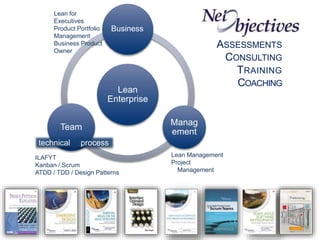
Lean
Enterprise
Business
Manag
ement
Team
ASSESSMENTS
CONSULTING
TRAINING
COACHING
Lean for
Executives
Product Portfolio
Management
Business Product
Owner
Lean Management
Project
Management
ILAFYT
Kanban / Scrum
ATDD / TDD / Design Patterns
technical process
 Lean Thinking, Jim Womack and Daniel Jones
 Lean Software Development, Mary and Tom
Poppendieck
 The Principles of Product Development Flow:
Second Generation Lean Product Development,
Donald Reinertsen
 Alan Shalloway, http://www.netobjectives.com/blog
Resources
Overall Rule
 There are exceptions to every statement, except
this one
6
copyright © 2010 Net Objectives Inc.
Introduction and
Background
 Lean software engineering
– Continuous delivery of high quality applications
In short
 Toyota Production System
– Lean Manufacturing
 Lean Thinking
– Use lean thinking on workflow
– Software development is workflow
 Lean Software Development
 Creating software is not the same as producing a car
 Principles derived from Lean
Lean Approaches
 Taiichi Ohno, chief engineer
 Eiji Toyoda (and cousin Kiichiro Toyoda and his
father Sakichi Toyoda, (Toyoda Loom Works
founder))
 Design out overburden (muri) and inconsistency
(mura), eliminate waste (muda).
 Smooth process - design out inconsistency
 Flexible – without overburden which generates
waste
 Elimination of waste
Toyota Production System (TPS)
 Continuous improvement
– Kazien
 Respect for people
 Long-term philosophy
– Not short term goals
 Right process will produce right results
– Stop to fix problems
– Visual controls
– Use reliable, tested technology
 Add value to organization by developing your people and
partners
– Develop exceptional teams
 Continuously solving root problems drives organizational
learning
– Decisions by consensus
TPS Principles
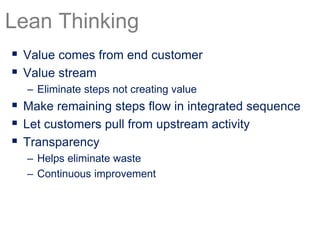
 Value comes from end customer
 Value stream
– Eliminate steps not creating value
 Make remaining steps flow in integrated sequence
 Let customers pull from upstream activity
 Transparency
– Helps eliminate waste
– Continuous improvement
Lean Thinking
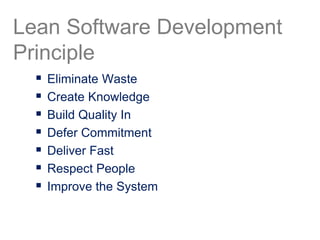
 Eliminate Waste
 Create Knowledge
 Build Quality In
 Defer Commitment
 Deliver Fast
 Respect People
 Improve the System
Lean Software Development
Principle
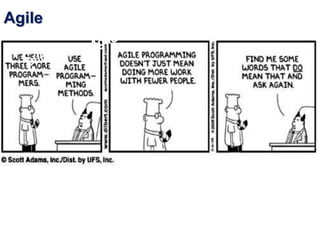
Agile
copyright © 2010 Net Objectives Inc.
Workflow
drive from
Business Value
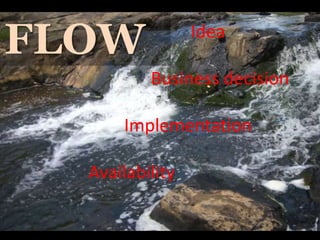
concentration
Idea
Business decision
Implementation
Availability
FLOW
© Warp and
outcome
business value
trumps Reducing Waste
© Warp and Byte Designs, Inc..
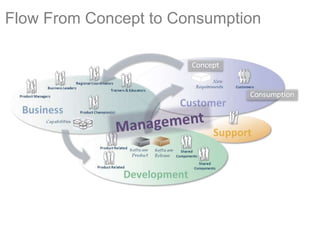
Flow From Concept to Consumption
Business Value – What Is It? (1)
 Need to measure business value
 Deliver best ROI for business value
 "I can't define it, but I know it when I see it“
 Question: What is it to you?
26
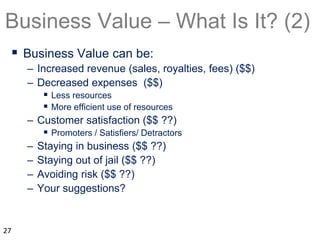
Business Value – What Is It? (2)
 Business Value can be:
– Increased revenue (sales, royalties, fees) ($$)
– Decreased expenses ($$)
 Less resources
 More efficient use of resources
– Customer satisfaction ($$ ??)
 Promoters / Satisfiers/ Detractors
– Staying in business ($$ ??)
– Staying out of jail ($$ ??)
– Avoiding risk ($$ ??)
– Your suggestions?
27
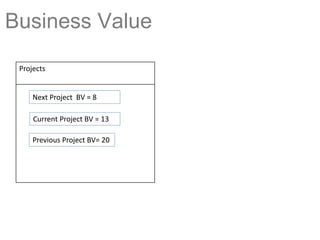
Business Value
Projects
Next Project BV = 8
Current Project BV = 13
Previous Project BV= 20
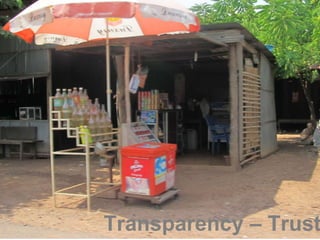
Transparency – Trust
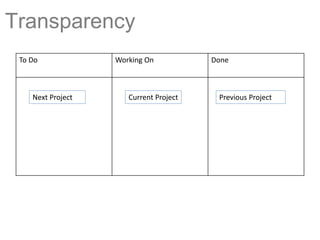
Transparency
To Do Working On Done
Next Project Current Project Previous Project
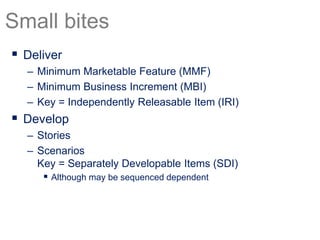
 Deliver
– Minimum Marketable Feature (MMF)
– Minimum Business Increment (MBI)
– Key = Independently Releasable Item (IRI)
 Develop
– Stories
– Scenarios
Key = Separately Developable Items (SDI)
 Although may be sequenced dependent
Small bites
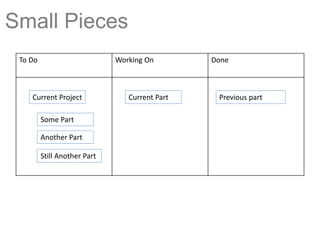
Small Pieces
To Do Working On Done
Current Project Current Part Previous part
Still Another Part
Another Part
Some Part
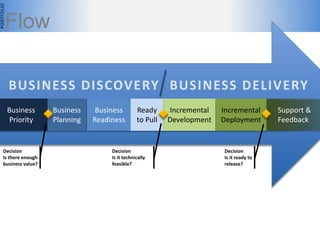
Flow
Business
Priority
BUSINESS DISCOVERY BUSINESS DELIVERY
Business
Planning
Business
Readiness
Ready
to Pull
Incremental
Development
Incremental
Deployment
Support &
Feedback
Decision
Is it technically
feasible?
Decision
Is it ready to
release?
PORTFOLIO
Decision
Is there enough
business value?
Flow
Cycle Time
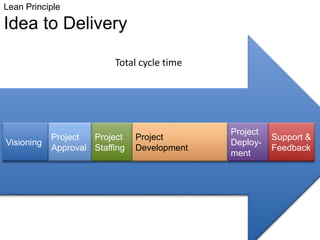
Lean Principle
Idea to Delivery
Support &
Feedback
Project
Approval
Project
Staffing
Project
Development
Project
Deploy-
ment
Visioning
Total cycle time
Lean Principle
Support &
Feedback
Project
Approval
Project
Staffing
Project
Development
Project
Deploy-
ment
Visioning
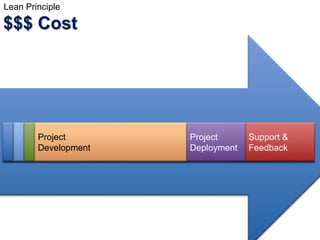
Support &
Feedback
Project
Development
Project
Deployment
$$$ Cost
Support &
Feedback
Project
Approval
Project
Staffing
Project
Development
Project
Deploy-
ment
Visioning
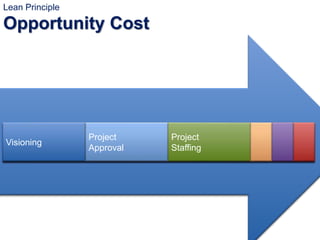
Support &
Feedback
Project
Development
Project
Deployment
Project
Approval
Project
Staffing
Visioning
Lean Principle
Opportunity Cost
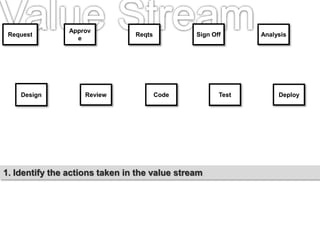
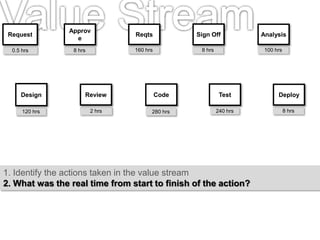
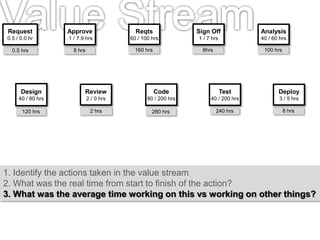
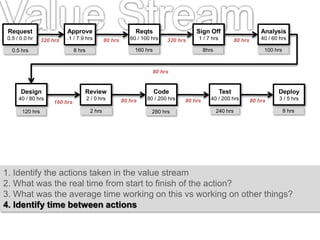
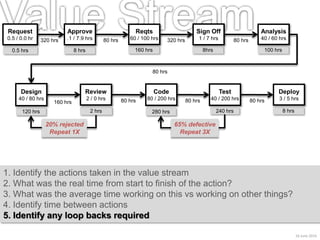
Value Stream
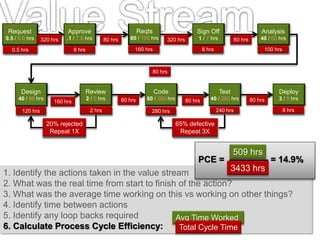
1. Identify the actions taken in the value stream
Approv
e
Request Reqts Sign Off
Review Deploy
Analysis
Design Code Test
0.5 hrs 160 hrs8 hrs 8 hrs
120 hrs 280 hrs 240 hrs
100 hrs
8 hrs2 hrs
Approv
e
Request Reqts Sign Off
Review Deploy
Analysis
Design Code Test
1. Identify the actions taken in the value stream
2. What was the real time from start to finish of the action?
0.5 hrs 160 hrs8 hrs 8hrs
120 hrs 280 hrs 240 hrs
100 hrs
8 hrs2 hrs
Approve
.1 / 7.9 hrs
Request
0.5 / 0.0 hr
Reqts
60 / 100 hrs
Sign Off
1 / 7 hrs
Review
2 / 0 hrs
Deploy
3 / 5 hrs
Analysis
40 / 60 hrs
Design
40 / 80 hrs
Code
80 / 200 hrs
Test
40 / 200 hrs
1. Identify the actions taken in the value stream
2. What was the real time from start to finish of the action?
3. What was the average time working on this vs working on other things?
0.5 hrs 160 hrs8 hrs 8hrs
120 hrs 280 hrs 240 hrs
100 hrs
8 hrs2 hrs
320 hrs 80 hrs 320 hrs 80 hrs
80 hrs
160 hrs 80 hrs 80 hrs 80 hrs
1. Identify the actions taken in the value stream
2. What was the real time from start to finish of the action?
3. What was the average time working on this vs working on other things?
4. Identify time between actions
Approve
.1 / 7.9 hrs
Request
0.5 / 0.0 hr
Reqts
60 / 100 hrs
Sign Off
1 / 7 hrs
Review
2 / 0 hrs
Deploy
3 / 5 hrs
Analysis
40 / 60 hrs
Design
40 / 80 hrs
Code
80 / 200 hrs
Test
40 / 200 hrs
16 June 2015
0.5 hrs 160 hrs8 hrs 8hrs
120 hrs 280 hrs 240 hrs
100 hrs
8 hrs2 hrs
320 hrs 80 hrs 320 hrs 80 hrs
160 hrs 80 hrs 80 hrs 80 hrs
1. Identify the actions taken in the value stream
2. What was the real time from start to finish of the action?
3. What was the average time working on this vs working on other things?
4. Identify time between actions
5. Identify any loop backs required
80 hrs
65% defective
Repeat 3X
20% rejected
Repeat 1X
Approve
.1 / 7.9 hrs
Request
0.5 / 0.0 hr
Reqts
60 / 100 hrs
Sign Off
1 / 7 hrs
Review
2 / 0 hrs
Deploy
3 / 5 hrs
Analysis
40 / 60 hrs
Design
40 / 80 hrs
Code
80 / 200 hrs
Test
40 / 200 hrs
1. Identify the actions taken in the value stream
2. What was the real time from start to finish of the action?
3. What was the average time working on this vs working on other things?
4. Identify time between actions
5. Identify any loop backs required
6. Calculate Process Cycle Efficiency:
Approve
.1 / 7.9 hrs
Request
0.5 / 0.0 hrs
Reqts
60 / 100 hrs
Sign Off
1 / 7 hrs
Review
2 / 0 hrs
Deploy
3 / 5 hrs
Analysis
40 / 60 hrs
Design
40 / 80 hrs
Code
80 / 200 hrs
Test
40 / 200 hrs
0.5 hrs 160 hrs8 hrs 8hrs
120 hrs 280 hrs 240 hrs
100 hrs
8 hrs2 hrs
320 hrs 80 hrs 320 hrs 80 hrs
160 hrs 80 hrs 80 hrs 80 hrs
65% defective
Repeat 3X
20% rejected
Repeat 1X
80 hrs
Approve
.1 / 7.9 hrs
Request
0.5 / 0.0 hrs
Reqts
60 / 100 hrs
Sign Off
1 / 7 hrs
Review
2 / 0 hrs
Deploy
3 / 5 hrs
Analysis
40 / 60 hrs
Design
40 / 80 hrs
Code
80 / 200 hrs
Test
40 / 200 hrs
Avg Time Worked
Total Cycle Time
0.5 hrs 160 hrs8 hrs 8 hrs
120 hrs 280 hrs 240 hrs
100 hrs
8 hrs2 hrs
320 hrs 80 hrs 320 hrs 80 hrs
160 hrs 80 hrs 80 hrs
65% defective
Repeat 3X
20% rejected
Repeat 1X
80 hrs
80 hrs
PCE = = 14.9%
509 hrs
3433 hrs
509 hrs
3433 hrs
Avg Time Worked
Total Cycle Time
Approve
.1 / 7.9 hrs
Request
0.5 / 0.0 hrs
Reqts
60 / 100 hrs
Sign Off
1 / 7 hrs
Review
2 / 0 hrs
Deploy
3 / 5 hrs
Analysis
40 / 60 hrs
Design
40 / 80 hrs
Code
80 / 200 hrs
Test
40 / 200 hrs
0.5 hrs 160 hrs8 hrs 8hrs
120 hrs 280 hrs 240 hrs
100 hrs
8 hrs2 hrs
320 hrs 80 hrs 320 hrs 80 hrs
160 hrs 80 hrs 80 hrs 80 hrs
65% defective
Repeat 3X
20% rejected
Repeat 1X
80 hrs
320 hrs 80 hrs 320 hrs 80 hrs
160 hrs 80 hrs 80 hrs
65% defective
Repeat 3X
20% rejected
Repeat 1X
80 hrs
80 hrs
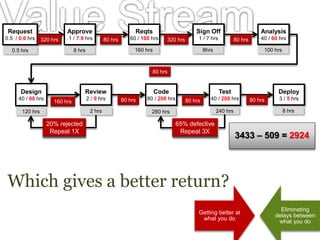
3433 – 509 = 2924
Eliminating
delays between
what you do
Getting better at
what you do
Which gives a better return?
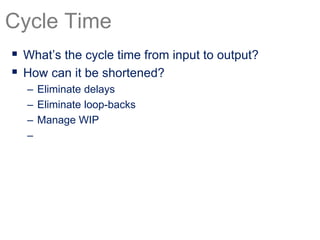
Cycle Time
 What’s the cycle time from input to output?
 How can it be shortened?
– Eliminate delays
– Eliminate loop-backs
– Manage WIP
–
Waste and Delays
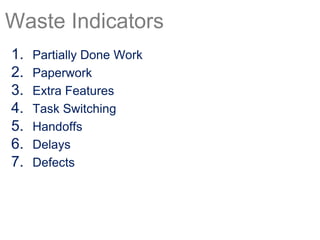
1. Partially Done Work
2. Paperwork
3. Extra Features
4. Task Switching
5. Handoffs
6. Delays
7. Defects
Waste Indicators
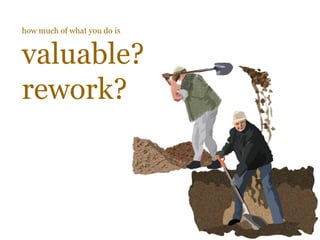
how much of what you do is
valuable?
rework?
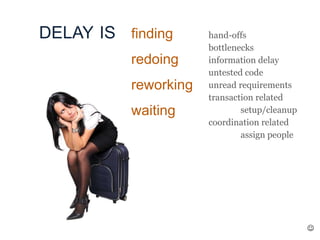
DELAY IS hand-offs
bottlenecks
information delay
untested code
unread requirements
transaction related
setup/cleanup
coordination related
assign people
finding
redoing
reworking
waiting

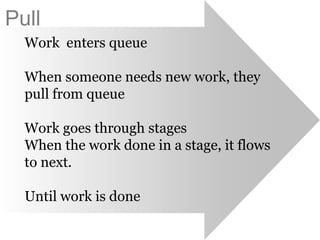
Pull
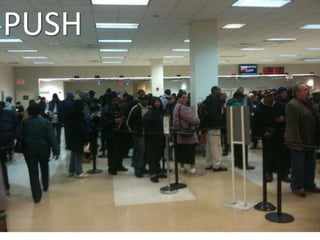
PUSH
Work enters queue
When someone needs new work, they
pull from queue
Work goes through stages
When the work done in a stage, it flows
to next.
Until work is done
Pull
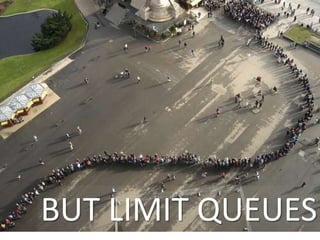
PULL
BUT LIMIT QUEUES
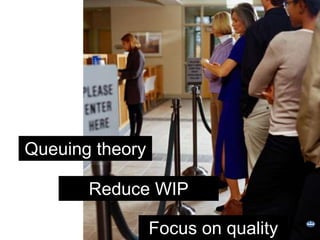
Reduce WIP
Queuing theory
Focus on quality
Practice
EXERCISE
Part One
AGILE IS FUN
EXERCISE
Part Two
AGILE IS FUN
Lean Software
Development
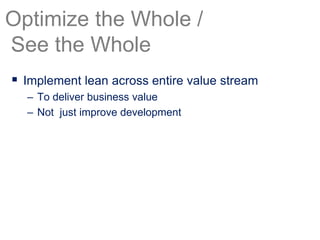
 Implement lean across entire value stream
– To deliver business value
– Not just improve development
Optimize the Whole /
See the Whole
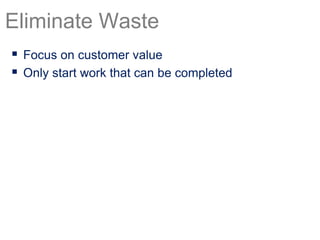
 Focus on customer value
 Only start work that can be completed
Eliminate Waste
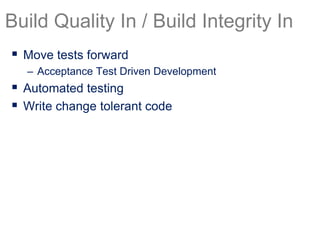
 Move tests forward
– Acceptance Test Driven Development
 Automated testing
 Write change tolerant code
Build Quality In / Build Integrity In
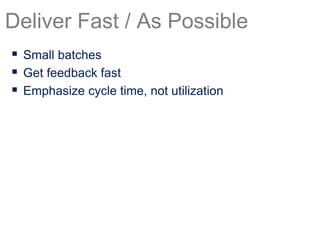
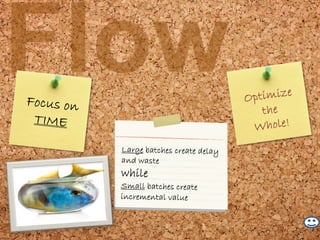
 Small batches
 Get feedback fast
 Emphasize cycle time, not utilization
Deliver Fast / As Possible
 Use knowledge learned from creating application
 Cross-functional teams to share knowledge
 Quick feedback
Create Knowledge
/ Amplify Learning
 Create clear frameworks for decisions
 Decision making at lowest possible level
Empower People / The Team
 Periodic reflections
 Perform root cause analysis
Continually Improve
 Wait till last practical moment to make decision
– More information available
Defer Commitment /
Decide as Late as Possible
Points and
Practices
 Driving in Germany - picture of autobahn
© Warp and Byte Designs, Inc..
Measurement
© Warp and Byte Designs,
Metrics
What is important?
Customer /user satisfaction
Production defects
Rate of delivery
of business value
© Warp and Byte Designs, Inc..
copyright © 2010 Net Objectives Inc.
Lean – Agile
 Apply lean principles/practices to agile processes
 What lean principles/practices do you see in
– Scrum
– Kanban
Lean Agility
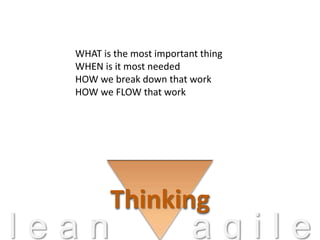
Thinking
l e a n a g i l e
WHAT is the most important thing
WHEN is it most needed
HOW we break down that work
HOW we FLOW that work
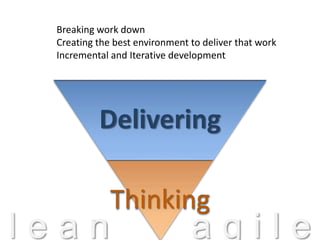
Delivering
Thinking
l e a n a g i l e
Breaking work down
Creating the best environment to deliver that work
Incremental and Iterative development
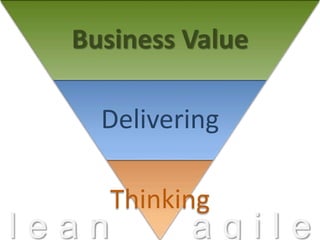
Business Value
Delivering
Thinking
l e a n a g i l e
copyright © 2010 Net Objectives Inc.
Beginning the
Transformation
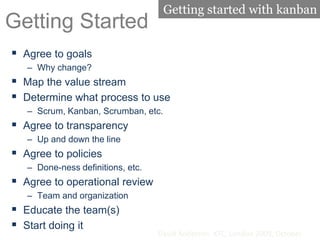
Getting Started
 Agree to goals
– Why change?
 Map the value stream
 Determine what process to use
– Scrum, Kanban, Scrumban, etc.
 Agree to transparency
– Up and down the line
 Agree to policies
– Done-ness definitions, etc.
 Agree to operational review
– Team and organization
 Educate the team(s)
 Start doing it
David Anderson. XTC, London 2009, October
Getting started with kanban
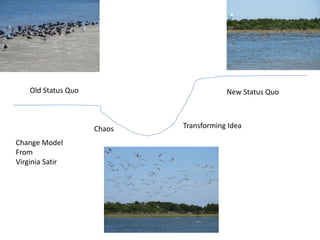
Old Status Quo New Status Quo
Chaos Transforming Idea
Change Model
From
Virginia Satir
copyright © 2010 Net Objectives Inc.
This is Not an Ending,
But a Beginning
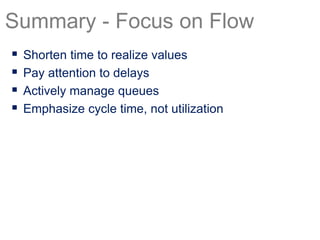
 Shorten time to realize values
 Pay attention to delays
 Actively manage queues
 Emphasize cycle time, not utilization
Summary - Focus on Flow
copyright © 2010 Net Objectives Inc.
Supplementary
Roles
Purpose
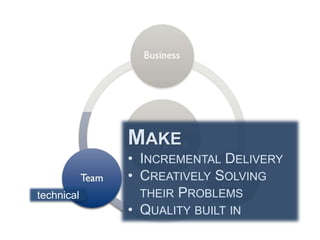
MAKE
• INCREMENTAL DELIVERY
• CREATIVELY SOLVING
THEIR PROBLEMS
• QUALITY BUILT IN
technical
technic
al
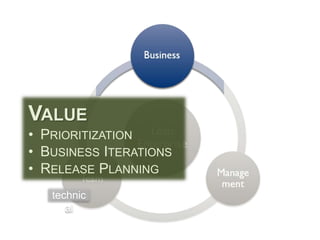
VALUE
• PRIORITIZATION
• BUSINESS ITERATIONS
• RELEASE PLANNING
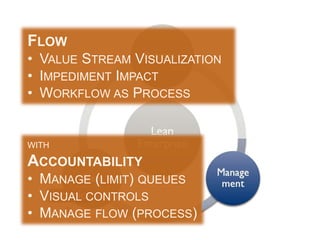
FLOW
• VALUE STREAM VISUALIZATION
• IMPEDIMENT IMPACT
• WORKFLOW AS PROCESS
technic
al
WITH
ACCOUNTABILITY
• MANAGE (LIMIT) QUEUES
• VISUAL CONTROLS
• MANAGE FLOW (PROCESS)
Business Value
Question
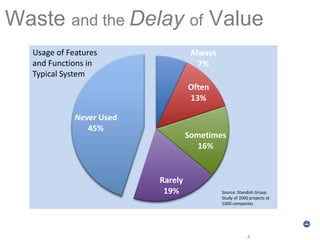
 What percentage of features are never used?
Waste and the Delay of Value
Always
7%
Often
13%
Sometimes
16%
Rarely
19%
Never Used
45%
Source: Standish Group
Study of 2000 projects at
1000 companies
Usage of Features
and Functions in
Typical System
_g
Teams
© U.S. Army
© Warp and Byte Designs, In
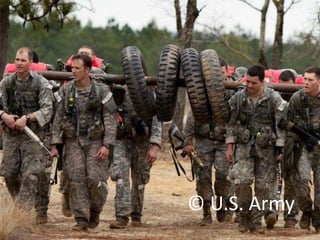
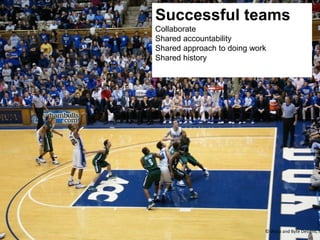
Successful teams
Collaborate
Shared accountability
Shared approach to doing work
Shared history
© Warp and Byte Designs, Inc..
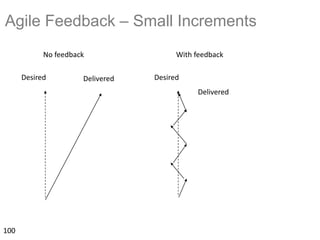
Feedback
Agile Feedback – Small Increments
100
No feedback
Desired Delivered
With feedback
Desired
Delivered
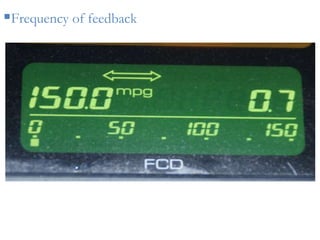
Frequency of feedback
Deliver Quickly
Focus on known, valuable features
gives greater certainty
produces greater value
lowers risk of mis-building and over-building
Deliver
in Stages when possible

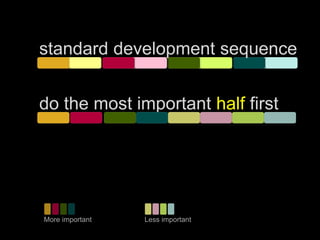
do the most important half first
standard development sequence
More important Less important
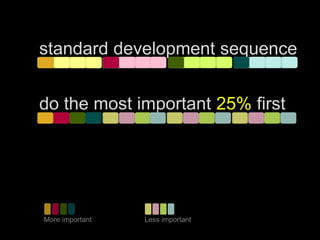
do the most important 25% first
standard development sequence
More important Less important
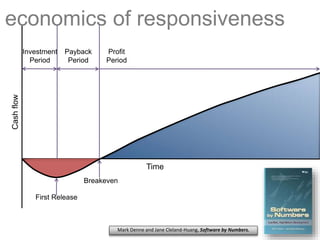
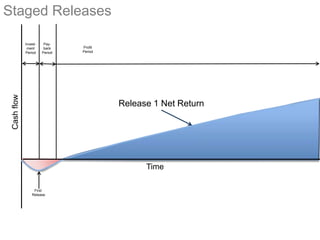
First Release
Investment
Period
Payback
Period
Profit
Period
Breakeven
Cashflow
Time
economics of responsiveness
Mark Denne and Jane Cleland-Huang, Software by Numbers.
Staged Releases
First
Release
Invest-
ment
Period
Profit
Period
Pay-
back
Period
Cashflow
Time
Release 1 Net Return
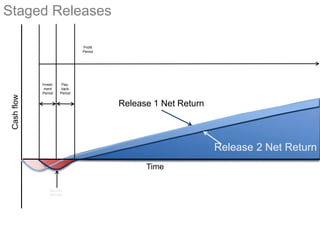
Staged Releases
Profit
Period
Second
Release
Invest-
ment
Period
Pay-
back
Period
Release 2 Net Return
Cashflow
Time
Release 1 Net Return
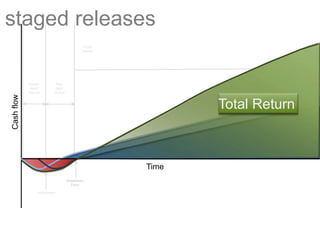
Profit
Period
Investment
Invest-
ment
Period
Pay-
back
Period
Breakeven
Point
Total Return
Cashflow
Time
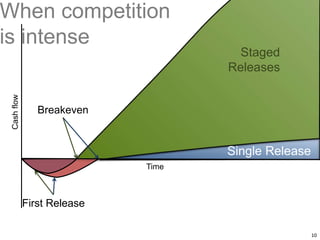
staged releases
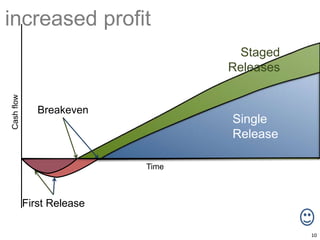
Cashflow
Breakeven
Single
Release
First Release
Time
Staged
Releases
10
increased profit
Cashflow
Breakeven
Single Release
First Release
Time
Staged
Releases
10
When competition
is intense
Multi-Tasking
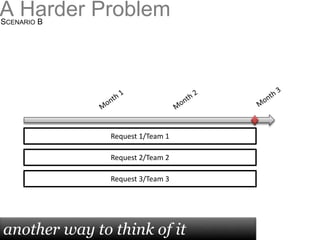
Request 1/Team 1
Request 2/Team 2
Request 3/Team 3
A Harder ProblemSCENARIO B
another way to think of it
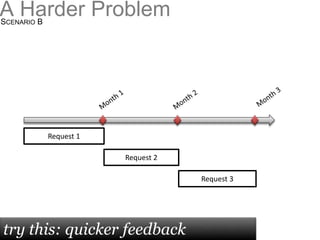
Request 1
Request 2
Request 3
A Harder ProblemSCENARIO B
try this: quicker feedback
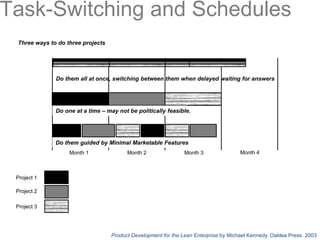
Project 1
Project 2
Project 3
Month 3Month 2Month 1 Month 4
Three ways to do three projects
Do one at a time – may not be politically feasible.
Do them all at once, switching between them when delayed waiting for answers
Do them guided by Minimal Marketable Features
Product Development for the Lean Enterprise by Michael Kennedy. Oaklea Press. 2003
Task-Switching and Schedules
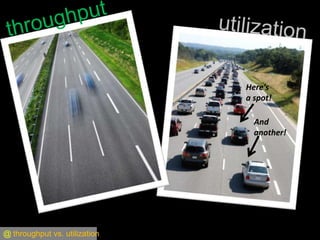
Capacity Utilization
Efficiency
H o w d o y o u m e a s u r e i t ?
K e e p i n g p e o p l e b u s y
O r
P r o d u c i n g b u s i n e s s v a l u e
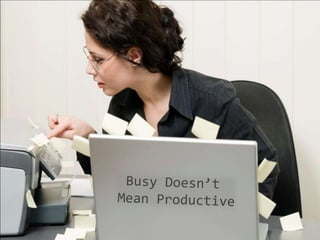
@ throughput vs. utilization

Here’s
a spot!
And
another!
Miscellaneous
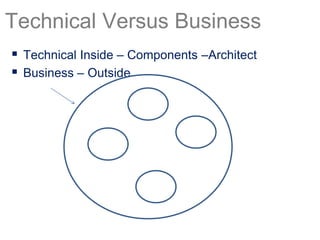
Technical Versus Business
 Technical Inside – Components –Architect
 Business – Outside
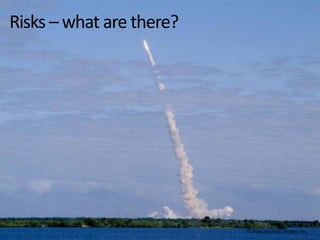
Risks – what are there?
© Warp and Byte Designs, Inc..
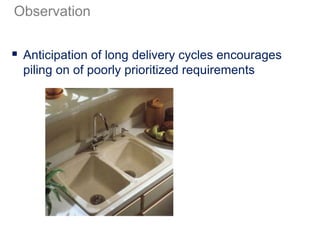
Observation
 Anticipation of long delivery cycles encourages
piling on of poorly prioritized requirements
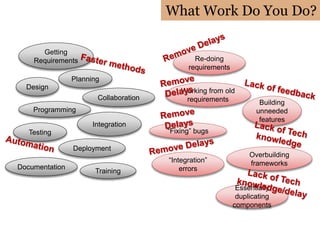
Getting
Requirements
Testing
Programming
Design
Integration
Planning
Collaboration
Re-doing
requirements
Working from old
requirements
“Fixing” bugs
“Integration”
errors
Deployment
Building
unneeded
features
Overbuilding
frameworks
What Work Do You Do?
Training
Documentation
Essentially
duplicating
components
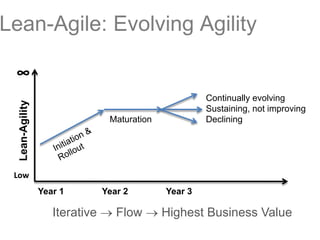
Lean-Agile: Evolving Agility
Continually evolving
Sustaining, not improving
DecliningMaturation
Lean-Agility
Year 1 Year 2 Year 3
Iterative  Flow  Highest Business Value
Low
∞
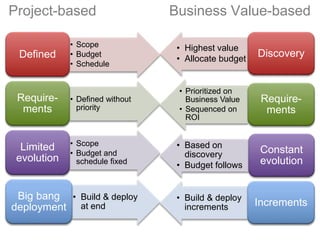
Project-based Business Value-based
• Scope
• Budget
• Schedule
Defined
• Defined without
priority
Require-
ments
• Scope
• Budget and
schedule fixed
Limited
evolution
• Build & deploy
at end
Big bang
deployment
• Highest value
• Allocate budget
Discovery
• Prioritized on
Business Value
• Sequenced on
ROI
Require-
ments
• Based on
discovery
• Budget follows
Constant
evolution
• Build & deploy
increments Increments

Lean Software Development Is for Everyone

  • 1.
    LEAN-agile © copyright 2010.Net Objectives, Inc. B E C O M I N G Lean Software For Everyone Ken Pugh Fellow Consultant KP Aug 2014
  • 2.
    • Introduction and Background •Lean as Flow • Lean Software Development • Lean-Agile • Transforming into Lean Outline
  • 3.
    Ken Pugh ken.pugh @netobjectives.com Photo Size: Height: 2.25 Position: fromtop left corner Horizontal 0.75 Vertical 1. Picture Style: Simple Black Frame No code goes in till the test goes on. A journey of two thousand miles begins with a single step.  Fellow Consultant  SPC, Lean, Scrum, ATDD, TDD, OOA&D, Design Patterns,  Over 2/5 century of software development experience  Author of seven books, including: – Prefactoring: Extreme Abstraction, Extreme Separation, Extreme Readability (2006 Jolt Award) – Interface Oriented Design – Lean Agile Acceptance Test-Driven Development: Better Software Through Collaboration
  • 4.
    Lean Enterprise Business Manag ement Team ASSESSMENTS CONSULTING TRAINING COACHING Lean for Executives Product Portfolio Management BusinessProduct Owner Lean Management Project Management ILAFYT Kanban / Scrum ATDD / TDD / Design Patterns technical process
  • 5.
     Lean Thinking,Jim Womack and Daniel Jones  Lean Software Development, Mary and Tom Poppendieck  The Principles of Product Development Flow: Second Generation Lean Product Development, Donald Reinertsen  Alan Shalloway, http://www.netobjectives.com/blog Resources
  • 6.
    Overall Rule  Thereare exceptions to every statement, except this one 6
  • 7.
    copyright © 2010Net Objectives Inc. Introduction and Background
  • 8.
     Lean softwareengineering – Continuous delivery of high quality applications In short
  • 9.
     Toyota ProductionSystem – Lean Manufacturing  Lean Thinking – Use lean thinking on workflow – Software development is workflow  Lean Software Development  Creating software is not the same as producing a car  Principles derived from Lean Lean Approaches
  • 10.
     Taiichi Ohno,chief engineer  Eiji Toyoda (and cousin Kiichiro Toyoda and his father Sakichi Toyoda, (Toyoda Loom Works founder))  Design out overburden (muri) and inconsistency (mura), eliminate waste (muda).  Smooth process - design out inconsistency  Flexible – without overburden which generates waste  Elimination of waste Toyota Production System (TPS)
  • 11.
     Continuous improvement –Kazien  Respect for people  Long-term philosophy – Not short term goals  Right process will produce right results – Stop to fix problems – Visual controls – Use reliable, tested technology  Add value to organization by developing your people and partners – Develop exceptional teams  Continuously solving root problems drives organizational learning – Decisions by consensus TPS Principles
  • 12.
     Value comesfrom end customer  Value stream – Eliminate steps not creating value  Make remaining steps flow in integrated sequence  Let customers pull from upstream activity  Transparency – Helps eliminate waste – Continuous improvement Lean Thinking
  • 13.
     Eliminate Waste Create Knowledge  Build Quality In  Defer Commitment  Deliver Fast  Respect People  Improve the System Lean Software Development Principle
  • 14.
  • 15.
    copyright © 2010Net Objectives Inc. Workflow
  • 17.
  • 20.
  • 21.
  • 22.
  • 24.
    business value trumps ReducingWaste © Warp and Byte Designs, Inc..
  • 25.
    Flow From Conceptto Consumption
  • 26.
    Business Value –What Is It? (1)  Need to measure business value  Deliver best ROI for business value  "I can't define it, but I know it when I see it“  Question: What is it to you? 26
  • 27.
    Business Value –What Is It? (2)  Business Value can be: – Increased revenue (sales, royalties, fees) ($$) – Decreased expenses ($$)  Less resources  More efficient use of resources – Customer satisfaction ($$ ??)  Promoters / Satisfiers/ Detractors – Staying in business ($$ ??) – Staying out of jail ($$ ??) – Avoiding risk ($$ ??) – Your suggestions? 27
  • 28.
    Business Value Projects Next ProjectBV = 8 Current Project BV = 13 Previous Project BV= 20
  • 29.
  • 30.
    Transparency To Do WorkingOn Done Next Project Current Project Previous Project
  • 31.
     Deliver – MinimumMarketable Feature (MMF) – Minimum Business Increment (MBI) – Key = Independently Releasable Item (IRI)  Develop – Stories – Scenarios Key = Separately Developable Items (SDI)  Although may be sequenced dependent Small bites
  • 32.
    Small Pieces To DoWorking On Done Current Project Current Part Previous part Still Another Part Another Part Some Part
  • 33.
  • 34.
    Business Priority BUSINESS DISCOVERY BUSINESSDELIVERY Business Planning Business Readiness Ready to Pull Incremental Development Incremental Deployment Support & Feedback Decision Is it technically feasible? Decision Is it ready to release? PORTFOLIO Decision Is there enough business value? Flow
  • 35.
  • 36.
    Lean Principle Idea toDelivery Support & Feedback Project Approval Project Staffing Project Development Project Deploy- ment Visioning Total cycle time
  • 37.
  • 38.
  • 39.
  • 40.
    1. Identify theactions taken in the value stream Approv e Request Reqts Sign Off Review Deploy Analysis Design Code Test
  • 41.
    0.5 hrs 160hrs8 hrs 8 hrs 120 hrs 280 hrs 240 hrs 100 hrs 8 hrs2 hrs Approv e Request Reqts Sign Off Review Deploy Analysis Design Code Test 1. Identify the actions taken in the value stream 2. What was the real time from start to finish of the action?
  • 42.
    0.5 hrs 160hrs8 hrs 8hrs 120 hrs 280 hrs 240 hrs 100 hrs 8 hrs2 hrs Approve .1 / 7.9 hrs Request 0.5 / 0.0 hr Reqts 60 / 100 hrs Sign Off 1 / 7 hrs Review 2 / 0 hrs Deploy 3 / 5 hrs Analysis 40 / 60 hrs Design 40 / 80 hrs Code 80 / 200 hrs Test 40 / 200 hrs 1. Identify the actions taken in the value stream 2. What was the real time from start to finish of the action? 3. What was the average time working on this vs working on other things?
  • 43.
    0.5 hrs 160hrs8 hrs 8hrs 120 hrs 280 hrs 240 hrs 100 hrs 8 hrs2 hrs 320 hrs 80 hrs 320 hrs 80 hrs 80 hrs 160 hrs 80 hrs 80 hrs 80 hrs 1. Identify the actions taken in the value stream 2. What was the real time from start to finish of the action? 3. What was the average time working on this vs working on other things? 4. Identify time between actions Approve .1 / 7.9 hrs Request 0.5 / 0.0 hr Reqts 60 / 100 hrs Sign Off 1 / 7 hrs Review 2 / 0 hrs Deploy 3 / 5 hrs Analysis 40 / 60 hrs Design 40 / 80 hrs Code 80 / 200 hrs Test 40 / 200 hrs
  • 44.
    16 June 2015 0.5hrs 160 hrs8 hrs 8hrs 120 hrs 280 hrs 240 hrs 100 hrs 8 hrs2 hrs 320 hrs 80 hrs 320 hrs 80 hrs 160 hrs 80 hrs 80 hrs 80 hrs 1. Identify the actions taken in the value stream 2. What was the real time from start to finish of the action? 3. What was the average time working on this vs working on other things? 4. Identify time between actions 5. Identify any loop backs required 80 hrs 65% defective Repeat 3X 20% rejected Repeat 1X Approve .1 / 7.9 hrs Request 0.5 / 0.0 hr Reqts 60 / 100 hrs Sign Off 1 / 7 hrs Review 2 / 0 hrs Deploy 3 / 5 hrs Analysis 40 / 60 hrs Design 40 / 80 hrs Code 80 / 200 hrs Test 40 / 200 hrs
  • 45.
    1. Identify theactions taken in the value stream 2. What was the real time from start to finish of the action? 3. What was the average time working on this vs working on other things? 4. Identify time between actions 5. Identify any loop backs required 6. Calculate Process Cycle Efficiency: Approve .1 / 7.9 hrs Request 0.5 / 0.0 hrs Reqts 60 / 100 hrs Sign Off 1 / 7 hrs Review 2 / 0 hrs Deploy 3 / 5 hrs Analysis 40 / 60 hrs Design 40 / 80 hrs Code 80 / 200 hrs Test 40 / 200 hrs 0.5 hrs 160 hrs8 hrs 8hrs 120 hrs 280 hrs 240 hrs 100 hrs 8 hrs2 hrs 320 hrs 80 hrs 320 hrs 80 hrs 160 hrs 80 hrs 80 hrs 80 hrs 65% defective Repeat 3X 20% rejected Repeat 1X 80 hrs Approve .1 / 7.9 hrs Request 0.5 / 0.0 hrs Reqts 60 / 100 hrs Sign Off 1 / 7 hrs Review 2 / 0 hrs Deploy 3 / 5 hrs Analysis 40 / 60 hrs Design 40 / 80 hrs Code 80 / 200 hrs Test 40 / 200 hrs Avg Time Worked Total Cycle Time 0.5 hrs 160 hrs8 hrs 8 hrs 120 hrs 280 hrs 240 hrs 100 hrs 8 hrs2 hrs 320 hrs 80 hrs 320 hrs 80 hrs 160 hrs 80 hrs 80 hrs 65% defective Repeat 3X 20% rejected Repeat 1X 80 hrs 80 hrs PCE = = 14.9% 509 hrs 3433 hrs 509 hrs 3433 hrs Avg Time Worked Total Cycle Time
  • 46.
    Approve .1 / 7.9hrs Request 0.5 / 0.0 hrs Reqts 60 / 100 hrs Sign Off 1 / 7 hrs Review 2 / 0 hrs Deploy 3 / 5 hrs Analysis 40 / 60 hrs Design 40 / 80 hrs Code 80 / 200 hrs Test 40 / 200 hrs 0.5 hrs 160 hrs8 hrs 8hrs 120 hrs 280 hrs 240 hrs 100 hrs 8 hrs2 hrs 320 hrs 80 hrs 320 hrs 80 hrs 160 hrs 80 hrs 80 hrs 80 hrs 65% defective Repeat 3X 20% rejected Repeat 1X 80 hrs 320 hrs 80 hrs 320 hrs 80 hrs 160 hrs 80 hrs 80 hrs 65% defective Repeat 3X 20% rejected Repeat 1X 80 hrs 80 hrs 3433 – 509 = 2924 Eliminating delays between what you do Getting better at what you do Which gives a better return?
  • 47.
    Cycle Time  What’sthe cycle time from input to output?  How can it be shortened? – Eliminate delays – Eliminate loop-backs – Manage WIP –
  • 48.
  • 49.
    1. Partially DoneWork 2. Paperwork 3. Extra Features 4. Task Switching 5. Handoffs 6. Delays 7. Defects Waste Indicators
  • 50.
    how much ofwhat you do is valuable? rework?
  • 51.
    DELAY IS hand-offs bottlenecks informationdelay untested code unread requirements transaction related setup/cleanup coordination related assign people finding redoing reworking waiting 
  • 52.
  • 53.
  • 54.
    Work enters queue Whensomeone needs new work, they pull from queue Work goes through stages When the work done in a stage, it flows to next. Until work is done Pull
  • 55.
  • 56.
  • 57.
  • 58.
  • 59.
  • 60.
  • 61.
  • 62.
     Implement leanacross entire value stream – To deliver business value – Not just improve development Optimize the Whole / See the Whole
  • 63.
     Focus oncustomer value  Only start work that can be completed Eliminate Waste
  • 64.
     Move testsforward – Acceptance Test Driven Development  Automated testing  Write change tolerant code Build Quality In / Build Integrity In
  • 65.
     Small batches Get feedback fast  Emphasize cycle time, not utilization Deliver Fast / As Possible
  • 66.
     Use knowledgelearned from creating application  Cross-functional teams to share knowledge  Quick feedback Create Knowledge / Amplify Learning
  • 67.
     Create clearframeworks for decisions  Decision making at lowest possible level Empower People / The Team
  • 68.
     Periodic reflections Perform root cause analysis Continually Improve
  • 69.
     Wait tilllast practical moment to make decision – More information available Defer Commitment / Decide as Late as Possible
  • 70.
  • 71.
     Driving inGermany - picture of autobahn © Warp and Byte Designs, Inc..
  • 72.
    © Warp andByte Designs, Inc..
  • 73.
  • 74.
    © Warp andByte Designs,
  • 75.
    Metrics What is important? Customer/user satisfaction Production defects Rate of delivery of business value © Warp and Byte Designs, Inc..
  • 76.
    copyright © 2010Net Objectives Inc. Lean – Agile
  • 77.
     Apply leanprinciples/practices to agile processes  What lean principles/practices do you see in – Scrum – Kanban Lean Agility
  • 78.
    Thinking l e an a g i l e WHAT is the most important thing WHEN is it most needed HOW we break down that work HOW we FLOW that work
  • 79.
    Delivering Thinking l e an a g i l e Breaking work down Creating the best environment to deliver that work Incremental and Iterative development
  • 80.
  • 81.
    copyright © 2010Net Objectives Inc. Beginning the Transformation
  • 82.
    Getting Started  Agreeto goals – Why change?  Map the value stream  Determine what process to use – Scrum, Kanban, Scrumban, etc.  Agree to transparency – Up and down the line  Agree to policies – Done-ness definitions, etc.  Agree to operational review – Team and organization  Educate the team(s)  Start doing it David Anderson. XTC, London 2009, October Getting started with kanban
  • 83.
    Old Status QuoNew Status Quo Chaos Transforming Idea Change Model From Virginia Satir
  • 84.
    copyright © 2010Net Objectives Inc. This is Not an Ending, But a Beginning
  • 85.
     Shorten timeto realize values  Pay attention to delays  Actively manage queues  Emphasize cycle time, not utilization Summary - Focus on Flow
  • 86.
    copyright © 2010Net Objectives Inc. Supplementary
  • 87.
  • 88.
    MAKE • INCREMENTAL DELIVERY •CREATIVELY SOLVING THEIR PROBLEMS • QUALITY BUILT IN technical
  • 89.
    technic al VALUE • PRIORITIZATION • BUSINESSITERATIONS • RELEASE PLANNING
  • 90.
    FLOW • VALUE STREAMVISUALIZATION • IMPEDIMENT IMPACT • WORKFLOW AS PROCESS technic al WITH ACCOUNTABILITY • MANAGE (LIMIT) QUEUES • VISUAL CONTROLS • MANAGE FLOW (PROCESS)
  • 92.
  • 93.
    Question  What percentageof features are never used?
  • 94.
    Waste and theDelay of Value Always 7% Often 13% Sometimes 16% Rarely 19% Never Used 45% Source: Standish Group Study of 2000 projects at 1000 companies Usage of Features and Functions in Typical System _g
  • 95.
  • 96.
  • 97.
    © Warp andByte Designs, In Successful teams Collaborate Shared accountability Shared approach to doing work Shared history
  • 98.
    © Warp andByte Designs, Inc..
  • 99.
  • 100.
    Agile Feedback –Small Increments 100 No feedback Desired Delivered With feedback Desired Delivered
  • 101.
  • 102.
  • 103.
    Focus on known,valuable features gives greater certainty produces greater value lowers risk of mis-building and over-building Deliver in Stages when possible 
  • 104.
    do the mostimportant half first standard development sequence More important Less important
  • 105.
    do the mostimportant 25% first standard development sequence More important Less important
  • 107.
    First Release Investment Period Payback Period Profit Period Breakeven Cashflow Time economics ofresponsiveness Mark Denne and Jane Cleland-Huang, Software by Numbers.
  • 108.
  • 109.
  • 110.
  • 111.
  • 112.
  • 113.
  • 114.
    Request 1/Team 1 Request2/Team 2 Request 3/Team 3 A Harder ProblemSCENARIO B another way to think of it
  • 115.
    Request 1 Request 2 Request3 A Harder ProblemSCENARIO B try this: quicker feedback
  • 116.
    Project 1 Project 2 Project3 Month 3Month 2Month 1 Month 4 Three ways to do three projects Do one at a time – may not be politically feasible. Do them all at once, switching between them when delayed waiting for answers Do them guided by Minimal Marketable Features Product Development for the Lean Enterprise by Michael Kennedy. Oaklea Press. 2003 Task-Switching and Schedules
  • 117.
  • 119.
    Efficiency H o wd o y o u m e a s u r e i t ? K e e p i n g p e o p l e b u s y O r P r o d u c i n g b u s i n e s s v a l u e
  • 120.
    @ throughput vs.utilization Here’s a spot! And another!
  • 121.
  • 122.
    Technical Versus Business Technical Inside – Components –Architect  Business – Outside
  • 123.
    Risks – whatare there? © Warp and Byte Designs, Inc..
  • 124.
    Observation  Anticipation oflong delivery cycles encourages piling on of poorly prioritized requirements
  • 126.
    Getting Requirements Testing Programming Design Integration Planning Collaboration Re-doing requirements Working from old requirements “Fixing”bugs “Integration” errors Deployment Building unneeded features Overbuilding frameworks What Work Do You Do? Training Documentation Essentially duplicating components
  • 127.
    Lean-Agile: Evolving Agility Continuallyevolving Sustaining, not improving DecliningMaturation Lean-Agility Year 1 Year 2 Year 3 Iterative  Flow  Highest Business Value Low ∞
  • 128.
    Project-based Business Value-based •Scope • Budget • Schedule Defined • Defined without priority Require- ments • Scope • Budget and schedule fixed Limited evolution • Build & deploy at end Big bang deployment • Highest value • Allocate budget Discovery • Prioritized on Business Value • Sequenced on ROI Require- ments • Based on discovery • Budget follows Constant evolution • Build & deploy increments Increments