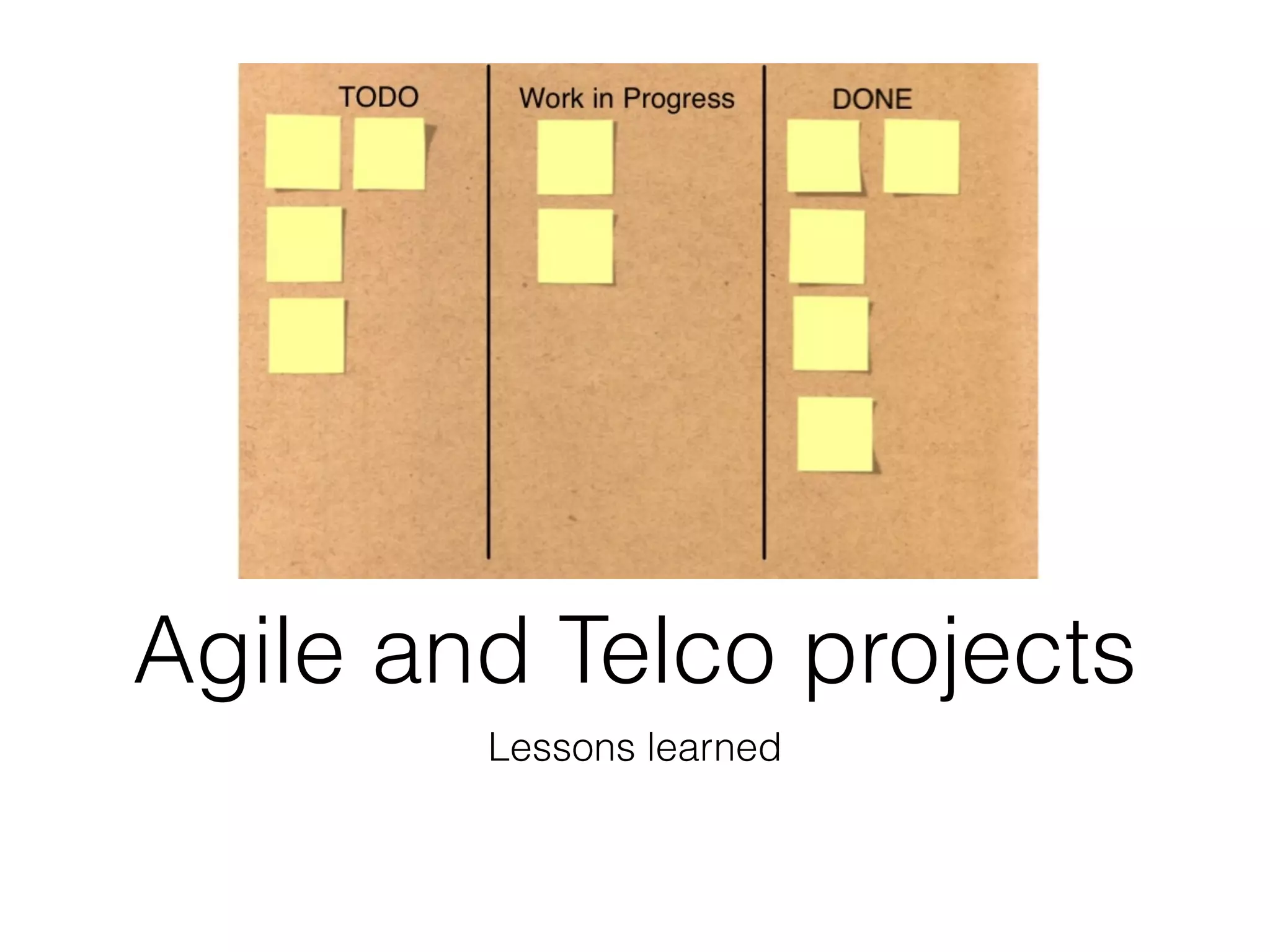
Agile and Telco projects
        Lessons learned
so what's this about ?

 Agile management in MVNO
      project - GaduAIR

During launch - January 2008 until May 2009, and
     maintenance and development later on
who are we ?
Grzegorz Machniewski        Dawid Mielnik

• Until July 2010 Telco     • Until July 2010 Telco
  dept. @ Gadu-Gadu           dept. @ Gadu-Gadu

• Before: IBM, Outbox       • Before: Citi, DRSA

• After: Voiceware S.J.,    • After: Voiceware S.J.,
  Moberia sp. Z o.o., XEO     Moberia sp. Z o.o.
  Games sp. Z o.o.
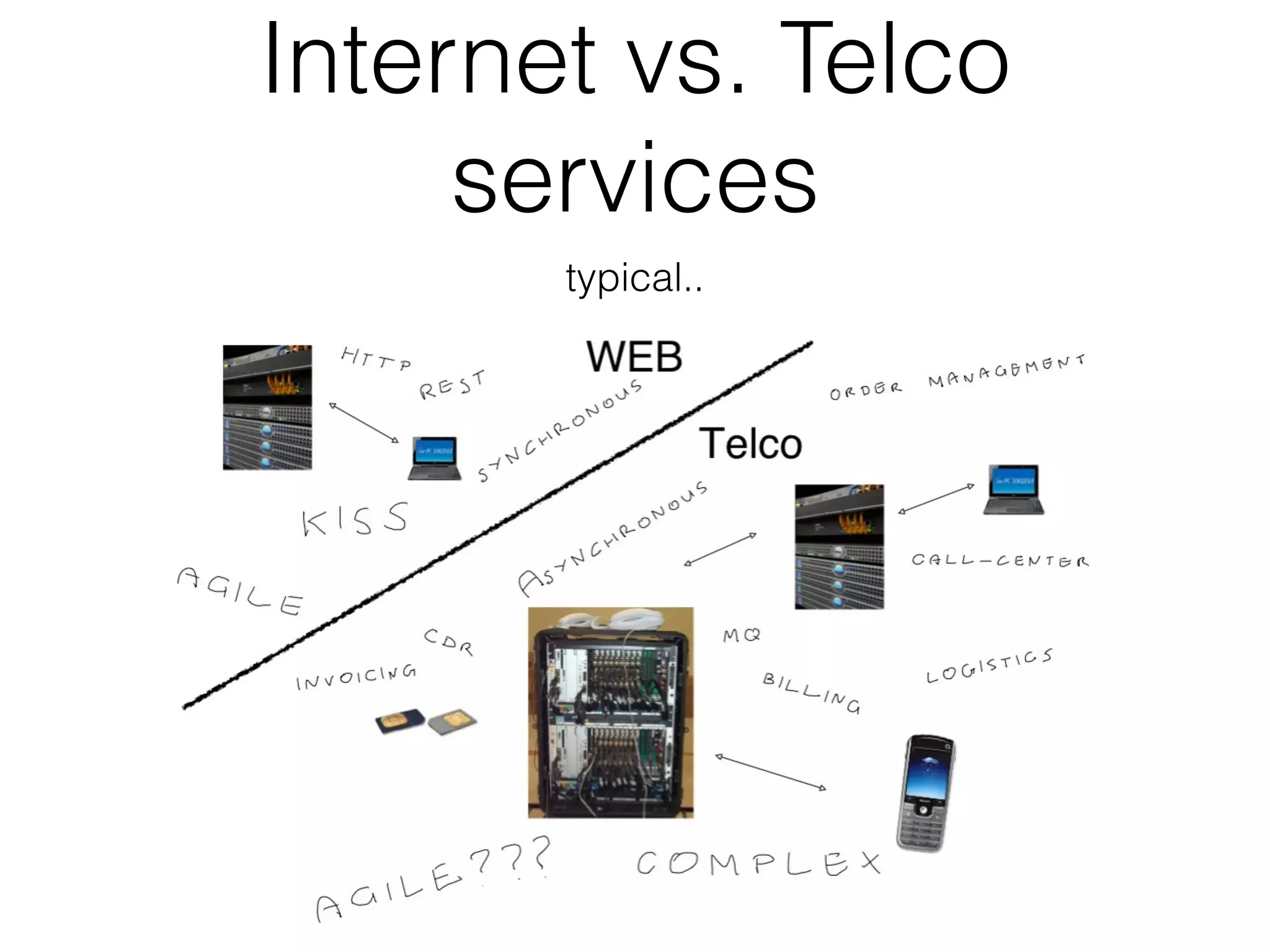
Internet vs. Telco
     services
       typical..
software is only a small part

 • 5 teams, about 15 people

 • Software teams

    • BSS, VAS

 • Non software teams

    • Core Network, VoIP, Operations
External providers and
        partners
• Huawei

• AMG

• Polkomtel

• Gemalto

• Arvato

• Call Center Poland

• Kolporter, Billbird, Euronet, Polski Tytoń, Sprint, ... (distribution channels)

• Allegro, Effortel
internal departments
• "clients"        • "providers"

    • Business         • Admins

    • Marketing        • Server dev

    • Sales            • Web dev

    • Board            • GG client dev

    • Accounting       • Mail dev

    • Security         • QA
SCRUM didn't work
SCRUM didn't work

     Sprint planning was a
           challenge
• Organisational - 5 teams with totally different
  tasks

• Defining the scope with so many variables,
  dependancies not controlled by the teams
SCRUM didn't work

Problems with deliverables
  from external vendors
• Deadlines - frequent delays

• Functionality - does not work or works not
  according to specs, or is unstable
SCRUM didn't work

Other problems with vendors
 • Communication

 • Long time for problem resolution

 • Rotation of team members
SCRUM didn't work
Problems with schedules of internal
            providers
• Need to fit into other schedules not fully consistent with
  our

• Fight for compromises and giving higher priority to our
  tasks
SCRUM didn't work


Changing requirements from
business and internal clients
SCRUM didn't work


Lot of unexpected 'fires' which
         broke sprints
SCRUM didn't work
        (additional afterthought)

  Agile methodology means
     less paperwork and
formalities which unfortunately
  works to our disadvantage
          with vendors
...the outcome was:
• Sprint plannings were long and boring for most
  people (the same with retrospections)

• None of the sprints were finished in time and in
  some none of the backlogs were done

• Frustration - our, in our teams and internal
  clients, strained relations with vendors

• Deadlines not met
We decided to do
  something about it...
                              Step 1
• We stopped Sprint planning in favour of quick planning in
  individual teams

• Every team had individual backlog and sprint

• We losened a little the sprint concept and everything related to it

• We started to prioritise tasks on daily bases according to what
  was more urgent

• We started to define new states for tasks which waited for
  something independent of the team
...as it later turned out we
were approaching ScrumBan
• Breakthrough at first Agile Warsaw meeting
  entitled Scrum vs. Kanban

• It turns out this is the tool which we need

• We have noticed that we started using certain
  practices naturally

• Pity that we discovered Kanban so late
SrumBan worked much
       better
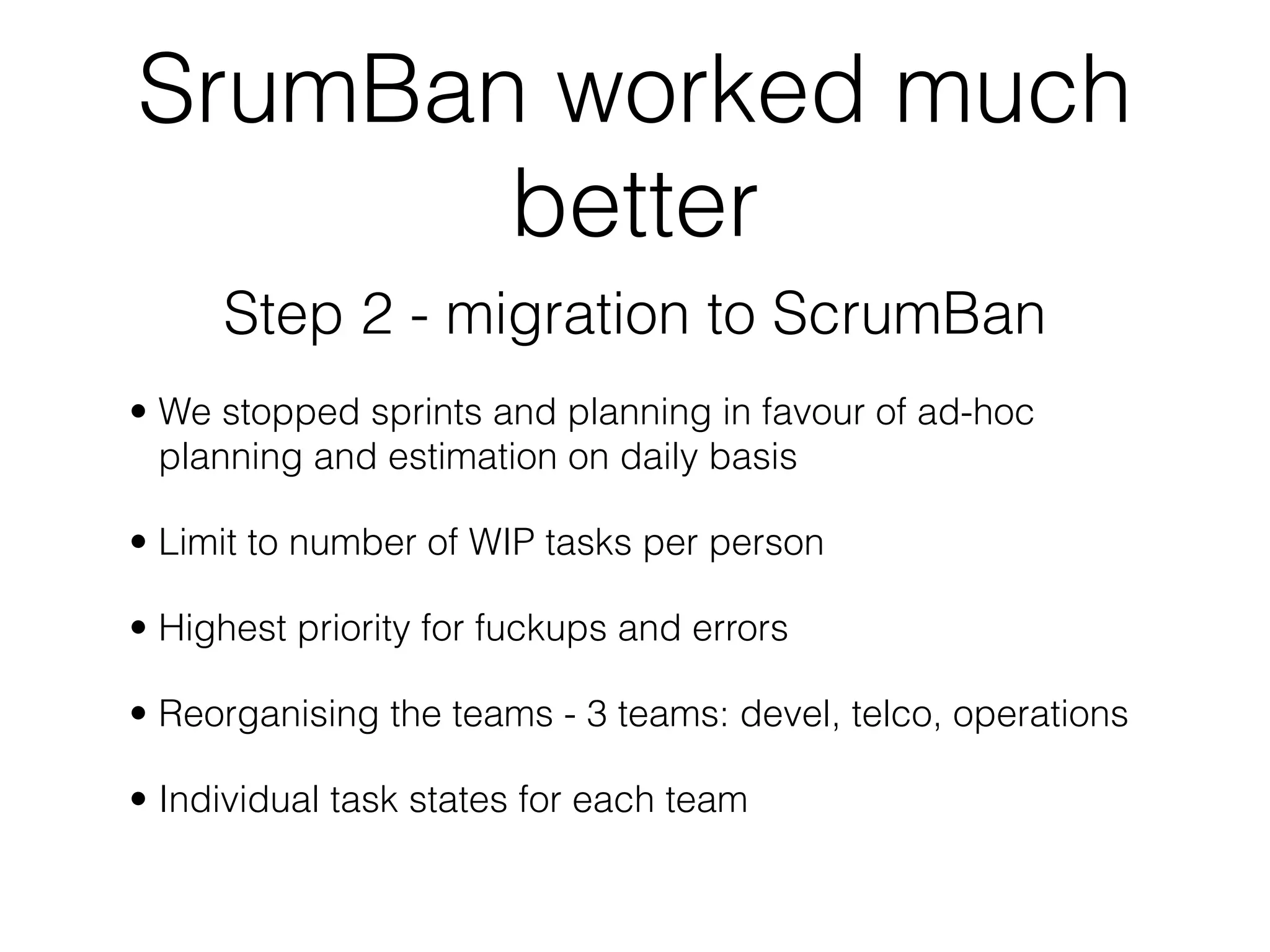
     Step 2 - migration to ScrumBan
• We stopped sprints and planning in favour of ad-hoc
  planning and estimation on daily basis

• Limit to number of WIP tasks per person

• Highest priority for fuckups and errors

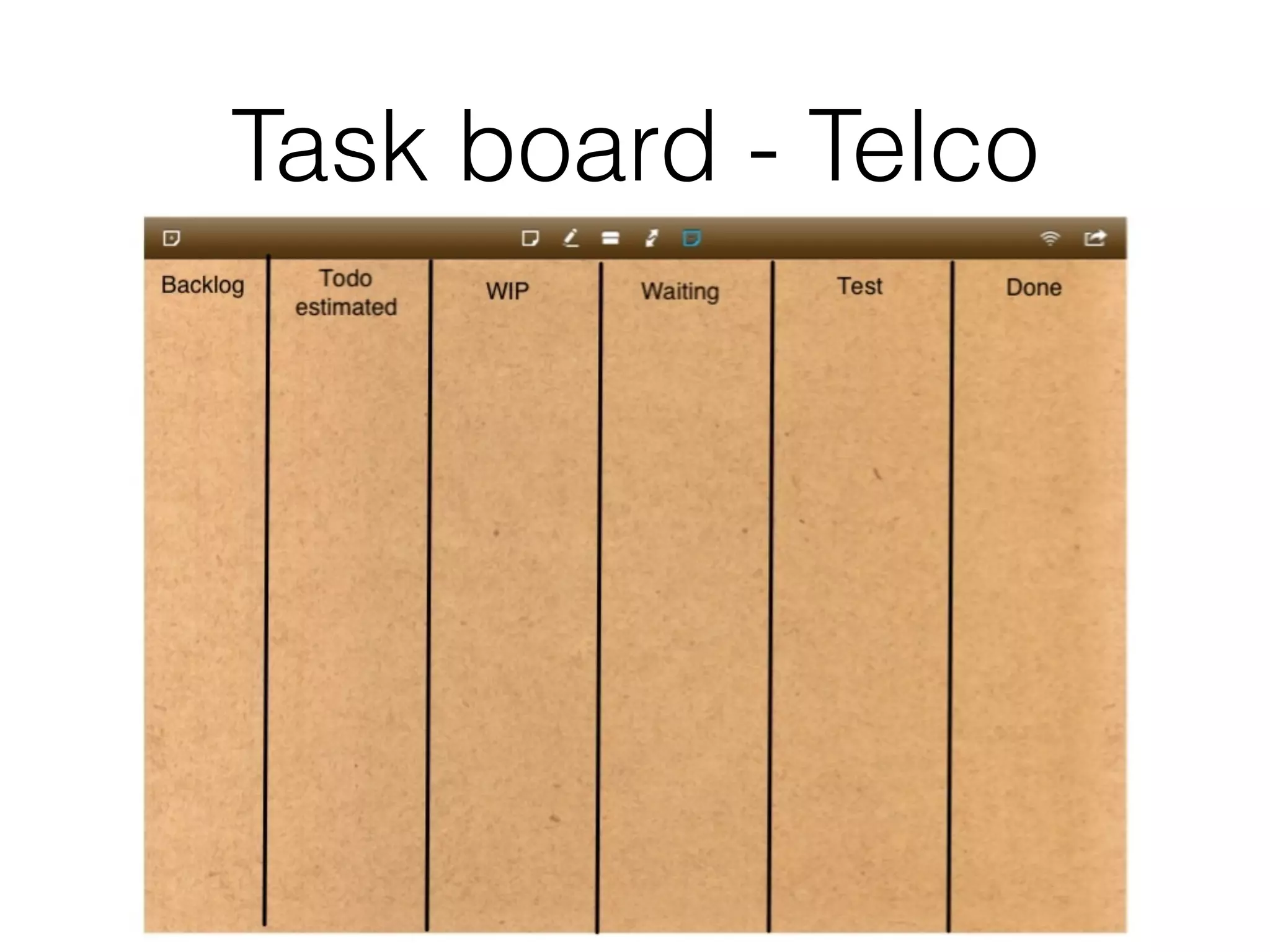
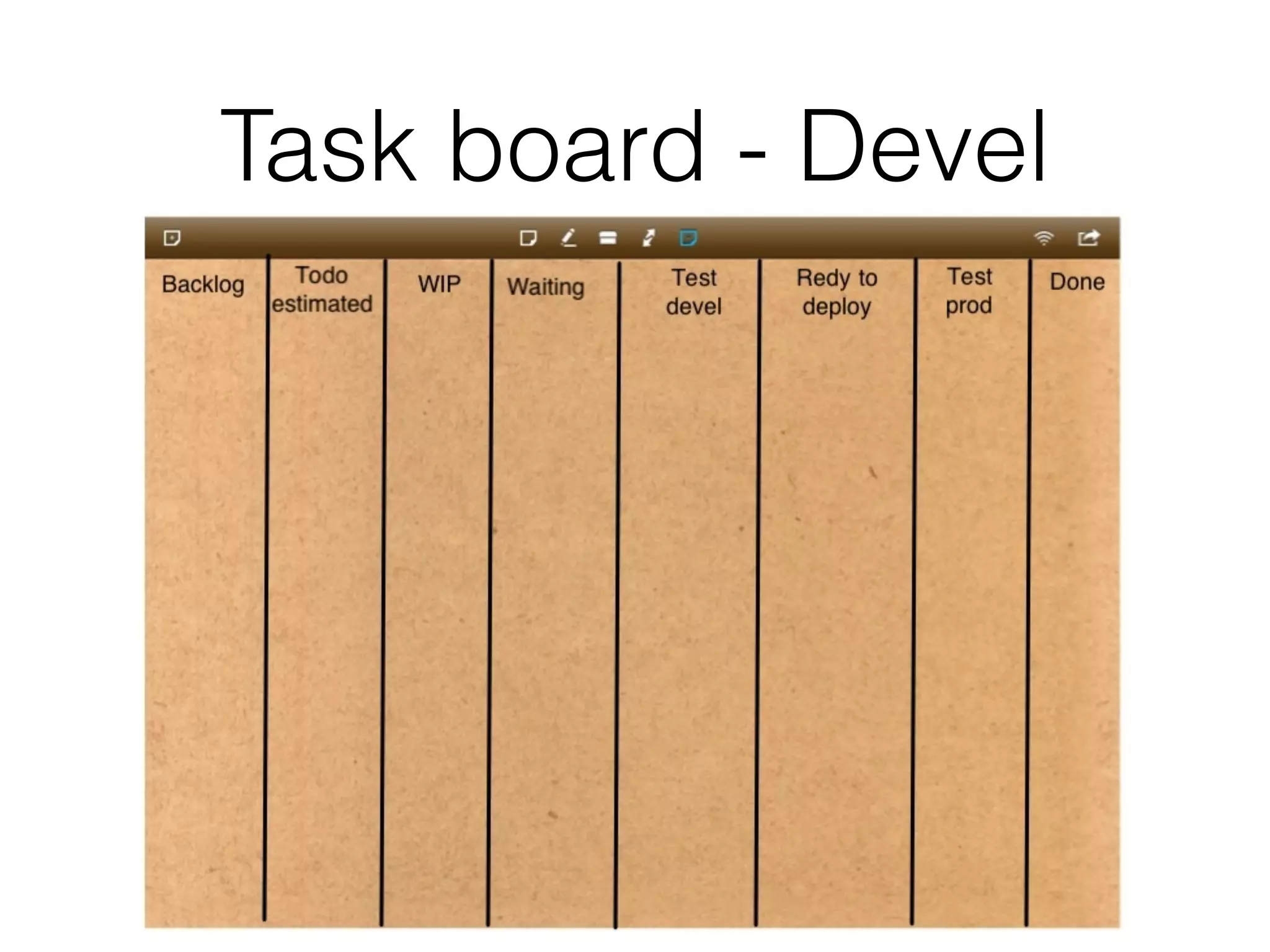
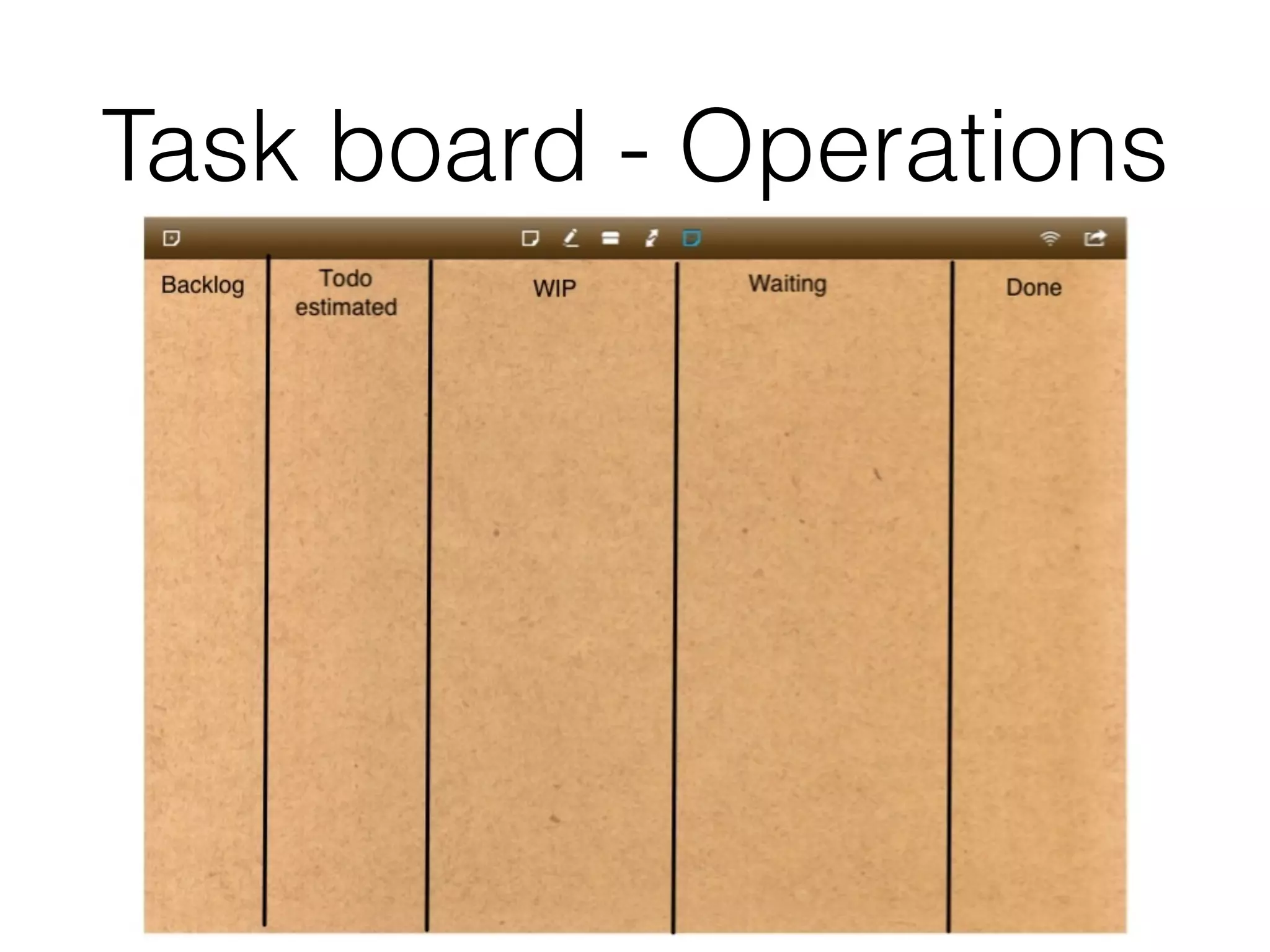
• Reorganising the teams - 3 teams: devel, telco, operations

• Individual task states for each team
Task board - Telco
Task board - Devel
Task board - Operations
ScrumBan - observations
• We had the pleasure of working in the new arrangement
  for 2 months

• Decreased level of frustration with the process was evident

• Increase in productivity and quality of work of the teams

• Shorter time from submission to delivery of task

• ScrumBan did not solve all of our problems but it did solve
  most of the problems associated with the process,
  increasing the comfort of work
Questions ?
Thank you.

Presentation Agile Telco

  • 1.
    Agile and Telcoprojects Lessons learned
  • 2.
    so what's thisabout ? Agile management in MVNO project - GaduAIR During launch - January 2008 until May 2009, and maintenance and development later on
  • 3.
    who are we? Grzegorz Machniewski Dawid Mielnik • Until July 2010 Telco • Until July 2010 Telco dept. @ Gadu-Gadu dept. @ Gadu-Gadu • Before: IBM, Outbox • Before: Citi, DRSA • After: Voiceware S.J., • After: Voiceware S.J., Moberia sp. Z o.o., XEO Moberia sp. Z o.o. Games sp. Z o.o.
  • 4.
    Internet vs. Telco services typical..
  • 5.
    software is onlya small part • 5 teams, about 15 people • Software teams • BSS, VAS • Non software teams • Core Network, VoIP, Operations
  • 6.
    External providers and partners • Huawei • AMG • Polkomtel • Gemalto • Arvato • Call Center Poland • Kolporter, Billbird, Euronet, Polski Tytoń, Sprint, ... (distribution channels) • Allegro, Effortel
  • 7.
    internal departments • "clients" • "providers" • Business • Admins • Marketing • Server dev • Sales • Web dev • Board • GG client dev • Accounting • Mail dev • Security • QA
  • 8.
  • 9.
    SCRUM didn't work Sprint planning was a challenge • Organisational - 5 teams with totally different tasks • Defining the scope with so many variables, dependancies not controlled by the teams
  • 10.
    SCRUM didn't work Problemswith deliverables from external vendors • Deadlines - frequent delays • Functionality - does not work or works not according to specs, or is unstable
  • 11.
    SCRUM didn't work Otherproblems with vendors • Communication • Long time for problem resolution • Rotation of team members
  • 12.
    SCRUM didn't work Problemswith schedules of internal providers • Need to fit into other schedules not fully consistent with our • Fight for compromises and giving higher priority to our tasks
  • 13.
    SCRUM didn't work Changingrequirements from business and internal clients
  • 14.
    SCRUM didn't work Lotof unexpected 'fires' which broke sprints
  • 15.
    SCRUM didn't work (additional afterthought) Agile methodology means less paperwork and formalities which unfortunately works to our disadvantage with vendors
  • 16.
    ...the outcome was: •Sprint plannings were long and boring for most people (the same with retrospections) • None of the sprints were finished in time and in some none of the backlogs were done • Frustration - our, in our teams and internal clients, strained relations with vendors • Deadlines not met
  • 17.
    We decided todo something about it... Step 1 • We stopped Sprint planning in favour of quick planning in individual teams • Every team had individual backlog and sprint • We losened a little the sprint concept and everything related to it • We started to prioritise tasks on daily bases according to what was more urgent • We started to define new states for tasks which waited for something independent of the team
  • 18.
    ...as it laterturned out we were approaching ScrumBan • Breakthrough at first Agile Warsaw meeting entitled Scrum vs. Kanban • It turns out this is the tool which we need • We have noticed that we started using certain practices naturally • Pity that we discovered Kanban so late
  • 19.
    SrumBan worked much better Step 2 - migration to ScrumBan • We stopped sprints and planning in favour of ad-hoc planning and estimation on daily basis • Limit to number of WIP tasks per person • Highest priority for fuckups and errors • Reorganising the teams - 3 teams: devel, telco, operations • Individual task states for each team
  • 20.
  • 21.
  • 22.
    Task board -Operations
  • 23.
    ScrumBan - observations •We had the pleasure of working in the new arrangement for 2 months • Decreased level of frustration with the process was evident • Increase in productivity and quality of work of the teams • Shorter time from submission to delivery of task • ScrumBan did not solve all of our problems but it did solve most of the problems associated with the process, increasing the comfort of work
  • 24.
  • 25.