Metadata Mapping


Presentation By Vladimir Bukhin on Oct 8th
Contents
•   Metadata interoperability goals.
•   Definition of Metadata.
•   Metadata Building Blocks.
•   Heterogeneities with metadata .
•   Interoperability Solutions.
•   Metadata Mapping.
•   Conclusion.
Metadata
Interoperability Goals
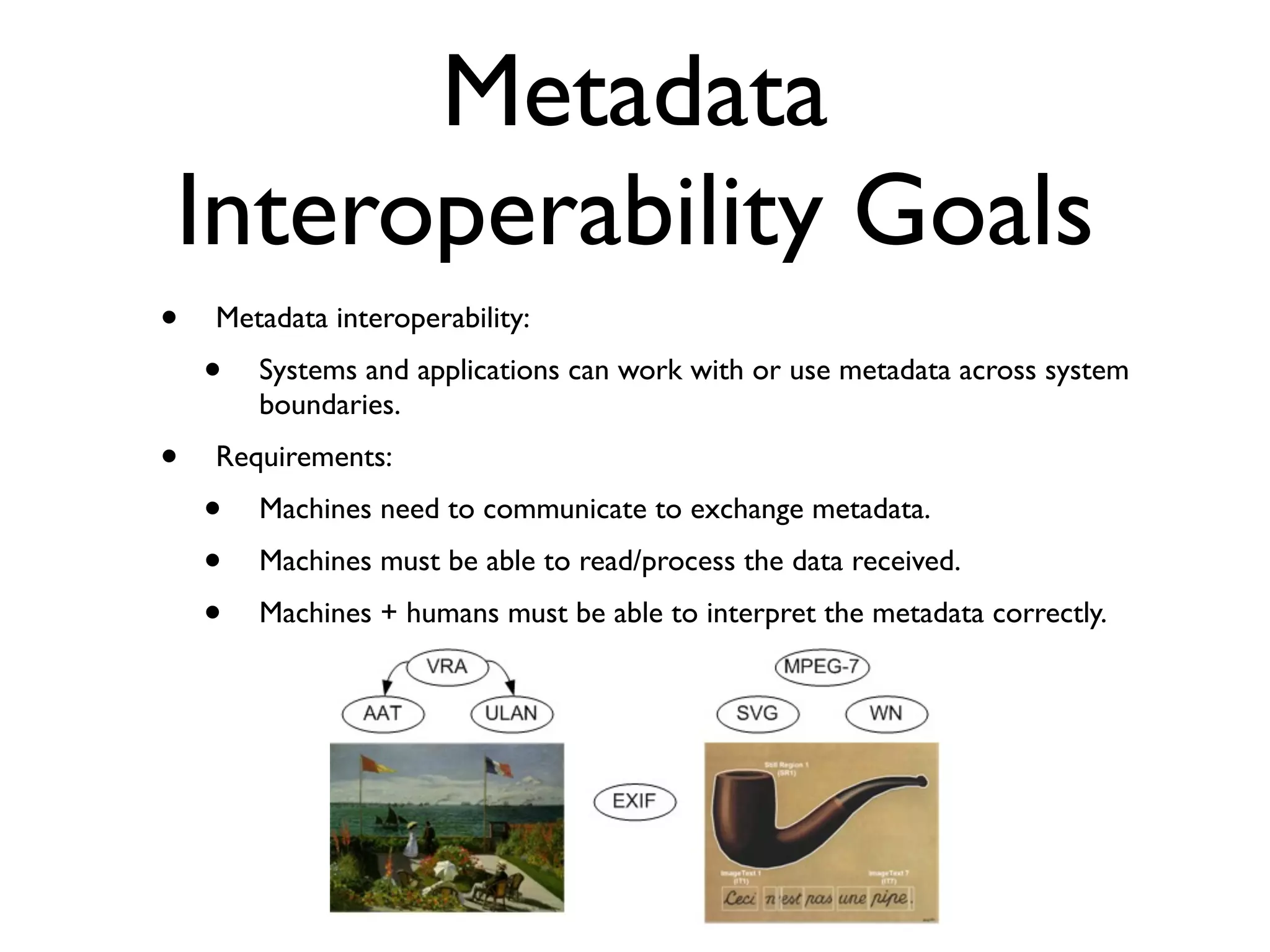
•   Metadata interoperability:
    •   Systems and applications can work with or use metadata across system
        boundaries.
•   Requirements:
    •   Machines need to communicate to exchange metadata.
    •   Machines must be able to read/process the data received.
    •   Machines + humans must be able to interpret the metadata correctly.
What is Metadata
• Metadata:
 •   “the sum total of what one can say
     about any information object at any
     level of aggregation, in a machine
     understandable representation.”

• Information Object:
 •   “anything that can be addressed and
     manipulated by a human or a
     system as a discrete entity.”
Metadata Building Blocks
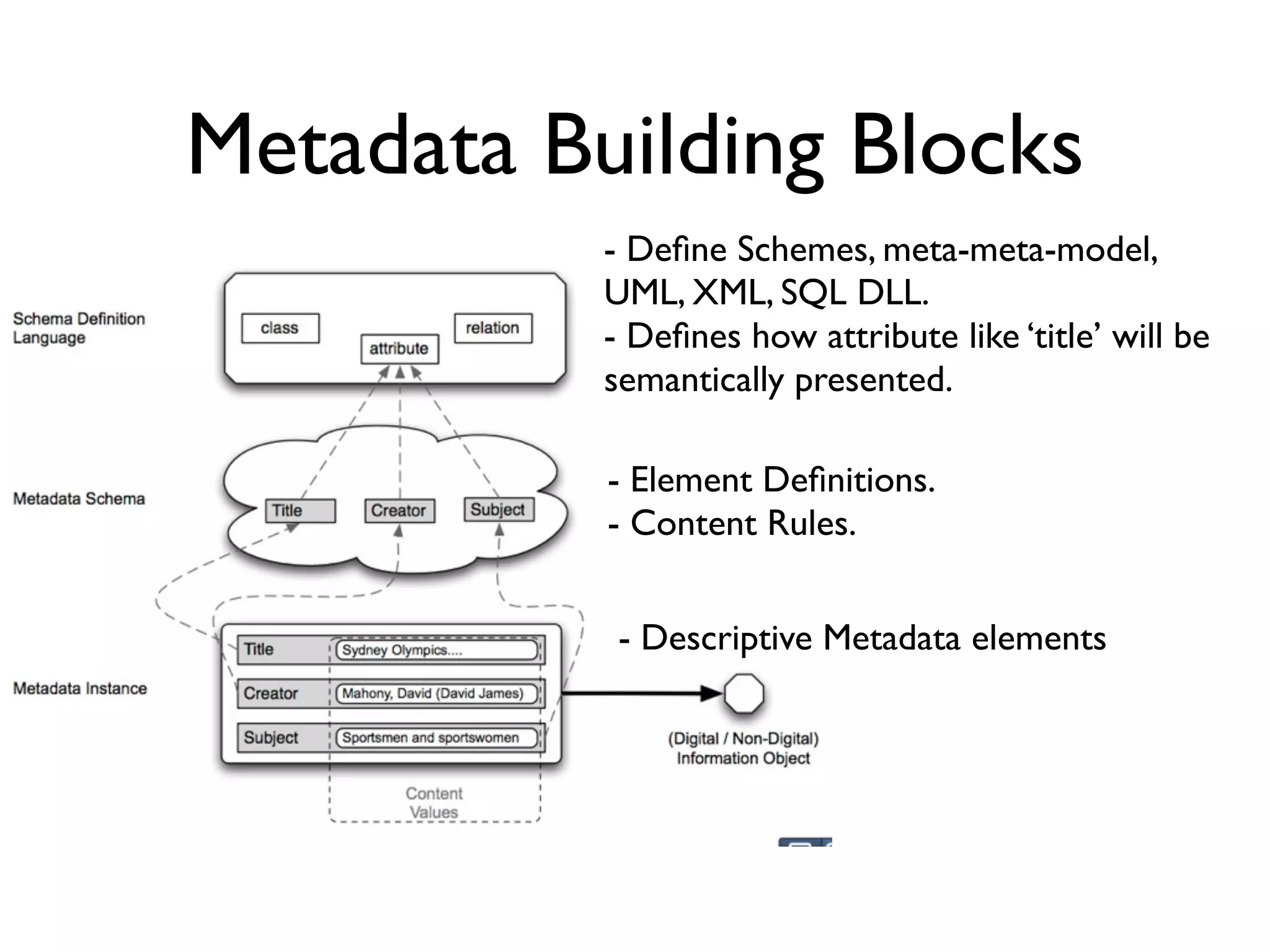
           - Define Schemes, meta-meta-model,
           UML, XML, SQL DLL.
           - Defines how attribute like ‘title’ will be
           semantically presented.

           - Element Definitions.
           - Content Rules.


            - Descriptive Metadata elements
Metadata Heterogeneities
Interoperability Solutions
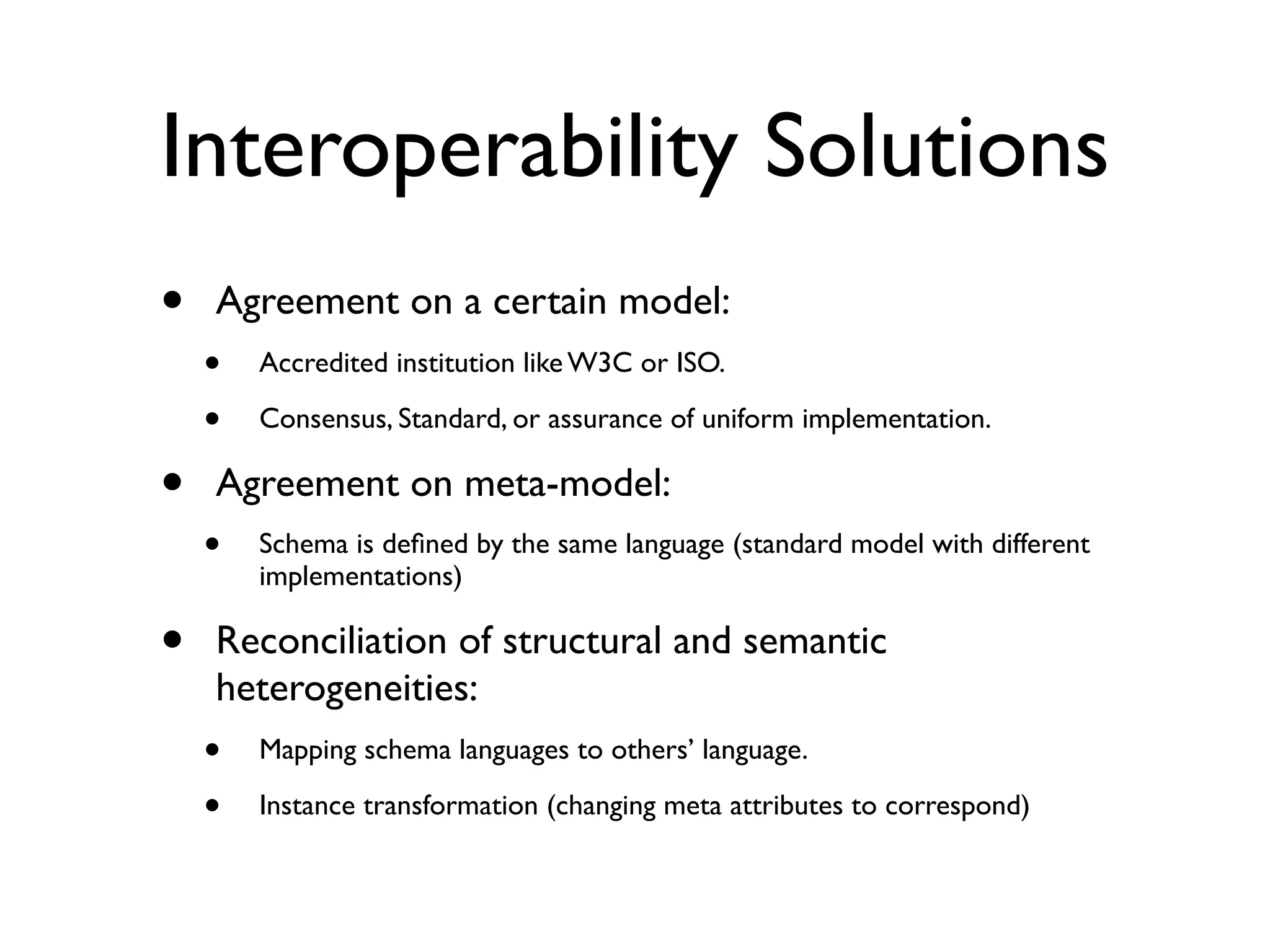
•   Agreement on a certain model:
    •   Accredited institution like W3C or ISO.

    •   Consensus, Standard, or assurance of uniform implementation.

•   Agreement on meta-model:
    •   Schema is defined by the same language (standard model with different
        implementations)

•   Reconciliation of structural and semantic
    heterogeneities:
    •   Mapping schema languages to others’ language.

    •   Instance transformation (changing meta attributes to correspond)
Metadata Mapping
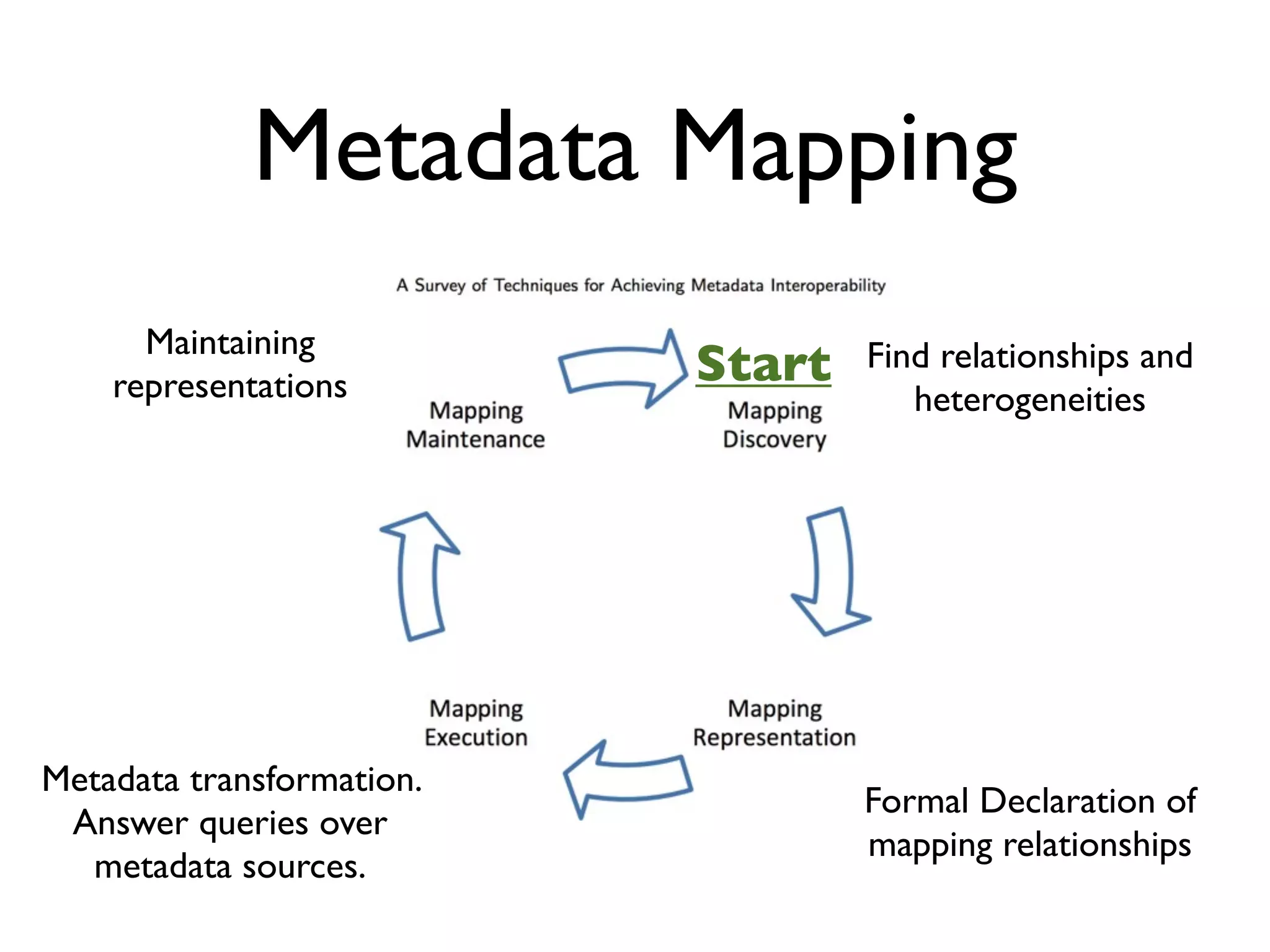
      Maintaining
    representations        Start   Find relationships and
                                      heterogeneities


Metadata transformation.
                                   Formal Declaration of
 Answer queries over
                                   mapping relationships
  metadata sources.
Conclusion

• Mapping suggested over Standards.
   • Standards require licensing, software
      tools, personnel costs.
    • Mapping has high discovery cost.
Bibliography


•   Haslhofer, Bernhard and Wolfgang Klas. 2010. A survey of techniques
    for achieving metadata interoperability. ACM Comput. Surv. 42, 2,
    Article 7 (February 2010), 37 pages.

Metadata mapping

  • 1.
    Metadata Mapping Presentation ByVladimir Bukhin on Oct 8th
  • 2.
    Contents • Metadata interoperability goals. • Definition of Metadata. • Metadata Building Blocks. • Heterogeneities with metadata . • Interoperability Solutions. • Metadata Mapping. • Conclusion.
  • 3.
    Metadata Interoperability Goals • Metadata interoperability: • Systems and applications can work with or use metadata across system boundaries. • Requirements: • Machines need to communicate to exchange metadata. • Machines must be able to read/process the data received. • Machines + humans must be able to interpret the metadata correctly.
  • 4.
    What is Metadata •Metadata: • “the sum total of what one can say about any information object at any level of aggregation, in a machine understandable representation.” • Information Object: • “anything that can be addressed and manipulated by a human or a system as a discrete entity.”
  • 5.
    Metadata Building Blocks - Define Schemes, meta-meta-model, UML, XML, SQL DLL. - Defines how attribute like ‘title’ will be semantically presented. - Element Definitions. - Content Rules. - Descriptive Metadata elements
  • 6.
  • 7.
    Interoperability Solutions • Agreement on a certain model: • Accredited institution like W3C or ISO. • Consensus, Standard, or assurance of uniform implementation. • Agreement on meta-model: • Schema is defined by the same language (standard model with different implementations) • Reconciliation of structural and semantic heterogeneities: • Mapping schema languages to others’ language. • Instance transformation (changing meta attributes to correspond)
  • 8.
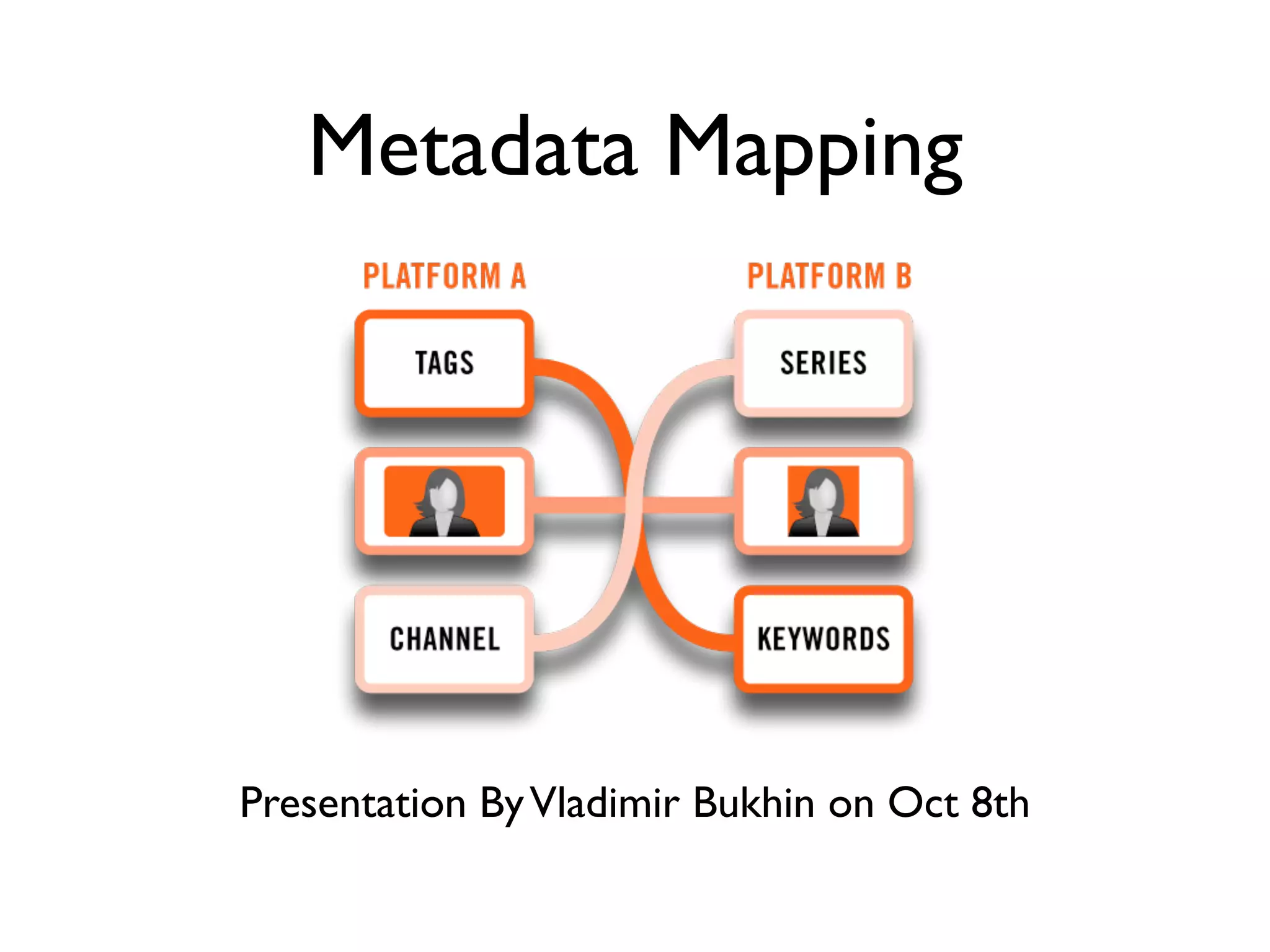
    Metadata Mapping Maintaining representations Start Find relationships and heterogeneities Metadata transformation. Formal Declaration of Answer queries over mapping relationships metadata sources.
  • 9.
    Conclusion • Mapping suggestedover Standards. • Standards require licensing, software tools, personnel costs. • Mapping has high discovery cost.
  • 10.
    Bibliography • Haslhofer, Bernhard and Wolfgang Klas. 2010. A survey of techniques for achieving metadata interoperability. ACM Comput. Surv. 42, 2, Article 7 (February 2010), 37 pages.

Editor's Notes

  • #2 \n
  • #3 \n
  • #4 Paper focuses on last 2 things.\n\n
  • #5 \n
  • #6 \n
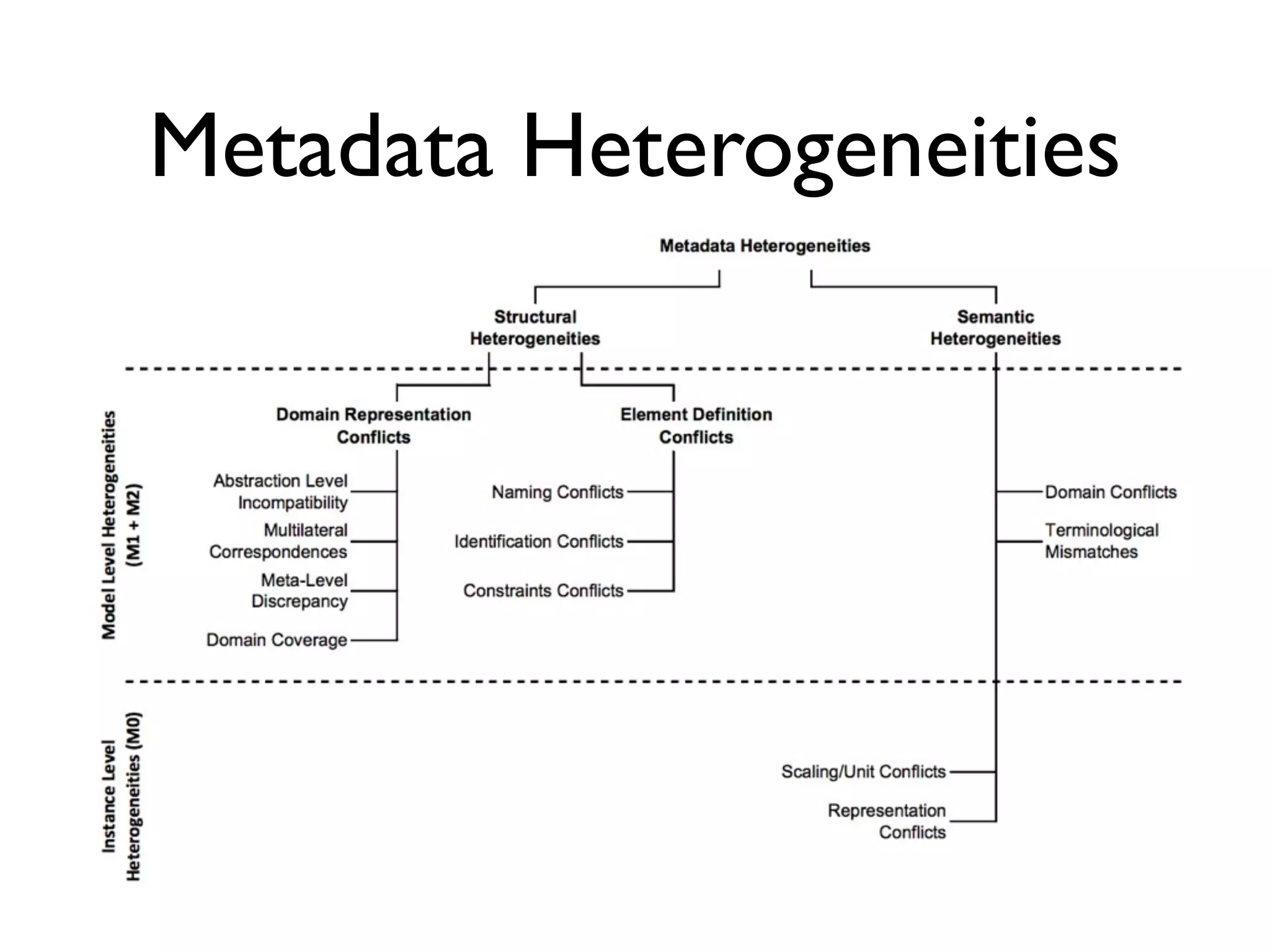
  • #7 To understand the problem, we must define the differences/heterogeneities between metadata.\nHeterogeneities that interfere with interoperability: \nStructural (model-related): \n element definition conflicts\n naming: models elements representing same element given different name\n Identification: If they have an id, having different one (sometimes no id, only name exists)\n Constraints: datatype for example.\n Domain Representation\n Abstraction level: domain representation conflicts, entities arranged into different generalization hierarchies, or distributed into different model elements\n Multidimensional correspondences: Conflict in the multiple relationships drawn up.\n Meta-level discrepancy: information with in different elements (like naming)\n Domain coverage: one model has data x, the other does not.\nSemantic: (language differences in schema)\n Domain conflicts: different expressiveness of languages\n Terminological: naming: synonyms and homonyms\n Scaling/Unit Conflicts: different measurement units\n Representation: format of date value for example\n\n
  • #8 \n
  • #9 \n
  • #10 \n
  • #11 \n