Preference and Desirability Testing: Measuring Emotional Response to Guide DesignMichael HawleyChief Design Officer, Mad*Pow@hawleymichaelPaul DoncasterSenior User Experience Designer, Thomson Reuters
AgendaWhy we should careWhy itโ€™s not always as simple as asking:โ€œWhich option do you prefer?โ€Methods to considerCase Study: Greenwich HospitalCase Study: WestlawNextSummary/Comparison
Why we should care3
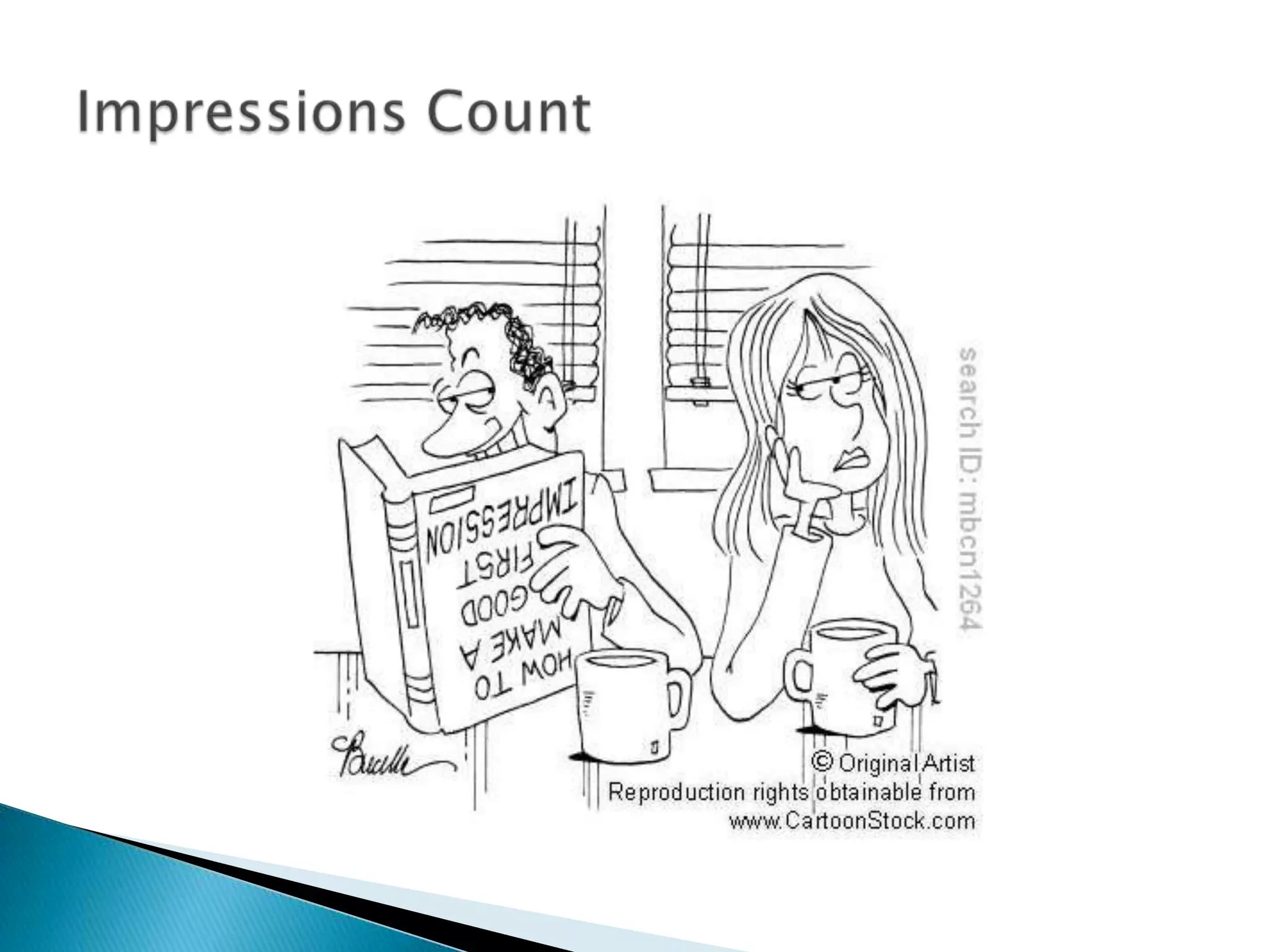
Impressions Count
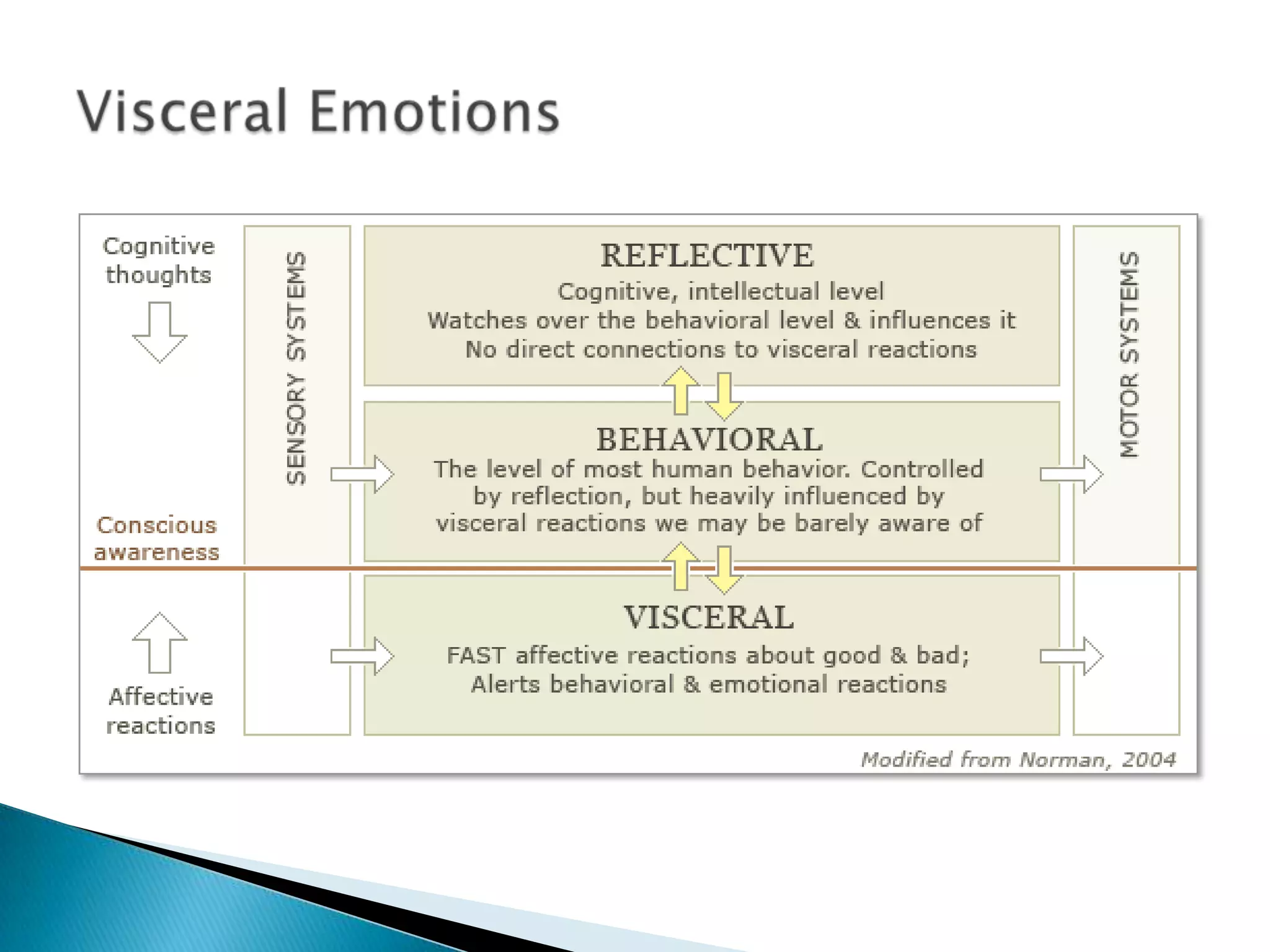
Visceral Emotions
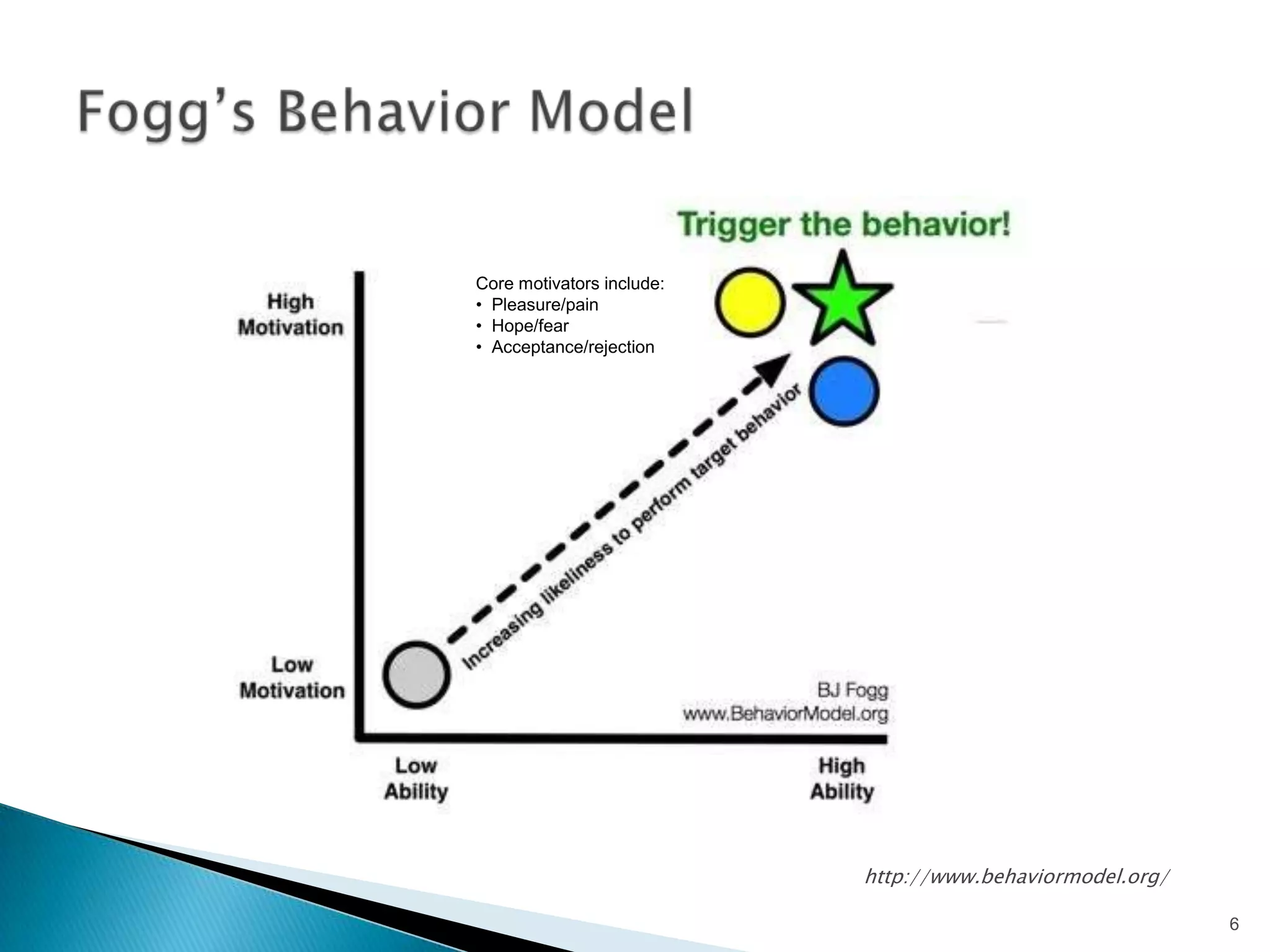
6Foggโ€™s Behavior ModelCore motivators include:Pleasure/pain
Hope/fear
Acceptance/rejectionhttp://www.behaviormodel.org/
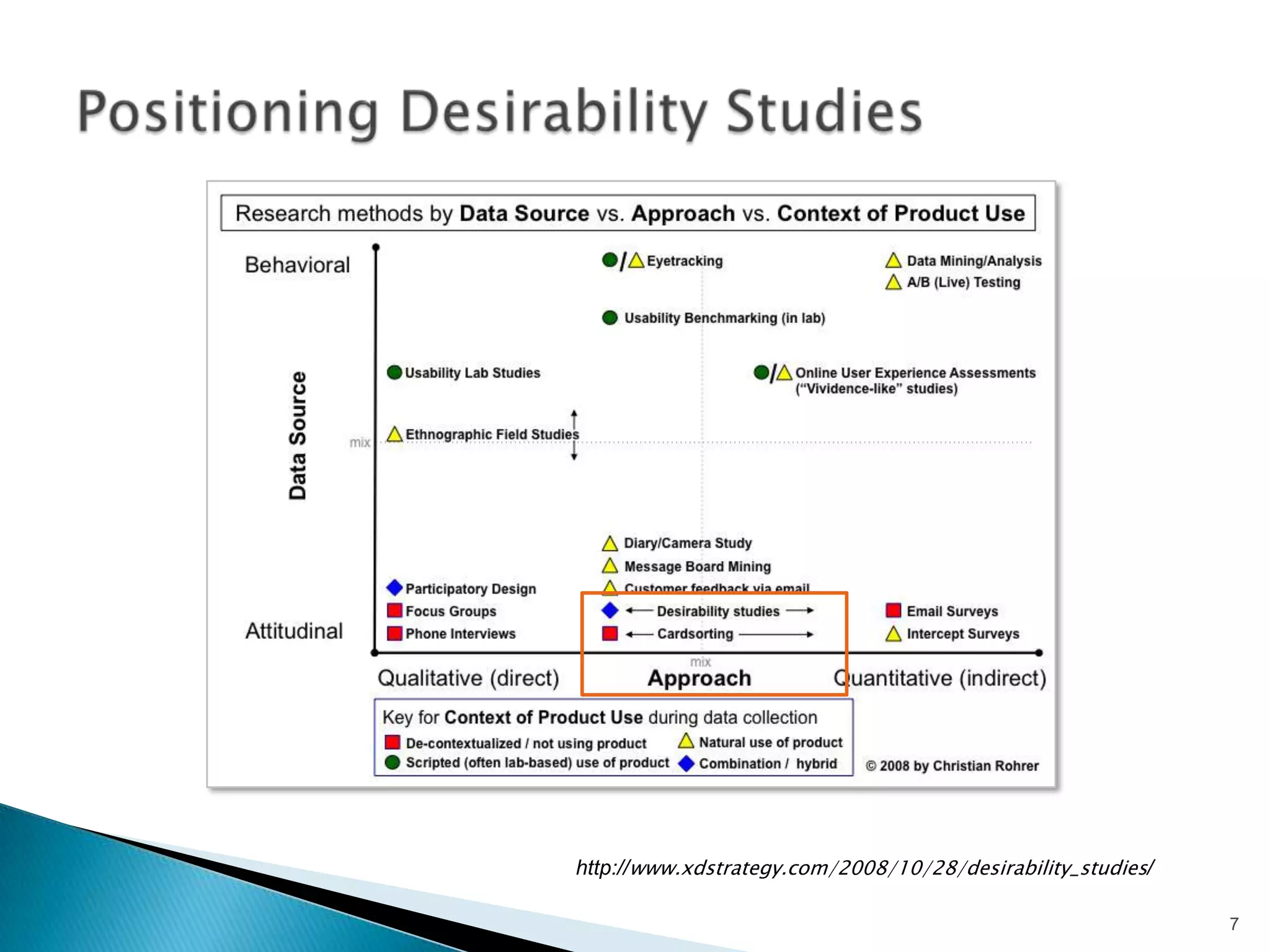
7Positioning Desirability Studieshttp://www.xdstrategy.com/2008/10/28/desirability_studies/
โ€œWhich do you prefer?โ€8
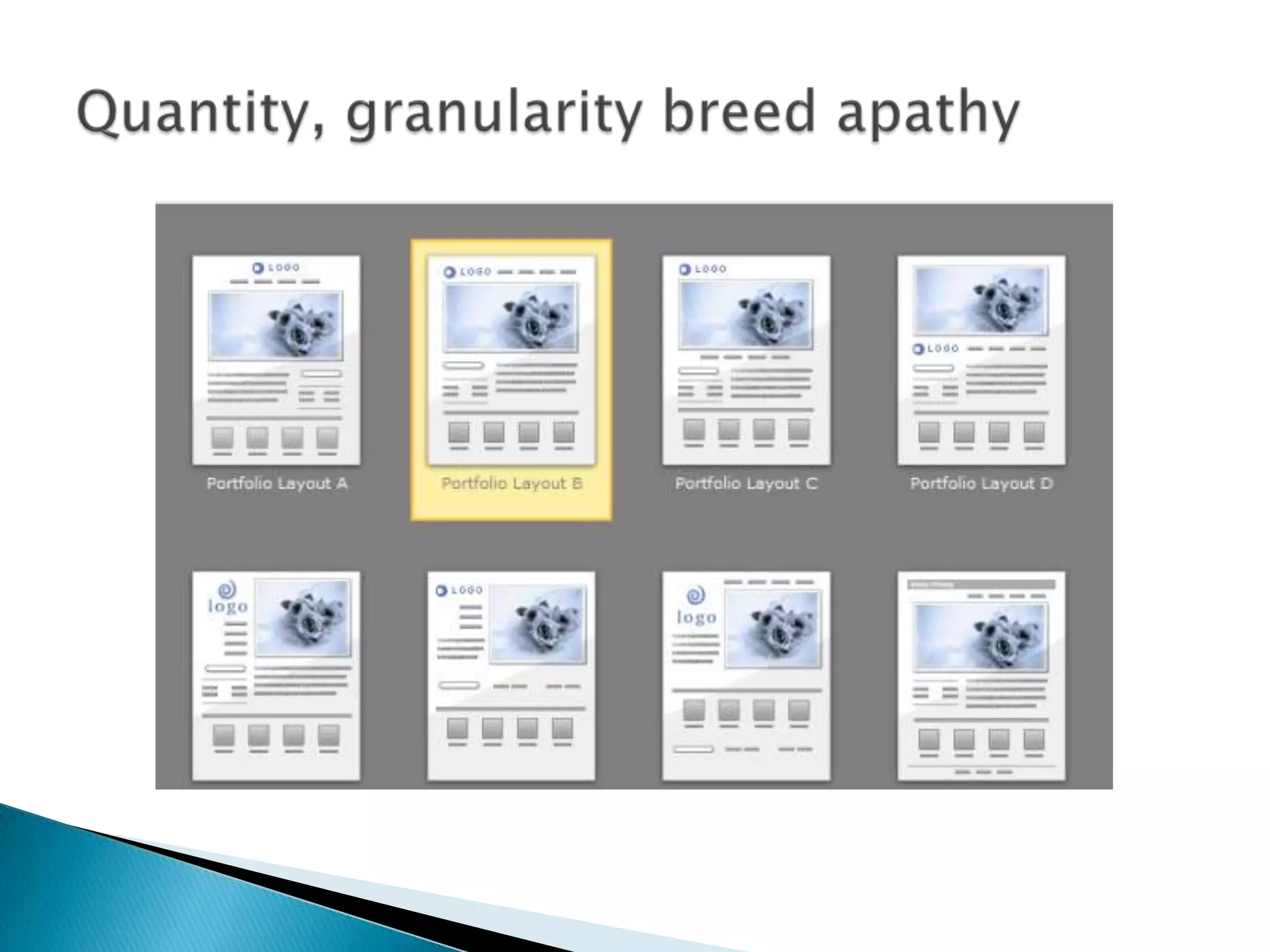
Quantity, granularity breed apathy
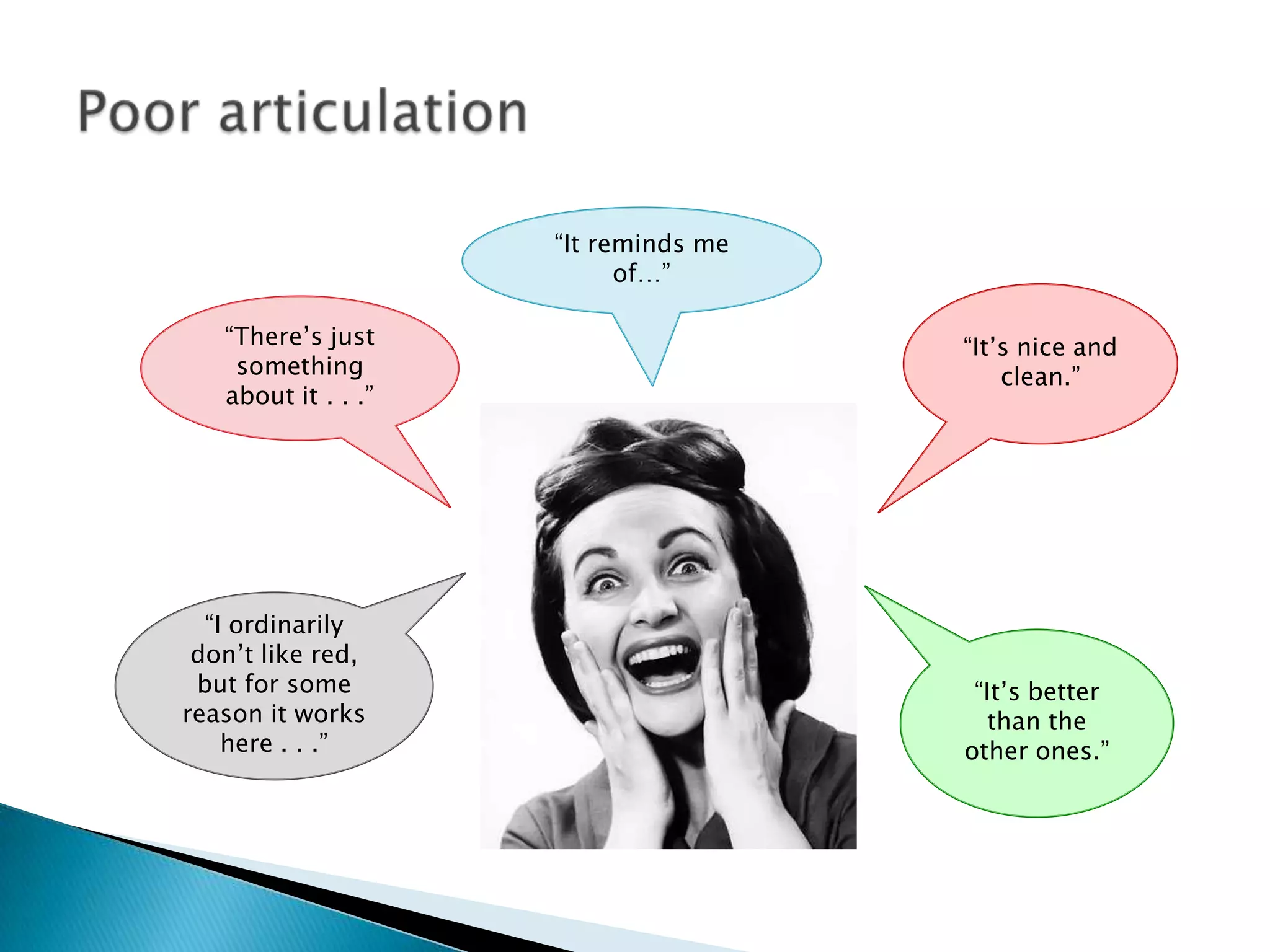
Poor articulationโ€œIt reminds me ofโ€ฆโ€โ€œItโ€™s nice and clean.โ€โ€œThereโ€™s just something about it . . .โ€โ€œI ordinarily donโ€™t like red, but for some reason it works here . . .โ€โ€œItโ€™s better than the other ones.โ€
What Stakeholders Should Care Aboutโ€œWe should go with design C over A and B, because I feel it evokes the right kind of emotional response in our audience that is closer to our most important brand attributes.โ€
Methods to Consider12
Present three different concepts or ideas to participants, and ask them to identify how two of them are different from the third and why.13Triading
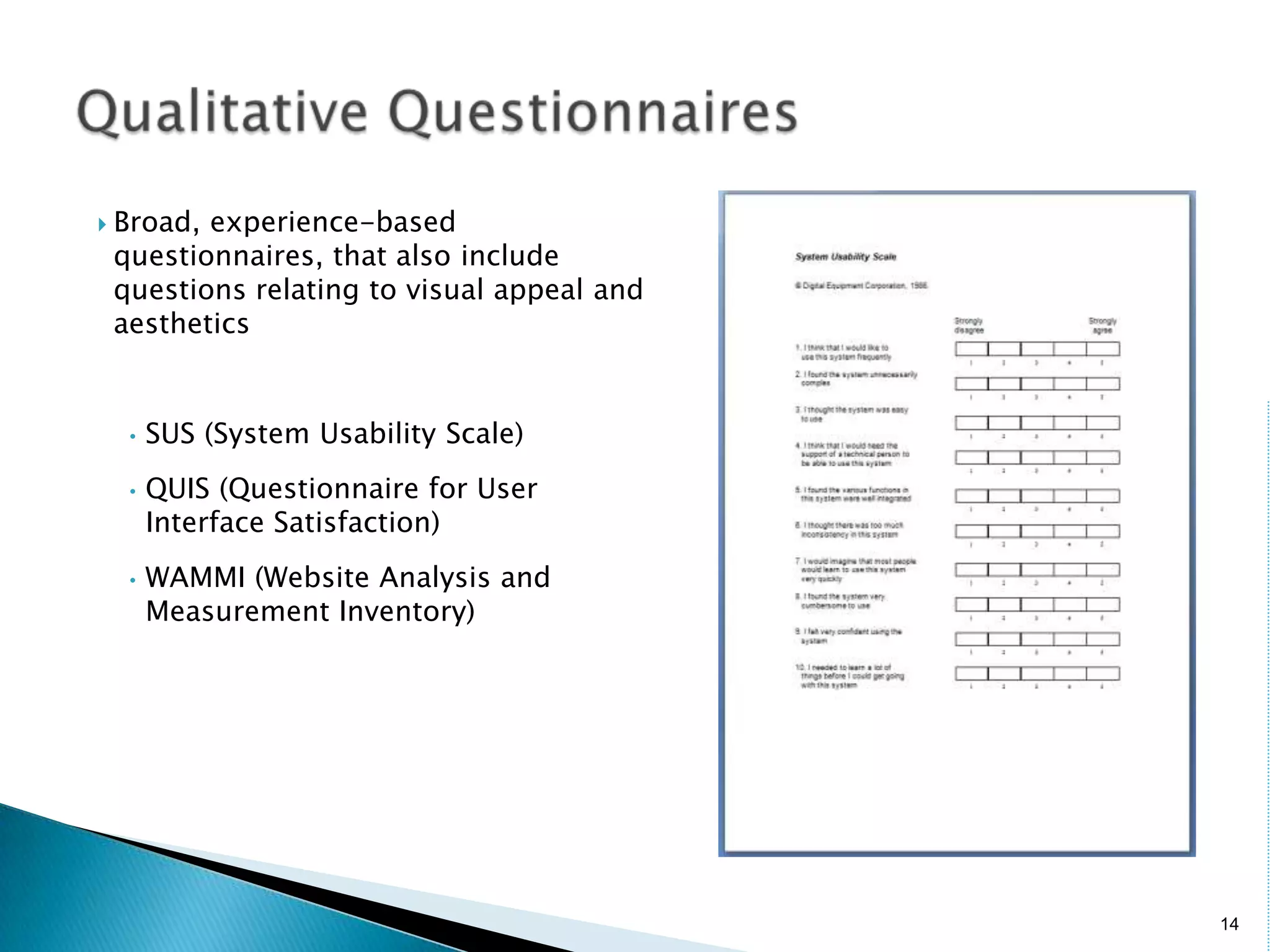
Broad, experience-based questionnaires, that also include questions relating to visual appeal and aestheticsSUS (System Usability Scale)
QUIS (Questionnaire for User Interface Satisfaction)
WAMMI (Website Analysis and Measurement Inventory)14Qualitative Questionnaires
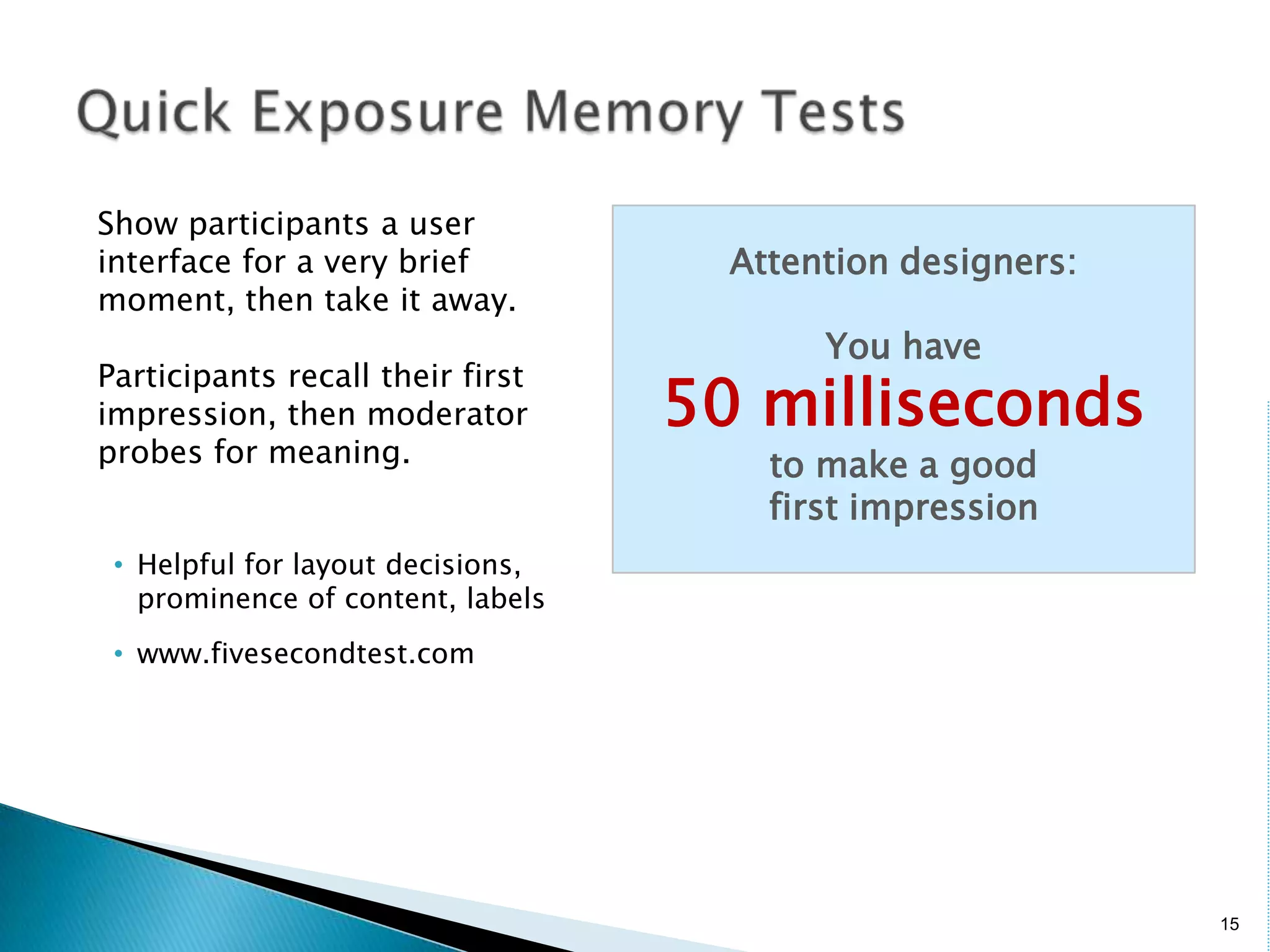
Show participants a user interface for a very brief moment, then take it away. Participants recall their first impression, then moderator probes for meaning.Helpful for layout decisions, prominence of content, labels
www.fivesecondtest.com15Attention designers: You have 50 milliseconds to make a good first impressionQuick Exposure Memory Tests
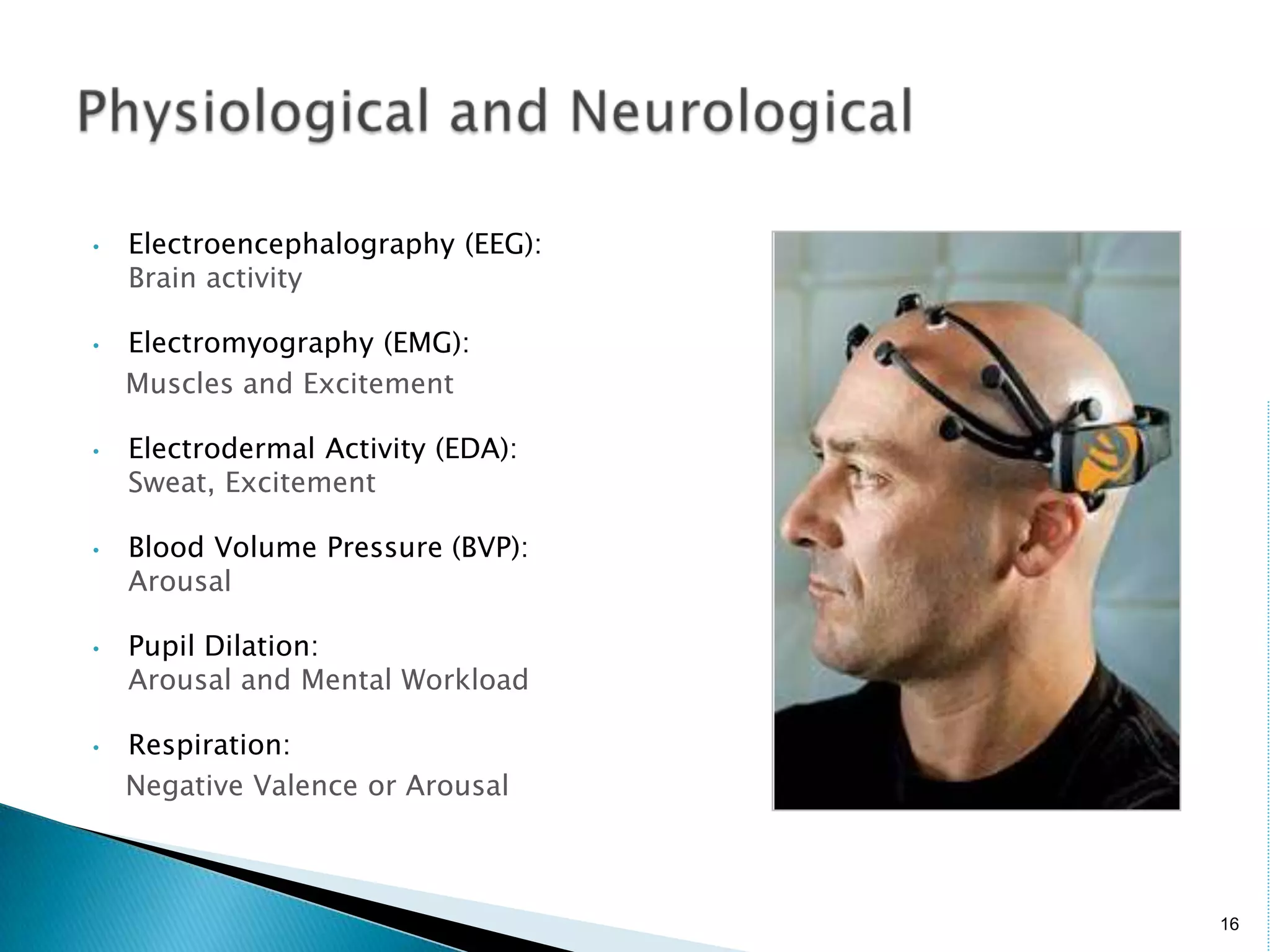
Electroencephalography (EEG): Brain activity
Electromyography (EMG): Muscles and ExcitementElectrodermal Activity (EDA): Sweat, Excitement
Blood Volume Pressure (BVP): Arousal
Pupil Dilation: Arousal and Mental Workload
Respiration: Negative Valence or Arousal16Physiological and Neurological
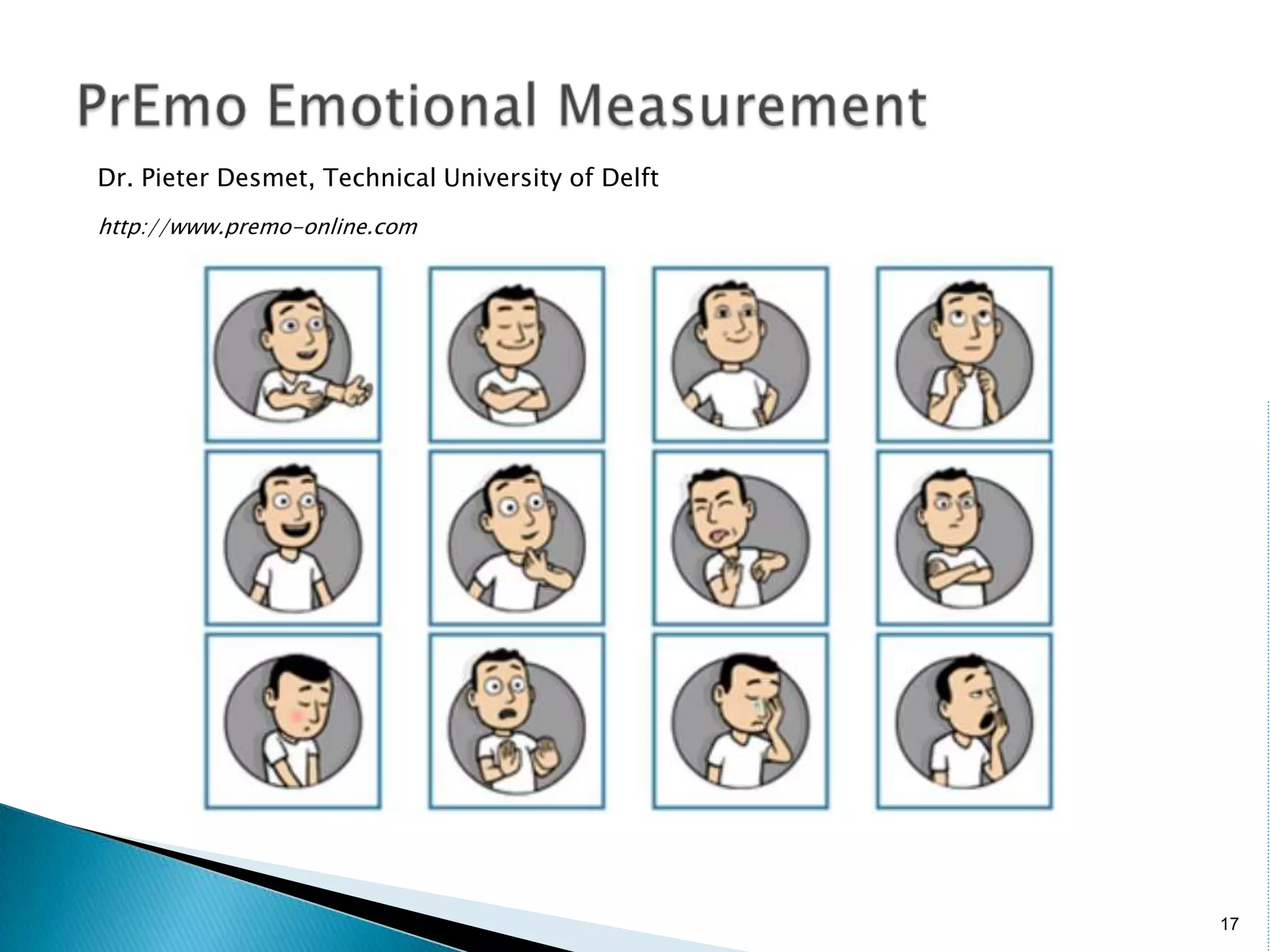
17PrEmo Emotional MeasurementDr. Pieter Desmet, Technical University of Delfthttp://www.premo-online.com
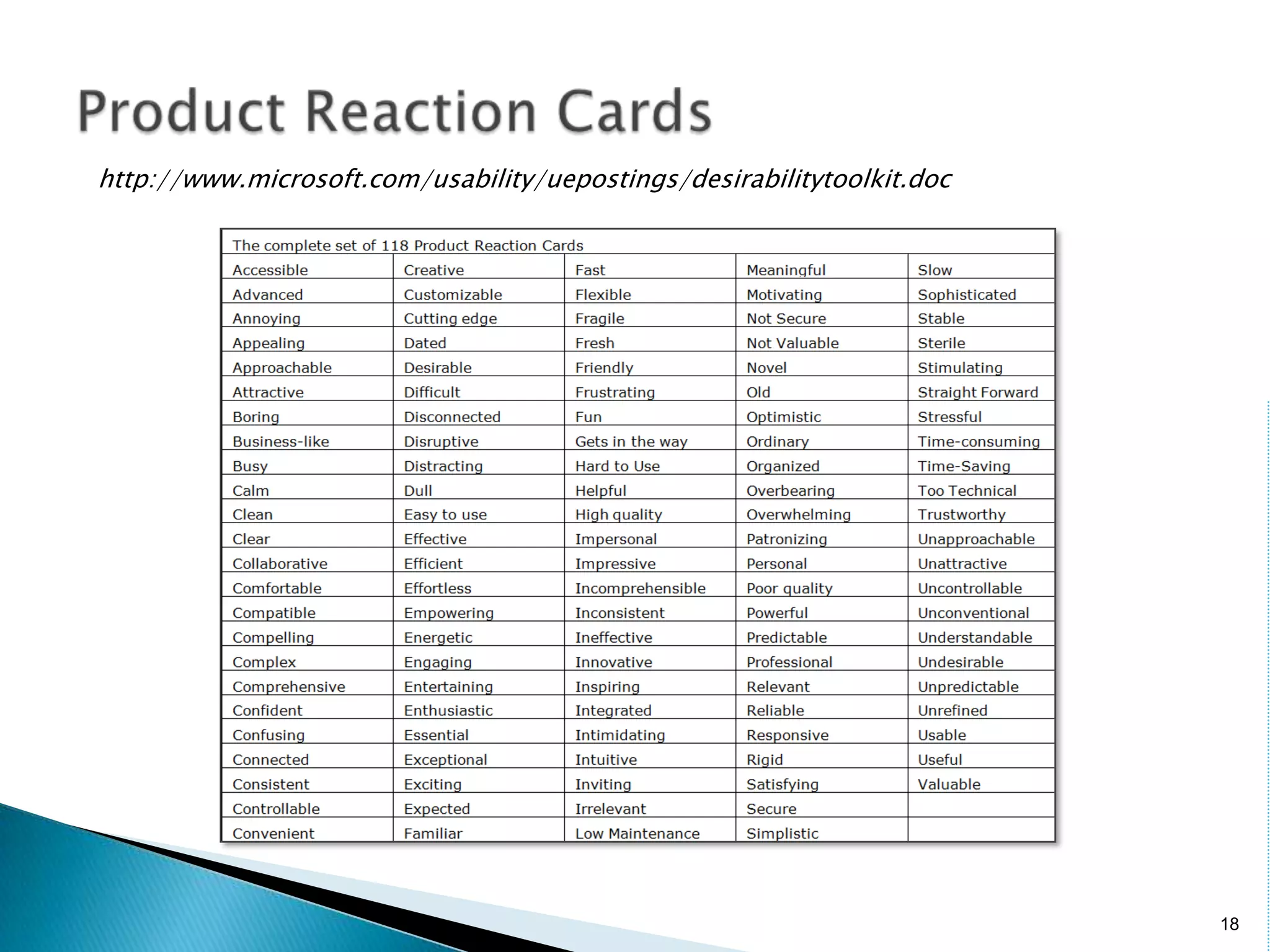
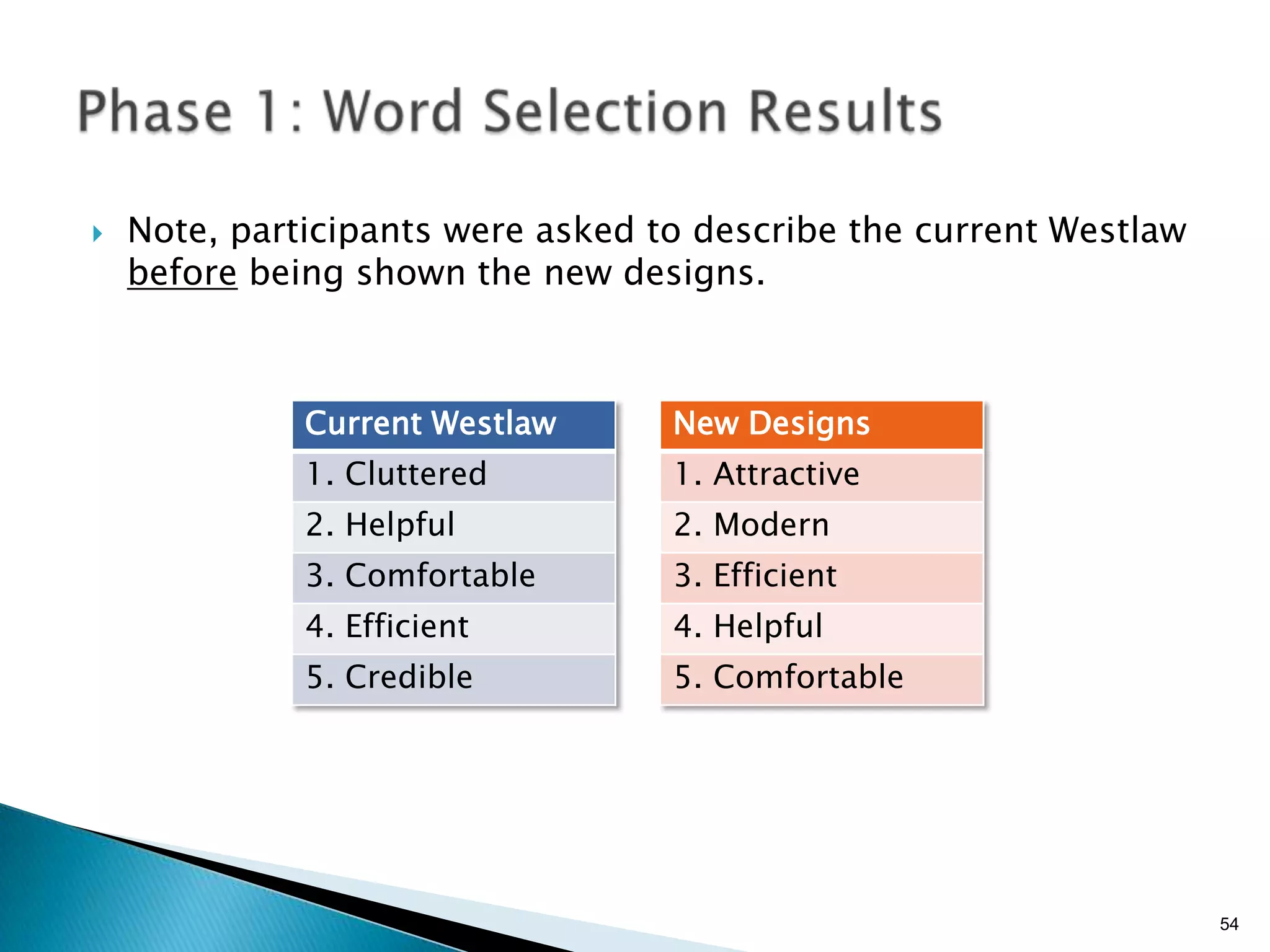
18http://www.microsoft.com/usability/uepostings/desirabilitytoolkit.docProduct Reaction Cards
Case Study: Greenwich Hospital19
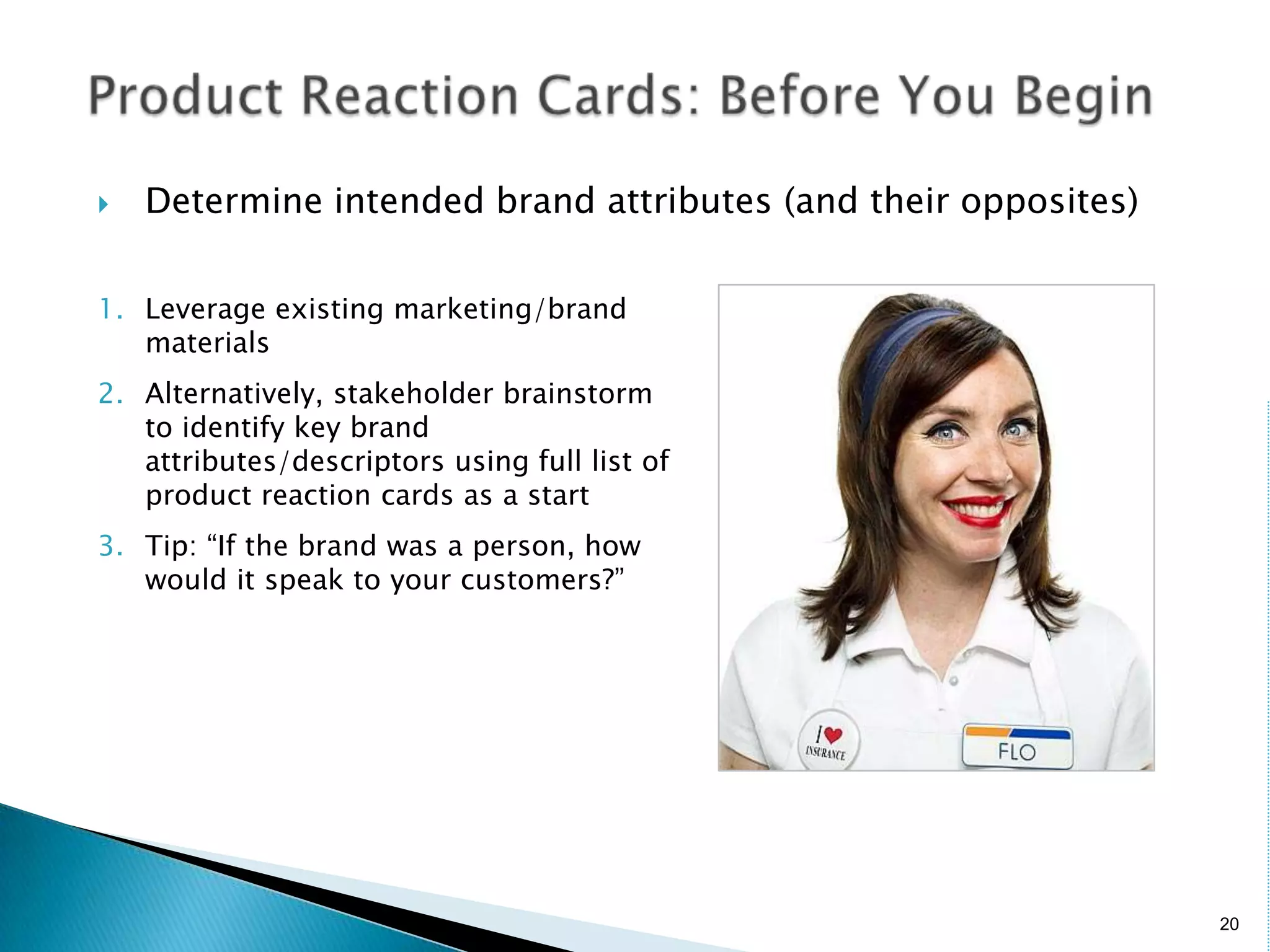
Determine intended brand attributes (and their opposites)20Product Reaction Cards: Before You BeginLeverage existing marketing/brand materialsAlternatively, stakeholder brainstorm to identify key brand attributes/descriptors using full list of product reaction cards as a startTip: โ€œIf the brand was a person, how would it speak to your customers?โ€
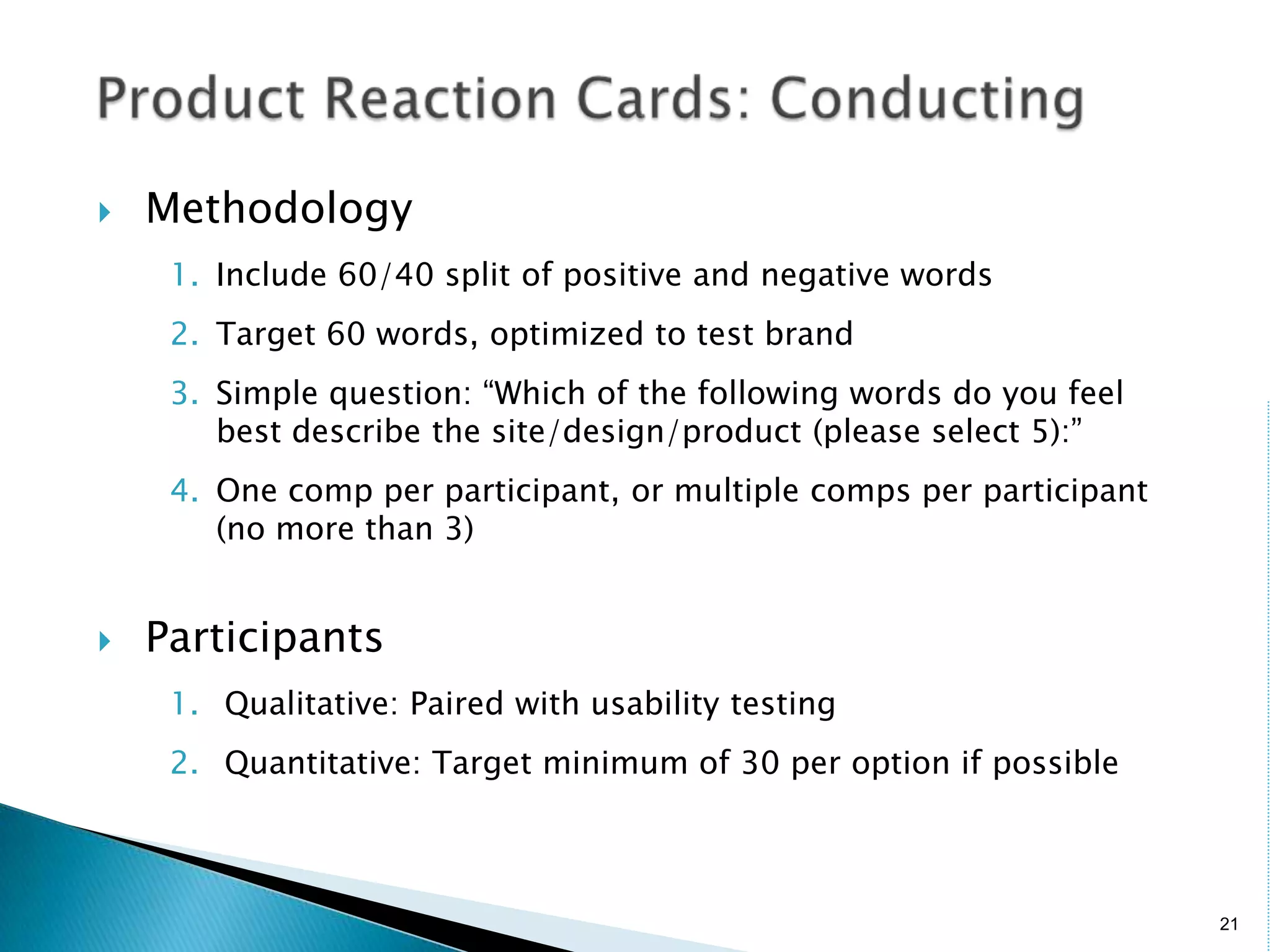
MethodologyInclude 60/40 split of positive and negative wordsTarget 60 words, optimized to test brandSimple question: โ€œWhich of the following words do you feel best describe the site/design/product (please select 5):โ€One comp per participant, or multiple comps per participant (no more than 3)ParticipantsQualitative: Paired with usability testingQuantitative: Target minimum of 30 per option if possible21Product Reaction Cards: Conducting
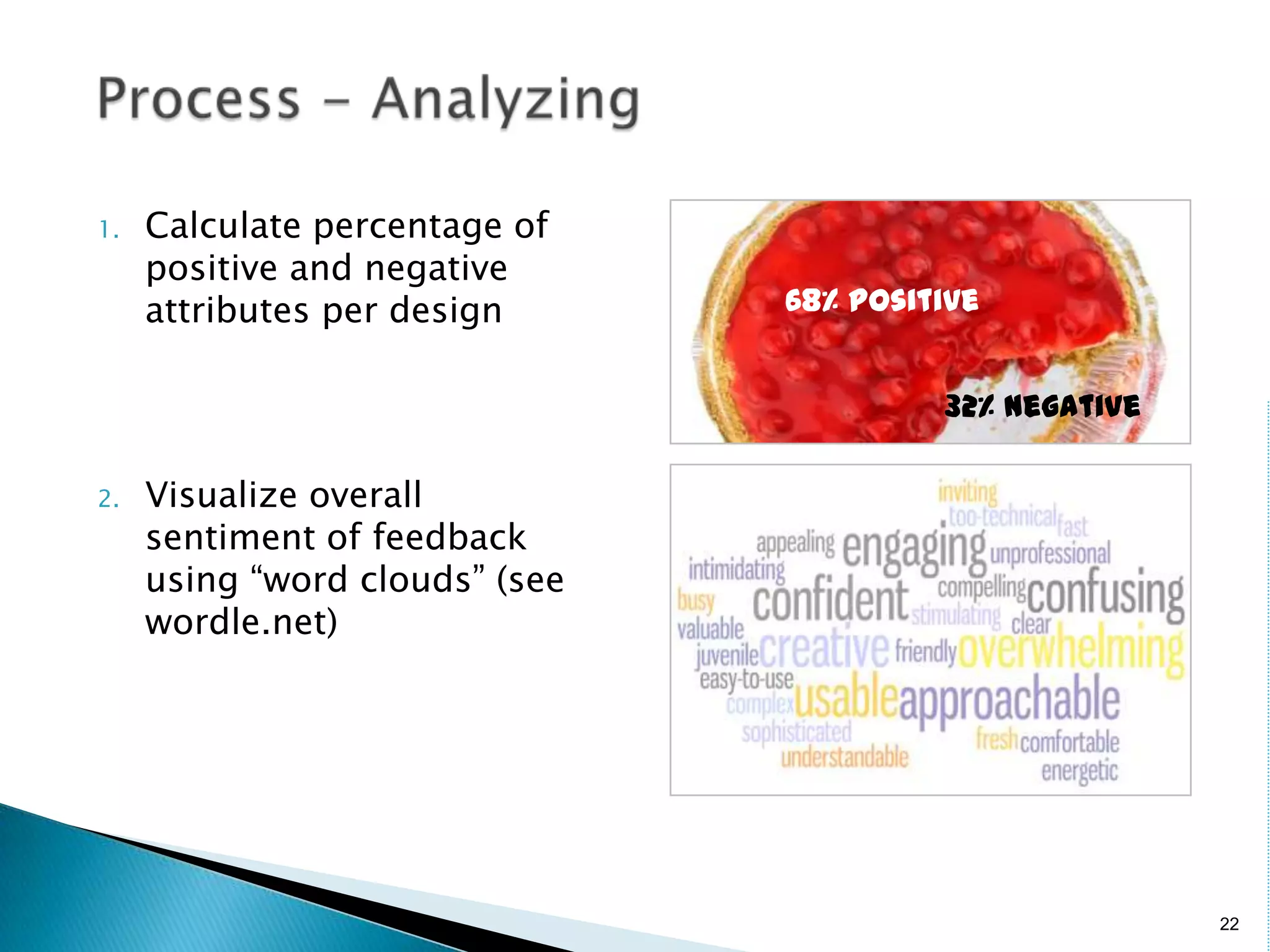
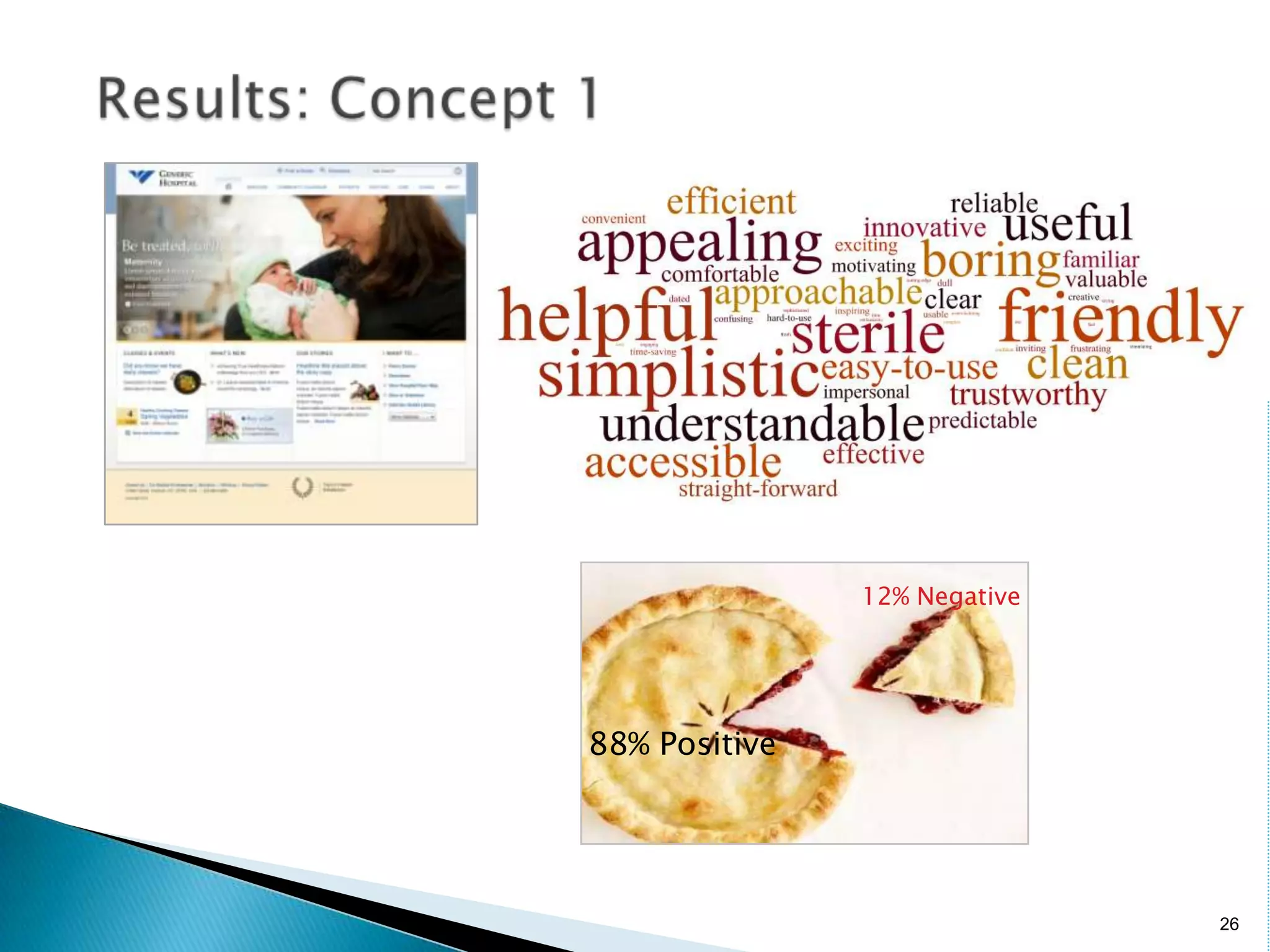
22Process - AnalyzingCalculate percentage of positive and negative attributes per designVisualize overall sentiment of feedback using โ€œword cloudsโ€ (see wordle.net)68% Positive32% Negative
Align the website with the character of the Hospital
Update the site after nearly 10 years
Counter impressions that Greenwich is more than just maternity and elder care
Communicate that they are long-standing members of the community23Case Study: Greenwich Hospital Website Redesign
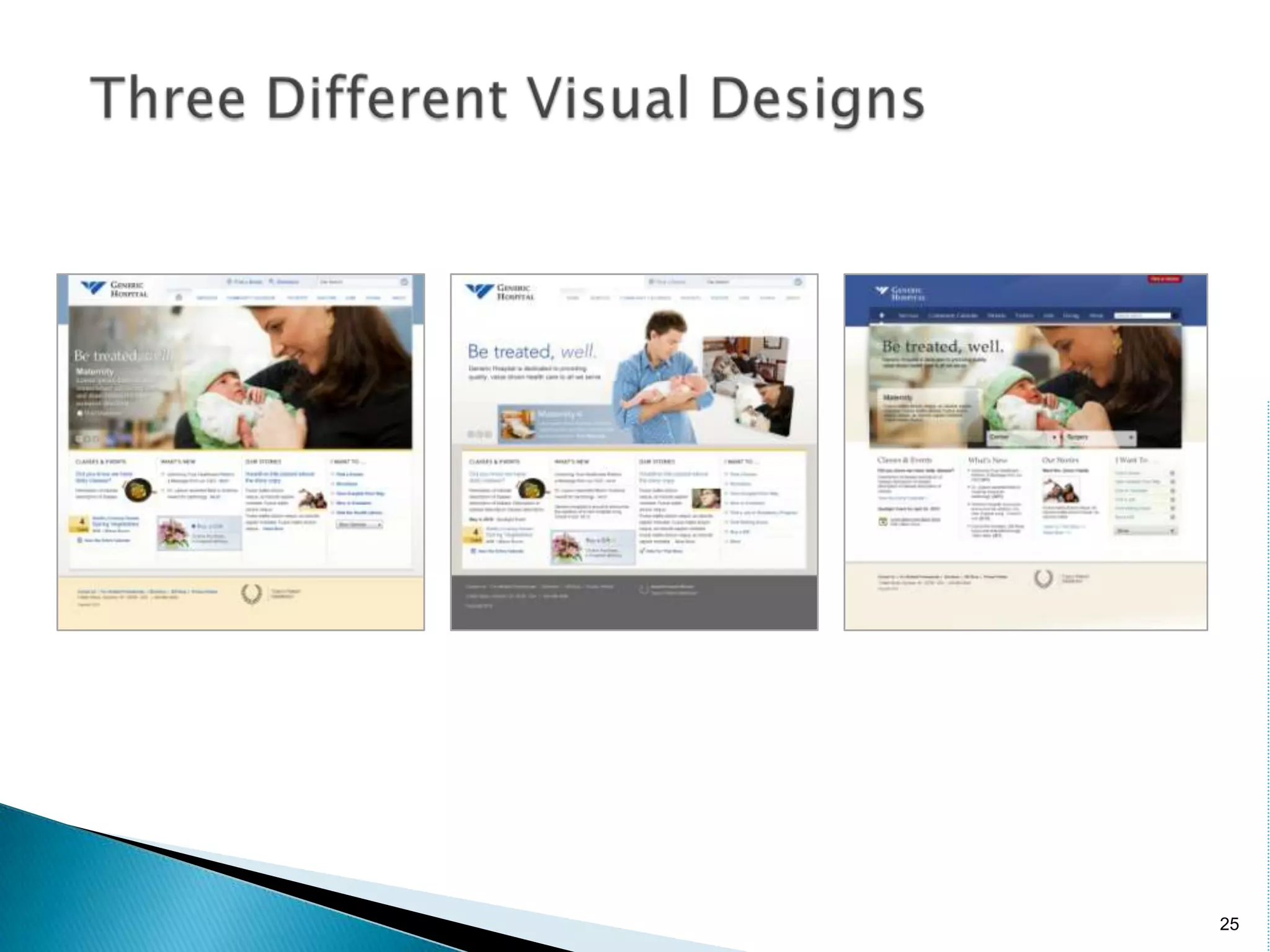
24Case Study: Greenwich Hospital Website Redesign 3 visually designed comps
50 people reacted to each comp (quantitative) via survey
Additional feedback obtained via participant interviews (qualitative)Survey QuestionsHello, I am requesting feedback on a website I am working on.  Your answers let me know if the site is conveying the right feel. 1. What are your initial reactions to the web site? 2. Which of the following words best do you feel best describe the site (select 5):
25Three Different Visual Designs
26Results: Concept 112% Negative88% Positive
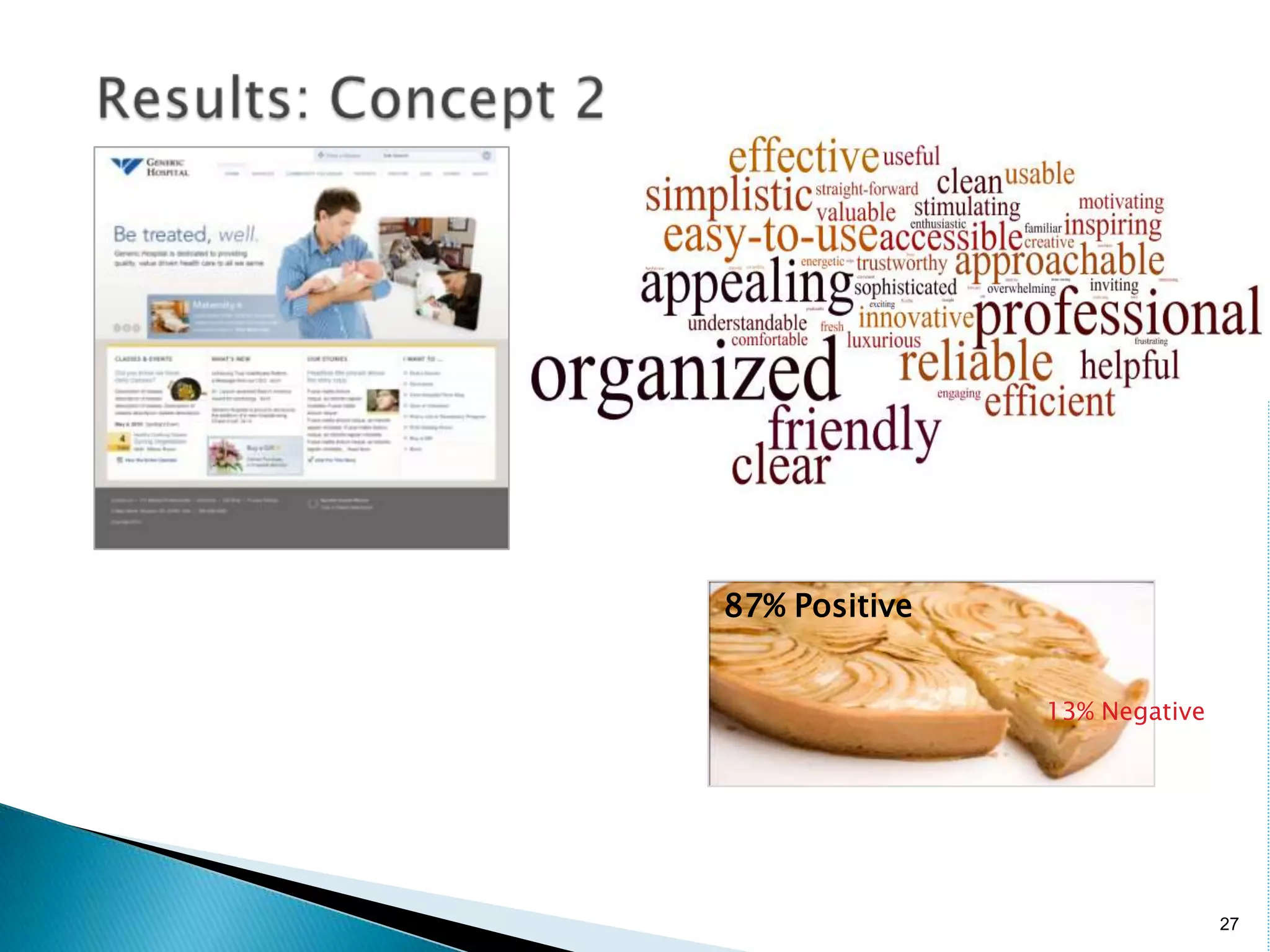
27Results: Concept 287% Positive13% Negative
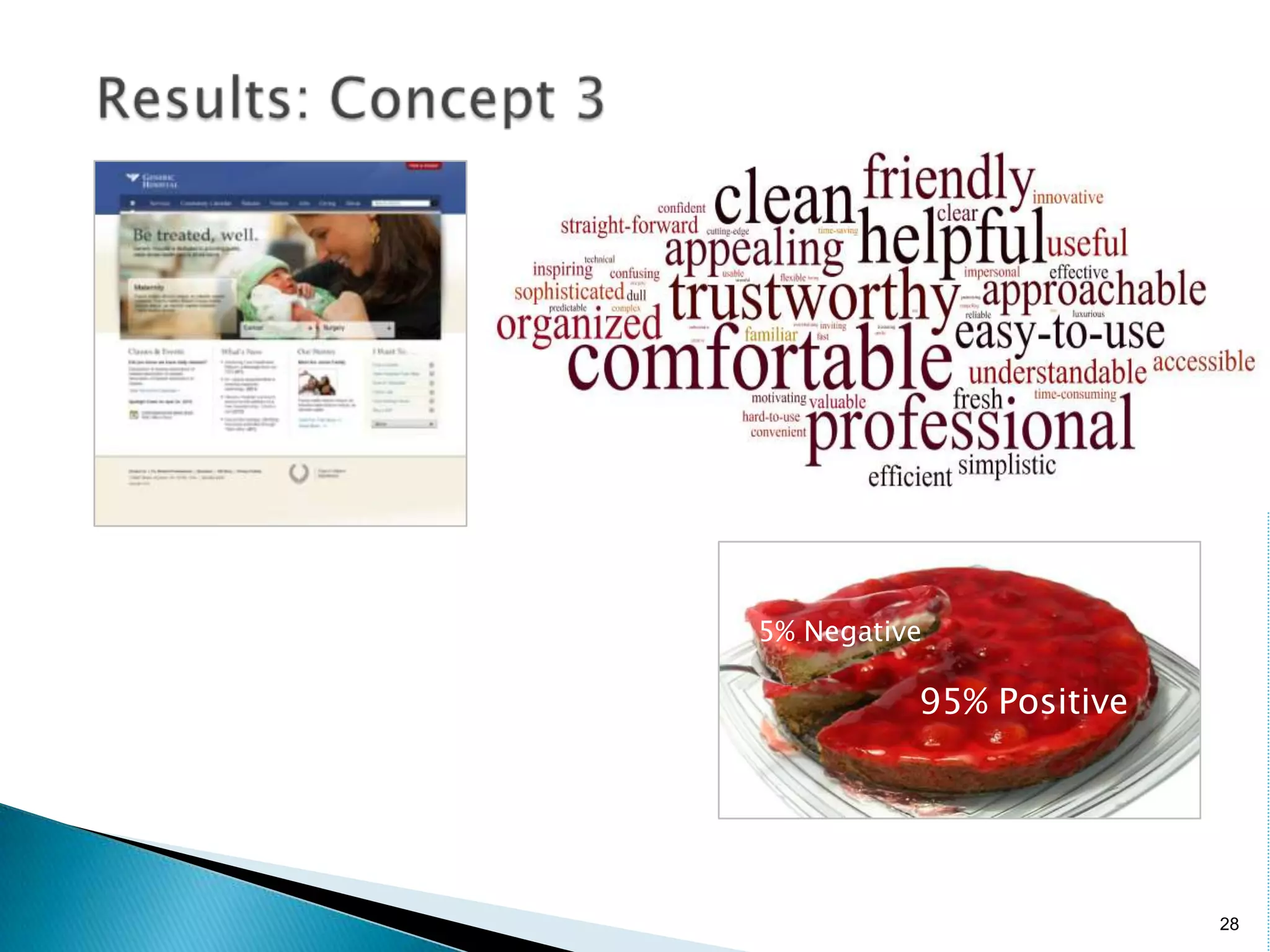
28Results: Concept 35% Negative95% Positive
Mix of qualitative and quantitative is key
Qualitative helps provide color to the results
Quantitative resonates with stakeholders and executives
Position results as one form of input to decision-making process, not declaring a โ€œwinnerโ€
Simple, cost-efficient way to assess audienceโ€™s emotional response to a design29Lessons Learned
Case Study: WestlawNextUX Research Team:Paul DoncasterDrew DrentlawShannon Oโ€™BrienBill QuieNovember Samnee30
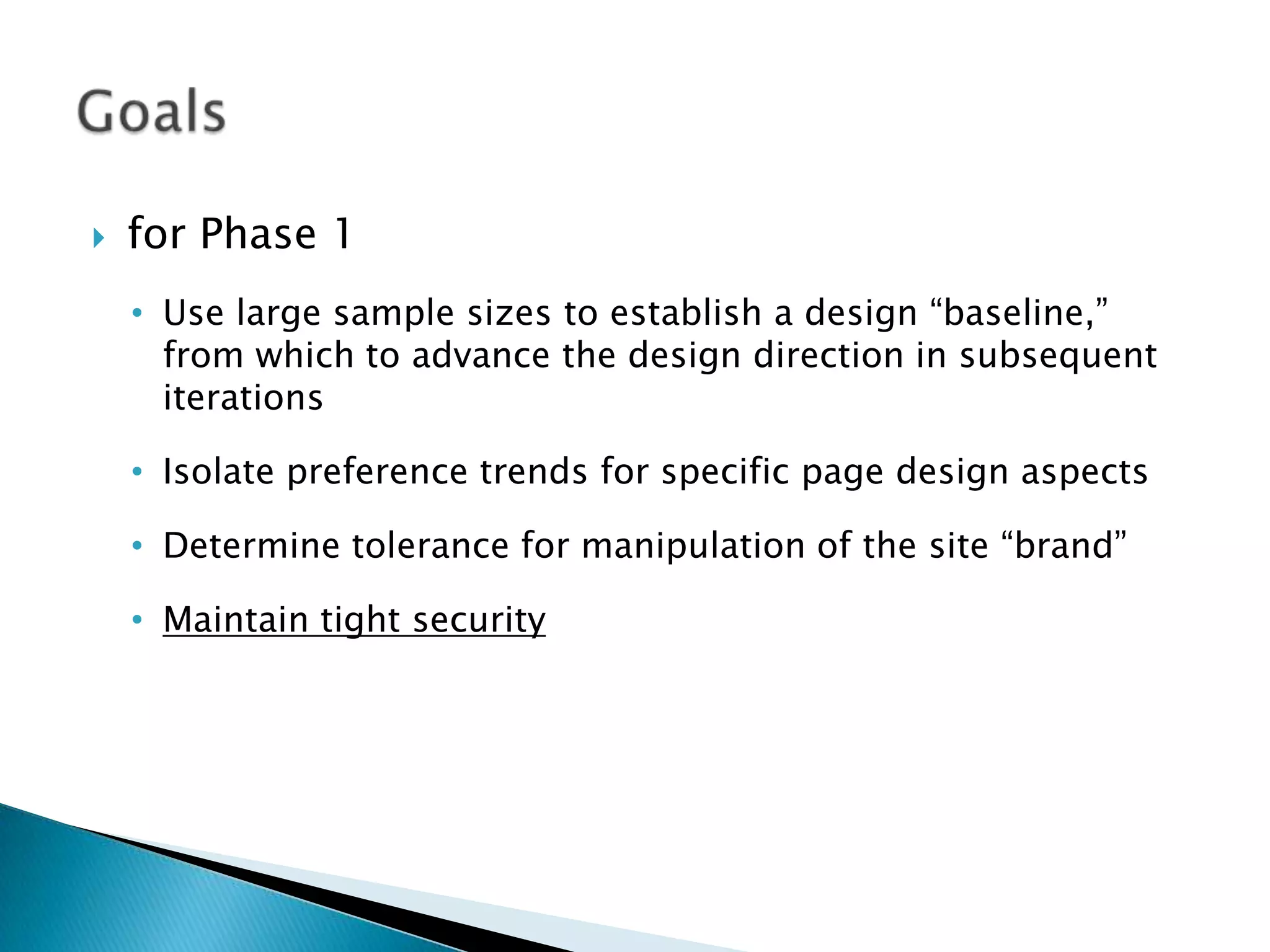
for Phase 1 Use large sample sizes to establish a design โ€œbaseline,โ€ from which to advance the design direction in subsequent iterations
Isolate preference trends for specific page design aspects
Determine tolerance for manipulation of the site โ€œbrandโ€
Maintain tight securityGoals
Sessions were held in 4 cities over 5 daysSeattleDenverMemphisMinneapolis-St. Paul4 sessions were held per day, with a maximum of 25 participants per session1.5 hours allotted per study, most participants finished in less than 1 hour319 participants successfully completed their sessionsPhase 1: Logistics & Execution
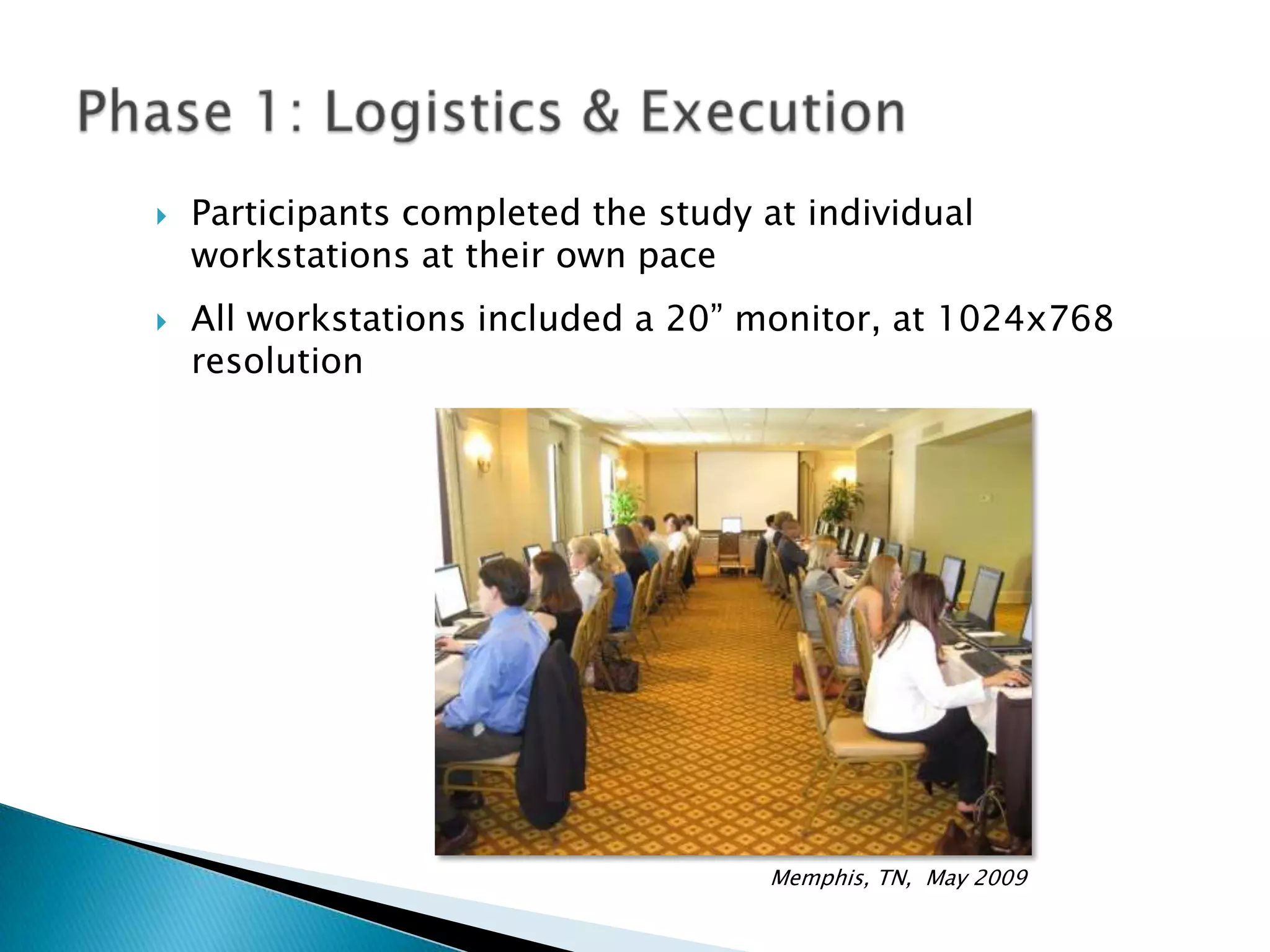
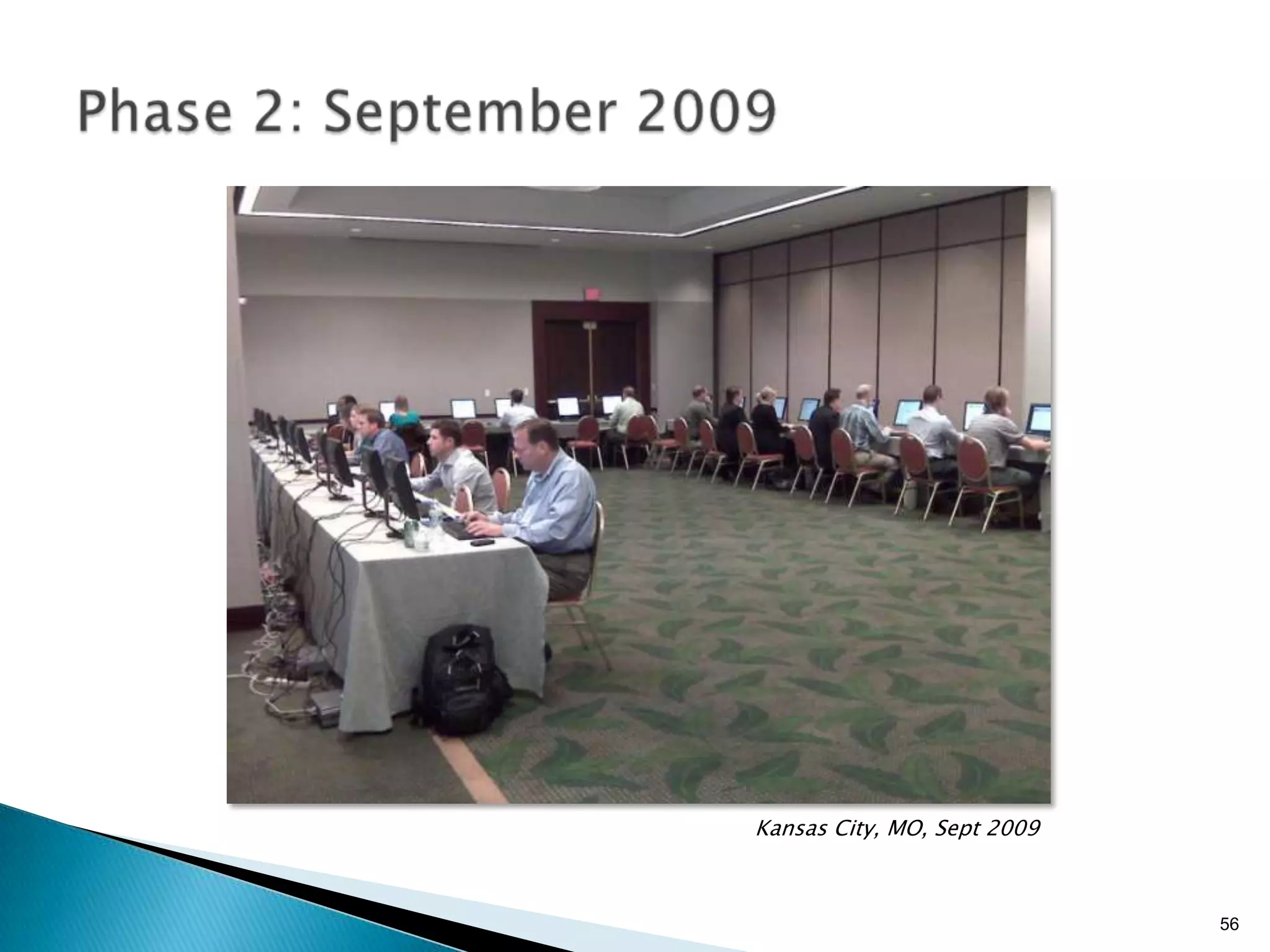
Participants completed the study at individual workstations at their own paceAll workstations included a 20โ€ monitor, at 1024x768 resolutionPhase 1: Logistics & ExecutionMemphis, TN,  May 2009
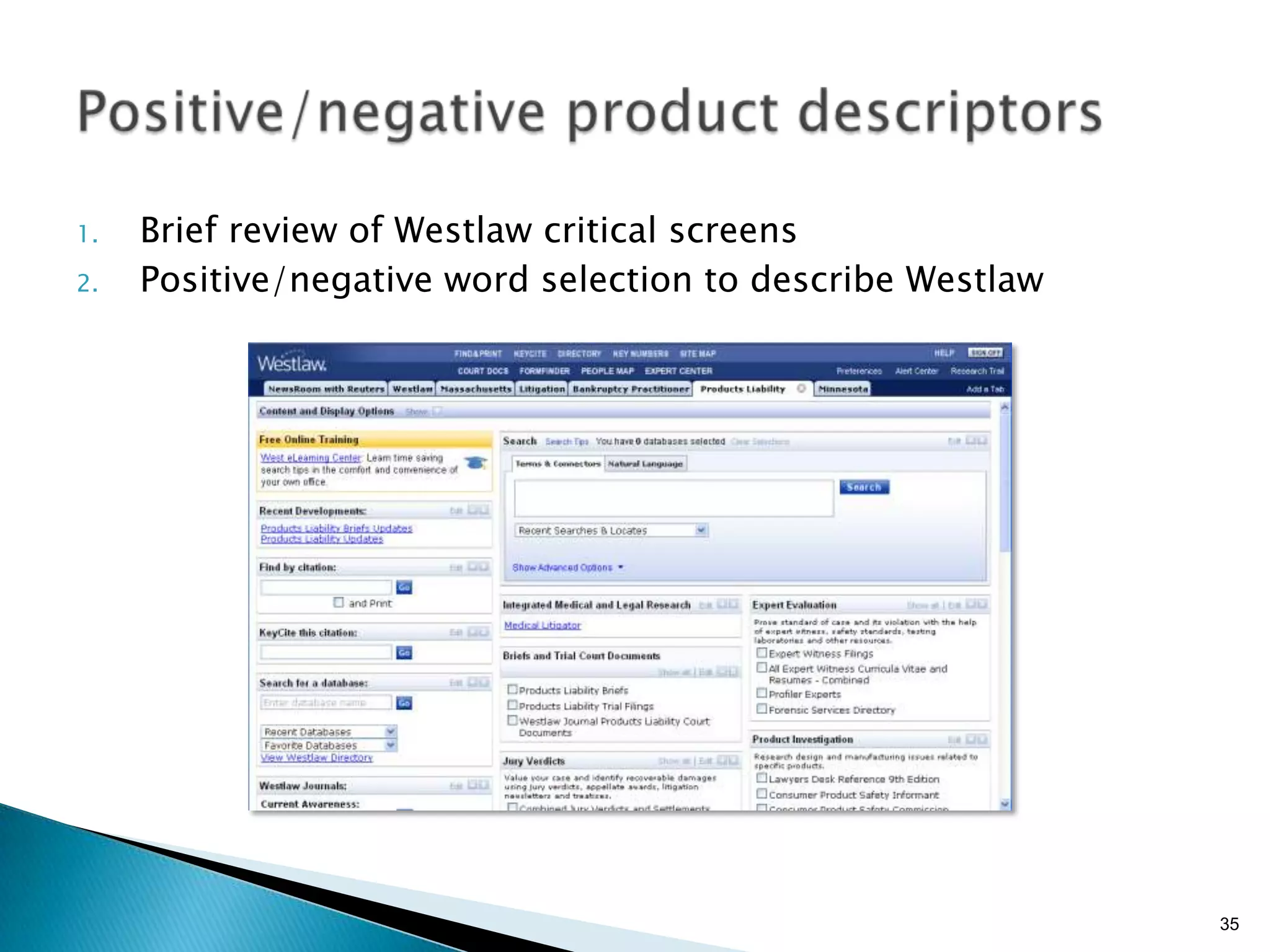
Brief review of Westlaw critical screens Positive/negative word selection to describe Westlaw 35Positive/negative product descriptors
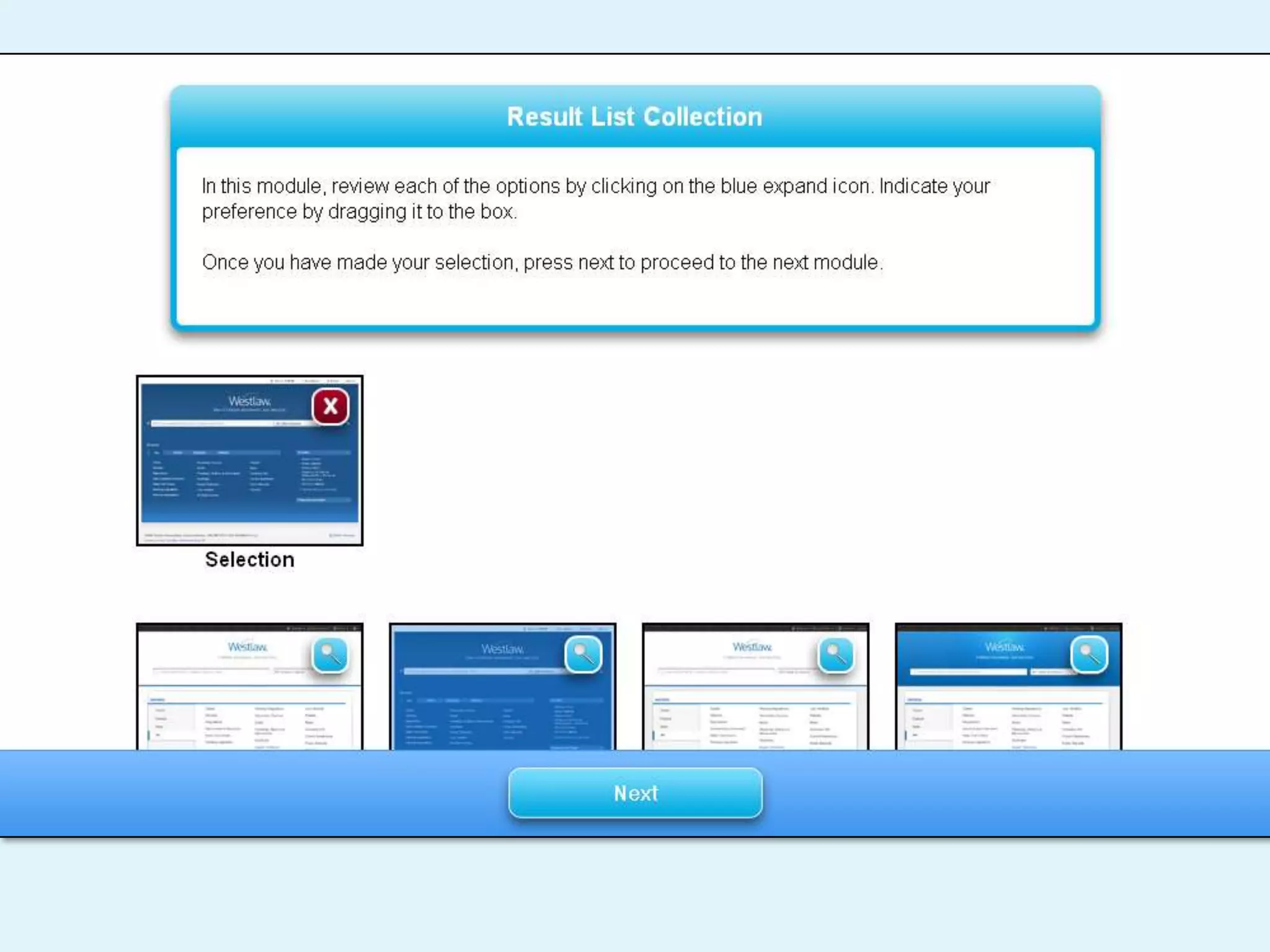
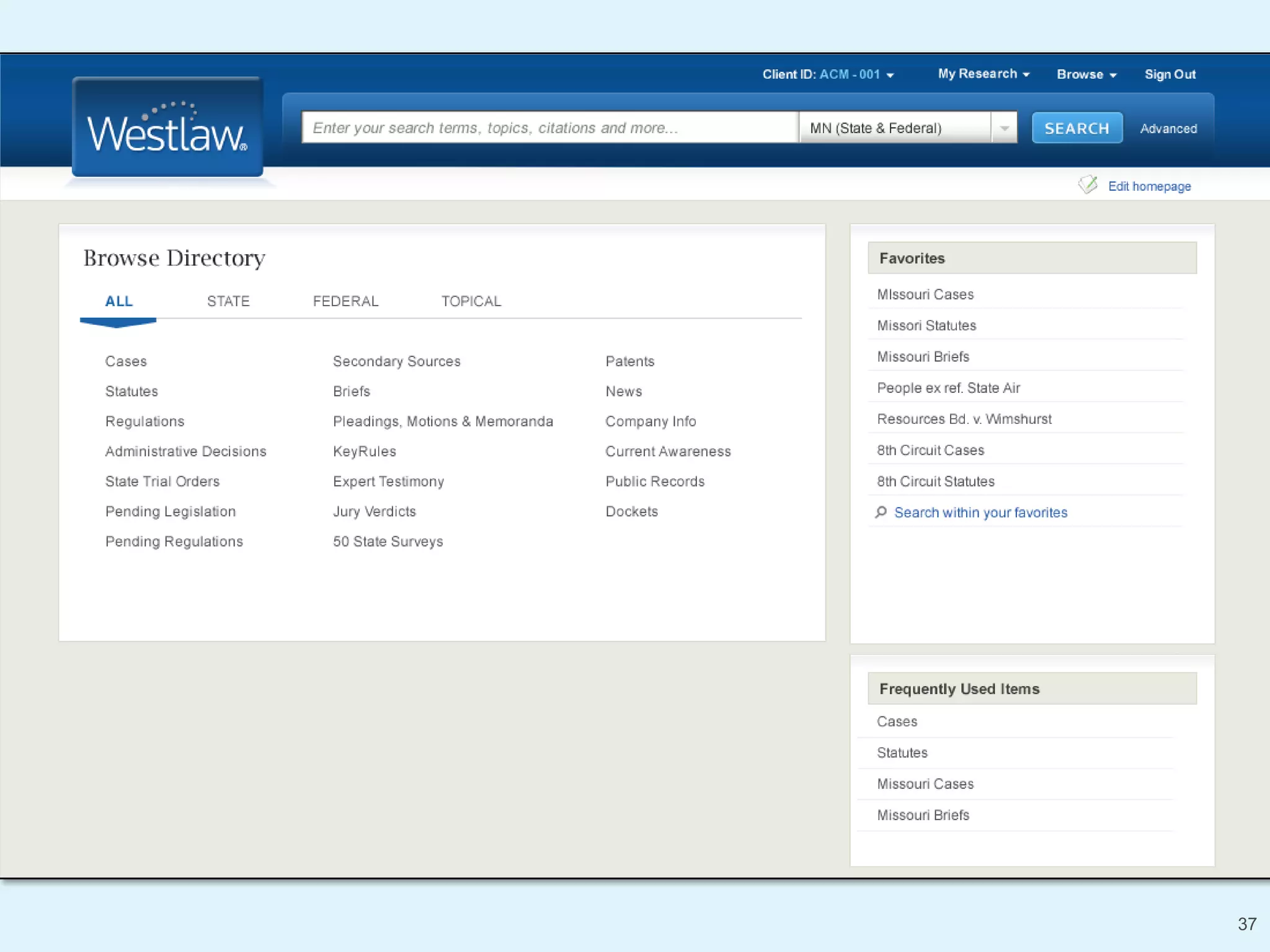
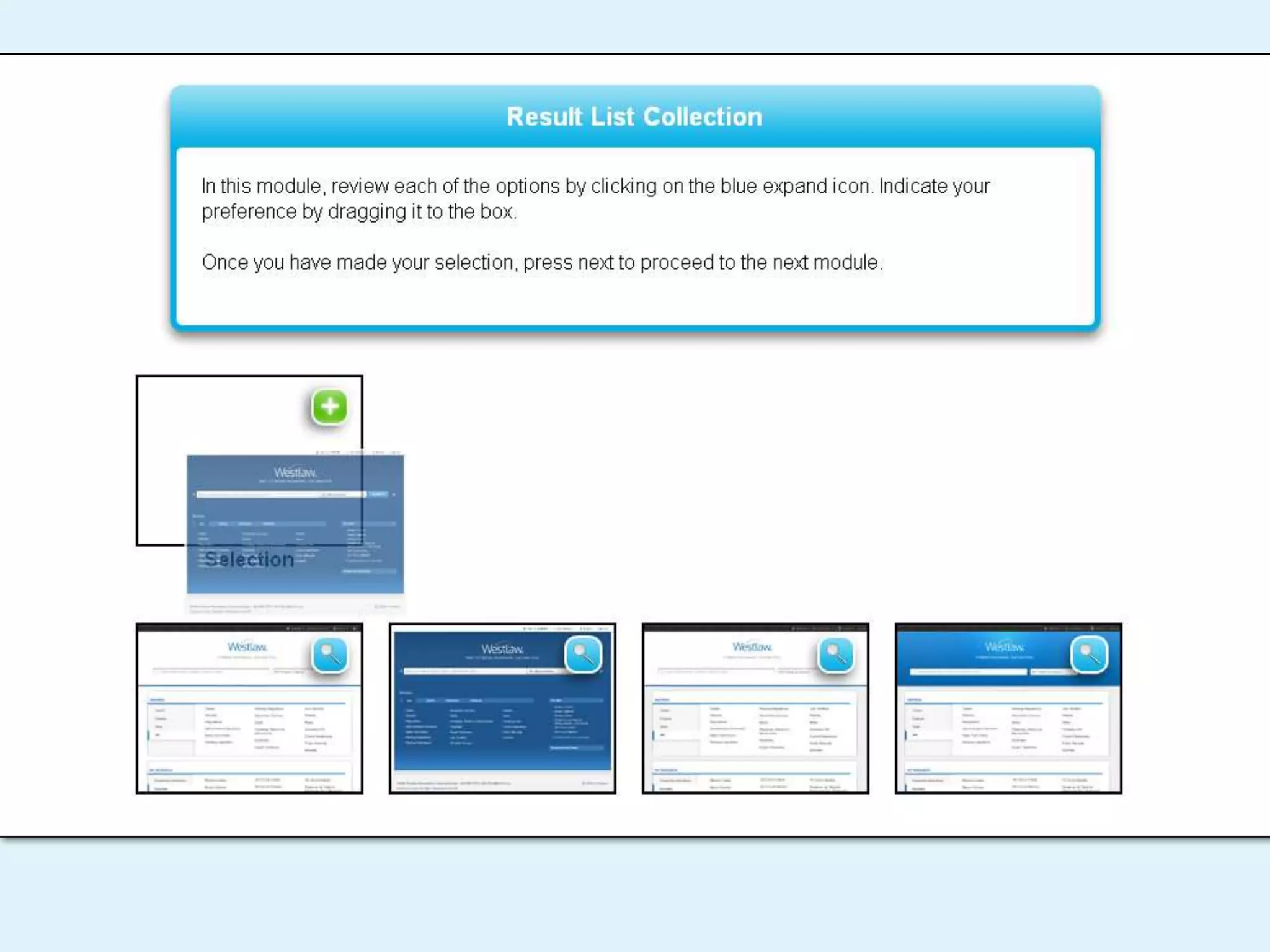
Each set of Element variations were viewed in full screenParticipant selects โ€œtop choiceโ€ by dragging a thumbnail image to a drop area36Homepage: Design Elements
37
Homepage: Design Elements (1)All options viewed in full screenParticipant selects โ€œtop choiceโ€ by dragging a thumbnail image to a drop area
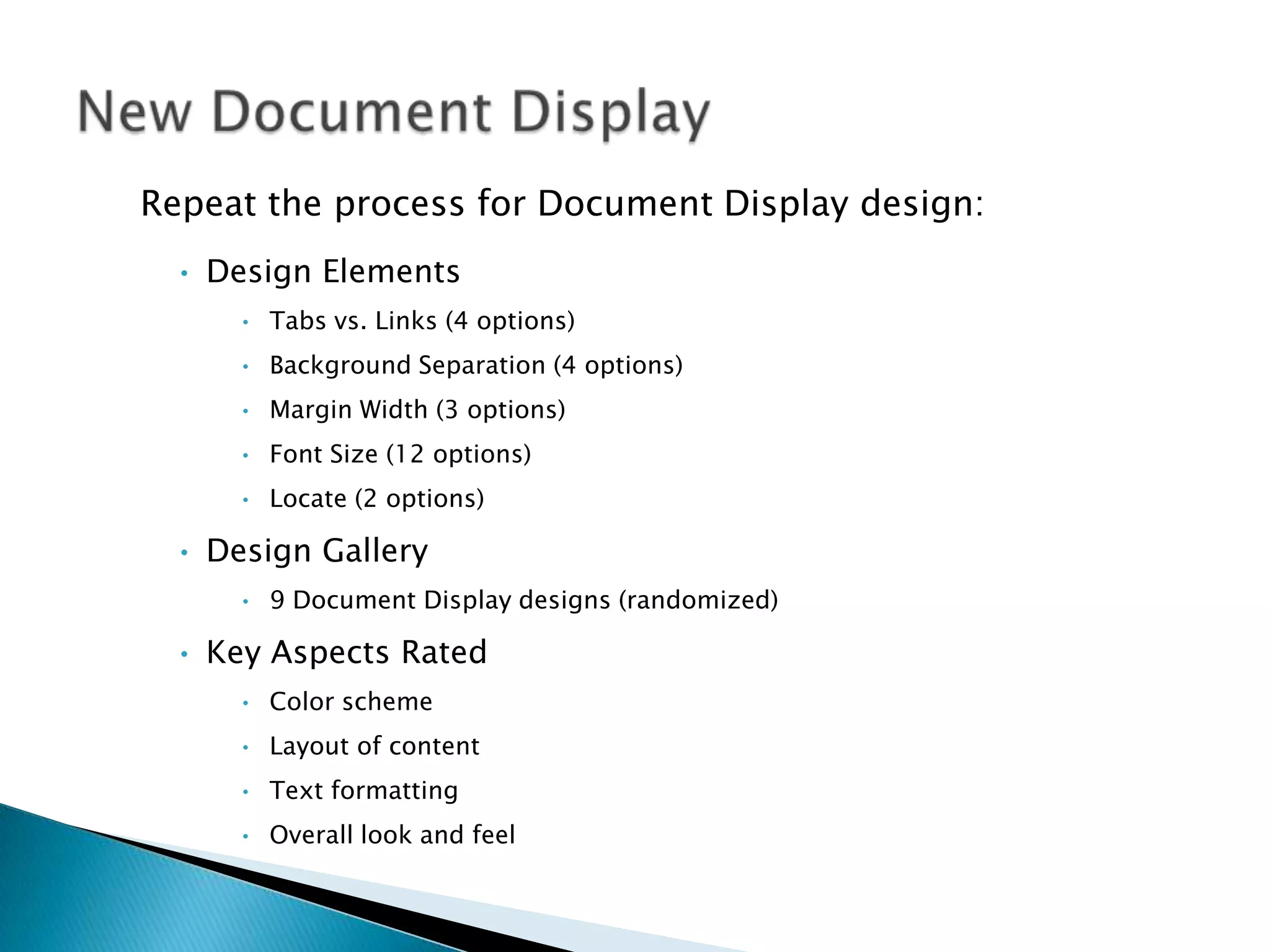
Visual Weight (6 options)Use of Imagery (8 options)Components (4 options)Search Area (4 options)Palette (10 options)Homepage: Design Elements
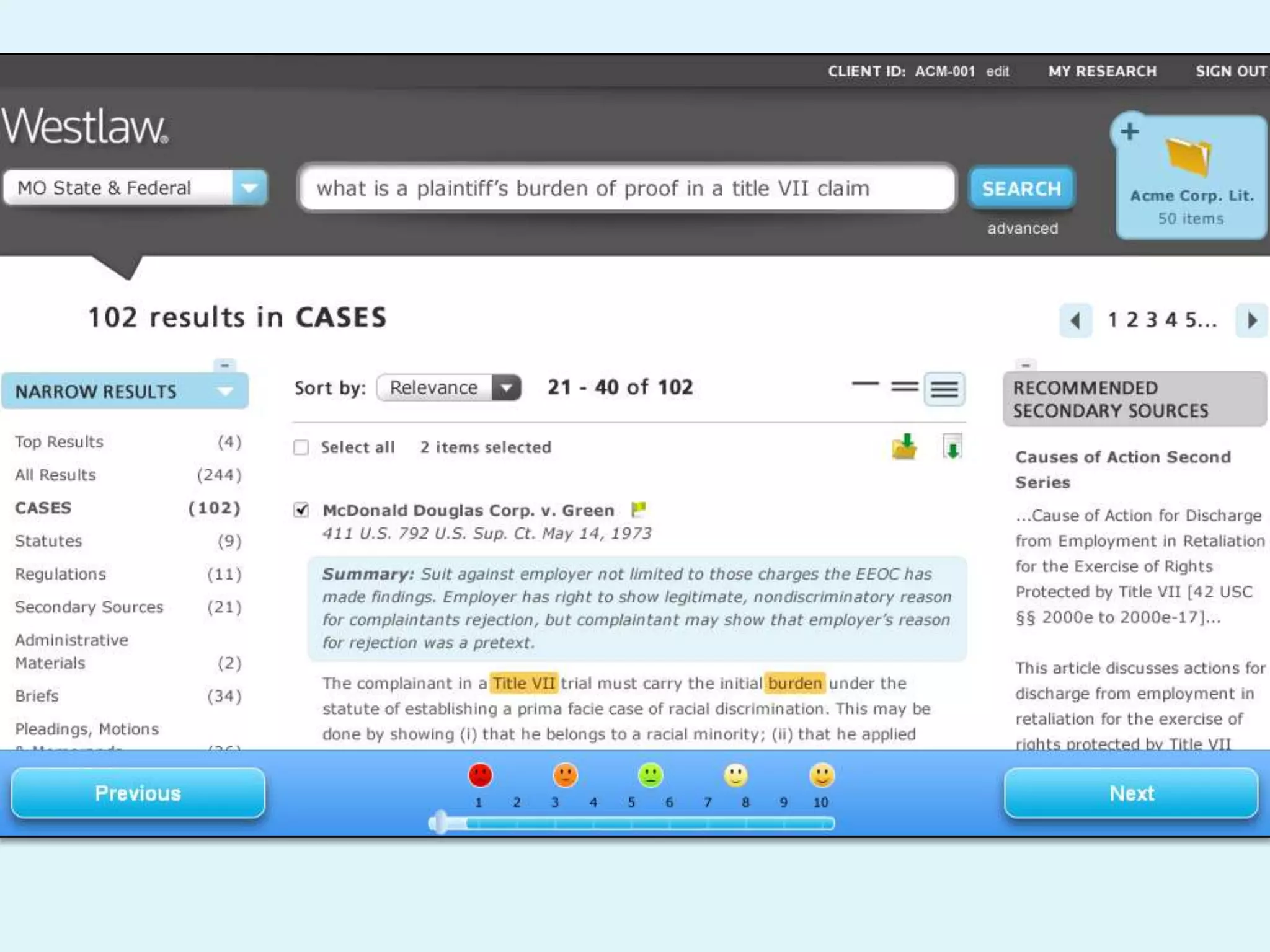
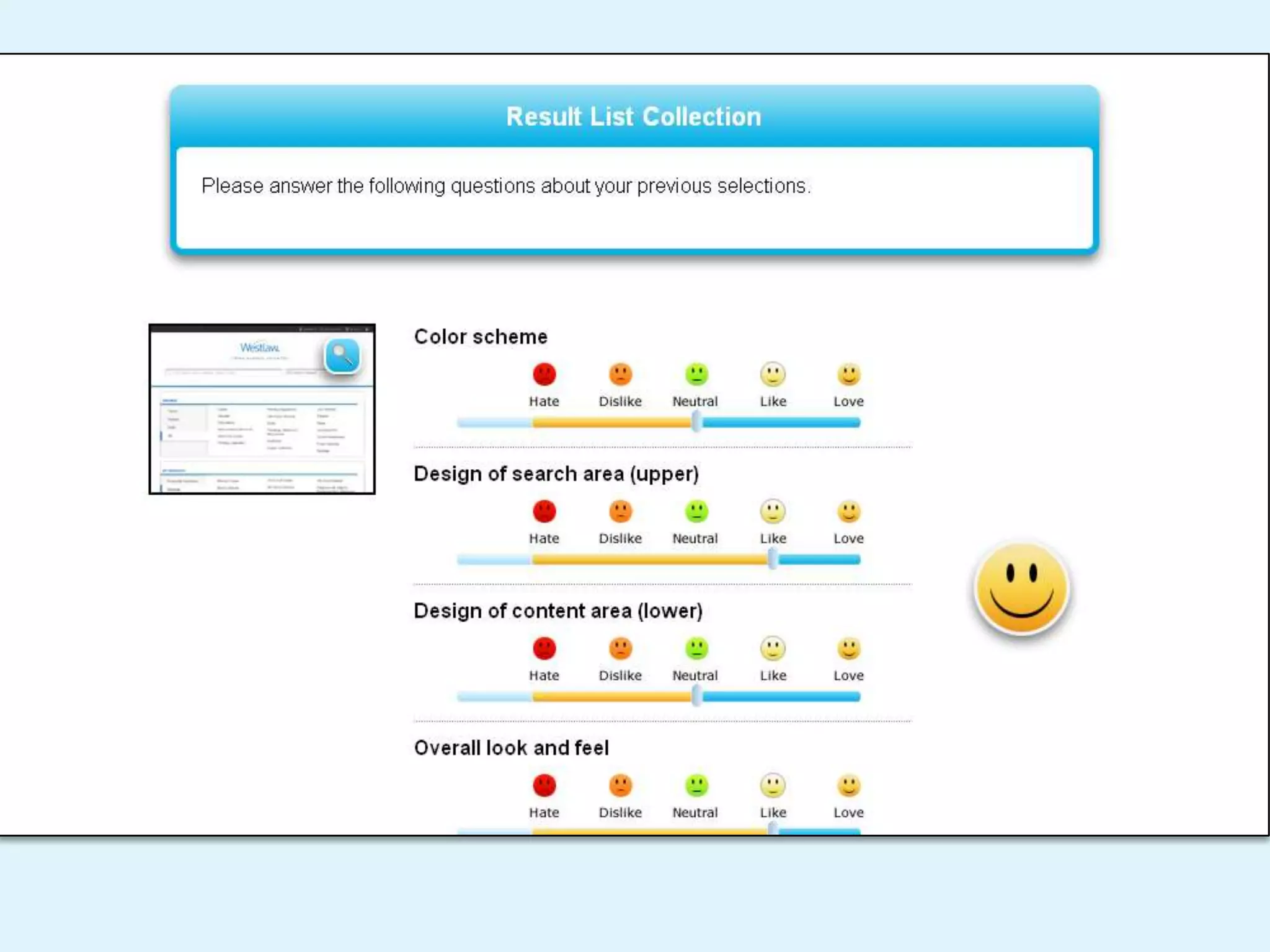
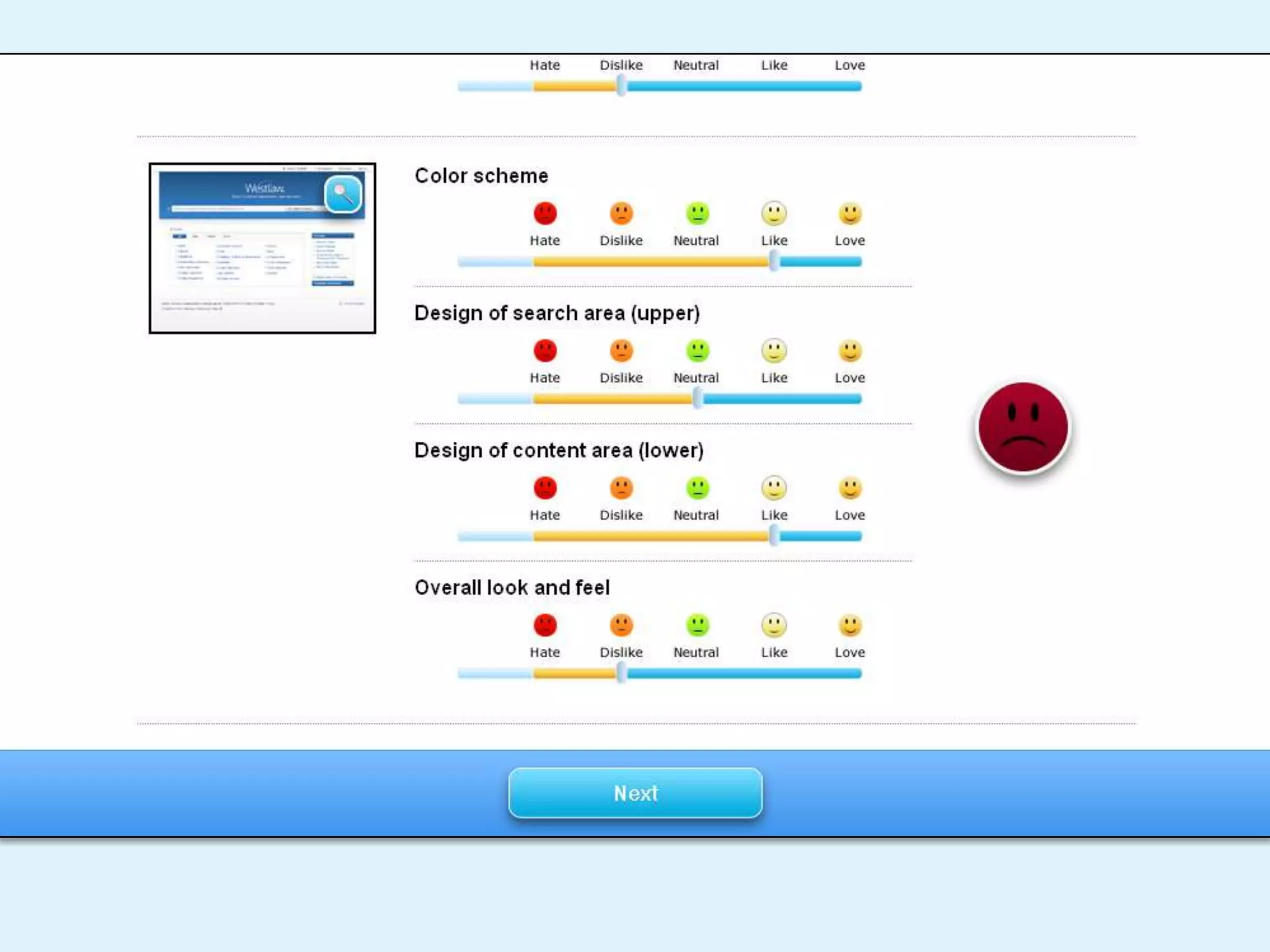
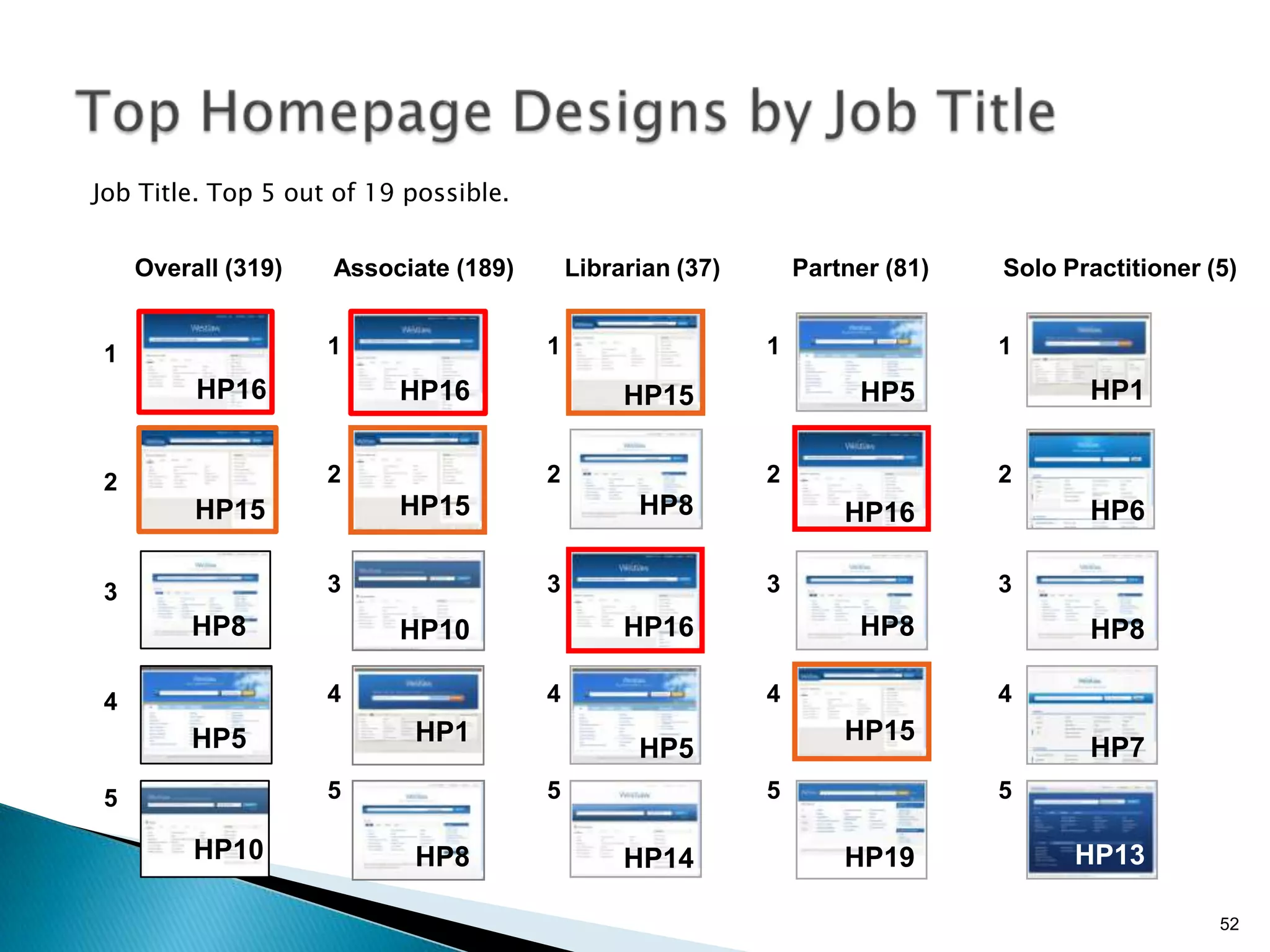
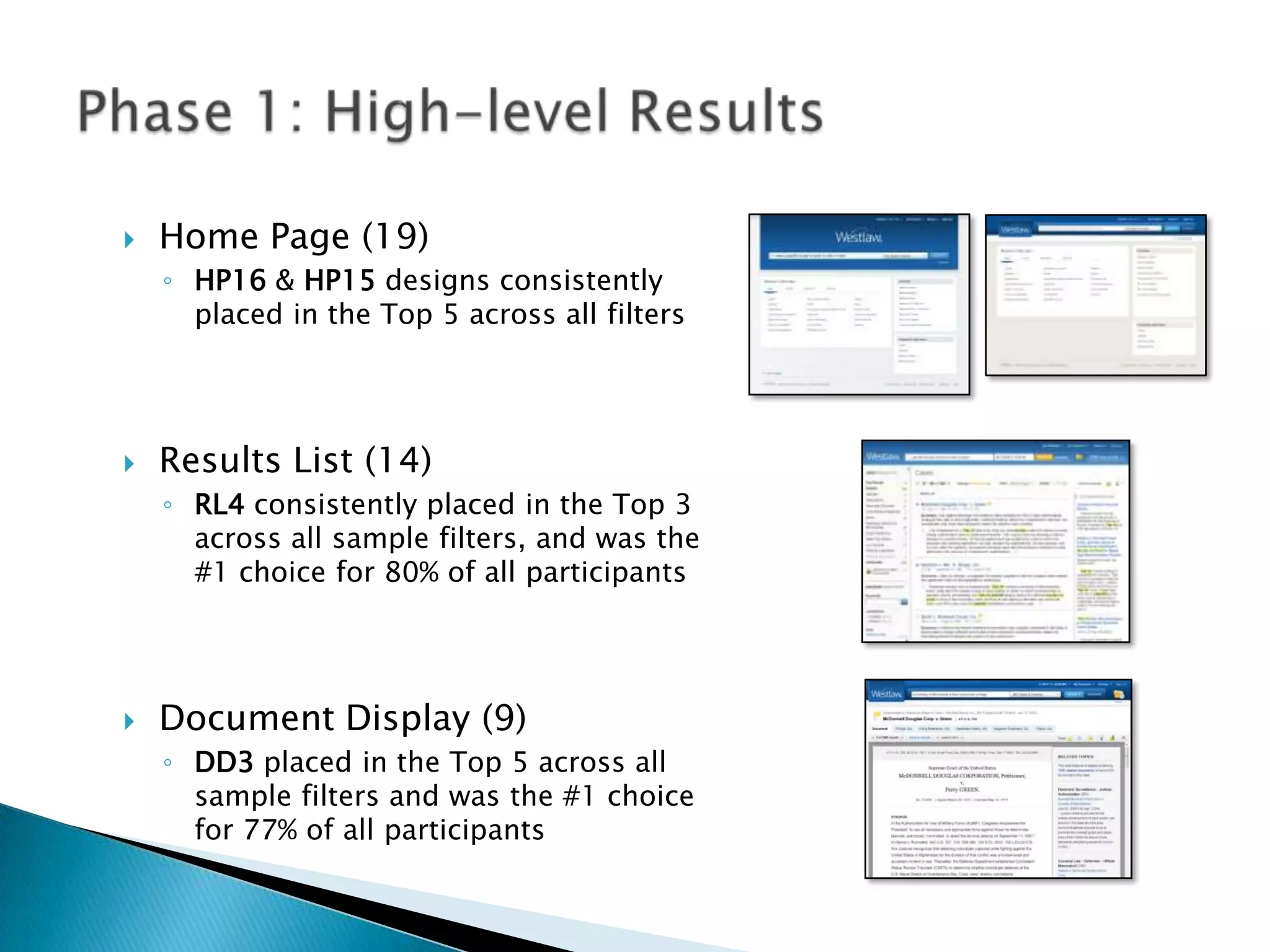
19 HP designs viewed in full screen (randomized)All 19 options are presented again; participant assigns a rating using a 10-point slider.Top 5 and Bottom 2 choices are positioned in order of rating values on one long, scrollable page. Next to each design displayed, rates key aspects for each design on a 5-point scaleHomepage: Design Gallery
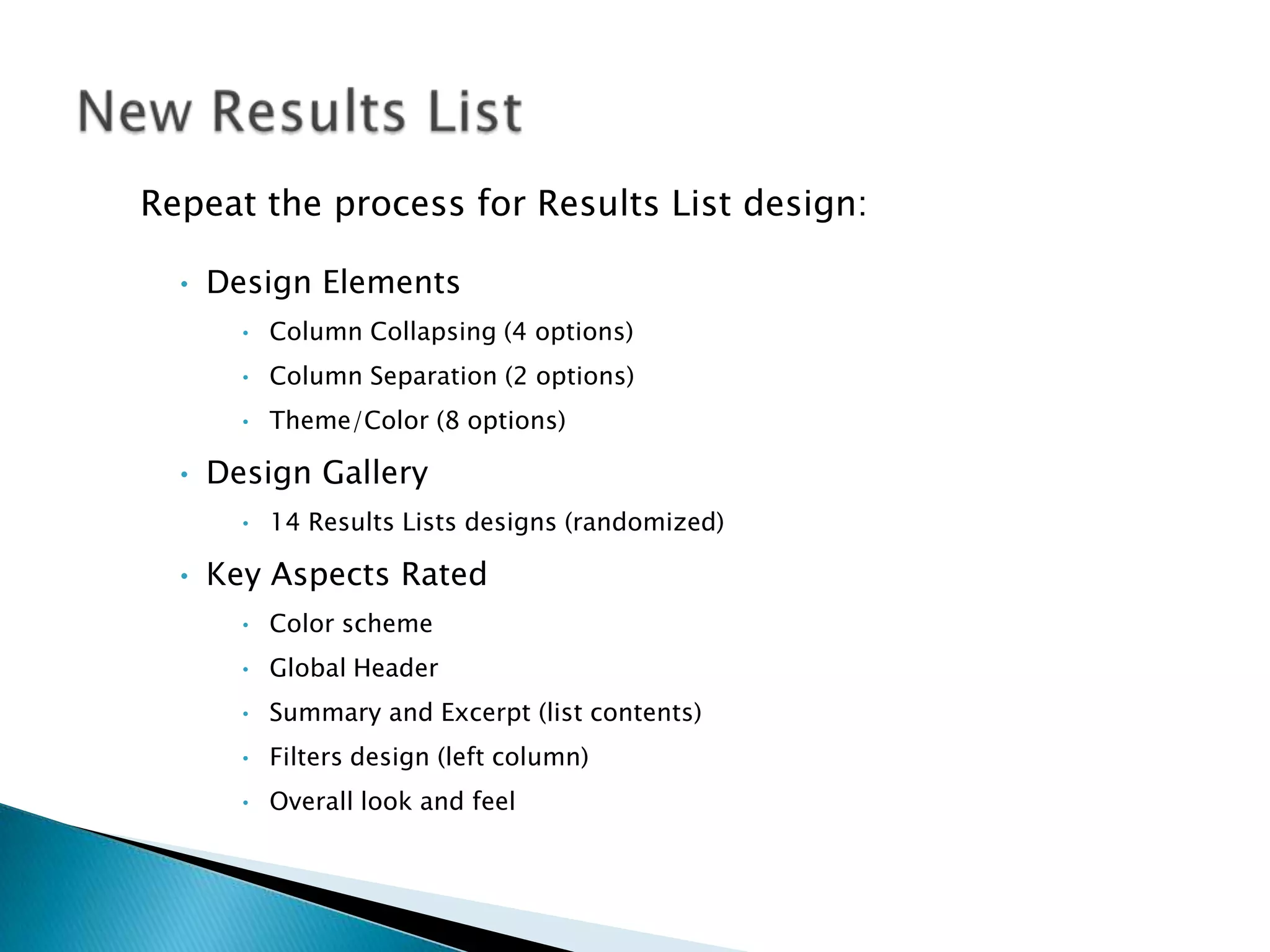
Repeat the process for Results List design:New Results ListDesign Elements
Column Collapsing (4 options)
Column Separation (2 options)
Theme/Color (8 options)
Design Gallery
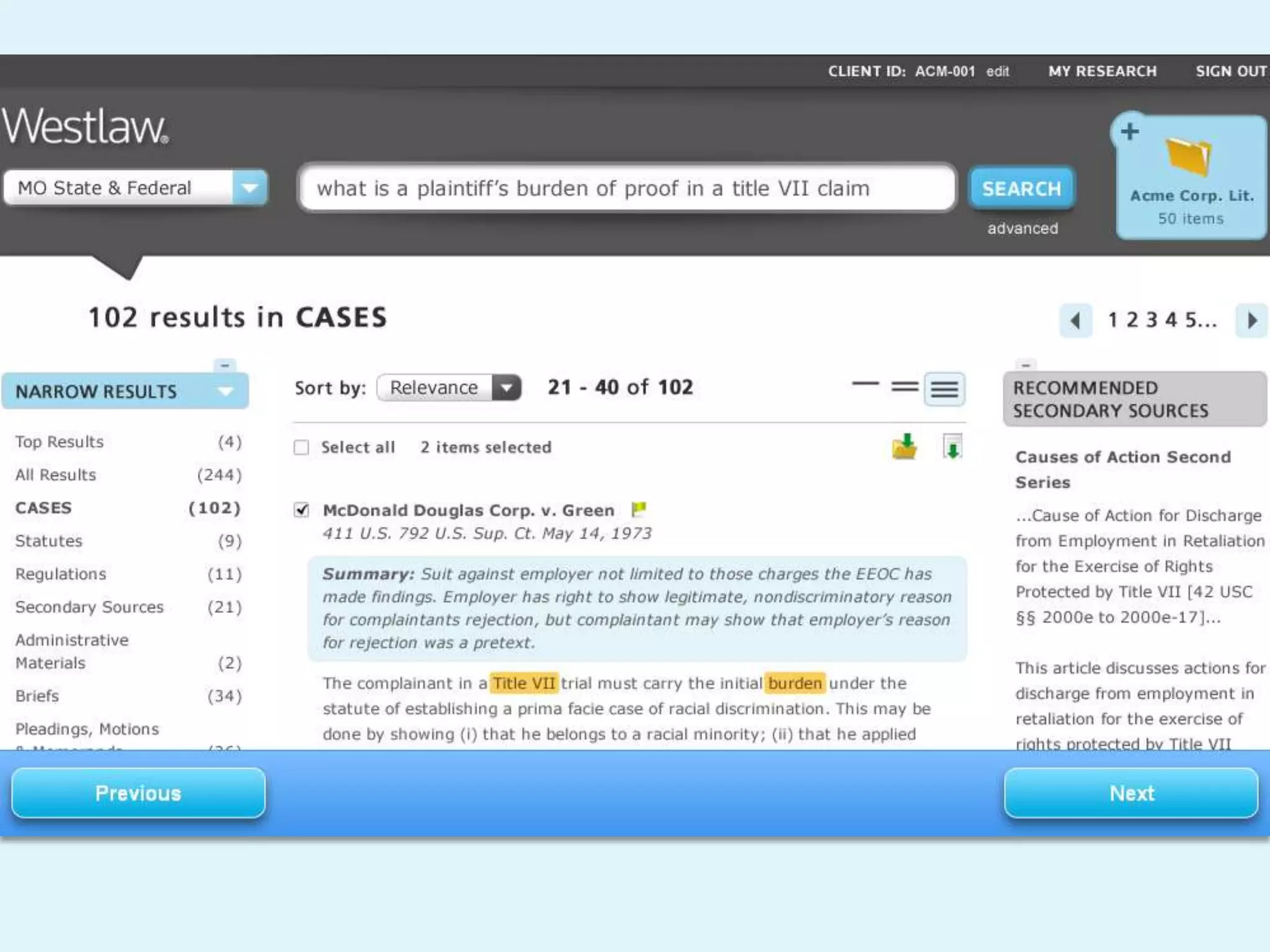
14 Results Lists designs (randomized)
Key Aspects Rated
Color scheme
Global Header

Preference and Desirability Testing: Measuring Emotional Response to Guide Design

Editor's Notes

  • #5ย Impacts a product's or application's perceived:UtilityUsabilityCredibility
  • #6ย If users have a positive impression of the design aesthetics, they are more likely to overlook or forgive poor usability or limited functionality. With a negative impression, users are more likely to find fault with an interaction, even if a productโ€™s overall usability is good and the product offers real value.
  • #7ย High desirability feeds into the motivational factors that help trigger target behavior.
  • #8ย High desirability feeds into the motivational factors that help trigger target behavior.
  • #10ย The simplicity of the question doesnโ€™t work well with larger numbers of design options, especially if some are highly similar
  • #11ย People can have a difficult time articulating what it is about a design they like or dislike
  • #12ย The whys are important for stakeholder acceptance (branding guidelines)Business sponsors and stakeholders often want substantial customer feedback to assure them a given direction is correct.
  • #14ย TriadingQualitative interview technique that reveals constructsElicits attributes that are important to users in their vocabularyResearcher asks the participant to identify how two of the three examples are different from the thirdIn typical user research interviews, a researcher asks participants about their thoughts on a defined list of topics. The disadvantage of this approach is that the researcher may be inquiring about topics that are of little value or significance to the experience of the participants. Generally, participants will dutifully answer questions about any topics we ask them about, without thinking more broadly, going beyond the limits our questions impose, or interrupting us to tell us about dimensions that may be more relevant to them. Participants assume researchers are interested in studying the particular topics theyโ€™ve included in their interview scripts and donโ€™t raise other issues that might be more pertinent to their overall experience with a product or potential design.Triading is a method that allows a researcher to uncover dimensions of a design space that are pertinent to its target audience. In triading, researchers present three different concepts or ideas to participants and ask them to identify how two of them are different from the third. Participants describe, in their own terms, the dimensions or attributes that differentiate the concepts. Participants follow this process iterativelyโ€”identifying additional attributes they feel distinguish two of the concepts from the third until they canโ€™t think of any other distinguishing factors. By repeating this process across multiple participants, researchers can see trends that define audience segments or personas.The benefit of this process is that it uncovers dimensions of a particular domain that are important to the target audience rather than the researcher or designer. In addition, the dimensions participants identify are generally emotional aspects that it is important for experience designers to consider. For example, participants may describe differences in groups as โ€œwarmโ€ versus coldโ€ or business-likeโ€ versus fun.โ€ Designers can then use the most relevant or common dimensions as inspiration for further design and exploration.
  • #15ย Benefits โ€“ straightforward and easy to administer on a large scaleNegatives โ€“ if you want to pick more than a clear winner but rather understand the emotional connections/reactions to each design this will not lend itself to that.
  • #16ย Obvious examples are consumer electronics or other retail productsAlso appropriate for applications in healthcare, insurance, financial, travel, etc.
  • #17ย Sensors track participantsโ€™ physiological measurements to particular designs. Changes in suggest a particular emotional response.Paired with attitudinal and self-reporting surveys measurements give a multifaceted view of emotional reactions to a design
  • #18ย Respondents are being asked: "To which extent do the feelings expressed by the characters correspond with your own feelings towards the stimulus?โ€œBuilding on the responses of many people allows you to abstract valuable data pertaining to the emotional performance of your website, product, service.
  • #24ย โ€œluxurious, approachable, friendly, capable, multi-cultural/inclusive, establishedโ€
  • #27ย โ€œMy initial reaction to this web site is that it seems kind of plain. There is not much going on in the page, and the colors seem kind of drab.โ€โ€œThis is a nice looking website. It is well designed, well laid out, and is appealing to look at. It makes me want to continue to navigate the site to learn more. โ€œ
  • #28ย โ€œMen donโ€™t really go with childrenโ€ฆ where thereโ€™s a baby, there must be a mother.โ€โ€œMy initial reaction to the website is that it seems very clean and modern. I like the layout, it looks like its easy to find information.โ€
  • #29ย โ€œI felt love. I saw a mother holding a childโ€ฆthatโ€™s pretty touchy. The site looks good, and it makes the hospital trustworthy.โ€โ€œMy initial reaction was that the hospital is represented by a caring, warm and friendly website.โ€
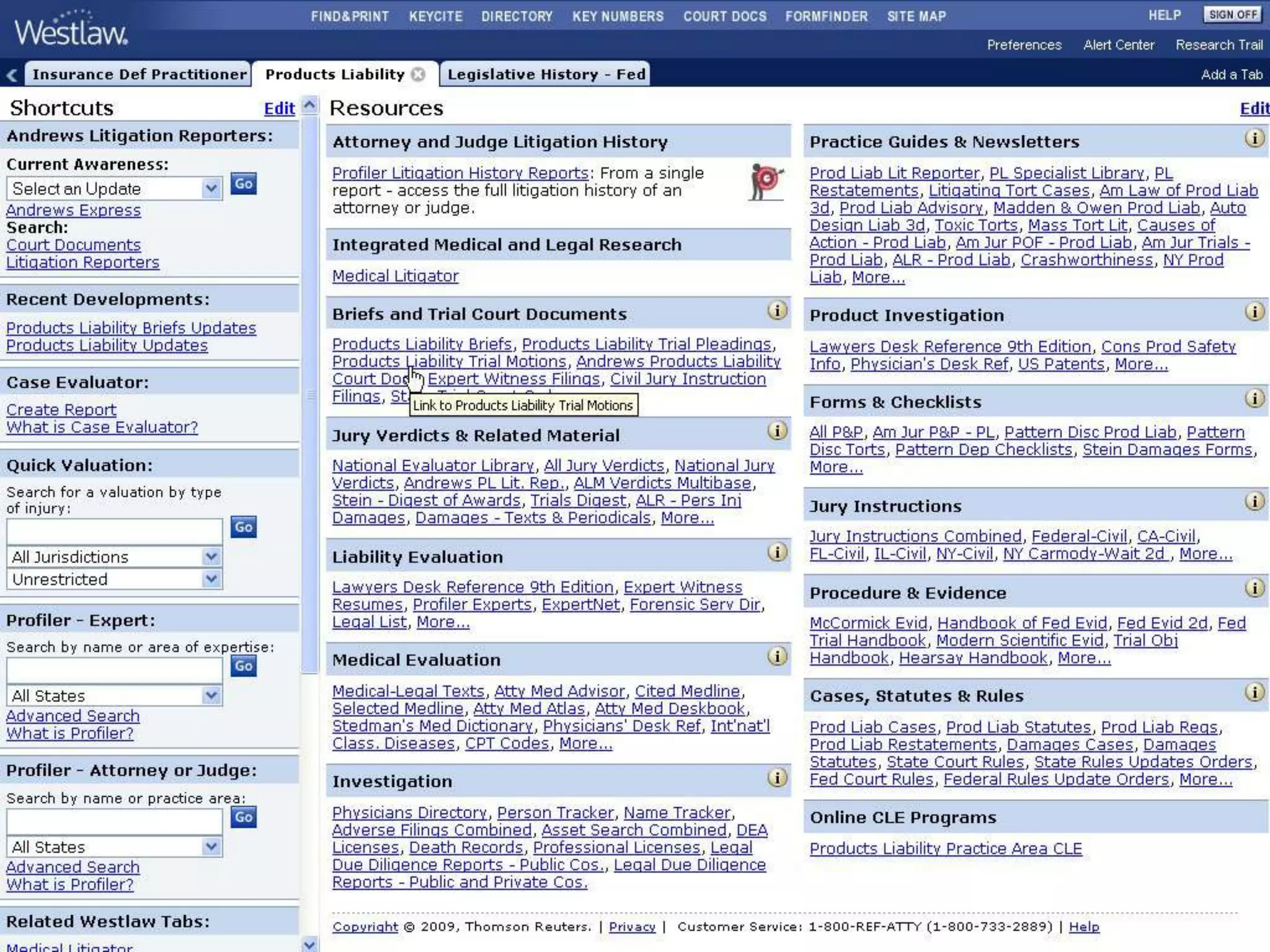
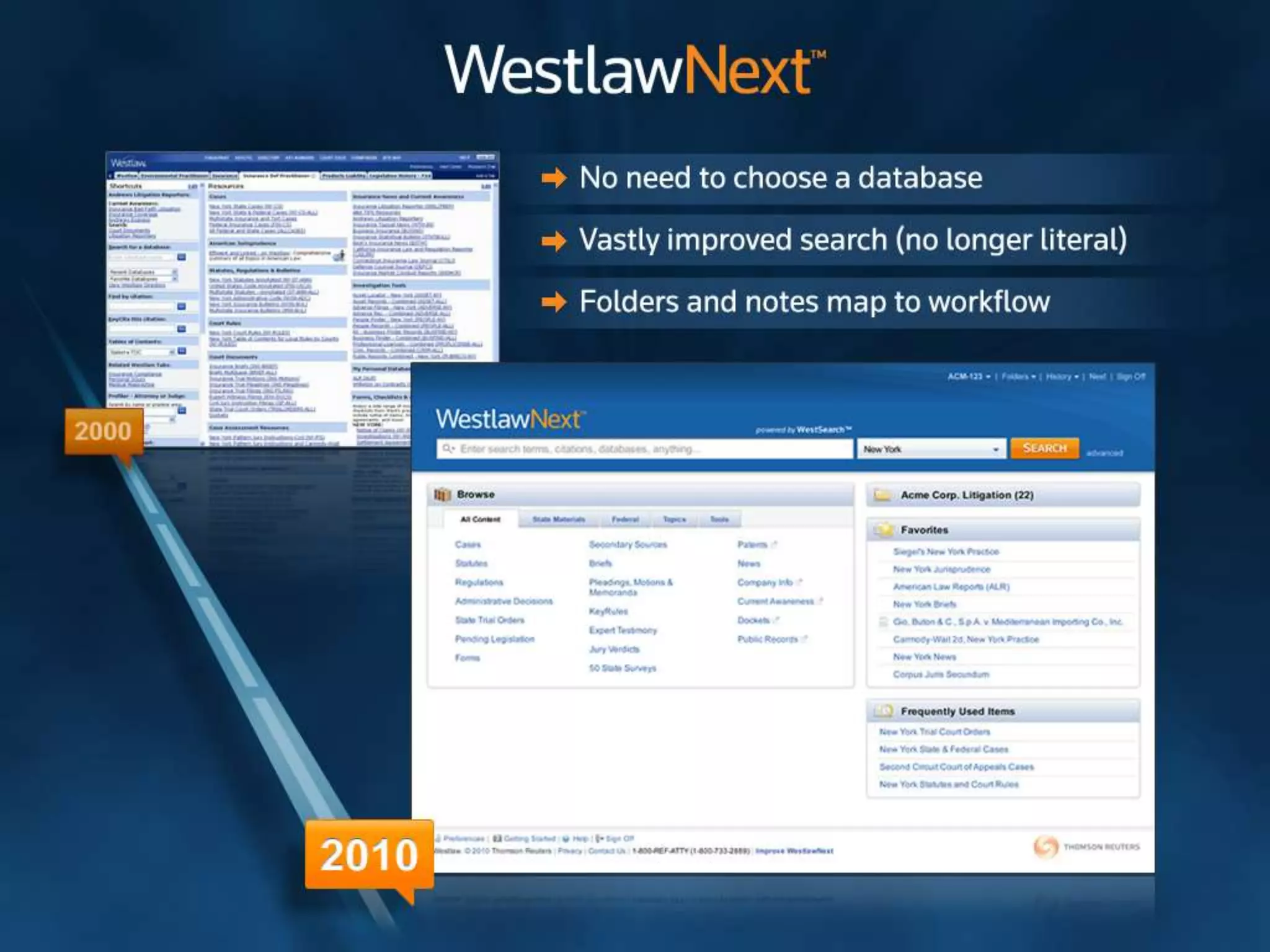
  • #31ย As youโ€™re about to see, my story is just a LITTLE bit different than Mikeโ€™s . . .I joined the legal business unit of TR in 2007, just as it was about to embark on a 3-year, $90 million journey to produce a next generation subscription-based legal research tool. Please note the catchphrase in the center graphic โ€“ Legal Research Goes Human. This was at the core of what the executive leadership was trying achieve. Which was no easy endeavor โ€“ first, because legal research is not a pleasurable activity under any circumstances, and second, because the legacy Westlaw product, which had long dominated the market, looked like this . . .
  • #32ย This is one tab out of more than 100 that the user could have access to. Some were worse than this.Most of the selling points of the new system were going to be feature-based โ€“ a completely new and proprietary search algorithm, robust filters, the ability to create and share folders, collaborative tools, etc.However, the top exec, to his great credit, said he wanted to create something users would love to use โ€“ he used to say โ€œI want them to snuggle up in bed with it at night.โ€ And he committed to significant preference testing of designs toward dual purposes of equal significance: guiding the design itself, and having rock-solid justification for the senior executives for what we were doing. To Mikeโ€™s earlier point, that meant quantitative data with lots of users.
  • #33ย Initial goals were . . .1.2.measure how strong the brand was and whether people cared if it was messed withCritical โ€“ affected our approach, as youโ€™ll see
  • #34ย In May of 2009, inparellel with the feature build outs . . .
  • #35ย This was done for security reasons (phones put away, constant monitoring)I told you our approach was different . . . Try to stay with me
  • #36ย This was to establish that users liked and were loyal the product, but hated the design
  • #37ย Presented pages designs with instructions to a focus on a specific element in isolation โ€“ like use of a photo/image in the product header, or size of the search area โ€“ to see if there were any trends in those areas.Hereโ€™s how they did is
  • #38ย Look at all pages in full screen (randomized)
  • #39ย From those they reviewed, select
  • #41ย Either change the one you selected, or move on to the next Design Element.
  • #42ย Looked at, and selected from, 32 screens
  • #43ย In the Design Gallery phase, users were asked to register their preferences to optimized page designs in their totality.
  • #45ย Instructions โ€“ youโ€™re going to see them again and give an overall rating on a 10 point scale
  • #47ย Top 5 choices are presented, with a way to rate key aspects to get granular on what they like
  • #48ย As well as their bottom 2 โ€“ what they donโ€™t like
  • #49ย We had them do the same for Results Lists (smaller numbers of design elements and design gallery, but the same way to rate their top 5 and bottom 2)
  • #50ย And document display as well
  • #51ย Revisit the descriptors to establish that the perception of a new design for the product was positveand they were done (MOST IN LESS THAN 1 HOUR)However, we did solicit some who could stay longer to participate in a brief interview which was taped (extra $$ to those who did)
  • #53ย Hereโ€™s one example
  • #54ย Out of all this, we got 3 core buckets of emotional response information that the VP could report up .. Baseline for design refinement established based on these clear winners
  • #55ย 2. That we were getting the desired perceptual responses on the differences between the products
  • #56ย post-session discussions elicited the qualitative feedback we needed to provide that color that Mike talked about earlierPlease take particular note of the 4th one there โ€“ users did not want the brand messed with. Weโ€™re going to come back to that laterOK, the design team takes the summer, refines refinesrefines, gets to a certain point, and the VP says . . .
  • #57ย Letโ€™s do it again
  • #58ย Because of the refinements, we were able to piggyback some outstanding UI issues into this testSecurity important now more than ever โ€“ this canโ€™t get out!!
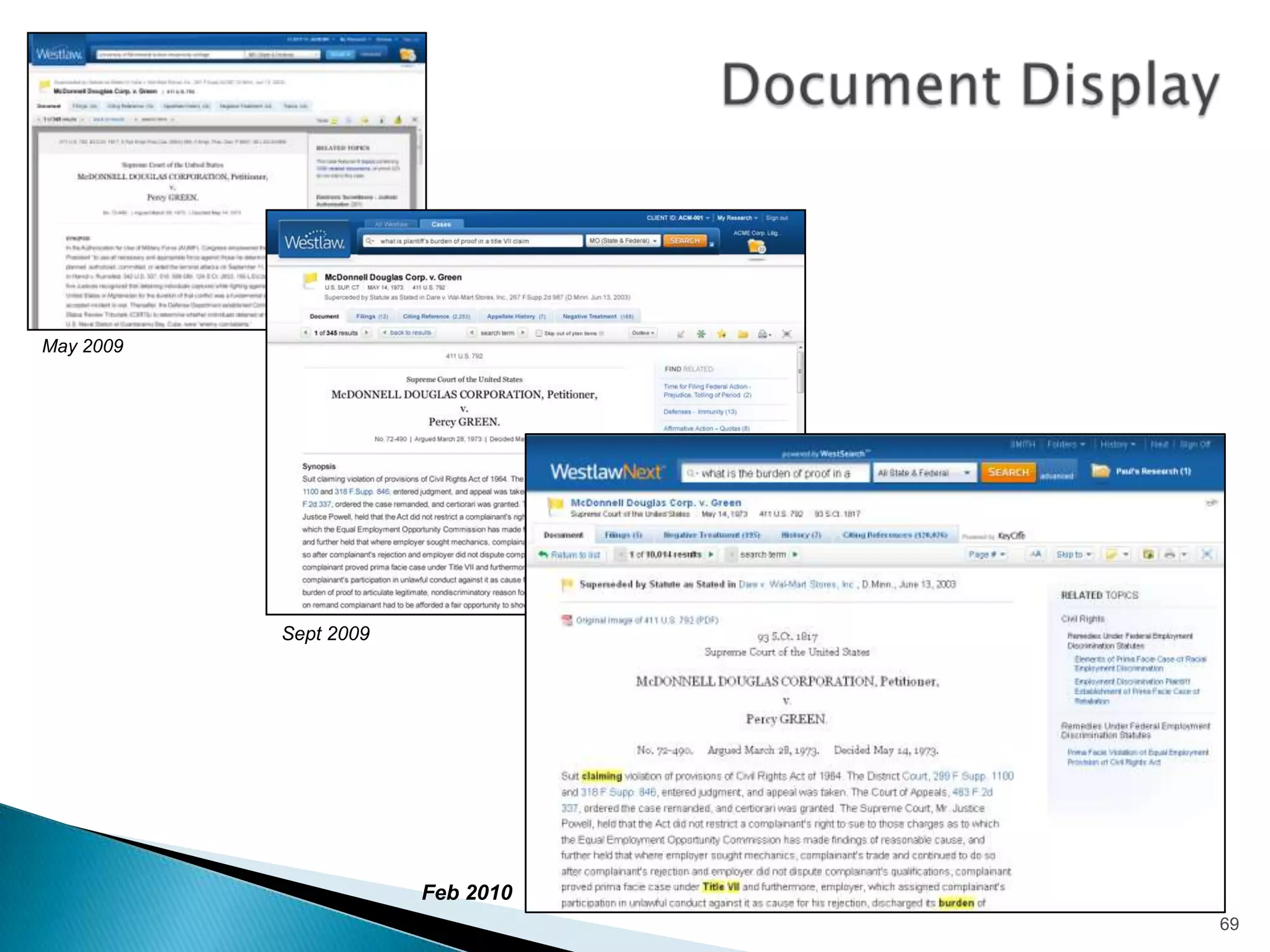
  • #59ย Type formatting was the dynamic manipulation of case and statute documents on the screen, topic of my submission to UPA 2010, happy to provide that info if youโ€™re interested
  • #60ย ** DONโ€T VERBALIZE RESULTS ** (next slides)
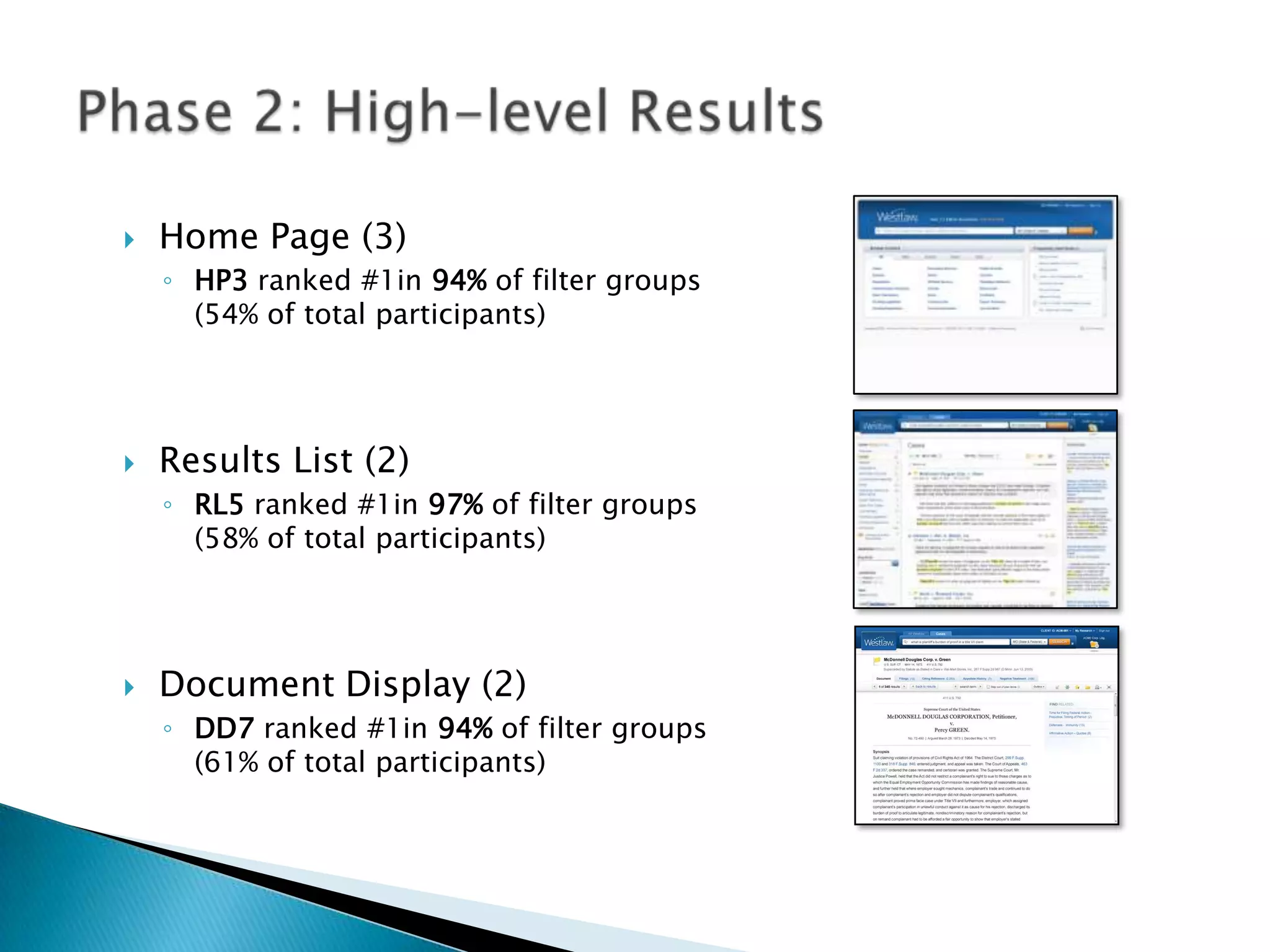
  • #61ย Clear choices (in the 90% range) for each of our primary page types
  • #62ย Specific areas of concern about all three (Significantly T&C search)In the home stretch, 3 months away from launch, weโ€™re doing massive final validation testing for all of the core features I mentioned at the top, when I get called into my directors officeEveryone at the top was thrilled at what was coming, BUT โ€“ โ€œwe accept that we cannot mess with the legacy blue โ€“ however, we STRONGLY advocate that the branding of the product be aligned with the corporate template (orange, gray, white that you say at the top), and if you resist you better have a damn good reason . . . .โ€SO
  • #63ย Focus on those who decide to buy, or have influence on whether to buy
  • #66ย Results confirmed what we knew to be true from the outset
  • #68ย Achieved our primary goal 759
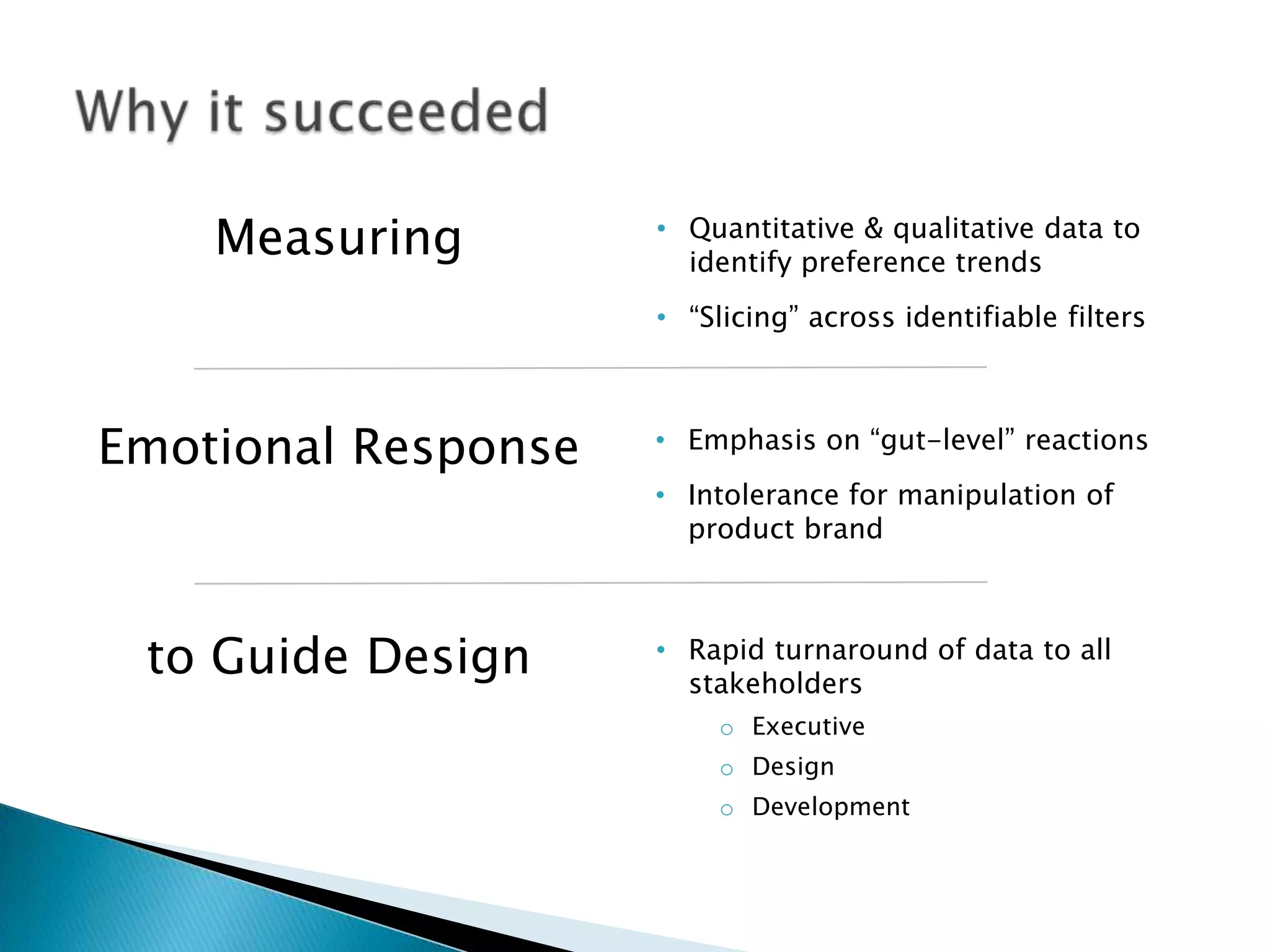
  • #69ย Measuredmeasuredmeasured (quant & qual) โ€“ 759 participants total about 325kGut-level preferences, which is a by-product of emotional responseGuided the design via explicit trends to all stakeholders
  • #70ย Evolution โ€“ changes are nuanced, but still critical
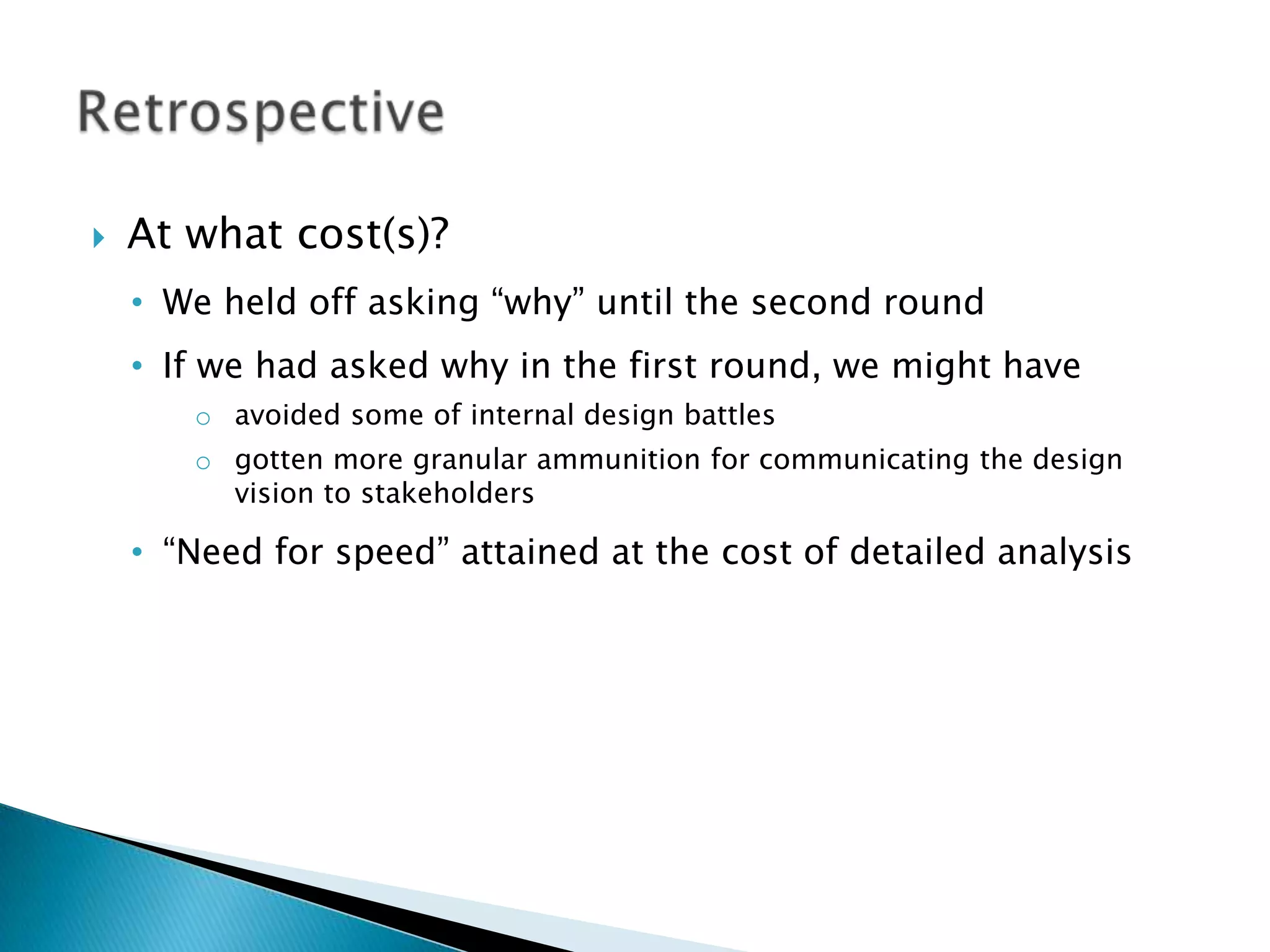
  • #71ย We sort of did in phase 1, but we didnโ€™t ask โ€œwhyโ€ so much as just get quotes of enthusiasm for the fact that the product was being updated
  • #72ย As I was reviewing, I thought โ€œwhy would anyone ever consider doing anything like thisโ€, but if you do
  • #73ย In order of ascending practicality
  • #74ย A lot of that comes from the top, but we as UX pros can help make the caseEvery project is different, and as you saw in my case, you can take a little bit from a lot of different methods and come up with something that works in your specific circumstancesRe-emphasize โ€“ this should be used to guide and inspire the evolution of a design, then confirm decisions (if youโ€™ve done it right)
  • #75ย In order of ascending practicality