Downloaded 145 times
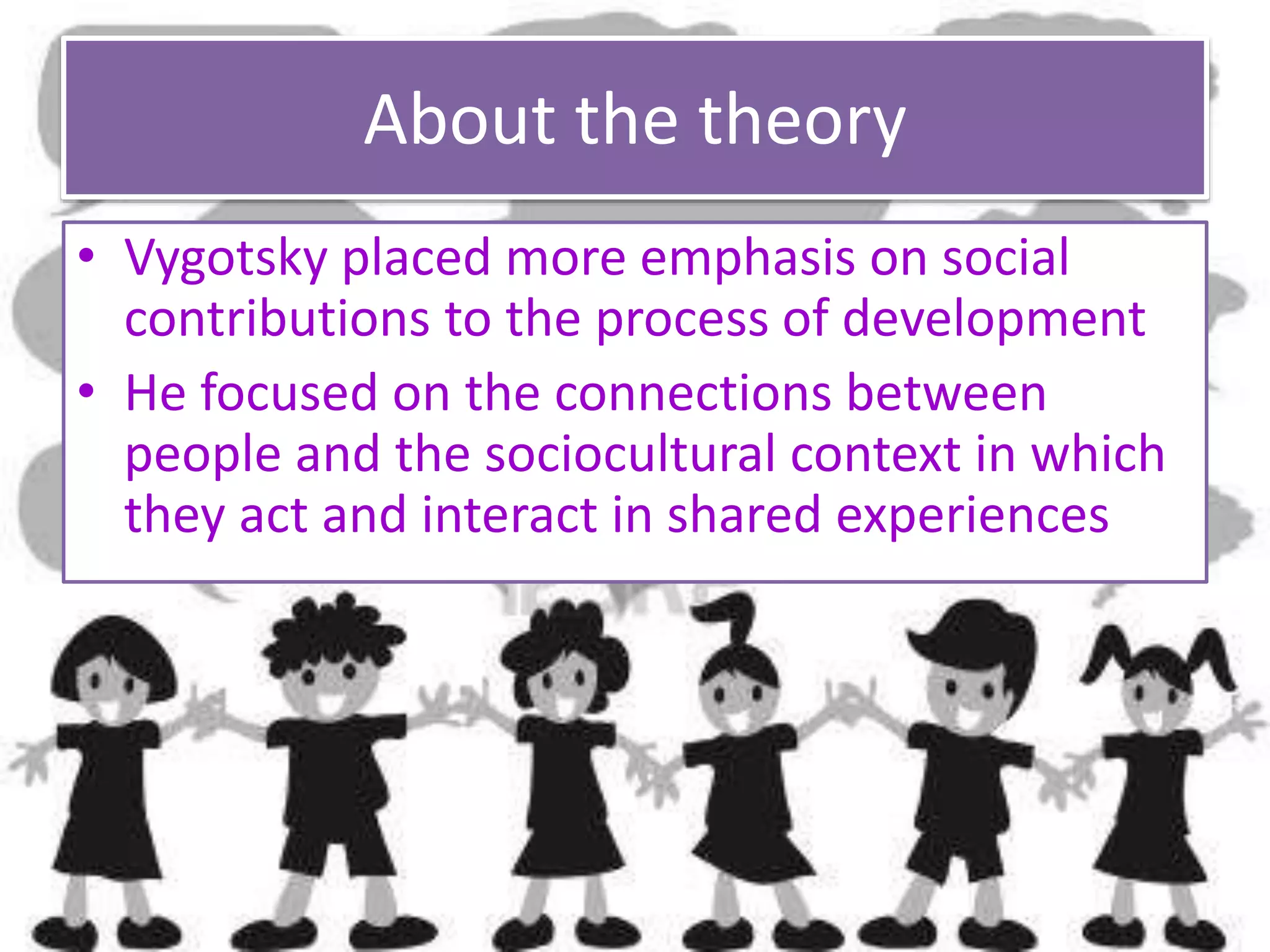
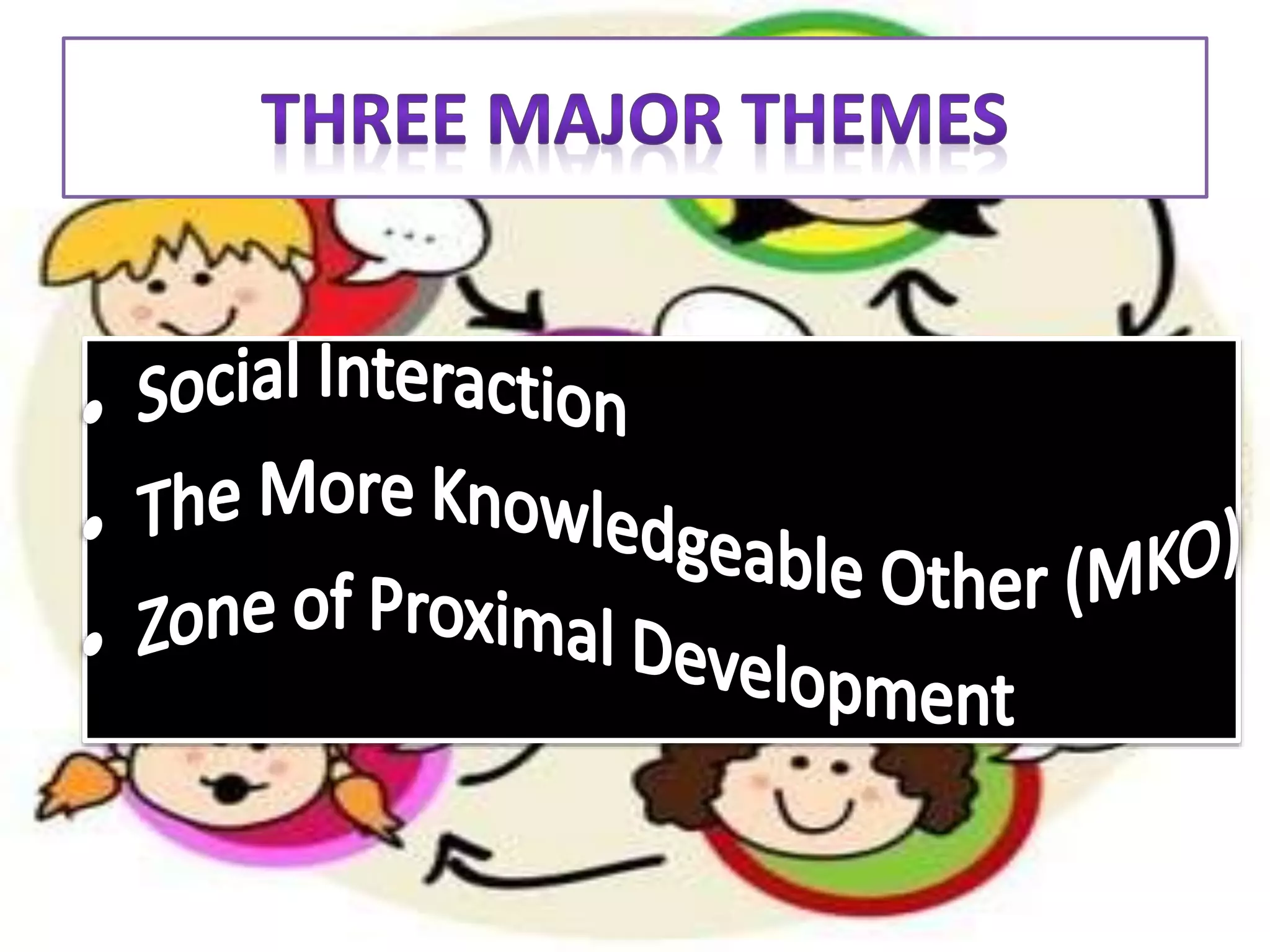
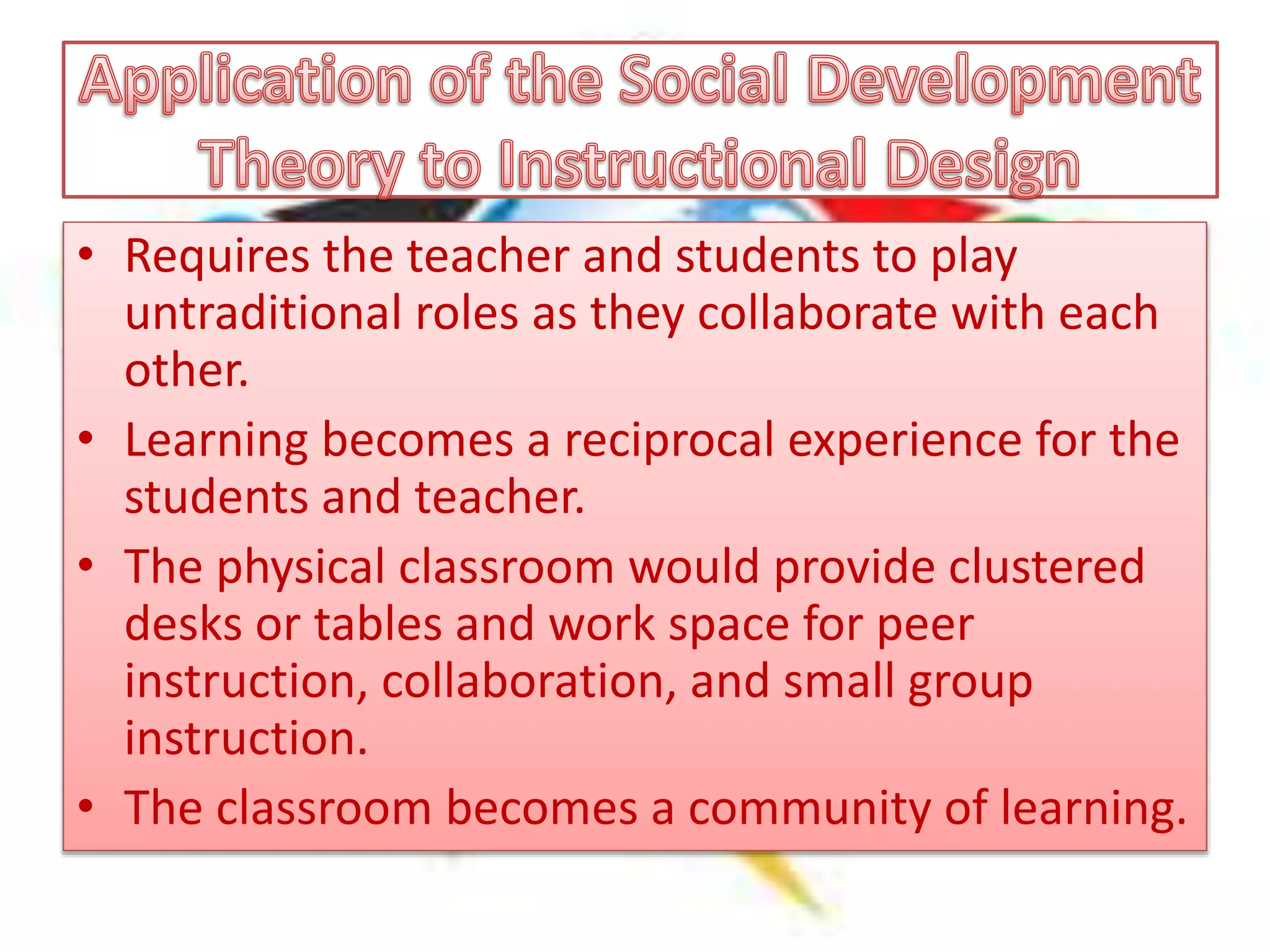
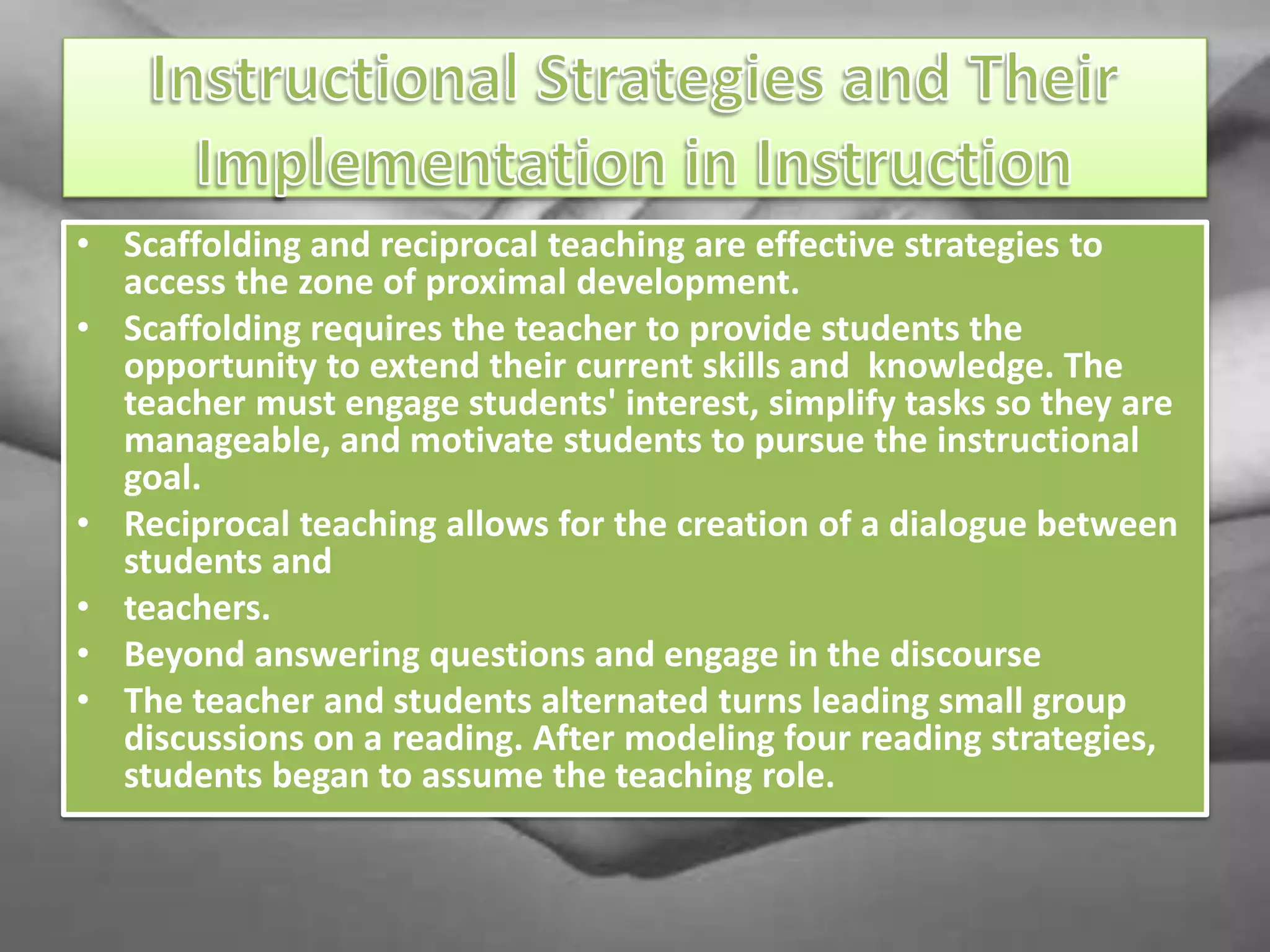
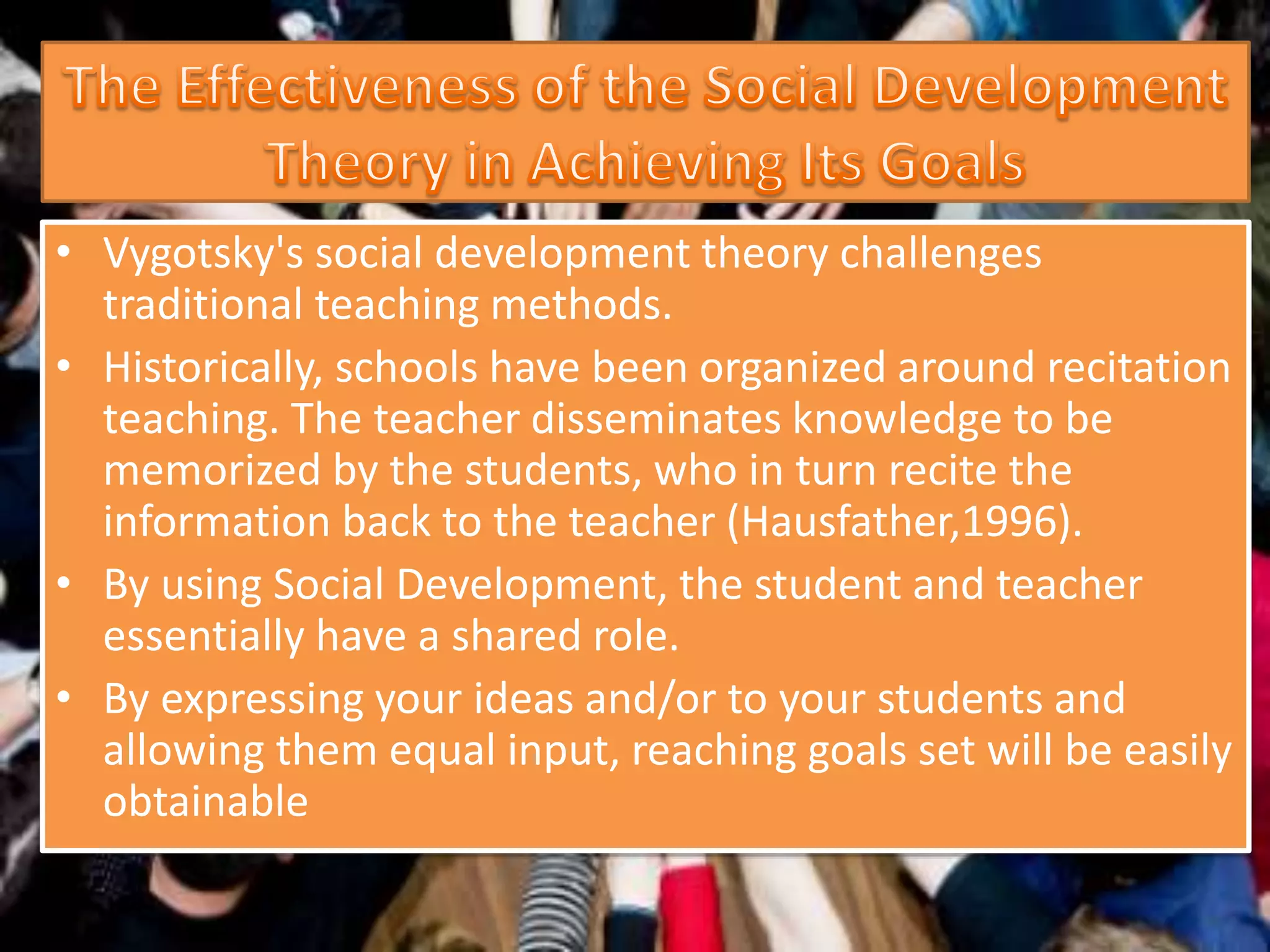
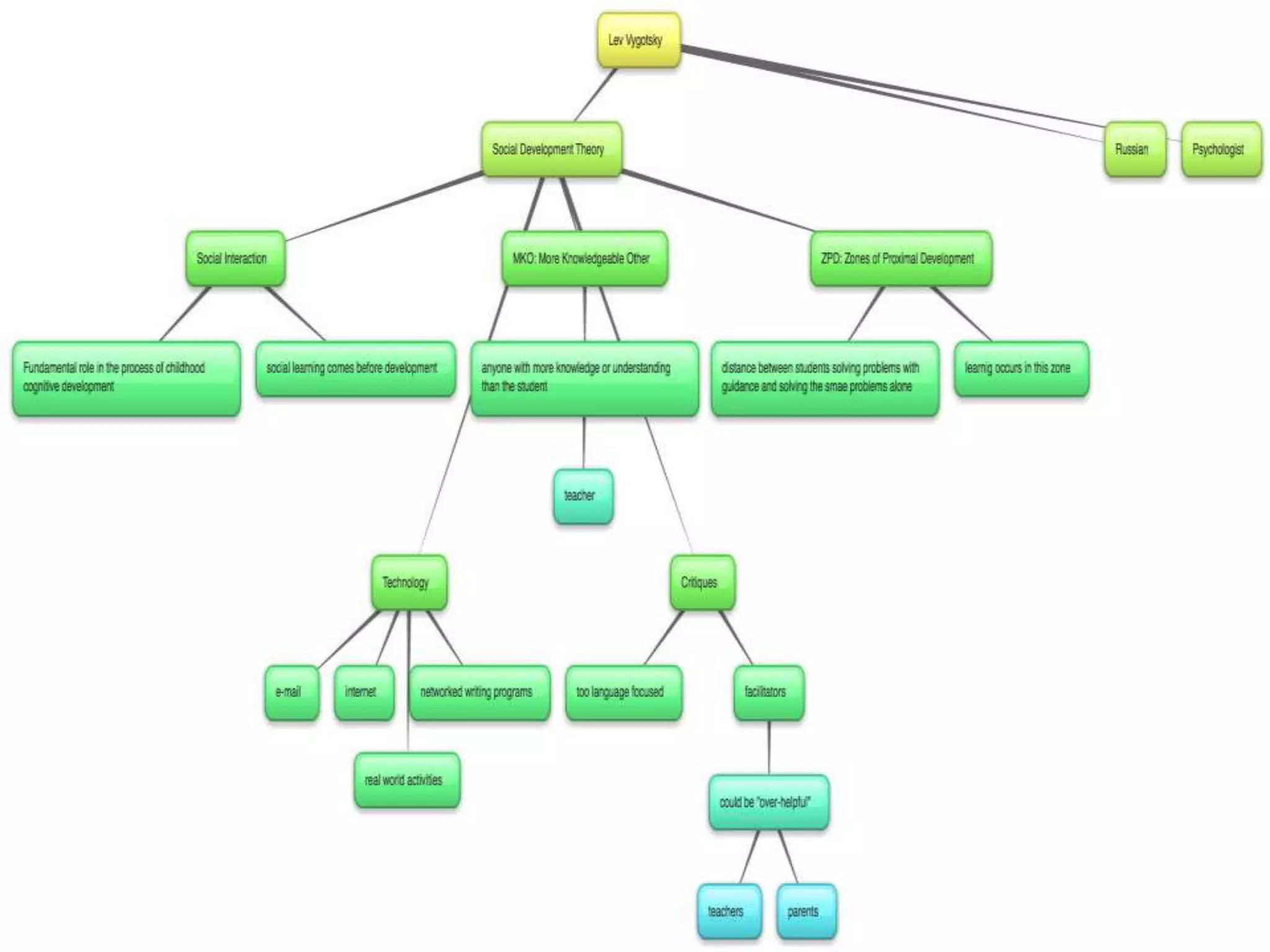

Vygotsky placed emphasis on social contributions to development and the connections between people and their social context. He introduced the concept of the zone of proximal development, which is the distance between what a learner can do independently and with guidance. Within the zone of proximal development, scaffolding and reciprocal teaching can help students learn. Vygotsky challenged traditional teaching methods and argued for a more collaborative social approach where the teacher and students have shared roles.
Emphasizes social contributions to development, highlighting connections between individuals and their sociocultural environment.
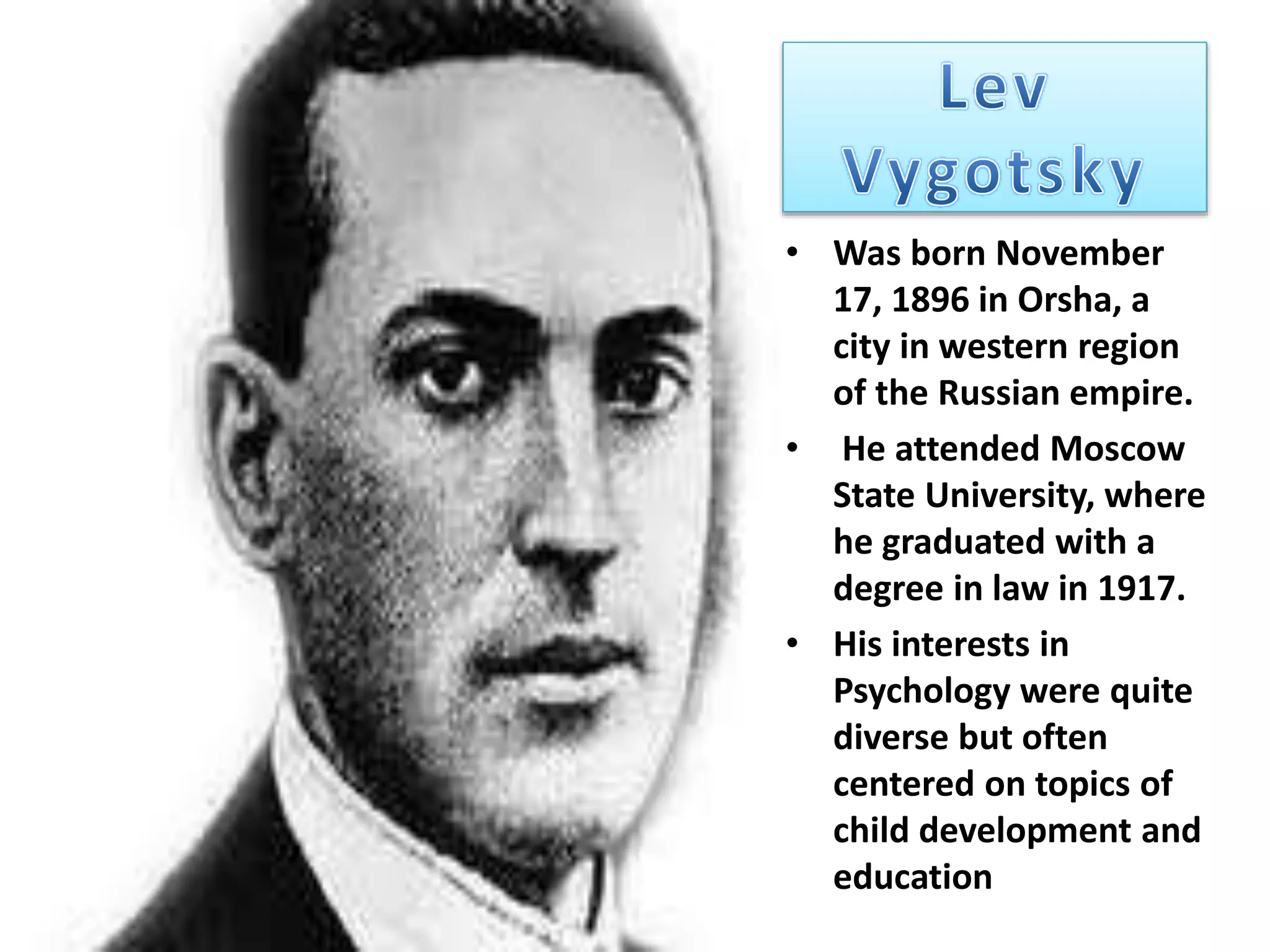
Vygotsky, born in 1896, graduated in law from Moscow State University; focused on child development and education.
Every function in a child's cultural development occurs socially and then individually, illustrating interpsychological and intrapsychological stages.
A knowledgeable individual who aids learners in mastering tasks, processes, or concepts they are unfamiliar with.
The gap between a student's independent ability and their performance with guidance; learning occurs here.
Promotes nontraditional roles between teachers and students through collaborative learning; the classroom functions as a community.
Incorporates scaffolding and reciprocal teaching to enhance learning by making tasks accessible and involving students actively.
Vygotsky's theory opposes traditional recitation teaching, advocating shared roles in education for achieving learning goals.
Positive mindset is crucial; a belief in success or failure shapes outcomes. Thank you!


