Does traditional e-learning still fit the
                      knowledge society? Quality issues
                                                  Prof. Peter B. Sloep
                         Centre for Learning Sciences and Technologies, Open University of the
                                                      Netherlands
                                     UNESCO Conference, Den Haag, July 3, 2009


Thursday, July 2, 2009
Overview

                     • Quality
                     • Quality in e-learning
                     • Challenges
                     • Theses


Thursday, July 2, 2009
Quality
                         some assumptions


Thursday, July 2, 2009
Quality assurance
                     • ... it is about transactions between learners
                         and educational institutions, social contract
                     • ... it is about allowing learners and public
                         bodies to understand and assess the quality
                         of educational offerings
                     • ... twist in the present context, across
                         nations, cultures, educational systems, etc.


Thursday, July 2, 2009
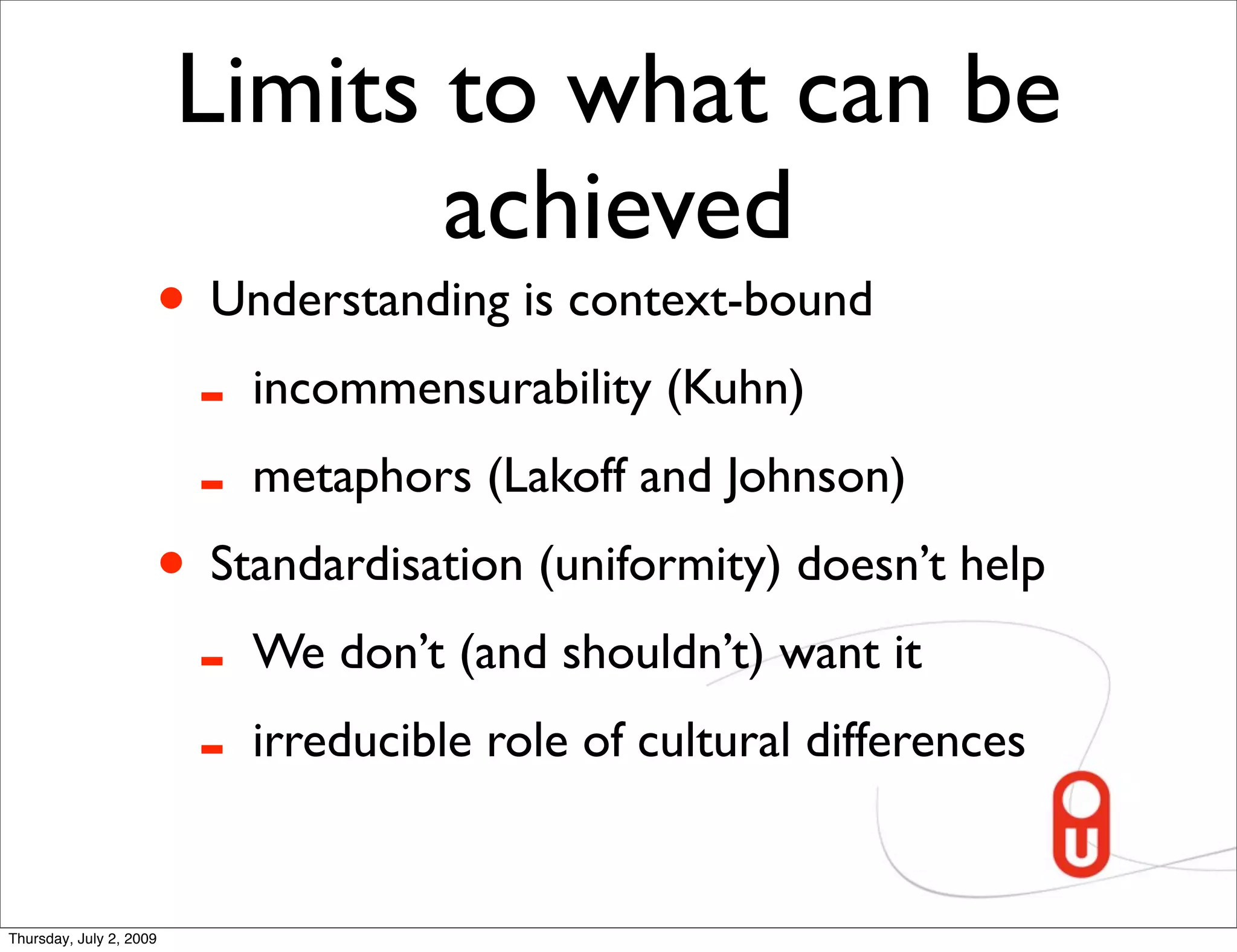
Limits to what can be
                                achieved
                     • Understanding is context-bound
                      - incommensurability (Kuhn)
                      - metaphors (Lakoff and Johnson)
                     • Standardisation (uniformity) doesn’t help
                      - We don’t (and shouldn’t) want it
                      - irreducible role of cultural differences

Thursday, July 2, 2009
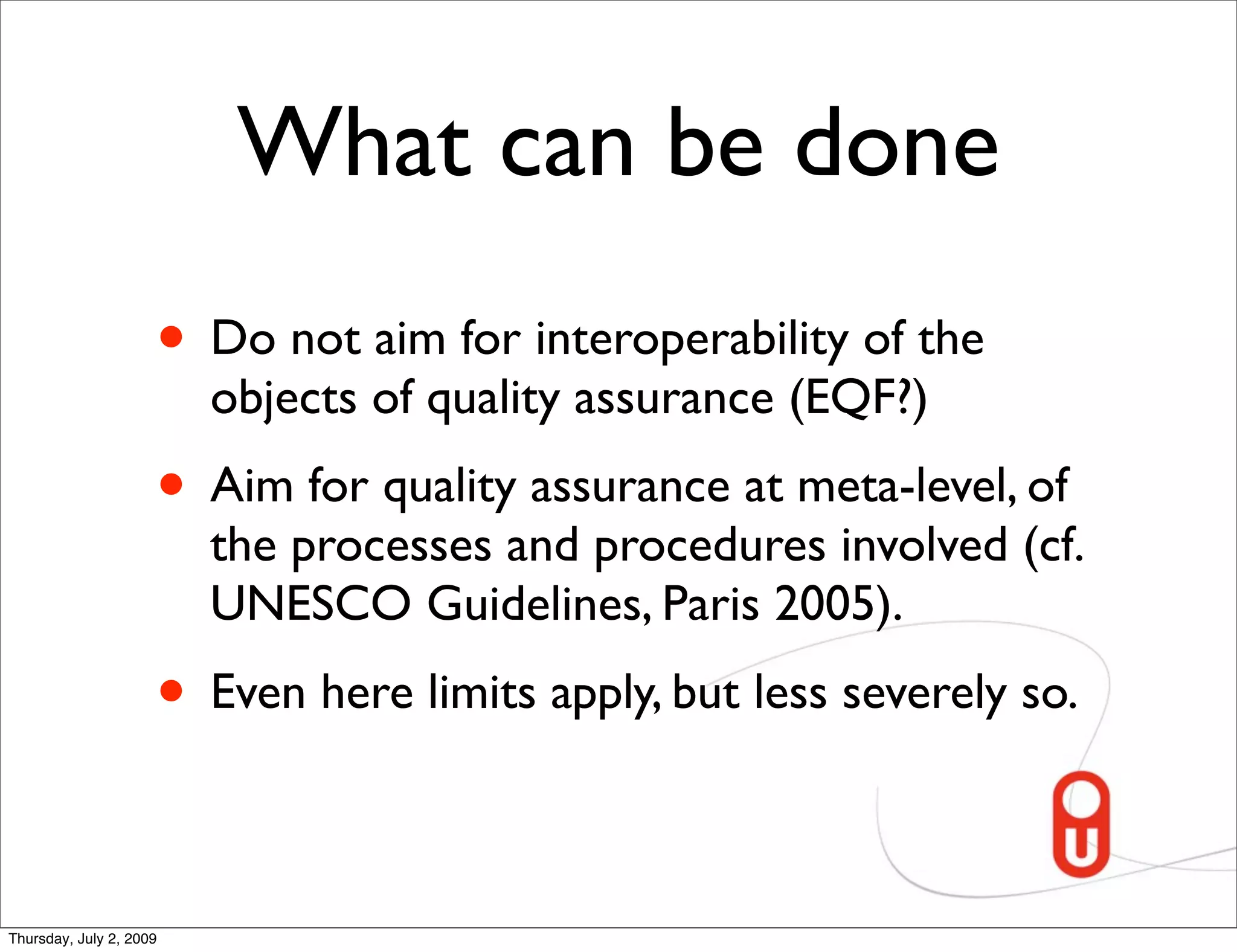
What can be done
                     • Do not aim for interoperability of the
                         objects of quality assurance (EQF?)
                     • Aim for quality assurance at meta-level, of
                         the processes and procedures involved (cf.
                         UNESCO Guidelines, Paris 2005).
                     • Even here limits apply, but less severely so.

Thursday, July 2, 2009
Quality
                         and e-learning


Thursday, July 2, 2009
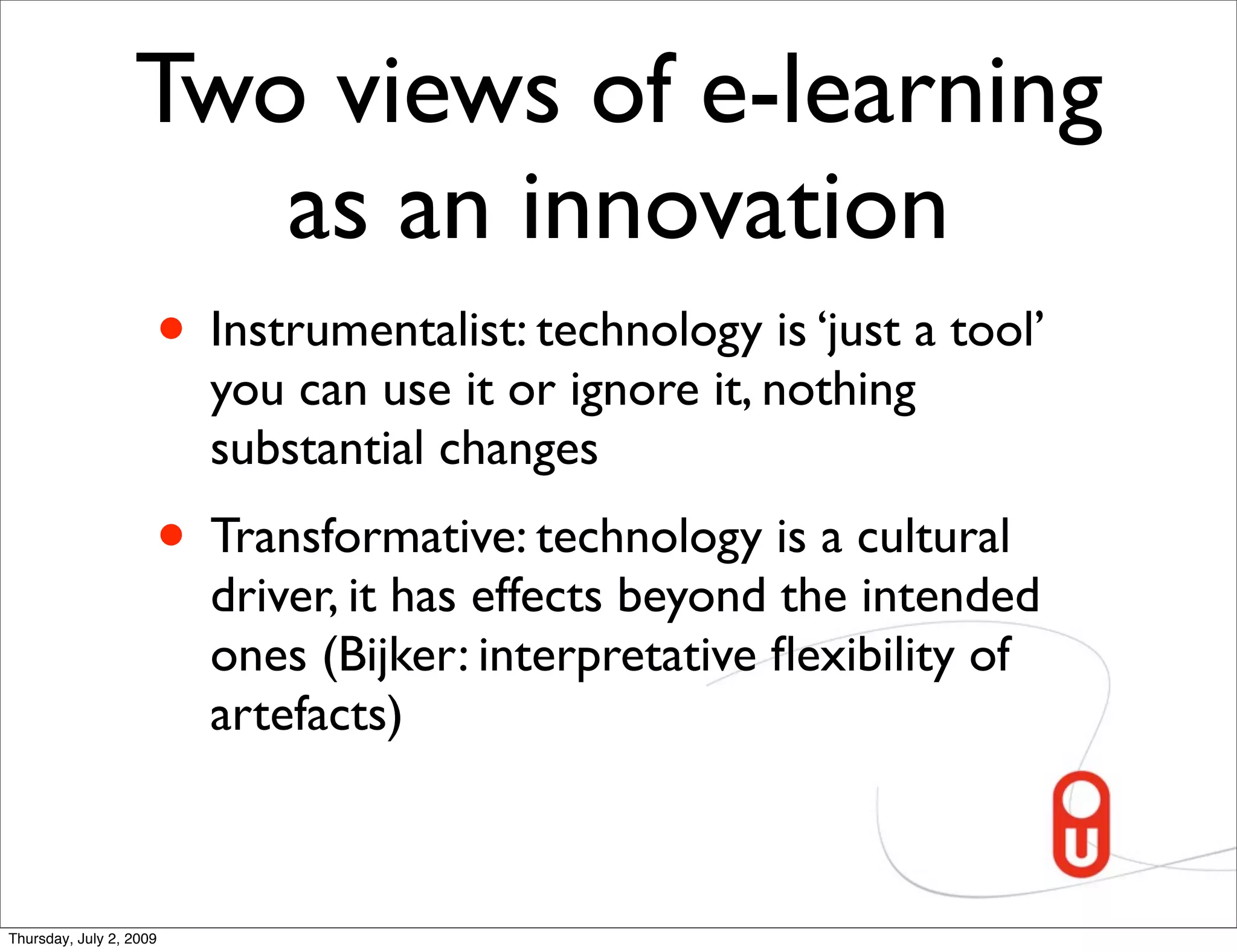
Two views of e-learning
                     as an innovation
                     • Instrumentalist: technology is ‘just a tool’
                         you can use it or ignore it, nothing
                         substantial changes
                     • Transformative: technology is a cultural
                         driver, it has effects beyond the intended
                         ones (Bijker: interpretative flexibility of
                         artefacts)


Thursday, July 2, 2009
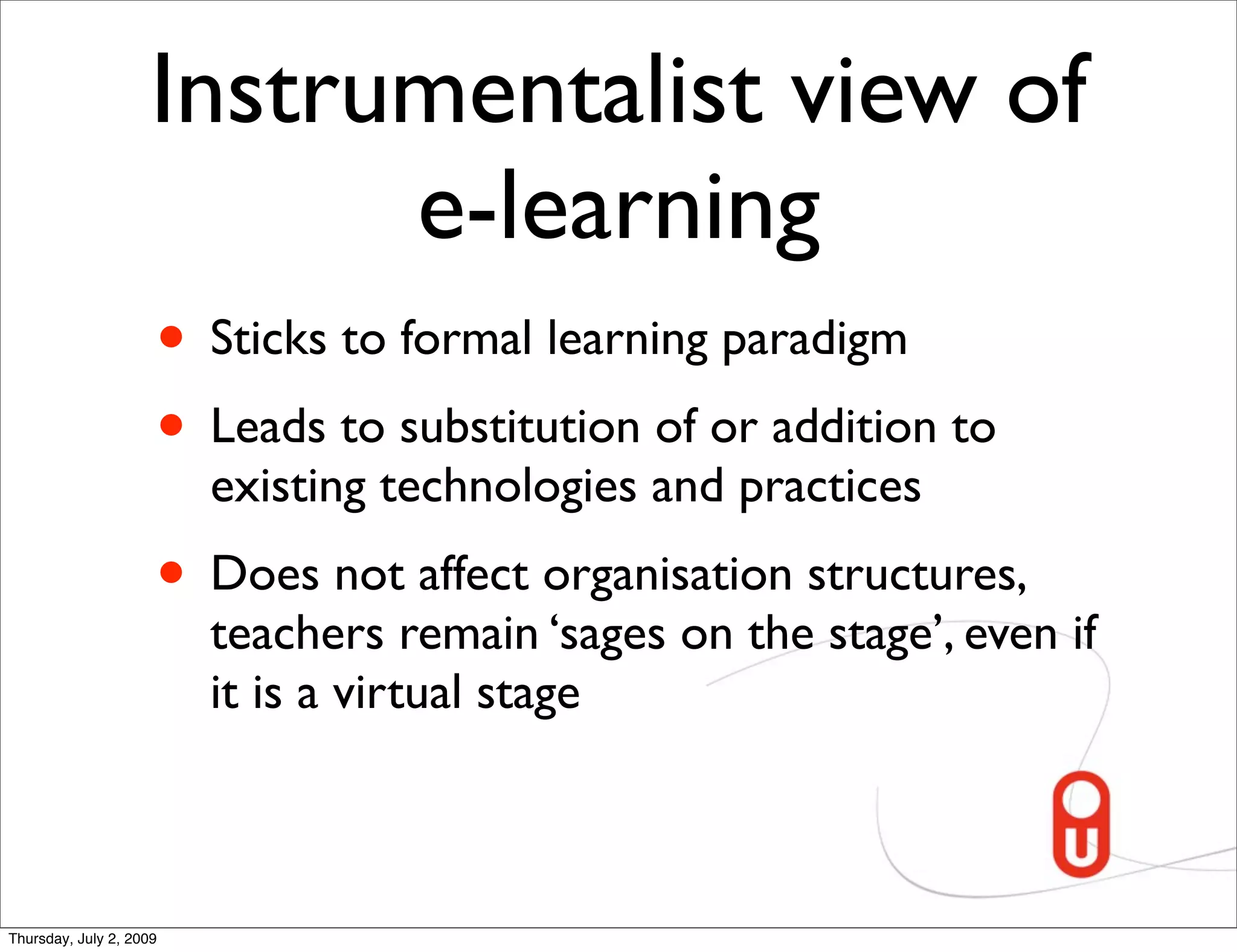
Instrumentalist view of
                           e-learning
                     • Sticks to formal learning paradigm
                     • Leads to substitution of or addition to
                         existing technologies and practices
                     • Does not affect organisation structures,
                         teachers remain ‘sages on the stage’, even if
                         it is a virtual stage


Thursday, July 2, 2009
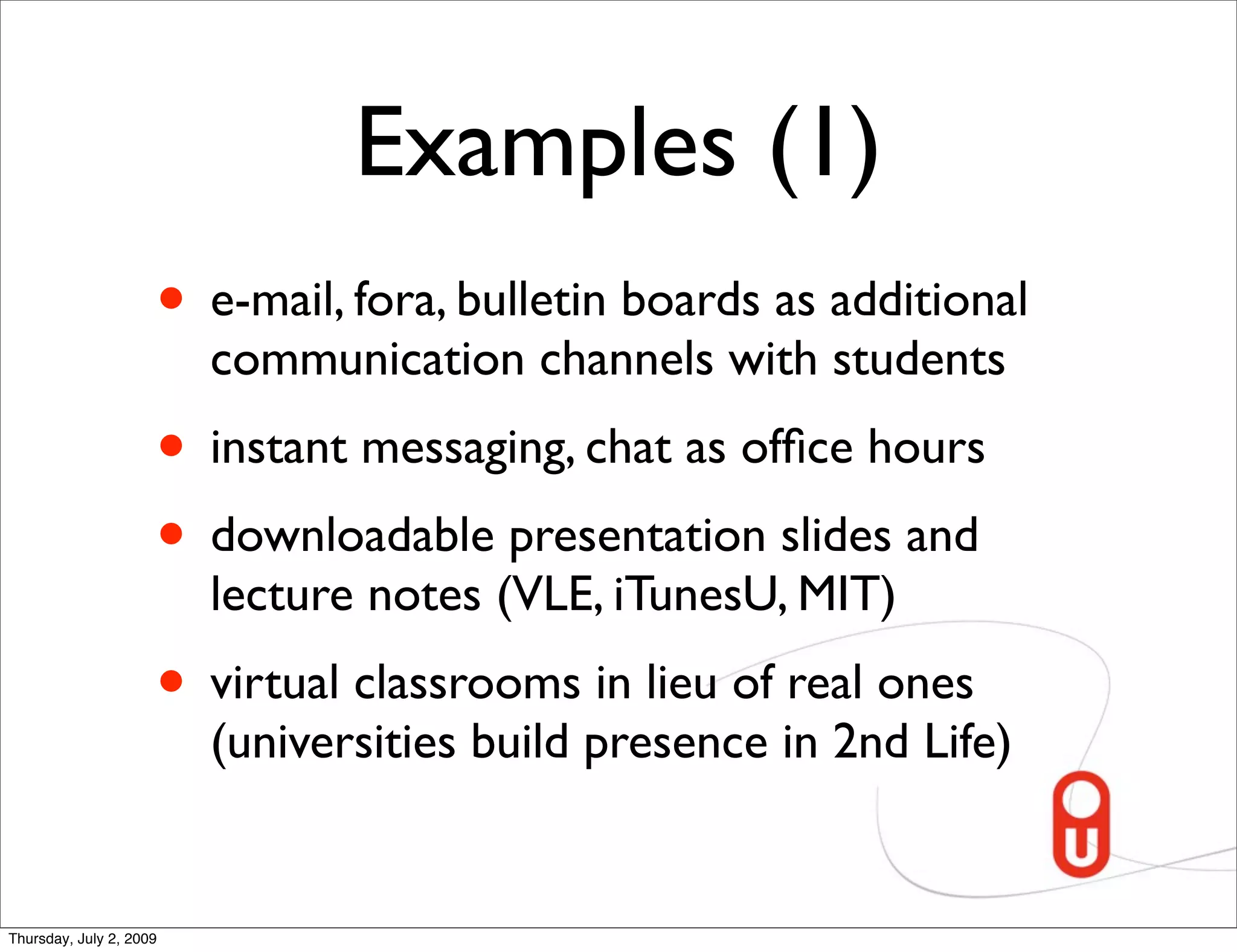
Examples (1)
                     • e-mail, fora, bulletin boards as additional
                         communication channels with students
                     • instant messaging, chat as office hours
                     • downloadable presentation slides and
                         lecture notes (VLE, iTunesU, MIT)
                     • virtual classrooms in lieu of real ones
                         (universities build presence in 2nd Life)


Thursday, July 2, 2009
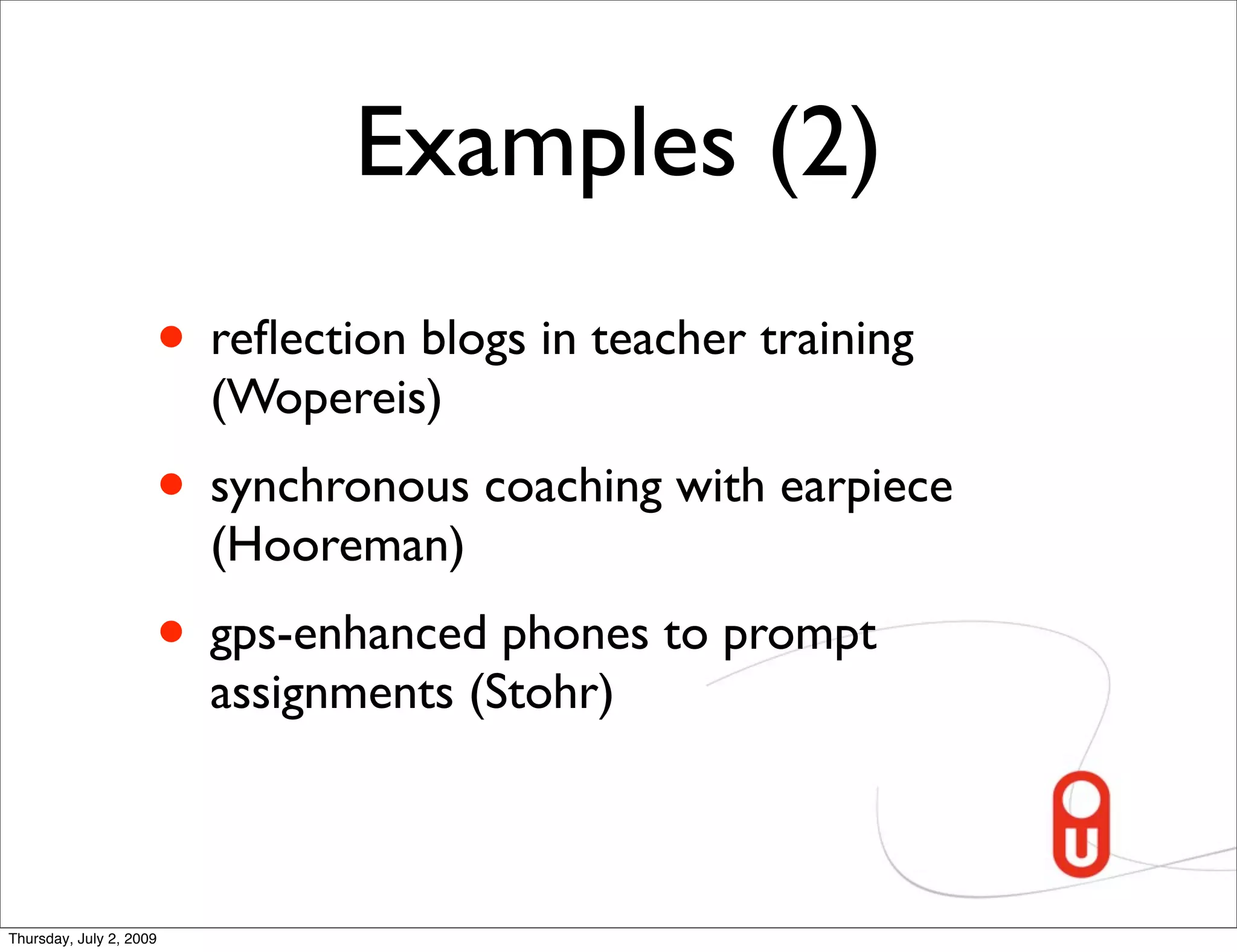
Examples (2)
                     • reflection blogs in teacher training
                         (Wopereis)
                     • synchronous coaching with earpiece
                         (Hooreman)
                     • gps-enhanced phones to prompt
                         assignments (Stohr)


Thursday, July 2, 2009
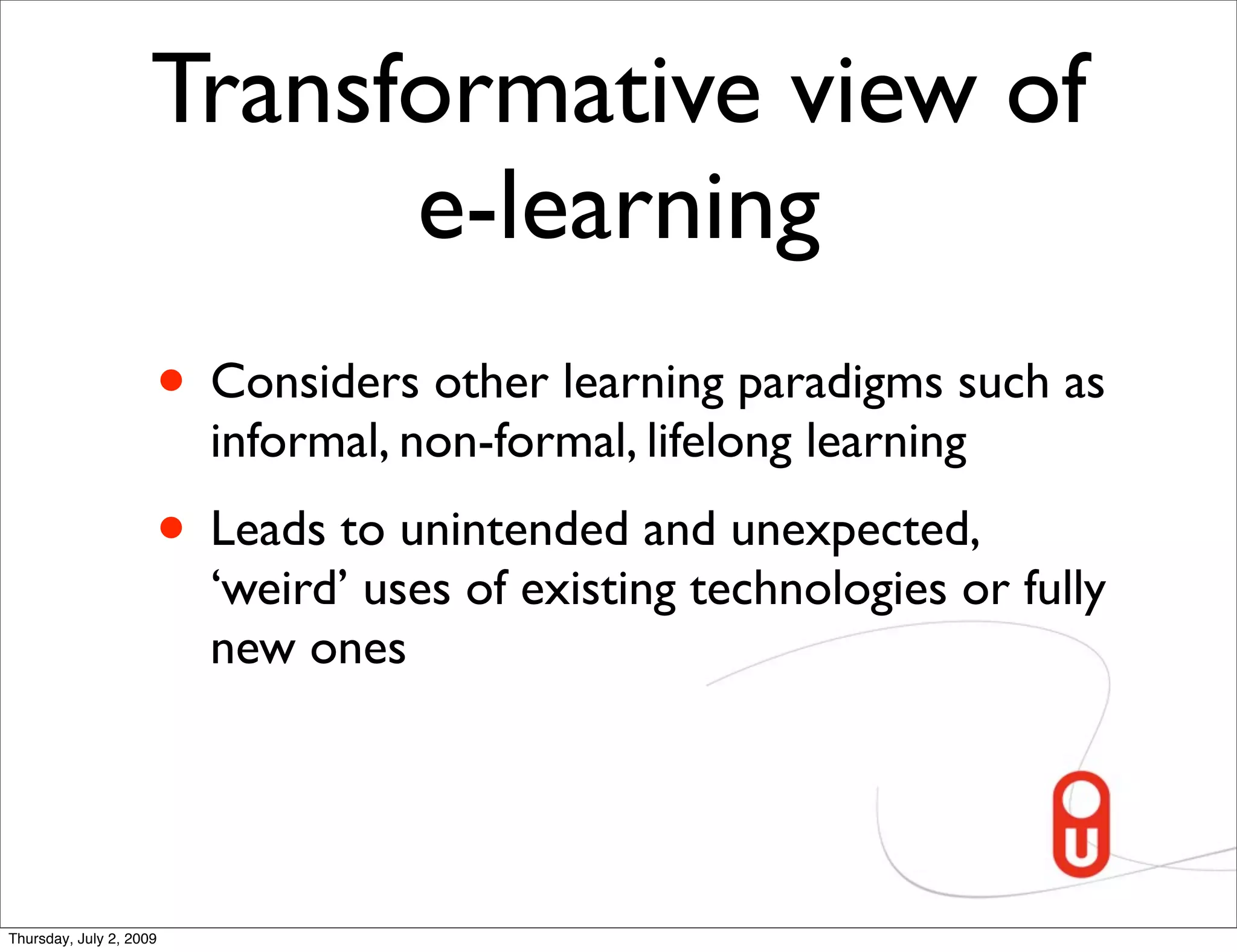
Transformative view of
                           e-learning
                     • Considers other learning paradigms such as
                         informal, non-formal, lifelong learning
                     • Leads to unintended and unexpected,
                         ‘weird’ uses of existing technologies or fully
                         new ones


Thursday, July 2, 2009
Example
                          Learning Network
                     • NB: R&D project, no instantiations yet
                     • LN= online, topic-bound, social network
                             DF
                         designed to foster non-formal learning
                     • Meant to address the needs and wants of
                         the knowledge society
                     • Meant to merge the worlds of learning and
                         working, of learners and professionals


Thursday, July 2, 2009
• Upsets traditional university organisation,
                         from one to several service providers, of
                         content (OER), tutoring, assessment (APL,
                         ACL), certification, advice on learning
                         trajectories

                     • Uses a different business model; pay per
                         service and service level; allow
                         advertisements, allow anonymous use of
                         personal data; etc.


Thursday, July 2, 2009
Conclusion
                     • Quality control takes a different shape in
                         either case
                     • For instrumental e-learning: use existing as
                         benchmark. Check if substitute is adequate,
                         if addition is useful
                     • For transformative e-learning: new
                         benchmarks for success are needed


Thursday, July 2, 2009
Challenges
                    for quality in e-learning


Thursday, July 2, 2009
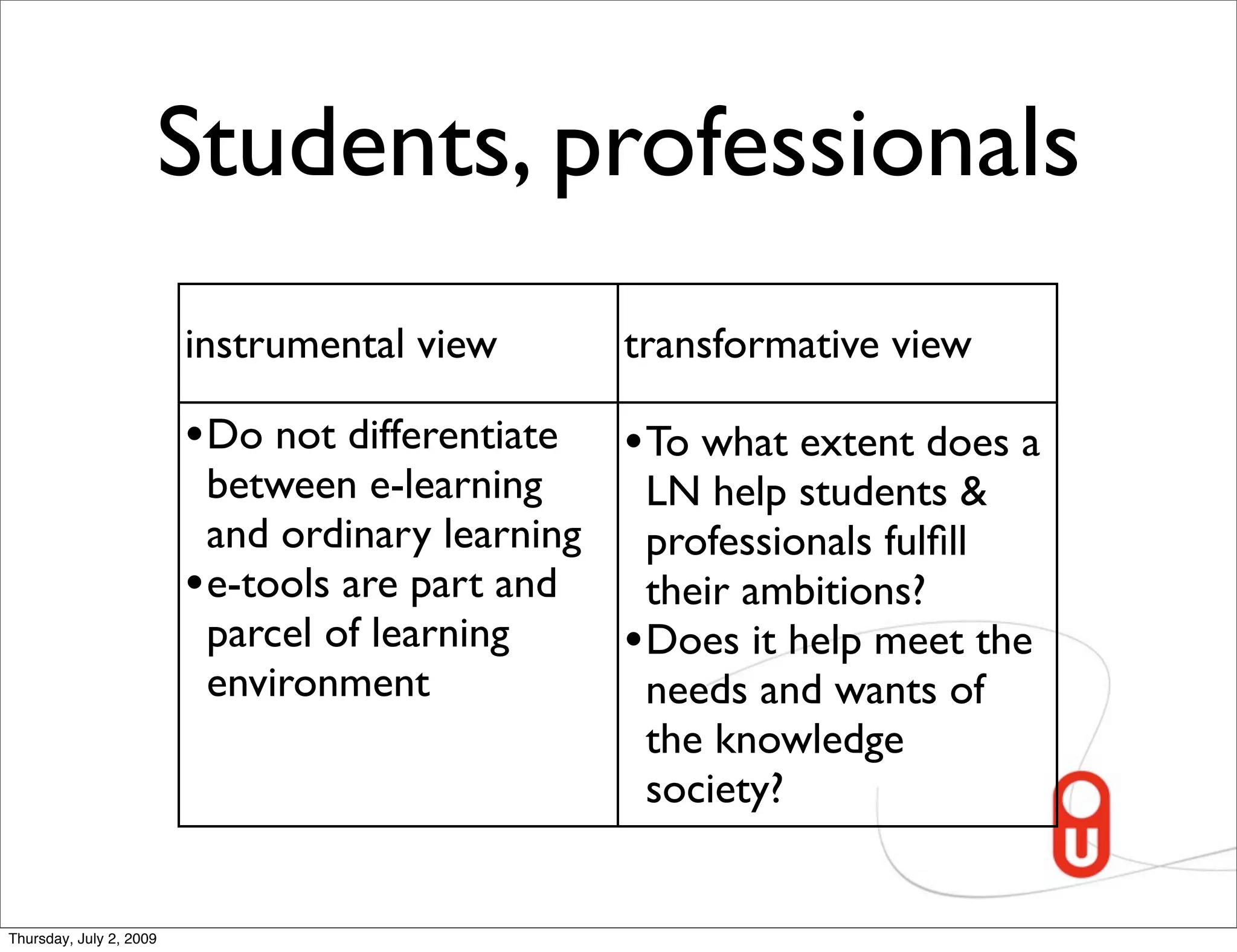
Students, professionals
                         instrumental view         transformative view

                         • Do not differentiate    • To what extent does a
                           between e-learning        LN help students &
                           and ordinary learning     professionals fulfill
                         • e-tools are part and      their ambitions?
                           parcel of learning      • Does it help meet the
                           environment               needs and wants of
                                                     the knowledge
                                                     society?


Thursday, July 2, 2009
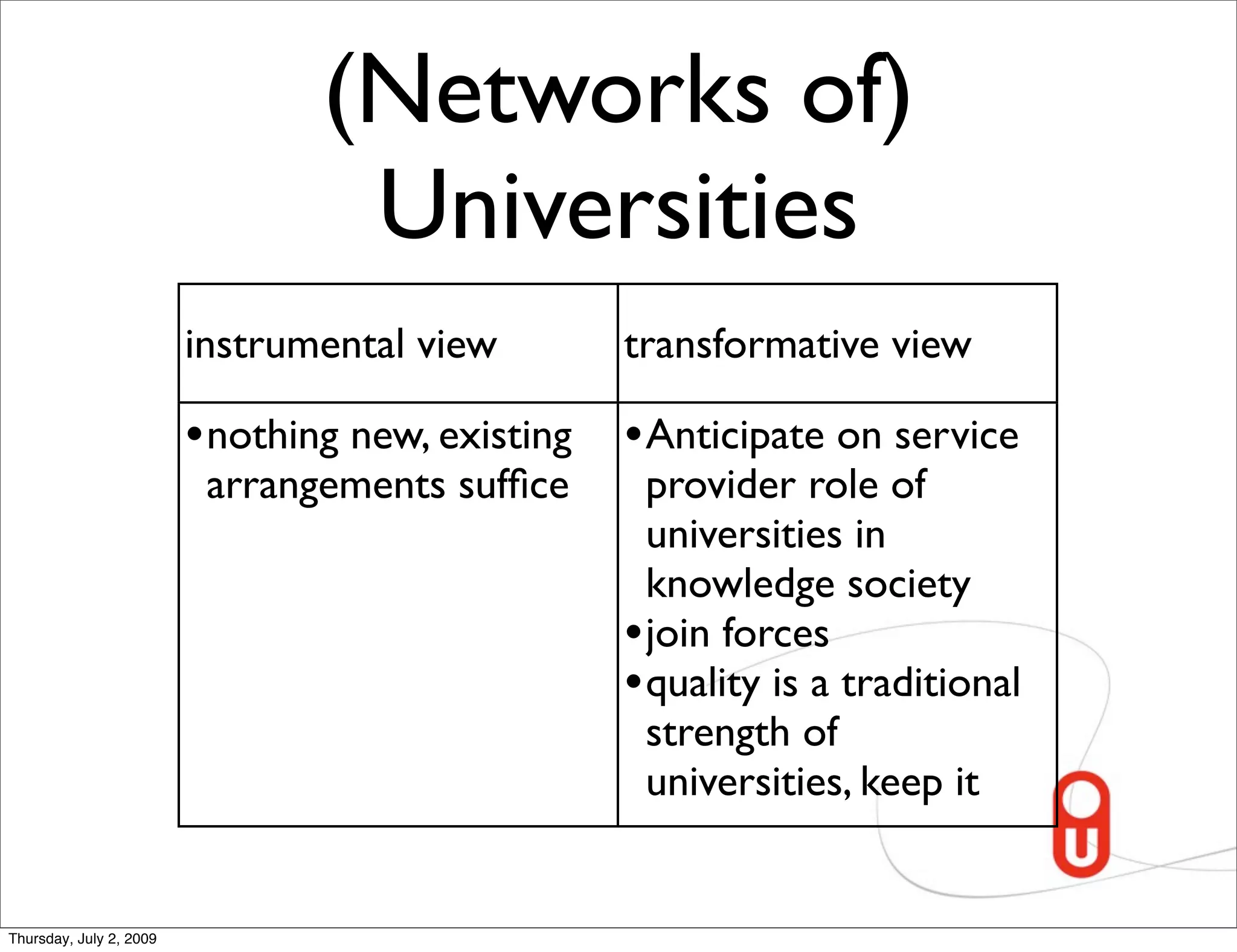
(Networks of)
                                 Universities
                         instrumental view       transformative view

                         • nothing new, existing • Anticipate on service
                          arrangements suffice      provider role of
                                                   universities in
                                                   knowledge society
                                                 • join forces
                                                 • quality is a traditional
                                                   strength of
                                                   universities, keep it


Thursday, July 2, 2009
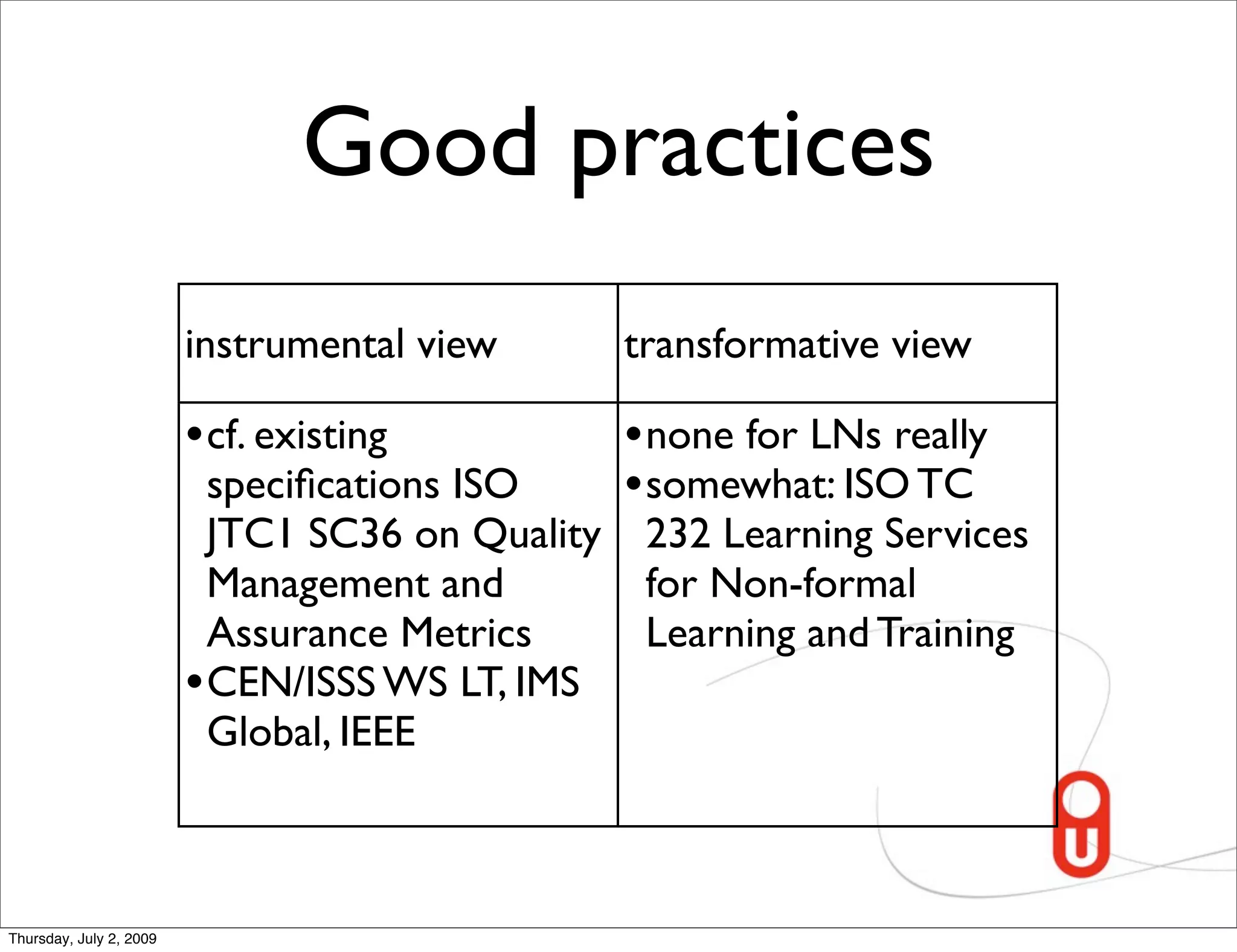
Good practices
                         instrumental view        transformative view

                         • cf. existing           • none for LNs really
                           specifications ISO      • somewhat: ISO TC
                           JTC1 SC36 on Quality    232 Learning Services
                           Management and          for Non-formal
                           Assurance Metrics       Learning and Training
                         • CEN/ISSS WS LT, IMS
                           Global, IEEE


Thursday, July 2, 2009
Theses


Thursday, July 2, 2009
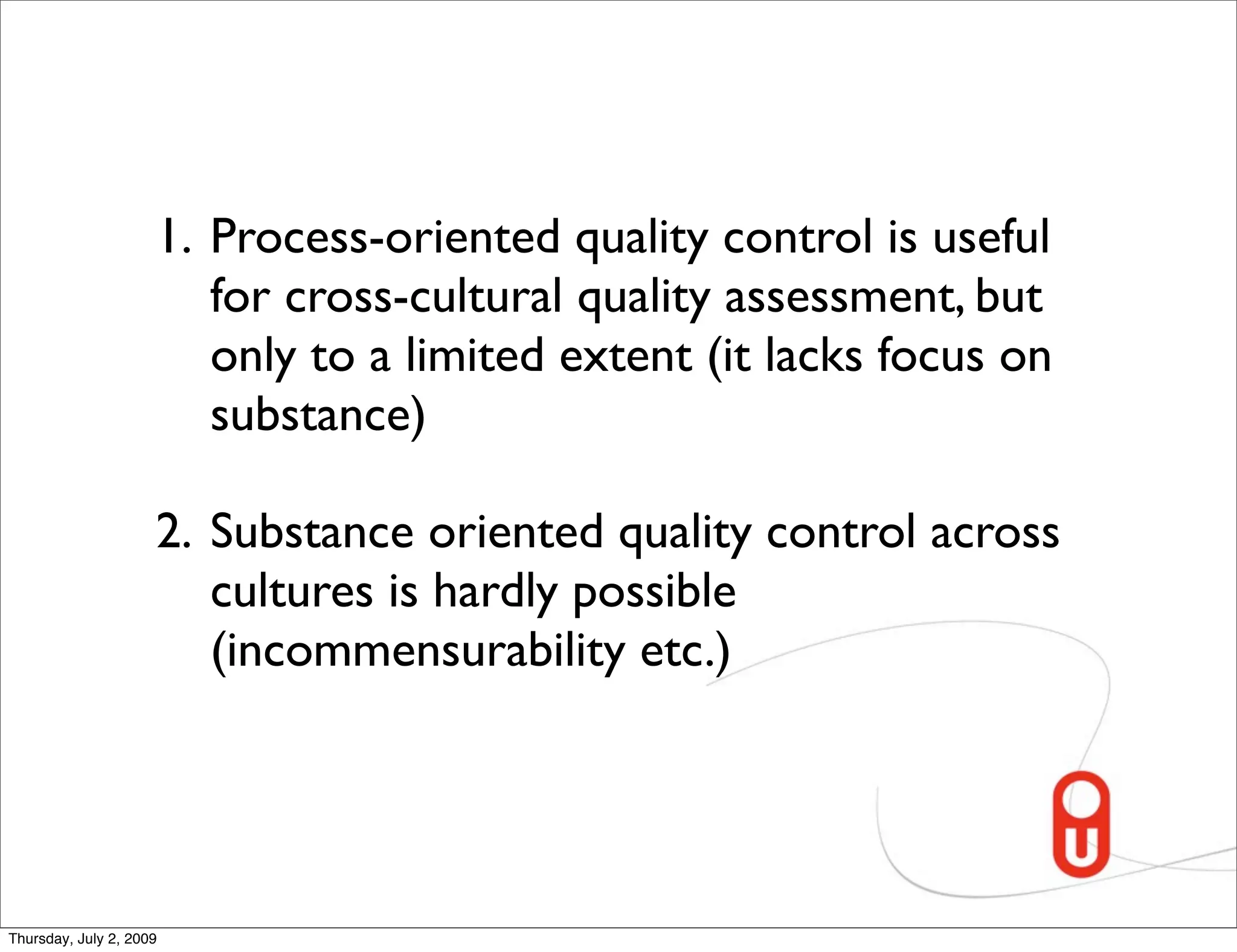
1. Process-oriented quality control is useful
                        for cross-cultural quality assessment, but
                        only to a limited extent (it lacks focus on
                        substance)

                     2. Substance oriented quality control across
                        cultures is hardly possible
                        (incommensurability etc.)


Thursday, July 2, 2009
3. When discussing quality issues in relation
                        to e-learning practices, no additional
                        measures are needed to cope with
                        instrumental e-learning practices other
                        than to differentiate between substitution
                        and addition

                     4. When the discussion concerns transform-
                        ative e-learning practices, like Learning
                        Networks, no frameworks exist yet


Thursday, July 2, 2009
5. In either case, UNESCO should stay on top
                        of quality control, to create a level playing
                        field and to help avert the danger of a
                        digital divide between cultures, regions

                     6. UNESCO should participate in ISO JTC1
                        SC 36 and TC 232 (if allowed)


Thursday, July 2, 2009
Questions or
                more info
                     peter.sloep <at> ou.nl
                        http://pbsloep.nl
                        http://celstec.org
                       http://dspace.ou.nl


Thursday, July 2, 2009

Quality Assurance and e-Learning

  • 1.
    Does traditional e-learningstill fit the knowledge society? Quality issues Prof. Peter B. Sloep Centre for Learning Sciences and Technologies, Open University of the Netherlands UNESCO Conference, Den Haag, July 3, 2009 Thursday, July 2, 2009
  • 2.
    Overview • Quality • Quality in e-learning • Challenges • Theses Thursday, July 2, 2009
  • 3.
    Quality some assumptions Thursday, July 2, 2009
  • 4.
    Quality assurance • ... it is about transactions between learners and educational institutions, social contract • ... it is about allowing learners and public bodies to understand and assess the quality of educational offerings • ... twist in the present context, across nations, cultures, educational systems, etc. Thursday, July 2, 2009
  • 5.
    Limits to whatcan be achieved • Understanding is context-bound - incommensurability (Kuhn) - metaphors (Lakoff and Johnson) • Standardisation (uniformity) doesn’t help - We don’t (and shouldn’t) want it - irreducible role of cultural differences Thursday, July 2, 2009
  • 6.
    What can bedone • Do not aim for interoperability of the objects of quality assurance (EQF?) • Aim for quality assurance at meta-level, of the processes and procedures involved (cf. UNESCO Guidelines, Paris 2005). • Even here limits apply, but less severely so. Thursday, July 2, 2009
  • 7.
    Quality and e-learning Thursday, July 2, 2009
  • 8.
    Two views ofe-learning as an innovation • Instrumentalist: technology is ‘just a tool’ you can use it or ignore it, nothing substantial changes • Transformative: technology is a cultural driver, it has effects beyond the intended ones (Bijker: interpretative flexibility of artefacts) Thursday, July 2, 2009
  • 9.
    Instrumentalist view of e-learning • Sticks to formal learning paradigm • Leads to substitution of or addition to existing technologies and practices • Does not affect organisation structures, teachers remain ‘sages on the stage’, even if it is a virtual stage Thursday, July 2, 2009
  • 10.
    Examples (1) • e-mail, fora, bulletin boards as additional communication channels with students • instant messaging, chat as office hours • downloadable presentation slides and lecture notes (VLE, iTunesU, MIT) • virtual classrooms in lieu of real ones (universities build presence in 2nd Life) Thursday, July 2, 2009
  • 11.
    Examples (2) • reflection blogs in teacher training (Wopereis) • synchronous coaching with earpiece (Hooreman) • gps-enhanced phones to prompt assignments (Stohr) Thursday, July 2, 2009
  • 12.
    Transformative view of e-learning • Considers other learning paradigms such as informal, non-formal, lifelong learning • Leads to unintended and unexpected, ‘weird’ uses of existing technologies or fully new ones Thursday, July 2, 2009
  • 13.
    Example Learning Network • NB: R&D project, no instantiations yet • LN= online, topic-bound, social network DF designed to foster non-formal learning • Meant to address the needs and wants of the knowledge society • Meant to merge the worlds of learning and working, of learners and professionals Thursday, July 2, 2009
  • 14.
    • Upsets traditionaluniversity organisation, from one to several service providers, of content (OER), tutoring, assessment (APL, ACL), certification, advice on learning trajectories • Uses a different business model; pay per service and service level; allow advertisements, allow anonymous use of personal data; etc. Thursday, July 2, 2009
  • 15.
    Conclusion • Quality control takes a different shape in either case • For instrumental e-learning: use existing as benchmark. Check if substitute is adequate, if addition is useful • For transformative e-learning: new benchmarks for success are needed Thursday, July 2, 2009
  • 16.
    Challenges for quality in e-learning Thursday, July 2, 2009
  • 17.
    Students, professionals instrumental view transformative view • Do not differentiate • To what extent does a between e-learning LN help students & and ordinary learning professionals fulfill • e-tools are part and their ambitions? parcel of learning • Does it help meet the environment needs and wants of the knowledge society? Thursday, July 2, 2009
  • 18.
    (Networks of) Universities instrumental view transformative view • nothing new, existing • Anticipate on service arrangements suffice provider role of universities in knowledge society • join forces • quality is a traditional strength of universities, keep it Thursday, July 2, 2009
  • 19.
    Good practices instrumental view transformative view • cf. existing • none for LNs really specifications ISO • somewhat: ISO TC JTC1 SC36 on Quality 232 Learning Services Management and for Non-formal Assurance Metrics Learning and Training • CEN/ISSS WS LT, IMS Global, IEEE Thursday, July 2, 2009
  • 20.
  • 21.
    1. Process-oriented qualitycontrol is useful for cross-cultural quality assessment, but only to a limited extent (it lacks focus on substance) 2. Substance oriented quality control across cultures is hardly possible (incommensurability etc.) Thursday, July 2, 2009
  • 22.
    3. When discussingquality issues in relation to e-learning practices, no additional measures are needed to cope with instrumental e-learning practices other than to differentiate between substitution and addition 4. When the discussion concerns transform- ative e-learning practices, like Learning Networks, no frameworks exist yet Thursday, July 2, 2009
  • 23.
    5. In eithercase, UNESCO should stay on top of quality control, to create a level playing field and to help avert the danger of a digital divide between cultures, regions 6. UNESCO should participate in ISO JTC1 SC 36 and TC 232 (if allowed) Thursday, July 2, 2009
  • 24.
    Questions or more info peter.sloep <at> ou.nl http://pbsloep.nl http://celstec.org http://dspace.ou.nl Thursday, July 2, 2009