



CONTEXTUA
LIZING
LANGUAGE
SANTY REQUEJOSALDAÑA
santynaoo7@hotmail.com
srequejo23@gmail.com
www.tipsforteachers-santy.blogspot.com05/10/2013Santyna 2013
05/10/2013Santyna 2013
Objectives
O To create an understanding of the need
for contextualizing language
O To suggest ideas for realizing those
concepts in the language classroom
05/10/2013Santyna 2013
The meaning of
language depends on
where it occurs and
what the speaker
wants people to
understand.
05/10/2013Santyna 2013
CONTEXTUALIZING
LANGUAGE
O It is the meaningful use of Language for real
communicative purposes.
O It helps students understand how language
users construct Language in a given context.
O Teachers can contextualize L instruction by
organizing the contents of the L curriculum
according to themes or topics.
05/10/2013Santyna 2013
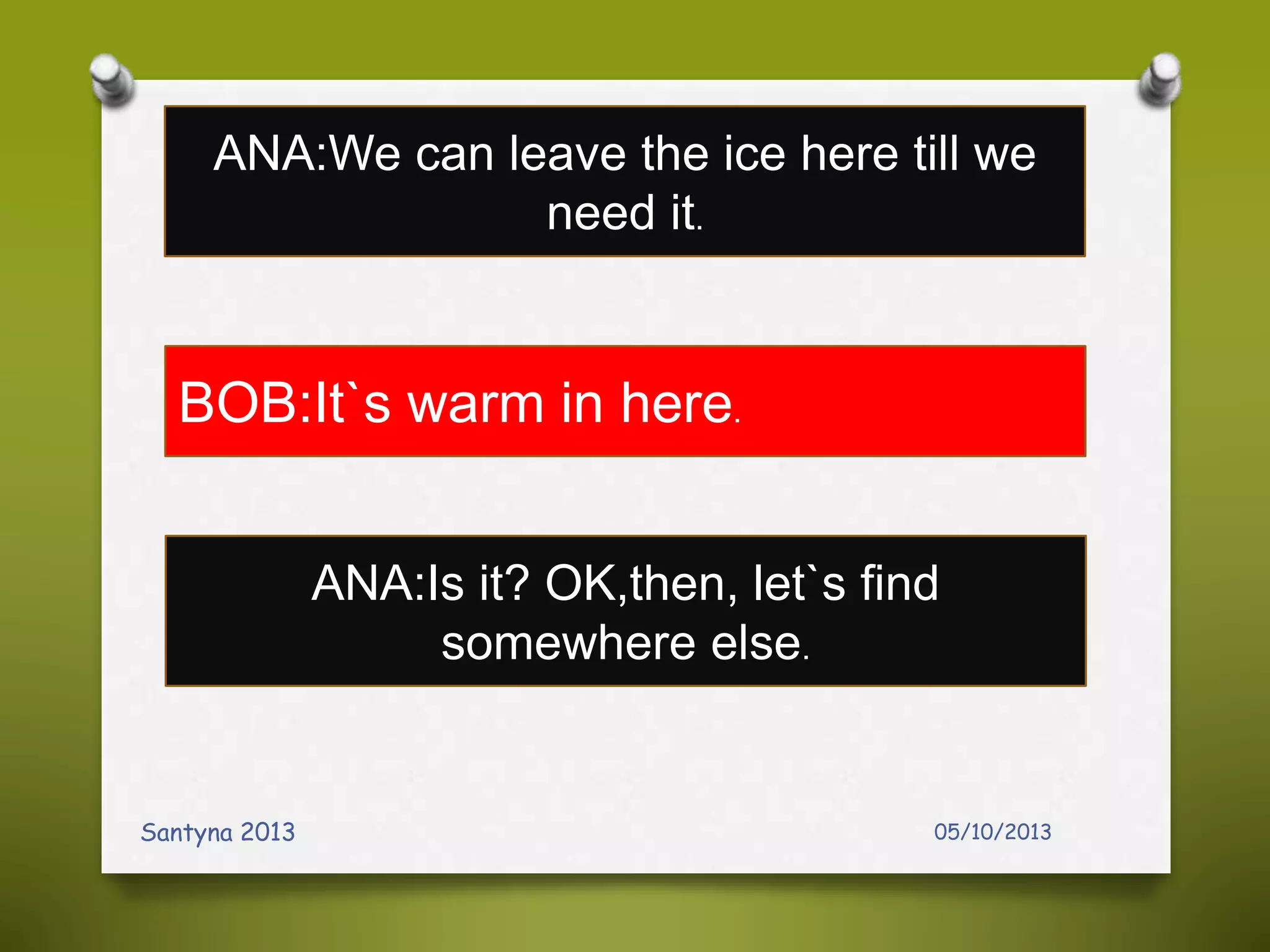
ANA:We can leave the ice here till we
need it.
BOB:It`s warm in here.
ANA:Is it? OK,then, let`s find
somewhere else.
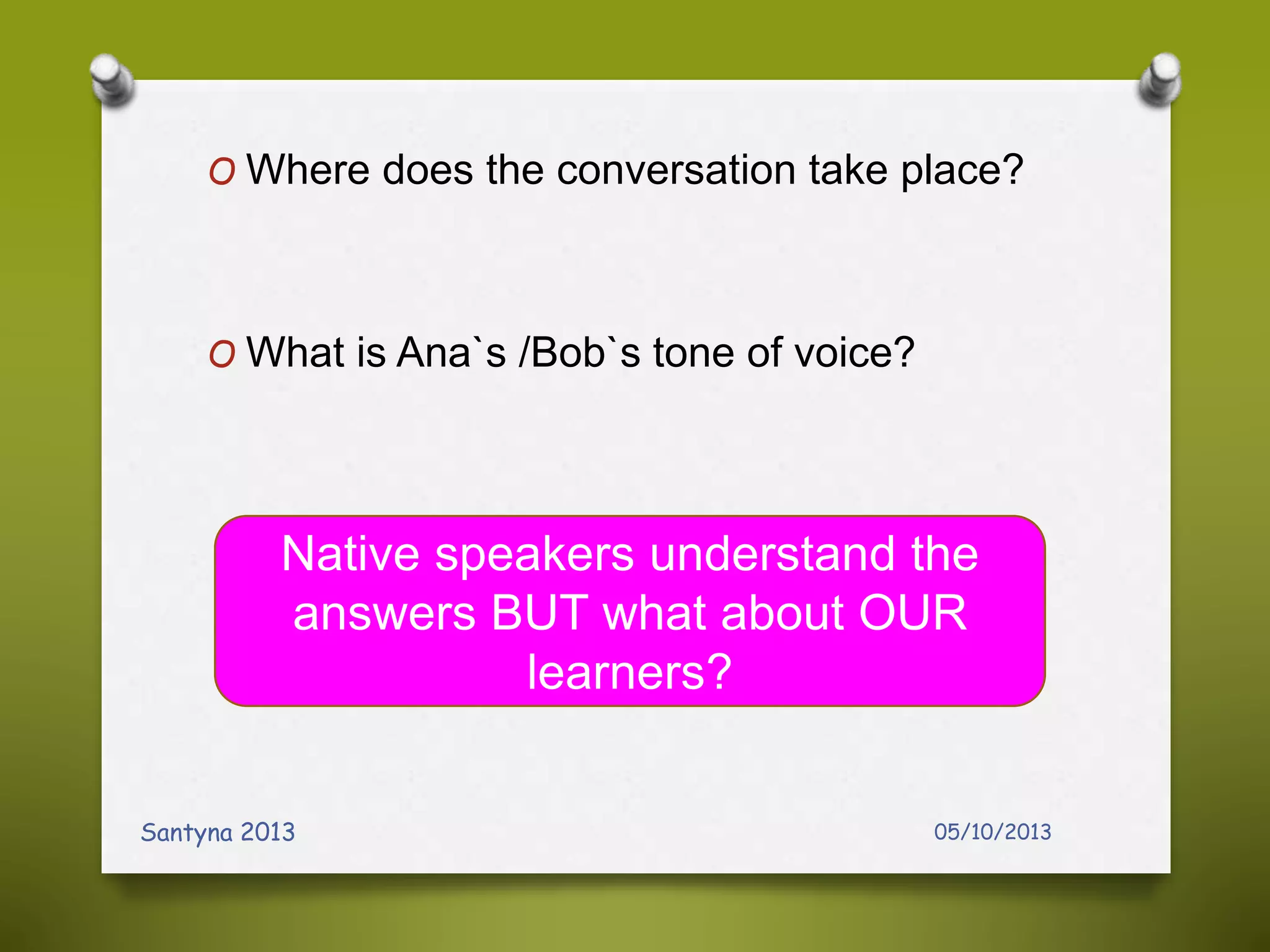
O Where does the conversation take place?
O What is Ana`s /Bob`s tone of voice?
05/10/2013Santyna 2013
Native speakers understand the
answers BUT what about OUR
learners?
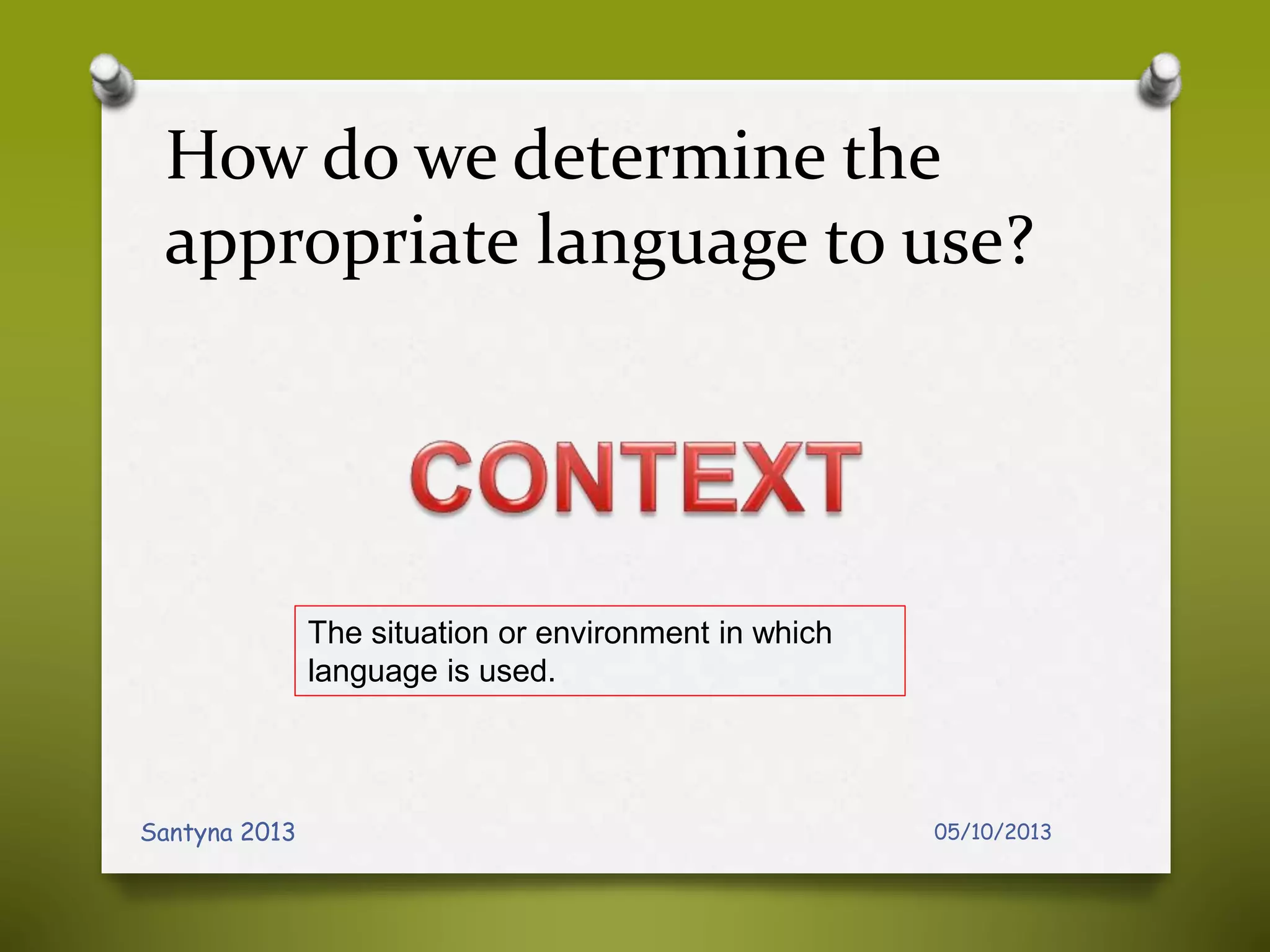
How do we determine the
appropriate language to use?
05/10/2013Santyna 2013
The situation or environment in which
language is used.
05/10/2013Santyna 2013
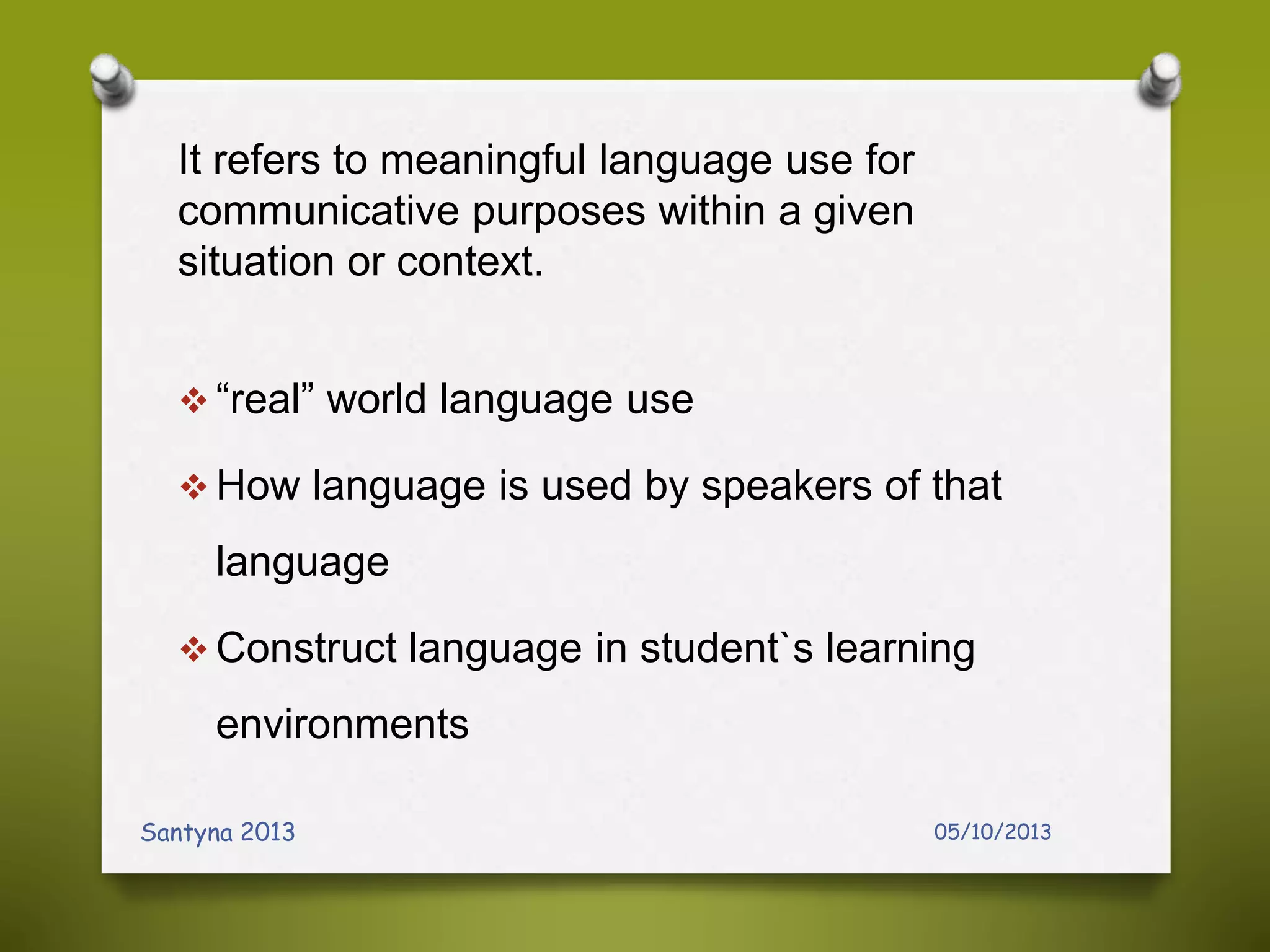
It refers to meaningful language use for
communicative purposes within a given
situation or context.
 “real” world language use
 How language is used by speakers of that
language
 Construct language in student`s learning
environments
05/10/2013Santyna 2013
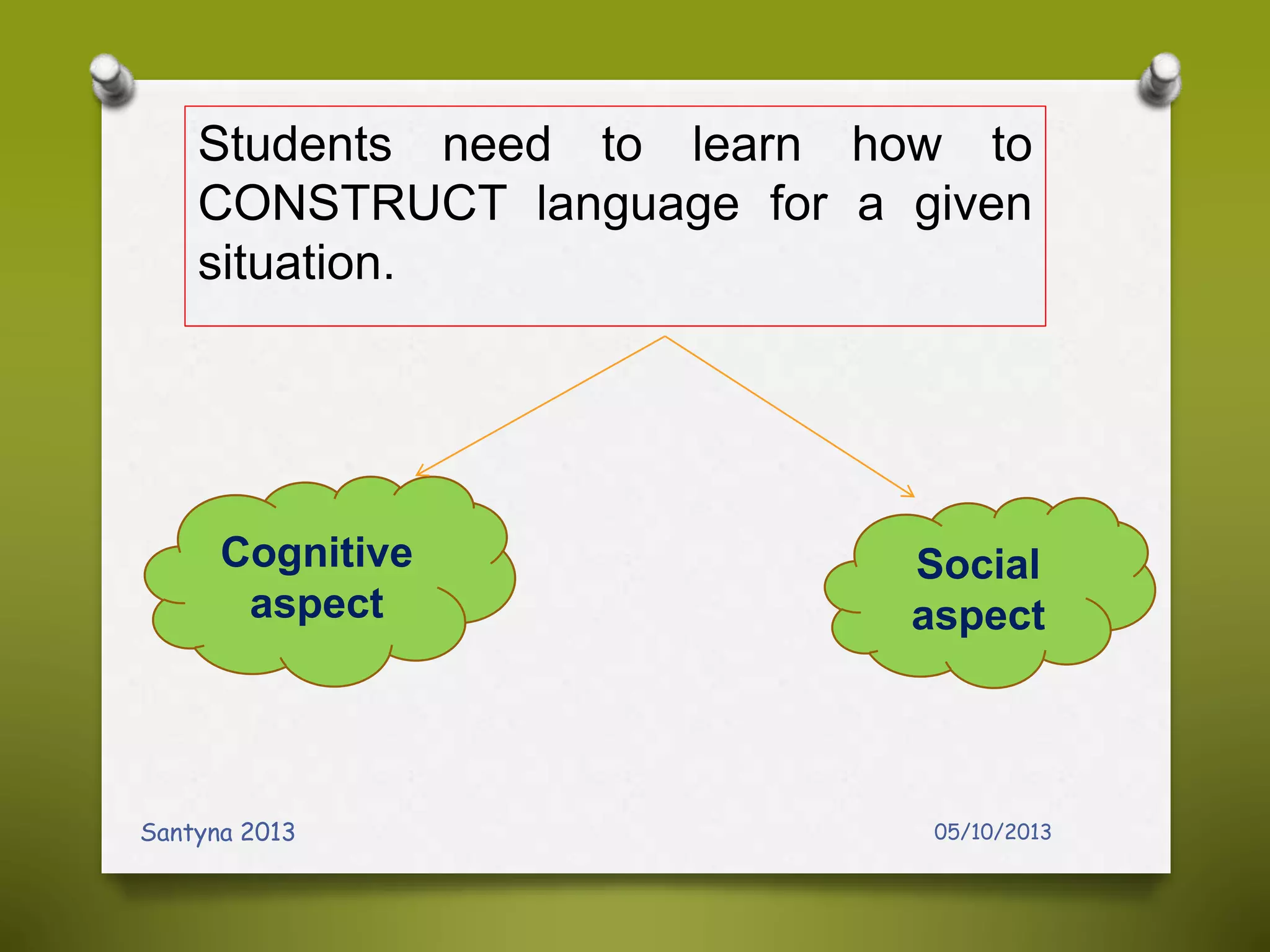
Students need to learn how to
CONSTRUCT language for a given
situation.
05/10/2013Santyna 2013
Cognitive
aspect
Social
aspect
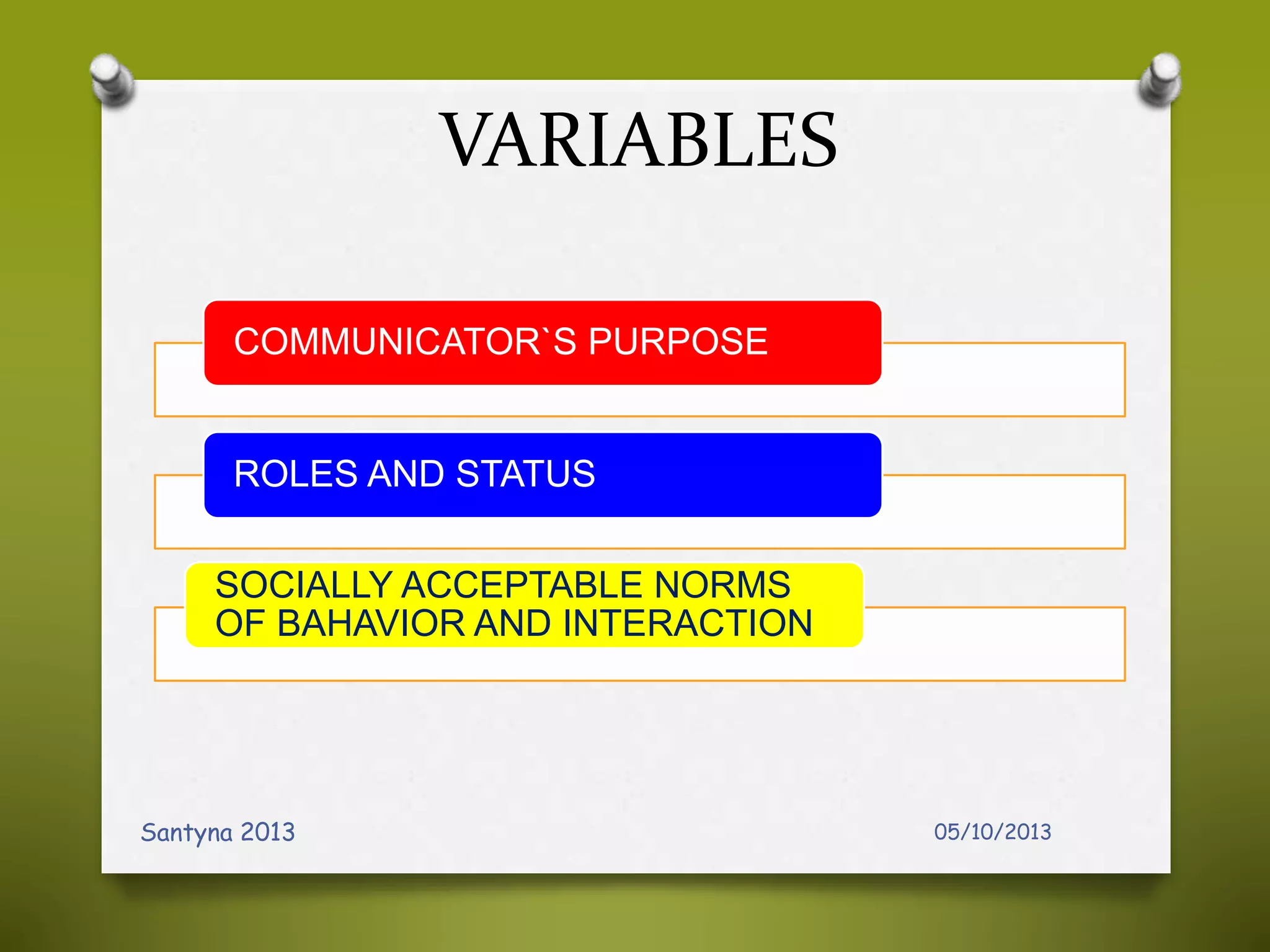
VARIABLES
COMMUNICATOR`S PURPOSE
ROLES AND STATUS
SOCIALLY ACCEPTABLE NORMS
OF BAHAVIOR AND INTERACTION
05/10/2013Santyna 2013
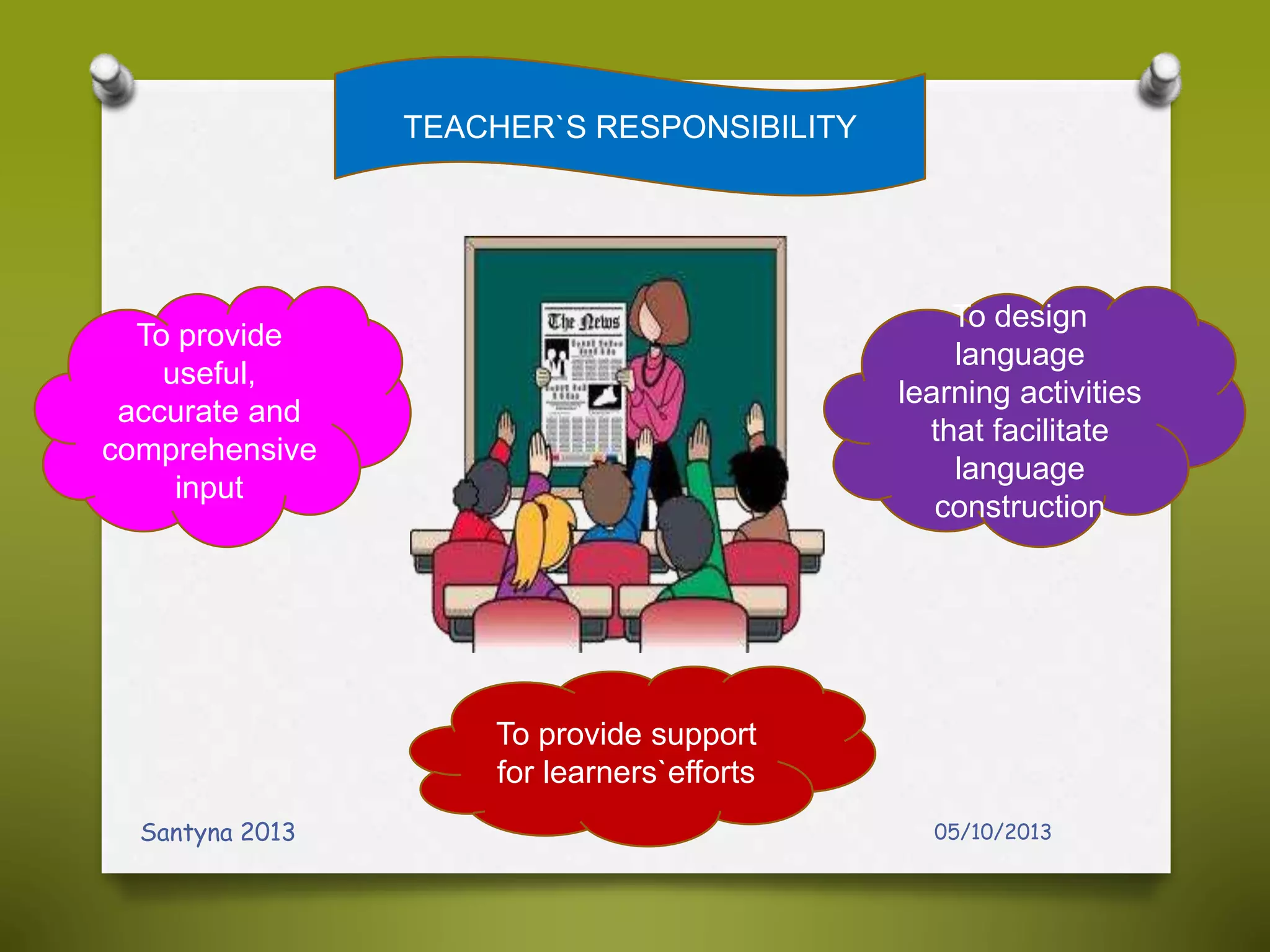
TEACHER`S RESPONSIBILITY
To provide
useful,
accurate and
comprehensive
input
To design
language
learning activities
that facilitate
language
construction
To provide support
for learners`efforts
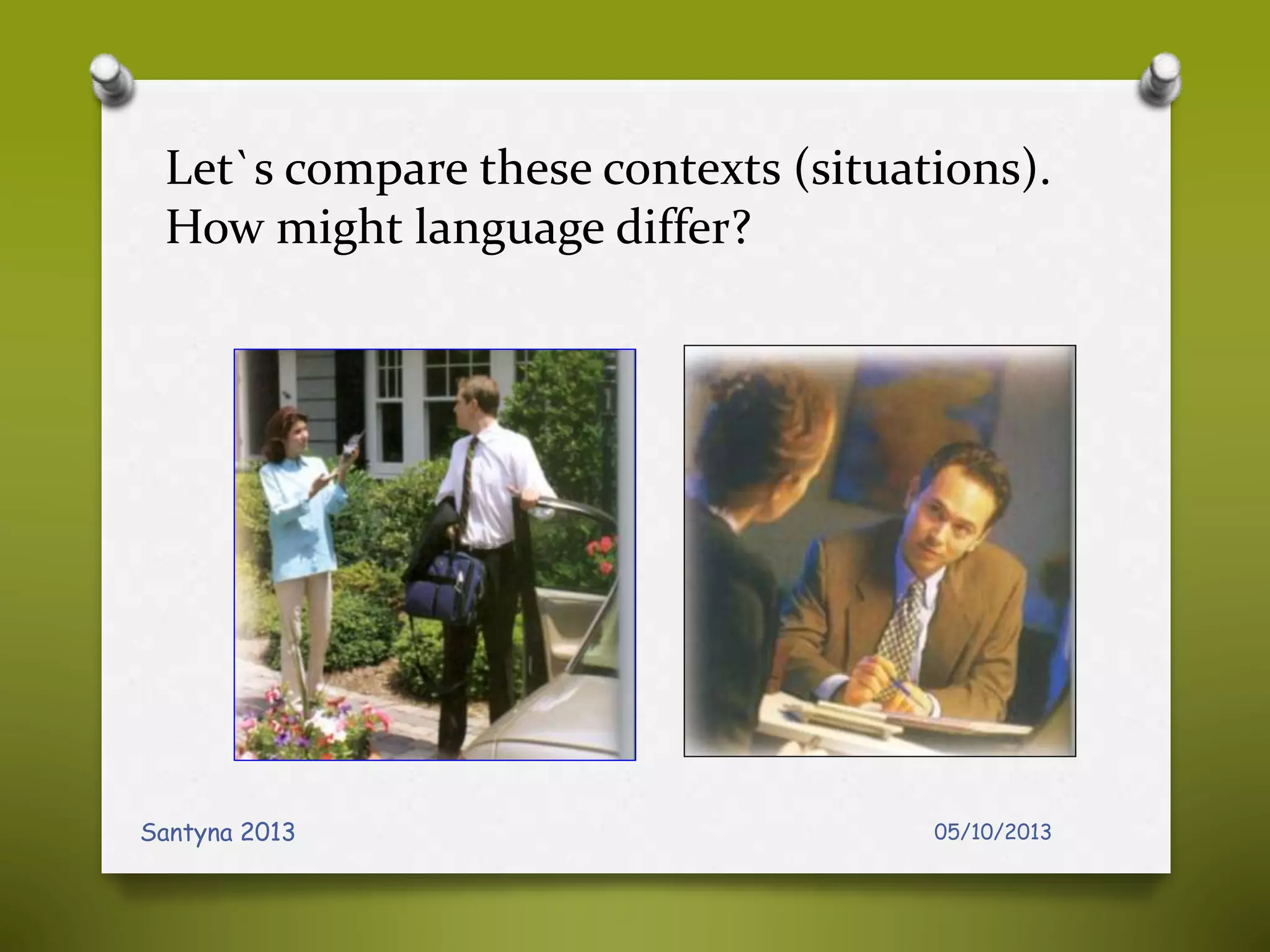
Let`s compare these contexts (situations).
How might language differ?
05/10/2013Santyna 2013
Why contextualize L?
it helps learners understand the function
(purpose) of language
it assists learners in developing appropriate
use of language
It makes language more meanigful in THAT
CONTEXT
It adds the cultural element, combining
language and culture
It is communicative
It engages learners in real-world scenarios05/10/2013Santyna 2013
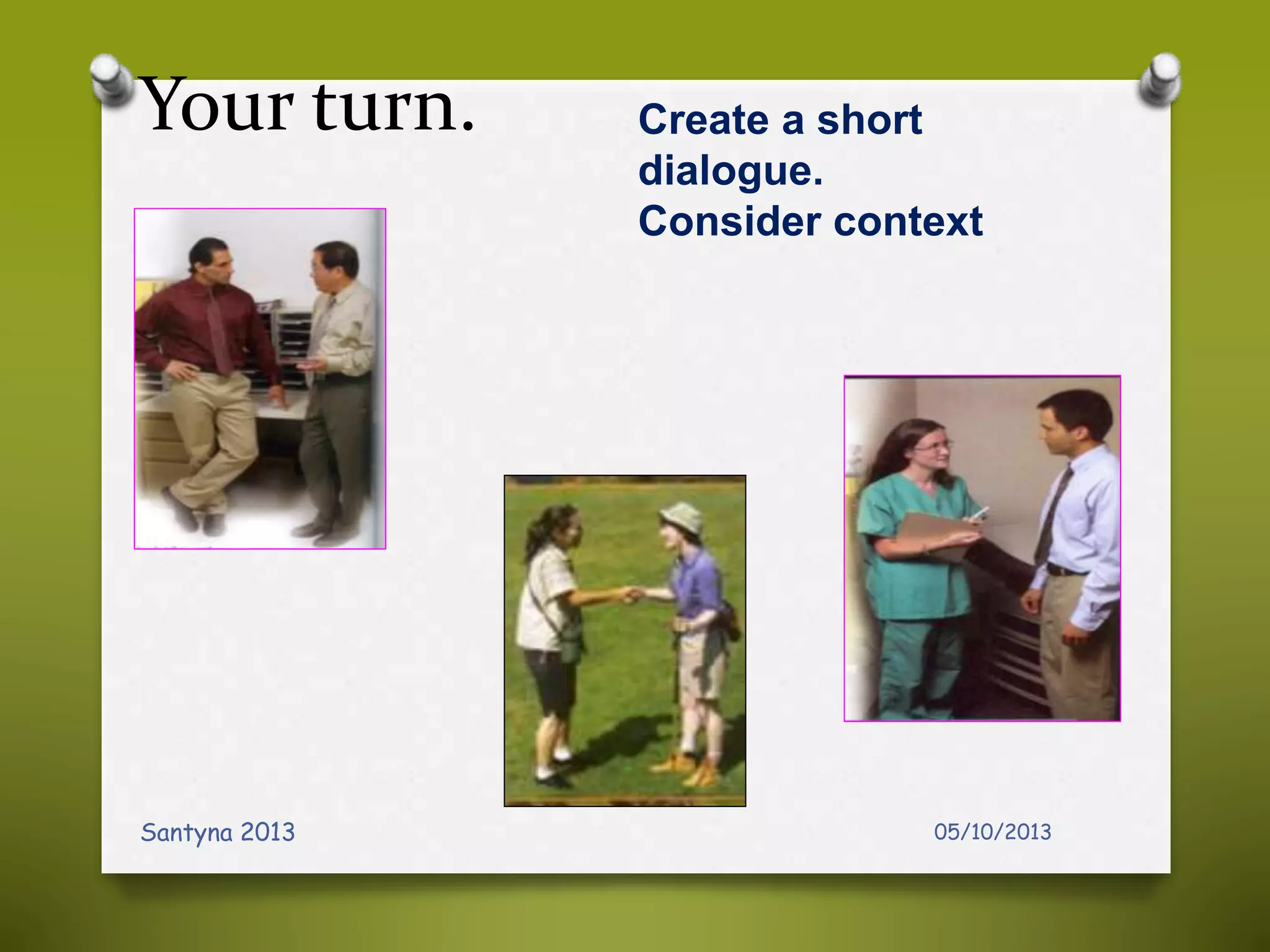
Your turn.
05/10/2013Santyna 2013
Create a short
dialogue.
Consider context
VIDEO ANALYSIS
05/10/2013Santyna 2013
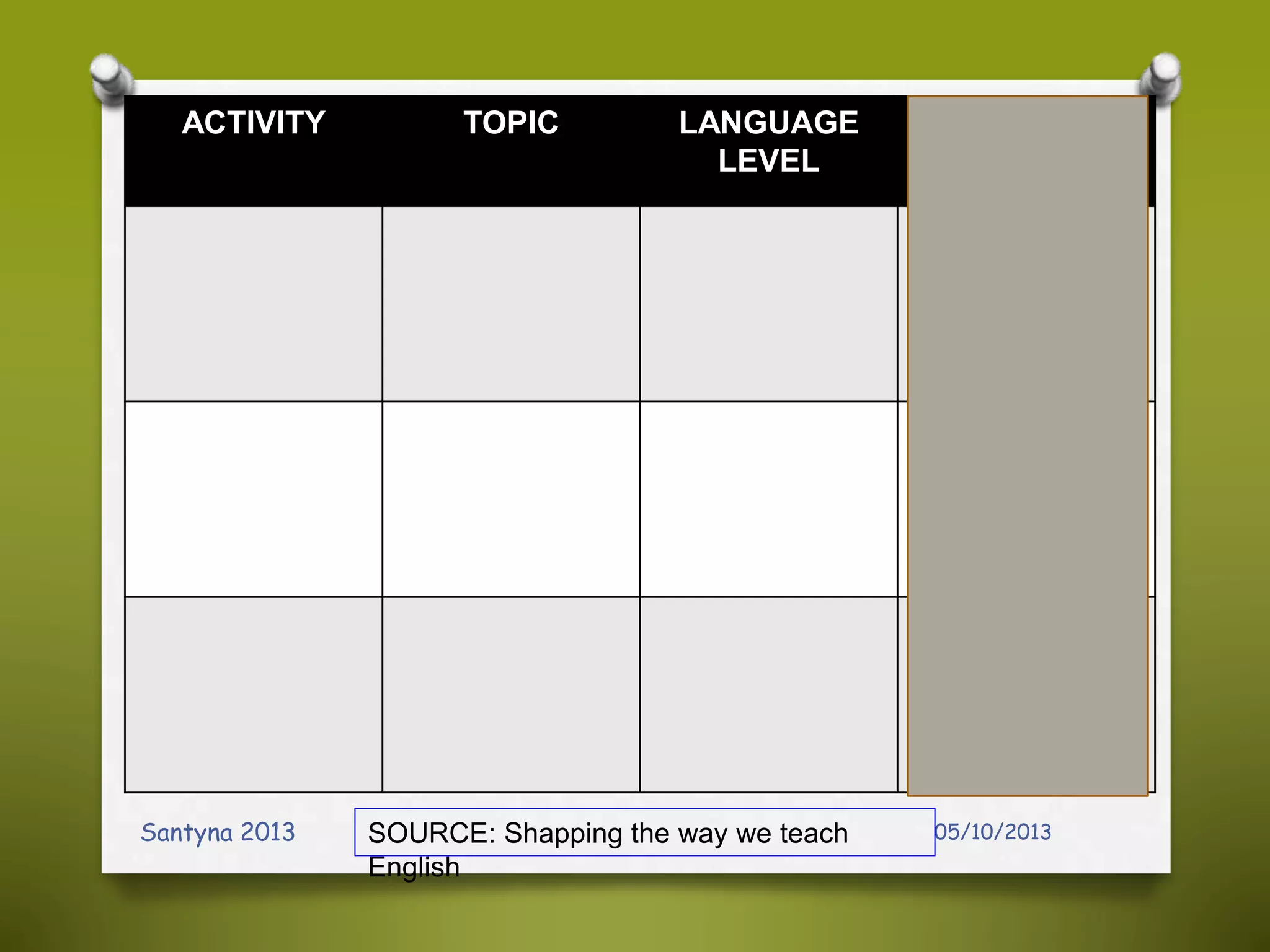
ACTIVITY TOPIC LANGUAGE
LEVEL
MATERIALS
SOURCE: Shapping the way we teach
English
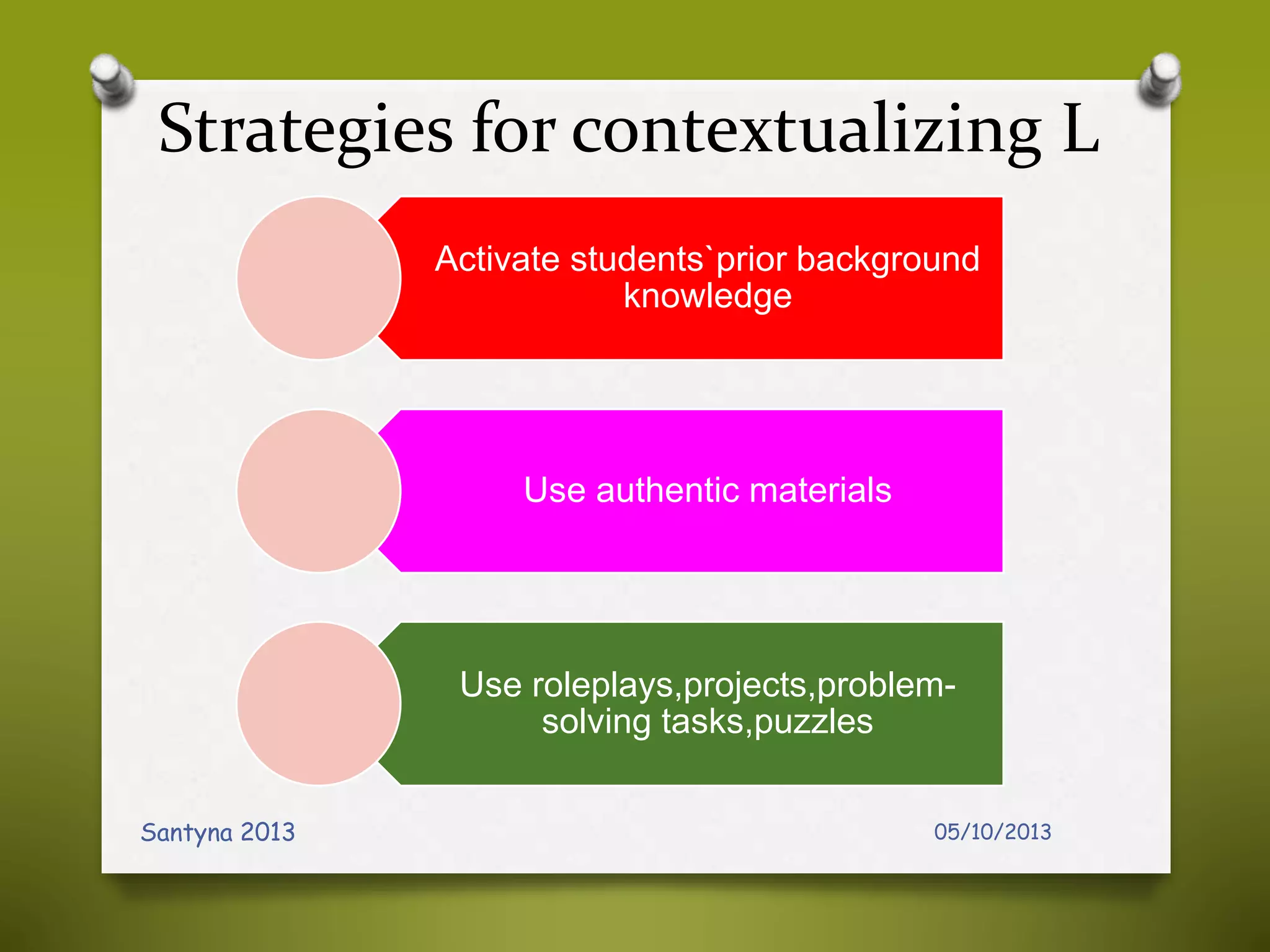
Strategies for contextualizing L
05/10/2013Santyna 2013
Activate students`prior background
knowledge
Use authentic materials
Use roleplays,projects,problem-
solving tasks,puzzles
Type of curriculum
CONTENT-BASED CURRICULUM
THEME-BASED CURRICULUM
 AUTHENTIC MATERIALS
 AUTHENTIC ACTIVITIES THAT
REQUIRE “REAL” COMMUNICATION
05/10/2013Santyna 2013
brochures
Tourism web sites
List of hotels or
restaurants
Make a list of
businesses
VIDEO DISCUSSION
You will see examples of different kinds of
authentic materials used in different
classroom settings:
O Describe the materials that you see
O How were they used?
O Do you think the use of them were
important? Why or why not?
05/10/2013Santyna 2013
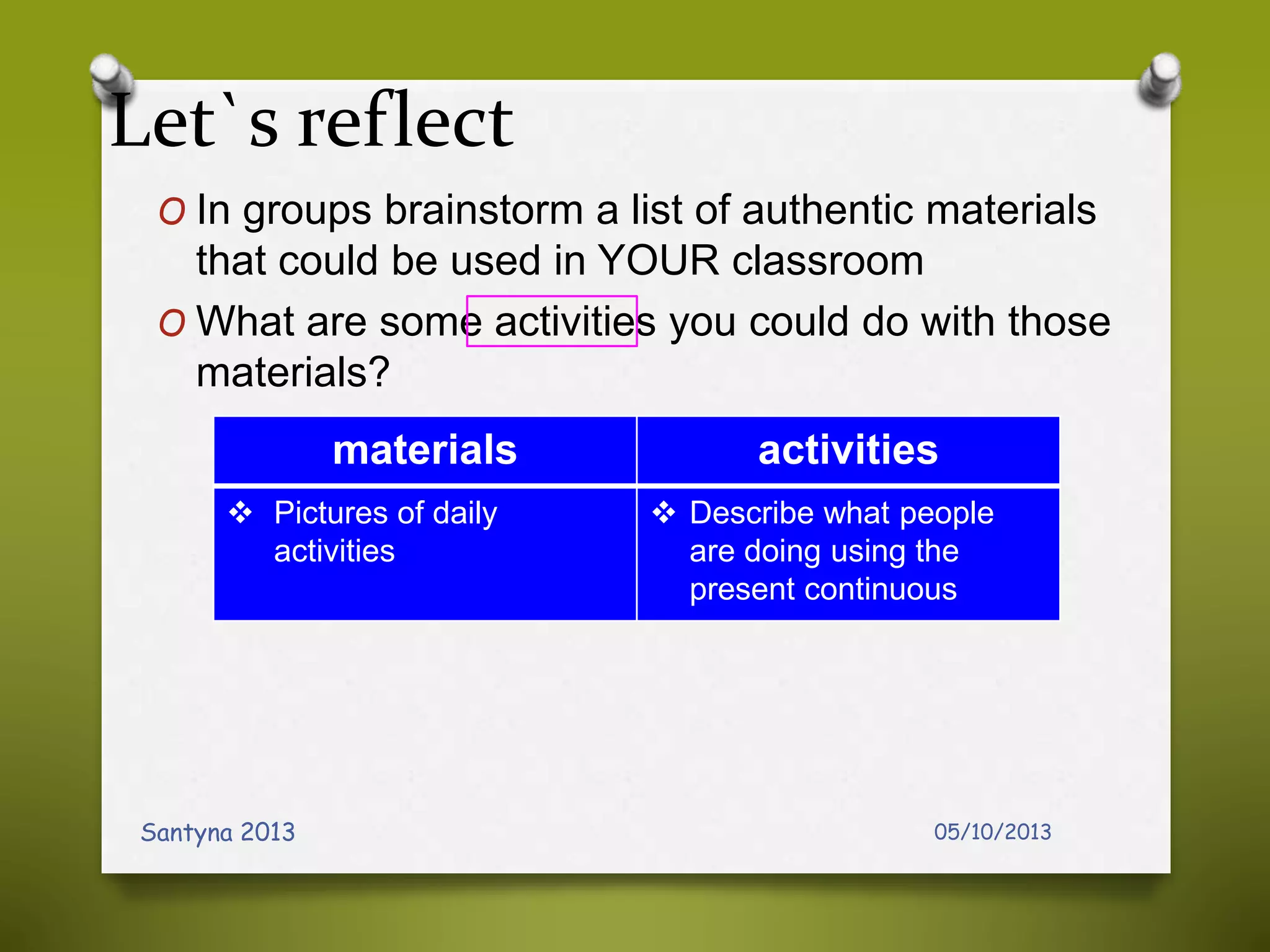
Let`s reflect
O In groups brainstorm a list of authentic materials
that could be used in YOUR classroom
O What are some activities you could do with those
materials?
05/10/2013Santyna 2013
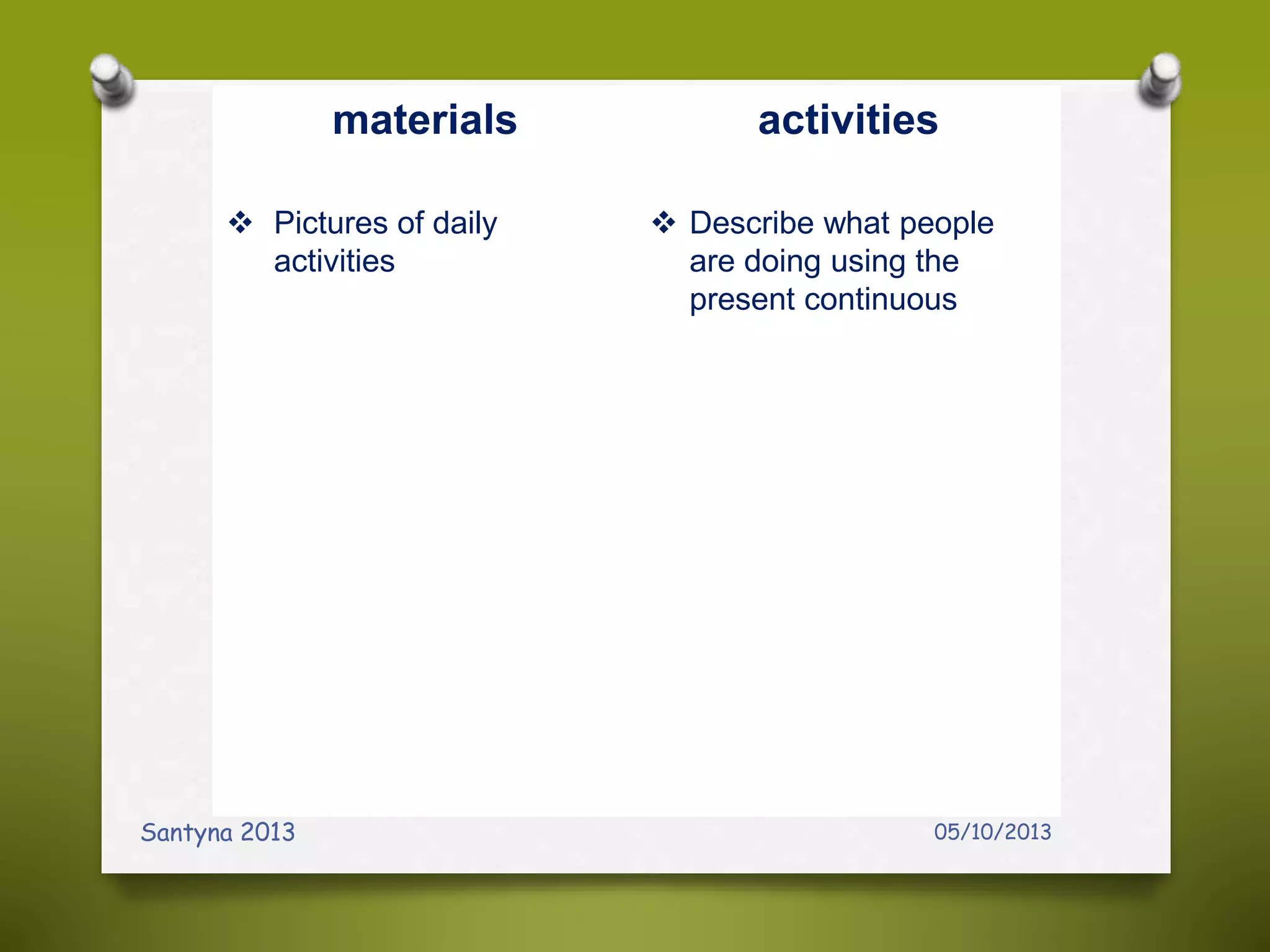
materials activities
 Pictures of daily
activities
 Describe what people
are doing using the
present continuous
05/10/2013Santyna 2013
materials activities
 Pictures of daily
activities
 Describe what people
are doing using the
present continuous
05/10/2013Santyna 2013
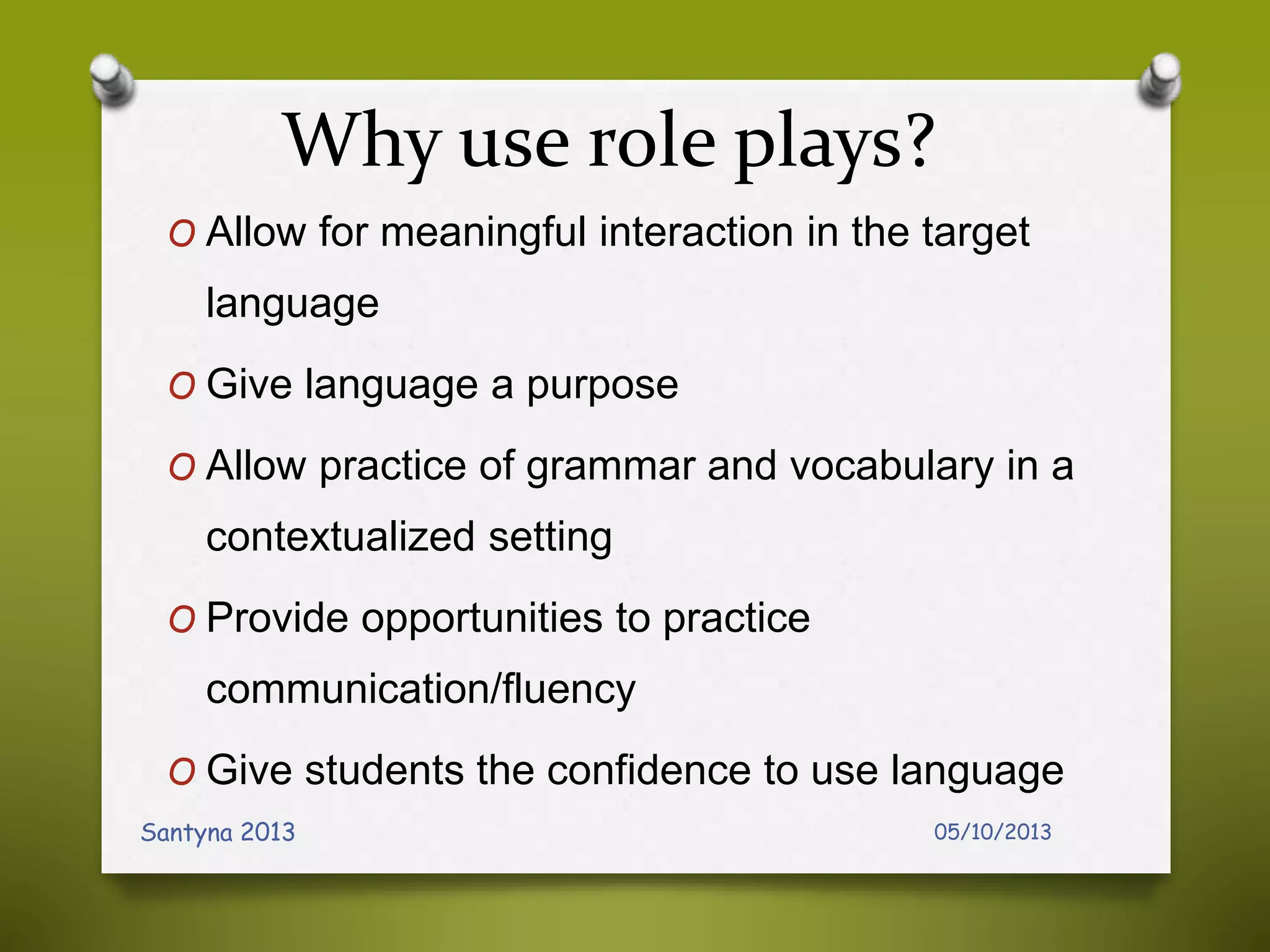
Why use role plays?
O Allow for meaningful interaction in the target
language
O Give language a purpose
O Allow practice of grammar and vocabulary in a
contextualized setting
O Provide opportunities to practice
communication/fluency
O Give students the confidence to use language
05/10/2013Santyna 2013
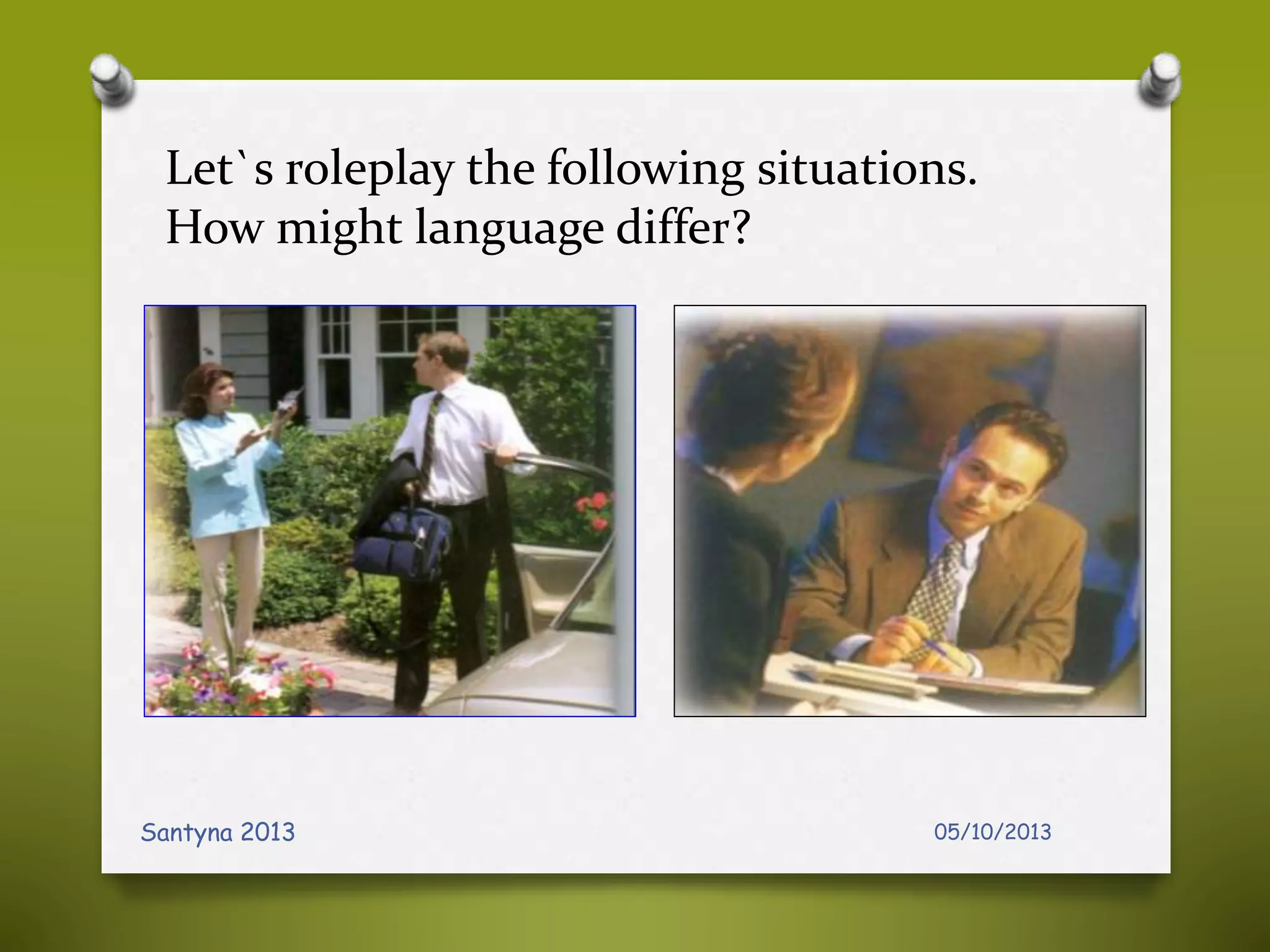
Let`s roleplay the following situations.
How might language differ?
05/10/2013Santyna 2013
What did we learn?
O Language is MORE meaningful if we
understand the context
O CONTEXT can be understood through:
*activating Ss`background knowledge
*using authentic materials
*using roleplays
05/10/2013Santyna 2013
RESOURCES:
O Shapping the way we teach English
05/10/2013Santyna 2013
Adapted by Santy Requejo Saldaña

Contextualizing

  • 1.
  • 2.
  • 3.
    Objectives O To createan understanding of the need for contextualizing language O To suggest ideas for realizing those concepts in the language classroom 05/10/2013Santyna 2013
  • 4.
  • 5.
    The meaning of languagedepends on where it occurs and what the speaker wants people to understand. 05/10/2013Santyna 2013
  • 6.
    CONTEXTUALIZING LANGUAGE O It isthe meaningful use of Language for real communicative purposes. O It helps students understand how language users construct Language in a given context. O Teachers can contextualize L instruction by organizing the contents of the L curriculum according to themes or topics. 05/10/2013Santyna 2013
  • 7.
    05/10/2013Santyna 2013 ANA:We canleave the ice here till we need it. BOB:It`s warm in here. ANA:Is it? OK,then, let`s find somewhere else.
  • 8.
    O Where doesthe conversation take place? O What is Ana`s /Bob`s tone of voice? 05/10/2013Santyna 2013 Native speakers understand the answers BUT what about OUR learners?
  • 9.
    How do wedetermine the appropriate language to use? 05/10/2013Santyna 2013 The situation or environment in which language is used.
  • 10.
  • 11.
    It refers tomeaningful language use for communicative purposes within a given situation or context.  “real” world language use  How language is used by speakers of that language  Construct language in student`s learning environments 05/10/2013Santyna 2013
  • 12.
    Students need tolearn how to CONSTRUCT language for a given situation. 05/10/2013Santyna 2013 Cognitive aspect Social aspect
  • 13.
    VARIABLES COMMUNICATOR`S PURPOSE ROLES ANDSTATUS SOCIALLY ACCEPTABLE NORMS OF BAHAVIOR AND INTERACTION 05/10/2013Santyna 2013
  • 14.
    05/10/2013Santyna 2013 TEACHER`S RESPONSIBILITY Toprovide useful, accurate and comprehensive input To design language learning activities that facilitate language construction To provide support for learners`efforts
  • 15.
    Let`s compare thesecontexts (situations). How might language differ? 05/10/2013Santyna 2013
  • 16.
    Why contextualize L? ithelps learners understand the function (purpose) of language it assists learners in developing appropriate use of language It makes language more meanigful in THAT CONTEXT It adds the cultural element, combining language and culture It is communicative It engages learners in real-world scenarios05/10/2013Santyna 2013
  • 17.
    Your turn. 05/10/2013Santyna 2013 Createa short dialogue. Consider context
  • 18.
  • 19.
    05/10/2013Santyna 2013 ACTIVITY TOPICLANGUAGE LEVEL MATERIALS SOURCE: Shapping the way we teach English
  • 20.
    Strategies for contextualizingL 05/10/2013Santyna 2013 Activate students`prior background knowledge Use authentic materials Use roleplays,projects,problem- solving tasks,puzzles
  • 21.
    Type of curriculum CONTENT-BASEDCURRICULUM THEME-BASED CURRICULUM  AUTHENTIC MATERIALS  AUTHENTIC ACTIVITIES THAT REQUIRE “REAL” COMMUNICATION 05/10/2013Santyna 2013
  • 22.
  • 23.
    05/10/2013Santyna 2013 brochures Tourism websites List of hotels or restaurants Make a list of businesses
  • 24.
    VIDEO DISCUSSION You willsee examples of different kinds of authentic materials used in different classroom settings: O Describe the materials that you see O How were they used? O Do you think the use of them were important? Why or why not? 05/10/2013Santyna 2013
  • 25.
    Let`s reflect O Ingroups brainstorm a list of authentic materials that could be used in YOUR classroom O What are some activities you could do with those materials? 05/10/2013Santyna 2013 materials activities  Pictures of daily activities  Describe what people are doing using the present continuous
  • 26.
    05/10/2013Santyna 2013 materials activities Pictures of daily activities  Describe what people are doing using the present continuous
  • 27.
  • 28.
    Why use roleplays? O Allow for meaningful interaction in the target language O Give language a purpose O Allow practice of grammar and vocabulary in a contextualized setting O Provide opportunities to practice communication/fluency O Give students the confidence to use language 05/10/2013Santyna 2013
  • 29.
    Let`s roleplay thefollowing situations. How might language differ? 05/10/2013Santyna 2013
  • 30.
    What did welearn? O Language is MORE meaningful if we understand the context O CONTEXT can be understood through: *activating Ss`background knowledge *using authentic materials *using roleplays 05/10/2013Santyna 2013
  • 31.
    RESOURCES: O Shapping theway we teach English 05/10/2013Santyna 2013 Adapted by Santy Requejo Saldaña