

ENGLISH AS A LEARNING AREA
–SECONDARY
Christine May P. Petajen
• Seeks to:
–develop citizenship
–address the communication needs
of Filipino students for English
Secondary English Curriculum
for 2002
Developing autonomous
language learners who are
aware of and capable to cope
with global trends
Aim
• Communicative, interactive,
collaborative approach to
learning
• Reflection and introspection with
the aim
Adopts:
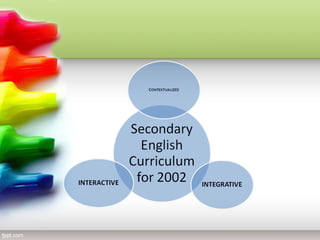
Secondary English Curriculum
for 2002 Framework
CONTEXTUALIZED
• Contextualized learning occurs only when
students process new information or knowledge
in such a way that it makes sense to them in
their own frames of reference (their own inner
worlds of memory, experience, and response).
• Assumes that the mind naturally seeks
meaning in context, that is, in relation to the
person's current environment, and that it does
so by searching for relationships that make
sense and appear useful.
INTERACTIVE
• Engages students in the learning process.
•
• Stimulates the mind to assimilate, analyze, and question
the subject at hand.
•
• Questions should be presented to students and
developed by the students as they work.
•
• Includes a presentation of new material blended with
interactive activities that get students involved with the
new content.
INTEGRATIVE
• Attempts to break down barriers between
subjects and make learning more meaningful to
students.
•
• Major concepts are culled from these broad
themes, and activities are planned that teach or
inform of these concepts.
•
• Meaningful association to focus upon broad
areas of study.
•
GOALS AND
EXPECTATIONS
First year
• Sentences are used to perform communicative
acts
• Make use of real world knowledge and
experience
• Identify and explain different literary types
• Show appreciation of art forms
• Familiarization with the common mass media
forms
Second year
• Exhibit skills in utilizing the prosodic
features
• Show understanding and appreciation of
the different genres
• Manipulate formal devices
Third Year
• Utilize a variety of sentences and
expository methods in persuasion and
argumentation
• Break down complex sentences to get the
message in different text types
• Journalistic and Scientific
• Single out devices employed in fiction
works and non-fiction works
Fourth Year
• Acquired skills of assessing, evaluating,
and using relevant information
• Developed listening, speaking, reading
and writing skills and appreciation of
literature
References:
• Anderson, Ann-Claire, “What Is Contextual Learning?”.
Retrieved from http://www.cord.org on
• November 28, 2012.
•
• Corpus, Brenda, et.al. (2007). “Principles of Teaching 2”.
Quezon City: Rex Publishing Inc.
•
• NA. “Integrated Curriculum Guide”. Retrieved from
http://www.archeworks.org on November
• 28, 2012.

English as a learning area –secondary

  • 1.
    ENGLISH AS ALEARNING AREA –SECONDARY Christine May P. Petajen
  • 2.
    • Seeks to: –developcitizenship –address the communication needs of Filipino students for English Secondary English Curriculum for 2002
  • 3.
    Developing autonomous language learnerswho are aware of and capable to cope with global trends Aim
  • 4.
    • Communicative, interactive, collaborativeapproach to learning • Reflection and introspection with the aim Adopts:
  • 5.
  • 7.
    CONTEXTUALIZED • Contextualized learningoccurs only when students process new information or knowledge in such a way that it makes sense to them in their own frames of reference (their own inner worlds of memory, experience, and response). • Assumes that the mind naturally seeks meaning in context, that is, in relation to the person's current environment, and that it does so by searching for relationships that make sense and appear useful.
  • 8.
    INTERACTIVE • Engages studentsin the learning process. • • Stimulates the mind to assimilate, analyze, and question the subject at hand. • • Questions should be presented to students and developed by the students as they work. • • Includes a presentation of new material blended with interactive activities that get students involved with the new content.
  • 9.
    INTEGRATIVE • Attempts tobreak down barriers between subjects and make learning more meaningful to students. • • Major concepts are culled from these broad themes, and activities are planned that teach or inform of these concepts. • • Meaningful association to focus upon broad areas of study. •
  • 10.
  • 11.
    First year • Sentencesare used to perform communicative acts • Make use of real world knowledge and experience • Identify and explain different literary types • Show appreciation of art forms • Familiarization with the common mass media forms
  • 12.
    Second year • Exhibitskills in utilizing the prosodic features • Show understanding and appreciation of the different genres • Manipulate formal devices
  • 13.
    Third Year • Utilizea variety of sentences and expository methods in persuasion and argumentation • Break down complex sentences to get the message in different text types • Journalistic and Scientific • Single out devices employed in fiction works and non-fiction works
  • 14.
    Fourth Year • Acquiredskills of assessing, evaluating, and using relevant information • Developed listening, speaking, reading and writing skills and appreciation of literature
  • 15.
    References: • Anderson, Ann-Claire,“What Is Contextual Learning?”. Retrieved from http://www.cord.org on • November 28, 2012. • • Corpus, Brenda, et.al. (2007). “Principles of Teaching 2”. Quezon City: Rex Publishing Inc. • • NA. “Integrated Curriculum Guide”. Retrieved from http://www.archeworks.org on November • 28, 2012.