(Oh no, not another checklist...)
   Emergency inductions in ICU and ED
    are risky:
       Sicker patients
       Difficult airways
       Less time for preparation
       Pressure to intervene
       Human factors
       Less familiar environment & equipment
       Junior staff out of hours
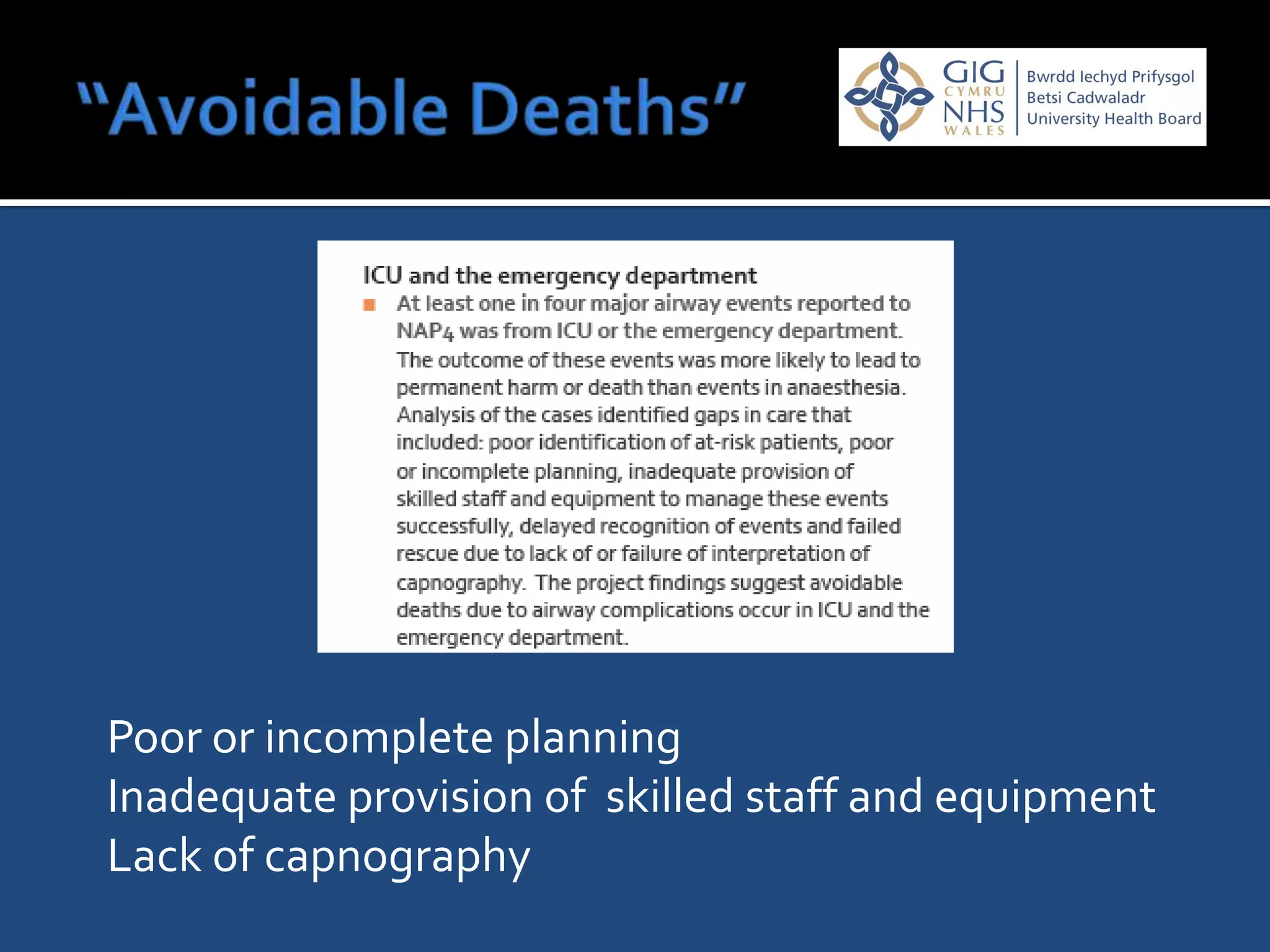
Poor or incomplete planning
Inadequate provision of skilled staff and equipment
Lack of capnography
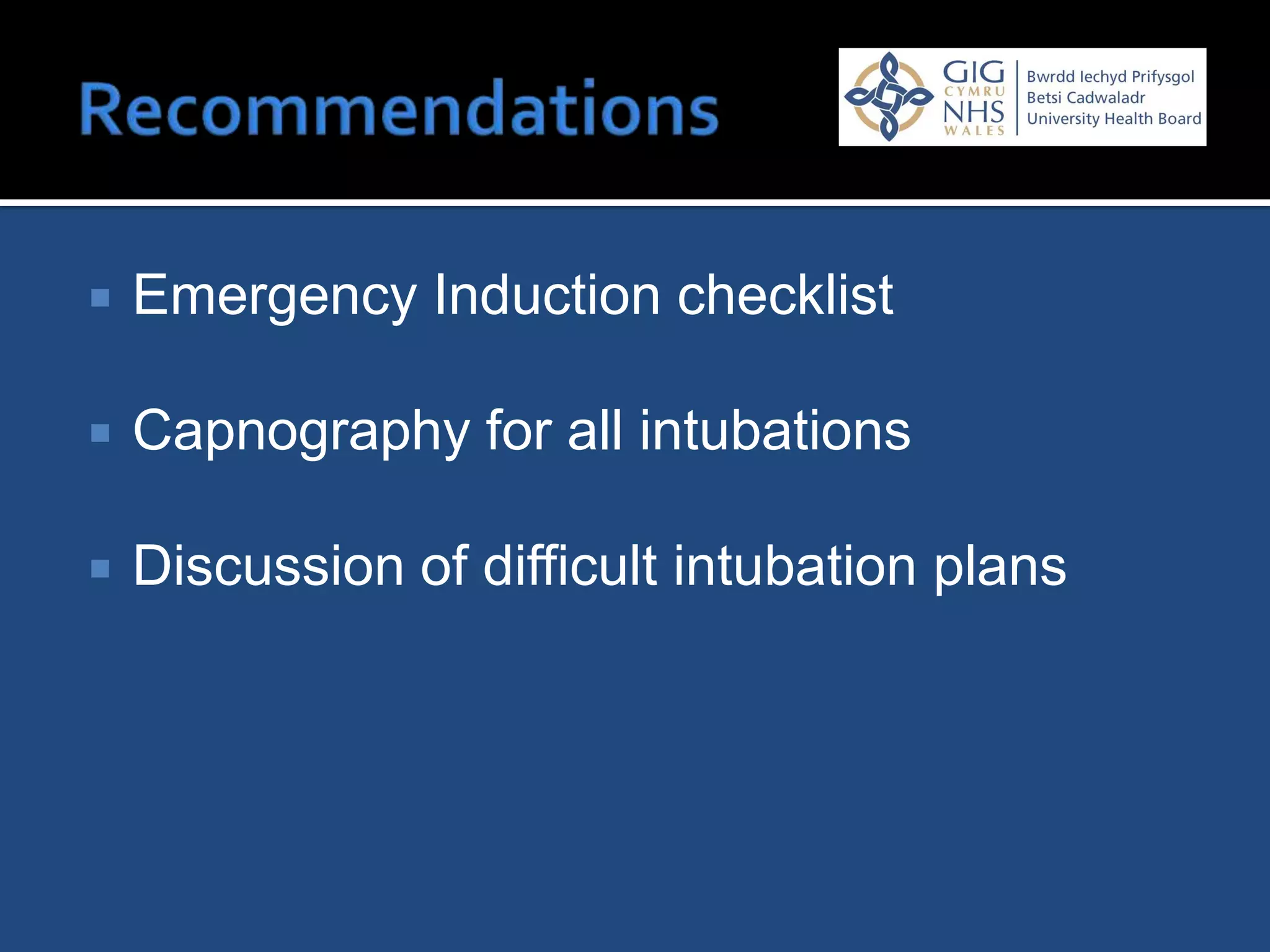
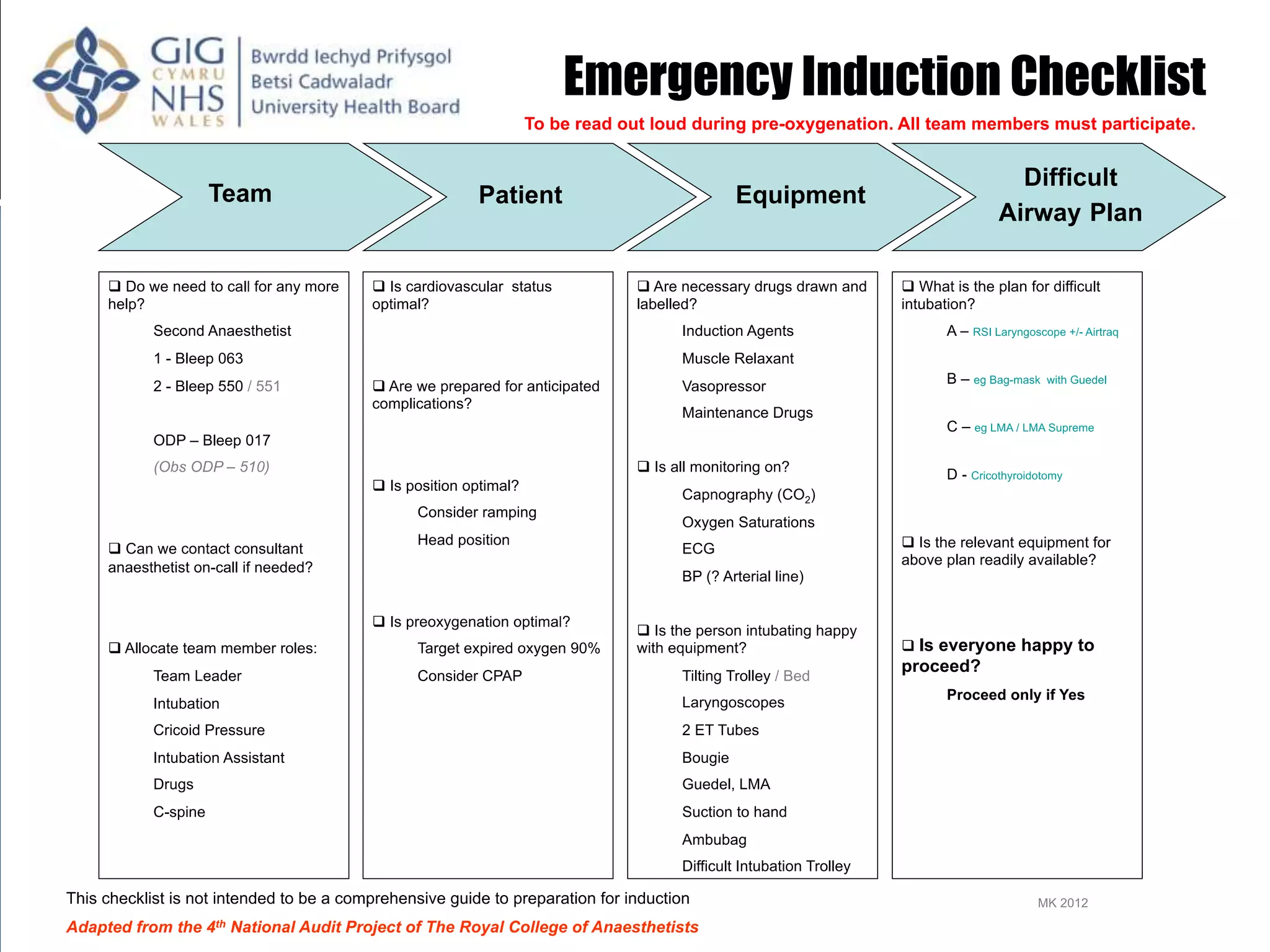
   Emergency Induction checklist

   Capnography for all intubations

   Discussion of difficult intubation plans
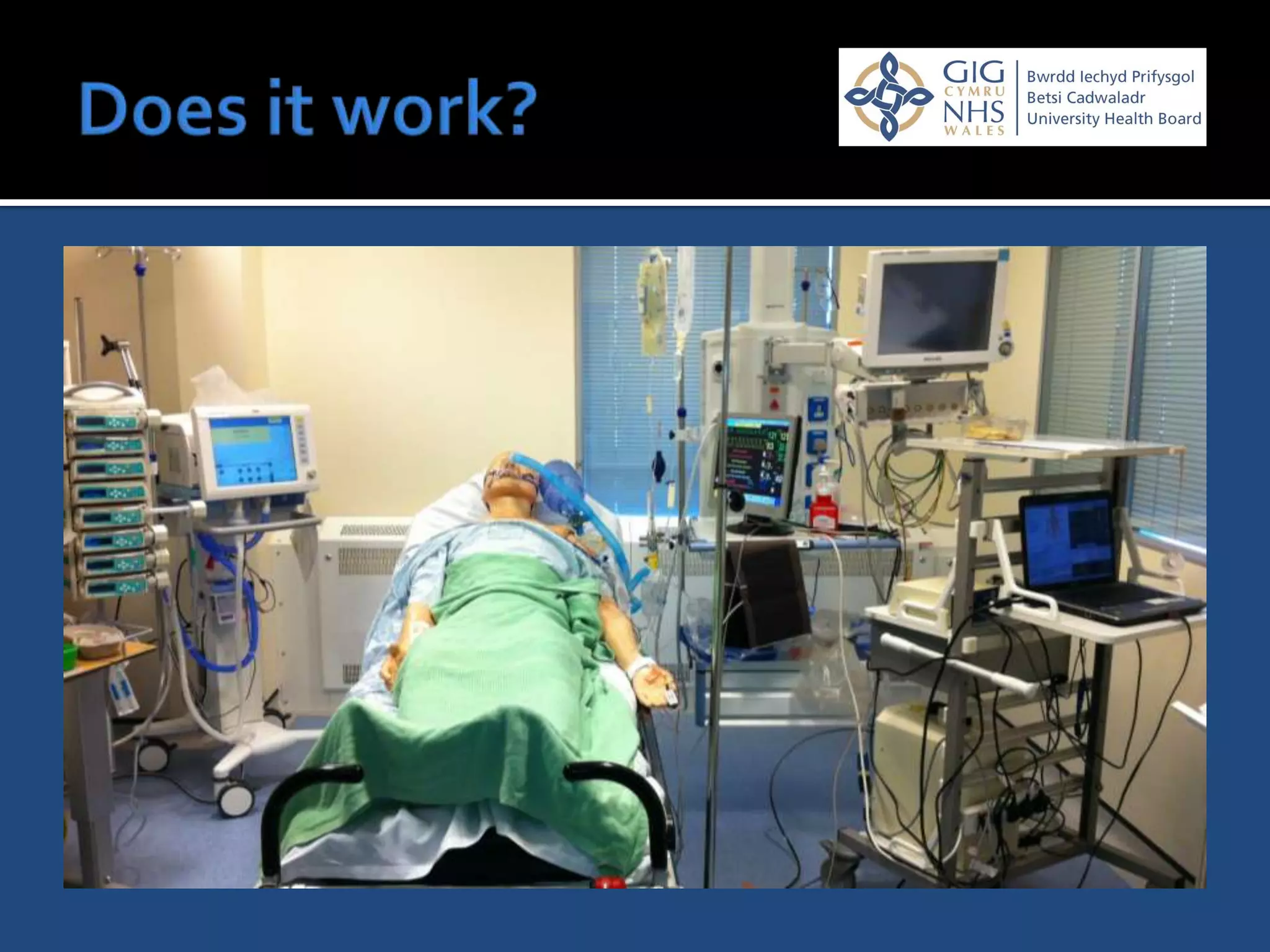
   Simulation – patient needing intubating
     Patient showing signs of sepsis and pneumonia
     Hypoxaemic and hypotensive
     Reduced level of conciousness
   Candidates asked to prepare for RSI
   1st time as normal
   2nd time using checklist
   Primary outcome = difference in score
   Secondary outcome = time taken to prepare
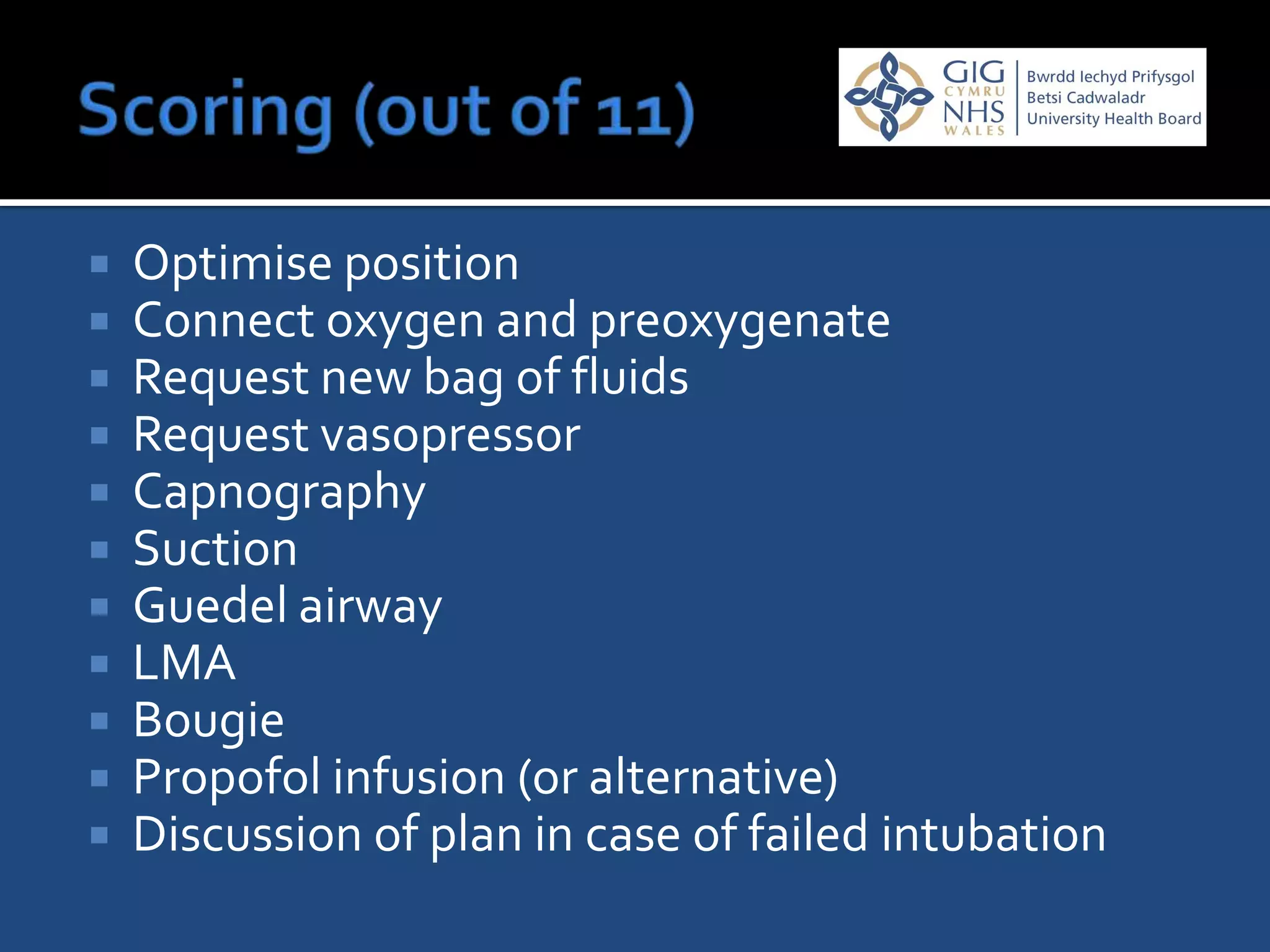
   Optimise position
   Connect oxygen and preoxygenate
   Request new bag of fluids
   Request vasopressor
   Capnography
   Suction
   Guedel airway
   LMA
   Bougie
   Propofol infusion (or alternative)
   Discussion of plan in case of failed intubation
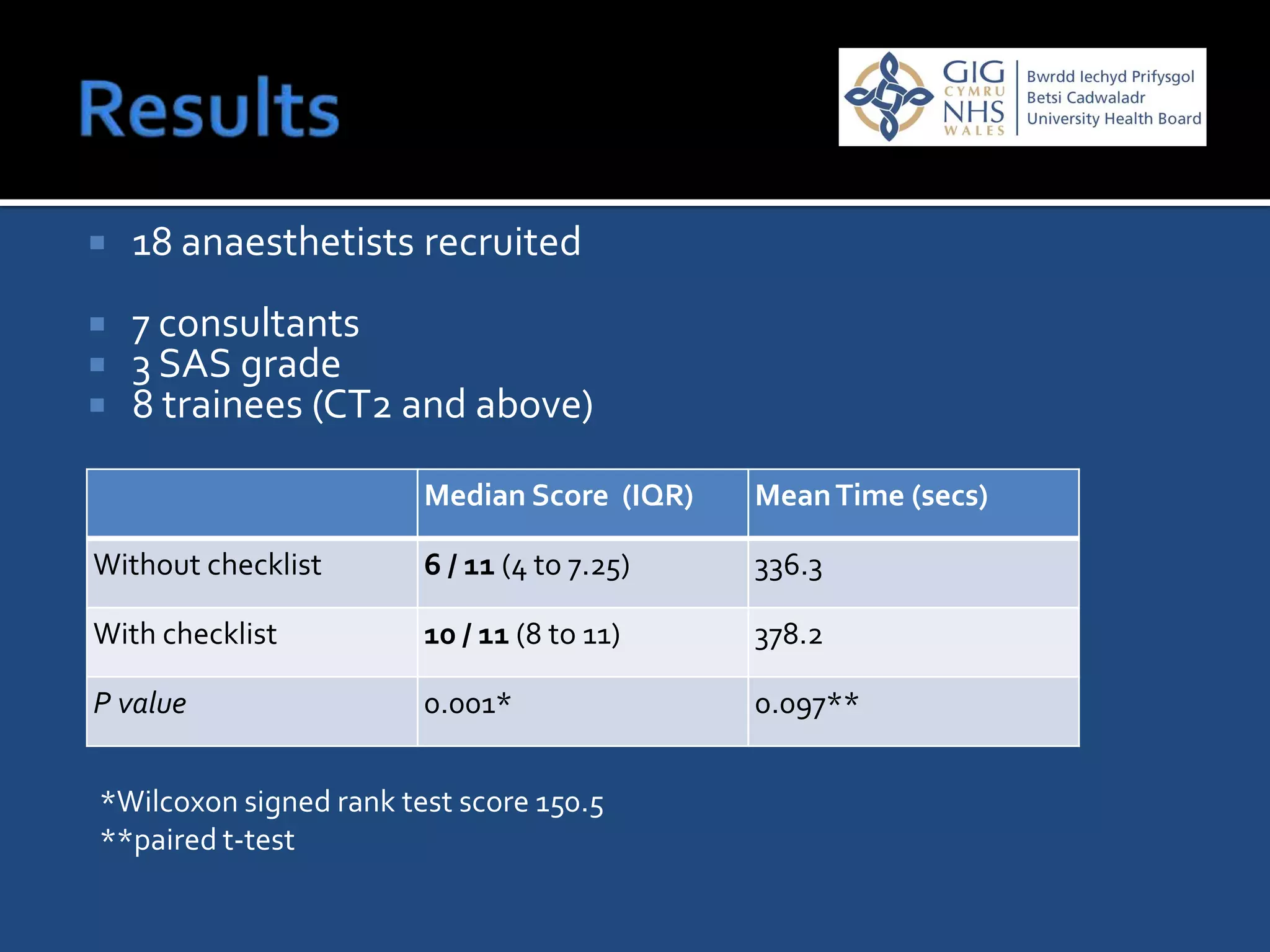
   18 anaesthetists recruited
   7 consultants
   3 SAS grade
   8 trainees (CT2 and above)

                        Median Score (IQR)   Mean Time (secs)

Without checklist       6 / 11 (4 to 7.25)   336.3

With checklist          10 / 11 (8 to 11)    378.2

P value                 0.001*               0.097**


*Wilcoxon signed rank test score 150.5
**paired t-test
   The checklist significantly reduced errors in
    preparation for induction
   This appeared to be regardless of experience
   There was not a significant difference in time
    taken
   With practice time taken may even be
    reduced
   No. You think you do.
   Chances are we all forget 1 or 2 things on the
    list.

   We want everyone to use it – regardless of
    grade and experience.
   No – there will be no paper copies
   It is not a box ticking exercise
     It is not a box ticking exercise
      ▪ It is not a box ticking exercise
   It is to be read out loud by the team leader
    during pre-oxygenation.
     All team members must participate.
     Record in the notes that it was done.
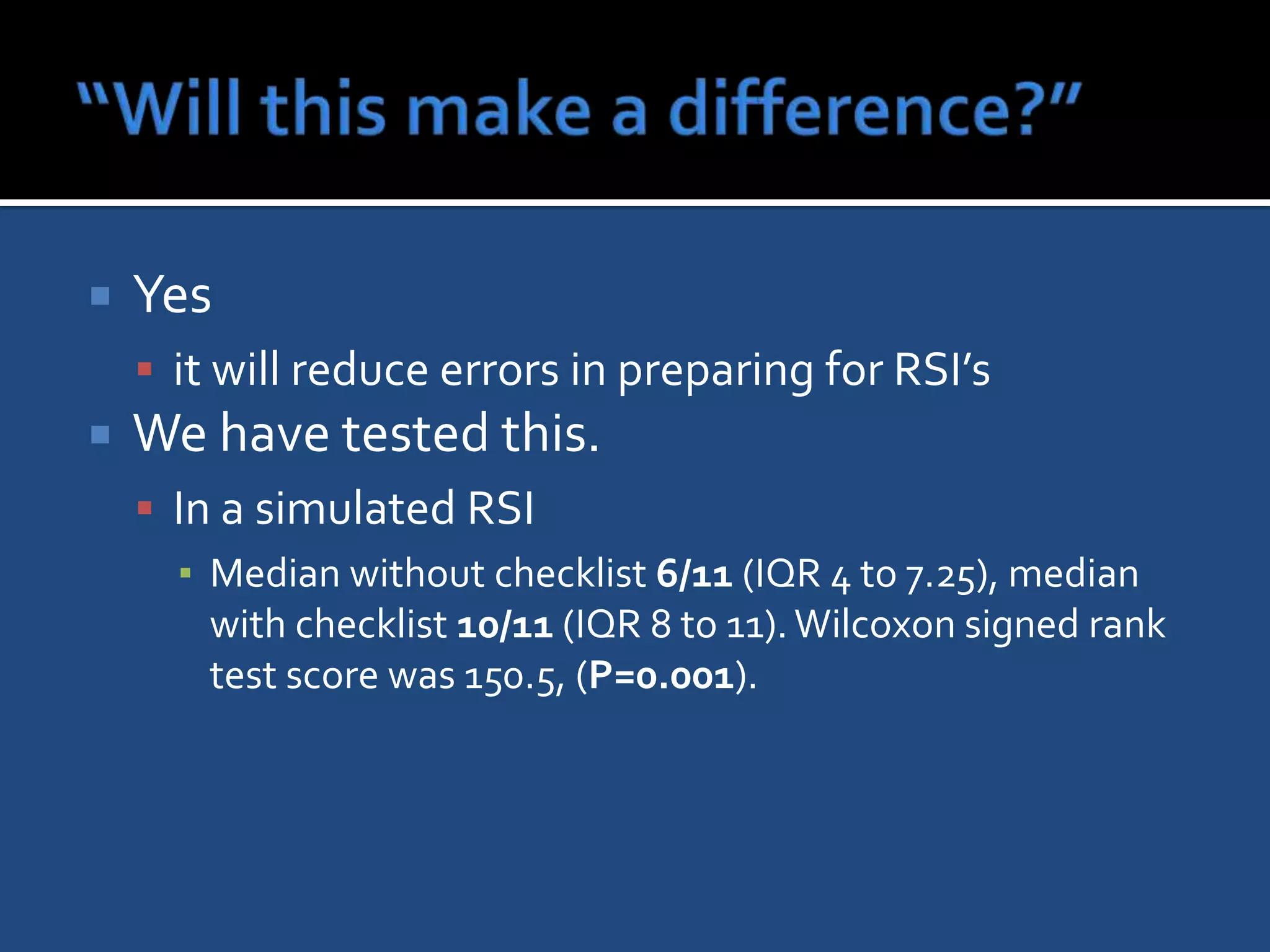
   Yes
     it will reduce errors in preparing for RSI’s
   We have tested this.
     In a simulated RSI
      ▪ Median without checklist 6/11 (IQR 4 to 7.25), median
        with checklist 10/11 (IQR 8 to 11). Wilcoxon signed rank
        test score was 150.5, (P=0.001).
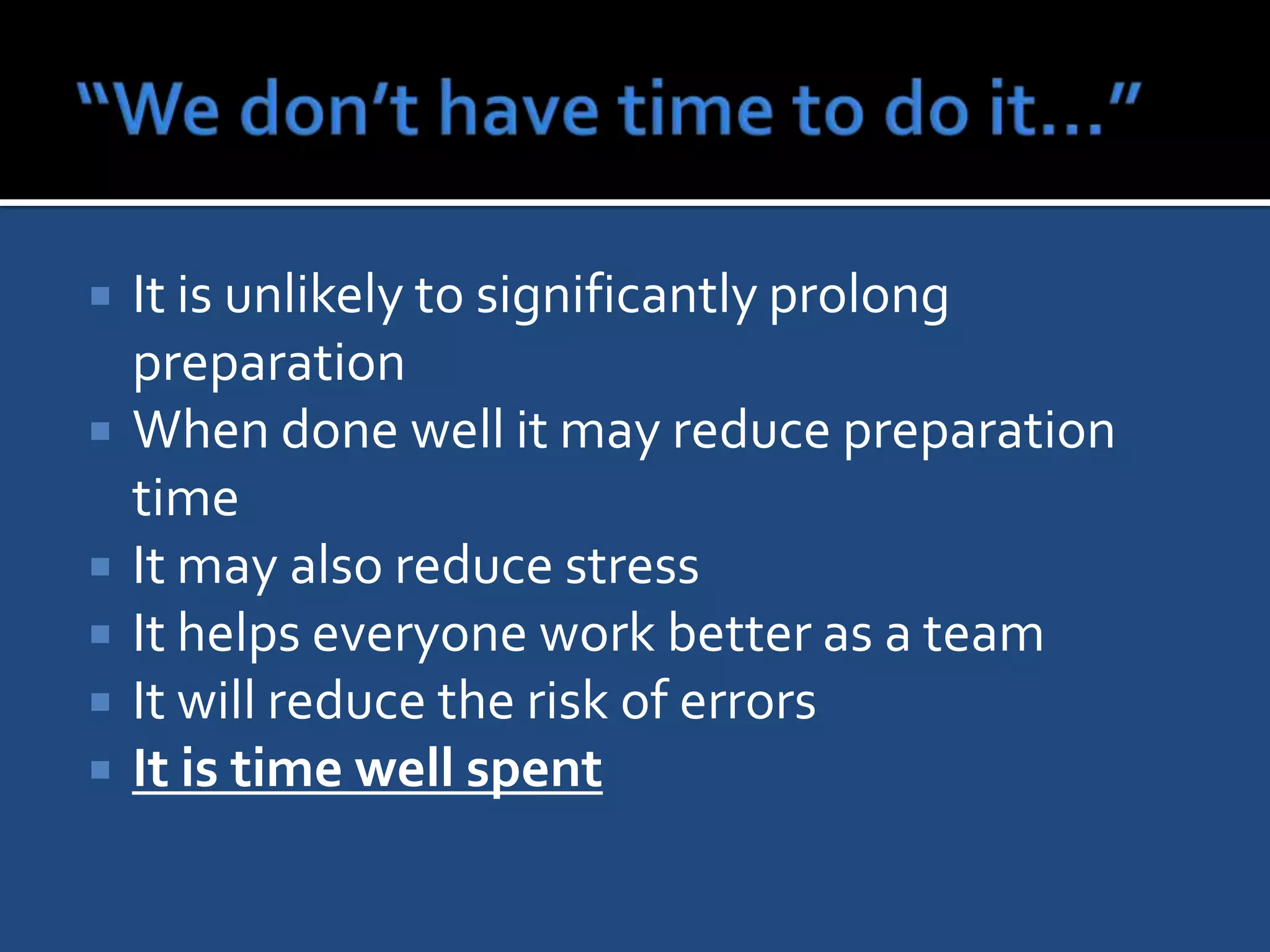
   It is unlikely to significantly prolong
    preparation
   When done well it may reduce preparation
    time
   It may also reduce stress
   It helps everyone work better as a team
   It will reduce the risk of errors
   It is time well spent
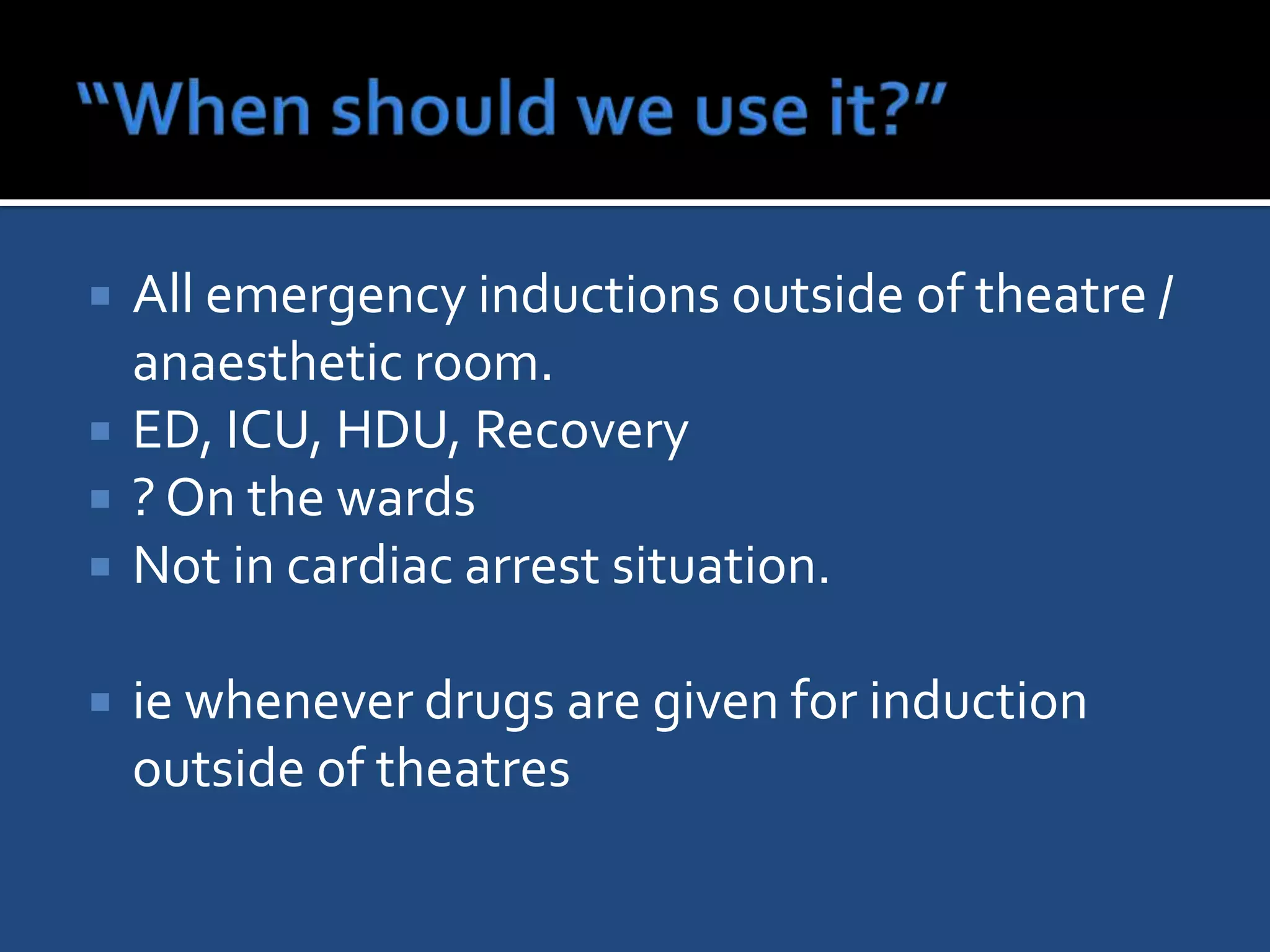
   All emergency inductions outside of theatre /
    anaesthetic room.
   ED, ICU, HDU, Recovery
   ? On the wards
   Not in cardiac arrest situation.

   ie whenever drugs are given for induction
    outside of theatres
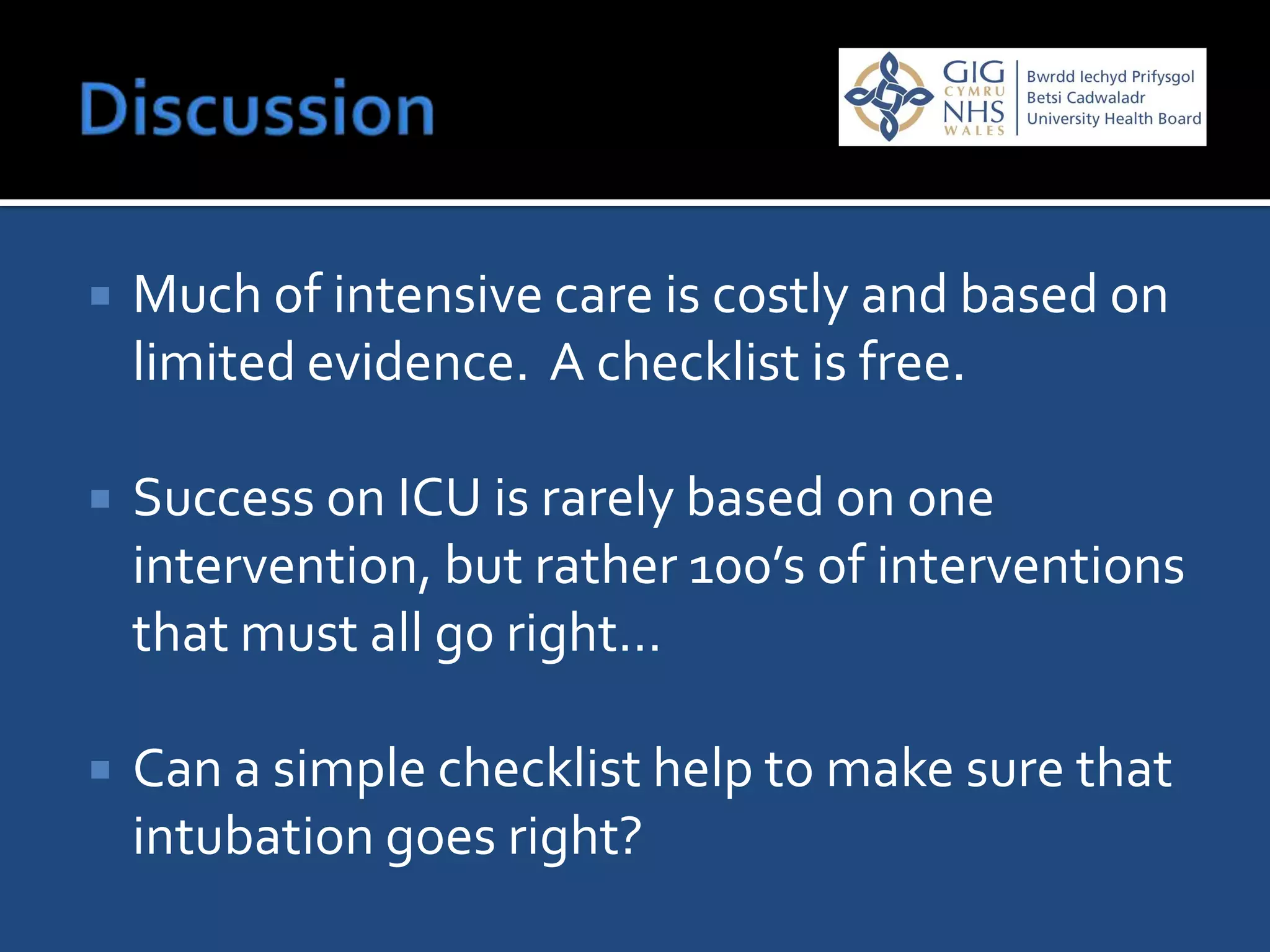
   Much of intensive care is costly and based on
    limited evidence. A checklist is free.

   Success on ICU is rarely based on one
    intervention, but rather 100’s of interventions
    that must all go right…

   Can a simple checklist help to make sure that
    intubation goes right?
 With thanks to:

   Einir & Adam; Simulation co-
    ordinators, Ysbyty Gwynedd, Bangor

   Ami, Farbod, Ifan, Eirian, Suzanne for acting
    in the training video
Emergencyinductionchecklist.blogspot.com


 “Better is possible. It
 does not take genius.
 It takes diligence”
 Atul Gawande, author of “The checklist
 manifesto” and the WHO checklist

Emergency induction checklist training

  • 1.
    (Oh no, notanother checklist...)
  • 2.
    Emergency inductions in ICU and ED are risky:  Sicker patients  Difficult airways  Less time for preparation  Pressure to intervene  Human factors  Less familiar environment & equipment  Junior staff out of hours
  • 4.
    Poor or incompleteplanning Inadequate provision of skilled staff and equipment Lack of capnography
  • 7.
    Emergency Induction checklist  Capnography for all intubations  Discussion of difficult intubation plans
  • 10.
    Simulation – patient needing intubating  Patient showing signs of sepsis and pneumonia  Hypoxaemic and hypotensive  Reduced level of conciousness  Candidates asked to prepare for RSI  1st time as normal  2nd time using checklist  Primary outcome = difference in score  Secondary outcome = time taken to prepare
  • 11.
    Optimise position  Connect oxygen and preoxygenate  Request new bag of fluids  Request vasopressor  Capnography  Suction  Guedel airway  LMA  Bougie  Propofol infusion (or alternative)  Discussion of plan in case of failed intubation
  • 12.
    18 anaesthetists recruited  7 consultants  3 SAS grade  8 trainees (CT2 and above) Median Score (IQR) Mean Time (secs) Without checklist 6 / 11 (4 to 7.25) 336.3 With checklist 10 / 11 (8 to 11) 378.2 P value 0.001* 0.097** *Wilcoxon signed rank test score 150.5 **paired t-test
  • 13.
    The checklist significantly reduced errors in preparation for induction  This appeared to be regardless of experience  There was not a significant difference in time taken  With practice time taken may even be reduced
  • 14.
    No. You think you do.  Chances are we all forget 1 or 2 things on the list.  We want everyone to use it – regardless of grade and experience.
  • 15.
    No – there will be no paper copies  It is not a box ticking exercise  It is not a box ticking exercise ▪ It is not a box ticking exercise  It is to be read out loud by the team leader during pre-oxygenation.  All team members must participate.  Record in the notes that it was done.
  • 16.
    Yes  it will reduce errors in preparing for RSI’s  We have tested this.  In a simulated RSI ▪ Median without checklist 6/11 (IQR 4 to 7.25), median with checklist 10/11 (IQR 8 to 11). Wilcoxon signed rank test score was 150.5, (P=0.001).
  • 17.
    It is unlikely to significantly prolong preparation  When done well it may reduce preparation time  It may also reduce stress  It helps everyone work better as a team  It will reduce the risk of errors  It is time well spent
  • 18.
    All emergency inductions outside of theatre / anaesthetic room.  ED, ICU, HDU, Recovery  ? On the wards  Not in cardiac arrest situation.  ie whenever drugs are given for induction outside of theatres
  • 19.
    Much of intensive care is costly and based on limited evidence. A checklist is free.  Success on ICU is rarely based on one intervention, but rather 100’s of interventions that must all go right…  Can a simple checklist help to make sure that intubation goes right?
  • 20.
     With thanksto:  Einir & Adam; Simulation co- ordinators, Ysbyty Gwynedd, Bangor  Ami, Farbod, Ifan, Eirian, Suzanne for acting in the training video
  • 21.
    Emergencyinductionchecklist.blogspot.com “Better ispossible. It does not take genius. It takes diligence” Atul Gawande, author of “The checklist manifesto” and the WHO checklist