SOCIAL
MEDIA
A GUIDE FOR JOURNALISTS
PART 1 OF 4
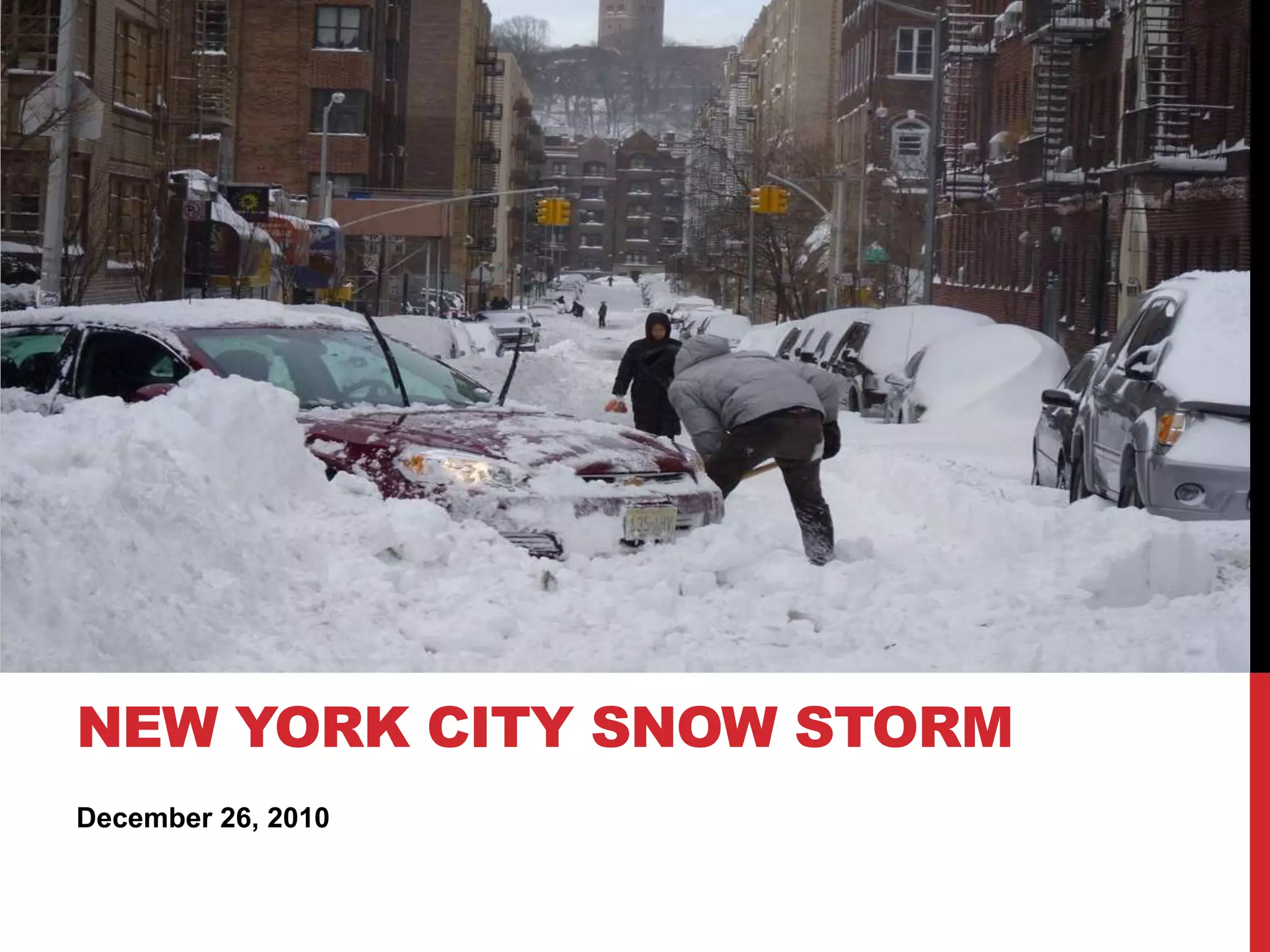
NEW YORK CITY SNOW STORM
December 26, 2010
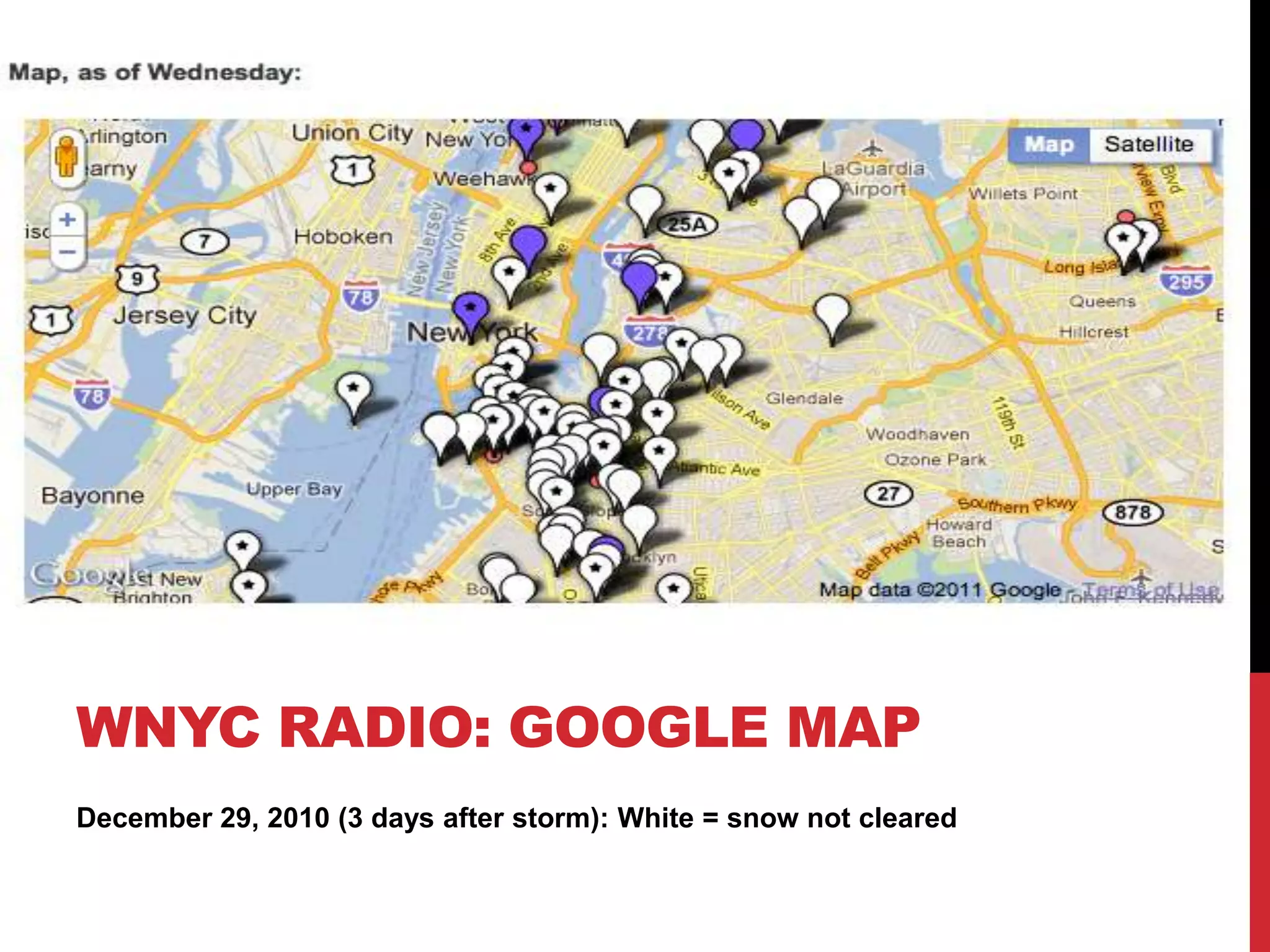
WNYC RADIO: GOOGLE MAP
December 29, 2010 (3 days after storm): White = snow not cleared
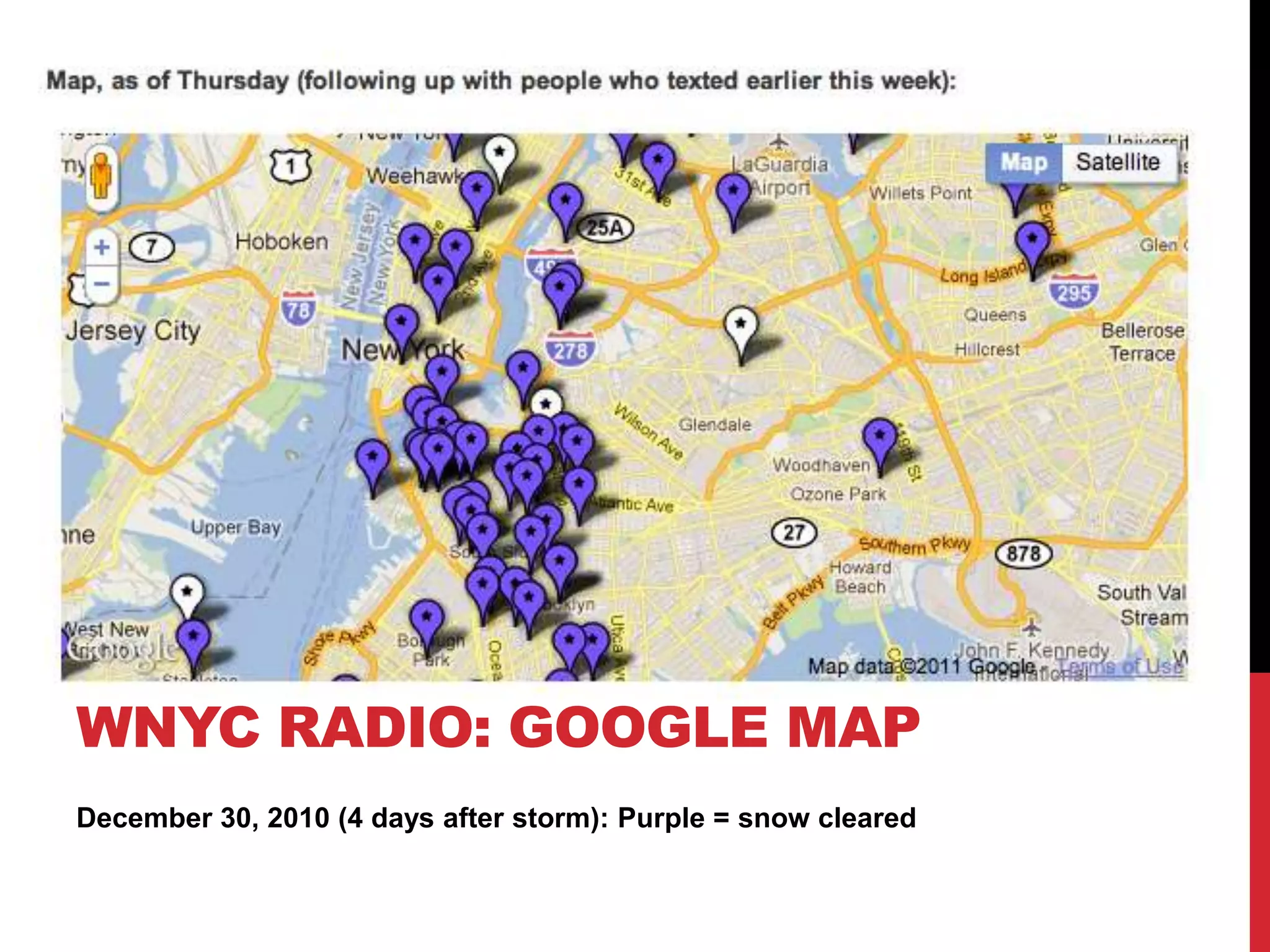
WNYC RADIO: GOOGLE MAP
December 30, 2010 (4 days after storm): Purple = snow cleared
WNYC RADIO: SNOW CRISIS
  Over the radio, listeners were asked to text
   PLOW to 30644, the station’s mobile
   shortcode
  The location of each text was added to a
   Google Map
  The map was posted on the radio station’s
   website
  Each person who texted was asked to also
   leave an audio report as voicemail
  The audio reports were played on the radio
“IT REALLY ENCOURAGES
 OTHER PEOPLE TO SEND IN
 THEIR STORY AND
 CONTRIBUTE, WHEN
 THEY HEAR PEOPLE
 JUST LIKE THEM.”

        —Jim Colgan, former WNYC news producer
LESSONS LEARNED
 1. The audience can help journalists
 2. Journalists need to think creatively so
    they can use this resource well
 3. Social media can be very useful in
    crisis reporting
JOURNALISM AND SOCIAL MEDIA


CONCEPTS
WHAT JOURNALISM DOES
  Inform
  Entertain
  Serve the public good
  Amplify the voice of the people
  Act as a watchdog
  Filter: Select and prioritize news
WHAT JOURNALISTS DO
  Gather (observe, seek, interview)
  Select (choose, sort, discard)
  Produce (write, edit, process)
  Distribute (publish, broadcast, upload)
  Interpret (analyze, discuss, comment)
SOCIAL MEDIA: GENERAL USES
  Create a profile (or identity) to show
   others who you are
  Make links to things you support or like
  Share information* with groups (friends,
   family, work colleagues)
  Post comments, messages, “statuses”
  Maintain connections with many people

                    * Including images, videos, links
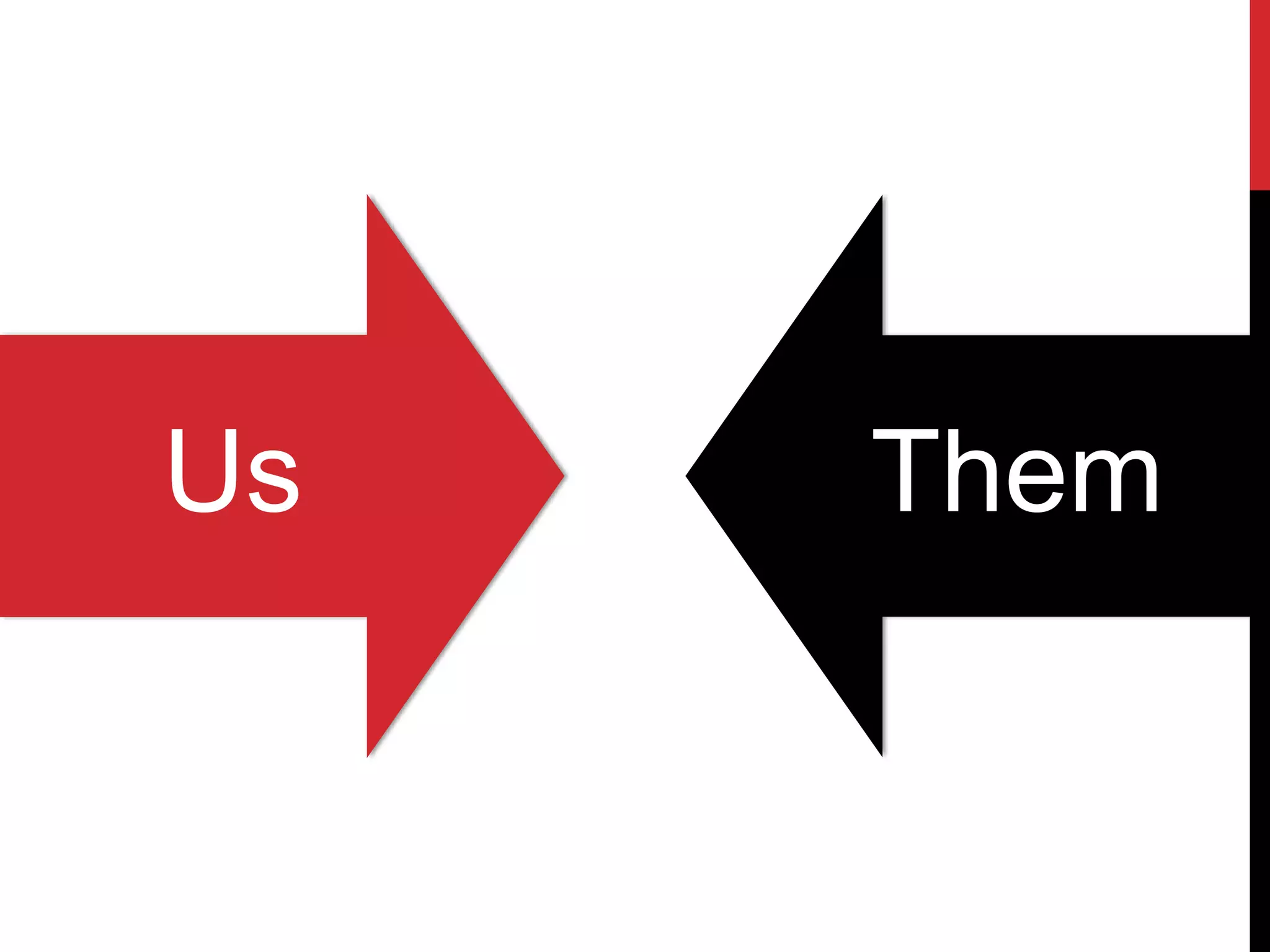
Us   Them
Us   Them
If you’re not
subscribing to
(following) people,
you’re not doing it right.
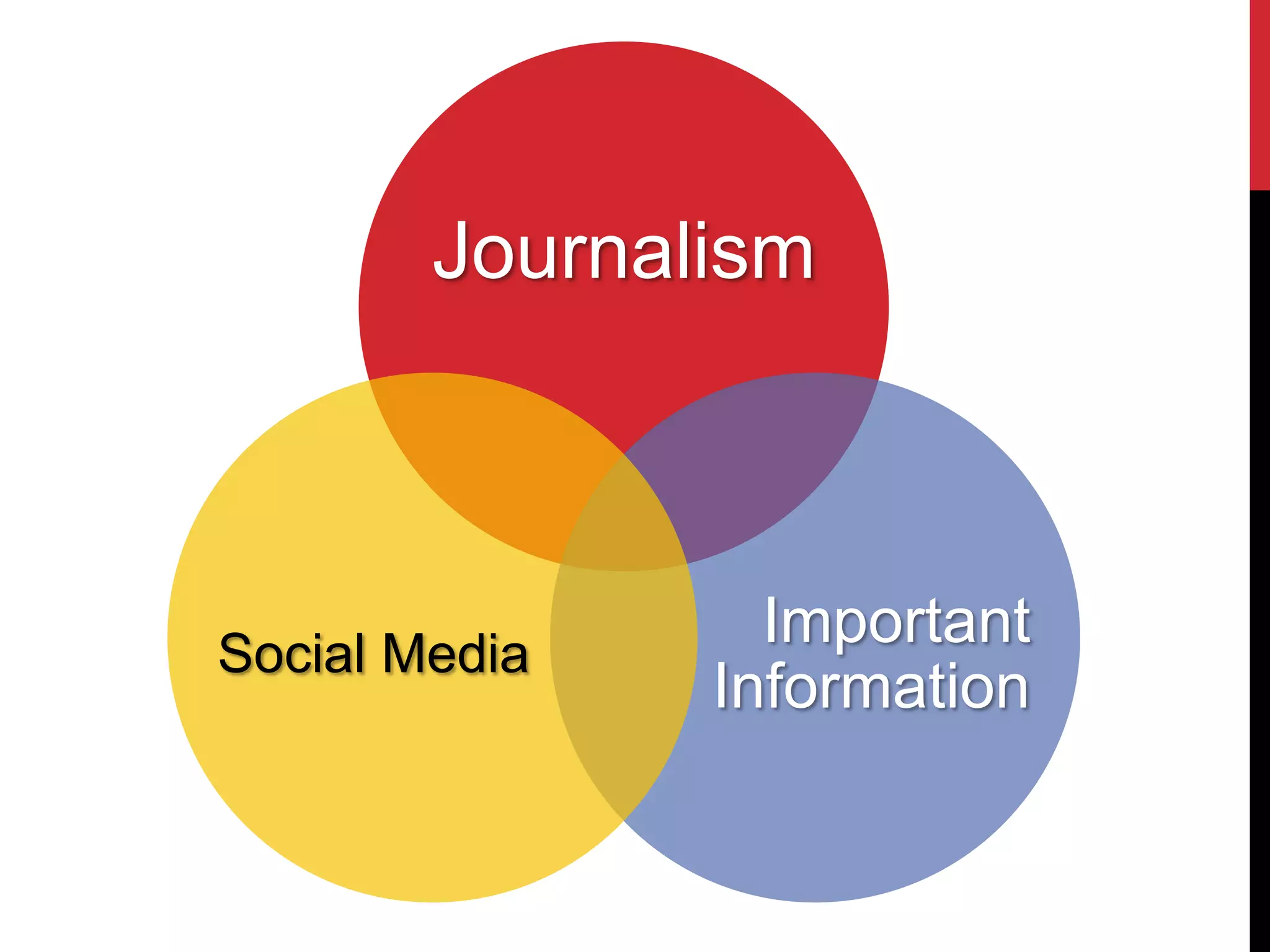
Journalism


Social Media
                 Important
               Information
THE PUBLIC CAN CONTRIBUTE
  Gather (observe, seek, interview)
  Select (choose, sort, discard)
  Produce (write, edit, process)
  Distribute (publish, broadcast, upload)
  Interpret (analyze, discuss, comment)
NEW ENVIRONMENT
The media universe has changed,
and there’s no going back.
NEW ENVIRONMENT
The media universe has
changed, and there’s no going
back.
What has changed?
NEW ENVIRONMENT
The media universe has changed,
and there’s no going back.
What has changed?
How all of us gather, verify,
distribute, and consume news
and information.
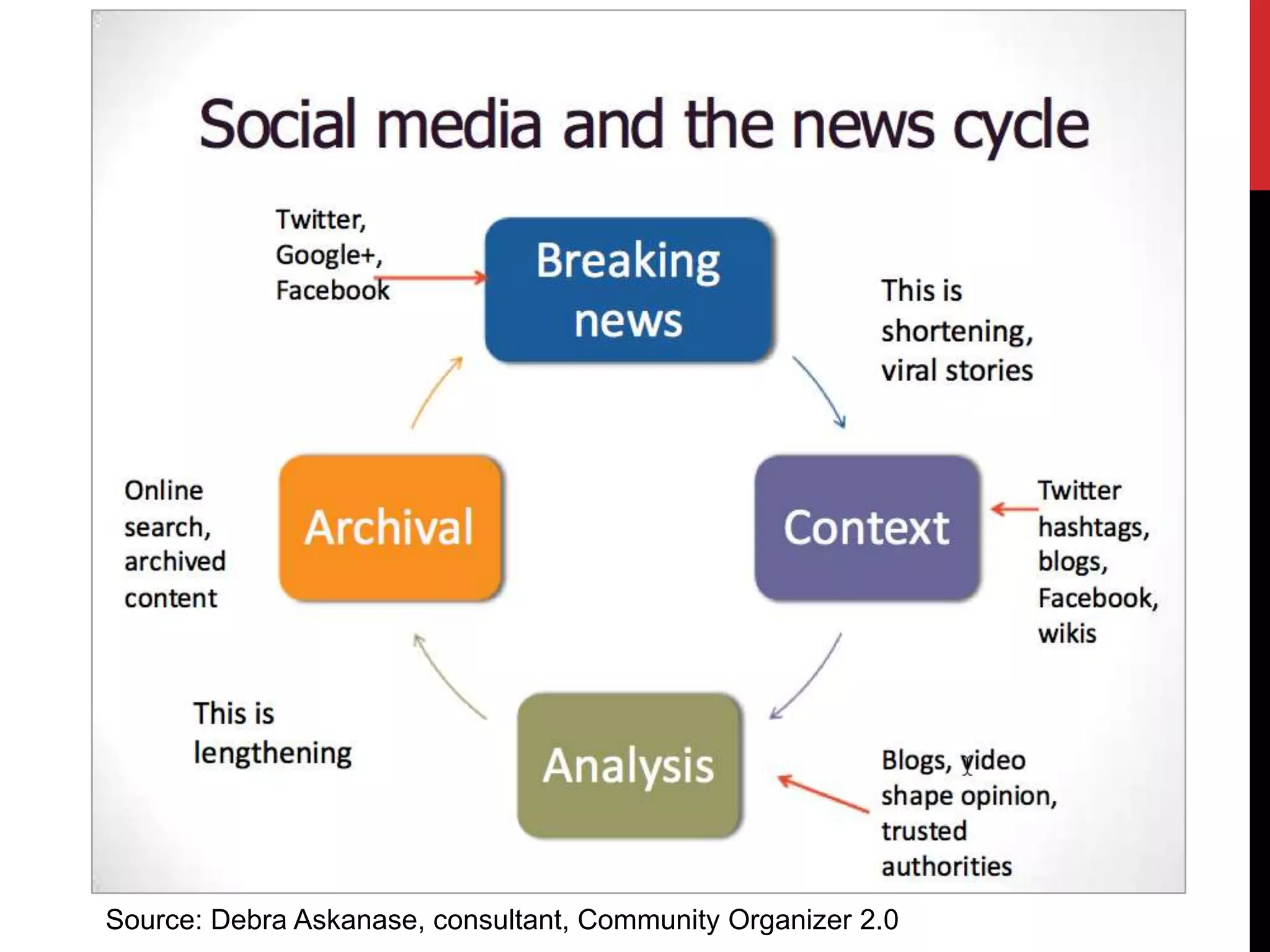
Source: Debra Askanase, consultant, Community Organizer 2.0
RELATED TERMS
 1. Participatory journalism
 2. Crowdsourcing
 3. User-generated content (UGC)
 4. Curation
SOCIAL MEDIA


TOOLS &
COMMUNITIES
DEFINITION: SOCIAL MEDIA

Digital systems*
that enable people,
identified by
profiles, to share
information.
          *digital systems = media
USER PROFILES

The profile is
an anchor, or a node,
in the social media
universe.
CLARIFICATION

Social media (SM) puts
the emphasis on media
(the universe) rather
than on the networks
(sites or apps).
THE NETWORK

People
add / follow / friend you
(your profile)
into their network.

        What does your profile say about you?
THE NETWORK

People
will “un-friend” you
if they don’t like
what you send out.
THE NETWORK

Your network
is valuable to you
if you follow people
who share meaningful
information.
YOUR NETWORK

Who is in your network?
Why are they there?
Who is missing?
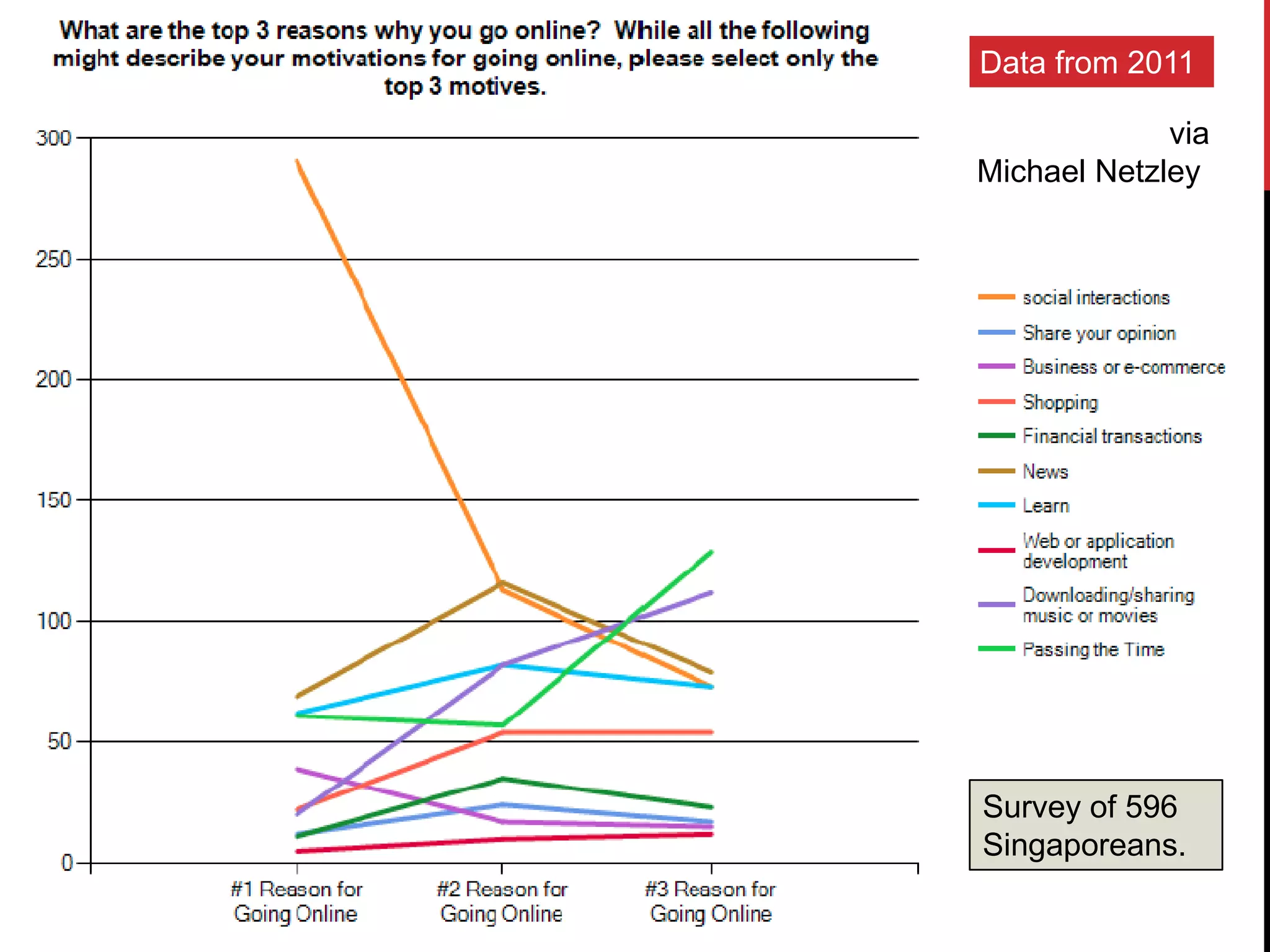
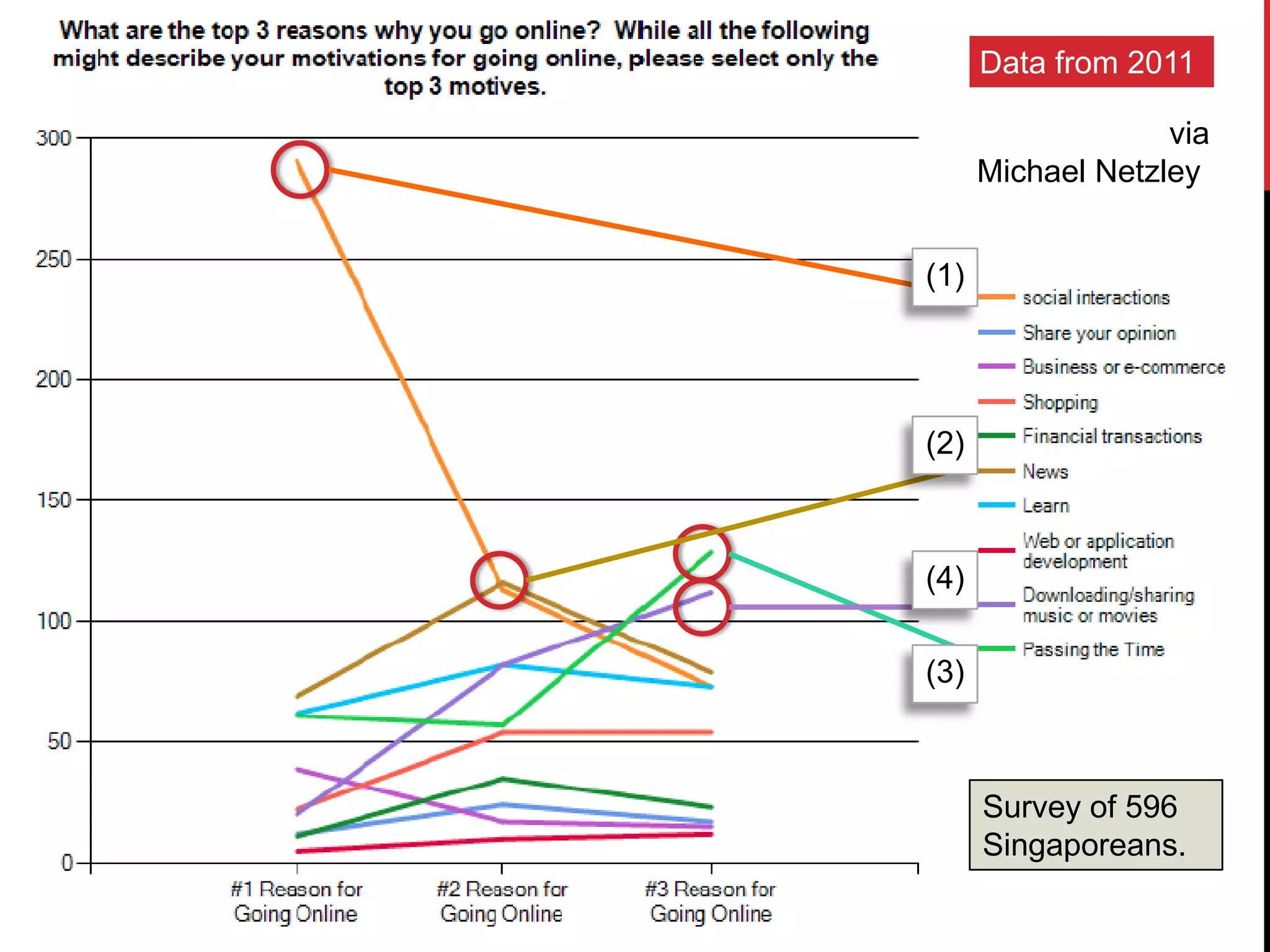
Data from 2011

             via
Michael Netzley


Survey of 596
Singaporeans.
Data from 2011

                   via
      Michael Netzley


(1)


(2)


(4)

(3)


      Survey of 596
      Singaporeans.
SOCIAL
MEDIA
Presentation by Mindy McAdams
University of Florida, USA
mmcadams@jou.ufl.edu
Keep up on the latest news and tips
about social media and journalists:
http://www.scoop.it/t/social-media-and-journalists

Follow these sources on Twitter for updates
on the social media universe:
@NiemanLab
@mashable

Social Media and Journalists: Part 1

  • 1.
    SOCIAL MEDIA A GUIDE FORJOURNALISTS PART 1 OF 4
  • 2.
    NEW YORK CITYSNOW STORM December 26, 2010
  • 3.
    WNYC RADIO: GOOGLEMAP December 29, 2010 (3 days after storm): White = snow not cleared
  • 4.
    WNYC RADIO: GOOGLEMAP December 30, 2010 (4 days after storm): Purple = snow cleared
  • 5.
    WNYC RADIO: SNOWCRISIS  Over the radio, listeners were asked to text PLOW to 30644, the station’s mobile shortcode  The location of each text was added to a Google Map  The map was posted on the radio station’s website  Each person who texted was asked to also leave an audio report as voicemail  The audio reports were played on the radio
  • 6.
    “IT REALLY ENCOURAGES OTHER PEOPLE TO SEND IN THEIR STORY AND CONTRIBUTE, WHEN THEY HEAR PEOPLE JUST LIKE THEM.” —Jim Colgan, former WNYC news producer
  • 7.
    LESSONS LEARNED 1.The audience can help journalists 2. Journalists need to think creatively so they can use this resource well 3. Social media can be very useful in crisis reporting
  • 8.
    JOURNALISM AND SOCIALMEDIA CONCEPTS
  • 9.
    WHAT JOURNALISM DOES  Inform  Entertain  Serve the public good  Amplify the voice of the people  Act as a watchdog  Filter: Select and prioritize news
  • 10.
    WHAT JOURNALISTS DO  Gather (observe, seek, interview)  Select (choose, sort, discard)  Produce (write, edit, process)  Distribute (publish, broadcast, upload)  Interpret (analyze, discuss, comment)
  • 11.
    SOCIAL MEDIA: GENERALUSES  Create a profile (or identity) to show others who you are  Make links to things you support or like  Share information* with groups (friends, family, work colleagues)  Post comments, messages, “statuses”  Maintain connections with many people * Including images, videos, links
  • 13.
    Us Them
  • 14.
    Us Them
  • 15.
    If you’re not subscribingto (following) people, you’re not doing it right.
  • 16.
    Journalism Social Media Important Information
  • 17.
    THE PUBLIC CANCONTRIBUTE  Gather (observe, seek, interview)  Select (choose, sort, discard)  Produce (write, edit, process)  Distribute (publish, broadcast, upload)  Interpret (analyze, discuss, comment)
  • 18.
    NEW ENVIRONMENT The mediauniverse has changed, and there’s no going back.
  • 19.
    NEW ENVIRONMENT The mediauniverse has changed, and there’s no going back. What has changed?
  • 20.
    NEW ENVIRONMENT The mediauniverse has changed, and there’s no going back. What has changed? How all of us gather, verify, distribute, and consume news and information.
  • 21.
    Source: Debra Askanase,consultant, Community Organizer 2.0
  • 22.
    RELATED TERMS 1.Participatory journalism 2. Crowdsourcing 3. User-generated content (UGC) 4. Curation
  • 23.
  • 25.
    DEFINITION: SOCIAL MEDIA Digitalsystems* that enable people, identified by profiles, to share information. *digital systems = media
  • 26.
    USER PROFILES The profileis an anchor, or a node, in the social media universe.
  • 29.
    CLARIFICATION Social media (SM)puts the emphasis on media (the universe) rather than on the networks (sites or apps).
  • 30.
    THE NETWORK People add /follow / friend you (your profile) into their network. What does your profile say about you?
  • 31.
    THE NETWORK People will “un-friend”you if they don’t like what you send out.
  • 32.
    THE NETWORK Your network isvaluable to you if you follow people who share meaningful information.
  • 33.
    YOUR NETWORK Who isin your network? Why are they there? Who is missing?
  • 34.
    Data from 2011 via Michael Netzley Survey of 596 Singaporeans.
  • 35.
    Data from 2011 via Michael Netzley (1) (2) (4) (3) Survey of 596 Singaporeans.
  • 36.
    SOCIAL MEDIA Presentation by MindyMcAdams University of Florida, USA mmcadams@jou.ufl.edu
  • 37.
    Keep up onthe latest news and tips about social media and journalists: http://www.scoop.it/t/social-media-and-journalists Follow these sources on Twitter for updates on the social media universe: @NiemanLab @mashable

Editor's Notes

  • #2 I will begin with an example of how journalists at a New York City radio station are using social media.
  • #3 A blizzard on Dec. 26, 2010, paralyzed the New York metropolitan area. The three major airports shut down, along with trains and even some of the subway lines. Emergency vehicles, such as ambulances and fire trucks, could not get through. WNYC Radio (2010b). Winter Storm Photos. Retrieved from http://www.wnyc.org/crowdsourcing/winter-storm-photos/report/
  • #4 The mayor of New York City had announced that all streets had been plowed, but the map from the radio station showed that streets were still buried in snow (Mobile Commons, 2011). Local radio station WNYC invited listeners to report where streets had been left uncleared of snow, trapping cars and preventing buses and emergency vehicles from reaching residents. To submit a report, a person simply sent a text message from any mobile phone. Each report was added to a Google Map, which was published on the website of the radio station (WNYC Radio, 2010a).WNYC Radio (2010a). Mapping the Storm Clean-up. Retrieved from http://www.wnyc.org/articles/wnyc-news-2/2010/dec/30/mapping-storm-clean/
  • #5 Because of the published map and the audio reports from the listeners, WNYC Radio was able to show that the local authorities had not done what they promised, and the voices of the people were heard. Plows were sent out, and the streets were cleared of snow. WNYC Radio (2010a). Mapping the Storm Clean-up. Retrieved from http://www.wnyc.org/articles/wnyc-news-2/2010/dec/30/mapping-storm-clean/
  • #6 Listeners to the radio station were asked to contribute photos of their street as well as audio messages. In this way, the radio station included the public in their coverage of the snow clean-up. They asked for meaningful contributions from the citizens, and they got them. The radio journalists used their website intelligently to add value to their radio reports.
  • #7 Source: Mobile Commons (2011). How WNYC used mobile mapping to fact check Mayor Bloomberg. Retrieved from http://www.mobilecommons.com/blog/2011/01/how-wnyc-used-mobile-mapping-to-fact-check-mayor-bloomberg/
  • #9 Part 1 of 3: Concepts
  • #10 Social media can help journalists with all of these. BUT social media do NOT replace these functions or take them over completely.
  • #11 This list is based on Hermida, 2011, p. 18.
  • #12 These are NOT ALL the possible uses of social media, but the list includes some that are very important for journalists to consider. NOTE that most people connect to people they already know.
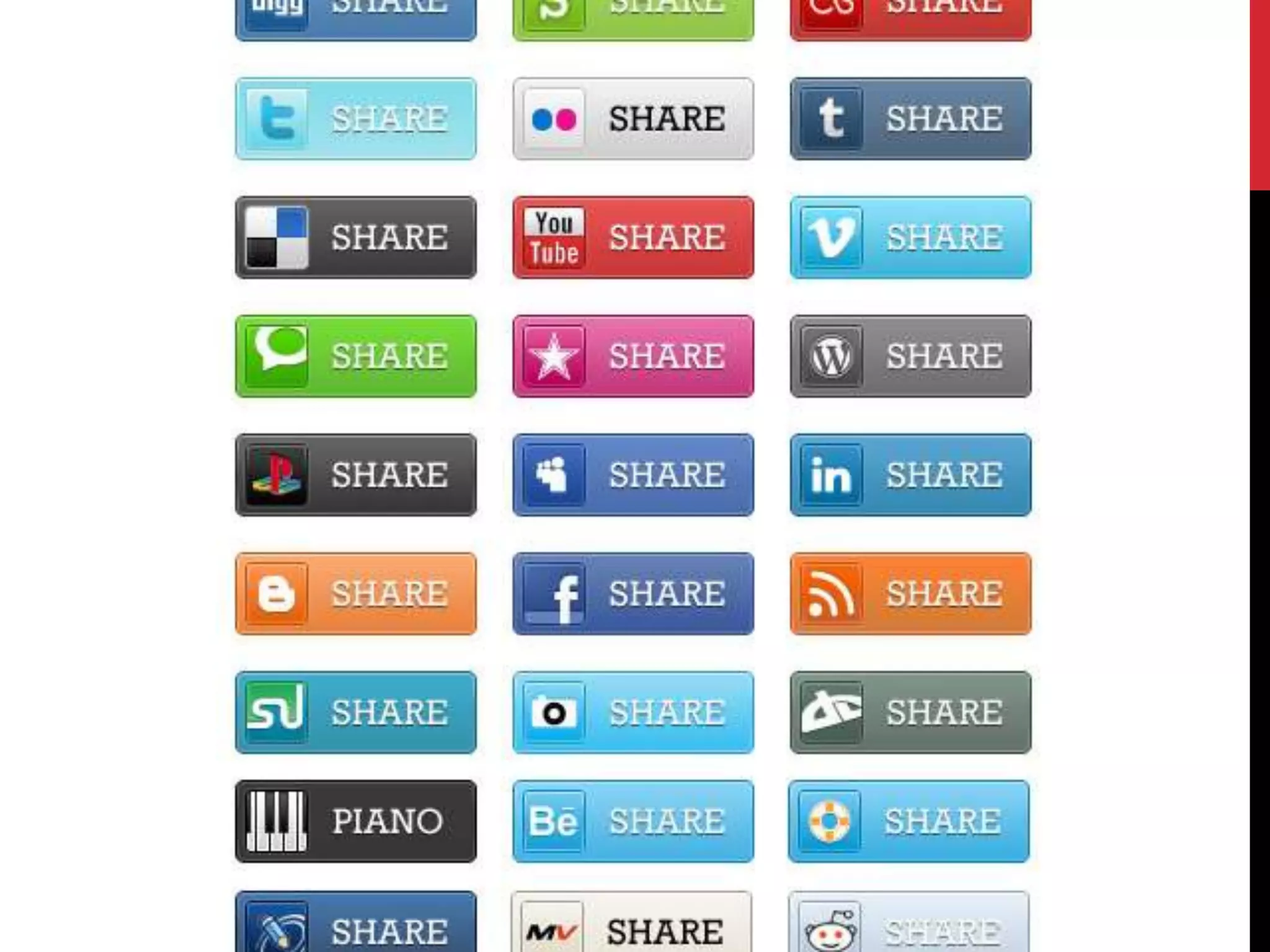
  • #13 Pause … The point is to SHARE. If you’re not using it to share, you’re not doing it right.Source: http://en.wikipedia.org/wiki/File:Social_Web_Share_Buttons.png
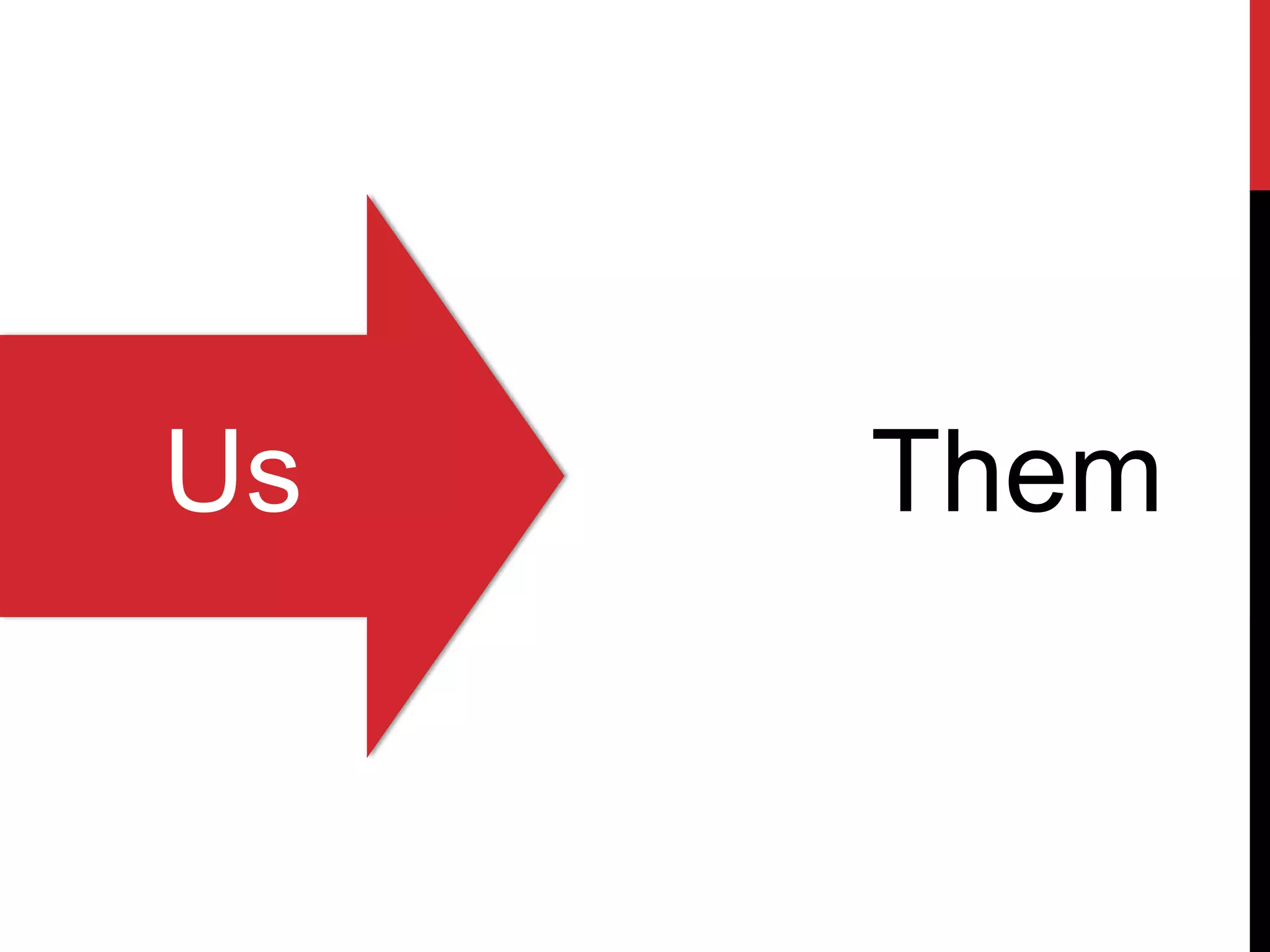
  • #14 The traditional journalism idea of “sharing” is one-way – from us (journalists) to them (the public). We talk. They listen.
  • #15 Journalists need to realize that they can gain a lot from allowing the flow to become two-way. Social media provides many new pathways for journalists to receive information as well as send it. SHARING is not only SENDING OUT LINKS.
  • #16 TWO WAY. It’s not a broadcast medium.
  • #17 The diagram is meant to show that there is certainly some overlap. Not all journalism is “important,” and not all important information (e.g. scientific research) is encompassed in journalism. The intersection of all three in the middle shows us the possibility that sometimes social media might yield BOTH journalism AND important information.
  • #18 I don’t believe citizens can replace journalists. But citizens can do some things that can HELP journalists do their job better.
  • #22 SOURCE: http://www.slideshare.net/Debask/is-social-the-new-news (slide 21)
  • #23 I will talk about these in discussing various examples. Each of these is DIFFERENT. Each is something that can be especially useful to journalists – and the public – in certain circumstances, and NOT in others. The WNYC Radio example (snow) is a good example of 1. Participation and 3. UGC. It also has aspects of 2. and 4.
  • #24 Part 2 of 3: Tools and Communities (culture of social media users)
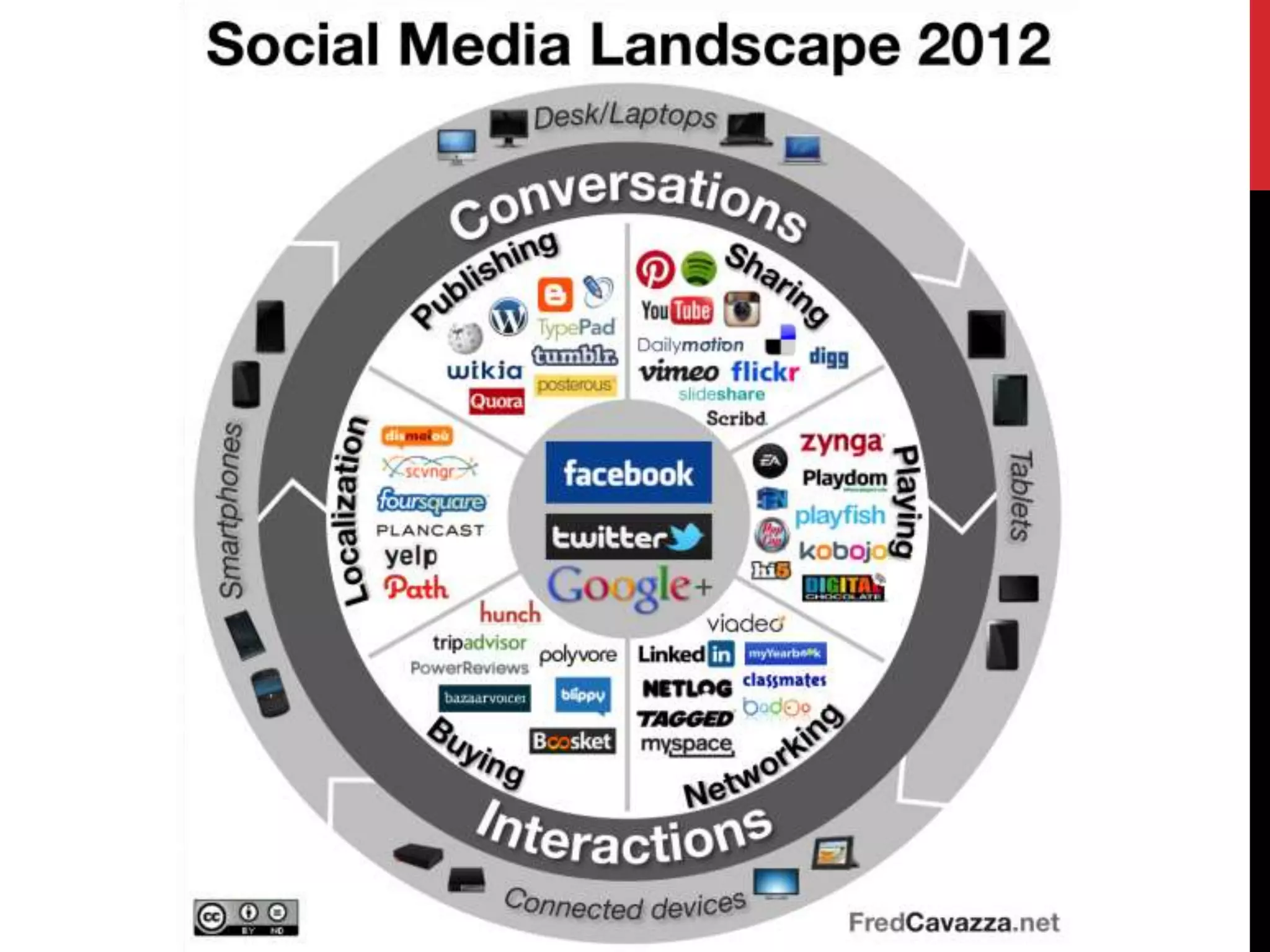
  • #25 This changes year by year. New sites and tools appear … others fade away into the background. Look at the DRAK GRAY ring … conversations and interactions. KEY. Sometimes it might not be clear if something is a site, a tool, a network, or a community. SOURCE: http://www.fredcavazza.net/2012/02/22/social-media-landscape-2012/
  • #27 If the page – status – link – tweet – is NOT linked to a profile, then it is not an instance of social media.
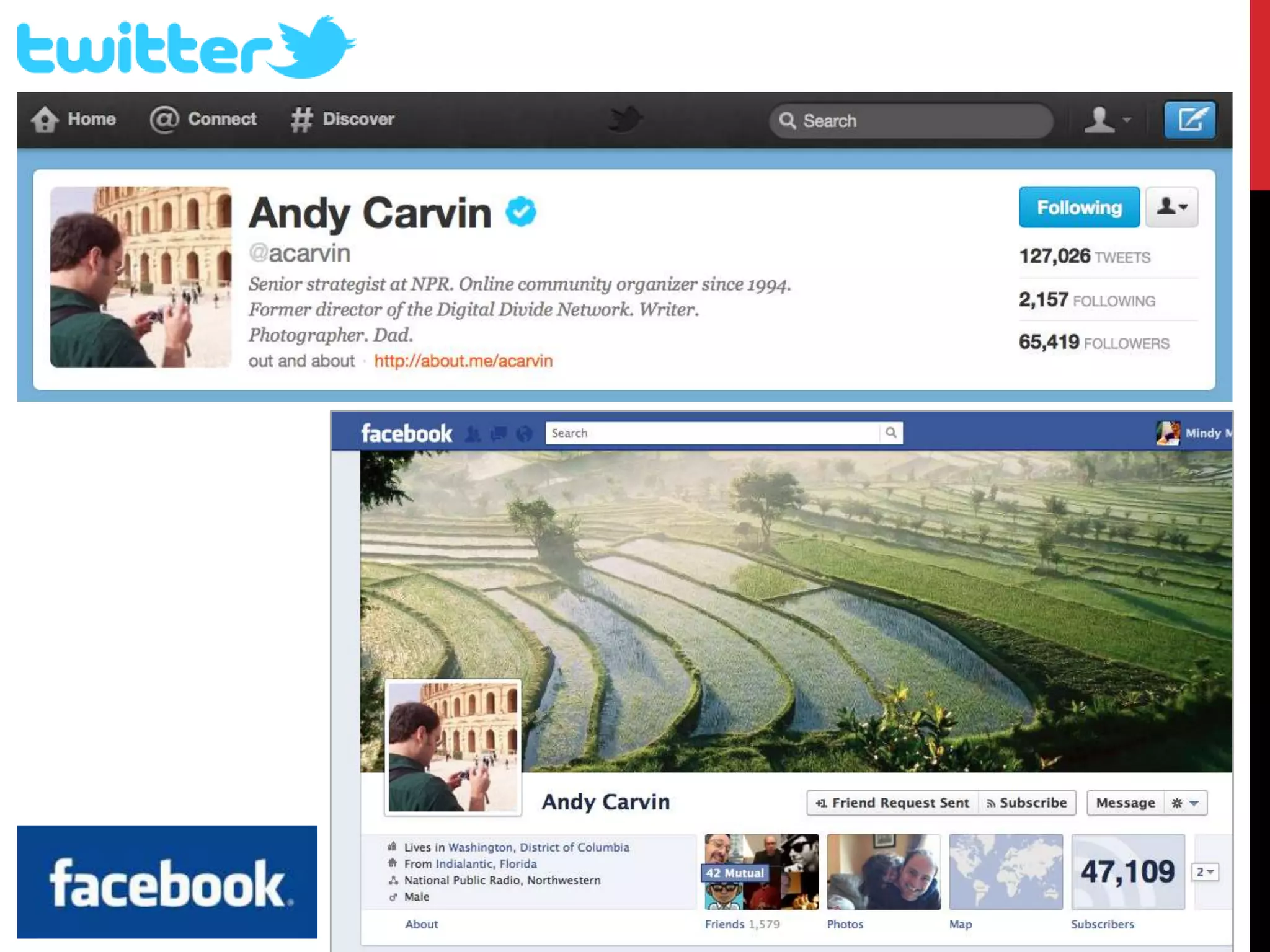
  • #28 Andy Carvin works for National Public Radio in the United States. He tweets revolutions. He’s famous for combing the Twitter universe when anything heats up in the Middle East and retweeting the most relevant messages. He also fact-checks when possible. More information: http://www.guardian.co.uk/media/2011/sep/04/andy-carvin-tweets-revolutions Profile examples. Top: Andy Carvin, Twitter. Bottom: Andy Carvin, Facebook.
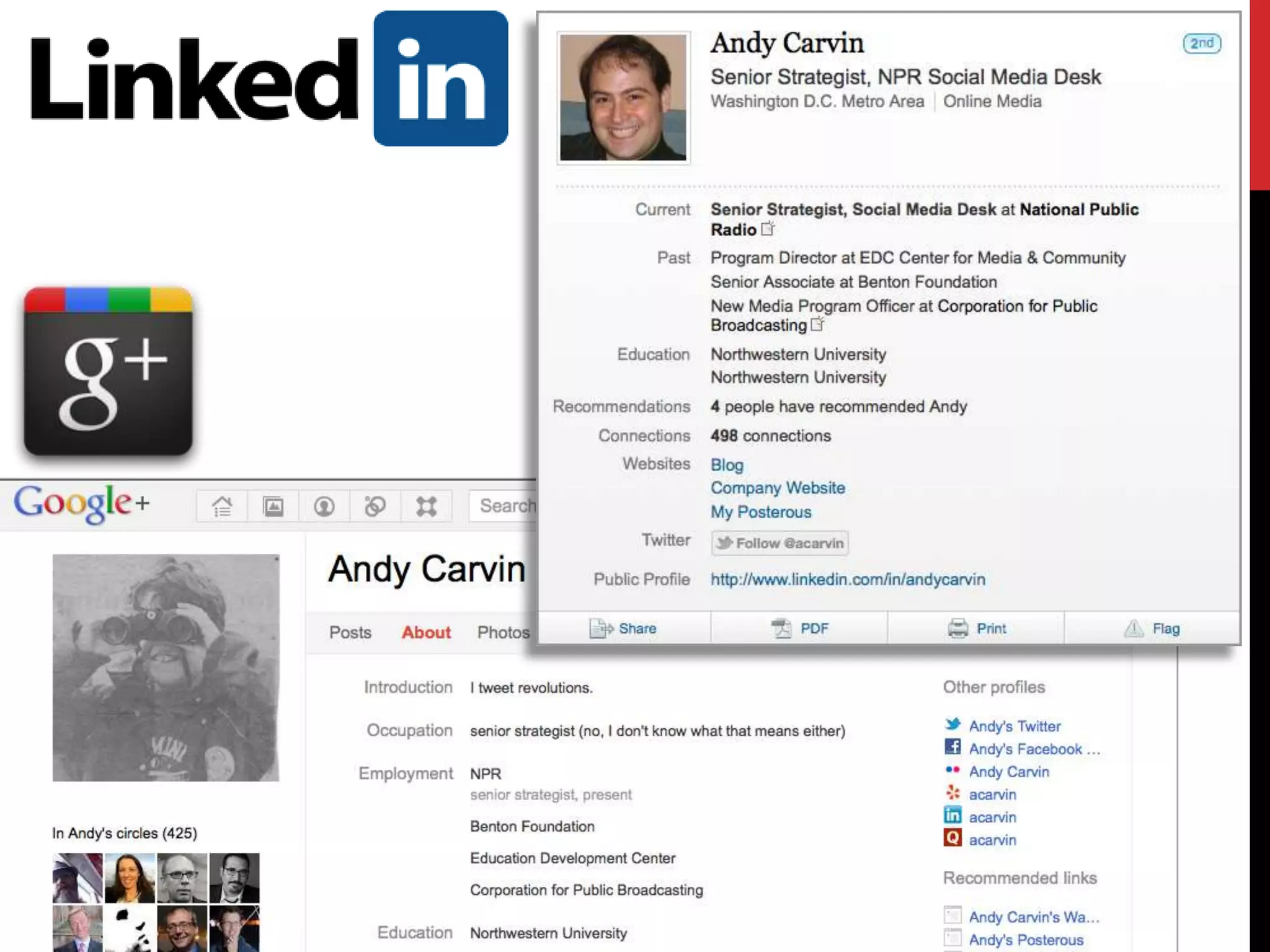
  • #29 Profile examples. Top: Andy Carvin, LinkedIn. Bottom: Andy Carvin, Google+.
  • #30 “We define social network sites as web-based services that allow individuals to (1) construct a public or semi-public profile within a bounded system, (2) articulate a list of other users with whom they share a connection, and (3) view and traverse their list of connections and those made by others within the system.” boyd, d. m., & Ellison, N. B. (2007). Social network sites: Definition, history, and scholarship. Journal of Computer-Mediated Communication, 13(1), article 11. http://jcmc.indiana.edu/vol13/issue1/boyd.ellison.html
  • #31 What does your profile say about you?
  • #33 Again – emphasis on listening, not only speaking. THIS IDEA of YOUR NETWORK – who is in it? What is it for?
  • #34 THIS IDEA of YOUR NETWORK – who is in it? What is it for?
  • #35 Data from 2011 / n = 596 / via Michael Netzley (@communicateasia), who teaches at Singapore Management University.
  • #36 Number ONE is SOCIAL INTERACTIONS Data from 2011 / n = 596 / via Michael Netzley (@communicateasia), who teaches at Singapore Management University.
  • #37 CONTACT http://mindymcadams.com/