What is Open Science and what role 
does it play in Development? 
Leslie Chan 
University of Toronto Scarborough 
@lesliekwchan 
Ciência Aberta, Questões Abertas 
Seminário internacional, oficinas e 
encontro do grupo de trabalho em 
Ciência Aberta 
18 a 22 de agosto de 2014, Rio de 
Janeiro, Brasil 
Open Science, Open Issues 
International seminar, 
workshops and Open 
Science work group 
meeting 
August 18-22, 2014 @ Rio 
de Janeiro, Brazil
• Unpack the question and its 
assumptions 
• Introduce the Open and Collaborative 
Science in Development Network and 
its objectives 
@ocsdnet 
http://www.ocsdnet.org
Personal context 
Open Access 
Rights based approach to development 
Critical reflection on “research” on 
development 
Could these approaches 
transform the power 
relations among the various 
development actors?
Development? 
The old model is broken. We need to 
create a new one…a vision for equitable 
human development, a healthy planet, an 
enduring economic dynamism 
- Ban Ki Moon, UN Secretary General
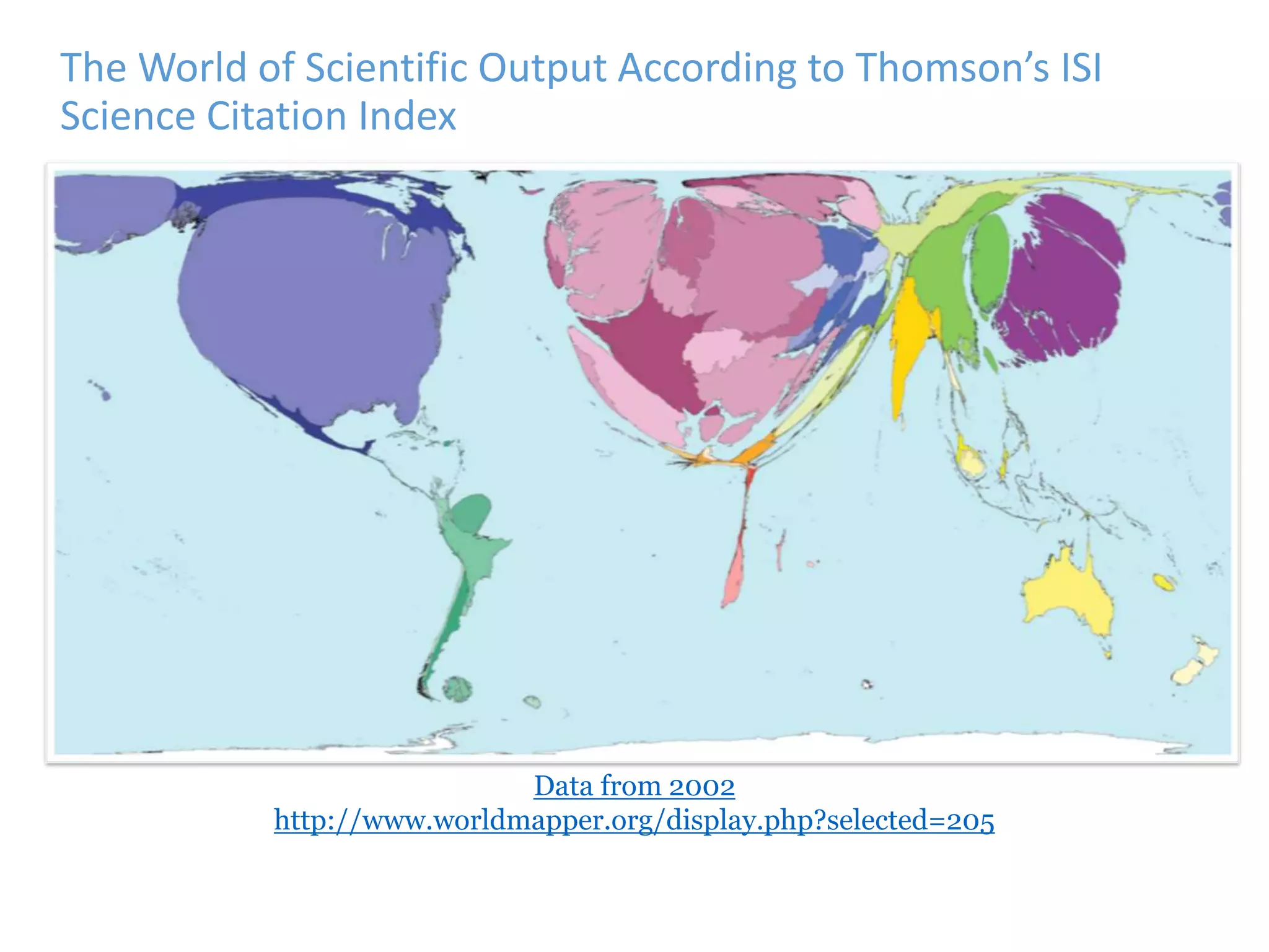
The World of Scientific Output According to Thomson’s ISI 
Science Citation Index 
Data from 2002 
http://www.worldmapper.org/display.php?selected=205
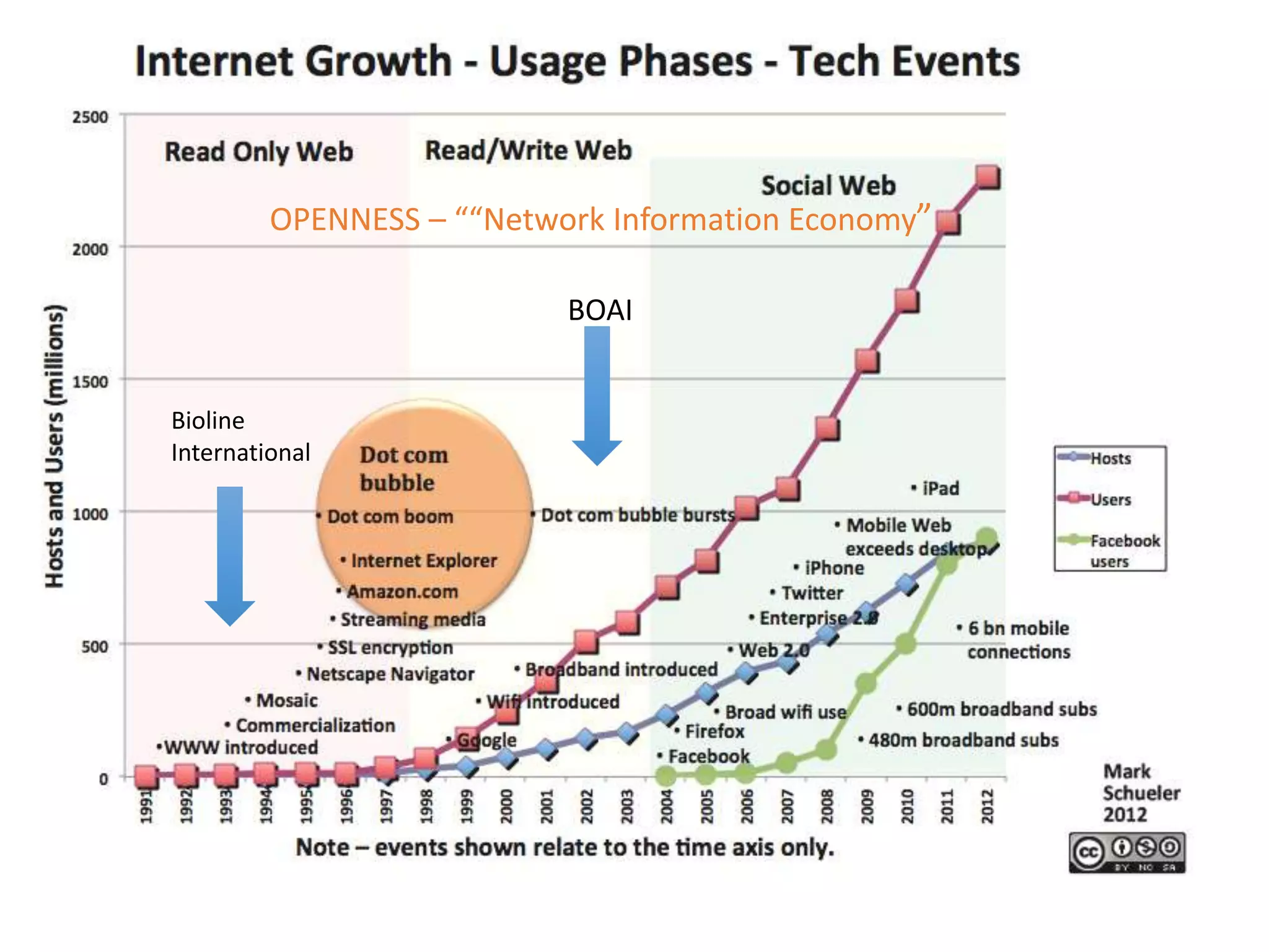
OPENNESS – ““Network Information Economy” 
BOAI 
Bioline 
International
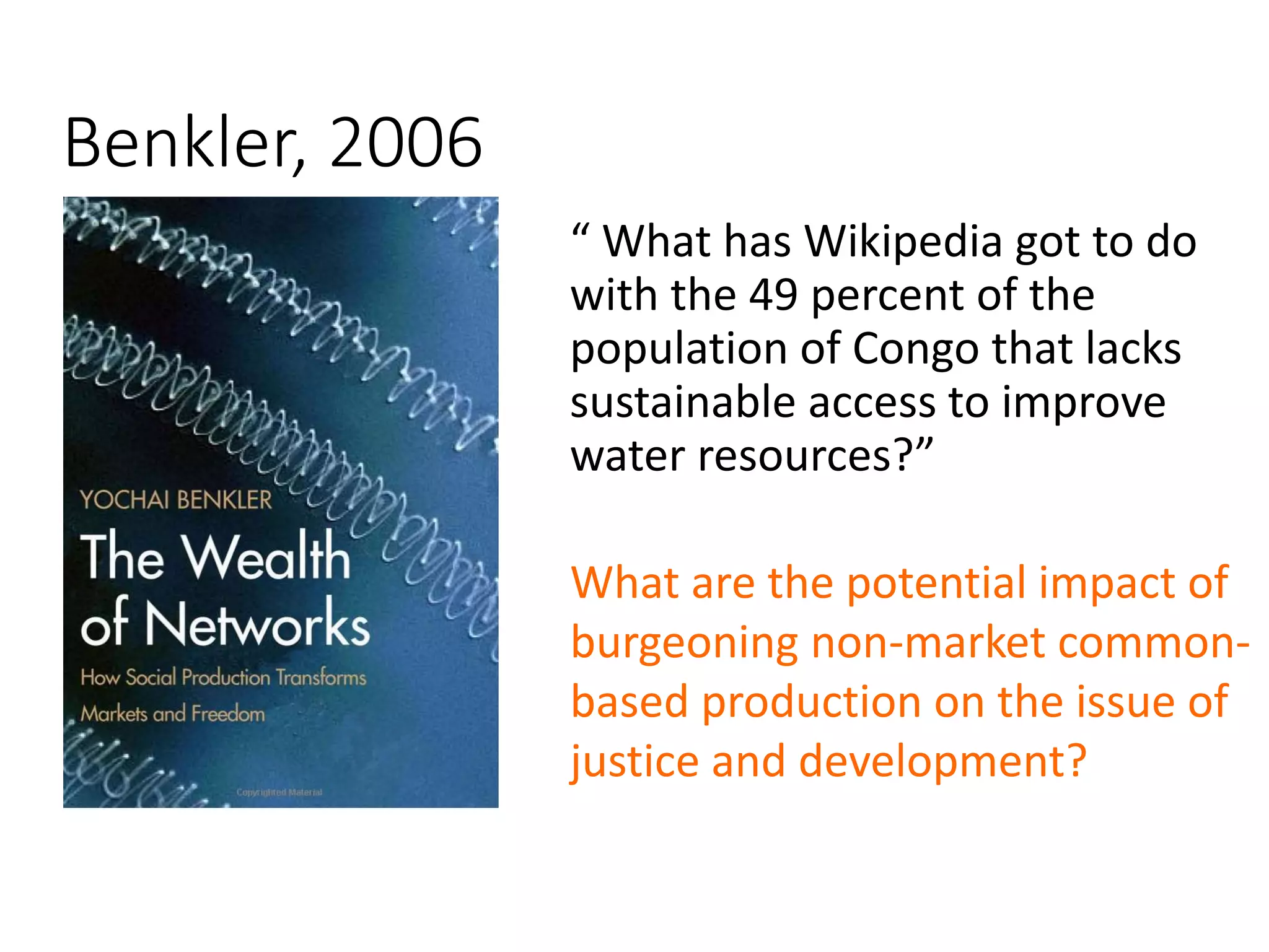
Benkler, 2006 
“ What has Wikipedia got to do 
with the 49 percent of the 
population of Congo that lacks 
sustainable access to improve 
water resources?” 
What are the potential impact of 
burgeoning non-market common-based 
production on the issue of 
justice and development?
Personal Context 
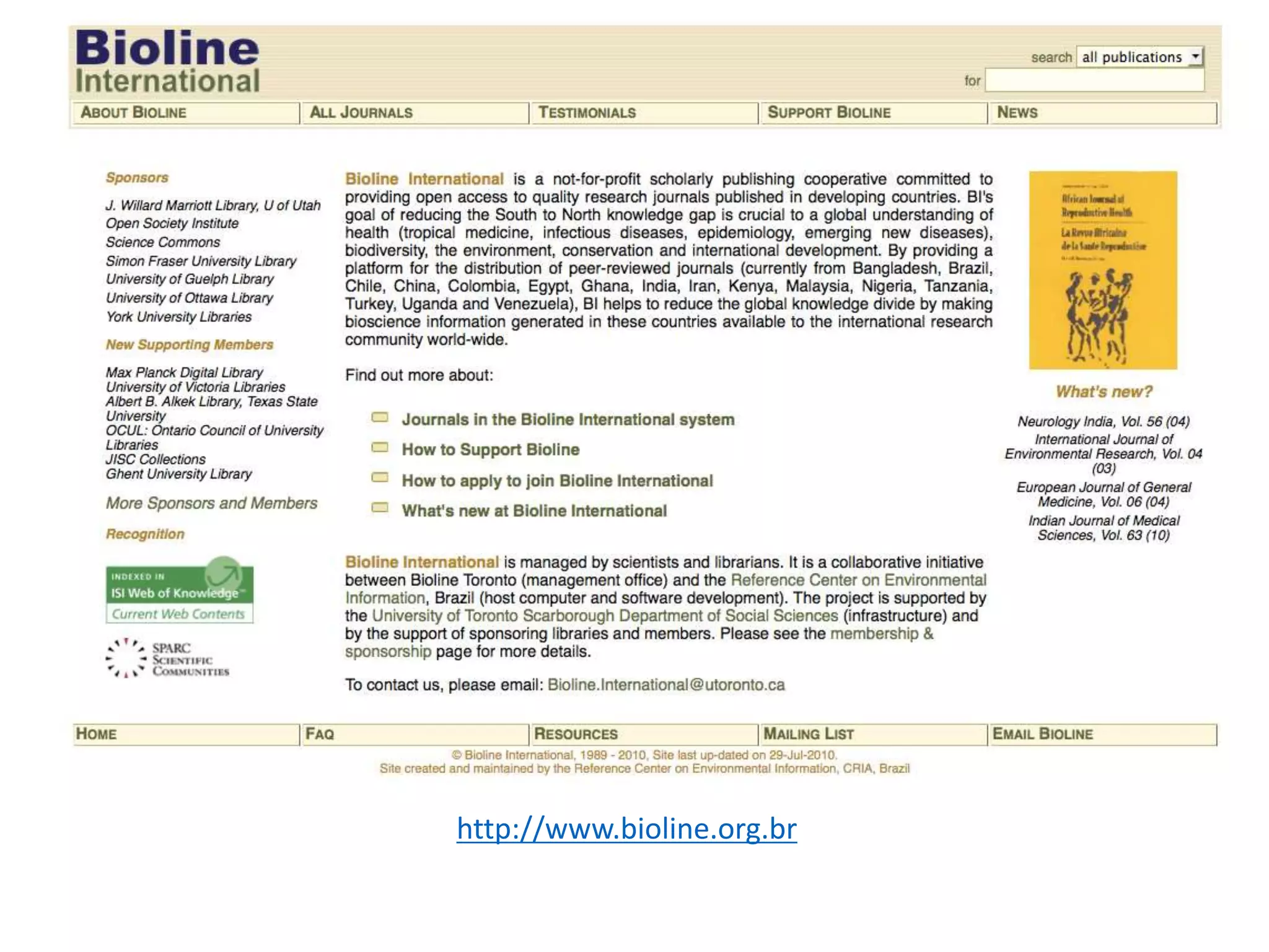
http://www.bioline.org.br
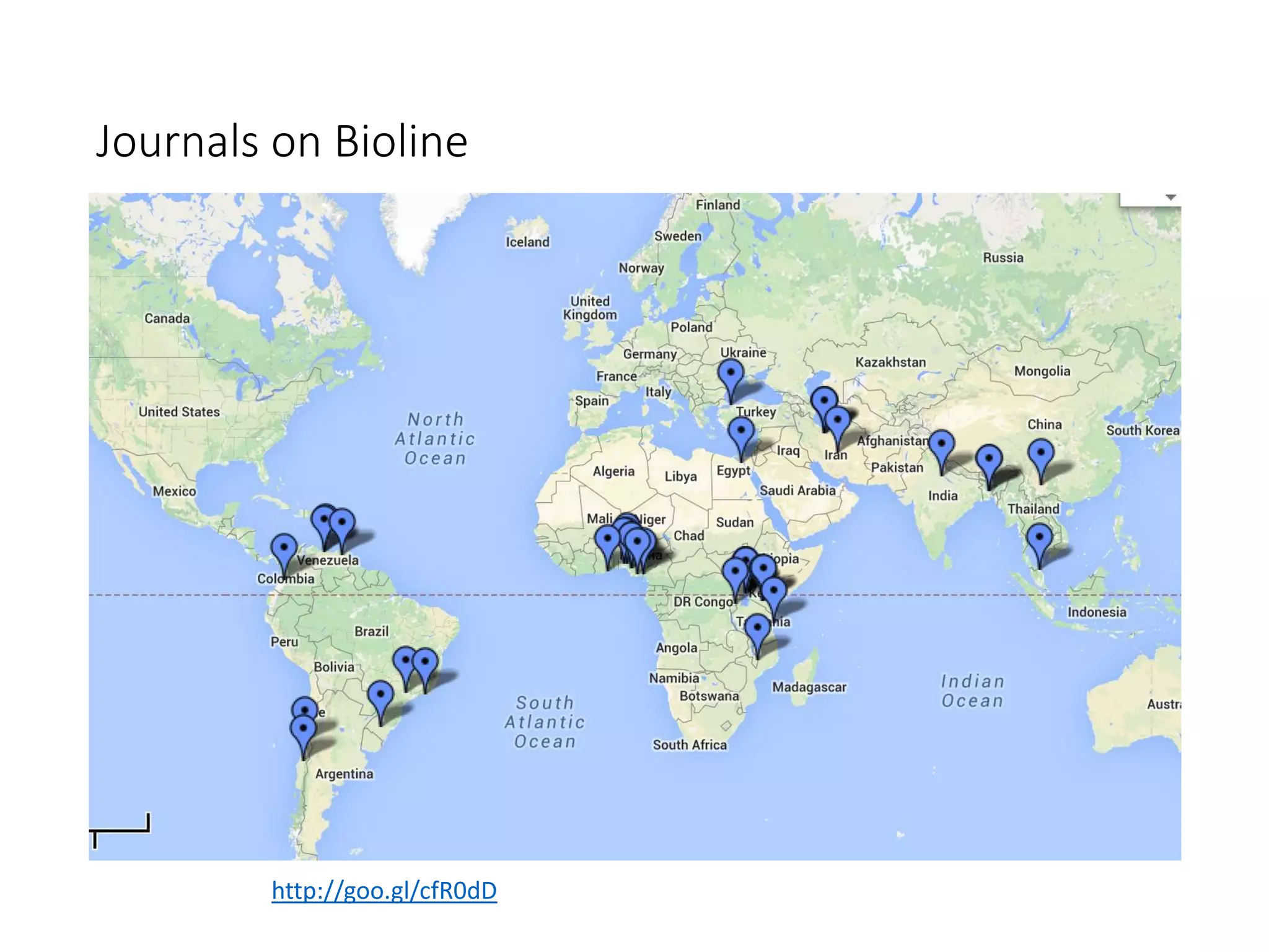
Journals on Bioline 
http://goo.gl/cfR0dD
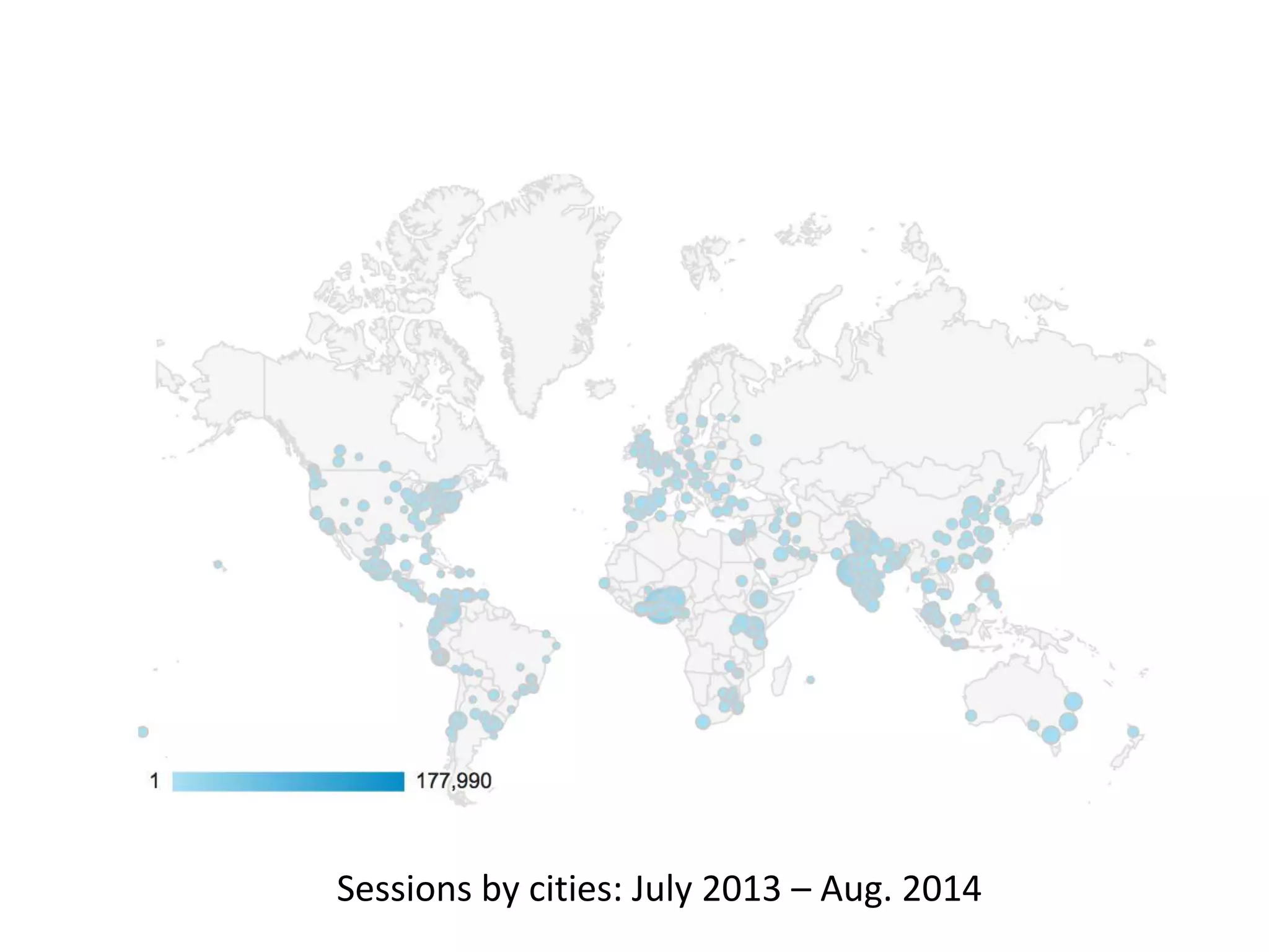
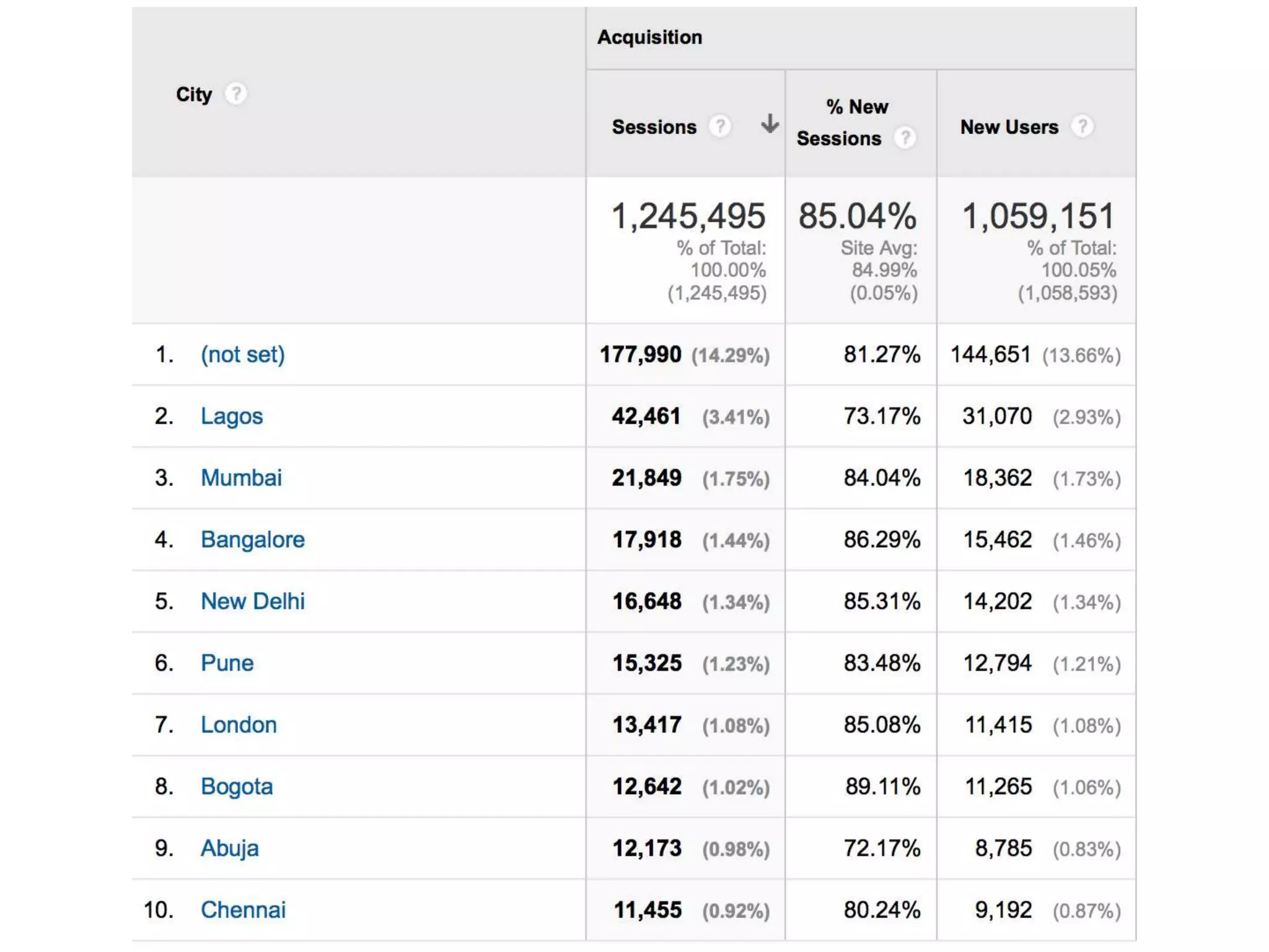
Sessions by cities: July 2013 – Aug. 2014
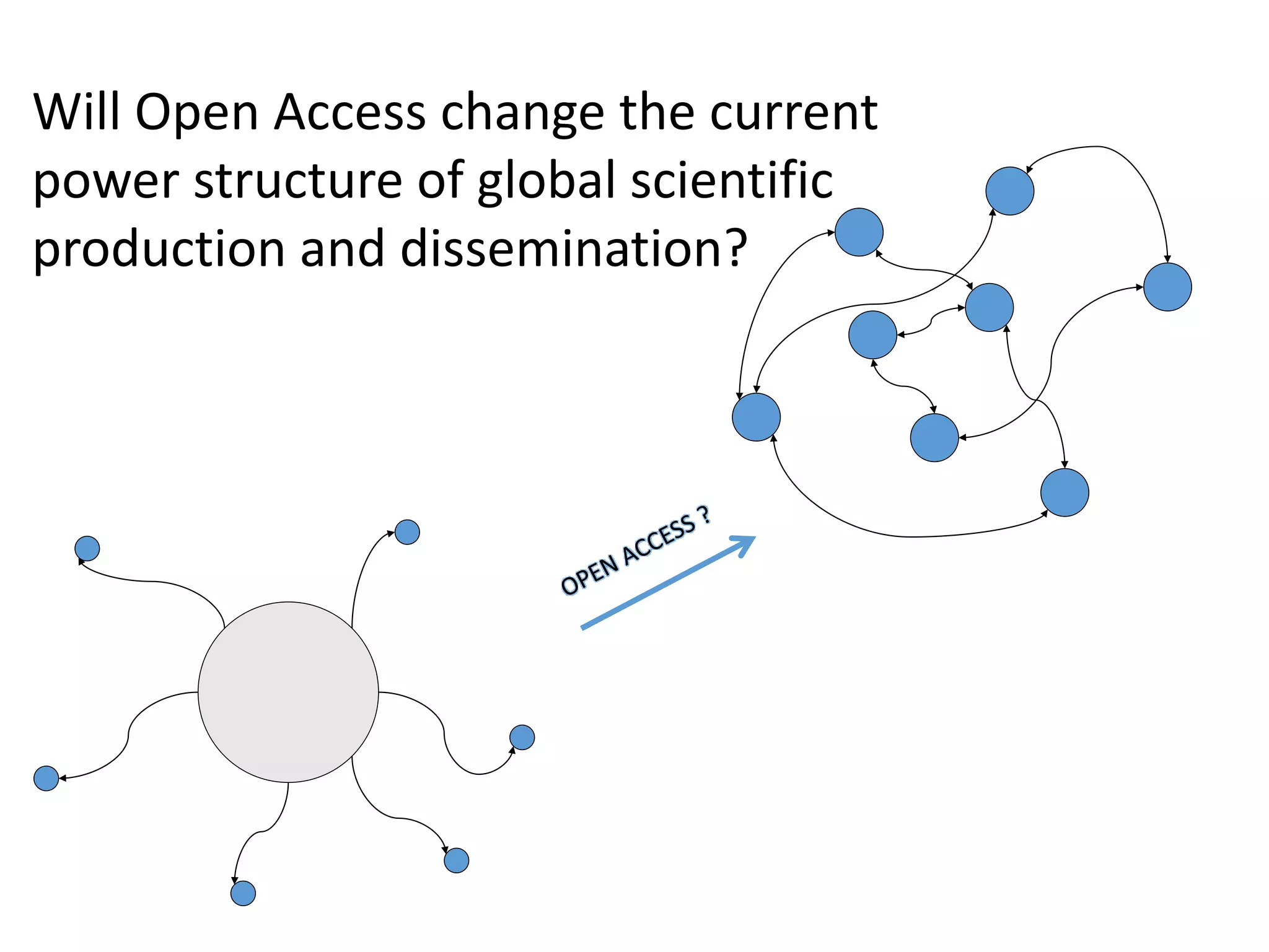
Will Open Access change the current 
power structure of global scientific 
production and dissemination?
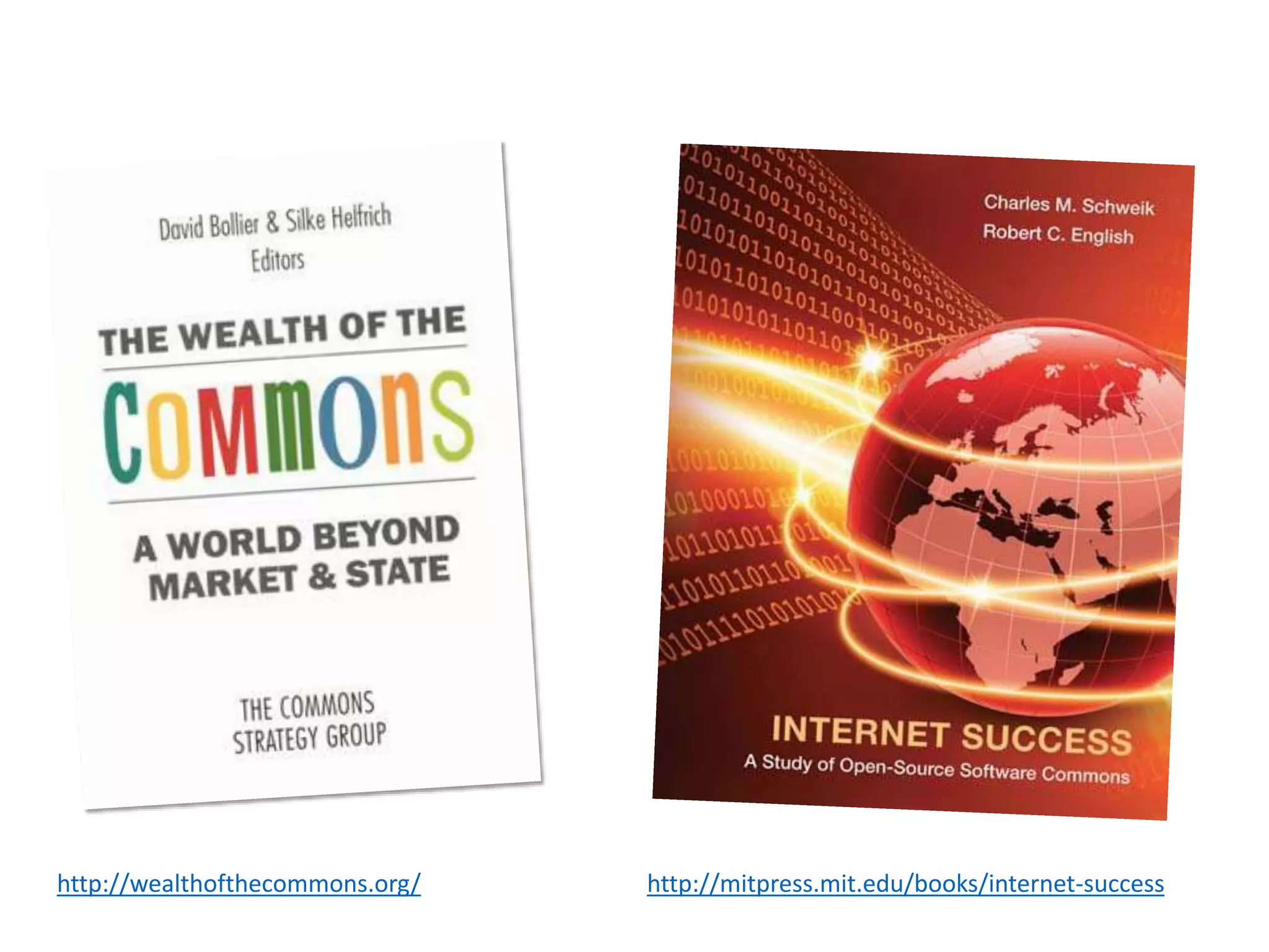
http://wealthofthecommons.org/ http://mitpress.mit.edu/books/internet-success
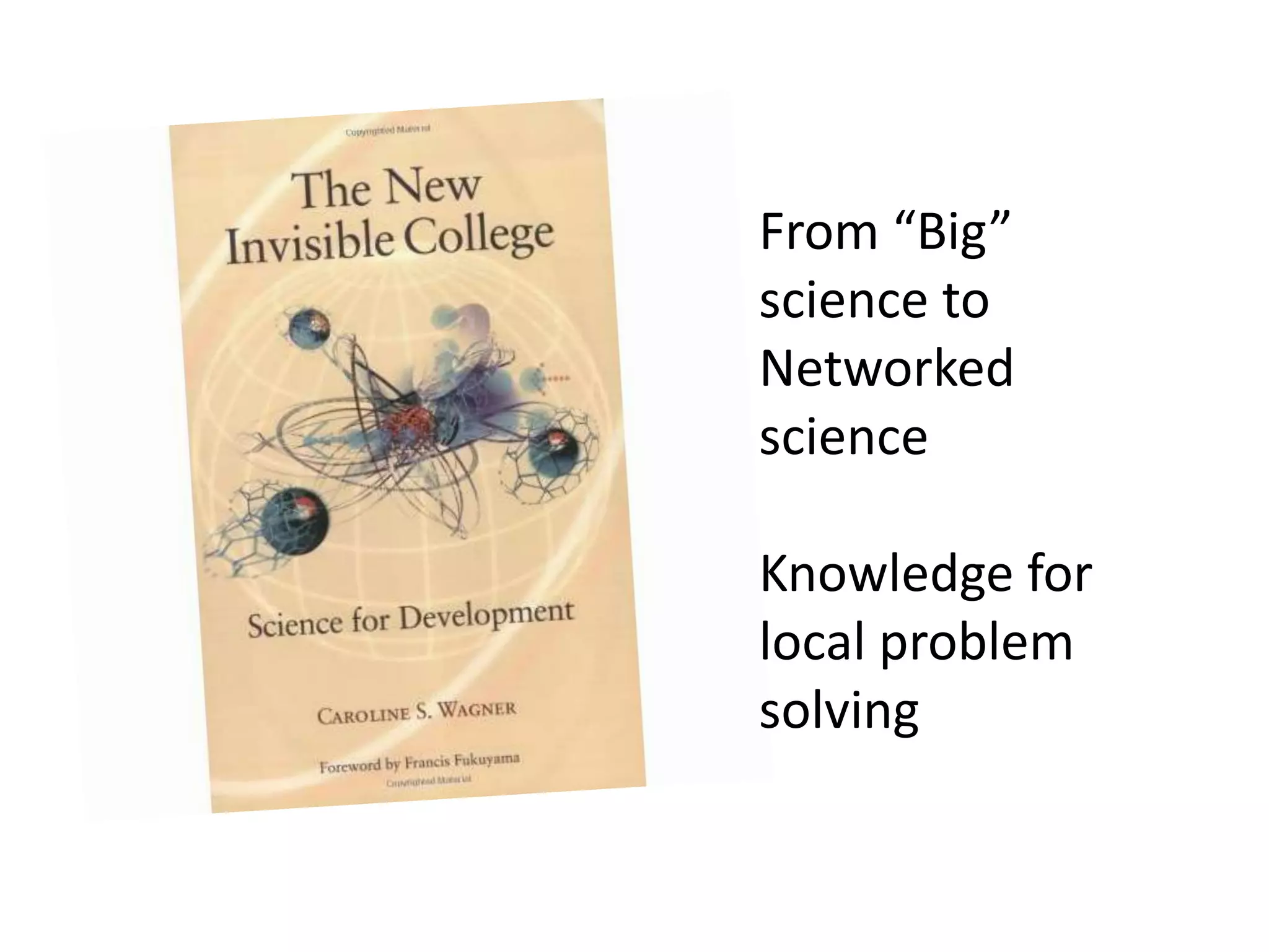
From “Big” 
science to 
Networked 
science 
Knowledge for 
local problem 
solving
What is the OCSDNet? 
Funding: 
Coordination
Aim of the Network 
To understand whether, and the 
conditions under which a converging set 
of open practices based on networked 
collaboration, collectively called “Open 
and Collaborative Science” (OCS), could 
lead to development outcomes in the 
Global South.
Could OCS lead to innovative models of 
redistribution of access to social justice, 
knowledge, wealth, individual freedom 
and well-being?
Open Science 
“science carried out and communicated in a 
manner which allows others to contribute, 
collaborate and add to the research effort, with 
all kinds of data, results and protocols made 
freely available at different stages of the 
research process” 
The RIN / NESTA report Open to All? Case Studies of Openness in Research 
(2010) 
http://www.rin.ac.uk/our-work/data-management-and-curation/open-science-case- 
studies
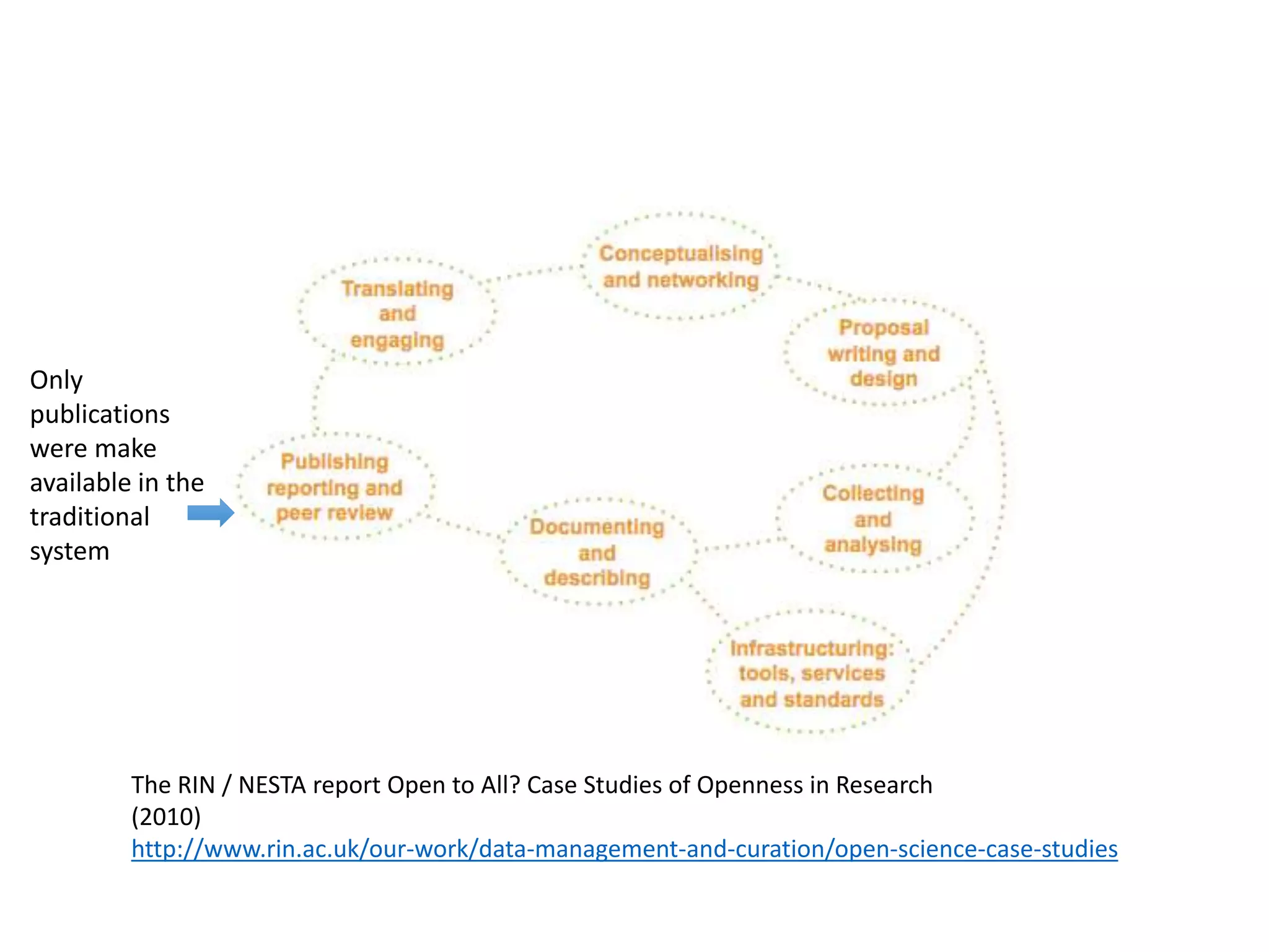
Only 
publications 
were make 
available in the 
traditional 
system 
The RIN / NESTA report Open to All? Case Studies of Openness in Research 
(2010) 
http://www.rin.ac.uk/our-work/data-management-and-curation/open-science-case-studies
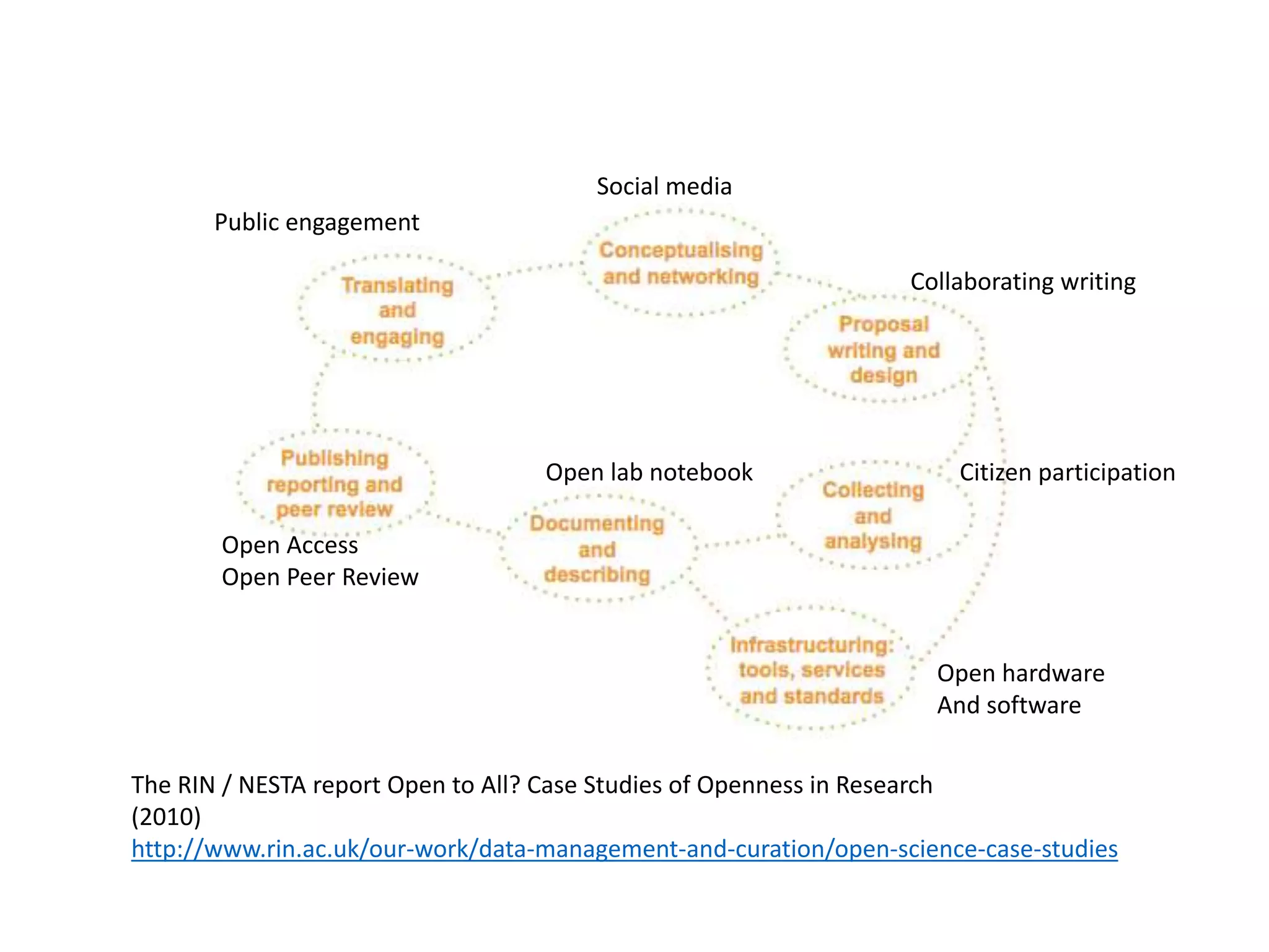
Collaborating writing 
Citizen participation 
Open hardware 
And software 
Public engagement 
Social media 
Open lab notebook 
Open Access 
Open Peer Review 
The RIN / NESTA report Open to All? Case Studies of Openness in Research 
(2010) 
http://www.rin.ac.uk/our-work/data-management-and-curation/open-science-case-studies
Benefits of Open Science 
• Improving the efficiency of research – minimize 
duplication 
• Accelerating the pace of discovery 
• Enable cross-disciplinary research 
• Promoting scholarly rigour and reproducibility 
• Improving the quality and scope of scientific outputs 
• Enhance collaboration and greater inclusion 
• Promoting scientific engagement and literacy for the 
public 
• increasing the economic and social impact of 
research 
• Providing new opportunities for innovation
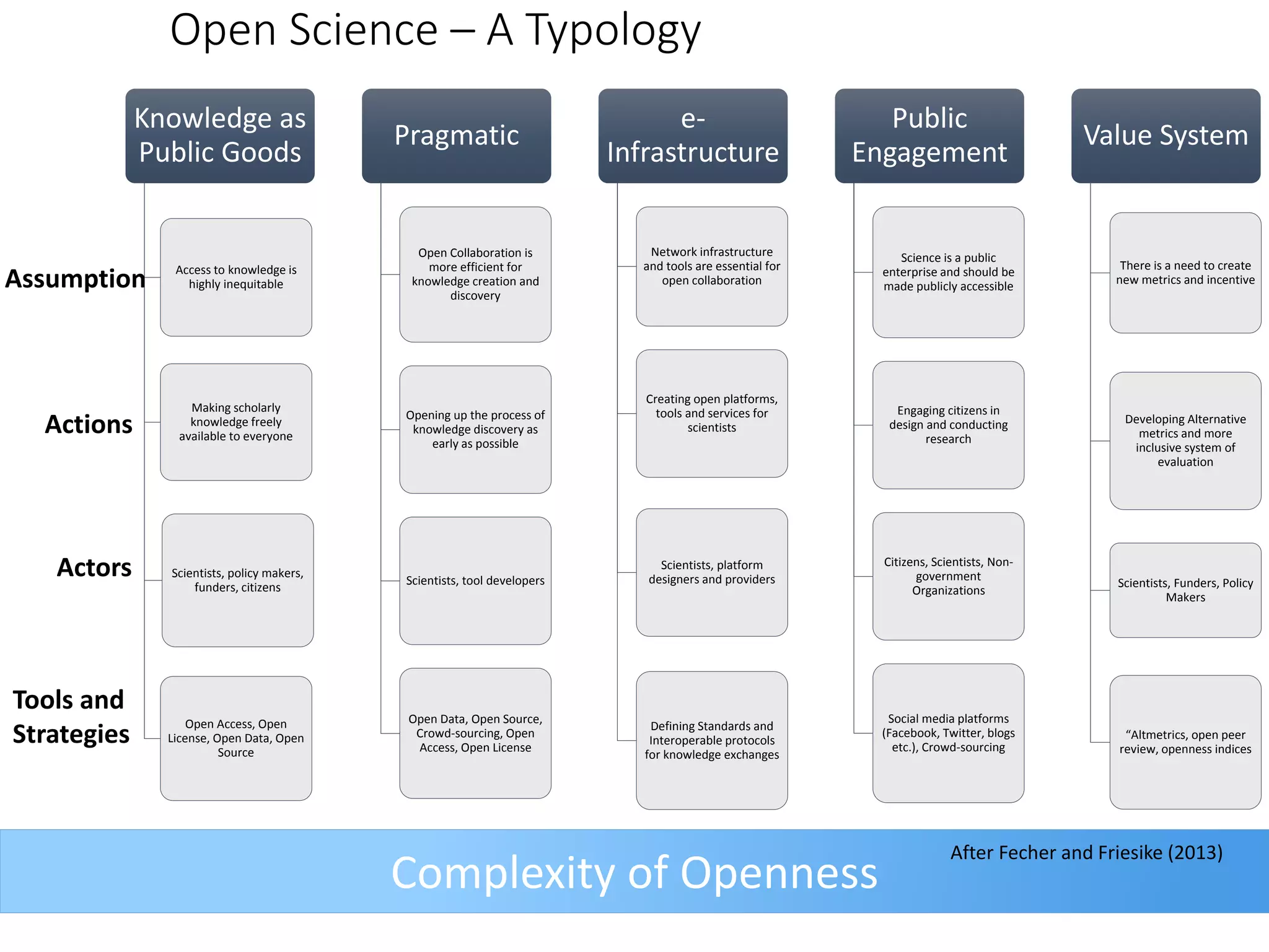
Open Science – A Typology 
Complexity of Openness 
Knowledge as 
Public Goods 
Access to knowledge is 
highly inequitable 
Making scholarly 
knowledge freely 
available to everyone 
Scientists, policy makers, 
funders, citizens 
Open Access, Open 
License, Open Data, Open 
Source 
Pragmatic 
Open Collaboration is 
more efficient for 
knowledge creation and 
discovery 
Opening up the process of 
knowledge discovery as 
early as possible 
Scientists, tool developers 
Open Data, Open Source, 
Crowd-sourcing, Open 
Access, Open License 
e- 
Infrastructure 
Network infrastructure 
and tools are essential for 
open collaboration 
Creating open platforms, 
tools and services for 
scientists 
Scientists, platform 
designers and providers 
Defining Standards and 
Interoperable protocols 
for knowledge exchanges 
Public 
Engagement 
Science is a public 
enterprise and should be 
made publicly accessible 
Engaging citizens in 
design and conducting 
research 
Citizens, Scientists, Non-government 
Organizations 
Social media platforms 
(Facebook, Twitter, blogs 
etc.), Crowd-sourcing 
Value System 
There is a need to create 
new metrics and incentive 
Developing Alternative 
metrics and more 
inclusive system of 
evaluation 
Scientists, Funders, Policy 
Makers 
“Altmetrics, open peer 
review, openness indices 
Assumption 
Actions 
Actors 
Tools and 
Strategies 
After Fecher and Friesike (2013)
Goals - Practical 
• Fund and support a number of diverse case 
studies in order to build a body of empirical 
data 
• Foster a network of OSC practitioners, 
thinkers, mentors, and advocates 
• See the call for proposals 
• http://ocsdnet.org/article/application
Goals - Theoretical 
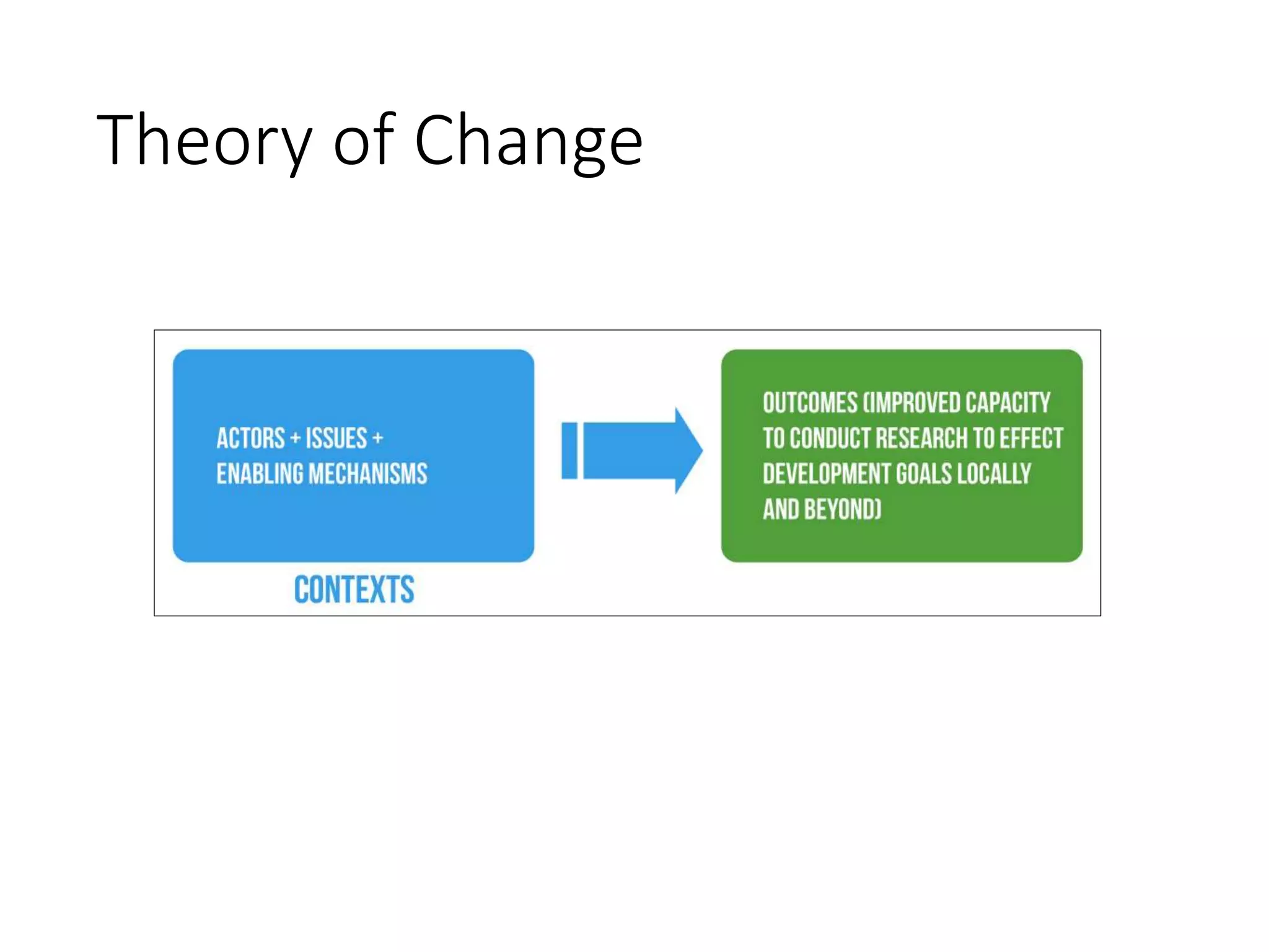
• Develop a conceptual framework that serves as a 
comprehensive theory of change 
• Understanding the actors, motivations, and mechanisms 
that enable new kind of networked-institutions and 
practices 
• Adopt a critical approach to examining the 
embedded assumptions behind various models of 
open collaboration and theories of change. 
• Studying OCS is as complex socio-technological system 
and not simply a collection of mechanisms
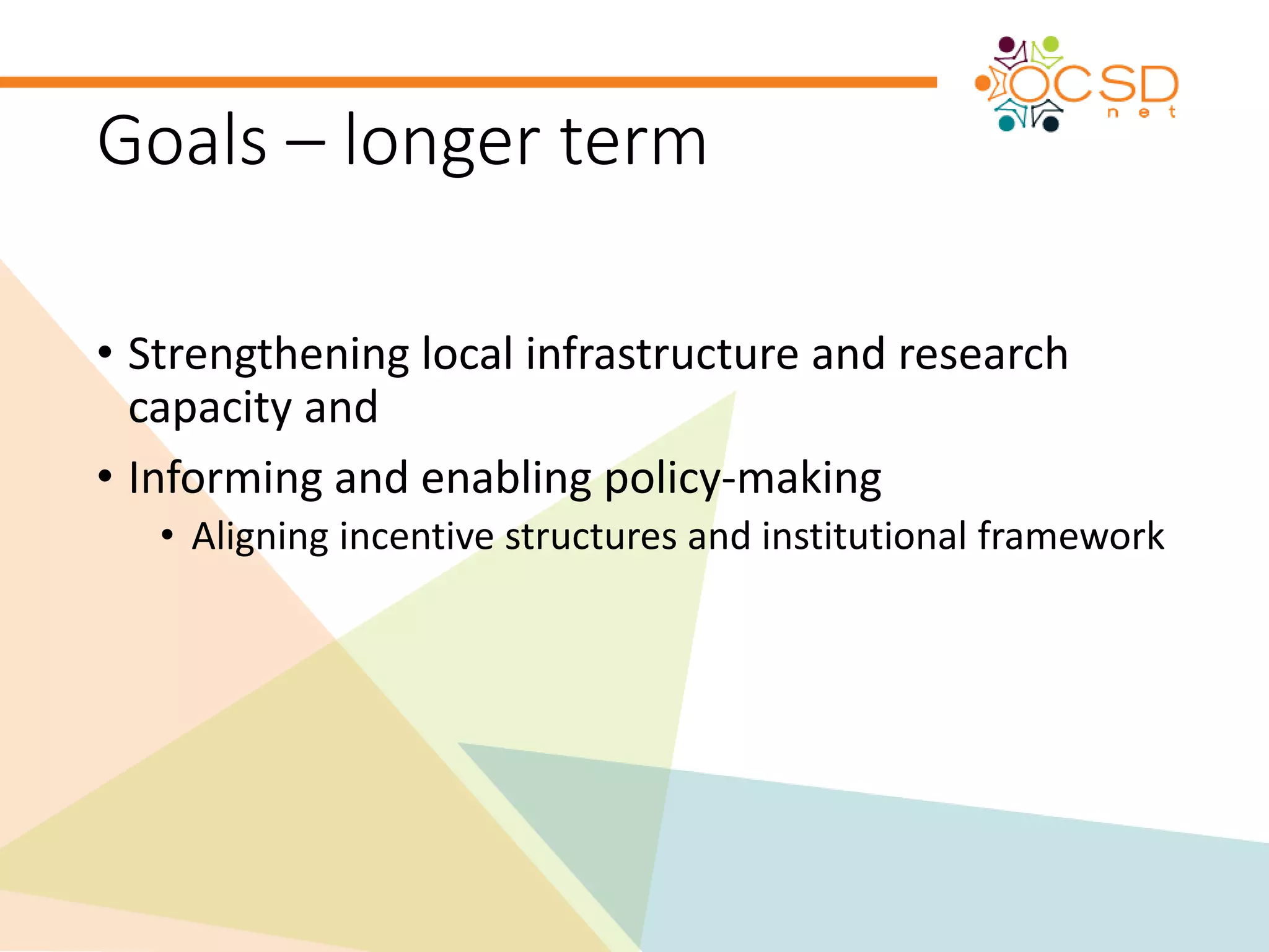
Goals – longer term 
• Strengthening local infrastructure and research 
capacity and 
• Informing and enabling policy-making 
• Aligning incentive structures and institutional framework
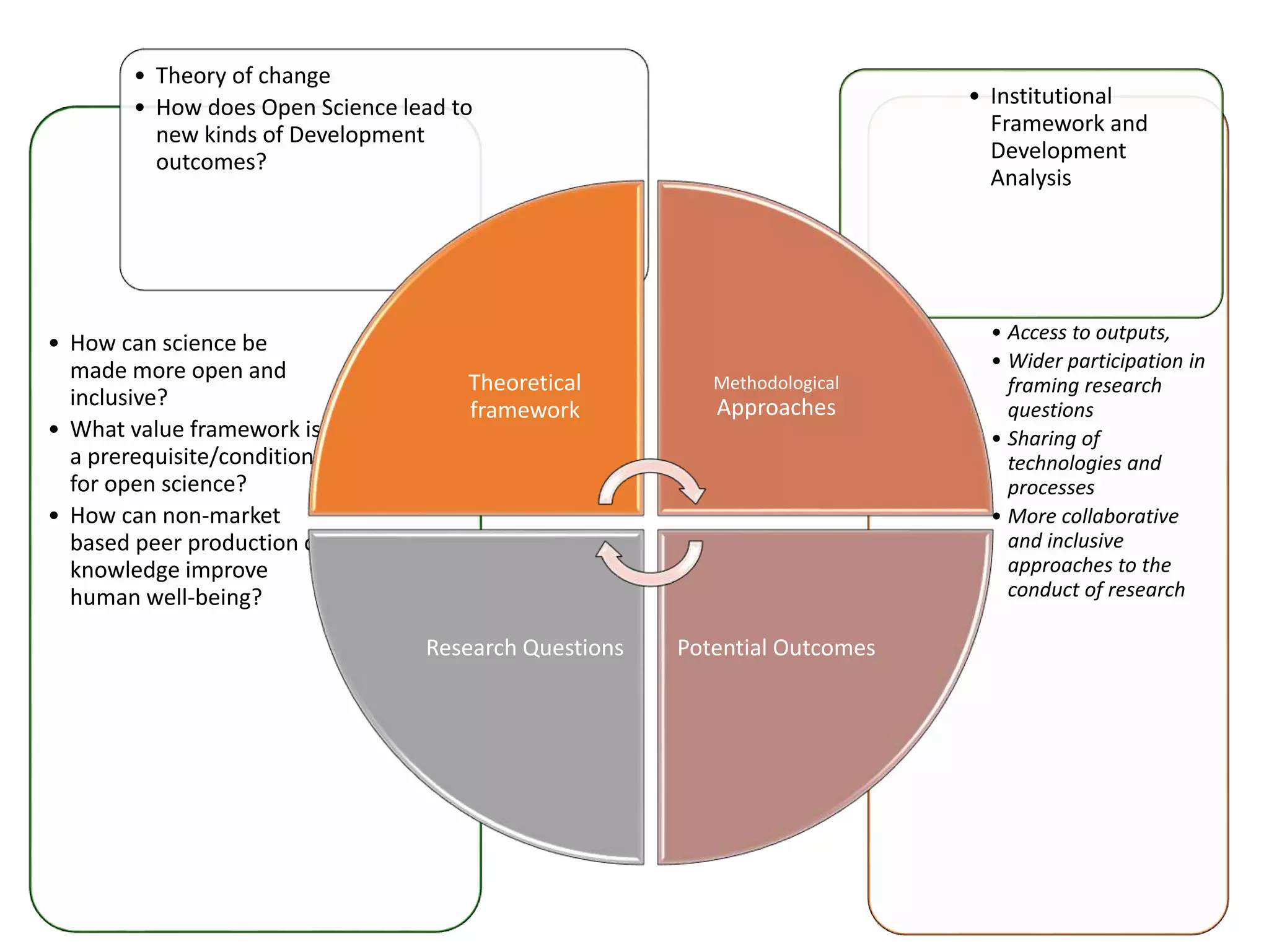
• Access to outputs, 
• Wider participation in 
framing research 
questions 
• Sharing of 
technologies and 
processes 
• More collaborative 
and inclusive 
approaches to the 
conduct of research 
• How can science be 
made more open and 
inclusive? 
• What value framework is 
a prerequisite/condition) 
for open science? 
• How can non-market 
based peer production of 
knowledge improve 
human well-being? 
• Institutional 
Framework and 
Development 
Analysis 
• Theory of change 
• How does Open Science lead to 
new kinds of Development 
outcomes? 
Theoretical 
framework 
Methodological 
Approaches 
Research Questions Potential Outcomes
Theory of Change
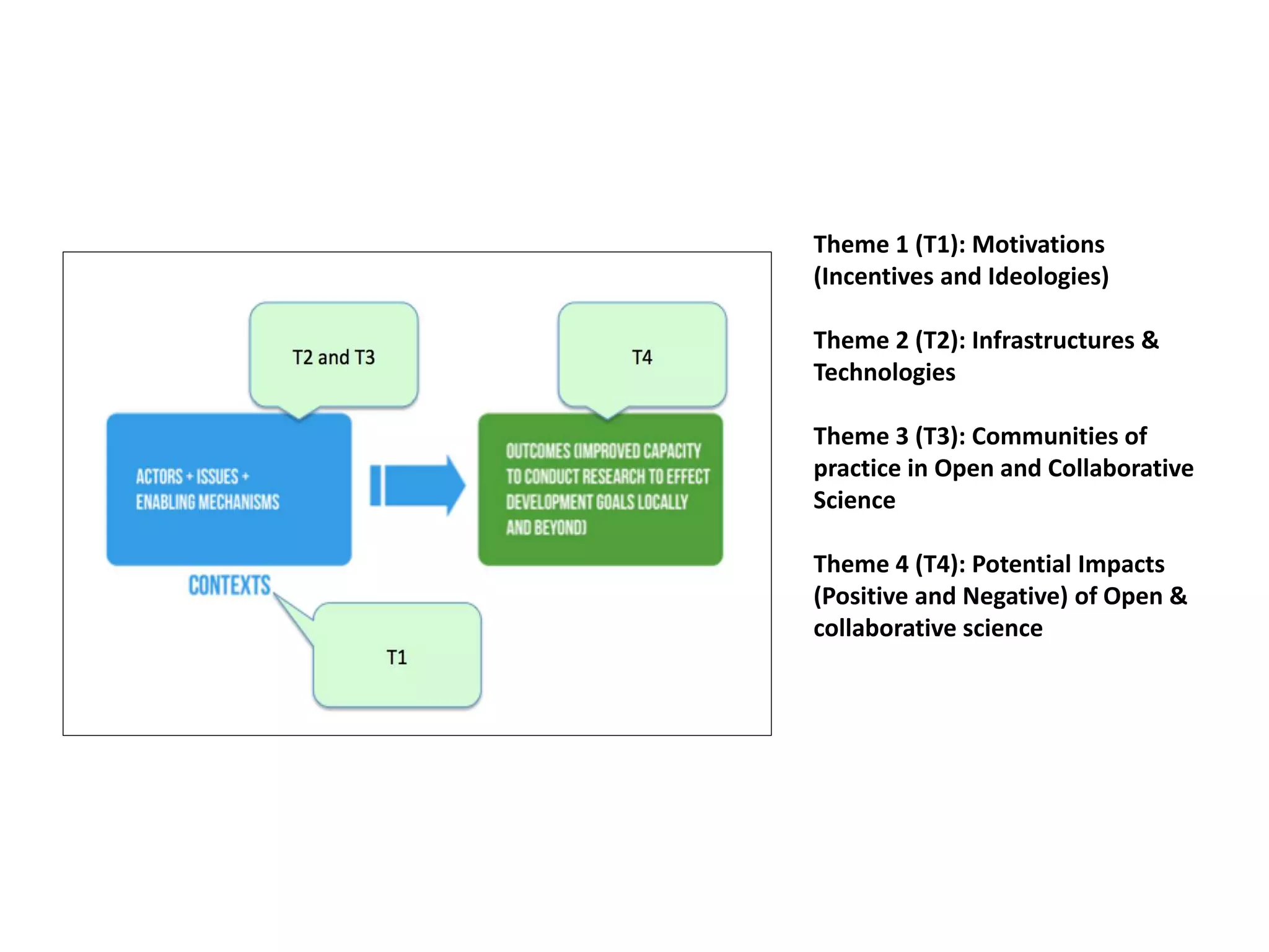
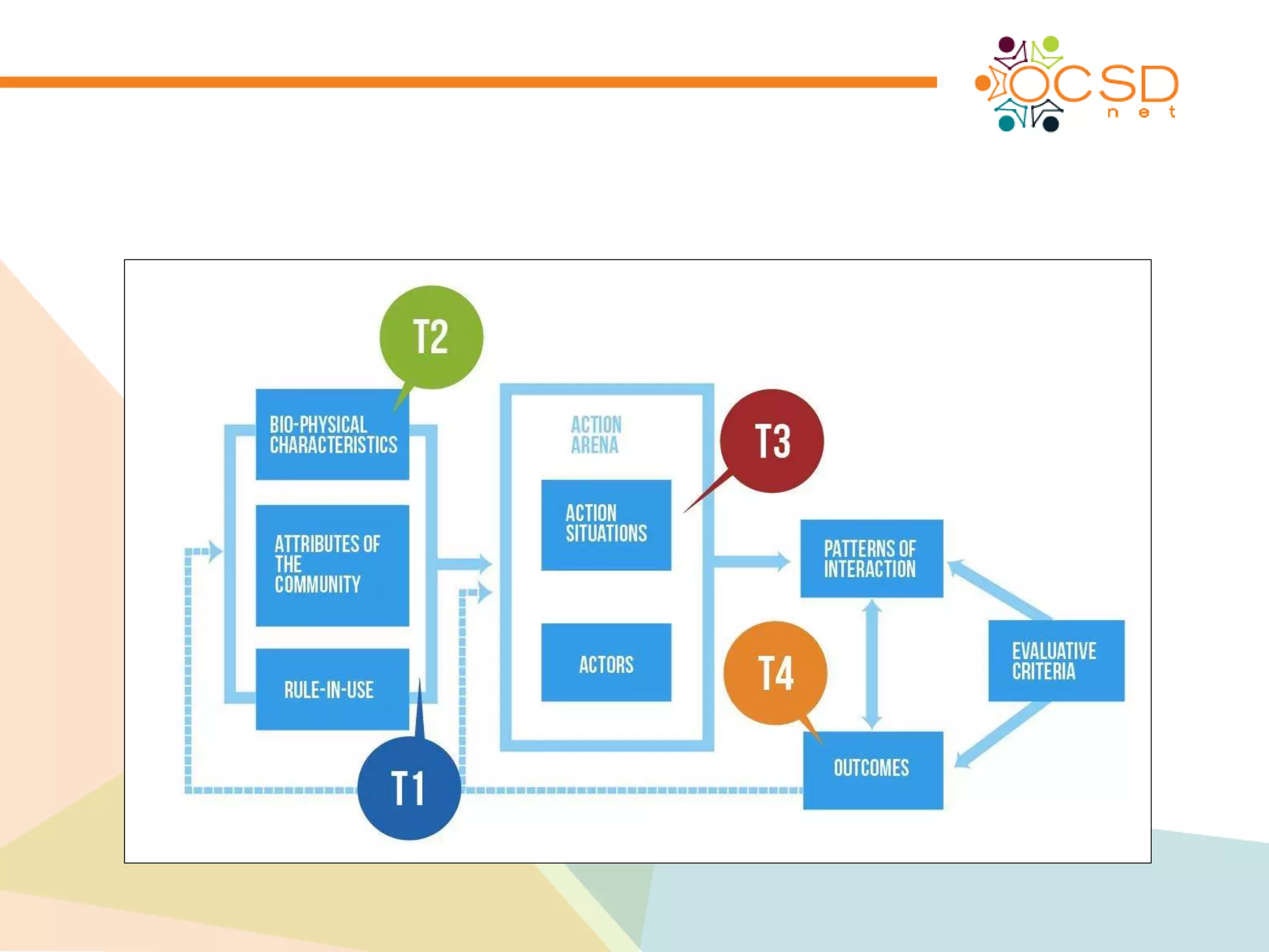
Theme 1 (T1): Motivations 
(Incentives and Ideologies) 
Theme 2 (T2): Infrastructures & 
Technologies 
Theme 3 (T3): Communities of 
practice in Open and Collaborative 
Science 
Theme 4 (T4): Potential Impacts 
(Positive and Negative) of Open & 
collaborative science
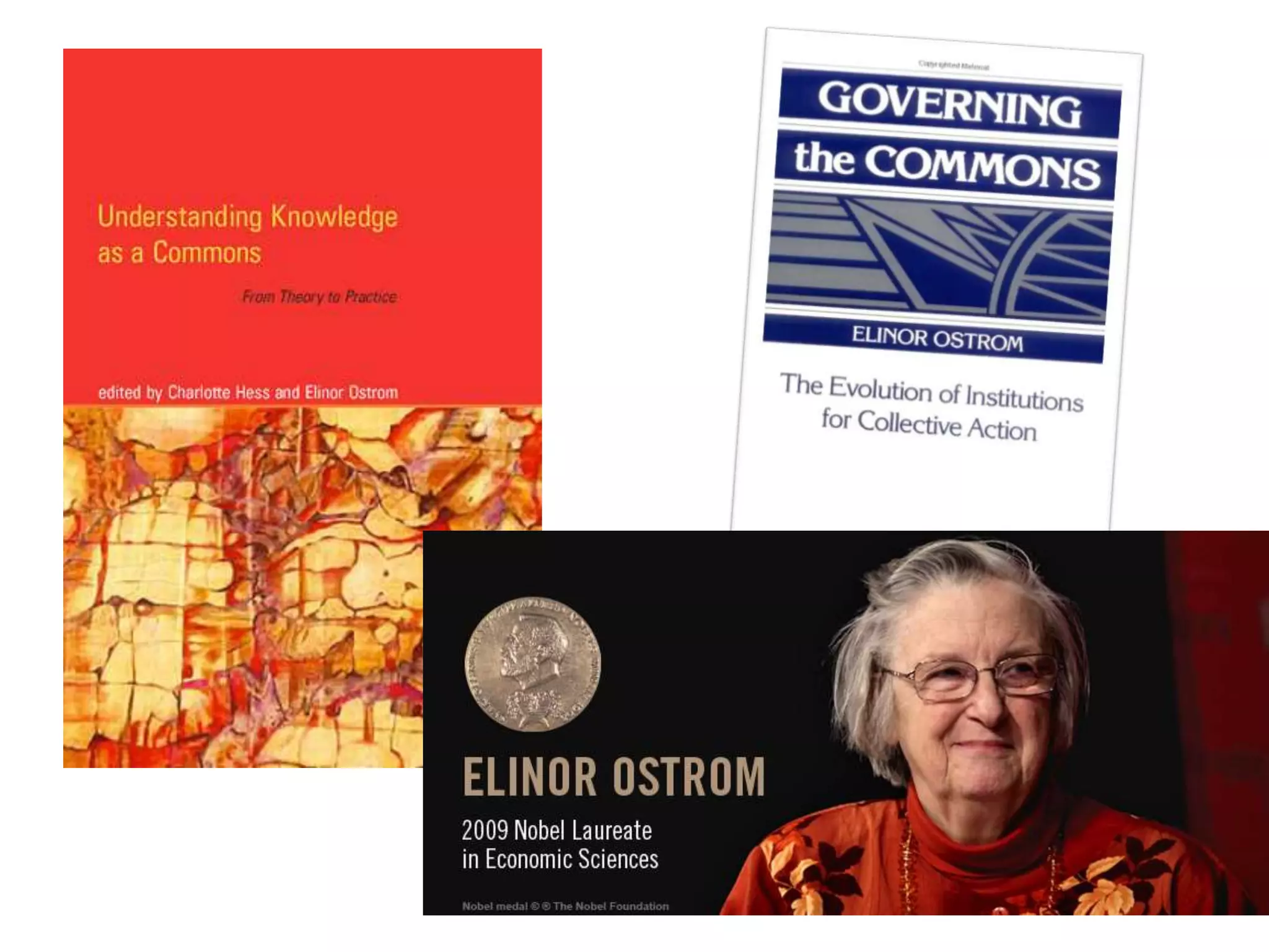
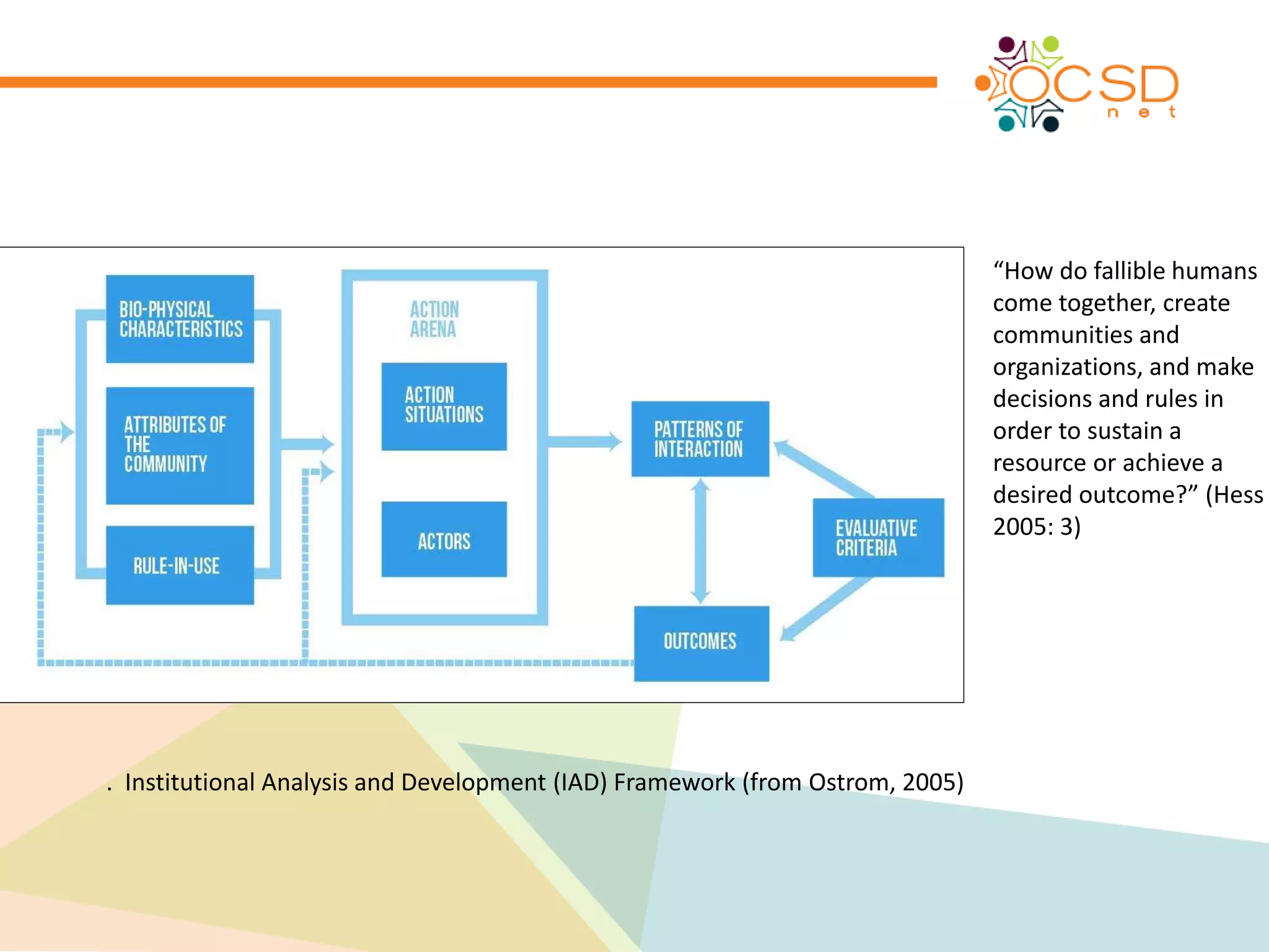
. Institutional Analysis and Development (IAD) Framework (from Ostrom, 2005) 
“How do fallible humans 
come together, create 
communities and 
organizations, and make 
decisions and rules in 
order to sustain a 
resource or achieve a 
desired outcome?” (Hess 
2005: 3)
Questions? 
http://www.ocsdnet.org 
Twitter: @lesliekwchan 
@ocsdnet

What is Open Science and what role does it play in Development?

  • 1.
    What is OpenScience and what role does it play in Development? Leslie Chan University of Toronto Scarborough @lesliekwchan Ciência Aberta, Questões Abertas Seminário internacional, oficinas e encontro do grupo de trabalho em Ciência Aberta 18 a 22 de agosto de 2014, Rio de Janeiro, Brasil Open Science, Open Issues International seminar, workshops and Open Science work group meeting August 18-22, 2014 @ Rio de Janeiro, Brazil
  • 2.
    • Unpack thequestion and its assumptions • Introduce the Open and Collaborative Science in Development Network and its objectives @ocsdnet http://www.ocsdnet.org
  • 3.
    Personal context OpenAccess Rights based approach to development Critical reflection on “research” on development Could these approaches transform the power relations among the various development actors?
  • 4.
    Development? The oldmodel is broken. We need to create a new one…a vision for equitable human development, a healthy planet, an enduring economic dynamism - Ban Ki Moon, UN Secretary General
  • 6.
    The World ofScientific Output According to Thomson’s ISI Science Citation Index Data from 2002 http://www.worldmapper.org/display.php?selected=205
  • 7.
    OPENNESS – ““NetworkInformation Economy” BOAI Bioline International
  • 8.
    Benkler, 2006 “What has Wikipedia got to do with the 49 percent of the population of Congo that lacks sustainable access to improve water resources?” What are the potential impact of burgeoning non-market common-based production on the issue of justice and development?
  • 9.
  • 10.
    Journals on Bioline http://goo.gl/cfR0dD
  • 11.
    Sessions by cities:July 2013 – Aug. 2014
  • 13.
    Will Open Accesschange the current power structure of global scientific production and dissemination?
  • 14.
  • 16.
    From “Big” scienceto Networked science Knowledge for local problem solving
  • 19.
    What is theOCSDNet? Funding: Coordination
  • 20.
    Aim of theNetwork To understand whether, and the conditions under which a converging set of open practices based on networked collaboration, collectively called “Open and Collaborative Science” (OCS), could lead to development outcomes in the Global South.
  • 21.
    Could OCS leadto innovative models of redistribution of access to social justice, knowledge, wealth, individual freedom and well-being?
  • 22.
    Open Science “sciencecarried out and communicated in a manner which allows others to contribute, collaborate and add to the research effort, with all kinds of data, results and protocols made freely available at different stages of the research process” The RIN / NESTA report Open to All? Case Studies of Openness in Research (2010) http://www.rin.ac.uk/our-work/data-management-and-curation/open-science-case- studies
  • 23.
    Only publications weremake available in the traditional system The RIN / NESTA report Open to All? Case Studies of Openness in Research (2010) http://www.rin.ac.uk/our-work/data-management-and-curation/open-science-case-studies
  • 24.
    Collaborating writing Citizenparticipation Open hardware And software Public engagement Social media Open lab notebook Open Access Open Peer Review The RIN / NESTA report Open to All? Case Studies of Openness in Research (2010) http://www.rin.ac.uk/our-work/data-management-and-curation/open-science-case-studies
  • 25.
    Benefits of OpenScience • Improving the efficiency of research – minimize duplication • Accelerating the pace of discovery • Enable cross-disciplinary research • Promoting scholarly rigour and reproducibility • Improving the quality and scope of scientific outputs • Enhance collaboration and greater inclusion • Promoting scientific engagement and literacy for the public • increasing the economic and social impact of research • Providing new opportunities for innovation
  • 26.
    Open Science –A Typology Complexity of Openness Knowledge as Public Goods Access to knowledge is highly inequitable Making scholarly knowledge freely available to everyone Scientists, policy makers, funders, citizens Open Access, Open License, Open Data, Open Source Pragmatic Open Collaboration is more efficient for knowledge creation and discovery Opening up the process of knowledge discovery as early as possible Scientists, tool developers Open Data, Open Source, Crowd-sourcing, Open Access, Open License e- Infrastructure Network infrastructure and tools are essential for open collaboration Creating open platforms, tools and services for scientists Scientists, platform designers and providers Defining Standards and Interoperable protocols for knowledge exchanges Public Engagement Science is a public enterprise and should be made publicly accessible Engaging citizens in design and conducting research Citizens, Scientists, Non-government Organizations Social media platforms (Facebook, Twitter, blogs etc.), Crowd-sourcing Value System There is a need to create new metrics and incentive Developing Alternative metrics and more inclusive system of evaluation Scientists, Funders, Policy Makers “Altmetrics, open peer review, openness indices Assumption Actions Actors Tools and Strategies After Fecher and Friesike (2013)
  • 27.
    Goals - Practical • Fund and support a number of diverse case studies in order to build a body of empirical data • Foster a network of OSC practitioners, thinkers, mentors, and advocates • See the call for proposals • http://ocsdnet.org/article/application
  • 28.
    Goals - Theoretical • Develop a conceptual framework that serves as a comprehensive theory of change • Understanding the actors, motivations, and mechanisms that enable new kind of networked-institutions and practices • Adopt a critical approach to examining the embedded assumptions behind various models of open collaboration and theories of change. • Studying OCS is as complex socio-technological system and not simply a collection of mechanisms
  • 29.
    Goals – longerterm • Strengthening local infrastructure and research capacity and • Informing and enabling policy-making • Aligning incentive structures and institutional framework
  • 30.
    • Access tooutputs, • Wider participation in framing research questions • Sharing of technologies and processes • More collaborative and inclusive approaches to the conduct of research • How can science be made more open and inclusive? • What value framework is a prerequisite/condition) for open science? • How can non-market based peer production of knowledge improve human well-being? • Institutional Framework and Development Analysis • Theory of change • How does Open Science lead to new kinds of Development outcomes? Theoretical framework Methodological Approaches Research Questions Potential Outcomes
  • 31.
  • 32.
    Theme 1 (T1):Motivations (Incentives and Ideologies) Theme 2 (T2): Infrastructures & Technologies Theme 3 (T3): Communities of practice in Open and Collaborative Science Theme 4 (T4): Potential Impacts (Positive and Negative) of Open & collaborative science
  • 33.
    . Institutional Analysisand Development (IAD) Framework (from Ostrom, 2005) “How do fallible humans come together, create communities and organizations, and make decisions and rules in order to sustain a resource or achieve a desired outcome?” (Hess 2005: 3)
  • 35.