Section 5: Radial Basis Function (RBF) Networks Course: Introduction to Neural Networks Instructor: Jeen-Shing Wang Department of Electrical Engineering National Cheng Kung University Fall, 2005
Outline Origin: Cover’s theorem Interpolation problem Regularization theory Generalized RBFN Universal approximation Comparison with MLP RBFN = Kernel regression Learning  Centers, width, and weights Simulations
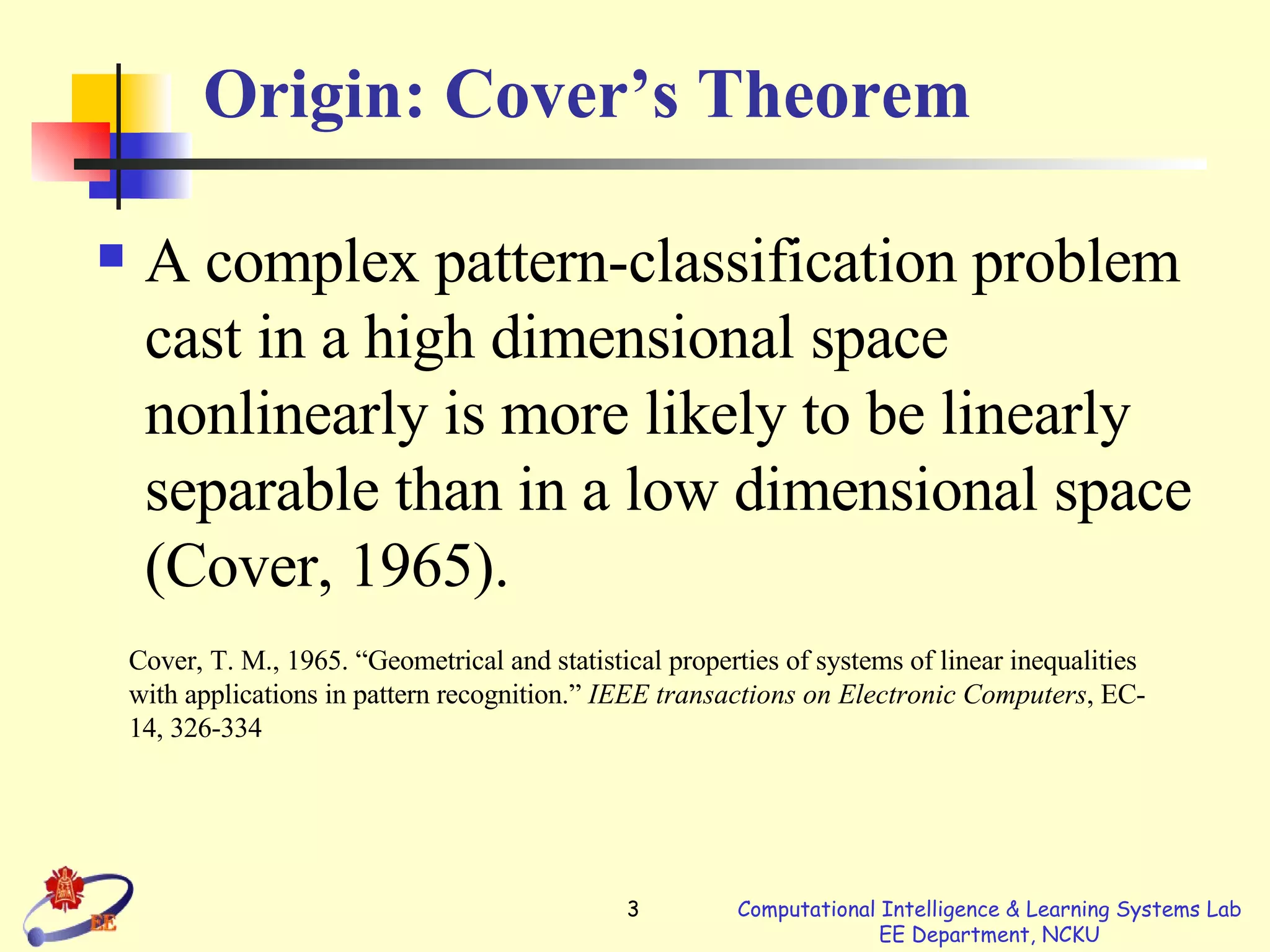
Origin: Cover’s Theorem A complex pattern-classification problem cast in a high dimensional space nonlinearly is more likely to be linearly separable than in a low dimensional space (Cover, 1965). Cover, T. M., 1965. “Geometrical and statistical properties of systems of linear inequalities with applications in pattern recognition.”  IEEE transactions on Electronic Computers , EC-14, 326-334
Cover’s Theorem Covers’ theorem on separability of patterns (1965) x 1 ,  x 2 , …,  x N ,   x i      p ,  are   assigned to two classes  C 1   and  C 2  -separability: where    ( x ) = [  1 ( x ),   2 ( x ), …,  M ( x )] T.
Cover’s Theorem (cont’d) Two basic ingredients of Covers’ theorem: Nonlinear functions   ( x ) Dimensions of hidden space ( M ) >  Dimensions of input space ( P ) -> probability of separability closer to 1 (a) (b) (c) Linear Separable Spherically Separable Quadrically Separable x x x x x x x x
Interpolation Problem Given points ( x i ,  d i ),  x i   p ,  d i   , 1 ≤  i  ≤  N: Find  F ( x i ) =  d i , 1 ≤  i  ≤  N Radial basis function (RBF) technique (Powell, 1988):  are arbitrary nonlinear functions  Number of functions is the same as number of data points Centers are fixed at known points  x i .
Interpolation Problem (cont’d) Matrix form:  Vital question: Is     non-singular? where
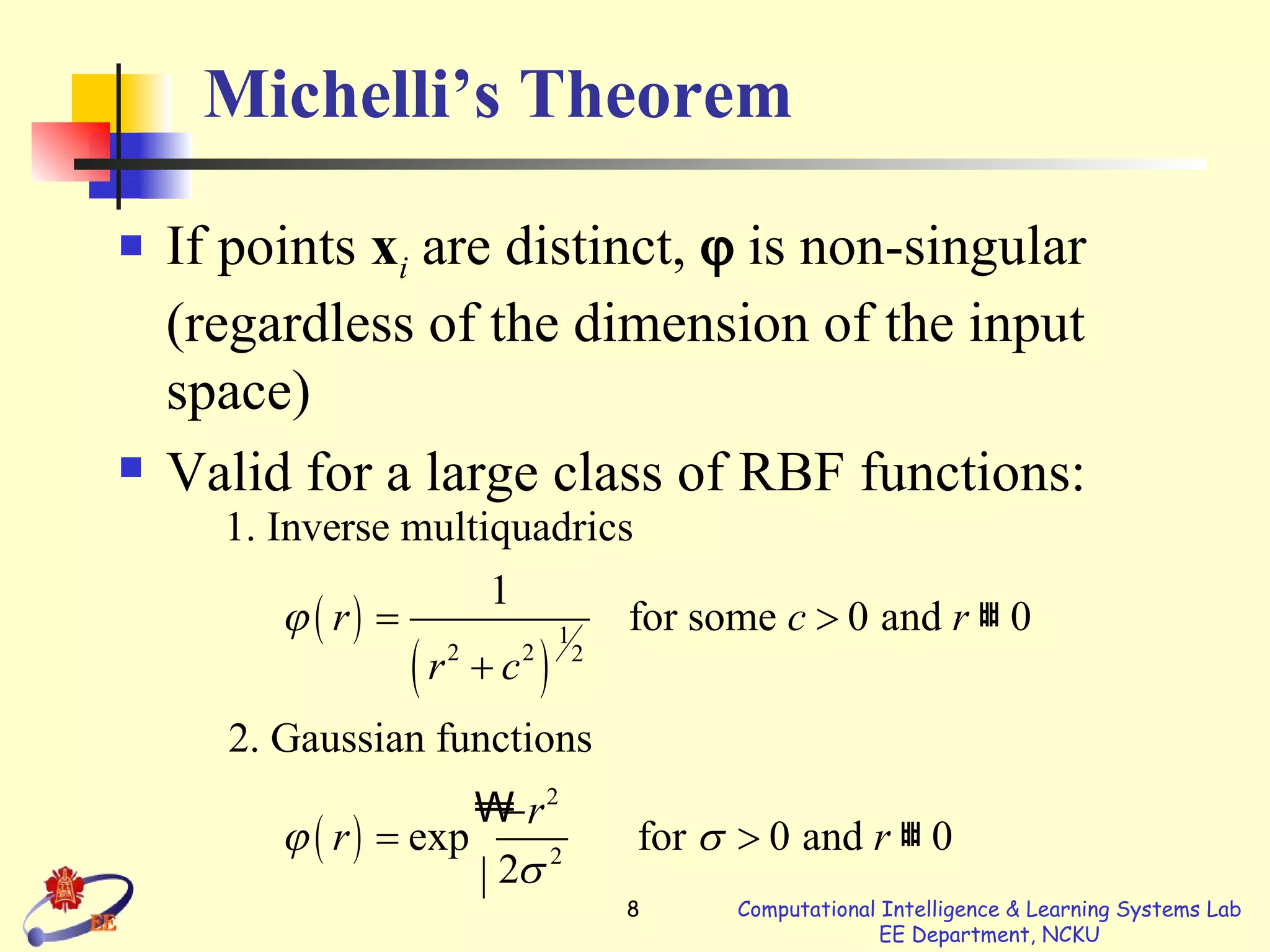
Michelli’s Theorem If points  x i   are distinct,    is non-singular (regardless of the dimension of the input space) Valid for a large class of RBF functions:
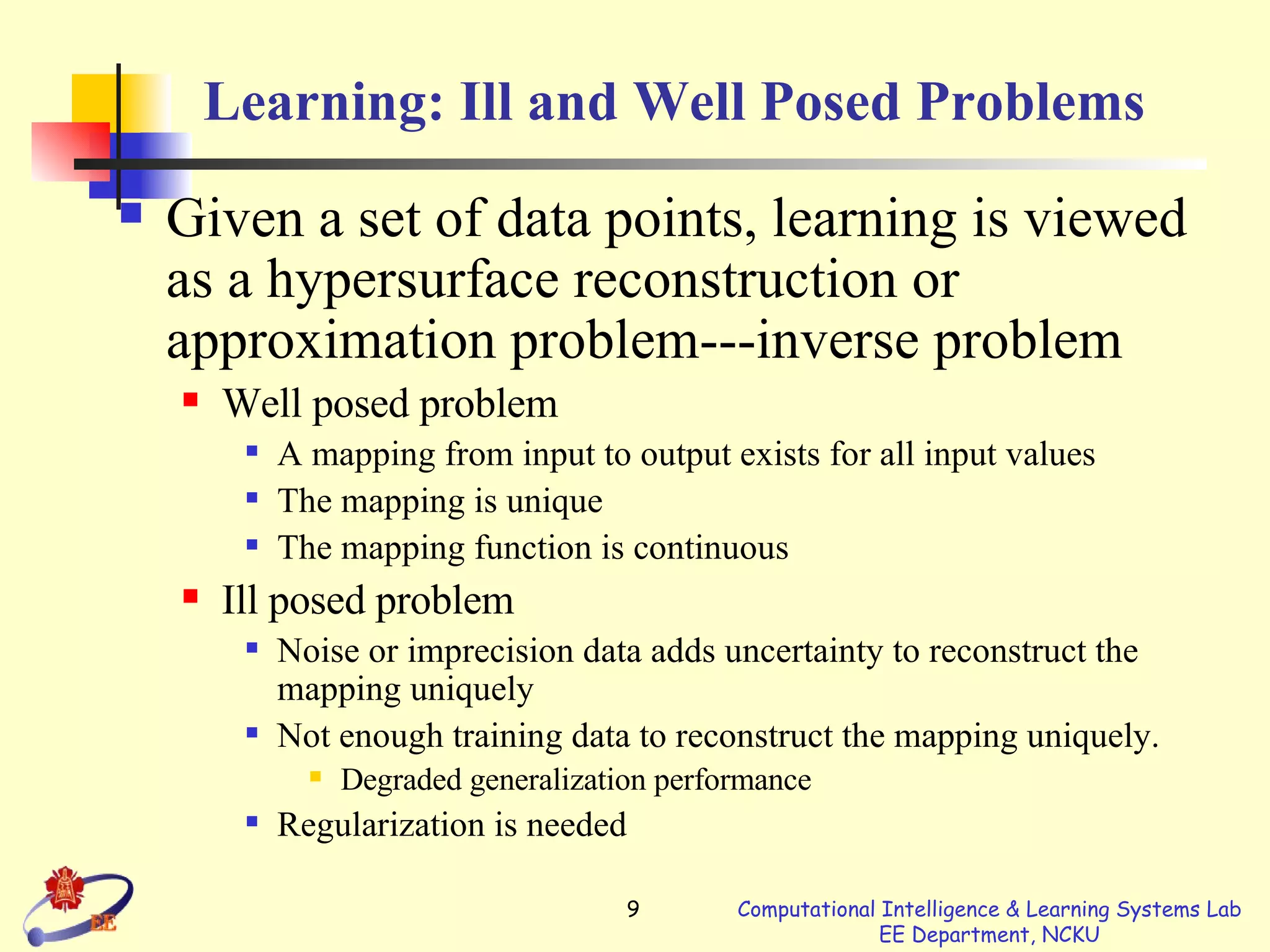
Learning: Ill and Well Posed Problems Given a set of data points, learning is viewed as a hypersurface reconstruction or approximation problem---inverse problem Well posed problem A mapping from input to output exists for all input values The mapping is unique The mapping function is continuous Ill posed problem Noise or imprecision data adds uncertainty to reconstruct the mapping uniquely Not enough training data to reconstruct the mapping uniquely. Degraded generalization performance Regularization is needed
Regularization Theory The basic idea of regularization is to stabilize the solution by means of some auxiliary functions that embeds prior information, e.g., smoothness constraints on the input-output mapping (i.e., solution to the approximation problem), And thereby make an ill-posed problem into a well-posed one. (Poggio and Girosi, 1990).
Solution to the Regularization Problem Minimize the cost function  E ( F ) w.r.t  F Standard error term Regularizing term where    is the regularization parameter
Solution to the Regularization Problem Poggio & Griosi (1990): If  C ( F ) is a (problem-dependent) linear differential operator, the solution to
Interpolation vs Regularization Interpolation Exact interpolator Possible RBF Regularization Exact interpolator Equal to the “interpolation” solution if    = 0 Example of Green’s function
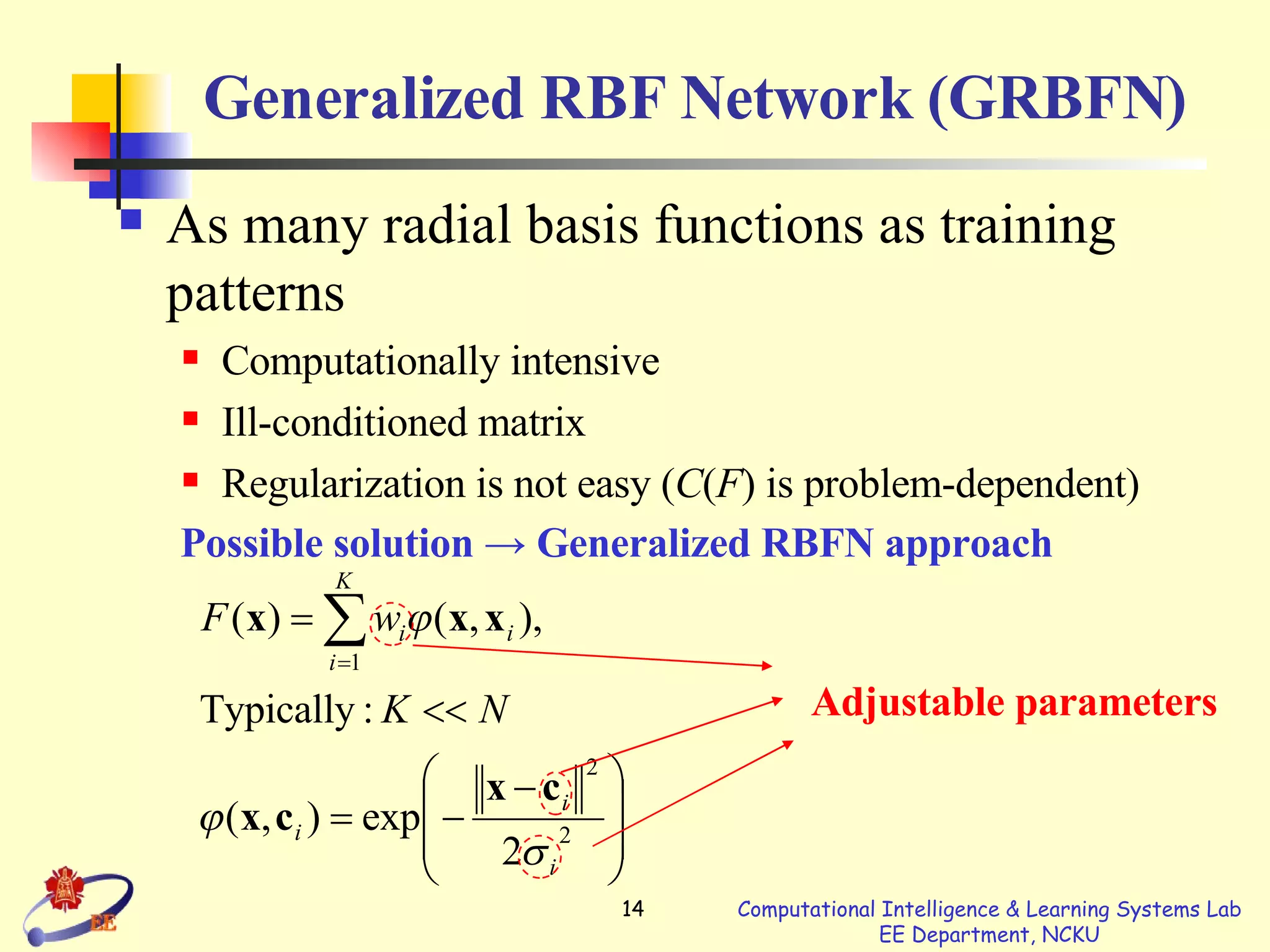
Generalized RBF Network (GRBFN) As many radial basis functions as training patterns Computationally intensive Ill-conditioned matrix Regularization is not easy ( C ( F ) is problem-dependent) Possible solution -> Generalized RBFN approach  Adjustable parameters
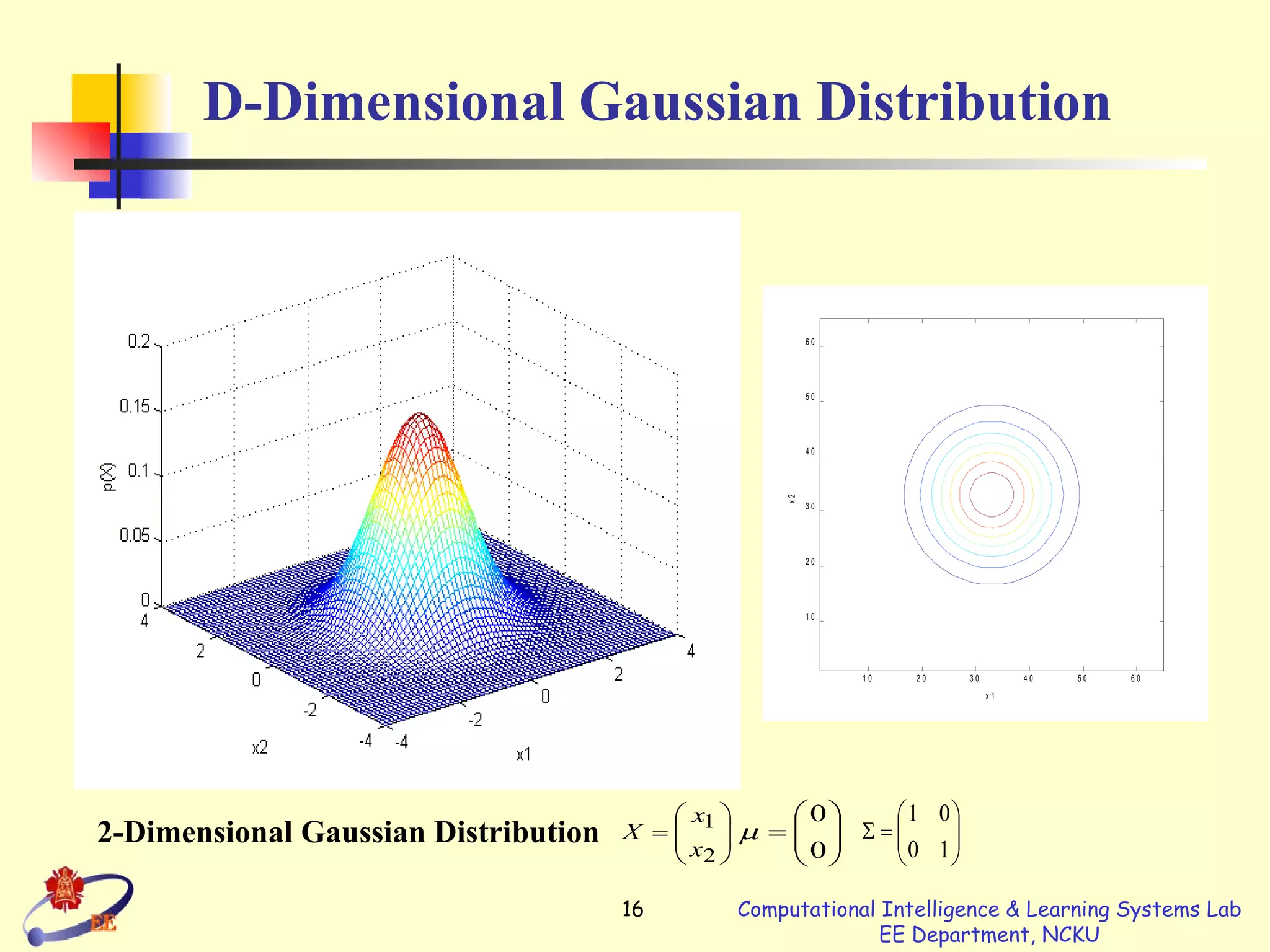
D-Dimensional Gaussian Distribution d -Dimensional Gaussian Distribution (  ind. each other) (General form)
D-Dimensional Gaussian Distribution 2-Dimensional Gaussian Distribution
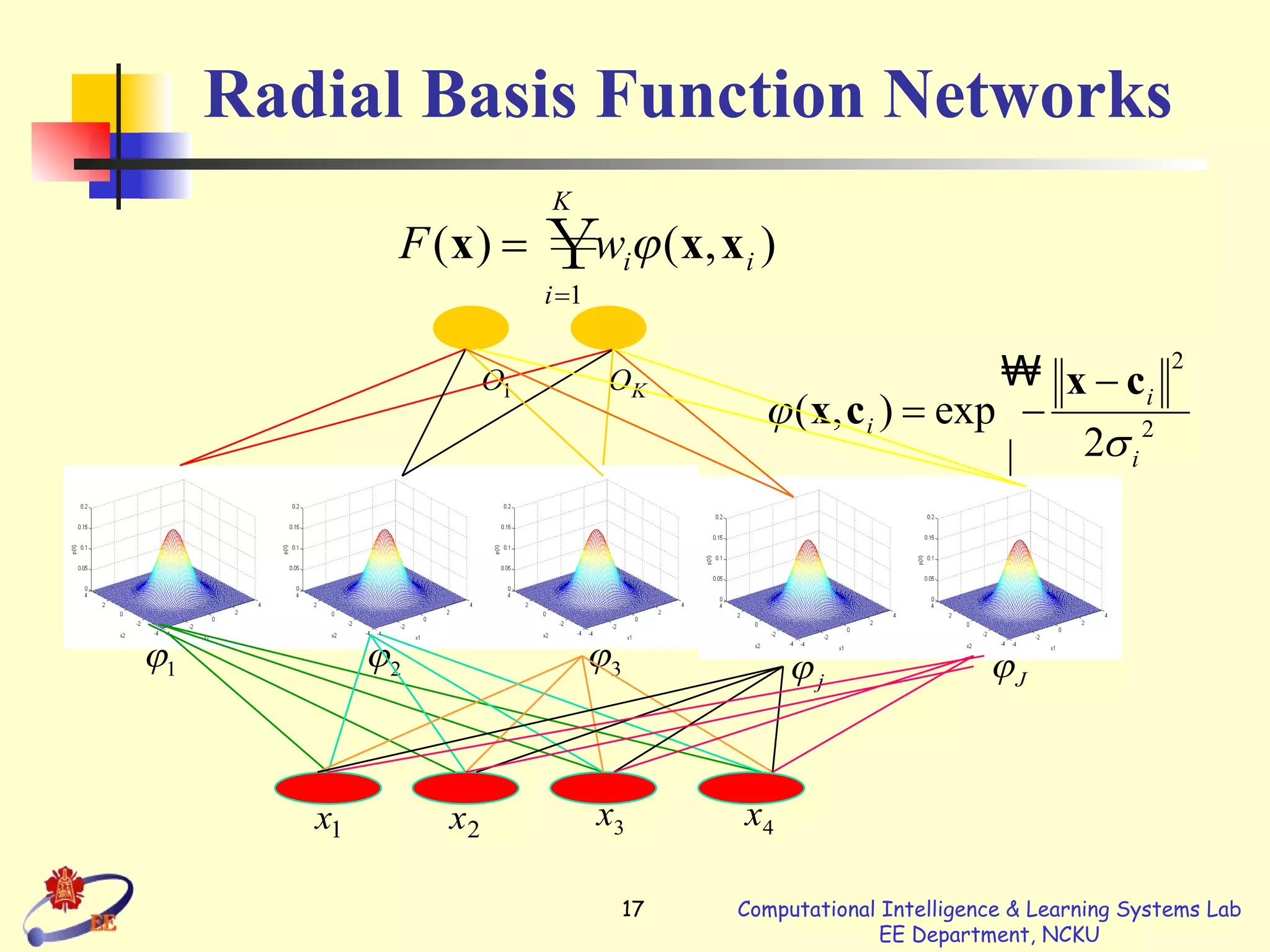
Radial Basis Function Networks
RBFN: Universal Approximation Park & Sandberg (1991): For any continuous input-output mapping function  f ( x ) The theorem is stronger (radial symmetry is not needed) K  is   not specified Provides a theoretical basis for  practical  RBFN!
Kernel Regression Consider the nonlinear regression model : Recall: From probability theory, By using (2) in (1),
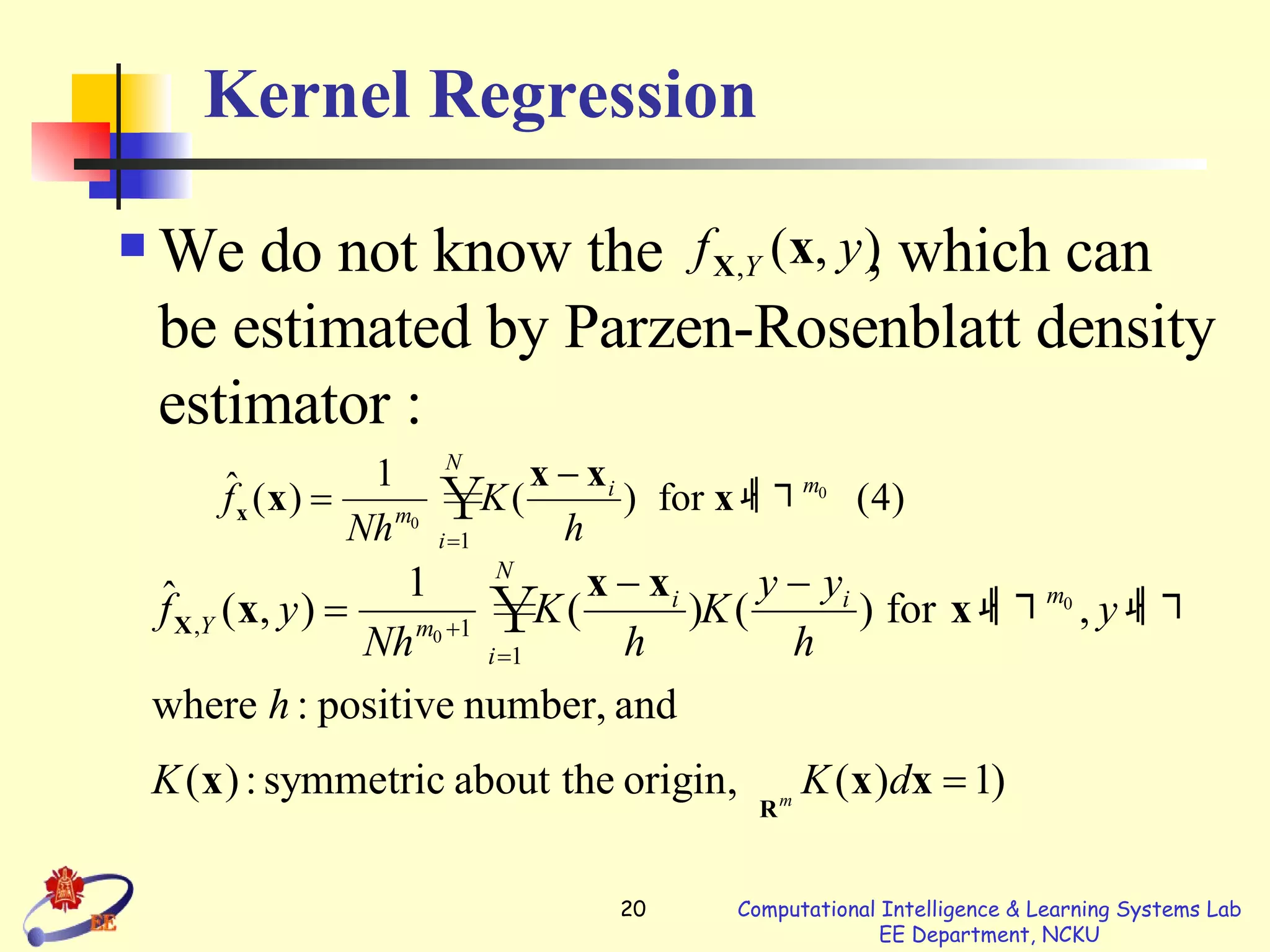
Kernel Regression We do not know the  , which can be estimated by Parzen-Rosenblatt density estimator :
Kernel Regression Integration  and by using  , and using the symmetric property of  K , we get :
Kernel Regression By using (4) and (5) as estimates of part of (3) :
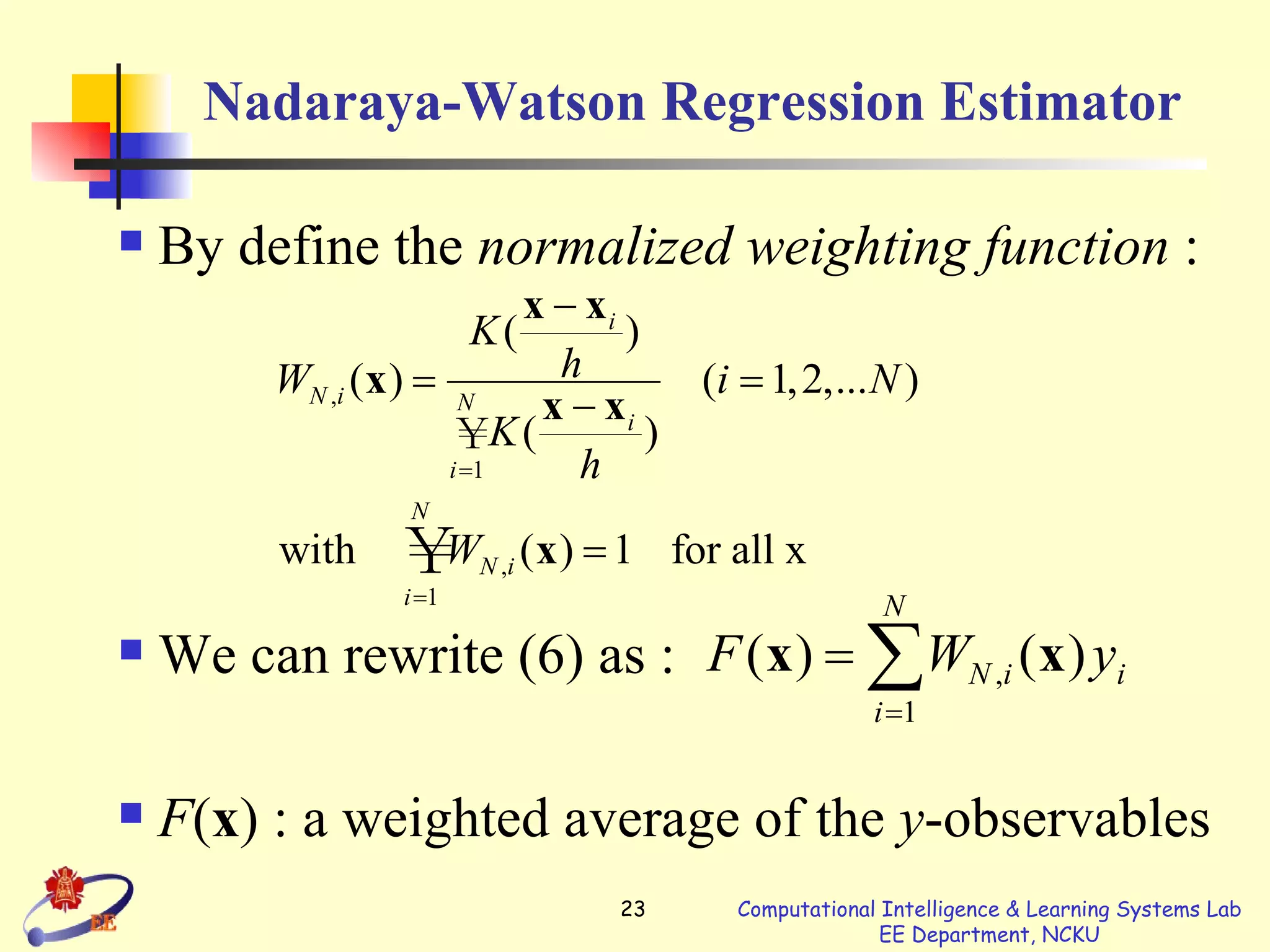
Nadaraya-Watson Regression Estimator By define the  normalized weighting function  : We can rewrite (6) as : F ( x ) : a weighted average of the  y -observables
Normalized RBF Network Assume the spherical symmetry of  K (x), then : Normalized radial basis function is defined:
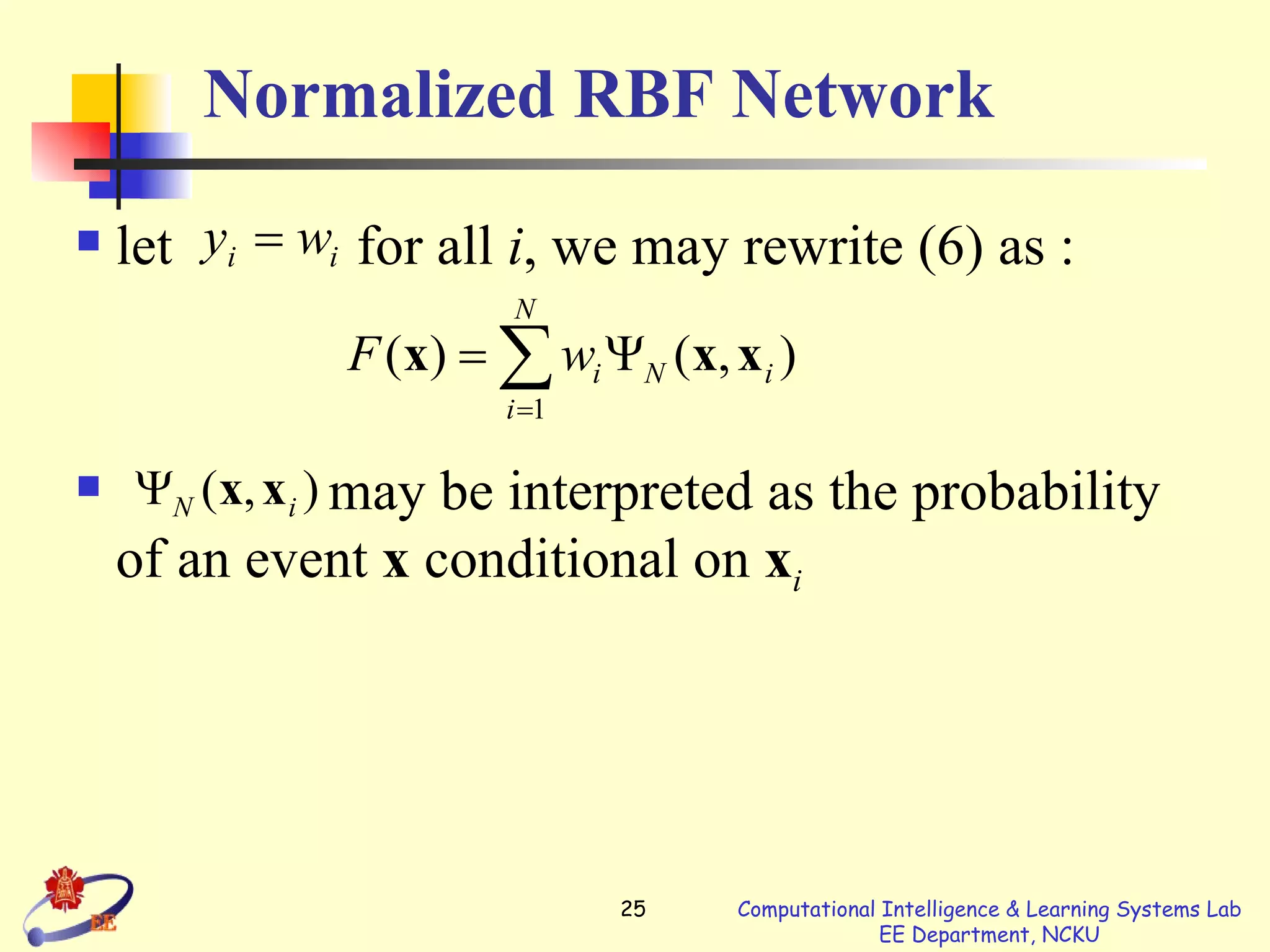
Normalized RBF Network let  for all  i , we may rewrite (6) as : may be interpreted as the probability of an event  x  conditional on  x i
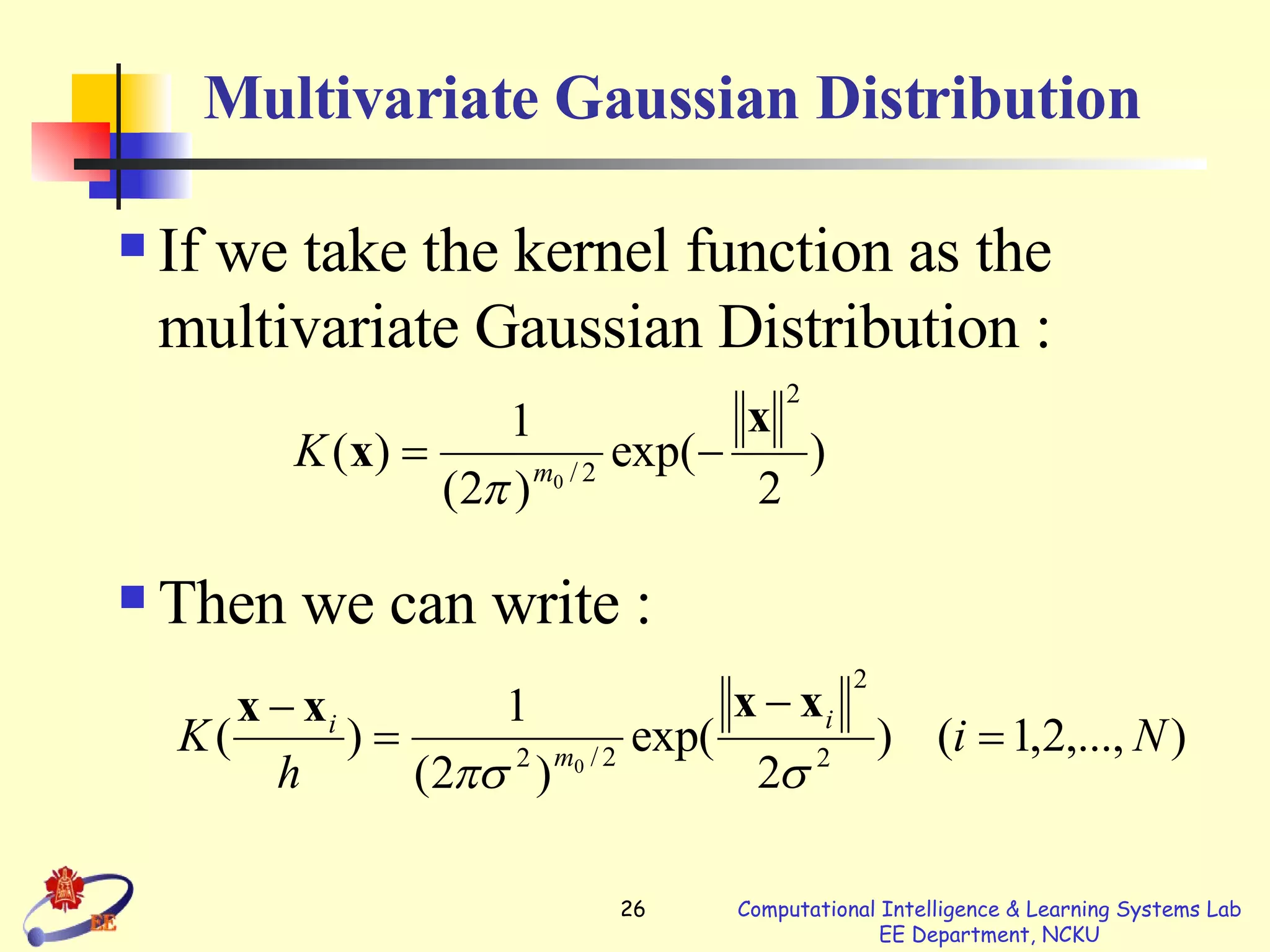
Multivariate Gaussian Distribution If we take the kernel function as the multivariate Gaussian Distribution : Then we can write :
Multivariate Gaussian Distribution And the NRBF is: The centers of the RBF coincide with the data points
RBFN vs MLP RBFN Single hidden layer Nonlinear hidden layer and linear output layer Argument of hidden units: Euclidean norm Universal approximation property Local approximators MPL Single or multiple hidden layers Nonlinear hidden layer and linear  or  nonlinear output layer Argument of hidden units: scalar product Universal approximation property Global approximators
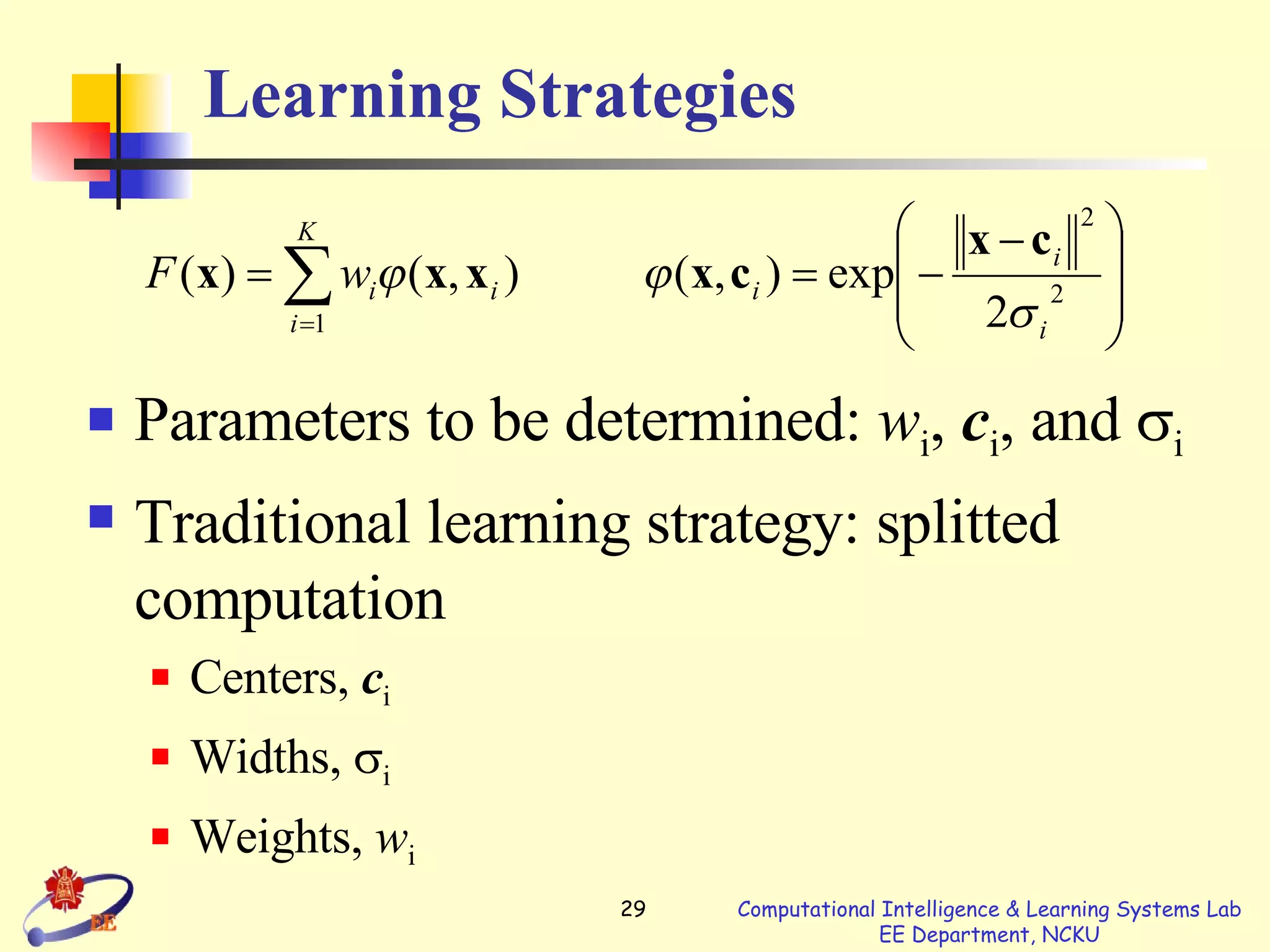
Learning Strategies Parameters to be determined:  w i ,  c i , and   i Traditional learning strategy: splitted computation Centers,  c i Widths,   i Weights,  w i
Computation of Centers Vector quantization: Centers  c i  must have the density properties of training patterns  x i Random selection from the training set Competitive learning Frequency-sensitive learning Kohonen learning This phase only uses the input ( x i ) information, not the output ( d i )
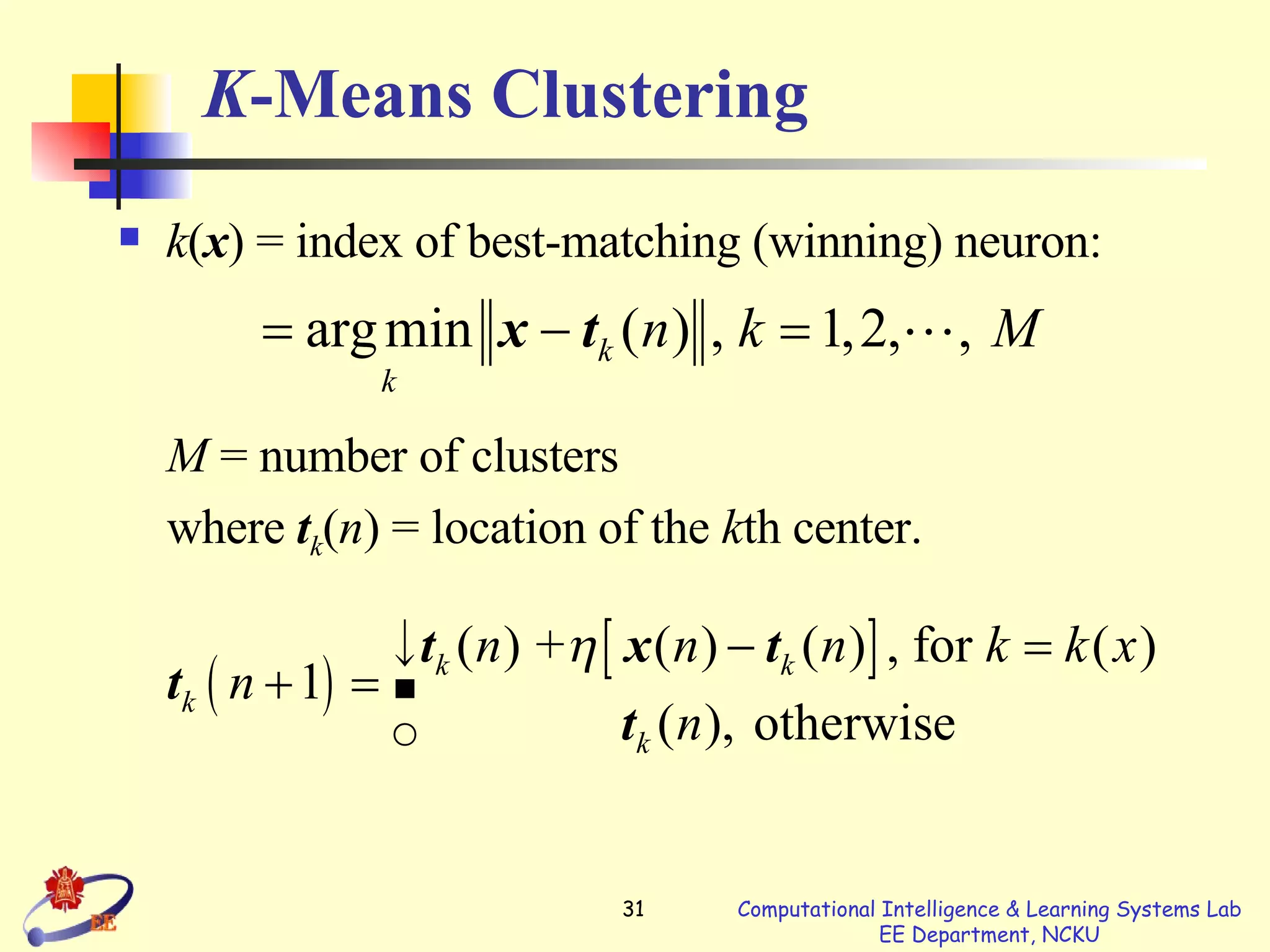
K -Means Clustering k ( x ) = index of best-matching (winning) neuron: M  = number of clusters  where  t k ( n ) = location of the  k th center.
Computation of Widths Universal approximation property: valid with identical widths In practice (limited training patterns), variables widths   i One approach: Use local clusters Select   i  according to the standard deviation of clusters
Computation of Widths (cont’d.) Red-dotted line: Estimated distribution Blue-solid line: Actual distribution
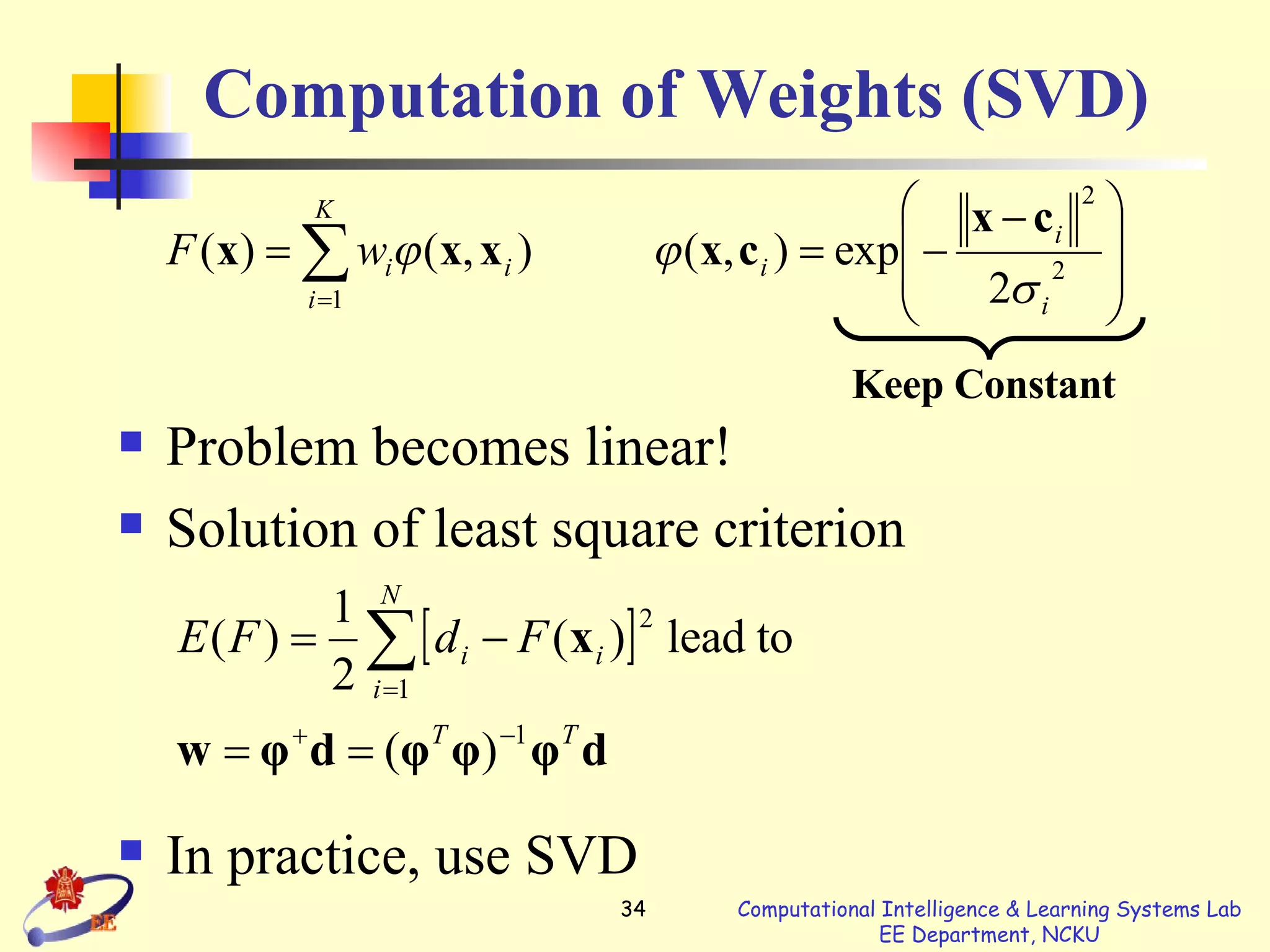
Computation of Weights (SVD) Problem becomes linear! Solution of least square criterion  In practice, use SVD Keep Constant
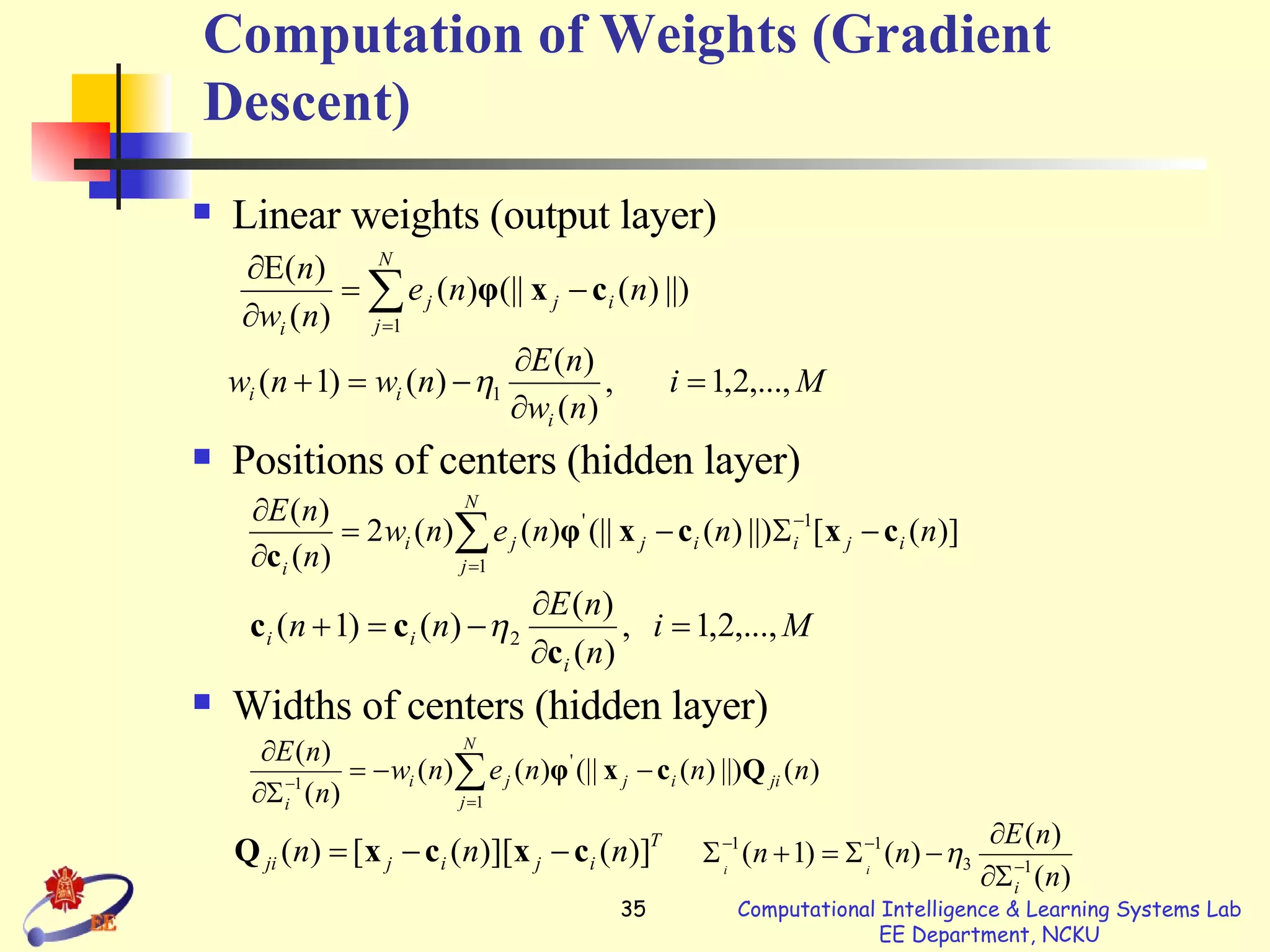
Computation of Weights (Gradient Descent) Linear weights (output layer) Positions of centers (hidden layer) Widths of centers (hidden layer)
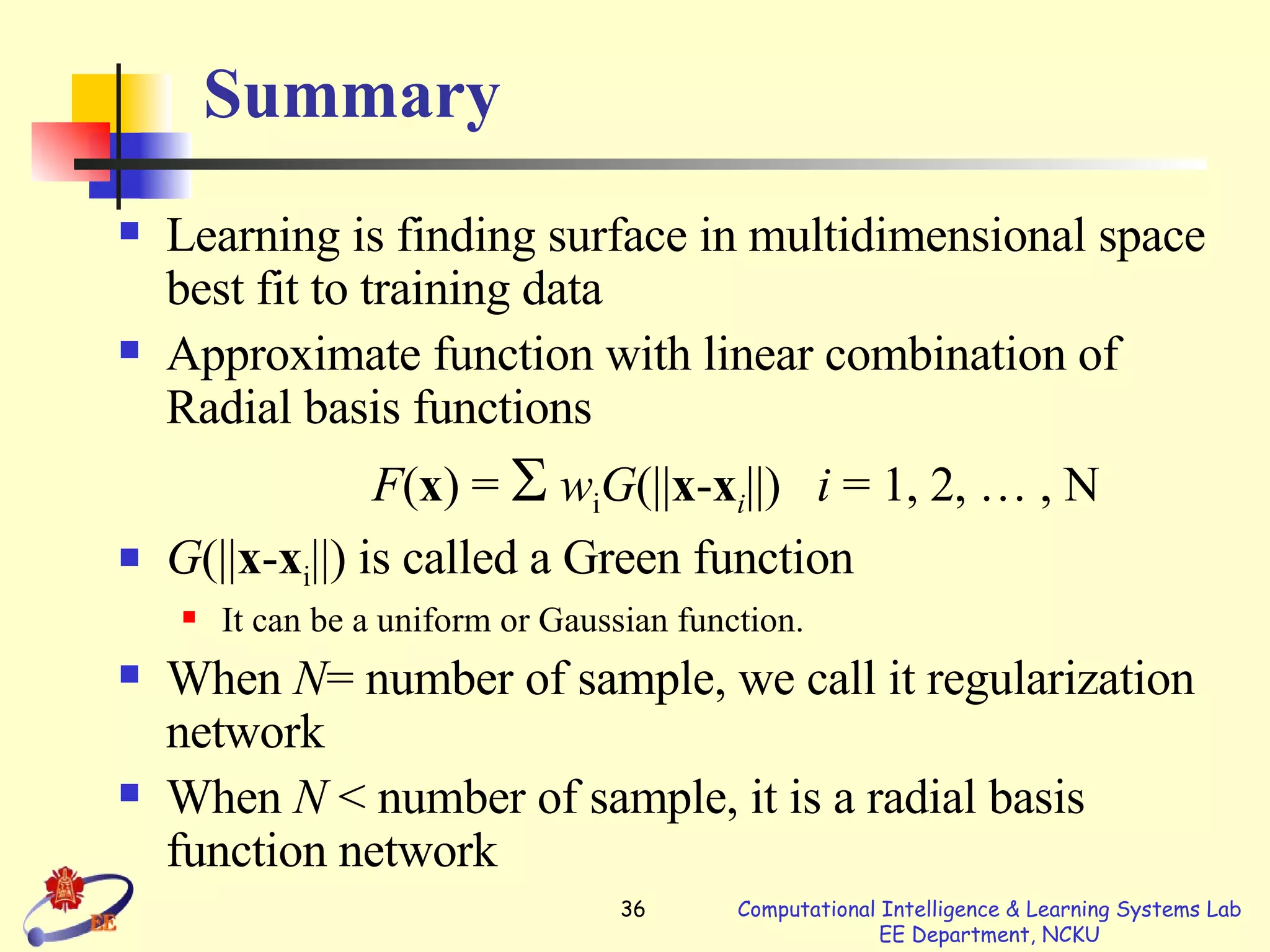
Summary Learning is finding surface in multidimensional space best fit to training data Approximate function with linear combination of Radial basis functions  F ( x ) =     w i G (|| x - x i ||)  i  = 1, 2, … , N G (|| x - x i ||) is called a Green function It can be  a  uniform or Gaussian function . When  N = number of sample, we call it regularization network When  N  < number of sample, it is a radial   basis function network

Section5 Rbf

  • 1.
    Section 5: RadialBasis Function (RBF) Networks Course: Introduction to Neural Networks Instructor: Jeen-Shing Wang Department of Electrical Engineering National Cheng Kung University Fall, 2005
  • 2.
    Outline Origin: Cover’stheorem Interpolation problem Regularization theory Generalized RBFN Universal approximation Comparison with MLP RBFN = Kernel regression Learning Centers, width, and weights Simulations
  • 3.
    Origin: Cover’s TheoremA complex pattern-classification problem cast in a high dimensional space nonlinearly is more likely to be linearly separable than in a low dimensional space (Cover, 1965). Cover, T. M., 1965. “Geometrical and statistical properties of systems of linear inequalities with applications in pattern recognition.” IEEE transactions on Electronic Computers , EC-14, 326-334
  • 4.
    Cover’s Theorem Covers’theorem on separability of patterns (1965) x 1 , x 2 , …, x N , x i   p , are assigned to two classes C 1 and C 2  -separability: where  ( x ) = [  1 ( x ),  2 ( x ), …,  M ( x )] T.
  • 5.
    Cover’s Theorem (cont’d)Two basic ingredients of Covers’ theorem: Nonlinear functions  ( x ) Dimensions of hidden space ( M ) > Dimensions of input space ( P ) -> probability of separability closer to 1 (a) (b) (c) Linear Separable Spherically Separable Quadrically Separable x x x x x x x x
  • 6.
    Interpolation Problem Givenpoints ( x i , d i ), x i   p , d i   , 1 ≤ i ≤ N: Find F ( x i ) = d i , 1 ≤ i ≤ N Radial basis function (RBF) technique (Powell, 1988): are arbitrary nonlinear functions Number of functions is the same as number of data points Centers are fixed at known points x i .
  • 7.
    Interpolation Problem (cont’d)Matrix form: Vital question: Is  non-singular? where
  • 8.
    Michelli’s Theorem Ifpoints x i are distinct,  is non-singular (regardless of the dimension of the input space) Valid for a large class of RBF functions:
  • 9.
    Learning: Ill andWell Posed Problems Given a set of data points, learning is viewed as a hypersurface reconstruction or approximation problem---inverse problem Well posed problem A mapping from input to output exists for all input values The mapping is unique The mapping function is continuous Ill posed problem Noise or imprecision data adds uncertainty to reconstruct the mapping uniquely Not enough training data to reconstruct the mapping uniquely. Degraded generalization performance Regularization is needed
  • 10.
    Regularization Theory Thebasic idea of regularization is to stabilize the solution by means of some auxiliary functions that embeds prior information, e.g., smoothness constraints on the input-output mapping (i.e., solution to the approximation problem), And thereby make an ill-posed problem into a well-posed one. (Poggio and Girosi, 1990).
  • 11.
    Solution to theRegularization Problem Minimize the cost function E ( F ) w.r.t F Standard error term Regularizing term where  is the regularization parameter
  • 12.
    Solution to theRegularization Problem Poggio & Griosi (1990): If C ( F ) is a (problem-dependent) linear differential operator, the solution to
  • 13.
    Interpolation vs RegularizationInterpolation Exact interpolator Possible RBF Regularization Exact interpolator Equal to the “interpolation” solution if  = 0 Example of Green’s function
  • 14.
    Generalized RBF Network(GRBFN) As many radial basis functions as training patterns Computationally intensive Ill-conditioned matrix Regularization is not easy ( C ( F ) is problem-dependent) Possible solution -> Generalized RBFN approach Adjustable parameters
  • 15.
    D-Dimensional Gaussian Distributiond -Dimensional Gaussian Distribution ( ind. each other) (General form)
  • 16.
    D-Dimensional Gaussian Distribution2-Dimensional Gaussian Distribution
  • 17.
  • 18.
    RBFN: Universal ApproximationPark & Sandberg (1991): For any continuous input-output mapping function f ( x ) The theorem is stronger (radial symmetry is not needed) K is not specified Provides a theoretical basis for practical RBFN!
  • 19.
    Kernel Regression Considerthe nonlinear regression model : Recall: From probability theory, By using (2) in (1),
  • 20.
    Kernel Regression Wedo not know the , which can be estimated by Parzen-Rosenblatt density estimator :
  • 21.
    Kernel Regression Integration and by using , and using the symmetric property of K , we get :
  • 22.
    Kernel Regression Byusing (4) and (5) as estimates of part of (3) :
  • 23.
    Nadaraya-Watson Regression EstimatorBy define the normalized weighting function : We can rewrite (6) as : F ( x ) : a weighted average of the y -observables
  • 24.
    Normalized RBF NetworkAssume the spherical symmetry of K (x), then : Normalized radial basis function is defined:
  • 25.
    Normalized RBF Networklet for all i , we may rewrite (6) as : may be interpreted as the probability of an event x conditional on x i
  • 26.
    Multivariate Gaussian DistributionIf we take the kernel function as the multivariate Gaussian Distribution : Then we can write :
  • 27.
    Multivariate Gaussian DistributionAnd the NRBF is: The centers of the RBF coincide with the data points
  • 28.
    RBFN vs MLPRBFN Single hidden layer Nonlinear hidden layer and linear output layer Argument of hidden units: Euclidean norm Universal approximation property Local approximators MPL Single or multiple hidden layers Nonlinear hidden layer and linear or nonlinear output layer Argument of hidden units: scalar product Universal approximation property Global approximators
  • 29.
    Learning Strategies Parametersto be determined: w i , c i , and  i Traditional learning strategy: splitted computation Centers, c i Widths,  i Weights, w i
  • 30.
    Computation of CentersVector quantization: Centers c i must have the density properties of training patterns x i Random selection from the training set Competitive learning Frequency-sensitive learning Kohonen learning This phase only uses the input ( x i ) information, not the output ( d i )
  • 31.
    K -Means Clusteringk ( x ) = index of best-matching (winning) neuron: M = number of clusters where t k ( n ) = location of the k th center.
  • 32.
    Computation of WidthsUniversal approximation property: valid with identical widths In practice (limited training patterns), variables widths  i One approach: Use local clusters Select  i according to the standard deviation of clusters
  • 33.
    Computation of Widths(cont’d.) Red-dotted line: Estimated distribution Blue-solid line: Actual distribution
  • 34.
    Computation of Weights(SVD) Problem becomes linear! Solution of least square criterion In practice, use SVD Keep Constant
  • 35.
    Computation of Weights(Gradient Descent) Linear weights (output layer) Positions of centers (hidden layer) Widths of centers (hidden layer)
  • 36.
    Summary Learning isfinding surface in multidimensional space best fit to training data Approximate function with linear combination of Radial basis functions F ( x ) =  w i G (|| x - x i ||) i = 1, 2, … , N G (|| x - x i ||) is called a Green function It can be a uniform or Gaussian function . When N = number of sample, we call it regularization network When N < number of sample, it is a radial basis function network

Editor's Notes

  • #2 Good morning. First of all, I would like to thank you for attending my today’s presentation. My name is Jeen-Shing Wang and the topic for my today’s presentation is “ on the structure and learning of self-adaptive neuro-fuzzy inference systems .