Downloaded 189 times


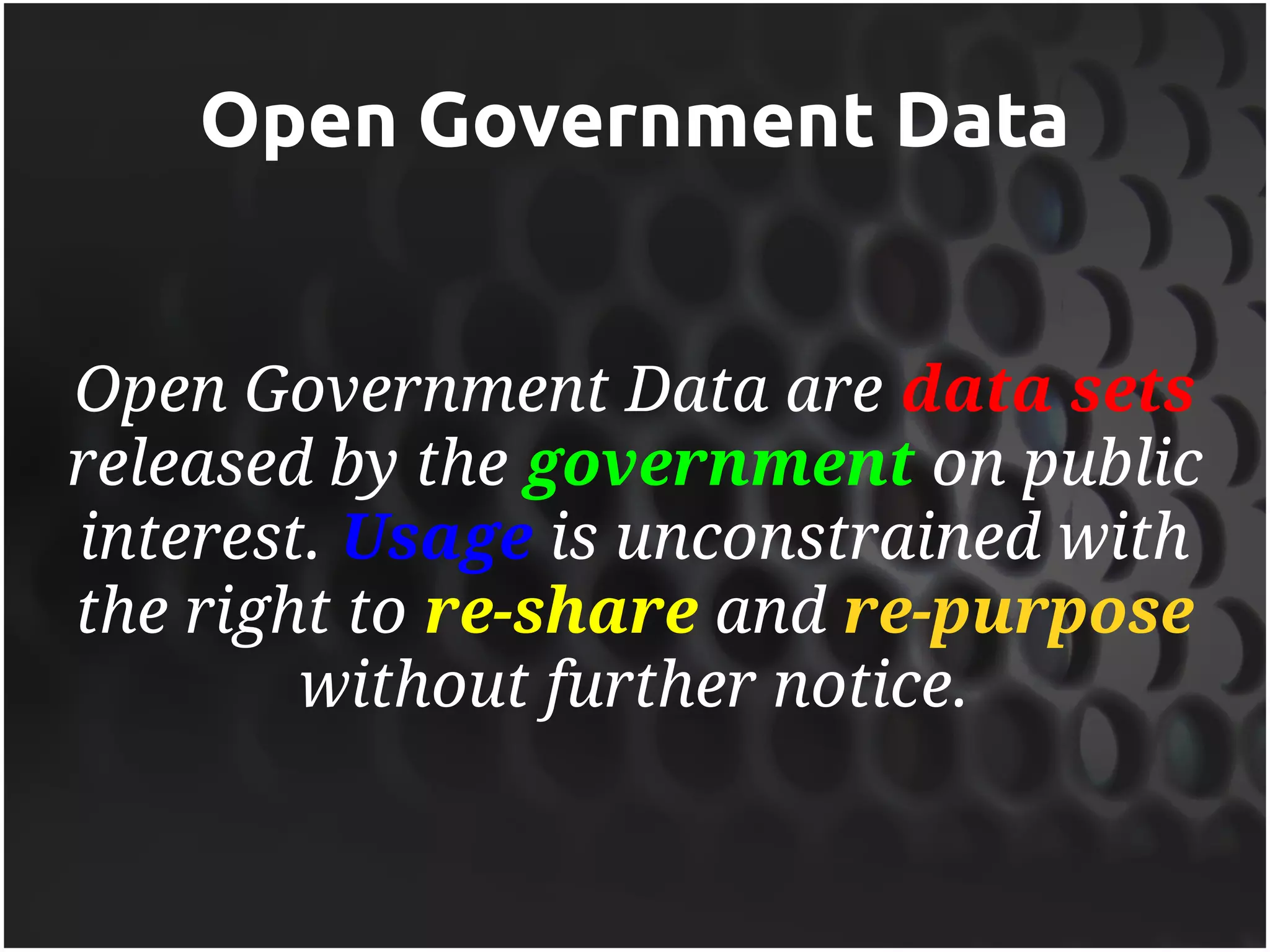
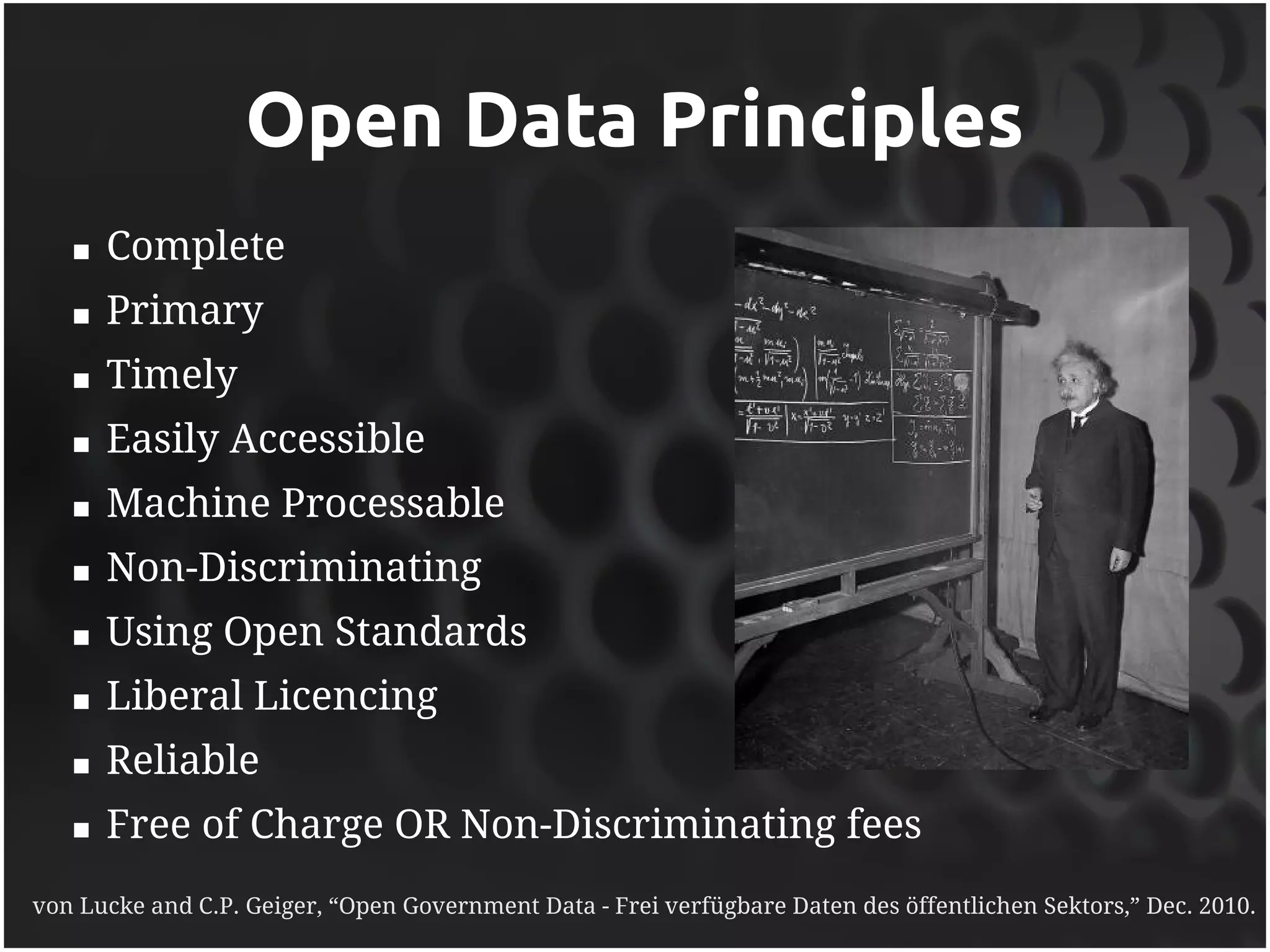
![Literature Research
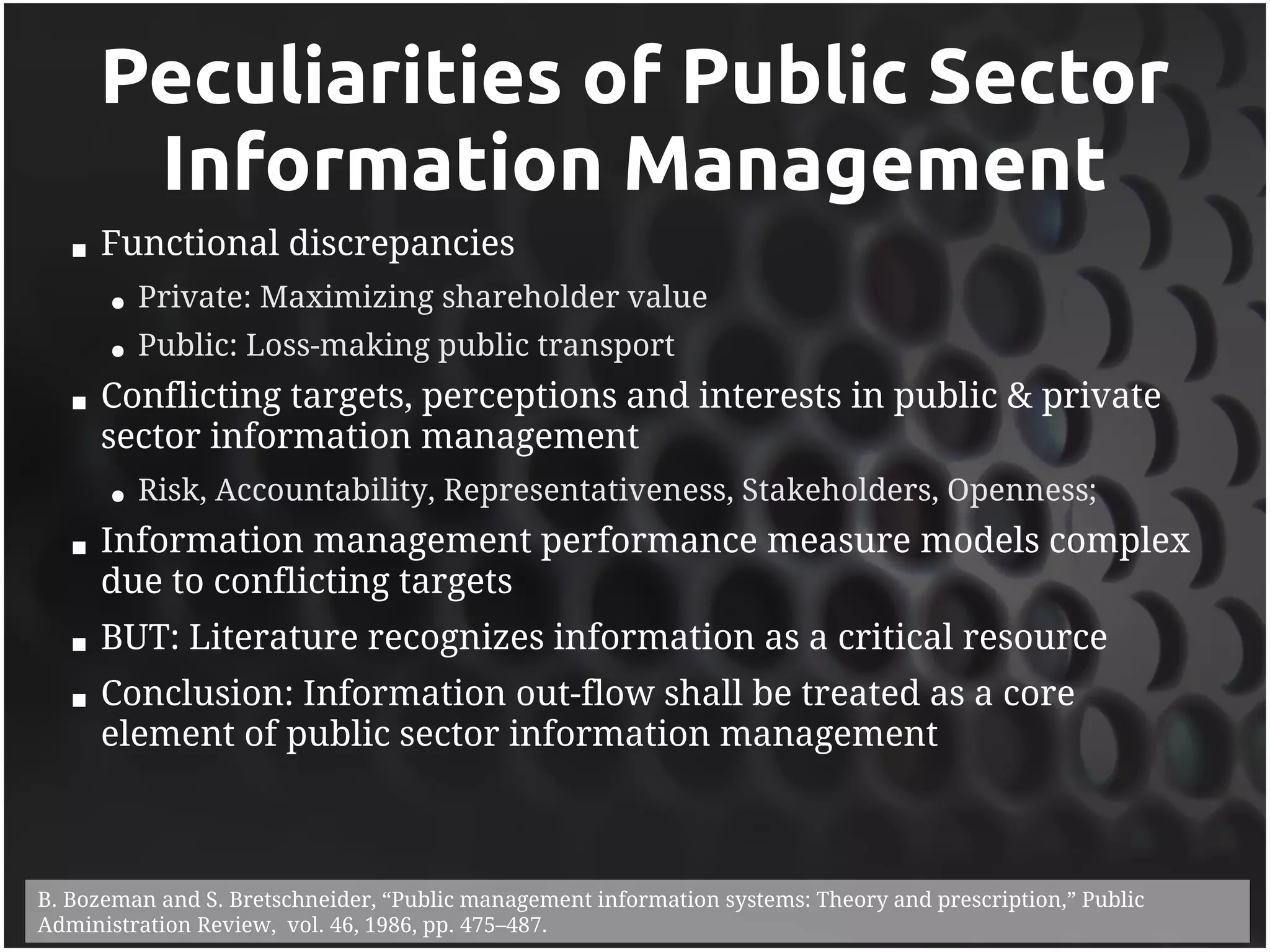
[1] J. White, Managing information in the public sector, Armonk N.Y.: M.E. Sharpe, 2007.
[2] C.M. Shea and G.D. Garson, Handbook of public information systems, Taylor & Francis Group, 2010.
[3] B. Rocheleau, Public management information systems, Hershey PA: Idea Group Pub., 2006.](https://image.slidesharecdn.com/olgdstrategischesinformationsmanagement-110120030917-phpapp02/75/Open-Linked-Data-as-Part-of-a-Government-Enterprise-Architecture-30-2048.jpg)
![Architecture (0)
3 0
1 2
URI
Web Interface
Service
RDF-Browser Javascript Libraries
Discovery
api.data.gv.at data.gv.at proxy.data.gv.at Service
[0] Identify an Open Data Set](https://image.slidesharecdn.com/olgdstrategischesinformationsmanagement-110120030917-phpapp02/75/Open-Linked-Data-as-Part-of-a-Government-Enterprise-Architecture-44-2048.jpg)
![Architecture (1)
3 0
1 2
URI
Web Interface
Service
RDF-Browser Javascript Libraries
Discovery
api.data.gv.at data.gv.at proxy.data.gv.at Service
[0] Identify an Open Data Set
[1] Browse Url / Uri (eg. http://bildung.krems.noe.data.gv.at/schule/4711)](https://image.slidesharecdn.com/olgdstrategischesinformationsmanagement-110120030917-phpapp02/75/Open-Linked-Data-as-Part-of-a-Government-Enterprise-Architecture-45-2048.jpg)
![Architecture (2)
3 0
1 2
URI
Web Interface
Service
RDF-Browser Javascript Libraries
Discovery
api.data.gv.at data.gv.at proxy.data.gv.at Service
[0] Identify an Open Data Set
[1] Browse Url / Uri (eg. http://bildung.krems.noe.data.gv.at/schule/4711)
[2] Transfer minimal Web Page with
Javascript RDF-Browser](https://image.slidesharecdn.com/olgdstrategischesinformationsmanagement-110120030917-phpapp02/75/Open-Linked-Data-as-Part-of-a-Government-Enterprise-Architecture-46-2048.jpg)
![Architecture (3)
3 0
1 2
URI
Web Interface
Service
RDF-Browser Javascript Libraries
Discovery
api.data.gv.at data.gv.at proxy.data.gv.at Service
[0] Identify an Open Data Set
[1] Browse Url / Uri (eg. http://bildung.krems.noe.data.gv.at/schule/4711)
[2] Transfer minimal Web Page with
Javascript RDF-Browser
[3] Retrieve Data using OGD API](https://image.slidesharecdn.com/olgdstrategischesinformationsmanagement-110120030917-phpapp02/75/Open-Linked-Data-as-Part-of-a-Government-Enterprise-Architecture-47-2048.jpg)
![Architecture (4)
3 0
1 2
URI
Web Interface
Service
RDF-Browser Javascript Libraries
Discovery
api.data.gv.at data.gv.at proxy.data.gv.at Service
4'
Externe Sicht 5
Interne Sicht
4
DB1 RDF RDF
RDF DB DB
Datenbank DB2
Org 2 Org 3
Organisation
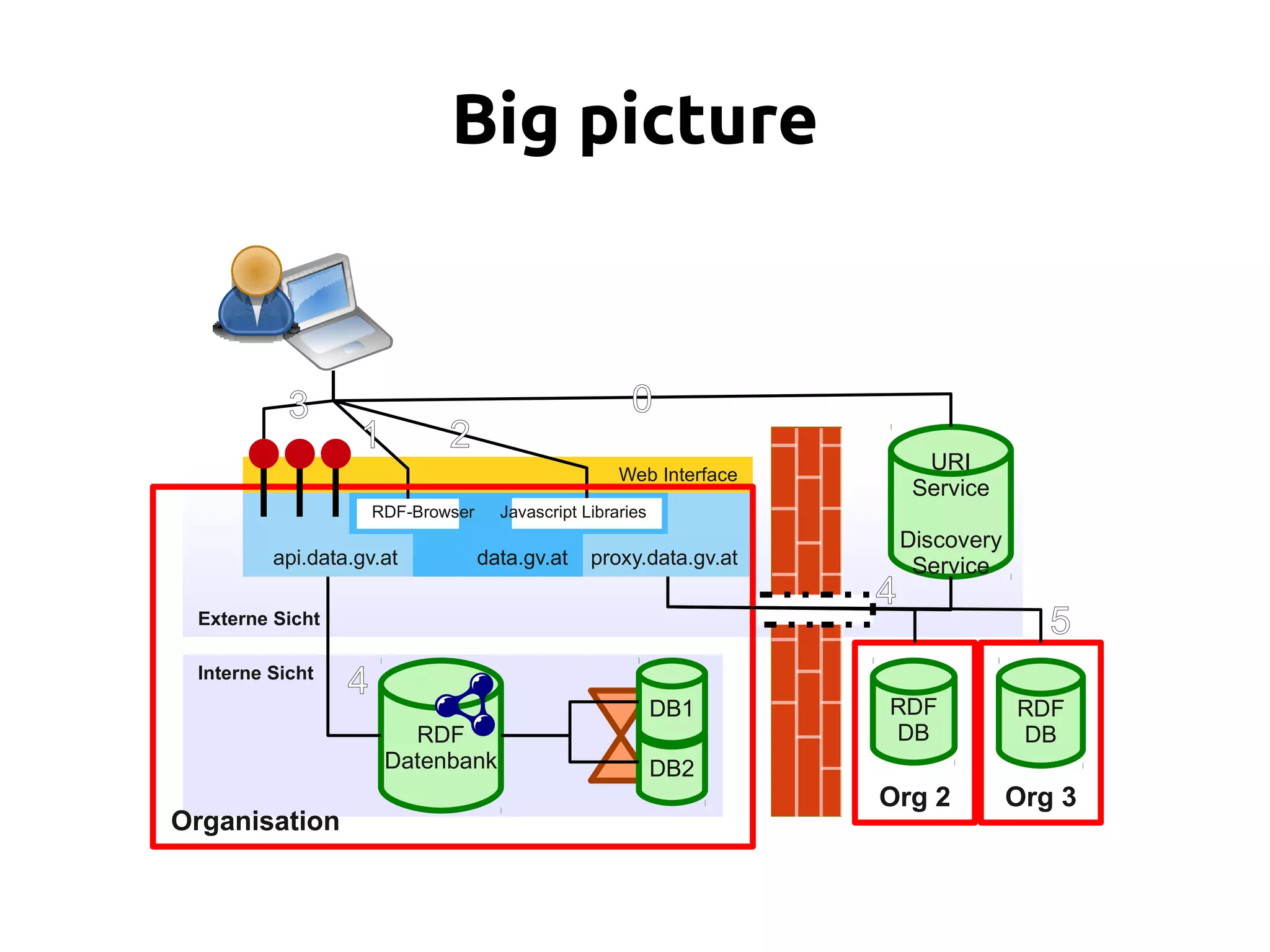
[4] Query RDF-Database](https://image.slidesharecdn.com/olgdstrategischesinformationsmanagement-110120030917-phpapp02/75/Open-Linked-Data-as-Part-of-a-Government-Enterprise-Architecture-48-2048.jpg)
![3
1
RDF-Browser
0
Web Interface
Javascript Libraries
URI
Service
Architecture (4')
Discovery
api.data.gv.at data.gv.at proxy.data.gv.at Service
4'
Externe Sicht
Interne Sicht
4
DB1 RDF RDF
RDF DB DB
Datenbank DB2
Org 2 Org 3
Organisation
[4] Query RDF-Database
[4'] Use HTTP-Proxy to Query Databases
outside Internet Domain](https://image.slidesharecdn.com/olgdstrategischesinformationsmanagement-110120030917-phpapp02/75/Open-Linked-Data-as-Part-of-a-Government-Enterprise-Architecture-49-2048.jpg)


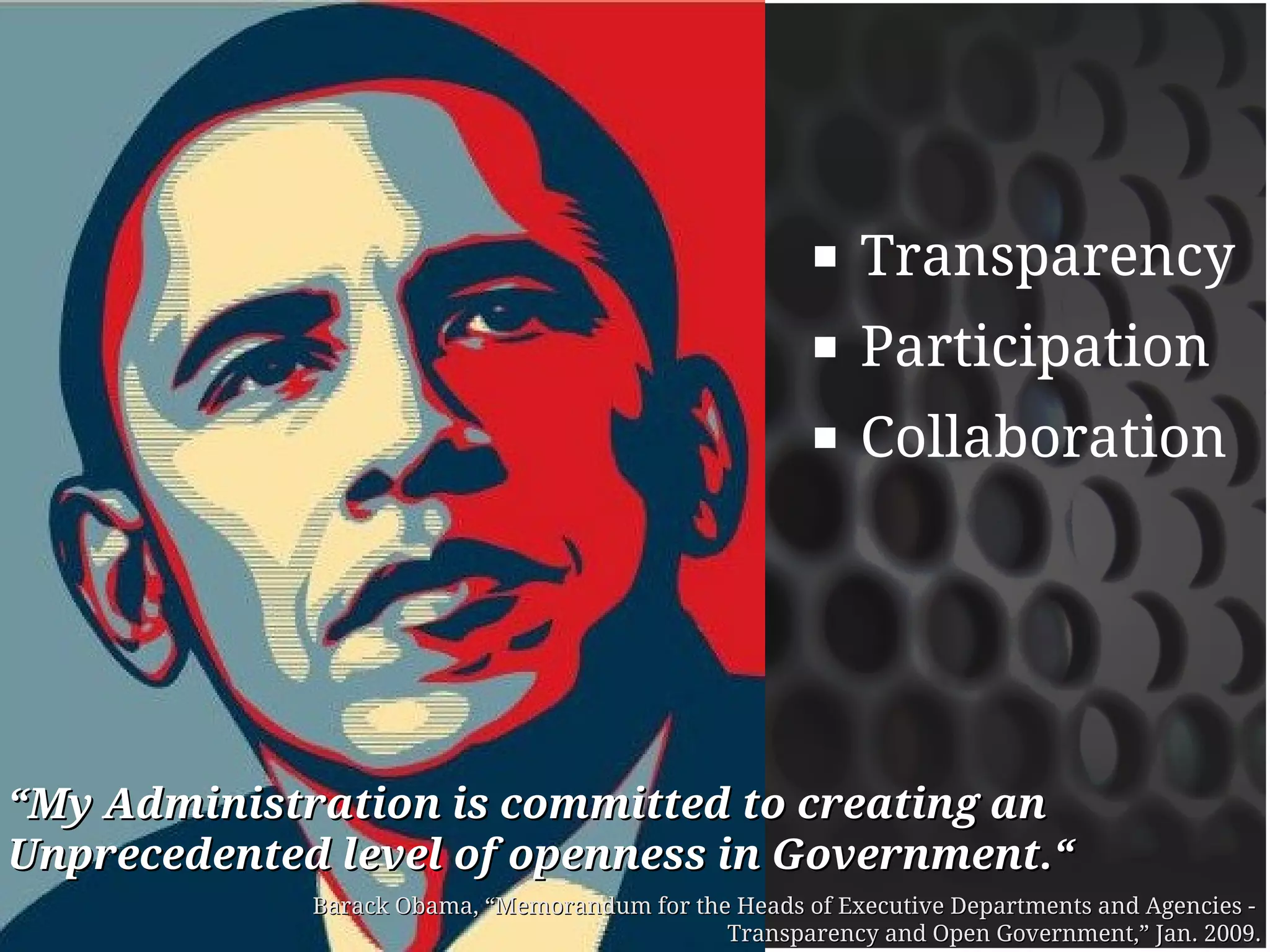
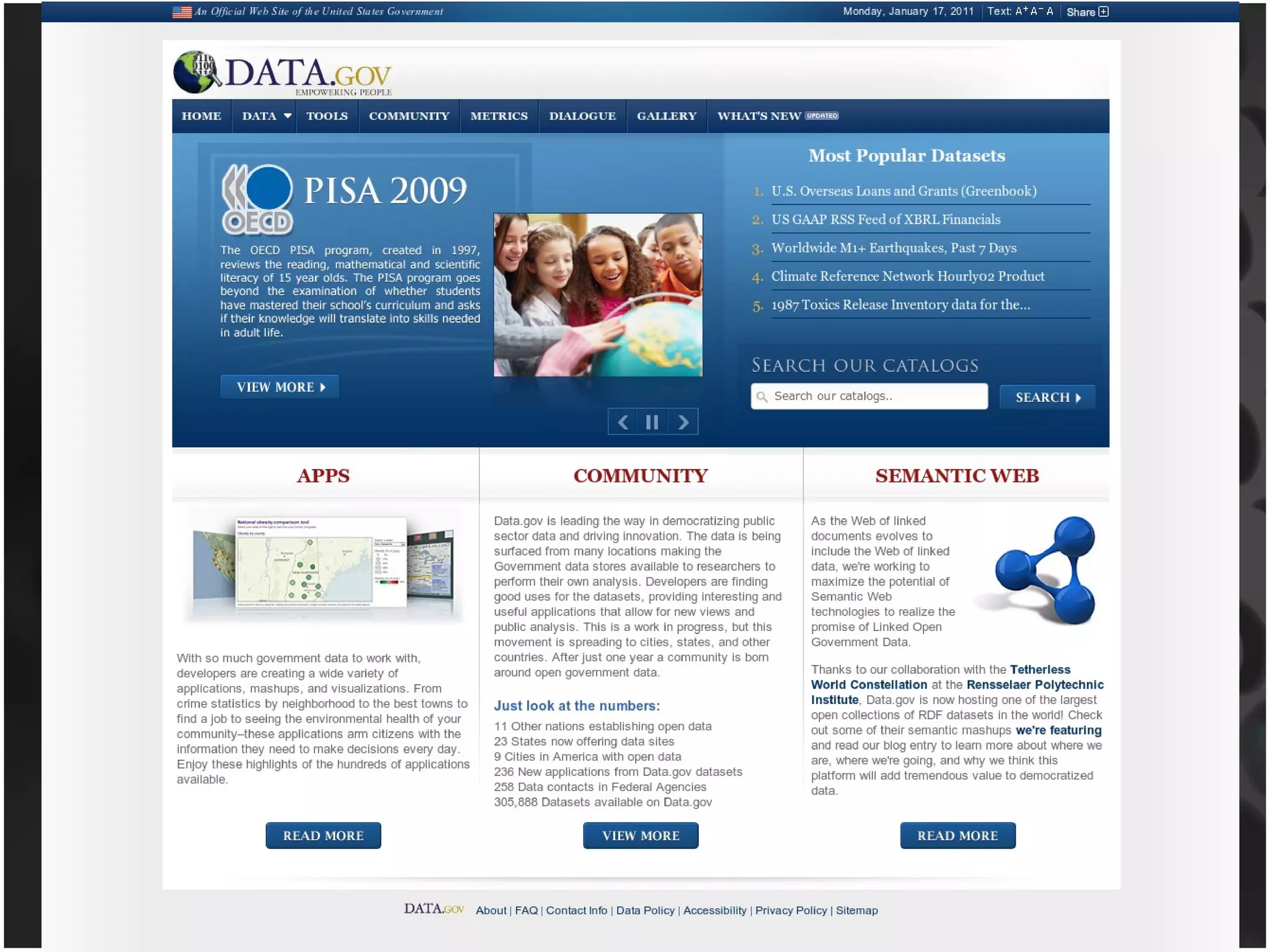
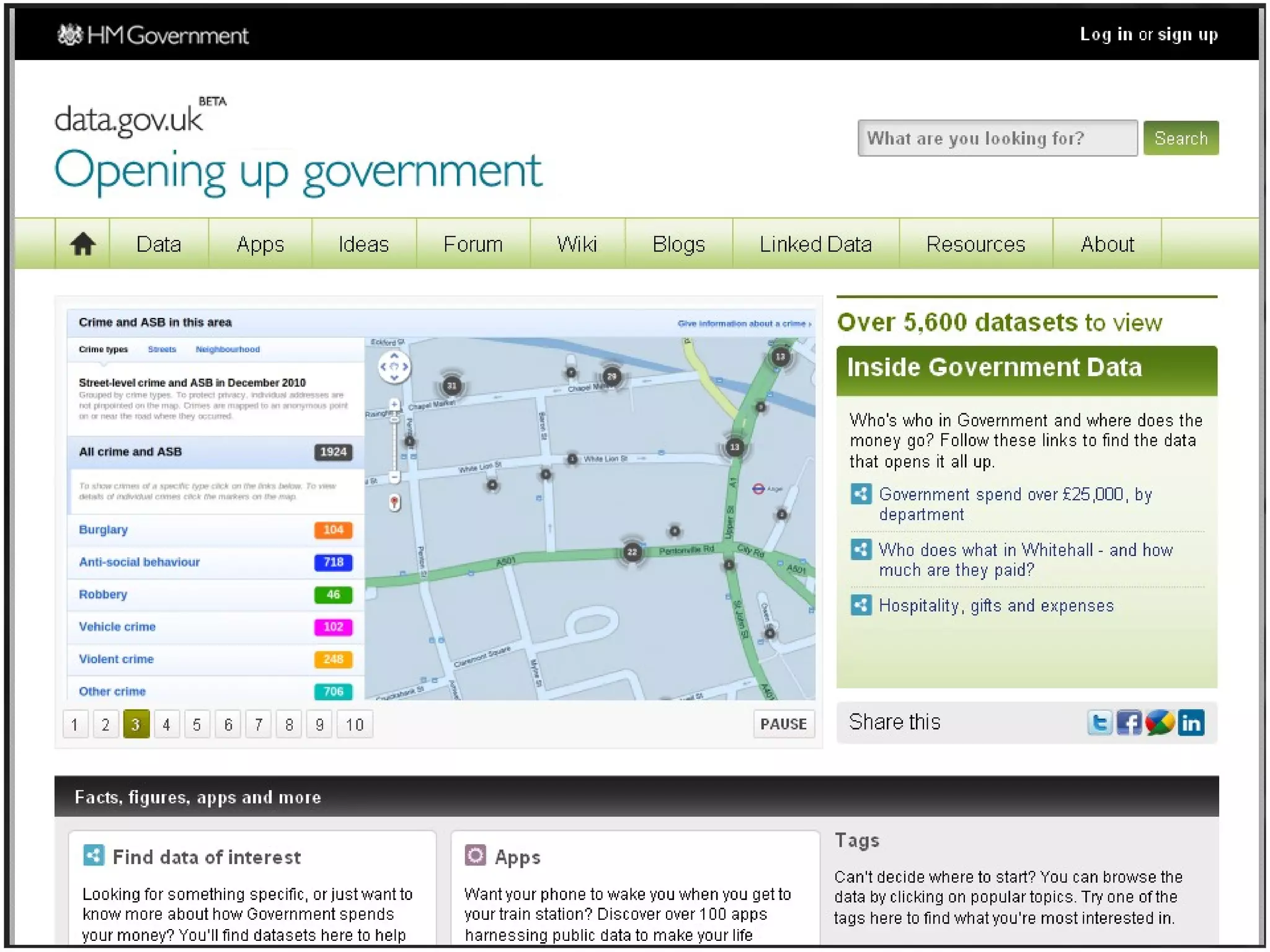
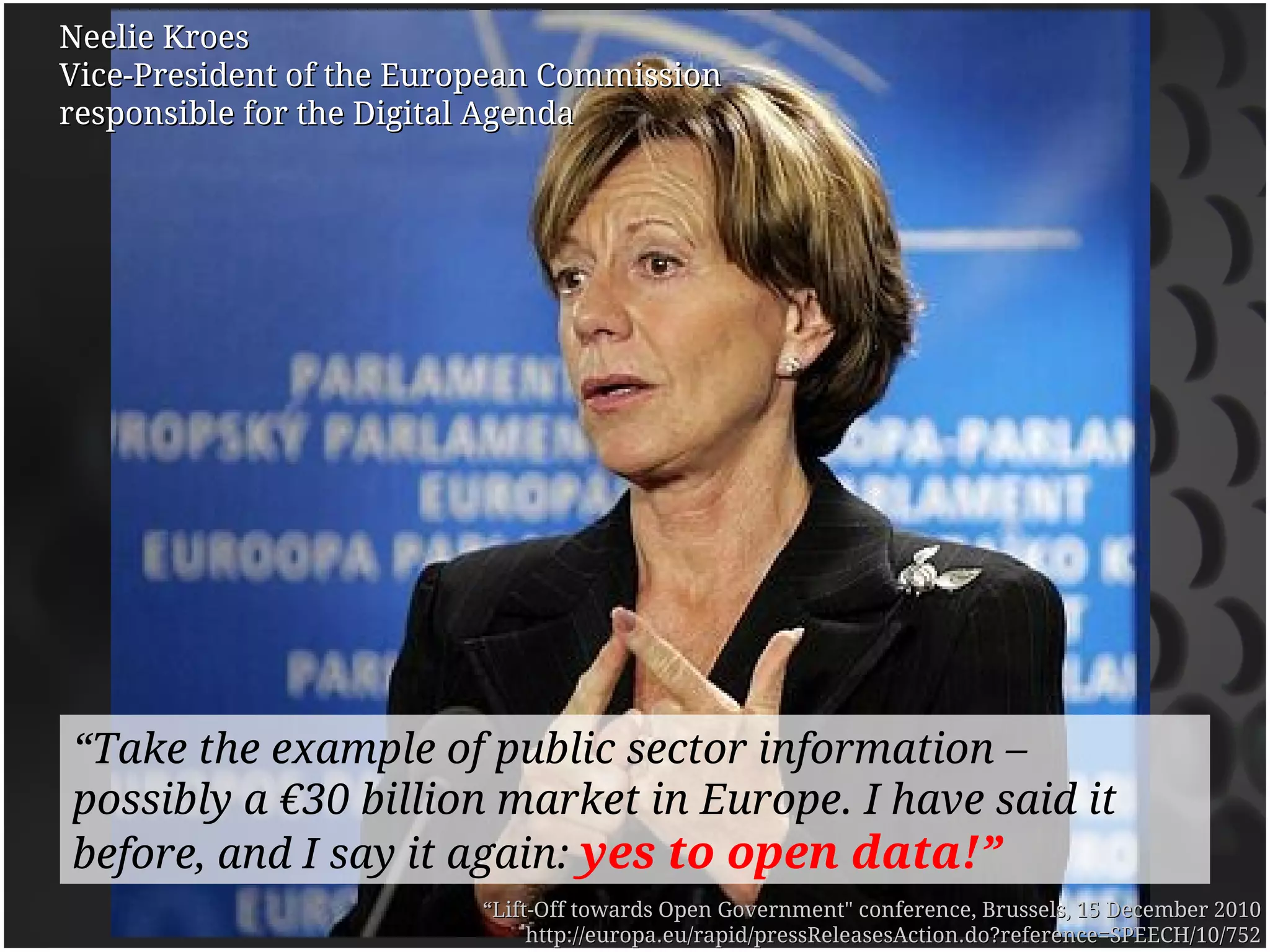
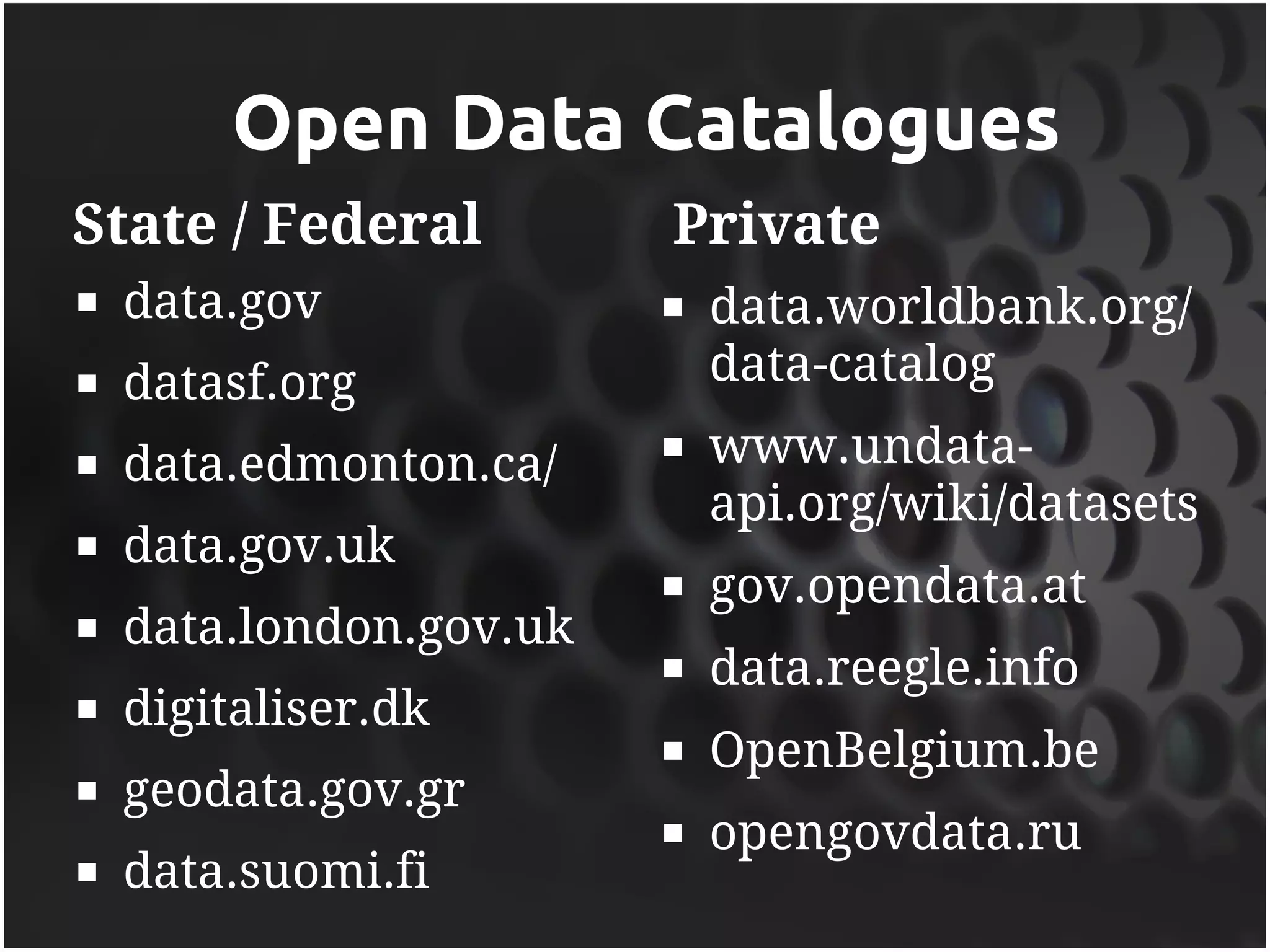
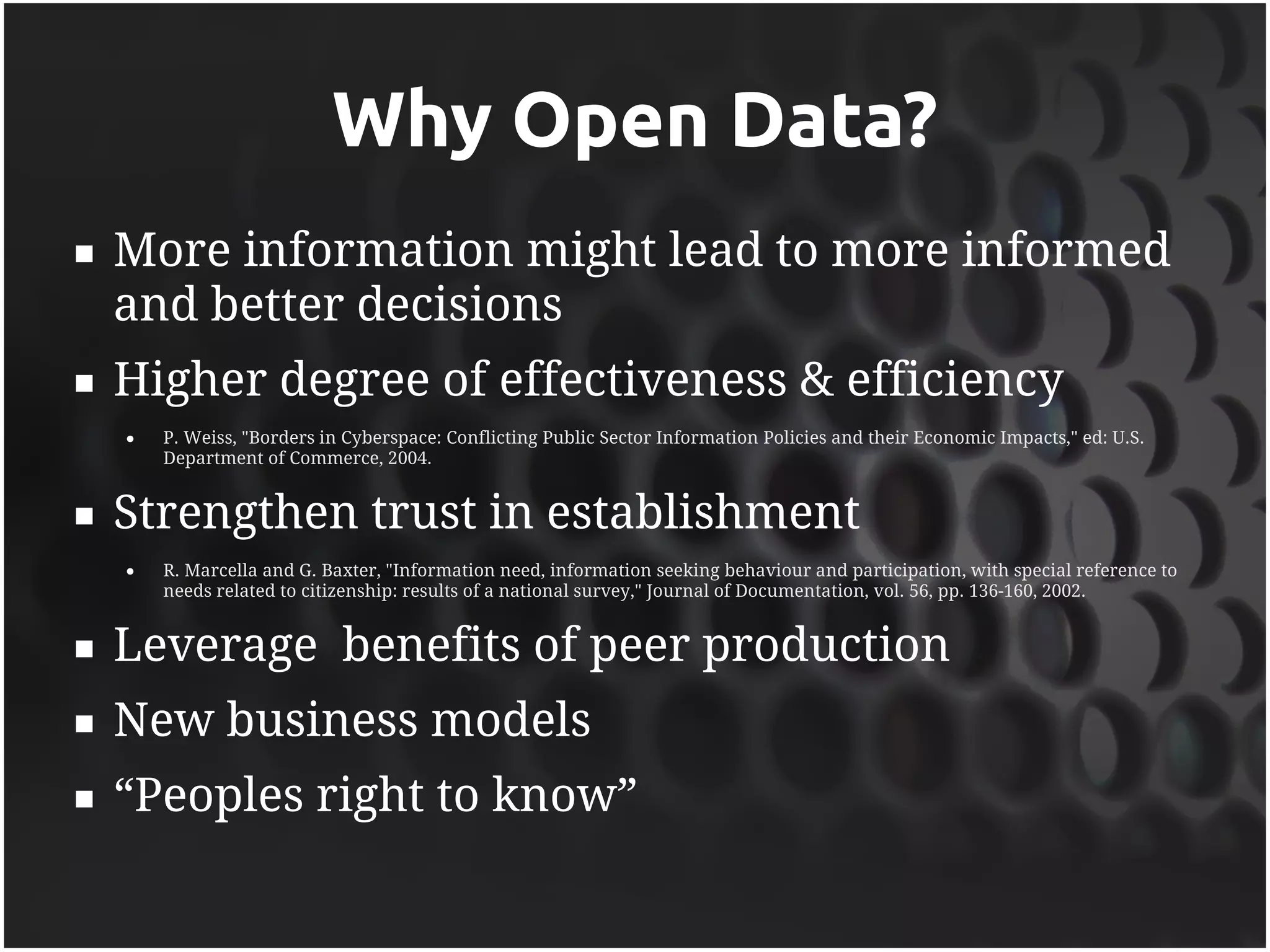
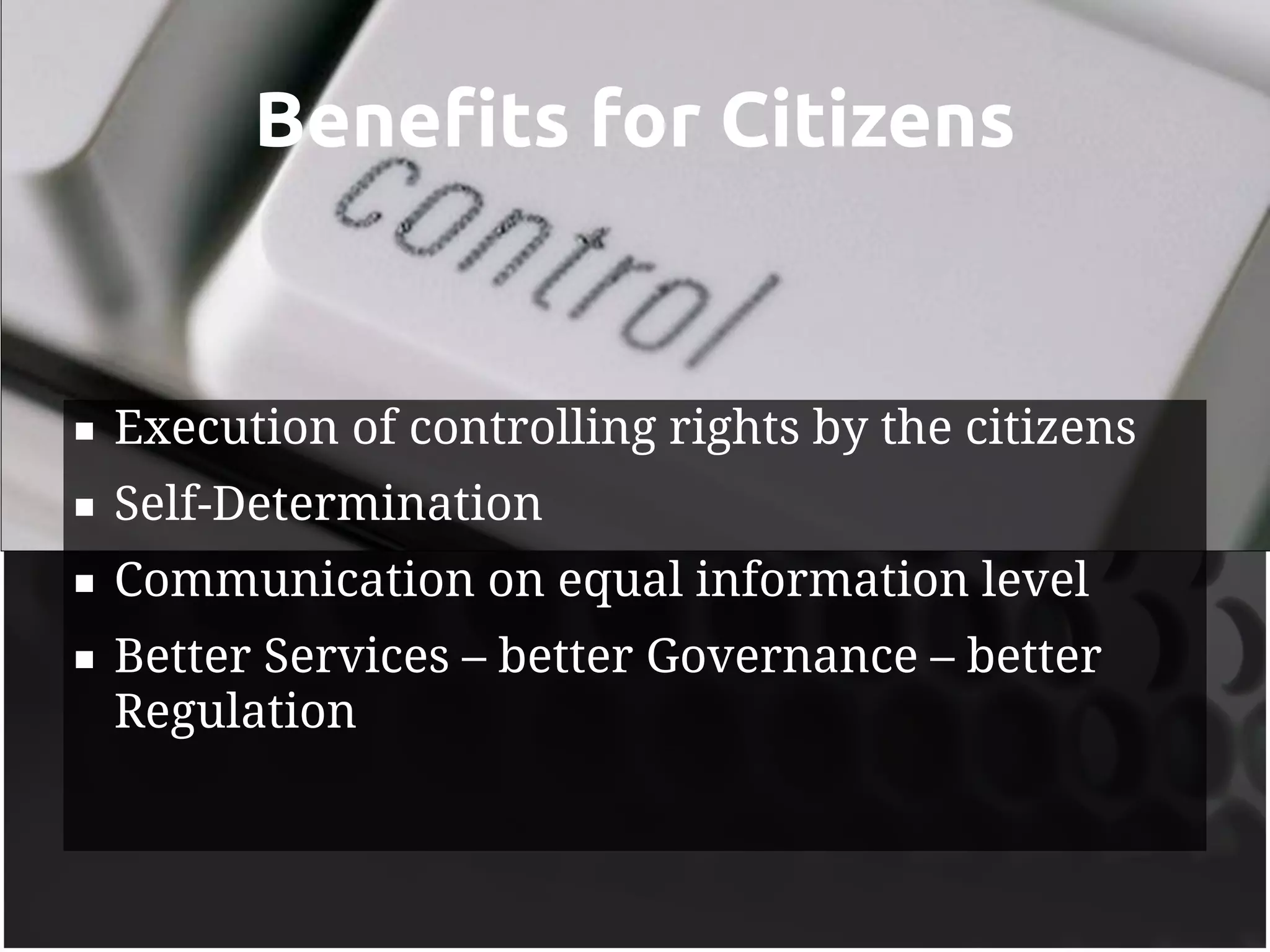
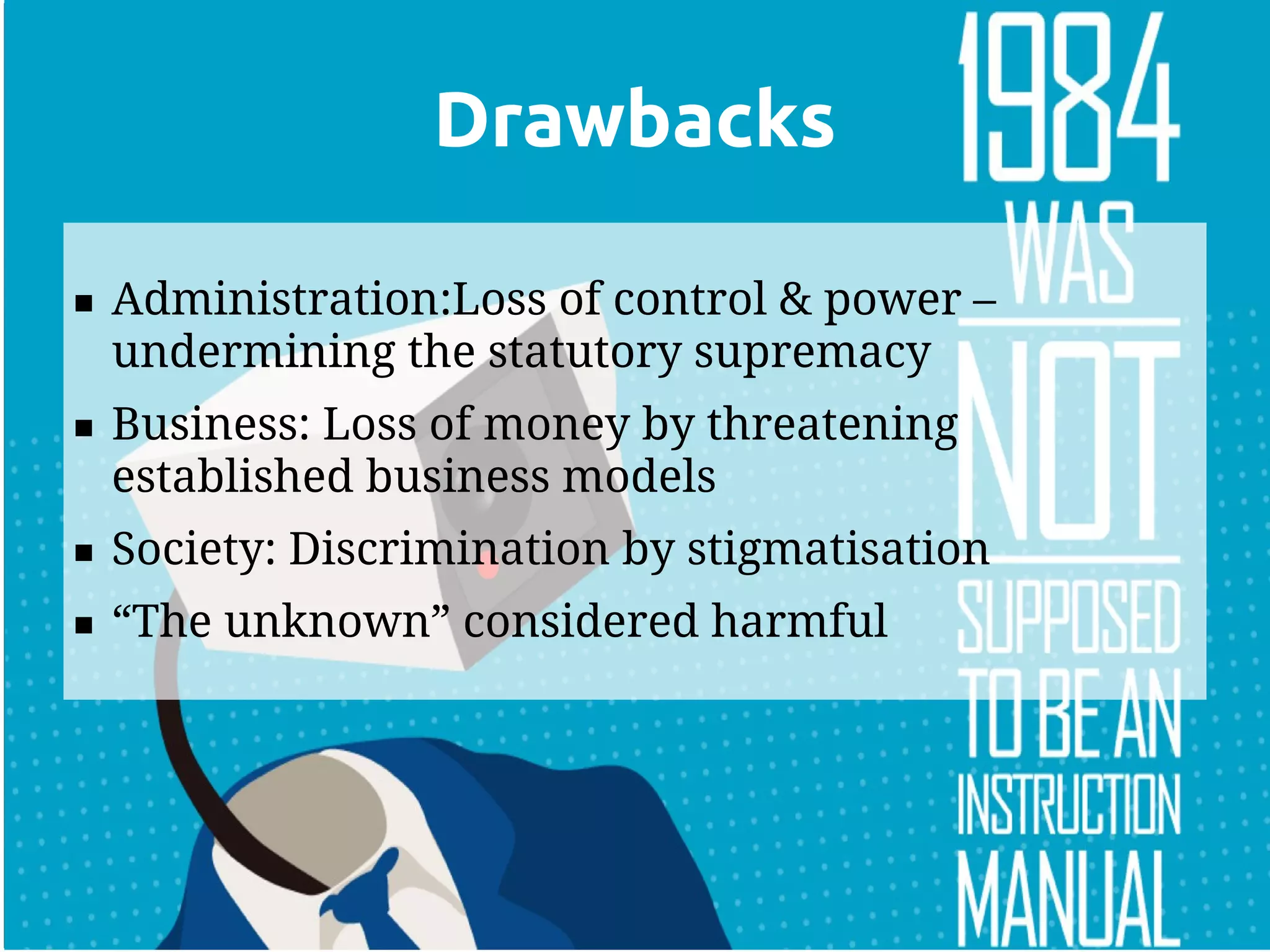
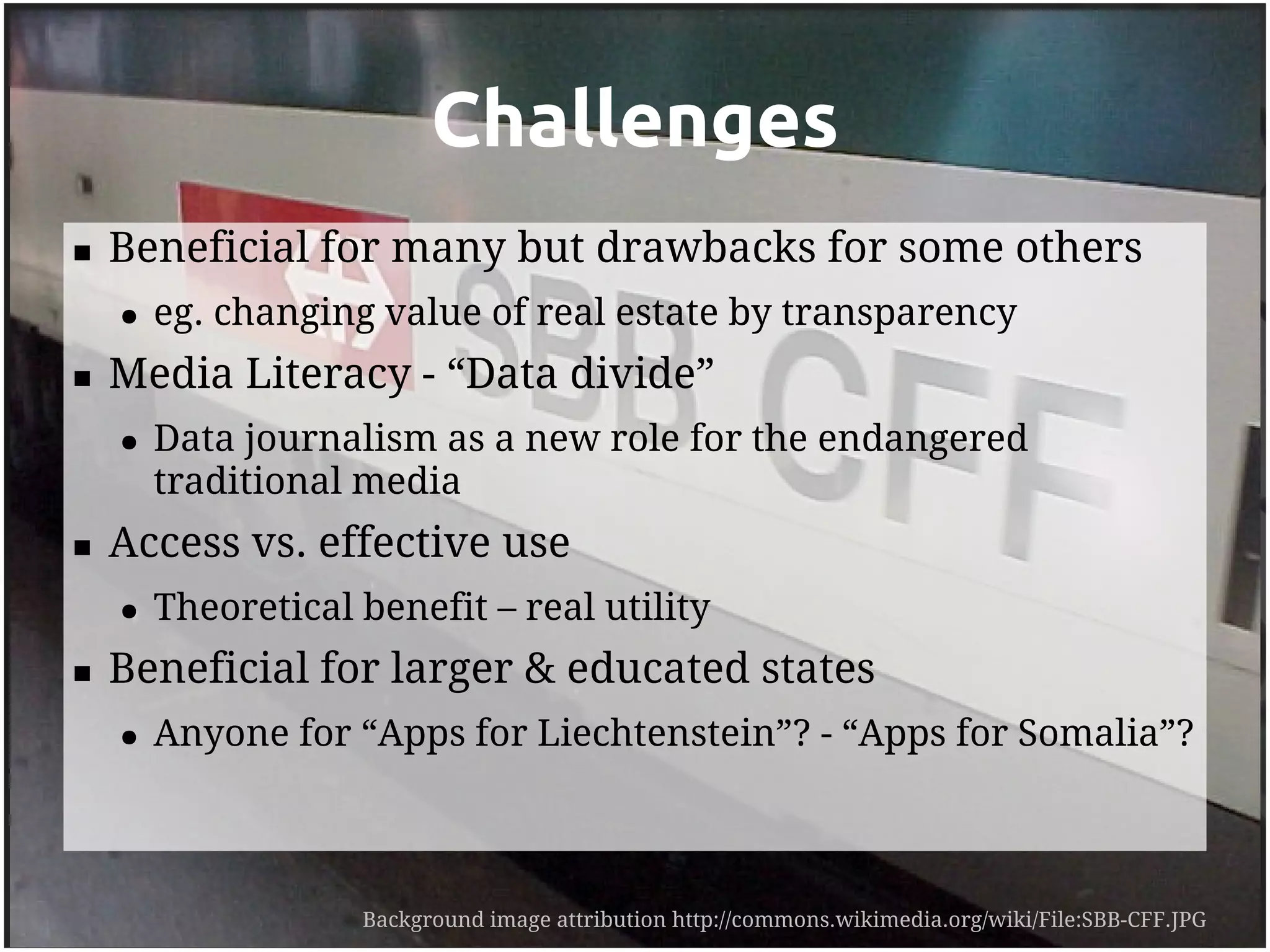
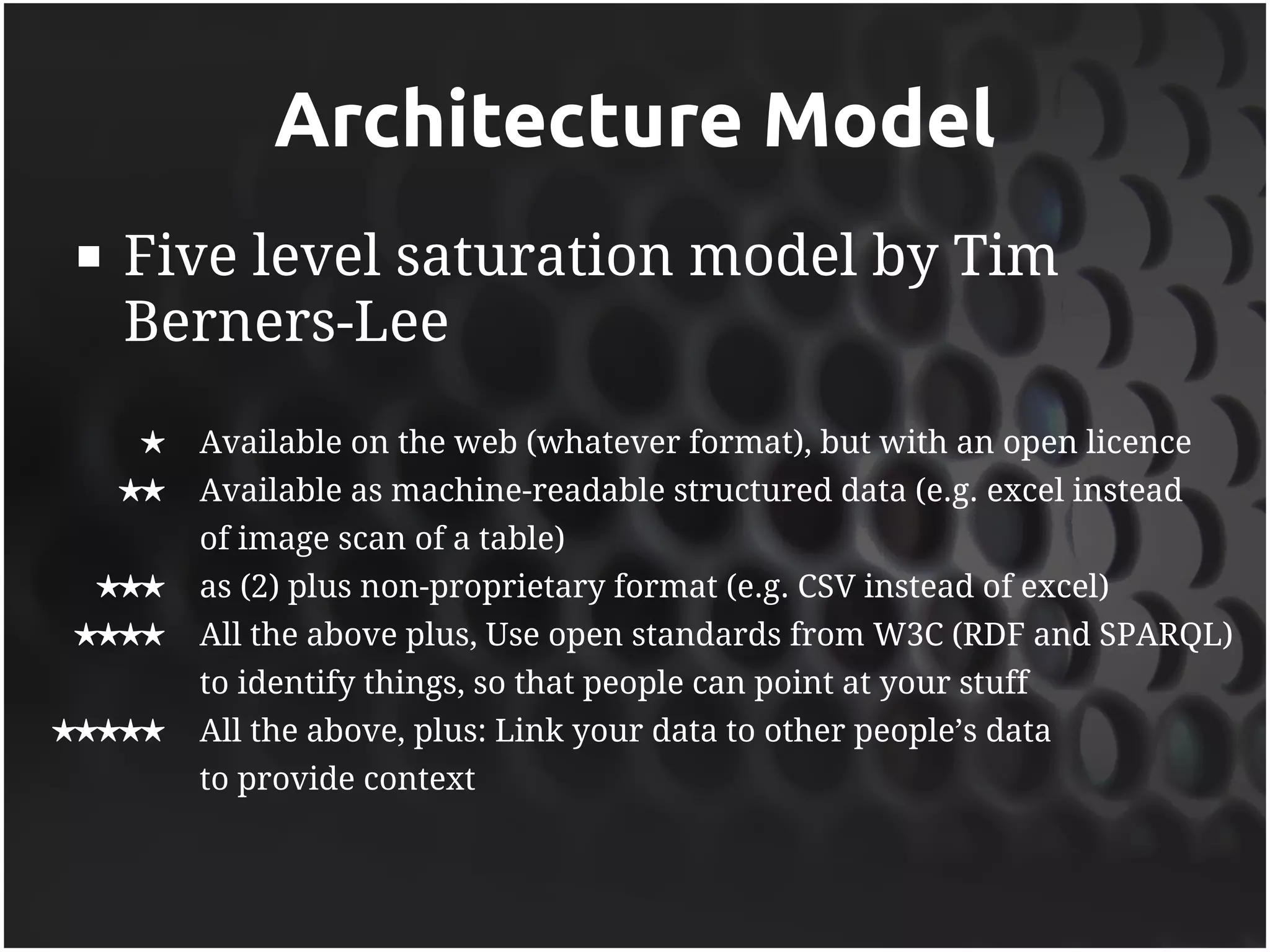
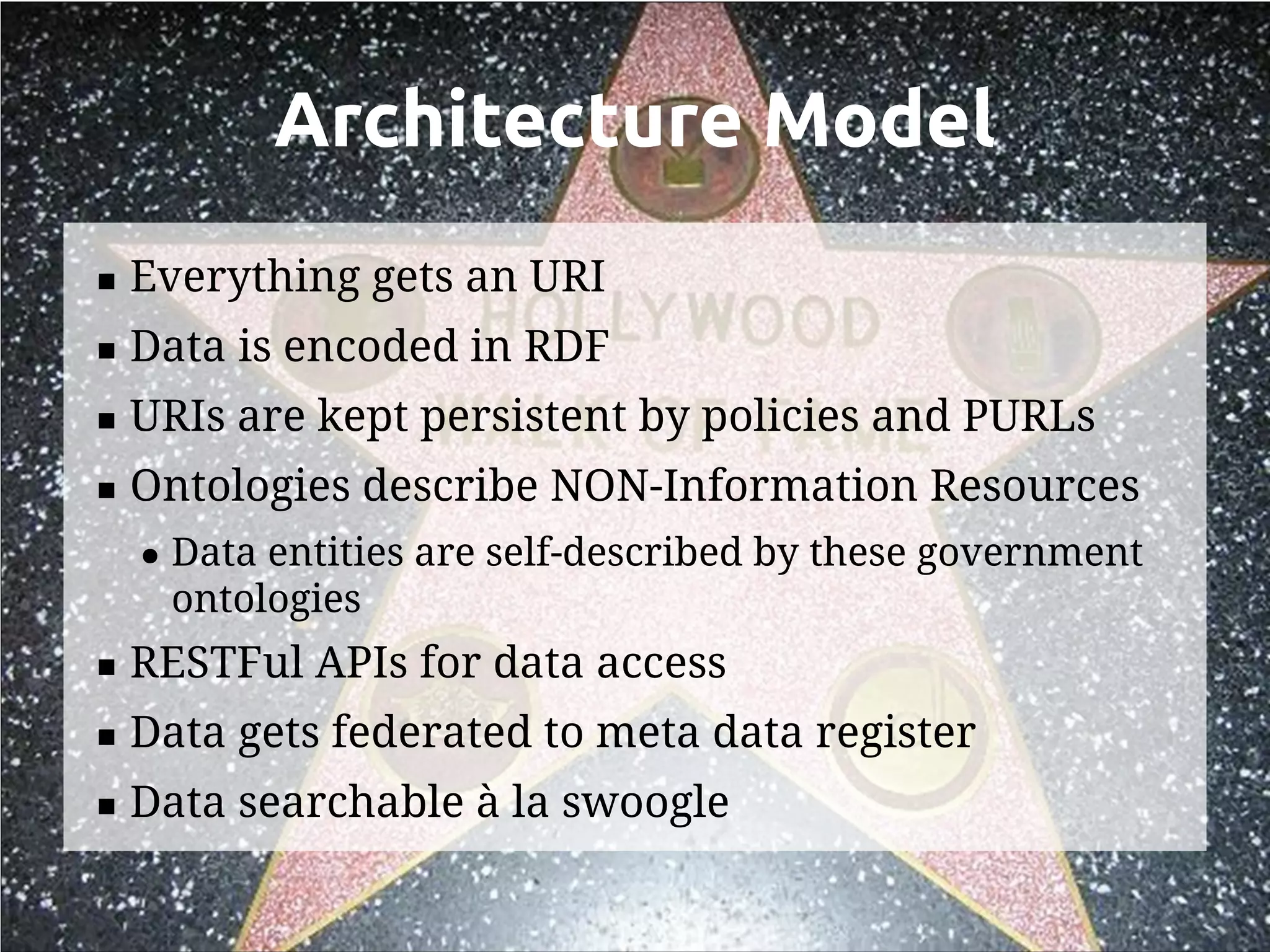
This document discusses open linked data and its role in public administration information management. It presents open linked data as a key element of transparency, participation, and collaboration in government. It outlines the benefits of open data for citizens, such as increased self-determination and better public services. However, it also notes potential drawbacks, such as loss of control and power for administrations. The document proposes an open government data architecture model based on a five-level saturation model, with data encoded in RDF and assigned persistent URIs to ensure reliability. Overall, the document argues that treating information outflow as a core part of information management can strengthen trust in government.


