Kano
      Managing innovation through classi cation of needs


Jason Mesut - Head of User Experience
Kano
A technique for classifying customer needs and
 determining appropriate levels of innovation
          for products and services
Created in the 1980's by Professor
 Noriaki Kano, it's main objective is
to help teams uncover, classify, and
 integrate 3 categories of Customer
    Needs and Attributes into the
    Products or Services they are
             developing. 
It’s also being used in Agile
methodologies for prioritising
         requirements
Based on three core tenets
Value attracts customers
Quality keeps customers
  and builds loyalty
Innovation is necessary to
differentiate and compete
      in the market
Kano is based on 3 core types of
            need:

   Basic, Performance and
          Excitement
Basic
Attributes / needs that are
expected, assumed, given.
    The hygiene factors.
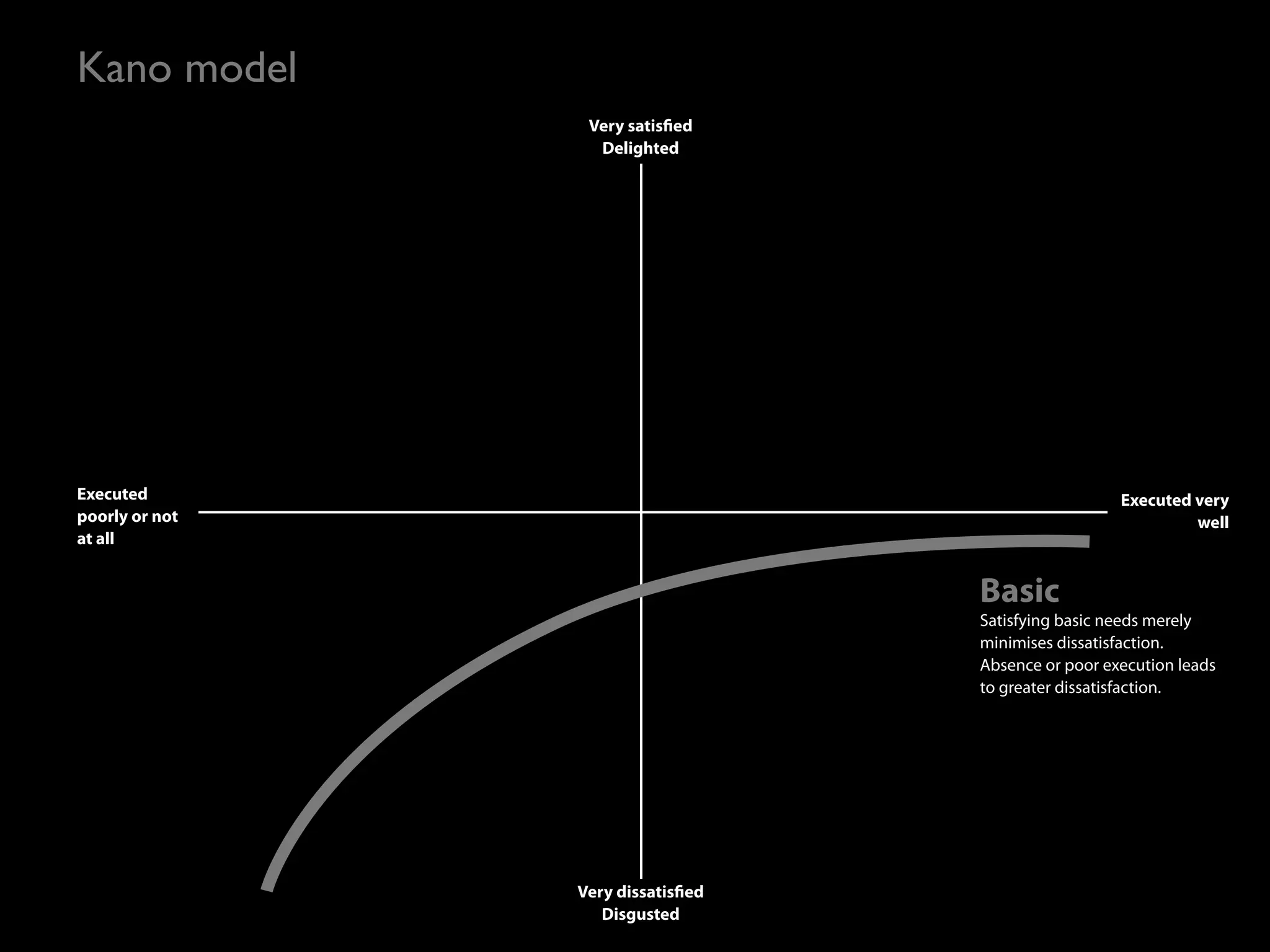
Kano model
                 Very satis ed
                  Delighted


Executed                                             Executed very
poorly or not                                                 well
at all


                                   Basic
                                   Satisfying basic needs merely
                                   minimises dissatisfaction.
                                   Absence or poor execution leads
                                   to greater dissatisfaction.


                Very dissatis ed
                   Disgusted
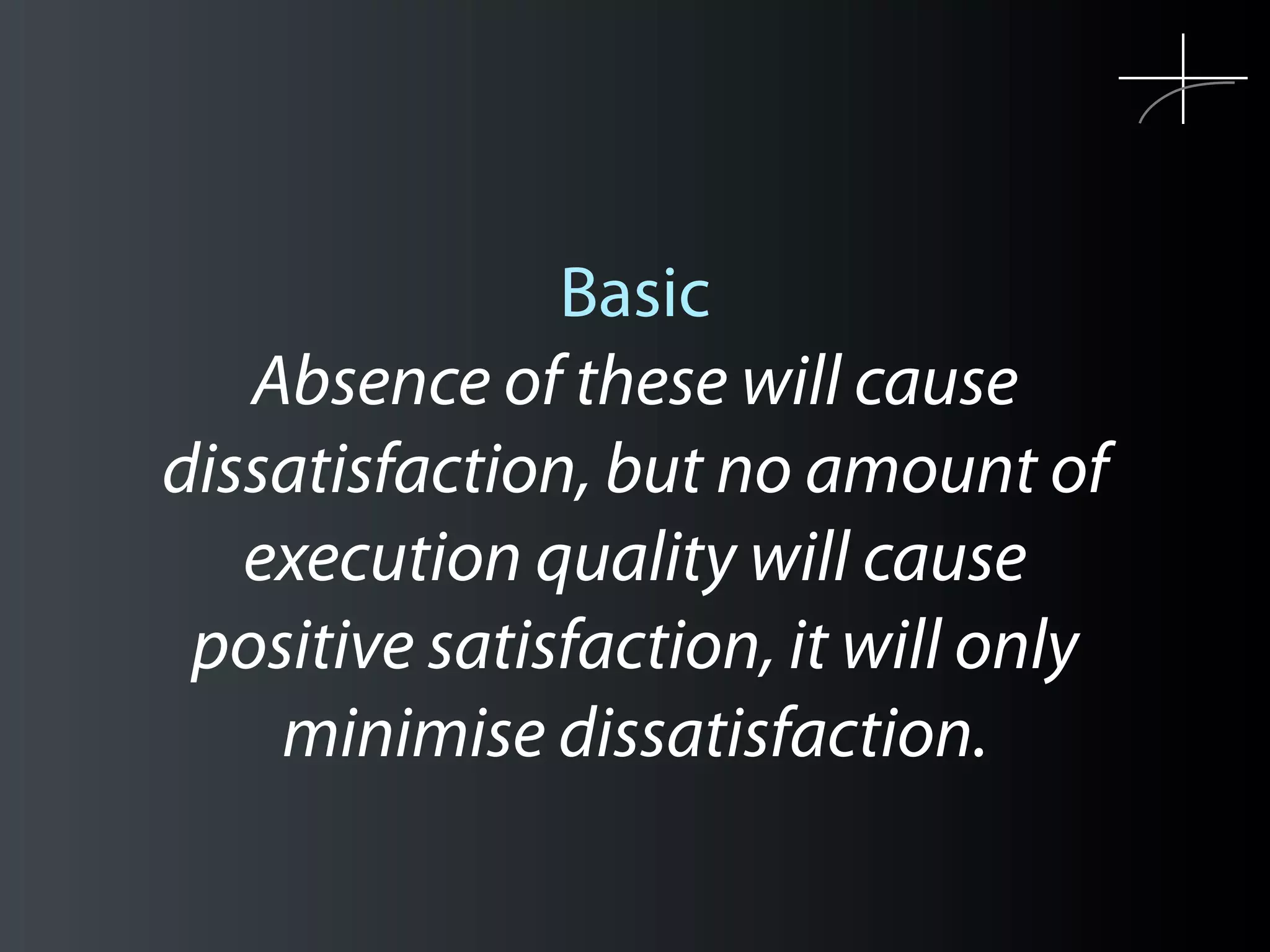
Basic
   Absence of these will cause
dissatisfaction, but no amount of
   execution quality will cause
 positive satisfaction, it will only
    minimise dissatisfaction.
Basic
   Toilet rolls in a hotel room.
    Zero toilet rolls = unhappy
             customer.
   Three extra toilet rolls = not
unhappy, but not happy customer.
Basic
 Car door hits curb when opened
  causes major dissatisfaction.
 Car door missing the curb causes
no dissatisfaction, but not positive
            satisfaction.
Basic
Customers/ users will rarely state
 these, so you have to observe or
analyse other products or services
 in depth to get to what they are
Performance
   Attributes / needs that are consciously
evaluated by the customer and at top of their
          minds when purchasing
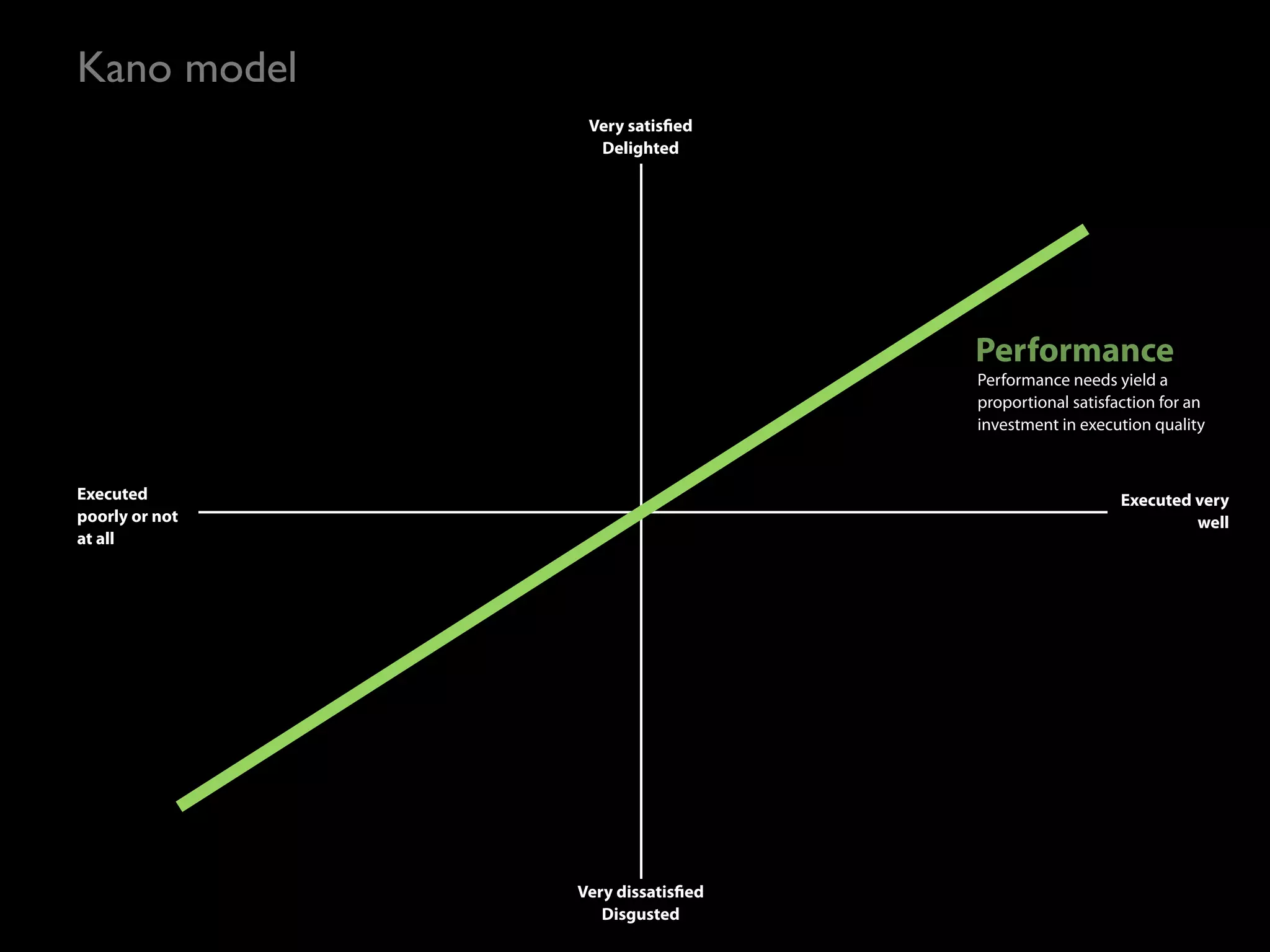
Kano model
                 Very satis ed
                  Delighted


                                   Performance
                                   Performance needs yield a
                                   proportional satisfaction for an
                                   investment in execution quality


Executed                                               Executed very
poorly or not                                                   well
at all


                Very dissatis ed
                   Disgusted
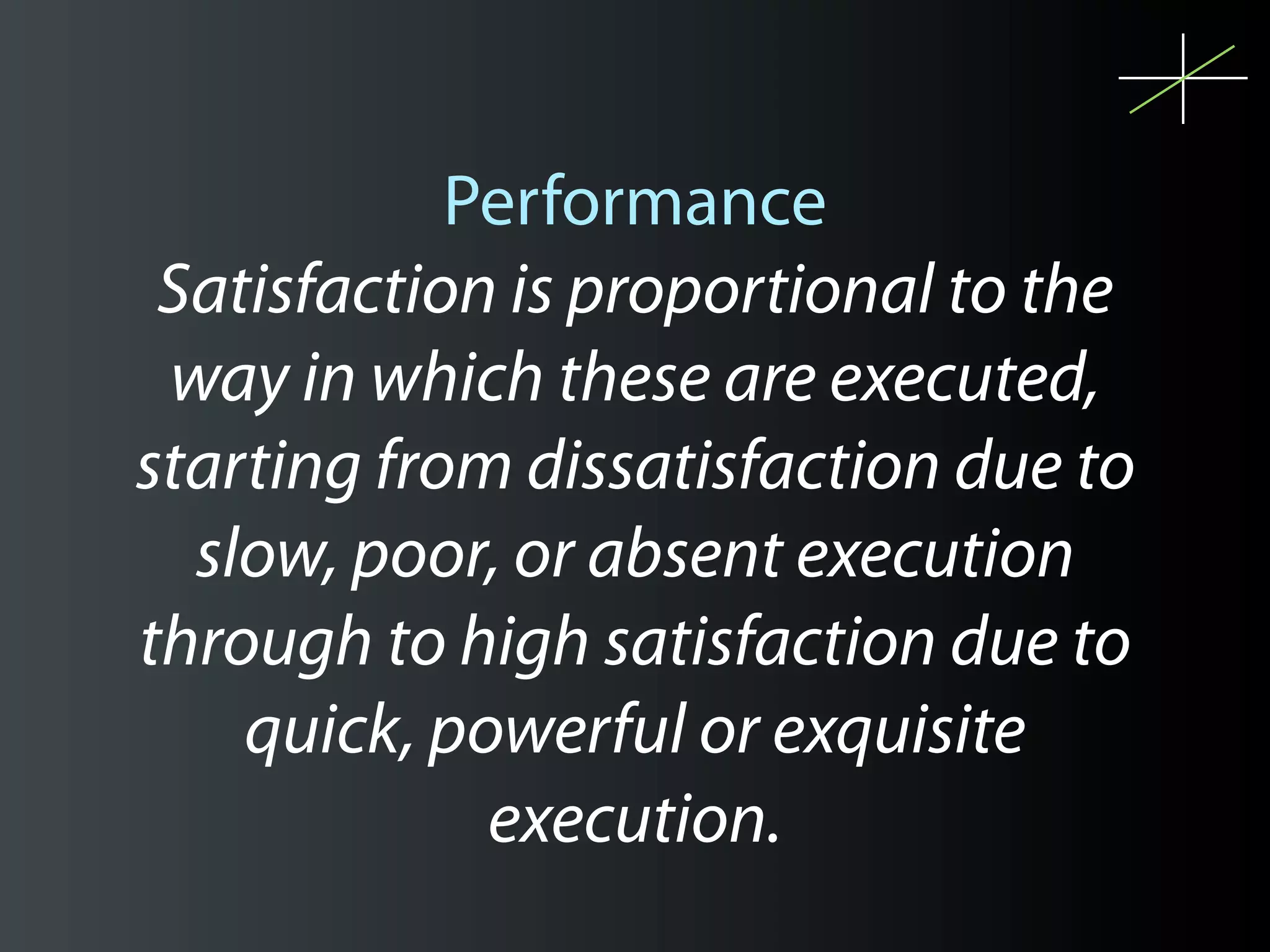
Performance
 Satisfaction is proportional to the
 way in which these are executed,
starting from dissatisfaction due to
  slow, poor, or absent execution
through to high satisfaction due to
    quick, powerful or exquisite
             execution.
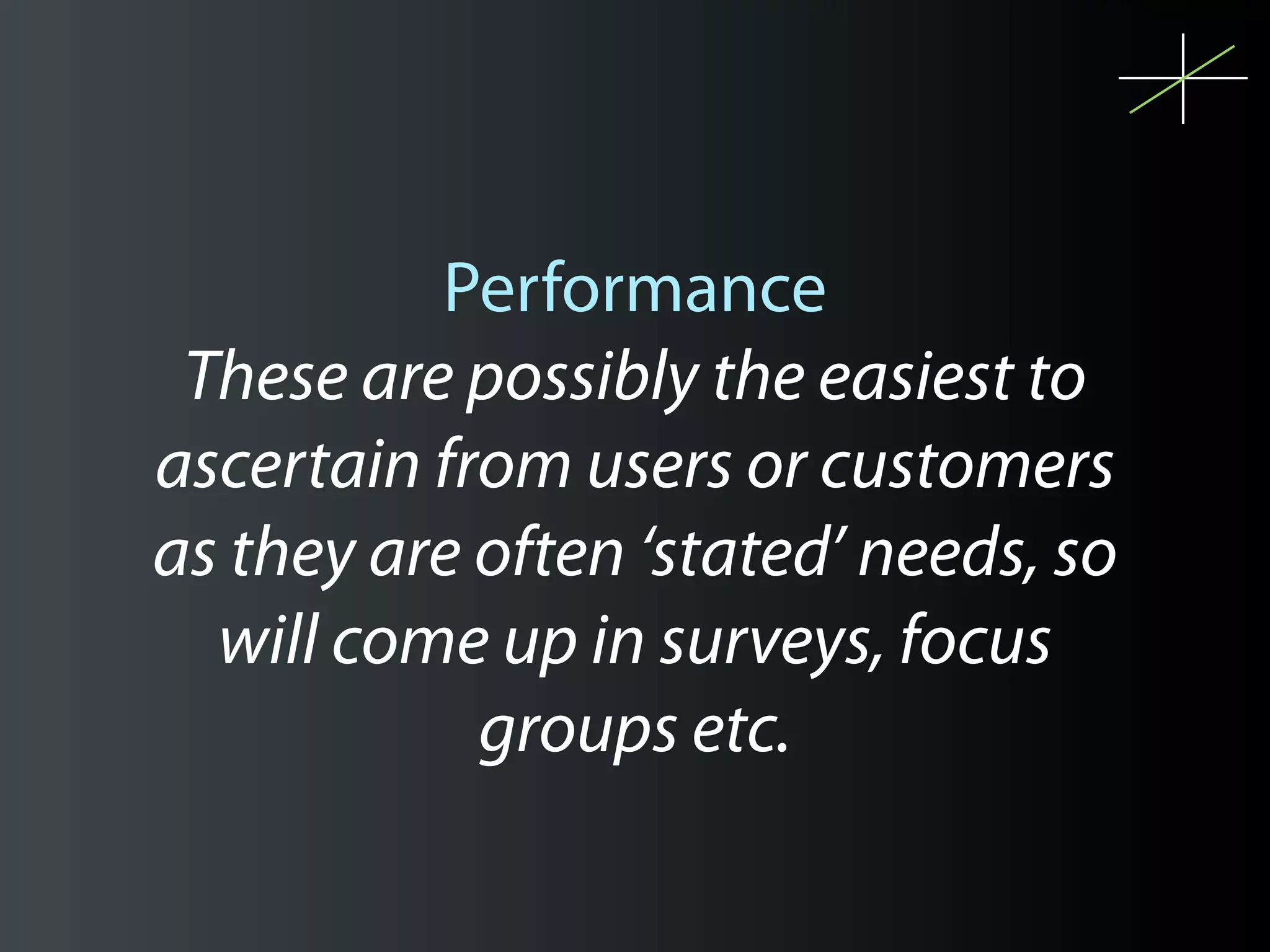
Performance
 These are possibly the easiest to
ascertain from users or customers
as they are often ‘stated’ needs, so
  will come up in surveys, focus
            groups etc.
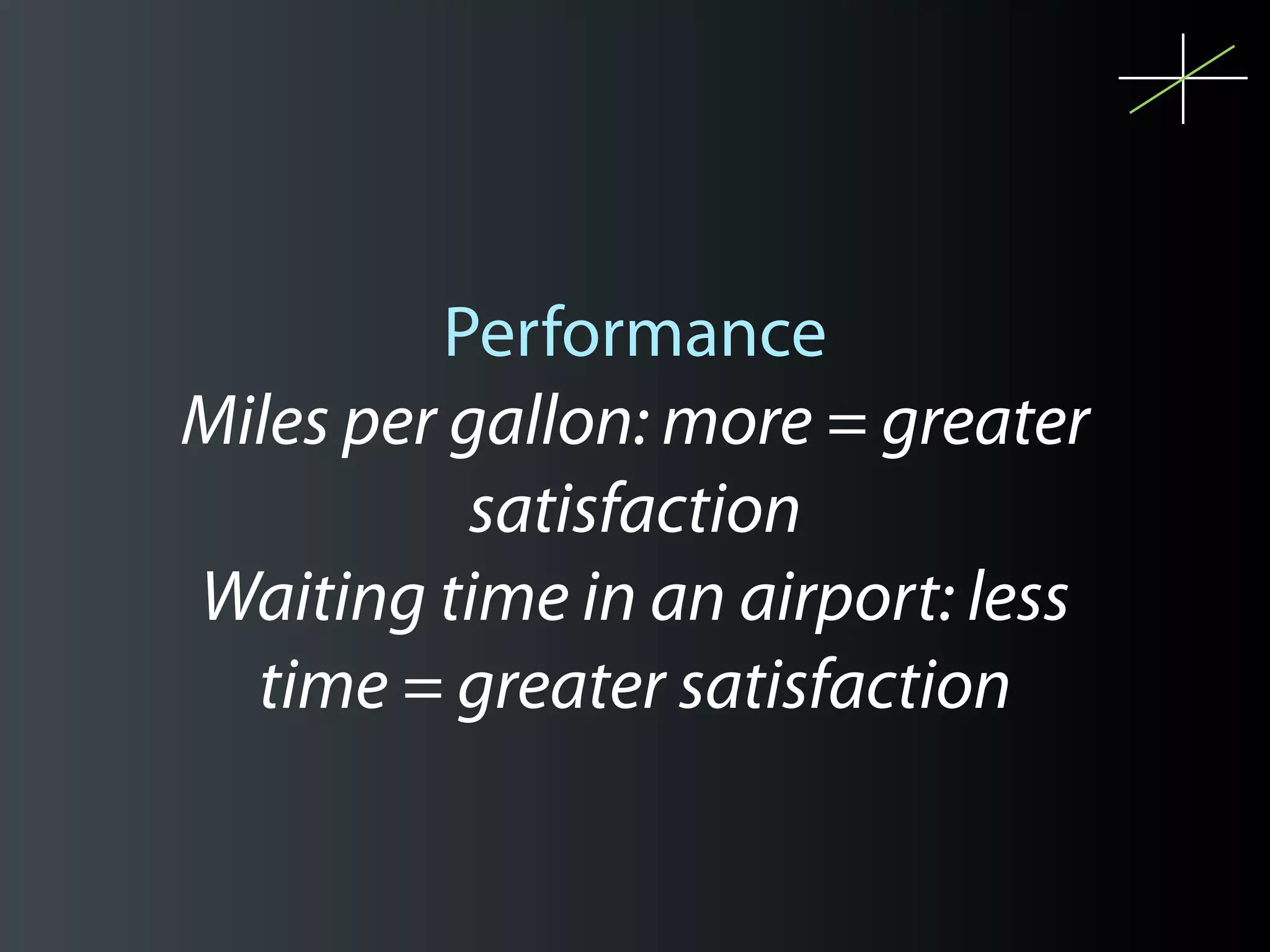
Performance
Miles per gallon: more = greater
           satisfaction
Waiting time in an airport: less
  time = greater satisfaction
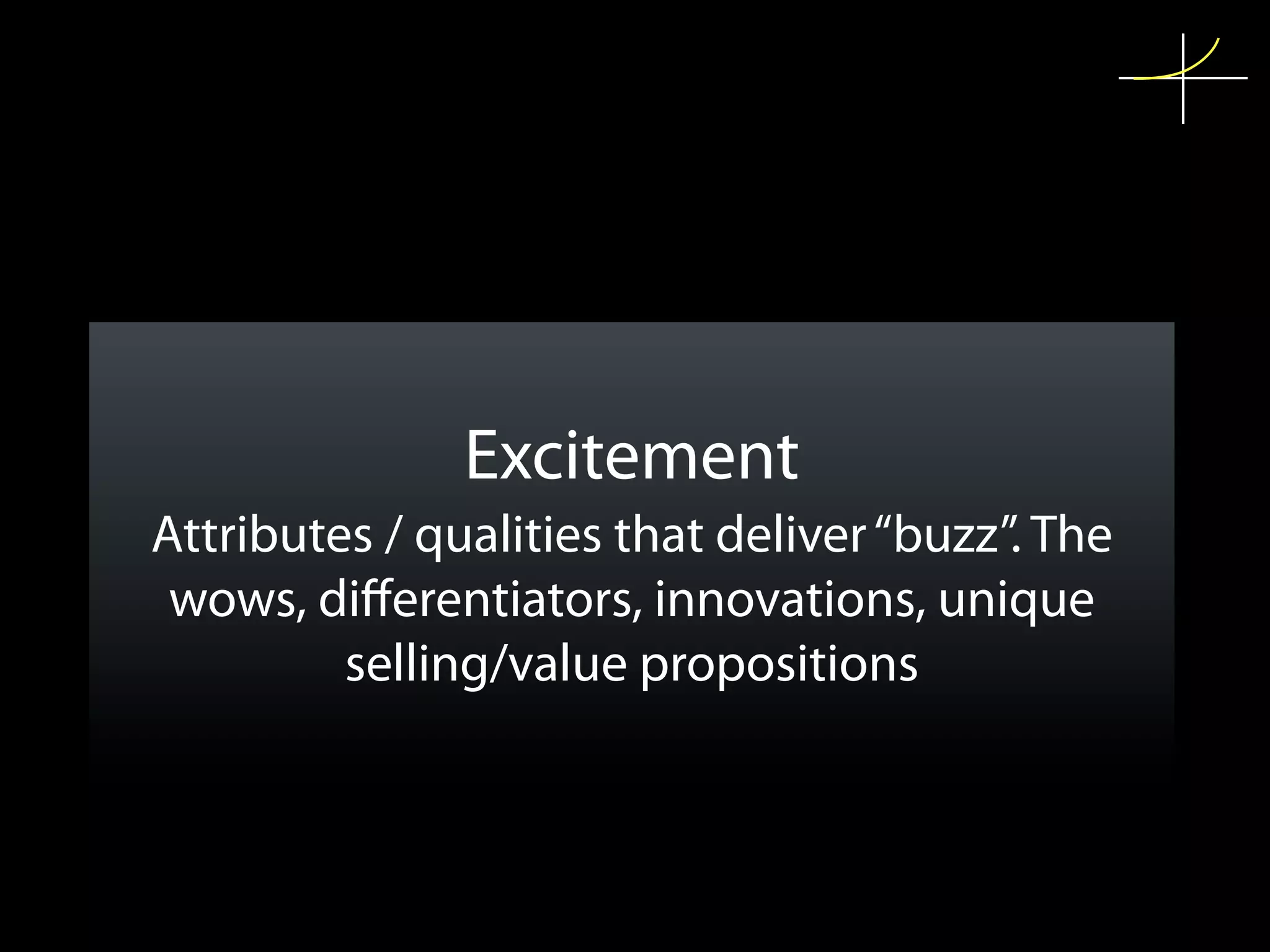
Excitement
Attributes / qualities that deliver “buzz”. The
 wows, differentiators, innovations, unique
         selling/value propositions
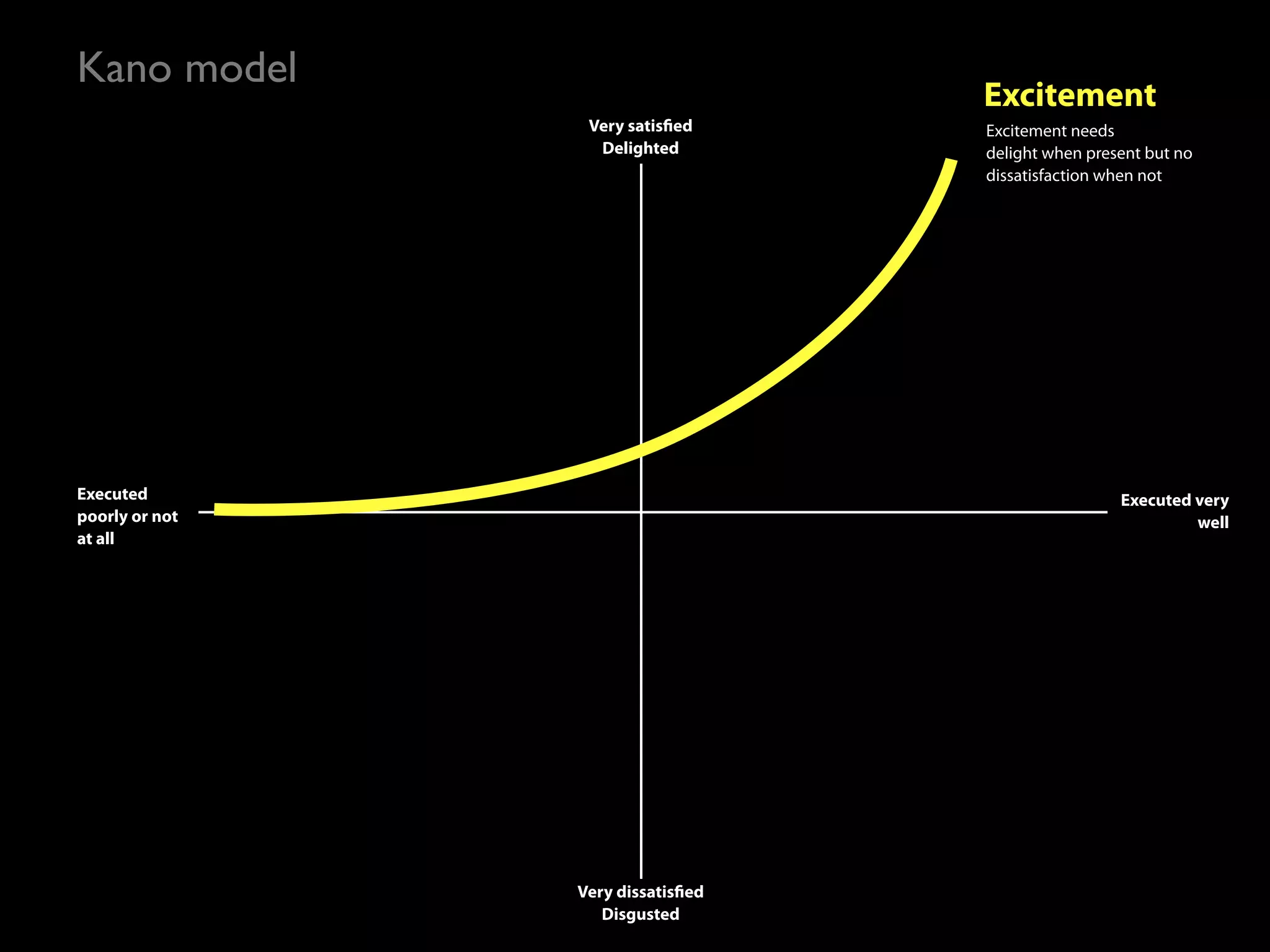
Kano model
                                   Excitement
                 Very satis ed     Excitement needs
                  Delighted        delight when present but no
                                   dissatisfaction when not


Executed                                            Executed very
poorly or not                                                well
at all


                Very dissatis ed
                   Disgusted
Excitement
   Presence of these will delight
customers/users and increase their
 satisfaction, but absence of them
         will not dissatisfy.
Excitement
 Internet access on a plane or tube
   is not expected and so will not
upset if not present, but will delight
                if it is.
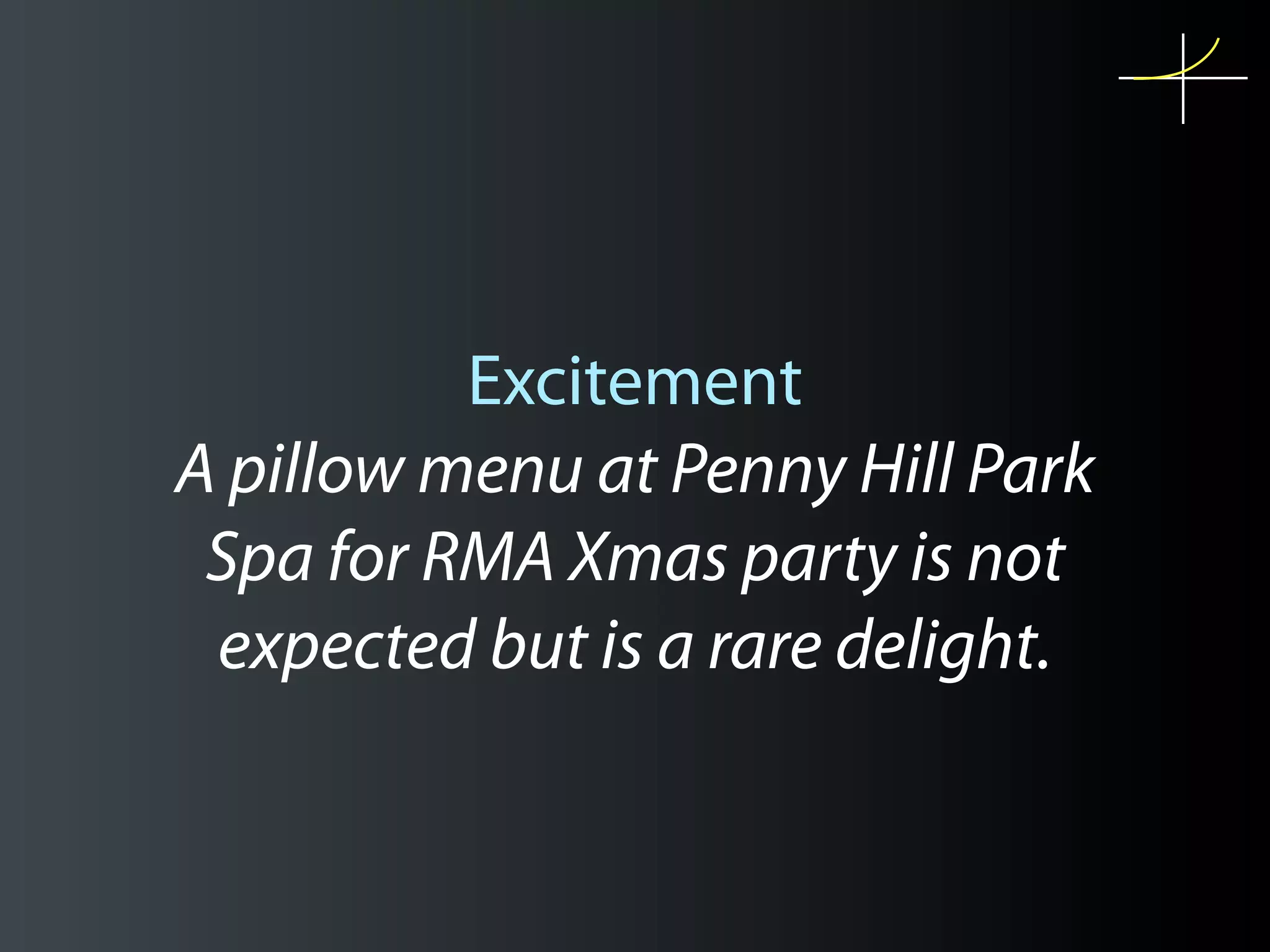
Excitement
A pillow menu at Penny Hill Park
 Spa for RMA Xmas party is not
 expected but is a rare delight.
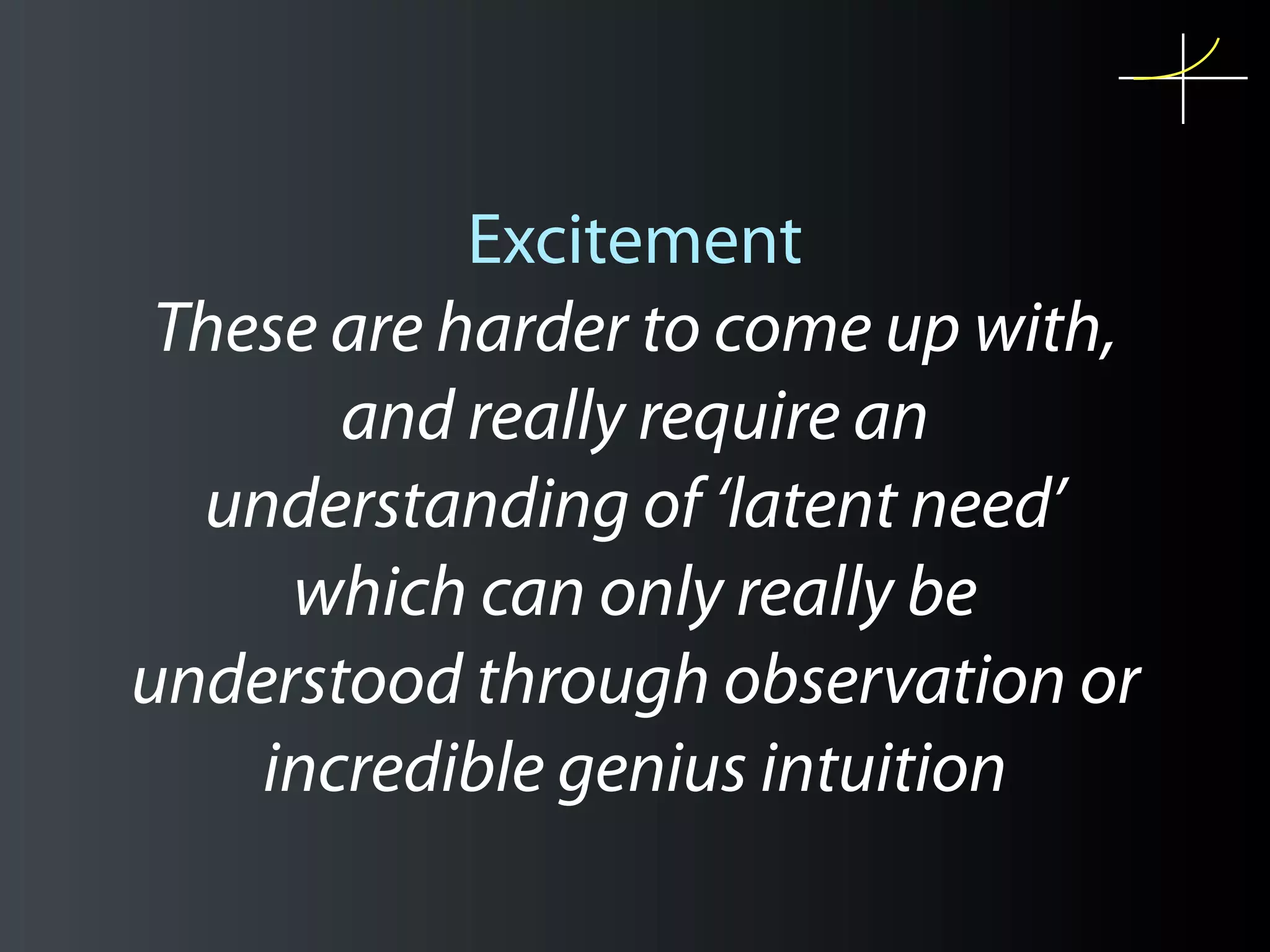
Excitement
 These are harder to come up with,
       and really require an
  understanding of ‘latent need’
     which can only really be
understood through observation or
    incredible genius intuition
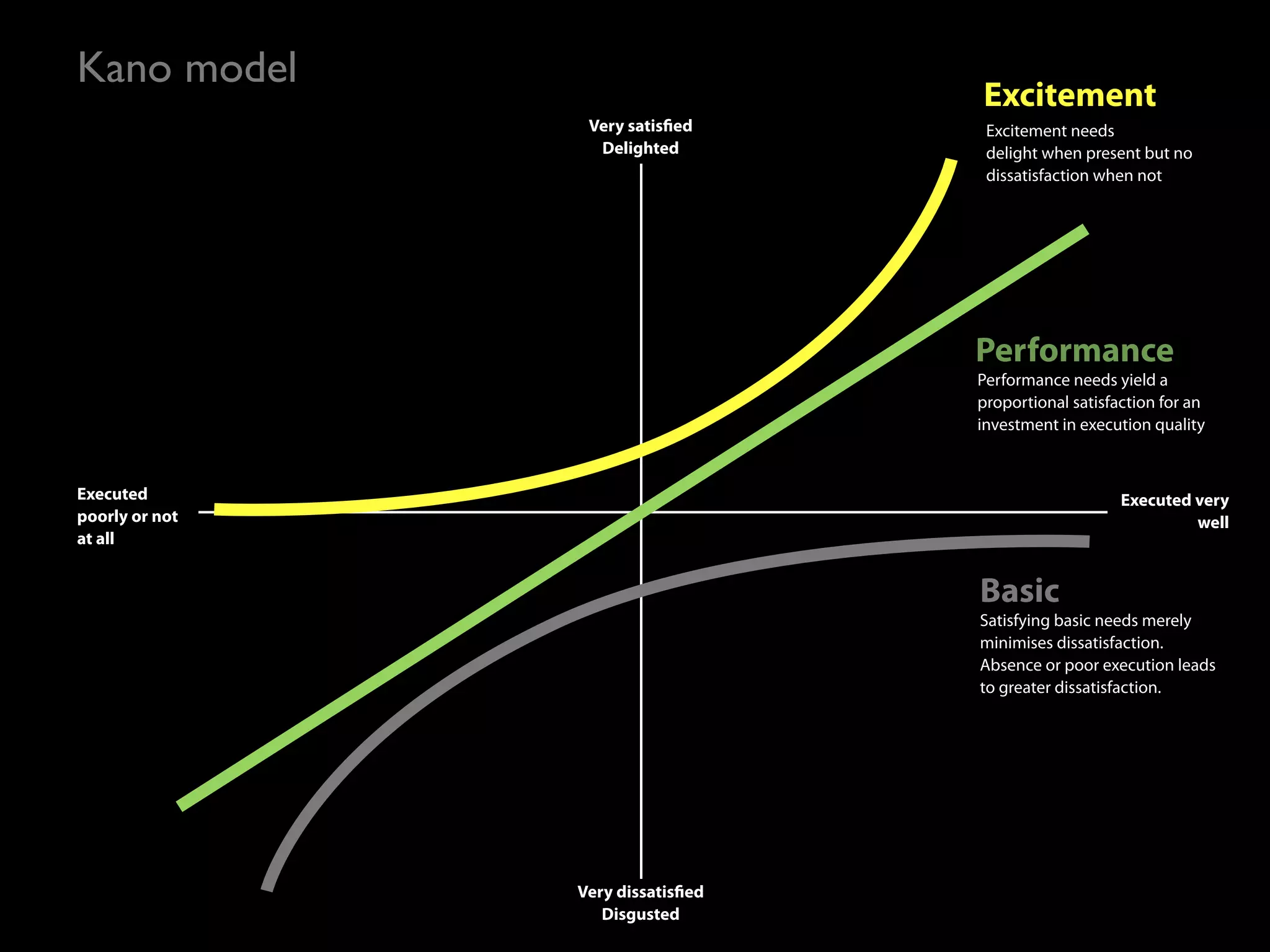
Kano model
                                   Excitement
                 Very satis ed      Excitement needs
                  Delighted         delight when present but no
                                    dissatisfaction when not


                                   Performance
                                   Performance needs yield a
                                   proportional satisfaction for an
                                   investment in execution quality


Executed                                               Executed very
poorly or not                                                   well
at all


                                   Basic
                                   Satisfying basic needs merely
                                   minimises dissatisfaction.
                                   Absence or poor execution leads
                                   to greater dissatisfaction.


                Very dissatis ed
                   Disgusted
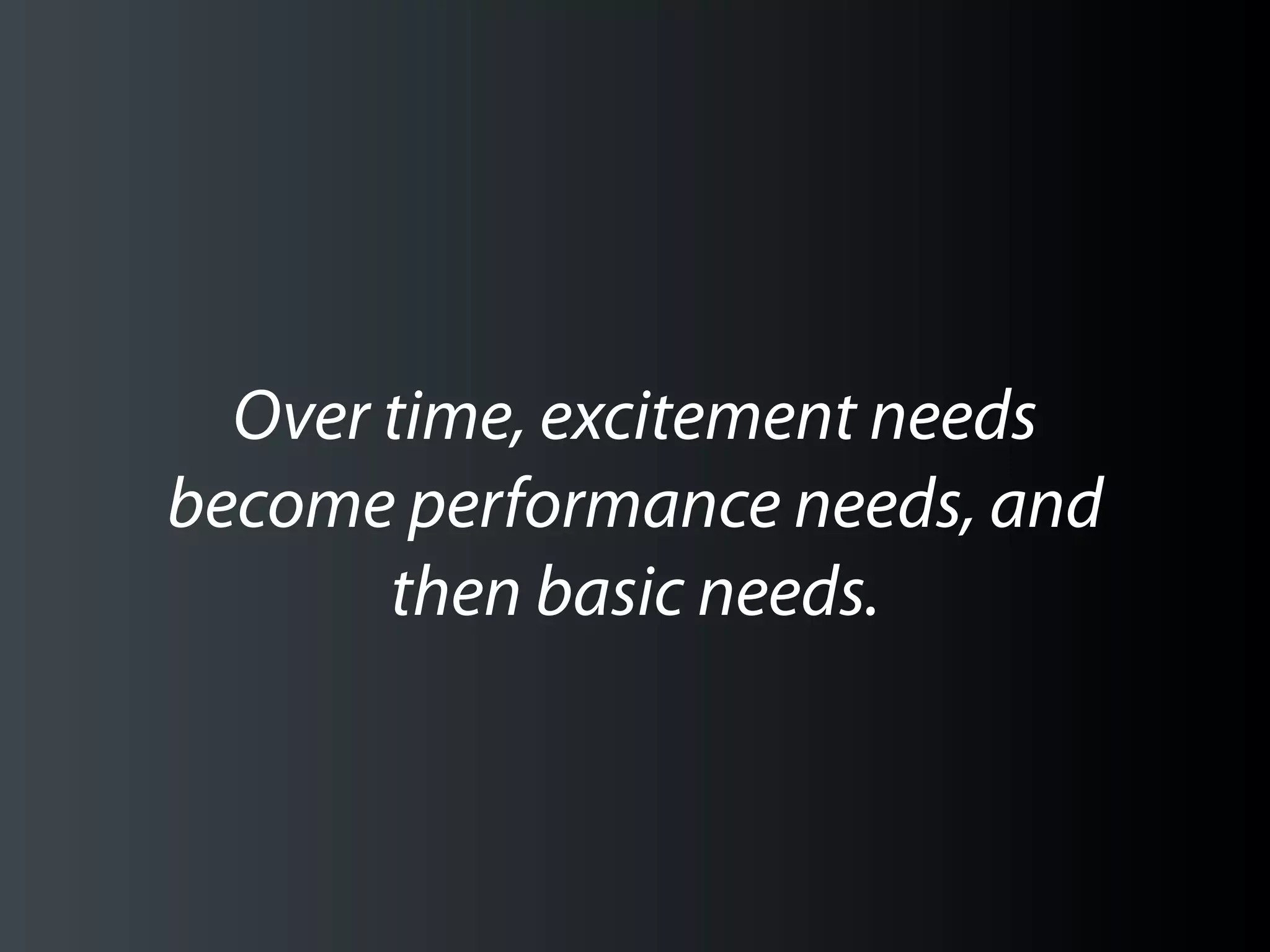
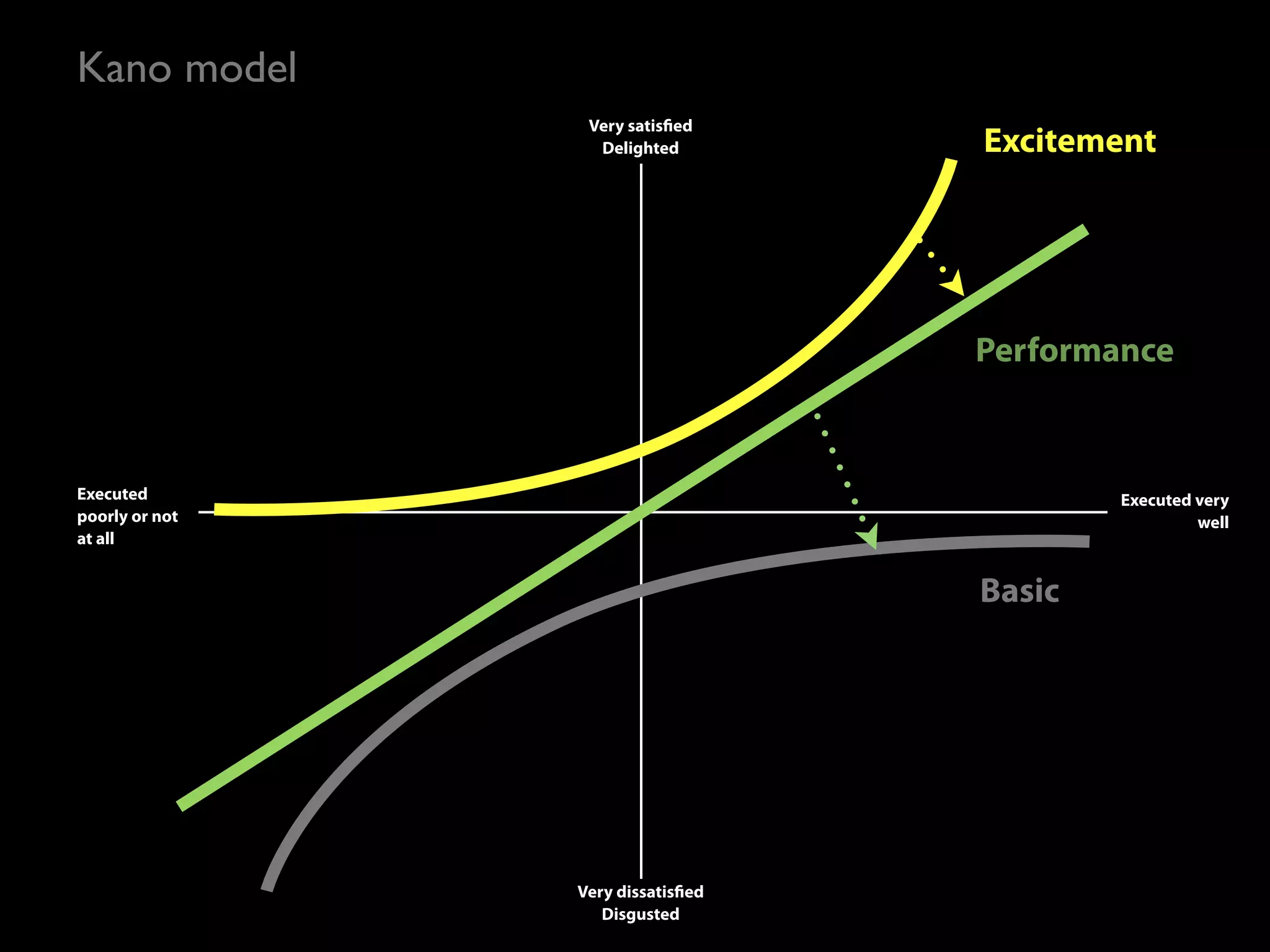
Over time, excitement needs
become performance needs, and
       then basic needs.
The innovations of tomorrow, will
 become the hygiene factors of
           yesterday.
Kano model
                 Very satis ed
                  Delighted        Excitement


                                   Performance


Executed                                   Executed very
poorly or not                                       well
at all


                                   Basic


                Very dissatis ed
                   Disgusted
There are tools that help you
classify, by asking some simple
            questions
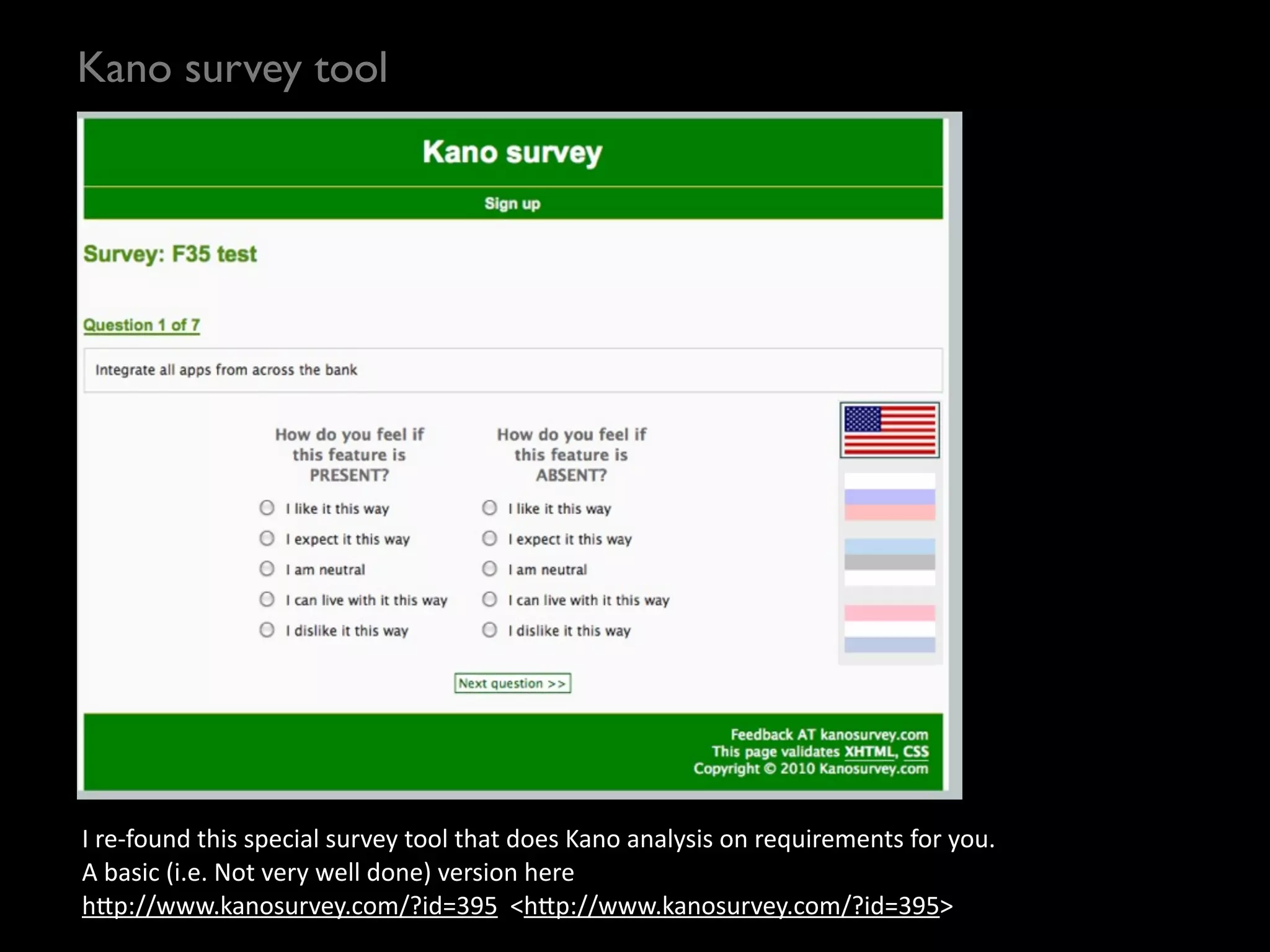
Kano survey tool


I	
  re-­‐found	
  this	
  special	
  survey	
  tool	
  that	
  does	
  Kano	
  analysis	
  on	
  requirements	
  for	
  you.
A	
  basic	
  (i.e.	
  Not	
  very	
  well	
  done)	
  version	
  here	
  
h?p://www.kanosurvey.com/?id=395	
  	
  <h?p://www.kanosurvey.com/?id=395>	
  
Kano


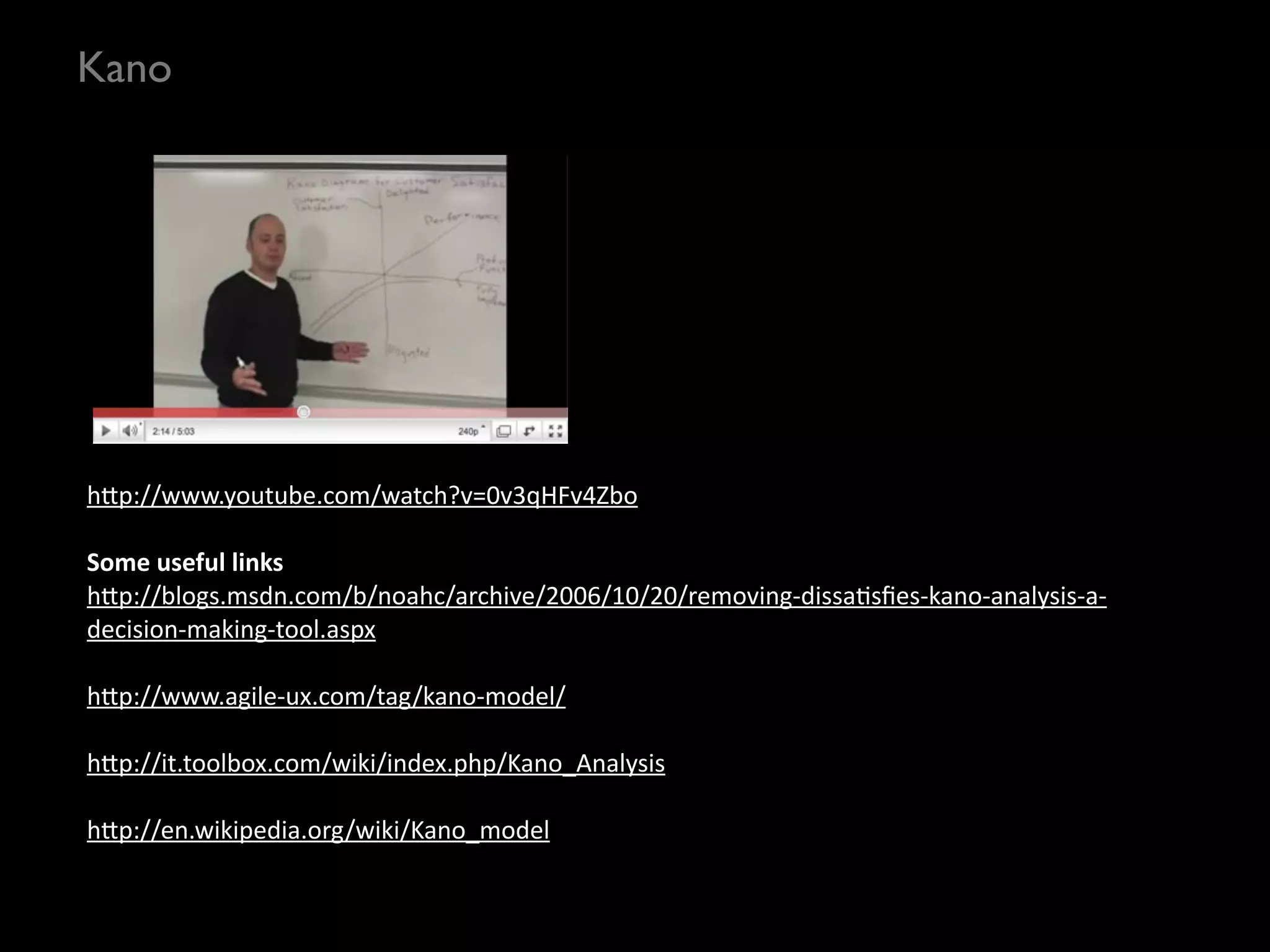
h?p://www.youtube.com/watch?v=0v3qHFv4Zbo

Some	
  useful	
  links
h?p://blogs.msdn.com/b/noahc/archive/2006/10/20/removing-­‐dissaSsfies-­‐kano-­‐analysis-­‐a-­‐
decision-­‐making-­‐tool.aspx

h?p://www.agile-­‐ux.com/tag/kano-­‐model/

h?p://it.toolbox.com/wiki/index.php/Kano_Analysis

h?p://en.wikipedia.org/wiki/Kano_model

Kano - a quick intro

  • 1.
    Kano Managing innovation through classi cation of needs Jason Mesut - Head of User Experience
  • 2.
    Kano A technique forclassifying customer needs and determining appropriate levels of innovation for products and services
  • 3.
    Created in the1980's by Professor Noriaki Kano, it's main objective is to help teams uncover, classify, and integrate 3 categories of Customer Needs and Attributes into the Products or Services they are developing. 
  • 4.
    It’s also beingused in Agile methodologies for prioritising requirements
  • 5.
    Based on threecore tenets
  • 6.
  • 7.
    Quality keeps customers and builds loyalty
  • 8.
    Innovation is necessaryto differentiate and compete in the market
  • 9.
    Kano is basedon 3 core types of need: Basic, Performance and Excitement
  • 10.
    Basic Attributes / needsthat are expected, assumed, given. The hygiene factors.
  • 11.
    Kano model Very satis ed Delighted Executed Executed very poorly or not well at all Basic Satisfying basic needs merely minimises dissatisfaction. Absence or poor execution leads to greater dissatisfaction. Very dissatis ed Disgusted
  • 12.
    Basic Absence of these will cause dissatisfaction, but no amount of execution quality will cause positive satisfaction, it will only minimise dissatisfaction.
  • 13.
    Basic Toilet rolls in a hotel room. Zero toilet rolls = unhappy customer. Three extra toilet rolls = not unhappy, but not happy customer.
  • 14.
    Basic Car doorhits curb when opened causes major dissatisfaction. Car door missing the curb causes no dissatisfaction, but not positive satisfaction.
  • 15.
    Basic Customers/ users willrarely state these, so you have to observe or analyse other products or services in depth to get to what they are
  • 16.
    Performance Attributes / needs that are consciously evaluated by the customer and at top of their minds when purchasing
  • 17.
    Kano model Very satis ed Delighted Performance Performance needs yield a proportional satisfaction for an investment in execution quality Executed Executed very poorly or not well at all Very dissatis ed Disgusted
  • 18.
    Performance Satisfaction isproportional to the way in which these are executed, starting from dissatisfaction due to slow, poor, or absent execution through to high satisfaction due to quick, powerful or exquisite execution.
  • 19.
    Performance These arepossibly the easiest to ascertain from users or customers as they are often ‘stated’ needs, so will come up in surveys, focus groups etc.
  • 20.
    Performance Miles per gallon:more = greater satisfaction Waiting time in an airport: less time = greater satisfaction
  • 21.
    Excitement Attributes / qualitiesthat deliver “buzz”. The wows, differentiators, innovations, unique selling/value propositions
  • 22.
    Kano model Excitement Very satis ed Excitement needs Delighted delight when present but no dissatisfaction when not Executed Executed very poorly or not well at all Very dissatis ed Disgusted
  • 23.
    Excitement Presence of these will delight customers/users and increase their satisfaction, but absence of them will not dissatisfy.
  • 24.
    Excitement Internet accesson a plane or tube is not expected and so will not upset if not present, but will delight if it is.
  • 25.
    Excitement A pillow menuat Penny Hill Park Spa for RMA Xmas party is not expected but is a rare delight.
  • 26.
    Excitement These areharder to come up with, and really require an understanding of ‘latent need’ which can only really be understood through observation or incredible genius intuition
  • 27.
    Kano model Excitement Very satis ed Excitement needs Delighted delight when present but no dissatisfaction when not Performance Performance needs yield a proportional satisfaction for an investment in execution quality Executed Executed very poorly or not well at all Basic Satisfying basic needs merely minimises dissatisfaction. Absence or poor execution leads to greater dissatisfaction. Very dissatis ed Disgusted
  • 28.
    Over time, excitementneeds become performance needs, and then basic needs.
  • 29.
    The innovations oftomorrow, will become the hygiene factors of yesterday.
  • 30.
    Kano model Very satis ed Delighted Excitement Performance Executed Executed very poorly or not well at all Basic Very dissatis ed Disgusted
  • 31.
    There are toolsthat help you classify, by asking some simple questions
  • 32.
    Kano survey tool I  re-­‐found  this  special  survey  tool  that  does  Kano  analysis  on  requirements  for  you. A  basic  (i.e.  Not  very  well  done)  version  here   h?p://www.kanosurvey.com/?id=395    <h?p://www.kanosurvey.com/?id=395>  
  • 33.