HIGICC – Data Discovery Day


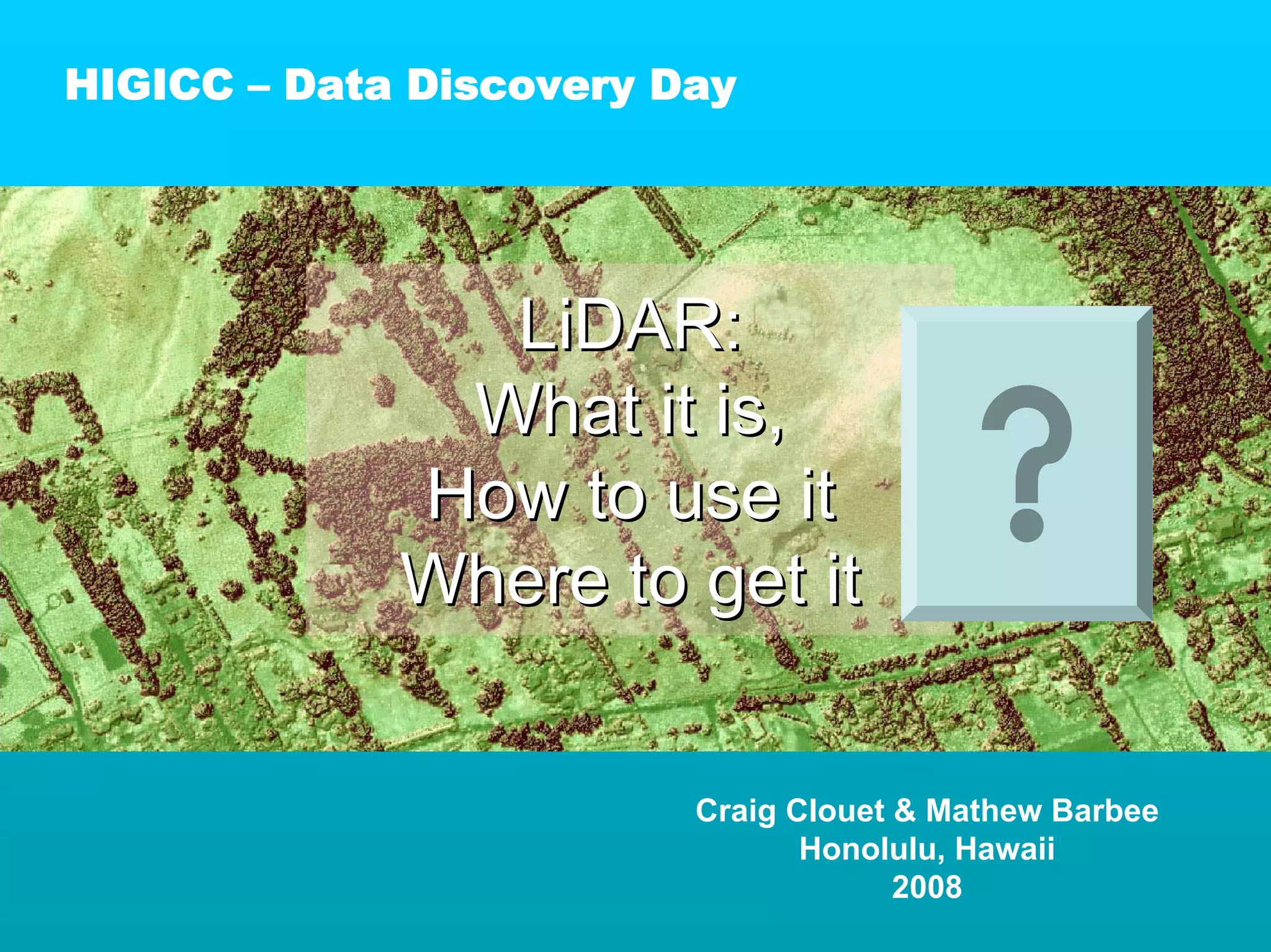
               LiDAR:
              What it is,
             How to use it
             Where to get it


                         Craig Clouet & Mathew Barbee
                                Honolulu, Hawaii
                                      2008
Agenda
• What is LiDAR – Craig Clouet
  – Types
  – Data collection & storage


• LiDAR Applications – Matt Barbee UH

• LiDAR Data Availability – Craig Clouet
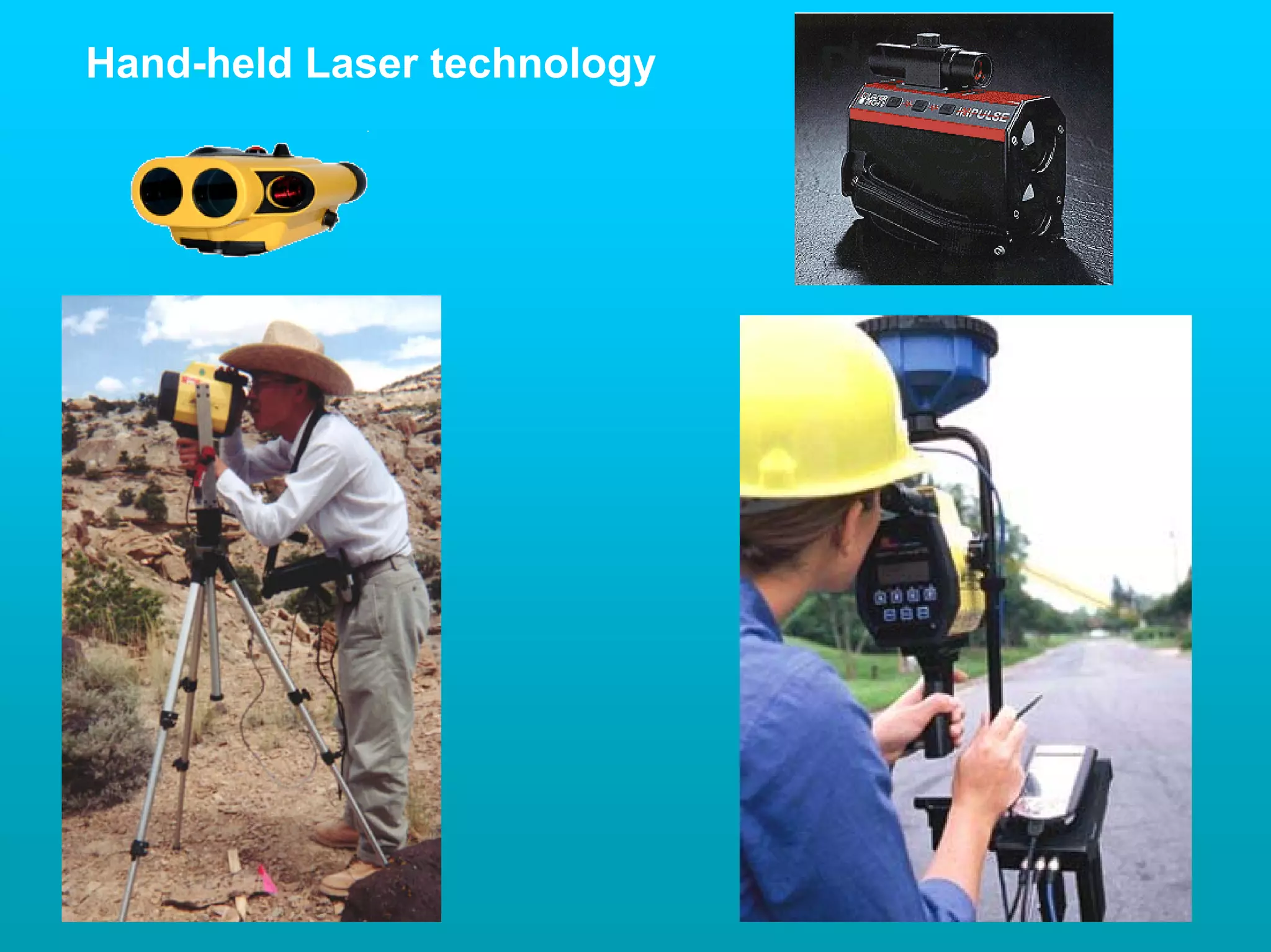
Hand-held Laser technology
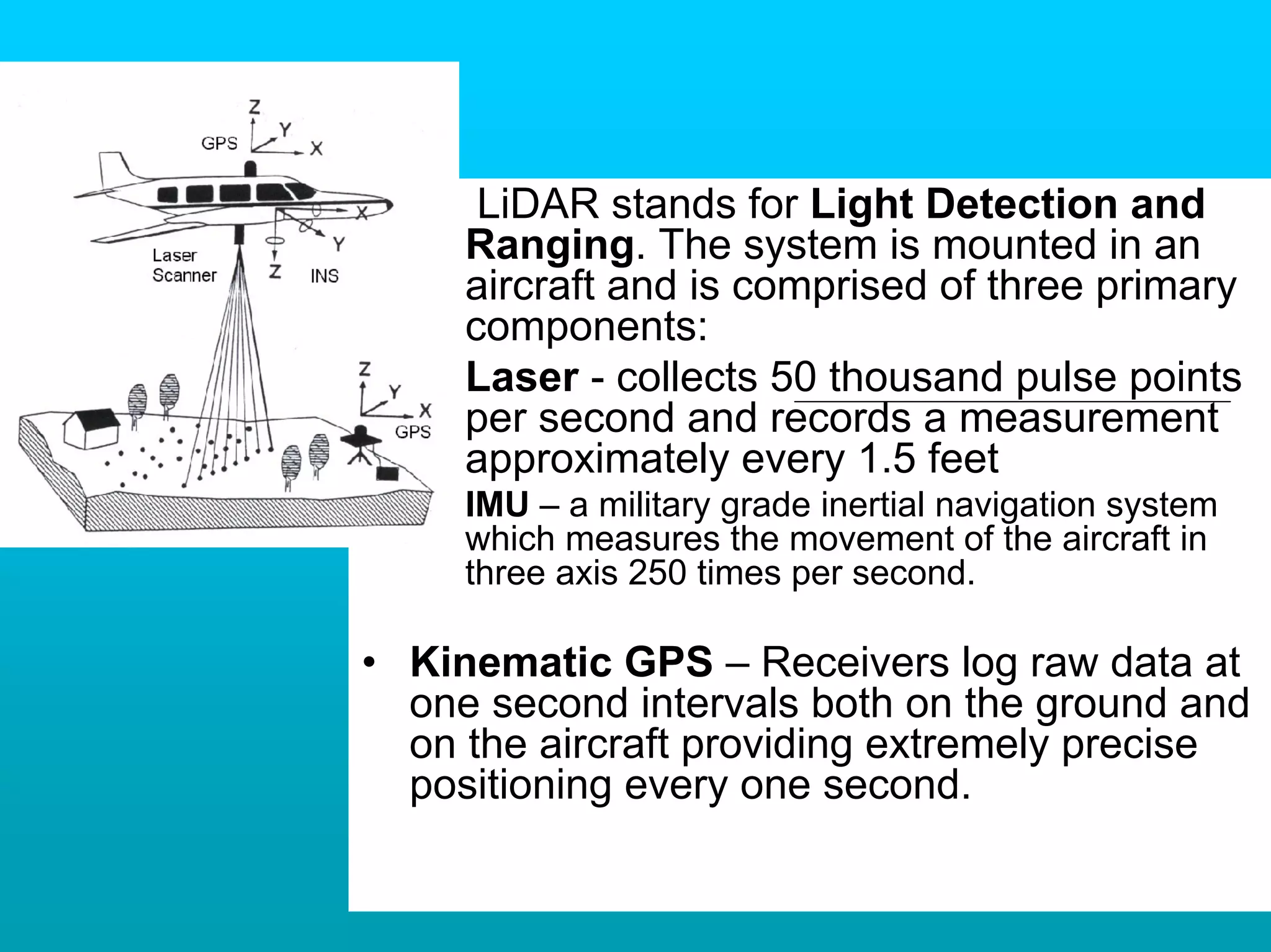
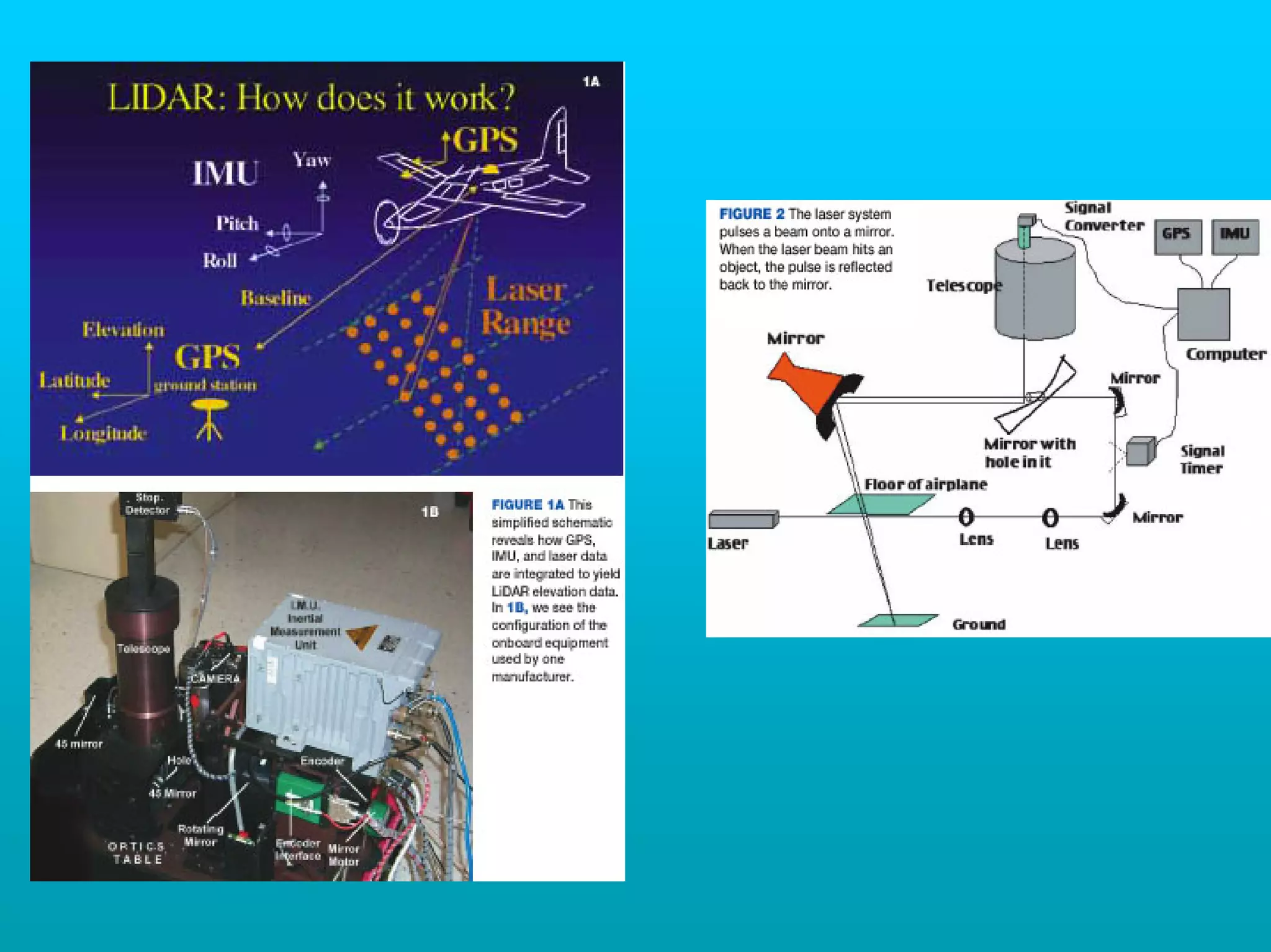
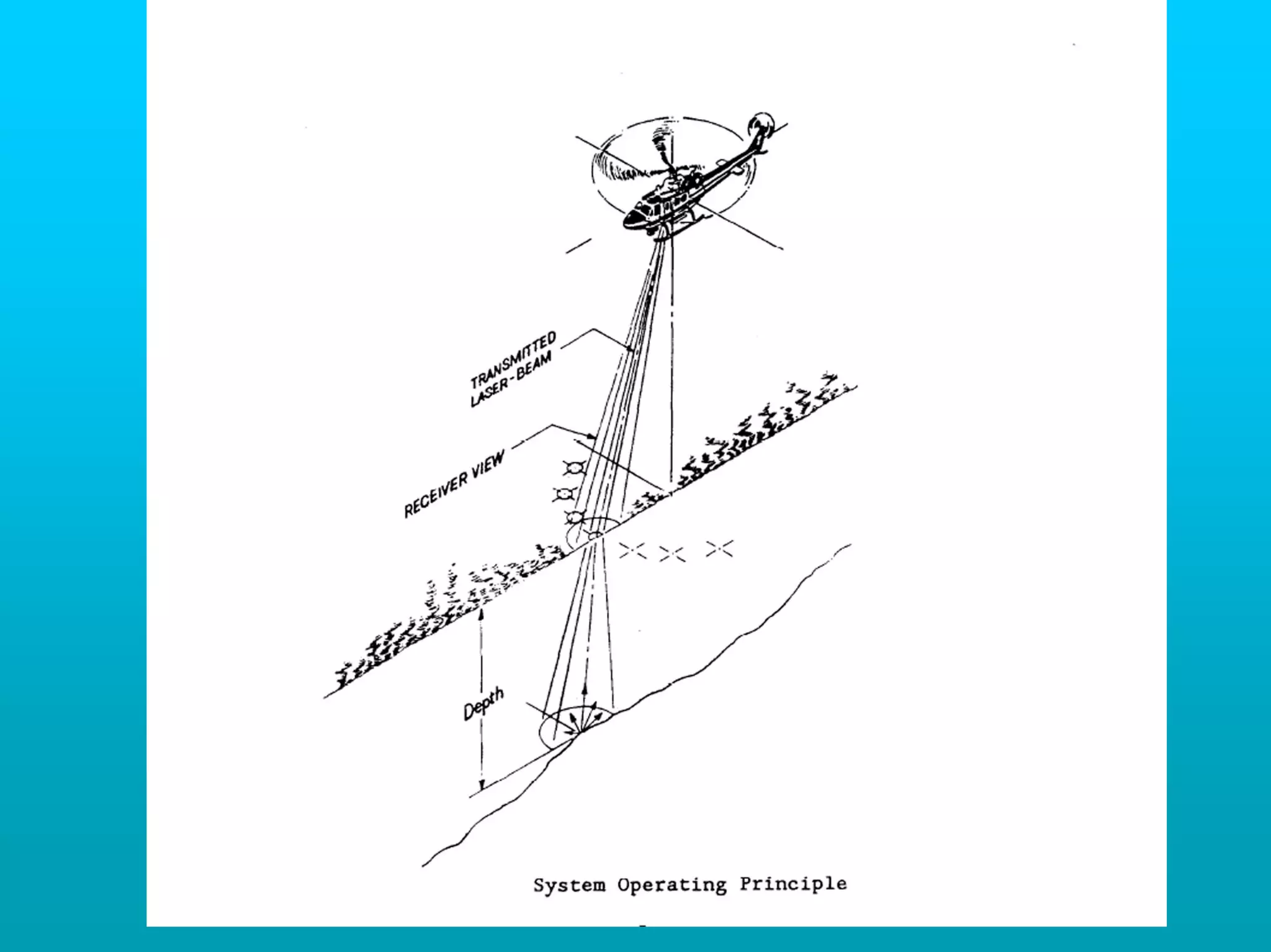
– LiDAR stands for Light Detection and
     Ranging. The system is mounted in an
     aircraft and is comprised of three primary
     components:
   – Laser - collects 50 thousand pulse points
     per second and records a measurement
     approximately every 1.5 feet
   – IMU – a military grade inertial navigation system
     which measures the movement of the aircraft in
     three axis 250 times per second.

• Kinematic GPS – Receivers log raw data at
  one second intervals both on the ground and
  on the aircraft providing extremely precise
  positioning every one second.
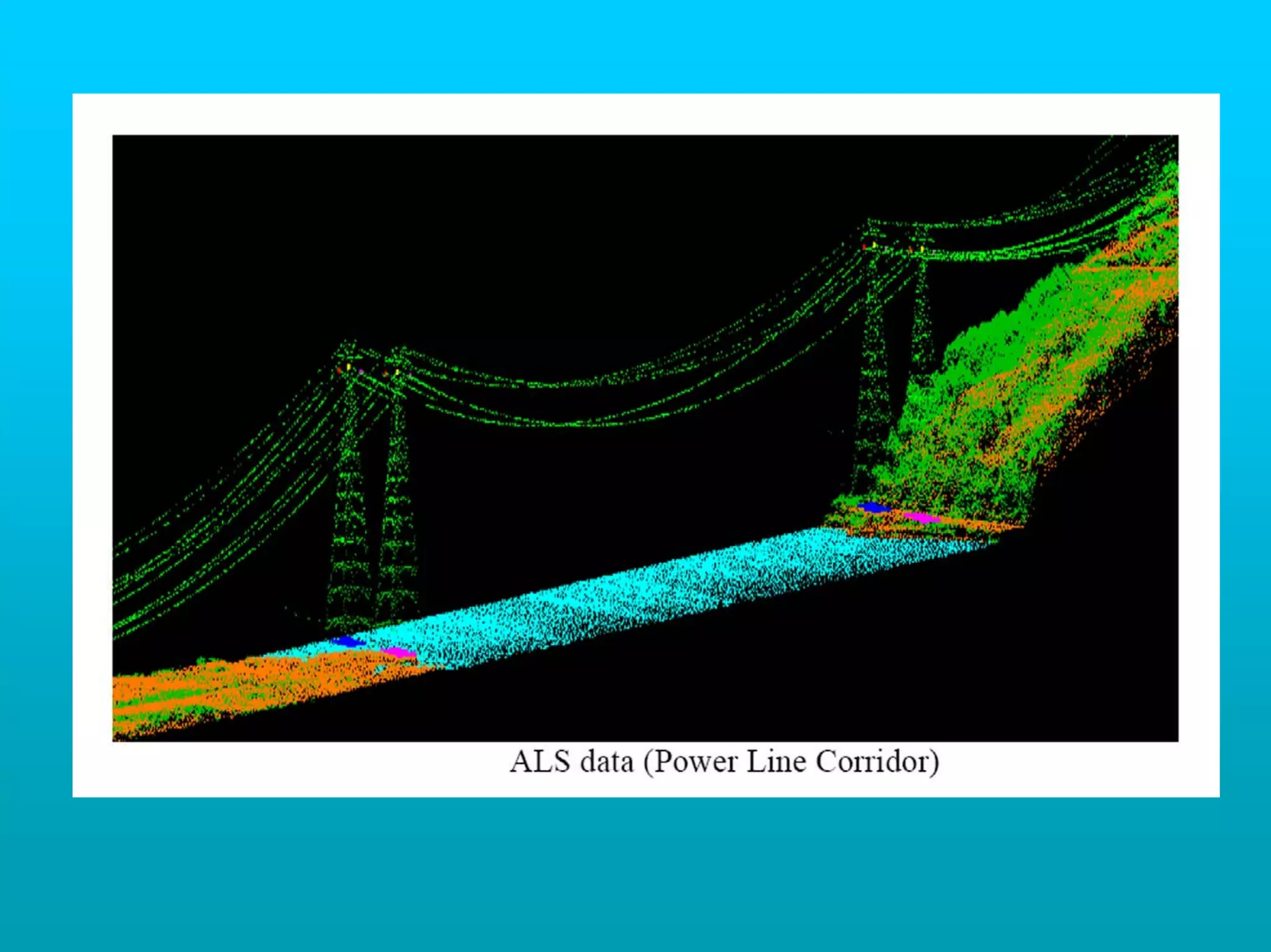
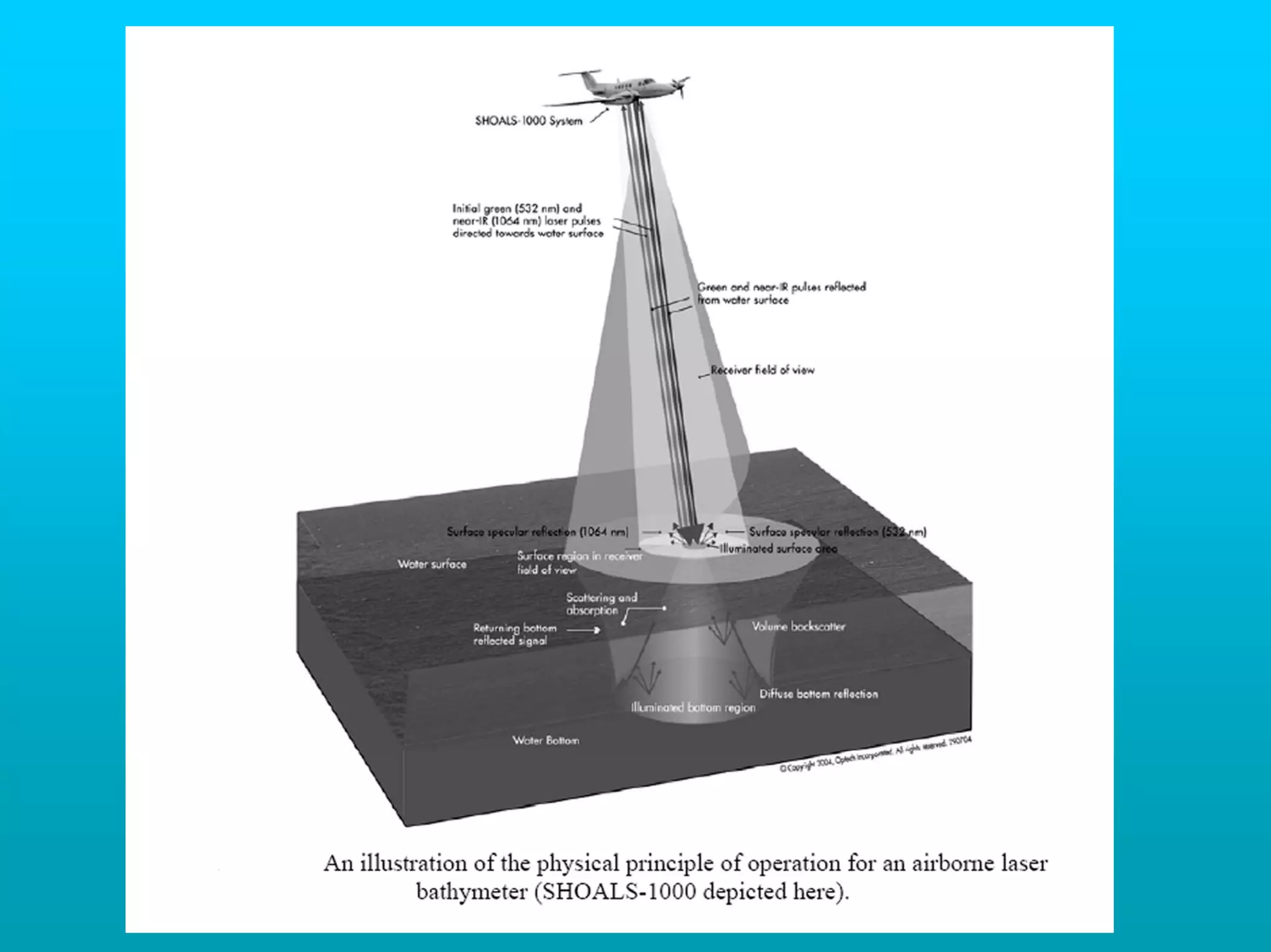
Three Main Types of Commercial LiDAR Systems


              Topographic Mapping

              SHOALS

              Terrestrial
Topographic Mapping
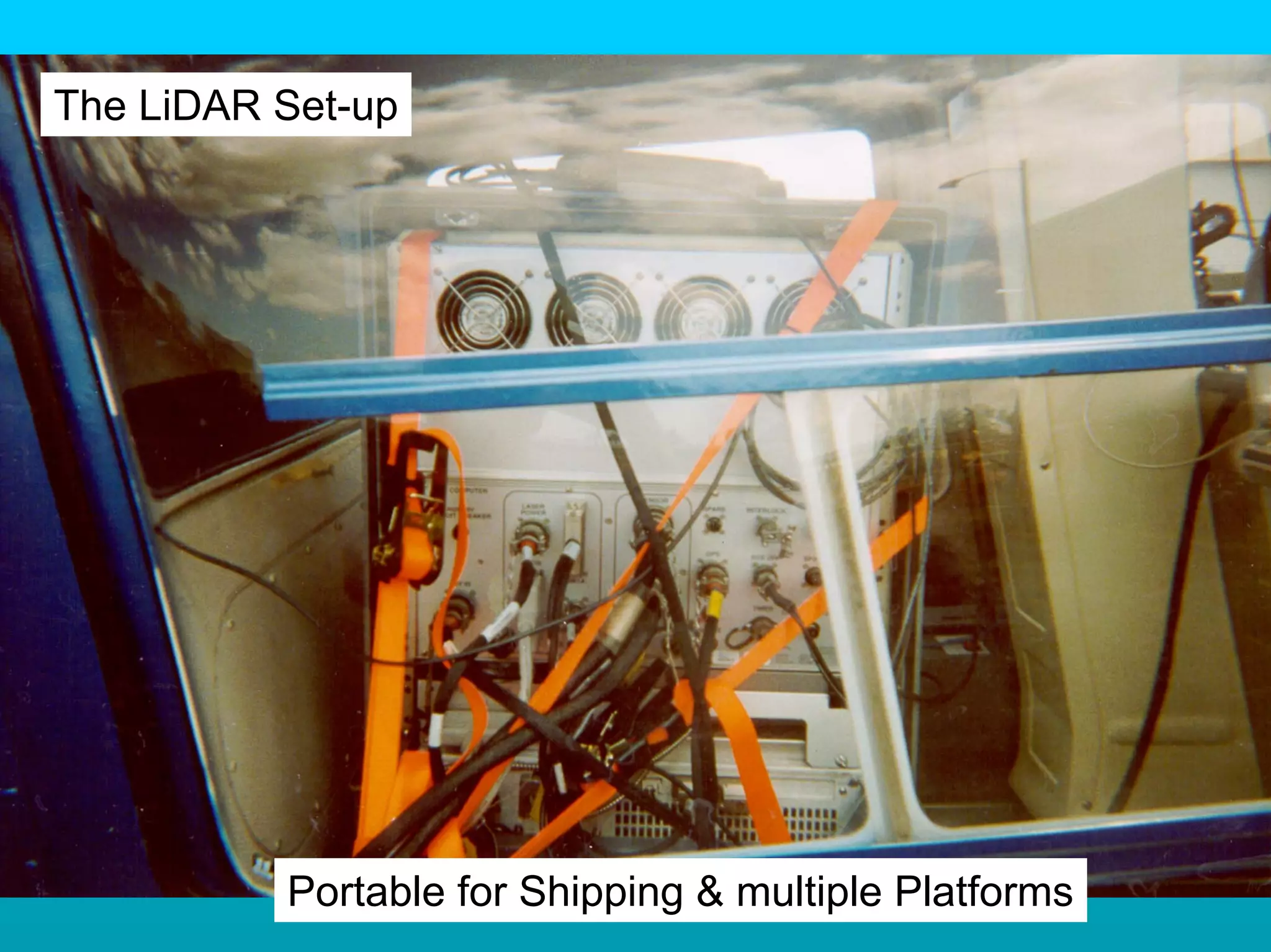
The LiDAR Set-up


          Portable for Shipping & multiple Platforms
SHOALS
Terrestrial
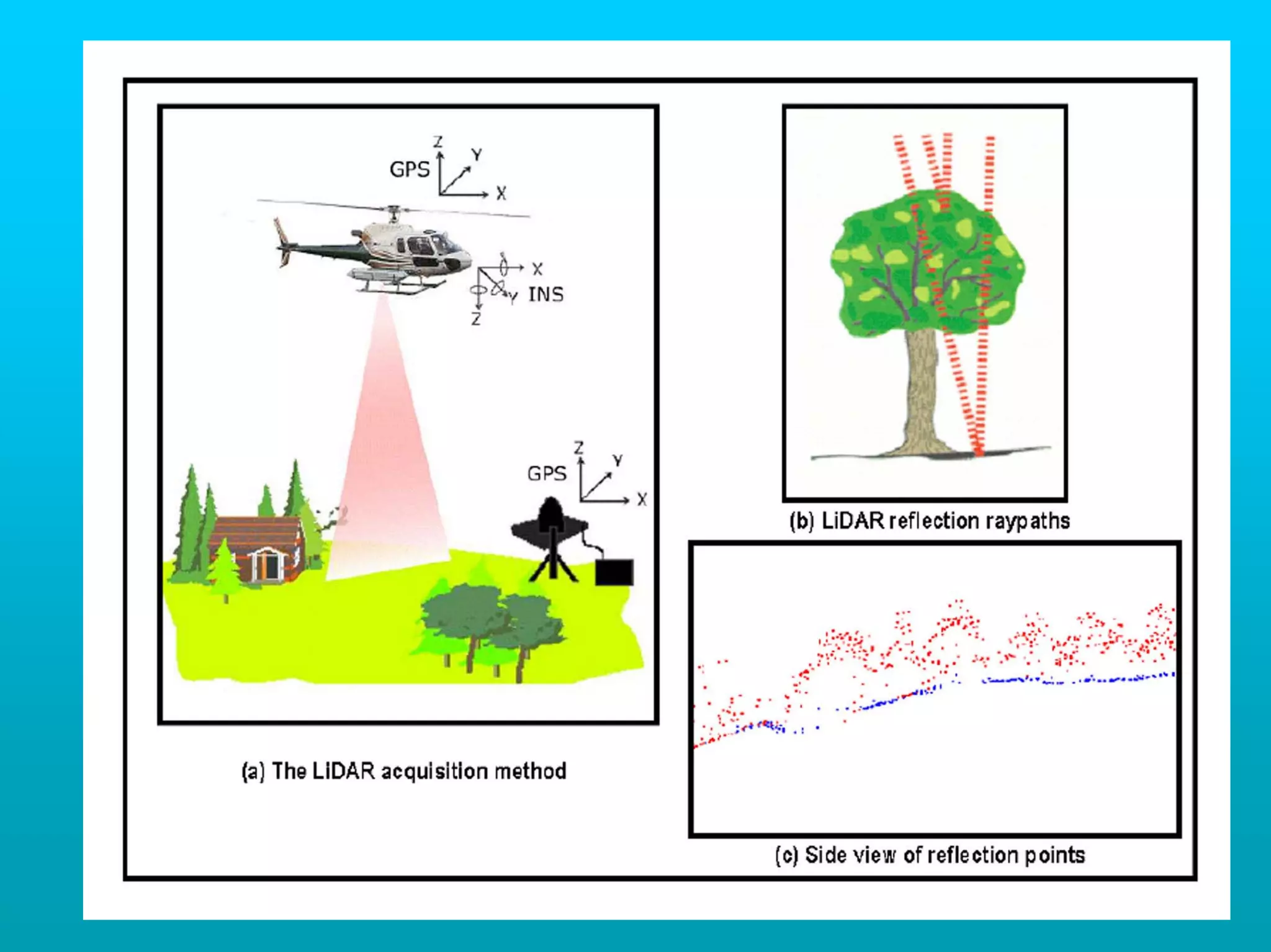
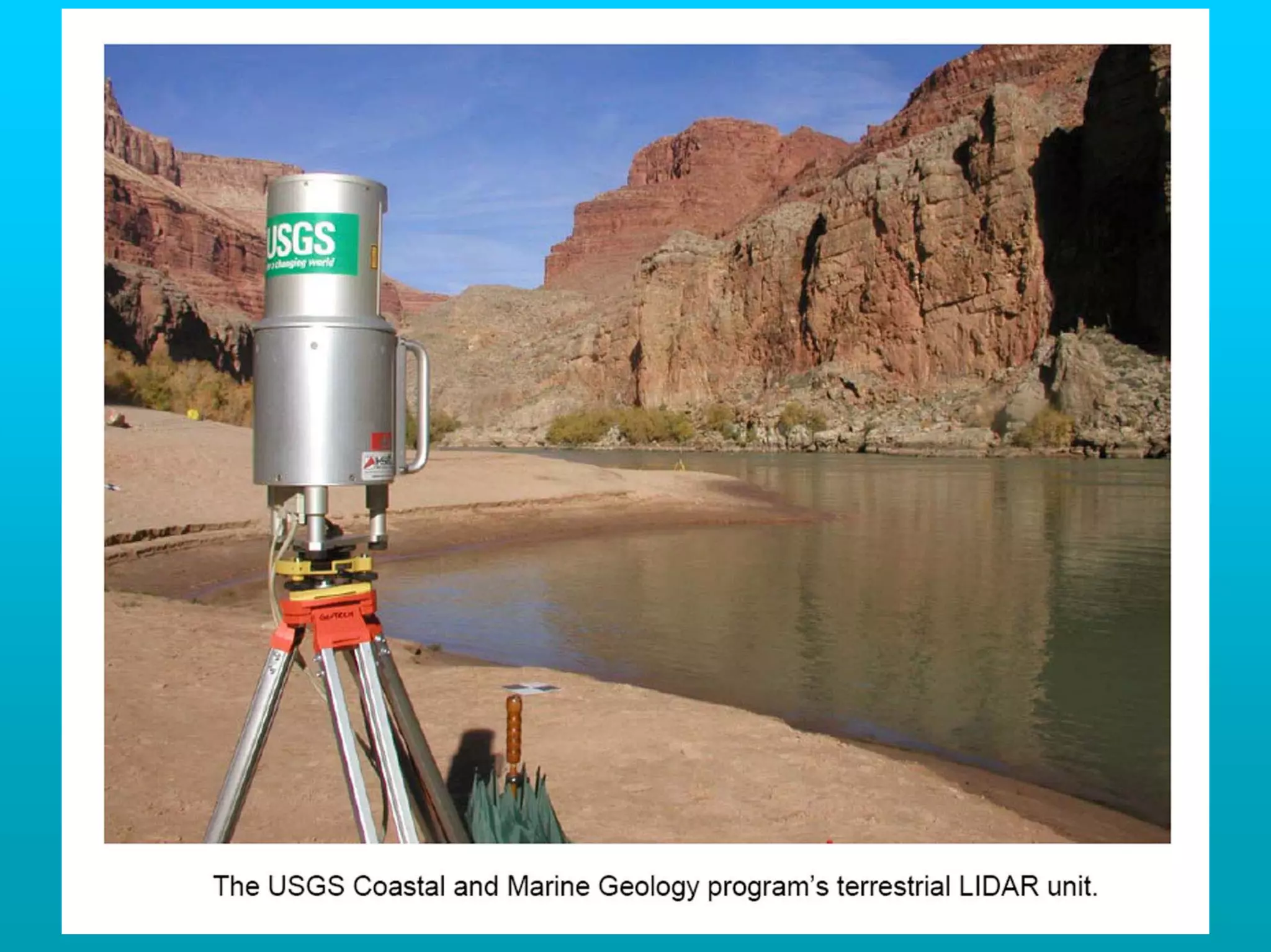
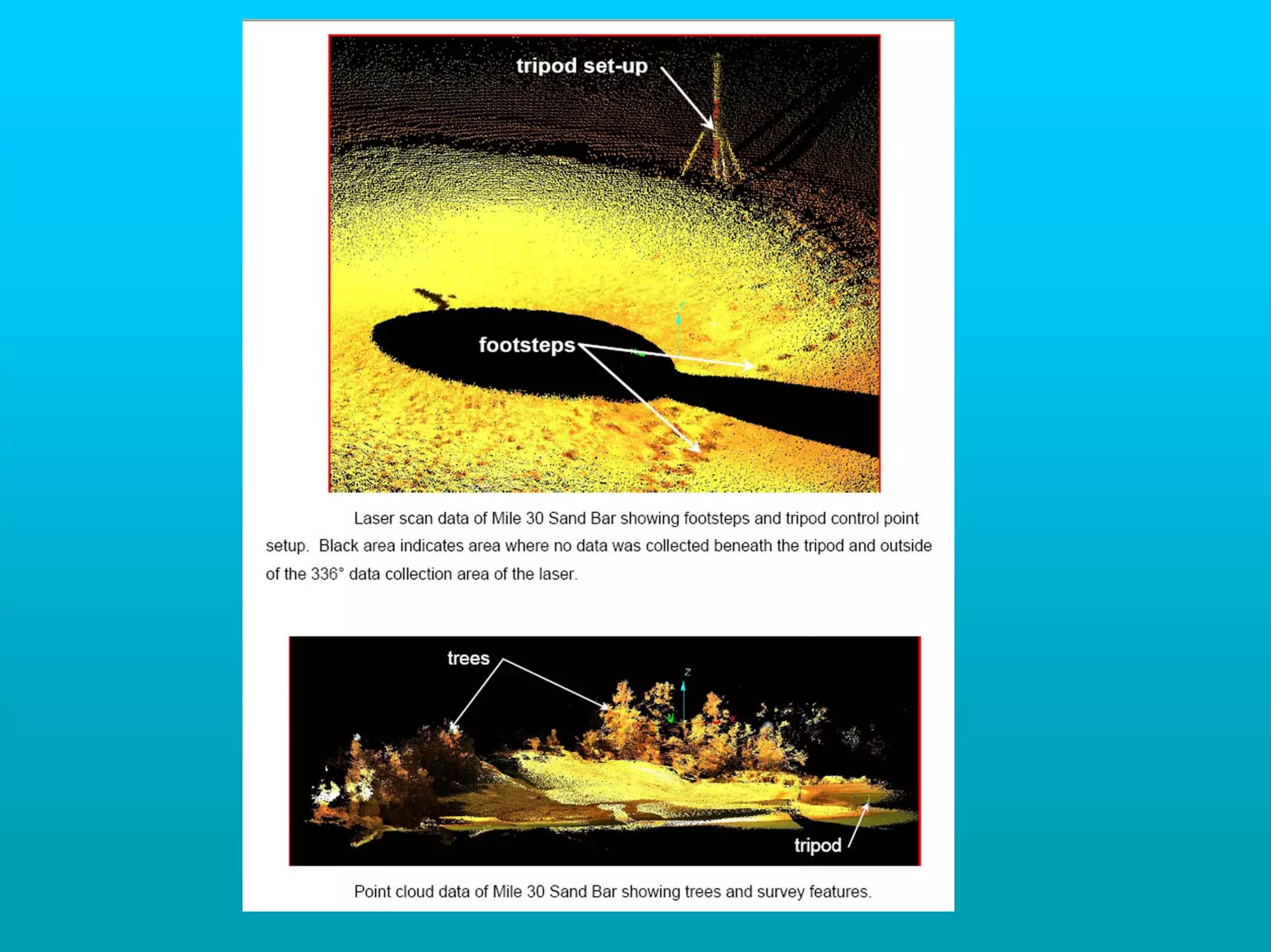
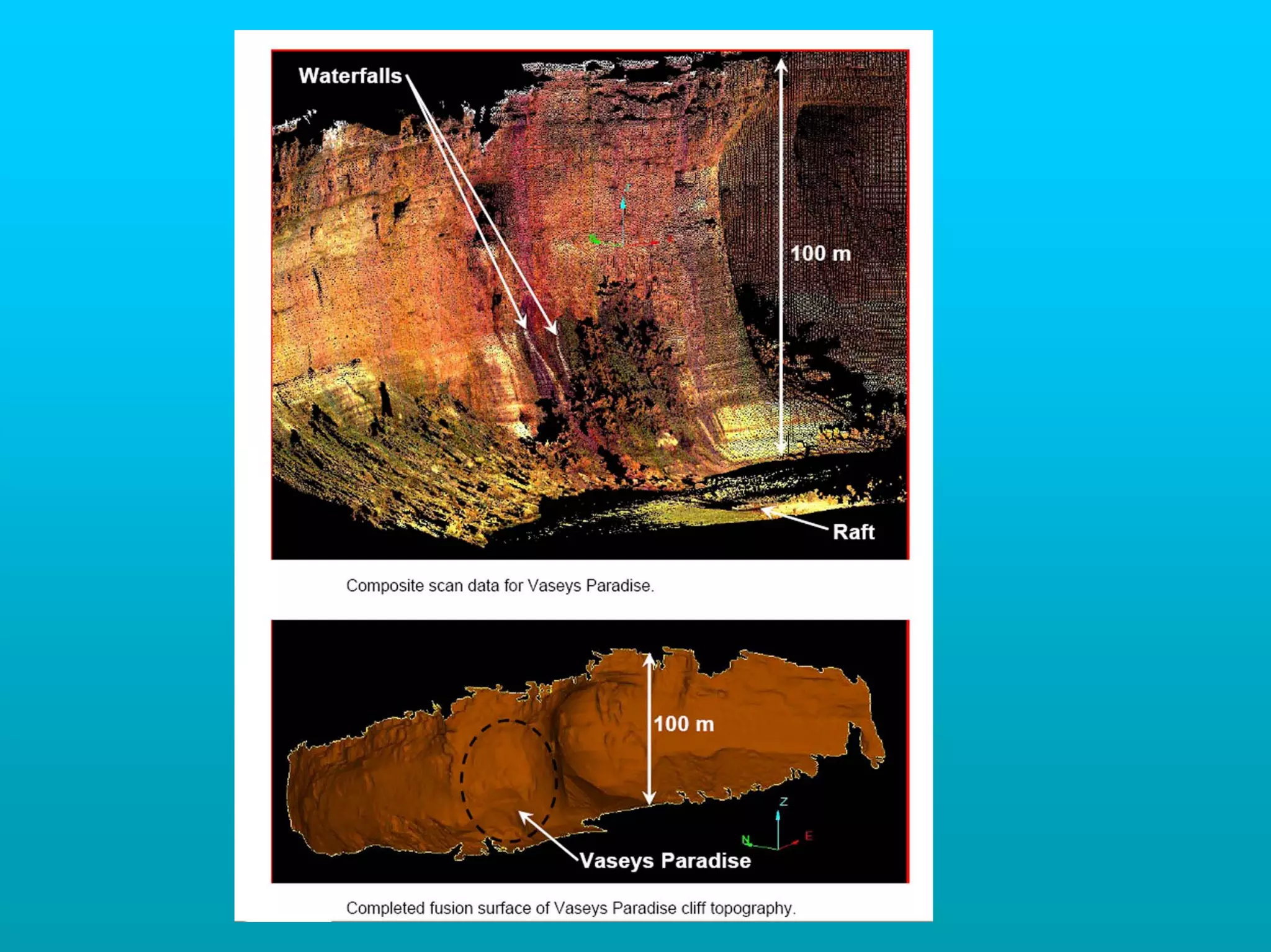
The terrestrial LIDAR technique, or 3D laser scanning as it is commonly known,
consists of sending and receiving laser pulses to build a point file of
three-dimensional coordinates of virtually any surface. The time of travel for a
single pulse reflection is measured along a known trajectory such that the
distance from the laser, and consequently the exact location of a point of
interest can be computed. In addition, some lasers use a color sensor to obtain
additional visual data on points located both within and outside of laser range.
Given the rapid rate of data collection from the newest state of the art topographic
laser scanning systems, the location of up to 12,000 surface points can be
collected in one second. Thus, an entire surface, be it a building, a cliff face,
or a sand bar can be surveyed quickly and accurately. The point file from a
given scan is typically transformed into a three-dimensional surface so that
cross-sections and volumetric calculations can be performed between consecutively
scanned surfaces.
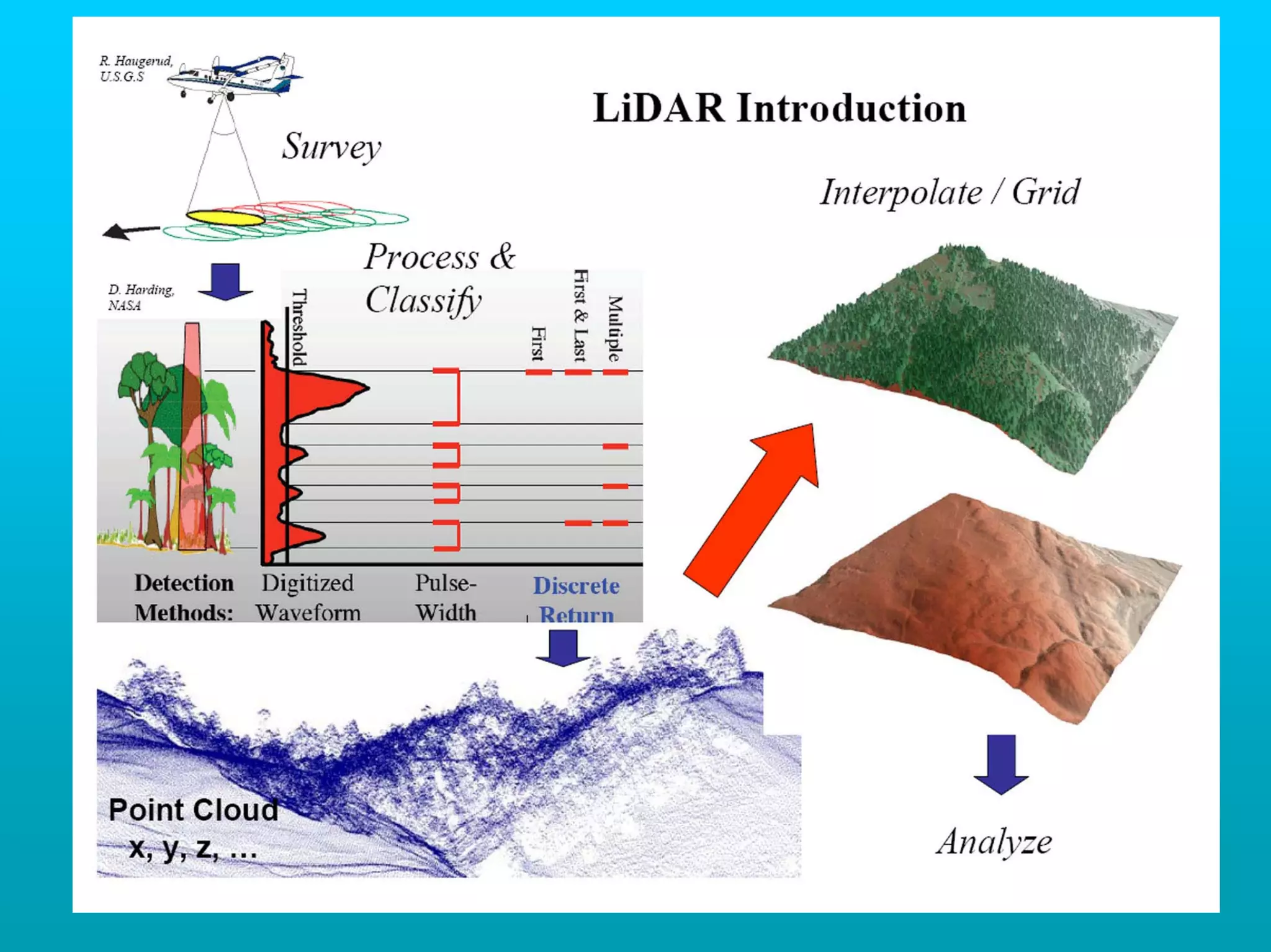
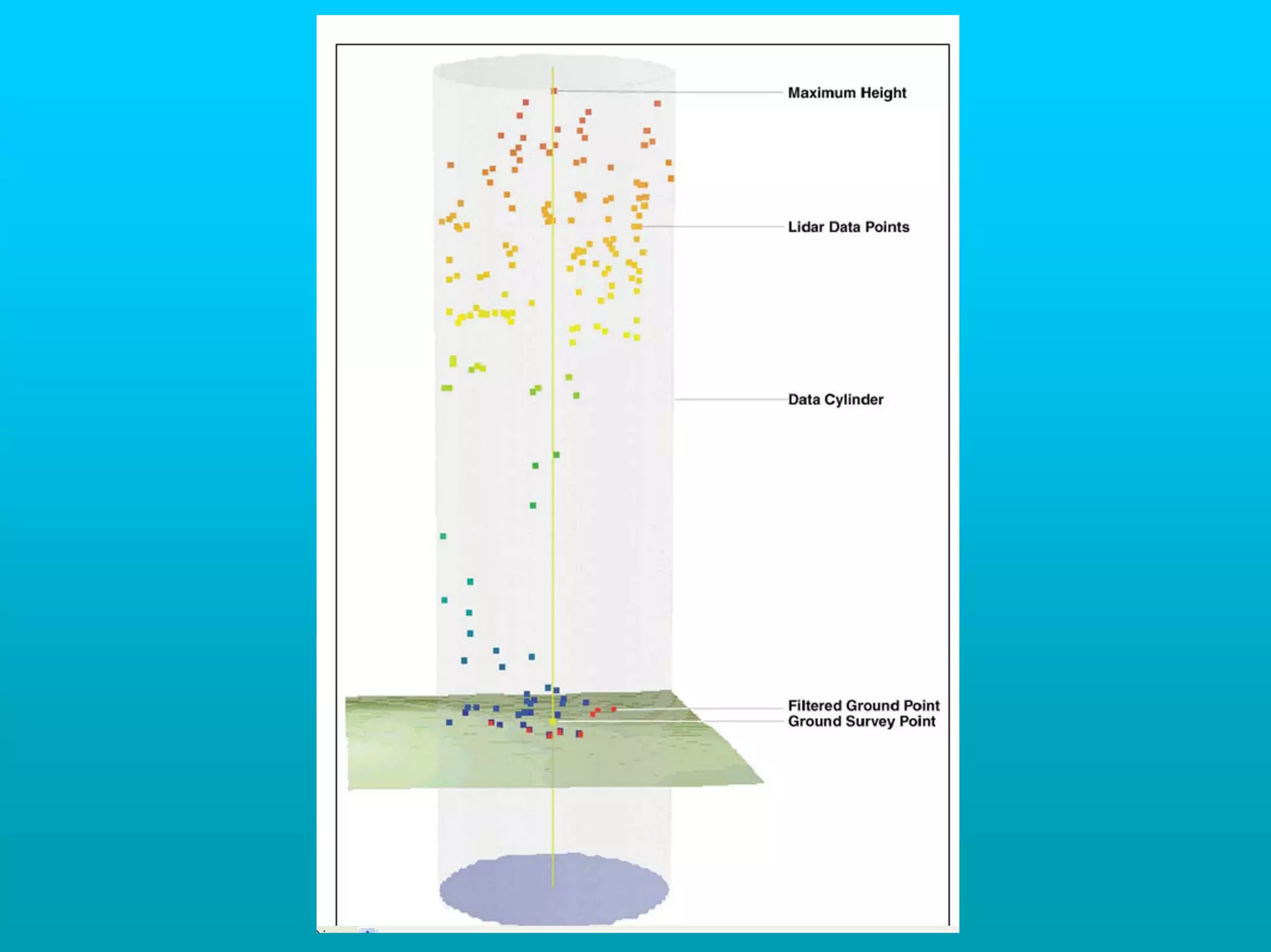
Data Structure
         and
Uses of the Elevations
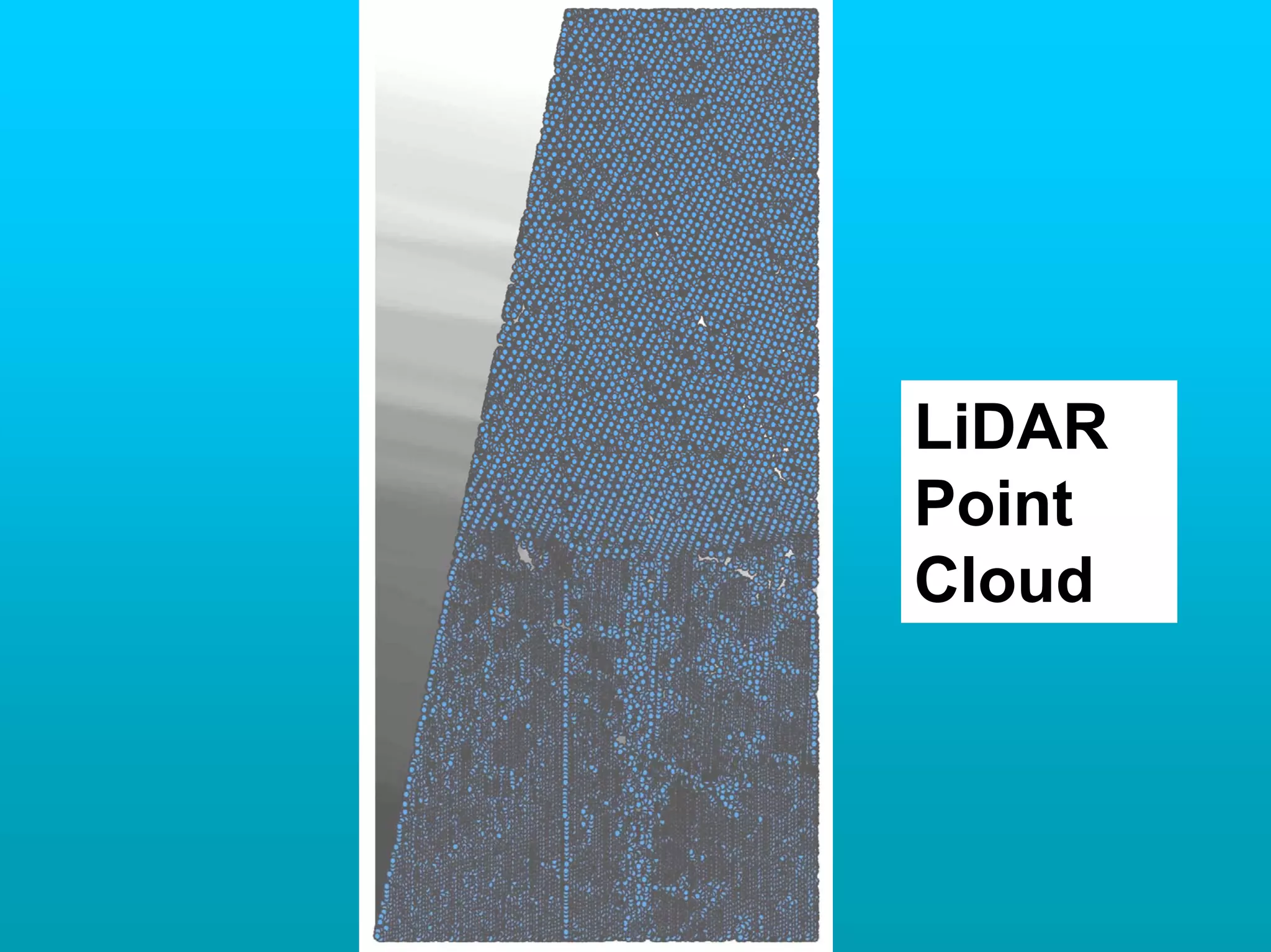
LiDAR
Point
Cloud
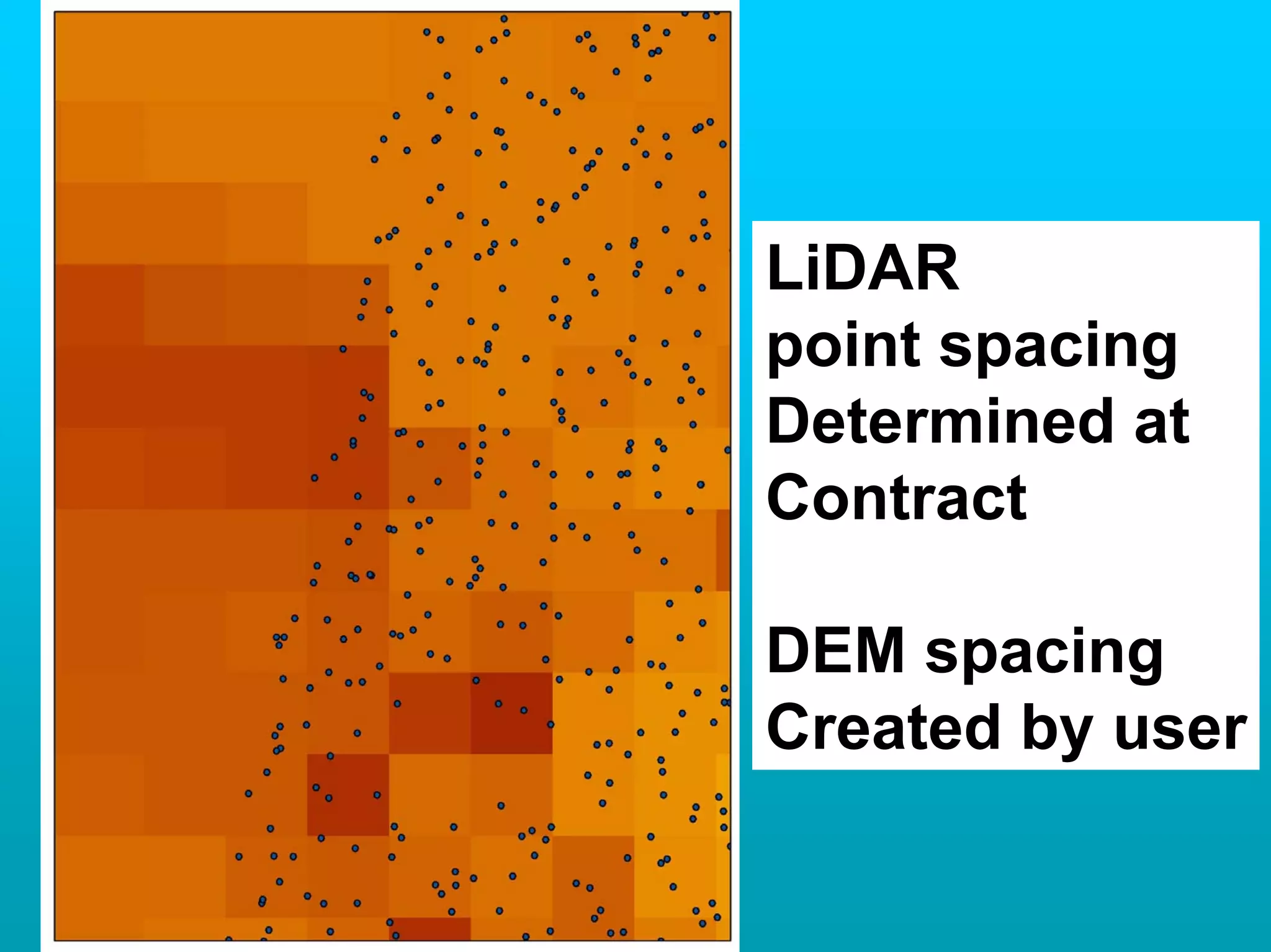
LiDAR
point spacing
Determined at
Contract

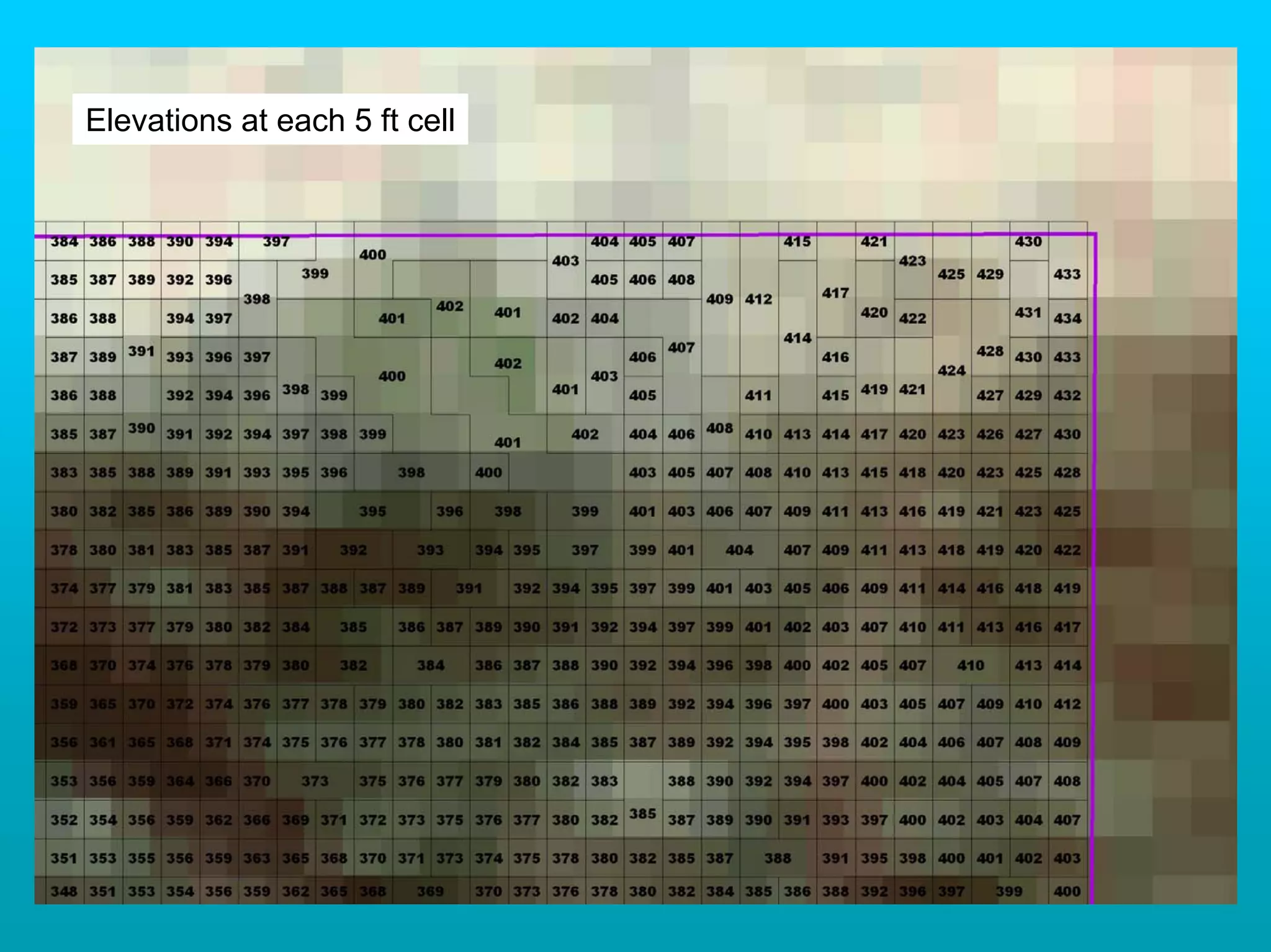
DEM spacing
Created by user
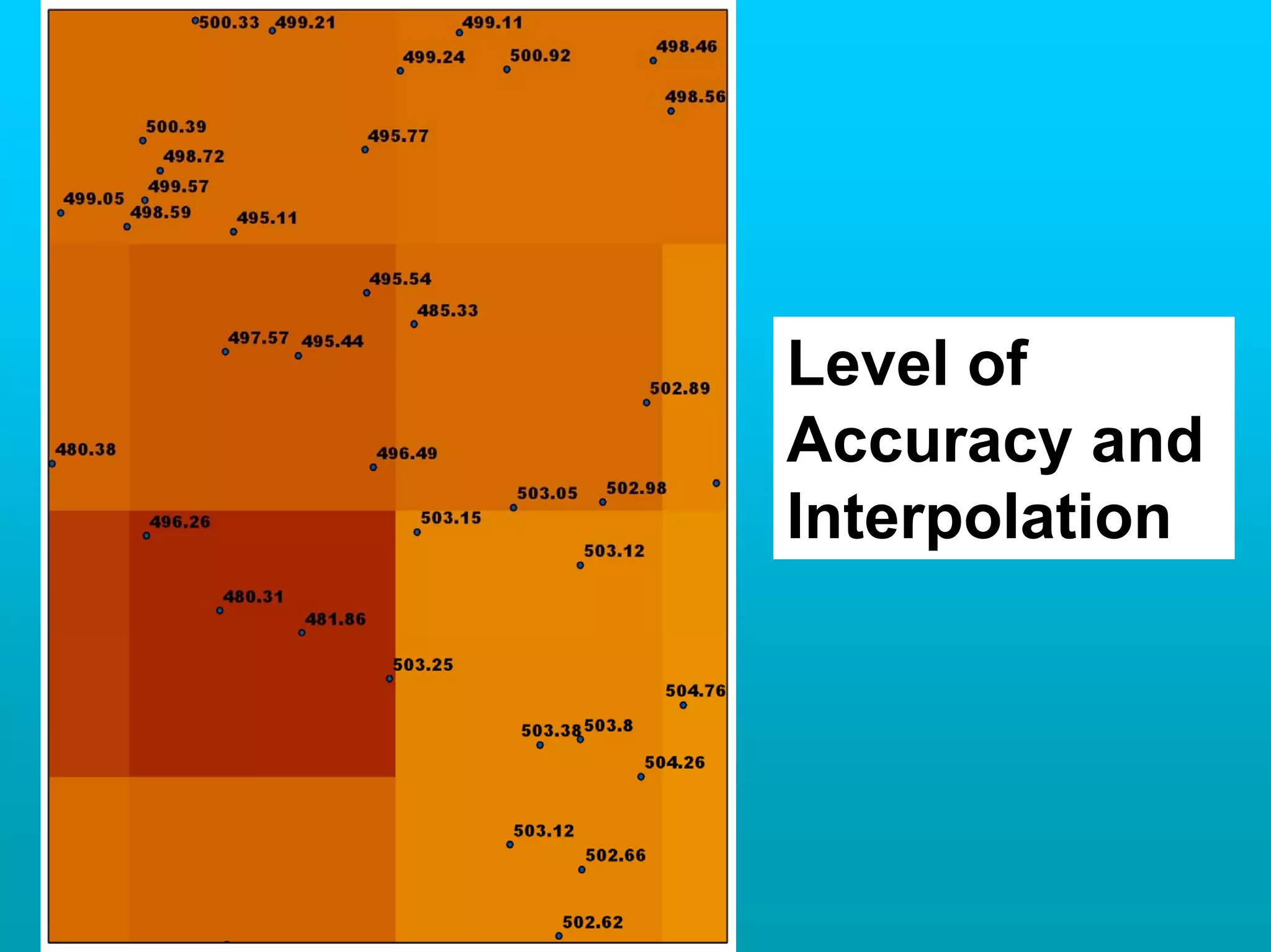
Level of
Accuracy and
Interpolation
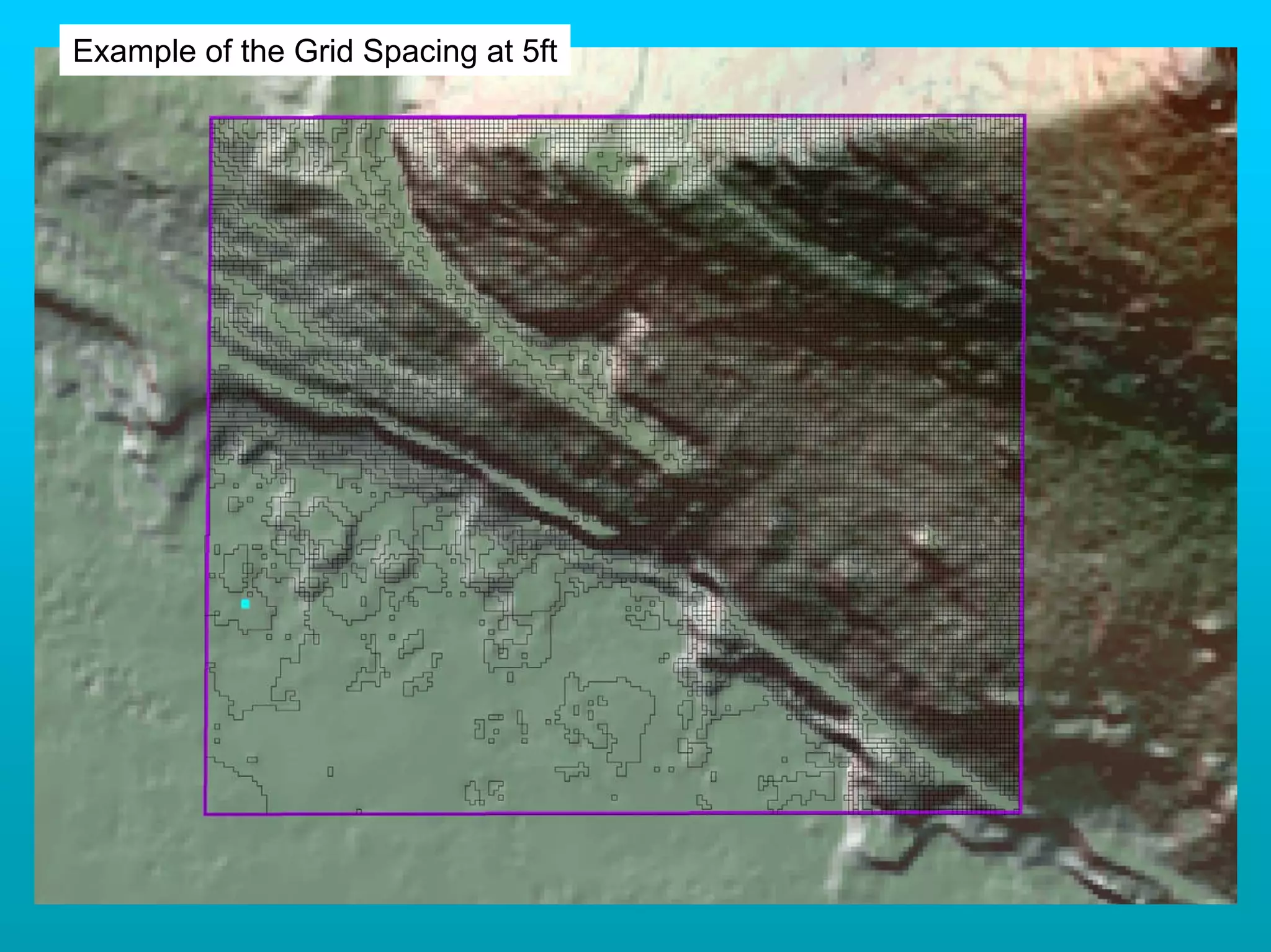
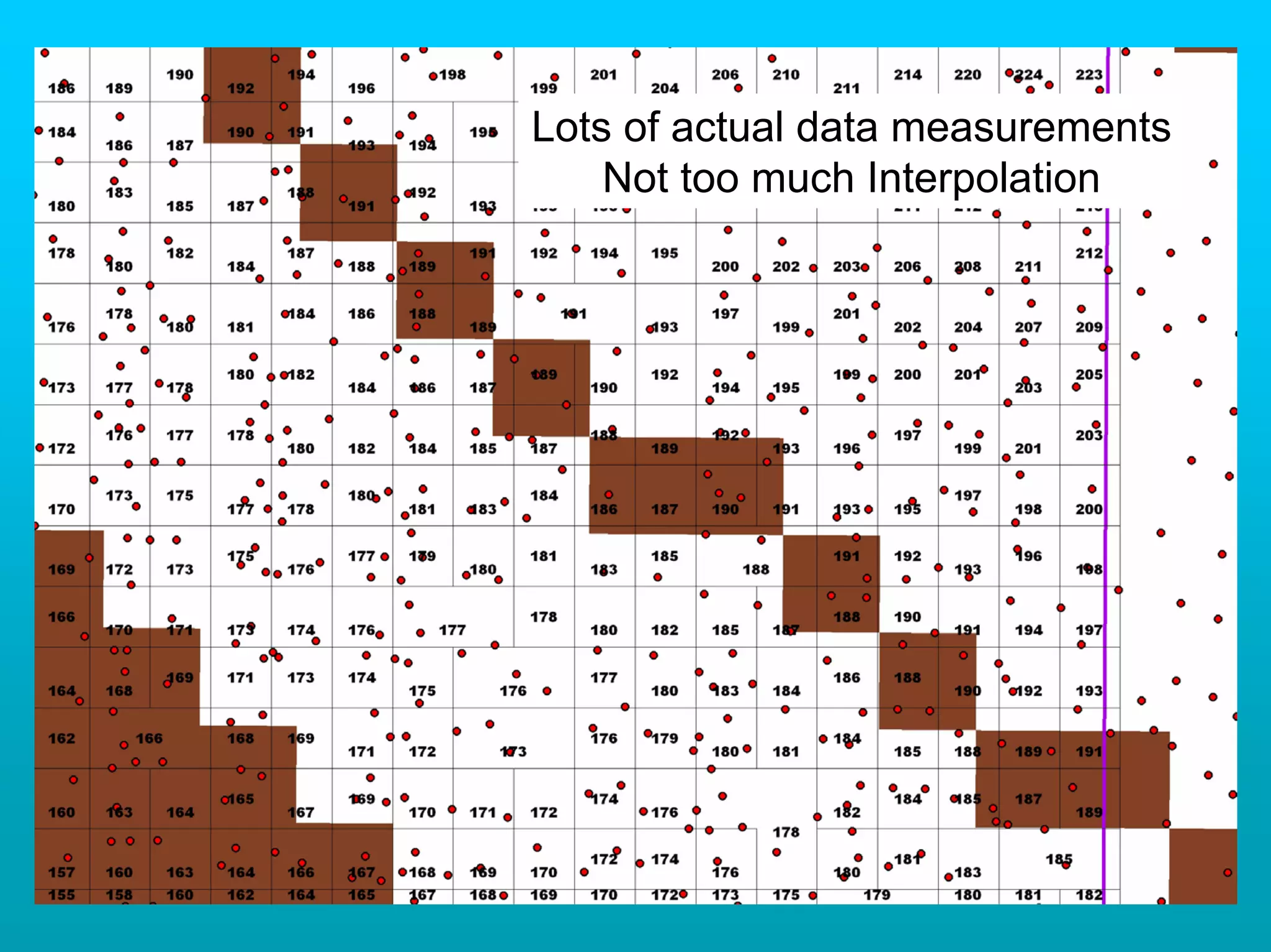
Example of the Grid Spacing at 5ft
Elevations at each 5 ft cell
The Point Cloud
Lots of actual data measurements
    Not too much Interpolation
File Formats
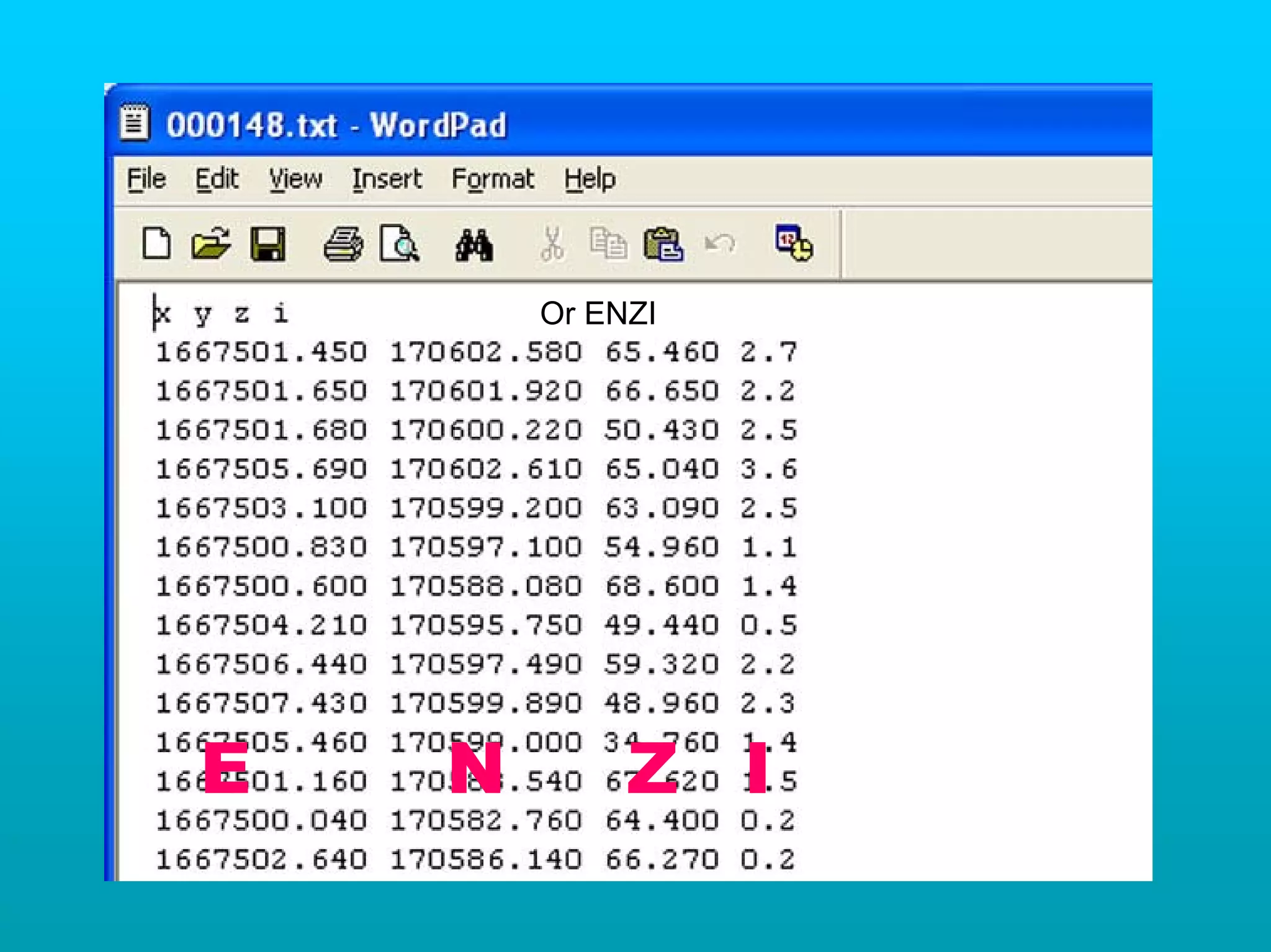
Or ENZI


E   N        Z I
LAS Format

The LAS file format is a public file format for the interchange of LIDAR data
between vendors and customers. This binary file format is a alternative to
proprietary systems or a generic ASCII file interchange system used by many
companies. The problem with proprietary systems is obvious in that data cannot
be easily taken from one system to another.

There are two major problems with the ASCII file interchange. The first problem is
performance because the reading and interpretation of ASCII elevation data can
be very slow and the file size can be extremely large, even for small amounts of
data. The second problem is that all information specific to the LIDAR data is
 lost. The LAS file format is a binary file format that maintains information
specific to the LIDAR nature of the data while
not being overly complex.
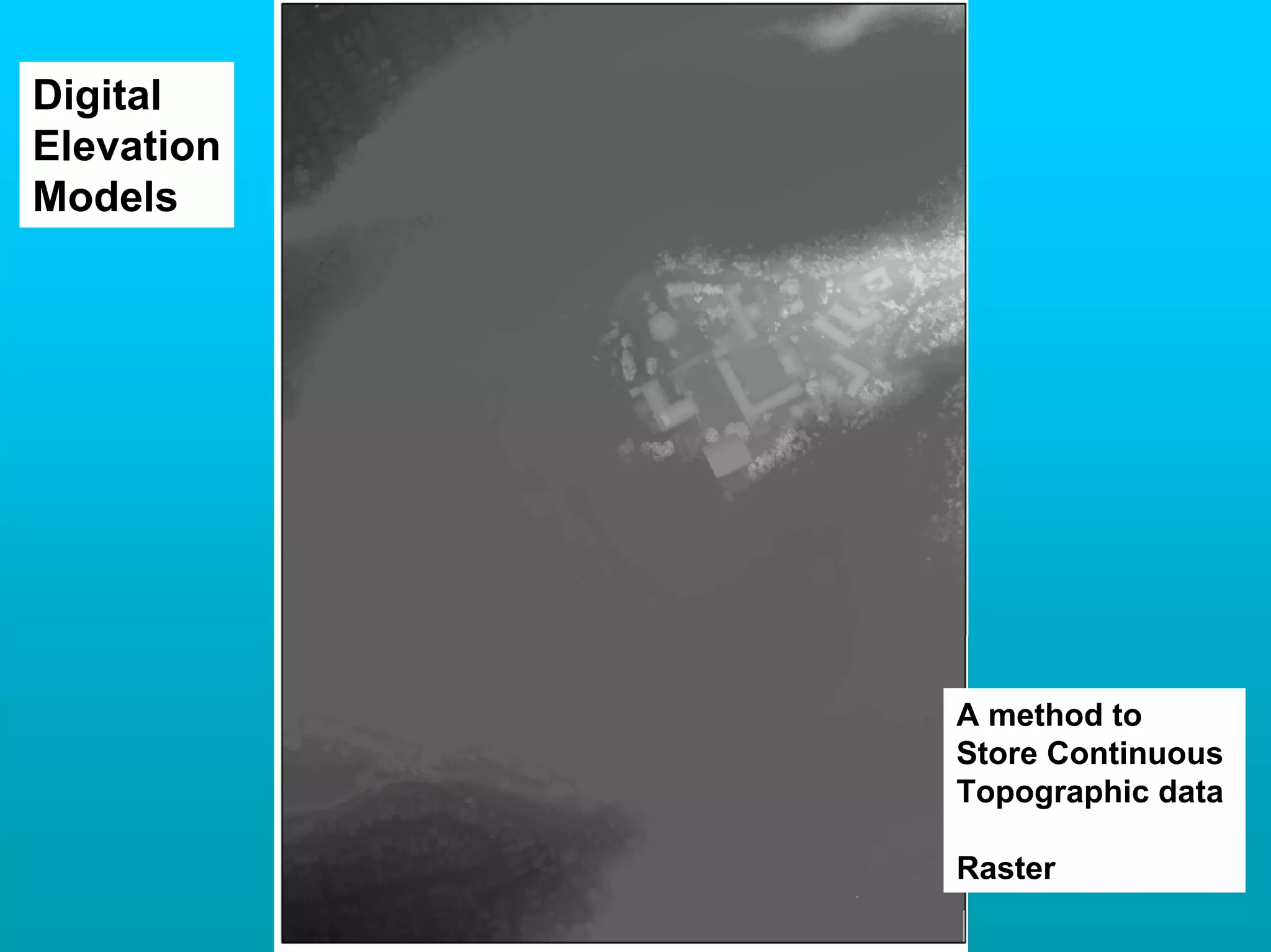
Digital
Elevation
Models


            A method to
            Store Continuous
            Topographic data

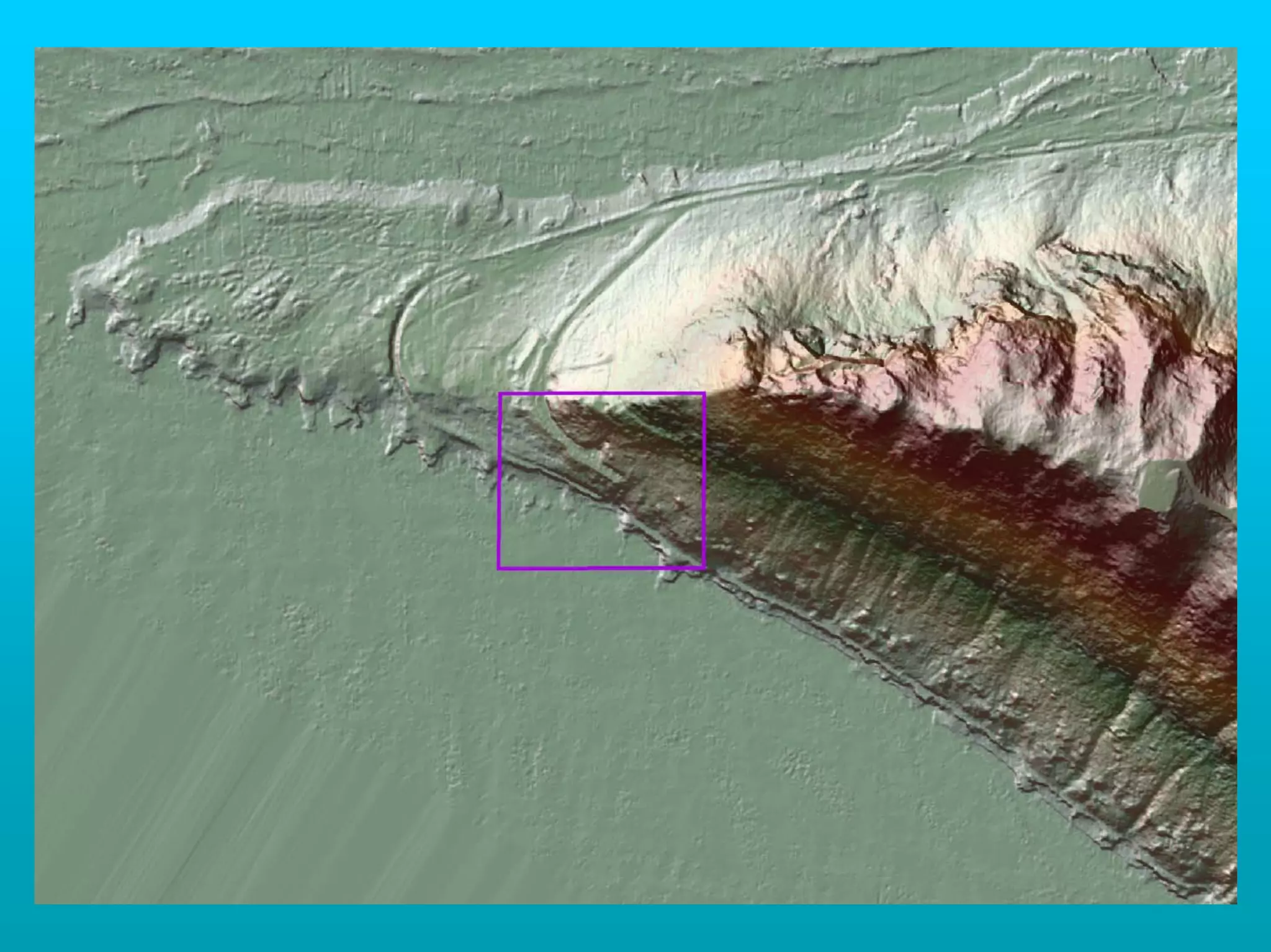
            Raster
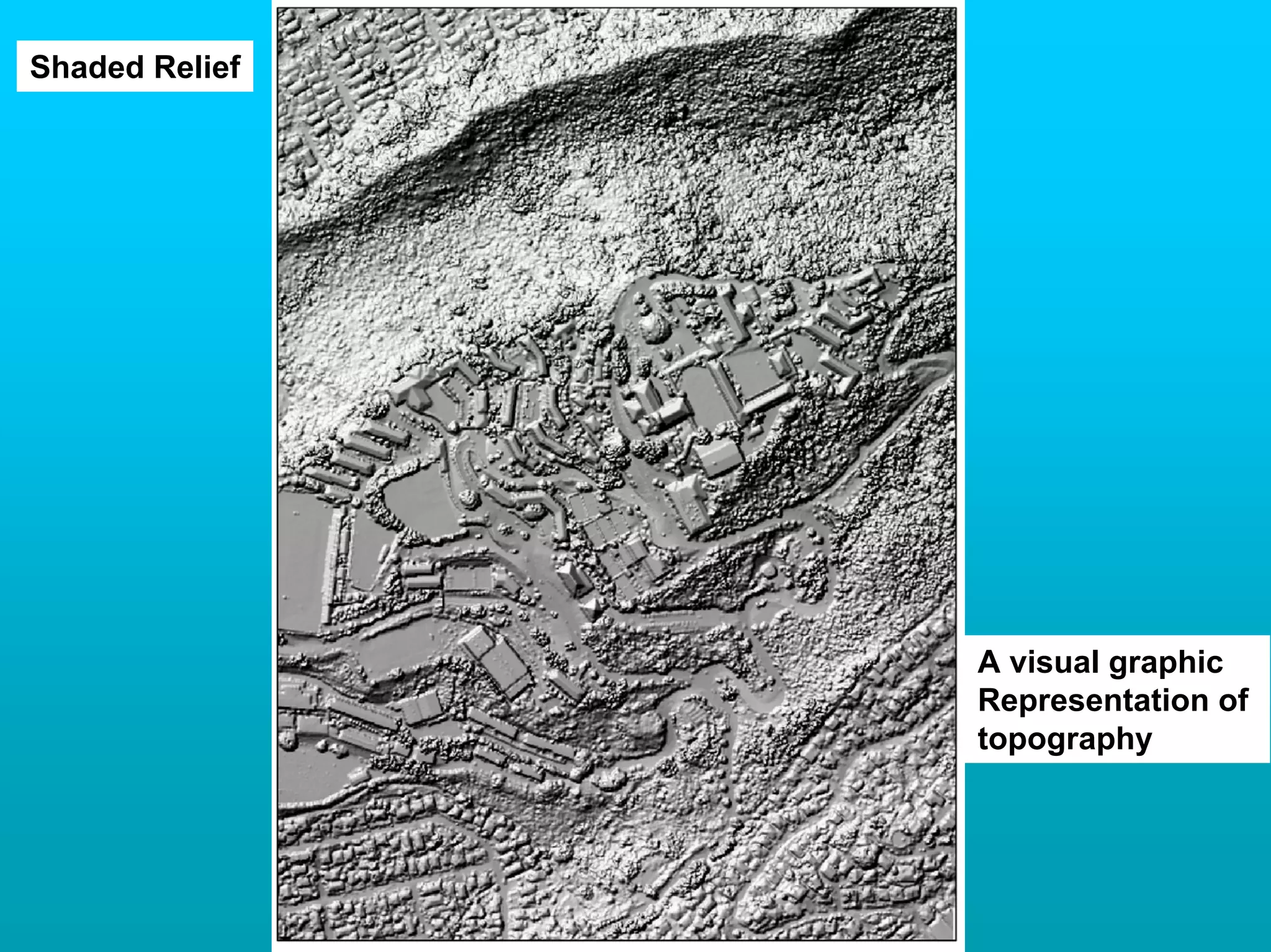
Shaded Relief


                A visual graphic
                Representation of
                topography
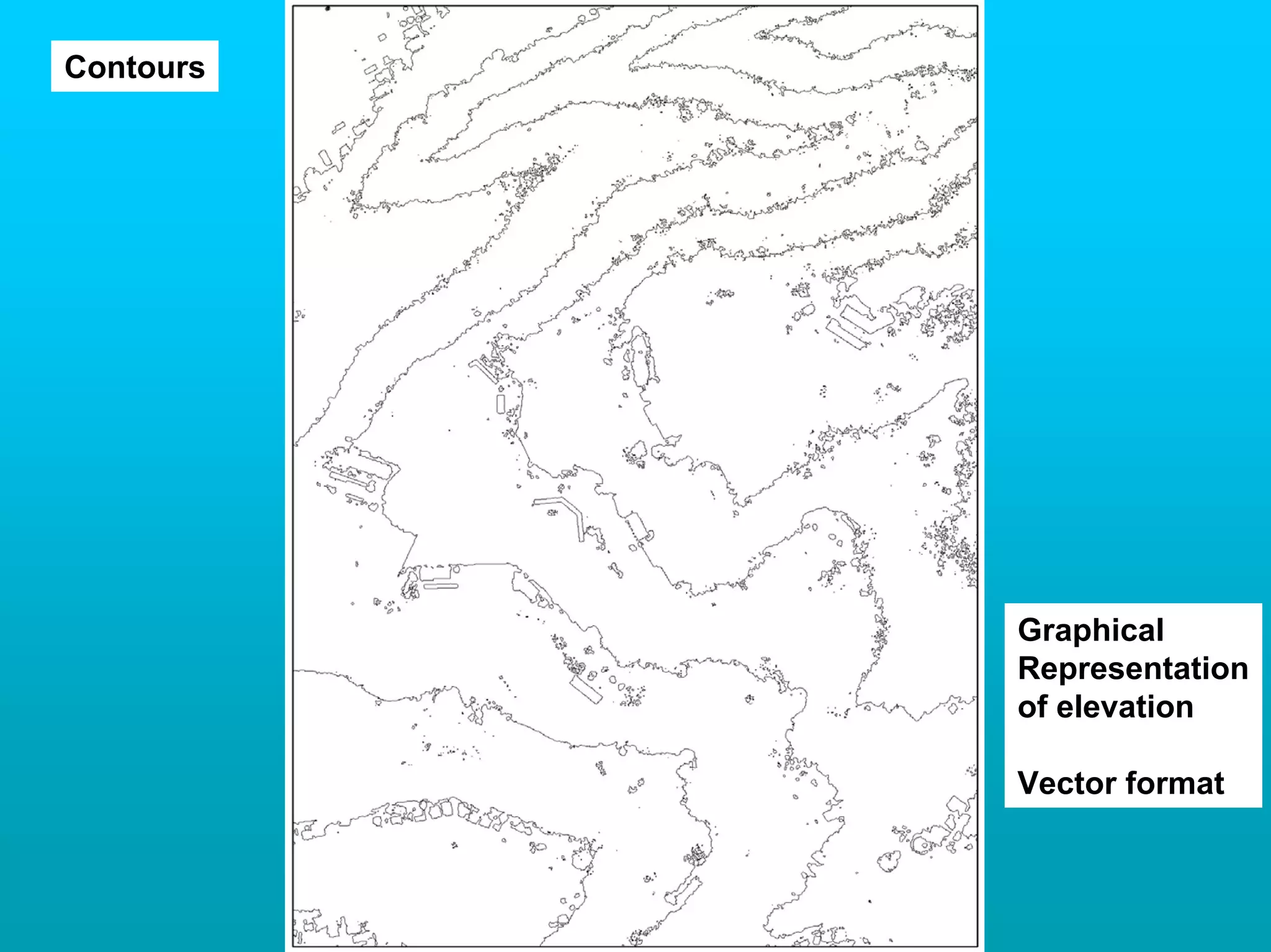
Contours


           Graphical
           Representation
           of elevation

           Vector format
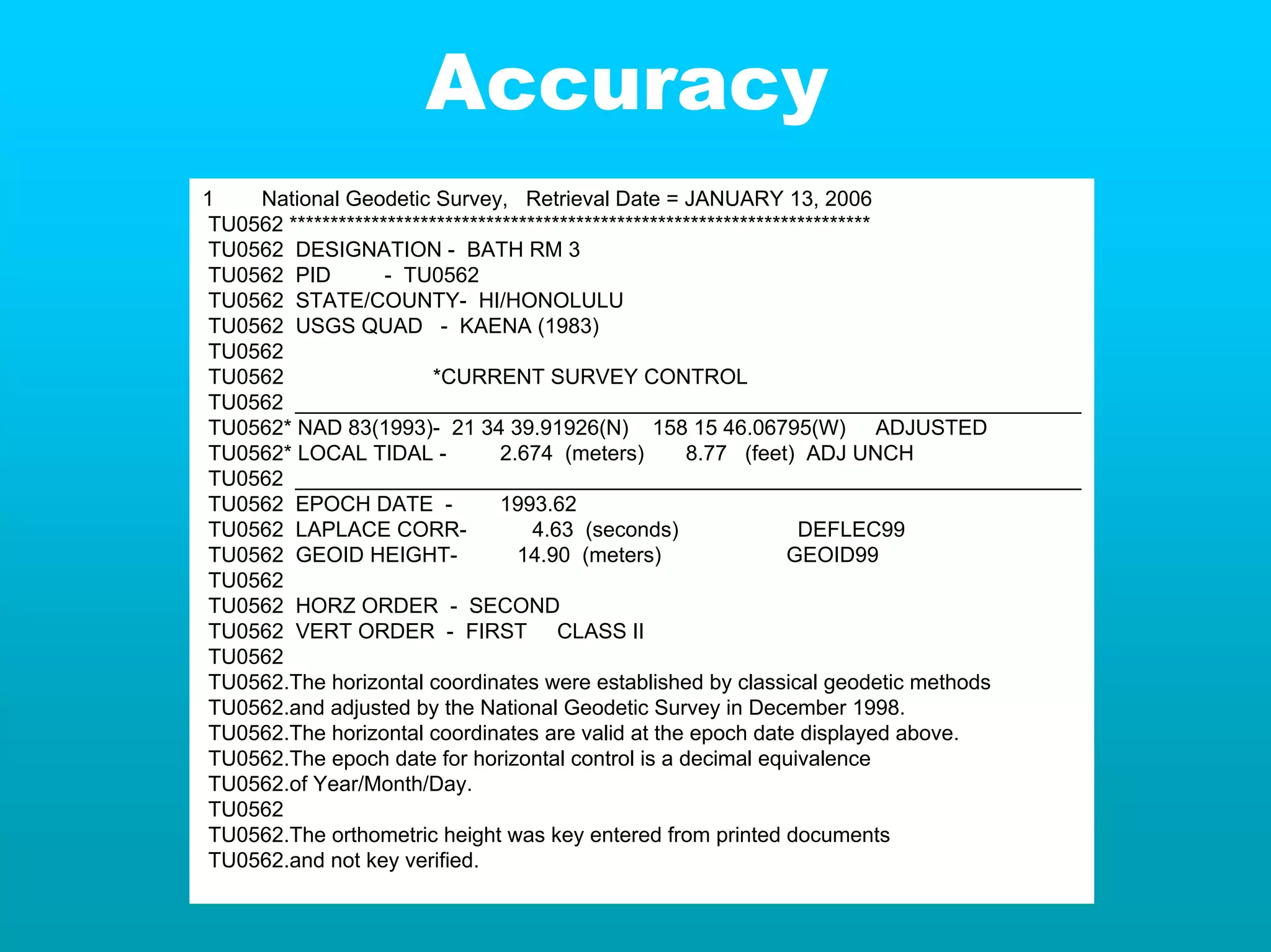
Accuracy
1    National Geodetic Survey, Retrieval Date = JANUARY 13, 2006
 TU0562 ***********************************************************************
 TU0562 DESIGNATION - BATH RM 3
 TU0562 PID         - TU0562
 TU0562 STATE/COUNTY- HI/HONOLULU
 TU0562 USGS QUAD - KAENA (1983)
 TU0562
 TU0562                   *CURRENT SURVEY CONTROL
 TU0562 ___________________________________________________________________
 TU0562* NAD 83(1993)- 21 34 39.91926(N) 158 15 46.06795(W) ADJUSTED
 TU0562* LOCAL TIDAL -            2.674 (meters)        8.77 (feet) ADJ UNCH
 TU0562 ___________________________________________________________________
 TU0562 EPOCH DATE -              1993.62
 TU0562 LAPLACE CORR-                 4.63 (seconds)                  DEFLEC99
 TU0562 GEOID HEIGHT-               14.90 (meters)                   GEOID99
 TU0562
 TU0562 HORZ ORDER - SECOND
 TU0562 VERT ORDER - FIRST CLASS II
 TU0562
 TU0562.The horizontal coordinates were established by classical geodetic methods
 TU0562.and adjusted by the National Geodetic Survey in December 1998.
 TU0562.The horizontal coordinates are valid at the epoch date displayed above.
 TU0562.The epoch date for horizontal control is a decimal equivalence
 TU0562.of Year/Month/Day.
 TU0562
 TU0562.The orthometric height was key entered from printed documents
 TU0562.and not key verified.
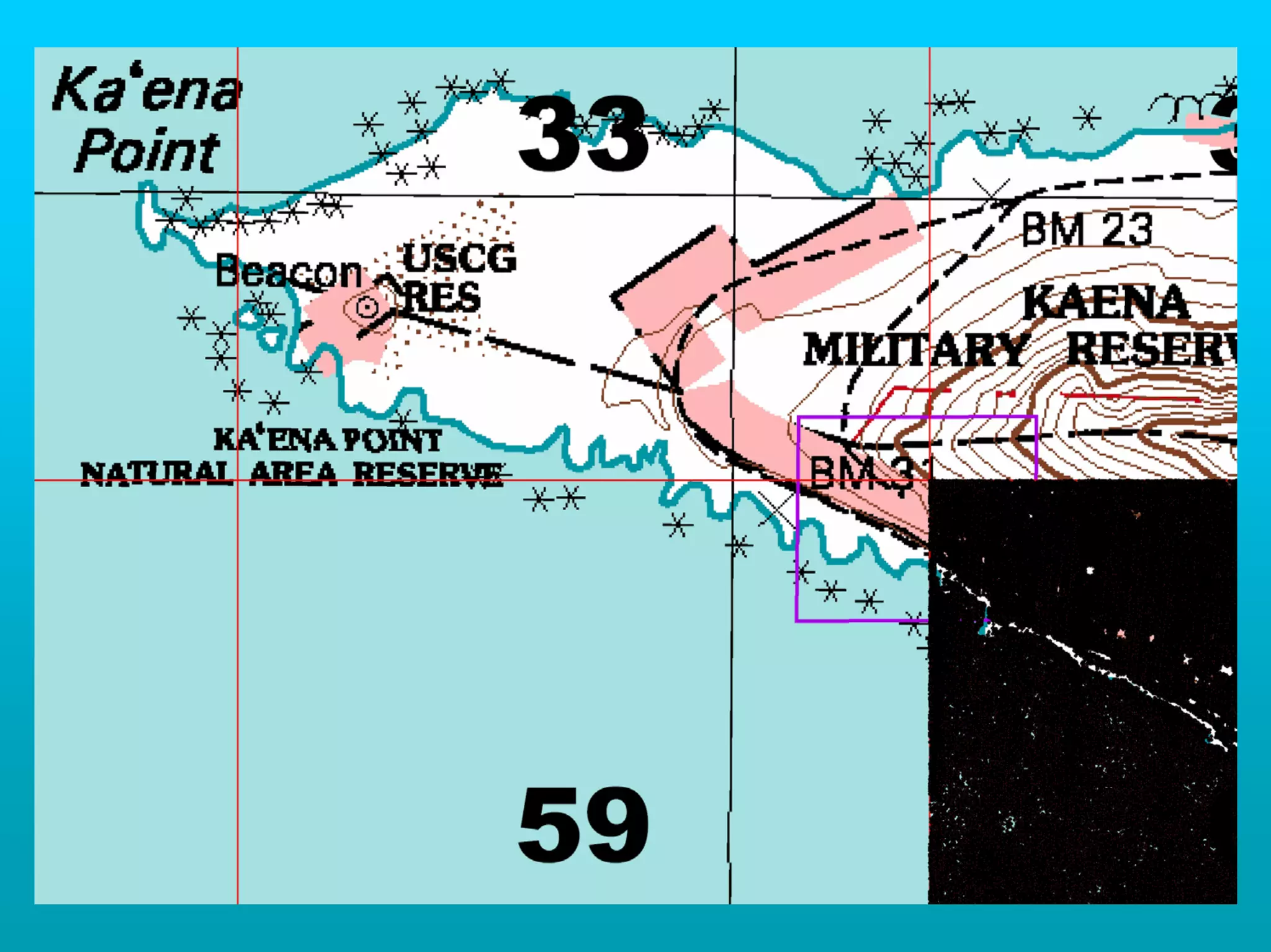
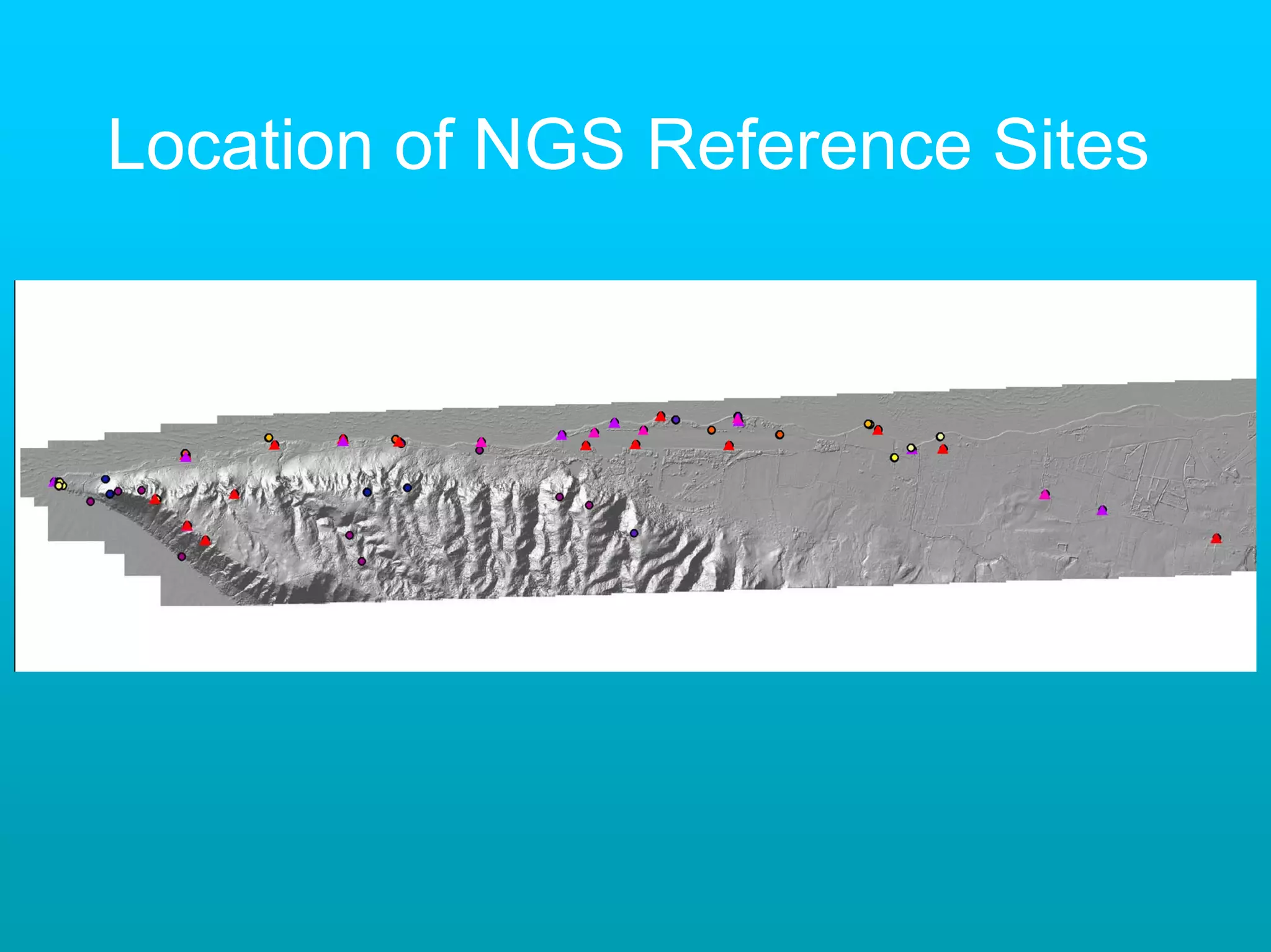
Location of NGS Reference Sites
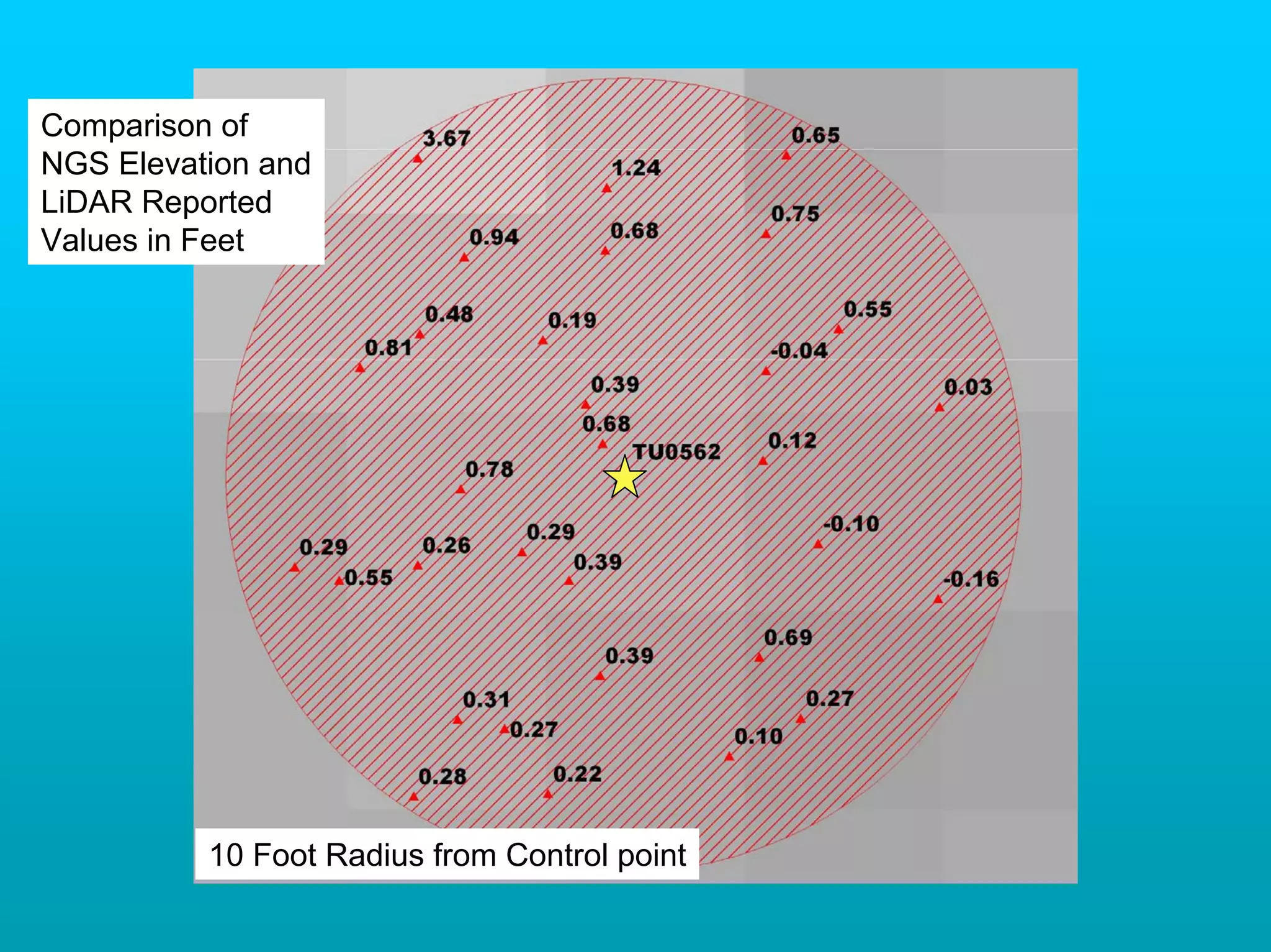
Comparison of
NGS Elevation and
LiDAR Reported
Values in Feet


          10 Foot Radius from Control point
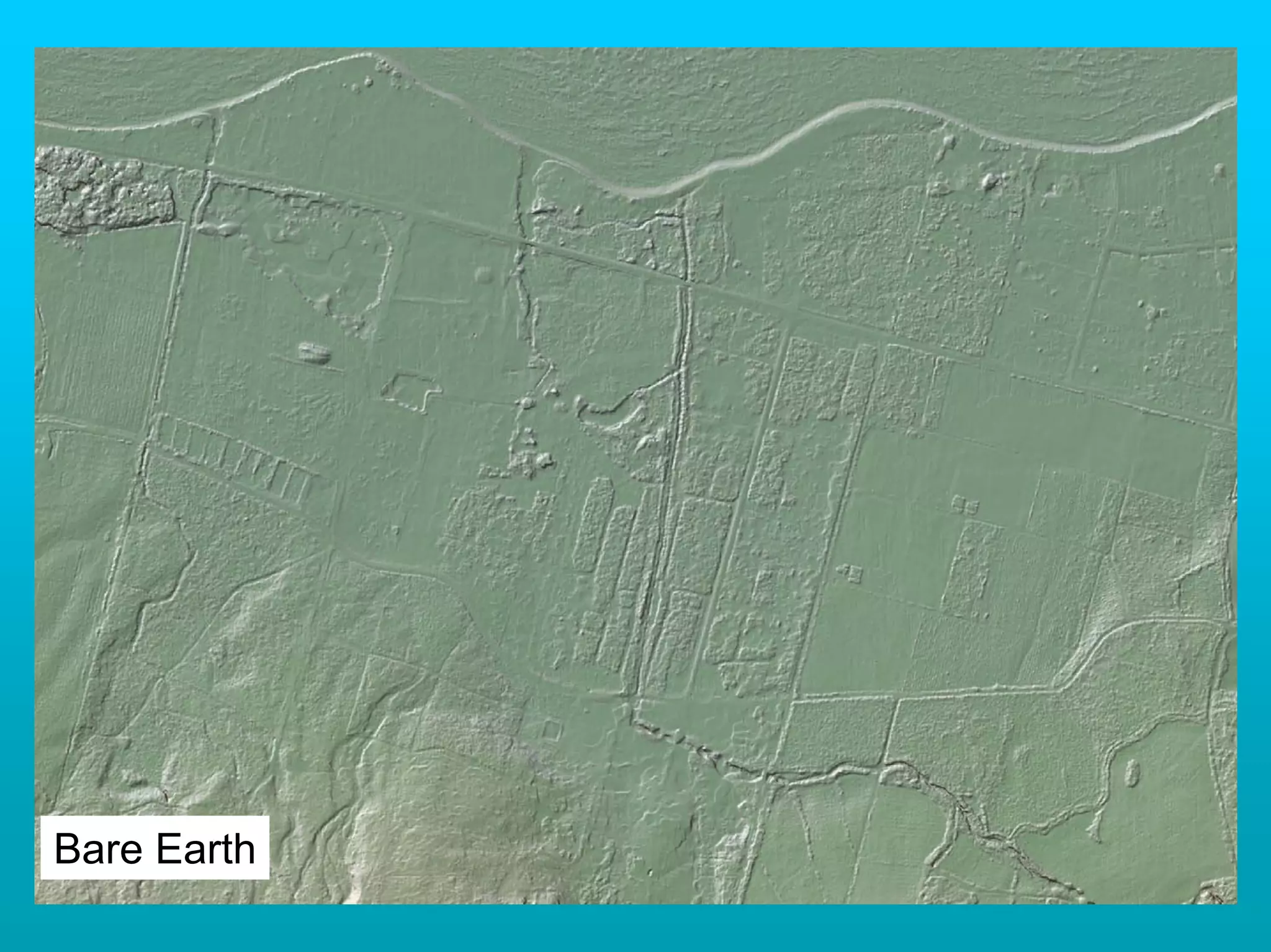
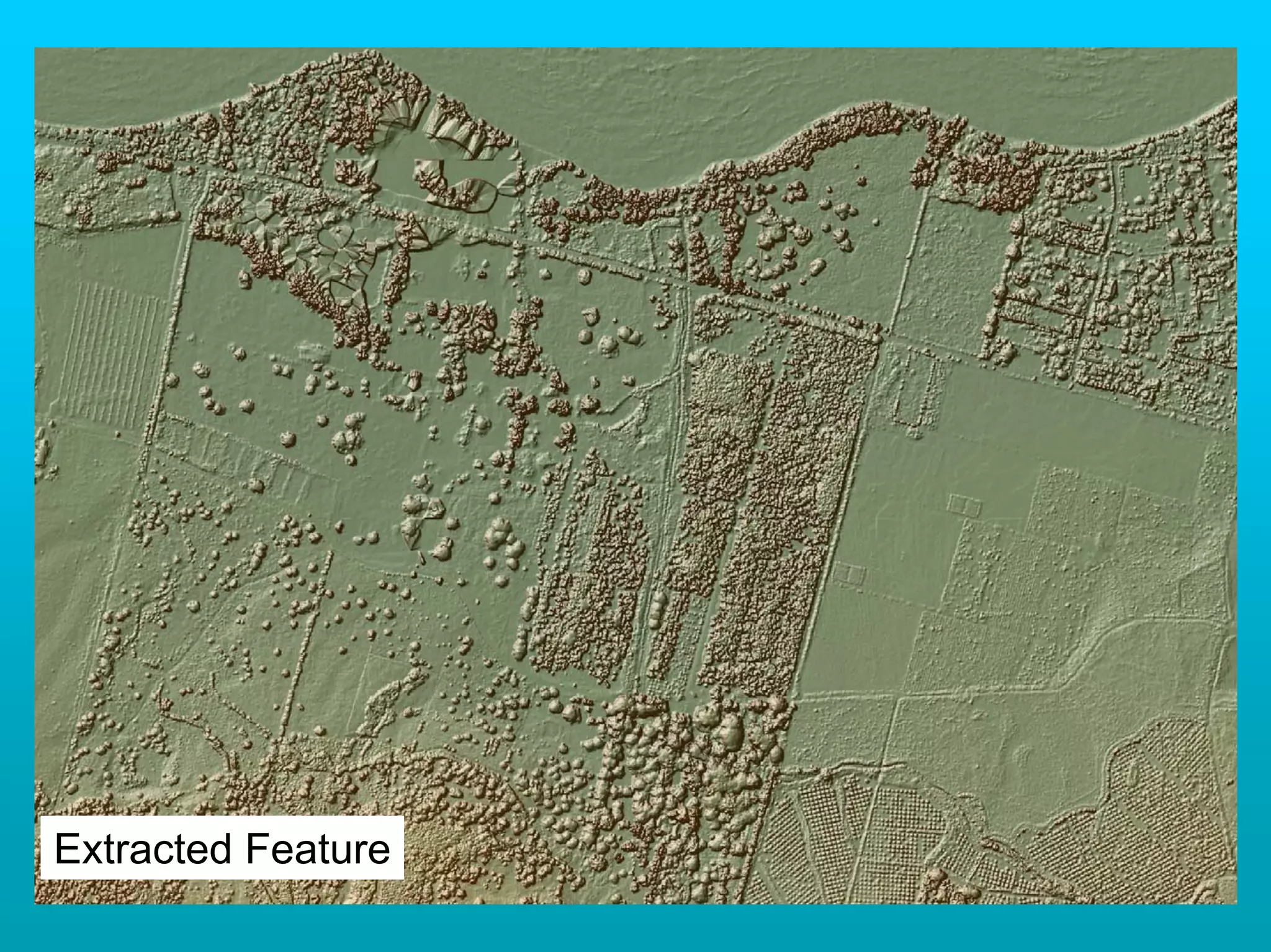
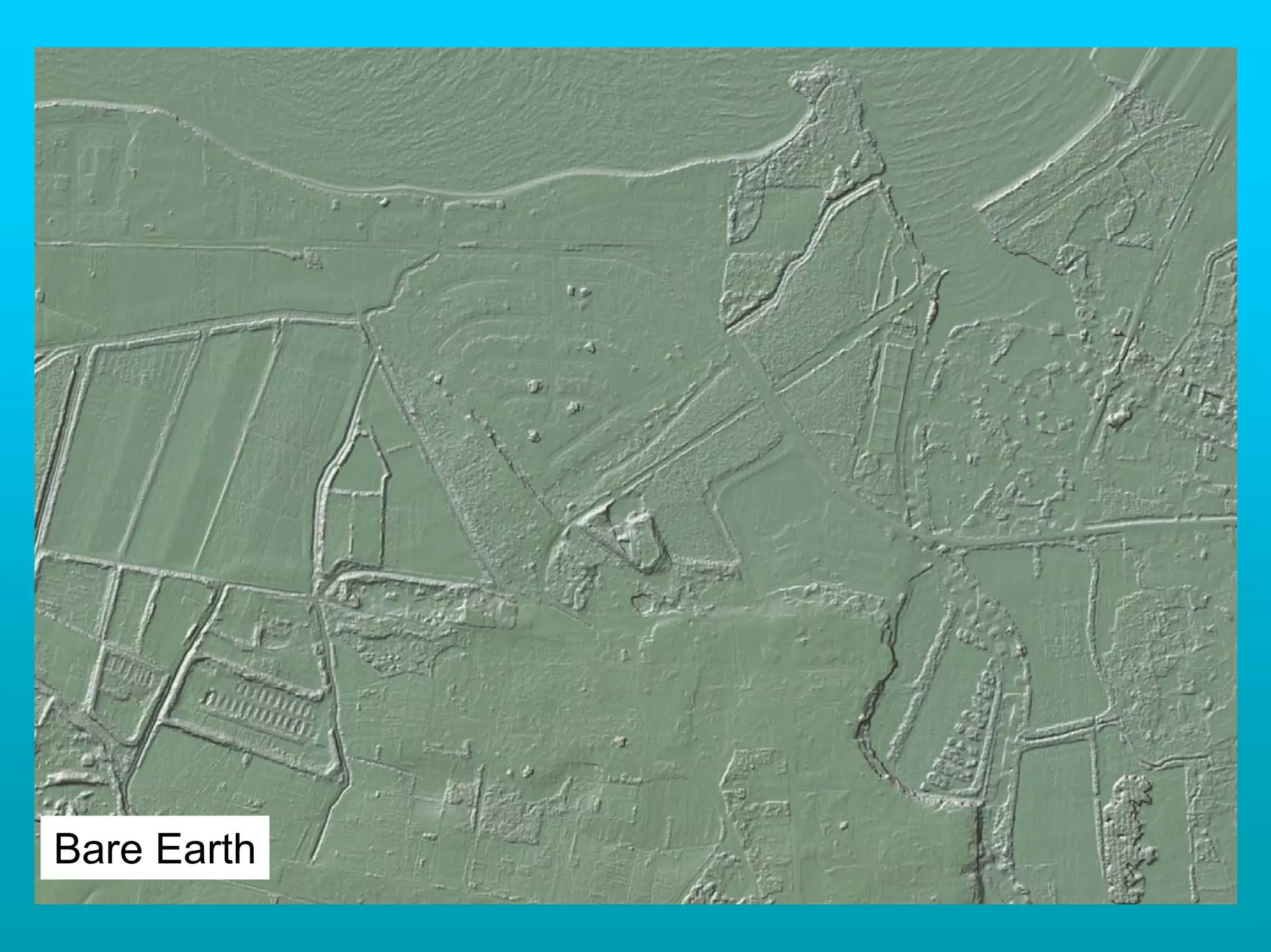
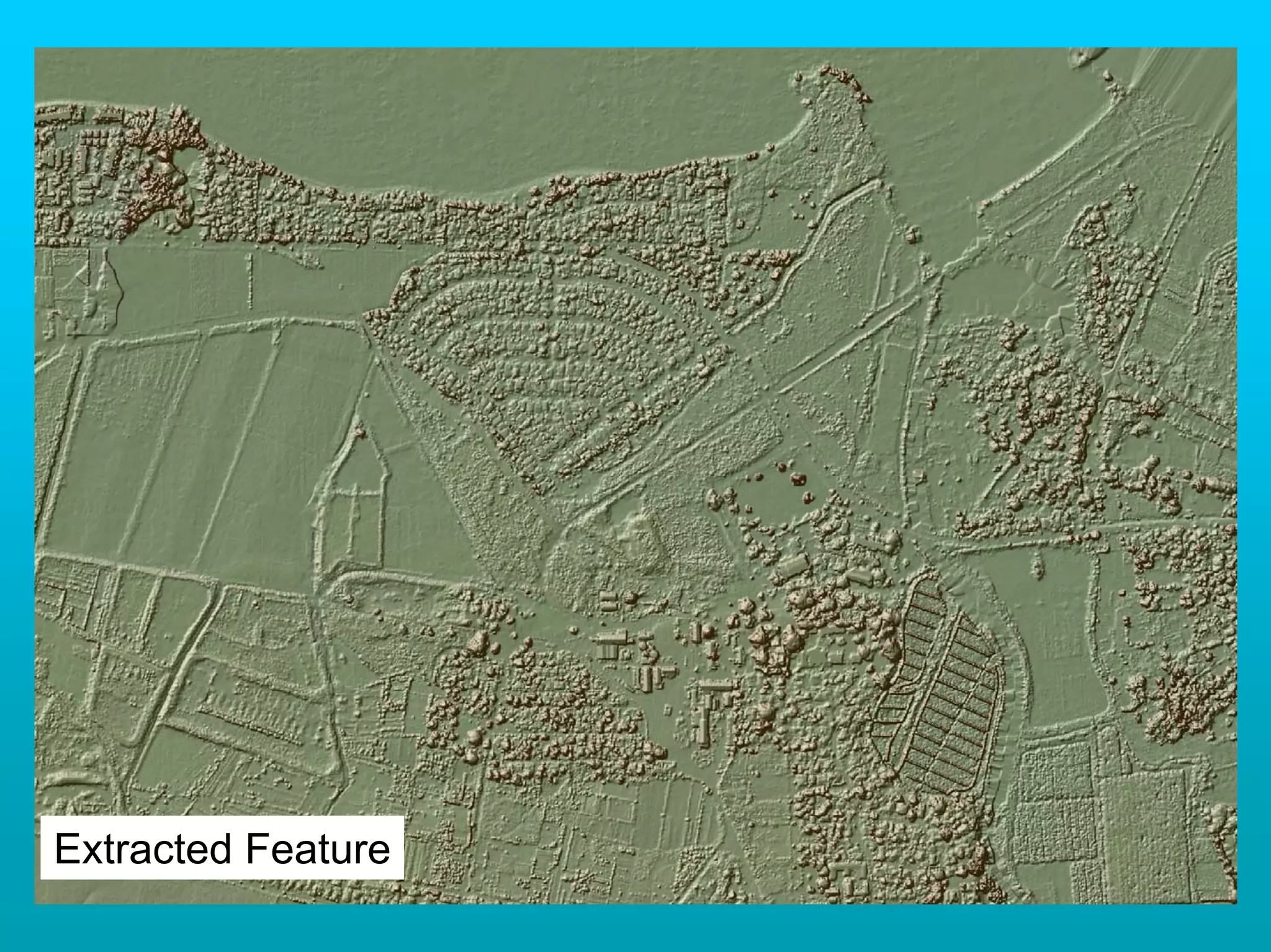
Lidar Products


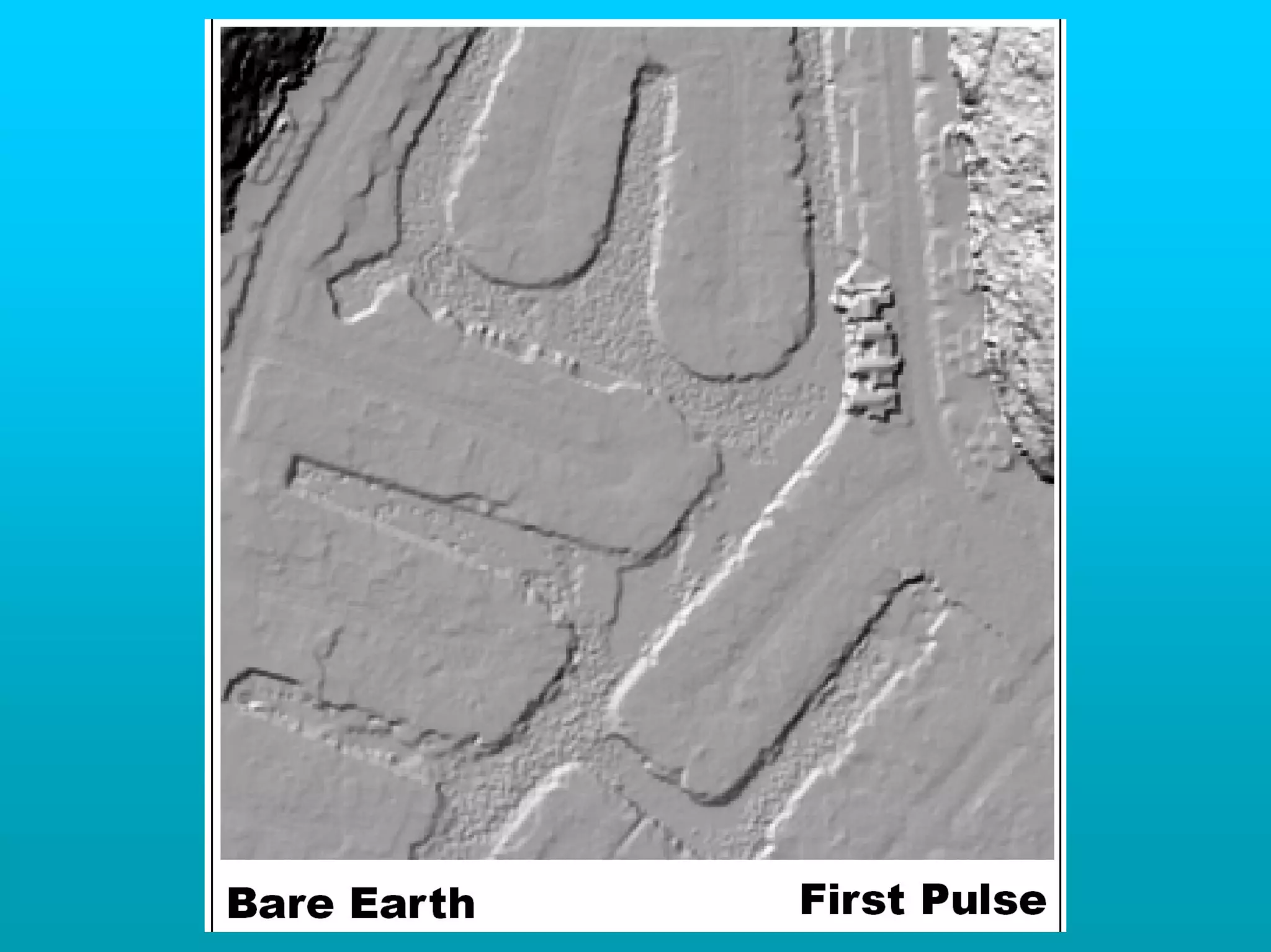
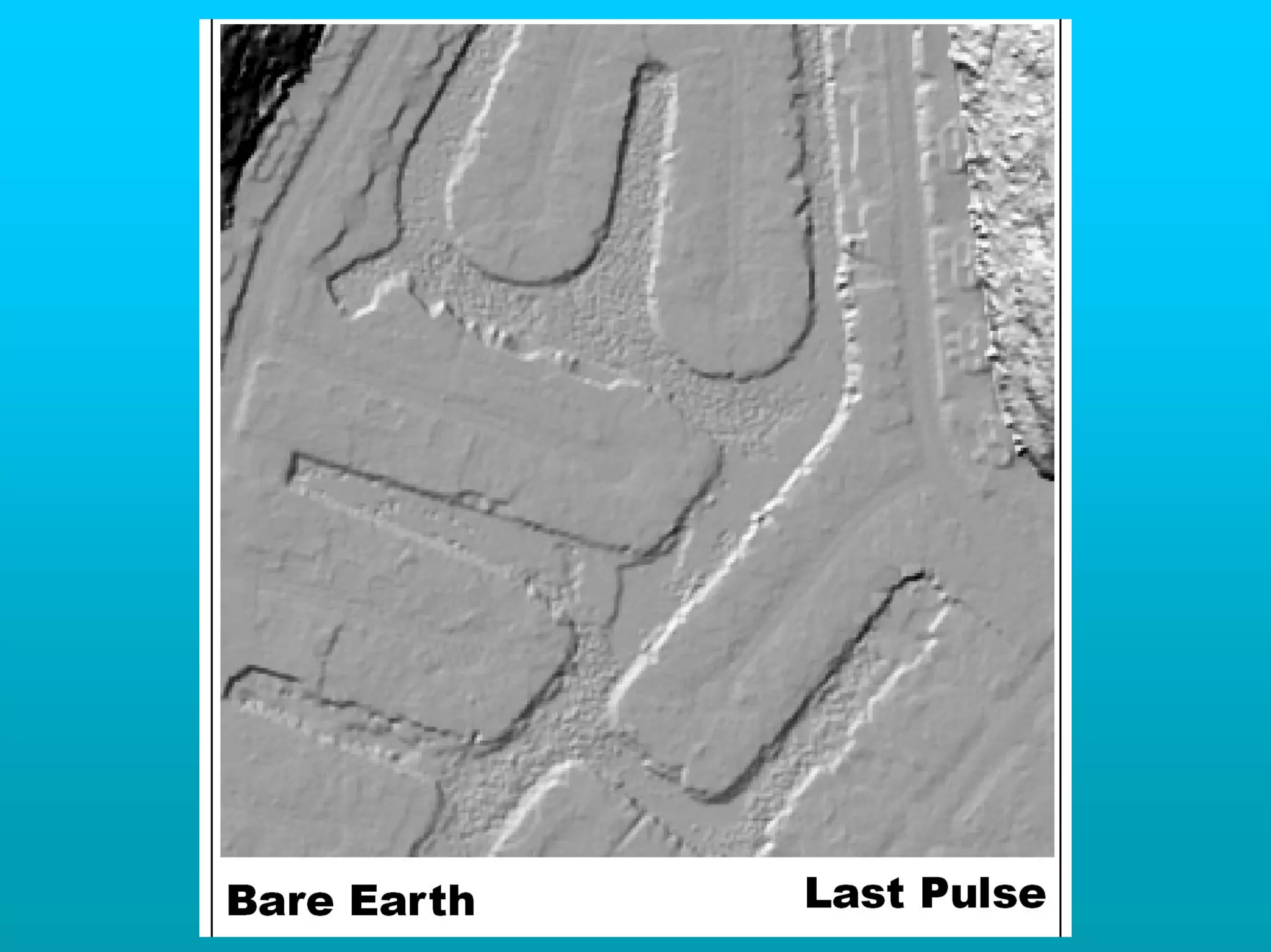
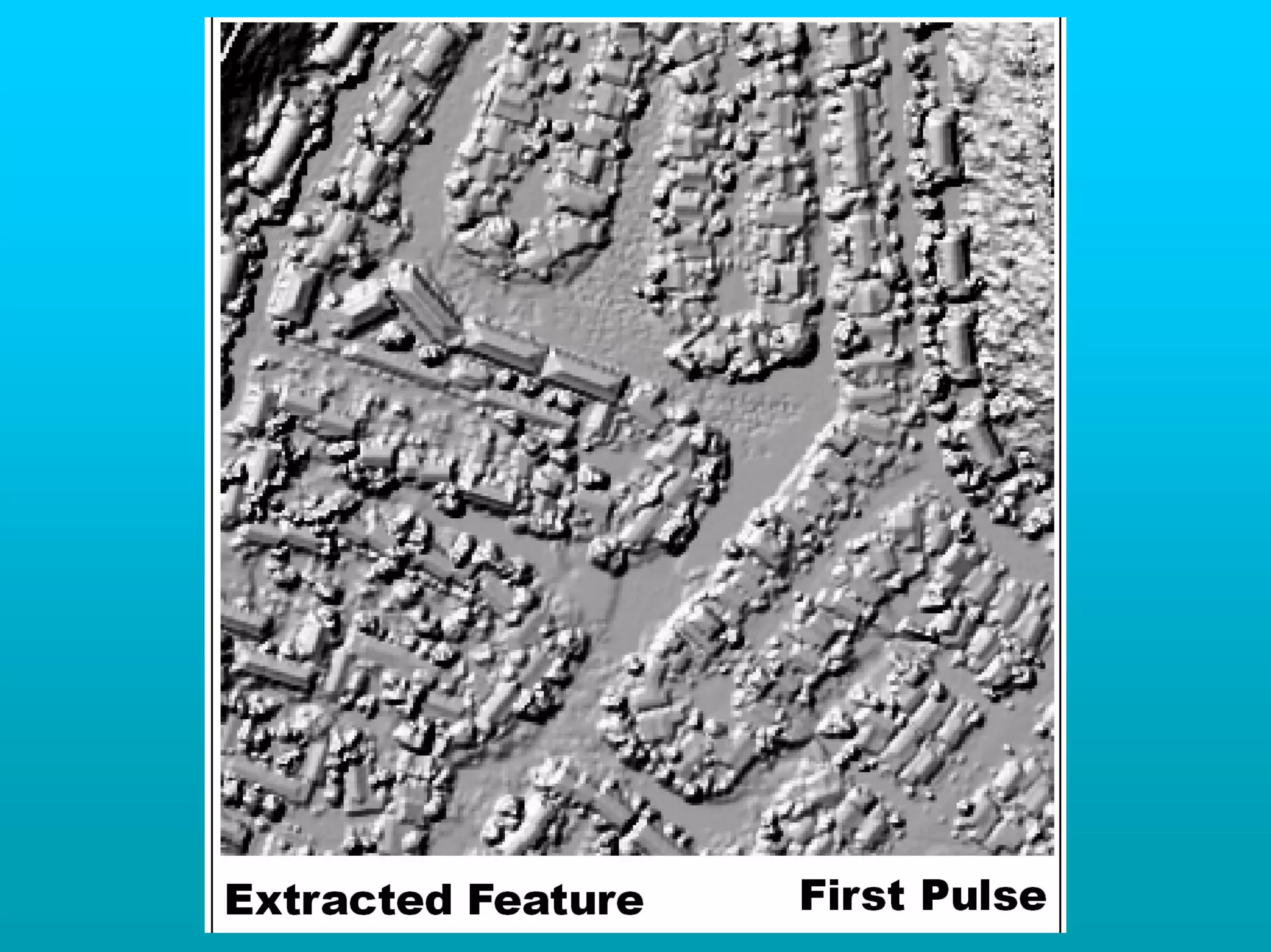
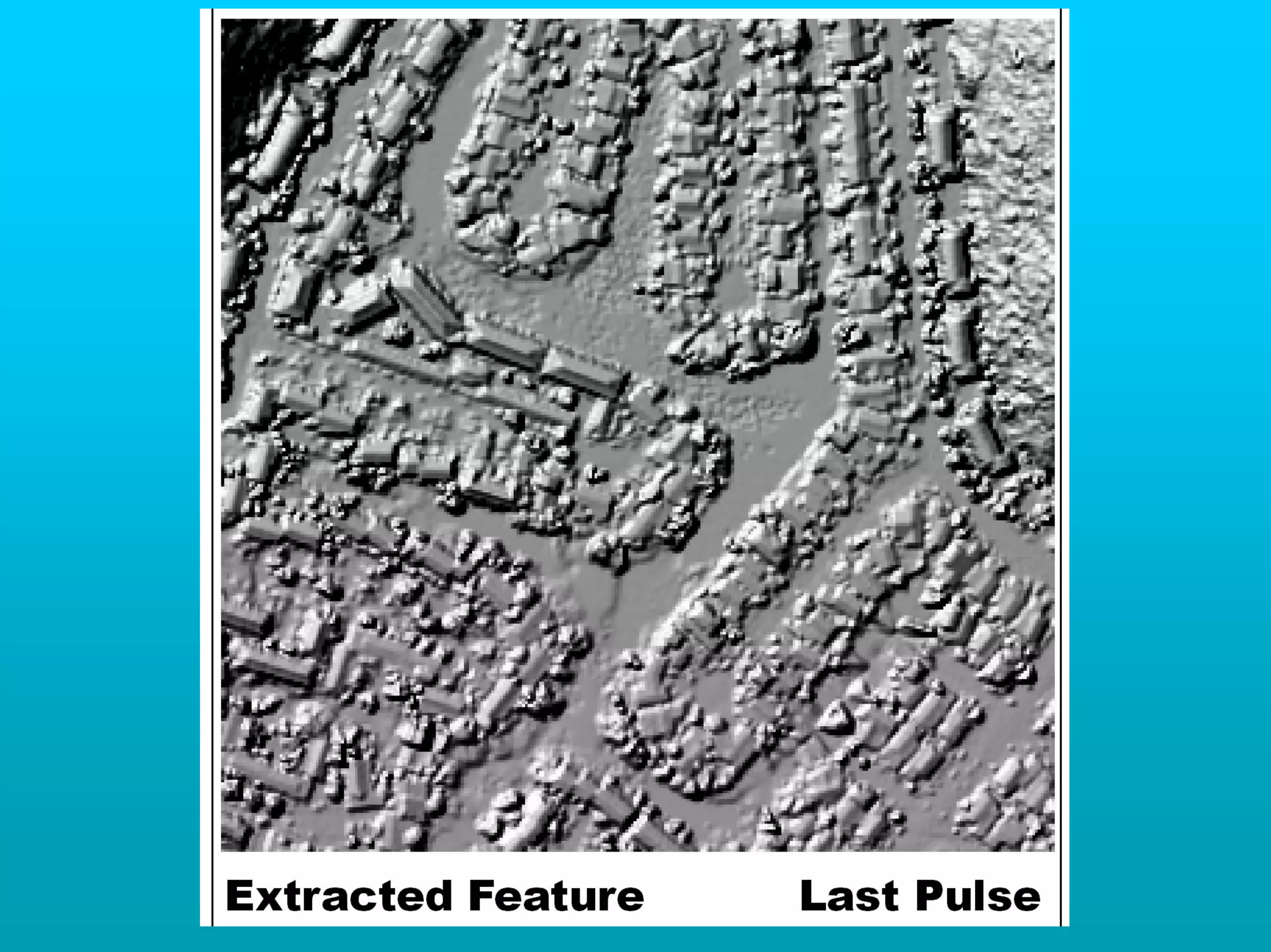
• Example of Airborne 1 deliverables
Bare Earth
Extracted Feature
Bare Earth
Extracted Feature
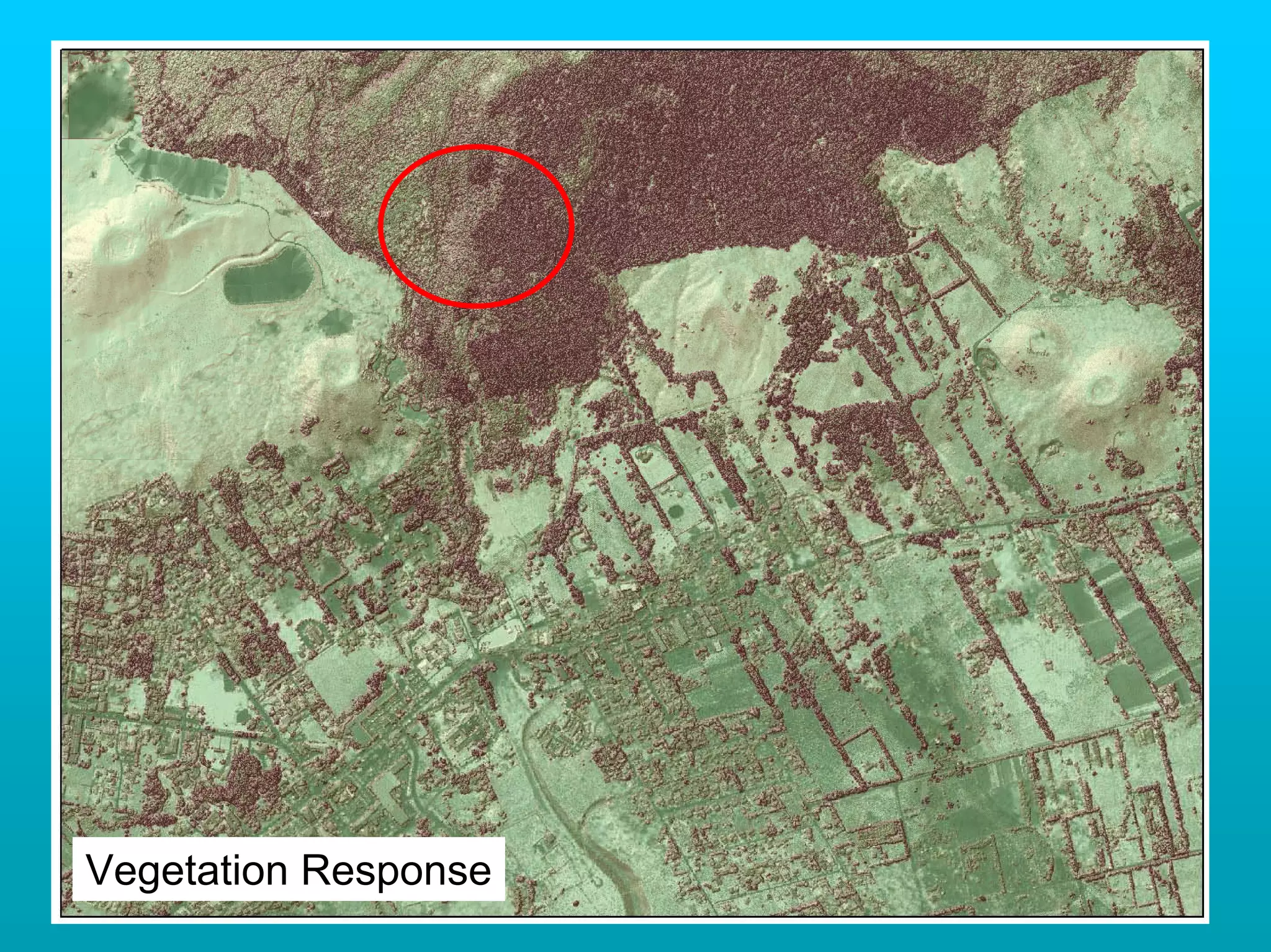
Vegetation Response
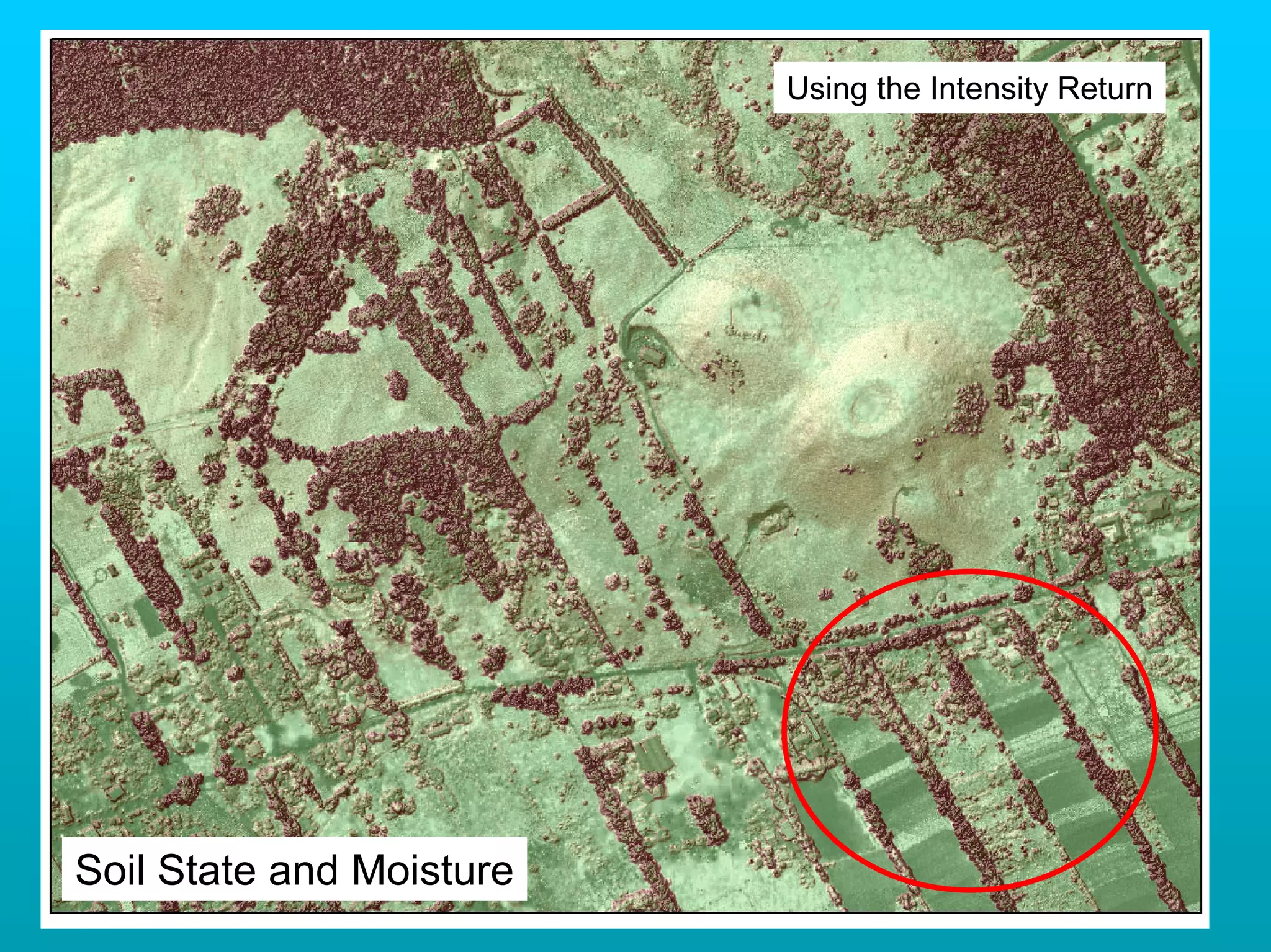
Using the Intensity Return


Soil State and Moisture
Examples
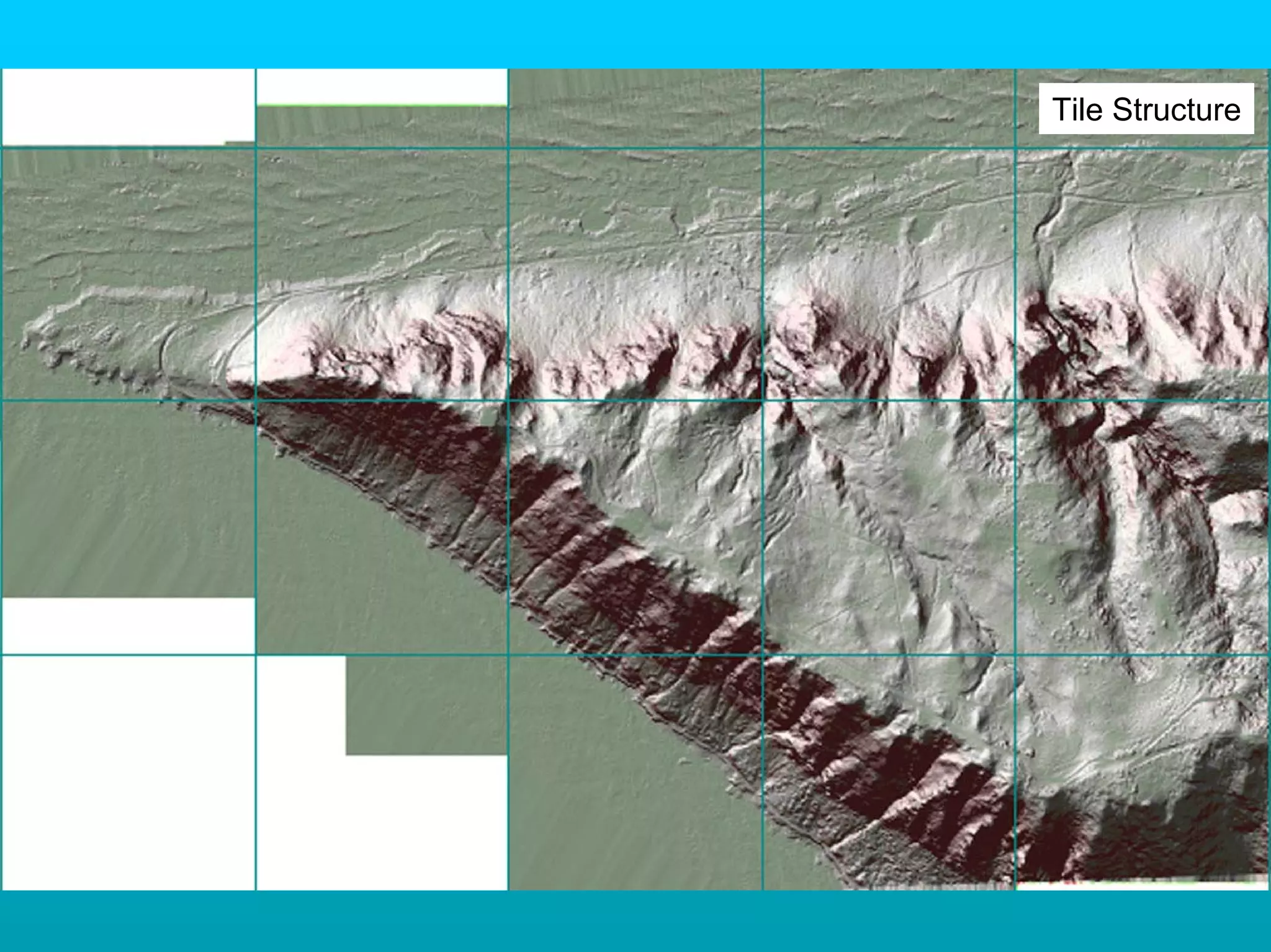
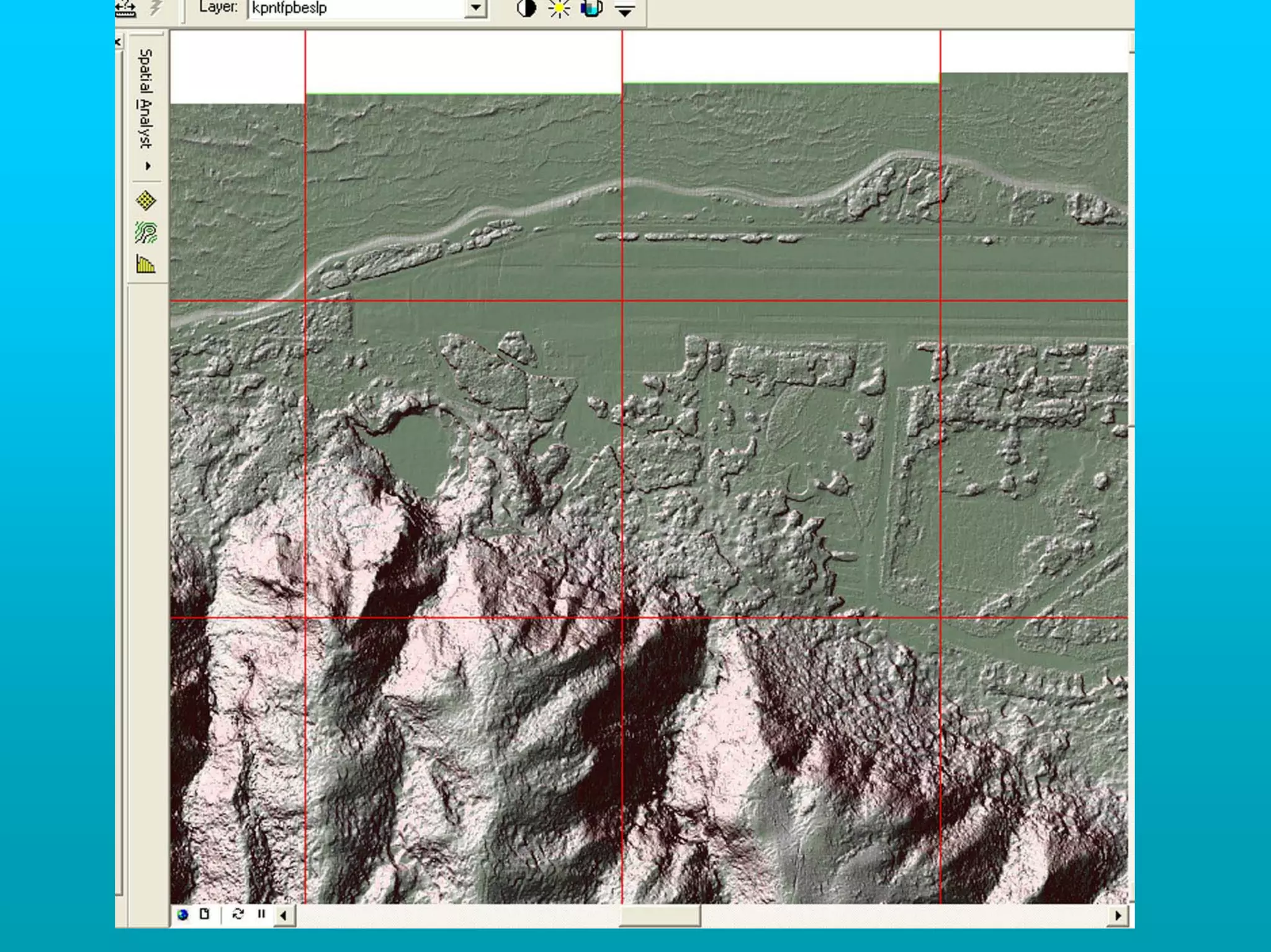
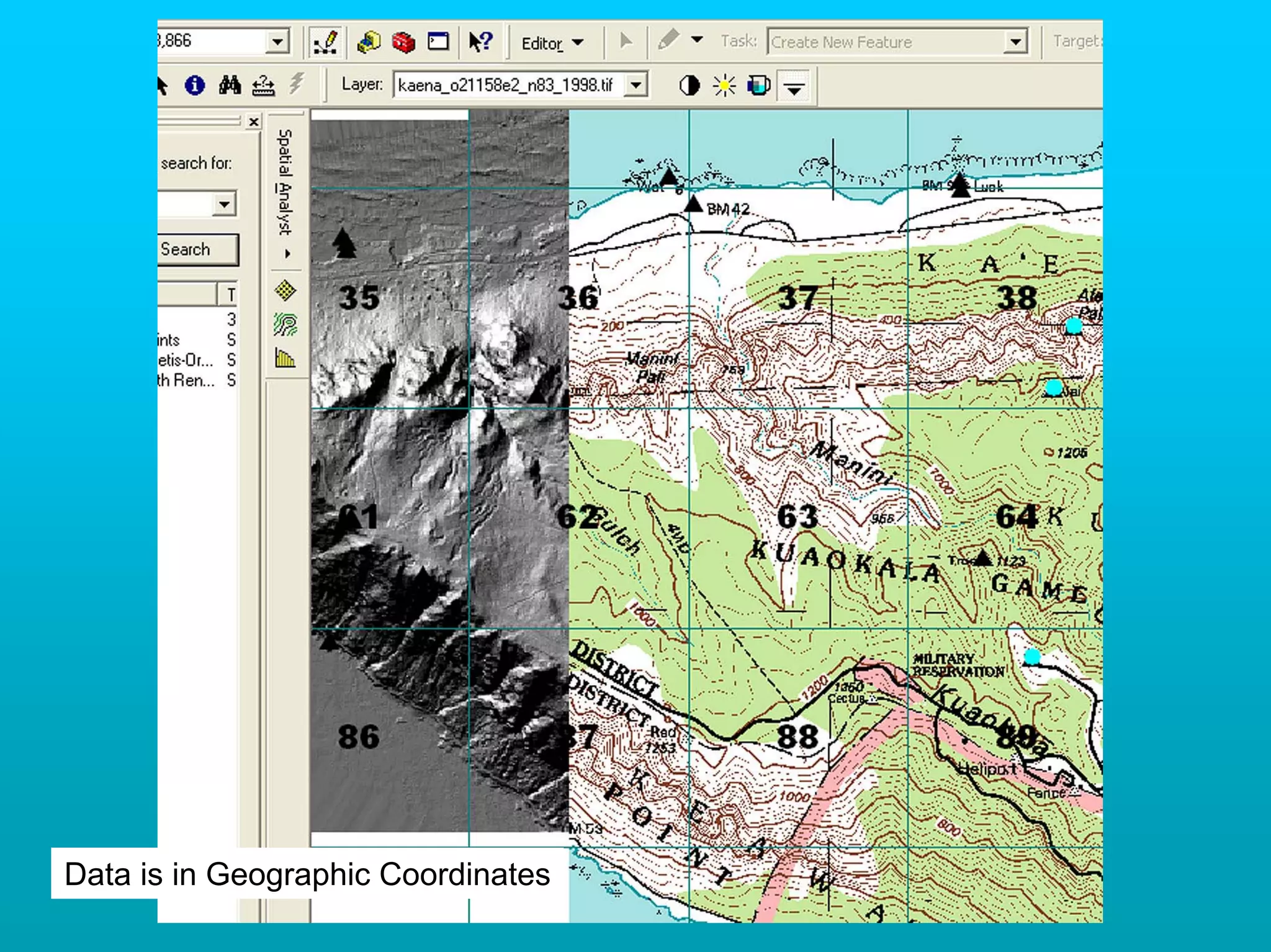
Tile Structure
Data is in Geographic Coordinates
Issues

• Clouds

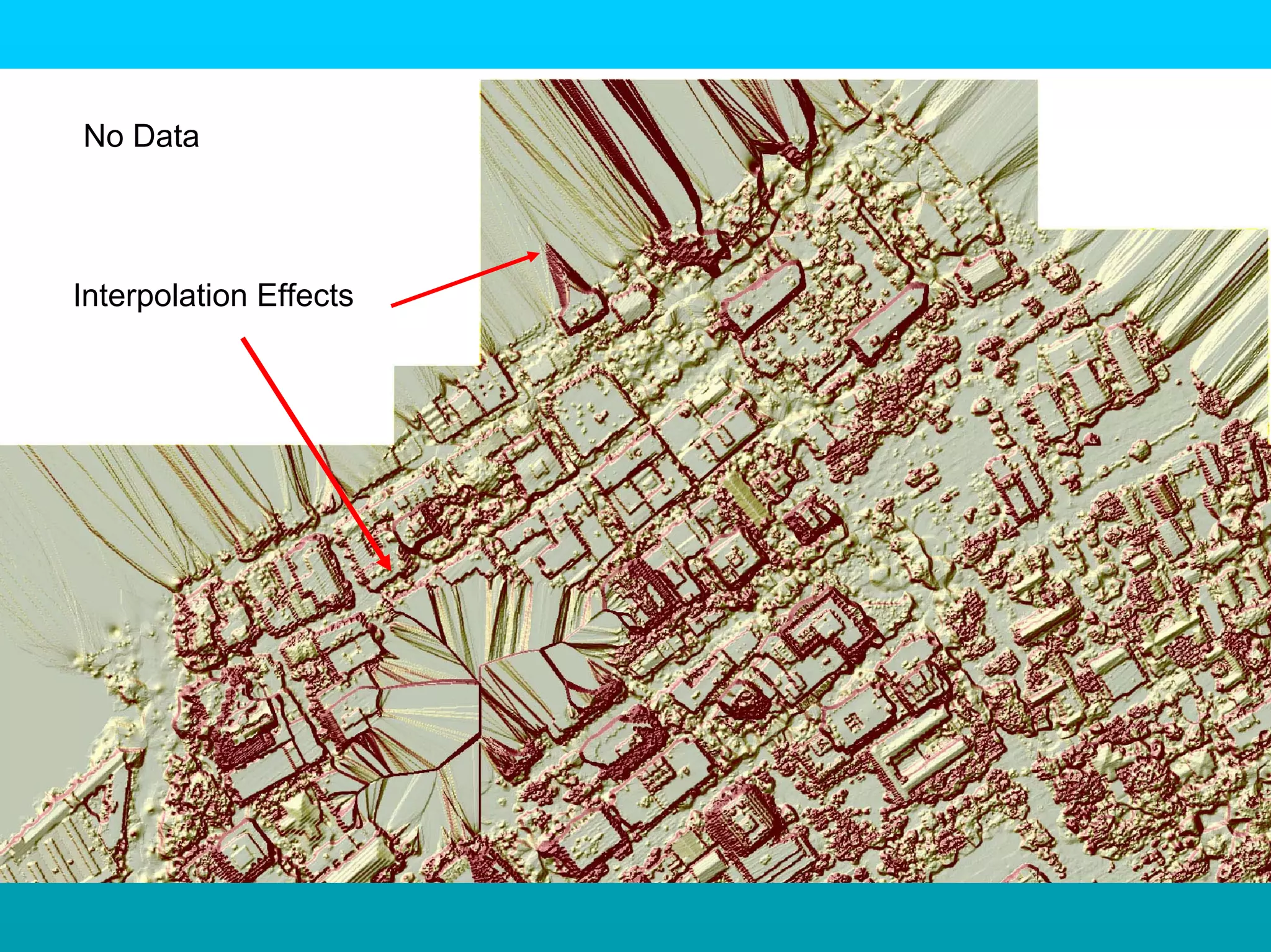
• No Data

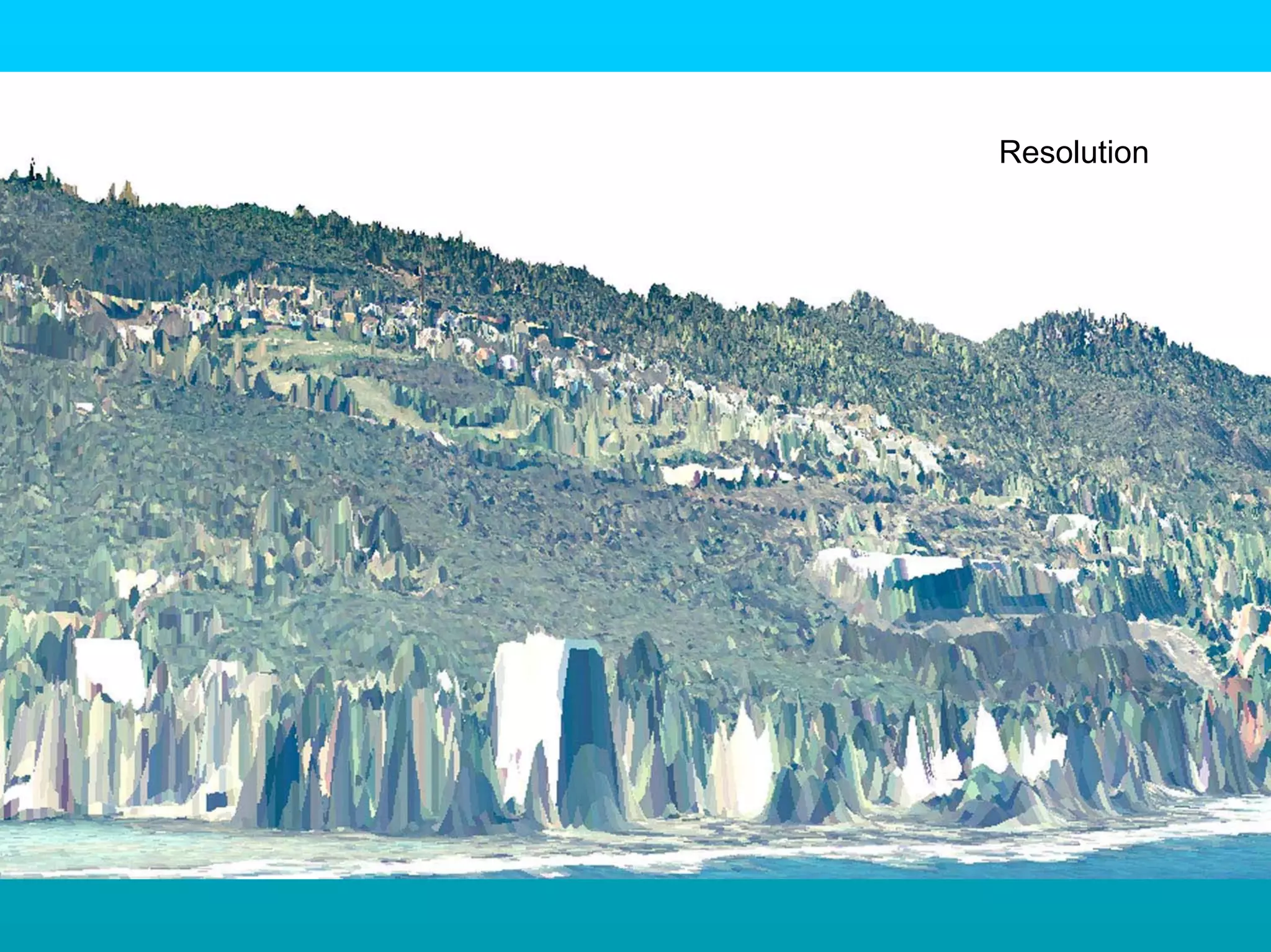
• Resolution

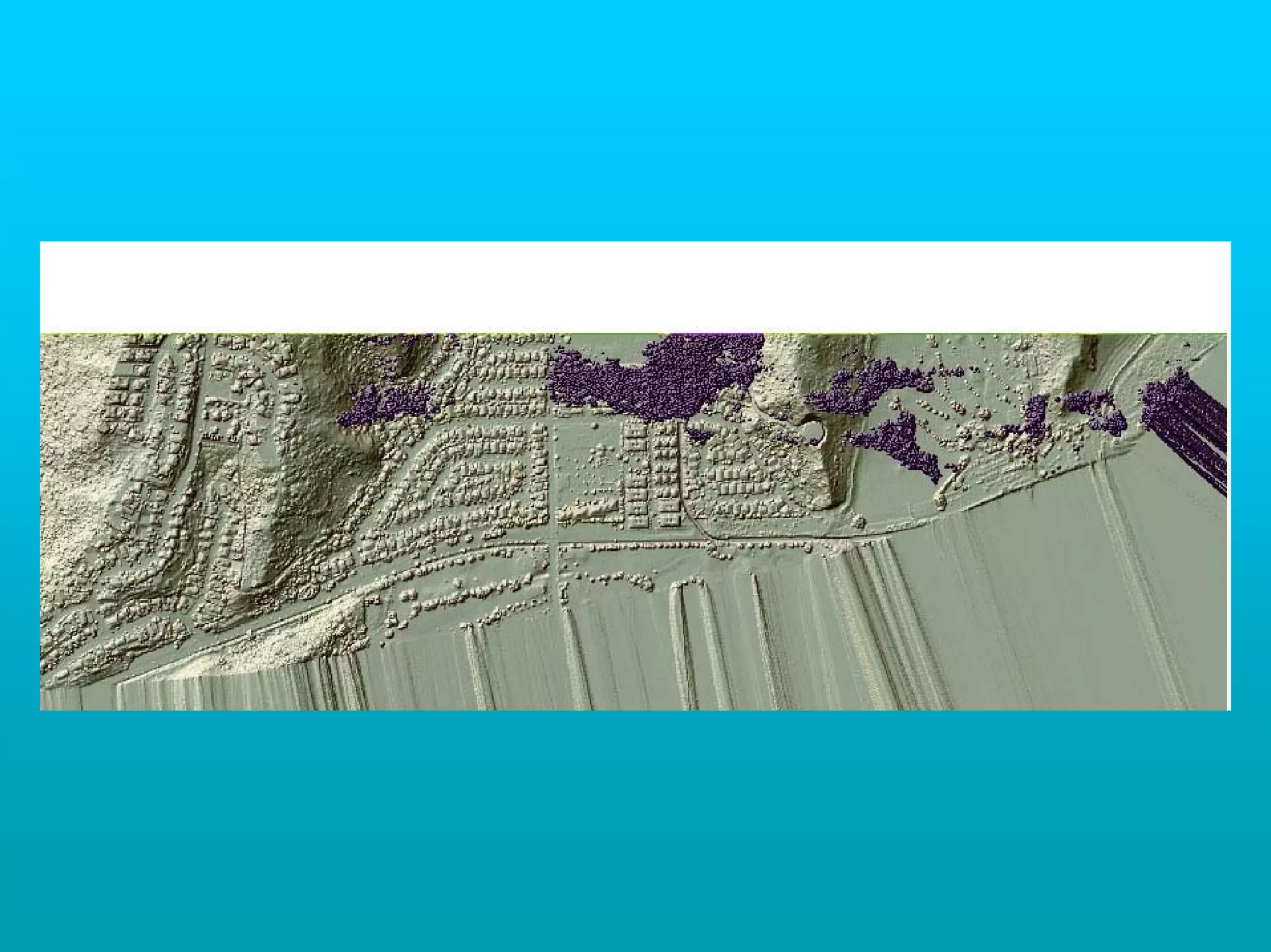
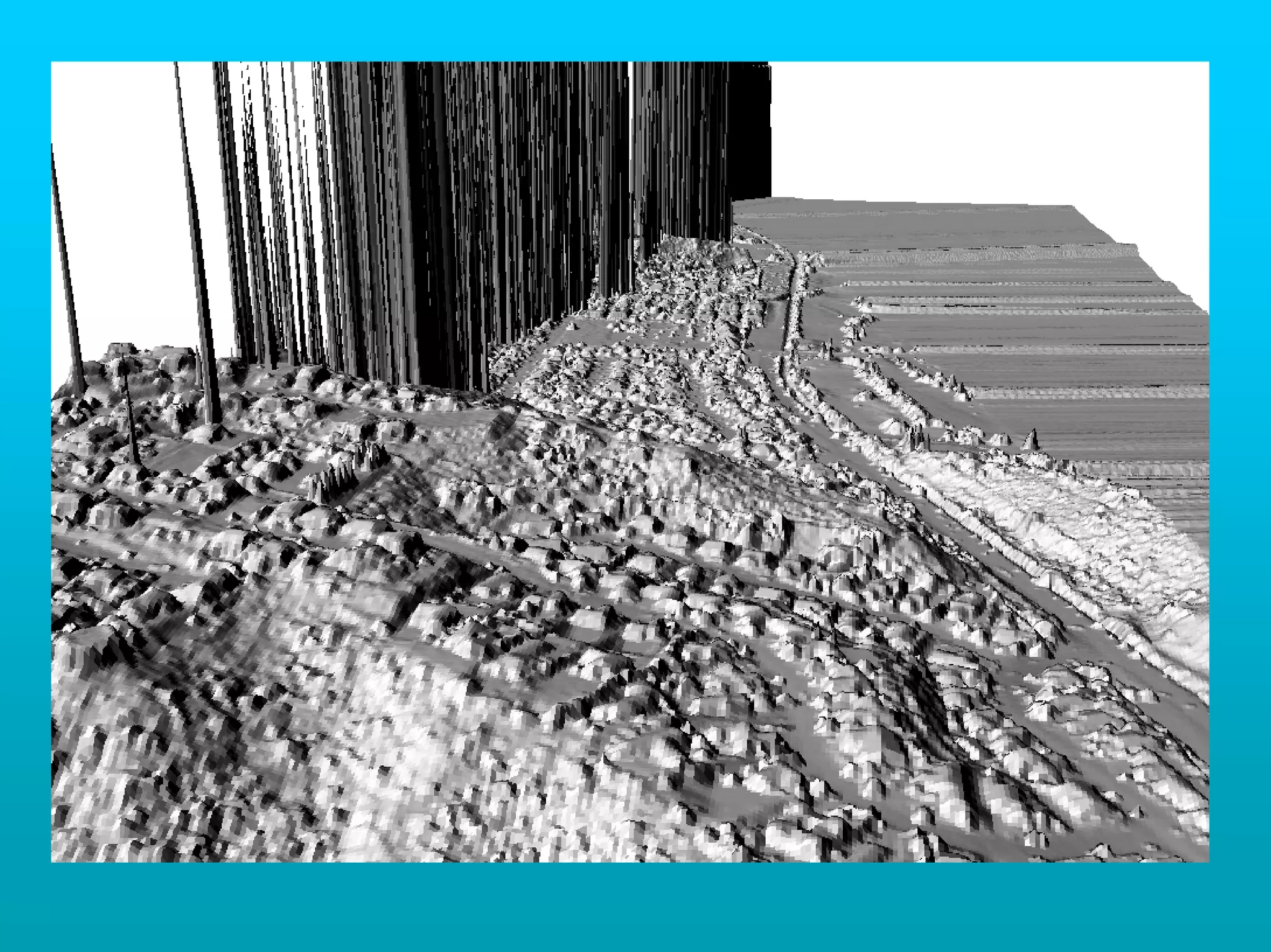
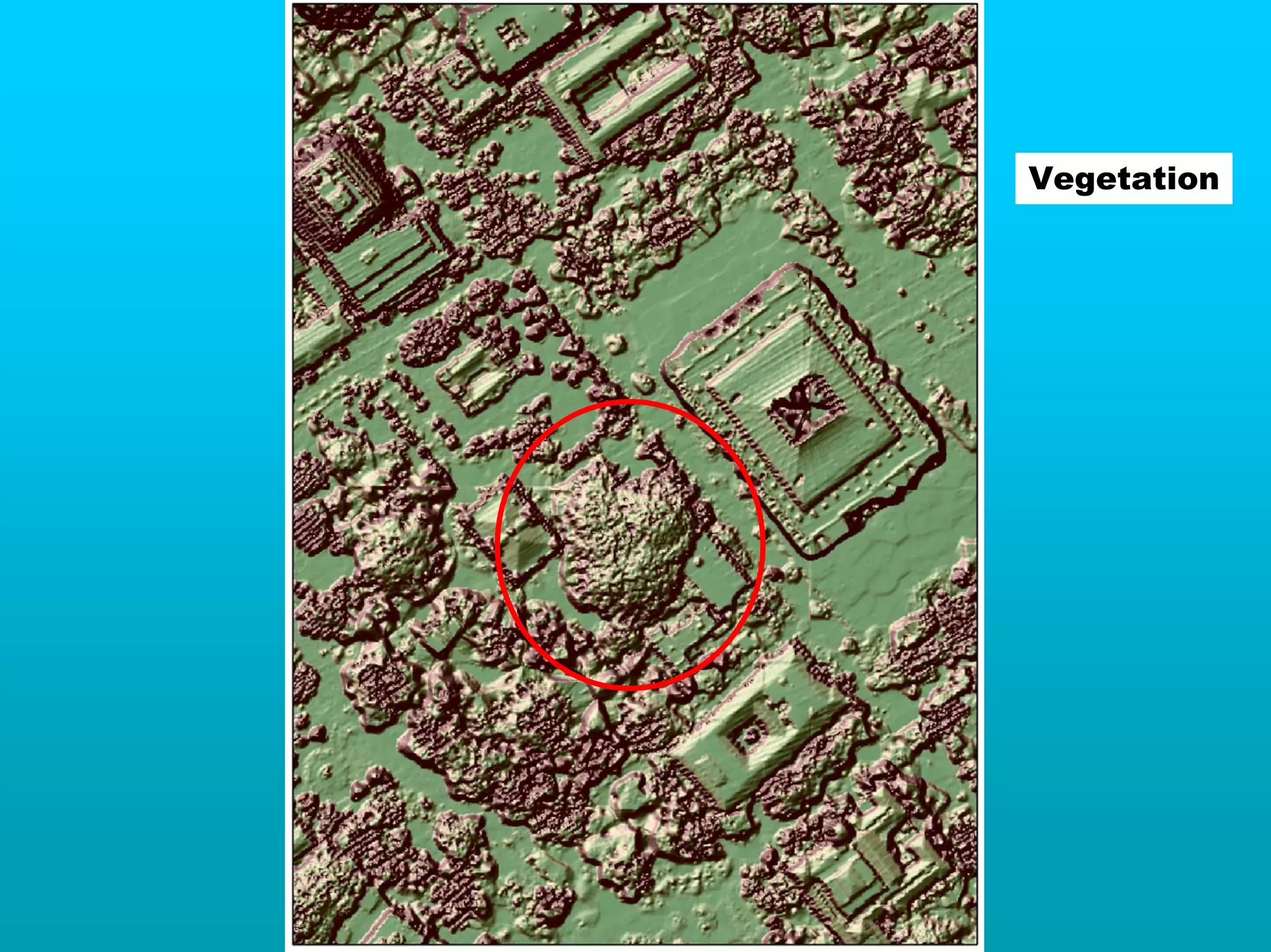
• Vegetation

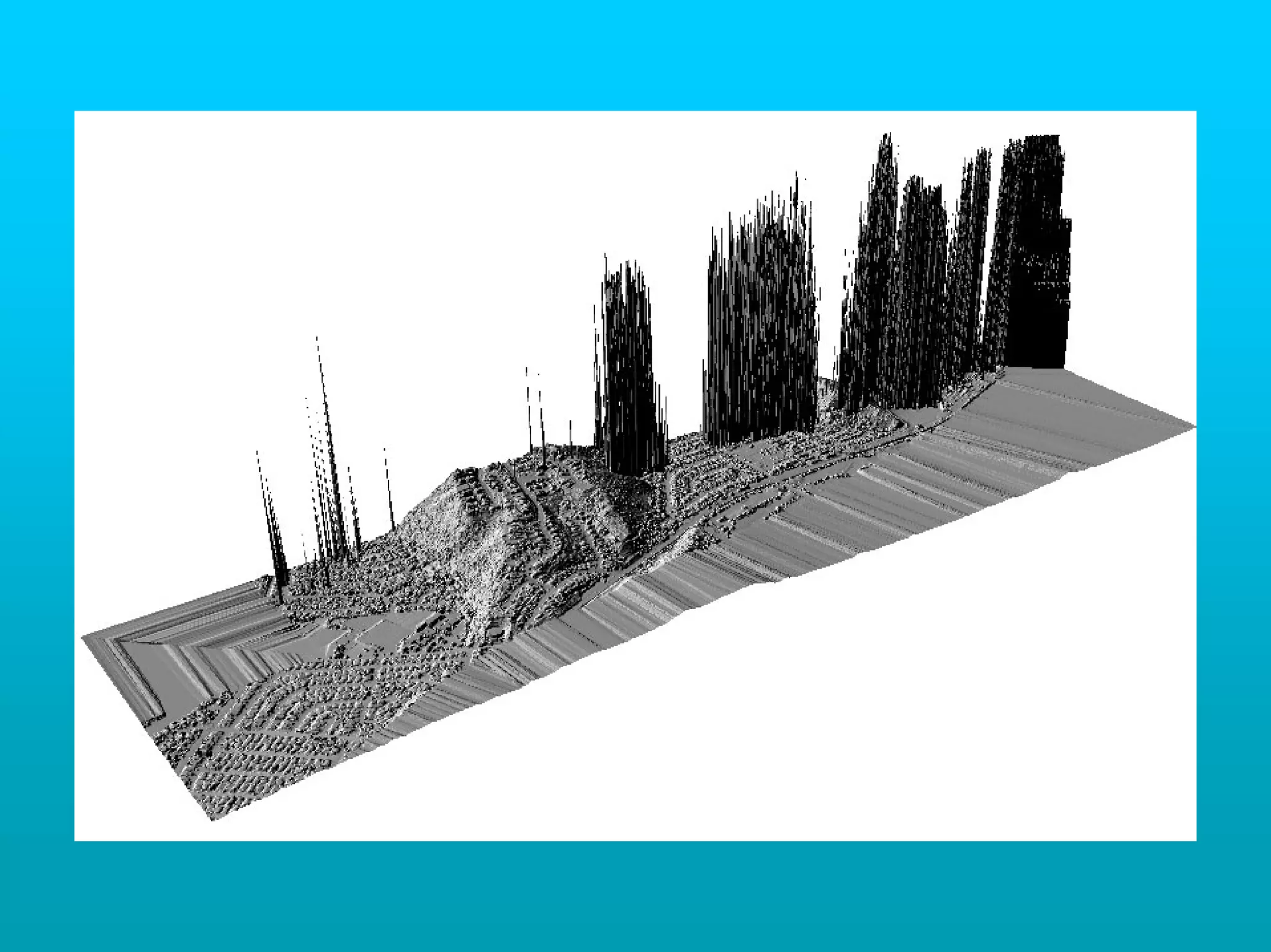
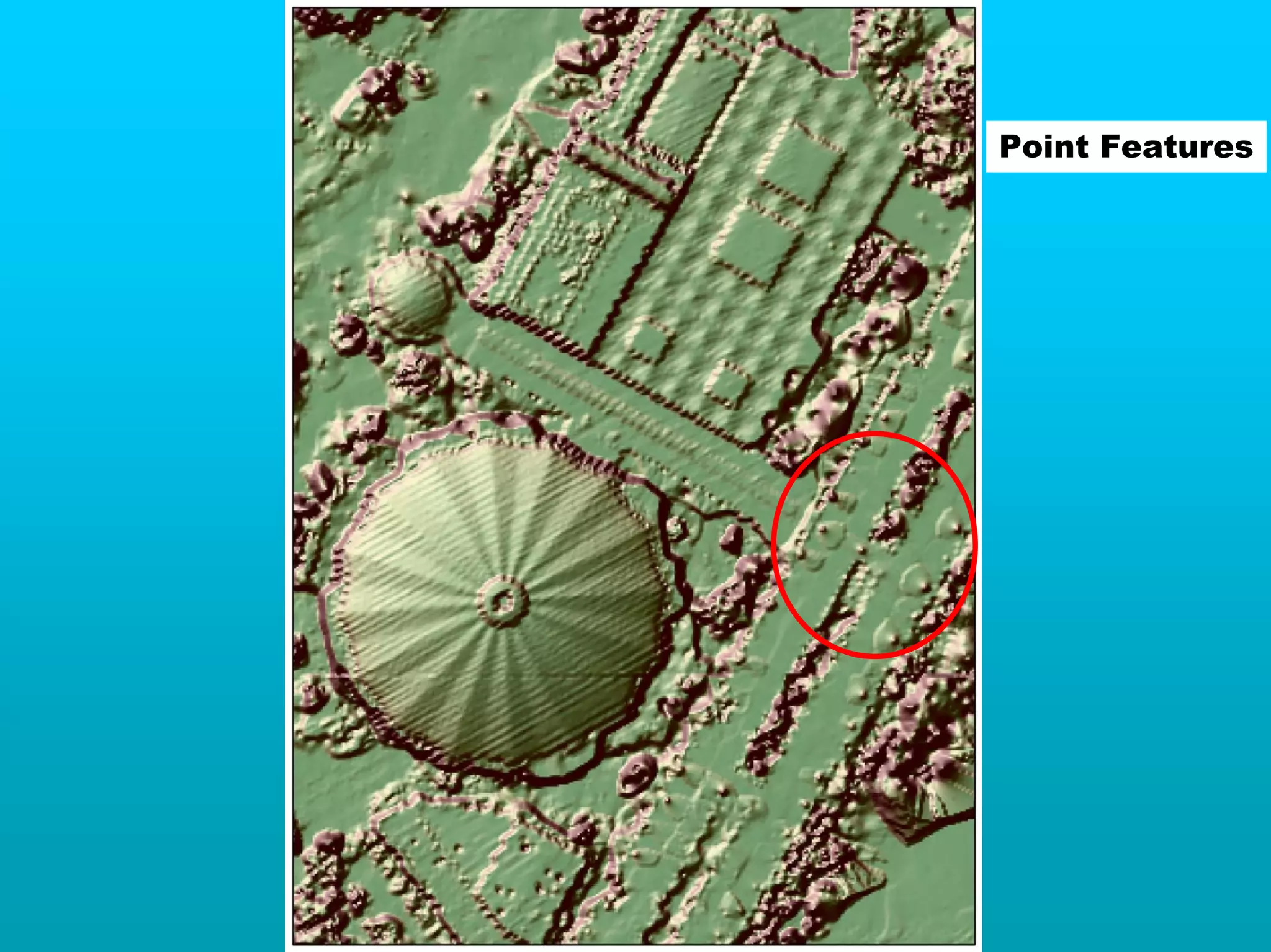
• Interpolation of
  point features
No Data


Interpolation Effects
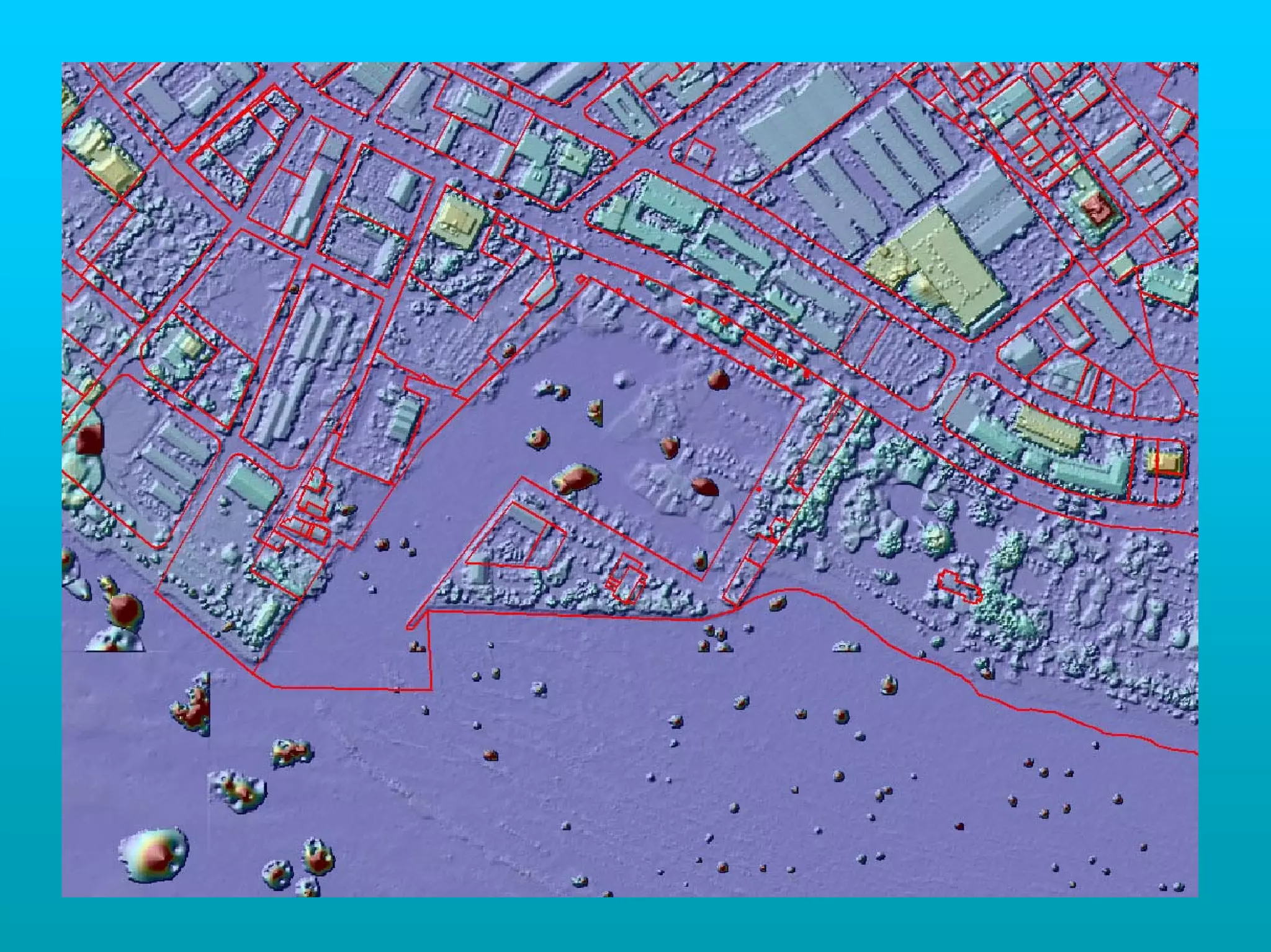
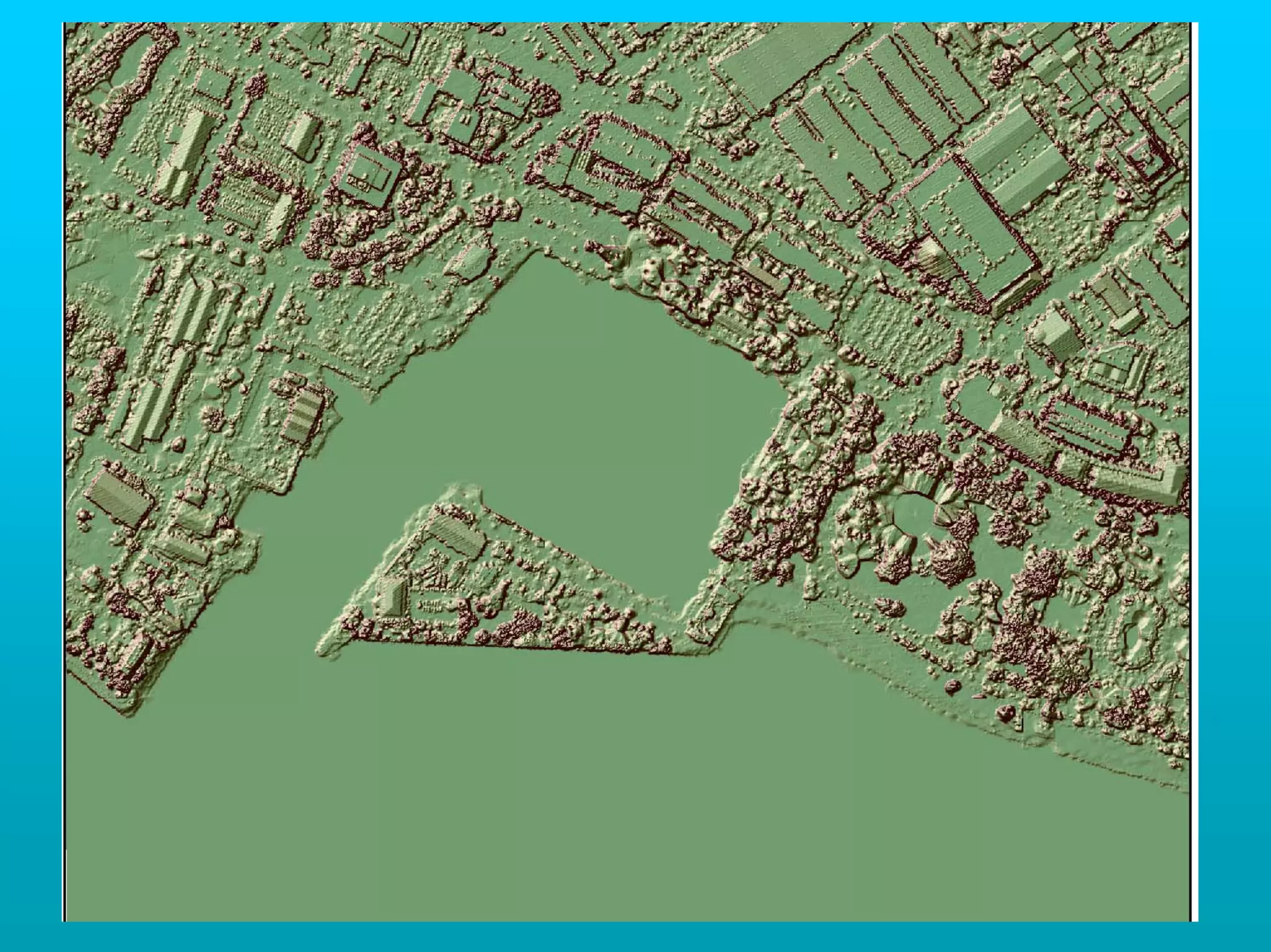
Resolution
Vegetation
Point Features
Management of data
•Ability to store in original spacing and
   use where and when as needed.


   Limitations

   • Large data sets
   • Time to process
   • Requires extra software
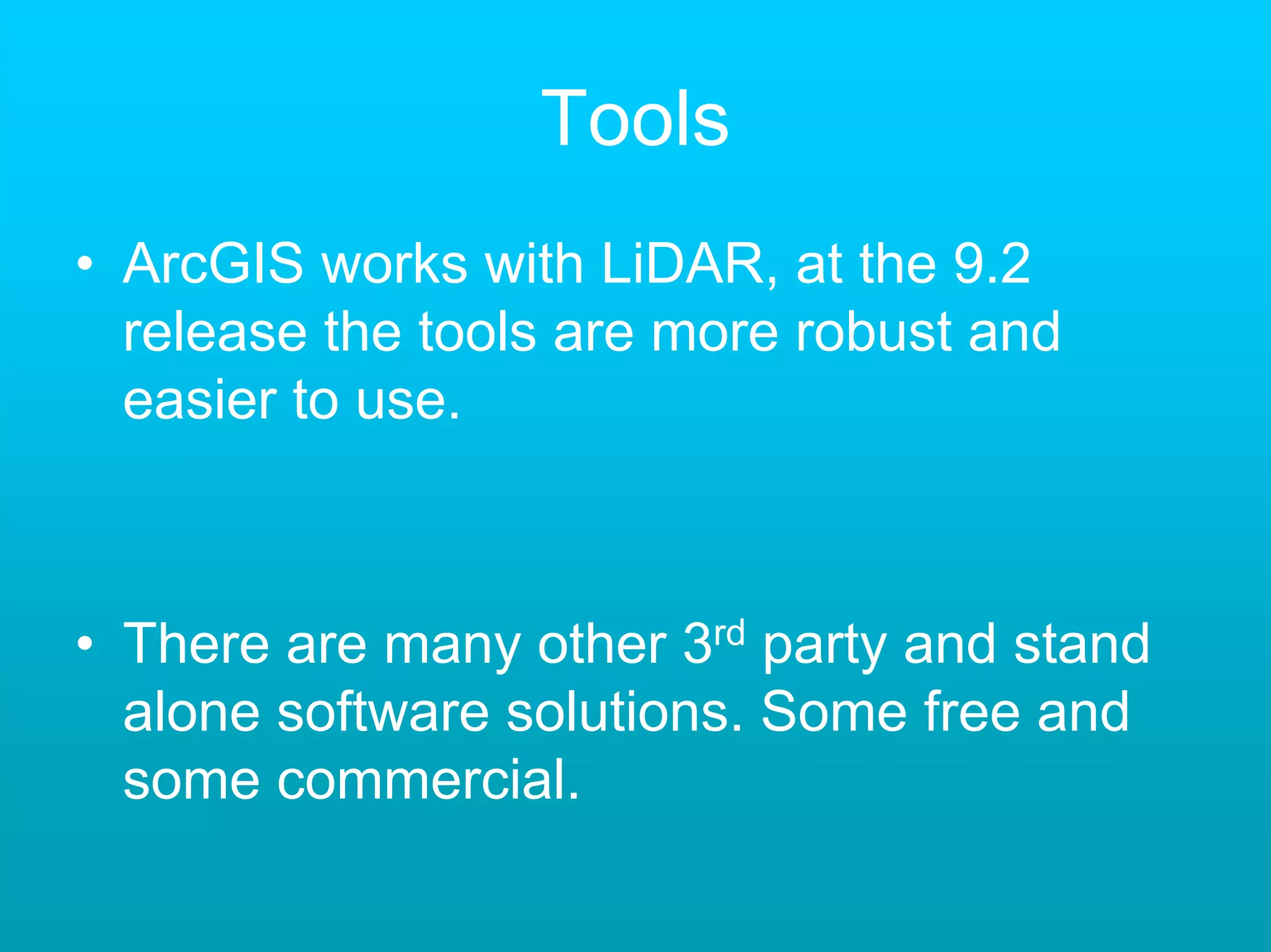
Tools
• ArcGIS works with LiDAR, at the 9.2
  release the tools are more robust and
  easier to use.


• There are many other 3rd party and stand
  alone software solutions. Some free and
  some commercial.
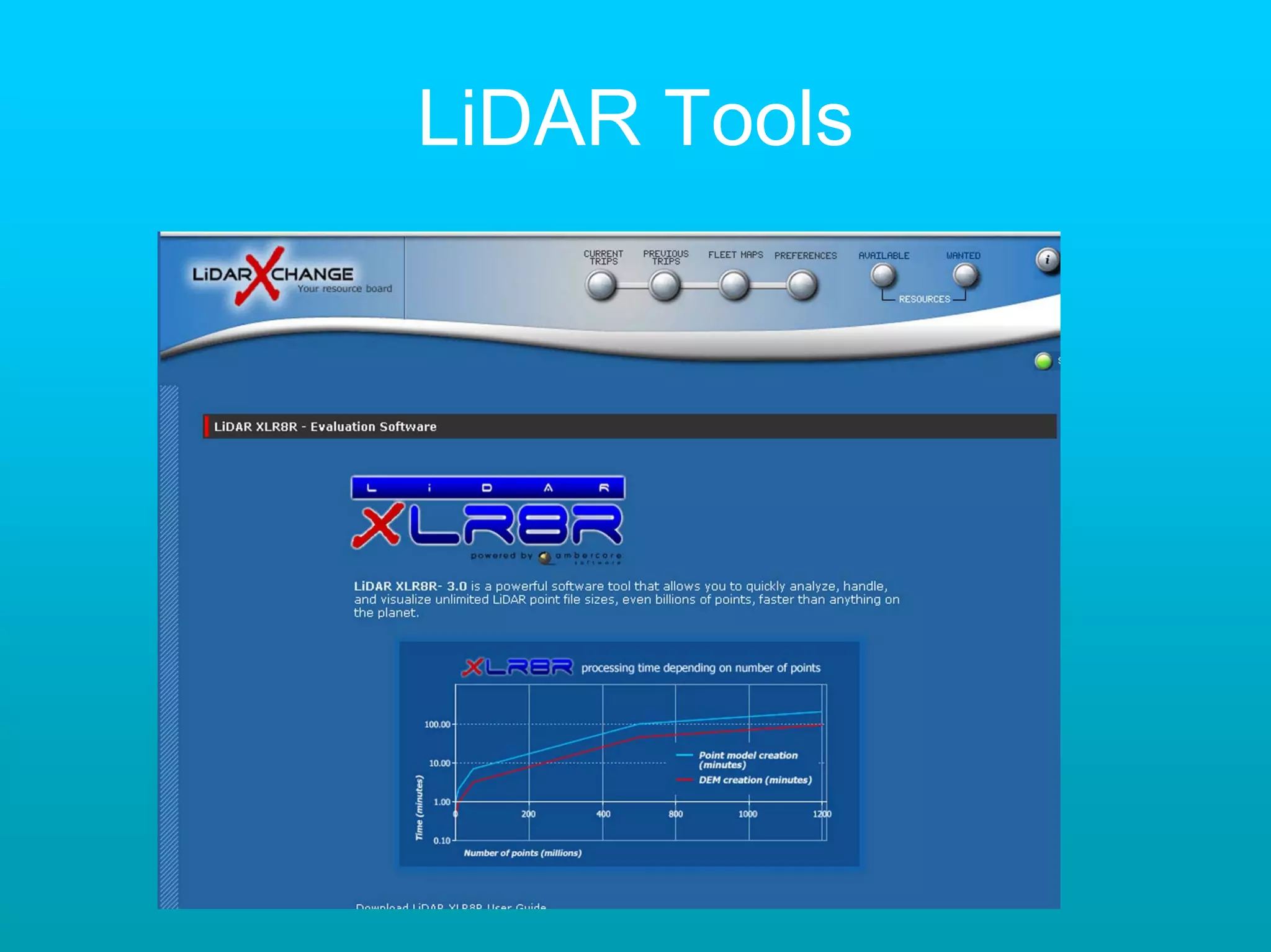
LiDAR Tools
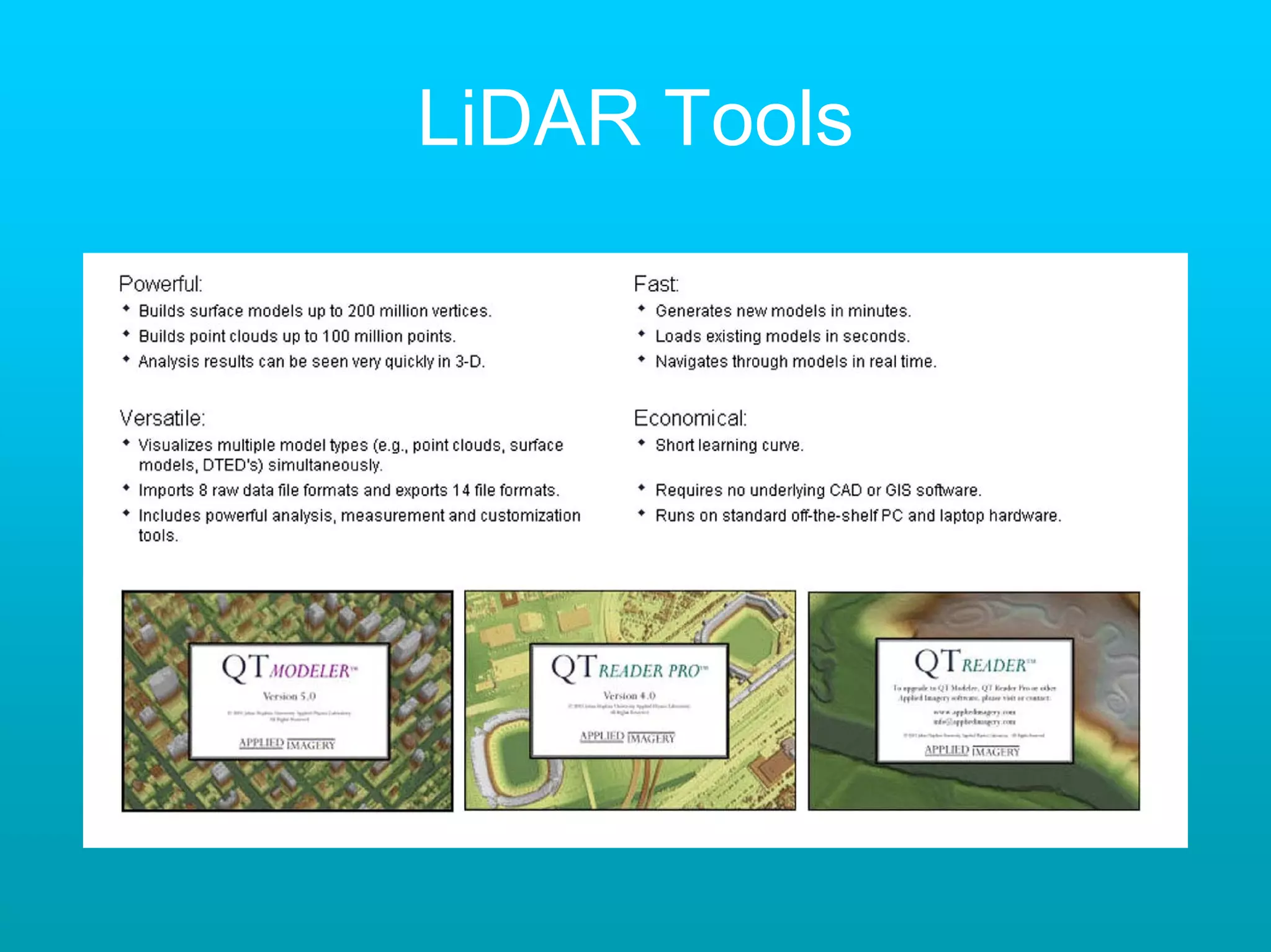
LiDAR Tools
LiDAR Tools
Applications

 Matthew Barbee
LiDAR Resources
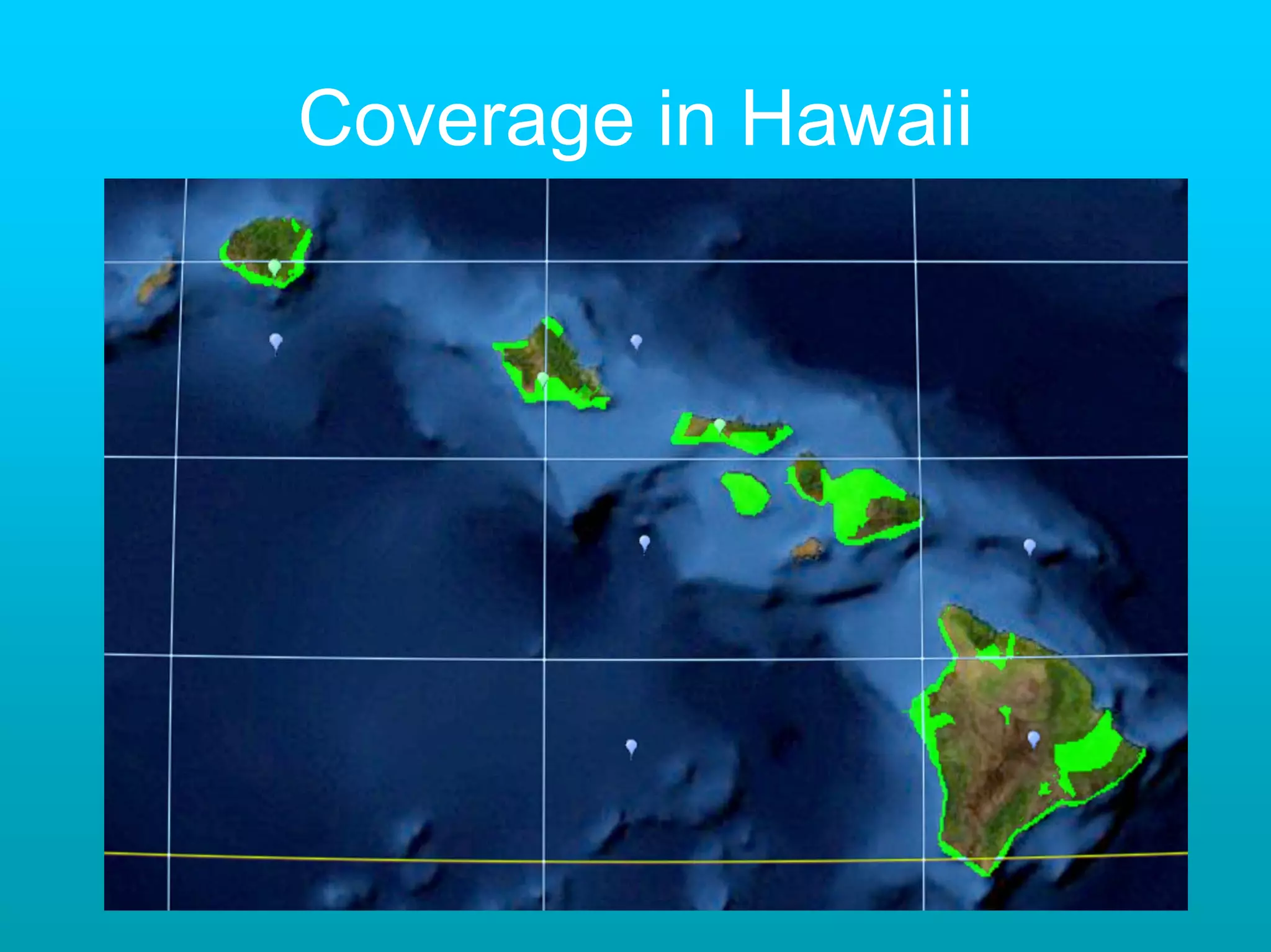
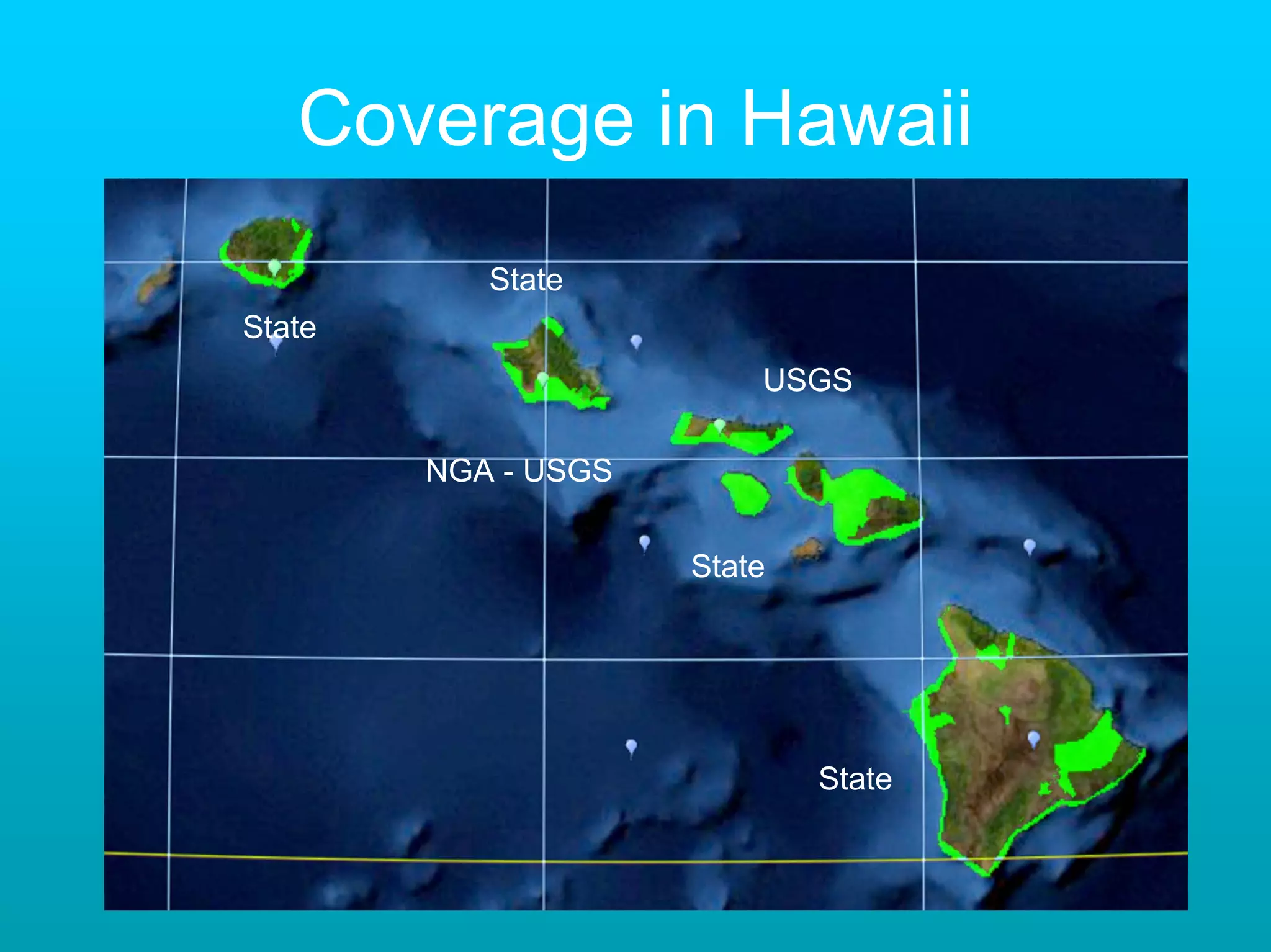
Coverage in Hawaii
Coverage in Hawaii
           State
State
                         USGS

        NGA - USGS


                     State


                             State
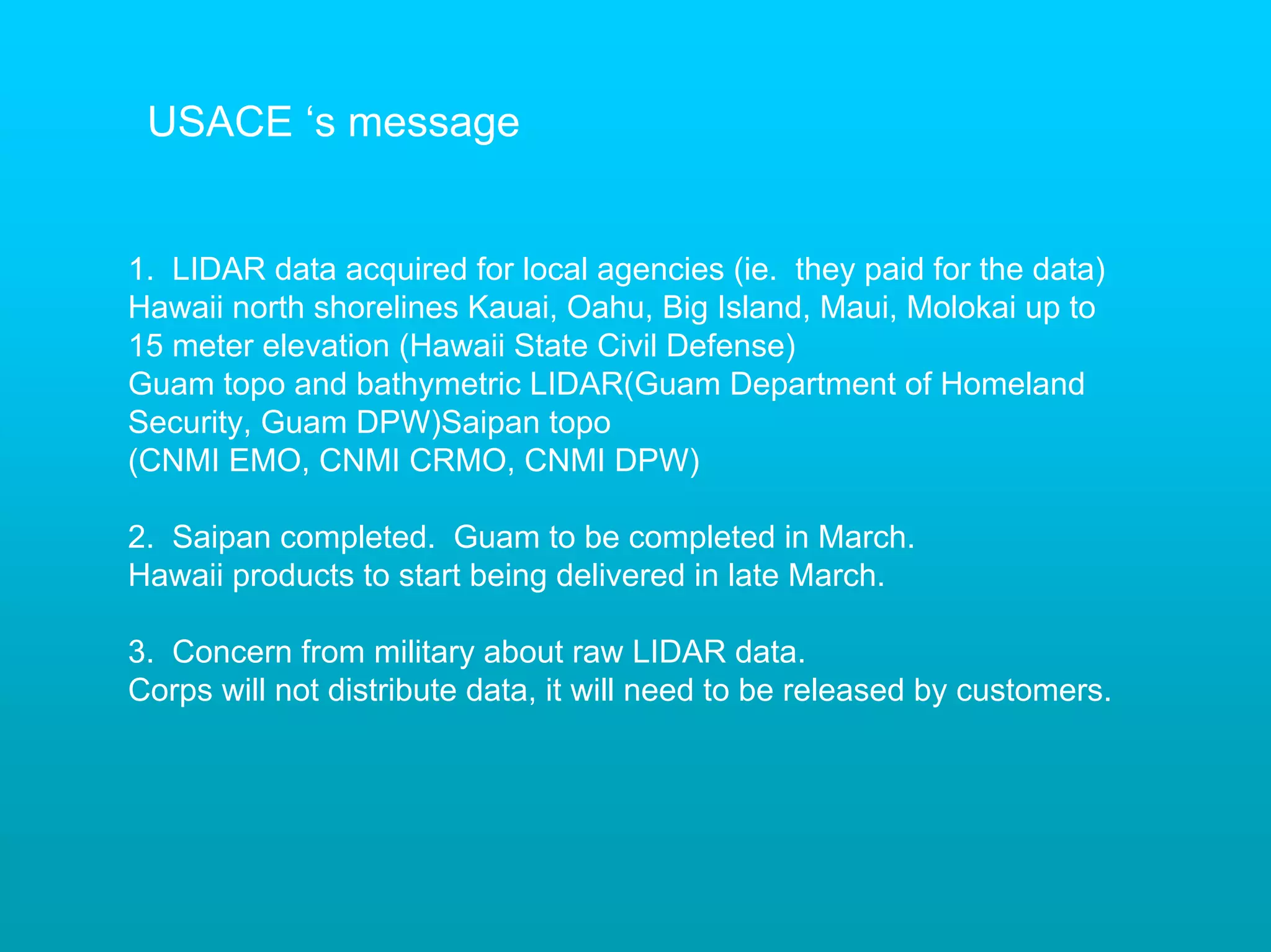
USACE ‘s message


1. LIDAR data acquired for local agencies (ie. they paid for the data)
Hawaii north shorelines Kauai, Oahu, Big Island, Maui, Molokai up to
15 meter elevation (Hawaii State Civil Defense)
Guam topo and bathymetric LIDAR(Guam Department of Homeland
Security, Guam DPW)Saipan topo
(CNMI EMO, CNMI CRMO, CNMI DPW)

2. Saipan completed. Guam to be completed in March.
Hawaii products to start being delivered in late March.

3. Concern from military about raw LIDAR data.
Corps will not distribute data, it will need to be released by customers.
LiDAR Data Resources

People to contact

Benton Ching
USACE Fort Shafter
"Ching, Benton Y POH" <Benton.Y.Ching@poh01.usace.army.mil>

Henry B. Wolter
USGS Geospatial Liaison, Hawaii and Pacific Basin Islands
NSDI Partnership Office
677 Ala Moana Blvd Suite 415
Honolulu, Hawaii 96813
808-587-2409
808-282-8995(cell)
hwolter@usgs.gov

Craig Tasaka
Office of Planning, GIS Program
Phone: (808) 587-2895
Fax: (808) 587-2899
Email: Craig_tasaka@dbedt.hawaii.gov
Mahalo
Matt Barbee
SOEST
University of Hawaii
Matthew [mbarbee@hawaii.edu]


Craig Clouet
ESRI
Honolulu Office
1357 Kapiolani Blvd Suite 1110
Honolulu, Hawaii 96814
(808) - 947-0993
cclouet@esri.com


HIGICC
Hawaii LIDAR Datasets

Hawaii LIDAR Datasets

  • 1.
    HIGICC – DataDiscovery Day LiDAR: What it is, How to use it Where to get it Craig Clouet & Mathew Barbee Honolulu, Hawaii 2008
  • 2.
    Agenda • What isLiDAR – Craig Clouet – Types – Data collection & storage • LiDAR Applications – Matt Barbee UH • LiDAR Data Availability – Craig Clouet
  • 3.
  • 4.
    – LiDAR standsfor Light Detection and Ranging. The system is mounted in an aircraft and is comprised of three primary components: – Laser - collects 50 thousand pulse points per second and records a measurement approximately every 1.5 feet – IMU – a military grade inertial navigation system which measures the movement of the aircraft in three axis 250 times per second. • Kinematic GPS – Receivers log raw data at one second intervals both on the ground and on the aircraft providing extremely precise positioning every one second.
  • 5.
    Three Main Typesof Commercial LiDAR Systems Topographic Mapping SHOALS Terrestrial
  • 6.
  • 9.
    The LiDAR Set-up Portable for Shipping & multiple Platforms
  • 14.
  • 17.
  • 18.
    The terrestrial LIDARtechnique, or 3D laser scanning as it is commonly known, consists of sending and receiving laser pulses to build a point file of three-dimensional coordinates of virtually any surface. The time of travel for a single pulse reflection is measured along a known trajectory such that the distance from the laser, and consequently the exact location of a point of interest can be computed. In addition, some lasers use a color sensor to obtain additional visual data on points located both within and outside of laser range. Given the rapid rate of data collection from the newest state of the art topographic laser scanning systems, the location of up to 12,000 surface points can be collected in one second. Thus, an entire surface, be it a building, a cliff face, or a sand bar can be surveyed quickly and accurately. The point file from a given scan is typically transformed into a three-dimensional surface so that cross-sections and volumetric calculations can be performed between consecutively scanned surfaces.
  • 22.
    Data Structure and Uses of the Elevations
  • 23.
  • 25.
  • 26.
  • 28.
    Example of theGrid Spacing at 5ft
  • 29.
  • 31.
  • 32.
    Lots of actualdata measurements Not too much Interpolation
  • 33.
  • 34.
  • 35.
    LAS Format The LASfile format is a public file format for the interchange of LIDAR data between vendors and customers. This binary file format is a alternative to proprietary systems or a generic ASCII file interchange system used by many companies. The problem with proprietary systems is obvious in that data cannot be easily taken from one system to another. There are two major problems with the ASCII file interchange. The first problem is performance because the reading and interpretation of ASCII elevation data can be very slow and the file size can be extremely large, even for small amounts of data. The second problem is that all information specific to the LIDAR data is lost. The LAS file format is a binary file format that maintains information specific to the LIDAR nature of the data while not being overly complex.
  • 36.
    Digital Elevation Models A method to Store Continuous Topographic data Raster
  • 37.
    Shaded Relief A visual graphic Representation of topography
  • 38.
    Contours Graphical Representation of elevation Vector format
  • 39.
    Accuracy 1 National Geodetic Survey, Retrieval Date = JANUARY 13, 2006 TU0562 *********************************************************************** TU0562 DESIGNATION - BATH RM 3 TU0562 PID - TU0562 TU0562 STATE/COUNTY- HI/HONOLULU TU0562 USGS QUAD - KAENA (1983) TU0562 TU0562 *CURRENT SURVEY CONTROL TU0562 ___________________________________________________________________ TU0562* NAD 83(1993)- 21 34 39.91926(N) 158 15 46.06795(W) ADJUSTED TU0562* LOCAL TIDAL - 2.674 (meters) 8.77 (feet) ADJ UNCH TU0562 ___________________________________________________________________ TU0562 EPOCH DATE - 1993.62 TU0562 LAPLACE CORR- 4.63 (seconds) DEFLEC99 TU0562 GEOID HEIGHT- 14.90 (meters) GEOID99 TU0562 TU0562 HORZ ORDER - SECOND TU0562 VERT ORDER - FIRST CLASS II TU0562 TU0562.The horizontal coordinates were established by classical geodetic methods TU0562.and adjusted by the National Geodetic Survey in December 1998. TU0562.The horizontal coordinates are valid at the epoch date displayed above. TU0562.The epoch date for horizontal control is a decimal equivalence TU0562.of Year/Month/Day. TU0562 TU0562.The orthometric height was key entered from printed documents TU0562.and not key verified.
  • 40.
    Location of NGSReference Sites
  • 41.
    Comparison of NGS Elevationand LiDAR Reported Values in Feet 10 Foot Radius from Control point
  • 45.
    Lidar Products • Exampleof Airborne 1 deliverables
  • 51.
  • 52.
  • 53.
  • 54.
  • 55.
  • 56.
    Using the IntensityReturn Soil State and Moisture
  • 57.
  • 60.
  • 65.
    Data is inGeographic Coordinates
  • 66.
    Issues • Clouds • NoData • Resolution • Vegetation • Interpolation of point features
  • 72.
  • 73.
  • 74.
  • 75.
  • 76.
    Management of data •Abilityto store in original spacing and use where and when as needed. Limitations • Large data sets • Time to process • Requires extra software
  • 77.
    Tools • ArcGIS workswith LiDAR, at the 9.2 release the tools are more robust and easier to use. • There are many other 3rd party and stand alone software solutions. Some free and some commercial.
  • 78.
  • 79.
  • 80.
  • 81.
  • 82.
  • 83.
  • 84.
    Coverage in Hawaii State State USGS NGA - USGS State State
  • 85.
    USACE ‘s message 1.LIDAR data acquired for local agencies (ie. they paid for the data) Hawaii north shorelines Kauai, Oahu, Big Island, Maui, Molokai up to 15 meter elevation (Hawaii State Civil Defense) Guam topo and bathymetric LIDAR(Guam Department of Homeland Security, Guam DPW)Saipan topo (CNMI EMO, CNMI CRMO, CNMI DPW) 2. Saipan completed. Guam to be completed in March. Hawaii products to start being delivered in late March. 3. Concern from military about raw LIDAR data. Corps will not distribute data, it will need to be released by customers.
  • 86.
    LiDAR Data Resources Peopleto contact Benton Ching USACE Fort Shafter "Ching, Benton Y POH" <Benton.Y.Ching@poh01.usace.army.mil> Henry B. Wolter USGS Geospatial Liaison, Hawaii and Pacific Basin Islands NSDI Partnership Office 677 Ala Moana Blvd Suite 415 Honolulu, Hawaii 96813 808-587-2409 808-282-8995(cell) hwolter@usgs.gov Craig Tasaka Office of Planning, GIS Program Phone: (808) 587-2895 Fax: (808) 587-2899 Email: Craig_tasaka@dbedt.hawaii.gov
  • 87.
    Mahalo Matt Barbee SOEST University ofHawaii Matthew [mbarbee@hawaii.edu] Craig Clouet ESRI Honolulu Office 1357 Kapiolani Blvd Suite 1110 Honolulu, Hawaii 96814 (808) - 947-0993 cclouet@esri.com HIGICC