INTRODUCTION
TO MIGRATION
Follow the instructions on
this PowerPoint and
complete tasks set in your
2B8 book
Migration in India
 Put the above title on a new page in your
book and write the information below
 Migration is the movement of people from
one place to another.
 Internal migration (movement from one
place to another in India) is the most
common type of movement for India
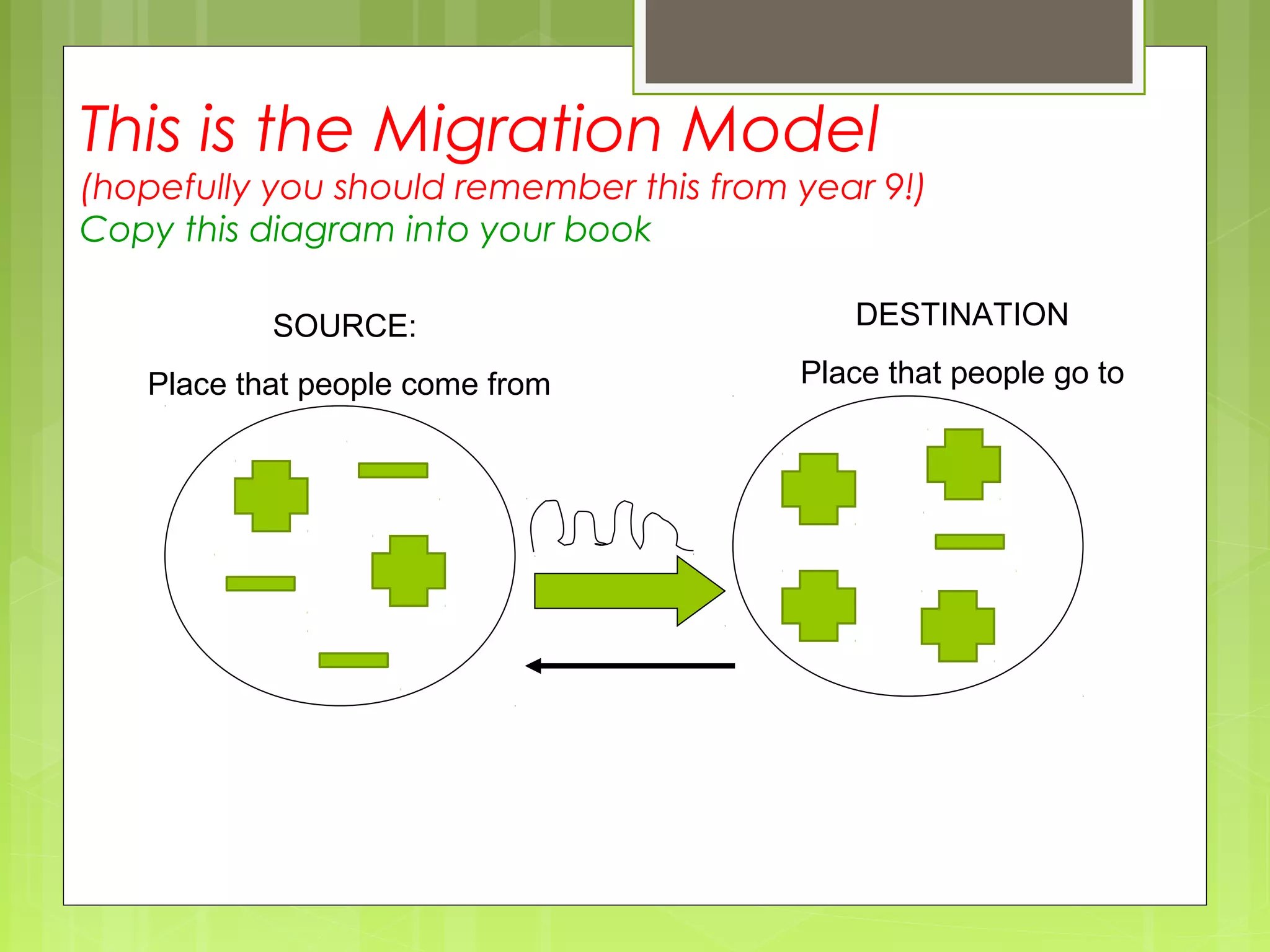
This is the Migration Model
(hopefully you should remember this from year 9!)
Copy this diagram into your book
SOURCE:
Place that people come from
DESTINATION
Place that people go to
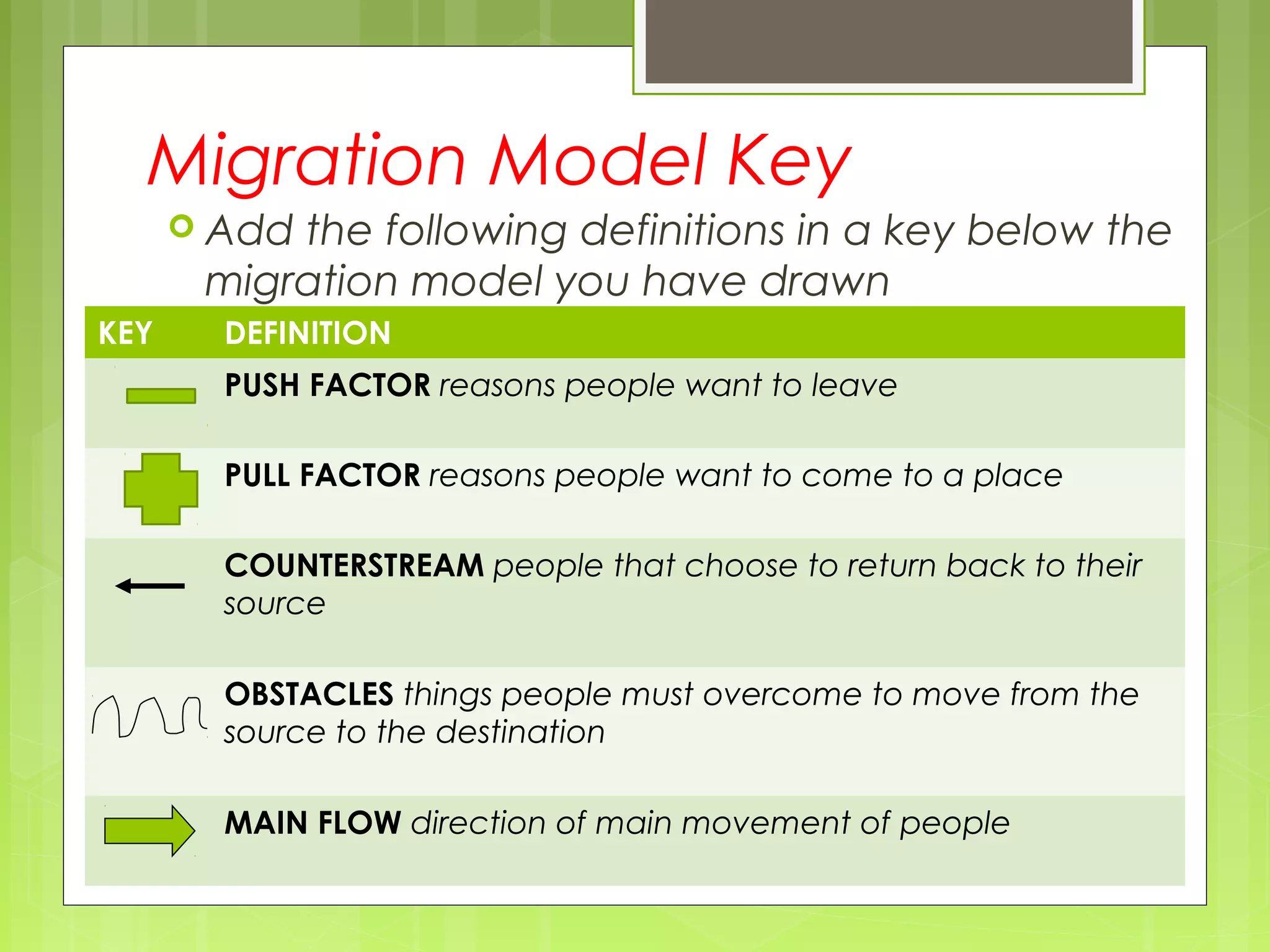
Migration Model Key
 Add the following definitions in a key below the
migration model you have drawn
KEY DEFINITION
PUSH FACTOR reasons people want to leave
PULL FACTOR reasons people want to come to a place
COUNTERSTREAM people that choose to return back to their
source
OBSTACLES things people must overcome to move from the
source to the destination
MAIN FLOW direction of main movement of people
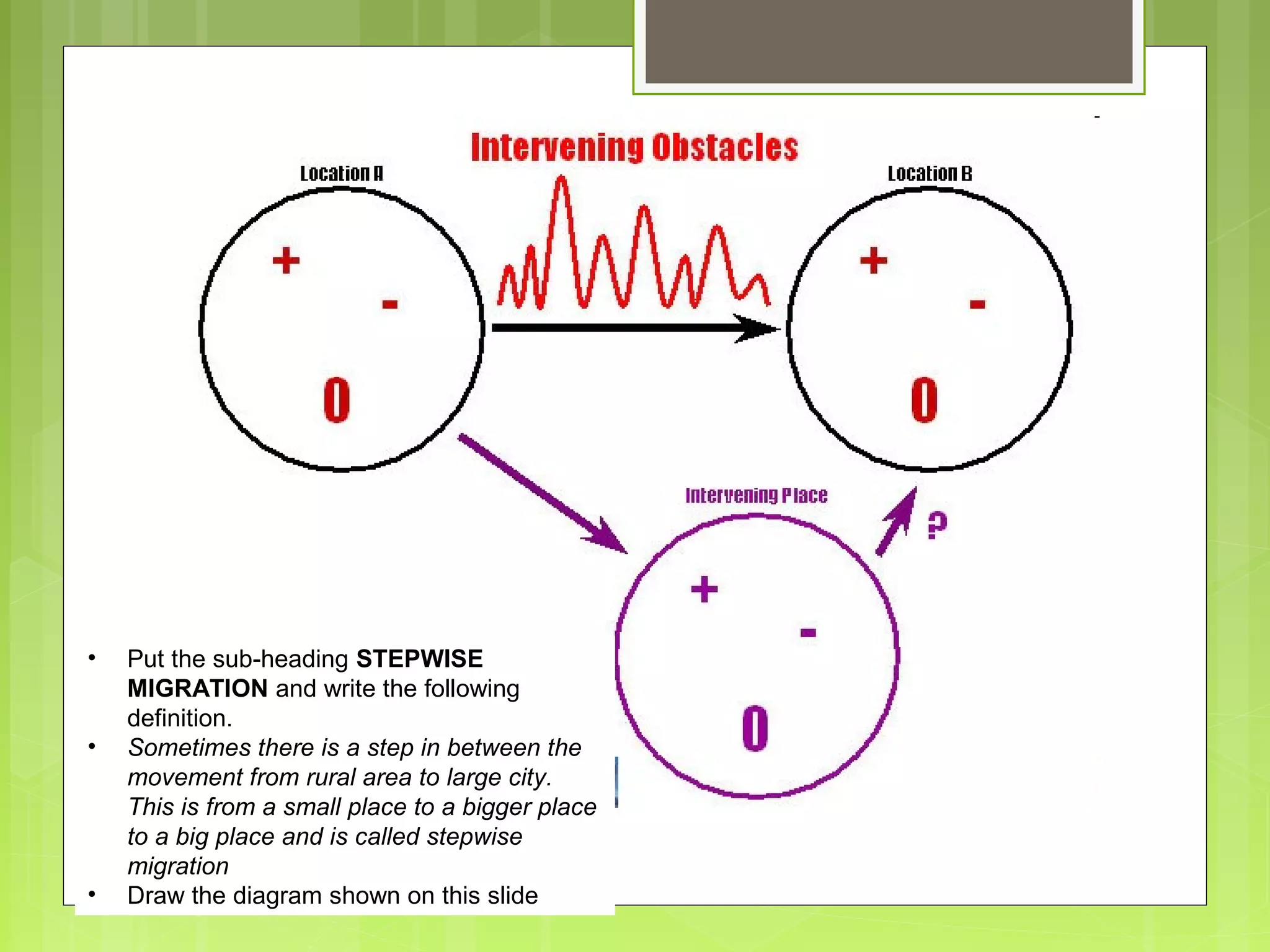
• Put the sub-heading STEPWISE
MIGRATION and write the following
definition.
• Sometimes there is a step in between the
movement from rural area to large city.
This is from a small place to a bigger place
to a big place and is called stepwise
migration
• Draw the diagram shown on this slide
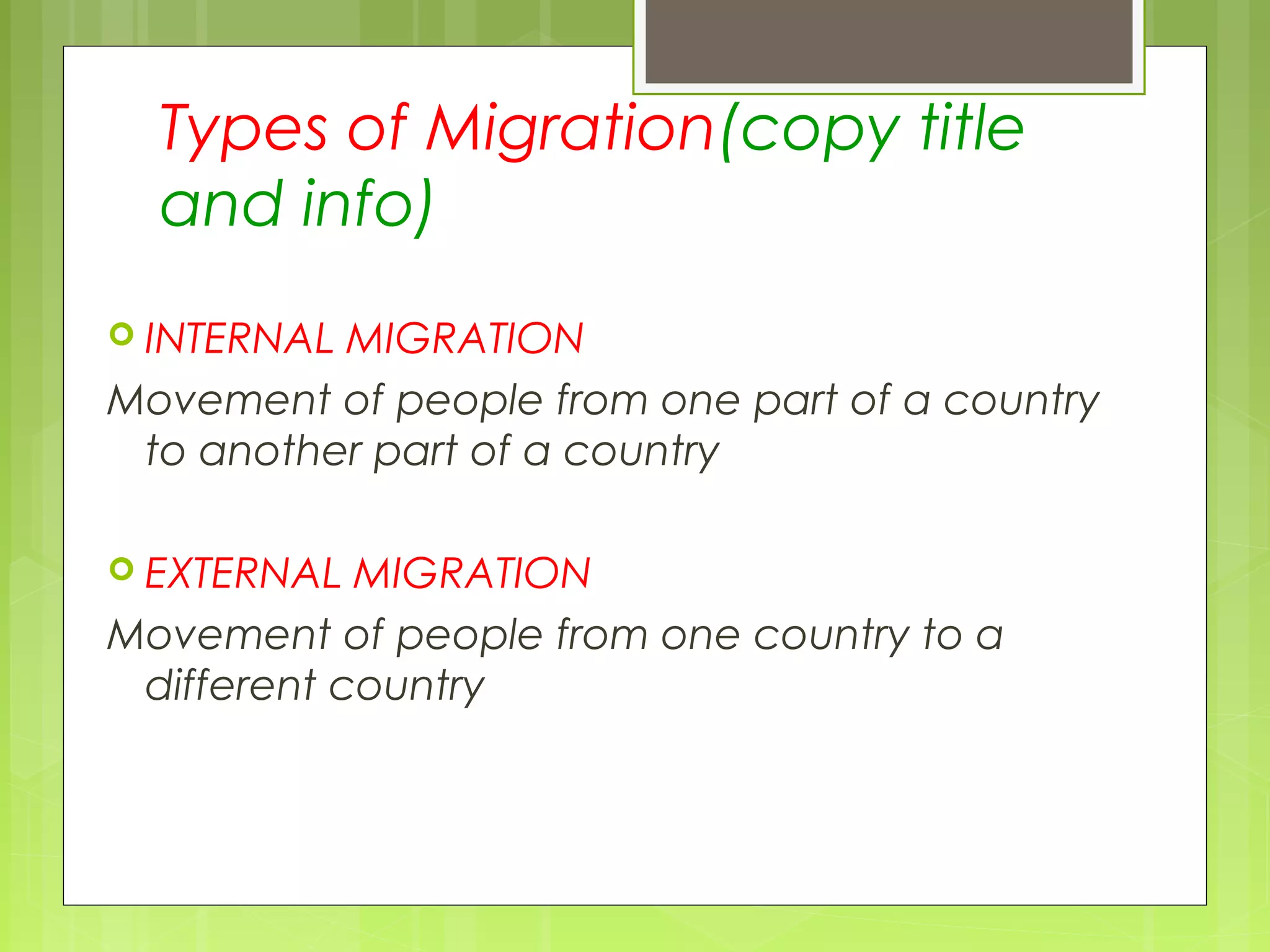
Types of Migration(copy title
and info)
 INTERNAL MIGRATION
Movement of people from one part of a country
to another part of a country
 EXTERNAL MIGRATION
Movement of people from one country to a
different country
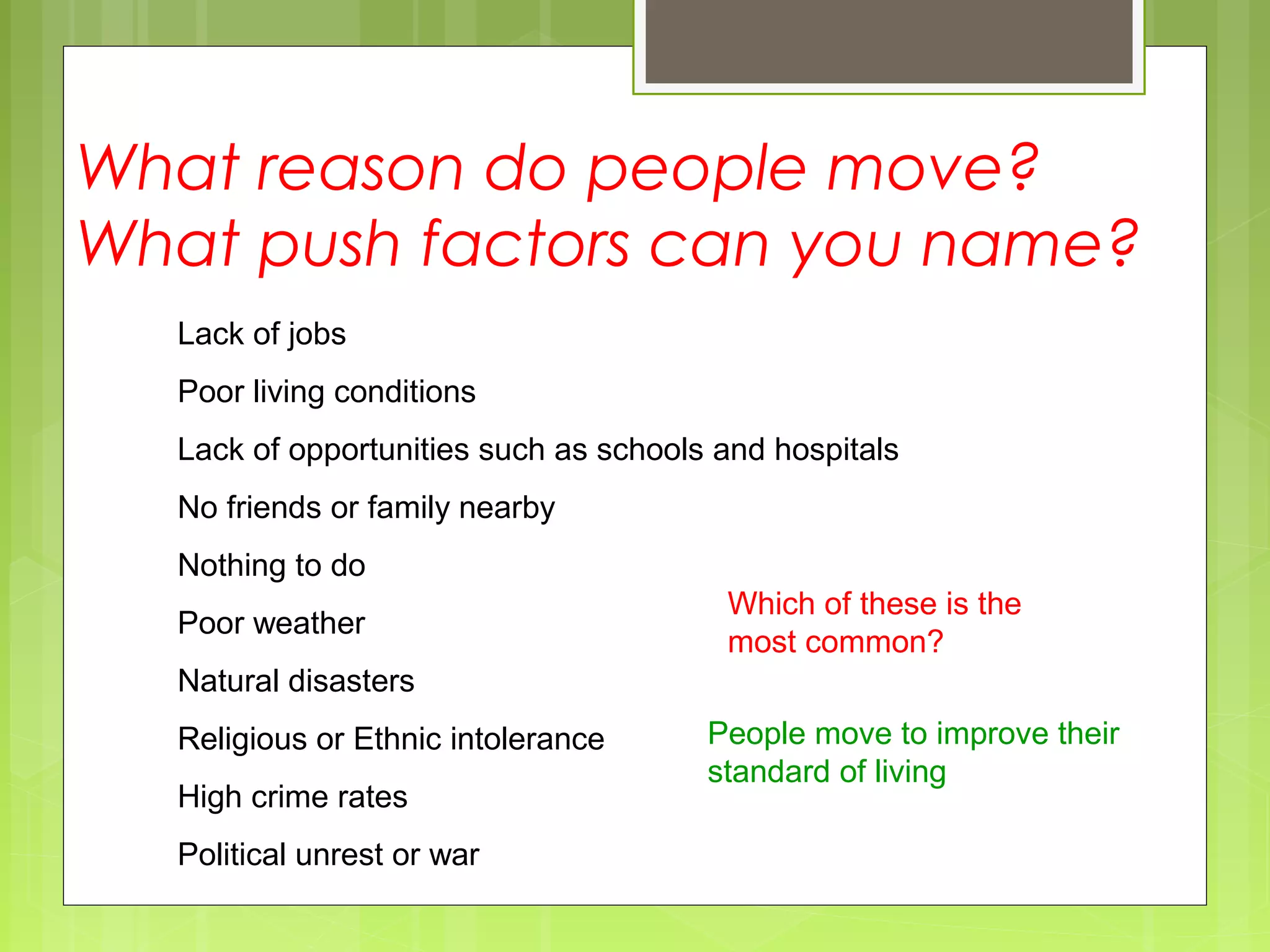
What reason do people move?
What push factors can you name?
Lack of jobs
Poor living conditions
Lack of opportunities such as schools and hospitals
No friends or family nearby
Nothing to do
Poor weather
Natural disasters
Religious or Ethnic intolerance
High crime rates
Political unrest or war
Which of these is the
most common?
People move to improve their
standard of living
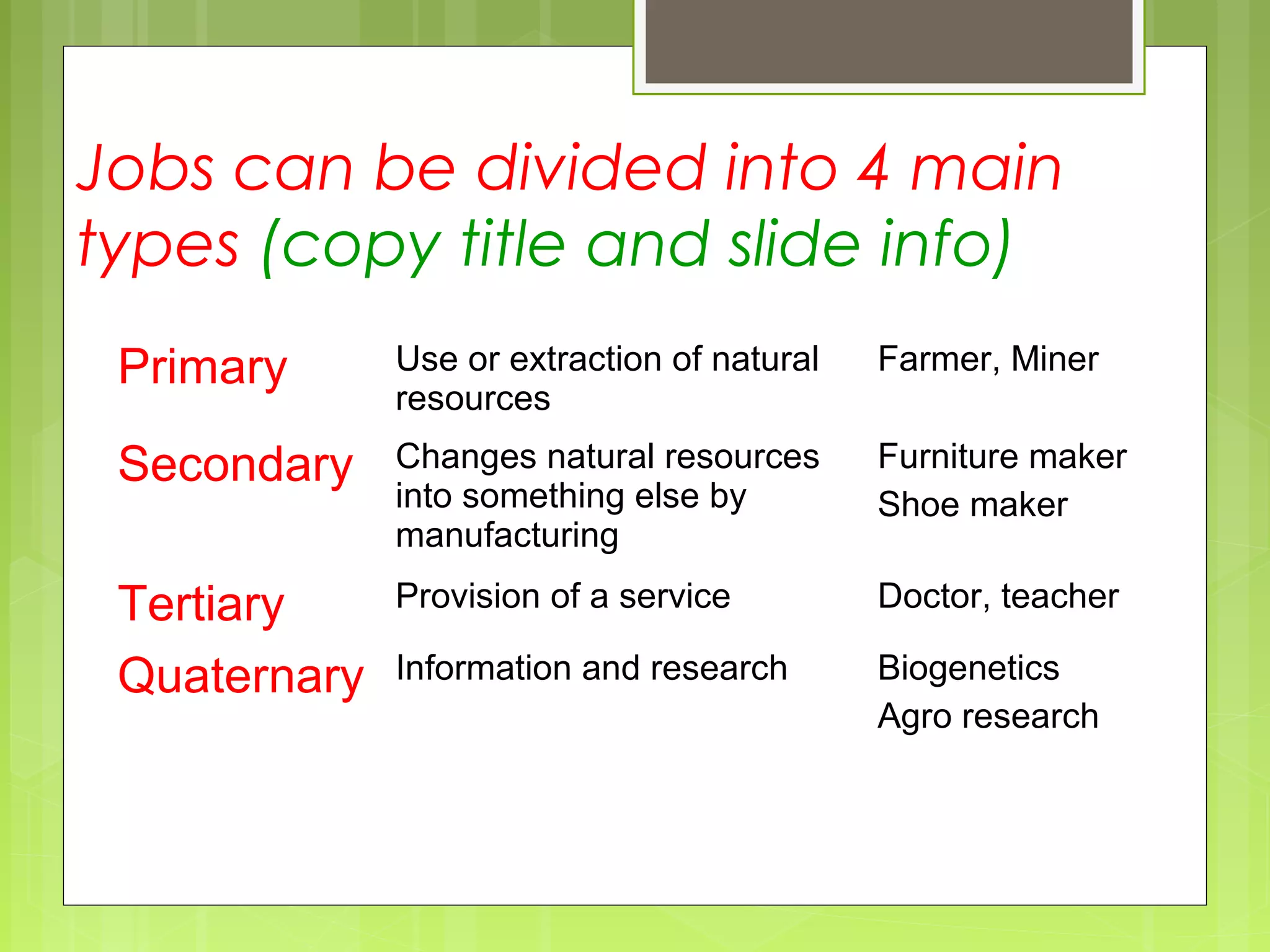
Jobs can be divided into 4 main
types (copy title and slide info)
Primary Use or extraction of natural
resources
Farmer, Miner
Secondary Changes natural resources
into something else by
manufacturing
Furniture maker
Shoe maker
Tertiary Provision of a service Doctor, teacher
Quaternary Information and research Biogenetics
Agro research
What jobs are these:
Which type of job: (copy and
answer)
 1. Pays the least?
 2. Pays the most?
 3. Is most common in NZ?
 4. Is most common in India?
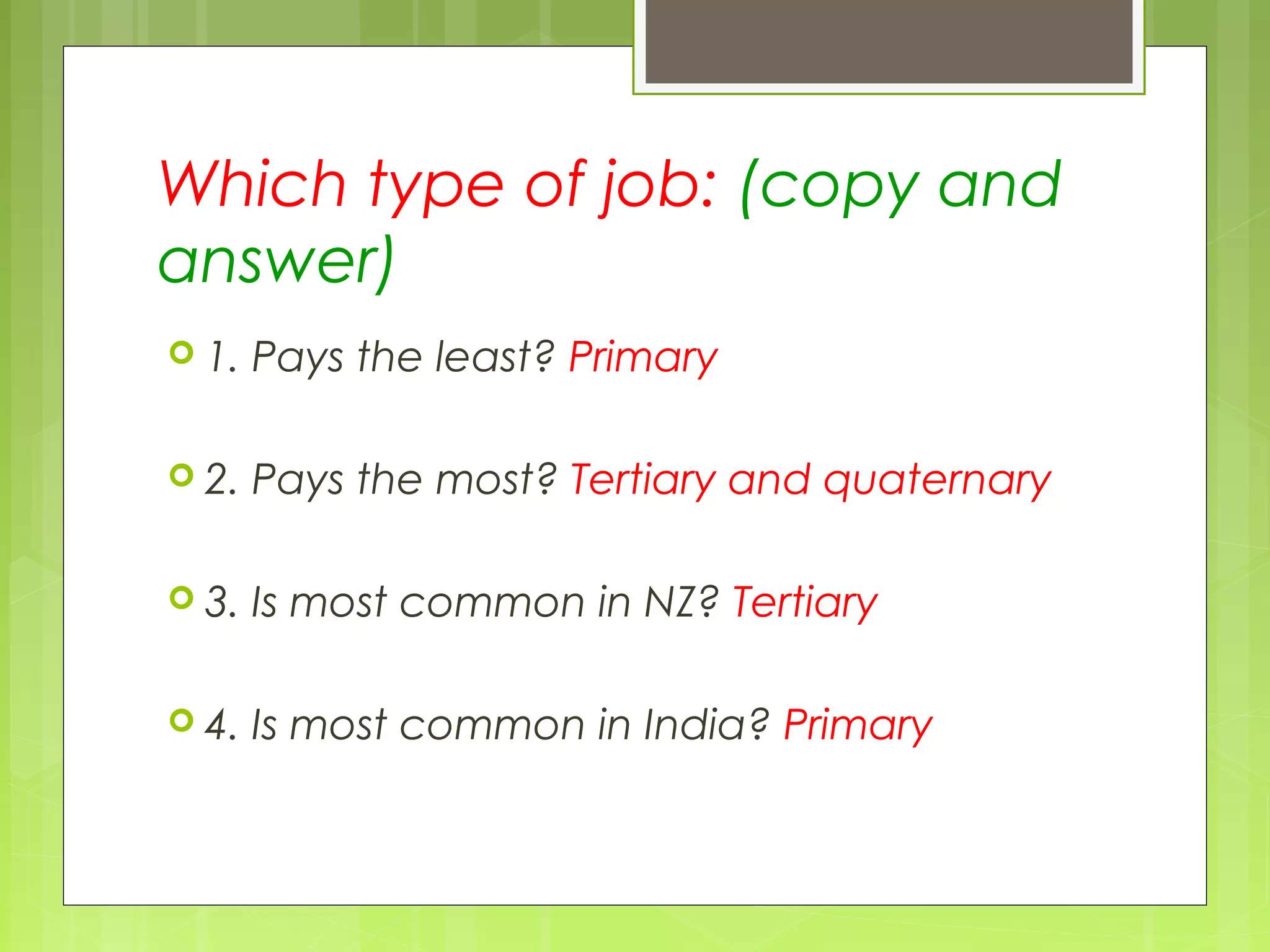
Which type of job: (copy and
answer)
 1. Pays the least? Primary
 2. Pays the most? Tertiary and quaternary
 3. Is most common in NZ? Tertiary
 4. Is most common in India? Primary
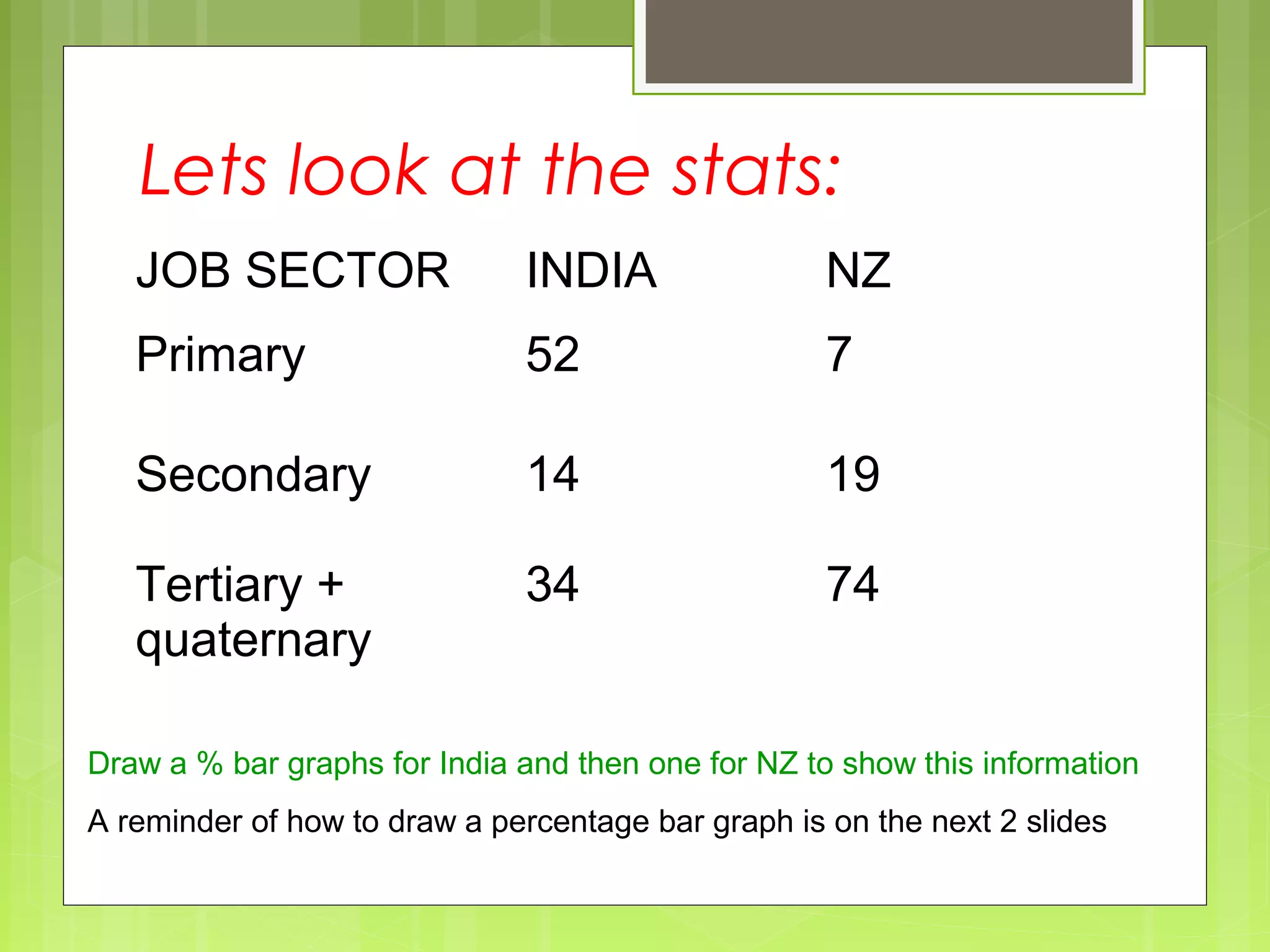
Lets look at the stats:
JOB SECTOR INDIA NZ
Primary 52 7
Secondary 14 19
Tertiary +
quaternary
34 74
Draw a % bar graphs for India and then one for NZ to show this information
A reminder of how to draw a percentage bar graph is on the next 2 slides
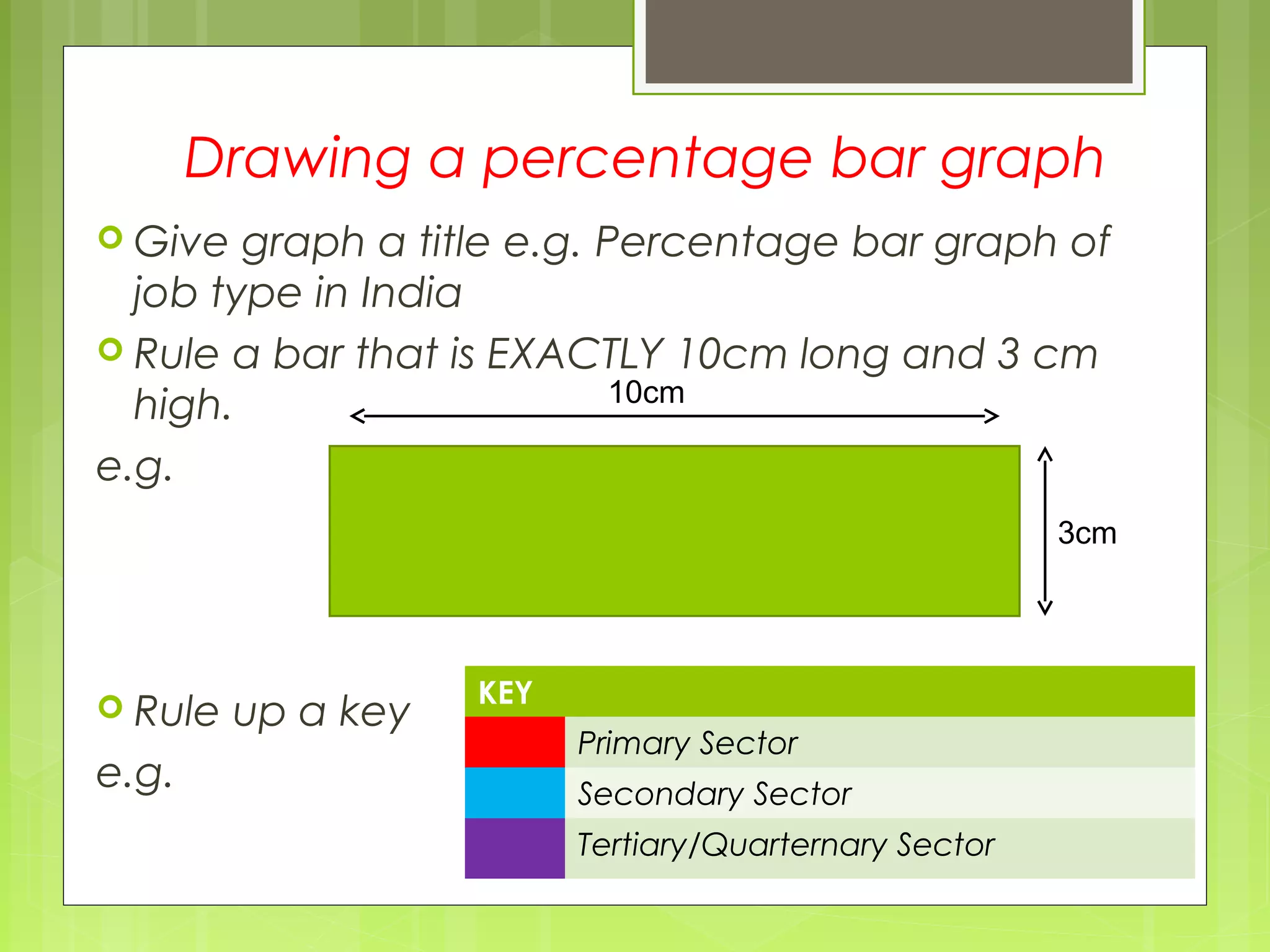
Drawing a percentage bar graph
 Give graph a title e.g. Percentage bar graph of
job type in India
 Rule a bar that is EXACTLY 10cm long and 3 cm
high.
e.g.
 Rule up a key
e.g.
10cm
3cm
KEY
Primary Sector
Secondary Sector
Tertiary/Quarternary Sector
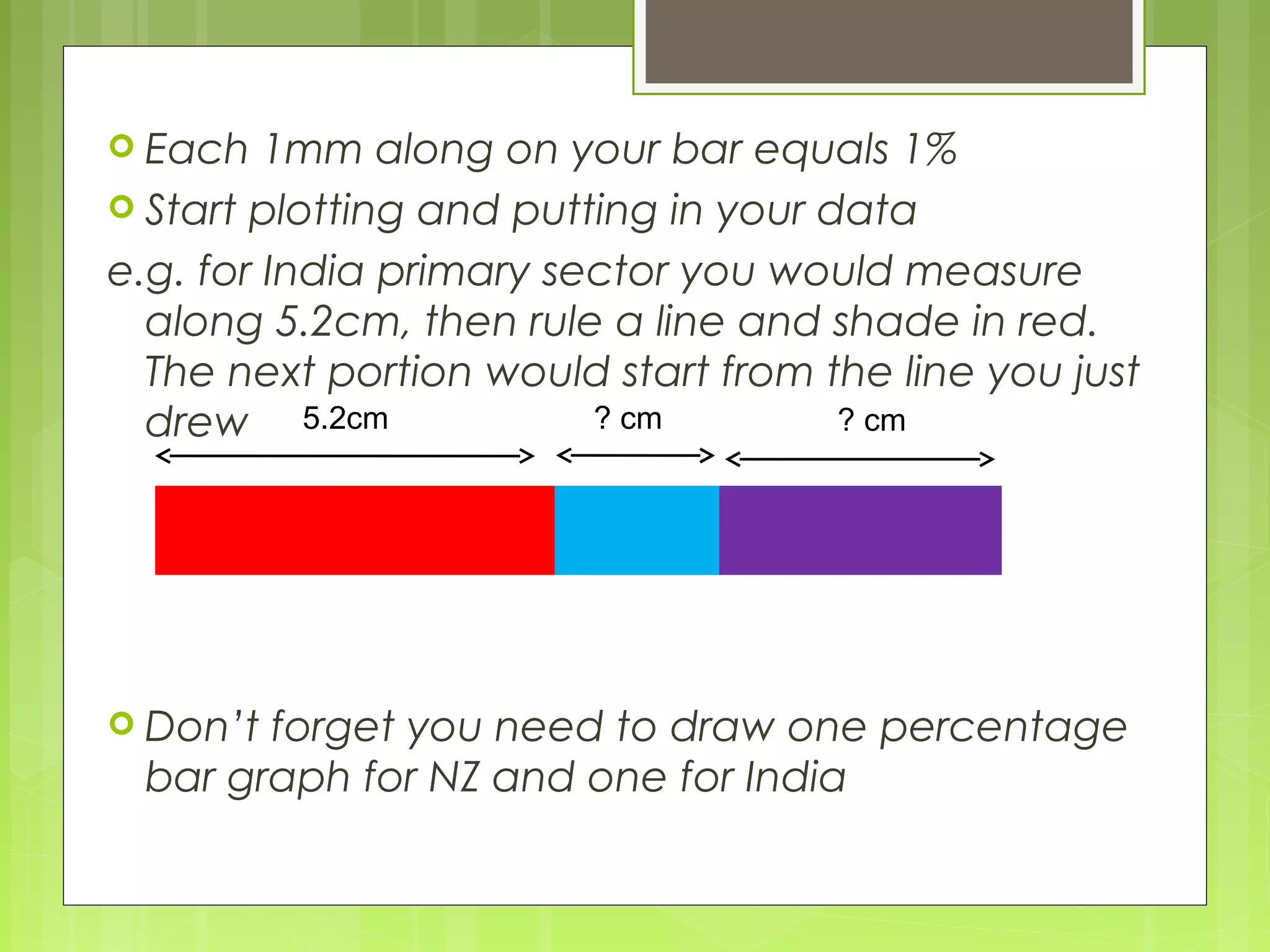
 Each 1mm along on your bar equals 1%
 Start plotting and putting in your data
e.g. for India primary sector you would measure
along 5.2cm, then rule a line and shade in red.
The next portion would start from the line you just
drew
 Don’t forget you need to draw one percentage
bar graph for NZ and one for India
5.2cm ? cm ? cm
Answer the following questions
based on your graphs
 What does this lead to?
 Where are most of the Tertiary jobs in
India?

Introduction to Migration in India

  • 1.
    INTRODUCTION TO MIGRATION Follow theinstructions on this PowerPoint and complete tasks set in your 2B8 book
  • 2.
    Migration in India Put the above title on a new page in your book and write the information below  Migration is the movement of people from one place to another.  Internal migration (movement from one place to another in India) is the most common type of movement for India
  • 3.
    This is theMigration Model (hopefully you should remember this from year 9!) Copy this diagram into your book SOURCE: Place that people come from DESTINATION Place that people go to
  • 4.
    Migration Model Key Add the following definitions in a key below the migration model you have drawn KEY DEFINITION PUSH FACTOR reasons people want to leave PULL FACTOR reasons people want to come to a place COUNTERSTREAM people that choose to return back to their source OBSTACLES things people must overcome to move from the source to the destination MAIN FLOW direction of main movement of people
  • 5.
    • Put thesub-heading STEPWISE MIGRATION and write the following definition. • Sometimes there is a step in between the movement from rural area to large city. This is from a small place to a bigger place to a big place and is called stepwise migration • Draw the diagram shown on this slide
  • 6.
    Types of Migration(copytitle and info)  INTERNAL MIGRATION Movement of people from one part of a country to another part of a country  EXTERNAL MIGRATION Movement of people from one country to a different country
  • 7.
    What reason dopeople move? What push factors can you name? Lack of jobs Poor living conditions Lack of opportunities such as schools and hospitals No friends or family nearby Nothing to do Poor weather Natural disasters Religious or Ethnic intolerance High crime rates Political unrest or war Which of these is the most common? People move to improve their standard of living
  • 8.
    Jobs can bedivided into 4 main types (copy title and slide info) Primary Use or extraction of natural resources Farmer, Miner Secondary Changes natural resources into something else by manufacturing Furniture maker Shoe maker Tertiary Provision of a service Doctor, teacher Quaternary Information and research Biogenetics Agro research
  • 9.
  • 10.
    Which type ofjob: (copy and answer)  1. Pays the least?  2. Pays the most?  3. Is most common in NZ?  4. Is most common in India?
  • 11.
    Which type ofjob: (copy and answer)  1. Pays the least? Primary  2. Pays the most? Tertiary and quaternary  3. Is most common in NZ? Tertiary  4. Is most common in India? Primary
  • 12.
    Lets look atthe stats: JOB SECTOR INDIA NZ Primary 52 7 Secondary 14 19 Tertiary + quaternary 34 74 Draw a % bar graphs for India and then one for NZ to show this information A reminder of how to draw a percentage bar graph is on the next 2 slides
  • 13.
    Drawing a percentagebar graph  Give graph a title e.g. Percentage bar graph of job type in India  Rule a bar that is EXACTLY 10cm long and 3 cm high. e.g.  Rule up a key e.g. 10cm 3cm KEY Primary Sector Secondary Sector Tertiary/Quarternary Sector
  • 14.
     Each 1mmalong on your bar equals 1%  Start plotting and putting in your data e.g. for India primary sector you would measure along 5.2cm, then rule a line and shade in red. The next portion would start from the line you just drew  Don’t forget you need to draw one percentage bar graph for NZ and one for India 5.2cm ? cm ? cm
  • 15.
    Answer the followingquestions based on your graphs  What does this lead to?  Where are most of the Tertiary jobs in India?