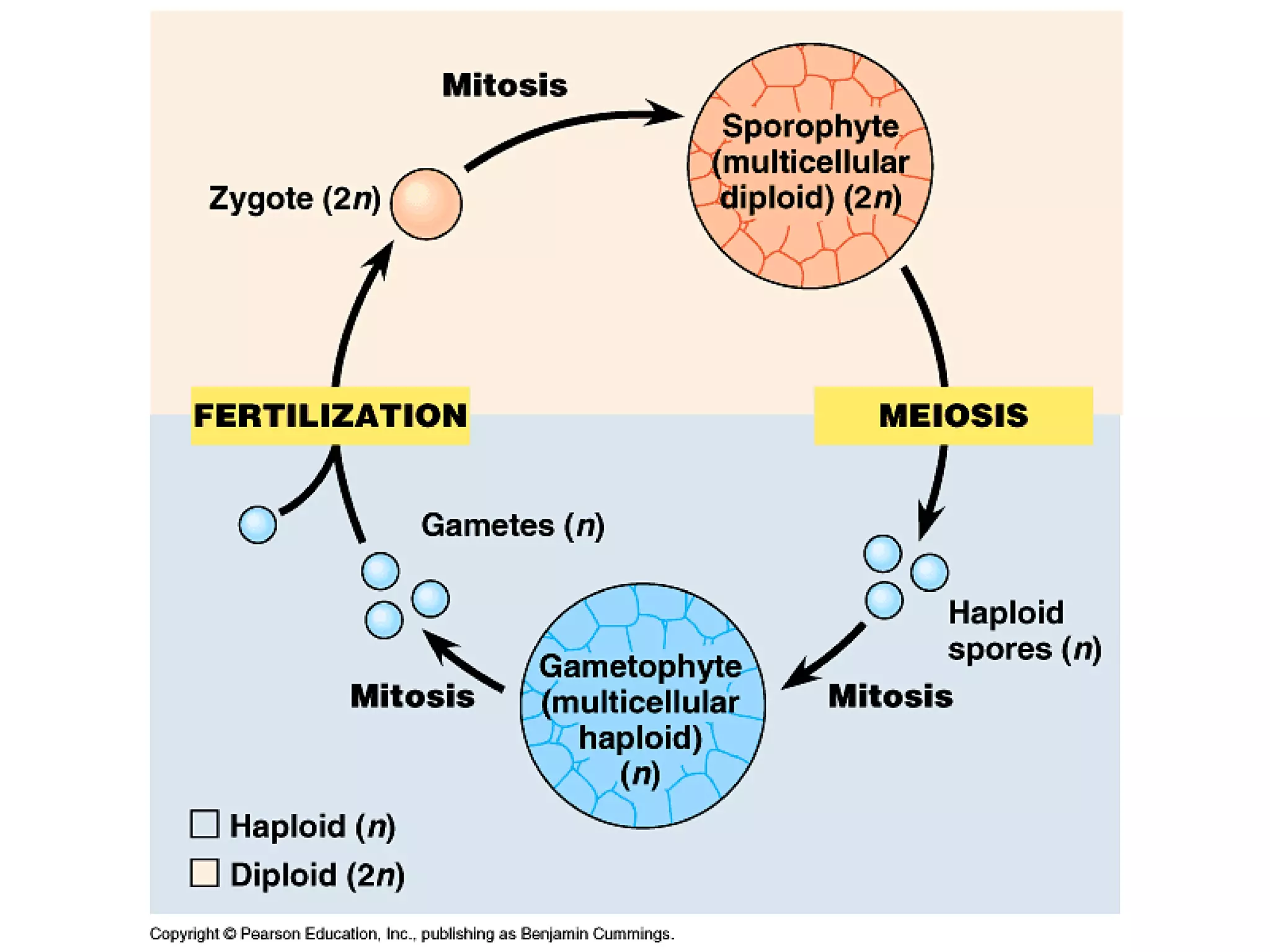
The document describes the life cycles of plants, including bryophytes, seedless vascular plants, gymnosperms, and angiosperms. It explains that plants alternate between a diploid sporophyte generation and a haploid gametophyte generation. Fertilization of eggs by sperm results in a diploid zygote developing into a sporophyte, which produces haploid spores that develop into gametophytes. Seed plants are dominated by the sporophyte generation, with pollen-bearing gametophytes protected within female structures like cones or flowers.
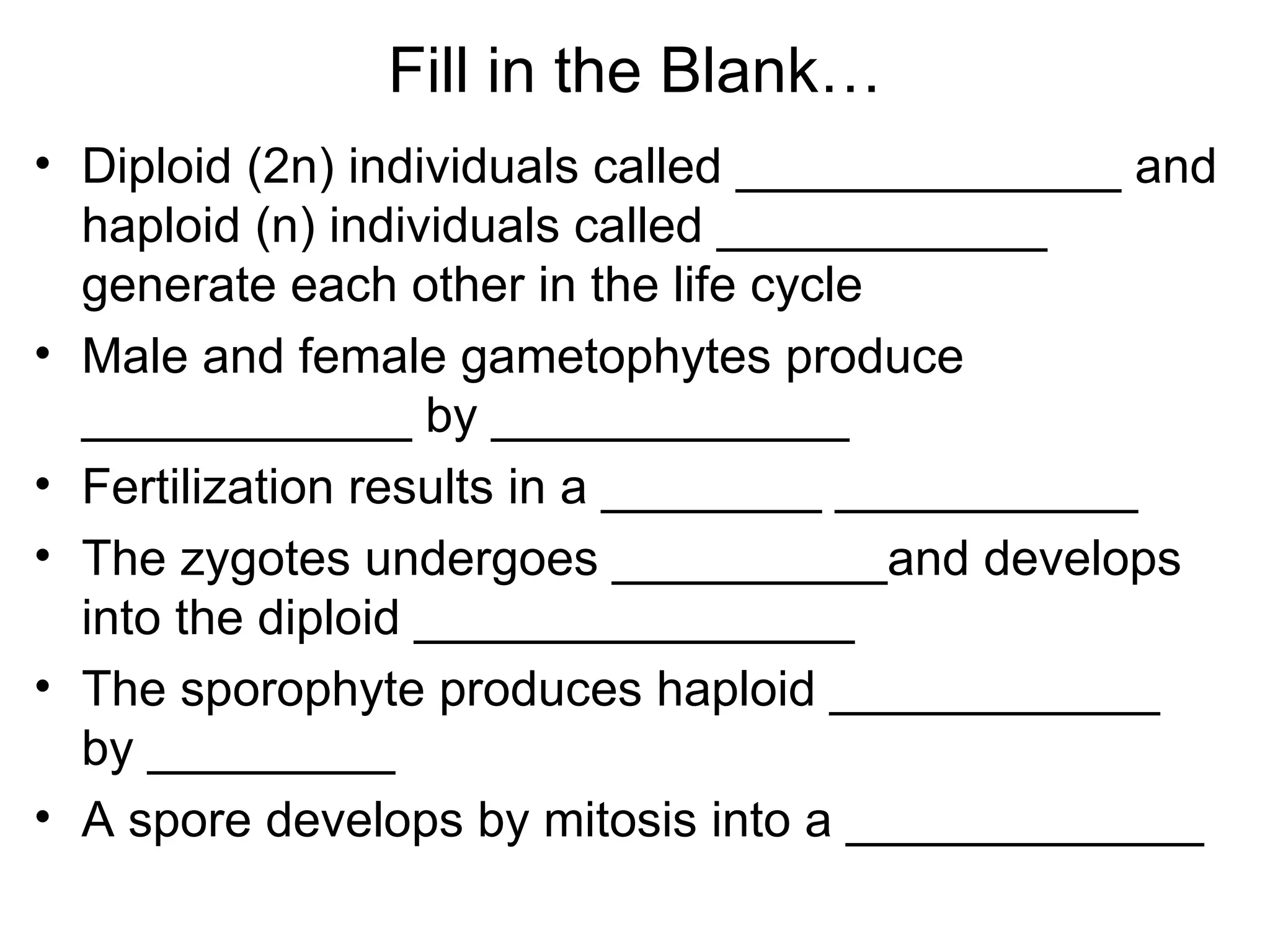
Fill in theBlank…
• Diploid (2n) individuals called ______________ and
haploid (n) individuals called ____________
generate each other in the life cycle
• Male and female gametophytes produce
____________ by _____________
• Fertilization results in a ________ ___________
• The zygotes undergoes __________and develops
into the diploid ________________
• The sporophyte produces haploid ____________
by _________
• A spore develops by mitosis into a _____________
3.
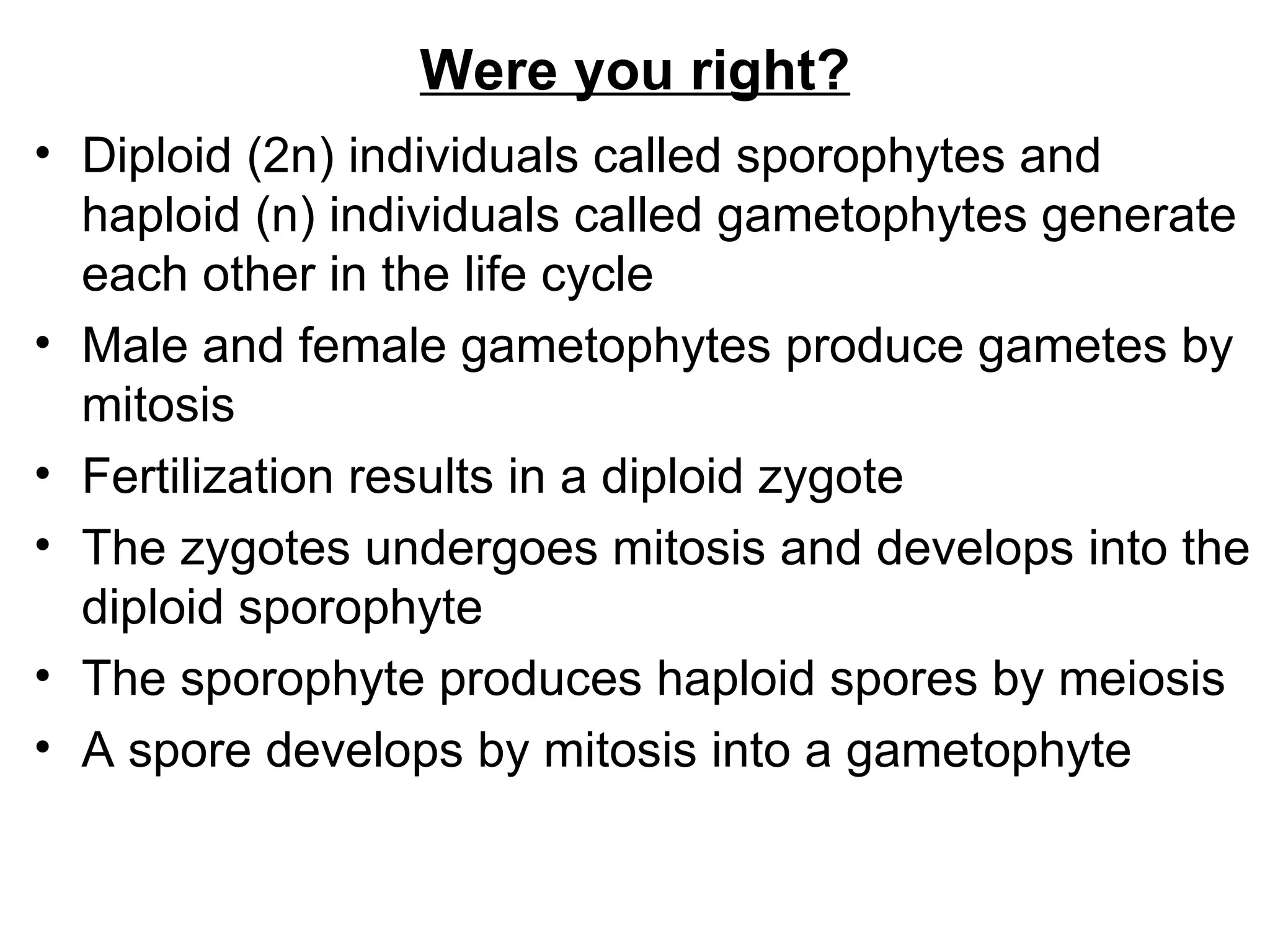
Were you right?
•Diploid (2n) individuals called sporophytes and
haploid (n) individuals called gametophytes generate
each other in the life cycle
• Male and female gametophytes produce gametes by
mitosis
• Fertilization results in a diploid zygote
• The zygotes undergoes mitosis and develops into the
diploid sporophyte
• The sporophyte produces haploid spores by meiosis
• A spore develops by mitosis into a gametophyte
5.
Evolution
• An importantdistinction between bryophytes and seedless
vascular plants is a gametophyte-dominated life cycle for
bryophytes and a sporophyte-dominant life cycle for
seedless vascular plants.
• Continuing that trend, the gametophytes of seed plants are
even more reduced than those of seedless vascular plants
• In seeds plants, the delicate female gametophyte and young
embryos are protected from many environmental stresses
because they are retained within the moist sporangia of the
parental sporophyte.
• The gametophytes of seed plants obtain nutrients from their
parents, while those of seedless vascular plants are free-
living and fend for themselves.
6.
Mosses
• Most mosseswe see are gametophytes
• After fertilization, zygote remains in the gametangium
• There it divides by mitosis, and develops into a
sporophyte
– Each sporophyte remains attached to a gametophyte
• Meiosis occurs in the sporangia at the tips of the
sporophyte stalks
• Haploid spores resulting from meiosis are released
• Spores undergo mitosis and develop into
gametophytes
• http://www.sumanasinc.com/webcontent/animations/con
7.
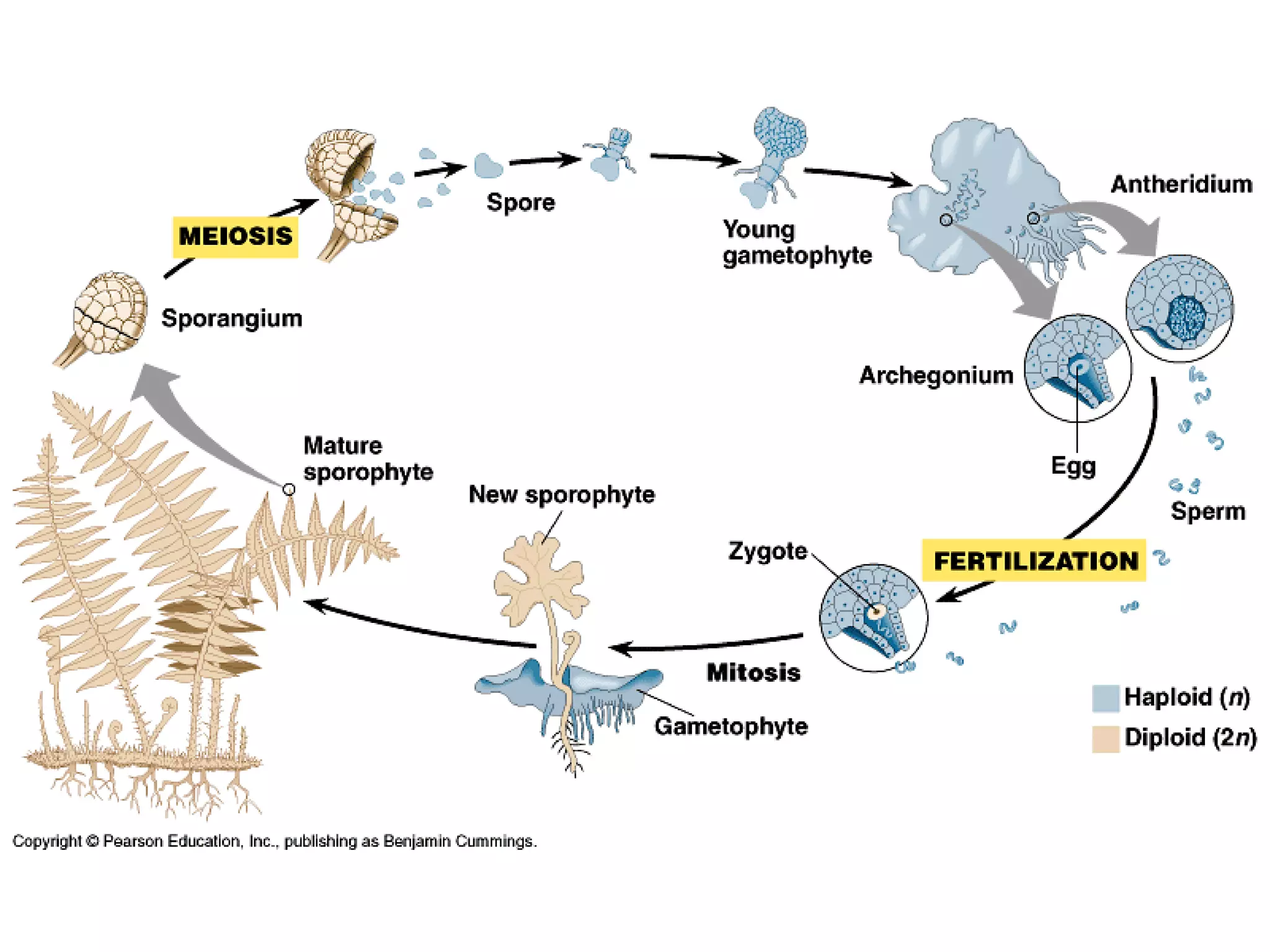
Ferns
• Dominant sporophytegeneration
• Fern gametophytes have distinctive heartlike shape
and are small
• After fertilization, the zygote remains on the
gametophyte where it develops into the sporophyte
• Cells in sporangia undergo meiosis, producing
haploid spores
• Spores develop into gametophytes by mitosis
9.
Seed Plants
• About95% of all plants, including all seed plants,
have a dominant sporophyte generation in their life
cycle
• The evolution of pollen, produced by the
sporophyte, was a key step in the adaptation of
seed plants to dry land
10.
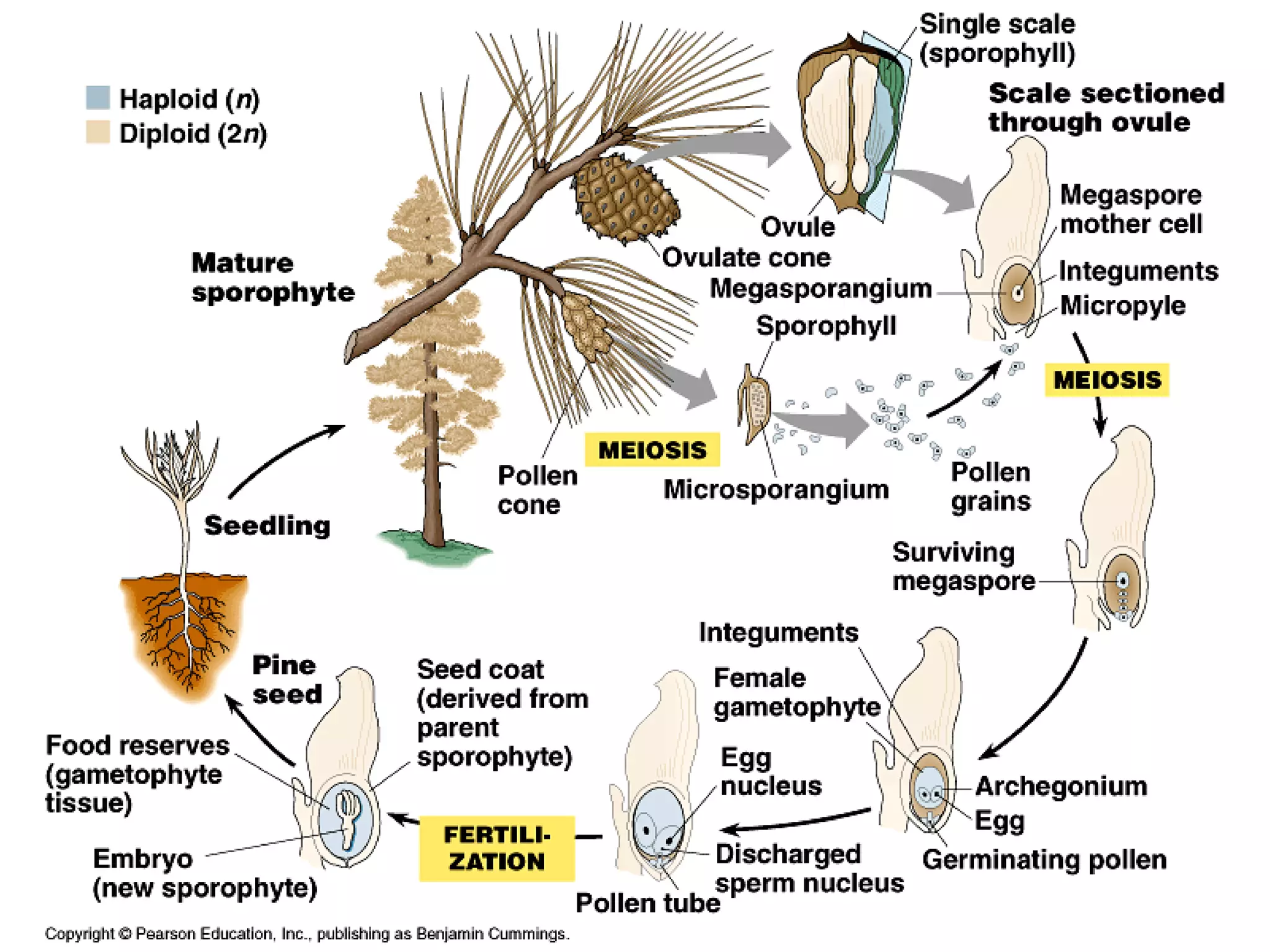
Gymnosperms
• A pinetree is a sporophyte
• The gametophyte generation consists of
microscopic stages that grow inside the trees cones
• Cones hold all of a conifer tree’s reproductive
structures:
– Diploid sporangia- produce haploid spores by meiosis
– Haploid female and male gametophytes
– Gametes
– Zygotes
• A pine tree bears two types of cones
11.
Cones
• Female conehas many hard, radiating scales, each
bearing a pair of ovules; ovule starts out as a
sporangium
• Male cones are generally much smaller, soft, and
short-lived
– Each scale on a male cone produces many sporangia, each
of which makes numerous spores
• Male gametophytes, or pollen grains, develop from the
spores
• When male cones are mature, the scales open and
release a cloud of pollen
12.
Pollination
• Pollination occurswhen a pollen grain lands on
and enters an ovule
• After pollination, meiosis occurs in the ovule, and a
haploid spore cell begins developing into the
female gametophyte
• A tiny tube grow out of the pollen grain and
eventually a sperm into the egg
– Fertilization does not occur until more than a year after
pollination
13.
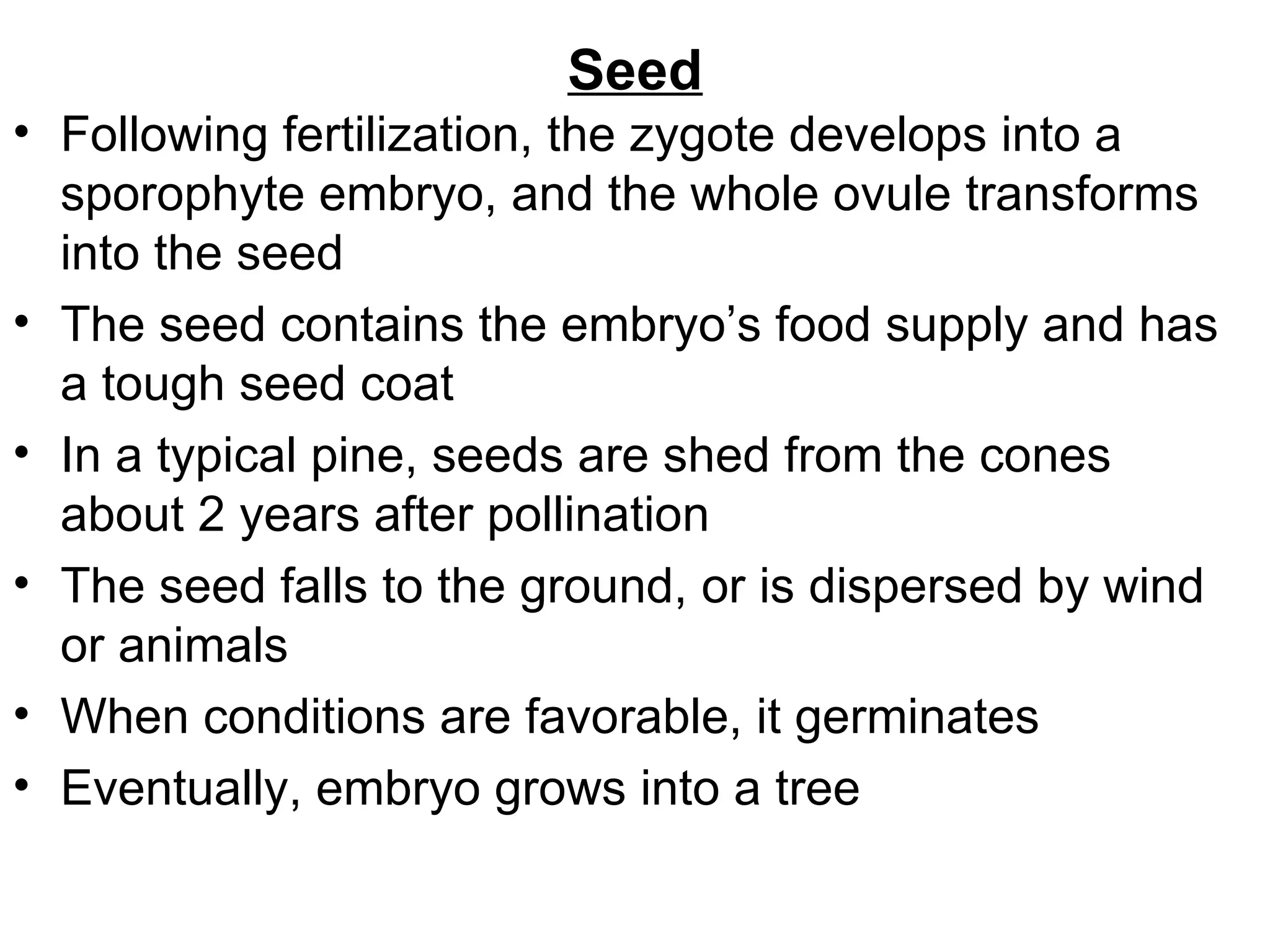
Seed
• Following fertilization,the zygote develops into a
sporophyte embryo, and the whole ovule transforms
into the seed
• The seed contains the embryo’s food supply and has
a tough seed coat
• In a typical pine, seeds are shed from the cones
about 2 years after pollination
• The seed falls to the ground, or is dispersed by wind
or animals
• When conditions are favorable, it germinates
• Eventually, embryo grows into a tree
15.
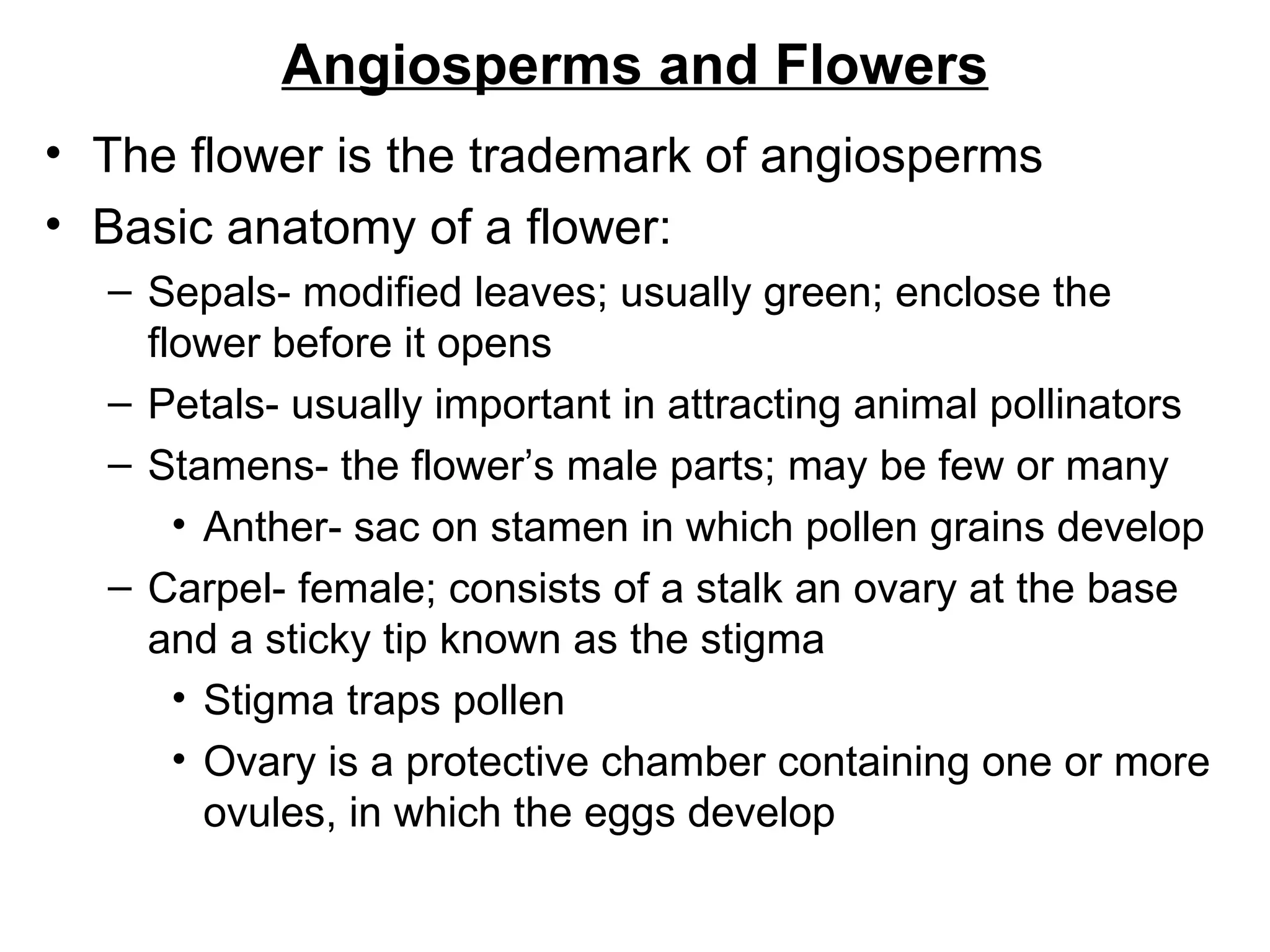
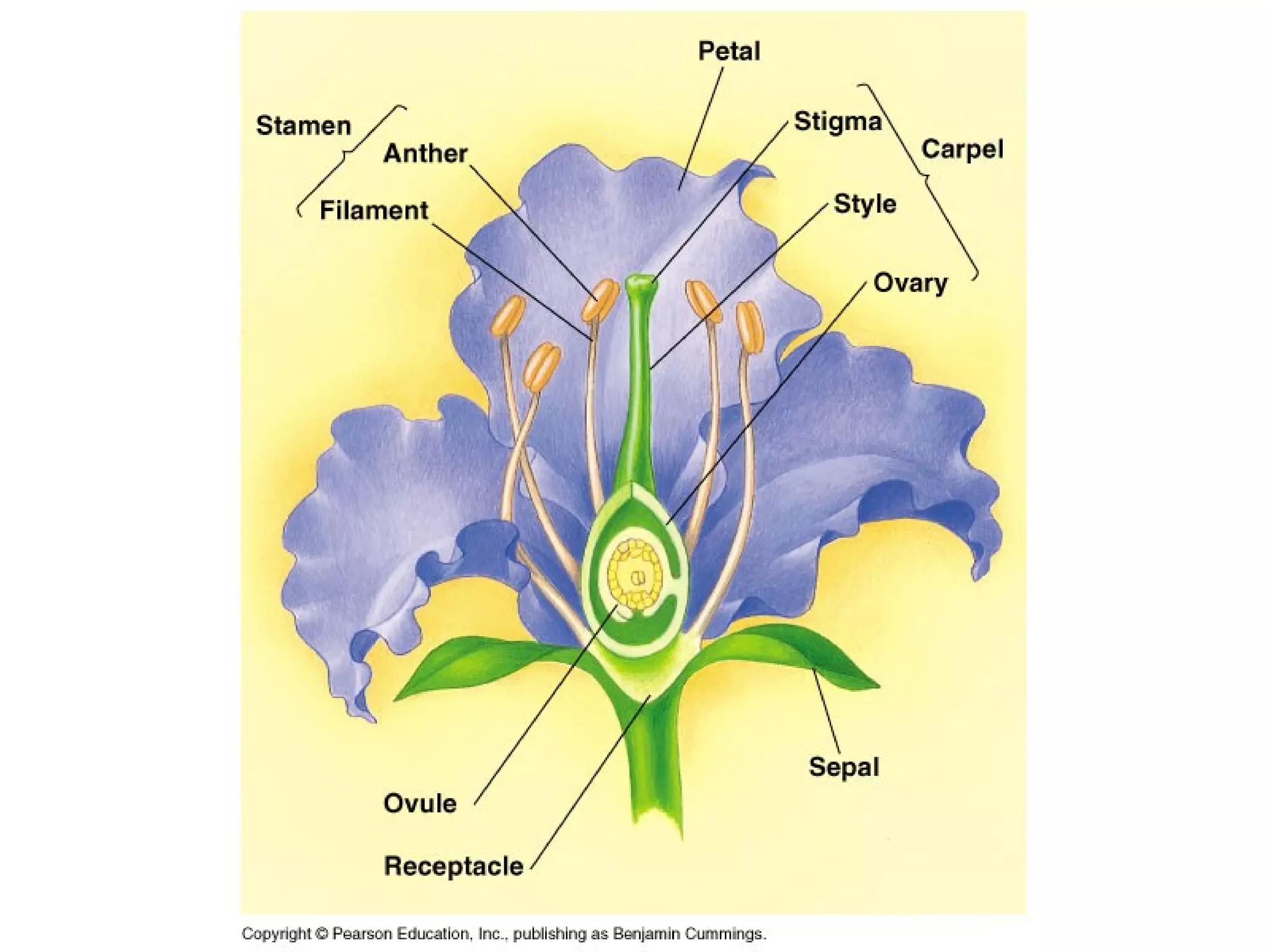
Angiosperms and Flowers
•The flower is the trademark of angiosperms
• Basic anatomy of a flower:
– Sepals- modified leaves; usually green; enclose the
flower before it opens
– Petals- usually important in attracting animal pollinators
– Stamens- the flower’s male parts; may be few or many
• Anther- sac on stamen in which pollen grains develop
– Carpel- female; consists of a stalk an ovary at the base
and a sticky tip known as the stigma
• Stigma traps pollen
• Ovary is a protective chamber containing one or more
ovules, in which the eggs develop
17.
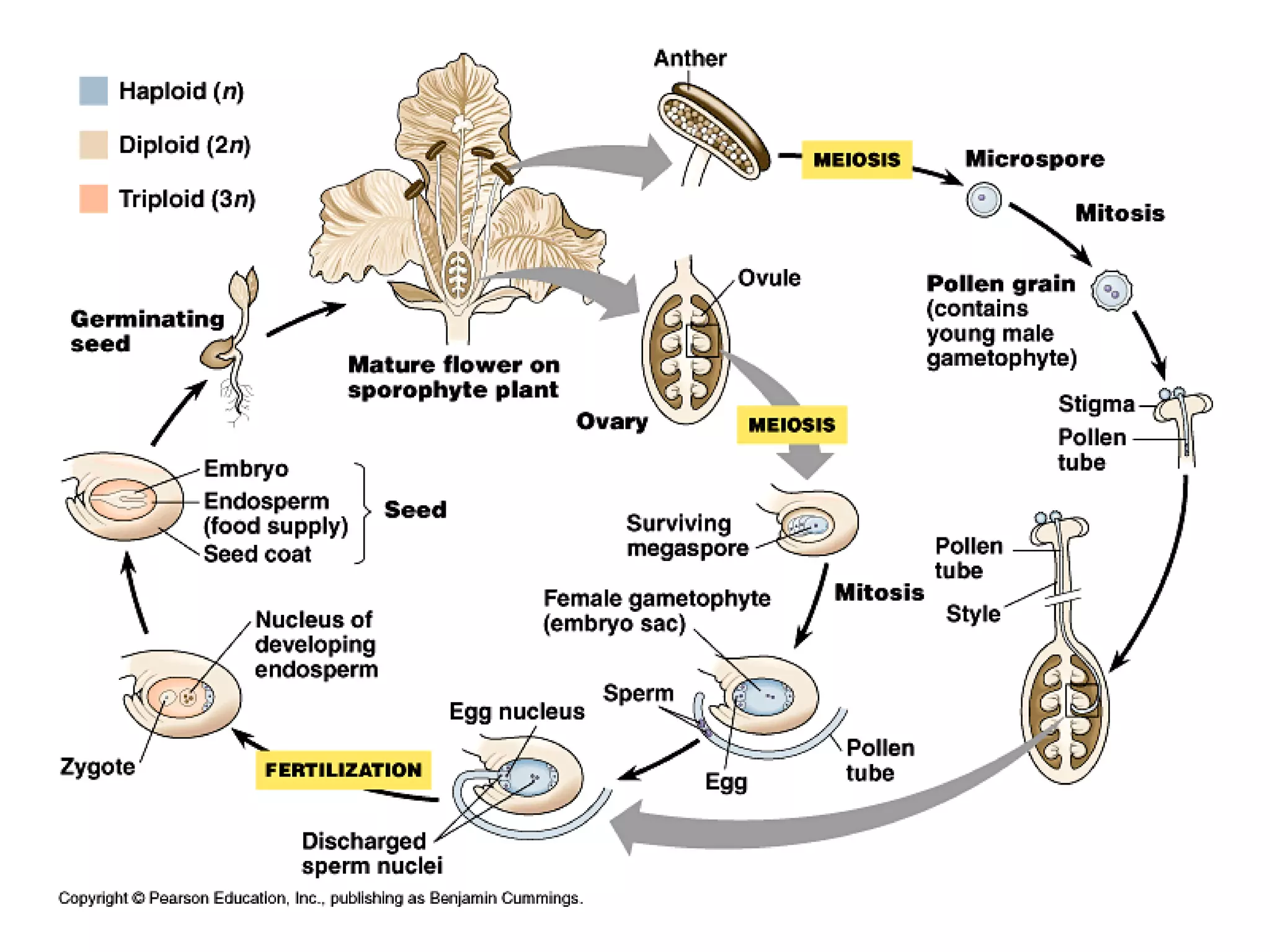
• Plant wesee is sporophyte and tiny gametophyte
lives on it
• An angiosperm has its gametophytes in its flowers
and its seeds packaged inside fruits
• Meiosis occurring in the anthers of the flower leads
to the male gametophytes, or pollen grains
• Meiosis in the ovules leads to the female
gametophytes, each of which produces an egg
18.
• Pollination occurswhen a pollen grain, carried by
the wind or an animal, lands on the stigma
• A tube grows from the pollen grain to an egg, and a
sperm ferilizes the egg creating a zygote
• A seed develops from each ovule
• As the seeds develop, the ovary’s wall thickens,
forming the fruit that enclose the seeds
• The seed germinates and the embryo grows into a
mature sporophyte
• http://www.sumanasinc.com/webcontent/animations/co


![Vibe Coding vs. Spec-Driven Development [Free Meetup]](https://cdn.slidesharecdn.com/ss_thumbnails/vibecodingvsspecdrivendevelopment-251209105622-43f455e7-thumbnail.jpg?width=640&height=640&fit=bounds)


