Use of ICT to teach/improve the speaking of English Dr Paula Hodgson
Intended learning outcomes Develop skills in designing English  speaking  tasks for  blended  learning through the use of ICT; Develop a  global perspective  when connected using ICT, particularly  identifying appropriate learning opportunities to practise  speaking English with native and non-native speakers ; Develop  critical thinking  and  reflective thinking  skills when discussing and debating innovative practices with technology integration for language learning and teaching.
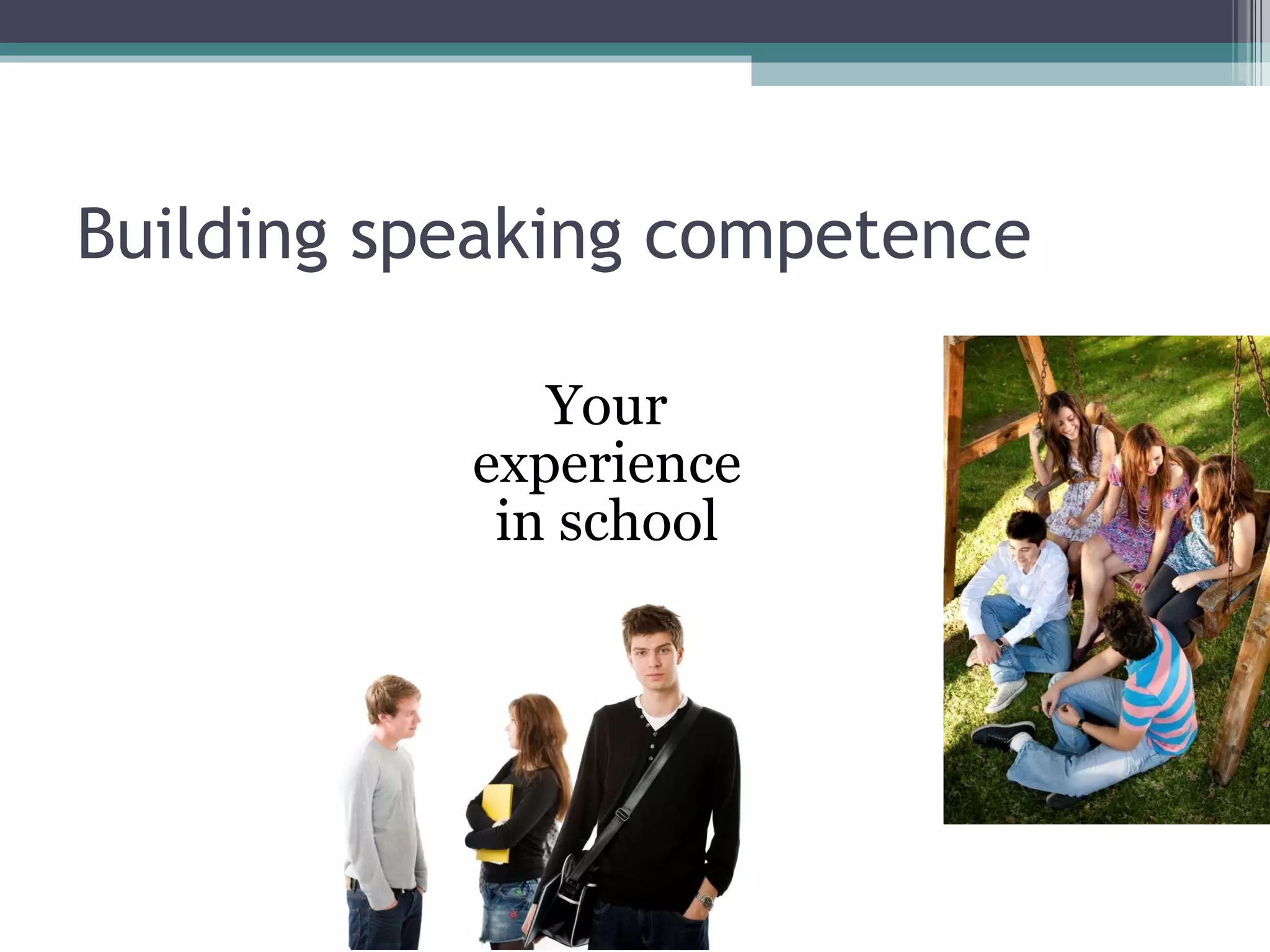
Building speaking competence Your experience in school
L2 English speaking Communicating with L1 & L2 speakers  Chat Conversation Discussion/debate Formal speech Use appropriate register (formal or informal) in conversations* Use appropriate interaction skills and conversational strategies ( English Language Curriculum and Assessment Guide for secondary 4 ─ 6, 2007)
Effective oral communication Accuracy : the skill of using pronunciation (which covers speech sounds, stress, rhythm and intonation), grammar and vocabulary correctly to communicate ideas and express  feelings; Fluency : the skill of linking what one says together and producing it at a reasonably  “normal” speed; Appropriateness : the skill of using the right sort of language (e.g. formal or informal  language) to suit particular situations; Cohesion : the skill of producing spoken utterances which “hang together”  grammatically; Coherence : the skill of producing spoken utterances that “hang together” semantically  and logically; and Interaction strategies , such as seeking further information, asking for clarification, negotiating meaning, and taking turns appropriately at relevant points in an oral  interaction. ( English Language Curriculum and Assessment Guide for Secondary 4 ─ 6, 2007)
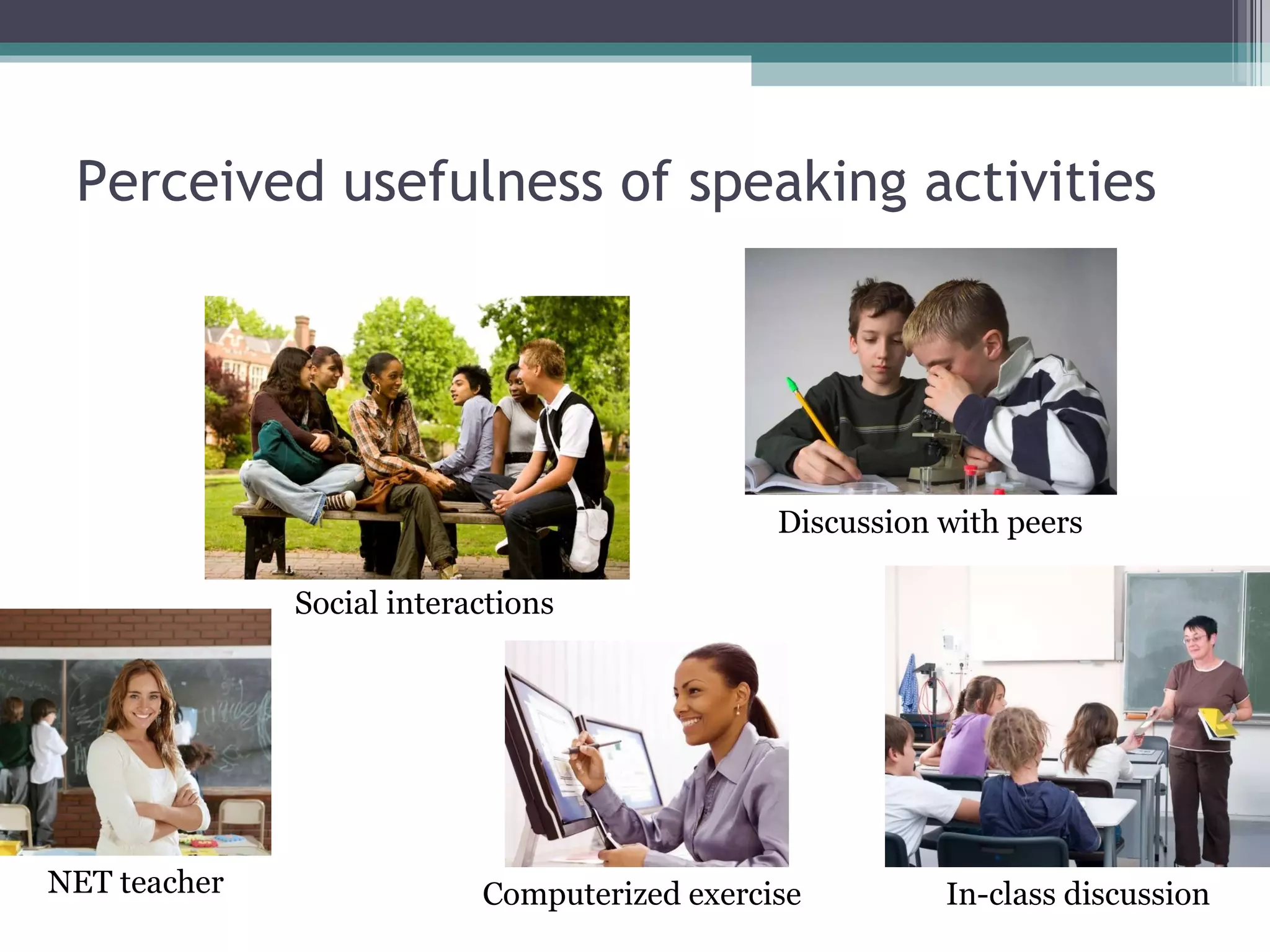
Perceived usefulness of speaking activities NET teacher Discussion with peers In-class discussion Social interactions Computerized exercise
Developing/improving L2 English speaking competence Authentic approach Doing projects/conducting research with English oral activities, e.g. conducting interviews, reporting findings Having activities with non-local students Creative approach Performing in an English drama Composing lyrics and participating in English singing activities Running a campus radio programme  Functional approach Making a debate Having a group discussion in English Doing role play in a scenario-based learning context Reflective approach Reporting on, reflecting on or reviewing events/activities Logging oral journals
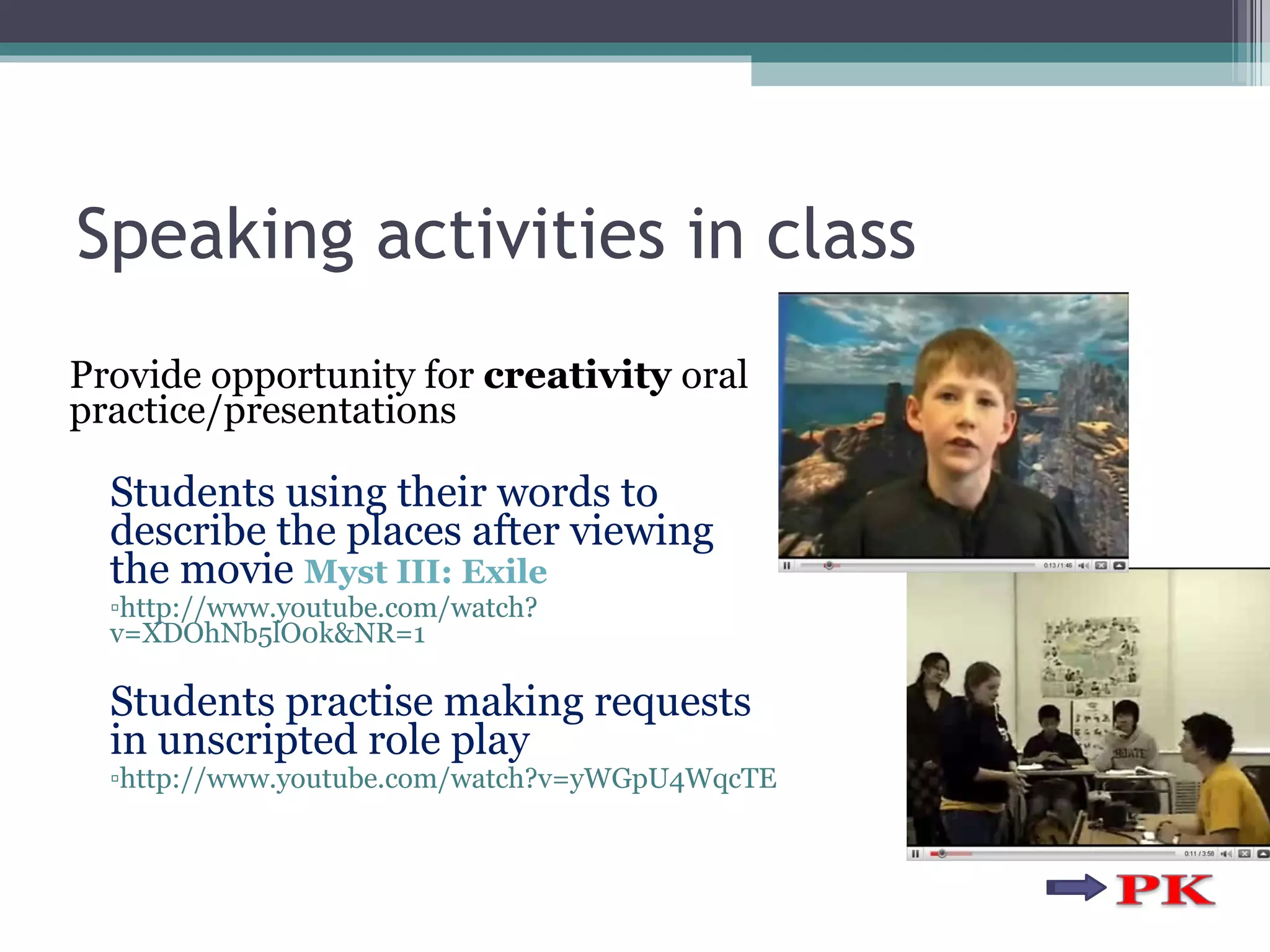
Speaking activities in class Provide opportunity for  creativity  oral practice/presentations Students using their words to describe the places after viewing the movie  Myst III: Exile  http://www.youtube.com/watch?v=XDOhNb5lO0k&NR=1 Students practise making requests in unscripted role play  http://www.youtube.com/watch?v=yWGpU4WqcTE
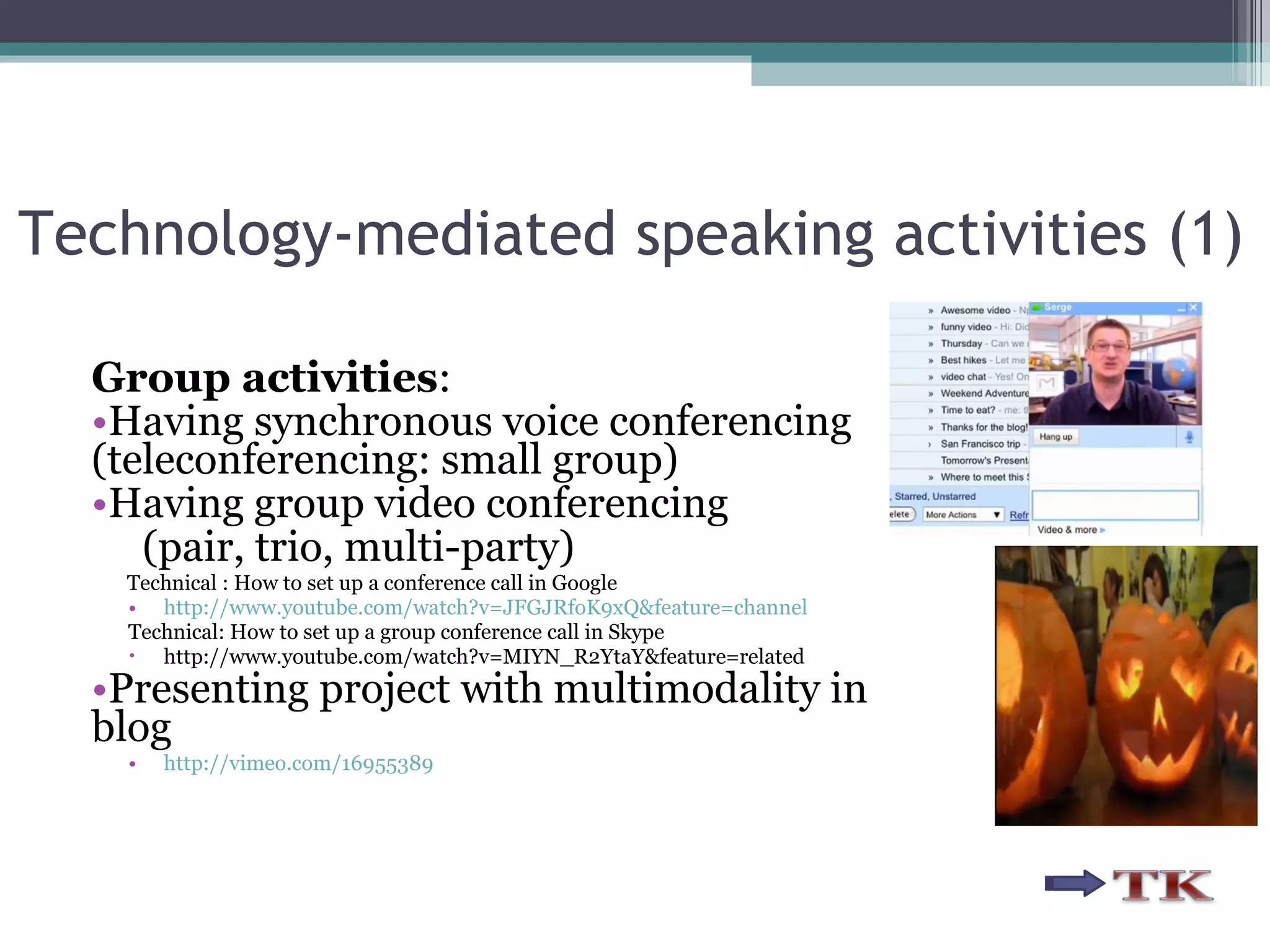
Technology-mediated speaking activities (1) Group activities : Having synchronous voice conferencing (teleconferencing: small group) Having group video conferencing  (pair, trio, multi-party) Technical : How to set up a conference call in Google http://www.youtube.com/watch?v=JFGJRfoK9xQ&feature=channel Technical: How to set up a group conference call in Skype http://www.youtube.com/watch?v=MIYN_R2YtaY&feature=related Presenting project with multimodality in blog http://vimeo.com/16955389
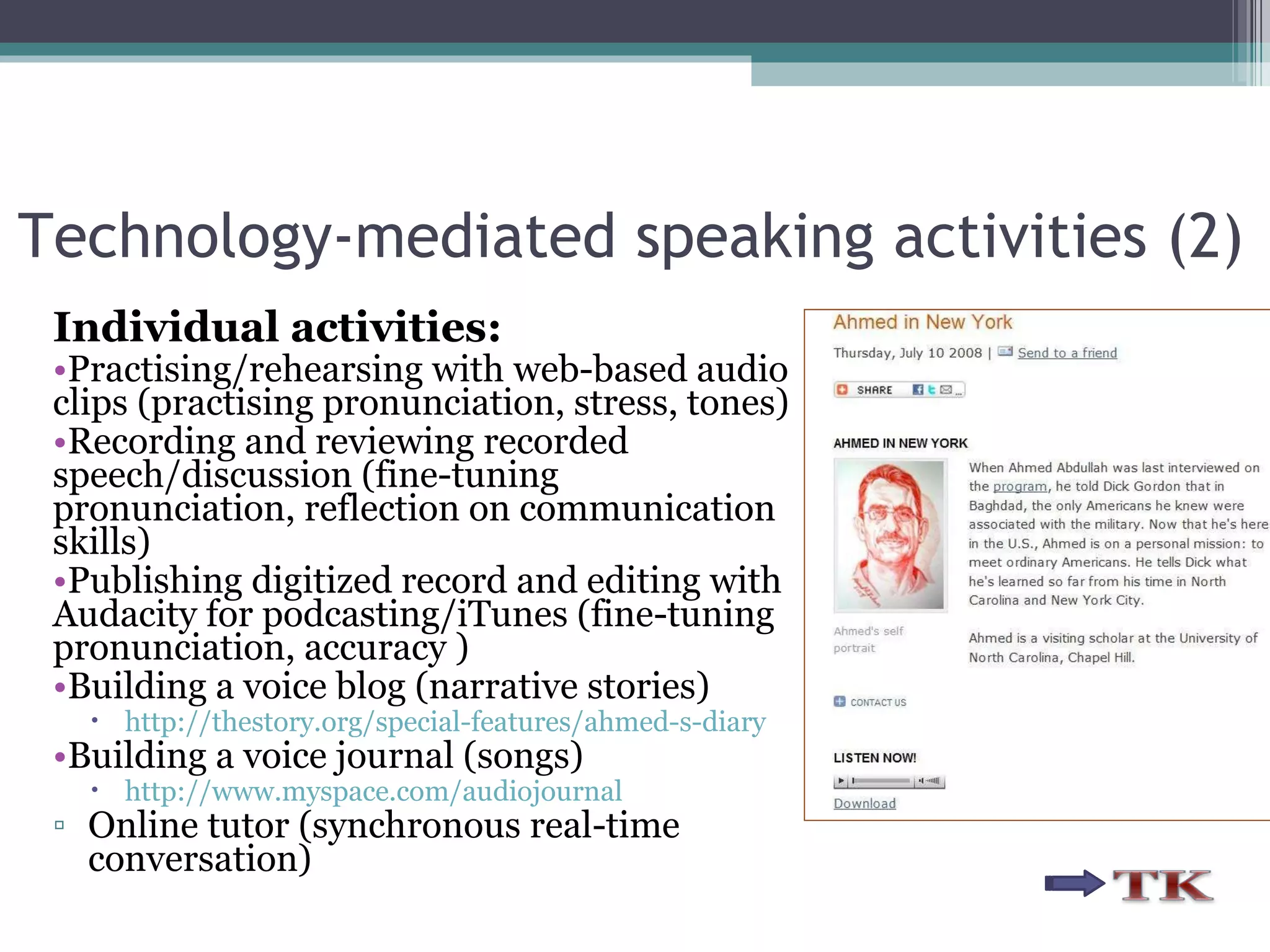
Individual activities: Practising/rehearsing with web-based audio clips (practising pronunciation, stress, tones) Recording and reviewing recorded speech/discussion (fine-tuning pronunciation, reflection on communication skills) Publishing digitized record and editing with Audacity for podcasting/iTunes (fine-tuning pronunciation, accuracy ) Building a voice blog (narrative stories) http://thestory.org/special-features/ahmed-s-diary Building a voice journal (songs) http://www.myspace.com/audiojournal Online tutor (synchronous real-time conversation) Technology-mediated speaking activities (2)
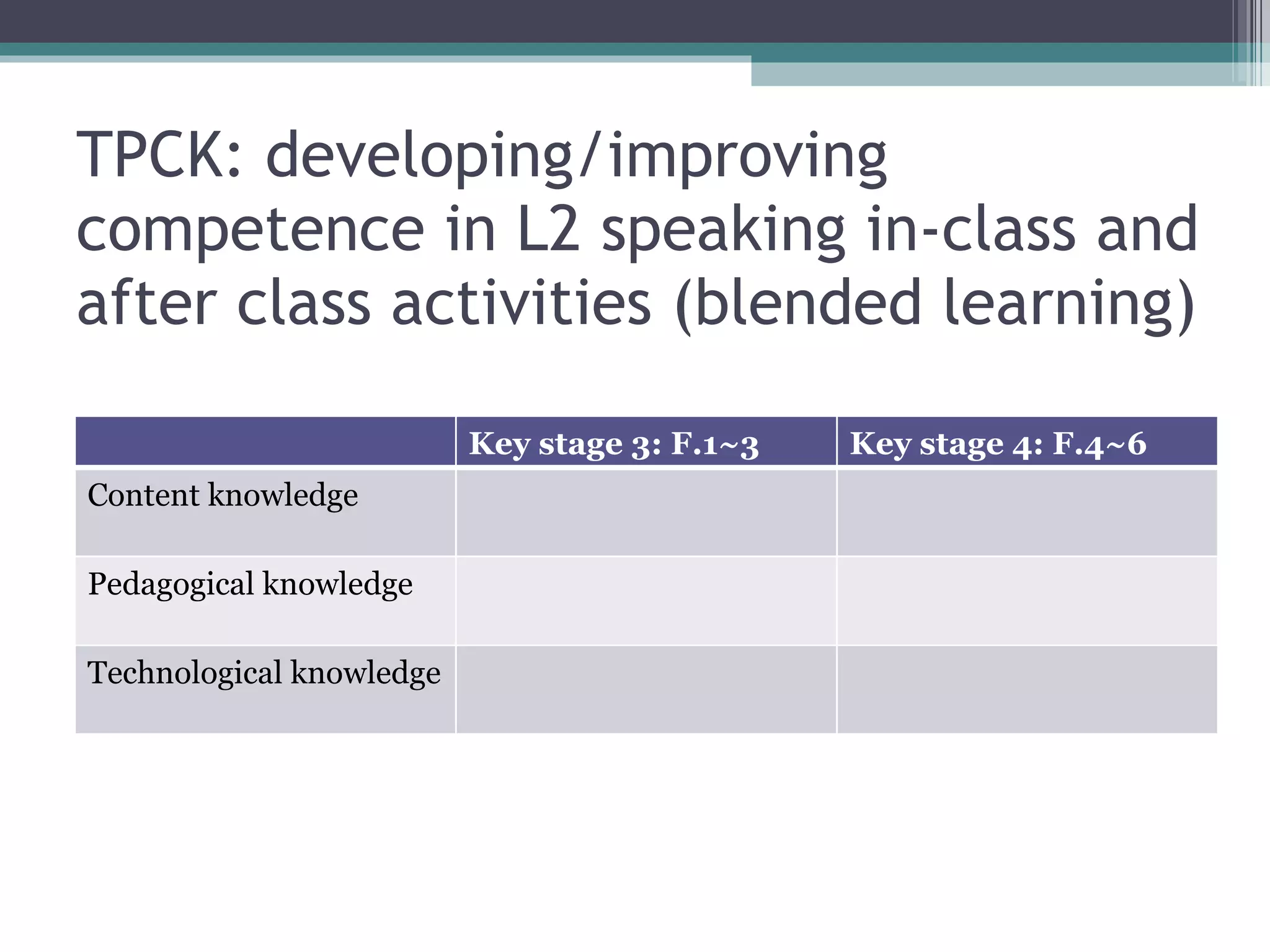
TPCK: developing/improving competence in L2 speaking in-class and after class activities (blended learning) Key stage 3: F.1~3 Key stage 4: F.4~6 Content knowledge Pedagogical knowledge Technological knowledge
References Ducate, L. and Lomicka, L. (2009). Podcasting: an effective tool for honing language students’ pronunciation.  Language Learning & Technology , 13(3), 66-86.  Kukulska-Hulme, A. and Shield, L. (2007). An overview of mobile assisted language learning: can mobile devices support collaborative practice in speaking and listening?  ReCALL , 19(7), 1-20 . Lee, L. (2010). Fostering reflective writing and interactive exchange through blogging in an advanced language course.  ReCALL, 22 (2), 212-27. Sun, Y. (2009). Voice blog: an exploratory study of language learning.  Language Learning & Technology ,   13(2), 88–103 .
Web reference English Language Curriculum and Assessment Guide (Secondary 4 - 6) 334.edb.hkedcity.net/doc/eng/eng_lang_final.pdf Gmail voice and video chat  http://www.youtube.com/watch?v=JFGJRfoK9xQ&feature=channel How to set up a conference call in Google http://www.youtube.com/watch?v=JFGJRfoK9xQ&feature=channel How to set up a group conference call in Skype http://www.youtube.com/watch?v=MIYN_R2YtaY&feature=related VuRoom: Enable multiparty video conferencing from Skype (15-day free trial) http://www.youtube.com/watch?v=h95jTcZJ5LI

TPCK: Use of ICT to teach/improve the speaking of English

  • 1.
    Use of ICTto teach/improve the speaking of English Dr Paula Hodgson
  • 2.
    Intended learning outcomesDevelop skills in designing English speaking tasks for blended learning through the use of ICT; Develop a global perspective when connected using ICT, particularly identifying appropriate learning opportunities to practise speaking English with native and non-native speakers ; Develop critical thinking and reflective thinking skills when discussing and debating innovative practices with technology integration for language learning and teaching.
  • 3.
    Building speaking competenceYour experience in school
  • 4.
    L2 English speakingCommunicating with L1 & L2 speakers Chat Conversation Discussion/debate Formal speech Use appropriate register (formal or informal) in conversations* Use appropriate interaction skills and conversational strategies ( English Language Curriculum and Assessment Guide for secondary 4 ─ 6, 2007)
  • 5.
    Effective oral communicationAccuracy : the skill of using pronunciation (which covers speech sounds, stress, rhythm and intonation), grammar and vocabulary correctly to communicate ideas and express feelings; Fluency : the skill of linking what one says together and producing it at a reasonably “normal” speed; Appropriateness : the skill of using the right sort of language (e.g. formal or informal language) to suit particular situations; Cohesion : the skill of producing spoken utterances which “hang together” grammatically; Coherence : the skill of producing spoken utterances that “hang together” semantically and logically; and Interaction strategies , such as seeking further information, asking for clarification, negotiating meaning, and taking turns appropriately at relevant points in an oral interaction. ( English Language Curriculum and Assessment Guide for Secondary 4 ─ 6, 2007)
  • 6.
    Perceived usefulness ofspeaking activities NET teacher Discussion with peers In-class discussion Social interactions Computerized exercise
  • 7.
    Developing/improving L2 Englishspeaking competence Authentic approach Doing projects/conducting research with English oral activities, e.g. conducting interviews, reporting findings Having activities with non-local students Creative approach Performing in an English drama Composing lyrics and participating in English singing activities Running a campus radio programme Functional approach Making a debate Having a group discussion in English Doing role play in a scenario-based learning context Reflective approach Reporting on, reflecting on or reviewing events/activities Logging oral journals
  • 8.
    Speaking activities inclass Provide opportunity for creativity oral practice/presentations Students using their words to describe the places after viewing the movie Myst III: Exile http://www.youtube.com/watch?v=XDOhNb5lO0k&NR=1 Students practise making requests in unscripted role play http://www.youtube.com/watch?v=yWGpU4WqcTE
  • 9.
    Technology-mediated speaking activities(1) Group activities : Having synchronous voice conferencing (teleconferencing: small group) Having group video conferencing (pair, trio, multi-party) Technical : How to set up a conference call in Google http://www.youtube.com/watch?v=JFGJRfoK9xQ&feature=channel Technical: How to set up a group conference call in Skype http://www.youtube.com/watch?v=MIYN_R2YtaY&feature=related Presenting project with multimodality in blog http://vimeo.com/16955389
  • 10.
    Individual activities: Practising/rehearsingwith web-based audio clips (practising pronunciation, stress, tones) Recording and reviewing recorded speech/discussion (fine-tuning pronunciation, reflection on communication skills) Publishing digitized record and editing with Audacity for podcasting/iTunes (fine-tuning pronunciation, accuracy ) Building a voice blog (narrative stories) http://thestory.org/special-features/ahmed-s-diary Building a voice journal (songs) http://www.myspace.com/audiojournal Online tutor (synchronous real-time conversation) Technology-mediated speaking activities (2)
  • 11.
    TPCK: developing/improving competencein L2 speaking in-class and after class activities (blended learning) Key stage 3: F.1~3 Key stage 4: F.4~6 Content knowledge Pedagogical knowledge Technological knowledge
  • 12.
    References Ducate, L.and Lomicka, L. (2009). Podcasting: an effective tool for honing language students’ pronunciation. Language Learning & Technology , 13(3), 66-86. Kukulska-Hulme, A. and Shield, L. (2007). An overview of mobile assisted language learning: can mobile devices support collaborative practice in speaking and listening? ReCALL , 19(7), 1-20 . Lee, L. (2010). Fostering reflective writing and interactive exchange through blogging in an advanced language course. ReCALL, 22 (2), 212-27. Sun, Y. (2009). Voice blog: an exploratory study of language learning. Language Learning & Technology , 13(2), 88–103 .
  • 13.
    Web reference EnglishLanguage Curriculum and Assessment Guide (Secondary 4 - 6) 334.edb.hkedcity.net/doc/eng/eng_lang_final.pdf Gmail voice and video chat http://www.youtube.com/watch?v=JFGJRfoK9xQ&feature=channel How to set up a conference call in Google http://www.youtube.com/watch?v=JFGJRfoK9xQ&feature=channel How to set up a group conference call in Skype http://www.youtube.com/watch?v=MIYN_R2YtaY&feature=related VuRoom: Enable multiparty video conferencing from Skype (15-day free trial) http://www.youtube.com/watch?v=h95jTcZJ5LI