Survey of invertebrate animals of the coral reef 2007
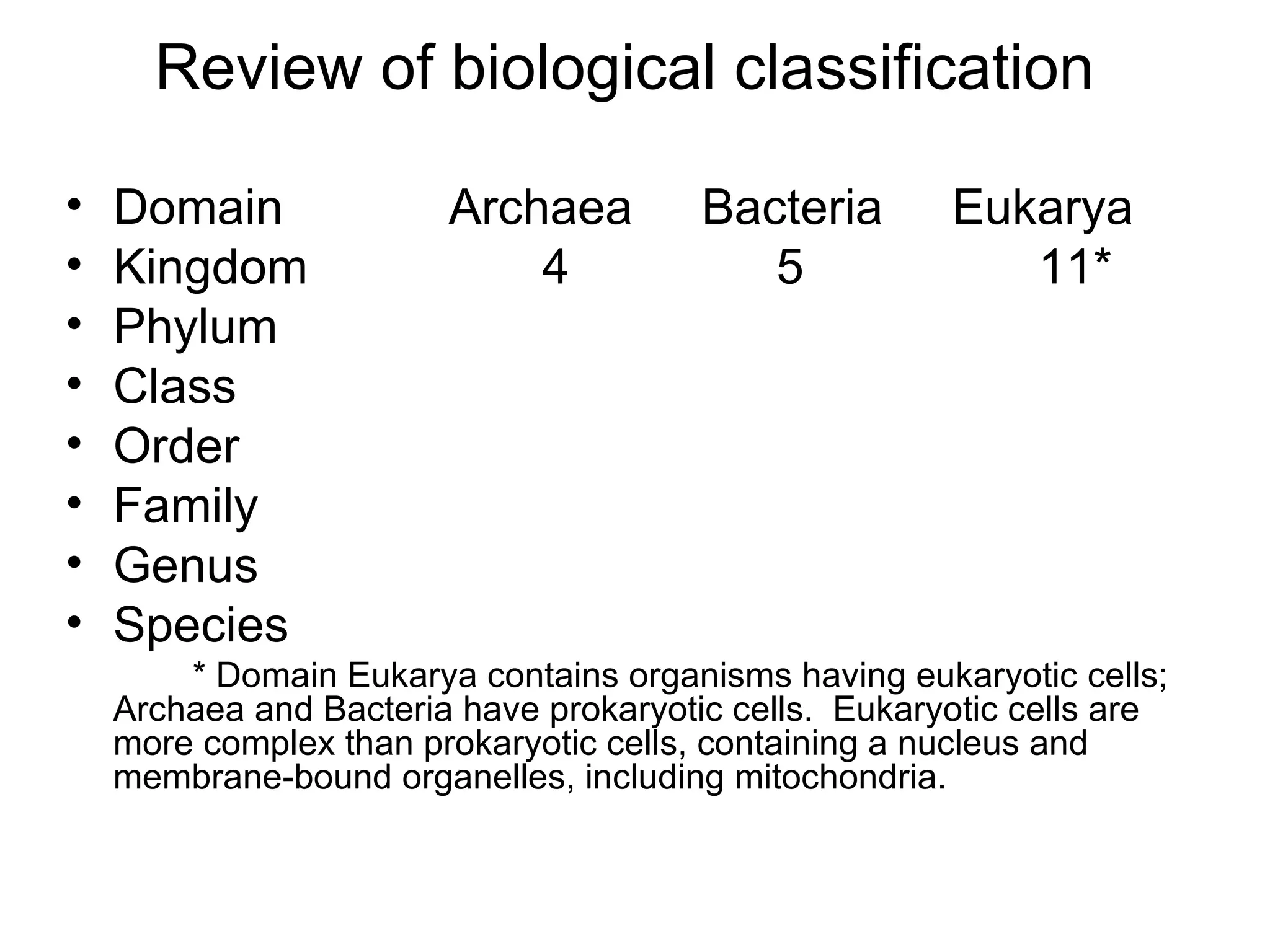
Review of biological classification Domain  Archaea  Bacteria  Eukarya Kingdom  4  5  11* Phylum Class  Order Family Genus  Species * Domain Eukarya contains organisms having eukaryotic cells; Archaea and Bacteria have prokaryotic cells.  Eukaryotic cells are more complex than prokaryotic cells, containing a nucleus and membrane-bound organelles, including mitochondria.
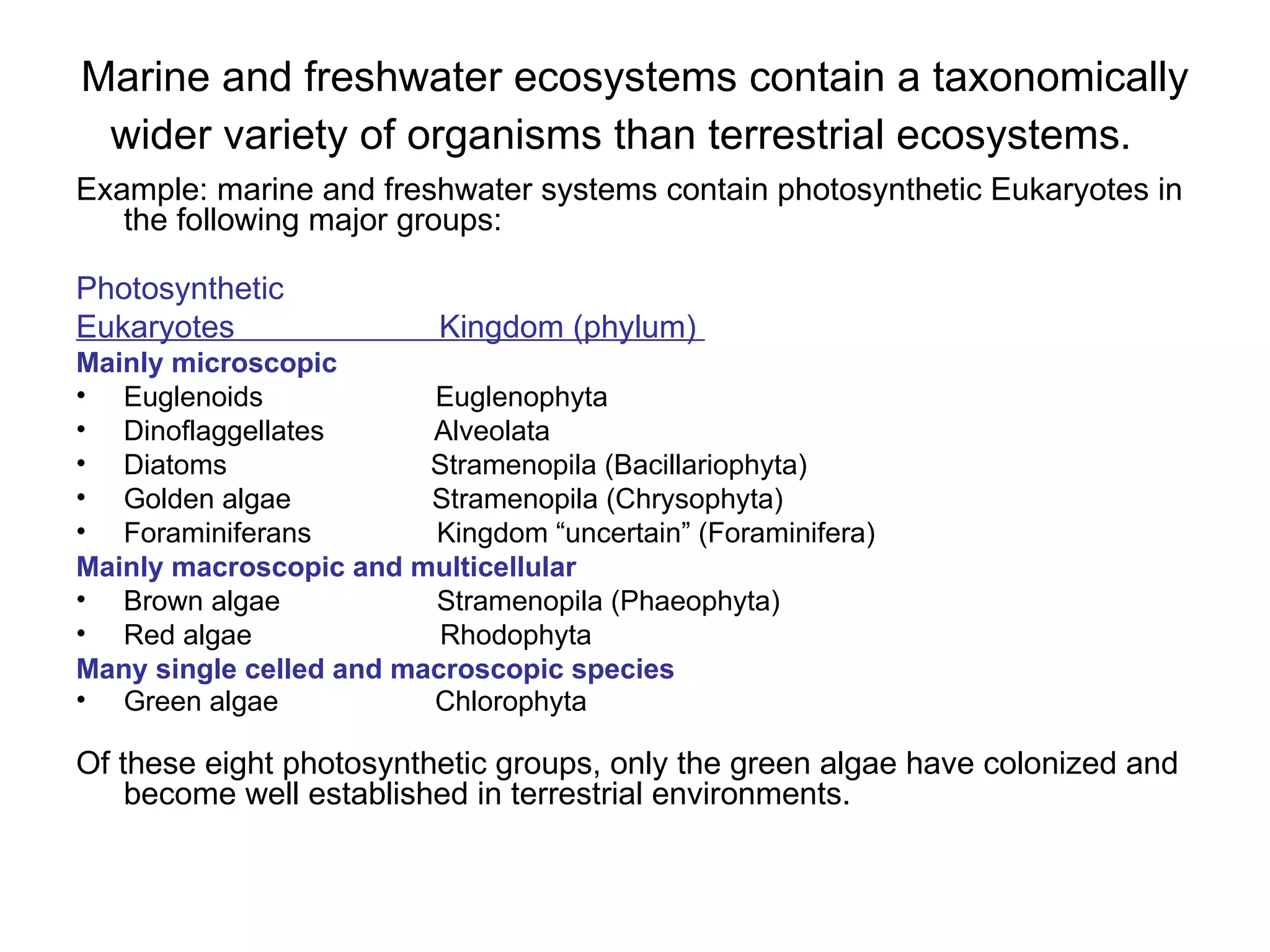
Marine and freshwater ecosystems contain a taxonomically wider variety of organisms than terrestrial ecosystems.   Example: marine and freshwater systems contain photosynthetic Eukaryotes in the following major groups: Photosynthetic  Eukaryotes  Kingdom (phylum)  Mainly microscopic   Euglenoids  Euglenophyta Dinoflaggellates  Alveolata Diatoms  Stramenopila (Bacillariophyta)  Golden algae  Stramenopila (Chrysophyta) Foraminiferans  Kingdom “uncertain” (Foraminifera) Mainly macroscopic and multicellular Brown algae  Stramenopila (Phaeophyta) Red algae  Rhodophyta  Many single celled and macroscopic species Green algae  Chlorophyta   Of these eight photosynthetic groups, only the green algae have colonized and become well established in terrestrial environments.
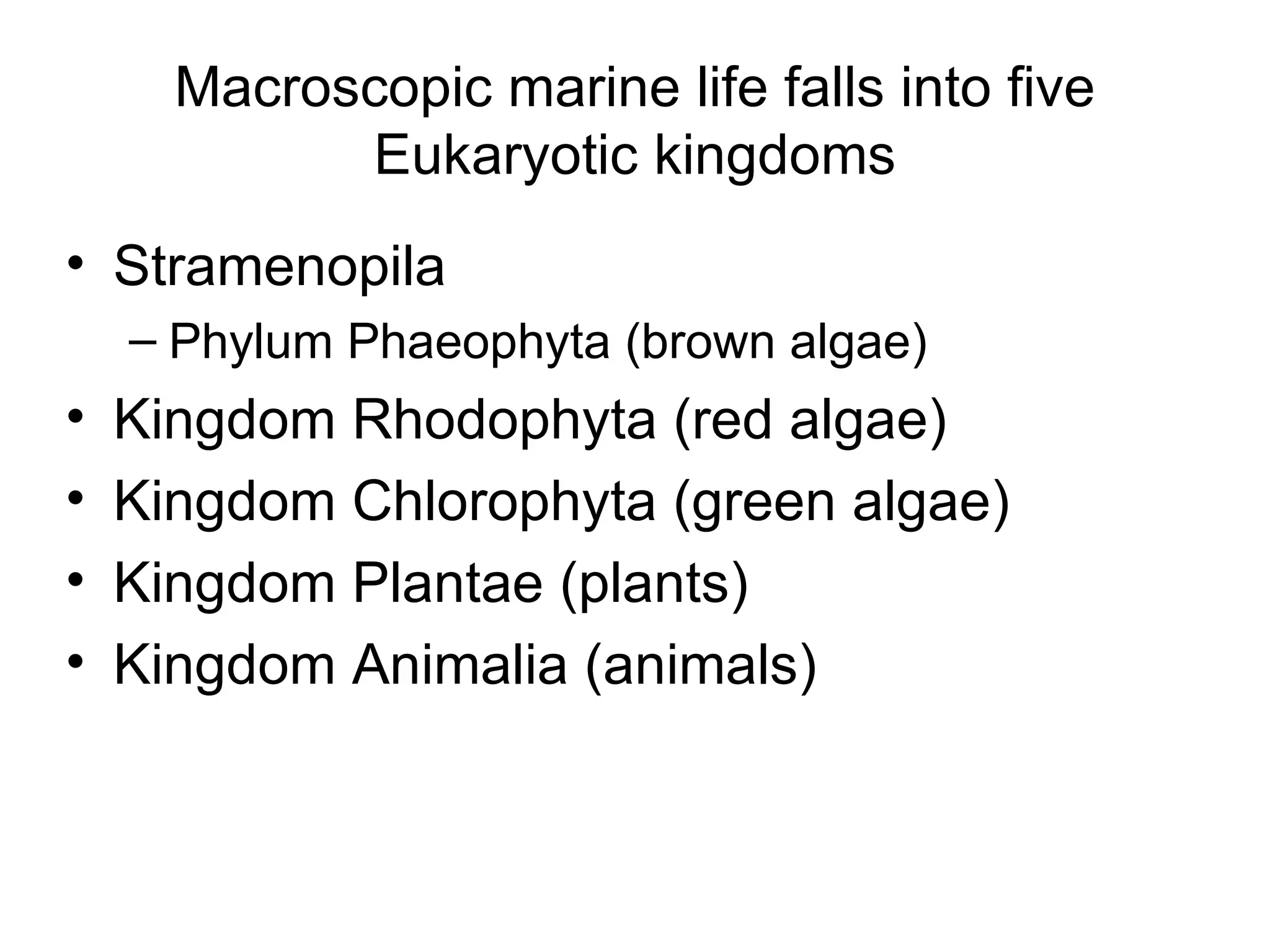
Macroscopic marine life falls into five Eukaryotic kingdoms Stramenopila Phylum Phaeophyta (brown algae) Kingdom Rhodophyta (red algae) Kingdom Chlorophyta (green algae) Kingdom Plantae (plants) Kingdom Animalia (animals)
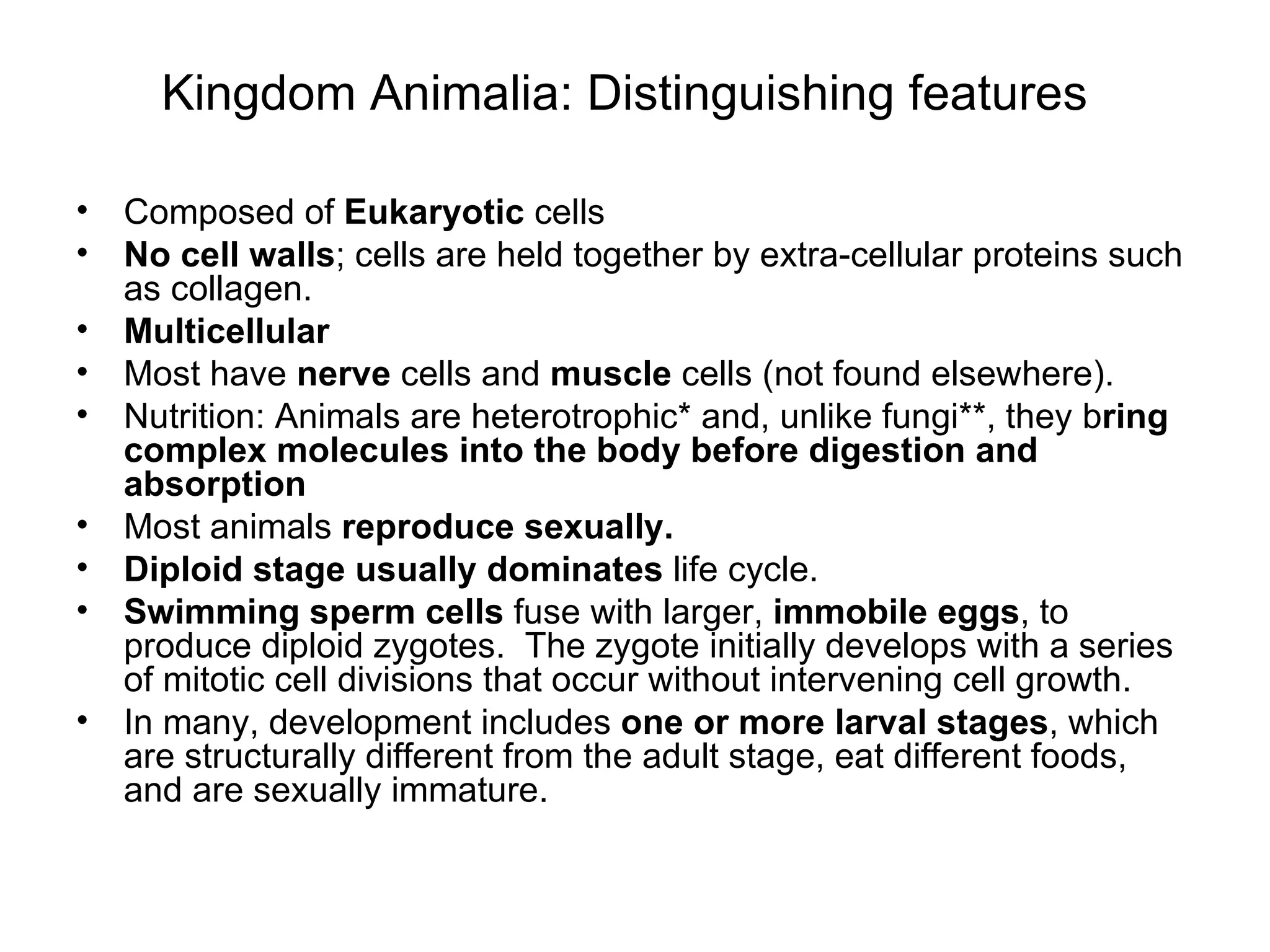
Kingdom Animalia: Distinguishing features Composed of  Eukaryotic  cells  No cell walls ; cells are held together by extra-cellular proteins such as collagen. Multicellular Most have  nerve  cells and  muscle  cells (not found elsewhere). Nutrition: Animals are heterotrophic* and, unlike fungi**, they b ring complex molecules into the body before digestion and absorption Most animals  reproduce sexually. Diploid stage usually dominates  life cycle. Swimming sperm cells  fuse with larger,  immobile eggs , to produce diploid zygotes.  The zygote initially develops with a series of mitotic cell divisions that occur without intervening cell growth.  In many, development includes  one or more larval stages , which are structurally different from the adult stage, eat different foods, and are sexually immature.
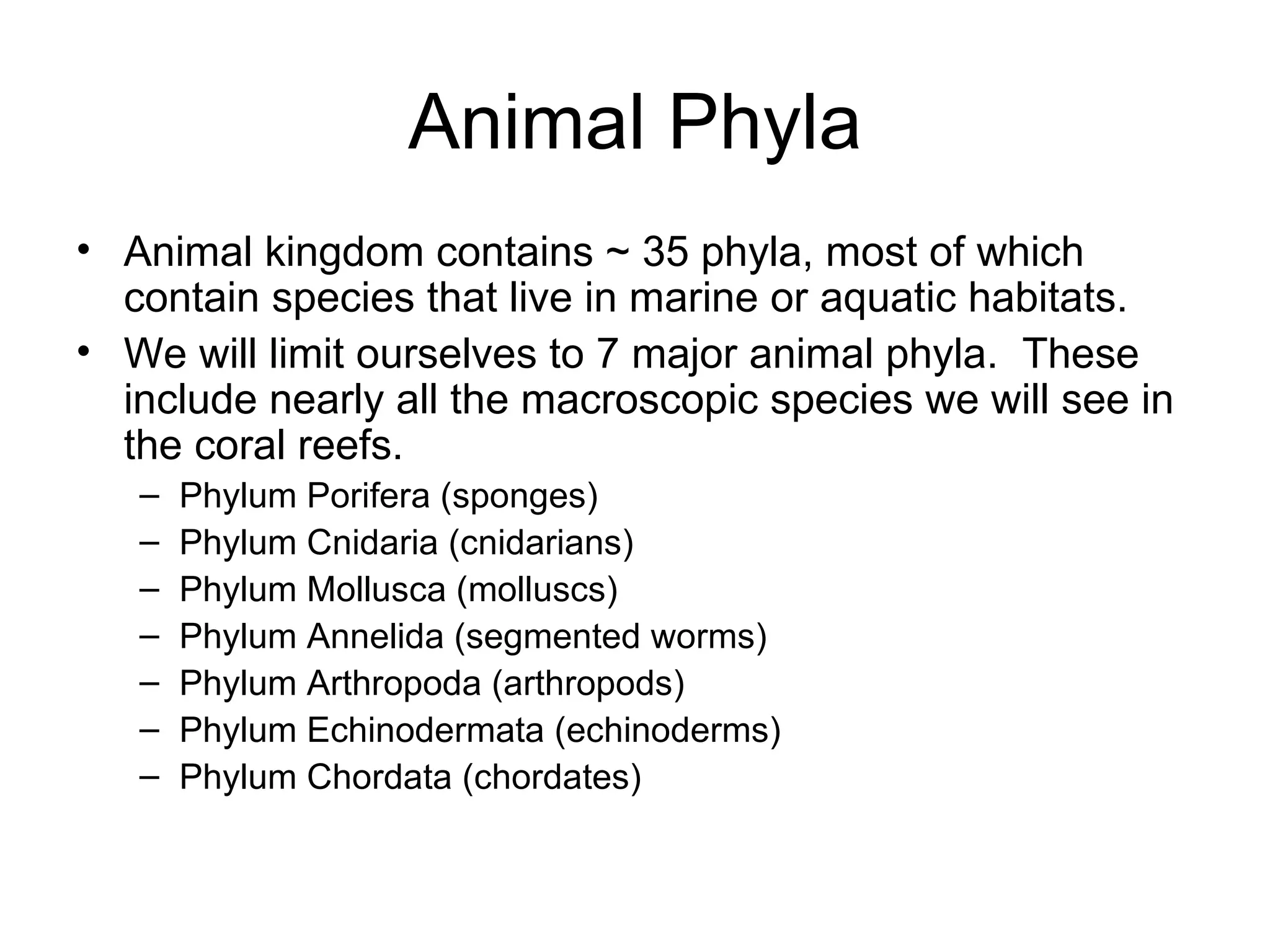
Animal Phyla Animal kingdom contains ~ 35 phyla, most of which contain species that live in marine or aquatic habitats. We will limit ourselves to 7 major animal phyla.  These include nearly all the macroscopic species we will see in the coral reefs. Phylum Porifera (sponges) Phylum Cnidaria (cnidarians) Phylum Mollusca (molluscs) Phylum Annelida (segmented worms) Phylum Arthropoda (arthropods) Phylum Echinodermata (echinoderms) Phylum Chordata (chordates)
What we expect you to know about coral reef animals By the next class, two weeks from now, you should be able to look at a shell or a picture of a marine animal and recognize the phylum and class to which that animal belongs.  We’ll have a quiz with matching.  Eventually, you will also learn to recognize and name about 10 coral species and 5-10 other common organisms that we encounter in Belize.  These others would include nurse shark, red mangrove tree, fireworm, sea turtle, and some common fishes.  We also hope you will develop an understanding of the major biological and ecological characteristics of each taxon and a good understanding of general ecological concepts related to coral reefs and neighboring ecosystems.
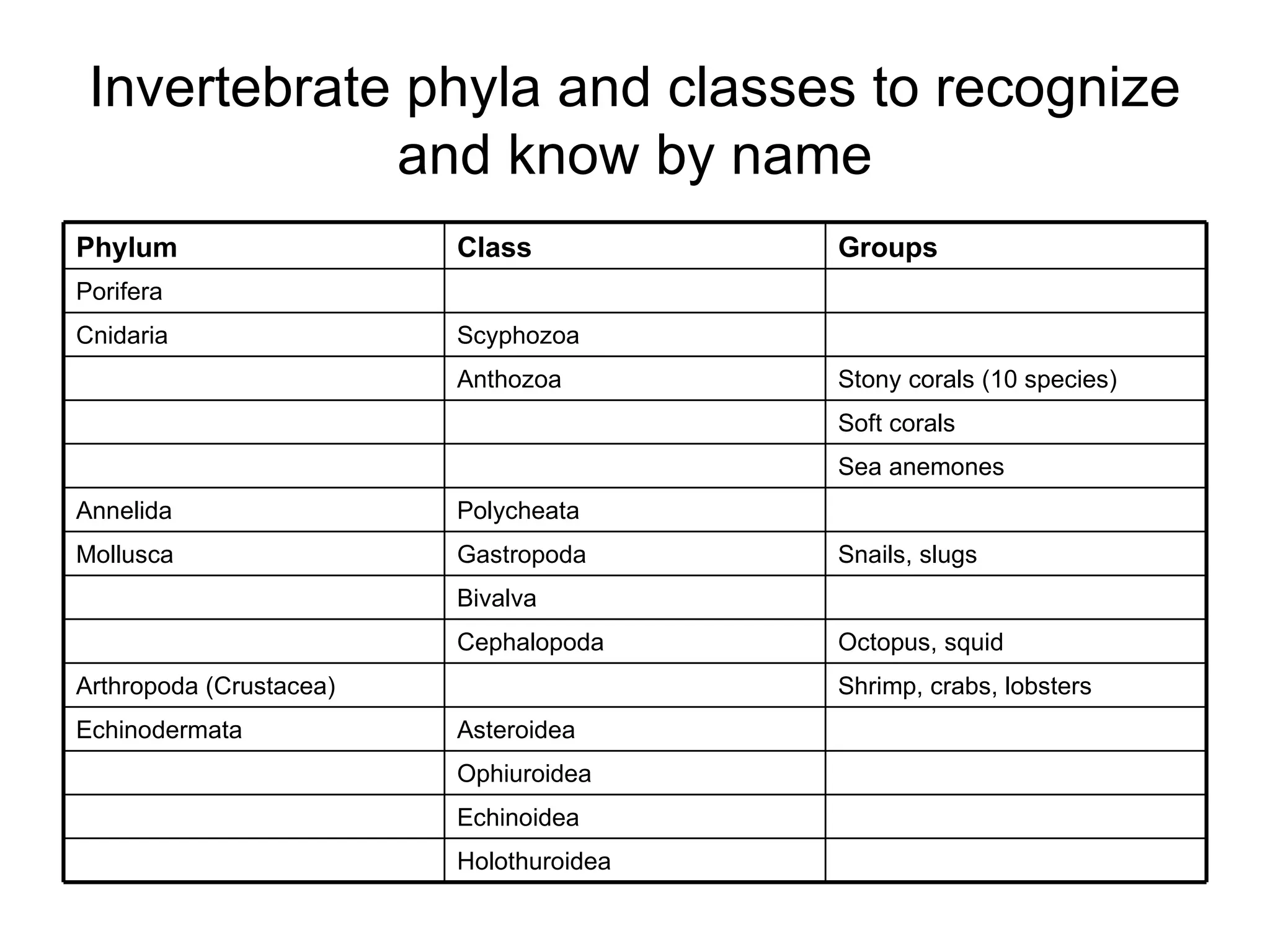
Invertebrate phyla and classes to recognize and know by name Holothuroidea Echinoidea Ophiuroidea Asteroidea Echinodermata Shrimp, crabs, lobsters Arthropoda (Crustacea) Octopus, squid Cephalopoda Bivalva Snails, slugs Gastropoda Mollusca Polycheata Annelida Sea anemones Soft corals Stony corals (10 species) Anthozoa Scyphozoa Cnidaria Porifera Groups Class Phylum
Choice of invertebrate taxa for oral presentations, Dec 2   (Dr. Gross will do the stony corals) Phylum Cnidaria, class Anthozoa, soft corals Phylum Mollusca, class Gastropoda Phylum Mollusca, class Bivalva Phylum Annelida, class Polychaeta Phylum Arthropoda (arthropods), class Crustacea, shrimps Phylum Arthropoda (arthropods), class Crustacea, crabs Phylum Echinodermata, classes Asteroidea, sea stars, Ophiuroidea, brittle stars, Echinoidea, sea urchins, sand dollars, and Holothuroidea, sea cucumbers
Choice of fish groups for oral presentations, Dec 2  Disk and oval-shaped fishes: butterflyfishes, angelfishes, and surgeonfishes  Silvery fishes: jacks, mackerals, needlefishes, barracudas, porgies, mojarras. Fishes with sloping heads and tapered bodies: grunts and snappers Small oval-shaped fishes: damselfishes, hamlets, sea basses Fishes with heavy bodies and large lips: groupers, sea basses, basslets, soapfishes Fishes with pectoral fins and obvious scales: parrotfishes, wrasses, hogfishes, razorfishes. Reddish fish with big eyes: squirrelfishes, bigeyes, cardinalfishes. Small, elongated bottom dwellers: gobies, blennies, jawfishes, dragonets Odd-shaped bottom dwellers: flounders, batfishes, toadfishes, scorpionfishes. Odd-shaped swimmers: puffers, boxfishes, triggerfishes, filefishes, drums, and croakers.  Eels: Morays, conger eels, snake eels Sharks and rays: carpet sharks, hammerhead sharks, pointed-nose sharks, rays, and skates.
Guide for content of 10-minute presentation on Dec 2 How your group of animals is different from other groups, in terms of biology, habitat, appearance, etc.  Major sub-categories (e.g. orders or families) within the group and how these differ from one another; photographs or drawings of typical members of each sub-group; ways to distinguish. Habitats occupied What they feeds on and how they feed Interesting biological facts.  Please hand in a printout of your presentation.  This will count as 20% of your grade in the course.

I Survey Of Reef Invertebrates Introduction

  • 1.
    Survey of invertebrateanimals of the coral reef 2007
  • 2.
    Review of biologicalclassification Domain Archaea Bacteria Eukarya Kingdom 4 5 11* Phylum Class Order Family Genus Species * Domain Eukarya contains organisms having eukaryotic cells; Archaea and Bacteria have prokaryotic cells. Eukaryotic cells are more complex than prokaryotic cells, containing a nucleus and membrane-bound organelles, including mitochondria.
  • 3.
    Marine and freshwaterecosystems contain a taxonomically wider variety of organisms than terrestrial ecosystems. Example: marine and freshwater systems contain photosynthetic Eukaryotes in the following major groups: Photosynthetic Eukaryotes Kingdom (phylum) Mainly microscopic Euglenoids Euglenophyta Dinoflaggellates Alveolata Diatoms Stramenopila (Bacillariophyta) Golden algae Stramenopila (Chrysophyta) Foraminiferans Kingdom “uncertain” (Foraminifera) Mainly macroscopic and multicellular Brown algae Stramenopila (Phaeophyta) Red algae Rhodophyta Many single celled and macroscopic species Green algae Chlorophyta Of these eight photosynthetic groups, only the green algae have colonized and become well established in terrestrial environments.
  • 4.
    Macroscopic marine lifefalls into five Eukaryotic kingdoms Stramenopila Phylum Phaeophyta (brown algae) Kingdom Rhodophyta (red algae) Kingdom Chlorophyta (green algae) Kingdom Plantae (plants) Kingdom Animalia (animals)
  • 5.
    Kingdom Animalia: Distinguishingfeatures Composed of Eukaryotic cells No cell walls ; cells are held together by extra-cellular proteins such as collagen. Multicellular Most have nerve cells and muscle cells (not found elsewhere). Nutrition: Animals are heterotrophic* and, unlike fungi**, they b ring complex molecules into the body before digestion and absorption Most animals reproduce sexually. Diploid stage usually dominates life cycle. Swimming sperm cells fuse with larger, immobile eggs , to produce diploid zygotes. The zygote initially develops with a series of mitotic cell divisions that occur without intervening cell growth. In many, development includes one or more larval stages , which are structurally different from the adult stage, eat different foods, and are sexually immature.
  • 6.
    Animal Phyla Animalkingdom contains ~ 35 phyla, most of which contain species that live in marine or aquatic habitats. We will limit ourselves to 7 major animal phyla. These include nearly all the macroscopic species we will see in the coral reefs. Phylum Porifera (sponges) Phylum Cnidaria (cnidarians) Phylum Mollusca (molluscs) Phylum Annelida (segmented worms) Phylum Arthropoda (arthropods) Phylum Echinodermata (echinoderms) Phylum Chordata (chordates)
  • 7.
    What we expectyou to know about coral reef animals By the next class, two weeks from now, you should be able to look at a shell or a picture of a marine animal and recognize the phylum and class to which that animal belongs. We’ll have a quiz with matching. Eventually, you will also learn to recognize and name about 10 coral species and 5-10 other common organisms that we encounter in Belize. These others would include nurse shark, red mangrove tree, fireworm, sea turtle, and some common fishes. We also hope you will develop an understanding of the major biological and ecological characteristics of each taxon and a good understanding of general ecological concepts related to coral reefs and neighboring ecosystems.
  • 8.
    Invertebrate phyla andclasses to recognize and know by name Holothuroidea Echinoidea Ophiuroidea Asteroidea Echinodermata Shrimp, crabs, lobsters Arthropoda (Crustacea) Octopus, squid Cephalopoda Bivalva Snails, slugs Gastropoda Mollusca Polycheata Annelida Sea anemones Soft corals Stony corals (10 species) Anthozoa Scyphozoa Cnidaria Porifera Groups Class Phylum
  • 9.
    Choice of invertebratetaxa for oral presentations, Dec 2 (Dr. Gross will do the stony corals) Phylum Cnidaria, class Anthozoa, soft corals Phylum Mollusca, class Gastropoda Phylum Mollusca, class Bivalva Phylum Annelida, class Polychaeta Phylum Arthropoda (arthropods), class Crustacea, shrimps Phylum Arthropoda (arthropods), class Crustacea, crabs Phylum Echinodermata, classes Asteroidea, sea stars, Ophiuroidea, brittle stars, Echinoidea, sea urchins, sand dollars, and Holothuroidea, sea cucumbers
  • 10.
    Choice of fishgroups for oral presentations, Dec 2 Disk and oval-shaped fishes: butterflyfishes, angelfishes, and surgeonfishes Silvery fishes: jacks, mackerals, needlefishes, barracudas, porgies, mojarras. Fishes with sloping heads and tapered bodies: grunts and snappers Small oval-shaped fishes: damselfishes, hamlets, sea basses Fishes with heavy bodies and large lips: groupers, sea basses, basslets, soapfishes Fishes with pectoral fins and obvious scales: parrotfishes, wrasses, hogfishes, razorfishes. Reddish fish with big eyes: squirrelfishes, bigeyes, cardinalfishes. Small, elongated bottom dwellers: gobies, blennies, jawfishes, dragonets Odd-shaped bottom dwellers: flounders, batfishes, toadfishes, scorpionfishes. Odd-shaped swimmers: puffers, boxfishes, triggerfishes, filefishes, drums, and croakers. Eels: Morays, conger eels, snake eels Sharks and rays: carpet sharks, hammerhead sharks, pointed-nose sharks, rays, and skates.
  • 11.
    Guide for contentof 10-minute presentation on Dec 2 How your group of animals is different from other groups, in terms of biology, habitat, appearance, etc. Major sub-categories (e.g. orders or families) within the group and how these differ from one another; photographs or drawings of typical members of each sub-group; ways to distinguish. Habitats occupied What they feeds on and how they feed Interesting biological facts. Please hand in a printout of your presentation. This will count as 20% of your grade in the course.