D r Dhananjaya sabat MS, DNB, MNAMS
          Assistant Professor Orthopedics
                 MAMC & STC, New delhi
INTRODUCTION
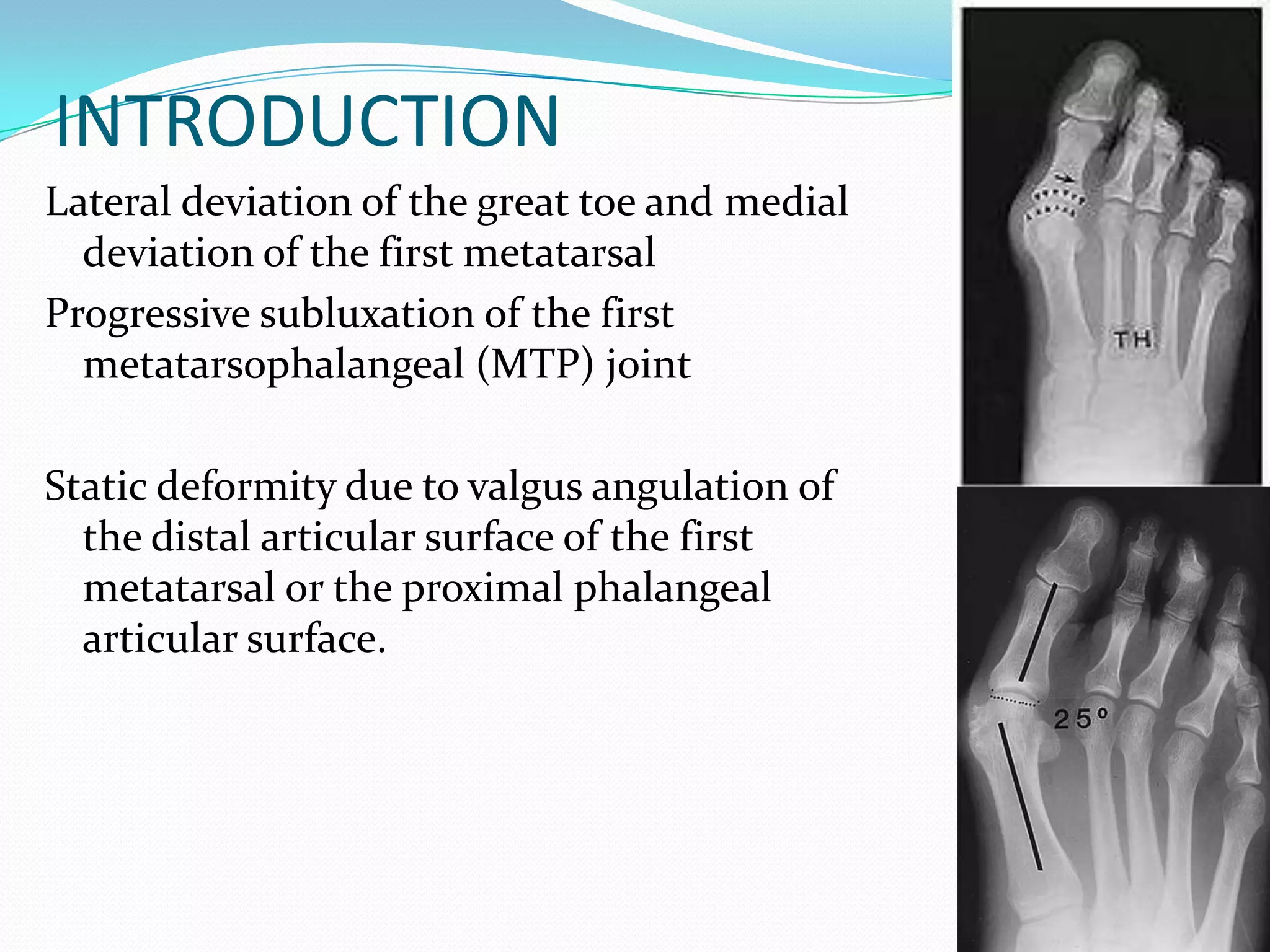
Lateral deviation of the great toe and medial
  deviation of the first metatarsal
Progressive subluxation of the first
  metatarsophalangeal (MTP) joint

Static deformity due to valgus angulation of
  the distal articular surface of the first
  metatarsal or the proximal phalangeal
  articular surface.
Pathophysiology
 No single cause
 Intrinsic conditions: 1. Metatarsus primus varus: congenital
  / heriditary ( AD), 2. Pes planus, 3. ligamentous laxity, 4.
  neromuscular
 Footwear: 15 times increased incidence
 female sex
 4th-6th decade age
 Rheumatoid arthritis
Anatomy
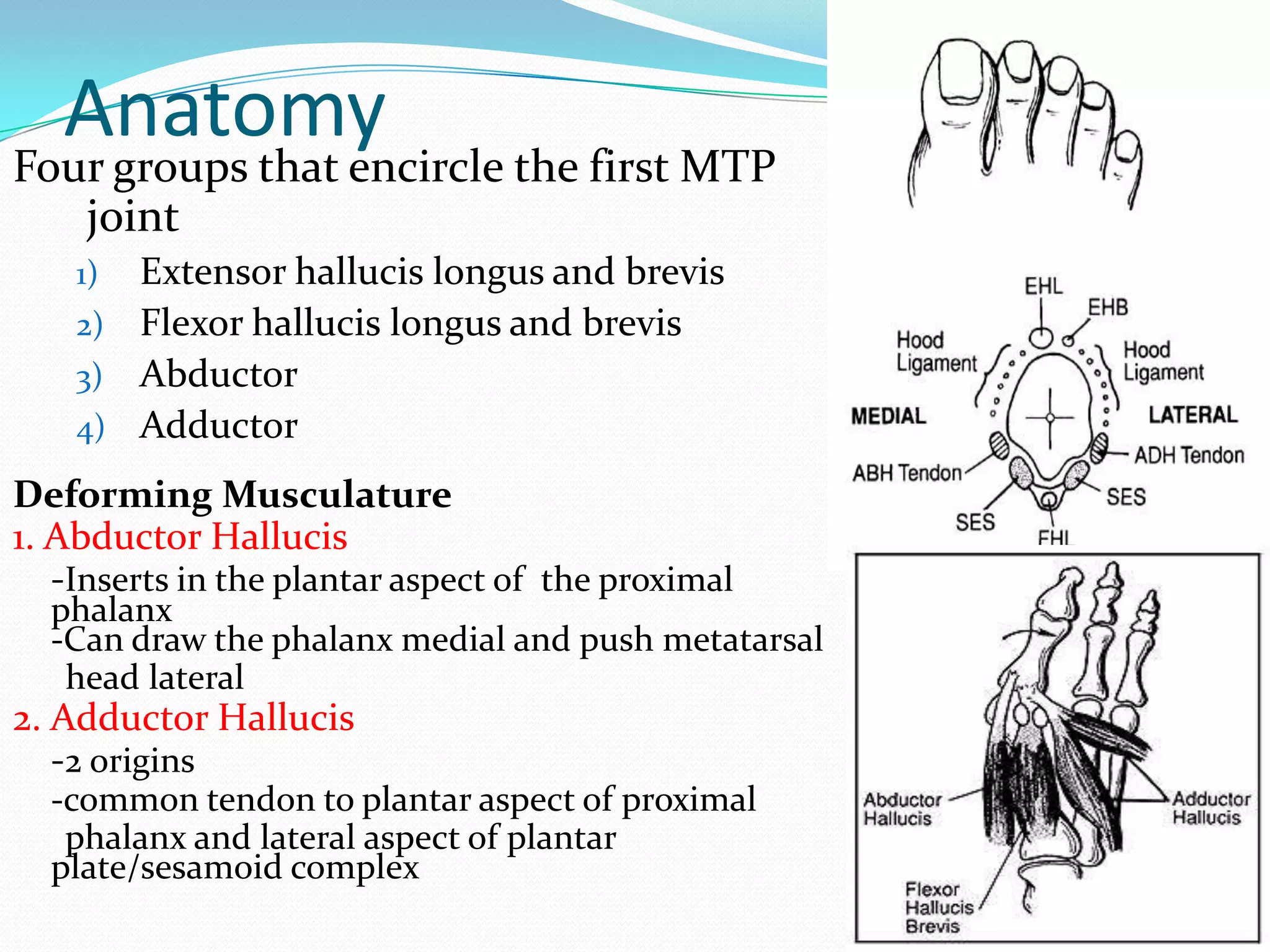
Four groups that encircle the first MTP
   joint
    1) Extensor hallucis longus and brevis
    2) Flexor hallucis longus and brevis
    3) Abductor
    4) Adductor

Deforming Musculature
1. Abductor Hallucis
   -Inserts in the plantar aspect of the proximal
  phalanx
  -Can draw the phalanx medial and push metatarsal
   head lateral
2. Adductor Hallucis
   -2 origins
  -common tendon to plantar aspect of proximal
   phalanx and lateral aspect of plantar
  plate/sesamoid complex
Anatomy
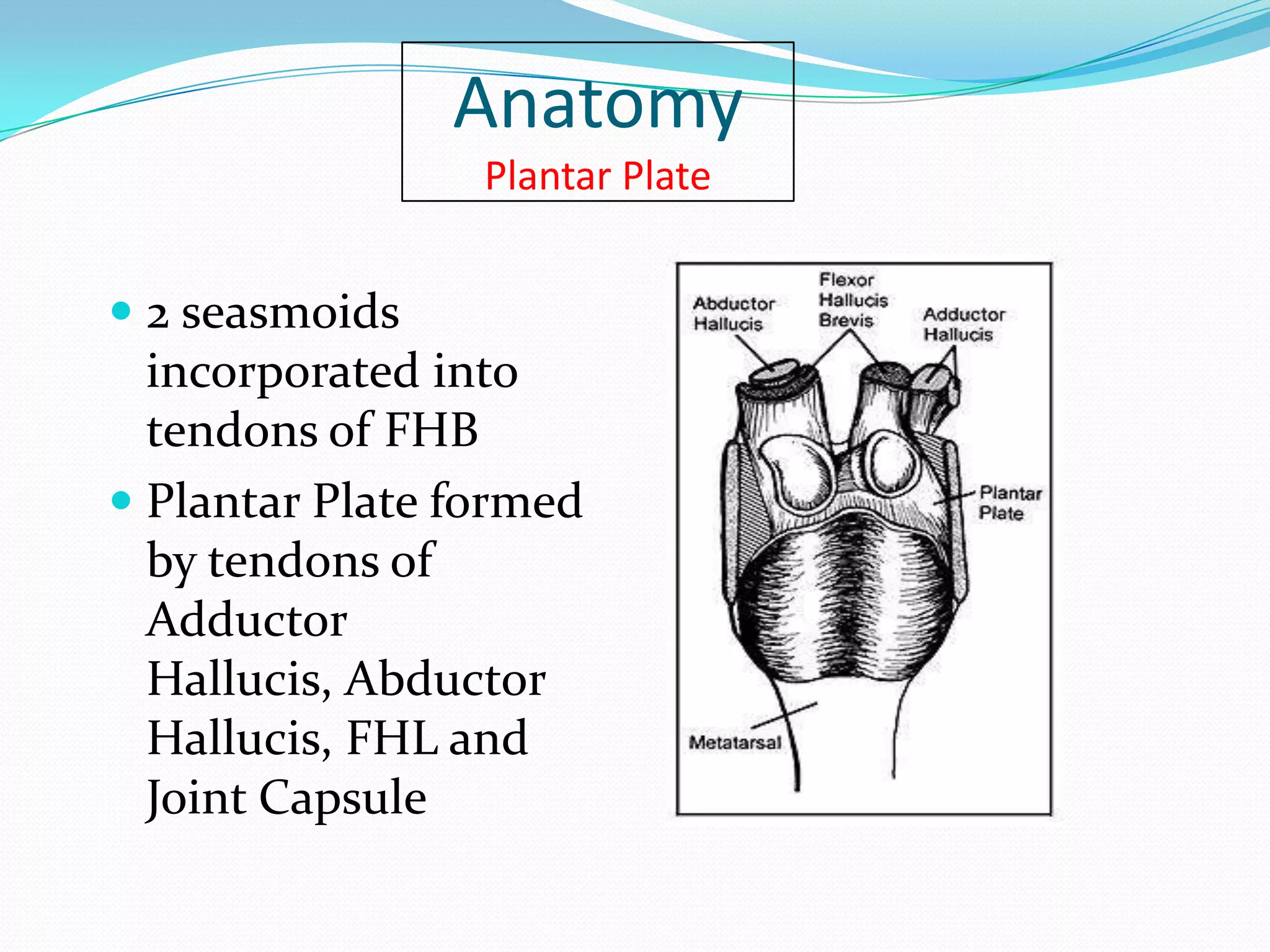
                 Plantar Plate


 2 seasmoids
  incorporated into
  tendons of FHB
 Plantar Plate formed
 by tendons of
 Adductor
 Hallucis, Abductor
 Hallucis, FHL and
 Joint Capsule
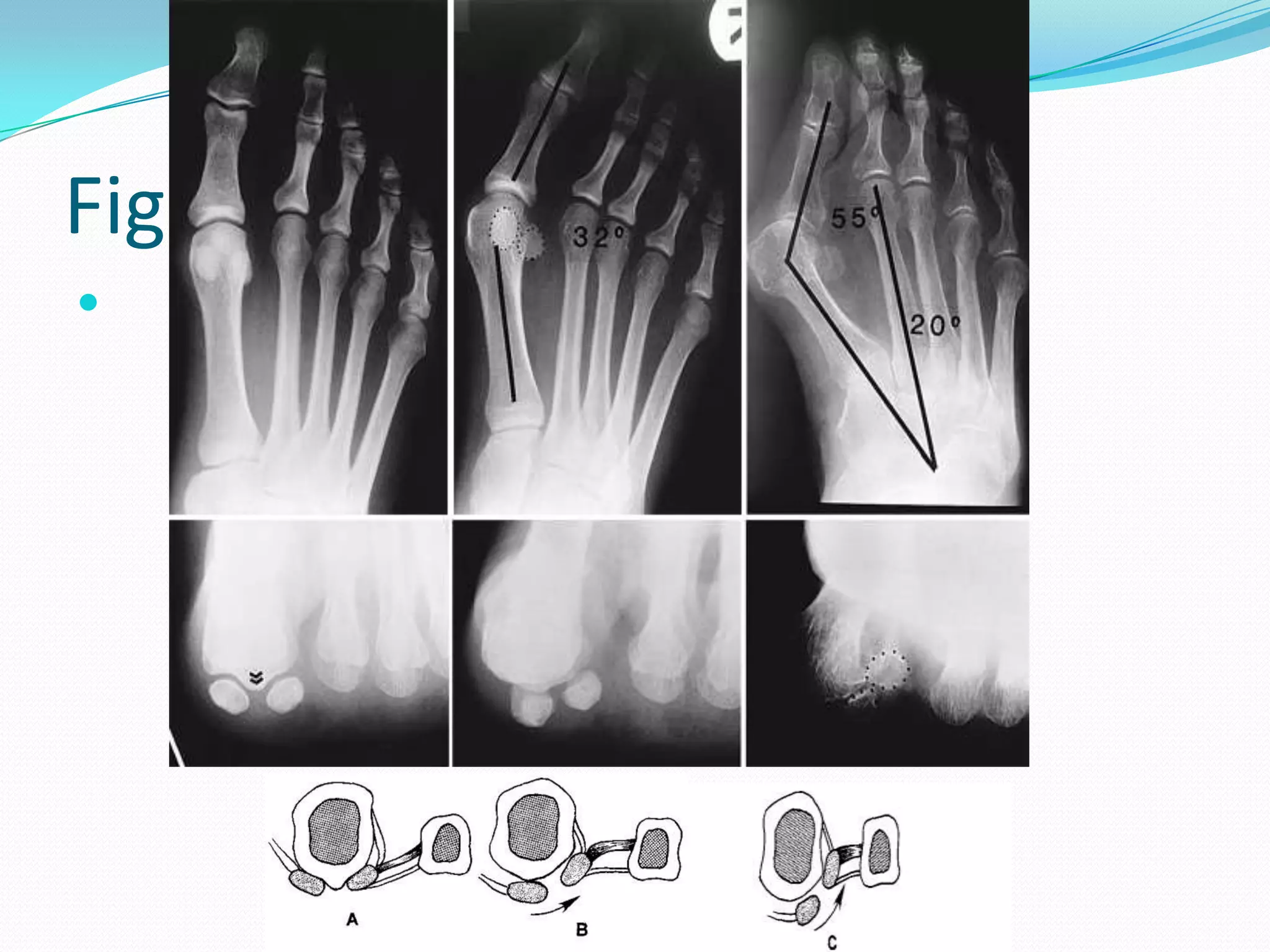
Fig 8

Clinical Presentation
PAIN over the medial eminence (Bunion).

 Pressure from footwear is the most frequent cause of this
  discomfort.
 Bursal inflammation
 Irritation of the skin
 Breakdown of the skin may be noted.

   Bunion consists of:
   Bony exostosis / prominence of the metatarsal head
   Overlying subcutaneous bursa
   Hyperkeratosis of dermis
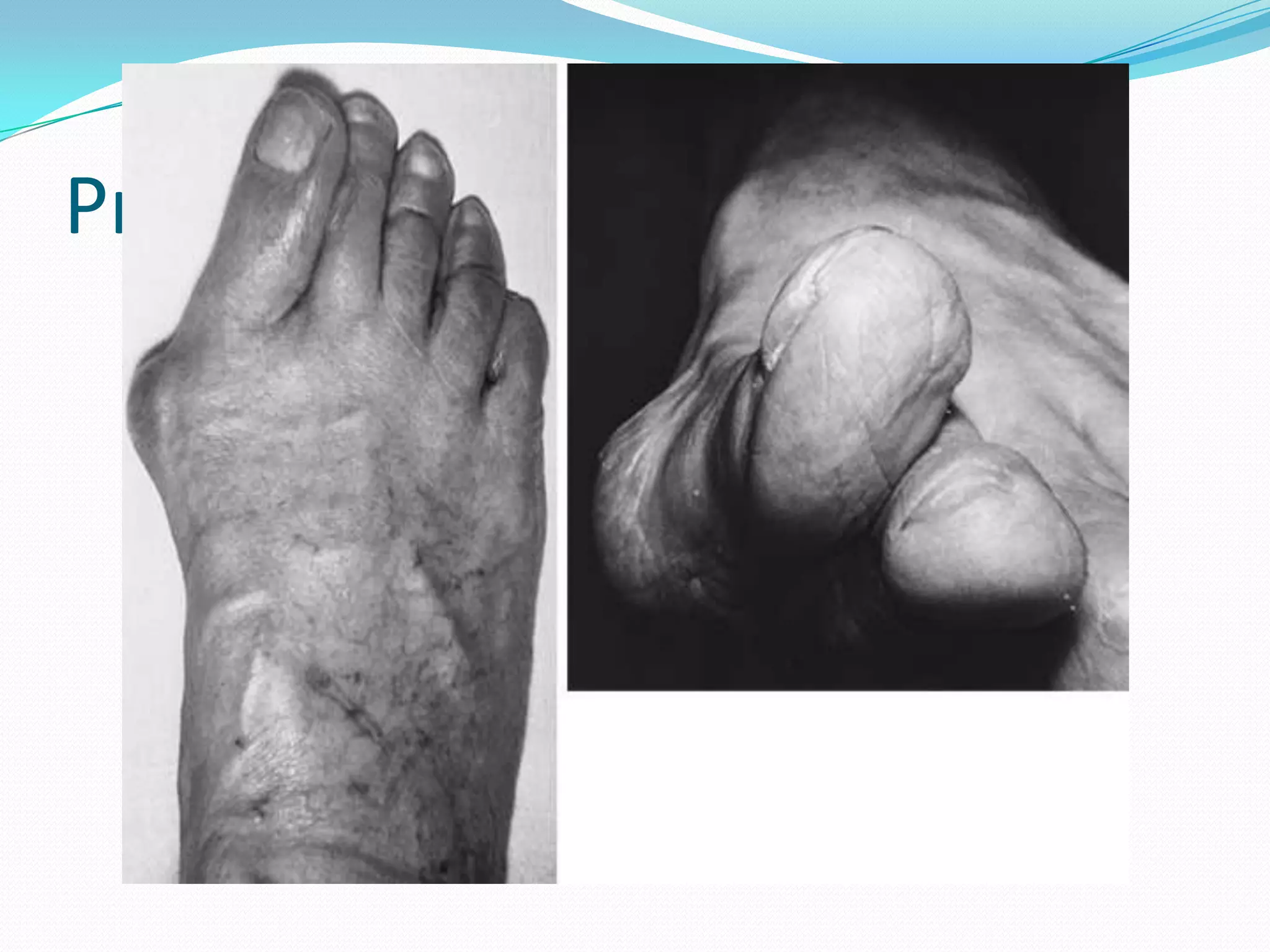
Pronated Toe Fig 6
Physical Examination
 Skin : calluses, areas of redness
 Sites of pain
 Magnitude of the hallux valgus deformity
 Pronation of the great toe
 Motion of 1st MTP joint- increased or decreased, Pain or crepitus,
  or both, with motion of the MTP joint
 Metatarsocuneiform joint for hypermobility
    Examiner grasps the first metatarsal with the thumb and
     index finger and pushes it in a plantar lateral-to-dorsomedial
     direction; mobility > 9 mm represents hypermobility
 Pes planus deformity , Contracture of the Achilles tendon
 Mobility and structure of foot in general
 Gait analysis
Radiographic Examination
 Weightbearing AP & Lateral
 Axial (Sesamoid)
 Assess for bone and joint deformity
 Length and shape of 1st MT
 Congruent vs. Incongruent joint
 Osteoarthrosis
 Forefoot alignment is evaluated for metatarsus Adductus
 Hindfoot is Inspected for Pes Planus or Pes Cavus.
Measure Angles
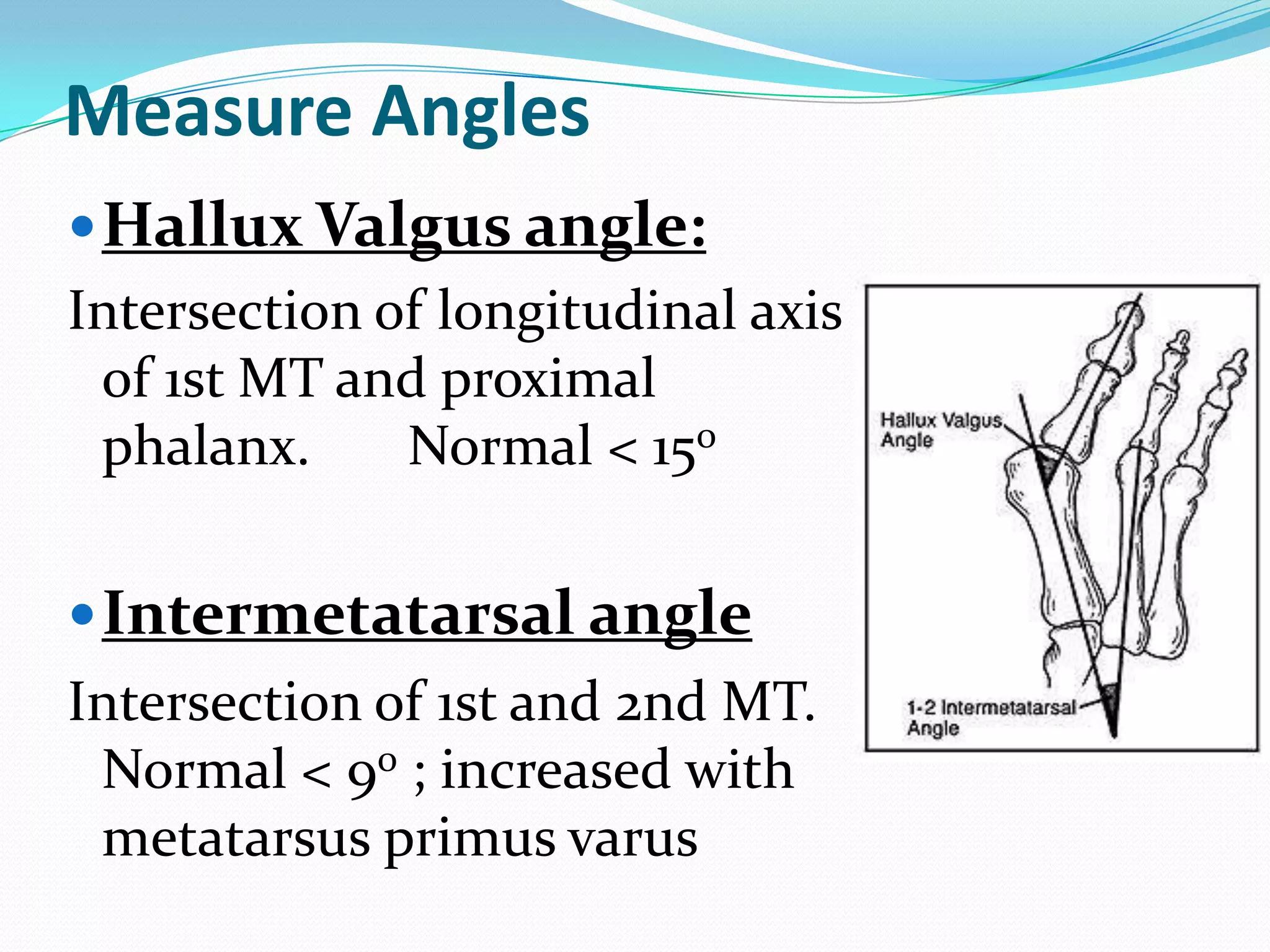
 Hallux Valgus angle:
Intersection of longitudinal axis
 of 1st MT and proximal
 phalanx.     Normal < 150


 Intermetatarsal angle
Intersection of 1st and 2nd MT.
 Normal < 90 ; increased with
 metatarsus primus varus
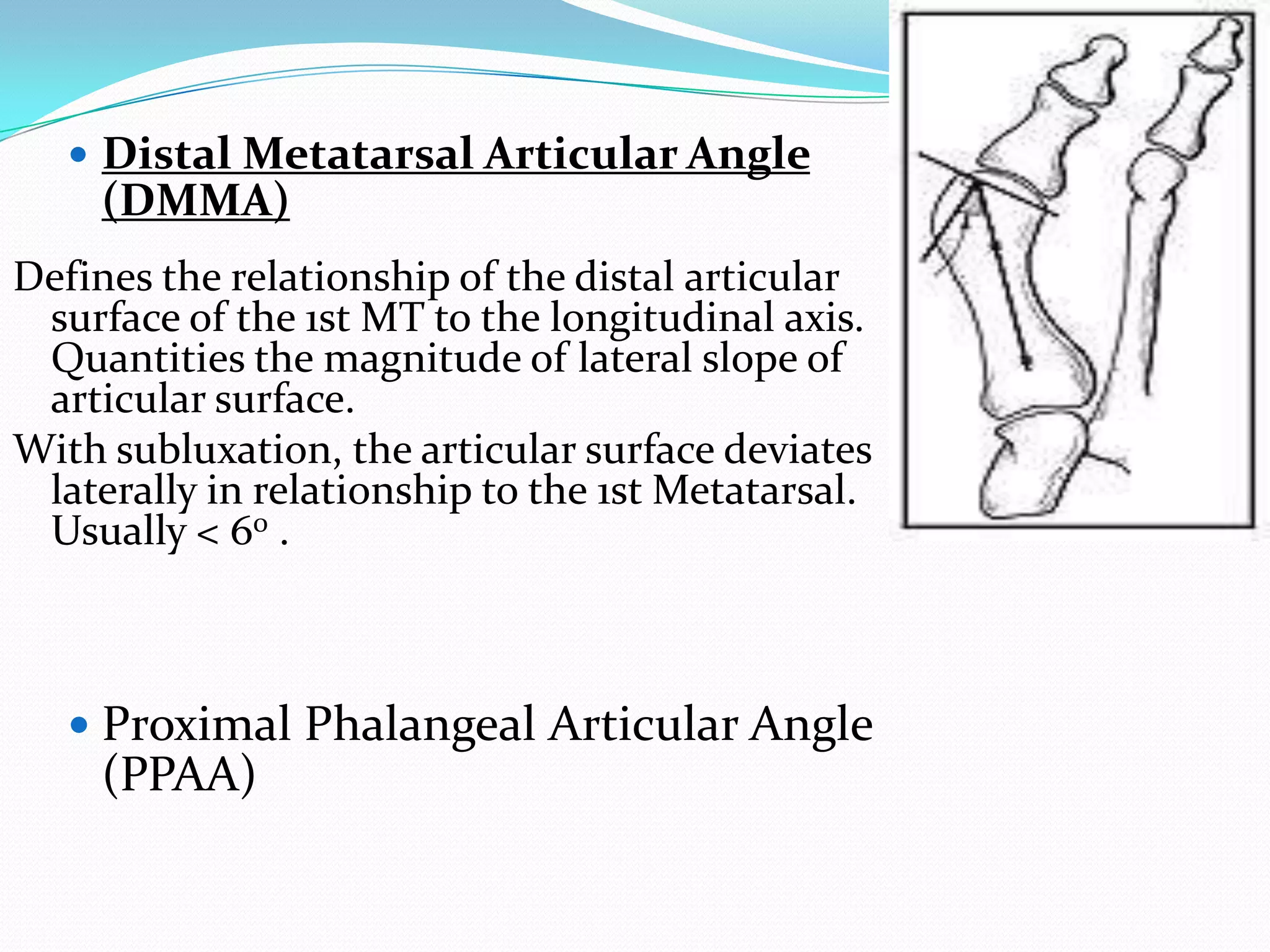
 Distal Metatarsal Articular Angle
     (DMMA)
Defines the relationship of the distal articular
 surface of the 1st MT to the longitudinal axis.
 Quantities the magnitude of lateral slope of
 articular surface.
With subluxation, the articular surface deviates
 laterally in relationship to the 1st Metatarsal.
 Usually < 60 .


    Proximal Phalangeal Articular Angle
     (PPAA)
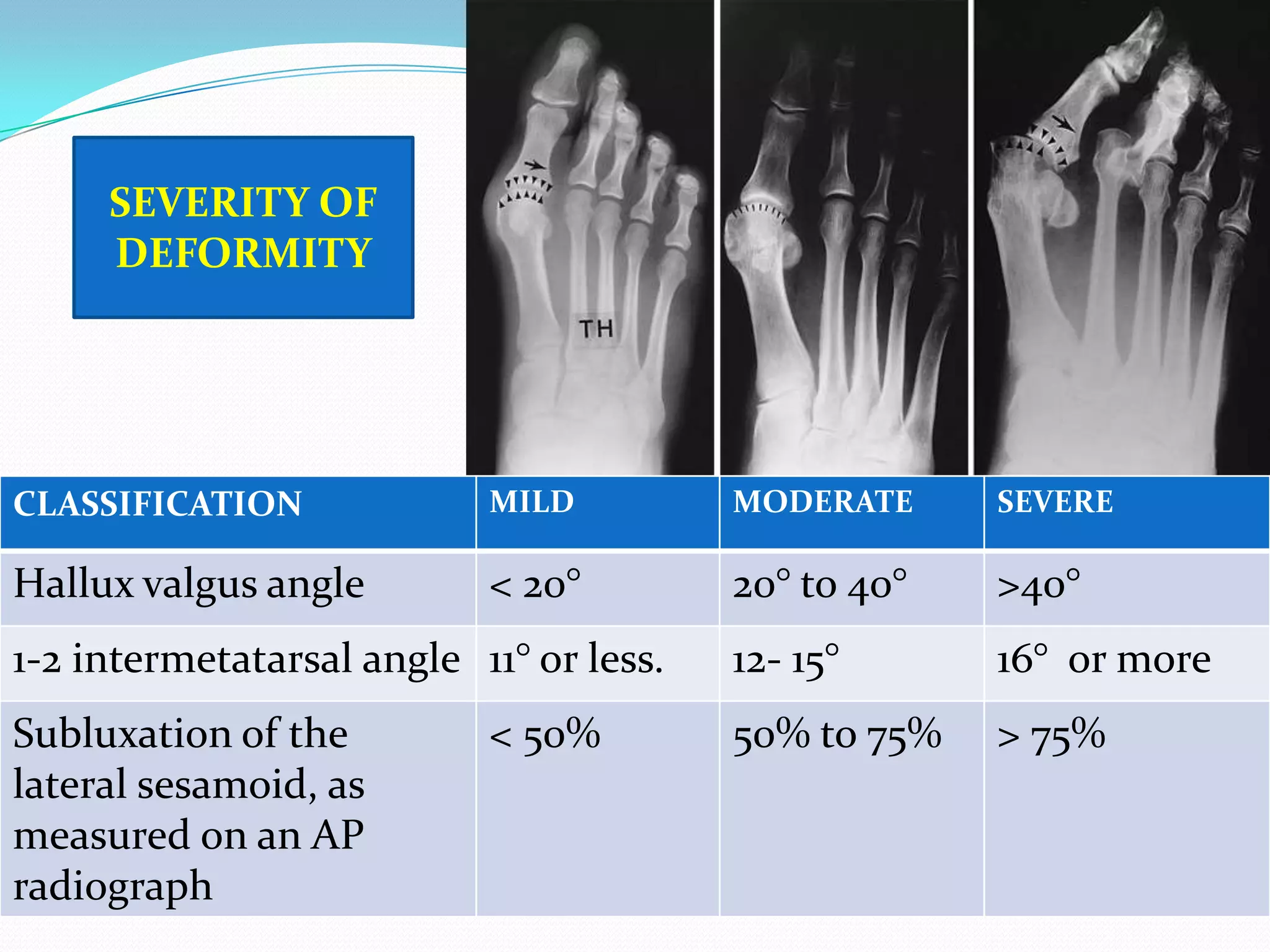
SEVERITY OF
     DEFORMITY


CLASSIFICATION             MILD          MODERATE     SEVERE

Hallux valgus angle        < 20°         20° to 40°   >40°
1-2 intermetatarsal angle 11° or less.   12- 15°      16° or more
Subluxation of the         < 50%         50% to 75%   > 75%
lateral sesamoid, as
measured on an AP
radiograph
TREATMENT
 Non-operative vs. Operative

 All patients should be treated non-operatively
 first.


Despite conservative measures, some patients
 eventually need surgical intervention.
Treatment
NON-OPERATIVE
              Footwear Modification
 Widen toe box
    decrease lateral deviation of great toe
    decrease inflammation and pain
 Decrease heel height
    prevent forward slide of the foot
 Arch support
    may negate effects of pes planus
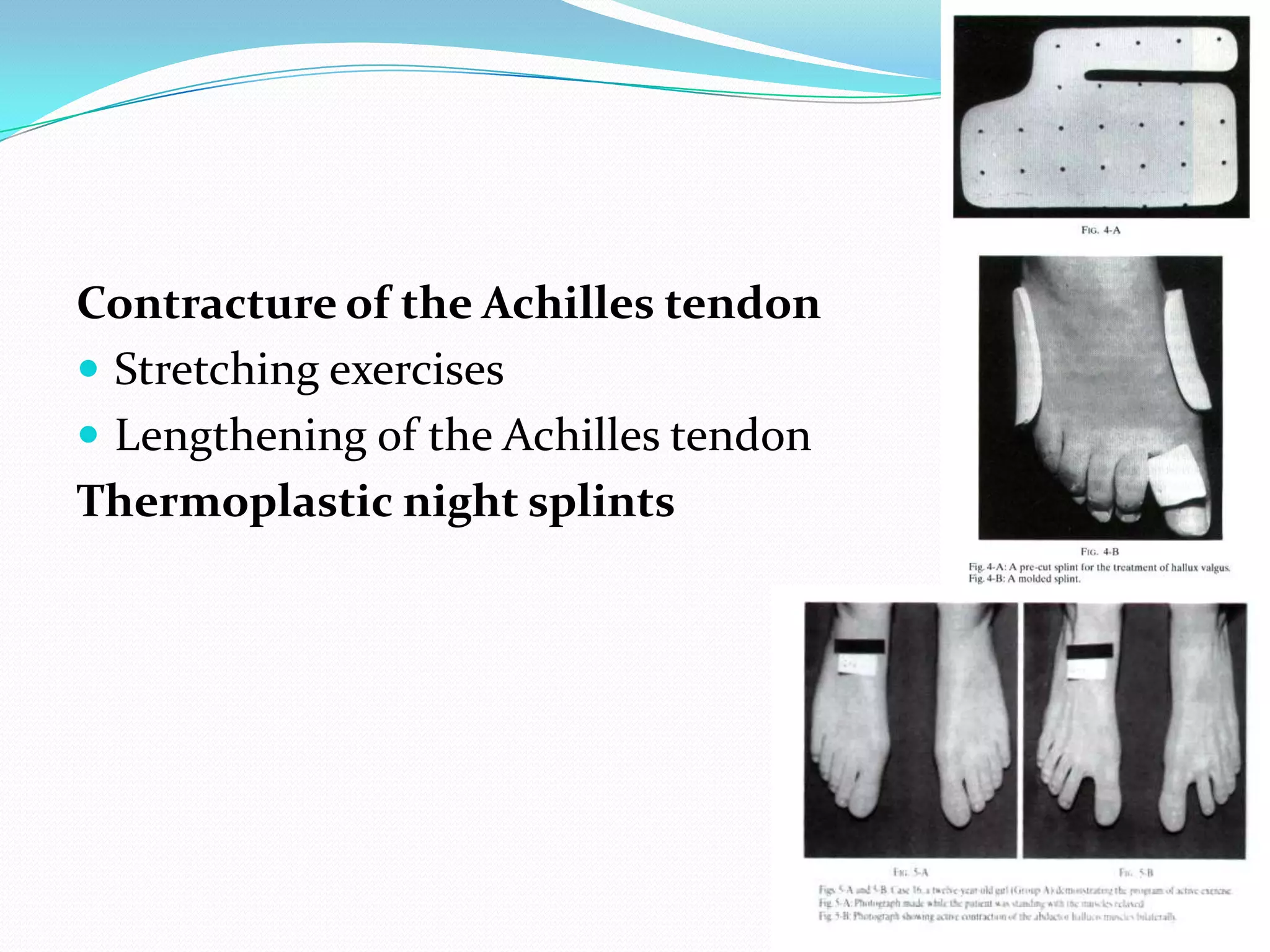
Contracture of the Achilles tendon
 Stretching exercises
 Lengthening of the Achilles tendon
Thermoplastic night splints
Treatment
SURGICAL
   Indications:
      Persistent PAIN not cosmetic complaints
      Progression of deformity
      Failure of non-operative treatment

   Goals:
      Correct all pathologic elements and yet maintain a
       biomechanically functional forefoot

   Usually will not result in a foot with normal
      appearance
       Combine soft tissue procedures with bony
        procedures in almost all cases.
Treatment
SURGICAL: SOFT TISSUE PROCEDURE
                    Distal Soft-Tissue Reconstruction
Medial and lateral procedures
 Hallux Valgus angle <30 degrees
 IMA < 15 degrees
 High rate of recurrence if done without bony procedure
 Medial and lateral procedures at the same time contraindicated.

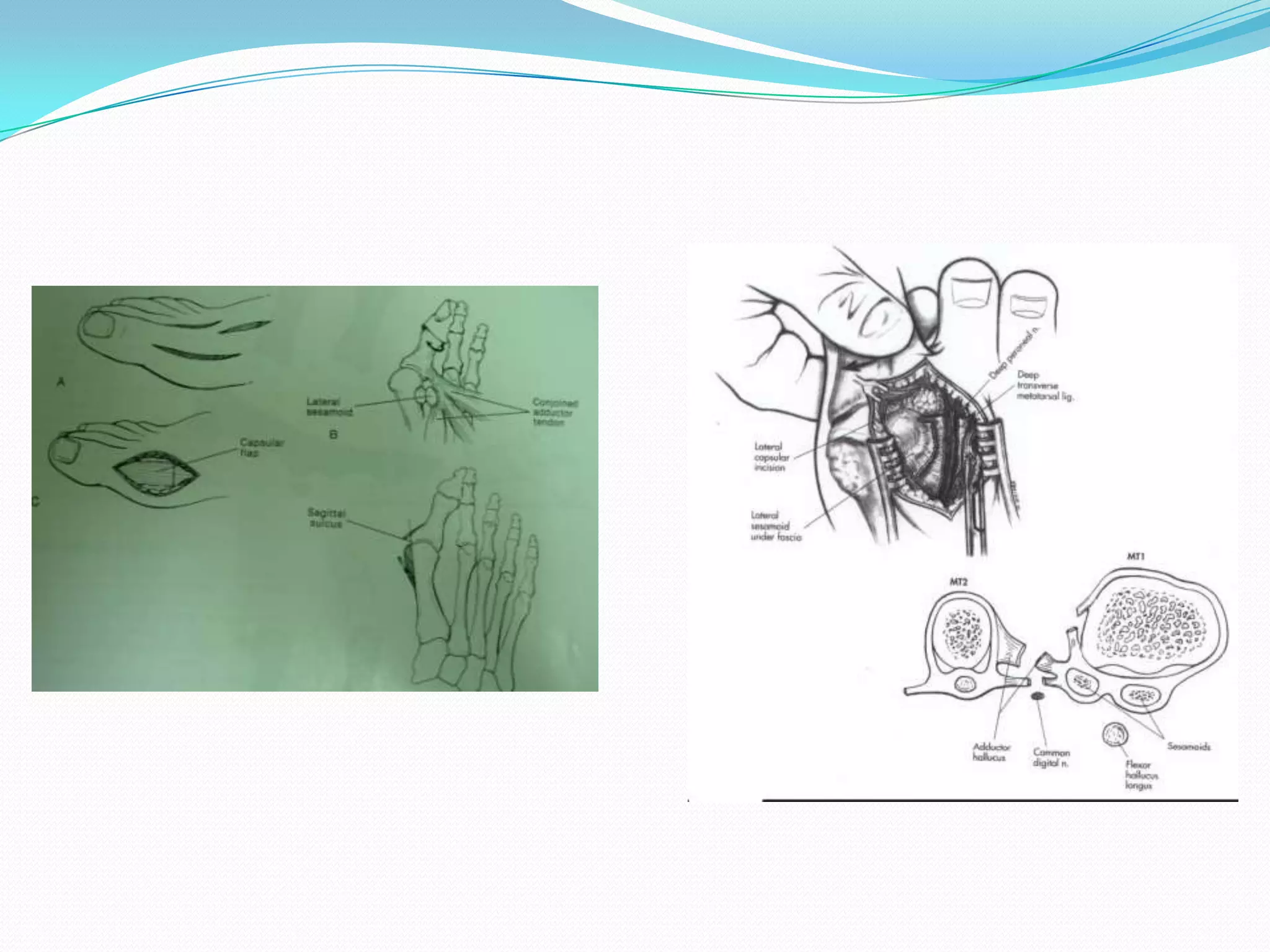
           Medial Procedures                              Lateral Procedures
   Tighten lax capsule                          Capsular release
   advancement, plication or resection          adductor longus release or transfer
   Abductor must not be detached                Division of transverse MT ligament
                                                 risk NV bundle

•Medial side procedure recommended
•Be aware of cutaneous branch of medial plantar nerve.
• Lateral procedure more difficult.
•Neurovascular risk.
Treatment
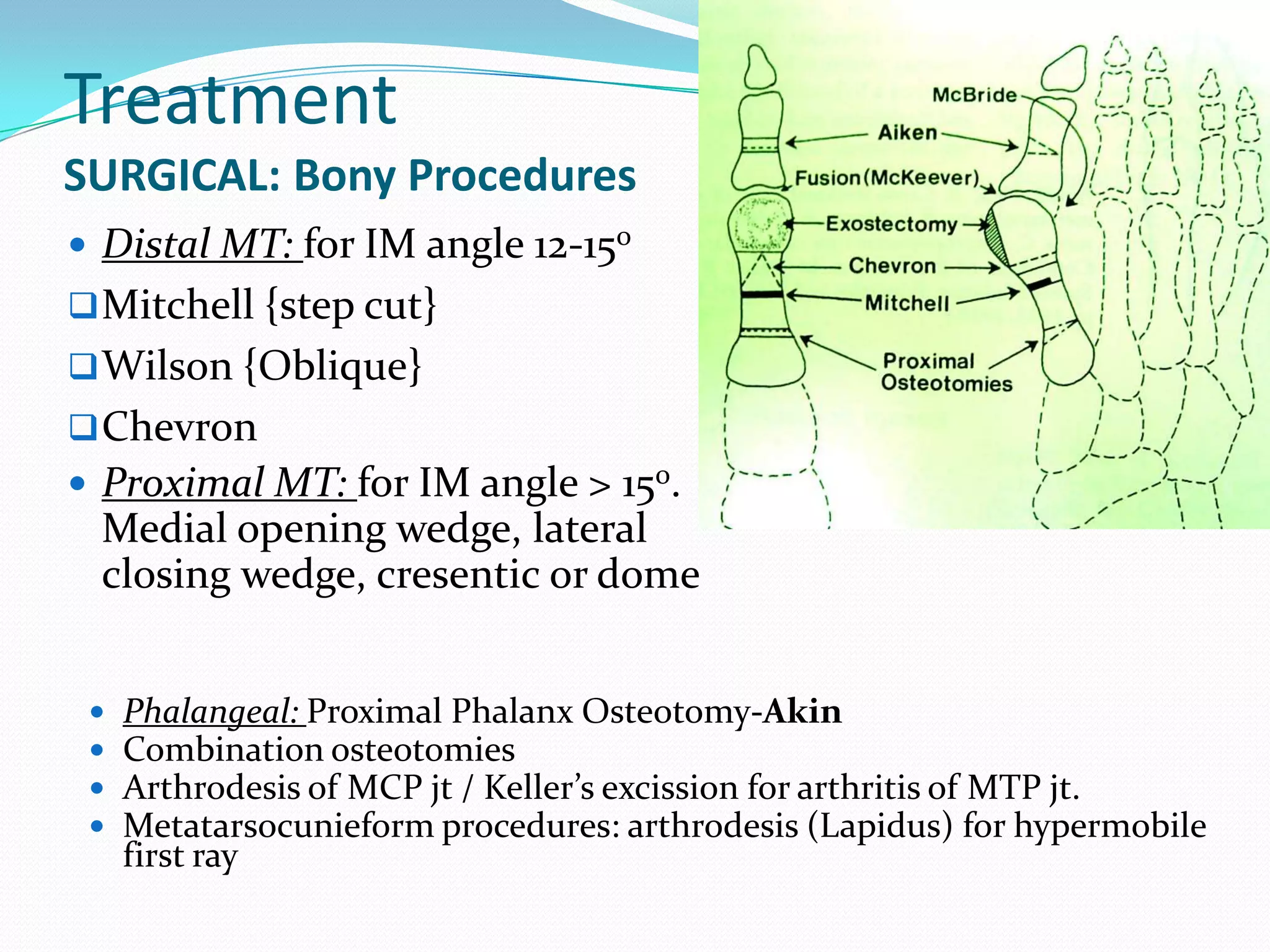
SURGICAL: Bony Procedures
 Distal MT: for IM angle 12-150
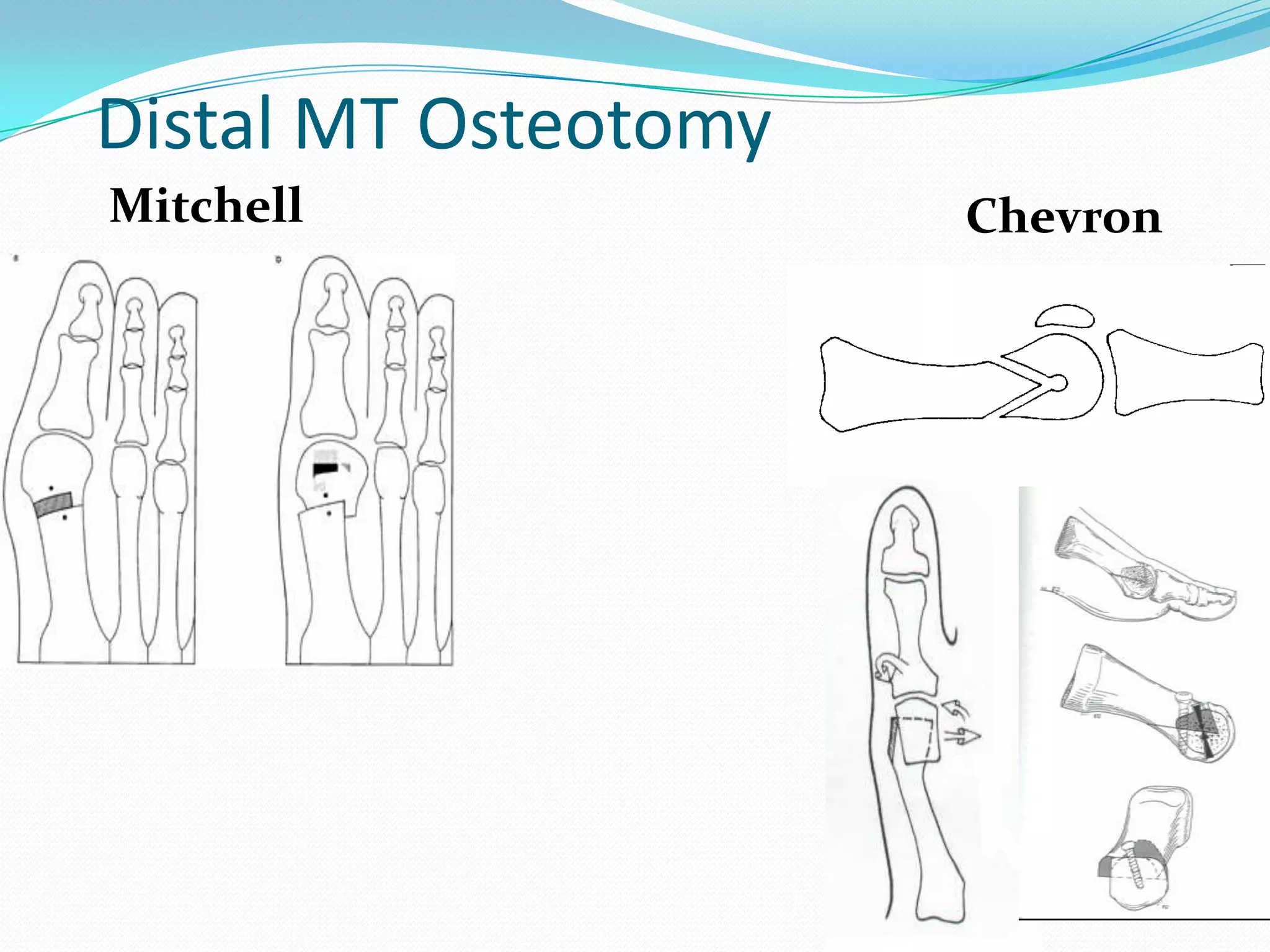
 Mitchell {step cut}
 Wilson {Oblique}
 Chevron
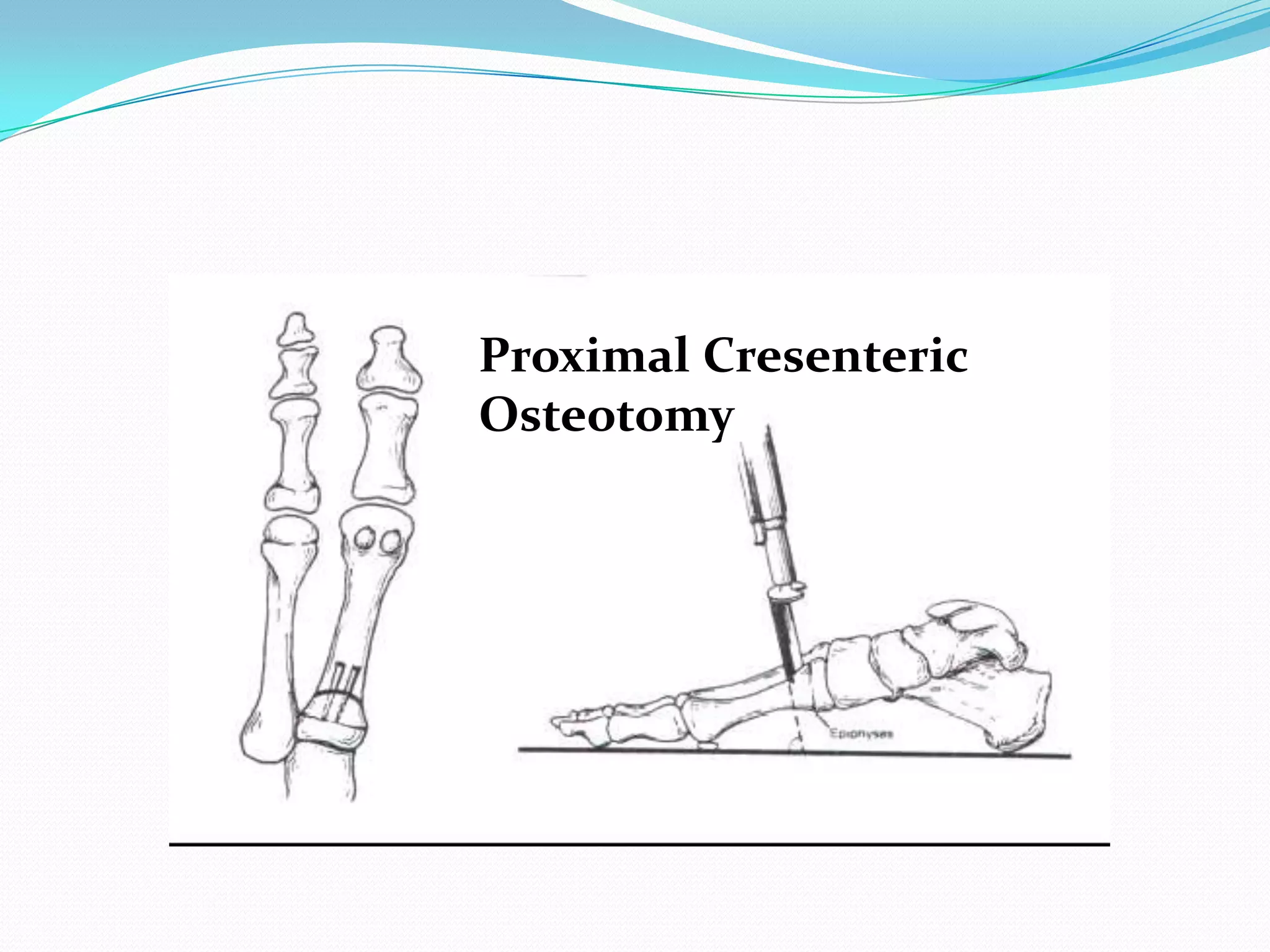
 Proximal MT: for IM angle > 150.
 Medial opening wedge, lateral
 closing wedge, cresentic or dome


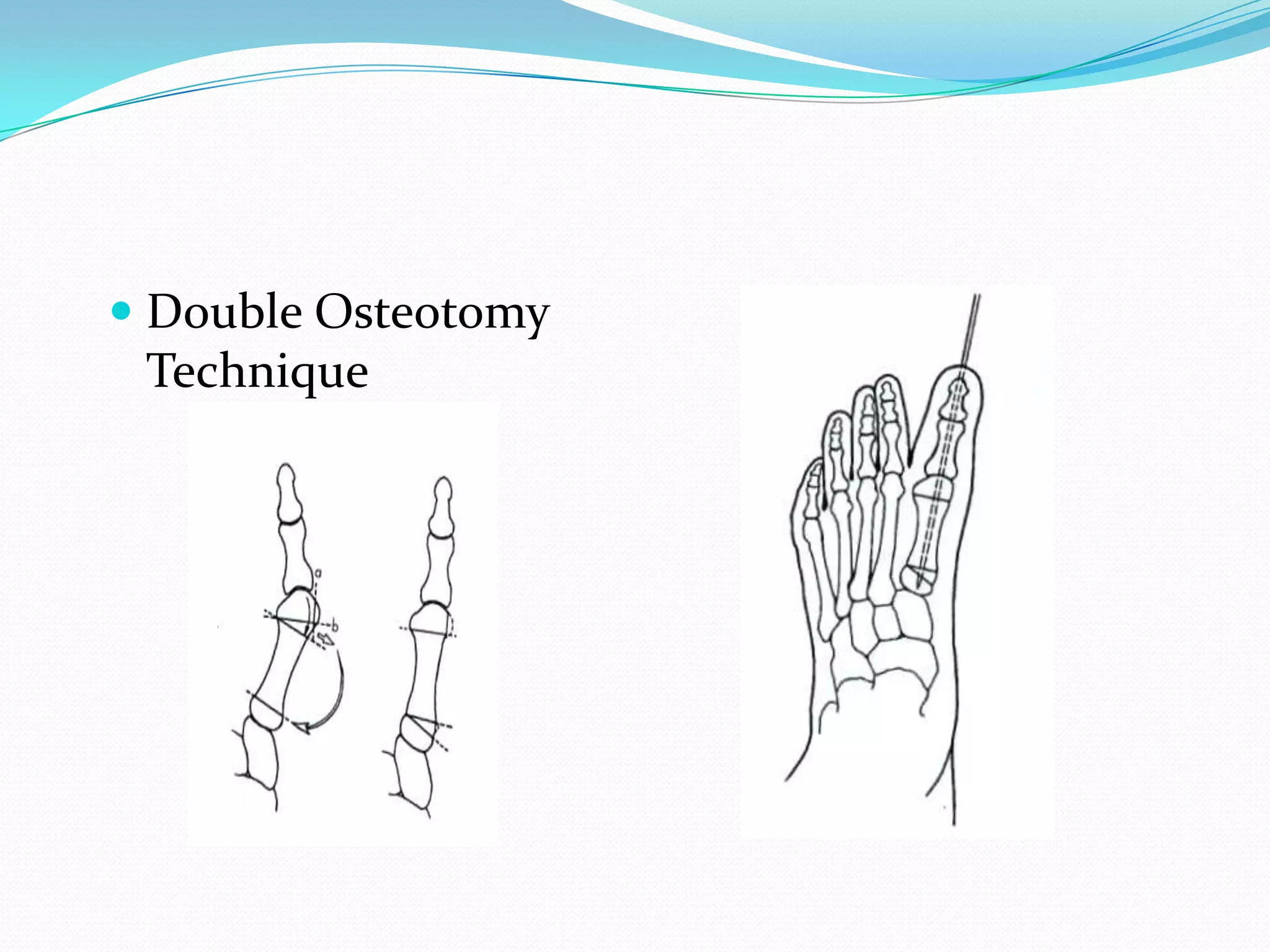
    Phalangeal: Proximal Phalanx Osteotomy-Akin
    Combination osteotomies
    Arthrodesis of MCP jt / Keller’s excission for arthritis of MTP jt.
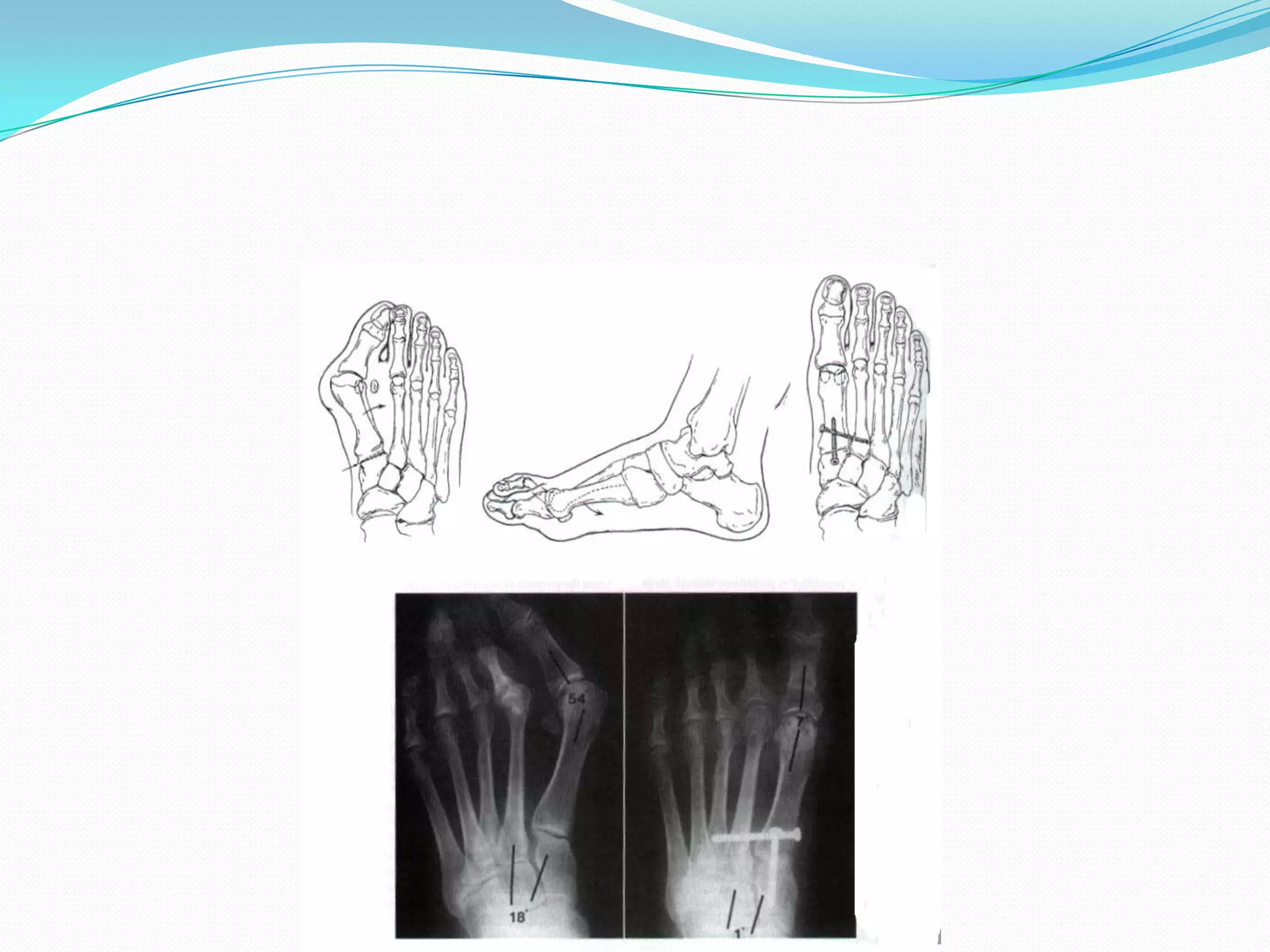
    Metatarsocunieform procedures: arthrodesis (Lapidus) for hypermobile
     first ray
Distal MT Osteotomy
Mitchell              Chevron
Proximal Cresenteric
Osteotomy
 Double Osteotomy
  Technique
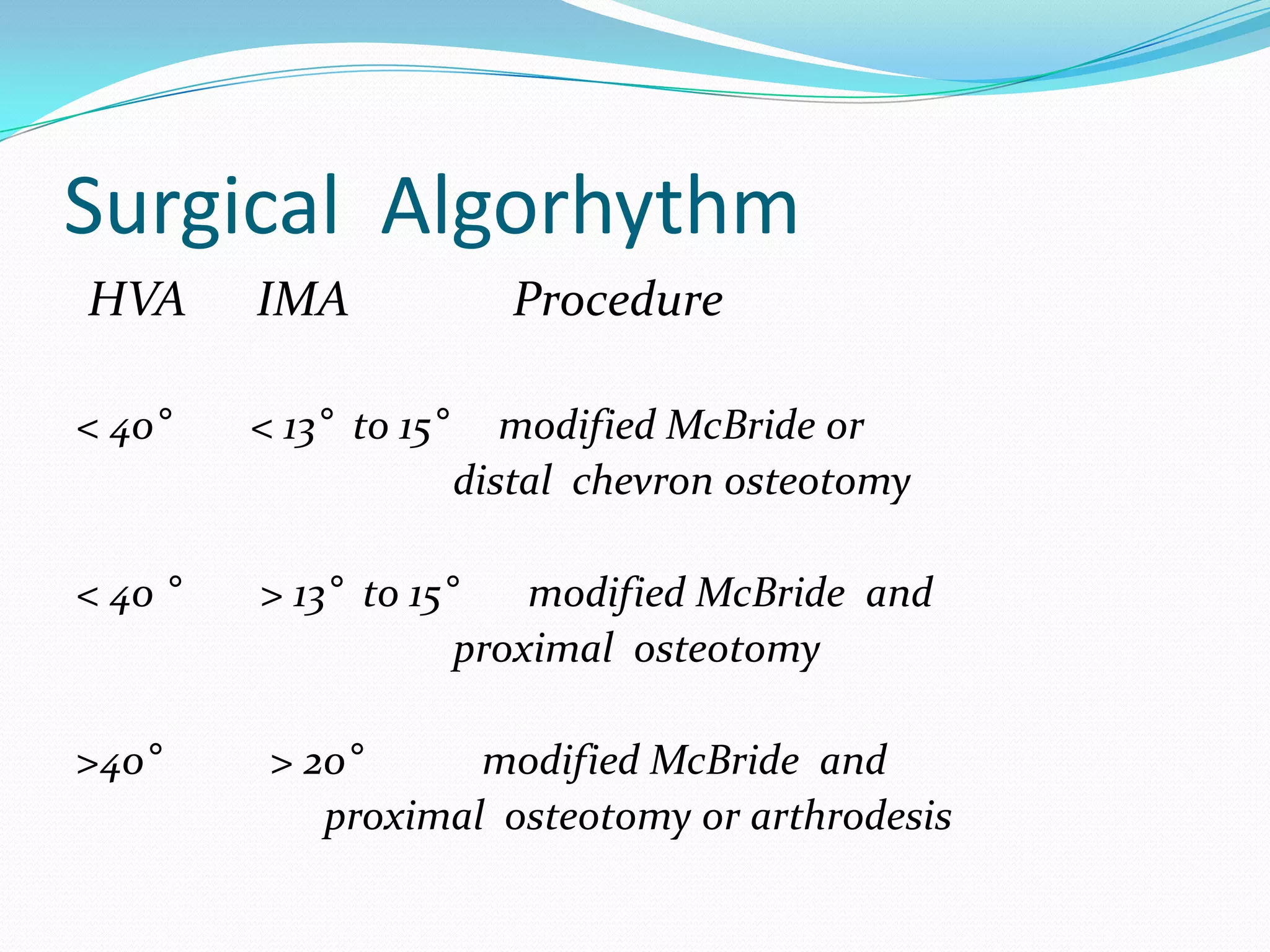
Surgical Algorhythm
HVA      IMA               Procedure

< 40°    < 13° to 15°      modified McBride or
                        distal chevron osteotomy

< 40 °   > 13° to 15°    modified McBride and
                     proximal osteotomy

>40°      > 20°      modified McBride and
             proximal osteotomy or arthrodesis
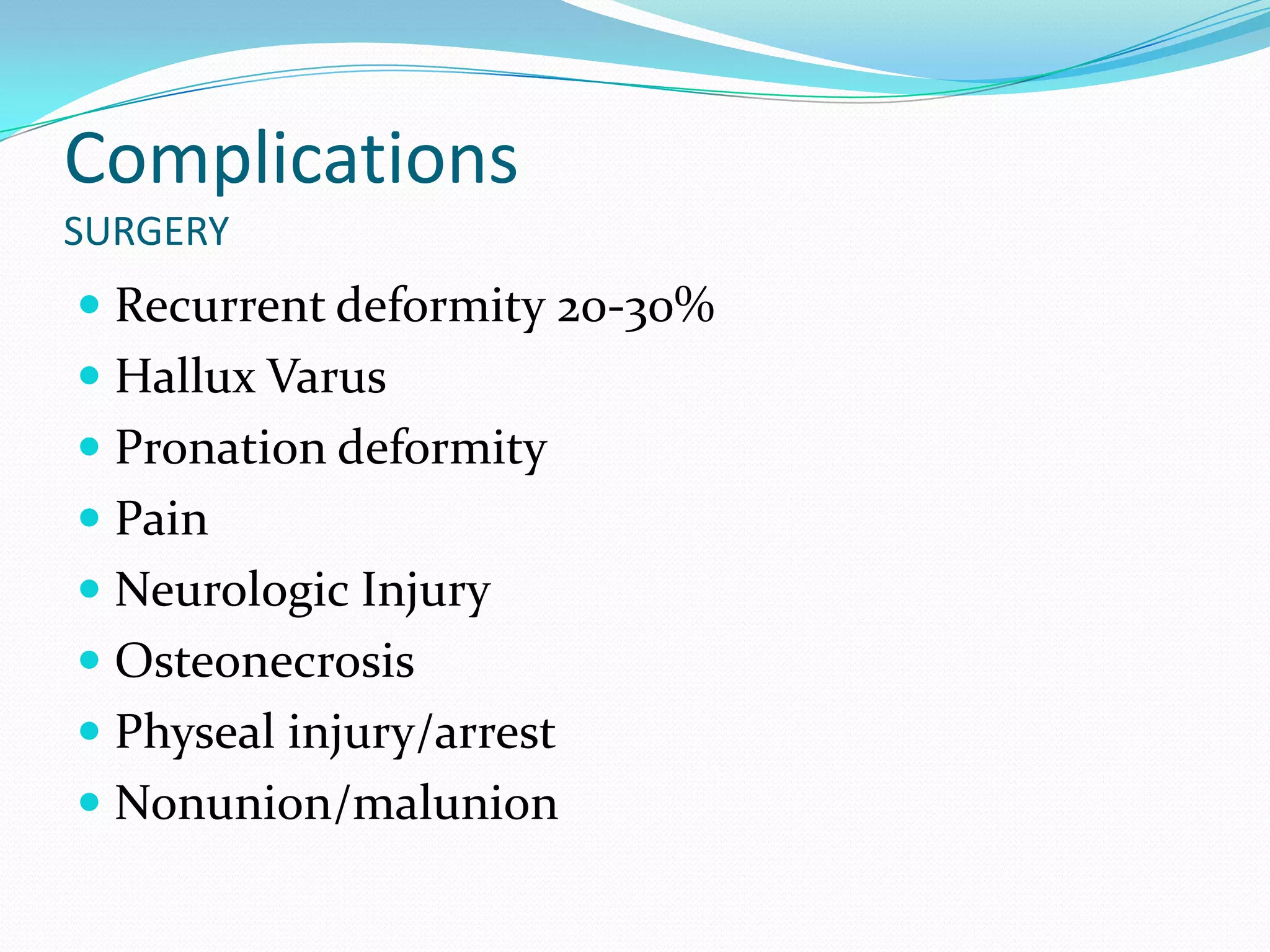
Complications
SURGERY
 Recurrent deformity 20-30%
 Hallux Varus
 Pronation deformity
 Pain
 Neurologic Injury
 Osteonecrosis
 Physeal injury/arrest
 Nonunion/malunion

Hallux valgus UG lecture

  • 1.
    D r Dhananjayasabat MS, DNB, MNAMS Assistant Professor Orthopedics MAMC & STC, New delhi
  • 2.
    INTRODUCTION Lateral deviation ofthe great toe and medial deviation of the first metatarsal Progressive subluxation of the first metatarsophalangeal (MTP) joint Static deformity due to valgus angulation of the distal articular surface of the first metatarsal or the proximal phalangeal articular surface.
  • 3.
    Pathophysiology  No singlecause  Intrinsic conditions: 1. Metatarsus primus varus: congenital / heriditary ( AD), 2. Pes planus, 3. ligamentous laxity, 4. neromuscular  Footwear: 15 times increased incidence  female sex  4th-6th decade age  Rheumatoid arthritis
  • 4.
    Anatomy Four groups thatencircle the first MTP joint 1) Extensor hallucis longus and brevis 2) Flexor hallucis longus and brevis 3) Abductor 4) Adductor Deforming Musculature 1. Abductor Hallucis -Inserts in the plantar aspect of the proximal phalanx -Can draw the phalanx medial and push metatarsal head lateral 2. Adductor Hallucis -2 origins -common tendon to plantar aspect of proximal phalanx and lateral aspect of plantar plate/sesamoid complex
  • 5.
    Anatomy Plantar Plate  2 seasmoids incorporated into tendons of FHB  Plantar Plate formed by tendons of Adductor Hallucis, Abductor Hallucis, FHL and Joint Capsule
  • 6.
  • 7.
    Clinical Presentation PAIN overthe medial eminence (Bunion).  Pressure from footwear is the most frequent cause of this discomfort.  Bursal inflammation  Irritation of the skin  Breakdown of the skin may be noted.  Bunion consists of:  Bony exostosis / prominence of the metatarsal head  Overlying subcutaneous bursa  Hyperkeratosis of dermis
  • 8.
  • 9.
    Physical Examination  Skin: calluses, areas of redness  Sites of pain  Magnitude of the hallux valgus deformity  Pronation of the great toe  Motion of 1st MTP joint- increased or decreased, Pain or crepitus, or both, with motion of the MTP joint  Metatarsocuneiform joint for hypermobility  Examiner grasps the first metatarsal with the thumb and index finger and pushes it in a plantar lateral-to-dorsomedial direction; mobility > 9 mm represents hypermobility  Pes planus deformity , Contracture of the Achilles tendon  Mobility and structure of foot in general  Gait analysis
  • 10.
    Radiographic Examination  WeightbearingAP & Lateral  Axial (Sesamoid)  Assess for bone and joint deformity  Length and shape of 1st MT  Congruent vs. Incongruent joint  Osteoarthrosis  Forefoot alignment is evaluated for metatarsus Adductus  Hindfoot is Inspected for Pes Planus or Pes Cavus.
  • 11.
    Measure Angles  HalluxValgus angle: Intersection of longitudinal axis of 1st MT and proximal phalanx. Normal < 150  Intermetatarsal angle Intersection of 1st and 2nd MT. Normal < 90 ; increased with metatarsus primus varus
  • 12.
     Distal MetatarsalArticular Angle (DMMA) Defines the relationship of the distal articular surface of the 1st MT to the longitudinal axis. Quantities the magnitude of lateral slope of articular surface. With subluxation, the articular surface deviates laterally in relationship to the 1st Metatarsal. Usually < 60 .  Proximal Phalangeal Articular Angle (PPAA)
  • 13.
    SEVERITY OF DEFORMITY CLASSIFICATION MILD MODERATE SEVERE Hallux valgus angle < 20° 20° to 40° >40° 1-2 intermetatarsal angle 11° or less. 12- 15° 16° or more Subluxation of the < 50% 50% to 75% > 75% lateral sesamoid, as measured on an AP radiograph
  • 14.
    TREATMENT  Non-operative vs.Operative  All patients should be treated non-operatively first. Despite conservative measures, some patients eventually need surgical intervention.
  • 15.
    Treatment NON-OPERATIVE Footwear Modification  Widen toe box  decrease lateral deviation of great toe  decrease inflammation and pain  Decrease heel height  prevent forward slide of the foot  Arch support  may negate effects of pes planus
  • 16.
    Contracture of theAchilles tendon  Stretching exercises  Lengthening of the Achilles tendon Thermoplastic night splints
  • 17.
    Treatment SURGICAL Indications:  Persistent PAIN not cosmetic complaints  Progression of deformity  Failure of non-operative treatment  Goals:  Correct all pathologic elements and yet maintain a biomechanically functional forefoot  Usually will not result in a foot with normal appearance  Combine soft tissue procedures with bony procedures in almost all cases.
  • 18.
    Treatment SURGICAL: SOFT TISSUEPROCEDURE Distal Soft-Tissue Reconstruction Medial and lateral procedures  Hallux Valgus angle <30 degrees  IMA < 15 degrees  High rate of recurrence if done without bony procedure  Medial and lateral procedures at the same time contraindicated. Medial Procedures Lateral Procedures  Tighten lax capsule  Capsular release  advancement, plication or resection  adductor longus release or transfer  Abductor must not be detached  Division of transverse MT ligament  risk NV bundle •Medial side procedure recommended •Be aware of cutaneous branch of medial plantar nerve. • Lateral procedure more difficult. •Neurovascular risk.
  • 20.
    Treatment SURGICAL: Bony Procedures Distal MT: for IM angle 12-150  Mitchell {step cut}  Wilson {Oblique}  Chevron  Proximal MT: for IM angle > 150. Medial opening wedge, lateral closing wedge, cresentic or dome  Phalangeal: Proximal Phalanx Osteotomy-Akin  Combination osteotomies  Arthrodesis of MCP jt / Keller’s excission for arthritis of MTP jt.  Metatarsocunieform procedures: arthrodesis (Lapidus) for hypermobile first ray
  • 21.
  • 22.
  • 23.
  • 25.
    Surgical Algorhythm HVA IMA Procedure < 40° < 13° to 15° modified McBride or distal chevron osteotomy < 40 ° > 13° to 15° modified McBride and proximal osteotomy >40° > 20° modified McBride and proximal osteotomy or arthrodesis
  • 26.
    Complications SURGERY  Recurrent deformity20-30%  Hallux Varus  Pronation deformity  Pain  Neurologic Injury  Osteonecrosis  Physeal injury/arrest  Nonunion/malunion