Downloaded 765 times
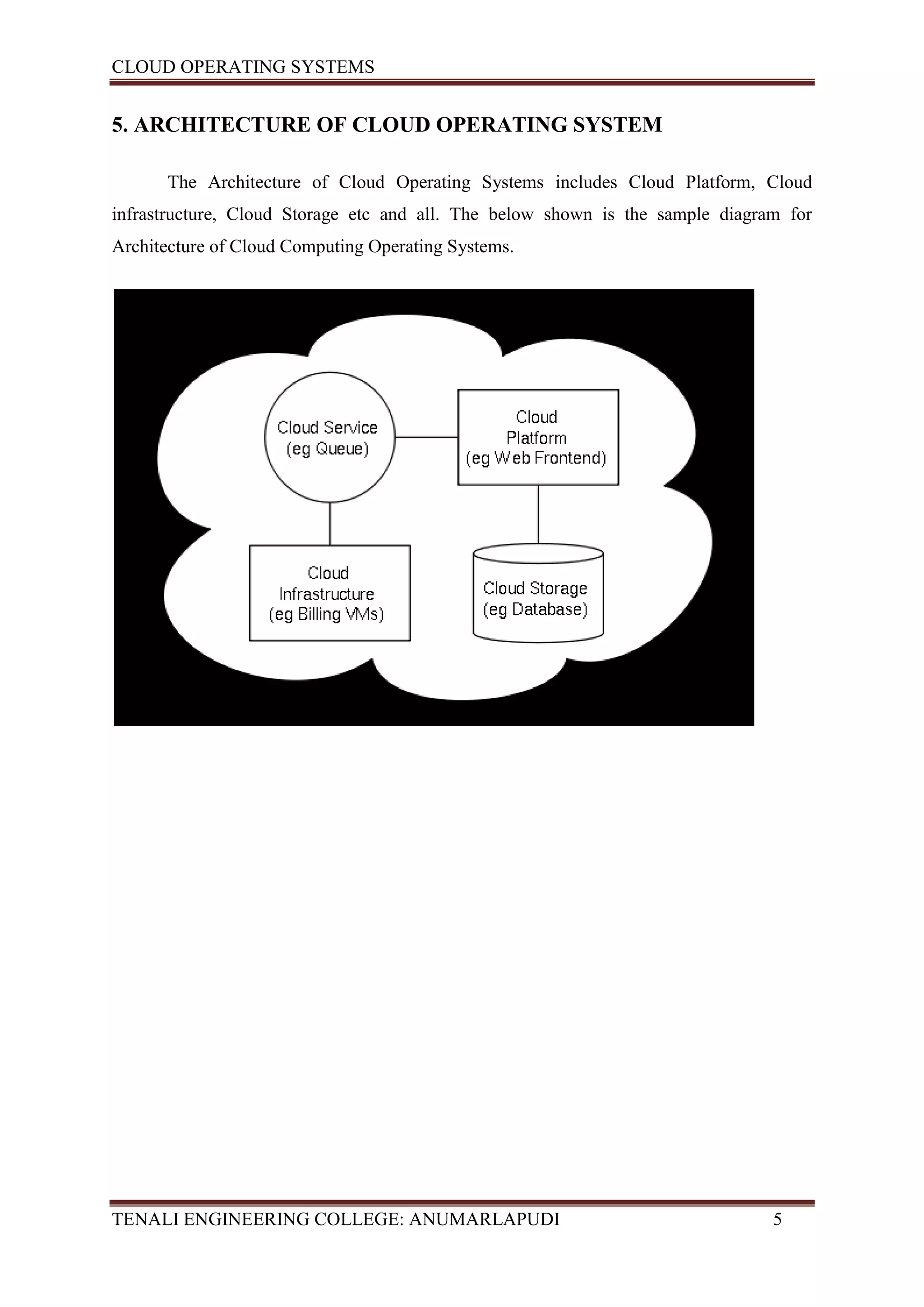
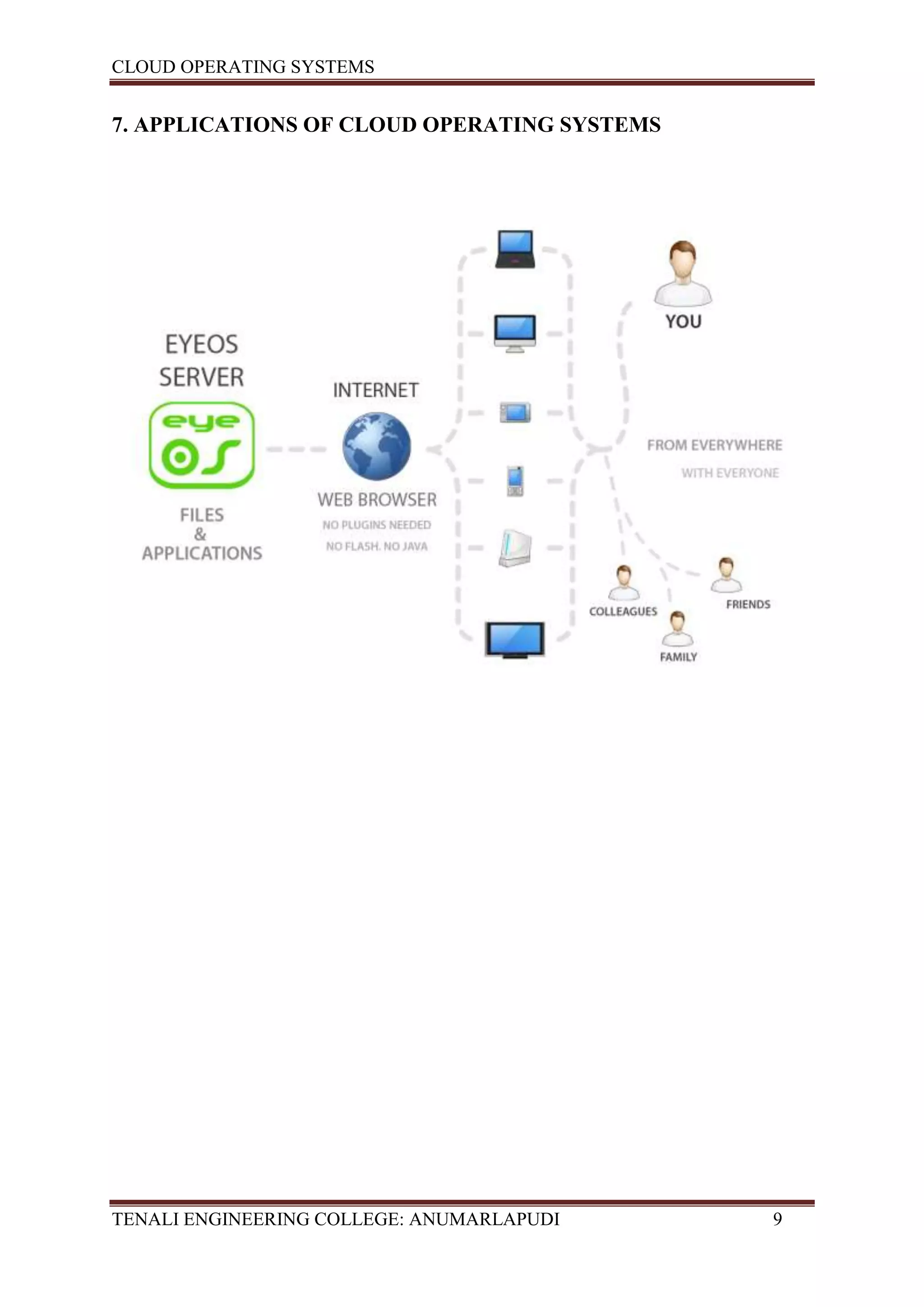

The document discusses cloud operating systems. Some key points: - Cloud OS manages resources across large server infrastructures instead of a single machine. It must scale to manage thousands of servers. - A cloud OS provides applications access to cloud infrastructure resources and coordinates limited resource sharing. - Examples of cloud OS include Glide, Amoeba, My Goya, Kohive, Zimdesk, Ghost, Joli, Cloudo, and Eye OS. - Advantages include worldwide access from any device with a browser, dynamic content, collaboration features, and remote file storage.


